Quantcast

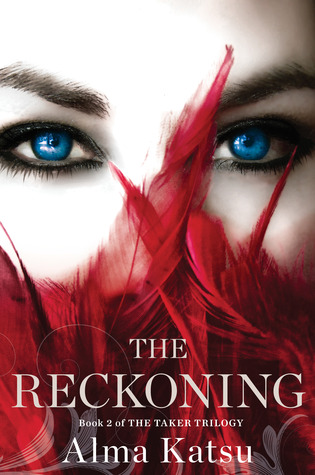
The Reckoning by Alma Katsu

There are some books that you read quickly through and there are those books are almost too seductive and you want to slow down and savor every moment with the characters, and The Reckoning by Alma Katsu — the second book in The Taker series (check out my review of The Taker) — is the latter.  Once plunged into this world of immortal, devilish, and sometimes wayward beings, readers will not want to leave and by the end of the book, they will be clamoring for more.

The novel picks up just where Lanny and Luke leave off in the previous novel, and just as he begins to settle into their new life together — helping her to purge her past — the unthinkable happens.  The terror Lanny feels is palpable and forces her to take action in a way that she never thought she would, leaving Luke devastated.  What makes this all work so well is the tables are turned not just on Lanny forcing her to react, but the tables turn on other characters as well, including the powerful and frightening Adair.

“Inside, he detected a scent that he associated with Lanore, her musk making a part of his brain fire excitedly, re-creating the feeling of being in her presence.  She felt so real, so present, that he expected her to walk around a corner or to hear her voice carry down the staircase, and when neither happened, he felt his loneliness more profoundly than before.”  (Page 236)

The Reckoning is not only about the revenge that Adair will take upon Lanore and the events that lead her back into his path, but also it is about the judgment we all must make of ourselves, our past deeds, and our future path.  Readers will uncover more of Adair’s secrets, learn about the great Lord Byron, and come to find out that Lanore is not as immune to the charms of the dark side as she’d like to think she is.  There is a great blurring of the line between good and bad, with each character playing along the edges in their actions and thoughts.  Lanore’s character grows stronger here, burning with fear, yet conviction, while Adair’s softer side is revealed without taking over.  Katsu does well to blur these lines and show us the reality of this surreal world — that not everything is as black and white as it seems  (dare I use the pun that there are more than 50 shades of gray?).

The Reckoning by Alma Katsu is an addictive world that readers will plunge into without looking and emerge from emotionally spent and eager for the next whirlwind with The Descent.  Katsu is a phenomenal writer who is adept at building worlds and atmospheres that will hold readers in their grip and never let go, and many of these worlds straddle reality and fantasy like no other.  History, even its alternate versions, come to life in her hands as her characters run through the pages, fearing the worst and never expecting redemption.

She’s made me into a believer, enticing me back into the world of fantasy, horror, and, dare I say, the Gothic, which I had given up as trite and overwrought long ago.  I’ve been seduced.  The Reckoning by Alma Katsu is one of the best books I’ve read this year, and I don’t say that about many sequels.

About the Author:

Alma Katsu is a 30-year DC veteran who lives in two worlds: on one hand, she’s a novelist and author of The Taker (Simon & Schuster/Gallery Books). On the other hand, she was a senior intelligence analyst for CIA and NSA, and former expert in multilateral affairs.  Check out this Interview With Alma.


This completes my first series for the Finishing the Series Reading Challenge 2012.
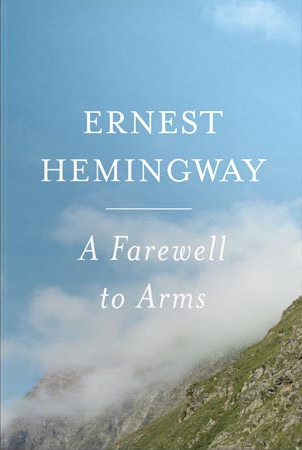
A Farewell to Arms by Ernest Hemingway

Happy 4th of July, Everyone!

A Farewell to Arms by Ernest Hemingway is an emotionally draining novel about Tenente Frederic Henry, an American serving in the ambulance corps of the Italian army during World War I, and the impact of war on its soldiers, displaced populations, and others.  Some critics say that the novel is semi-autobiographical given that Hemingway did indeed serve in the Italian Army as an ambulance driver during the Great War; learn more about the autobiographical elements here.

While WWI and the front is always in the background and weighing heavily on the characters, much of the focus is on Henry and his relationship with Nurse Catherine Barkley of Britain.  When they meet, it seems as though both are contriving a romance out of thin air, and when Barkley’s past is revealed readers understand her desperation, though they may not like it.

“‘This is the third day. But I’m back now.’
She looked at me, ‘And you do love me?’
‘Yes.’
‘You did say you loved me, didn’t you?’
‘Yes,’ I lied. ‘I love you.’ I had not said it before.
‘And you call me Catherine?’
‘Catherine.’ We walked on a way and were stopped under a tree.
‘Say, “I’ve come back to Catherine in the night.”
‘I’ve come back to Catherine in the night.’
‘Oh, darling, you have come back, haven’t you?'” (page 30)

Henry is another matter, with the distant, first-person account of events in the past, readers will know little of how he makes decisions or how he feels unless he speaks aloud.  In many ways, the reader must focus on what is not said to catch a glimmer of the hopelessness of his situation and the conviction he has in remaining with the Italian army even as it appears that they are losing the war.  The silences of his mind and the things left unsaid in conversation make a surface reading of this novel inadequate (please check out Jeanne’s posts on this book from the read-a-long with War Through the Generations).

“I was afraid we would move out of the eddy and, holding with one hand, I drew up my feet so they were against the side of the timber and shoved hard toward the bank. I could see the brush, but even with my momentum and swimming as hard as I could, the current was taking me away. I thought then I would drown because of my boots, but I thrashed and fought through the water, and when I looked up the bank was coming toward me, and I kept thrashing and swimming in a heavy-footed panic until I reached it.” (Page 227)

There are moments where the supply shortages are noted, but there seems to be a never-ending supply of alcohol, which Henry uses to deal with the pain in his leg and the war that continues to rage on without an end.  He loses friends, he loses his way, he must escape the enemy, and he must survive.  There is desperation and scrambling for comfort and a sense of normalcy, but the hopelessness pervades everything in the novel and highlights the truth of war.  Hemingway’s terse sentences, little insight into his main character, and the over-the-top antics and subservience of Barkley to Henry can get overwrought.  However, in the latter portion of the novel there are moments of tenderness between Barkley and Henry are good to see and temper the uneasiness readers may feel about their relationship and its lack of depth.

A Farewell to Arms by Ernest Hemingway is a stark look at the emotional and psychological effects of war on soldiers, residents, and nurses, but it also raises questions about courage and bravery, whether peasants are beaten before they even enter the war, and how everyone, even the most dedicated, have a breaking point.  Readers may find the novel plodding and ridiculous, and the characters distant and obnoxious at times, but with the threat of war at the backdoor, it must be hard to remain rational and unemotional.  However, in this way, Henry’s actions often seem super-human, particularly during his knee surgery and other events.

Check out the read-a-long discussions for week 1, week 2, week 3, and week 4 at War Through the Generations.

This is my 12th book for the WWI Reading Challenge.

Sea Change by Karen White

Sea Change by Karen White is told from the alternating points of view from three women — Ava, Gloria, and Pamela — who each hold secrets close and family closer.  Ava is a midwife who is impulsive and marries a man, Matthew Frazier, she knows little about and moves from her hometown and family to St. Simons Island, Georgia.  Gloria, Ava’s mother, has secrets that she barely acknowledges in the presence of her mother, Mimi, and has never told Ava.  Meanwhile, Pamela Frazier is a midwife from the 1800s who allegedly ran off with a British Army man, leaving her husband and son behind and whom the community branded a traitor and erased from history.

“Storms bring the detritus of other people’s lives into our own, a reminder that we are not alone, and of how truly insignificant we are.  The indiscriminating waves had brutalized the shore, tossing pieces of splintered timber, an intact china teacup, and a gentleman’s watch — still with its cover and chain — onto my beloved beach, each coming to rest as if placed gently in the sand as a shopkeeper would display his wares.  As I rubbed my thumb over the smooth lip of the china cup, I thought of how someone’s loss had become my gain, of how the tide would roll in and out again as if nothing had changed, and how sometimes the separation between endings and beginnings is so small that they seem to run together like the ocean’s waves.”  (Page 1)

White creates multifaceted characters with real problems and sometimes places them in surreal circumstances, including worlds in which ghosts exist and past lives are possibilities.  Ava is the only daughter in a family full of older brothers, and she escapes into the arms of Matthew to feel free and to roam as she chooses, but is her love for him real or contrived and will their relationship last even as the past surfaces to reveal some ugly secrets about him and his ancestors.  White uses water imagery in a way that connects the idea that a circle never begins or ends, but continues endlessly — forever — in a way that demonstrates the power of love and devotion to family.

There are intricate details in this novel that connect not only Ava and Matthew, but also some secondary characters, like Tish — the local florist.  White easily weaves in these details among the finer setting elements, ensuring that the island itself becomes a character in her novel about changes and the current beneath that connects everything.

“And in the moment before I closed my eyes, the flashlight caught on the corner of the wall by the stairs, where kudzu vines had begun to work themselves into a crack along the wall, climbing upward like a spider, relentless in its advance, lie the doubt that crept around my skull and took root in my chest where my heart beat.”  (Page 128)

While White’s characters are strong, particularly the women, Matthew is more of a stand in, the logic and realism that anchors the story.  He’s note as deep as White’s other characters, though this also is likely due to the drawback of having the present day sections told by Ava and Gloria and readers can only see him through their interactions with him.  Readers may not only find him distant and enigmatic, but a character too stuck in the past and not caring enough toward his wife, Ava.  As suspicions pile up around him, his behavior becomes more bizarre and he becomes more distant from Ava.

Sea Change by Karen White is like the ocean waves undulating against the shore, eroding away the beach of lies and half-truths that cover the reality beneath — the truth of Ava and Gloria’s lives and the mystery of Matthew’s ancestors.  Readers will discover that the lull of the rocking ocean waves can be easily churned into a roaring storm tossed seascape, but once the storm has subsided, there will be nothing left by hope.

About the Author:

Known for award-winning novels such as Learning to Breathe, the Southern Independent Booksellers Alliance 2009 Book of the Year Award finalist The House on Tradd Street, the highly praised The Memory of Water, the four-week SIBA bestseller The Lost Hours, Pieces of the Heart, and her IndieBound national bestseller The Color of Light, Karen has shared her appreciation of the coastal Low country with readers in four of her last six novels.

Italian and French by ancestry, a southerner and a storyteller by birth, Karen has made her home in many different places.  Visit the author at her website, and become a fan on Facebook.

Also check out my reviews of The House on Tradd Street, The Girl on Legare Street, The Beach Trees, and On Folly Beach.

Interview with Wendy Wax, Author of Ocean Beach

Wendy Wax is one of my new favorite authors, and I loved her book, Ten Beach Road, so much that I recommended it for the Mother’s Day issue of Women’s World Magazine.

In Ocean Beach, readers will be reunited with the heroines of Ten Beach Road — Madeline, Avery, and Nicole — as they come to South Beach in Miami to renovate yet another historic house for the television show Do-Over.  While the women have no qualms about working together again and having it televised, they are less interested in having their personal lives shown to the world on television.

Today, I’ve got an interview with Wendy Wax.  I hope you give her a warm welcome.

The characters from Ten Beach Road return in Ocean Beach. When did you know you were not done with these characters and their story and how soon did you begin writing it?

When I finished writing and revising Ten Beach Road I said goodbye to the lovely ladies of Bella Flora thinking that I had given them enough closure to send them off to live the rest of their lives and either find their happy endings or not in the imagination of my readers. But doing a series was something I had always thought about and for some reason as the launch of Ten Beach Road approached and as I talked to bloggers, bookstore owners, friends and fans about the book, ideas for a sequel began to take shape. This was new territory for me and it was very exciting. Over the years as I visited with book clubs and readers to talk about my books I was often asked if there would be more on some of those characters or stories and while I so appreciated the connection readers were making with my characters, for me they were complete and I had no desire to go back. But Maddie, Nicole, and Avery were different – and the idea of tackling another renovation with them for another sweat-soaked summer, seeing where there lives were headed and giving them new challenges was just too hard to resist. Shortly after the tour for Ten Beach Road ended, the writing of Ocean Beach began and now as Ocean Beach is about to hit shelves, I already find myself thinking about new renovation projects and new sunset toasts for my gals, so be sure to stay tuned!

Ten Beach Road was a hit with a number of women and made my recommendation list for Women’s World Magazine in May. How many readers have said they share their books with their mothers, sisters, and friends? And have any readers said they’ve shared your books with the men in their lives?

When I discover a new author or come across a book that I love, it’s automatic for me to share that information with the women in my life, so I love hearing from my readers that they “introduced” me and my work to their mothers, sisters, daughters and friends. Especially since I write about the bonds between women and I feel those relationships are so important in life. Probably the most fun is when readers say “I told my mom/sister/friend all about your books but I made her get her own copy because I don’t want to let mine go!” What author doesn’t love to hear that?

I do hear from some readers that they’ve tried to get their husbands to read my books, because they’d like them to a) understand what women are thinking, b) understand why we need our women friends, c) act (and look) like Joe Giraldi from Ten Beach Road and Ocean Beach or d) all of the above.

When writing your novels, do you start with an event in the news or a character? Please explain.

For me every book is different. In one case it may be an idea for plot that gets me started, in another case it might be a character that begins to take shape first or a news story that gets me thinking. In Ocean Beach it was a combination of things… our country’s obsession with misbehaving and self-obsessed celebrities was something that I touched on in Ten Beach Road and wanted to explore further. Then the idea of contrasting that with an “old school” celebrity who was a true gentleman and class act from the Vaudeville days began to take shape. Also, because Ten Beach Road was very current event based (the women are strangers who come together when they lose everything in a Madoff-style Ponzi scheme), I wanted Ocean Beach to be driven much more by their personal struggles.

Book bloggers have become very influential in the publishing world. Have you enjoyed your interactions with them on blogs, Twitter, and Facebook? And what advice would you give to other authors?

It’s a very different world now than it was when I first started writing. I love that the Internet has made connecting with fans so direct and so easy. In many ways, book bloggers are like independent booksellers in that they make a personal connection with readers, and love to share and recommend books and authors that they discover. Interacting with people like that, who are passionate about books and about reading, is something I will never get tired of, no matter what the medium.

Please recommend a favorite poet or poem and why.

I wish I had more time to read and enjoy poetry than I do. In fact with two teenage sons, a husband and some tight deadlines from my publisher, I wish I had more time to read in general! That said, I love how some of the modern poets like Lee Rossi (Wheelchair Samurai) and Laura Kasischke (Space, In Chains) incorporate modern imagery from our everyday lives into such an old art form. I have to also admit that I’ve always loved the poem Phenomenal Woman by Maya Angelou mostly because I think it would be lovely to feel that way about one’s self every day.

Thanks, Wendy, for answering my questions.

Author Wendy Wax

About the Author:

Award-winning author Wendy Wax has written eight novels, including Ocean Beach, Ten Beach Road, Magnolia Wednesdays, the Romance Writers of America RITA Award finalist The Accidental Bestseller, Leave It to Cleavage, Single in Suburbia and 7 Days and 7 Nights, which was honored with the Virginia Romance Writers Holt Medallion Award. Her work has sold to publishers in ten countries and to the Rhapsody Book Club, and her novel, Hostile Makeover, was excerpted in Cosmopolitan magazine.

A St. Pete Beach, Florida native, Wendy has lived in Atlanta for fifteen years. A voracious reader, her enjoyment of language and storytelling led her to study journalism at the University of Georgia. She also studied in Italy through Florida State University, is a graduate of the University of South Florida, and worked at WEDU-TV and WDAE-Radio in Tampa.

Ocean Beach by Wendy Wax

Ocean Beach by Wendy Wax reunites readers with Madeline Singer, Avery Lawford, and Nicole Grant on another renovation adventure in South Beach, Miami.  When you don’t know what the house looks like or have its address, but the Lifetime network comes calling for a pilot of Do Over, the cash-strapped friends have little choice but to accept, hoping for reboot to their lives and careers.  Kyra, Deidre, Giraldi, and Chase return as well.

“Avery’s hands tightened on the wheel.  She knew the sinking sensation in her stomach had nothing to do with the dizzying height of the bridge, but everything to do with fear of the fall.”  (Page 19)

From Bella Flora in Ten Beach Road (my review), the women became not only friends, but a YouTube sensation.  Their latest project in Ocean Beach is The Millicent, which is owned by an aging comedian, Max Golden, who has dealt with a heavy loss for many years.  Max is wildly eccentric, but fun, and he takes a shine to the girls and their crew.  Meanwhile, the girls are constantly at odds with the crew from Lifetime that was an unexpected and unwelcome surprise.

As the ladies mix it up with renovation, they are still remaking their lives after losing everything in Malcolm Dyer’s Ponzi scheme, and they are still struggling to rebuild their familial relationships.  Wax also throws in some suspense and a mystery to keep readers turning the pages.  It’s not all fun in the Miami heat as the paparazzi returns when movie star Daniel Deranian re-enters Kyra’s life.  Wax is great at describing the Florida coasts, architecture, and Art Deco homes, making the setting almost a character unto itself.

“Like a patient on an operating table, The Millicent lay open, her guts spilling out, her innermost self put on display.  The kitchen had been stripped down to walls, floors, and windows.  They were down to one bathroom for however long it took to replace miles of rusted galvanized iron pipe and reconfigure an equal amount of cast iron.  Because they were trying to preserve rather than rip out existing walls, tiles, tubs, showers, and sinks, it often took an excruciating amount of time to move a pipe as little as ten feet.”  (page 243)

Even the house begins to stand in as a metaphor for the women who are bared to public view and raw, and as the house is resurfaced and put together, so too are the women.  Maddie must use her new strength to find her backbone where her marriage is concerned and learn to care for herself as well as others.  Nicole must learn to rely on others rather than go-it-alone all the time, just as Avery must learn the same and to forgive past transgressions.  Ocean Beach by Wendy Wax is a great summer read that will take readers to the beach, show them what it means to come together, and triumph over the most harsh circumstances even without creature comforts.

About the Author:

Award-winning author Wendy Wax has written eight novels, including Ocean Beach, Ten Beach Road, Magnolia Wednesdays, the Romance Writers of America RITA Award finalist The Accidental Bestseller, Leave It to Cleavage, Single in Suburbia and 7 Days and 7 Nights, which was honored with the Virginia Romance Writers Holt Medallion Award. Her work has sold to publishers in ten countries and to the Rhapsody Book Club, and her novel, Hostile Makeover, was excerpted in Cosmopolitan magazine.

A St. Pete Beach, Florida native, Wendy has lived in Atlanta for fifteen years. A voracious reader, her enjoyment of language and storytelling led her to study journalism at the University of Georgia. She also studied in Italy through Florida State University, is a graduate of the University of South Florida, and worked at WEDU-TV and WDAE-Radio in Tampa.

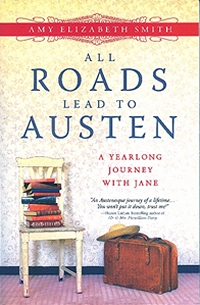
All Roads Lead to Austen by Amy Elizabeth Smith

All Roads Lead to Austen by Amy Elizabeth Smith is the memoir of one college professor’s journey through Latin America discussing Jane Austen’s books with book clubs and having a misadventure of her own that changes her life.  Her enthusiasm for the trip is infectious.

“Was I nervous about spending a year away from family and friends, trying to function in a foreign language I had a tenuous grip on while convincing several dozen people in six different countries to join me for book groups? Hell, yeah.  Was I excited about the trip anyway? Hell, yeah.” (page xiii ARC)

She decides to discover if Jane Austen’s Sense & Sensibility, Pride & Prejudice, and Emma can carry the same sway with Latin and South Americans that it does with Americans and Europeans.  She visits not only Mexico and Guatemala, but also Ecuador, Chile, Argentina, and Paraguay, and she finds that underneath all the stereotypes and prejudices, each of has a base need for family, acceptance, love, and support.  Smith’s memoir highlights not only her insecurities about committed relationships and her conscious efforts to avoid stereotyping or relying on her assumptions of various cultures when meeting new people, but also her quirkiness at making each temporary apartment or hotel feel more like a home by decorating it with statues, blankets, and other items.  She’s also like many readers, a book collector and completely helpless when it comes to saying no to books in a bookstore.  Her over-packed luggage and rising airport fees are a testament to her journey to South American and Latin American bookstores, especially as she seeks recommendations who compare to Jane Austen from the local residents.  All the while, she’s learning Spanish and immersing herself in the language at every turn.

“One of the fun features of Spanish that English lacks is the capacity to create nouns that express behaviors out of other nouns or verbs.  So a dog is un perro, and behaving like a dog to somebody (see how many words that takes?) is una perrada.  Behaving like un burro (donkey) translates into una burrada and un cochino (a pig), una cochinada.”  (page 21 ARC)

There are moments when she falls ill and cannot recall the names of the book group members, which readers may find a bit disrespectful given the time these men and women gave her for the book group discussions.  What would really have added to the memoir would have been better descriptions of the places she went or saw or perhaps the inclusion of pictures from some of these locations.  However, these are minor quibbles given the societal and social insights the memoir provides as a bungling American travels through unfamiliar countries.  More than a discussion of Jane Austen and her books, All Roads Lead to Austen by Amy Elizabeth Smith is an examination of one woman’s journey through other worlds and learning how to go with the flow and find her own happiness in a world that moves blindingly.

About the Author:

Amy Elizabeth Smith, originally from Pennsylvania, teaches writing and literature at the University of the Pacific in Stockton, California. Her memoir, All Roads Lead to Austen: A Yearlong Journey with Jane (Sourcebooks, June 1, 2012) recounts her year spent learning Spanish and holding Austen reading groups in Guatemala, Mexico, Ecuador, Chile, Paraguay, and Argentina.

This is my 48th book for the New Authors Reading Challenge 2012.

Wonderstruck by Brian Selznick

Wonderstruck by Brian Selznick is a quick read even at 600+ pages, and is a middle grade novel that pairs words and images to tell a heartfelt story of family, discovery, and understanding.  Ben, who has one good ear, has lost his mother in a car accident in 1977 Minnesota and is thrust into his aunt’s home with his cousin Robby, who isn’t too keen on sharing his room.  Ben by all accounts is a curious and shy boy, whom his mother showered with love and attention, encouraging him to scavenge for mementos along the way, which he kept in his museum box.  The loss of his mother weighs heavily on him, and upon discovering his other cousin, Janet, in his mother’s room, he decides to remain behind and feel closer to her.

Meanwhile, Rose’s story is told in drawings set in New Jersey and New York City.  The narration shifts from the present (1977) and Ben’s story to Rose’s story in 1927.  Their stories parallel one another at various points after Ben makes the fateful decision to run away to find the father he has never known.  Wolves, nature, and the Big Apple loom large in both stories as Ben and Rose make their way into the unknown.

Selznick’s prose has an easy flow between the illustrations and the text, and given that both stories are told in separate mediums, it is easy for younger readers to keep them straight. Most readers will note the parallels in the two stories and likely will uncover the final destination long before the last page is turned. The illustrations are detailed in some cases, but there are moments where the illustrations seem to be just filler pages to increase the suspense associated with Ben’s story of self-discovery. Rose’s story could have been told in fewer pages and more sparsely spaced throughout the book and the connections would still have been present.

“The curator then must decide exactly how the objects will be displayed.  In a way, anyone who collects things in the privacy of his own home is a curator.  Simply choosing how to display your things, deciding what pictures to hang where, and in which order your books belong, places you in the same category as a museum curator.” (page 98-9)

Additionally, readers may find that they wanted more about the teasing Ben endures as a boy with only one good ear and who does not know sign language, as well as more about Rose’s story as a young deaf girl in the late 1920s who is sheltered a little too much by her parents.  However, Selznick doesn’t always need a pencil to paint a picture of readers, especially when he can do it so well with words.

“Jamie came and sat next to him as the sky filled with shooting stars.  The projector rotated, the view changed, and the boys found themselves inside a meteor, hurtling across the sky.  They flew to the moon and bounced between craters.  One by one, the planets drifted into view, and soon they were out beyond the solar system, gazing down on the universe like ancient gods.  Ben thought of the glow-in-the-dark stars in his room, and the Big Dipper, and the quote about the stars, and his mom.  The glowing lights above him spun and swirled, tracing endless patterns against the perfect dome of the ceiling like a million electric fireflies making constellations in the dark.”  (page 406)

Wonderstruck by Brian Selznick definitely will appeal to younger readers and illustrators, but it should not be discounted as a fluffy YA novel.  There is a deeper message about finding one’s place outside your own family, about discovering new places and wonders, and about finding the courage to take chances.

What the Book Club Thought (beware of spoilers):

Wonderstruck was the selection of our youngest member, The Girl from Diary of an Eccentric. She prepared discussion questions ahead of time to see what everyone thought of the entire book, the way the two stories were told, and whether anything surprised us. We also discussed what each of us would put in our own museum boxes, and answers ranged from coin collections and shells to Red Sox and Patriots stuff to pictures, stuffed animals, and other sentimental items.

We had an interesting discussion about the “Captain Obvious” nature of some of the prose (The Girl’s words, not ours), and about whether who Rose was or how the stories came together surprised any of us. Most of us were not surprised to find out who Rose was, but I was surprised to learn who Walter was. Many of us agreed that Rose’s ability to cut up a book for the deaf and create a paper replica of NYC was fantastic, and I particularly liked how one of the buildings she made had the picture of the mouth on it from the book. One of the male members liked elements of the story individually, but not how they came together as a whole. Overall, it seemed like most of us enjoyed the book, though two members were absent from the discussion this time around.

Next month is my selection, When She Woke by Hillary Jordan, and one of our members has already finished it and is itching for discussion.

About the Author:

Brian Selznick is the illustrator of “Frindle” by Andrew Clements, “Riding Freedom” and “Amelia and Eleanor Go For A Ride,” both by Pam Munoz Ryan; as well as his own book “The Houdini Box,” winner of the 1993 Texas Bluebonnet Award. Mr. Selznick lives in Brooklyn, New York.


This is my 47th book for the New Authors Reading Challenge 2012.
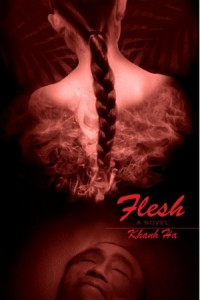
Flesh by Khanh Ha

Flesh by Khanh Ha is dark and dreamlike.  Tai’s coming of age story is fraught with trauma and hardship, but he maintains his determination and remains grounded despite the beheading of his father at the hands of his granduncle in Northern Vietnam.  Ha has woven a dark love story within Tai’s trip through adolescence that takes him to Hanoi and other places as he searches for the man who turned in his bandit father to the authorities.  Part dark adventure, Tai is thrown into the world of Vietnam’s opium dens and indentured servitude as his mother barters him away to pay for a safe, final resting place for his father and younger brother.

“He could not tell which one was my father’s as he passed under the banyan tree.  Those were the same heads he saw in the rattan baskets, but now they had no eyes, only black sockets with grubs crawling in them.  He spotted a hole bored under each jaw, and a rod was pierced through it to the top of the skull and into a limb.  The heads looked out in different directions, and in the early morning light they bore a pinched look neither of hurt nor sorrow.”  (page 18)

Each chapter reads like a short story, a memory recalled by Tai about his journey and the impact is at once immediate and lasting.  Readers are piggybacking on Tai’s shoulders as he runs through the jungles of Tonkin and the streets of Hanoi as the dark, mysterious Frenchman chases him and he bumps into Xiaoli, a young Chinese girl working in an opium den.  Ha’s prose is poetic as it paints the scene in which you can smell the opium, see and hear the brown of Tai’s village and the busy streets of Hanoi, and feel the delirium of smallpox or his pulse quicken as he begins to fall in love.

“The bank was steep.  I was a salamander, half naked, creeping on the clay soil, seizing knotty vines that bulged across the incline.  The dark odor of sundered organics.  Lying flat on the ridge of the bank, I felt unusually warm, and then a suffocating heat hazed my eyes.”  (page 42)

Tai’s journey is through darkness and fear, and Ha raises questions of nurture vs. nature — whether we are only who we are because of who our parents were or the circumstances in which we were raised.  From the atmosphere to the myths and legends, Ha generates a novel that will capture readers from the beginning, but there are times when the dialogue is a bit trite and wooden.  However, as there is little dialogue per se and that dialogue is often between characters that know little of the other’s language, it can be forgiven.

Flesh by Khanh Ha is a stunning debut novel that showcases the writer’s ability to become a young male narrator whose view of the world has been tainted by his life circumstances and tragedy, but who has the wherewithal to overcome and become a better man.  Through a number of twists and turns, Tai must come to terms with the loss of his father, his obligations as the remaining male member of his family to care for his mother, and the secrets that his culture and family hide.


About the Author:

Khanh Ha was born in Hue, the former capital of Vietnam. During his teen years he began writing short stories which won him several awards in the Vietnamese adolescent magazines. He graduated from Ohio University with a bachelor’s degree in Journalism. Flesh is his first novel. He is at work on a new novel.

Visit the author at his website.


Click for Tour Stops

This is my 46th book for the 2012 New Authors Challenge.

Giveaway for Anastasia Romanov’s 111th birthday

The fate of Anastasia Romanov is one of life’s great mysteries, and today would have been her 111th birthday.  She was the last of four daughters born to Tsar Nikolas Romanov and his wife Alexandra.  Following the tragic execution of the Russian Royal family in 1918, officials were never able to recover the remains of Anastasia.  There have been numerous tales of her supposed escape from Russia, fueling speculation that a daughter of Russia’s last sovereign ruler survived the revolution that destroyed her immediate family.

About The Last Romanov by Dora Levy Mossanen:

She was an orphan, ushered into the royal palace on the prayers of her majestry. Yet, decades later, her time spent in the embrace of the Romanovs haunts her still. Is she responsible for those murderous events that changed everything?

If only she can find the heir, maybe she can put together the broken pieces of her own past-maybe she can hold on to the love she found. Bursting to life with the rich and glorious marvels of Imperial Russia, The Last Romanov is a magical tale of second chances and royal blood.

Doesn’t this sound like an excellent read? You can win a copy by commenting on this post about what fascinates you about Anastasia Romanov or if you’ve read other books about her that you’d recommend to me.

Deadline to enter is June 22, 2012, at 11:59PM EST for U.S. and Canadian residents only.

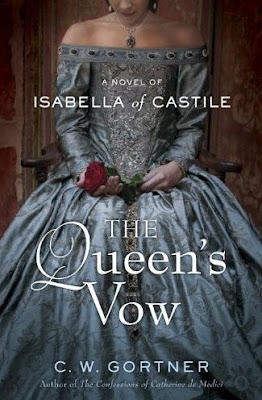
The Queen’s Vow by C.W. Gortner

The Queen’s Vow by C.W. Gortner, published June 12, is another historical fiction powerhouse about a strong, young royal who cares for her family and her country more than herself.  Isabella of Castile is the daughter of the ailing Juan II and his second wife Isabel of Portugal, and she has a younger brother Alfonso, on whom she dotes.  Her relationship with her half-brother Enrique IV is tenuous at best, and when he is poised to takeover the crown when their father dies, her mother believes it is best to flee to Arevalo.

“I slowly reached up to take my mother’s hand.  I had never dared touch her before without leave.  To me, she’d always been a beautiful but distant figure in glittering gowns, laughter spilling from her lips, surrounded by fawning admirers — a mother to be loved from afar.”  (Page VIII)

Like most royal families, children rarely spend intimate time with their parents, though often they will spend more time with their mothers if they are girls.  Isabella spends little informal time with her mother until they are removed to Arevalo, and she has virtually no relationship with her father, Juan II.

“I was not yet four years old.  My father had been ill for weeks with a terrible fever, shut behind the closed doors of his apartments in the alcazar of Valladolid.  I did not know him well, this forty-nine-year-old king whom his subjects had dubbed El Inutil, the Useless, for the manner in which he’d ruled.  To this day, all I remember is a tall, lean man with sad eyes and a watery smile, who once summoned me to his private rooms and gave me a jeweled comb, enameled in the Moorish style.  A short, swarthy lord stood behind my father’s throne the entire time I was there, his stubby-fingered hand resting possessively on its back as he watched me with keen eyes.”  (page III)

Isabella knows that of all her siblings she is the last in line and as a female heir to the throne of Castile, she will likely be sold off into marriage for political or monetary reasons.  But as a young girl sent with her mother outside the company of the crown, she has the freedom to just enjoy her family.  Her and Alfonso have a great relationship, and she has a great relationship with Beatriz, her lady in waiting, but her respite from court intrigue does not last long.  Unfortunately, there are many times throughout the book that Isabella finds herself moving from place to place, fleeing those that would do her harm even her brother Enrique, whom she remains loyal to even though he is easily swayed by others.

Readers will experience the sorrow Isabella feels about her relationship with Enrique and how finally she must break that familial bond, if she plans to survive and marry the man she loves, Fernando of Aragon.  She is often tugged in more than one direction either between her family bonds and destiny or her duty as heir to the Castile throne and the pull of her heart. In a nation pulled this way and that by different powers and political interests attempting to usurp royal power outright or through the shadows, Isabella has many demands on her time and heart, and she’s pushed to the brink more than once. She’s a stronger woman than she realizes, and with Fernando at her side, they are a force to contend with.

The Queen’s Vow by C.W. Gortner is about a promise of a better tomorrow not only for Isabella and her loved ones, but also for the country she’s seen toil with her own eyes and hands. It is a novel of perseverance, following one’s heart and instincts, and justice, but it also is a novel of family and how it can be not only nurturing but also devastating if animosities and jealously are allowed to fester. Gortner is a master at historical details, weaving them throughout a narrative that is highly emotional, tense with drama, and at times poetic in its description of the Spanish landscape. Another winning novel from this author.

About the Author:

C.W. Gortner is the author of The Last Queen, The Confessions of Catherine de Medici and The Tudor Secret. He holds an MFA in Writing with an emphasis in Renaissance Studies from the New College of California.

In his extensive travels to research his books, he has danced a galliard in a Tudor great hall and experienced life in a Spanish castle. His novels have garnered international praise and been translated into thirteen languages to date. He is also a dedicated advocate for animal rights and environmental issues.

He’s currently at work on his fourth novel for Ballantine Books, about the early years of Lucrezia Borgia, as well as the third novel in his Tudor series,The Elizabeth I Spymaster Chronicles (US) or Elizabeth’s Spymaster (UK).

Half-Spanish by birth, C.W. lives in Northern California.

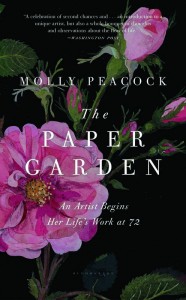
The Paper Garden by Molly Peacock

Poet Molly Peacock’s The Paper Garden is not only a collage and biography of a woman, Mary Delany, who began a career as an artist late in life, but it also is partially a memoir of Peacock’s own life and the nuggets of wisdom she’s gained from her obsession with this floral artist and her collages or flower mosaicks.  Delany is a woman who began working with scissors and paper long before she gained recognition for her art, starting as a young girl in school.  While one of her classmates recognized her talent, life got in the way as Delany was plucked from her home and moved to her aunts and back again as English politics became tumultuous and her family backed the Pretender.

“A few of the papers she used — all of the papers in the eighteenth century were handmade — in fact were wallpapers, but mostly she painted large sheets of rag paper with watercolor, let them dry, then cut from them the hundreds of pieces she needed to reproduce — well, to re-evoke might be a better word — the flower she was portraying.  There is no reproduced hue that matches the thrill of color in nature, yet Mrs. D. went after the original kick of natural color, and she did it like a painter.”  (page 7-8 ARC)

Through all of the upheaval, Delany kept to her crafts and her music, once inspired by a meeting with Handel.  Peacock’s prose is intimate and conversational as she speaks of Delany like a beloved friend and peer.  She speaks of her journey to learn about Delany’s life and craft like a careful historian citing her sources and engaging in reverence for her subject.  Through her delicate prose, the beauty of Delany and her work emerge gradually, like the petals of a bud opening slowly as the sun rises.

Peacock does a fantastic job comparing individual mosaicks to events in Delany’s life in England and Ireland even though many of the pieces were created long after the death of her second husband and her younger sister, Anne.  She was an early mixed media artist who used wallpapers, paints, dried leaves, and other materials to create her portraits of flowers, breathing new life into even the most simple flower.

The Paper Garden by Molly Peacock is a quiet read chock full of details about Mary Delany’s craft, her family, and her inspiration, but it also is full of advice, beautiful images of Delany’s work, and tidbits about Peacock’s motivations in her own poetry and life.  Readers will dip into this book, think and wonder about Delany’s craft, but also ruminate on what this journey she embarked upon taught her and ourselves.  In almost a meditative way, the biography pulls the reader in and pushes them out to ensure the depth of the art and its meaning is thought about on a deeper level.

***Some of my favorite quotes from the book that can apply to writing***

“Great technique means that you have to abandon perfectionism.  Perfectionism either stops you cold or slows you down too much.  Yet, paradoxically, it’s proficiency that allows a person to make any art at all; you must have technical skill to accomplish anything, but you also must have passion, which, in an odd way, is technique forgotten.”  (page 28 ARC)

“Not to know is also sometimes the position of the poet, who depends on close observation to magnify a subject, hoping to discover an animating spirit.  There’s romance in that forensic impulse . . .” (page 34 ARC)

About the Author:

Molly Peacock is the award-winning author of five volumes of poetry, including The Second Blush. Her poems have appeared in the New Yorker, the Paris Review, and the Times Literary Supplement. Among her other works are How to Read a Poem . . .  and Start a Poetry Circle and a memoir, Paradise, Piece by Piece. Peacock is currently the poetry editor of the Literary Review of Canada and the general series editor of The Best Canadian Poetry in English. A transplanted New Yorker, she lives in Toronto.

Visit Molly Peacock’s Website.

Click for Tour Stops

This is my 4th book for the 2012 Ireland Reading Challenge.

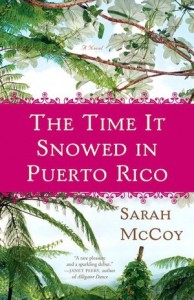
The Time It Snowed in Puerto Rico by Sarah McCoy

The Time It Snowed in Puerto Rico by Sarah McCoy is a coming of age novel about a young girl, Maria — also known as Verdita — in Puerto Rico during the debate about whether or not the nation should become a member of the United States or remain independent.  Part of Maria Ortiz-Santiago’s family lives in the United States and part lives on the island in a little barrio, and readers get a taste of the differences between the two lives when Omar, her cousin, comes back to visit.  As the two grow older and grow apart, Verdita continues to ramp up her competitive spirit when he’s near to retain her hold on her father.  She’s always had a fear that a boy would usurp her father’s affections, especially after her mother becomes pregnant.

“For my eleventh birthday, Papi made piraguas.  He left balloons of water in the freezer until they were solid, then peeled the plastic off like bright banana skins.  On the veranda, he used his machete to shave the globes into ice chips.  Hard bits of cold spit out where the ball and blade met, landing on my arms and legs, cheeks and nose.  Papi said it was a Puerto Rican snowfall, and laughed long and deep.”  (page 1)

Verdita is a willful girl and very curious about everything around her, including the independence debate, the cock fights at the local bar, and the United States.  Readers will find that she’s obsessed with the United States and how different it is from her home in the barrio.  She wants to be blond, listen to Elvis, and learn English.  She wants to remain close with her father, but push her mother away.  All this mixed up emotion and desire in one girl is so vibrant on the page, female readers especially will remember what it was like to become a senorita and leave girlhood behind and all of the mixed and high emotions that brought with it.

“I ate until my stomach pushed into the table ledge.  I didn’t even really like the hamburger, but I liked that it came from America — that I was eating like an American.  It made me feel bigger than my finca on the mountain, bigger than the whole island.  I’d seen the States, even if I hadn’t seen President Kennedy.  My stomach was full of America.”  (page 59)

Even as she sees the goodness in her roots and her family, she still longs for the foreignness of the United States.  She becomes accustom to sharing her life with a sibling, but still longs to break break free.  She’s struggling between the desire to grow beyond her roots, deeply earthed in Puerto Rico, but barely realizing that she can grow taller and broader by taking the leap without having to sever her ties to home.

McCoy’s choice of first person point of view is spot on for a coming of age story, and while filtered through Verdita’s eyes rather than the other characters, readers will not feel as though they have missed anything.  She’s observant, opinionated, curious, and eager to explore.  The Time It Snowed in Puerto Rico is not only about growing up, but about taking chances and spreading wings to find out who we are, who we want to be, and how we can make the best of everything we are given in terms of familial support and available opportunities.

This was a book I just had to pick up at the Gaithersburg Book Festival when Sarah McCoy was in town.  She’s a lovely writer and woman, and it was great to see her again and get another autograph.  I cannot wait to read her next novel.

About the Author:

SARAH McCOY is author of the novel, The Time It Snowed in Puerto Rico. She has taught English writing at Old Dominion University and at the University of Texas at El Paso. The daughter of an Army officer, her family was stationed in Germany during her childhood. She calls Virginia home but presently lives with her husband and dog, Gilbert, in El Paso, Texas. The Baker’s Daughter is her second novel. She is currently working on her next.