Quantcast

The Lighthouse Road by Peter Geye

The Lighthouse Road by Peter Geye feels like the frozen tundra and the heat of the tropics all at once as his eccentric characters hack their lives out of the wilderness outside Duluth, Minn., between the 1890s and 1920s in Gunflint.  Odd is a young fisherman with his own small boat, whose mother died soon after he was born.  Raised by the local apothecary owner, Hosea Grimm alongside his daughter Rebekah, Odd strives to make his mark in the rough-around-the-edges town.

Geye’s narration shifts between Thea and Odd’s stories, with Thea’s set during the late 1890s when the town is just beginning and Odd’s story set during the 1920s during prohibition.  Earning money and carving out a life from the wilderness is tough work, and Odd begins making whiskey runs for the local bars and Grimm.  As the narrative shifts from Odd’s life to Thea’s life, the secrets of Gunflint are revealed slowly.  These secrets have lasting consequences for Odd as he falls in love.

“They all looked the same at a glance, so she learned to identify them by their grotesqueries:  the missing fingers or hands, the peg legs, the hunch backs, the harelips, the sunken chests, the pruritus and scabies.  It seemed as if each of the men possessed some defect or wound.”  (page 47)

Although the novel is about the residents of Gunflint, it also is an immigration and pioneering story.  The members of Gunflint are the first to hack their lives out of the woods, and Thea is the immigrant from Norway among them, who speaks little to no English when she arrives.  Geye once again relies on his abilities to paint a thorough picture of the town and its people, setting the stage for his story — even providing Odd a deformity of his own that mirrors the most prevalent problem in the town, which allows the secrets and lies to grow and fester.

Odd is a man who builds things with his hands, hoping that by building a larger boat he can improve his lot in life and to find a new life with his love.  Despite his realization that the town turns a blind eye to the tawdry goings on in town and its festering secrets, he is blind to the myth of the “grass is always greener on the other side.”  Geye’s novel is about the glimmer of hope in our lives and how it must be nurtured to bloom, but it also is about holding on too tight to that hope, so tight that it becomes extinguished.  Geye has hit another one out of the park with The Lighthouse Road.  **Excellent book for book club discussions**

About the Author:

Peter Geye received his MFA from the University of New Orleans and his PhD from Western Michigan University, where he was editor of Third Coast. He was born and raised in Minneapolis and continues to live there with his wife and three children. He is the author of the award winning novels, Safe from the Sea and The Lighthouse Road.

Please check out the reading guide.

Other reviews:
Safe From the Sea

Judging a Book by Its Lover by Lauren Leto

Judging a Book by Its Lover by Lauren Leto is a guide to the mind of readers everywhere, and it offers some great tips on how to fake it for readers who may not have read some contemporary or classic authors that everyone else has been.  Leto is like many of us in that she says, “Considering yourself a serious reader doesn’t mean you can’t read light books.  Loving to read means you sometimes like to turn your head off.  Reading is not about being able to recite passages from Camus by memory.  Loving young adult novels well past adolescence isn’t a sign of stunted maturity or intelligence.  The most important thing about reading is not the level of sophistication of the books on your shelf.  There is no prerequisite reading regimen for being a bookworm” (page 8).  To that end, she discloses that she’s likely to be found with the latest Janet Evanovich in her hand when she has to fly anywhere.

The initial confessions read like that of any bookworm, with the boxes and boxes of books moved from apartment to apartment and from makeshift bookshelf to re-purposed material made into a bookshelf — in her case, a couple of old ladders (page 13).  Leto even offers a funny little bit about changing the readers’ mascot from a worm to a cat, but one of the most ironic reasons in the book is because cats hold grudges (page 63) — like many do against James Frey from A Million Little Pieces, who offers a witty quote about Leto’s book on the cover.

Through a series of chapters of advice on how to fake having read a particular book, using vague statements and comparisons to popular movies and other writers you may have read, Leto has created an unapologetic homage to reading as entertainment, education, enjoyment, escapism, and understanding.  She even includes a chapter on rules for the book club, which means talking about book club with others not in your club or about the books you are reading in the club as well as how best to end a disagreement over something that happens in one of the books read by the group.  Her observations on members of a book club and their roles from the leader to the quiet (usually girl) member are in line with many readers’ experiences, including those who might even fit those character types in one group or another.

Some of the best aspects of this book are the snarky comments about authors and readers of certain authors, like those who adore Chuck Palahniuk are boys who cannot read and those who love Chuck Klosterman are boys who don’t read.  Leto’s comments about the “Literati,” a chapter with an alternate title of “Why Ernest Hemingway Once Told John Updike Literary New York Is a Bottle Full of Tapeworms Trying to Feed on Each Other,” is hilarious and a warning for those would-be writers out there.  Judging a Book by Its Lover by Lauren Leto is not really about judging anyone, but it is about having fun with books and reading, making connections even with strangers, and finding happiness in a bent page — to paraphrase her (page 245).

About the Author:

Lauren Leto dropped out of law school to start the popular humor blog “Texts from Last Night.” She co-authored the book Texts from Last Night: All the Texts No One Remembers Sending. She lives in Brooklyn.

This is my 78th book for the New Authors Reading Challenge in 2012.

The Help by Kathryn Stockett

The Help by Kathryn Stockett, which was my book club’s October selection, has been celebrated and made into a movie already.  Aibileen, Minny, and Skeeter share the narration for the 1960s segregated Jackson, Mississippi, as the lines blur between the races and to social classes.  While Skeeter’s social class is not as pure as it seems, the Black maids are struggling to make ends meet and hold their tongues even as others are engaged in sit-ins at the local Woolworth’s and marches.  Stockett carefully illustrates the social and color lines in the South, while also paying careful attention to the harsh realities of Black maids in white households.  This is not just a story about Black maids, but also about where stigma comes from, how it is perpetuated, and how it can be overcome.

“And I know there are plenty of other ‘colored’ things I could do besides telling my stories or going to Shirley Boon’s meetings — the mass meetings in town, the marches in Birmingham, the voting rallies upstate.  But truth is, I don’t care that much about voting.  I don’t care about eating at a counter with white people.  What I care about is, if in ten years, a white lady will call my girls dirty and accuse them of stealing the silver.”  (page 256)

Stockett has created a novel that gets readers thinking about their own environment and what they tolerate on a daily basis, even though they do not agree with certain things that happen or continue to be spoken in anger or prejudice toward others.  Like she notes in her “Too Little, Too Late” essay at the back of the paperback, no one in her white family who had a Black maid even thought about asking the maid what it was like to be Black in the deep south.  How many things that go on daily do we disagree with and dislike, but allow to happen without so much as a criticism or objection?

On one hand, readers are introduced to the Black maids and the prejudice they put up with from their white employers, and on the other hand, Stockett introduces Skeeter, a young woman returned from college to find that she is vastly different from her childhood friends, Hilly and Elizabeth.  While the parallel is lightly drawn and clearly not the same kind of prejudice on both sides, it does raise the question about what it means to create groups within a larger society to the exclusion of others.  Both avenues lead to great isolation and emotional pain, but the consequences of speaking out against that oppression are potentially more violent and devastating for the maids than for Skeeter.

The Help by Kathryn Stockett provides a balanced look at the love and disdain in the relationship between white women and families and Black maids, but it also tends to play it safer than one would expect given the volatile time period being discussed.  Yes, there are occasions of devastating tragedy, spousal abuse, and hints of other violent behavior, but truly the focus is less on the consequences of speaking out and more on the ties that bind each group to one another.  Stockett has chosen to show the complex relationships between these women given the societal constructs that constrain their actions and behaviors, even if they would wish it not so.

About the Author:

Kathryn Stockett was born and raised in Jackson, Mississippi. After graduating from the University of Alabama with a degree in English and Creative Writing, she moved to New York City where she worked in magazine publishing and marketing for nine years. She currently lives in Atlanta with her family. The Help is her first novel.


This is my 77th book for the New Authors Reading Challenge in 2012.


What the Eclectic Bookworms Thought (Beware of Spoilers):

Overall, we all enjoyed The Help and determined that it accurately portrayed the South, particularly the conflicted emotions of the Black maids and the children they raised.  It also demonstrated the poor logic that many white families used to determine what Blacks were good enough to do for them, but not good enough to share with.  For instance, Blacks cannot use the same bathrooms as whites because they are diseased, but at the same time, those maids can cook their families’ food and raise their children.

The group seemed split about which character they liked best, with some of us in favor of Minny, while others liked Skeeter and Aibileen best.  One of our female members said that Aibileen’s voice was the most balanced, and that’s why she liked her best, while our youngest member said that she enjoyed Skeeter best because she was an aspiring writer.  Personally, Minny’s kick ass attitude and yet vulnerability when it came to her husband and children made her both frightening and endearing — as well as a little bit vulnerable.

The club also discussed whether we would go as far as Minny to get revenge on Hilly, with only a few of saying that we would and a couple of us indicating we would have gone further.  At one point the discussion of slavery came up and whether the maids would have considered themselves still slaves or something more than that, but we all seemed to be on the fence about that question.  A discussion of other cultures’ use of slavery and how slaves could earn their way out was also mentioned, though none of us had any concrete sources on hand to discuss that too much in depth.

Other topics touched upon during the discussion include the friendship dynamics in Hilly’s group and how most of the women were subservient to Hilly and her approval, while others like Skeeter seemed to see that cow-towing to Hilly was wrong as well as how Minny and her family seemed to get by more easily than Aibileen who was on her own without any children.  We all enjoyed the book, though some of us would have preferred less about Stuart and Skeeter’s relationship and that other sections were trimmed down.  I personally enjoyed the additional insight into Skeeter and Stuart’s relationship after having watched the movie and found that part lacking in the film.

Things Your Dog Doesn’t Want You to Know by Hy Conrad and Jeff Johnson

Things Your Dog Doesn’t Want You to Know by Hy Conrad and Jeff Johnson is a humorous collection of stories from 11 dogs who bare all.  Not only do they divulge secrets about why those “pee” walks take so long, but they also enlighten dog walkers on the order that dogs should be taken out and why.  There are hijinks from dogs eating shoes and eating even mores hoes when owners lock them in the shoe closet, and there are dogs giving parenting advice to owners about their own puppies.

Sarge was one of the funniest given that he was a narcotics dog and became addicted to the pot that the police had him sniffing out.  He goes through several different jobs from junkyard dog to service dog.  He has trouble holding down a job.  Axelrod is another funny little dog who has a thing for herbs and incense given that there are herbal soaps in the bathroom, he thinks the herb garden outside is the perfect place to go potty since his owners seem to like the scent.

Conrad and Johnson have a firm grasp of the dog mindset and their seemingly erratic behavior from chasing cars to herding kids throughout the house.  A book you can dip into in the waiting room for entertainment, follow only one dog’s story from beginning to end, or read cover to cover.  Things Your Dog Doesn’t Want You to Know by Hy Conrad and Jeff Johnson is fun for dog owners, kids, those who love dogs, and anyone in between looking for a good chuckle.

About the Authors:

Best known for his work in mysteries, Hy Conrad was one of the original writers for the groundbreaking series, Monk, working on the show for all eight seasons, the final two as Co-Executive Producer. In a related project, Hy was Executive Producer and head writer of Little Monk, a series of short films featuring Adrian Monk as a ten-year-old.  His latest TV work was as writer and Consulting Producer for White Collar.

Hy is also the author of hundreds of short stories and ten books of short whodunits, which have been sold around the world in fourteen languages.  Hy’s first mystery novel series, Abel Adventures, will debut in 2012 with the publication of Rally ‘Round the Corpse.  And his first full-length comedy/mystery play, Home Exchange, premiered at the Waterfront Playhouse in May 2012.  He lives in Key West and Vermont with his partner and two miniature schnauzers.

Jeff Johnson spent most of his working life in advertising agencies, currently as General Manager of Cramer-Krasselt in New York City.  He is the author of The Hourglass Solution:  A Boomer’s Guide to the Rest of Your Life and co-authors (with Paula Forman) a national online advice column called Short Answers, which also appears in newspapers all along the east coast (from Massachusetts to Florida).  Jeff lives in Vermont and Key West and is on the Board of Directors of the Waterfront Playhouse and the Florida Keys SPCA.

This is my 76th book for the New Authors Reading Challenge in 2012.

The Thirteenth Tale by Diane Setterfield

The Thirteenth Tale by Diane Setterfield is a novel that tries hard to be a Gothic tale full of ghosts and melodrama, but light on the actual romance.  Margaret Lea receives a random letter from famed contemporary author Vida Winter, a woman who spends a lot of her time telling stories even to those journalists seeking her real-life story.  Lea is a bookworm extraordinaire, who helps her father in his antique bookshop, while her mother is hold up in her room every day barely engaging them.  Margaret is intrigued by Winter after reading a volume of short stories from her vast collection of books, titled “Thirteenth Tales of Change and Desperation.”  Upon meeting the woman and asking for three true things she can double-check for their accuracy, Margaret is sucked into her real-life tale by their own common bond.

What follows is the unraveling of Vida Winter’s real life story in a fragmented narration, which vacillates between Margaret’s journalistic digging and Vida’s fairy tale-like story.  Setterfield weaves a story of mystery that Margaret is determined to uncover even as she is haunted by her own family past.  There is a cast of secondary characters that are as colorful as Winter, but there are moments of too much detail that bog down the narration in Winter’s story and in Lea’s investigations and wanderings around Winter’s childhood home of Angelfield.

“Vida Winter’s appearance was not calculated for concealment.  she was an ancient queen, sorceress or goddess.  Her stiff figure rose regally out of a profusion of fat purple and red cushions.  Draped around her shoulders, the folds of the turquoise-and-green cloth that cloaked her body did not soften the rigidity of her frame.  Her bright copper hair had been arranged into an elaborate confection of twists, curls and coils.  Her face, as intricately lined as a map, was powdered white and finished with bold scarlet lipstick.  In her lap, her hands were a cluster of rubies, emeralds and white, bony knuckles; only her nails, unvarnished, cut short and square like my own, struck an incongruous note.”  (Page 43-4)

Despite this, Setterfield peppers her story with mist and ghosts, leaving the reader wondering if they are real.  The creation of Margaret and her back story, which is similar to Vida’s, is a bit contrived to propel the story forward and to engage Margaret in the investigation of Winter’s family.  Overall, the story within the story is the most engaging with incest, twins, and family secrets, and the story on which Winter builds her new life as an author.

“‘You think that a strange thing to say, but it’s true.  All my life and all my experience, the events that have befallen me, the people I have known, all my memories, dreams, fantasies, everything I have ever read, all of that has been chucked onto the compost heap, where over time it has rotted down to a dark, rich organic mulch.  The process of cellular breakdown makes it unrecognizable.  Other people call it the imagination.  I think of it as a compost heap.'”  (Page 46)

The conclusion of the story is very anti-climatic with a wrap up of all the secondary and tertiary characters, which felt unnecessary, and there are elements of the story that remain unresolved.  The Thirteenth Tale by Diane Setterfield is an intriguing novel that could have done better under a different structure to capture the reader’s attention fully, rather than allowing the story of Margaret to pull them out of the biography of Winter, who is the true protagonist of the novel.  While Margaret is a necessary evil in that she is picked by Winter to tell her story, and she must investigate the truth of it given the legend that surrounds Winter as an unreliable narrator, there are too many moments in which Margaret’s wanderings and indecision disengage the reader.

About the Author:

Diane Setterfield is a British author whose 2006 debut novel, The Thirteenth Tale, became a New York Times #1 bestseller. It is written in the Gothic tradition, with echoes of Jane Eyre and Wuthering Heights.

This is my 70th book for the New Authors Reading Challenge in 2012.


What the Book Club Thought (Beware of Spoilers):

Most of the members enjoyed the novel, including the male member who selected the book as his pick for the month.  Two of our members, including me, just felt the book was an OK read.  While most of us did not mind that Setterfield did not provide a concrete time or setting for the novel, one of our female members wanted to feel more grounded.  Several members mentioned an overuse of Jane Eyre and allusions to the classic novel, which was clearly a favorite of the character and the author.  Most of us enjoyed the story within the story that was about Winter’s childhood and family and thought it was the most engaging.  While most of us did not hate Margaret, most of us believed it was contrived to make her a match for Winter’s story.  One male member absolutely did not like Margaret at all.

Also touched upon in the discussion was the great feelings of Margaret for her deceased twin, a twin that she never met and never saw given that she died almost immediately after birth.  Some of us didn’t believe in this feeling and deep connection, but would have believed it more if she had grow up with her twin and she died after a bond had formed.

At one point during the discussion, one member wondered aloud if Winter would have chosen someone as inexperienced as Margaret to write her biography or if she would have chosen someone with more experience.  In most of our estimations, we believed that Winter was as eccentric enough to want some unknown writer write her biography rather than someone more experienced.  In a way, some of us agreed that she would prefer an unknown writer because she could more easily manipulate the story with someone less experienced.

The cutting of Isabelle randomly when her and Charlie begin to interact seems incongruous with a young girl who is doted on by her father.  While we could see that the kids were neglected in many ways and that the dishevelment of the house played a role in how they all interacted, it was a bit of a stretch that a well-loved young lady would automatically cut herself and enjoy inflicting pain without a catalyst/reason.  One member, in particular, wanted to know more about why she engaged in those behaviors and why the incestuous relationship began or was inevitable.  However, given that the point of view of the story is from a younger member in the household as it was told to her, this was not possible, which again calls into question the structure the author chose to use.

Overall a good book with some good elements and some not-so-good elements.

How I Rank Our Book Club Picks for the First Round:

  1. The Picture of Dorian Gray by Oscar Wilde
  2. City of Thieves by David Benioff
  3. A Lesson in Secrets by Jacqueline Winspear
  4. When She Woke by Hillary Jordan
  5. The Thirteenth Tale by Diane Setterfield
  6. Wonderstruck by Brian Selznick
  7. Ashes by Ilsa Bick
  8. Star Wars & Philosophy by Kevin S. Decker and Jason Eberl

Skeleton Women by Mingmei Yip

Skeleton Women by Mingmei Yip is set in 1930s Shanghai when gang leaders are at odds over the foreign and domestic business, but in the shadows are skeleton women who can make men fall in love with them and be willing to risk everything for them, even their lives and fortunes.  Heavenly Songbird Camilla is tied to the Flying Dragons boss Mr. Lung, but her agenda is more secretive as she seeks to fulfill her duties to a rival gang, the Red Demons and Mr. Wang.  An orphan turned spy, she sings on stage and warms the bed of Mr. Lung at night when she meets his son, Jinying, who has fallen head over heels in love with her since first hearing her sing at the Bright Moon Nightclub.

“People admired or hated me as the ultimate femme fatale.  But I myself had no idea who I was.  I was nobody, literally.  An orphan, I was adopted by a man and his gang for their own purposes.  Later I learned that man was Big Brother Wang, his gang, the Red Demons.  Under their constant watching and fussing over me and their strict discipline, by fourteen I’d grown up to be a watermelon seed-faced, full-bosomed, slim-waisted, long-legged beauty, possessing everything desired by men and envied by women.”  (page 4)

Camilla puts on a confident air, but when she is surprised by the talents of the Shadow, a magician at a competing club, and bristled by the critiques of gossip columnist Rainbow Chang.  While she contrives scenarios in which to make herself seem superior and to maintain her place with Mr. Lung, the presence of his son is unsettling.  Readers are taken on a journey through Camilla’s time with the gangs and the adventures that leaves them in suspense about the success of her mission.

However, there are moments when devices such as lipstick cameras are mentioned that may or may not be historically accurate (I was unable to find a history on these objects), and the quickness with which Jinying falls for Camilla is a bit too abrupt.  The quickness of Jinying’s affections could be due to the narration’s point of view, which is Camilla’s as told from sometime in the future about the past.  And while she is uneasy in his presence, it is clearly more about lust than about true love.  The only other points in the book that could distract the reader are the repeated references to her repeated training as a spy and skeleton woman and Camilla’s continued references to Sun Tzu’s strategies and The Art of War.  On the other hand, there are great little historical tidbits from China’s past, including the overthrow of previous kings and legends from Chinese history, that are highlighted by Camilla’s story as an illustration of how even the best strategies do not always work.

More interesting are the parts about her actual training and her need to learn endurance to stave off the pain of torture, as well as her focus on becoming nothing or dead so that the enemy cannot torture her through others, thus depriving herself of emotion and connection to others.  Yip is adept at creating the sense of deception throughout the novel and the dangers around every turn, as she is at creating the illusion of emotion through Camilla and her interactions with others.  Skeleton Women by Mingmei Yip is a novel that is less about 1930s Shanghai and its troubles and more about the women who made it tick and set the stage for change, with or without consciously knowing they would.  Yip creates an allure in the prose that is reminiscent of the skeleton woman’s ability to manipulate the emotions and actions of others. The true test comes when one can coax a skeleton woman into feeling love and the sacrifice that sometimes follows.

About the Author:

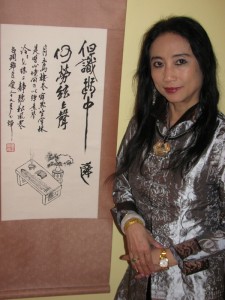
Kensington author Mingmei Yip believes that one should, besides being entertained, also get something out of reading a novel. Her new novel is Skeleton Women is about survival, letting go, and finding love and compassion.

Her debut novel Peach Blossom Pavilion is the story about the last Chinese Geisha and also that of courage and the determination to succeed and attain happiness. Her second novel Petals from the Sky, a poignant Buddhist love story, is about wisdom, compassion, when to persist and when to let go. Her third novel Song of the Silk Road is an adventure love story between an older woman and a younger man with a three million award on China’s famous, dangerous route.

For more about the author and her books visit her Website, on Twitter, and on Facebook.

This is my 69th book for the New Authors Reading Challenge 2012.

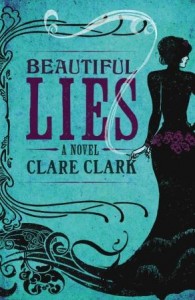
Beautiful Lies by Clare Clark

Maribel Campbell Lowe’s Beautiful Lies (by Clare Clark) ensure that she is mysterious to the reader and London society from the beginning, but as the prose unfolds, readers get glimpses into her past as she attempts to navigate her life in the confines of a London society on the verge of change, in which seances and photography are gaining admirers. Married to radical politician Edward Campbell Lowe, Maribel is thrust into a society full of expectation and one that is changing, but her fateful meeting with Alfred Webster, a reporter, could be her family’s undoing.

But the novel also is more about the society around the Lowe’s and the idea of wearing a mask to your family, society, and to some extent to yourself — hiding the truth from even your own consciousness.  Clark blurs the lines between truth and fiction here in the photographs taken and discussed and as Maribel reflects on her past — lamenting tough decisions she made — and assessing her current situation — finding her way in a relationship with a very busy and outspoken politician.

“”It’s a pity you could not be there when Bill took forty of his Indians to the Congregational Chapel at West Kensington,’ Henry said.  ‘That would have made a splendid photograph.  Apparently, they sang “Nearer My God to Thee” in Lakota.’

‘I am not interested in the Indians as curiosities.  If I am to photograph them it should be as they really are.  The truth, not the myth-making.'” (page 173 ARC)

Maribel is an actress of the first order, as are many of the characters in the novel, as they navigate the complexity of their politics and society at a time when the economy is faltering.  They attempt to hang onto anything that appears true and solid, whether it is Buffalo Bill’s traveling show or spirit photography.  Clark offers very detailed accounts of Victorian society from the clothes to the streets and the economic conditions, but she also provides readers with a stimulating atmosphere that also blurs the lines of reality with those of art.  In many ways, her chain-smoking protagonist’s view of the world permeates the novel so well that the story takes on a mysterious lilt, keeping readers in a state of distanced observation that makes it hard to connect with Maribel on an emotional level.

“Beside the tea chest he hesitated, fumbling in his pockets.  There was the rattle of a matchbox and then the scrape and flare of a match.  Shadows leaped from behind the lines of laundry as he lifted the candle to his face.  Beneath the snarl of his eyebrows his sharp eyes flickered like a snake’s.”  (page 1 ARC)

While the details are appreciated about the House of Commons, the rest of Parliament, the economy, the socialist movement, and other goings on of this era, Clark bogs down the narrative at certain points with these details, which keeps the reader at a distance from her character.  While Maribel smokes obsessively and the prose focuses on it obsessively, the character comes off as careless and even boring at times as she waffles between taking action to improve her happiness and wallowing in the past.  With that said, Clark has written an interesting narrative based upon a real-life politician’s wife who led a double life for many years.

Beautiful Lies by Clare Clark is an unique look at Victorian society plagued by hidden scandals and events that are exaggerated so that they become scandalous by newspapers and reporters.  Disappointingly, the novel drops one of the story lines that was originally set up as one of the things that had the potential to bring down the Lowe family.  Rather the scandals involving politicians and upper class activities uncovered by Webster become the crux of the novel, but the solution to the Lowe’s problem of Webster’s vendetta is unique.  Overall, Clark has recreated the world of the late 1800s and touched upon the hidden lives of many members of society and the masks that humanity wears in public and even at home.

About the Author:

Clare Clark is the author of four novels, including The Great Stink, which was long-listed for the Orange Prize and was named a Washington Post Best Book of the Year, and Savage Lands, which was long-listed for the Orange Prize in 2010. Her work has been translated into five languages. She lives in London.


This is my 68th book for the New Authors Reading Challenge 2012.


To enter to win 1 copy of Beautiful Lies by Clare Clark, please leave a comment below by Sept. 28 at 11:59 PM EST.  You must be a U.S. resident and 18 years or older.


I’m Just Sayin’! by Kim Zimmer and Laura Morton

I’m Just Sayin’!: Three Deaths, Seven Husbands, and a Clone! My Life on Guiding Light and Beyond by Kim Zimmer and Laura Morton is as spontaneous as Reva Shayne was on Guiding Light, and while most of the memoir is linear in nature, there are moments where the flashbacks are a bit out of sequence — though never hard to follow.  Zimmer pulls no punches with her memoir and does not sugarcoat anything that happened in the latter years of Guiding Light, which experienced severe budget cuts and went downhill in terms of quality where production was concerned.  On the flip side, she’s also willing to admit her mistakes and allowed her temper to get the best of her when she should have tried a more diplomatic approach when story lines and production were falling by the wayside.

Even more interesting were the early years in which she made some tough decisions about college and acting, when she met her soul mate (A.C. Weary), and when she put her family first and left Guiding Light the first time.  She shares some acting techniques she learned, including substitution in which an actor uses real life images and memories as stand ins for the characters’ current situations.  Zimmer didn’t find this effective, and in fact, found it very distracting.  One of the most interesting things in the book was that she took the bus to the studio rather than have a car pick her up or driver herself to work in the early days, which some of her co-stars found odd.  (I applaud her for using public transportation!)

“A.C. and I joked about getting married any number of times, but one of us always managed to change the subject.  If memory serves me correctly, in the summer of 1980, we were in our teeny-tiny kitchen making dinner when we started talking about having a baby.  I believe I said I’d love to have a kid but I wanted to be married first.  Hint, hint, wink, wink!

A.C. said something like, ‘Are you asking me to marry you?’

I said, ‘If you want me to have your babies, then yes, I’m asking you to marry me!'”  (Page 42)

While some may think that Zimmer is a diva, she certainly is in the sense that she’s talented and passionate about her work.  She talks a lot about fighting for her characters and the show, which she thought of more like a family — and in many ways was more attached than probably some other actors would be to their roles and television shows.  Her resolve and determination helped Reva Shayne’s character grow, but unfortunately, the show itself was not something should could have saved on her own.  Becoming so attached to the show and her character ultimately weighed too heavily on Zimmer and caused her to make some choices she might not have otherwise.

I’m Just Sayin’!: Three Deaths, Seven Husbands, and a Clone! My Life on Guiding Light and Beyond by Kim Zimmer and Laura Morton is not only about acting and her family, but about a passion for her job that became all-consuming and led her astray for a while.  But lessons are always available when people make mistakes, even celebrities.  Zimmer’s memoir seems to have been cathartic for her in that it helped her assess herself and her role as wife, mother, and actress.  She’s candid and funny, but never overly apologetic.  A great memoir for those looking for behind-the-scenes shenanigans, serious acting business, and life-work balance decisions.

***On another note***

My husband and I watched Guiding Light together, and Jonathan and Reva’s story line was one that we loved watching unfold as he was the son she had left behind.  We loved the dynamic of these characters, and it was great to learn about the audition between Zimmer and Tom Pelphrey, which was too funny.  The chemistry between the characters was superb. Another of my favorite pairings was Reva with Jeffrey!  I loved their “What the hell” nature and the jokes and genuine fun time they seemed to be having.  It was so refreshing.  On the flip side, I loved Harley and Gus on the show, a relationship that was torn asunder by the writers and angered me beyond imagination.

It was hard for me to watch the production quality of this show decline, and my mother would call and ask me what the heck they were doing to our show.  The shaky cameras and the outside scenes in which you couldn’t hear the dialogue too well and the overpowering music.  Like Zimmer, I was very attached to these characters, and in many ways they were real….I was sad to see the characters of Springfield go.

About the author:

Four-time Emmy® award winner Kim Zimmer is a veteran television actress. In 1984, she joined the cast of Guiding Light, and stayed with the series for over two decades. She and her husband live mostly in New Jersey with their three children.


This is my 65th book for the New Authors Reading Challenge 2012.

Thoughts on Some Remarks by Neal Stephenson

Some Remarks by Neal Stephenson is a collection of essays, one sentence from a novel that he never finished, and a few short stories.  I’m not the typical audience for this book as I don’t read a lot of non-fiction, nor science-y essays.  As a result, I read a bit of the most recent essays in the collection, the introduction, and the short fiction pieces, plus the one sentence to the novel.  I can say that I see why he never went further with his novel; it wasn’t very attention grabbing for me, but hey, it might have been a sentence from a future chapter and not the book opener for all I know.

To say this collection is weird is an understatement; readers only need to check out “Spew” with its tech-babble and sci-fi tongue-in-cheek feel as Profile Auditor 1 skulks around the big brother system that watches everyone’s lives for a living, looking for anomalies.  I found the overwrought tech language and mysteriousness too much; I was kept too much in the dark for the beginning part of the short story.  However, by the end, I was intrigued by the hotel clerk and her suspicious profile and wondered what the profiler’s interest in her was, but it is clear by the end of the story that she’s got more gumption than he does.  While Stephenson brings up issues of big brother and what it could mean from a marketing perspective, the story also gave me pause about my own buying habits and whether I’m that gullible in my purchases — seeing it on television or the Internet is enough to make me buy it — but I also realized that is not all that he is highlighting, but also the factors that play into buying decisions from friends, recommendations, advertisements, and finances.

“Patch this baby into your HDTV, and you can cruise the Metaverse, wander the Web and choose from among several user-friendly operating systems, each one rife with automatic help systems, customer-service hot lines and intelligent agents.  The theater’s subwoofer causes our silverware to buzz around like sheet-metal hockey players, and amplified explosions knock swirling nebulas of tiny bubbles loose from the insides of our champagne glasses.”  (page 288, “The Great Simoleon Caper”)

The second short story, “The Great Simoleon Caper,” relies on a similar notion of a man behind the technology who looks in on customers through their set top boxes, but instead of profiling their likes and dislikes and buying habits, he is their customer service representative to iron out their problems.  In this scenario — which began with a “innocent” brother’s request for how many jelly beans would fill up Soldier Field — the customer service rep brother is suddenly thrust into an underground plan to circumvent government controls.  Investing in Simoleons, an e-money, is a campaign his brother wants to succeed, but how will his brother ensure that the deal goes off without a hitch.  Do you sense a bit of paranoia in these stories?  A bit too much over-the-shoulder watching?  Perhaps that’s a good thing — keeping people honest and on their toes.

Stephenson’s fiction was livelier and more inventive to me than the nonfiction essays about the dangers of sitting at a desk for your job and other topics, which seemed to try to hard to be humorous or witty.  Some Remarks is an interesting collection of essays, but for someone that reads mostly fiction and poetry, this is not a good fit.

About the Author:

Neal Stephenson is the author of the three-volume historical epic “The Baroque Cycle” (Quicksilver, The Confusion, and The System of the World) and the novels Cryptonomicon, The Diamond Age, Snow Crash, and Zodiac. He lives in Seattle, Washington.

This is my 64th book for the New Authors Reading Challenge 2012.

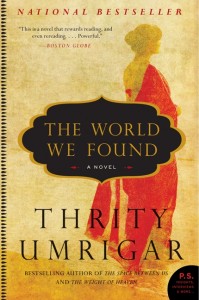
The World We Found by Thrity Umrigar

The World We Found by Thrity Umrigar focuses on four women — Laleh, Kavita, Armaiti, and Nishta — who were in college during the 1970s in India and were part of a socialist movement with their male friends Iqbal and Adish.  The students were caught in the midst of a nation’s struggle to improve its government and build a new identity as corruption had plagued the elections process and religious violence against Muslims and Hindus occurred relatively frequently.  In the late 1970s, The Emergency was declared in India, which gave the government extraordinary powers to restrict civil liberties, and led to a number of arrests and violence, among other things.

Laleh, Nishta, Armaiti, and Kavita were idealists looking to create a new world, and with their combined enthusiasm and wide-eyed innocence about a world that they could create for their futures and that of India, they dove headlong into the movement they thought best poised to help them achieve their goals.  However, the realities of social movements intervened, demonstrating the brutality on both sides and those realities forced them to choose the path that would lead them into adulthood.  Looking back on their college years, some of the group is filled with regret at what was not achieved and the friends lost, while others are glad to have had their delusions shattered and the truth revealed.  Umrigar’s characterizations demonstrate the ways in which poignant events in history can leave a lasting impression on idealists, forcing their perceptions to skew so much that they adopt the most radical of views or forcing them to realize that bodily and emotional harm are not endurable.  Although there is one member of the group who followed her ideals and made the tough choices, there are consequences of those hard decisions as well — the loss of friendships, family, and independence.

“Could time really alter things so much? If so, the devil that every religion taught people to fear and loathe was simply the passage of time.”  (page 113 ARC)

Following thirty years of silence, the women are called upon once again to come together, but this time for a friend in America who needs them.  One of them is dying and wishes to seem them all together again, but she cannot travel and they must come to her in America.  Reuniting is never easy, especially when each of them holds guilt about not keeping in touch, secrets from the past, and prejudices born of their not-so-shared history.  The world that each of them found may not be the world that they dreamed they would create together, but it is a world in which they all live now and must learn to either accept or make moves to change for themselves and one another.

“Color.  She was obsessed with color.  There was the read of the Shiraz that Richard had opened the night before.  The burnt orange of the handcrafted cherry table in the hallway.  The glitter of a computer chip, the history of human intelligence shrunk into a capsule.  The muted gold of this leather couch she was napping on.  It made you greedy, intoxicated, made you want to open your mouth and bite into the richness of the world.  It made you want to never leave it, never miss out on a day of this party, this wild carnival ride.”  (page 234 ARC)

Thrity Umrigar not only shares a bit of India’s history with her readers, but she shares some of the religious tensions that pervade Indian society and how it can color the perceptions of people who were once considered friends.  The World We Found is stunning, emotional, and heated in the issues it tackles from religious fanaticism to moral ambiguity and the tenuous bonds between friends and family.  The ties between Laleh, Kavita, Armaiti, and Nishta are unbreakable no matter what tore them apart after college, but the ties between Iqbal and Adish are no less strong, though they seem more complicated by the roles expected of men in their respective religions and Indian society.  Book clubs would have a great deal to discuss after reading this novel and are likely to come away from the discussion with a new perspective on religion and friendship.

About the Author:

Thrity Umrigar is the author of three other novels—The Space Between UsIf Today Be Sweet, and Bombay Time—and the memoir First Darling of the Morning. A journalist for 17 years, she is the winner of the Nieman Fellowship to Harvard University and a 2006 finalist for the PEN/Beyond Margins Award. An associate professor of English at Case Western Reserve University, Umrigar lives in Cleveland.  Please visit her Website.

Also check out my review of The Weight of Heaven.  Enter to win a copy at GoodReads before Sept. 10.

Wayne of Gotham by Tracy Hickman

Wayne of Gotham by Tracy Hickman is an exploration into the Wayne legacy and its role in Gotham’s early days and its current influence on the city as Bruce Wayne dons a cape and cowl and chases criminals as Batman.  Through a series of flashbacks to the 1950s, Bruce and the reader learn about his father, Dr. Thomas Wayne, and the family secrets.  Bruce is clearly not the only Wayne who has kept big secrets from the rest of the family and the outside world.

The parallels Hickman draws between Bruce and his grandfather, Patrick, are intriguing as both men tend toward the aggressive nature of their personalities and are not afraid to meet violence with violence.  Thomas, on the other hand, wants no part of that violent world, even though his father believes he should be able to defend himself.  However, in Hickman’s novel Bruce Wayne is middle-aged and feeling the impact of his year’s saving Gotham from criminals as Batman, and his reliance on technological advances in his suits and cars tells a far greater tale of this aging hero.

“The garden was dead.  The roses had gone wild and died during the succession of winters without care.  Their gnarled limbs reached up like claws from the edges of the footpaths, which were covered in dead leaves decomposing into dirt.  The prize lilacs his mother had been so proud of now reached up menacingly over the walls.  The garden had gone native, weeds choking and obscuring the careful planning that now lay buried ad barely recognizable.”  (Page 35)

What’s interesting about Hickman’s take on the comic character and his family is that Batman uncovers a past that is not as rosy as he expects about his father.  Dr. Thomas Wayne and his work with Dr. Richter are more than his son can digest in one sitting, but Batman is hardly given the chance to do so as he’s being drawn deeper and deeper into a spider’s trap as ghosts from the past seek to right the wrongs of the past.  Through a series of surprising turns connected to the German Nazis, eugenics, and more, Batman is confronted with a father who is not as perfect as he thought and he must reconcile what he has learned with what he thought he knew about the man.

The criminal mastermind here is slightly obvious from early on, but that is not as bothersome as the incessant talk early on about Batman’s vehicles and gadgets, which don’t necessarily add to the plot especially when the narration focuses on the evolution of the Batmobile from its early incarnations to the present.  However, that’s a minor drawback that fades away once the novel gets going.  Hickman has clearly done his research into several incarnations of the Batman myth, but the plot movement with the entrance of criminals, like The Joker, is abrupt on occasion as their motivations are unclear and the catalyst of their involvement is murky until the end.

Wayne of Gotham by Tracy Hickman is a satisfying read for those interested in the past of the Wayne family and its role in the rise and potentially the degradation of Gotham City.  Warring within each of these men is the duty to do good and the desire to just be free and follow their passions.  The relationship between Thomas Wayne and his father is clear from the beginning, but the relationship between Thomas and his son Bruce is less clear as Bruce himself is unsure how to view his father in light of the secrets revealed.  In many ways, this novel may have worked better as a graphic novel, but Hickman does a good job sticking to the origins of the character and bringing in unique story lines to fill out the ancestry of Wayne family.  By the end of the novel, it would also seem that more needs to be said and uncovered, especially when the second son of Thomas and Martha Wayne is alluded to, but not seen.

About the Author:

Tracy Hickman is a best-selling fantasy author, best known for his work on Dragonlance as a game designer and co-author with Margaret Weis, while he worked for TSR. He married Laura Curtis in 1977, and together they have four children.

This is my 59th book for the New Authors Reading Challenge 2012.

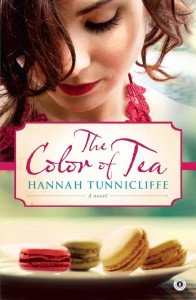
The Color of Tea by Hannah Tunnicliffe

Macau is a former Portuguese colony and is now a special administrative region of China and a hub of gambling and more.  The Color of Tea by Hannah Tunnicliffe is a woman’s journey into a strange land and the time of her life as she trails behind her husband, and their dreams of a new life change drastically.

“Macau: the bulbous nose of China, a peninsula and two islands strung together like a three-bead necklace, though by now the sand and silt have crept up and almost covered the silk of the ocean in between.  Gobbled up, like most everything in Macau, by Progress.  Progress and gambling.”  (Page 1)

Grace Miller is a woman who has lost her dream and builds another with tea and French pastries.  With the help of Leon, a French chef, Grace learns to make macarons and she opens a cafe, breathing new life into her days.  Although she doesn’t know Portuguese, Cantonese, or Mandarin, she finds the strength to become a businesswoman with little help from her husband, Pete.  She finds a new strength in her situation as she creates new kinds of macarons, serves coffee and tea, and provides a community with a little hope and connection.

“The day after the earthquake Lillian’s is packed to the rafters.  It is so crowded that those who can’t find their own tables join strangers and start to talk.  It is as if the catastrophe has brought out the community-minded side of people.  Conversations are hushed, and customers linger over their coffees.  Children are sent to the corner to play with our basket of toys, mutely constructing castles or ships out of LEGOs; even they must sense the need for regrouping and rebuilding.”  (Page 125)

It is the essence of Tunnicliffe’s novel — rebuilding and regrouping — to create something shiny and new out of the rubble . . . to begin again.  Lillian’s is a cafe born from the ashes of a Portuguese restaurant in a Chinese owned commonwealth by a British woman seeking a foothold in a spiraling out of control life, but what this cafe brings to her and to the community is more than she could have bargained for as cultures are bridged and friends are earned.

Grace is dedicated and strong, but she’s also naive about the cultural differences surrounding her, but those traits together make her more endearing.  Peter tries his best to cope with the loss of their dream, but throws himself more and more into his work when his wife withdraws.  His character is less well drawn, but the novel is told from Grace’s perspective, so that is to be expected.  Gigi, Leon, Celine, Rilla, Marjory, and Yok Lan are secondary characters who are full of life, teaching one another how to have patience with one another and grow.

Tunnicliffe’s debut novel is ripe with sugar and creamy pastry as each new relationship adds to the culinary masterpiece that is The Color of Tea.  It is Grace’s story.  Through her baking she comes alive, and subsequently comes into her own.  Tunnicliffe is talented and makes Macau come alive through food, relationships, and tea — creations that transcend sorrow and class.

About the Author:

Hannah Tunnicliffe was born in New Zealand but is a self-confessed nomad.  After finishing a degree in social sciences, she lived in Australia, England, and Macau.  A career in human resources temporarily put her dream of becoming a writer on the back burner.  The Color of Tea is her first novel.

This is my 58th book for the New Authors Reading Challenge 2012.


If you’d like to win a copy and live in the US or Canada, please leave a comment about your favorite tea or pastry.

Deadline is Aug. 16, 2012, at 11:59PM EST