Quantcast

Small Damages by Beth Kephart

There are books that pump your adrenaline for you and there are books, like Small Damages by Beth Kephart, that seep deep into your being, settle there, making their mark on your emotions, your perceptions about other cultures, and your own world view.  Kephart has a skill unlike other young adult authors in that she never sees her younger readers as incapable of understanding or of deep emotion.  She trusts them to follow her characters in their unusual circumstances and settings and garner a deeper understanding of what it means to mature from a child into an adult and the responsibilities that weigh on them even now when they are so young in this modern world.

Kenzie Spitzer is an 18-year-old pregnant girl who struggles with the loss of her father and the silence of her mother every day, and she keeps secrets from her friends, her family, and herself.  Kevin Sullivan, the boyfriend, is on his way to Yale in the fall, and she had planned to attend Newhouse film school after a summer on the New Jersey shore in a rented house with her boyfriend and friends.  To say the least, her life is turned upside down by the pregnancy news, but what’s worse is the decision to have the child and give it up for adoption is taken out of her hands when her mother makes arrangements for her to go to Los Nietos (the granchildren) ranch in Spain where she will be cared for by her mother’s friends Miguel and Estela until the baby is born.

“We scatter the herd, break the bulls out of the shade until they are near, running beside us — fast in a straight line, awkward on the turns, annoyed.” (Page 14 ARC)

Like the scattering of the bulls when she arrives, Kenzie’s life has been derailed and those of her friends and of Kevin are moving parallel to her and from her point of view cased in blissful ignorance as her life is the only one changed.  She even ruminates on how even though a child conceived is the doing of man and woman, it is the woman’s life that is changes irrevocably.  Kenzie’s thoughts are very similar to teenage girls, vacillating between the past and what the future could have been — analyzing each moment over and over.  Unlike other novels on this topic, Kephart’s kind hand guides the narration without judgment allowing the character to reveal her own maternal love for the child and her confusion without the harsh lens of blame and resentment.

“I stay where I am, halfway in, halfway out, the moon and the stars bright behind me.”  (Page 172 ARC)

Forced into a decision that is not her own — but is in a roundabout way a compromise with her mother — Kenzie is left adrift in a foreign land with people she doesn’t know or understand, wondering through silences and asking endless questions that are unanswered more often than not.  She meets Esteban with whom a connection is born as they share a tragic parental past, even though for a long while all Kenzie wants is to be someone else, somewhere else.  Like the birds in Seville and at Los Nietos, they are there guiding Kenzie, showing her the color as Kevin had done when her father died.  She is alive, and they remind her.  There is one passage in the novel in which Esteban talks of how one particular bird always comes, but that he brings the others with him — reminiscent of The Conference of the Birds (my review) and the faith they need to find what they seek.

“‘Only to the earth do I tell my troubles,’ Arcadio sings softly, ‘for nowhere in the world do I find anyone to trust.’

‘If my heart had windowpanes of glass,’ Bruno sings the next line, ‘you’d look inside and see it crying drops of blood.’

‘These Gypsies, they are the famous,’ Miguel says.  ‘They are starting very young; they played for Lorca.  They had duende. Have duende. ?'”  (Page 165-6 ARC)

Small Damages by Beth Kephart is about the courage we must find within ourselves to face the past, our tragedies and losses, and our fears about the future.  Kenzie is a young woman on the verge of her new life when it is turned upside down, and while the decision to go to Spain is not her own, she finds the courage to make her own decisions for herself, her baby, and her future.  Through the chords and melodies of gypsy music, Kenzie must peel the tough, bumpy rubber skin of the orange in her journey through Spain to reveal the prized juice and supple pulp beneath the skin.  While damages may seem large and insurmountable when they are first scored through our hearts and skin, they heal and become the small scars that make us who we are and how we learn to be better than we were.

About the Author:

Beth Kephart is the author of 14 books, including the National Book Award finalist A Slant of Sun; the Book Sense pick Ghosts in the Garden; the autobiography of Philadelphia’s Schuylkill River, Flow; the acclaimed business fable Zenobia; and the critically acclaimed novels for young adults, Undercover and House of Dance. A third YA novel, Nothing but Ghosts, is due out in June 2009. And a fourth young adult novel, The Heart Is Not a Size, will be released in March 2010. “The Longest Distance,” a short story, appears in the May 2009 HarperTeen anthology, No Such Thing as the Real World.

Kephart is a winner of the Pennsylvania Council on the Arts fiction grant, a National Endowment for the Arts grant, a Leeway grant, a Pew Fellowships in the Arts grant, and the Speakeasy Poetry Prize, among other honors. Kephart’s essays are frequently anthologized, she has judged numerous competitions, and she has taught workshops at many institutions, to all ages. Kephart teaches the advanced nonfiction workshop at the University of Pennsylvania. You can visit her blog and my interview with her.

My other Beth Kephart reviews:

Have you seen this book trailer?

When She Woke by Hillary Jordan

When She Woke by Hillary Jordan has been compared to The Scarlet Letter by Nathaniel Hawthorne and The Handmaid’s Tale by Margaret Atwood, but it is really a combination of the two as Hannah Payne is not melachromed for adultery, but for another sin and she lives in a world where the separation between church and state has been broken.  Roe vs. Wade has been overturned once a scourge has rendered most women unable to have children and men who are carriers unwittingly have passed the disease onto unsuspecting partners.  Under the defense of saving the human race, society has outlawed abortion.  This idea parallels the notions of The Handmaid’s Tale, though the society in that novel is more severe in terms of limiting women’s rights and control over their bodies.

Punishment for breaking the laws of this society are no longer being thrown in jail, but being chromed and thrown back out into society to face ridicule and stigmatization.  Chroming takes place when a virus — which had unknown side effects for many years and often results in fragmentation of the brain if not re-administered every six months or reversed properly — turns the skin the color of the crime, such as red for violent offenders and blue for molesters.  Once back in society these men and women are looked upon as freaks and outsiders, and they are lucky if they are given jobs to survive on their own while their sentence is carried out.

“The virus no longer mutated the pigment of the eyes as it had in the early days of melachroming.  There’d been too many cases of blindness, and that, the courts had decided, constituted cruel and unusual punishment.”  (Page 6-7)

Aiden Dale in Jordan’s book is very reminiscent of Arthur Dimmesdale in The Scarlet Letter in that his character is very weak and he is forced by the pressures of guilt to confess.  Naturally, Hannah is a young women in a close knit community of religious communities and the injury of her father leaves the family in a precarious position until their pastor Aiden Dale comes to the rescue.  His character is only seen through Hannah’s eyes as she is the main point of view throughout the novel, which leaves a lot of his motivations in question, especially given the relationship he embarks upon as a pastor and married man.

Jordan’s novel is very fast-paced, and may even be too fast-paced as it seems that Hannah needs a moment to slow down, breathe, reflect but her character is very emotional, impulsive, and impatient.  Given her upbringing in a religious community, it is clear that she knows little of the outside world in Texas, which is cliche location for a novel about ultraconservative religious groups, etc.  Her actions are frustrating, but at least they are understandable given her upbringing, but there are other occasions where she seems superior in her perceptions of others’ personalities and actions and yet completely oblivious when others are plying her with food and a place to sleep after being chromed.

When She Woke by Hillary Jordan is ultimately a mesh of worlds that does not go to the extremes of the other nations created by Atwood and Hawthorne, and in that, the world building loses ground as it uses a heavy-handed nature in drawing parallels to today’s society, its punishments, and our own history of discrimination against certain groups.  However, this novel would make an excellent selection for a book club discussion given the issues it raises about the separation of religion and government, abortion, crime and punishment, and other topics.

About the Author:

Hillary Jordan received her BA in English and Political Science from Wellesley College and spent fifteen years working as an advertising copywriter before starting to write fiction. She has an MFA in Creative Writing from Columbia University.  (Photo by Michael Epstein)

What the Book Club Thought (beware of spoilers):

When She Woke by Hillary Jordan was one of the two books I nominated and the book club selected it for this month’s discussion.

Most members agreed that the character of Aiden was very weak and that we disliked him.  One member insisted that most of us had laid too much blame on Hannah for what happened to her, but the women of the group said that blame lied with both Aiden and Hannah.  Given that Hannah knew Aiden was not only her pastor, but also a married man, she should not have engaged in an illicit affair with him, and he knew he was married and a paragon of the community.  While this is billed as a love story, I didn’t see the depth I expect from love-based relationships and the relationship between Aiden and Hannah appeared to be more one of lust and passion than of love.

While some of the sci-fi elements worked best for one member of the book club, others of us were happy that unlike the Hunger Games series of books the back story as to why the society had changed so drastically was presented.  Some of the members thought that Jordan skewed some elements of the society such as making all of the religious figures and members mean or evil, except for the one female priest.  But one of us thought there was a balance in the casting as there were good and bad in both the religious community from the bad priest and his wife to Hannah’s father who was more tolerant and in the Novemberists (which reminded me of the V is for Vendetta movie with its focus on November and bombing, etc.) there were good and bad guys as well.

In terms of the books we’ve read so far, this one generated a great deal of discussion about what would happen in today’s society if Roe vs. Wade was overturned (which most of us don’t see happening), what punishments are considered cruel and unusual, what being a second-class citizen would entail if we were chromed, and how the women in the group felt about abortion.  One of our members also suggested that the book is focused on demonstrating that we should not judge others and their sins but worry about ourselves, even if we are devote Catholics, etc.

This is my 57th book for the New Authors Reading Challenge 2012.

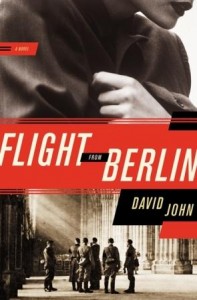
Flight From Berlin by David John

With the London Olympic Games already under way, Flight From Berlin by David John is a novel that can demonstrate the political turmoil beneath even the most beloved sporting event across the globe.  It is set during the 1936 Olympic games in Germany just as Adolf Hitler is gaining more power, and British journalist Richard Denham is fully aware of the brutality the Nazis hope to hide behind the spectacle of the games.  Mrs. Eleanor Emerson is an Olympic hopeful whose father, a senator, is very much against the United States’ participation in the games and who eventually gets kicked off the team when her rebellious behavior aboard ship gets her into all kinds of trouble with her father’s nemesis.  Fate conspires to bring these two together as Emerson is offered a job as a reporter for William Randolph Hearst’s media empire given her connections with the team.

Embroiled unwittingly in a cloak-and-dagger search for a secret that could stop the rise of Hitler, Emerson and Denham run through the Berlin streets, attend society parties, and hide in back alleys as they seek to interview the only Jewish athlete on the German Olympic team.  The rebellious streak of Emerson draws Denham to her, but she’s intrigued by his passion to uncover the truth even without considering the consequences.  John’s prose is quick paced and appropriate for the old world espionage feel of the novel, and the relationship between Denham and Emerson is one of convenience and mutual respect.

“How strange, how small the things that change history, turn it from its darkened course, send it eddying off down new, sunlit streams.”  (Page 2 ARC)

However, the fast-paced nature of the story often takes over too much in that the relationship between Denham and Emerson is not fully realized and when declarations of love occur, it seems to be too soon.  While John does use the cliched oops moment of overhearing a conversation in the garden, the story is intriguing enough to keep the reader’s attention.  Meanwhile, the chapters on the Hindenburg are very well done and demonstrate the awe people at that time would have felt at seeing such ingenuity.

“It was like a film set built from an Erector set.  A gargantuan spider’s web of bracing wires and girders radiated out from the central axis, and looking along the corridor’s length was like seeing infinity reflected between two mirrors.  The air was much colder.

Together they walked along the corridor between towering gas cells, which hummed quietly with the vibration of the engines.”  (Page 66 ARC)

Flight From Berlin by David John provides the right mix of thrill and historical elements to anchor readers into the time between WWI and WWII when Germany was hosting the Olympic games and Hitler was hovering the line between diplomatic peace and alienating the entire world.  Denham, a former WWI soldier, is forced to recall his training and the tragic things he saw during the war, but it also enables him to remain sympathetic to the Jews and others he meets while working in Berlin on his journalistic stories.  Emerson is a socialite who is used to getting her way either through charm or her father’s connections, but she has to learn to be more observant of the world around her and that she has her own strength to get her through.  Another gem in the novel is the notes in the back about what characters were real and which were fictionalized.

About the Author:

DAVID JOHN was born in Wales. He trained as a lawyer but made his career in publishing, editing popular books on history and science. In 2009 he moved to Germany to write Flight from Berlin. He lives in Seoul, South Korea, where he is researching his second novel.

This is my 56th book for the New Authors Reading Challenge 2012.

The Book Club Cook Book (revised edition) by Judy Gelman and Vicki Levy Krupp

The Book Club Cook Book (revised edition) by Judy Gelman and Vicki Levy Krupp is a second edition that includes more book recommendations from book clubs across America and recipes from the authors of those books.  The book is the brain child of two voracious readers who love to share their reading and the recipes they pair with their own book club selections.  After surveying more than 500 book clubs, including some contacted for the previous version, Gelman and Krupp filled out the cook book with some of the latest books being discussed, while retaining the ones that remain book club picks.

Additionally, they sought to include some vivid, color photos to demonstrate the breadth of new recipes included in the latest version of the cookbook.  If there were one nitpick with this cookbook, it would be that each recipe or most should include a photograph of the food created from the authors’ recipes — either from book clubs or the authors providing the recipes.

What’s unique about this cookbook is that each book is described in detail, complete with publisher and publication information, and information from one or more book clubs about the recipe used to accompany the book club discussion of the book.  Following the recipe, “Novel Thoughts” offers up a bit more from book clubs about what they felt and discussed about the book and how it inspired them to cook or read another book they found to be related, and more.  In “More Food for Thought,” book clubs offer full menus for certain books or how books generate culinary creativity.

In the back of the book, there are ideas about what makes book clubs successful and how books can be selected, etc.  Moreover, the authors include ideas on where to look for food inspiration in books that don’t explicitly mention meals, such as paying attention to the time period, the setting, or culture.  The Book Club Cook Book (revised edition) by Judy Gelman and Vicki Levy Krupp is an excellent cookbook for book clubs and those just looking for new recipes to try out, and paired with the Website even novice cooks can wow their families.

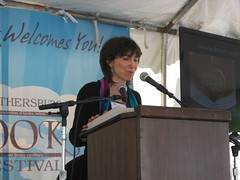
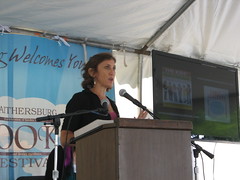
***I had the joy of meeting both these passionate readers and cooks at the Gaithersburg Book Festival in May, and I’m eager to check out their other books.

About the Authors:

Judy Gelman and Vicki Levy Krupp, are cooks, book enthusiasts and friends. Seeking to combine their passion for books, food, and book clubs, they met over stacks of books and endless cups of coffee at a local sandwich shop, where The Book Club Cookbook was born. The revised edition of The Book Club Cookbookwill be published in March, 2012.

They were motivated to write their second book, The Kids’ Book Club Book, after librarians, parents, and teachers who attended their talks asked for a similar book for the growing number of youth book clubs across the country.

Table of Contents features book related recipes from fifty of today’s most popular authors.

Their latest book is the revised edition of The Book Club Cookbook, featuring 20 new book club titles and recipes.

Judy and Vicki enjoy speaking about book clubs, and appreciate their ongoing conversations, both in person and via their websites, with book and food enthusiasts across the country.

They live with their families in the Boston area.

This is my 55th book for the New Authors Reading Challenge 2012.

Monarch Beach by Anita Hughes

Monarch Beach by Anita Hughes is one of those beach reads that barely scratches the surface about what divorce can do to a family, especially when one spouse cheats on the other and more than once.  To Amanda Blick’s credit she doesn’t go postal and take out her husband’s (Andre) French fondue restaurant in Ross, an exclusive, elite neighborhood, and she doesn’t have a nervous breakdown.  Rather, Blick takers their son, Max, out of the San Francisco area to St. Regis Monarch Beach Resort with her mother, Grace, who promises to quit smoking if they come stay with her for the summer in the Presidential Suite.

Pretty posh lifestyle, but nothing less can be expected from the offspring of a society family, whose friends used to call her parents’ home The Palace.  The relationship between Andre and Amanda is rushed, but that’s to be expected as she meets him just after graduating undergrad following a family tragedy.  When Andre’s restaurant partnership sours, he doesn’t turn to his mother-in-law or his wife for help, but a busty former high school classmate of Amanda’s and her husband Glenn.

Clearly blinded by lust or love, Amanda rushes headlong into a marriage and finds contentment with being a mother and wife, as her dream of becoming a fashion designer fades into the rearview.  But her world crumbles around her when she finds the chef’s legs wrapped around her partially naked husband in the restaurant one afternoon.  She’s forced to make a decision or have a meltdown.

“I pulled into the parking lot at the post office, threw my purse under the seat, and started walking.  I was still in my yoga clothes, so I looked like any other mother going for a morning hike.  I left the parking lot and took long strides till I reached the lake, a walk that usually took me half an hour.  That Tuesday I made it in sixteen minutes.  I sat on a bench watching the ducks and took deep breaths.  It was a beautiful spring day.  The sun was warm, the sky a pale blue, and beds of purple and white daisies surrounded the lake.”  (Page 2)

Hughes creates a woman who copes with heartbreak in the only way she knows: she asks her mother’s advice.  Amanda waffles, she indulges, she cries, and she wallows over the summer, and by turns she’s at the beach, eating, or at the bar, but most of all she’s spending time with her son and her mother, the people she cares most about.  Many readers will envy her lifestyle and wonder what she has to complain about, but upon further reflection, readers will find that heartbreak can transcend classes.

Monarch Beach by Anita Hughes is beach read that will take most readers’ minds off their troubles.  A satisfying peak into the life of the elite, even when heartbreak is the order of the day.  The ending is a bit open-ended, which could leave readers wondering if there is a sequel in the works.

About the Author:

ANITA HUGHES attended UC Berkeley’s Masters in Creative Writing Program, and has taught Creative Writing at The Branson School in Ross, California. Hughes has lived at The St. Regis Monarch Beach for six years, where she is at work on her next novel.  Please check out her Website. (Photo by Sheri Geoffreys)

This is my 54th book for the New Authors Reading Challenge 2012.

The Rose of Fire by Carlos Ruiz Zafón

Carlos Ruiz Zafón, author of The Shadow of the Wind, is like many other authors these days in that he is pumping out short stories for digital devices.  The Rose of Fire is one such story, but this story tells the tale of how the Cemetery of Forgotten Books was born at the time of the Spanish Inquisition in the fifteenth century.  The labyrinth of books is an intriguing idea, and Zafón’s prose is at once lyrical and absorbing, transporting readers into another time and place.

As fear and suspicion are around every corner, many Spaniards keep to themselves in the hope that they will be spared the wrath of the church.  Raimundo de Sempere, who knows too many languages to stay outside the church’s suspicion, is a printer who is asked to translate a mysterious notebook found on Edmond de Luna, the only surviving man of a ship left battered and adrift near Barcelona just after a plague has ravaged the city.

“Edmond de Luna could see himself reflected in those eyes that resembled huge pools of blood. Flying like a cannonball over the city, tearing off terrace roofs and towers, the beast opened its jaws to snap him up.”  (ebook)

Zafón has created a tantalizing back story for his series of books about the library, and for those who have not read his previous books in the series, The Rose of Fire serves as an introduction to that fantasy world he’s created in which magic and nightmares come alive.  While the story is enchanting and absorbing, it is likely to leave readers wanting more in the way of character development that would likely come with a longer piece of work.  In many ways, this ebook release achieves its goal of ensuring the reader will look for more of the author’s work, but it seems to be a means to an end only, rather than a well developed short story.  With that said, Zafón is a talented author who creates believable worlds full of adventure and conflict.

About the Author:

Carlos Ruiz Zafón is a Spanish novelist. Born in Barcelona in 1964, he has lived in Los Angeles, United States, since 1994, and works as a scriptwriter aside from writing novels.

This is my 53rd book for the New Authors Reading Challenge 2012.

The Great Lenore by J.M. Tohline

The Great Lenore by J.M. Tohline, published by Maryland-based Atticus Books, is loosely based upon F. Scott Fitzgerald’s The Great Gatsby (my review — no, you don’t have to read Fitzgerald to enjoy Tohline’s novel), but it’s also part Edgar Allan Poe(m)-inspired.

Richard Parkland takes up his friend’s offer of using his summer home on Nantucket during the winter to write his next novel, and he soon comes in contact with the Montanas, who live in an ornate home much like that of Gatsby in Fitzgerald’s novel.  Richard parallels the narrator of Gatsby, Nick Carraway, while Lenore is the female lead here and is not as insipid or self-absorbed.  Many of the elements are similar in that the Montana’s are a rich family and that their members are embroiled in drama, particularly the brothers Maxwell and Chas.  There are great loves and there are mistresses, but there is much more in these pages than a replication of Fitzgerald or any other writer.

“We stopped looking at him, and he drifted through the house like an orange blob inside a lava lamp, with a cold glass of whiskey glued to his hands.”  (page 53 ARC)

The dialogue between the characters is reminiscent of Fitzgerald’s Gatsby as they tiptoe around what they really want to say to one another or shout uselessly in anger and frustration because of the situations in which they find themselves.  These characters are acting and reacting to one another in a vacuum in which no one else matters, not even Richard.  He’s a sounding board more than once, and he’s meant to just listen — he’s the outsider, the observer, the recordkeeper.  But one of the clear gems in the novel is the setting of Nantucket, which is a small, exclusive island.  It comes alive under Tohline’s talent creating a deep sense of other-worldliness and isolation.

“Clouds of frustration and anger and betrayal eddied off behind me, and the same clouds lay before me.  The same clouds wrapped their cold, iron claws around me, scraping over my veins and shuddering through my nerves.”  (page 116 ARC)

Tohline addresses the waffling nature of humanity, our fear of making decisions and our fear of the decisions we’ve made and the regret that comes with choosing the path we’re on.  In more ways than one, Lenore becomes mythical, she is no longer a real person until her untimely death.  At this point in the story, readers would expect the “prefect” Lenore to take on an even more ideal hue, but Tohline has a different experience in mind.  He breaks down her character through the eyes of others, and as secrets are revealed about her relationships with Chas, Maxwell, and others, Lenore becomes like the rest of us — fallible.  The narration allows the reveal to come gradually, providing the reader with a faster paced page-turner than expected from a piece of literary fiction.

The Great Lenore by J.M. Tohline is a literary debut from an author whose prose is at times poetic and suspenseful, but always hovering on the edge of the mysterious.  His novel is a testament to the inevitability of choices we make and the inability we have to change them even if we have the desire and opportunity to change them.  It’s about the idealizing the past and those we love and the journey it takes to realize that the reality of those times and people was not at all what our minds remember.  Tohline’s novel is one of regret and hope for a better future, but there also is a hopelessness reminiscent of Ernest Hemingway’s A Farewell to Arms.

About the Author:

JM Tohline grew up in a small town just north of Boston and lives in a quiet house on the edge of the Great Plains with his cat, The Old Man And The Sea. He is 26 years old. The Great Lenore is his first novel.  Check out his Website and this Atticus Books interview.


This is my 52nd book for the New Authors Reading Challenge 2012.

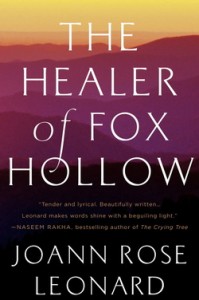
The Healer of Fox Hollow by Joann Rose Leonard

The Healer of Fox Hollow by Joann Rose Leonard is a story of change, struggle, and perseverance in the great Smoky Mountain town of Fox Hollow between the 1960s and 1970s (around the time of the Vietnam War).  Layla and Ed Tompkin live a hard life, carving it from the mountains that surround their home without a feminine hand to guide or support them.  Layla spends parts of her day during the week with the Yeagleys, who tend to take the Bible and its teachings literally, while her father works to keep them clothed and fed.  After a tragic accident, Layla is rendered mute and must find her way once again in the face of adversity.

“Looking at the gaunt, unshaven face of her sister’s husband, sapped of its usual outdoor burnish and as vacant as an abandoned house, Avis could barely breathe.  She retrieved a hankie from her pocket, pressed each eye and gave her nose a vigorous, head-clearing blow.  In an attempt to squeeze her crumbling composure back together, Avis clutched the balled-up fist of one hand with her other and began again.”  (Page 15 ARC)

Layla’s accident renders her different from her fellow classmates and neighbors and her father’s decision to keep them out of church on Sunday, further separates her from the community, until she is seen as a healer.  The community is very willing to turn to her in times of ailment or crisis, even when they have their own community doctor available, but they continue to see her as an outsider.  It’s almost as if the community is using her, and she’s almost too willing to help.  However, as Layla grows up and becomes a woman, it is clear that she becomes more conflicted about her role in the community and while she enjoys providing comfort, even she is not convinced of her powers.

Leonard’s prose is folksy, which is appropriate given the community she is describing and the situations she is portraying.  Layla is a quiet and unassuming girls swept into a role that she has little control over until she becomes an adult.  Given the choice, she relies on the teachings of her father to weigh the pros and cons of her decision and choose what is best for her upon her high school graduation.  In a community where God plays a large role and where struggles are the norm, Layla must face her fair share and more of these troubles, but through her gifts, she discovers the power of empathy and connection as a way to heal herself and others.

As Layla comes in contact with the severely injured and broken — soldiers of the Vietnam War — she must contend with feelings she never thought would be hers to feel or to dream about.  Leonard does well portraying the maturation of Layla while maintaining her naivete about certain things, and she easily demonstrates the psychological and physical pains of soldiers from the Vietnam War.  However, when Damian appears into Layla’s life, it is out of the blue and would have been better choreographed in another way, especially given his connection to the community doctor’s son, Brian.  Despite this minor flaw of a “convenient” meeting and what it stirs up in Layla, The Healer of Fox Hollow by Joann Rose Leonard is heartfelt tale of adaptation, survival, and love filtered through the heat of the sunset over the Smoky Mountains.

About the Author:

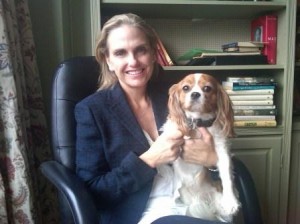
Wisconsin born JOANN ROSE LEONARD was Texas-raised and has chigger bite scars to prove it, theatre-trained and frostbitten at Northwestern University, and worked as an actress in New York.   She studied mime in Paris with Marcel Marceau while dubbing films into English to earn her daily baguette; raised 9 kids (2 human, 7 goats) in State College PA, where she was founder and director of MetaStages, the youth theatre program at Penn State University, and, with her husband, Bob, a retired professor and theatre director, has relocated to CA to be nearer their sons, Jonathan (DJ Child, an award-winning music producer and founder of the multi-media company, Project Groundation) and Joshua (actor/filmmaker including The LieHigher Ground and The Blair Witch Project.) Joann is author of The Soup Has ManyEyes: From Shtetl to Chicago; One Family’s Journey Through History“From Page to Stage,” a chapter in Holt Rinehart Winston’s Elements of Literature and two collections of multicultural plays, “All the World’s a Stage Volumes I & II” (Baker’s Plays).   In her research for The Healer of Fox Hollow, Joann discovered that the truth the novel is based upon is infinitely stranger than the fiction she wrote.

For more info on Joann and her work, please visit her Website.

This is my 51st book for the New Authors Reading Challenge 2012.

***To win a copy of this book, you must be a resident of the United States or Canada and be over age 18.

Leave a comment on this post by July 21, 2012, at 11:59PM EST.

Pride & Pyramids: Mr. Darcy in Egypt by Amanda Grange and Jacqueline Webb

Pride & Pyramids: Mr. Darcy in Egypt by Amanda Grange and Jacqueline Webb is one of the most unique spinoffs of Jane Austen’s work as it takes place years after Darcy and Lizzy have been married — double digit years later — and sets them off on what some would consider a dream honeymoon to Egypt, although without the modern conveniences that are likely to be there today.  Darcy’s Cousin Edward has been obsessed with Egypt and a fabled tomb filled with treasure since he was a boy and heard tales of his father’s trip there years before.  Edward’s fantastic stories of the African land tantalize Elizabeth’s desire for adventure.

“As she went over to her writing table, she had a brilliant vision of Darcy and herself standing in the middle of a glorious Egyptian painting, with their children seated in front of them.  She imagined the girls in pristine white dresses and the boys looking immaculate in coats and breeches, surrounded by golden sand dunes.  Then the impossibly perfect picture dissolved as her lively mind provided her with a more realistic picture:  Laurence and Jane running about, Margaret sucking her thumb, and a camel eating the flowers on Beth’s bonnet.”  (Page 39 ARC)

With the introduction of Paul Inkworthy as the Darcy family painter of portraits and archaeologist Sir Matthew Rosen, Grange and Webb have created a new dynamic to the story when Lizzy invites the youngest Lucas daughter, Sophie, along on their trip.  Besides the continued romance between Lizzy and Darcy, we see the budding of young love with Sophie and the early schoolgirl crush of Beth, the Darcy’s daughter.  And of course, our favorite villain George Wickham has to enter the foray and stir things up, and the ridiculous Mrs. Bennet and Lydia offer some comic relief.  Beyond the sweeping Egyptian landscapes and romantic adventures, Grange and Webb also weave in the stories of ancient gods and fairy tales, including one about a jealous woman, Aahotep, who bears a stunning likeness to a doll young Margaret finds and attaches herself too.

The family faces conditions unlike what they are used to, but they are all adventurous and willing to remain positive.  Readers will enjoy seeing how the marriage has matured and how they nurture their children and Sophie as she deals with a broken heart.  Grange and Webb provide glimpses of a parents’ perspective, watching how their children grow and mature and begin to find their own way in the world.  It leaves both with a sense of loss, but accomplishment.  Pride & Pyramids: Mr. Darcy in Egypt by Amanda Grange and Jacqueline Webb is an amazing journey of mystery, love, and family devotion.

About the Author:

Amanda Grange is a bestselling author of Jane Austen fiction (over 200,000 copies sold) and a popular author of historical fiction in the U.K. She specializes in creative interpretations of classic novels and historic events, including Jane Austen’s novels and the Titanic shipwreck. Her novels include Mr. Darcy, Vampyre, Mr. Darcy’s Diary, and Titanic Affair. She lives in England.

As Always, Jack by Emma Sweeney

As Always, Jack by Emma Sweeney is an epistolary memoir in that letters from Sweeney’s father to her mother are shared with several sections of explanation from Sweeney, herself.  After just 11 days together, Jack and her mother corresponded for a year and a half through letters as he went off to help stabilize the Pacific following WWII.  He wrote 45 letters to her mother over seven months in a oddball courtship that showcase her father’s wit and humor as well as his constant devotion.

In many ways the correspondence allowed the young lovers to get to know one another more intimately without the awkward face-to-face interactions.  They learned about their religious beliefs and their thoughts on infidelity when she tells Jack of her boss’ infidelity with one of the dental assistants.  Emma found her father’s letters to her mother after her mother’s death in the back of a drawer, but she never knew him in person as he died before she was born.

“I never told anyone of my discovery that day.  We lived in a big house, and, with twelve brothers and sisters, my things had a way of disappearing.  I put the letter and the photograph in the small cedar box I kept hidden under my bed.”  (page 4)

Jack was a funny man who liked to play cards and talk to his Bebe as much as he could, begging her for photos and tales of her trips to Florida from Coronado, California.  He made jokes, he took on personas, and he laughed at himself.  He wooed her with humor and honesty, and through his devotion, he garnered her love, which she eventually confessed in a letter to him, or at least that is what Jack says in one of his letters back to her.  What’s missing is her mother’s side of the letters and some explanations as to what Jack is referring to on occasion, but there are notations about dates and times in the letters that clarify some of the timeline.

However, this memoir is not only about the love that endures even through space and time, but also the discovery of a daughter of her true father and mother at time when they were youthful and full of hope.  As Always, Jack by Emma Sweeney is in a way a love letter from a daughter to a father.

About the Author:

Emma Sweeney is the author of several gardening books as well as a literary agent based in New York.  She formed her own agency in 2006 and has had five New York Times bestsellers, including the #1 New York Times best seller, Water for Elephants by Sara Gruen.  She is a member of the Association of Authors’ Representatives and the Women’s Media Group, where she served as its president in 2003. She graduated from the University of California at Berkeley with a BA in English Literature.  She divides her time between New York City and Rhinebeck, New York.

If you’d like to win a copy of this book, please leave a comment on this post with an email address.  Deadline to enter is July 20, 2012; This is open GLOBALLY.

This is my 49th book for the New Authors Reading Challenge 2012.

Place: New Poems by Jorie Graham

Place: New Poems by Jorie Graham, who is a Pulitzer Prize winner (1996), is a collection of poems in five parts that is about not just physical places, but also the place points in our pasts and the places in our soul that can define who we are.  Her poetry is clean, clipped, and infused with nature and human perception, espousing the benefits and limitations of humanity.

In part one, the narration talks of places in the moment and in the past and how they change over time based on the perception of the future self.  There is a mother and child, an unspoiled relationship and unspoiled being hovering on the “railing” and in the moment.  Bask in today, the feeling and the being — each poem seems to say.

From "Cagnes Sur Mer 1950" (page 6-8)

How the archway and the voice and the shadow
seize the small triangle of my soul
violently, as in a silent film where the accompaniment
becomes a mad body
for the spirit's skipping images -- abandoned homeland -- miracle from which
we come back out alive.  So here from there again I, 
read it off the book of time, 
my only time, as if in there is a fatal mistake of which
I cannot find the nature -- or shape -- or origin --
From "The Bird on My Railing" (pages 16-19)

From
             the still wet iron of
             of fire
             escape's top
railing a truth is making this instant on our clock
             open with a taut
             unchirping un-
             breaking note -- a perfectly
             released vowel traveling
the high branches across the way, between us and the
             others, in their 
             apartments

There is the moment when life begins — a place — in which at our purest form we are human and untainted.  It is from this moment we are propelled forward, and though we are moving forward in time and in maturity and growth, we also pause to look back to see where we have been.  It is about these places, these experiences of which Graham writes, focusing on observing those moments without judgment.

In the second and third sections of the collection, Graham revisits the notion that “matter is neither created nor destroyed” in that the self is neither created nor innovative because it borrows from its surroundings.  In many ways, humans are on the outside looking in and are intruders to the natural world in some moments.  There are a number of references throughout the collection to plants and generation in these sections, which act as a segue into the next section in which revision occurs and humanity interferes with the natural world.  There is even a revision of the Garden of Eden story here that uncovers the inner thoughts of one resident and the need to grow and experience more than s/he is given.

Place: New Poems by Jorie Graham touches on the inner experience and how “outside” of the world it makes the narrator feel, but it also examines the human need to touch, become, and take over — greedy for it all.  Through an examination of the human relationship to mothers and nature, Graham builds a disconnection between nurturing relationships and the desire for experience and immersion in the world around us.  Finding a place amongst family, nature, work, and the world is a journey all of us take, but not all of us complete.  In many ways, we are only shown slivers of the world outside ourselves and what it means and how it actually is, and even with this knowledge how can we apply it to our own journeys and futures?  The choice is up to us.

About the Poet:

Jorie Graham was born in New York City in 1950, the daughter of a journalist and a sculptor. She was raised in Rome, Italy and educated in French schools. She studied philosophy at the Sorbonne in Paris before attending New York University as an undergraduate, where she studied filmmaking. She received an MFA in poetry from the University of Iowa.

Graham is the author of numerous collections of poetry, most recently Sea Change (Ecco, 2008), Never (2002), Swarm (2000), and The Dream of the Unified Field: Selected Poems 1974-1994, which won the 1996 Pulitzer Prize for Poetry.

You also can check out this review.

This is the 18th book for my 2012 Fearless Poetry Exploration Reading Challenge.

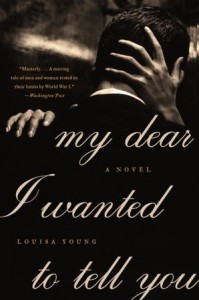
My Dear I Wanted to Tell You by Louisa Young

My Dear I Wanted to Tell You by Louisa Young is a WWI novel and love story that illustrates the toll that war takes on couples from mere recruits to the officers that give them orders.  Young’s novel examines social and monetary class distinctions, even providing slight nuances to the “poshies” in how they treat the working class.  Truly, this is a love story — the story of Riley Purefoy and Nadine Waveney, childhood sweethearts separated by more than the war.

The narration sets it up so that readers get to know Nadine and Riley in their early years and the timid beginnings of their love, which helps not only anchor the emotional arc of the story but the connection readers feel to them both.  Nadine is from an upper class family with artistic roots — her father is a famous conductor — and Riley is from a working class family.  Both end up under the tutelage of Sir Arthur, a famous artist, who sees potential in Riley and Nadine.  Eventually, they are separated by her parents who refuse to send her to Sir Arthur’s for lessons if Riley is still working there, which ultimately pushes Riley to see his fortunes through a different lens and join the military.

“He had to pull the bayonet out again, which was strange.  And that wasn’t an end:  it was just a moment on a long line of moments, and time went on, and they went on.  He stepped away in a mist of red, a numbness spread across him, a sense of capacity.  He smelt the blood, and took on the mantle of it.  He ran on, screaming, til he found himself alongside Ainsworth, and felt safer.”  (Page 40-1)

The introduction of CO Peter Locke, his wife Julia, and his cousin Rose serve as a juxtaposition to the love of Riley and Nadine, but although Locke’s story is of interest in how the war can change a man, his wife Julia can be trying and insipid — wearing on readers’ nerves.  Julia is self-absorbed to the point that she finds her actions for self-improvement as a way to “do her bit” for the cause by becoming the perfect wife in looks and caring for the household, rather than volunteering to care for the soldiers.  Locke, himself, is more in the background providing support for the soldiers and holding in the horrors and losses he’s experienced, but eventually, his story jumps to the forefront and readers see a broken man wallowing in women and booze.

If no one won that, after all that, that — if neither side won that, then neither side can win. The war won, and goes on winning.” (Page 125)

Young has the skill and detail to capture the horrors of war from the adrenaline rush of battle to the devastation of losing one’s companions and comrades. She also captures in realistic and devastating description the medical procedures used to reconstruct faces and other body parts of wounded soldiers — so much so, that some readers may squirm in their seats.  The war itself becomes a character taking over all that is good and twisting it, shoving the best bits into the waste bin.  However, the overarching themes celebrate the perseverance of the human spirit and its ability to recover from even the most devastating injuries — no matter if they are physical or emotional.  My Dear I Wanted to Tell You by Louisa Young is by turns endearing and horrifying, and WWI is ever-present in everything these characters face and endure.

About the Author:

Louisa Young grew up in London, England, in the house in which Peter Pan was written, and she studied modern history at Cambridge. She was a freelance journalist and has written ten books, including the Orange Prize–longlisted Baby Love. She is the co-author of the bestselling Lionboy trilogy, which has been published in thirty-six languages. She lives in London and Italy with her daughter and the composer Robert Lockhart.  Check out her Website.

This is my 50th book for the New Authors Reading Challenge 2012.


This is my 13th book for the WWI Reading Challenge.