Quantcast

Longbourn by Jo Baker (audio)

Source: Public Library
Audio, 13.5 hrs.
I am an Amazon Affiliate

Longbourn by Jo Baker, narrated by Emma Fielding, is a look at the servants behind the scenes of Pride & Prejudice by Jane Austen.  Sarah is an orphaned, hard-working housemaid in the Bennet household at Longbourn, but even as she keeps within the confines of her role, she begins to wish for something more.  Baker clearly delineates the roles of the household servants, and depicts the realities of that life with a frankness that cannot be ignored.  While readers may be cheering Sarah on in her dreams of something more, they also realize that dreaming for too much can become a devastating blow when it does not come to pass.  With the arrival of a new footman, Sarah finds herself torn between her feelings for him and that of Ptolemy Bingley, a mulatto servant of the Bingley family.  What readers will find here is that the servants interactions with the main characters of Austen’s work reinforce their flaws for the most part, which is to be expected when writing from the perspective of those in the lower class.

Fielding is a great narrator and does really well with the prose that closely mirrors that of Austen, ensuring that readers get wrapped up in the story.  The only drawback in this story is Ptolemy because he is a character who is under-developed and whose back story becomes a mere catalyst for Sarah’s evolution beyond her current status in the household.  It is almost as if he could have been someone that was talked about among the servants, rather than actually met by Sarah, as she’s only superficially tempted by him and what he represents tangentially.

It is almost as if the naive housemaid believes Ptolemy represents a greater freedom than he actually does, especially given that he was a former slave on a plantation owned by the Bingleys.  To another point, would the Bingleys actually have been plantation owners?  Perhaps not, given that most newly rich families earned their money in business dealings, not that plantation ownership could not be a business dealing.  This part of the story is not fully fleshed out, leaving readers with a very superficial view of his life and current situation.

Austen’s main story is not disrupted by Baker’s novel in any major way, with the girls being married off and some more favorably than others.  What’s strong here is the steady hand of Mrs. Hill and her ability to not only see past her own misfortunes but to also offer hope within her sage advice to Sarah.  Longbourn by Jo Baker, narrated by Emma Fielding, is engaging and captivating, while never putting window dressing on the lives of servants.

About the Author:

Jo Baker was born in Lancashire. She was educated at Oxford and at Queen’s University, Belfast, where she completed a PhD on the work of the Anglo-Irish writer Elizabeth Bowen. Her first novel, Offcomer, was published by William Heinemann in 2001. Her second book, The Mermaid’s Child, is was published in August 2004. Jo Baker has also written for BBC Radio 4, and her short stories have been included in a number of anthologies. From 2001-2003 she was the Artistic Director of the Belfast Literary Festival. She lives in Belfast with her husband, the playwright and screenwriter Daragh Carville, and their son Daniel. The Telling is her third novel.

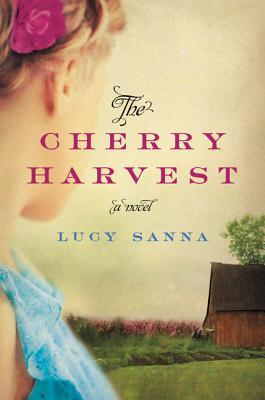
The Cherry Harvest by Lucy Sanna

tlc tour host

Source: TLC Book Tours
Hardcover, 336 pgs
I am an Amazon Affiliate

The Cherry Harvest by Lucy Sanna is a World War II novel set in the Wisconsin around the time of the cherry harvest, and for a novel focused on the home front of the war, the tension is still great.  As rationing affects the nation’s farmers, but not those like the lighthouse keeper, readers will get a sense of the tensions that wars bring for those at home and not just fighting the battles.  The narrative is split between Charlotte Christiansen and her daughter, Kate, and as two strong women, they struggle with what is right for their family, right for the town, and right for themselves.  Thomas Christiansen is a bookish man who gave up his university studies to take over the family farm, and he married a good woman from a local dairy farm who could make some award winning pies.  When the war begins to take the immigrant labor from the farm, his wife hatches a plan to save their upcoming harvest because without a plan of action, their son Ben may not have a home to come to when the war is over.

“Worry? In addition to all they had to do before, lighthouse keepers are now charged with protecting our shores from the enemy.  The shores of the Saint Lawrence Seaway and the Great Lakes.” She leaned in.  “And you think a few prison guards can protect us from that madman Hitler, who’s bent on controlling the world?” (pg. 30 ARC)

Kate is struggling, too.  Her dreams of attending university seem to be thwarted at nearly every turn as her mother takes the one possession she has to sell to pay for college and uses it to feed them, and as she learns she needs additional help with math in order to pass the entrance exam.  But beyond these trials, she realizes that life is moving forward without her in many ways, with her friend Josie already planning a wedding to Ben, even while he continues to fight overseas and his likelihood of coming home is slim.  As she finds out what kind of woman she wishes to become, Kate uncovers her own compass and learns that she needs to rely on her own courage to achieve her goals.  This self-reliance is something she learns from her mother, even as Kate comes to the realization that her mother is not perfect.

Sanna has created a dynamic cast of characters for this home front novel, but where it lacks strength is in the twists of plot.  Some situations come from left field or are simply there to check a box in what a WWII novel should have — including two star-crossed love affairs and battles between Americans and Nazis, though not on the battlefield.  Additionally, Charlotte’s character is a bit all over the place — one minute she wants the Nazis to be used as labor and in the next minute she wants them no where near her family.  Her hypocrisy is part of her undoing, but readers also may find that some things are left to unresolved to be satisfactory.  There are certain situations that did not jibe well with the character development, which made the fallout of those situations difficult to believe.

Where The Cherry Harvest by Lucy Sanna shined was in its depiction of troubled economic times because of the war, the tensions between those in the same town over those troubles, and the impact of war on soldiers and the uncertainty among family how to act or react to those soldiers coming home.  Had the novel a more refined focus, Sanna would have hit one out of the park with this one.  Due to the plot issues and other issues, this was a mixed read for me in the end.

About the Author:

Lucy Sanna has published poetry, short stories, and nonfiction books, which have been translated into a number of languages. Born and raised in Wisconsin, Sanna now divides her time between Madison, Wisconsin, and San Francisco. The Cherry Harvest is her first novel.

Find out more about Lucy at her website and connect with her on Facebook. (Photo Credit: Hope Maxwell Snyder)


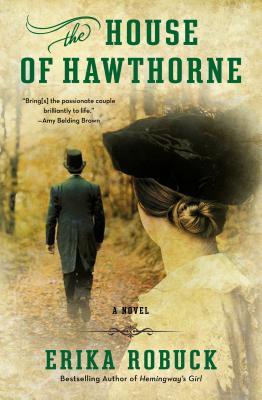
The House of Hawthorne by Erika Robuck

Source: Penguin Random House
Hardcover, 416 pgs
I am an Amazon Affiliate

The House of Hawthorne by Erika Robuck is word portrait of Sophia Peabody and Nathaniel Hawthorne’s courtship, marriage, and family, as well as the tensions that arise from two artists balancing their passions with their family.  Spoken in the voice of Sophia Peabody, readers are given a glimpse of her passionate painting and love of life despite her debilitating headaches before she meets Nathaniel, an aloof writer who feels the inadequacy of his words on paper.  From the 1830s to the U.S. Civil War, readers are taken through their early romance and their marriage.  While readers will find Sophia passionate about her work, she still finds joy and love in being a wife and mother, though she does miss her painting.  Despite the vacillation between poverty and moderate wealth, the Hawthornes are a family unit that loves deeply and remain loyal to their friends.

“One hand is open, overflowing with an abundance of joy and vitality; the other is a fist, clutching a void so desperately that the nails dig holes in the skin.” (pg. 247)

Like many artists there are period of abundance and times when the land is fallow, and this is true in terms of both writing and painting artistry as well as the funds they earn.  Sophia is a headstrong woman, but she quickly learns how to navigate her husband’s moods and comfort him in the best way she can for a reserved man.  Nathaniel is an enigma, but we get to see him through Sophia’s loving eyes, which can help soften some of his more anti-social behavior that others may see as mean or aloof.  It is wonderful to see the circle of friends the Hawthorne’s have and how those relationships evolve over time, particularly in light of the coming Civil War between the North and South.  From the drifting away from the Emersons to the effusive complements of Melville, the Hawthornes remain a tight knit family and rally around each other in times of loss and suffering.

“Our country simmers like a covered pot over the issue of slavery, and while Nathaniel and I do not approve of owning slaves, we cannot imagine what a division or even a war between the Northern and Southern states would do to our young nation.” (pg. 264)

The House of Hawthorne by Erika Robuck is a stunning narrative that illuminates the often overshadowed life of Sophia Hawthorne and demonstrates how two artists can live together and build a life despite their differences and their own need for solitude and succor.  The novel raises questions of self-identity, self-expression, compromise, and the desire to create and have it all.

About the Author:

Historical fiction writer, book blogger, voracious reader. Erika’s first novel, RECEIVE ME FALLING was self-published. Penguin Random House published HEMINGWAY’S GIRL, CALL ME ZELDA, FALLEN BEAUTY, and a short story anthology to which Erika contributed, GRAND CENTRAL: ORIGINAL STORIES OF POSTWAR LOVE AND REUNION. Her forthcoming novel THE HOUSE OF HAWTHORNE will release on May 5th, 2015.

Erika writes about and reviews historical fiction at her blog, Muse, and is a contributor to fiction blog, Writer Unboxed. She is also a member of the Historical Novel Society, the Hemingway Society, the Millay Society. and the Hawthorne Society.


The Sound of Glass by Karen White

Source: New American Library
Hardcover, 432 pgs
I am an Amazon Affiliate

The Sound of Glass by Karen White, published today, embarks on a journey that will leave readers slowly unraveling the interconnected lives of Mrs. Heyward in the late 1950s and the Mrs. Heyward in the new millennia.  Edith Heyward is a woman who lives a closed life in her attic where she makes wind chimes out of sea glass, but she also lives a large life inside those tiny, humid walls.  She tiptoes around not only her husband, but also her son and one of her grandsons, but even after they have left her home, she still closes herself off from the outside world.  Meanwhile, Merritt Heyward, who married Edith’s grandson Cal, has taken the chance and given up her life in Maine to come to Beaufort, S.C., where a home she’s inherited as Cal’s widow lays out its secrets in a methodical way.

“She’d barely slid from her stool when the sky exploded with fire, illuminating the river and the marshes beneath it, obliterating the stars, and shooting blurry light through the milky glass of the wind chime.  The stones swayed with shocked air, singing sweetly despite the destruction in the sky behind them.  Then a rain of fire descended like fireworks, myriad balls of light extinguished as soon as they collided with water into hiccups of steam.”  (pg. 2 ARC)

While much of Edith’s pain is in secret, except to her immediate family, her sense of justice and right will push her to investigate the mysterious plane crash above her home in South Carolina.  As she works on this case in secret, she’s simultaneously balancing the need for family calm and the desire for change within the family dynamic.  What ultimately drives her family to separate will also bring it back together and resolve a nearly 50 year old mystery.

“‘She always said that only fools thought all glass was fragile.'” (pg. 31 ARC)

Fast-forward to the present day, and Merritt find herself trying to curl up into a ball on her own, only to realize that Southern manners will not allow it.  On top of her new well-meaning neighbors, she also must confront a brother-in-law she never knew about and adjust to life with her step-mother and younger brother Owen.  As Merritt learns the traditions of Southern living, she also begins to realize that like drinking Coke with peanuts, you have to take the bitter with the sweet in life.  While she may have found love with Cal, she also knew there were wounds that would never heal, and some that hovered below the skin’s surface that she was unaware of.

The Sound of Glass by Karen White is a multi-layered story about family, their secrets, and the innocuous connections that can lead to lasting relationships and memories to be cherished.  What breaks us can only make us stronger, and in some cases, some of us are unaware that we are broken and in need of fixing.  Denial can be a powerful drug, as can self-protection, but family bonds and love are the only true healing power in this story and in our own lives.  White is a successful writer of Southern, women’s fiction for a reason, and once readers buy one book, they’ll be addicted and buy the rest!

***Another contender for the 2015 Best List***

About the Author:

Known for award-winning novels such as Learning to Breathe, the Southern Independent Booksellers Alliance 2009 Book of the Year Award finalist The House on Tradd Street, the highly praised The Memory of Water, the four-week SIBA bestseller The Lost Hours, Pieces of the Heart, and her IndieBound national bestseller The Color of Light, Karen has shared her appreciation of the coastal Low country with readers in four of her last six novels.

Italian and French by ancestry, a southerner and a storyteller by birth, Karen has made her home in many different places.  Visit the author at her website, and become a fan on Facebook.

My other reviews:

The Mapmaker’s Children by Sarah McCoy

tlc tour host

Source:  TLC Book Tours
Hardcover, 320 pgs
I am an Amazon Affiliate

The Mapmaker’s Children by Sarah McCoy is a dual narrative in which Eden and Sarah both deal with a personal dilemma.  Sarah lives during a time of turmoil for the United States, when the Underground Railroad has flourished and ensured the escape of slaves to the North and civil unrest has taken something most dear to her.  Eden lives in the modern day and she and her husband have moved into New Charlestown to start a family and slow life down a bit.  Unfortunately, their plans are sidetracked and disappointment and self-loathing are Eden’s dominant emotions, until one day she finds the head of a porcelain doll in her root cellar.

“The Old House on Apple Hill Lane shuddered against the weighty snow that burdened its pitch.  The ancient beams moaned their secret pains to the wintering doves in the attic.  The nesting duo pushed feathered bosoms together, blinked, and nodded quickly, as if to say, Yes-yes, we hear, yes-yes, we know, while down deep in the cellar, the metal within the doll’s porcelain skull grew crystals along its ridges.  Sharp as a knife.  The skull did all it could to hold steady against the shattering temperature for just one more minute of one more hour.” (pg. 1)

McCoy is a gifted story-teller who immediately captures the attention of her readers with detail and mood.  Her books always transport readers to another time and/or place, and her characters are strong and flawed, like most of us.  Readers can connect with their struggles because they too have struggled similarly or know someone who has.  Eden’s modern problem and Sarah’s are the same, but how they deal with it is very different.  Eden shuts down and tries to cocoon herself against the pain and the disappointment, while Sarah takes her time and accepts it, giving up the one she loves in the process for a greater cause. Eden looks within herself for far too long and has alienated her life, but Sarah seeks an outward cause to turn her energy toward.  And the mystery that ties these women together is well woven and readers will enjoy unraveling it with Eden.

The Mapmaker’s Children by Sarah McCoy is wonderful, and beautifully written.  It had me reading into the late hours until I finished!  McCoy’s book is brilliantly told and chock full of research about the Underground Railroad.  But at its heart it’s about learning what family is and how much that one word can include, particularly outside of one’s immediate relations.

***Another contender for the Best of 2015 list!***

***If you are in Gaithersburg, Md., you’ll be able to catch Sarah McCoy live at the local book festival on May 16, 2015.


Giveaway:

To win a copy, please leave a comment below by April 30, 2015, at 11:59 p.m. EST.  U.S. and Canadian residents only.

About the Author:

SARAH McCOY is the  New York TimesUSA Today, and international bestselling author of The Baker’s Daughter, a 2012 Goodreads Choice Award Best Historical Fiction nominee; the novella “The Branch of Hazel” in Grand Central; The Time It Snowed in Puerto Ricoand The Mapmaker’s Children (Crown, May 5, 2015).

Her work has been featured in Real Simple, The Millions, Your Health Monthly, Huffington Post and other publications. She has taught English writing at Old Dominion University and at the University of Texas at El Paso. She calls Virginia home but presently lives with her husband, an Army physician, and their dog, Gilly, in El Paso, Texas. Sarah enjoys connecting with her readers on Twitter at @SarahMMcCoy, on her Facebook Fan Page or via her website, www.sarahmccoy.com.

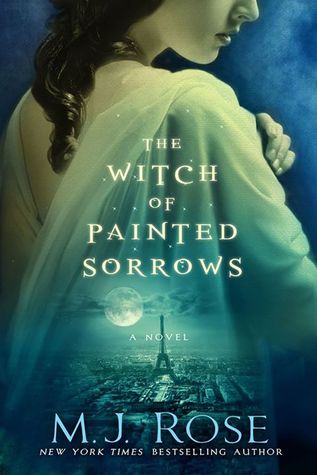
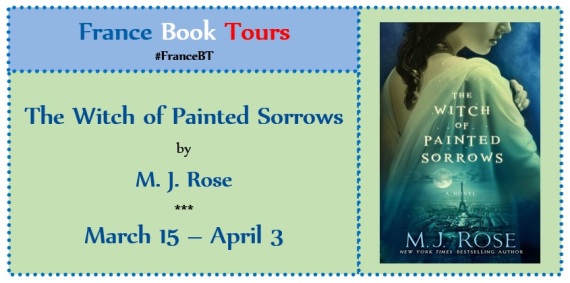
The Witch of Painted Sorrows by M.J. Rose

Source: France Book Tours
Hardcover, 384 pgs
I am an Amazon Affiliate

Sandrine Salome finds her world upended by her husband, Benjamin, and even as she flees to Paris from New York, she is haunted by her own ancestry in The Witch of Painted Sorrows by M.J. Rose.  Paris is the city of light and painting and art, and Sandrine has always loved art.  But her love of art is just one passion that drives her deeper and deeper into the mystical past of her courtesan ancestors, especially La Lune.  Arriving on her grandmother’s doorstep unexpectedly, we learn that she and her grandmother only met occasionally throughout the years after she left Paris with her parents at age 15.  Despite the distance, she is drawn to Paris as her home, and it is her sense of longing and desire for a new life that drives her closer to the edge of an abyss.

“I did not cause the madness, the deaths, or the rest of the tragedies any more than I painted the paintings.  I had help, her help.  Or perhaps I should say she forced her help on me.  And so this story — which began with me fleeing my home in order to escape my husband and might very well end tomorrow, in a duel, in the Bois de Boulogne at dawn — is as much hers as mine.  Or in fact more hers than mine.”  (page 1)

Her secretive grandmother may have unwittingly provided Sandrine and her father with the tools they needed to become blind to the magic around them and to willfully turn a blind eye to the dangers that stalk them.  But her warnings are stark and should not be ignored.  Rose is a gifted story-teller who infuses her historical fiction with ancient mystery, passion, and wonder.  Her characters love strongly and are often guided by things beyond their rational control, but at their hearts they believe they are doing right.  Sandrine is no different.  She has longed for a life free of constraint and to be immersed in art, and what she finds in Paris is more than she bargained for, but in many ways she’s afraid to give it up and to return to a lackluster life.

The Witch of Painted Sorrows by M.J. Rose is a story of love, passion, and ambition, but at its heart, it is about the quest for immortality — even if it is just being remembered as a great architect or artist.  Skeptics will enter this world and try to interject rationality, much like Julien does, but they will soon find themselves swept up in a story like no other and forced to re-examine their own conceptions of the spirit world.  Is art a divine gift or is it a talent that can be nurtured and shaped into legend?  Rose delves into these questions and more in her deeply layered world of artistry and passion.

About the Author:

New York Times Bestseller, M.J. Rose grew up in New York City mostly in the labyrinthine galleries of the Metropolitan Museum, the dark tunnels and lush gardens of Central Park and reading her mother’s favorite books before she was allowed. She believes mystery and magic are all around us but we are too often too busy to notice … books that exaggerate mystery and magic draw attention to it and remind us to look for it and revel in it. Please visit her website, her blog: Museum of Mysteries; Subscribe to her mailing list; and Follow her on Facebook and Twitter.

Here is the Giveaway Entry-Form

There will be 5 winners; Open internationally; $20 gift card

Please check out the rest of the stops on the blog tour:

The Secret of Magic by Deborah Johnson

Source: Penguin Random House
Paperback, 416 pgs
I’m an Amazon Affiliate

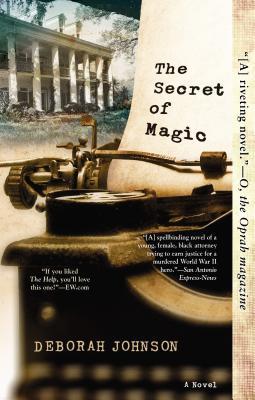
The Secret of Magic by Deborah Johnson is a phenomenal look at the racial prejudices that continue to hold tight in Mississippi, Alabama, and elsewhere, even after then end of WWII when black soldiers fought bravely against the Nazis.  Joe Howard Wilson is returning home as a decorated hero after losing not only men in his unit, but one of his good friends, L.C.  He’s musing on his visit with his father, Willie Willie, who taught him so much and worked with their white employer, Judge Calhoun, to ensure he was educated enough to get out and make something of himself.

Gotcha!

Joe Howard Wilson jerked and his hands went straight to his face, and then to his body, for his gun.  Groping. Feeling. Saying his prayers.  Checking to make sure that he was awake and what had happened in that forest in Italy, all the killing was over.  Checking to make sure it wasn’t happening now.”  (page 1)

Joe is a young man still coping with the loss of friends, only to find that the prejudices he dealt with growing up are still present and an additional pressure he has little patience for after serving for his country overseas.  When Regina Robichard, a young attorney still waiting to hear if she passed the New York bar, is called down to investigate the death of a WWII veteran a year later, she finds that the south is not as black and white as she expects it to be.  She’s sent south with a mission from Thurgood Marshall of the NAACP to investigate the matter.  Regina, the daughter of a relatively famous black female activist, is idealistic and tentative in her approach to those she encounters, particularly M.P. Calhoun, who wrote her favorite book — The Secret of Magic.

“The air in the depot smelled just like everything Southern he remembered.  Even inside, no matter where you were, there was always a hint of the earth and the things that died on it.  You could not get away from the scent of things, from the richness of them, if you had lived, like he had lived, so near to the ground.”  (page 8)

Through a neatly woven narrative, Johnson creates a tapestry of the south that depicts not only the racial prejudices present in the south that are held onto tightly even after WWII, but also the deep connections between the whites and blacks within the small community of Revere, Mississippi.  Like all relationships, at first blush racial prejudice is hatred of the other, but looking deeper Johnson demonstrates that there is a love underneath the comments of “mine” and “our” used by whites in reference to blacks in the community.  Revere is a town that is in transition whether it likes it or not, and in many ways, the change is too quick for some and not quick enough for others — especially those like Peach Mottley who see Regina as the catalyst they need.

The Secret of Magic by Deborah Johnson is gorgeously told, and it is riveting from the first page.  Readers will develop an instant connection with not only Joe Howard Wilson and Regina Robichard, but with the other major and minor characters as they continue to navigate the social constructs that are the same and yet changing.  The fairy tales that peek around the realities of the South provide hope of a new world, but they also are endangered by those who wish to halt change in its tracks.

I haven’t been this blown away by a book in a long while, and this one is a must read and a definite contender for the Best of 2015 list.

About the Author:

Deborah Johnson was born below the Mason-Dixon Line, in Missouri, but grew up in Omaha, Nebraska.  After college, she lived in San Francisco and then for many years in Rome, Italy where she worked as a translator and editor of doctoral theses and at Vatican Radio.  Deborah Johnson is the author of The Air Between Us, which received the Mississippi Library Association Award for fiction.  She now lives in Columbus, Mississippi, and is working on her next novel.  Check out her Website.


War’s Trophies by Henry Morant

Source: Author Henry Morant
Paperback, 246 pgs
I am an Amazon Affiliate

War’s Trophies by Henry Morant is a tumble in the jungles of Vietnam, Seattle, and in the minds of Vietnam War veterans dealing with latent post-traumatic stress.  Lieutenant Jeremy Hall is a new man on Captain Stephan Wozniak’s unit in Vietnam, and the captain is none too pleased about it.  As part of an intelligence unit, Hall realizes that these missions are not always sanctioned and that what happens on these missions are kept hush-hush for more than one reason.  Through a series of chapters that alternate from 1986 and 1966, Morant takes readers on a journey into the fog of war; he fleshes out the corruption, killing, and the only brand of justice that can be found on the battlefield and parallels it to the cutthroat business of the newsroom.

“Today’s talent lacks sophistication.  There was class to this one.  Kids and punks today think a drive-by with an ejaculation from their Uzi or a sawed-off is a big deal.  They don’t take the time to learn how to do someone by hand.  Even the mob has had to import pizza men from Sicily to get any style.  Someone with a sense of craftsmanship, pride in their work.  Besides, there isn’t anyone around here smart enough I’ve run into who could break into the federal courthouse the way this phantom did and do a kill.”  (page 18)

Although both of these men have left Vietnam’s jungles far behind, what happened in the heat of battle has stuck with them over the last 2o years and refused to let go.  These men must prepare to do battle once again in the concrete jungle, and just like Vietnam, there are many casualties — some of them innocent.  Morant’s characters are complex in their emotions and while Hall and Wozniak are similar in build they are foils for one another, which makes their imminent squaring off all the more dramatic.

War’s Trophies by Henry Morant is a wild ride into the darker side of war and its effects on the soldiers who fight them — do they succumb to corruption and greed at all costs or do they cow to the pressure of the mission and commit unnecessary murder.  How strong can a soldier remain under the constant barrage of bullets, bombs, and fear?  Morant has written a thriller that will keep readers turning the pages.

About the Author:

Henry Morant has been a soldier, sailor and mountain climber and still seeks adventure in the Salish Sea and along the waters of the east coast of the United States. He often can be found at the Schooner’s Wharf bar in Key West, on a sailboat or in a kayak or rower. His first book is War’s Trophies, a thriller based on murder and robbery during an intelligence mission during the Vietnam war and two former army officers’ cat-and-mouse battle for deadly revenge that begins in Vietnam and resolves 20 years later in Seattle.


After the War Is Over by Jennifer Robson

Source: HarperCollins
Paperback,
I am an Amazon Affiliate

After the War Is Over by Jennifer Robson follows closely on the heels of Somewhere in France (which I read in 2014) and takes a wide look at how the world look after WWI.  Charlotte Brown, friend to Lilly Neville-Ashford in the first book, sees first hand the results of war at home, as veterans are denied pensions and their families are forced to scrape by on what little work is still available for women.  Through alternating chapters between the time after WWI and when she first found work after completing university with the Neville-Ashford family and befriended not only Lilly, her student, but also her brother, Edward, readers are taken through England as it prospered and as it sustained heavy losses because of the war.  The losses are not just physical, but emotional and psychological for the men returning from war, as well as their families.  There are monetary losses and there are losses of freedom — in the sense that women lose their jobs to returning men and men lose many of their physical abilities during the war and must adapt to a new reality.

“Women always put themselves last.  Either it was the mothers she visited in the slums of Scottie Road who only ate after their husbands and children had had their fill, or it was the women from Huskisson Street who, after cleaning and cooking for days, were left with the rag end of the delicacies, with scarcely a slice of cake to share between them.” (page 145)

Even though this is considered a follow up to the first book, Robson offers enough background about the first book that this could be read as a standalone without any problems.  The main focus here is the aftermath of war, the changes for both men and women in a new world, and Charlotte’s ability to cope with her new reality and still strive to improve the world around her, even in small ways.  Readers who enjoy social change and movements will be swept up in the struggles of these families, just as Charlotte is.  Charity is looked on as a handout by many, but Charlotte’s push to have society lend a helping hand to each neighbor on their own is just what this society needs.  Rather than compete or judge others in the neighborhood, she insists on compassion.

Robson’s characters are dynamic, and Charlotte is strong willed and motivated in her efforts.  When she meets a personal challenge she does take a step back, but she soon realizes that the best medicine is to tackle it head on.  When Lilly and Robbie re-enter the picture, so does Edward, and this stirs up feelings in Charlotte that she hadn’t addressed and is still unwilling to admit to even herself.  There’s even a great Jane Austenesque moment in this one that Robson mimics so well.

After the War Is Over by Jennifer Robson is a sweeping novel about life after the war because the immediate casualties of war are not the only tolls countries, communities, and families will be expected to take.  Charlotte is a forthright, strong woman in a changing world, but she’s well aware that change cannot happen on its own or at the hands of one woman.  She needs help, as we all do, and to generate change is to work together.

About the Author:

Jennifer Robson first learned about the Great War from her father, acclaimed historian Stuart Robson, and later served as an official guide at the Canadian National War Memorial at Vimy Ridge, France. A former copy editor, she holds a doctorate in British economic and social history from the University of Oxford. She lives in Toronto, Canada, with her husband and young children.  Connect with the author on Facebook.

Going After Cacciato by Tim O’Brien

Source: Purchased
Paperback, 336 pgs
On Amazon and on Kobo

Going After Cacciato by Tim O’Brien, which was the final read-a-long for the 2014 War Through the Generations challenge, is the story of soldiers in Vietnam as they struggle with courage and honor and fate.  Paul Berlin appears to break from reality and is the daydreamer of the group, but he latches onto the dream of Cacciato, who claims you can walk out of the Vietnam War, across Asia and into Europe, all the way to Paris.  In a series of chapters that alternate from reality to fantasy and back again, O’Brien examines what it means to be a soldier in war, struggling to process all the dangers and lulls in danger around them.  Berlin is an observer, but he is quaking in his boots when he arrives.  However, he has a plan, stay on the outside of everything, don’t get attached, and he’ll make it through.

“They were all among the dead.  The rain fed fungus that grew in the men’s boots and socks, and their socks rotted, and their feet turned white and soft so that the skin could be scraped off with a fingernail, and Stink Harris woke up screaming one night with a leech on his tongue.  When it was not raining, a low mist moved across the paddies, blending the elements into a single gray element, and the war was cold and pasty and rotten.”  (page 1)

As O’Brien blends reality and fantasy, readers will want to believe in the fantasies to cling to the adventure story, which also perilous seems less dire than trudging through rice paddies and jungles in search of the enemy.  There is that pervasive feeling throughout the book of being caught — a hopelessness of the situation and a desire to escape it by any means necessary.  When the only purpose to war is the winning of it, morale gets bogged down in the failures and the confusion, at least this is the case for Berlin and his squad members.

Going After Cacciato by Tim O’Brien is O’Brien at his best, using magical realism to bring forth the realities of the war for soldiers and their internal struggles.  A complex novel with a great deal for book clubs to discuss about duty, honor, courage, and self-preservation.  O’Brien is considered one of the best novelists writing about the Vietnam War and this book proves his skill and compassion.

About the Author:

Tim O’Brien was born in 1946 in Austin, Minnesota, and spent most of his youth in the small town of Worthington, Minnesota. He graduated summa cum laude from Macalester College in 1968. From February 1969 to March 1970 he served as infantryman with the U.S. Army in Vietnam, after which he pursued graduate studies in government at Harvard University. He worked as a national affairs reporter for The Washington Post from 1973 to 1974.

34th book (Vietnam War) for the 2014 War Challenge With a Twist.

The Garden of Letters by Alyson Richman

Source: Penguin
Paperback, 384 pgs
On Amazon and on Kobo

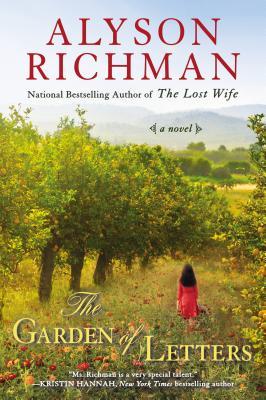
The Garden of Letters by Alyson Richman is an emotional tale of finding the strength to do what’s right even if it places you, your dreams, and your family in danger.  Elodie Bertolotti is a young, virtuoso with the cello, and her father teaches violin at the local music school in Verona, Italy.  She has the musical talents of her father, and they often connect with just the music around them or speak through minimal glances and facial expressions.  But like her mother, she can memorize things instantly. She has the best gifts for a musician — the ability to memorize entire scores and the ability to play them with passion.  However, she is mild compared to her friend, Lena, who is outspoken against the Fascists and eager to get involved in the Italian resistance.

“His playing was the lullaby of her childhood.  She knew when he played Mozart that he was savoring good news; when he was nervous, he played Brahms; and when he wanted forgiveness from her mother, he played Dvorak.  She knew her father more clearly through his music than she did through his words.”  (page 19)

The Venetian blood running through Elodie’s veins and her gift of memorization are things that she had little thought for beyond her music, but she soon realizes that they can be of great use.  Richman has created a novel in which a young music student finds that she’s passionate about more than the scores she learns in class; she is eager to be noticed by Luca who catches her eye, but she also wants to take action against the Nazis who have come to lay a heavy hand on her country.  Things are not what they once were in Verona, and she must learn how to either blend into the background or stand up for what she believes in.

The Garden of Letters by Alyson Richman is stunning, and a real treat for those interested in the Italian resistance during WWII.  But the novel also offers a coming of age story and a story of second chances.  Richman has created an emotionally charged, suspenseful, historical fiction novel that at its heart speaks of redemption and new beginnings.  Weaving together music, art, books, and war, Richman’s story transcends time through the lives of her dynamic characters.  Another for the Best of List 2014.

About the Author:

Alyson Richman is the internationally bestselling author of: The Garden of Letters, The Lost Wife, The Last Van Gogh, The Rhythm of Memory (formerly published as Swedish Tango), and The Mask Carver’s Son. Her books have received both national and international critical acclaim and have been translated into eighteen languages.  The Lost Wife was nominated as one of the best books of 2012 by the Jewish Journal of Books and was The 2012 Long Island Reads Selection.  The novel is now a national bestseller with over 200,000 combined print/ebook copies sold and is in development to be a major motion film. Her forthcoming novel, The Painted Dove, centers around the French courtesan Marthe de Florian and the mystery of her Paris apartment that remained locked for 70 years.  It will be published by Berkley/Penguin in September 2016.  A graduate of Wellesley College and a former Thomas J. Watson Fellow, she currently lives with her husband and children in Long Island, New York.

37th book for 2014 Historical Fiction Reading Challenge.


33rd book (WWII) for the 2014 War Challenge With a Twist.


28th book for 2014 European Reading Challenge; (Set in Italy)

Northern Lights by Tim O’Brien

Source: Personal library
Paperback, 372 pgs
On Amazon and on Kobo

Northern Lights by Tim O’Brien, which was our November and final book club pick of the year and a re-read for me, is the author’s first book, and not my favorite.  The story is about two brothers — Perry and Harvey — and one went to Vietnam and the other stayed home and got married.  Perry works for the agriculture department in Sawmill Landing, Minn., which is a small dying town with very few farmers left.  Heavily populated by Swedes, Finns, and Germans, the town has gone through periods of prosperity and periods of fallow ground.  Harvey is set to return from the war, and he’s altered in more than one way.  While O’Brien has crafted a story of brothers who were always different from one another — Harvey, the bull, considered the outdoorsy and confident brother, and Perry, the book smart and self-conscious brother — the story slowly unwinds to show just how false those perceived differences were.

“They call it a dying town.  People were always saying it: Sawmill Landing won’t last another decade.  But for all the talk, Perry never saw the death, only the shabby circumstances of the movements around him.  It was melancholia, seeded in the elements, but he had no idea where it started.”  (page 65)

When his brother returns, there is a heaviness that settles on the house, a house their father lived and died in and a house that was often filled with tension between the three men.  With Grace, Perry’s wife, in the house, there is a lightness from her womanly touch as she tries to keep the peace and make Harvey feel at home.  But then there is Addie, a young lady who flirts endlessly and teases all the time.  She’s an enigma, flirting with married Perry and with single Harvey, but it is clear that she’s never serious.  She likes the games.  The moral tension is palpable throughout the novel in whether Harvey and Perry are flirting with Addie, or whether Perry has to overcome his fears and hunt in the woods as his brother did with their father.

Rather than focus on the Vietnam War, Northern Lights by Tim O’Brien is a look at the home front after the soldier returns home and tries to fit back into society, as well as the brother’s struggle with seeing his own brother so changed.

***Unfortunately, due to car issues, I missed this meeting with the book club.  A meeting I was really looking forward to.***

About the Author:

Tim O’Brien was born in 1946 in Austin, Minnesota, and spent most of his youth in the small town of Worthington, Minnesota. He graduated summa cum laude from Macalester College in 1968. From February 1969 to March 1970 he served as infantryman with the U.S. Army in Vietnam, after which he pursued graduate studies in government at Harvard University. He worked as a national affairs reporter for The Washington Post from 1973 to 1974.  Here’s the reading group guide.

36th book for 2014 Historical Fiction Reading Challenge.


32nd book (Vietnam War) for the 2014 War Challenge With a Twist.