Quantcast

Haiku

This month, The New York Times put out a call for Haiku about the city. With a deadline on April 5, 2014, I had little time to waste. I haven’t written haiku in a long while, but I do love the little form.

The criteria for the NYC haiku was:

Your haiku must relate to one of six categories relating to New York City. Those topics are:

Island
Strangers

Solitude
Commute
6 a.m.
Kindness

You don’t have to include the word, just let the topic inspire you, and relate it to your experience of New York City.

For those who may have forgotten the rules of writing a haiku, here’s a quick 101 guide:

• Only three lines.
• First line must be five syllables.
• Second line must be seven syllables.
• The third line must be five syllables.
• Punctuation and capitalization are up to you.
• It doesn’t have to rhyme.
• It must be original.

The did leave out the part that Haiku generally has something to do with nature or the seasons, but I won’t hold that against them.

Here is what I came up with, but I only submitted three:

Amtrak thumps rails north
anxious heart, loud silence here.
clammy hand held down.

St. Paul camouflaged
in Spring’s green, shadowed by steel
fulcrum: past, future

Central oasis
spring fever fields full out
below Essex, free

“Imagine,” he said.
blooms, friends — city wonderland
diverse harmony.

Maze of rat tunnels
rumbles on rails, sardines tight.
Jump inside, smiling.

What would your haiku be about NYC or your own location?

This is part of the 2014 National Poetry Month: Reach for the Horizon Blog Tour, click the button for more poetry:

248th Virtual Poetry Circle

Welcome to the 248th Virtual Poetry Circle!

Remember, this is just for fun and is not meant to be stressful.

Keep in mind what Molly Peacock’s book suggested.

Look at a line, a stanza, sentences, and images; describe what you like or don’t like; and offer an opinion. If you missed my review of her book, check it out here.

Also, sign up for the 2014 Dive Into Poetry Reading Challenge because there are several levels of participation for your comfort level.

Visit today’s stop on the 2014 National Poetry Month Blog Tour: Reach for the Horizon

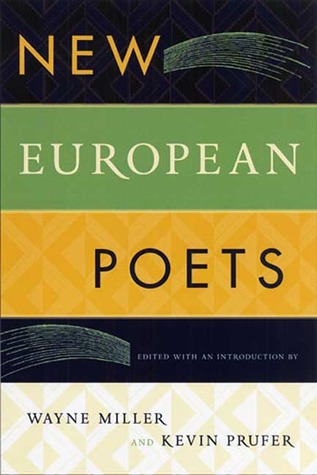
Today’s poem is from New European Poets edited by Wayne Miller and Kevin Prufer:

The Barren Woman by O. Nimigean from Romania (page 82)

the barren woman imagines she's giving birth
she twists in the sheets and heaves herself about
she sprawls spraddling her legs against the wall
she thrusts and convulses
runs rivers of sweat
and calls me by name
she even gives birth to me
only she feels how the unseen crown of my head
bursts out through her sex unreceptive to seed
only she hears me gasp and squall
she gnaws my umbilical cord of shadow
and she fondles my head and body
with eager hands

the barren woman licks her faceless whelp
her skinless heartless cub
only she strokes me and knows me
and suckles me on her nut-like pap
I nurse without a sound
and then let slip the delicate nipple and fall asleep
baring my gums and teeth of mist

   translated from the Romanian by Adam J. Sorkin and Radu Andriescu

What do you think?

This is part of the 2014 National Poetry Month: Reach for the Horizon Blog Tour, click the button for more poetry:

Guest Post: An Introduction to Poetry Friday by Tabatha Yeatts

National Poetry Month is a big month for the Poetry Friday crowd. What is Poetry Friday? I turned to Poetry Friday regulars to help me explain.

WHAT IS POETRY FRIDAY?

In an article for the Poetry Foundation, Susan Thomsen explains Poetry Friday this way: “Readers, writers, teachers, parents, librarians, homeschoolers, illustrators, and editors share favorite poems for children and adults, link to cool poetry sites, describe readings they’ve been to, and recommend great books about poetry.”

If you think you might be interested but need a little enticement, let me tell you about the variety of things Poetry Friday has to offer:

FOR WRITERS:

It’s where we meet to learn, to teach, to hold each other up on this challenging, not-always-graceful journey to a poem. –April Halprin Wayland

Thanks to this group, I have written all sorts of poems I never could have imagined before. Lots of inspiration! –Irene Latham

I didn’t write poetry for over twenty years, and PF helped me find my voice again. –Renée LaTulippe

There are “friends” out there that I’ve never met, friends who share my enthusiasm for a good poem or who ask interesting questions about writing, art, life, whatever. I don’t care if their friendship comes to me online – that’s fine. Writing can be isolating – and I’m comfortable with my friends arriving via different modes of delivery. I like the connective tissue that gets formed no matter how we meet. –Julie Larios

FOR TEACHERS:

One of the greatest gifts I have received is a community that honors each other. We are full of kindness and acceptance and there isn’t enough of that in the world. Some of us are teachers facing the daily challenges of Common Core and state testing and closed minds. I feel safe in this place we call Poetry Friday. I also feel celebrated. When I post about my students’ work, you always praise me and compliment their work. I can’t tell you what that does to fuel me. I have finally found a group of people as nuts about poetry as I am. –Margaret Simon

It’s where I met ‘my people’ to exchange original poems, poems from mentors and share student poetry. –Jone Rush MacCulloch

One thing I can add since I feel I’m one of the newest Poetry Friday people is how welcoming the community has been to me. I love poetry, and…I was thrilled to find company who were both passionate and knowledgeable. –Linda Baie

I love PF because it allows me share poems I love, find new poems to express my thoughts and feelings, and discover new poets through our PF community. And, I love that the format allows me to write and incorporate visual elements and music. –Tara Smith

FOR READERS/ PEOPLE WHO ARE INTERESTED IN BEING PART OF A POETIC COMMUNITY:

If you are human with a pulse and a heart, there is a poem for you. Poetry Friday might help you find that poem or inspire you to write your own. 🙂 –Jama Rattigan

I’d also say that the fun of Poetry Friday for me is really in that sense of community – there are others who want to celebrate poetry, and thanks to the web, we can find each other and connect. The weekly tradition – the ritual, almost – helps me think of poetry even when I don’t blog on a Friday, and that’s nice, too. –Greg Pincus

When I first began reading the posts and participating, I had a good base knowledge of children’s poetry and a true interest. But in the last year, I have learned so much more and my interest has grown tremendously! I’ve also “met” so many wonderful, intelligent, talented writers that I am now thrilled to call friends. It is truly a special community! –Becky Shillington

Don’t be afraid to jump right in! It’s such a welcoming, supportive community. I haven’t encountered a warmer or more passionate group of poetry-lovers anywhere on the web or otherwise. It’s the highlight of my blogging week. –Irene Latham

As I’m getting back into posting and visiting at least SOME of the many wonderful posters each week, it feels like coming home… Thank you, all of you, for *being* Poetry Friday! –Laura Purdie Salas

For someone new, I say, “Welcome!” If you like poetry – even a little – join us. If you are afraid of poetry, join us. If you love poetry, join us. –Amy Ludwig VanDerwater

WHAT’S THE DEAL WITH COMMENTING?

When I started posting on Poetry Friday a few years ago, I learned it takes a little while to attract regular commenters, and it’s worth the effort to get to know this generous community. Leaving a heartfelt sentence or two in response to other blog posts is a great way to get and stay involved. –Robyn Hood Black

I comment from the heart – whatever my response may be. I love reading comments to discover other thoughts, interpretations, reactions – these are so much fun, for they make you look at the poem in a completely different way. –Tara Smith

Comment on what strikes you, and if you do not have a blog, consider beginning one for your own poetry findings and explorations. –Amy Ludwig VanDerwater

WHAT ARE POETRY FRIDAY POSTS LIKE?

There’s a huge range of what you can do. You can share a poem, a song, a poetry book. You can put as much or as little effort into it as you can spare. Here’s a small selection so you can see a bit of the variety. Also, feel free to make the rounds of this week’s round-up!

Joy begins a poem and invites commenters to add to it

Laura at Author Amok wraps up a month of color poems

Colette discusses students memorizing Invictus

Charles (Father Goose) shares an illustrated original poem

A tea party with poems at Jama’s

A vacation and poetry from Dori

Heidi shares a poem from a non-poetry-centered magazine

Matt talks about revising poems

An original poem by Steven with background info

Ruth talks about Poetry Fridayers at the International Reading Convention
Favorite poems for fictional characters at my blog

HOW DID IT START?

Poetry Friday began in 2006 as the brainchild of Kelly Herold. Blogs who win the longevity award for being a part of Poetry Friday from the start include Check It Out, GottaBook, MotherReader, Poetry for Children, A Wrung Sponge, and A Year of Reading.

WHO CAN DO ROUND-UPS?

Anyone who is willing to gather the links in some way, shape or form. Read more about it at A Year of Reading.

Poetry for Young People: Robert Frost edited by Gary D. Schmidt, illustrated by Henri Sorensen

Source: Sterling Children’s Books
Hardcover, 48 pages
I am an Amazon Affiliate

Poetry for Young People: Robert Frost edited by Gary D. Schmidt, illustrated by Henri Sorensen, is intended for younger readers (ages 8+) and the illustrations serve to maintain their interest, allowing them to visualize the topics Frost has set forth in his verse.  These illustrations in this book take on a water-color feel, and are reminiscent of Frost’s own love of nature and its mysteries.  The introduction serves as a starting point for teachers or parents, which read in its entirety out loud could be boring for younger listeners.  It would be best to choose a few facts to introduce young readers to the poet and his life.

From “A Patch of Old Snow” (page 34)

There’s a patch of old snow in a corner,
That I should have guessed
Was a blow-away paper the rain
Had brought to rest.

It is speckled with grime as if
Small print overspread it,
The news of a day I’ve forgotten–
If I ever read it.

Frost’s poems are broken into seasonal categories — Spring, Autumn, Winter, and Summer — but there are more poems in the Summer and Autumn sections.  The index at the back of the book makes it easier for you to find particular poems.  However, what is truly helpful are the blurbs that will help direct teachers, parents, and young readers to the specifics of Frost’s poems.  For instance, before reading “An Encounter,” the editor calls attention to the “barkless specter” in the poem, forcing readers to focus on that image and what clues Frost lays forth in the poem as to the specter’s true identity.

Poetry for Young People: Robert Frost edited by Gary D. Schmidt, illustrated by Henri Sorensen, does include poems from Frost that have older and more elevated language than younger readers would be used to, but exposing these readers to more challenging language and poems can enable them to broaden their vocabulary.  My daughter may be too young to read these on her own, but she often listens while doing other things when I read these aloud, and she loves flipping through the pictures and asking me what the images are.

About the Poet:

Robert L. Frost was an American poet. His work was initially published in England before it was published in America. He is highly regarded for his realistic depictions of rural life and his command of American colloquial speech.


About the Editor:

Gary D. Schmidt is an American children’s writer of nonfiction books and young adult novels, including two Newbery Honor books. He lives on a farm in Alto, Michigan,with his wife and six children, where he splits wood, plants gardens, writes, feeds the wild cats that drop by and wishes that sometimes the sea breeze came that far inland. He is a Professor of English at Calvin College.

Book 5 for the Dive Into Poetry Reading Challenge 2014.

This is part of the 2014 National Poetry Month: Reach for the Horizon Blog Tour, click the button for more poetry:

New European Poets edited by Wayne Miller and Kevin Prufer

Welcome to the 2nd day of the National Poetry Month Blog Tour!

I thought that as so much of National Poetry Month seems to focus on classic poets or contemporary U.S. poets, I would review an anthology of contemporary European poets and their poetry. I hope you’ll click the button below to visit with Laura at Book Snob as well.

Source: Public Library
Paperback,
I am an Amazon Affiliate

New European Poets edited and introduced by Wayne Miller and Kevin Prufer is an anthology of European poetry since 1970.  Each poet selected was translated and each poem has the language from which it was translated and the name of the translator below.  Unfortunately, this anthology does not include the poem in its original language, which some readers would prefer as it gives a visual comparison between the texts.  However, the collection does include the short biographies of the poets included, the translators — to which the anthology is dedicated — and the editors, which provides a great reference for finding more of these authors’ works.

Reading through the poems in this collection is like traveling the undulating and varying landscapes of Europe, with climbs through the mountains, sitting in lounges by the seaside, and hunting in the dark forests.  Many of these poems mirror those that are found in American contemporary poetry, but then there are others that are distinctly European in subject matter and style.  In the introduction, the authors talk about the dialogue between poets in American and those in Europe — how poetry informed each style on either side of the Atlantic.  However, that dialogue has mostly stopped, and the authors strive to rekindle that dialogue with this anthology, a real possibility as more reader-poets pick up this volume and begin leafing through it.

From Spain's Luis Garcia Montero's "Poetry"

"Poetry is useless, it serves only
to behead a king
or seduce a young woman." (page 13)

In fact, this collection serves to disprove this early statement in the poetry anthology. Poetry is more than political protest and seduction — it is a connection of the human spirit and an observation of the human condition.  Ranging from the irreverent in “Kiss My Corpse” by Gür Genç of Cyprus to the heartbreaking emptiness of “The Barren Woman” by O. Nimigean of Romania, these poems share a range of emotions that are universal but in a style that is fresh and inviting.

Each poem leaves the reader — more so an American reader — with a sense of understanding and awe and a new way of thinking not only about emotion, life, and living, but also of poetry itself.  New European Poets edited and introduced by Wayne Miller and Kevin Prufer is a collection that should be savored and returned to again and again over time.  Spend a day in one country or two, but visit them often and with an observant eye.

Book 4 for the Dive Into Poetry Reading Challenge 2014.


14th book for 2014 New Author Challenge.


5th book for 2014 European Reading Challenge; these poems are from a number of different countries, but since the ones that most resonated with me were from Hungary, that’s the country I’m choosing for this one.

This is part of the 2014 National Poetry Month: Reach for the Horizon Blog Tour, click the button for more poetry:

Guest Post: Why I Love Poetry by Beth Hoffman

The number one reason why poetry has become a valuable part of my life is simple: it helps me be a better writer. I’m a novelist, and by reminding me to hone extraneous words from my sentences, poetry is my most respected and formidable teacher. Whenever I feel uninspired or stale or lazy, I’ll turn to poetry for inspiration and guidance. Sometimes that inspiration comes in the form of a slap in the face. A friendly slap, but a slap just the same.

Poetry wakes me up.

No other literary genre has the power to evoke imagery and emotions in so few words. And ditto for urging the reader to slow down and ponder those things that, at first blush, seem imponderable.

Be it with a touch as light as morning’s breath, or the shattering blow of a hammer, poetry speaks to the deepest, most vulnerable parts of ourselves, if only we can slow down enough to listen. And think.

This short video clip from the film DEAD POETS SOCIETY sums it up far better than I … What will your verse be?

This is part of the 2014 National Poetry Month: Reach for the Horizon Blog Tour, click the button for more poetry:

National Poetry Month Tour Schedule & Linky

Welcome to the 2014 National Poetry Month: Reach for the Horizon Blog Tour!

I do have a couple open dates still, but this is the schedule for April 2014 as it stands, with our first post on Savvy Verse & Wit and Rhapsody in Books!

April 1: Beth Hoffman and Rhapsody in Books
April 2: Book Snob
April 3: Bermudaonion
April 4: Tabatha Yeatts
April 5: Rhapsody in Books and Still Unfinished
April 6: Rhapsody in Books
April 7: The Bluestocking Society
April 8: the bookworm
April 9:  Lost in Books
April 10: Come, Sit By The Hearth
April 11:  Book Dilettante
April 12:  Rhapsody in Books
April 13: I’d Rather Be at the Beach
April 14:  Sophisticated Dorkiness
April 15:  Reader Buzz
April 16:  Everything Distils Into Reading
April 17: Necromancy Never Pays
April 18: Peeking Between the Pages
April 19:  Rhapsody in Books
April 20:  Rhapsody in Books
April 21:  Burning the Bridges
April 22:  Erica Goss
April 23:  Diary of an Eccentric
April 24:  Sweta Srivastava Vikram
April 25: Melissa Firman
April 26: Beth Kephart
April 27:  I’d Rather Be at the Beach and Emma Eden Ramos
April 28:  Regular Rumination
April 29:  Mary McCray
April 30:  Tabatha Yeatts

For those participating this year, please leave your post link below:

Going Over by Beth Kephart

You must start with the toe-tapping video for Going Over by Beth Kephart. The music, the quotes from respected authors, the story summarized in the most eye-catching video about 1980s Berlin, at the height of punk rock and in a city fiercely divided arbitrarily by a literal wall and its politics, with Germans caught in the middle.

Source: Chronicle Books
Hardcover, 264 pages
I am an Amazon Affiliate

Going Over by Beth Kephart, which reaches stores in April, examines the division of a country and how it effects its people who are separated from their loved ones by a wall and barbed wire. Ada Piekarz, a professor of escapes and a graffiti artist, and her mother, Mutti, and grandmother, Omi, live in Kreuzberg, West Berlin, while Omi’s sister Grossmutter and Stefan live in Friedrichshain, East Berlin. Ada and her family can cross into East Berlin for visits occasionally, but the distance in time and space is too far for love to grow uninterrupted between Ada and Stefan, though it does remain strong in absence. Amidst this love story between Ada and Stefan is the love of a family, Omi and Grossmutter, who hold onto their pasts tightly, even the painful events when the Soviets and then the Stasi came.

“Omi is hiding. The shelter is dark, but Omi will be found, and her mother, and her best friend, Katja, too, who can trade cigarettes for flour, a used pair of boots for a wool jacket, a tulip bulb for a bird in a cage, and who will grow up and be old, who will become Stefan’s Grossmutter.” (page 111 ARC)

Kephart balances the points of view of Stefan and Ada beautifully, and the tension is built page after page as Ada says she can no longer wait for Stefan to decide whether to escape to West Berlin or not. Stefan is unsure if he should leave his grandmother who has lost so much, but he’s also feeling the guilt that comes with leaving her and being part of the reason she has already lost so much. Grossmutter is a woman who was talented and strong, but with the erection of a wall and the loss of her family, she’s become frail — at least on the outside — but she still has the power to surprise even her grandson.

Ada fronts strength, but even she has her limits as a punk painter of walls. She loves Stefan so much that it hurts, but she also loves the kids she cares for at the daycare where she works, including Savas. Savas’ story is here to remind us that Germans were not the only ones harmed by the wall and the separation of the country, but so too were the Turks who were called in to fulfill jobs that remained vacant. His family lives in the Turkish section of Germany, run by its own rules and rarely subject to German authority. It is this separation that leads to tragedy. Kephart demonstrates that differences make us stronger, that love can bind us together, and improve our lives despite the obstacles.

Kephart’s Going Over is stunning, and like the punk rock of the 80s, it strives to stir the pot, make readers think, and evoke togetherness, love, and even heartbreak — there are lessons in each.

About the Author:

Beth Kephart is the author of 10 books, including the National Book Award finalist A Slant of Sun; the Book Sense pick Ghosts in the Garden; the autobiography of Philadelphia’s Schuylkill River, Flow; the acclaimed business fable Zenobia; and the critically acclaimed novels for young adults, Undercover and House of Dance. A third YA novel, Nothing but Ghosts, published in June 2009. And a fourth young adult novel, The Heart Is Not a Size, released in March 2010. “The Longest Distance,” a short story, appears in the May 2009 HarperTeen anthology, No Such Thing as the Real World.

Kephart is a winner of the Pennsylvania Council on the Arts fiction grant, a National Endowment for the Arts grant, a Leeway grant, a Pew Fellowships in the Arts grant, and the Speakeasy Poetry Prize, among other honors. Kephart’s essays are frequently anthologized, she has judged numerous competitions, and she has taught workshops at many institutions, to all ages. In the fall of 2009, Kephart will teach the advanced nonfiction workshop at the University of Pennsylvania.

Click here for the discussion questions for Going Over.

Also, a free sampler for Kindle.

5th book for 2014 European Reading Challenge; this is set in Germany.


11th book for 2014 Historical Fiction Reading Challenge.


To win 1 copy of Going Over by Beth Kephart, leave a comment about your favorite 80s band!

You must have a U.S. or Canadian address to enter. Leave your comment by April 5, 2014, 11:59 PM EST

Mailbox Monday #264

Mailbox Monday, created by Marcia at To Be Continued, formerly The Printed Page, has gone through a few incarnations from a permanent home with Marcia to a tour of other blogs.

Now, it has its own permanent home at its own blog.

To check out what everyone has received over the last week, visit the blog and check out the links.  Leave yours too.

Also, each week, Leslie, Vicki, and I will share the Books that Caught Our Eye from everyone’s weekly links.

Here’s what I received:

1. The Bambino and Me by Zachary Hyman, illustrator Zachary Pullen, and narrator Jason Alexander for review from Tundra Books.

A picture book that perfectly conjures 1920s New York for fans of baseball and Babe Ruth. This book also includes a CD narrated by Jason Alexander!

George Henry Alexander is a huge fan of baseball. His favorite team is the New York Yankees and his favorite player is Babe Ruth. George plays baseball during his free time and he listens to the games on the radio with his dad. Everywhere he goes, he carries his Babe Ruth baseball card.

On his birthday, George’s parents surprise him with two tickets to watch the Boston Red Sox and the New York Yankees–his first real game! But his presents don’t stop there. Uncle Alvin has sent him a baseball jersey and cap, but it’s for the Boston Red Sox! Filled with horror, George tosses them aside, but his mother will not have any of that. He will wear them to the baseball game with his dad!

2.  Any Anxious Body by Chrissy Kolaya from the poet for review.

It may seem counter-intuitive – even morbid – to take comfort in the inevitability of our mortality; but that is merely one of many truths confronted with both honesty and eloquence in this compelling first collection of poetry by Chrissy Kolaya. Another is the dark underbelly of the American dream of upward mobility the disconnect that occurs across the generations as the gulf of education and economic opportunity increasingly separates the experiences, values and interests of the young from their forebears, making each of us a stranger in the strange land of our families and “A World Familiar/Unfamiliar” (the title of one section.

3.  China Dolls by Lisa See from the publisher for review.

In 1938, Ruby, Helen and Grace, three girls from very different backgrounds, find themselves competing at the same audition for showgirl roles at San Francisco’s exclusive “Oriental” nightclub, the Forbidden City. Grace, an American-born Chinese girl has fled the Midwest and an abusive father. Helen is from a Chinese family who have deep roots in San Francisco’s Chinatown. And, as both her friends know, Ruby is Japanese passing as Chinese. At times their differences are pronounced, but the girls grow to depend on one another in order to fulfill their individual dreams. Then, everything changes in a heartbeat with the Japanese attack on Pearl Harbor. Suddenly the government is sending innocent Japanese to internment camps under suspicion, and Ruby is one of them. But which of her friends betrayed her?

4. My Accidental Jihad by Krista Bremer, which came unexpectedly from Algonquin.
Fifteen years ago, Krista Bremer would not have been able to imagine her life today: married to a Libyan-born Muslim, raising two children with Arabic names in the American South. Nor could she have imagined the prejudice she would encounter or the profound ways her marriage would change her perception of the world.But on a running trail in North Carolina, she met Ismail. He was passionate and sincere and he loved adventure as much as she did. From acquaintances to lovers to a couple facing an unexpected pregnancy, this is the story of two people a middle-class American raised in California and a Muslim raised by illiterate parents in an impoverished Libyan fishing village who made a commitment to each other without forsaking their own identities.

What did you receive?

247th Virtual Poetry Circle

Welcome to the 247th Virtual Poetry Circle!

Remember, this is just for fun and is not meant to be stressful.

Keep in mind what Molly Peacock’s book suggested.

Look at a line, a stanza, sentences, and images; describe what you like or don’t like; and offer an opinion. If you missed my review of her book, check it out here.

Also, sign up for the 2014 Dive Into Poetry Reading Challenge because there are several levels of participation for your comfort level.

Signup for the 2014 National Poetry Month Blog Tour: Reach for the Horizon

Today’s poem is from New European Poets edited by Wayne Miller and Kevin Prufer:

Kiss My Corpse by Gür Genç of Cyprus (page 100)

Kiss my corpse. Kiss it, so that azaleas bloom on your lips.
Grimly a guitar plays
A mother goes insane
A father falls to his knees.
I leave you a life, with the smell of powdered baby
I leave you a life, with dripping blood
From the broken bottle that cut through the vein.

Kiss my corpse. Kiss it, so that, between the cradle and the grave
A crazy celebration begins
With the pleasure of memory my flesh changes color
And shrinks
Because I’ve recorded my death with my own camera
And I can show you, naked, in slow motion
With fearful fame
With fame, I can be vile.

Kiss my corpse. Kiss it, so that echoes of blood pass through you
Inherit the peace, as divine revolt is over.
Come on, kiss it, and learn
Why broken poets are always the first to run to their death.

translated from the Turkish by the author with Stephanos Stephanides

What do you think?

Persuasion, A Final Tearoom Chat

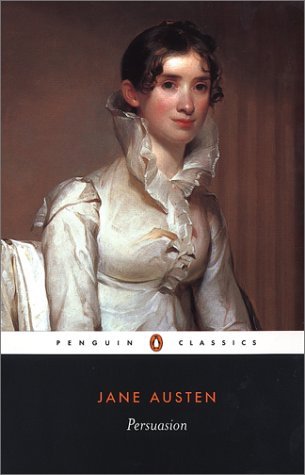
Anna and I are chatting about Persuasion by Jane Austen this month.  We hope that you’ll join us. 

Today’s discussion will be about the final part of the book — Vol. 2, Chapters 7-end.

Today, I’m drinking Orange and Cinnamon Spice tea, and Anna is having some water.

Serena:  The rain comes to Bath and there is some disagreement about whether Anne Elliot or Mrs. Clay will ride in Lady Dalrymple’s carriage.  Mrs. Clay seems to be motivated to walk with Mr. Elliot, but Anne seems as though she too wants to walk with him.  Is this a subtle rivalry for Mr. Elliot’s affections?

Anna: That’s how I took it, and it makes sense given what you find out about the two of them later. I thought it was interesting that there was even a discussion about it, but to me it also highlights Anne’s unimportance within her family. Mrs. Clay is no one to Lady Dalrymple, and Anne is a relation and definitely ranks higher than Mrs. Clay in social standing, so why was there even a question as to which one of them would get to accompany Elizabeth?

Serena: That’s what I find funny because in this situation, it wouldn’t matter what Mrs. Clay would want, Anne is of higher social standing. I do see this as the most blatant fore-shadowing of Austen’s books — well the one’s I have read.

I do find it interesting that in this little shop there is a moment when her sister, Elizabeth, can recognize and shun Wentworth, and Wentworth in turn can recognize Mr. Elliot as the man from Lyme, and he’s subjected to further gossip about him and Anne. That must have made him sad. I like that Austen is showing more of her hero even when he is separate from his heroine. What do you think about this in terms of her other novels? Do you think she had been developing her craft to this point throughout her other novels, so that she could show both sides more clearly?

Anna: From what I can remember, there is more about Captain Wentworth’s feelings, etc., than the other heroes. It may have been a sign of her maturity as a writer, to more effortlessly juggle both viewpoints, but I also think it serves as a contrast between him and Mr. Elliot. By letting the reader truly know Wentworth’s feelings and the way he handles himself amidst his jealousy and the awkwardness of their first meeting in Bath, you really get a sense of his feelings toward Anne being sincere, and it underscores the insincerity beneath Mr. Elliot’s charming facade.

What did you think of Mrs. Smith’s revelations to Anne about Mr. Elliot? I thought it was interesting how much she waffled about what to reveal. At first, she seemed to be saying nice things to Anne about him, and it was obvious she had an ulterior motive, and then as soon as Anne insists that she’s not going to marry him, then Mrs. Smith just lets loose.

Serena: I found Mrs. Smith’s waffling natural for not only someone of her position, but also of a dear friend. Friends always have a hard time telling the unvarnished truth to their friends because they don’t want to hurt their feelings, but they also don’t want their friends to be hurt by a scoundrel.

I think from Mrs. Smith’s point of view, the marriage was all but settled from the gossip she heard, which made her want to wish Anne well in her nuptials, even if it was to Mr. Elliot. And I’m sure her need for help with some land was also part of her motivation to say nothing bad about him, effectively turning her away from him on purpose, making him more reluctant to help even if Anne pleaded with him to do so.

I love when Anne and Wentworth meet in the Octagon room and they have a deeper conversation. I love that she finds strength in the stares from her father and sister. This is a true sign that she’s a stronger woman, ready to stand on her own, don’t you think?

Anna: I think you start to see Anne coming into her own almost from the moment that she finds out Wentworth isn’t engaged to Louisa, and as soon as she realizes Wentworth still loves her but that he’s jealous of Mr. Elliot, you see her go out of her way to try to let him know there’s nothing to worry about on that front.

I love Anne’s discussion with Captain Harville because, while Wentworth has made it clear in his references to Benwick and Fanny Harville that he still loves her, this is really the first time where Anne makes the strength and constancy of her feelings known to him. And of all the ways in which Austen’s heroes and heroines circumvent the rules limiting contact before marriage, the way in which Wentworth lets Anne know about his letter is by far the sweetest and most creative.

Serena: Anne in that conversation with Harville seems contrived to me. It’s almost as if Wentworth and he had a conversation about her and Harville helps him out by getting her to engage in conversation. But that could just be the skeptic in me.

I do know that their conversation incites Wentworth to write the letter to her, which is against social convention, and that it is a hurried letter. Even in a hurry, he’s very eloquent about his feelings for her. I do like how they are alone but not alone because he’s listening to her conversation and he is speaking to her in a letter. Austen must have loved that these two would go outside of convention to have this conversation.

I also love the contrast between the Musgroves and Anne’s own family — like when they unexpectedly show up to give everyone a card for an evening party at their place. It’s like an obligation that they all feel they have to comply with, and it’s surprising that Wentworth is given a card especially after how Elizabeth brushed him off in the shop. Why do you think he was given a card? Was that Elizabeth trying to get a better handle on his fortune so he could be a possible suitor, as Mr. Elliot seemed more interested in Anne?

Anna: I didn’t feel that way about the conversation. That may have been the case I suppose, but I took it as Harville, just like Wentworth, was surprised that Benwick was basically already done grieving for Fanny. I think Harville would take it even harder, given that she was his sister, and now he was tasked with getting the miniature that was intended for her framed for Louisa. Maybe I just got all wrapped up in the emotions, but I thought he was sincere about that, hence why Wentworth was taking care of the details and was at the writing desk in the first place.

Austen makes a point to show how the atmosphere in the room changes as soon as the rest of the Elliot clan arrives. They certainly suck the life out of the party. I don’t think Elizabeth was really interested in Wentworth; it was more that his social standing had risen and made him worth knowing, worth acknowledging, plus he also grabbed Lady Dalrymple’s attention at the concert.

I couldn’t help but notice at this point in the novel how very much the Musgroves, especially Mrs. Musgrove, enjoy having Anne around, even making a point to say that their box for the theater needed to be rescheduled so that Anne could for certain attend. I wonder what Elizabeth and Sir Walter would have said had they heard Anne so willing to skip the party at Camden-place to go to the theater with them.

Serena: Well I know what they would have thought, given how appalled he was that she went to see Mrs. Smith and not their “relative.” I love that they are so oppressive compared to everyone else. It makes me think that the Musgroves are the type of people Austen would have preferred herself, rather than the social climbers.

What do you think about the walk back where Anne and Wentworth get to converse?

Anna: What I find striking about their conversation after she reads the letter is that Austen gives them some privacy at first: “There they exchanged again those feelings and those promises … There they returned again into the past, more exquisitely happy, perhaps, in their re-union, than when it had been first projected…” And then there is the full accounting of what happened on his side so they can better understand one another.

Serena: Isn’t that true with most mature relationships. You already know who you are … more completely … and then you communicate with your partner and they understand you more completely. It’s like they loved each other, but Wentworth was not aware of how much, say, duty meant to Anne, for instance.

I like this more mature relationship, it’s better than that fairy tale that many expect.

This was fun! We’ll have to do this again for Northanger Abbey or Mansfield Park.

Anna: There’s a richness and fullness to their relationship that we don’t see in Austen’s other novels because they have a history. And while it’s painful to take this journey with them, especially at the beginning, I think they come out better for it. I think the maturity of their relationship is why this is one of my favorite Austen novels. After everything they’ve gone though, I can be confident that theirs will be a happy marriage. I like to think all of Austen’s couples lived happily ever after, but I’m most confident about Anne and Wentworth.

Yes, we definitely need to have another chat for another Austen novel down the road!

Serena: I agree, I am most confident that they will be happy as a married couple.

What’s your favorite Austen novel? Which do you think we should chat about in 2015?

Indian Captive: The Story of Mary Jemison by Lois Lenski

Source: Public Library
Hardcover, 272 pages
I am an Amazon Affiliate

Indian Captive: The Story of Mary Jemison by Lois Lenski is based on the true story of Mary Jemison who was captured as a young 12- or 15-year-old girl in Pennsylvania during the French and Indian War and traveled a great distance from the Ohio River Valley to upper New York to live with the Seneca Indian tribe.  The beginning of the novel outlines the facts that are included in the novel, particularly that the entire Jemison family was captured by Indians in 1758 and that only the two eldest brothers escaped capture and Mary was traded to live with the Seneca Indians.

“Then she saw that with the Indians there were white men, dressed in blue cloth with lace ruffles at their sleeves, speaking French in hurried tones.  She counted.  There were six Indians and four Frenchmen.  Were the Frenchmen wicked, too, like the Indians?” (page 19)

While there is foreshadowing about what happens to Mary — known as Molly to family and friends — the technique is not heavy-handed, though there are moments of repetition that she is the only white girl in the Indian village.  Lenski balances the negativity of life with the white man and Indians, careful not to take sides.  The battles between the French and English across the American wilderness sweep up not only the Native Americans, but also the pioneer and frontier families seeking to build lives for themselves.  Molly learns to fit in with her new family, but always she longs for her true family.  She spends many of her early days crying alone in the woods when she’s sent to fetch water, and its easy to see how devastating this new life could be for a child.

“She was living in two places at once, her body with the Indians, but her spirit where she wanted to be — at home with the white people.” (page 160-1)

The Native Americans expect her to work and adapt to their way of life, and some are more harsh toward her failings and her desire to return to the pale-faces at Fort Duquesne or return to the Englishman that arrive seeking the Iroquois help in their battles with the French.  Indian Captive: The Story of Mary Jemison by Lois Lenski is a good introduction for those ages eight to 12 to the French and Indian war and to the Native American way of life at a transitional period in history.

About the Author:

Lois Lenski was a popular and prolific writer of children’s and young adult fiction. One of her projects was a collection of regional novels about children across the United States.


10th book for 2014 Historical Fiction Reading Challenge.


8th book (French and Indian War) for the 2014 War Challenge With a Twist.


14th book for 2014 New Author Challenge.