Quantcast

The Rebel Pirate by Donna Thorland

Source: Berkley/NAL, Penguin Group USA
Paperback, 416 pages
I am an Amazon Affiliate

The Rebel Pirate by Donna Thorland, the second book in the Renegades of the Revolution series, set during the Revolutionary War uncovers the double-dealing spying that occurred on both sides of the war, as well as the privateering that local businessmen resorted to when the British cut the colonies off from trade and banned them from trading with other countries, while levying extraordinary taxes.  Sarah Ward finds her ship, the Sally, boarded by the British crew of the Wasp, and she has little recourse but to dress as a boy to protect her younger brother Ned from being pressed into military service.  Despite being loyalists, she takes the only action she can in expelling the threat and taking the Wasp’s Captain James Sparhawk prisoner.

“Boston’s North Shore had been the haunt of pirates for a hundred years, almost every inlet and harbor a supposed hiding place for their loot.  Blackbeard’s silver was rumored to be buried somewhere in the Isles of Shoals; the hoard of Quelch in a cave at Marblehead; that of Veal in the Lynn Woods.  The American Main was the stuff of pirate legend.” (page 201)

Readers will be captivated by the headstrong and stubborn Sarah Ward as she navigates the town of Salem, which considers her the jilted lover of Micah Wild, a savvy businessman looking out for himself, and her loyalties to her family.  Her father, a pardoned pirate, is captive in his own body, while Mr. Cheap is a loyal shipman who is protective of the family and its interests.  Enter Sparhawk and his reputation as a rake, who is charmed beyond reason by Sarah.  He cannot think straight around her, and against his better principles and naval code, agrees to follow along in her scheme to keep her safe from Wild’s wrath regarding the demolished Sally and the lost French gold.

Thorland’s series is detailed in its history, is trussed up in mystery and romance, and unfolds like a spy thriller as all of the characters become embroiled with one another’s affairs.  These are the kinds of Revolutionary War books readers will love because they are rich in history and imagination.  The Rebel Pirate by Donna Thorland is a captivating book that will have readers up late at night rushing through the pages to finish.  The midnight candles will be burning with this sexy read.

Thorland answered a few questions for the blog tour today:

Q: Sarah and James have such intense chemistry. Is that easy to write? How do you make two characters seem so attracted to each other?

A: I’m interested in love stories where two people meet who have the potential to become true partners in life, and who will challenge one another to become their best selves. That begins with the ability of the hero and heroine to see through the masks they’re both wearing. And I think that’s where chemistry comes from—the process of the hero and heroine stripping each other down to their essential selves. Seeing and accepting each other, as Rainer Maria Rilke put, “whole against the sky.”

Q: What is your favorite thing about writing historical romance?

A: There’s so much to love in this category. But let’s boil it down to its essentials: my favorite thing is going on an adventure with a heroine—a heroine who will be rewarded with love at the end of the story.

About the Author:

Graduating from Yale with a degree in Classics and Art History, Donna Thorland managed architecture and interpretation at the Peabody Essex Museum in Salem for several years. She then earned an MFA in film production from the USC School of Cinematic Arts. She has been a Disney/ABC Television Writing Fellow and a WGA Writer’s Access Project Honoree, and has written for the TV shows Cupid and Tron: Uprising. The director of several award-winning short films, her most recent project aired on WNET Channel 13. Her fiction has appeared in Alfred Hitchcock’s Mystery Magazine. Donna is married with one cat and splits her time between Salem and Los Angeles.

Check out my other reviews for this series:

The Turncoat by Donna Thorland
7th book for 2014 Historical Fiction Reading Challenge.


ENTER TO WIN — The Rebel Pirate by Donna Thorland

U.S. addresses only.  Leave a comment by March 17, 2014, at 11:59 PM EST

William Shakespeare’s The Empire Striketh Back by Ian Doescher

Source: Quirk Books
Hardcover, 176 pages
I am an Amazon Affiliate

William Shakespeare’s The Empire Striketh Back by Ian Doescher is the second installment in this series and combines the longevity of Shakespeare’s plays with that of George Lucas’ iconic science fiction movie franchise, Star Wars.  Like in the first of this series, Doescher uses the chorus to describe action, but he also uses characters to describe some of the action.  Moreover, he provides the inner thoughts to characters who do not have them in the movies, such as Lando, and in that way, he provides greater depth to their characters.  Even the animals and creatures, such as the Wampa on Hoth, have voices that are heard, though that can be a bit silly — though likely meant in fun.  Yoda of the movies may sound Shakespearean, but here there is an added twist in that he speaks in modified Haiku.

“Hath not a Sith eyes?
Hath not a Sith such feelings, heart, and soul,
As any Jedi Knight did e’er possess?
If you prick us, do we not bleed? If you
Blast us, shall we not injur’d be?” (page 34)

Readers will find homage to the classic plays, including The Merchant of Venice, and many of the asides, monologues, and soliloquys provide much greater depth to the story and characters.  While these books follow the movies, Doescher also uses his imagination to make the story reminiscent of Shakespeare’s tragedies and histories — with this book in the series reflecting the betrayal, love, and duals prevalent in the classic plays.  William Shakespeare’s The Empire Striketh Back by Ian Doescher is refreshingly fun, and while it does offer some deeper characters than those in the movies, it is not meant to be taken too seriously.

Also Reviewed:

William Shakespeare’s Star Wars: Verily, A New Hope

)

About the Author:

Ian Doescher has loved Shakespeare since eighth grade and was born 45 days after Star Wars Episode IV was released. He has a B.A. in Music from Yale University, a Master of Divinity from Yale Divinity School, and a Ph.D. in Ethics from Union Theological Seminary. Ian lives in Portland, Oregon, with his spouse Jennifer and two sons. William Shakespeare’s Star Wars is his first book. Visit Ian online at www.iandoescher.com. [Photo by Shan Applegate]

Never Too Little to Love by Jeanne Willis, illustrated by Jan Fearnley

Source: Gift from Nana
Hardcover, 32 pages
I am an Amazon Affiliate

Never Too Little to Love by Jeanne Willis, illustrated by Jan Fearnley is the cutest little Valentine’s Day gift for a silly little toddler who loves books with peek-a-boos and flaps.  Tiny Too-Little is in love, but to reach his love, he must collect a bunch of things to reach new heights to profess his love.  As each page is flipped, he stands upon small items, taller items, and they stack up and up, until finally, he reaches his goal.  But on the way there, he meets with a big fall and mess, leaving him sad that he cannot give his love a kiss.  But Topsy Too-Tall has other ideas on how they can reach each other.  This cute little book provides a big lesson in love and how it knows no bounds.

Wiggles loves this book so much you can hear her reading it in her own way and she squeals when the mouse and the giraffe reach each other for a nice kiss.

About the Author:

Jeanne Willis was born in St Albans and trained as an advertising copywriter at Watford College. She worked for various agencies creating press adverts and TV, cinema and radio commercials. She is now a full-time writer and has published over 80 books. Her hobbies include gardening, reading (non-fiction), natural history and collecting caterpillars. Jeanne has also worked on scripts for TV, including POLLY POCKET and THE SLOW NORRIS, and a pilot TV series for DR XARGLE. She lives in North London with her husband and two children.

11th book for 2014 New Author Challenge.

Mailbox Monday #261

Mailbox Monday, created by Marcia at To Be Continued, formerly The Printed Page, has gone through a few incarnations from a permanent home with Marcia to a tour of other blogs.

Now, it has its own permanent home at its own blog.

To check out what everyone has received over the last week, visit the blog and check out the links.  Leave yours too.

Also, each week, Leslie, Vicki, and I will share the Books that Caught Our Eye from everyone’s weekly links.

Here’s what I received:

1. The Other Half by Sarah Rayner, which came unexpectedly from St. Martin’s Press.

Maggie appears to have it all.  She’s beautiful, a talented writer, and has a gorgeous husband. But something’s not quite right: his job as a magazine publisher is keeping him in the city until late most evenings, and some nights he doesn’t come home at all…

Told in the alternating voices of the mistress and the wife, this story of an affair is a sharp, seductive take on modern love.

Who, if anyone, comes out unscathed?

2.  Incendiary Girls by Kodi Scheer for a TLC Book Tour in May.

“Incendiary Girls” explores our baser instincts with vivid imagination and humor. In these stories, our bodies become strange and unfamiliar terrain, a medium for transformation. In “Fundamental Laws of Nature,” a doctor considers her legacy, both good and bad, when she discovers that her mother has been reincarnated as a thoroughbred mare. In the title story, a mischievous angel chronicles the remarkable life of a girl just beyond death’s reach.

In Scheer’s hands, empathy and attachment are illuminated by the absurdity of life. When our bodies betray us, when we begin to feel our minds slip, how much can we embrace without going insane? How much can we detach ourselves before losing our humanity? Scheer’s stories grapple with these questions in each throbbing, choking, heartbreaking moment.

3. Born and Bred by Peter Murphy from Story Plant for review in May.

Danny Boyle was a born angel.

At least that’s what his granny used to say, and she should know she raised him after his parents proved incapable. When she becomes ill, Danny is reunited with his parents but they do not get to live happily ever after, as the ghosts of the past haunt their days. And when the old woman dies, all of her secrets come to light and shatter everything Danny believes in.

In the turmoil of 1970’s Ireland, an alienated Danny gets into drugs and is involved in a gangland killing. Duped by the killers into leaving his prints on the gun, Danny needs all the help his friends and family can muster. Calling in favors from bishops and priests, police and paramilitaries, God and the devil, the living and the dead, they do all that they can. But even that might not be enough.

What did you receive?

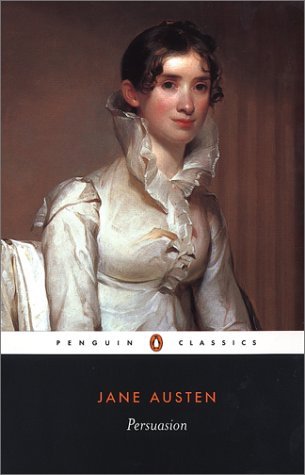
Persuasion, A Tearoom Chat

Anna and I are chatting about Persuasion by Jane Austen this month.  We hope that you’ll join us.  Click the button below for our first discussion post of Vol. 1, Ch. 1-6.

244th Virtual Poetry Circle

Welcome to the 244th Virtual Poetry Circle!

Remember, this is just for fun and is not meant to be stressful.

Keep in mind what Molly Peacock’s book suggested.

Look at a line, a stanza, sentences, and images; describe what you like or don’t like; and offer an opinion. If you missed my review of her book, check it out here.

Also, sign up for the 2014 Dive Into Poetry Reading Challenge because there are several levels of participation for your comfort level.

For more poetry, check out the stops on the 2013 National Poetry Month Blog Tour and the 2012 National Poetry Month Blog Tour.

Signup for the 2014 National Poetry Month Blog Tour: Reach for the Horizon


Today’s poem is from Calef Brown from Flamingos on the roof: poems and paintings in honor of Wiggles’ birthday!

Birthday Lights

Light bulbs on a birthday cake.
What a difference that would make!
     Plug it in and make a wish,
     then relax and flip a switch!
No more smoke
      or waxy mess
      to bother any birthday guests.
But Grampa says, “it’s not the same!
      Where’s the magic?
       Where’s the flame?
To get your wish without a doubt,
You need to blow some candles out!”

What do you think?

2014 National Poetry Month Blog Tour Sign-Ups

Welcome to the sign-ups for the 2014 National Poetry Month: Reach for Horizon Blog Tour!

I would love to have any bloggers, poets, authors, and readers sign up to review books, talk about poets, write poetry, share their inspirations, and celebrate the love of poetry this April.

Please let me know in the parentheses — Your Name (date) — which date you would prefer, and I’ll set aside that date for you. 

If you know what topic/poet you want to cover, leave that in the comments as well.

Here are the remaining open dates (as of March 25):

April 21, April 22, April 25, April 26, April 28, April 29

Let’s fill up all 30 days!

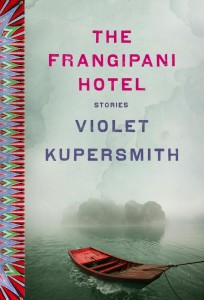
The Frangipani Hotel by Violet Kupersmith

Source: Random House and TLC Book Tours
Hardcover, 256 pages
I am an Amazon Affiliate


The Frangipani Hotel by Violet Kupersmith is a fresh short-story collection that spans the Vietnamese culture, myths, and the immigrant experience, straddling reality and the magical.  The Vietnam War hovers in the background of the characters’ lives as the mothers struggle to garner U.S. visas for themselves and their children born of American soldiers in “Guests” or in “Boat Story,” where a grandson asks his grandmother to explain her escape from Vietnam during the war.  Kupersmith’s style is clear and engaging, and the myths and magical moments are told in a storytelling style that is reminiscent of the oral traditions in Vietnamese culture.

“Whatever spirit had reanimated the corpse must have been a feeble one, for the body moved clumsily, legs stiff but head dangling loose as it struggled to keep its balance on the angry waves.  Grandpa sank down to his knees next to me, and we peered over the gunwale in helpless horror as the body tottered closer and closer.” (Page 8 ARC)

From ghosts in the Frangipani Hotel to the spirits in the woods, Kupersmith weaves in magic and myth seamlessly with reality. Her characters are oddities and not; they are rational but also open-minded about the unseen.  From the twin girls who border on feral to the young man who finds a ghost in the hotel, her characters are both real and unreal — they have a mystical quality.  The prose is witty, with a few moments that will leave readers chuckling.  At other times, the stories tackle serious issues like immigration and the soldiers who leave women behind with babies when the war is over, though with a sense of irony that never feels misplaced.

She can lull readers into a sense of complacency before her prose unsettles their world, and the mark of a great storyteller is one that can shift from male and female points of view with ease and who can create stories that will stay with readers long after they’ve been read.  The stories in The Frangipani Hotel by Violet Kupersmith shift in setting and time, but the roots do not change, merely grow and curl as the tales unfold.

***U.S. residents can enter to win 1 copy of Violet Kupersmith’s The Frangipani Hotel by leaving a comment by March 10, 2014, 11:59 PM EST.***

About the Author:

Violet Kupersmith was born in rural Pennsylvania in 1989 and grew up outside of Philadelphia. Her father is American and her mother is a former boat refugee from Vietnam. After graduating from Mount Holyoke College she received a yearlong Fulbright Fellowship to teach and research in the Mekong Delta. She is currently at work on her first novel.

7th book (Vietnam War) for the 2014 War Challenge With a Twist.


6th book for 2014 Historical Fiction Reading Challenge.


10th book for 2014 New Author Challenge.

Sunrise Over Fallujah by Walter Dean Myers

Source: Purchased
Paperback, 282 pages
I am an Amazon Affiliate

Sunrise Over Fallujah by Walter Dean Myers is for readers age 12 and up given the subject matter, though there is less gruesome violence in this book than in other war books.  Robin “Birdy” Perry is a new recruit to the Civilian Affairs Battalion from Harlem who finds himself confused as to who the enemy is in Operation Iraqi Freedom.  His division’s mission is to secure and stabilize the country, providing medical attention and supplies whenever they can.  The confusion begins when civilians begin shooting at them and planting IEDs that blow up their convoys and other Iraqis in the streets.

“I looked to where she was nodding and saw the sun on the horizon and above it a thin red line that stretched endlessly in the distance.  There was also sand, rising like a shadow with shifting shades of dark brown and orange, coming toward us.  Cameras were brought out and guys stepped away from the trucks to get clear pictures.” (page 45)

Birdy’s got a crush on Marla, and he’s fast friends with Jonesy, who wants to own a Blues club when he gets out of the military.  Told in first person point of view, readers are limited to what they know about the war until Birdy becomes aware.  Unlike hand-to-hand combat or even WWI and WWII, the war in Iraq is more impersonal, as the enemy is often obscured by the lack of knowledge Americans had about the factions in the country or the bombs they detonate without being in close proximity.

Myers’ characters are a bit stereotyped in this novel, with the macho tough girl, Marla, and the laid back Jonesy.  And there are moments when Birdy’s reading the newspapers to get information about the war, which seems incongruous with the availability of the Internet and television in the Green Zone, where he spends most of his time.  Much of the story centers on Birdy’s fears about being in combat and worrying whether he’s good enough to be a soldier.  Once he becomes a little more comfortable in his skin, he worries about whether he’s doing a good job or accomplishing the mission — but then the team is ambushed or bombed and the fear becomes real.

Sunrise Over Fallujah by Walter Dean Myers is a good introduction for young readers to the realities of war without being overly gruesome.  Myers examines the camaraderie between soldiers, the mixed up feelings that war stirs up, and confusion of war in the modern world.

About the Author:

Walter Dean Myers is an African-American writer of children’s books best known for young adult literature. He has written over fifty books including picture books and nonfiction.

6th book (Gulf Wars — Operation Iraqi Freedom) for the 2014 War Challenge With a Twist.


5th book for 2014 Historical Fiction Reading Challenge.

Mailbox Monday #260

Mailbox Monday, created by Marcia at To Be Continued, formerly The Printed Page, has gone through a few incarnations from a permanent home with Marcia to a tour of other blogs.

Now, it has its own permanent home at its own blog.

To check out what everyone has received over the last week, visit the blog and check out the links.  Leave yours too.

Also, each week, Leslie, Vicki, and I will share the Books that Caught Our Eye from everyone’s weekly links.

Here’s what I received:

1.  Poetry for Young People: Robert Frost edited by Gary D. Schmidt, illustrated by Henri Sorensen for review from Sterling Children’s Books in April.

Whether he’s capturing a cold New England winter or the simple beauty of an old abandoned house, four-time Pulitzer Prize-winning poet Robert Frost creates magic. This stunning celebration of his best-loved work includes over 25 poems, including “Mending Wall,” “Birches” and, of course, “The Road Not Taken.” Henri Sorensen’s gorgeous images perfectly complement each verse.

2.  Poetry for Young People: Langston Hughes edited by David Roessel and Arnold Rampersad, illustrated by Benny Andrews for review from Sterling Children’s Books in April.

A fresh design and appealing new cover enliven this award-winning collection in the acclaimed Poetry for Young People series. Showcasing the extraordinary Langston Hughes, it’s edited by two leading poetry experts and features gallery-quality art by Benny Andrews that adds rich dimension to the words. Hughes’s magnificent, powerful words still resonate today, and the anthologized poems in this splendid volume include his best-loved works: “The Negro Speaks of Rivers”; “My People”; “Words Like Freedom”; “Harlem”; and “I, Too”–his sharp, pointed response to Walt Whitman’s “I Hear America Singing.”

3.  Poetry for Young People: African American Poetry edited by Arnold Rampersad and Marcellus Blount, illustrated by Karen Barbour for review from Sterling Children’s Books in April.

The newest addition to the acclaimed Poetry for Young People series shines a light on the power and beauty of African-American verse. Co-editors Arnold Rampersad and Marcellus Blount—both towering figures in literary criticism—have put together an impressive anthology that will open up a world of wonderful word images for children. The classic poems come from some of the most influential and celebrated African-American writers in history, including Langston Hughes, Gwendolyn Brooks, Countee Cullen, Lucille Clifton, and James Baldwin. Helpful and generous annotations, a lively introduction, and beautiful illustrations by Karen Barbour make this the ideal book to introduce young readers to the marvels of poetry.

4. Ode to Childhood: Poetry to Celebrate the Child edited by Lucy Gray for review in April from the publisher Batsford.

Celebrate children! Featuring work by some of the world’s great poets, this beautifully illustrated anthology captures all the charms, beauty, and love of childhood. The selections include William Blake’s gentle “A Cradle Song,” Walt Whitman’s “There Was a Child Went Forth,” and Henry Wadsworth Longfellow’s “The Children’s Hour,” as well as verses by Milton, Wordsworth, Christina Rossetti, and more.

5.  Here We Are Now: The Lasting Impact of Kurt Cobain by Charles R. Cross from It Books for review in March.

Charles R. Cross, author of the highly regarded, bestselling Kurt Cobain biography Heavier Than Heaven, examines the legacy of the Nirvana frontman and takes on the question: why does Kurt Cobain still matter so much, 20 years after his death?


6.  Black Lake by Johanna Lane from Little, Brown and Company for review in May.

A debut novel about a family losing grip of its legacy: a majestic house on the cliffs of Ireland.

For generations, the Campbells have lived happily at Dulough, an idyllic, rambling estate on the windswept coast of Ireland. But upkeep has drained the family coffers. Faced with the heartbreaking possibility of having to sell, John Campbell makes a very difficult decision; to keep Dulough he will turn the estate into a tourist attraction. He and his wife, daughter and son will move from the luxury of the big house to a small, damp caretaker’s cottage. The upheaval strains the already tenuous threads that bind the family, and when a tragic accident befalls them, long-simmering resentments and unanswered yearnings are forced to the surface. As each character is given a turn to speak, their voices tell a complex and fascinating story about what happens when the upstairs becomes the downstairs, and the legacy that remains when family secrets are revealed.

7.  The Midnight Witch by Paula Brackston, which came unexpectedly from St. Martin’s Press.

Lilith is the daughter of the sixth Duke of Radnor. She is one of the most beautiful young women in London and engaged to the city’s most eligible bachelor. She is also a witch.

When her father dies, her hapless brother Freddie takes the title. But it is Lilith, instructed in the art of necromancy, who inherits their father’s role as Head Witch of the Lazarus Coven. And it is Lilith who must face the threat of the Sentinels, a powerful group of sorcerers intent on reclaiming the Elixir from the coven’s guardianship for their own dark purposes. Lilith knows the Lazarus creed: secrecy and silence. To abandon either would put both the coven and all she holds dear in grave danger. She has spent her life honoring it, right down to her charming fiancé and fellow witch, Viscount Louis Harcourt.

What did you receive?

Tea Room Chat: Persuasion by Jane Austen

Anna and I have decided to have a tea room chat of Jane Austen’s Persuasion this month.

It was Austen’s last completed novel, and I’ve been meaning to read it for at least the last three years.

The time has come for me to make it a priority, and Anna agreed to read it with me.  I hope you’ll join us.

We’ll hold discussions of the book on each Friday in March.

Check out the schedule below:

What books have you been meaning to read for a long time?

243rd Virtual Poetry Circle

Welcome to the 243rd Virtual Poetry Circle!

Remember, this is just for fun and is not meant to be stressful.

Keep in mind what Molly Peacock’s book suggested.

Look at a line, a stanza, sentences, and images; describe what you like or don’t like; and offer an opinion. If you missed my review of her book, check it out here.

Also, sign up for the 2014 Dive Into Poetry Reading Challenge because there are several levels of participation for your comfort level.

For more poetry, check out the stops on the 2013 National Poetry Month Blog Tour and the 2012 National Poetry Month Blog Tour.  And think about participating in the 2014 National Poetry Month Blog Tour — signups will begin in NEXT WEEK.

Today’s poem is from John Yau‘s Further Adventures in Monochrome:

Confessions of a Recycled Shopping Bag

I used to be a plastic bottle

I used to be scads of masticated wattle

I used to be epic spittle, aka septic piddle

I used to be a pleasant colleague

I used to be a radiant ingredient

I used to be a purple polyethylene pony

I used to be a phony upload project

I used to be a stony blue inhalant

I used to be a family-size turquoise bottle

I used to be a domesticated pink bubble

I used to be a pleasant red colleague

I used to be a beaming cobalt emollient

I used to be a convenient chartreuse antidepressant

What do you think?

Also as an added bonus today, check out the next installment of 12 Moons