Quantcast

Sighted on Book Bloggers International

This week, I’m featured at Book Bloggers International, a blog dedicated to introducing book bloggers to each other and our blogs.  With the large numbers of bloggers across the globe, it’s easier to find one other in a dedicated place.

I want to thank Becca, Tasha, and Tif for giving me the opportunity this week to share with you poetry and its many niches, as well as the National Poetry Month blog tour, from my soap box.  Head on over to read my guest post, Poetry Has a Genre for You.

For today’s 2014 National Poetry Month: Reach for the Horizon tour stop, click the image below:
The Late Parade by Adam Fitzgerald

Source: Liveright, W.W. Norton
Hardcover, 112 pages
I am an Amazon Affiliate

The Late Parade by Adam Fitzgerald strikes a confusing pose upon first glance with its oftentimes odd image pairings and obscured references, but at its heart, there is a deep melancholy and longing in these poems.  There are moments that slip through the reader’s fingers as they slip through the narrator’s fingers, leaving both with a sense of loss.  We’ve come late to the parade and are sad for it.

From "Mid-Harbor" (page 66)

"All such gestures may be inventions of nostalgia,
ways of edging a tea-saucer future forward,
poised perilously on a gilded table's brink.

We glance at ourselves with plaster cables strung
over cheeks, snoozing the forest's alarm, turning
to a charmed gouache with oblivious sentiment."

Fitzgerald deftly melds pop culture with classic reading, cuing it up with a fantastic and unbelievable world of clouds, “buttered air,” and “dental waters.”  Like the poem “Two Worlds at Once” suggests, Fitzgerald is asking the reader to straddle reality and fantasy to enjoy the happiness of moments in love even if they have already passed us by or never came about in the first place — it is their existence and possibility that are the most poignant.

Filled with lush imagery that confuses and contradicts, readers minds will become full, at times overtaxed, but poems that force readers to expand their minds and contemplate every chosen word are those that engage us the most.  The Late Parade by Adam Fitzgerald is a debut collection not soon forgotten.

17th book for 2014 New Author Challenge.


Book 11 for the Dive Into Poetry Reading Challenge 2014.

For today’s 2014 National Poetry Month: Reach for the Horizon tour stop, click the image below:

Nefertiti in the Flak Tower by Clive James

Source: Liveright
Hardcover, 96 pages
I am an Amazon Affiliate

Nefertiti in the Flak Tower by Clive James is a collection of rhyming and metered poems that relies heavily on history, particularly that of WWII, to make connections about the resiliency of human kind in the face of horrifying adversity.  The title poem, Nefertiti in the Flak Tower, does use the history of the Nefertiti bust as a German treasure that was moved and protected in a Flak Tower during WWII, towers that were built to protect cities like Berlin from air raids with guns and shelter citizens.  Beyond the historically based poems, there are poems about the life of a writer and his friends and how even these glamorous lives of signing books can become mundane, but there are those moments that make even the most thankless jobs worthwhile.

From "Grief Has Its Time" (page 81)

"Free of such burdens, I pursue my course
Supposing myself blessed with the light touch,
A blithesome ease my principal resource.
Sometimes on stage I even say as much,

Or did, till one night in the signing queue
An ancient lady touched my wrist and said
I'd made her smile the way he used to do
When hearts were won by how a young man read

Aloud, and decent girls were led astray
By sweet speech. "Can you put his name with mine?
Before the war, before he went away,
We used to read together." Last in line

She had all my attention, so I wrote"

James comes across as both romantic and removed.  The rhyming poems can linger in the mind when the emotion is clear and connects with the reader, but there are other occasions when the rhymes seem forced and throw off the rhythm of the poem, creating a disconnect between the reader and the subject.  Nefertiti in the Flak Tower by Clive James is a mix of some really great poems that will leave a lasting impression and those that fall a little flat on first and second reading.

Book 10 for the Dive Into Poetry Reading Challenge 2014.


16th book for 2014 New Author Challenge.


For today’s 2014 National Poetry Month: Reach for the Horizon tour stop, click the image below:
Any Anxious Body by Chrissy Kolaya

Source: the poet, Chrissy Kolaya
Paperback, 96 pages
I am an Amazon Affiliate

Any Anxious Body by Chrissy Kolaya does not have the most eye-catching cover, but what’s inside will knock your socks off!  Beginning with what readers may see as someone who lived through the Great Depression when saving everything counted toward survival, Kolaya uses early memories and events overheard to not only connect generation to generation, but to weave a thread through each struggle and moment of unease and concern that each moment is fleeting.  Humans are in a perpetually anxious state, sometimes without knowing it, because our lives are finite and each moment has a beginning and end — often ending before we’re ready to deal with it.

From “Fired” (page 17)

His friend —
the one married just out of high school,
runs his eyes over you,
smoothing the skin over your bones.

Kolaya — using notes from a great grandmother who no longer can verbally communicate and a letter from her daughter — has a visceral sense of not only the human body and its reactions to touch, but also the emotional connections between family and lovers. Her verses are fresh and evoke a response from her readers immediately. While there is a sense of contemplation about life events and family connections, the poems also never forget to remind readers that too much thinking can prevent life from happening.

From “Polarity” (page 15)

She wants to talk about how it will work
and I think:
I will move toward you in a moment or two,
and you should do the same.

Any Anxious Body by Chrissy Kolaya has created a reflective collection of poems, a collection that requires the reader to listen to the voices, to the moments, to the memories, but more importantly to open themselves up to the experience.  Each poem’s voice changes perspective, providing readers with the fullest view of living as possible, and sometimes those perspectives can leave you squirming.

About the Author:

Chrissy Kolaya is a poet and fiction writer. Her short fiction has been included in the anthologies New Sudden Fiction (Norton) and Fiction on a Stick (Milkweed Editions). Her poems and fiction have appeared in a number of literary journals.

She has received a Norman Mailer Writers Colony summer scholarship, an Anderson Center for Interdisciplinary Studies fellowship, a Loft Mentor Series Award in Poetry, and grants from the Minnesota State Arts Board, the Lake Region Arts Council, and the University of Minnesota. She teaches writing at the University of Minnesota Morris. Check out her blog and her Facebook page.

15th book for 2014 New Author Challenge.


Book 9 for the Dive Into Poetry Reading Challenge 2014.


For today’s 2014 National Poetry Month: Reach for the Horizon tour stop, click the image below:

Mailbox Monday #266

Mailbox Monday, created by Marcia at To Be Continued, formerly The Printed Page, has gone through a few incarnations from a permanent home with Marcia to a tour of other blogs.

Now, it has its own permanent home at its own blog.

To check out what everyone has received over the last week, visit the blog and check out the links.  Leave yours too.

Also, each week, Leslie, Vicki, and I will share the Books that Caught Our Eye from everyone’s weekly links.

Here’s what I received:

1.  The Pigeon Needs a Bath by Mo Willems, which I purchased on Amazon for the little one’s Easter basket.

The Pigeon really needs a bath! Except, the Pigeon’s not so sure about that. Besides, he took a bath last month! Maybe. It’s going to take some serious convincing to try and get the Pigeon to take the plunge.


What we snagged at the library sale:

2. The Violets of March by Sarah Jio

In her twenties, Emily Wilson was on top of the world: she had a bestselling novel, a husband plucked from the pages of GQ, and a one-way ticket to happily ever after.

Ten years later, the tide has turned on Emily’s good fortune. So when her great-aunt Bee invites her to spend the month of March on Bainbridge Island in Washington State, Emily accepts, longing to be healed by the sea. Researching her next book, Emily discovers a red velvet diary, dated 1943, whose contents reveal startling connections to her own life.

3. Blackberry Winter by Sarah Jio

Seattle, 1933. Single mother Vera Ray kisses her three-year-old son, Daniel, goodnight and departs to work the night-shift at a local hotel. She emerges to discover that a May-Day snow has blanketed the city, and that her son has vanished. Outside, she finds his beloved teddy bear lying face-down on an icy street, the snow covering up any trace of his tracks, or the perpetrator’s.

Seattle, 2010. Seattle Herald reporter Claire Aldridge, assigned to cover the May 1 “blackberry winter” storm and its twin, learns of the unsolved abduction and vows to unearth the truth. In the process, she finds that she and Vera may be linked in unexpected ways.

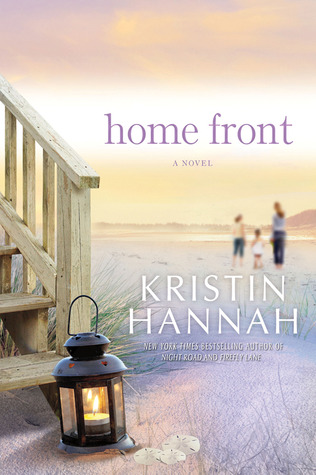
4.  Home Front by Kristin Hannah

Like many couples, Michael and Jolene Zarkades have to face the pressures of everyday life–children, careers, bills, chores–even as their twelve-year marriage is falling apart. Then an unexpected deployment sends Jolene deep into harm’s way and leaves defense attorney Michael at home, unaccustomed to being a single parent to their two girls. As a mother, it agonizes Jolene to leave her family, but as a soldier she has always understood the true meaning of duty. In her letters home, she paints a rose-colored version of her life on the front lines, shielding her family from the truth. But war will change Jolene in ways that none of them could have foreseen. When tragedy strikes, Michael must face his darkest fear and fight a battle of his own–for everything that matters to his family.

5. My Little Pony: Fashion Fun by Ann Marie Capalija, illustrated by Ken Edwards

The ponies are putting on a fashion show. Sew-and-So has created designs that are perfect for all her pony friends — and something extra special to help Minty be a real showstopper.


6.  Disney Princess: Lights and Glamour

7.  Rosie Rabbit Goes to Preschool by Patrick Yee

You can help Rosie Rabbit open her schoolbag, count to five, and jump rope! And you can play a fun search game in every scene, too.


8.  Shaggy Dog and the Terrible Itch by David Bedford and Gwyneth Williamson

Shaggy Dog has a terrible itch – it just won’t go away! So, in desperation, he runs to the Poodle Parlour for a good shampoo. Will Shaggy Dog ever get rid of his terrible itch?


9. Newton by Rory Tyger

Newton is an adorable child-like bear with stuffed animal friends. When he and his stuffies hear a series of scary noises at bedtime, it’s up to Newton to figure out the explanation for each!


10. Disney Princess: How Romantic

11.  Sesame Street: Monster Tales The Big Boo!

12. Disney Princess First Words – My Wipe-off Book (English & Spanish)


What did you receive?

For today’s 2014 National Poetry Month: Reach for the Horizon tour stop, click the image below:

Book Spine Poetry

I’ve always loved exercises that have people thinking outside their comfort zones.  For National Poetry Month, I would love to see what everyone can create out of book spines to make their own poem.

Take some books (doesn’t have to be just poetry), place them in an order that makes sense to you, and you’ll have your poem.

Here’s what I came up with:

bookspine

Walking Home
The Odyssey
To Join the Lost
Any Anxious Body
Chasing Utopia
Flies
Rubber Side Down

I hope you’ll all join me and share your own book spine poem.


For today’s 2014 National Poetry Month: Reach for the Horizon tour stop, click the image below:

249th Virtual Poetry Circle

Welcome to the 249th Virtual Poetry Circle!

Remember, this is just for fun and is not meant to be stressful.

Keep in mind what Molly Peacock’s book suggested.

Look at a line, a stanza, sentences, and images; describe what you like or don’t like; and offer an opinion. If you missed my review of her book, check it out here.

Also, sign up for the 2014 Dive Into Poetry Reading Challenge because there are several levels of participation for your comfort level.

Click for today’s stop on the 2014 National Poetry Month Blog Tour: Reach for the Horizon

Today’s poem is from New European Poets edited by Wayne Miller and Kevin Prufer:

Between Yesterday and Your Mouth by Rosa Alice Branco of Portugal (page 4)

I will spend the night with those days.
With the smile you left in the sheets.
I still burn with the remains of your name
and see with your eyes the things that you touched.
I am here between the bread and table, in the glass
you lift to your mouth. In the mouth that holds me.
And I don't know what I am between yesterday and what will come.
Yesterday I was the river at evening, the gaze that caressed the light.
My son writes on pebbles on the beach and I invent
steps for deciphering them. They all roll far away.
That's how the sea is. I am learning with the waves
to melt away to foam. There is always a seagull
that cries out when I come near, there is always a wing
between the sky and my floor. But nothing belongs to me,
not even the words with which I cement the hours.
Perhaps love is just a small difference in time zones
or a linguistic accord that only exists
deep in the flesh. But here where I am not
what grounds me is the certainty that you exist.

   translated from the Portuguese by Alexis Levitin

What do you think?

This is part of the 2014 National Poetry Month: Reach for the Horizon Blog Tour, click the button for more poetry:

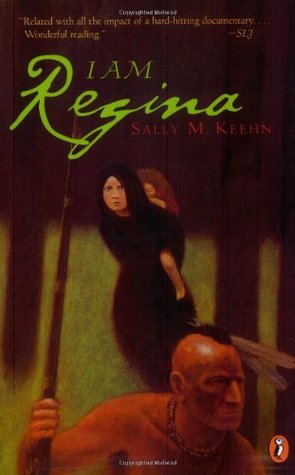
April Read-a-Long for I Am Regina by Sally M. Keehn

Today, I’m interrupting the flow of poets and poetry to remind everyone who was interested in the 2014 War Challenge With a Twist read-a-long of I am Regina by Sally M. Keehn this month, that today is discussion day.

I’ll be over at War Through the Generations today with Anna talking about Ch. 1-13 of this classic French and Indian War novel.

Please feel free to join us if you are reading along or if you’ve read this book before.


For today’s 2014 National Poetry Month: Reach for the Horizon tour stop, click the image below:

Ode to Childhood: Poetry to Celebrate the Child edited by Samuel Carr

Source: Sterling Children’s Books
Hardcover, 96 pages
I am an Amazon Affiliate

Ode to Childhood: Poetry to Celebrate the Child by Samuel Carr is a collection of poems from a variety of poets about children, parenthood, and their own childhoods, and no collection about children would be complete without William Blake, who has four poems included.  Blake is a poet that spoke about the innocence of childhood in a great many poems, which can be found in his Songs of Innocence and Songs of Experience.  His childlike lines and voice evoke the childlike quality readers will immediately reference in their own experiences, but his poems also speak of a duality in childhood between desire and the more enlightened search for knowledge.  He demonstrates that children learn from the reactions and action of others in “Infant Sorrow,” learning that smiles get reactions that wailing did not.

Longfellow image

Reprinted with permission from Ode to Childhood © 2014 Batsford, distributed by Sterling Publishing Co., Inc. Photography by TFL from the London Transport Museum collection.

While each poem in the collection is about children or childhood, they are by turns nostalgic for a childhood lost, a celebration of innocence and play, and a homage to the joys that children bring to parents, others, and themselves.  Many of these poems are from classic poets and could be harder to comprehend upon first reading because of the difference in modern language, but the gist of the poems can be easily discerned from the overall atmosphere in the poems.

From “The Schoolboy” by William Blake (page 76)

I love to rise in a summer morn
When the birds sing on every tree;
The distant huntsman winds his horn,
And the sky-lark sings with me.
O! what sweet company.

But to go to school in a summer morn,
O! it drives all joy away;
Under a cruel eye outworn,
The little ones spend the day
In sighing and dismay.

The rhymes and rhythms of these poems could be read aloud almost like lullabies, but there are deeper meanings and stories that are told.  Coupled with the vibrant drawings that pop when readers turn the page, nostalgia for a by-gone era can take over —  remember scampering through those hills, playing follow-the-leader, or just chasing other kids around.  Ode to Childhood: Poetry to Celebrate the Child by Samuel Carr is not just a celebration of childhood or innocence, but a celebration of life.

IF YOU WOULD LIKE TO WIN ODE TO CHILDHOOD edited by Samuel Carr, tell me a childhood memory in the comments. You must have a U.S. mailing address to enter. Giveaway ends April 15, 2014, at 11:59 PM EST

Book 8 for the Dive Into Poetry Reading Challenge 2014.


For today’s 2014 National Poetry Month: Reach for the Horizon tour stop, click the image below:

Poetry for Young People: Langston Hughes edited by David Roessel and Arnold Rampersad, illustrated by Benny Andrews

Source: Sterling Children’s Books
Hardcover, 48 pages
I am an Amazon Affiliate

Poetry for Young People: Langston Hughes edited by David Roessel and Arnold Rampersad, illustrated by Benny Andrews for ages 8+, is a collection of poems that won the Coretta Scott King Illustrator Award in 2007.  Hughes’ poems grew from a love of Whitman and a desire to express the joys of Black culture through verse and in an unapologetic way — and many of his poems are steeped in the urban experience from New York’s Harlem to Washington, D.C.  where is poem “Big Buddy” has become an anthem for the Split This Rock Poetry Festival.

Hughes’ introduction is long, and well it should be given his influence and his numerous works, but there is enough in here to conduct an entire lesson about American culture in the 1920s and beyond.  Like in the other books of this series, there are accompanying illustrations and explanations of what the poet thought or where the inspiration came from, and more importantly, dialects, unusual terms, and geographic locations are explained in the footnotes at the bottom of the page.

From “I, Too” (page 22)

I, too, sing America.

I am the darker brother.
They send me to eat in the kitchen
When company comes,
But I laugh,
And eat well,
And grow strong.

The beauty of Hughes’ poems is the ways in which he illustrates not only the beauty of his people, but that of America with his people in it.  Infusing poems with a musicality of jazz or blues evokes an even greater emotional response when read aloud.  Poetry for Young People: Langston Hughes edited by David Roessel and Arnold Rampersad, illustrated by Benny Andrews, is poignant, fun, and full of history.  Poems that are less about the darker side of life and more about the joys that we find within it.

Also in the series:


IF YOU WOULD LIKE TO WIN POETRY FOR YOUNG PEOPLE PRIZE PACK, name a favorite poet or poem in the comments. You must have a U.S. mailing address to enter. Giveaway ends April 15, 2014, at 11:59 PM EST

Book 7 for the Dive Into Poetry Reading Challenge 2014.


For today’s 2014 National Poetry Month: Reach for the Horizon tour stop, click the image below:

Poetry for Young People: African American Poetry edited by Arnold Rampersad and Marcellus Blount, illustrated by Karen Barbour

Source: Sterling Children’s Books
Hardcover, 48 pages
I am an Amazon Affiliate

Poetry for Young People: African American Poetry edited by Arnold Rampersad and Marcellus Blount, illustrated by Karen Barbour for ages 8+, includes poems from those well-known and those who may be new to readers, teachers, and parents alike.  Maya Angelou, Langston Hughes, Nikki Giovanni, and Lucille Clifton are just some of the poets you would expect in this collection, but also there is Elizabeth Alexander, Alice Walker, and others who are either known for other literary works or are not as well recognized by the public for their poetic accomplishments.  The editors include explanations of the poets’ lives, the poems, and vocabulary that may be unfamiliar.  The illustrations are very reminiscent of modern art with a bit of a mosaic quality.

From “We Wear the Mask” by Paul Laurence Dunbar (page 12)

We wear the mask that grins and lies,
It hides our cheeks and shades our eyes,–
This debt we pay to human guile;
With torn and bleeding hearts we smile,
And mouth with myriad subtleties,

Why should the world be over-wise,
In counting all our tears and sighs?
Nay, let them only see us, while
We wear the mask.

In the introduction, the editors raise a good point about African-American poets and their sense of duty to balance not only their freedom to write about any subject, but also their internal obligation to write about the subject of race.  Two poets — Philis Wheatley and George Moses Horton — were given the freedom to learn to read and write as slaves and to publish or compile their own poetry collections, a “privilege” that was not lost on them.

For those early poets paving the way for other African-American poets, a new struggle began for them — writing in dialect and Standard English — and these poets soon began to feel as though their own work in dialect was a comic view of black American life, which was not at all how they wanted it portrayed.  This introduction is rich in information about these early poets and could be used to bridge conversations about poetry and history with young students and readers either in the classroom or at home.  Whether these poets explicitly talk about race or not, they are about freedom and some show an unvarnished look at our own shared history.

Poetry for Young People: African American Poetry edited by Arnold Rampersad and Marcellus Blount, illustrated by Karen Barbour, will generate discussion among teachers and students, parents and children, of all ages.  In addition to the historical and biographical information, the editors also offer some detail about poetic form, including haiku, which could be useful to generate classroom exercises among students or just for fun as a family activity.

Book 6 for the Dive Into Poetry Reading Challenge 2014.


Click below for today’s stop on the 2014 National Poetry Month: Reach for the Horizon blog tour:

Mailbox Monday #265

Mailbox Monday, created by Marcia at To Be Continued, formerly The Printed Page, has gone through a few incarnations from a permanent home with Marcia to a tour of other blogs.

Now, it has its own permanent home at its own blog.

To check out what everyone has received over the last week, visit the blog and check out the links.  Leave yours too.

Also, each week, Leslie, Vicki, and I will share the Books that Caught Our Eye from everyone’s weekly links.

Here’s what I received:

1. Going Over by Beth Kephart, which I purchased because I wanted the finished copy.  I’ll pass along my ARC to my mom.  Please read my review.

In the early 1980s Ada and Stefan are young, would-be lovers living on opposite sides of the Berlin Wall–Ada lives with her mother and grandmother and paints graffiti on the Wall, and Stefan lives with his grandmother in the East and dreams of escaping to the West.


2. The Collector of Dying Breaths by M.J. Rose for a Historical Fiction Virtual Blog Tour in May.

A lush and imaginative novel that crisscrosses time as a perfumer and a mythologist search for the fine line between potion and poison, poison and passion…and past and present.

Florence, Italy—1533: An orphan named René le Florentin is plucked from poverty to become Catherine de Medici’s perfumer. Traveling with the young duchessina from Italy to France, René brings with him a cache of secret documents from the monastery where he was trained: recipes for exotic fragrances and potent medicines—and a formula for an alchemic process said to have the potential to reanimate the dead.

Paris, France—The Present: A renowned mythologist, Jac L’Etoile, is trying to recover from personal heartache by throwing herself into her work, learns of the 16th century perfumer who may have been working on an elixir that would unlock the secret to immortality.

What did you receive?

For today’s 2014 National Poetry Month: Reach for the Horizon tour stop, click the image below: