Quantcast

A Year With Six Sisters’ Stuff: 52 Menu Plans, Recipes, and Ideas to Bring Families Together

Source: Shadow Mountain
Paperback, 242 pages
I am an Amazon Affiliate

A Year With Six Sisters’ Stuff: 52 Menu Plans, Recipes, and Ideas to Bring Families Together is a selection of 52 menus with recipes for main meals, desserts, appetizers, salads, and side dishes.  These menu plans can make the busy family life a little bit easier when you have a plan for every evening meal of the year, thanks to these ladies.  Each menu plan includes the ingredients, the steps for creating the meals, and pictures of the final product — and these pictures will make your mouth water.  Although there are some recipes you’ll have to modify if you have allergies — which is easy enough with some ingenuity — for the most part these recipes will allow you to use what ingredients you have on hand or in the cupboards.  For those who like to plan ahead, they can map out a week’s worth of meals and shop accordingly.

For instance, in menu 45 — Parmesan Spinach-Stuffed Mushrooms, Spinach Lasagna Rolls, and Garlic Breadsticks — I used the ingredients I had in the house to make the lasagna rolls, but not the other elements in the menu plan.  Making the stuffing for the rolls was as easy as mixing the cheese ingredients with egg and chopped spinach, but rather than use traditional lasagna noodles, I used my no-boil lasagna noodles.  Here’s the crazy part — I boiled them, but just long enough to make them pliable for rolling purposes — and that took less time that it would have if I used normal lasagna noodles, though these no boil noodles are shorter.  The recipe does make exactly 9 rolls and if you run out of sauce from a jar, you can always do what I did and used diced Italian-seasoned tomatoes from a can.  Here’s a picture of what they looked like before they went in the oven for 40 minutes:

Spinach Lasagna Rolls

And I can tell you, my husband is not a big spinach eater, but he gobbled these right up.  My next attempt at using the cookbook was for my daughter’s belated birthday bash with Anna and her family.  We used Menu # 27, which included Homemade Chicken Nuggets, Slow Cooker Macaroni and Cheese, and Applesauce Oatmeal Cookies.   Everything from this seemed to go over really well, though the cookies came out very cake-y and Anna and I prefer more crunchy cookies.  Also, my daughter selected her own dessert — rather than birthday cake — from a Menu # 48, Chocolate Raspberry Brownie Parfaits, which were really easy to make.

The chicken nuggets took the longest to make because of all the steps with cutting the chicken breast and preparing the breading, but you could cut out some steps by purchasing Kabob-ready chicken pieces.  The slow cooker mac-and-cheese took the next longest amount of time, and we wondered if cooking the pasta beforehand was necessary, but we did shorten the timing in the cooker because 2 hours seemed way too long.  The parfaits were easy to do once you made the box pudding and the brownies — all that was left was assembling them in dishes.  We also took from Menu # 1, the strawberry lemonade slush, which just needs lemonade from frozen concentrate, frozen strawberries, water, and some lemon-lime soda.  Check out the rest of the photos.

chocolatebrownie

After a big day at the house with friends, I hopped back into the cookbook to make something for breakfast that I’ve never made before — Egg Souffle from Menu #26. if you’re like me and get freaked out by large words like Souffle…this cookbook is for you. It made this so easy. After preparing the souffle and cooking it in the oven, I made bacon to go with it, rather than the French toast and strawberry sunrise drink — that will be for another day. Delicious, light, and moist.

A Year With Six Sisters’ Stuff: 52 Menu Plans, Recipes, and Ideas to Bring Families Together is not just a menu planning helper or cookbook, there are fun activities for the family to do together — like having a night where you shop for anything for dinner and end up with a smorgasbord of everyone’s favorites from cookies to bananas and pizza. Everyone at my house loved the food and it was something we’d definitely try again, and I cannot wait to try out more of these recipes.

About the Authors:

The Six Sisters—Camille, Kristen, Elyse, Stephanie, Lauren, and Kendra—grew up in Utah, but a few of them have lived in other parts of the country since moving out of the house. Between them there are five nieces and three nephews, and all of the sisters love playing “aunt.” The sisters started the blog in February 2011 to keep in touch while they were apart, but it has since gained popularity, garnering more than 9 million viewers per month and more than 307,000 followers on Pinterest. Check out their Facebook page.
a Rafflecopter giveaway

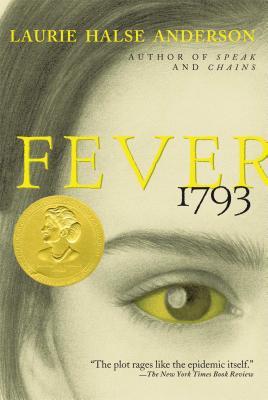
Fever 1793 by Laurie Halse Anderson

Source: Public Library
Paperback, 272 pages
I am an Amazon affiliate.

Fever 1793 by Laurie Halse Anderson is set during the epidemic of Yellow Fever that hit Philadelphia after the British lost to the Colonists in the U.S. Revolutionary War and a new government was taking root in the new country.  Mattie and her family run a local coffeehouse in the city for the politicians and businessmen, with help from Eliza, their freed black employee.  Mattie has big dream — expanding the family business and bringing French finery to America for sale — but her mother is busy keeping the shop running and saving in case of disaster, remaining cautious because she knows all too well that things can get worse like it did when her husband died.

“I tried not to listen to her.  I had not cleared the wax from my ears all summer, hoping it would soften her voice.  It had not worked.”  (page 6)

Anderson relies heavily on source material to provide authenticity to her story of Mattie and her family, and there’s a nice touch of quotes throughout the novel at the beginning of each chapter.  The characters are well drawn and feel like they’ve stepped out of history, with Mattie and her mother resembling any mother-daughter relationship influenced by teenage hormones and changing times.  The love Mattie has for her mother is tested in the worst possible way when the Yellow Fever strikes home, but the love for her grandfather and Eliza keeps her grounded, focused on what needs to be done.

“They told of terror: patients who had tried to jump out of windows when the fever robbed their reason, screams that pierced the night, people who were buried alive, parents praying to die after burying all their children.

I laid my pillow over my head to protect myself from visions of the dead, but I could not breathe.” (page 106)

Mattie’s fear becomes the reader’s fear as she no longer knows where she is or where her family has gone, and the city of Philadelphia and the surrounding towns become unrecognizable.  The city of brotherly love becomes more insulated and fearful, turning away neighbors to protect their own families and resorting to violence to take advantage of those who can no longer defend themselves.  Anderson pulls no punches in her portrayal of disease, competing medical theories, and the decline of a once prospering city struggling with pestilence.

Fever 1793 by Laurie Halse Anderson is a truncated look at the disease that spread through the city like wildfire, taking the lives of nearly 5,000 people or 10 percent of the population.  The author takes historical fact, including the mass burial of fever victims in Washington Square (old potter’s field), and breathes new life into the tragedies endured by a once bustling and budding city.  Mattie is strong-willed and carries herself forward even when all seems lost, relying on the love of those around her and her own gumption to pick up and start again.

About the Author:

Laurie Halse Anderson is the New York Times-bestselling author who writes for kids of all ages. Known for tackling tough subjects with humor and sensitivity, her work has earned numerous American Library Association and state awards. Two of her books, Speak and Chains, were National Book Award finalists. Chains also made the Carnegie Medal Shortlist in the United Kingdom.

Laurie was the proud recipient of the 2009 Margaret A. Edwards Award given by YALSA division of the American Library Association for her “significant and lasting contribution to young adult literature…”. She was also honored with the ALAN Award from the National Council of Teachers of English and the St. Katharine Drexel Award from the Catholic Librarian Association.

Also Reviewed:

9th book for 2014 Historical Fiction Reading Challenge.

Mailbox Monday #263

Mailbox Monday, created by Marcia at To Be Continued, formerly The Printed Page, has gone through a few incarnations from a permanent home with Marcia to a tour of other blogs.

Now, it has its own permanent home at its own blog.

To check out what everyone has received over the last week, visit the blog and check out the links.  Leave yours too.

Also, each week, Leslie, Vicki, and I will share the Books that Caught Our Eye from everyone’s weekly links.

Here’s what I received:

1.  The Late Parade by Adam Fitzgerald for review W.W. Norton’s Liveright Publishing.

Adam Fitzgerald “is a born poet whose extraordinary gift for phrasing, music, and verbal invention distinguish him from any young poet I know writing today,” writes Mark Strand about the twenty-nine-year-old American newcomer who follows “in the line of Arthur Rimbaud, Wallace Stevens, and John Ashbery” (Maureen McLane). Fitzgerald, whose title poem “carries the primal vision of Hart Crane into a future that does not surrender the young poet’s love of the real” (Harold Bloom), has already published in the Boston Review, A Public Space, Conjunctions, and the Brooklyn Rail and has become a poetic lightning rod in the East Village and other avant-garde settings. Here, in The Late Parade, he presents 48 poems that “fire dance around meaning itself” (Boston Review) yet help to redefine the modernist vision for the twenty-first-century with near-demonic displays of sonorous density and manic verbal fertility. This dazzling debut collection will be sure to “cause a commotion.”

2.  Nefertiti in the Flak Tower by Clive James for review from W.W. Norton’s Liveright Publishing.

Clive James’ power as a poet has increased year by year, and there has been no stronger evidence for this than Nefertiti in the Flak Tower. Here, his polymathic learning and technical virtuosity are worn more lightly than ever; the effect is merely to produce a deep sense of trust into which the reader gratefully sinks, knowing they are in the presence of a master. The most obvious token of that mastery is the book’s breathtaking range of theme: there are moving elegies, a meditation on the later Yeats, a Hollywood Iliad, odes to rare orchids, wartime typewriters and sharks – as well as a poem on the fate of Queen Nefertiti in Nazi Germany. But despite the dizzying variety, James’ poetic intention becomes increasingly clear: what marks this new collection out is his intensified concentration on the individual poem as self-contained universe. Poetry is a practice he compares (in ‘Numismatics’) to striking new coin; and Nefertiti in the Flak Tower is a treasure-chest of one-off marvels, with each poem a twin-sided, perfect human balance of the unashamedly joyous and the deadly serious, ‘whose play of light pays tribute to the dark’.

3.  Walking Home: A Poet’s Journey by Simon Armitage from W.W. Norton’s Liveright Publishing.

The wandering poet has always been a feature of our cultural imagination. Odysseus journeys home, his famous flair for storytelling seducing friend and foe. The Romantic poets tramped all over the Lake District searching for inspiration. Now Simon Armitage, with equal parts enthusiasm and trepidation, as well as a wry humor all his own, has taken on Britain’s version of our Appalachian Trail: the Pennine Way. Walking “the backbone of England” by day (accompanied by friends, family, strangers, dogs, the unpredictable English weather, and a backpack full of Mars Bars), each evening he gives a poetry reading in a different village in exchange for a bed. Armitage reflects on the inextricable link between freedom and fear as well as the poet’s place in our bustling world. In Armitage’s own words, “to embark on the walk is to surrender to its lore and submit to its logic, and to take up a challenge against the self.”

4.  Pansy in Paris: A Mystery at the Museum by Cynthia Bardes, illustrated by Virginia Best for review and Wiggles.

Pansy, the poodle who lives at the Palace Hotel in Beverly Hills and Avery, the little girl who adopted her, are off on a new adventure in Pansy in Paris. The two travel to the City of Lights to solve a new mystery: who is stealing paintings from the museum? With only one clue and their boundless curiosity, the two follow the trail, foil the thieves, and recover the missing artwork having great fun as they explore a beautiful new city and enjoy its treasures. Pansy and Avery learn about the joy of travel, the satisfaction of a job well done, and the special pleasure of teamwork.”

5.  The Nose Book by Al Perkins, illustrated by Joe Mathieu for Wiggles from her auntie Kelly for her birthday.

In this Bright and Early Book, Perkins offers a super-simple look at noses of all kinds, colors, and shapes, including their multiple uses and maddening maladies!

6.  Images of War: War in the Balkans: The Battle for Greece and Crete 1940-1941 by Jeffrey Plowman for review from the publisher.

Jeffrey Plowman s photographic history traces the course of the entire Balkan campaign from the first moves of the Italians through Albania and the invasion of Jugoslavia and Bulgaria by German forces through to the battle for Greece and the final airborne assault on Crete. He gives equal weight to every stage of the campaign he doesn t just combine the first stages and treat them as an introduction to the battle for Crete and he covers all the forces involved the Germans, the Greeks, and the Commonwealth troops. By shifting the focus to the mainland, he views the campaign as a whole, and he offers a balanced portrayal of a conflict that is often overlooked in histories of this phase of the Second World War. Most of the graphic photographs he has selected have never been published before, and many come from private sources.

What did you receive?

Sign-Up for the April 2014 War Through the Generations Read-a-Long

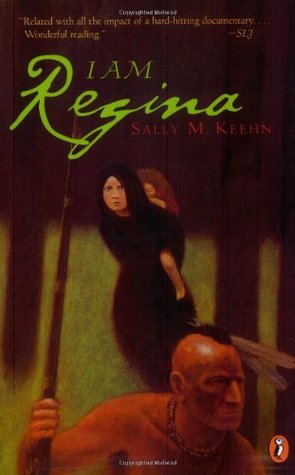
Next month at War Through the Generations, we’ll be hosting a read-a-long of I Am Regina by Sally M. Keehn for the French and Indian War.

Given the short nature of the young adult novel, we’ll be breaking it into just 2 discussions.  Here are the discussion post dates:

  • Friday, April 11: Chapters 1-13
  • Friday, April 25: Chapters 14-end (including afterword)

We hope that you’ll be able to join us!

246th Virtual Poetry Circle

Welcome to the 246th Virtual Poetry Circle!

Remember, this is just for fun and is not meant to be stressful.

Keep in mind what Molly Peacock’s book suggested.

Look at a line, a stanza, sentences, and images; describe what you like or don’t like; and offer an opinion. If you missed my review of her book, check it out here.

Also, sign up for the 2014 Dive Into Poetry Reading Challenge because there are several levels of participation for your comfort level.

For more poetry, check out the stops on the 2013 National Poetry Month Blog Tour and the 2012 National Poetry Month Blog Tour.

Signup for the 2014 National Poetry Month Blog Tour: Reach for the Horizon

Today’s poem is from Michael Schmidt’s New and Collected Poems:

Wasps' Nest

It was the fruit I wanted, not the nest.
The nest was hanging like the richest fruit
against the sun. I took the nest

and with it came the heart, and in my hand
the kingdom and the queen, frail surfaces,
rested for a moment. Then the drones

awoke and did their painful business.
I let the city drop upon the stones.
It split to its deep palaces and combs.

It bled the insect gold,
the pupa queens like tiny eyes
wriggled from their sockets, and somewhere

the monarch cowered in a veil of wings
in passages through which at evening
the labourers had homed,

burdened with silence and the garden scents.
The secret heart was broken suddenly.
I, to whom the knowledge had been given,

who was not after knowledge but a fruit,
remember how a knot of pains
swelled my hand to a round nest;

blood throbbed in the hurt veins
as if an unseen swarm mined there.
The nest oozed bitter honey.

I swaddled my fat hand in cotton.
After a week pain gave it back to me
scarred and weakened like a shrivelled skin.

A second fruit is growing on the tree.
Identical—the droning in the leaves.
It ripens. I have another hand.

What do you think?

Persuasion, A Tearoom Chat Week 3

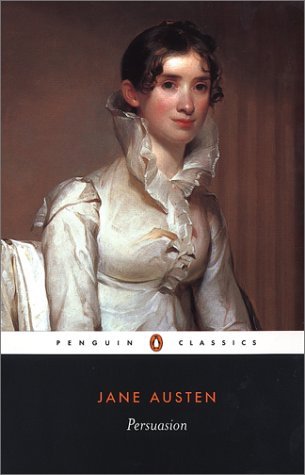
Anna and I are chatting about Persuasion by Jane Austen this month.  We hope that you’ll join us. 

Click the button below for our 3rd discussion post of Vol. 2, Ch. 1-6.

Interview With Emma Eden Ramos

As I say on the back of Emma Eden Ramos’ Still, At Your Door: A Fictional Memoir:

Still, At Your Door: A Fictional Memoir is a powerhouse of emotion from the moment you begin.  Sabrina Gibbons’ story is upended from the moment her mother drags them out of their abusive home in Butler, Penn, and drops them off with their grandparents in the Big Apple.  Like New York City, this novella precariously teeters between nightmares and dreams, exploring mutual dependence where one wrong step over the threshold can lead to disaster.”

Today, Emma has agreed to answer a few questions about her latest work.  Please give her a warm welcome, and check out my review.

1. You now have 2 full length young readers works completed and published. What inspires you to write for that audience? Is there a message you are looking to get across?

Adolescence, while it only takes up a short chapter in our lives, is a time many of us look back on with relief. “Thank God that’s over,” we say. It’s easy to leave those eight years behind and pretend they are that section in a book we’d rather not underline and revisit. In divorcing ourselves from our own painful experiences, however, we can do a great injustice to young adults who want understanding and reassurance. Yes, being a teenager can feel torturous. Yes, it seems to go on for eternity. No, it doesn’t actually last forever. It’s been ten years since I was sixteen. I attempted suicide twice, engaged in dangerous and impulsive behaviors, and assumed my daily unhappiness would never dissipate. When I look back, I wish there’d been someone there to tell me my life would get better.

The demand for YA fiction is enormous. Authors like Jacqueline Woodson, Laurie Halse Anderson and Ellen Hopkins have helped teens make sense of their experiences and, most importantly, validate their feelings. I’d like to follow in the footsteps of these writers. I want to write stories that resonate with young readers. I want to let teens know that they are resilient and there is hope.

2. Sabrina’s life is far from the nuclear family most people envision. Was there a particular real life experience or inspiration for her and her situation?

The idea for Still, At Your Door: A Fictional Memoir came to me after an unpleasant conversation I had with someone I am happy to say no longer has a leading role in my life. “People like you,” she said, “should never have children.” The comment lingered with me for a few days. I’d recently read Linda Gray Sexton’s memoir titled Searching for Mercy Street: My Journey Back to My Mother, Anne Sexton, so exploring the mother-daughter relationship was something I already wanted to do. While reading Searching for Mercy Street, I found myself identifying with both Linda Gray and Anne Sexton. Linda Gray was the first daughter of a woman who suffered from a debilitating mental illness.

She, like many children of a parent who has a psychiatric disorder, was forced to grow up quickly and learn to fend for herself. While I empathized with Linda Gray’s struggle, I caught myself wondering if I would be the kind of mother Anne Sexton was. Would the stresses of motherhood be too difficult for me, too?

One evening I was brushing my teeth and, as I caught my reflection in the mirror, I asked myself (these are the exact words), “who is the mother I don’t want to be?” Sheila, Sabrina’s mother, was the answer to my question. That was the first line on the blueprint for Still, At Your Door.

3. You’ve studied psychology and that comes through in the Still, At Your Door. What particular behavioral conditions and knowledge did you use and why?

Sheila, Sabrina’s mother, suffers from Bipolar disorder. While she is an eccentric person between episodes, Sheila, when she cycles, is at the mercy of her illness. Bipolar disorder, like other psychiatric illnesses, varies in severity from person to person. Sheila is on the higher end of the spectrum.

There are psychiatric disorders that seem to be associated with creativity. Many famous artists, while they went undiagnosed because psychiatry was in its early stages of development, showed signs of particular disorders. Virginia Woolf, for example, seemed to be Bipolar. Like many sufferers, Woolf experienced severe depression, hypomania and mania. The hypomanic phase is the phase in which people tend to feel most creative. In Sheila’s case, it is in the hypomanic phase of her cycle that she is the fun-loving, creative woman her children adore. Sheila will learn all the lines to a play in just one evening, take her children on exciting outings and still have energy to entertain a crowded restaurant with Marlene Dietrich impressions. When she is experiencing depression or full-blown mania, however, Sheila is frightening and even dangerous.

I have been interested in mental illness and its effects on creativity for some time now. Two disorders that seem to be linked directly to creativity, Bipolar disorder and Borderline personality disorder, are especially interesting to me. I am not, however, merely curious in clinical sense. For me, it’s personal. That’s another story, though.

4. How would you describe your writing process?

I tend to begin plotting a story a month or so in advance. I do most of my plotting in my head because I have a habit of losing things. I once wrote out an idea for a piece on a pamphlet I received from the Hare Krishnas in Union Square Park.

I, at some point between discussing Krishna consciousness with a lovely woman named Gopi and riding the subway, lost the outline. I’m not sure which I missed more, the pamphlet or the story idea.

It generally takes me nine months to write a book. There have been times when I’ve started a story, abandoned it, then revisited it later on. Still, At Your Door was one of those stories.

5. What projects do you have coming up next?

I’m in the process of writing another YA book. Please stay tuned!

Thanks, Emma, for taking the time to chat with us!

Here We Are Now: The Lasting Impact of Kurt Cobain by Charles R. Cross

Source: It Books
Hardcover, 192 pages
I am an Amazon Affiliate

Here We Are Now: The Lasting Impact of Kurt Cobain by Charles R. Cross is not a biography, but an an examination of Kurt Cobain’s impact as a musician and artist on the music industry, fashion, and yes on the national dialogue about suicide and addiction.  Cross and Cobain did have friends in common, and he has relied on first-hand accounts and statements made by Nirvana’s members and Courtney Love, his wife at the time of his death.  Cobain’s impact on music is clear from the times Nirvana’s albums made the “best of” lists of magazines, alongside the band’s videos.

“I would argue that no rock star since Kurt has had that same combination of talent, voice, lyric-writing skill, and charisma — another reason he is so significant, two decades after his death.  The rarity of that magic combo is also part of the reason Kurt’s impact still looms so large over music.” (page 11)

This slim volume easily makes the case for Cobain’s impact on music before the onslaught of per-song downloads, and his lasting impressions on the Hip-Hop genre.  Readers will get a true dose of how the music world influenced fashion and how in the case of Grunge, which Cobain never understood how it could be attached to him or his music, was harder to bring to high-fashion houses.  Given that flannel and cardigans in Cobain’s style, which was born out of his monetary troubles, were easily obtained for a few dollars at local thrift stores or even just Kmart, fans were not interested in buying $6,000 trench coats or other high-priced fashion items made to resemble those thrift store finds.

“Many rock stars have an impact on fashion, but Kurt’s influence has truly been a bizarre outgrowth of his fame, and one that will last (even if his music will undoubtedly be his greatest legacy.).  Kurt very much planned his musical career, writing out imaginary interviews with magazines in his journals long before he became famous.  But he never considered that if he became a star, his ripped-up jeans and flannel shirts might one day end up on the runway’s of New York fashion shows.” (page 65-6)

Cross touches upon the studies of suicide rates following Cobain’s death and how his death led to the inclusion of resources in reports on suicide to help those in need.  Here We Are Now: The Lasting Impact of Kurt Cobain by Charles R. Cross is a book that focuses on the influence of a music talent on our culture without offering judgment on his personal choices in life.

About the Author:

Charles R. Cross is a Seattle-based journalist and author. He was the Editor of The Rocket in Seattle for fifteen years during the height of the Seattle music mania.

13th book for 2014 New Author Challenge.

Three Souls by Janie Chang

Source: William Morrow and TLC Book Tours
Paperback, 502 pages
I am an Amazon Affiliate

Three Souls by Janie Chang — a stunning debut — is a sweeping novel set in late 1920s China when factions were battling for supremacy over land, wealth, the people, and politics — the Nationalists versus the Communists.  Song Leiyin is the third daughter in a large and wealthy family, and she loves pleasing her father with her good grades and is dutiful to her sisters and her father’s concubine, known as Stepmother.  She’s young and impetuous, and like her father often acts without taking a breath and thinking before she acts.  When she’s introduced to Yen Hanchin, a poet, her heart is captured by his intelligence and charm, and it doesn’t hurt that he’s translated Anna Karenina, which has been banned by her school but that she’s reading anyway.  Leiyin soon discovers that while her father had a Western education he’s still a very traditional man and not as liberal as some of their social peers, and when she pushes his limits of tradition too far, she has to live with the consequences.

“We have three souls, or so I’d been told.
But only in death could I confirm this.” (page 1)

Chang’s approach to story-telling is not unique, but how it is presented is. We know at the start that Leiyin is dead, but like her we learn through her memories — siphoned through her three souls: yin, yang, and hun — how she came to be in limbo and how she lived her life. She was a young, headstrong girl in love with a Communist leader of sorts, who was also a poet and an editor of China Millennium. While he filled her head with new ideas about what China could become, he also filled her naive head with longing and lust. Her infatuation with him led her to defy her father, and while the consequences were overly harsh, they were in line with traditional Chinese thinking and practices.

Chang’s story unfolds slowly and Leiyin is forced to think about her actions without hindsight, but as an observer of her own life — reminiscent of one’s life flashing before one’s eyes before death. However, her struggle is only beginning as she learns how her actions had farther reaching consequences than she ever imagined.  She must come to terms with her behavior, life choices, and learn that things are beyond her control.

With allusions to the Leo Tolstoy novel, Chang brings to life the class struggles in China, the inspiration the Communist movement strove to ignite, and the tangled web of lies that many leaders on both sides pursued to craft future China.  Three Souls by Janie Chang is epic, heart-warming, and multi-layered, incorporating Chinese tradition, class struggle, and the burden of a life cut too short.

About the Author:

Born in Taiwan, Janie Chang spent part of her childhood in the Philippines, Iran, and Thailand. She holds a degree in computer science and is a graduate of the Writer’s Studio Program at Simon Fraser University. Three Souls is her first novel.

Find out more about Janie at her website, follow her on Twitter, and connect with her on Facebook.

12th book for 2014 New Author Challenge.


8th book for 2014 Historical Fiction Reading Challenge.

Mailbox Monday #262

Mailbox Monday, created by Marcia at To Be Continued, formerly The Printed Page, has gone through a few incarnations from a permanent home with Marcia to a tour of other blogs.

Now, it has its own permanent home at its own blog.

To check out what everyone has received over the last week, visit the blog and check out the links.  Leave yours too.

Also, each week, Leslie, Vicki, and I will share the Books that Caught Our Eye from everyone’s weekly links.

Here’s what I received:

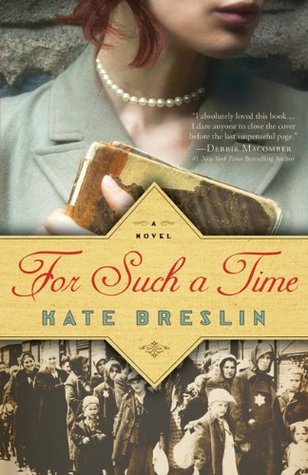
1. For Such a Time by Kate Breslin for review in May with TLC Book Tours.

In 1944, blonde and blue-eyed Jewess Hadassah Benjamin feels abandoned by God when she is saved from a firing squad only to be handed over to a new enemy. Pressed into service by SS-Kommandant Colonel Aric von Schmidt at the transit camp of Theresienstadt in Czechoslovakia, she is able to hide behind the false identity of Stella Muller. However, in order to survive and maintain her cover as Aric’s secretary, she is forced to stand by as her own people are sent to Auschwitz. Suspecting her employer is a man of hidden depths and sympathies, Stella cautiously appeals to him on behalf of those in the camp. Aric’s compassion gives her hope, and she finds herself battling a growing attraction for this man she knows she should despise as an enemy. Stella pours herself into her efforts to keep even some of the camp’s prisoners safe, but she risks the revelation of her true identity with every attempt. When her bravery brings her to the point of the ultimate sacrifice, she has only her faith to lean upon.

2.  A Dangerous Age by Ellen Gilchrist from Algonquin unexpectedly.

“A Dangerous Age” tells the story of the women of the Hand family, three cousins in a Southern dynasty rich with history and tradition who are no strangers to either controversy or sadness. By turns humorous and heartbreaking, the novel is a celebration of the strength of these women, and of others like them. In her characteristically clear and direct prose, with its wry, no-nonsense approach to the world and the people who inhabit it, Gilchrist gives voice to women on a collision course with a distant war that, in truth, is never more than a breath away.

3.  Acts of God by Ellen Gilchrist from Algonquin unexpectedly.

Critically acclaimed writer Ellen Gilchrist, winner of the National Book Award, returns with her first story collection in eight years.In Acts of God, master short story writer Ellen Gilchrist has crafted a collection that takes us into eleven scenarios in which people dealing with forces beyond their control somehow manage to survive, persevere, and even triumph.For Marie James, a teenager from Fayetteville, Arkansas, the future changes when she joins a group of friends in their effort to find survivors among the debris left when a tornado destroys a neighboring town. For Philipa, taking control of her own fate is the greatest act of courage she can imagine, and the most difficult. For Eli Naylor, left orphaned by a flood, there arrives the understanding that out of tragedy can come the greatest good. In one way or another, all of these people are survivors who find the strength to go on when confronted with their own mortality, and they come alive in these stories, told with clear-eyed optimism and a salty sense of humor.

4. The Girl Who Came Home by Hazel Gaynor from HarperCollins’ William Morrow for review.

Inspired by true events surrounding a group of Irish emigrants who sailed on the maiden voyage of R.M.S Titanic, The Girl Who Came Home is a story of enduring love and forgiveness, spanning seventy years. It is also the story of the world’s most famous ship, whose tragic legacy continues to captivate our hearts and imaginations one hundred years after she sank to the bottom of the Atlantic ocean with such a devastating loss of life.

In a rural Irish village in April 1912, seventeen-year-old Maggie Murphy is anxious about the trip to America. While the thirteen others she will travel with from her Parish anticipate a life of prosperity and opportunity – including her strict Aunt Kathleen who will be her chaperon for the journey – Maggie is distraught to be leaving Séamus, the man she loves with all her heart. As the carts rumble out of the village, she clutches a packet of love letters in her coat pocket and hopes that Séamus will be able to join her in America soon.

What did you receive?

245th Virtual Poetry Circle

Welcome to the 245th Virtual Poetry Circle!

Remember, this is just for fun and is not meant to be stressful.

Keep in mind what Molly Peacock’s book suggested.

Look at a line, a stanza, sentences, and images; describe what you like or don’t like; and offer an opinion. If you missed my review of her book, check it out here.

Also, sign up for the 2014 Dive Into Poetry Reading Challenge because there are several levels of participation for your comfort level.

For more poetry, check out the stops on the 2013 National Poetry Month Blog Tour and the 2012 National Poetry Month Blog Tour.

Signup for the 2014 National Poetry Month Blog Tour: Reach for the Horizon

Today’s poem is from W. D. Snodgrass:

Who Steals My Good Name

                  For the person who obtained my debit card number and spent $11,000 in five days.

My pale stepdaughter, just off the school bus,   
Scowled, "Well, that's the last time I say my name's   
Snodgrass!" Just so, may that anonymous   
Mexican male who prodigally claims   

My clan lines, identity and the sixteen   
Digits that unlock my bank account,   
Think twice. That less than proper name's been   
Taken by three ex-wives, each for an amount   

Past all you've squandered, each more than pleased   
To change it back. That surname you affect   
May have more consequence than getting teased   
By dumb kids or tracked down by bank detectives.   

Don't underrate its history: one of ours played   
Piano on his prison's weekly broadcast;   
One got rich on a scammed quiz show; one made   
A bungle costing the World Series. My own past   

Could subject you to guilt by association:   
If you write anything more than false checks,   
Abandon all hope of large press publication   
Or prizes—critics shun the name like sex

Without a condom. Whoever steals my purse   
Helps chain me to my writing desk again   
For fun and profit. So take thanks with my curse:   
May your pen name help send you to your pen.

What do you think?

Persuasion, A Tearoom Chat Week 2

Anna and I are chatting about Persuasion by Jane Austen this month.  We hope that you’ll join us. 

Click the here for our first discussion post of Vol. 1, Ch. 1-6.

Please see below for part 2 of our discussion for Vol. 1, Ch. 7-12

Today, I’m sipping a Mint herbal tea blend tea, accompanied by 2 Samoa Girl Scout cookies.  Anna had some lemonade.

Serena: Anne assumes that Wentworth has been avoiding her as plans change between the Musgroves and him for where and when they meet.  Do you think that’s the guilt and shame she feels or do you suspect his avoiding her?

Anna: Maybe he was avoiding her, but I noticed more that she was avoiding him, being happy to take care of little Charles so his parents could go to dinner with Wentworth at the Great House. I did get a sense of her anxiety about their initial meeting, and at least when it happened, it was over fairly quickly for her.

Serena: I found it ironic that she thought that he was avoiding her, but in point of fact, it was really the other way around. She wanted to nurse Charles or feign a headache more than she wanted to meet with Wentworth among company. I wonder if she was afraid of her reaction or his?

Anna: I think Anne has a good grasp of holding in her feelings, having lived with Sir Walter, Elizabeth, and Mary for so long and being neglected and isolated. I wonder after their initial meeting and learning that Wentworth barely recognized her, her having lost the “bloom” of youth and all, that it was his reaction she feared. It’s not long before she’s lamenting that they used to mean so much to one another, and now nothing.

Those passages really tugged at me. And throughout this section, as Anne meets Wentworth’s Navy friends, for instance, she’s struck by all that she’s lost. Do you remember anywhere else in Austen being so moved, or do you think this is a sign of Persuasion being a more mature novel, as it was written toward the end of her life?

Serena: I agree that Anne’s avoidance of Wentworth seems to be borne of the fear that he will react in a way that will unease her, and in fact, she does. And meeting those friends and seeing how in love the Crofts are, I think that too weighs heavily on her. As if she didn’t feel bad enough about her decision. I can’t recall anything so blatantly depressing as this in Austen’s other novels. Those still seemed to have a bit of the youthful play in them; this novel is not only more mature in feeling, but also in dramatization.

Anne is still in the background of most everything that happens plot-wise here, but she is in the middle of it just the same. She the observer, but she doesn’t merely observe because everything that happens affects her in some way, particularly when Wentworth enters the picture.

What did you think of her when she says that she could take no revenge because he was the same?

Anna: I think the Musgrove sisters are the youthfulness in this novel. A more elegant and better behaved Kitty and Lydia, even if they do get a little excitable over Captain Wentworth.

I agree that she is an observer and deeply affected as well. Of course, while we see all the emotions and sadness going through her mind, everyone else is oblivious to her pain. Austen does let readers into Wentworth’s head, if only a moment, early on when he’s first introduced, and then there are a few actions here and there that make you see his opinion of her is slowly changing. It’s obvious to us because we know their past, but it’s very subtle when you think that their companions have no clue.

I loved Anne for saying she could take no revenge because I know that I personally, even if just internally, would not have been that nice. That really emphasizes her strength of character and her kindness toward others. After Louisa’s accident, when they’re deciding which of the women will stay at the Harville’s, there’s a passage that indicates that she would care for Louisa for his sake. Imagine watching the only man you ever loved, whom you could have married, seemingly falling in love with another woman, and you would do that for him. Of course, she’s pretty much part of the Musgrove family, so that plays into it as well, but still.

These are things that make it obvious why Wentworth has never found another woman better than Anne. What do you think about him showing attention to both Henrietta and Louisa, without even really caring for either of them? Part of it must surely be his desire to make Anne jealous to an extent, but in that day and age, he was playing a dangerous game.

Serena: I’m not really sure that he was paying attention to them consciously. I think he was baffled by Anne’s presence there and really didn’t want to be rude to the Musgroves. But his attentions never seem overtly in favor of either girl, except when it comes to the incident at the Cobb. There is that one intimate conversation that Anne overhears between Louisa and Wentworth, but I think that was more Louisa’s machinations than his.

While maybe he enjoyed having the attention of two young women and his intentions may be to find a wife, I feel like he was still sorting through his feelings for Anne and not intentionally partial or even aware that he was demonstrating affinity for either of the Musgroves — in some ways, the perception that he is in favor of one or the other or even interested in either seems to be the ideas put forth by Mary, Charles and the Crofts without any real indication on his part.

Speaking of the Cobb, what do you think motivated Louisa to jump from such a height? Was she trying to prove something or was that merely youthful folly on her part?

Anna: Having been so long at sea, he may also just enjoy the sisters’ attention. But he does spend an awful lot of time at Uppercross, so it’s not wrong of those around him to wonder what he’s about, even if he’s not completely conscious of it. There are some things in that conversation he has with Louisa — and he doesn’t know that Anne’s listening — that if I were Louisa, I would’ve thought he liked me.

As for Louisa’s jump, there are several places in the narrative where it shows Louisa being more determined about doing things since that conversation with Wentworth, where he talks about strength of character and not being easily persuaded. So I think that played into it somewhat, but mostly, I think she was being flirty and playful and thought it would be fun. Even when I shake my head at Louisa’s folly, I actually do admire her high spirits.

Now I’ve been dying to know, my dear poetess, what do you think of Captain Benwick’s fondness for melancholy poetry? And what do you think about Anne telling him he should read more prose?

Serena: I knew you would ask me that question.

I think that Captain Benwick is wallowing in his melancholy and poetry — certain kinds of it — can help you do that. Perpetuate a state that you either find yourself in, helping you to see that its a universal feeling, but it also could be perpetuating a mood that he feels obligated to remain in given that he lives with the Harville family. He feels that his mourning should be palpable to them and that while he may be over his “fiance’s” death, he does not want to hurt the feelings of those he is staying with.

Anne’s remedy of prose could be her way of telling him that it has been long enough and that it is ok not to mourn anymore and to think about moving on with life. Whether prose would produce that effect, is another questions. I suppose if he were determined, he could find prose that would help him wallow too.

I find it interesting that Anne thinks about continuing her acquaintance with Benwick even as she’s still feeling saddened by Wentworth’s dismissive attitude toward her. What do you make of that? Is she becoming resigned? What does that say about her character?

Anna: I noticed that his grief seems overplayed, and he was excited to talk with Anne about something I’m sure no one else cares to talk about with him. He seems to want to get out and about more with people, which I thought was evident when the group leaves the Harvilles behind before taking one last walk on the Cobb, and Benwick goes with them.

I didn’t think Anne’s thoughts about Benwick meant she was resigning herself to anything. I thought maybe it was the first time in a long time that someone merely wanted to talk to her in a real discussion. Her sister and the Musgroves want her to just agree with them or to vent their frustrations about one another. She also understands Benwick in a way; they’ve both suffered a deep loss. One might argue that losing one’s fiance to death is more serious than a broken engagement, but he has the chance to find happiness again, and her prospects are dim on that front.

What were your feelings at the end of this section about how things had changed between Anne and Frederick? Do you think Anne has any reason to hope at this point?

Serena: I think that Austen wants us to think that all is lost for Anne, but I think there are enough glimmers — which Anne can see given how well she knows him — that she can still hope for some form of reconciliation. Perhaps a romantic reunification is a bit far-fetched given all that’s transpired with Louisa, up to this point, but I think she should have reason to hope that they could be friends again.

He clearly esteems her, and she clearly still admires him. While I think there are still obstacles to be overcome, many of these — like in most of Austen’s novels — of their own making. His abrupt departure of at the end of volume one seems to be very telling — like he’s now got a lot more to think about with regard to his future and about Anne. I think he’s seeing a more mature woman than he remembers.

What are your final thoughts about his exit? Seems a little like the end of an act in a play, doesn’t it?

Anna: Well, if Louisa’s carelessness was good for something, it was for Wentworth to see Anne take charge and show some of that strength of character he thought she didn’t have way back when. Austen also shows two extremes — Anne being persuaded to break their engagement and Louisa being determined to do something foolish and refusing to be persuaded otherwise.

Yes, it does seem sort of like the end of act. The characters showed some alterations, then of course they’re going to be separated for a time with everything still uncertain, and then the curtain closes.

I must say that I’m loving this book even more the second time around!

Serena: I cannot wait to see what happens in the next section, though I have seen the movies. There is a bit of a flare of the dramatic in this one, that I think was not as prevalent in her other novels. I do like that the characters are changing slowly, and that they have time to think about all that has come to pass.

We hope you’ll help us continue the discussion in the comments!

And please join us next Friday, March 21st, at Anna’s blog, Diary of an Eccentric, to discuss Volume II, Chapters 1-6! Grab a cup of tea!