Quantcast

Mixed Me! by Taye Diggs, illustrated by Shane W. Evans

Source: Public Library
Hardcover, 40 pgs.
I am an Amazon Affiliate

Mixed Me! by Taye Diggs, illustrated by Shane W. Evans, uses rhyme and vivid color to demonstrate the confidence of Mike, a young biracial boy with loving parents.  While his father has darker skin and his mother has fairer skin, he’s a perfect mix of the two, and those who stare better beware that this kid knows who he is and has no reason to feel like he needs to explain himself.

His parents have given him that confidence, allowing him to be who he wants to be, wear what he wants to wear, and zoom past those who stop to stare.  Young readers will feel the jive in these rhymes as their parents read the book aloud, and even if they read it on their own.  With Evans’ colorful pencil and textured drawings, this is a perfect pairing to illustrate the many ways in which the world can be viewed.

There is nothing resentful or hurtful in these pages, just the beauty of being you.  A story of growing up, noticing people who notice you, and choosing to be yourself no matter what.  Mixed Me! by Taye Diggs, illustrated by Shane W. Evans, sends a great message to all kids — and their parents — no matter what their racial background may be.  My daughter loved this book so much, we’ve taken it out of the library multiple times.

Rating: Cinquain

About the Author:

Taye Diggs was born in Newark, New Jersey, and was raised in Rochester, New York. He is the son of Marcia (Berry), a teacher and actress, and Andre Young, a visual artist. When he was a child, his mother married Jeffries Diggs, whose surname Taye took. He received a BFA degree in musical theater from Syracuse University. Taye made his show business debut in the ensemble cast of the five-time Tony Award winning play “Carousel.” Taye Diggs is the oldest of five. His two brothers are musicians, one sister is a dancer and the other is going to college to be a veterinarian.

About the Illustrator:

Shane W. Evans is the illustrator of several children’s books, including HOMEMADE LOVE by bell hooks and OSCEOLA: MEMORIES OF A SHARECROPPER’S DAUGHTER by Alan Govenar. He lives in Missouri.


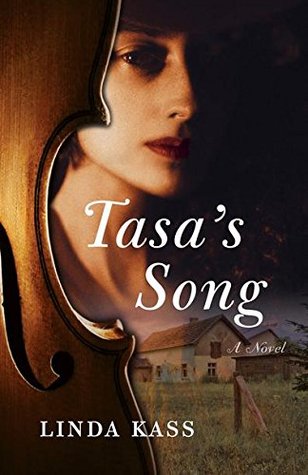
Tasa’s Song by Linda Kass

Source: Caitlin Hamilton Marketing & Publicity and She Writes Press
Paperback, 256 pgs.
I am an Amazon Affiliate

Tasa’s Song by Linda Kass, BRONZE WINNER, IPPY AWARD for HISTORICAL FICTION, is a concerto built on the jarring experiences of young violinist Tasa Rosinski in war-torn Poland during WWII.  Poland has changed hands many times before and does so again during the war, a war that many never expected to get as far as it did. As a young girl, she’s sent for additional schooling in Brody with her cousin Danik, but even as she enjoys school, she sees how the townspeople begin to treat their Jewish neighbors.  As fear creeps along the streets, Tasa softens the sharp edges with her violin, practicing music and losing herself in its timbres.

“In conveying the complicated history of Poland, Tasa’s schoolteacher used Podkamien as an example when she said you could live and die in one spot and occupy four different countries, because this part of Poland was constantly being invaded and carved up, then ‘liberated’ by somebody.” (pg. 15)

Tasa’s Jewish family is well liked by the townspeople of Podkamien because her father invested in the town, even as his family’s wealth grew.  He helped bring electricity and infrastructure to the village, making the lives of others better.  When the Nazis move on Poland and it is caught in between them and the Soviets, her family is able to escape for the most part with the help of non-Jewish families.  However, the tensions in the village are immediate, and the fear of being discovered can be difficult to live with.  Tasa, however, finds strength in her memories of her encouraging grandfather and her supportive mother, but also in her music, which provides her an escape from fear and loss.  She’s a strong young woman, and her strength helps others to keep going.

Tasa’s Song by Linda Kass demonstrates the tension within families at a time when there is so much uncertainty, and it illustrates the changing tides in just one nation during WWII.  Being Jewish in Europe during WWII was dangerous, and while luck can be with you, that luck also can turn out to be a bad omen.  This is a story of growing up in war, but also of learning to navigate uncertainty and reach into the future for something better without losing hope or the memory of those left behind, many in unmarked graves.

RATING: Quatrain

About the Author:

Linda Kass wrote for regional and national publications, including Columbus Monthly, TIME and The Detroit Free Press, early in her career as a journalist. TASA’S SONG, her debut novel, is inspired by her mother’s life in eastern Poland during the Second World War.

Linda lives in Columbus, Ohio, where she is a strong advocate of education, literacy, and the arts. Her past experience as a trustee and board chair of the Columbus Symphony Orchestra fed into much of the music that fills the pages of TASA’S SONG. Linda enjoys long distance road cycling and rides in an annual event to support cancer research.

Gaithersburg Book Festival 2016

gbfIt’s that time again for the Gaithersburg Book Festival.  I really love this festival because it’s very low key and includes activities for children of all ages.

Attendees can listen to authors speak about their books and topics, and they can get their books signed, among other things.

This year, I’ll be introducing two panels, and I’d love to see you there:

I’m also looking forward to these panels:

I hope to see you there.

John Dies @ the End by David Wong

Source: Public Library and Audible
Hardcover, 362 pgs.
I am an Amazon Affiliate

John Dies @ the End by David Wong, which was our April book club selection, is like falling off the frame and into a Salvador Dalí surrealist painting and its topsy-turvy world where very little makes sense and there is no straight path to some kind of satisfactory resolution.

Wong is a long-time editor at Cracked.com, which from what I gather is a humor website, and Wong is really a pen name.  So should you take anything in his novel seriously, even if it is considered in the horror genre?  My answer would be no.

In this novel, the soy sauce is a drug that enables John and David to see ghosts, demons, and other underworld-like things, and these unsuspecting and slacker heroes are less-than-motivated to take action, unless they have to.  Our unreliable narrator, David Wong, is socially inept and ogles women everywhere he goes, but readers are not even sure if he is David or John or someone else because the names of been changed.  In B-horror movie fashion, plots are introduced, left hanging, and reworked into even more ridiculous adventures.

“‘I call it Dante’s Syndrome,’ John said.  I had never heard him call it any such thing. ‘Meaning, I think Dave and I gained the ability to peer into Hell. Only it turns out Hell is right here, it’s all through us and around us and in us like the microbes that swarm through your lungs and guts and veins. Hey, look! An owl!'” (pg. 7)

“‘But I can bless water to make it holy. The ice statue, I mean.’
John’s face brightened and he said, ‘That’s perfect!’ He thrust his index finger into the air. ‘We bless the ice, then we just have to somehow get all hundred or so of those monsters to lick the statue!'” (130 pgs.)

These examples should provide you with the humor in this book, but some of this just seemed inserted for humor’s sake and did little to add to the story.  My final impression of John Dies @ the End by David Wong — the narrator for Audible was Stephen R. Thorne — is one of being overwhelmed by the descriptive info-dumps and the absurdity.  Because of the overwhelming and topsy-turvy nature of the narrative, this one did not work well on audio at all, leaving me lost most of the time, which is why I switched to the book.

RATING: Couplet

What the book club thought:

Sounded like most everyone thought the book was OK, but was not overly excited about the book. One member who said they were not sad to have read the book, said that they were not interested in reading any of the sequels. Another member said that the book was humorous, but most members said that the book had a plot that went nowhere and where there were no consequences for anything that happened.

Yellow Brick War by Danielle Paige (audio)

Source: Purchased
Audible, 8+ hours
I am an Amazon Affiliate

Yellow Brick War by Danielle Paige, narrated by Devon Sorvari, is the third part of this young adult series in an alternative world to the one we grew up with in Oz. This is a series that would be hard to follow without having read the first two books in the series — Dorothy Must Die and The Wicked Will Rise.

Amy Gumm finds herself back in Kansas, but she’s not alone.  The Wicked are with her as well, and she must find something to help get them back to Oz before Dorothy destroys everything.  This is Amy’s worst nightmare — returning to high school where she’s picked on by her peers and her mother is too drunk to even care where she is or if her homework is finished.  However, the witches show her that things have changed since her disappearance, and her mother is now sober and her former bullies are nicer now that they’ve been ostracized.

In this installment, the action is much slower as Amy reunites with her mother and the peers that once tortured her.  She feels just as out of place here as she did in Oz, but at least in Oz she could use magic and had a purpose.  She meets up with the former quarterback and his former girlfriend — Amy’s nemesis — and they strive to uncover the truth about the real Dorothy from Kansas.  It’s clear that Dorothy’s story was real and that no one believed her, but there is something magic still hidden in Kansas, and Amy must find it.

Yellow Brick War by Danielle Paige, narrated by Devon Sorvari, is a unique retelling of the Oz story, and readers will enjoy the characters and plot twists.  However, the dangling cliffhanger means there is sure to be another book in this series.  When the action abruptly ends, readers can be frustrated, especially in the case here where there is a big question mark over everyone’s fate.

Rating: Tercet

About the Author:

Danielle Paige is a graduate of Columbia University and the author of Dorothy Must Die and its digital prequel novellas, No Place Like Oz and The Witch Must Burn. Before turning to young adult literature, she worked in the television industry, where she received a Writers Guild of America Award and was nominated for several Daytime Emmys. She currently lives in New York City.

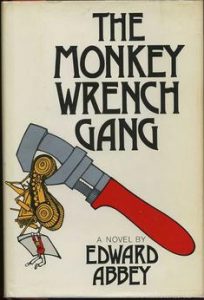
Guest Review: The Monkey Wrench Gang by Edward Abbey

Review by Laura at 125Pages.

Rating: 1 star

EdwardAbbeyTheMonkeyWrenchGangGoodReads Synopsis:

Ed Abbey called The Monkey Wrench Gang, his 1975 novel, a “comic extravaganza.” Some readers have remarked that the book is more a comic book than a real novel, and it’s true that reading this incendiary call to protect the American wilderness requires more than a little of the old willing suspension of disbelief.

The story centers on Vietnam veteran George Washington Hayduke III, who returns to the desert to find his beloved canyons and rivers threatened by industrial development. On a rafting trip down the Colorado River, Hayduke joins forces with feminist saboteur Bonnie Abbzug, wilderness guide Seldom Seen Smith, and billboard torcher Doc Sarvis, M.D., and together they wander off to wage war on the big yellow machines, on dam builders and road builders and strip miners.

As they do, his characters voice Abbey’s concerns about wilderness preservation (“Hell of a place to lose a cow,” Smith thinks to himself while roaming through the canyonlands of southern Utah. “Hell of a place to lose your heart. Hell of a place… to lose. Period”). Moving from one improbable situation to the next, packing more adventure into the space of a few weeks than most real people do in a lifetime, the motley gang puts fear into the hearts of their enemies, laughing all the while. It’s comic, yes, and required reading for anyone who has come to love the desert.

Review:

Today we visit Utah with The Monkey Wrench Gang by Edward Abbey. EW says – “Abbey’s tale of four ecological activists seeking to destroy the Glen Canyon Dam became a primer for other green-minded saboteurs.”

The Monkey Wrench Gang by Edward Abbey is touted as a comic look at social justice warriors. True environmentalists that strive to bring the land back to its natural state. Um, no. That is not at all the book I read. What I read was a book steeped in misogyny, homophobia, stereotyping and stupidity. From the derision of Native Americans, to showing the only Mormon member of the group as a polygamist, this book played everyone as a buffoon.

The plot was a grand look at what a bored drunk man will concoct when he gives no thought to others. George is painted as a lover of the natural state who is upset by the creeping industrialism on the desert he calls home. He decides that action must be taken, extreme action. Because blowing up bridges is cool but littering is just fine – “Of course I litter the public highway. Every chance I get. After all, it’s not the beer cans that are ugly; it’s the highway that is ugly.”  The writing was a mishmash of clichés and was difficult to read at times due to the constant changing of tone and pace. The world built was also difficult to navigate as locations moved frequently and at times I was unsure what state they were even in. The emotions and the characters were also all over the place. Everyone but the “gang” was painted as ignorant and useless and it became quite grating.

Some books get better with age and become classics. The Monkey Wrench Gang is not one of those books. It was a draining experience to read it and I cannot understand why it is considered by many to be so good. It has a 4.3 star rating on Amazon but I cannot fathom how. An example of the comedic showcases, to me, what was once thought great, but I just see it as super lowbrow.

“All this violence,” Doc said. “We are a law-abiding people.” “What’s more American than violence?” Hayduke wanted to know. “Violence, it’s asmerican as pizza pie.” “Chop suey,” said Bonnie. “Chile con carne.” “Bagels and lox.”

As for the connection to Utah, I did not really see it as an overall. Utah was not mentioned until 60% into the book and then as more of a joke (see the polygamist). Sadly my home state of Arizona fielded most of the action with New Mexico coming in second and Utah as third. The Glen Canyon Dam, the featured target, is also in Arizona not Utah, so again, I have to wonder if the EW staff read the books before placing them in the states.

The five players are Dr. and Mrs. Sarvis, Mr. and Mrs. Smith, and their communal probation officer, a young fellow named Greenspan, who is a relative newcomer to the state of Utah. (Newcomers are always welcome in the Beehive State but are advised to set their watches back fifty years when entering.)

Favorite lines – “The river in its measureless sublimity rolled softly by, whispering of time. Which heals, they say, all. But does it? The stars looked kindly down. A lie. A wind in the willows suggested sleep.”

Biggest cliché – I will save you even if you do not want saving.

Have you read The Monkey Wrench Gang, or added it to your TBR?

utahUSofbooks

See all of the United States of Books here.

Mailbox Monday #375

Mailbox Monday, created by Marcia at To Be Continued, formerly The Printed Page, has a permanent home at its own blog.

To check out what everyone has received over the last week, visit the blog and check out the links.  Leave yours too.

Also, each week, Leslie, Vicki, and I will share the Books that Caught Our Eye from everyone’s weekly links.

Here’s what I received:

Sunshine Beach by Wendy Wax for review.

After losing their life savings in a Ponzi scheme, Maddie, Avery, and Nikki have banded together to make the most of what they have left, using their determination, ingenuity, guts, and a large dose of elbow grease. It’s Maddie’s daughter Kyra who stumbles across a once glorious beachfront hotel that has fallen into disrepair. The opportunity to renovate this seaside jewel is too good to pass up—especially when they come up with the idea of shooting their own independent television show about the restoration. What could possibly go wrong?

Everything. With the cameras rolling, Maddie’s second-chance romance with her all-too-famous new boyfriend gets complicated, Avery struggles with grief over the loss of her mother, and Nikki’s reluctance to commit to the man who loves her could leave her to face the biggest challenge of her life. Even the hotel seems to be against them, when their renovation uncovers a decades-old unsolved murder which just might bring their lives tumbling down all over again

Follow the River Home by Corran Harrington for review for TLC Book Tours in June.

DANIEL ARROYO has suffered a lifetime of guilt over the sudden death of his infant sister, who died when he was eight years old. He now lives his middle years between that guilt and worsening episodes of PTSD from a Vietnam he left thirty years ago. When a violent encounter on a dusty highway forces Daniel to face what haunts him, he finds himself pulled back to the neighborhood of his youth, where old houses hold tired secrets. What really happened on that steamy August afternoon? The answer comes spilling from the old neighborhood, and Daniel begins to find his way home. Corran Harrington takes the reader along the Rio Grande, from its headwaters to the sea.

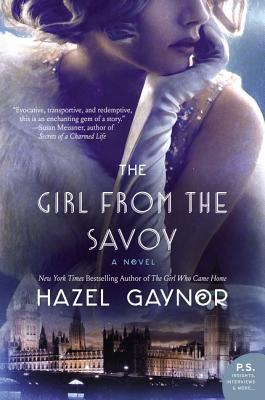
The Girl from the Savoy by Hazel Gaynor for a TLC Book Tour in June.

Dolly Lane is a dreamer; a downtrodden maid who longs to dance on the London stage, but her life has been fractured by the Great War. Memories of the soldier she loved, of secret shame and profound loss, by turns pull her back and spur her on to make a better life.

When she finds employment as a chambermaid at London’s grandest hotel, The Savoy, Dolly takes a step closer to the glittering lives of the Bright Young Things who thrive on champagne, jazz and rebellion. Right now, she must exist on the fringes of power, wealth and glamor—she must remain invisible and unimportant.

But her fortunes take an unexpected turn when she responds to a struggling songwriter’s advertisement for a ‘muse’ and finds herself thrust into London’s exhilarating theatre scene and into the lives of celebrated actress, Loretta May, and her brother, Perry. Loretta and Perry may have the life Dolly aspires to, but they too are searching for something.

Now, at the precipice of the life she has and the one she longs for, the girl from The Savoy must make difficult choices: between two men; between two classes, between everything she knows and everything she dreams of. A brighter future is tantalizingly close—but can a girl like Dolly ever truly leave her past behind?

What did you receive?

357th Virtual Poetry Circle

Welcome to the 357th Virtual Poetry Circle!

Remember, this is just for fun and is not meant to be stressful.

Keep in mind what Molly Peacock’s book suggested.

Look at a line, a stanza, sentences, and images; describe what you like or don’t like; and offer an opinion. If you missed my review of her book, check it out here.

Today’s poem is from Marie Ponsot, read by Kurt Milberger:

Among Women

What women wander?
Not many. All. A few.
Most would, now & then,
& no wonder.
Some, and I’m one,
Wander sitting still.
My small grandmother
Bought from every peddler
Less for the ribbons and lace
Than for their scent
Of sleep where you will,
Walk out when you want, choose
Your bread and your company.

She warned me, “Have nothing to lose.”

She looked fragile but had
High blood, runner’s ankles,
Could endure, endure.
She loved her rooted garden, her
Grand children, her once
Wild once young man.
Women wander
As best they can.

What do you think?


The Murder House by James Patterson and David Ellis (audio)

Source: Public Library
Audiobook, 9 CDs
I am an Amazon Affiliate

The Murder House by James Patterson and David Ellis, narrated by Therese Plummer and Jay Snyder, is a thrill-a-minute, as Det. Jenna Murphy gets re-acquainted with Bridgehampton at a time when Noah Walker is on trial for murder.  7 Ocean Drive, the Murder House, has a violent and unforgiving past, and Walker finds that he gets caught up in that darkness no matter how much he wants to stay under the radar.  Murphy has resigned from her Manhattan police gig and returned to a place she hasn’t been in more than two decades.  As she strives to put the man in jail who she believes killed her uncle, the police chief of Bridgehampton, she’ll have to compromise the one thing she’s held onto since then — her integrity.

Therese Plummer and Jay Snyder do an excellent job of narrating this suspenseful murder mystery, with Jay’s voice even creepier as the killer’s, whose identity remains unknown until the end.  In this twisted tale, Jenna and Noah embark on parallel journeys that lead them into one of the darkest places in the tourist trap — the Murder House.  It’s history dates back to the 1800s, and the family that owned it was always under suspicion but never tried or convicted of any crimes.  Long-since dead, the family’s secrets come to light, and one of them hits very close to home for Murphy, who has lost her uncle and her job as she continues to ask questions about the recent murders of a powerful Hollywood player and his mistress and Walker’s role in them.

Despite moments that seem forced and lines that are repeated a little too often, as well as bad decisions that are made by a supposedly talented cop, The Murder House by James Patterson and David Ellis, narrated by Therese Plummer and Jay Snyder, is a heart-pumping thriller that will leave readers on the edge of their seats.

Rating: Quatrain

About the Author, David Ellis:

David Ellis is a lawyer and the Edgar Allan Poe Award winner for Best First Novel for Line of Vision. Ellis attended Northwestern Law School and began his legal career in private practice in Chicago in 1993. He served as the House Prosecutor who tried and convicted Illinois Governor Blagojevich in the Impeachment Trial before the Illinois Senate. He was elected to the Illinois Appellate Court in 2014 and took office December 1, 2014. Ellis currently lives outside Chicago with his wife and three children.

About the Author, James Patterson:

James Patterson has created more enduring fictional characters than any other novelist writing today with his Alex Cross, Michael Bennett, Women’s Murder Club, Private, NYPD Red, Daniel X, Maximum Ride, and Middle School series. As of January 2016, he has sold over 350 million books worldwide and currently holds the Guinness World Record for the most #1 New York Times bestsellers. In addition to writing the thriller novels for which he is best known, he also writes children’s, middle-grade, and young-adult fiction and is also the first author to have #1 new titles simultaneously on the New York Times adult and children’s bestsellers lists.

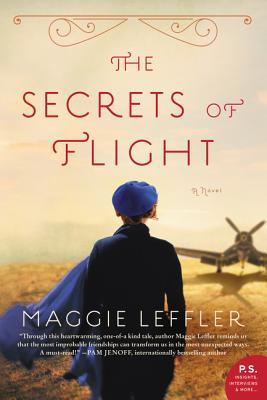
The Secrets of Flight by Maggie Leffler

tlc tour hostSource: TLC Book Tours
Paperback, 368 pgs.
I am an Amazon Affiliate


The Secrets of Flight by Maggie Leffler is a stunning mystery that unravels piece by piece, and readers will first meet Mary Browning, an elderly woman in a writer’s group.  She believes she sees an apparition of her sister, Sarah, as a young lady walks into their public writing group.  This vision prompts her memories to resurface, and with the help of this young transcriptionist, she begins again on her memoir.  Leffler deftly weaves between the past and present, creating a multi-layered story that will capture not only the nostalgia of a former airplane pilot during WWII but also the immediacy of a young woman’s search for herself among the detritus of family drama.  Her characters resonate off of one another, like echoes of the past pushing forward the lives of the present into the future.  This ripple effect builds throughout the novel, until the final mystery is revealed.

“But my greatest fear of all was not having a voice of my own.” (pg. 5 ARC)

We all fear losing ourselves and not having a voice.  We are individuals in search of ourselves, but we also are sisters, mothers, daughters, and friends, among other roles that we play.  These connections can help us breathe life into our passions and desires, or they can stifle them.  The trick is to balance the needs and expectations of others with our own without hurting ourselves or those we care most about.

“… I learned how to squeeze my face closed and let myself soundlessly shudder, imagining my tears deep inside, dripping off my organs.” (pg. 31 ARC)

Mary has lived her life, much of it on her own terms, and while she has had a hard time compromising, she was able to do it for love, even to her own detriment.  When WWII was in full swing, she left home to do what she loved even as many told her she shouldn’t, and when she fell in love, she made a sacrifice that many would now see as unnecessary without having lived with the fear of persecution.

Very rarely is there a book that can equally make emotions soar and crash, taking readers on a complete journey wrought with obstacles and choices that you can only imagine facing.  For Mary Browning to have survived them and to have created a satisfying, but not ideal life, is nothing short of miraculous — much like when a heavy metal plane takes to the air with the birds and clouds.  The Secrets of Flight by Maggie Leffler is equal parts coming of age story, WWII historical romance, and mystery, and it is so well balanced and amazing, readers will be left spent at the end of the runway.

RATING: Cinquain

About the Author:

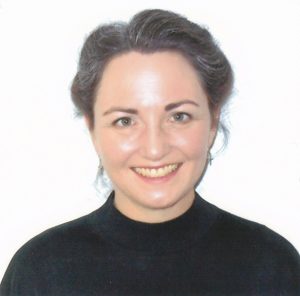
Maggie Leffler is an American novelist and a family medicine physician. A native of Columbia, Maryland, she graduated from the University of Delaware and volunteered with AmeriCorps before attending St. George’s University School of Medicine. She practices medicine in Pittsburgh, Pennsylvania, where she lives with her husband and sons. The Secrets of Flight is her third novel.

Find out more about Maggie at her website, and connect with her on Facebook.

Photographs from the Edge: A Master Photographer’s Insights on Capturing an Extraordinary World by Art Wolfe, Rob Sheppard

Source: NetGalley
ebook, 288 pgs.
I am an Amazon Affiliate

Photographs from the Edge: A Master Photographer’s Insights on Capturing an Extraordinary World by Art Wolfe, Rob Sheppard, which will be published in September 2016, is stunning. Wolfe is a clear talent at capturing nature, tribes, and animals and his composition is unique and lively. It’s clear that the equipment he uses and his forethought about the scene enable him to capture even unexpected beauty. Rather than work as a career photojournalist, he has taken a harder, more independent path. While this has left him to be creative and take on projects that others might not, it also has some consequences, such as not being in his home more than he is on the road. However, it is a choice he never regrets, and readers will see why when they view the phenomenal images in this book.

His love of photography is infused in every picture he takes, and it is these pictures that enable us to put ourselves in different locations and view them as they are, without industry and interference from the modern world.  Even photos at a distance are created with composition, lighting, and subject in mind.  It is clear that he loves what he does, and he equally loves the subjects, shining a new light on even the ones most photographed, like penguins.  Photographs from the Edge: A Master Photographer’s Insights on Capturing an Extraordinary World by Art Wolfe, Rob Sheppard is a book that everyone will want to have in hardcover to cherish Wolfe’s art — to hold it, to view it up close, and to reach inside and experience the world through his eyes.

RATING: Cinquain

About the Photographer:

The son of commercial artists, Art Wolfe was born in 1951 in Seattle, Washington, and still calls the city home. He graduated from the University of Washington with Bachelor’s degrees in fine arts and art education in 1975. His photography career has spanned five decades, a remarkable testament to the durability and demand for his images, his expertise, and his passionate advocacy for the environment and indigenous culture. During that time he has worked on every continent, in hundreds of locations, and on a dazzling array of projects. You can view his stunning photographs online and buy.

Giveaway & Interview with Renée Beyea, author of Fine Stout Love

FSL Blog Tour Banner

Fine Stout Love and Other Stories by Renée Beyea is a collection of short stories based on Jane Austen’s Pride & Prejudice and is part of the Pride & Prejudice Petite Tales series.  The second volume, What Love May Come and Other Stories, will be released winter 2016.

A Fine Stout Love.inddAbout the collection:

Discover what happens when Elizabeth Bennet and Fitzwilliam Darcy meet fancy and fantasy in this novella-length ensemble of Regency stories.

– What if two inexplicable trails of words led to the Meryton churchyard on the same blustery morning?
– What if Darcy stumbled across suggestive lines of verse following Elizabeth’s stay at Netherfield?
– What if a rumored engagement so thoroughly shocked Lady Catherine that she could not interfere?
– What if Elizabeth learned the last man she would ever marry was the only man she could marry?
– What if every Bennet family member read the love poem Darcy intended only for his bride?

With all the intimacy and lyricism of a chamber concert, these five whimsical shorts will inspire the heart, prompt a smile, and entice readers to many happy returns.

Intrigued? I know I am.

Please give Renée Beyea a warm welcome.

When did you first read Pride & Prejudice? And what about the story stuck with you enough to write short stories about Jane Austen’s characters?

Credit goes to my mom for introducing me to Emma in fourth grade. I fell in love with Mr. Knightley and devoured Jane Austen’s oeuvre–including Pride & Prejudice–within the next few years. Since I loved fairy tales as a child, Pride & Prejudice initially enthralled me as a grown-up version of Cinderella and an escape to what seemed like a fairy tale world. It wasn’t until the many re-readings in high school and college that I began to appreciate Austen’s light touch in sketching characters, her sparkling dialogue, and the subtlety of her wisdom, wit, and humor. Though each reading brings new insights, these qualities have stayed with me over the years.

After so many decades reading Pride & Prejudice–not to mention wheedling friends and family into countless movie viewings–what joy was mine to stumble into the world of Jane Austen fan fiction! I was introduced once again through my mom, this time to Persuasion from Captain Wentworth’s point of view in Susan Kaye’s None But You. Retellings and variations sparked my imagination, and that’s when I began writing the short pieces that comprise A Fine Stout Love and Other Stories. Though I don’t seek to emulate Austen’s voice, I do strive to employ era-appropriate language and to honor those qualities I appreciated from the first–her canon characters, fresh dialogue, subtle humor, and naturally, a dash of fairy tale romance.

Many fans of Austen often do not like to read the Brontes.  Do you read the Brontes and enjoy their work? If not, why?

I do read and enjoy the Brontes, though not all of their works. Charlotte’s Jane Eyre and Anne’s The Tenant of Wildfell Hall are on my re-read list. Anne’s first novel, Agnes Grey, still languishes in my TBR pile. Charlotte’s Shirley and The Professor have yet to sufficiently pique my interest. As for Charlotte’s Villette and Emily’s Wuthering Heights, I’m prepared to admire them from a literary perspective, but I find them too dark, depressing, and disturbing to expect much pleasure from repeat visits. My approach to the Brontes’ novels is similar to how my husband and I approach movies. We enjoy diverse genres and savor a good drama, but for repeat viewing, nine times out of ten we’ll choose romantic comedy or action adventure. The Brontes’ works are dramas; Austen’s are romantic comedy.

Since I’m on a roll with comparisons… Comparing Austen and the Brontes is like comparing an airy chiffon pie with a dense flourless cake. Both delicious but for contrasting attributes. Or in terms of art, the Brontes paint with oils, layer upon layer of light and shadow skillfully executed–not unlike Helen Huntingdon’s talent in Wildfell Hall. By contrast, Austen sketches no less skillfully but provides just enough to tell the story and to color casts of enchanting characters. Austen leaves more to the imagination. She doesn’t indulge in lengthy moralizations or detailed descriptions. We don’t know what Longbourn house looks like, let alone Elizabeth Bennet, save for her beautiful dark eyes and light and pleasing figure. As a reader, I enjoy both methods, but as a writer, it’s Austen’s works that invite variations.

When working with someone else’s beloved characters, what do you keep in mind when writing new stories for them?  What are the challenges? advantages?

Austen variations come in as many flavors as Ben & Jerry’s ice cream. Some authors tweak the plot, some the characters, and some both. Each change is located along a spectrum of minor to major. Of course, every Austen reader will happily defend her or his favorite flavor–sometimes quite ardently. Where do I fall on this spectrum? As a reader, I can appreciate a fairly wide variety. As an author, I endeavor to keep the characters within the social mores and moral values of Austen’s milieu as well as in step with how she wrote them. Or at least in step with how I interpret her characterization, knowing full well readers will debate ceaselessly a range of interpretation.

Perhaps the greatest advantage to borrowing someone else’s characters is that they already exist in readers’ imaginations. Isn’t this in large part what fuels the seemingly insatiable appetite for Austen retellings and variations? Readers covet more time with the characters they’ve come to know and love. Names like Elizabeth, Darcy, and Mrs. Bennet serve as a kind of shorthand to their back stories and character traits. I’ve found this to be a tremendous boon in writing short fiction. A short story’s limited length and tight construction place relatively greater weight on each word choice, and I need not spend words introducing the cast. This also means readers are more swiftly immersed with beloved characters as they are plunged into new circumstances.

As is often the case, the corollary presents the greatest challenge. Because reader expectations already exist along a range of interpretation, those expectations are destined to be either satisfied or disappointed in a way that original characters are less apt to incite. Then there’s the challenge and limitation of creating characters consistent with the originals. Does Elizabeth speak and act with that “mixture of sweetness and archness” that makes it difficult to affront anybody, or does she cross the line into harshness or cruelty? Is Jane “firm where she feels herself to be in the right,” or does her gentleness make her seem a pushover? Austen had the advantage of writing when narrative, exposition, and omniscient narrators were de rigueur, but the burden is on today’s authors to show these subtle distinctions.

If you had to describe Mr. Darcy as readers know him, not as he is perceived by Elizabeth Bennet, what four words would you use and how did you come to choose those terms?

Only four words? You drive a hard bargain! One beauty of Austen’s writing is her restraint in Darcy’s portrayal, which only multiplies his mystique. Readers and Austen-inspired authors have the irresistible gratification of completing the picture, and we do so with an endless variety of media. Below are the four words that best capture my mental image. I’d love to hear which four words your readers would choose…

Proud:  Darcy is sometimes justified as shy and misunderstood, but Austen leaves little room for doubt that Darcy enters the story as proud and haughty. He takes pride in his heritage, his family, his station in society, his estate. As Charlotte says, he has an excuse to be proud. Really, can we blame him? Perhaps we wouldn’t blame him at all if his pride were as properly regulated as Darcy assures Elizabeth it is. We can laugh, even if Elizabeth does not, at the irony and his unwitting hypocrisy. Darcy’s pride continues to surface in the superiority of his perceptions and interactions–at least until we meet him again at Pemberley, having been properly humbled by Elizabeth’s refusal and learned his lesson.

Reserved:  While I won’t grant Darcy a pass for being shy and misunderstood, Austen does tell us he’s reserved, his manners are uninviting, and he’s continually giving offense. She sketches Darcy in contrast to his good friend. Bingley is effusive, gregarious, and charming–everyone’s a friend. Darcy on the other hand stands about and doesn’t care to dance or even to make small talk with people he doesn’t know. He explains himself to Elizabeth as not possessing such social skill. Only in his own circles, among his intimates, and at Pemberley does Darcy become less reserved. And on those lovely long rambles with Elizabeth near the end, her easy playfulness begins to soften his reserve, which only serves to whet readers’ appetites for more.

Reflective:  When Darcy is quiet, Austen frequently shows him watching and observing, or readers can reasonably make that inference. Darcy watches Elizabeth. He watches Jane’s interaction with Bingley. He observes the Bennet family’s behavior. He watches Collins tread on Elizabeth’s toes and his cousin Fitzwilliam flirt with her. Darcy does all this watching, but no matter what Elizabeth may think, the reader knows it’s not a vacuous stare. Austen tells us that Darcy is clever and boasts superior powers of understanding. So in those long silences his clever mind is occupied evaluating everything he observes and drawing conclusions. Not always accurate conclusions, mind. He determines that Elizabeth favors him while Jane doesn’t favor Bingley. Oops. But confronted with Elizabeth’s rejection, Darcy’s clever mind once again engages in reflecting on what she said, painful though her words are. And this time he determines that he’s the one who needs to change. That’s our hero.

Principled:  Late in the book, Darcy tells Elizabeth that he was “given good principles but left to follow them in pride and conceit.” But before we hear this confession from his mouth, we see Darcy’s principles in action. He honors the spirit of his father’s wishes for Wickham without violating his better informed conscience. Mrs. Reynolds confirms Darcy is conscientious in the management of his estate and respected by his tenants and servants. Darcy is committed to his sister’s care and earns consistent high praise for his efforts there. He’s a faithful friend. Misguided and influenced by selfish motives though Darcy may be, he still seeks to protect Bingley from a marriage of unequal affection. He abhors disguise and endeavors to correct Elizabeth’s misapprehensions. And Darcy owns it himself that he intervenes with Lydia and Wickham because he has Elizabeth’s interests at heart. Honor, integrity, selflessness, and generosity to name a few–what woman would not be won by the love of a tall, handsome, rich man motivated by such principles?

Do you read poetry?  Who or what collections would you recommend?

I do read poetry, though not as much as I did before children. Somehow the raucous joy of boys rocketing through my home isn’t particularly conducive to reflection. These days I treat poetry like espresso. When I need a quick shot, it’ll usually be old friends from the classics. Shakespeare’s sonnets are well-thumbed. I’m a huge fan of John Donne and Gerard Manley Hopkins, and both find passing reference in the first two volumes of my Pride & Prejudice Petite Tales. Sometimes I’m in the mood for the Brownings, Keats, or Dickinson. These poets also inspired the verses I wrote for A Fine Stout Love and Other Stories–poems with more traditional form, meter and rhyme, and thus more apt to have been composed by Elizabeth or Darcy.

In terms of contemporary poets, several of Jane Kenyon’s slim volumes populate my shelves. Let Evening Come moves me every time–I feel her words like sunset on an evening breeze. And while it’s not poetry, Annie Dillard’s prose in Holy the Firm and Pilgrim at Tinker Creek is often sublime and poetic. Her striking imagery, rich metaphors, and lyrical voice impact me like verse. I likewise relish applying poetic sensibility to writing prose fiction.

As for current poets, if the poet dances words onto the page and the reader dances them off, then occasionally I accept the invitation and take new verses for a turn about the room. Regretfully, it’s rarely long enough to find new favorites. So I’m not in a position to make recommendations, save to affirm experimenting, reading broadly, and sampling everything. In fact, Savvy Verse & Wit provides an excellent resource to do just that (thank you, thank you!). My taste may be to waltz and another’s may be to salsa, but you never know when you will chance into the perfect combination of words that makes your soul dance.

Thank you so much, Serena, for hosting me at Savvy Verse & Wit, stimulating my thoughts with your insightful questions, and for participating in the blog tour for A Fine Stout Love and Other Stories.

International giveaway: (8 books, including up to 4 paperback)

a Rafflecopter giveaway

Renee Beyea (author)About the Author:

Renée Beyea holds an undergraduate writing degree from Taylor University and a Master of Divinity from Fuller Seminary. She serves as full-time wife, mother to two sons, and ministry partner with her husband, an Anglican priest and chaplain. Her free time is devoted to crafting stories and composing poetry that delight the senses and touch the soul. Connect with her on Facebook.