Quantcast

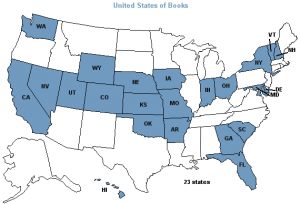
United States of Books: The Betsy-Tacy Treasury by Maud Hart Lovelace

Source: Public Library
Paperback, 736 pgs.
I am an Amazon Affiliate

The Betsy-Tacy Treasury by Maud Hart Lovelace, which is the first four books in this 10 book series, was praised by Entertainment Weekly as “a rosy remembrance of a region already known for its niceness.”  My daughter and I read these together over many weeks, reading little more than a chapter every couple of evenings.

Betsy-Tacy is the first book in the series, and young readers are introduced to five-year-old Betsy who lives in Deep Valley, Minnesota.  She lives in a small mill town at the end of Hill Street, but she’s soon to have a new neighbor, as a new family moves into the house across the street.  My daughter was thrilled to hear about a girl her age, and she was even more excited when I told her that there were pencil-like sketches inside for her to visualize what we were reading.  Transitioning from only picture books to chapter books can be hard, especially for kids who love visuals.  Betsy soon has a new friend, Tacy, and they share big imaginary adventures together before her baby sister arrives and before they even meet Tib, whose family is from Milwaukee and live in the chocolate-colored house they covet.  Entertainment Weekly‘s assessment of a “rosy” picture of a “nice” little town is highly accurate, and it’s clear that this story takes place some time ago before many worried about strangers, criminals, or had cars, cellphones, and televisions.  Imagination was a commodity that children needed in large supply.  This is not to say that Betsy, Tacy, and Tib do not get into trouble.

Rating: Cinquain

Betsy-Tacy and Tib is the second book, and the girls are now eight years old.  It becomes clear that even though these books were written during a time when women were supposed to be mothers and wives, these girls have bigger dreams.  Betsy is a storyteller and she seems to have dreams of writing books, while Tacy wants to be a mother to a number of kids, just as her mother is.  Tib is torn.  To be an architect/engineer, mother, dancer, or something else.  When kids think about what they want to be when they grow up, their dreams are big and seem to be out of reach.  They are fantasies, like many of the stories these girls create in this book for Tib’s Aunt Dolly and themselves.  My daughter is riveted by these books and the fun and trouble these girls get into, from visiting the Mirror Palace to cutting chunks of their hair off to put in lockets.  These books remind me of the good old days when dreams were interchangeable and wonderful.

Rating: Cinquain

Betsy and Tacy Go Over the Big Hill is the third book and the girls are now age 10.  It’s great how accurate Maud Hart Lovelace captures the competition between young kids when it comes to celebrating birthdays and feeling left out when others have birthday parties and they do not.  But, ultimately, everything turns out well between Betsy, Tacy, and Tib, only to have a quarrel between Betsy and Tacy and their older sisters over who will become queen.  This book has a lot in it about conflict resolution, which younger kids can definitely use as friendships grow and change, as well as in their relationships with siblings.  My daughter enjoyed this one, but was a little unsure of the hubbub about kings and queens, even though she is an avid fan of princesses.  I liked the historical details about the Syrian immigrants and foreign affairs involving the King of Spain, as well as a tidbit about the current president being Theodore Roosevelt.  However, there are some “old-fashioned” ideas about immigrants and other cultures here that might need further explanation.

Rating: Quatrain

Betsy and Tacy Go Downtown is the fourth book, and at age 12, Betsy, Tacy, and Tib are a little too old for my daughter.  She lost interest in this book series with this book, as their adventures downtown and their prodding of Winona to take them to see the play Uncle Tom’s Cabin did not resonate with her.  She’s more interested in make-believe games and stories, and while these girls act as girls probably do at this age, manipulating a classmate is not a lesson I’d like my daughter to learn.  It’s also interesting from an adult perspective to see how times have changed — a prized possession for one of the girls is a beer calendar!  But here, we also see Betsy grow up and take an adventure to the new library on her own.  While she apprehensive, she’s happy to be on her own and she thrives in the books she finds and reads, but also in the attention she seems to receive from others about her own writing.  It’s wonderful to see her parents support her writing/art.  It’s a lesson that is often not passed on today, as kids are tested and too focused on subjects that will net them lucrative careers.

Rating: Tercet

Average rating for all 4 books: 4.25

About the Author:

Maud Hart Lovelace was born on April 25, 1892, in Mankato, Minnesota. She was the middle of three children born to Thomas and Stella (Palmer) Hart. Her sister, Kathleen, was three years older, and her other sister, Helen, was six years younger. “That dear family” was the model for the fictional Ray family. Maud’s birthplace was a small house on a hilly residential street several blocks above Mankato’s center business district. The street, Center Street, dead-ended at one of the town’s many hills. When Maud was a few months old, the Hart family moved two blocks up the street to 333 Center.

Shortly before Maud’s fifth birthday a “large merry Irish family” moved into the house directly across the street. Among its many children was a girl Maud’s age, Frances, nicknamed Bick, who was to be Maud’s best friend and the model for Tacy Kelly. Tib’s character was based on another playmate, Marjorie (Midge) Gerlach, who lived nearby in a large house designed by her architect father. Maud, Bick, and Midge became lifelong friends. Maud once stated that the three couldn’t have been closer if they’d been sisters.

MinUSofBooks

Mailbox Monday #379

Mailbox Monday, created by Marcia at To Be Continued, formerly The Printed Page, has a permanent home at its own blog.

To check out what everyone has received over the last week, visit the blog and check out the links.  Leave yours too.

Also, each week, Leslie, Vicki, and I will share the Books that Caught Our Eye from everyone’s weekly links.

Here’s what I received:

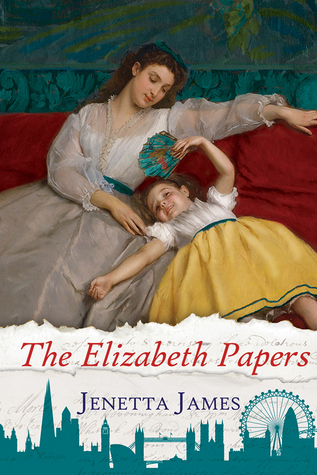
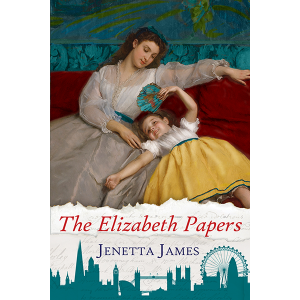
The Elizabeth Papers by Jenetta James for review from the author in Aug/Sept.

“It is settled between us already, that we are to be the happiest couple in the world,” said Elizabeth Bennet at the conclusion of “Pride & Prejudice”—but was it true?

Charlie Haywood is a London-based private investigator who has made his own fortune—on his own terms. Charming, cynical, and promiscuous, he never expected to be attracted to Evie Pemberton, an independent-minded artist living with the aftermath of tragedy. But when he is hired to investigate her claims to a one hundred and fifty year old trust belonging to the eminent Darcy family, he is captivated.

Together they become entwined in a Regency tale of love, loss, and mystery tracing back to the grand estate of Pemberley, home to Evie’s nineteenth century ancestors, Fitzwilliam and Elizabeth Darcy. As if travelling back in time, a story unfolds within their story. All was not as it seemed in the private lives of Mr. and Mrs. Darcy, but how can they ever uncover the whole truth?

How could they know that in 1817 Elizabeth Darcy began a secret journal? What started as an account of a blissful life came to reflect a growing unease. Was the Darcy marriage perfect or was there betrayal and deception at its heart?

Can Evie and Charlie unearth the truth in the letters of Fitzwilliam Darcy or within the walls of present-day Pemberley? What are the elusive Elizabeth papers and why did Elizabeth herself want them destroyed?

“The Elizabeth Papers” is a tale of romance and intrigue, spanning the Regency and modern eras, reminding us how the passions of the past may inspire those in the present.

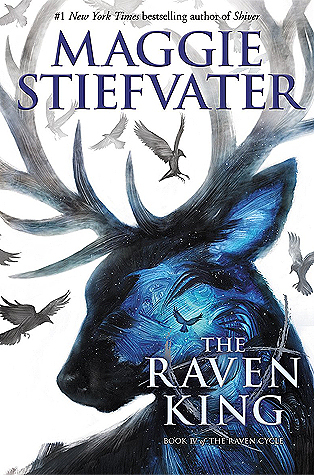
The Raven King by Maggie Stiefvater purchased from Audible.

Nothing living is safe. Nothing dead is to be trusted.

For years, Gansey has been on a quest to find a lost king. One by one, he’s drawn others into this quest: Ronan, who steals from dreams; Adam, whose life is no longer his own; Noah, whose life is no longer a lie; and Blue, who loves Gansey… and is certain she is destined to kill him.

Now the endgame has begun. Dreams and nightmares are converging. Love and loss are inseparable. And the quest refuses to be pinned to a path.

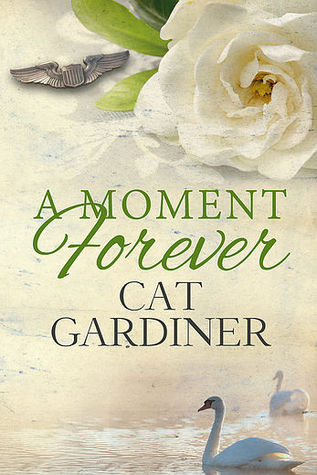
A Moment Forever: (Liberty Victory Series #1) by Cat Gardiner for review in June.

In the summer of 1992, a young writer is bequeathed the abandoned home of a great-uncle she never knew. The house has a romantic history and is unlike any home she has ever seen. Juliana Martel felt as though she stepped into a time capsule—a snapshot of 1942. The epic romance—and heartache—of the former occupant unfold through reading his wartime letters found in the attic, compelling her on a quest to construct the man. His life, as well as his sweetheart’s, during the Second World War were as mysterious as his disappearance in 1950.

Carrying her own pain inflicted by the abandonment of her mother and unexpected death of her father, Juliana embarks on a journalist’s dream to find her great-uncle and the woman he once loved. Enlisting the reluctant assistance of a man whose family is closely related to the secrets, she uncovers the carefully hidden events of her great-uncle’s and others’ lives – and will ultimately change her own with their discovery.

This story of undying love, born amidst the darkest era in modern history, unfolded on the breathtaking Gold Coast of Long Island in 1942. A Jewish, Army Air Forces pilot and an enchanting society debutante—young lovers—deception—and a moment in time that lasted forever.

A Moment Forever is an evocative journey that will resonate with you long after you close the book. Romance, heartache, and the power of love, atonement, and forgiveness transform lives long after the horrors and scars of the Second World War have ended.

Banana Muffins & Mayhem by Janel Gradowski for review in June.
Culinary competitor Amy Ridley is as excited as anyone in Kellerton, Michigan to have DIY Home Improvement star, Phoebe Plymouth, come to town for the first annual Cabin Fever Cure event. However the TV personality’s sour attitude quickly curdles people’s opinion of her. When she’s found dead, at the business owned by Amy’s husband, Alex, the heat is on to catch the killer before his professional reputation is ruined!

When Amy seeks help in preparing for a vegan baking recipe contest, she also finds assistance from an unlikely team of sleuths who want to help her catch the murderer. But things go from bad to worse when Alex and his business suddenly suffer a series of less-than-random attacks. Are the murder and attacks related? Amy vows to figure it out before her and her husband’s lives are ruined…or ended permanently!

What beauties did you receive in your mail?

361st Virtual Poetry Circle

Welcome to the 361st Virtual Poetry Circle!

Remember, this is just for fun and is not meant to be stressful.

Keep in mind what Molly Peacock’s book suggested.

Look at a line, a stanza, sentences, and images; describe what you like or don’t like; and offer an opinion. If you missed my review of her book, check it out here.

Today’s poem is from Charlotte Brontë:

Life

Life, believe, is not a dream
So dark as sages say;
Oft a little morning rain
Foretells a pleasant day.
Sometimes there are clouds of gloom,
But these are transient all;
If the shower will make the roses bloom,
O why lament its fall?
Rapidly, merrily,
Life’s sunny hours flit by,
Gratefully, cheerily
Enjoy them as they fly!
What though Death at times steps in,
And calls our Best away?
What though sorrow seems to win,
O’er hope, a heavy sway?
Yet Hope again elastic springs,
Unconquered, though she fell;
Still buoyant are her golden wings,
Still strong to bear us well.
Manfully, fearlessly,
The day of trial bear,
For gloriously, victoriously,
Can courage quell despair!

What do you think?

Fingerprint Monsters and Dragons: Fun Art with Fingers Thumbs and Paint – And 100 Other Adventurous Creatures – Amazing Art for Hands-on Fun by Ilona Molnar

Source: Quarry Books
Paperback, 160 pgs.
I am an Amazon Affiliate

Fingerprint Monsters and Dragons: Fun Art with Fingers Thumbs and Paint – And 100 Other Adventurous Creatures – Amazing Art for Hands-on Fun by Ilona Molnar will keep the little artists in your family very busy in the book and outside of it making monsters, trolls, bandits, dinosaurs, and more all with just their fingers and paint.  The quick instructions at the beginning make it clear that this is a book to set kids on their creative way, although they can reference the book if they choose to make something specific and don’t know where to begin.

From one of the pages in the book: The Monster Closet

IMG_2653

Using an ink pad or finger paints, kids can color one or all of their fingers to make a multitude of characters in the scenes within the book or on their own art supplies.  Once the fingerprints are dried, they can then use their markers, pens, pencils, and stickers to create even more hilarious situations and actors.  My daughter loved creating these fingerprint monsters, but we had to make a number of them at one time so that the first ones would dry enough for her to decorate them.  It’s hard for kids her age to wait, but creating more makes it even more fun when they are all dry.

IMG_2652

In this one, you can see some of her faces are hilarious, and there’s even a disabled spider (her words, not mine).  My guess is that he had a run in with the person who owns this closet.

Fingerprint Monsters and Dragons: Fun Art with Fingers Thumbs and Paint – And 100 Other Adventurous Creatures – Amazing Art for Hands-on Fun by Ilona Molnar is a book that we’ll use more and more as she takes time over the summer to have fun before her fresh start in Kindergarten.  I cannot wait to see what creations she comes up with next.  These are even fun for adults, and would be a great addition to classrooms, preschools, and summer camps.

Interview with Jenetta James, Author of The Elizabeth Papers

TEPhorizontalbanner

Hello readers,
Welcome to today’s interview with Jenetta James, the author of The Elizabeth Papers.

TEPcover

About the book:

“It is settled between us already, that we are to be the happiest couple in the world.” —Jane Austen, Pride & Prejudice

Charlie Haywood is a London-based private investigator who has made his own fortune—on his own terms. Charming, cynical, and promiscuous, he never expected to be attracted to Evie Pemberton, an emerging and independent-minded artist living with the aftermath of tragedy. But when he is hired to investigate her claims to a one hundred and fifty year old trust belonging to the eminent Darcy family, he is captivated.

Together they become entwined in a tale of love, loss, and mystery tracing back to the grand estate of Pemberley, home to Evie’s nineteenth century ancestors, Fitzwilliam and Elizabeth Darcy.

How could Evie know that in 1817 Elizabeth Darcy began a secret journal? What started as an account of a blissful life came to reflect a growing unease. Was the Darcy marriage perfect or was there betrayal and deception at its heart?

Can Evie and Charlie unearth the truth in the letters of Fitzwilliam Darcy or within the walls of present-day Pemberley? What are the elusive Elizabeth papers and why did Elizabeth herself want them destroyed?

Without further ado, please give Jenetta a warm welcome:

When did you first read Pride & Prejudice? And what about the story stuck with you enough to write The Elizabeth Papers?

I first read Pride & Prejudice in the autumn of 1995, when I was 13. The reason I can be so specific is that a school friend and I decided to read it whilst watching the now famous mini series which was on BBC 1 every Sunday evening for 6 weeks. Our goal was to read ahead of the TV programme. We didn’t quite get it right every episode, sometimes reading too far and sometimes not enough. For this reason, it was slightly disjointed, but we loved it none the less. Since then I have enjoyed re-reading the book many times.

The narrative arc of Pride & Prejudice is so simple and elegant and it is a really deft example of character revelation and development. For that reason I think it is a novel which inspires its readers to write – to try to live up to that standard. I also suspect that the number of novels inspired by Pride & Prejudice are many more than those that are openly promoted as such. It is the kind of book that when you read it you think “yes, that’s how you do it”.

When I wrote The Elizabeth Papers, I had already written one Pride & Prejudice variation story, Suddenly Mrs. Darcy. In both cases the basics of the story came to me in a bit of a flash. The Elizabeth Papers commences with a letter written by Mr. Darcy to his solicitor in 1860. When I am not writing, I am a practising barrister and so I have a tendency to pick up on the legal issues in books I read. I had in my mind the far reaching consequences of the entail on Longbourn in Pride & Prejudice and that is an idea that I have tried to play with in The Elizabeth Papers. I hope that readers enjoy it!

Many fans of Austen often do not like to read the Brontes. Do you read the Brontes and enjoy their work? If not, why?

I love the Brontes. I first read all of the novels as a teenager and then re-read Jane Eyre, which is my favourite in my early 20s. All of the Bronte novels are of course very different to Jane Austen, but I don’t see them as mutually exclusive in terms of enjoyment and value. Another favourite classic author is Thomas Hardy – I love his novels and especially the somewhat under-appreciated “Woodlanders”.

When working with someone else's beloved characters, what do you keep in mind when writing new stories for them? What are the challenges? advantages?

It is a real balancing act, and one I’m sure I have not yet perfected! On the one hand, I want the characters to be believable versions of the originals. So, I have to constantly check them against the originals, asking what would Elizabeth do here? What would she say? How would the character from the original have been changed by age and events?

The character features from the original act like a metronome, clicking away in the background, keeping me on track. On the other hand, I don’t want to be too straightjacketed about it and there is a danger of the quest for authenticity inhibiting creativity. I am striving for faithfulness but I want to tell a new story of my own creation as well. That is the challenge.

In The Elizabeth Papers, there are two halves to the story. In the Regency half, almost all of the characters are drawn from Pride & Prejudice. In the modern half, all of the characters are people who I have made up. I feel far more at liberty to do what I like with those characters that I do with Austen’s creations. So, I suppose that I have tried to have my cake and eat it in this department.

If you had to describe Mr. Darcy as readers know him, not as he is perceived by Elizabeth Bennet, what four words would you use and how did you come to chose those terms?

Honourable. This is the first word that jumped into my head when I read your question and it cuts through everything that he says and does in my view. His sense of honour is of course not appreciated by Elizabeth until very late in the day, but once it is understood, it is the glue that sticks his other characteristics together.

Reserved. This is very important in terms of how other people see him, including Elizabeth at the beginning of their story. He is basically rather introverted while Elizabeth is extraverted. I am a chronic introvert and so very ready to spot the same in others, real and fictional.

Romantic. Not to be underestimated although of course this is something that Austen suggests quite lightly and has been subsequently greatly embellished by readers (me included).

Observant. Mr. Darcy is a watcher, not a talker and he observes carefully everything that goes on around him. This, like his reserve, can be misconstrued.

Do you read poetry? Who or what collections would you recommend?

I’m afraid that I do not read poetry very often, and this question has inspired me to think about poetry which I have enjoyed in the past.

The last time I was a regular poetry reader was in my teens. I grew up in Cambridge and had a bit of a Sylvia Plath and Ted Hughes thing going on for many years. I bought Birthday Letters on the day that it came out and still have it now. I also recall enjoying William Blake and T. S. Elliot. For A-Level, I studied John Donne and his work manages to be sexy, funny *and* 17th century. You have inspired me to go back and read it again.

I have 2 very little children and several of their favourite books are written in verse. My favourites are Bunny Fluff’s Moving Day by A. J. MacGregor and Appley Dapply by Beatrix Potter. I don’t think these is quite what you had in mind, but I do recommend them.

Thanks, Jenetta, for joining us today.

jjames headshotAbout the Author:

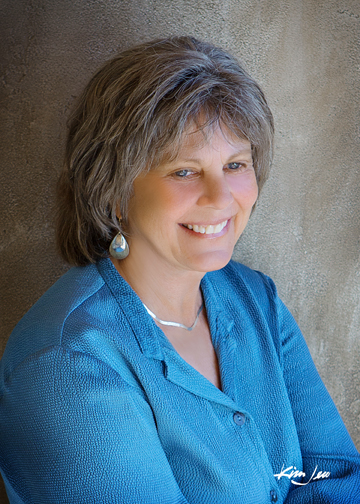
Jenetta James is the nom de plume of a lawyer, writer, mother and taker-on of too much. She grew up in Cambridge and read history at Oxford University where she was a scholar and president of the Oxford University History Society. After graduating, she took to the law and now practises full time as a barrister. Over the years she has lived in France, Hungary and Trinidad as well as her native England.

Jenetta currently lives in London with her husband and children where she enjoys reading, laughing and playing with Lego. Suddenly Mrs. Darcy was her first novel. You can find her on Facebook and Twitter.

The Tao of Book Publicity by Paula Margulies

Source: Paula Margulies
Paperback, 156 pgs.
I am an Amazon Affiliate

The Tao of Book Publicity: A Beginner’s Guide to Book Promotion by Paula Margulies uses the Tao Te Ching by Lao Tzu as a loose framework for this beginning guide to book publicity, reminding new authors that grasping for things that are not in the cards is folly.  “The clients who end up having the most success are often those who listen to suggestions about how to proceed, embrace the process we agree to undertake, and open their hearts to new ideas and ways of doing things,” she says.

Margulies carefully outlines what an author platform is and how to best utilize the back cover space, which can be especially helpful for self-published authors.  As the world of book publishing evolves in light of social media’s pervasiveness, some of the advice is timeless, such as the need to promote a new book in the first 6-8 months after its release and the best times for book signings in book stores and other locations.  For social media, she provides a rough guide on the times posts are most effective in Facebook, Twitter, and on blogs.  However, blog readership may be waning, as least there are less comments than there have been in the past.  Busy lives often lead to less time for blog interaction.

The Tao of Book Publicity: A Beginner’s Guide to Book Promotion by Paula Margulies is a good beginners guide for authors who know very little about publicity or social media and blogging.  It offers great tips about maintaining a “living” biography, how to interact with bloggers and offer giveaways — as well as why they are important — and tips on how to best utilize social media tools without becoming overwhelmed.  While there is little discussion of the overwhelming changes in the publicity space, there are good tips for navigating changes and many can be adapted over time, if authors become savvy enough and know their own platforms well.

***This book provides information about a range of publicity methods, both traditional and online, but Fauzia Burke‘s focuses on online marketing only and offers a step-by-step guide for that.  Depending on what you need, either of these books would be helpful for those starting out or in need of a little more help.***

Rating: Quatrain

About the Author:

Paula Margulies is the owner of Paula Margulies Communications, a public relations firm for authors and artists. She has received numerous awards for her short stories, essays, and novels, including her nonfiction handbook, The Tao of Book Publicity, her historical novel, Favorite Daughter, Part One, her debut novel, Coyote Heart, and her short story collection, Face Value: Collected Stories. Paula is a contributor to Author Magazine, the San Diego Examiner, and The Writers Edge.

Follow the River Home by Corran Harrington

tlc tour hostSource: TLC Book Tours
Paperback, 220 pgs.
I am an Amazon Affiliate

Follow the River Home by Corran Harrington is a novella and collection of short stories that at the heart follow the Rio Grande river that splits New Mexico in two and its surrounding landscapes — the flat lands, the mountains, the dams, the dust, the heat, and heavy rains.  Harrington’s literary fiction treats the subject of PTSD with careful precision in the story of Daniel Arroyo, a Vietnam veteran unable to forget even his earliest trauma, the death of his sister.

“For Daniel, the migration of the sandhills became the promise never broken, the putting to rest of old seasons, the beginning of new.  Grandmothers would tell grandchildren, as they held hands during walks along the river, and pointed toward the sky.  His own grandmother would soon tell him about the cranes, only in Spanish.” (pg. 3 ARC)

Arroyo’s childhood was full of familial argument and happiness, but the death of his sister nearly rips them apart, sending his family flying apart.  His struggles are compounded by his guilt and by his confusion over his own feelings for his friend.  Off to war, his mind and heart returned more burdened than before, and it is clear that his nightmares are affecting his marriage to his high school sweetheart and his relationships with his son and daughter.

In the second half of the book, Harrington explores the moments in Arroyo’s life and those who lived in the home before and who purchased various pieces of furniture.  She explores the sadness these families have seen, their most intimate moments, their struggles, and even their contentment with one another.  Told through the eyes of furniture or those who have known the Arroyo family, Harrington paints a broader picture of this microcosm.  The second half may at first blush appear separate from the first, but readers will soon draw the connections from the strands she leaves.

Follow the River Home by Corran Harrington is a wonderfully written look at our roots, our fears, our guilt, and all of the moments that make up our lives.  The good, the bad, the happiest, and the saddest moments.  Harrington’s work is detailed and emotionally grounded, but she never shies away from the dark moments of war and death.

RATING: Quatrain

About the Author:

Corran Harrington is a Pushcart Prize nominee, a Santa Fe Writers Project finalist, a Hidden River Arts Eludia Award finalist, a Bosque Fiction Contest finalist, and a New Millennium Writings Award semi-finalist whose short fiction has appeared in numerous literary journals. A former lawyer, Harrington also has a background in cultural and linguistic anthropology. She lives in Albuquerque, New Mexico.  Visit her on Facebook and Twitter.

Guest Review: The Magnificent Ambersons by Booth Tarkington

magamb★ ★ ★ ½

… the grandeur of the Amberson family was instantly conspicuous as a permanent thing: it was impossible to doubt that the Ambersons were entrenched, in their nobility and riches, behind polished and glittering barriers which were as solid as they were brilliant, and would last.

If only, if only …

How do you enjoy a 300+ page book with a protagonist who is an arrogant, petulant, jackwad with no obviously redeeming qualities for the first 300 pages? Well, it’s tough. But if it’s as well The Magnificent Ambersons, it’s possible.

Sure, that’s a little bit of a spoiler — George Amberson Minafer does develop a couple of redeeming qualities in the last 30 pages or so. But you know what? The book is almost a century old, you’ve had plenty of time to read it if you’re worried about spoilers.

The plot is straightforward: At the dawn of the Industrial Revolution, an impossibly rich family produces an arrogant twit as the only heir. Unbeknownst to him, the economy is changing and the family is beginning to fall on hard times. Too proud to admit it, they continue living as if they have all the money in the world. Meanwhile, the twit falls for a girl who’s humble, kind, and wise. For some inexplicable reason, she falls for him, too. Things happen, they don’t get together and the bottom falls out on the Ambersons. There’s family drama, too — between the financial crisis, health problems, love, old flames, and scandal, there’s plenty to entertain a reader (if they can put up with younger George).

Most of the characters are pretty thin — there are exceptions (George’s mother, aunt, and non-ambassador uncle, are the best) — but even the developed ones aren’t as fleshed out as we would have them today. But it fits with Tarkington’s overall style. It’s very, very difficult to like most of the people on these pages. So the ones you’d normally sort-of like, you end up really enjoying.

What makes this book work is Tarkington’s style. It’s hard to describe — highly detailed (for example, there’s so much attention paid to clothing and fashion that you’d almost think Gail Carriger had a hand in this), with a dry sense of humor, and plenty of cultural commentary. He changes his focus repeatedly: he’ll jump months or years at at time, and summarize events from those months in a paragraph or less and then cover a single evening in 15 pages, so he can highlight what matters and ignore the rest. But better than the plot (or characters), you get lines like this: “Some day the laws of glamour must be discovered, because they are so important that the world would be wiser now if Sir Isaac Newton had been hit on the head, not by an apple, but by a young lady.” How do you not keep reading for things like that?

Tarkington takes time out from the narrative to say:

Youth cannot imagine romance apart from youth. That is why the roles of the heroes and heroines of plays are given by the managers to the most youthful actors they can find among the competent. Both middle-aged people and young people enjoy a play about young lovers; but only middle-aged people will tolerate a play about middle-aged lovers; young people will not come to see such a play, because, for them, middle-aged lovers are a joke– not a very funny one. Therefore, to bring both the middle-aged people and the young people into his house, the manager makes his romance as young as he can. Youth will indeed be served, and its profound instinct is to be not only scornfully amused but vaguely angered by middle-age romance.

I assume that captures the spirit of the late 19th early 20th Century — if you take out the word “play”; and put in “film” or “show” it does a pretty good job of capturing the spirit of the early 21st Century, too. Which is a pretty nice achievement for a piece of writing.

The book isn’t a chronicle of the changes to the American culture/economy due to industrialization, it’s a family drama. But if you pay attention to what’s going around the lovebirds, cads and gossips, you can see those changes taking place. It’s a temptation for someone to cheat a little when writing historical fiction and make characters seem smarter than they are by knowing how predictions would actually turn out, Takington’s not above falling into that. Note what Eugene Morgan, early designer of automobiles says:

“With all their speed forward [automobiles] may be a step backward in civilization– that is, in spiritual civilization. It may be that they will not add to the beauty of the world, nor to the life of men’s souls. I am not sure. But automobiles have come, and they bring a greater change in our life than most of us suspect. They are here, and almost all outward things are going to be different because of what they bring. They are going to alter war, and they are going to alter peace. I think men’s minds are going to be changed in subtle ways because of automobiles; just how, though, I could hardly guess. But you can’t have the immense outward changes that they will cause without some inward ones, and it may be that George is right, and that the spiritual alteration will be bad for us. Perhaps, ten or twenty years from now, if we can see the inward change in men by that time, I shouldn’t be able to defend the gasoline engine, but would have to agree with him that automobiles ‘had no business to being invented.'”

That was 98 years ago, think what he’d say now about the automobile’s impact on culture (he’d probably cite James Howard Kunstler’s The Geography of Nowhere).

A dull(ish) story, full of unsympathetic characters acting foolishly (on the whole), with a quaint writing style that somehow makes it all work. I can’t explain it, I’m just glad I read it. You just might feel the same way, give it a shot.

IndianaUSofBooks

Mailbox Monday #378

Mailbox Monday, created by Marcia at To Be Continued, formerly The Printed Page, has a permanent home at its own blog.

To check out what everyone has received over the last week, visit the blog and check out the links.  Leave yours too.

Also, each week, Leslie, Vicki, and I will share the Books that Caught Our Eye from everyone’s weekly links.

Here’s what we received:

Two Cool Coyotes by Jillian Lund from the Gaithersburg Book Festival second-hand book sale.

Frank the coyote is sad when his friend Angelina moves away, but then he finds a new friend when Larry moves into the den next door.

Where’s Waldo? The Fantastic Journey by Martin Handford from the Gaithersburg Book Festival Politics & Prose tent.

Now in paperback for the first time!

The elusive little guy you loved as a kid has ventured into an affordable new format, ready to boggle a new generationl. Now he’s easier to carry around — but just as hard as ever to find!

The Race for Paris by Meg Waite Clayton, which I purchased in the Politics & Prose tent at the Gaithersburg Book Festival.  I gave my mom the ARC to enjoy but wanted this one for my personal library and the autograph makes this 5-star read even more of a treasure.

Normandy, 1944. To cover the fighting in France, Jane, a reporter for the Nashville Banner, and Liv, an Associated Press photographer, have already had to endure enormous danger and frustrating obstacles—including strict military regulations limiting what women correspondents can do. Even so, Liv wants more.

Encouraged by her husband, the editor of a New York newspaper, she’s determined to be the first photographer to reach Paris with the Allies, and capture its freedom from the Nazis.

Ah-Choo! by Lana Wayne Koehler and Gloria G. Adams, illustrated by Ken Min for review from Sterling Children’s Books.

When hunting for his new best friend, a boy goes through an alphabetical menagerie of animals. From an antelope, to bobolink birds, to wolves and zebras—and of course, a cat and dog, too—he brings them all home. But each creature just makes his sister go AH-CHOO! Will he ever be able to have the perfect pet?

Watch the Birdie! by Nancy Cote from Sky Pony Press for review.

Mousey was watching a baby bird when it fell from its nest. The baby bird is okay, but she can’t fly yet! So how will she get back up the tree to safety? Mousey may be too small to get the baby bird back up by himself, but maybe he can find somebody else who can! Maybe a frog can jump high enough. Or maybe a bunny can hop far enough. Maybe a snail will be able to crawl his way up the tree . . .

Will Mousey be able to save the baby bird? Or will the hungry cat get in the way of Mousey’s valiant attempts? Sometimes it’s just the size of your heart that really counts.

How the Crayons Saved the Rainbow by Monica Sweeney, illustrated by Feronia Parker Thomas for review from Sky Pony Press.

The Sun and the Clouds are best friends. Together they keep the world warm, the gardens growing, and the sky full of beautiful rainbows. But one day they get into a fight and refuse to be in the sky together. And that means there are no longer any rainbows. Without rainbows, the colors start disappearing until Earth was left with no color … except for one little forgotten box of crayons in one little school desk.

Determined to save the rainbows and fix the Sun and Clouds’ friendship, the crayons draw rainbows all over town. Their attempts go unnoticed. Soon they realize that they’re going to have to do something big to get the attention of the former friends. So, the crayons create the biggest rainbow they can and hope it’s enough to bring color back to the world.

My Amazing Dad by Ezekiel Kwaymullina, illustrated by Tom Jellett for review from Sky Pony Press.

This dad is not like other dads. He is not good at:

Mowing the lawn,
Getting his children to school on time,
Baking cakes,
Fixing a leaky faucet, or
Remembering bed time

But….

My Grandpa Is a Dinosaur by Richard Fairgray, illustrated by Terry Jones for review from Sky Pony Press.

This little girl has been watching her grandpa for a very long time, and she is almost absolutely certain that he is a dinosaur. So why is it that nobody believes her? Why can’t anyone else see what she sees? He roars! (And no, it’s not just a snore.) He has green skin! (And no, he’s not from outer space.) He even has a tail! (And no, he’s not a horse!) Determined to get to the bottom of this mystery, the little girl goes straight to the source. It’s time to ask Grandpa once and for all: is he a dinosaur?

Darcy By Any Other Name by Laura Hile, which I won from Just Jane 1813.

At Netherfield, a glorious evening of music and dancing…

But out in the garden two men are arguing, while a ferocious rainstorm swirls round. And then the unthinkable happens: a lightning bolt from heaven strikes. In that instant everything changes.

Jane Austen’s heartthrob hero becomes the bumbling Reverend Collins.

Shorn of his fortune, his social standing, and his good looks, Mr. Darcy is trapped in Mr. Collins’ body. And Mr. Collins wakes up to discover that he is master of Pemberley. Could there be anything worse?

But the inner man is still Darcy. He is in love with Elizabeth Bennet. And now he is living in her house.

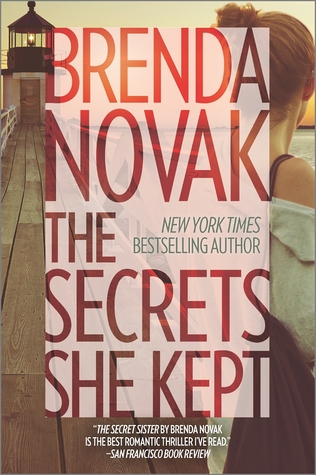
The Secrets She Kept by Brenda Novak, which came unexpectedly from Tandem Literary.

The rich and powerful Josephine Lazarow, matriarch of Fairham Island, is dead. The police say it’s suicide, but Keith, her estranged son, doesn’t believe it.

Keith bears scars—both physical and emotional—from his childhood, but he’s worked hard to overcome the past. After walking away from his mother and her controlling ways five years ago, he’s built a new life in LA. He’s also accumulated a fortune of his own. But as soon as he learns of his mother’s death, he returns to Fairham. He feels he owes it to his grandfather to put the family empire together again—and he’s determined to find his mother’s killer.

Problem is…coming home to Fairham puts him back in contact with Nancy Dellinger, the woman he hurt so badly when he left before. And digging that deep into his mother’s final days and hours entails a very real risk. 

What did you receive?

360th Virtual Poetry Circle

Welcome to the 360th Virtual Poetry Circle!

Remember, this is just for fun and is not meant to be stressful.

Keep in mind what Molly Peacock’s book suggested.

Look at a line, a stanza, sentences, and images; describe what you like or don’t like; and offer an opinion. If you missed my review of her book, check it out here.

Today’s poem is from Gwendolyn Brooks:

the sonnet-ballad

Oh mother, mother, where is happiness?
They took my lover’s tallness off to war,
Left me lamenting. Now I cannot guess
What I can use an empty heart-cup for.
He won’t be coming back here any more.
Some day the war will end, but, oh, I knew
When he went walking grandly out that door
That my sweet love would have to be untrue.
Would have to be untrue. Would have to court
Coquettish death, whose impudent and strange
Possessive arms and beauty (of a sort)
Can make a hard man hesitate—and change.
And he will be the one to stammer, “Yes.”
Oh mother, mother, where is happiness

What do you think?

Interview with Paula Margulies, author of The Tao of Book Publicity

Book publicity is something book bloggers are well aware of these days, and even as many of us prefer to stick to reviews, many authors are relying on our blogs to get the word out about their books.

Paula Margulies, a publicist for more than two decades, has created a simple guidebook for authors, The Tao of Book Publicity.

About the Book: (GoodReads)

In The Tao of Book Publicity, publicist Paula Margulies outlines the basics of book promotion and explains how the business of publicizing a book works. Designed for beginning authors but also useful for those with some experience in book publishing, The Tao of Book Publicity provides information on the importance of writing a good book and the need for developing a platform, as well as how-to explanations for developing publicity material, including front and back cover text, press releases, Q&As, media and blog tour queries, and newsletter and media lists.

The Tao of Book Publicity also covers social media, book pricing and sales, book tours and media interviews, and author websites. In addition to explaining how book publicity works, this valuable handbook explores practical topics such as publicity costs, timing, and considerations when hiring a publicist.

Please give her a warm welcome.

You have been a book publicist for more than 25 years. What made you finally decide to write a guidebook on promotion for authors?

In the course of my publicity work, I’ve received calls from hundreds of authors, many of whom ask the same questions: When do I start my publicity campaign? How much should I plan to spend? Do I need a website? How do I build a platform? What price should I give my book? Do I have to use social media and,if so, which sites are best? Should I print a hardcover version, or will a paperback suffice? Do I need to enter contests? How can I get more reviews?

These are all important questions, and since so many authors seem to have the same concerns about their books, I decided to share what I’ve learned over the years as a publicist in one convenient, inexpensive resource guide.

The Tao of Book Publicity has a Zen look and feel to the cover and title. How does understanding the Tao principles help authors to promote their books?

I chose the Tao as a way of offering authors a practical philosophy on how they might approach book marketing. There are many authors who find promotion crass and time-consuming; a good majority would rather be writing than spending time trying to develop promotional material and schedules for themselves and their work. But I’ve found that book promotion can be a rewarding and fulfilling activity if done with the right perspective in mind.

As I describe in the book, most book publicity comes from a place of not-knowing; there are people we approach, for example, for reviews or interviews, but we cannot strong-arm those individuals into giving us what we want. Instead, we take the time to think about what our message is, who we are targeting with that message, and how to propose it in the most succinct, relevant, and motivating way we can. We then present our message (what most in my business call our “pitch”), and then follow-up with persistence to try to get a yes response. Our results are never guaranteed – it is up to the reporters or editors we contact to decide if the message we’re sharing is right for them. But when we come from a place of humility and unattachment, we tend to do a better job of both preparation (in which case, we usually achieve the goals we’re attempting) and managing our expectations.

What other aspects of book publicity to do you cover in the book?

I provide how-to explanations for developing publicity material, including front and back cover text, press releases, Q&As, media and blog tour queries, and newsletter and media lists. I also cover topics such as social media, book pricing and sales, book tours and media interviews, and author websites. In addition to explaining how book publicity works, I also discuss practical topics such as publicity costs, timing, and considerations when hiring a publicist; I’ve found that many authors want to know upfront about fees for services and what steps they should have completed before they contact a publicist like me.

If you have one piece of advice for new authors, what would it be?

That’s easy – write a good book!

Of course, that’s easier said than done. I’ve found that oftentimes authors, especially those who have chosen to self-publish, are in a rush to get their books out. In their hurry, they forgo important steps like work-shopping the book, spending time on revision, hiring a professional editor and cover designer, and developing their platforms. As a result, many of their books, sadly, don’t sell. If authors want their books to be well-received by booksellers, the media, and (most important) readers, they must take the time to carefully edit, polish, and package them well – there is no substitute for these steps in the publishing process.

Can you describe how an author might use this book as a guide to his or her own publicity plans?

Authors can read the chapters in any order they like (each chapter is designed to be read as stand-alone unit) and see what sounds as if it might be a good fit for them and their books. If something doesn’t sound right, they don’t have to use it. The information in the chapters is there to provide guidance and insight into what I believe are the common practices of most book publicists, but none of what’s there is meant to be a hard-and-fast prescription for any author’s individual book publicity plans.

Are you working on another book? If so, what can you tell us about it?

In addition to this latest book, I’m also the author of the short story collection, Face Value: Collected Stories, and two novels: Coyote Heart, which is a modern-day romance about a married woman who falls in love with a Pala Indian man, and Favorite Daughter, Part One, a first-person retelling of the life story of the famous Native American legend, Pocahontas. I’d like to get back to writing fiction and plan to spend the next year completing Part Two of Favorite Daughter.

Thanks, Paula, for spending time with us today.

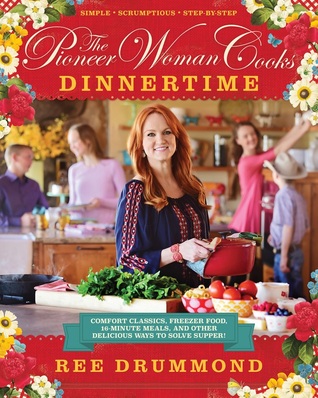
The Pioneer Woman Cooks Dinnertime by Ree Drummond

Source: Public Library
Hardcover, 400 pgs.
I am Amazon Affiliate

The Pioneer Woman Cooks Dinnertime by Ree Drummond is another great cookbook with easy to follow ingredient lists and steps.  My favorite part of these cookbooks is the step-by-step photos she adds for each part of the process.  One thing I would love, that doesn’t seem to be in these cookbooks, is a guide on how to pare down the ingredients and recipes to meet the food needs of a smaller family.  While my family will eat leftovers, there is a limit to how long they will keep and how much my family can eat.

For this cookbook, we had our daughter choose the recipes of what looked good to her, and we tried them out.  Among the recipes we tried were the Sausage, Potato, and Kale Soup (a dish similar to a spicy Portuguese soup I make and the Oliver Garden Zuppa Toscana soup); the Red, White, and Green Stuffed Shells; Shrimp Scampi; and the Pasta Puttanesca.

The soup was the easiest to make and the leftovers went quickly, mostly because I love soup.  Her recipe was very close to the Olive Garden version, so if you love that soup, this is a recipe for you to try at home.  The stuffed shells are also easy to make, though they can take a lot of time because the stuffing process will depend on the flexibility of your shells — which you don’t want too flexible because they’ll be mushy.  My daughter and husband really enjoyed these, which is a win for me since they both hate spinach.

Shrimp Scampi is probably the easiest of the recipes, next to the soup, but this one was not liked by either my husband or daughter for some reason.  Since eating this, which has wine in it and a lot of garlic, my daughter has refused to eat shrimp, something she normally loves.  In my case, I had to eat all the leftovers, but got sick of eating them because there was just too much.  Pasta Puttanesca is another recipe that did not go over as well as the first two, even though I eliminated the anchovies and olives, both of which are not liked here.  I love olives, but the other family members do not.  To me, without those ingredients, or at least something to replace them, the pasta was bland tasting.  My daughter, however, loved the tomatoes.  She ate those right up.

The Pioneer Woman Cooks Dinnertime by Ree Drummond is another cookbook I’ll have to buy at some point to try the recipes, since this one has to head back to the library.  I could just take it out again, but I like to make notations in my cookbooks about changes I make or things I substitute.

RATING: Quatrain

Other Reviews:

About the Author:

Ree Drummond began blogging in 2006 and has built an award-winning website, where she shares recipes, showcases her photography, and documents her hilarious transition from city life to ranch wife. She is the author of the #1 New York Times bestselling cookbook The Pioneer Woman Cooks. Ree lives on a working cattle ranch near Pawhuska, Oklahoma, with her husband, Ladd; their four kids; their beloved basset hound; and lots of other animals.