Quantcast

Book Spine Poetry

Book Spine Poetry is fun and easy, and you can even get your kids involved with their own books.  It’s like a game of “I Spy” in which you look at the books on your shelves or at the library, and you arrange them in some kind of order that pleases you to make a poem out of the titles listed on their spines.

Here’s great little step-by-step instructions for kids on how to create their own.

I’d love to see what poems you create, feel free to post them on your blog, on Twitter, on Facebook.  Use the tag #bookspinepoetry and #NPM2016.

It will be fun to see what you create. It can be addictive, if you’re not too careful.

Check out the one’s created in 2014.

Here’s an example of two I created: (not very good)
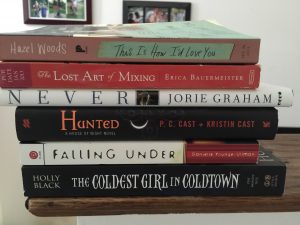
IMG_2227

This Is How I’d Love You
The Lost Art of Mixing
Never
Hunted
Falling Under
The Coldest Girl in Coldtown


IMG_2228

This Is the Story of You
Untamed
The Voice I Just Heard
The Italian Lover
First Impressions
Gone


What does your poem look like?

Visuals and Poetry: A Relationship of Inspiration

I’ve written poetry and taken photographs for a very long time, and I won’t claim that they are all fantastic or publication worthy. However, these two mediums seem to feed off of one another. I’ve taken pictures, only to look at them again and be inspired to create a poem — with phrases pouring from me just when I take a peek. In other instances, I’ve read poems and sought out some of the places in those poems, even if they are not the exact spot that inspired the poet to write the poem. For instance, you can find a snowy path or road in the woods, take a breath and be Robert Frost on that road, or you can take a photograph of your own garden and spy a bee on a flower and write a poem.

After challenging myself earlier this month to enter Rattle‘s Ekphrastic Challenge, I thought today would be the day for a fun activity as National Poetry Month 2016 winds down.

Today, I thought it would be interesting to see what readers come up with by looking at one of the photos I took a few years ago. I’d love for you to share your short poems or even take a risk and post your own photo and poem on your own blogs and join in.

Here’s the photo:

You’re free to take it in any direction!

Guest Review: Fear and Loathing in Las Vegas: A Savage Journey to the Heart of the American Dream by Hunter S. Thompson, Narrated by Ron McLarty

Review by Wattle @ Whimsical Nature

fearandloathinginlasvegasFear and Loathing in Las Vegas by Hunter S. Thompson, Narrated by Ron McLarty

Rating: 2/5

Synopsis: In Las Vegas to cover a motorcycle race, Raoul Duke (Thompson) and his attorney Dr. Gonzo (inspired by a friend of Thompson) are quickly diverted to search for the American dream. Their quest is fueled by nearly every drug imaginable and quickly becomes a surreal experience that blurs the line between reality and fantasy. But there is more to this hilarious tale than reckless behavior, for underneath the hallucinogenic facade is a stinging criticism of American greed and consumerism.

Review: I’ve been to Las Vegas exactly once, I thought it was a bit odd, a bit dirty and not a place I would like to spend any considerable amount of time in. I felt similar things toward this book. I’ve tried to read it before in paperback, and I put it down after five pages or so. I have seen the film and hated it; so when I saw this on my list for review I was a little worried.

Rightly so, it turns out.

I opted to listen to the audiobook in the hope that I would find it more engaging than if it were text. Ron McLarty did a wonderful job with the narration, I really liked listening to him, but Fear and Loathing in Las Vegas was such a tedious story. The 6 hours I spent listening to it felt like 6 years.

This story is meant to be hilarious and surreal. I think I laughed once, and it was more of a derisive snort than actual laughter. I’m still not entirely sure what the point of the book was, there was such excess and stupidity and vastly irresponsible behavior.

If it was trying to teach me a lesson, I failed to see it (unless that lesson was – don’t do drugs). The characters were all unlikeable; the story felt like it was just a rambling bunch of sentences thrown together with little direction. The content was definitely not for me (I don’t even drink, so the characters desire to be constantly wasted was beyond me), I felt the casualness of their drug taking and ridiculous behavior in general was more worrying than amusing.

I gave it two stars, 1.5 for the narration (which was really very good) and 0.5 for the work itself – it was much too far out of my comfort zone and just a bit too strange for me to get into. A pity, because I think if it had been different way, it would have been a much more engaging work.

USofBooksNevada4.25.16

Mailbox Monday #372

Mailbox Monday, created by Marcia at To Be Continued, formerly The Printed Page, has a permanent home at its own blog.

To check out what everyone has received over the last week, visit the blog and check out the links.  Leave yours too.

Also, each week, Leslie, Vicki, and I will share the Books that Caught Our Eye from everyone’s weekly links.

Here’s what I received:

The Tao of Book Publicity: A Beginner’s Guide to Book Promotion by Paula Margulies for review from Paula Margulies Communications.

In The Tao of Book Publicity, publicist Paula Margulies outlines the basics of book promotion and explains how the business of publicizing a book works. Designed for beginning authors but also useful for those with some experience in book publishing, The Tao of Book Publicity provides information on the importance of writing a good book and the need for developing a platform, as well as how-to explanations for developing publicity material, including front and back cover text, press releases, Q&As, media and blog tour queries, and newsletter and media lists.

The Tao of Book Publicity also covers social media, book pricing and sales, book tours and media interviews, and author websites. In addition to explaining how book publicity works, this valuable handbook explores practical topics such as publicity costs, timing, and considerations when hiring a publicist.

Simple, straightforward, and informative, The Tao of Book Publicity includes expert advice on all aspects of book promotion and is a go-to reference guide for beginning and experienced authors alike.

This Is the Story of You by Beth Kephart, which is my pre-order and finally arrived.

On Haven, a six-mile long, half-mile-wide stretch of barrier island, Mira Banul and her Year-Rounder friends have proudly risen to every challenge. But then a superstorm defies all predictions and devastates the island, upending all logic and stranding Mira’s mother and brother on the mainland. Nothing will ever be the same. A stranger appears in the wreck of Mira’s home. A friend obsessed with vanishing disappears. As the mysteries deepen, Mira must find the strength to carry on—to somehow hold her memories in place while learning to trust a radically reinvented future. Gripping and poetic, This Is the Story of You is about the beauty of nature and the power of family, about finding hope in the wake of tragedy and recovery in the face of overwhelming loss.

The Complete Poems: Anne Sexton for review from NetGalley.

The collected works of Anne Sexton showcase the astonishing career of one of the twentieth century’s most influential poets

For Anne Sexton, writing served as both a means of expressing the inner turmoil she experienced for most of her life and as a therapeutic force through which she exorcised her demons. Some of the richest poetic descriptions of depression, anxiety, and desperate hope can be found within Sexton’s work. The Complete Poems, which includes the eight collections published during her life, two posthumously published books, and other poems collected after her death, brings together her remarkable body of work with all of its range of emotion.

With her first collection, the haunting To Bedlam and Part Way Back, Sexton stunned critics with her frank treatment of subjects like masturbation, incest, and abortion, blazing a trail for representations of the body, particularly the female body, in poetry. She documented four years of mental illness in her moving Pulitzer Prize–winning collection Live or Die, and reimagined classic fairy tales as macabre and sardonic poems in Transformations. The Awful Rowing Toward God, the last book finished in her lifetime, is an earnest and affecting meditation on the existence of God. As a whole, The Complete Poems reveals a brilliant yet tormented poet who bared her deepest urges, fears, and desires in order to create extraordinarily striking and enduring art.

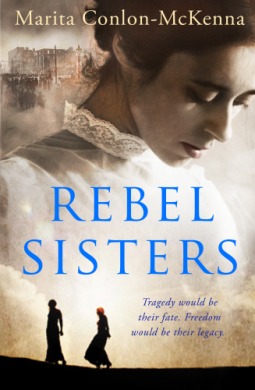
Rebel Sisters by Marita Conlon-McKenna for review with TLC Book Tours in May.

With the threat of the First World War looming, tension simmers under the surface of Ireland.

Growing up in the privileged confines of Dublin’s leafy Rathmines, the bright, beautiful Gifford sisters Grace, Muriel and Nellie kick against the conventions of their wealthy Anglo-Irish background and their mother Isabella’s expectations. Soon, as war erupts across Europe, the spirited sisters find themselves caught up in their country’s struggle for freedom.

Muriel falls deeply in love with writer Thomas MacDonagh, artist Grace meets the enigmatic Joe Plunkett – both leaders of ‘The Rising’ – while Nellie joins the Citizen Army and bravely takes up arms, fighting alongside Countess Constance Markievicz in the rebellion.

What did you receive?

354th Virtual Poetry Circle

Welcome to the 354th Virtual Poetry Circle!

Remember, this is just for fun and is not meant to be stressful.

Keep in mind what Molly Peacock’s book suggested.

Look at a line, a stanza, sentences, and images; describe what you like or don’t like; and offer an opinion. If you missed my review of her book, check it out here.

Today’s poem is from Rabindranath Tagore:

Freedom

Freedom from fear is the freedom
I claim for you my motherland!
Freedom from the burden of the ages, bending your head,
breaking your back, blinding your eyes to the beckoning
call of the future;
Freedom from the shackles of slumber wherewith
you fasten yourself in night's stillness,
mistrusting the star that speaks of truth's adventurous paths;
freedom from the anarchy of destiny
whole sails are weakly yielded to the blind uncertain winds,
and the helm to a hand ever rigid and cold as death.
Freedom from the insult of dwelling in a puppet's world,
where movements are started through brainless wires,
repeated through mindless habits,
where figures wait with patience and obedience for the
master of show,
to be stirred into a mimicry of life.

What do you think?

Swirl by Swirl: Spirals in Nature by Joyce Sidman, illustrated by Beth Krommes

Source: Public Library
Hardcover, 40 pgs.
I am an Amazon Affiliate

Swirl by Swirl: Spirals in Nature by Joyce Sidman, illustrated by Beth Krommes, is beautifully illustrated and it is visually stunning.  Kids will love the vibrant colors and the surprising shapes in every corner of each page.

Like the author, a self-described observer, kids will start noticing swirls all over the book.  The text can swirl, just like the shell of a snail, or it can be uncurled into a straight line.  Younger readers will learn that some little animals will curl into swirls to stay warm or to hide from predators.  Flowers will uncoil toward the sun.  Swirls, like those of the ram’s horn, can be strong, or they can be used to grab things like the tentacles of an octopus.

Swirl by Swirl: Spirals in Nature by Joyce Sidman, illustrated by Beth Krommes, would be a good educational tool for a classroom, but the book really didn’t hold my daugher’s attention with a story.  It’s more of a book that explains the different uses or needs of swirls.  The illustrations are visually arresting, which can be worth the cost of the book alone, perhaps some of the pages could be turned into posters for a room.

Rating: Tercet

About the Author:

Joyce Sidman lives in Wayzata, Minnesota, with her husband and dog, Watson. They have two sons, but they’ve grown up, so she set her mind to creating books.

Interview with Nadia Gerassimenko

National Poetry Month is in full swing, and I have a great interview with Nadia Gerassimenko for you today, and she’s sharing a poem with us as well.

She also was kind enough to post some of my own poems on her website. Feel free to check them out.

I hope you give her a warm welcome; she’s a stunning poet.

When did you know you were a poet and what has kept you writing?

I began writing since I was 14. I didn’t think of myself as a poet at that time, more like writing poetry was a form of creative expression that was easiest for me to deliver and let out. I was writing poems quite frequently until my early twenties. I was in a rut after that. I remember that period in my life had been the most overwhelming for me psychologically—trying to finish my Bachelor’s degree, working at the same time, figuring out my health issues, healing emotional hurts, and finding myself and my inner peace. It was very shaky. I just couldn’t express myself as freely as I had as a teenager. But fortunately, it was temporary. Life calmed down a bit in some aspects and at the same time I became better at managing pain and stress.

Though I do not write as often as I would like to nowadays, I feel that my creative stream is limitless and ever flowing. I’m not afraid that it will ever run out or that I may experience another writer’s block. I feel like it may happen, but I don’t let it get to me. Only when I turned 26 did I truly start considering myself a poet. It happened when I began working on my second chapbook a chair, a monologue that I started to feel truly proud of what I’m creating and slowly accomplishing. It’s not just spur of the moment kind of writing. There’s deliberate intention and planning involved. I want to let my pain out in such a way that not only does it mean something to me, but that it also touches someone else.

Some of the poems I’ve written for the book are okay, but they won’t end up in the final pages because they’re missing that raw, visceral and blunt but candid feeling I’m trying to pour out. Whilst there are those that will be in the book because I’ve written them with utmost care and preparation, edited them to perfection or to something that I’m fully satisfied with. I’ve asked other fellow poets and friends such as yourself to look over them and provide me with constructive feedback which has helped me tremendously to see it from an objective point of view, not just through my sometimes biased lens.

What are your favorite elements of poetry?

I love poems that experiment with structure where there are gaps between words or lines or verses. Not only are they lovely aesthetically, they also shape the poem into the main theme or create a feeling of tumbling down or a pause or silence. I also enjoy poems that don’t necessarily rhyme but that have flowing rhythm to them like in classical poetry. I think it’s quite an achievement when someone can write a piece that doesn’t use a patterned rhyming scheme but is still musical nonetheless. Also words that create euphony or even cacophony can enhance poetry to a different level, more experiential if you will.

List a few of your favorite poetry magazines?

I recently discovered Sea Foam Magazine, which I simply adore. Aside from poetry, they publish interesting interviews with artists, showcase gorgeous artwork. It’s a very dreamy, whimsical kind of literary magazine but also quite frank and unabashed. I also love The Writing Garden founded and run by a dear friend Suzy Hazelwood. She publishes poems and prose and mixed media by artists at all levels of their craftsmanship. Each issue is visually divine and is sometimes themed on purpose or coincidentally gathers beautiful works reflecting the same subject matter. I think it’s rather endearing and serendipitous when that happens. I love poetry curated by Luna Luna Magazine. It’s quite inventive, edgy, primeval.

What advice would you give to poets crafting their first collections?

I would say if you have an idea in mind, plan it all out, do some research if needed. Whether it be a poetry collection or a themed chapbook; whether you want to self-publish it or publish it with a small press; whether you want to edit it yourself or hand it over to a professional—those things are unavoidable and must be planned out and executed. Still don’t let that discourage you from writing but don’t just wander off when doing so.

Who are some of your favorite poets?

I don’t really have favorite poets amongst the greats while I do appreciate what they’ve contributed to our society. I do feel that my poet friends really inspire and empower me to work harder at my writing. And being able to turn to them for writing criticism is an honor and a blessing. Kate Bush influences my writing quite a bit. While not necessarily considered a poet in the conventional sense of the word, Kate Bush’s music and lyrics are rather poetic. Her work is so multifarious and enigmatic. It’s simply spellbinding.

AAEAAQAAAAAAAAlVAAAAJDNiODkzNDRhLWVjMTUtNDJlMy1iYmU0LTY0MDE5MmZlYjZlOQAbout the Poet:

Nadia Gerassimenko is a Media Relations Manager for Yeti Culture and Assistant Editor at Luna Luna Magazine by day, a moonchild and poet by night. Nadia self-published her first poetry collection Moonchild Dreams (2015) and hopes to republish it traditionally. She’s currently working on her second chapbook a chair, a monologue. Visit her at tepidautumn.net or tweet her at @tepidautumn.

Safe cocoon

Mama, I heard you and papa fighting today.
I couldn’t pick up on the words again,
But you were screaming, he was yelling.

Something shattered.
Something banged.
And you cried.

Mama, I haven’t heard papa’s voice in a while.
He used to read to me and his voice soothed me to sleep.
Now all I hear is your sad lullaby.

Whatever day.
Whatever hour.
You cry.

Mama, what is that reeking? What are you drinking, too?
What an unusual smell engulfing.
And it feels so hot all of a sudden.

I’m gasping for air.
I'm dazed and confused.
You laugh and cry.

Mama, what are you swallowing so fast?
It tastes so powdery and bitter.
My fragile tummy doesn’t agree.

I feel so sick.
So sleepy.
You stop crying.

Mama, it’s safe and warm in your cocoon.
As I fall deeply asleep,
I thank you for keeping me nestled.

Breathing in and out.
First heartbeats and last.
We sleep together.

The Seven Ages by Louise Glück

Source: Purchased
Paperback, 80 pgs.
I am an Amazon Affiliate

The Seven Ages by Louise Glück is a book about transformation and, by extension, aging and death — the battle between faith and the fear of mortality.  The title opens with a cryptic tale of a human who arrives on Earth even before the Garden of Eden, when it is just dust.  The narrator loves it all the same, even in its barrenness, but like many humans she wants to possess it.  How do you hold onto something that changes and is going to continue changing? The short answer is: you can’t.  Except maybe in a dream but even memories change.

Throughout the book, Glück touches, tastes, and experiences a variety of things, but in “The Sensual World,” she says, “I caution you as I was never cautioned:// you will never let go, you will never be satiated./You will be damaged and scarred, you will continue to hunger.//” (pg. 7)  We have entered that garden and we have tasted the forbidden fruits, and even as we are punished, we still want more.  We cannot get enough sensory input, which leads to emotional attachments that continue even as we age, even if they are not acted upon.

In “Birthday,” the narrator remembers “that age. Riddled with self-doubt, self-loathing,/and at the same time suffused/with contempt for the communal, the ordinary;…” (pg. 20) The narrator is on the outside at this party, watching those who are wrapped up in making friends and making connections, but also vividly aware of the solitary member who prefers their own counsel.  Here again, the narrator cautions that in silence it is difficult to “test one’s ideas.  Because they are not ideas, they are the truth.//”  She speaks of this again in “From a Journal”: “how ignorant we all are most of the time,/seeing things/only from one vantage, like a sniper.//” (pg. 25)

Once we come away from ourselves and view the world differently, usually after years of a narrow focus, we come to realize that we want more time.  We want “to extend those days, to be inseparable from them./ So that a few hours could take up a lifetime.//” (“The Destination”, pg. 28)  The Seven Ages by Louise Glück is an exploration of aging through the lens of an observer, someone who has experienced life and who has separated herself from it when necessary.  Things we see are not as we expect, things we obtain do not satiate our appetites, and in our haste to achieve things, we break them.  Human frailty cannot be escaped, and we cannot return to our youth.  Glück attests to these stages and says that appreciating what has come before is hard, especially when we are hungry for more and have run out of time.

Rating: Quatrain

About the Poet:

Louise Glück was born in New York City of Hungarian Jewish heritage and grew up on Long Island. Glück attended Sarah Lawrence College and later Columbia University.

She is the author of twelve books of poetry, including: “A Village Life” (2009); Averno (2006), which was a finalist for The National Book Award; The Seven Ages (2001); Vita Nova (1999), which was awarded The New Yorker’s Book Award in Poetry; Meadowlands (1996); The Wild Iris (1992), which received the Pulitzer Prize and the Poetry Society of America’s William Carlos Williams Award; Ararat (1990), which received the Library of Congress’s Rebekah Johnson Bobbitt National Prize for Poetry. Louise Glück has also published a collection of essays, Proofs and Theories: Essays on Poetry (1994), which won the PEN/Martha Albrand Award for First Nonfiction.

Online Marketing for Busy Authors: A Step-by-Step Guide by Fauzia Burke

Source: FSB Associates
Paperback, 168 pgs.
I am an Amazon Affiliate

Online Marketing for Busy Authors: A Step-by-Step Guide by Fauzia Burke offers new authors and busy authors who know little about online marketing a step-by-step guide that will minimize missteps.  Like when plotting a story, authors will have to do some legwork, creating a marketing outline of sorts.  First of all, books are like an extension of an author’s brand; so an author will want to examine what their goals and dreams are, as well understand who the readers of a particular book are.  Are they young women? Are they older, college-educated men?  You get the idea.  Burke includes some worksheets to help authors get started outlining their personal and professional goals and dreams, and how their books play into that process.

Authors also can use this form to identify their audience, which will later help determine which social media channels will be the best marketing tools, cutting down on wasted efforts on channels that the identified audience doesn’t use as often or at all.  The goal is to be able to tell a room full of people in just a few sentences what their book is about and how it fits with the audience it targets.  With Facebook, Twitter, Instagram, Pinterest, and many other social networks to monitor in addition to traditional marketing techniques, authors may wonder when they’ll find time to write another book.  Burke’s no-nonsense style will speak to busy authors because she makes the task of online marketing seem less daunting, especially for those who feel overwhelmed by the process.

Burke also notes that the most successful authors are those that know their brand, their audience, and target their time toward those things, as well as their secondary goals, which may include building relationships with readers, helping a specific group, or calling attention to a specific cause.  In addition to the pre-marketing research, Burke offers a priority list for authors, and one of the items on the list may surprise some.

Online Marketing for Busy Authors: A Step-by-Step Guide by Fauzia Burke is a great place to start with learning how to market a book online.  It not only will educate authors about themselves and their books, but their audience as well.  When done right, these authors will build a fan base that will happily help them market their books to others, turn out for events, and more.  But it can’t just be about marketing.  She reminds authors that social networks are about building relationships that last.

**For bloggers looking to grow their presence on the Internet, there are some great tips that could translate really well.**

Rating: Quatrain

About the Author:

Fauzia Burke has been a leader in online marketing and digital branding for authors and others for nearly twenty years, now integrating publicity, branding, social media, and websites to establish clients online.


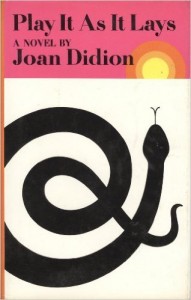
Guest Review: Play It As It Lays by Joan Didion

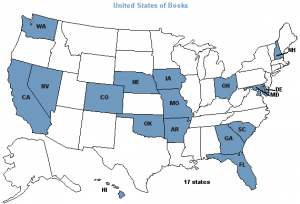
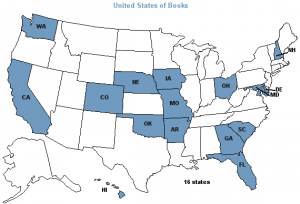
Welcome to another installment of the United States of Books! See full details here. Today we will visit California with Play It as It Lays by Joan Didion. Entertainment Weekly say’s “Didion’s 1970 classic, about a woman and a marriage breaking down, is both an ode to the freedom of the freeways and a eulogy for dreams shriveled by the sun.”

playitasitlaysSYNOPSIS (From Goodreads.com)

A ruthless dissection of American life in the late 1960s, Play It as It Lays captures the mood of an entire generation, the ennui of contemporary society reflected in spare prose that blisters and haunts the reader. Set in a place beyond good and evil – literally in Hollywood, Las Vegas, and the barren wastes of the Mojave Desert, but figuratively in the landscape of an arid soul – it remains more than three decades after its original publication a profoundly disturbing novel, riveting in its exploration of a woman and a society in crisis and stunning in the still-startling intensity of its prose.

REVIEW by By Elisha at Rainy Day Reviews

I don’t think this book is your typical read, like a James Patterson or Jodi Picoult … not saying they are typical because they are amazing and talented authors. But Joan Didion is not a Jodi Picoult type author. Joan grabs you with this story from the very beginning, waiting for the other shoe to drop. With school, my child, and life in general, it took me a couple weeks to read this “can’t put this book down” book because I wanted to see if this ‘sad female with nothing but time and money’ would do something with herself and stop feeling sorry for herself. I did have empathy for her as the story continued because as the reader can tell she is truly sad and can’t pull herself out of it.

You want to go into the book and shake her but hug her at the same time. There was twists and turns in this story I was not expecting but was pleasantly surprised by. I tend to be a cynical person (in the Miranda from Sex in the City kind of way) so when I started reading Maria’s character, I thought oh good Lord…but then, something happens (no spoilers!) This was a memorable read, for sure. It is also one that I would recommend to others.

USofBooksCali4.18.16

Mailbox Monday #371

Mailbox Monday, created by Marcia at To Be Continued, formerly The Printed Page, has a permanent home at its own blog.

To check out what everyone has received over the last week, visit the blog and check out the links.  Leave yours too.

Also, each week, Leslie, Vicki, and I will share the Books that Caught Our Eye from everyone’s weekly links.

Here’s what I received:

Dodgers by Bill Beverly, which I received from LibraryThing Early Reviewers.

Dodgers is a dark, unforgettable coming-of-age journey that recalls the very best of Richard Price, Denis Johnson, and J.D. Salinger. It is the story of a young LA gang member named East, who is sent by his uncle along with some other teenage boys—including East’s hothead younger brother—to kill a key witness hiding out in Wisconsin. The journey takes East out of a city he’s never left and into an America that is entirely alien to him, ultimately forcing him to grapple with his place in the world and decide what kind of man he wants to become.

Mata Hari’s Last Dance by Michelle Moran, a surprise from Simon & Schuster.

Paris, 1917. The notorious dancer Mata Hari sits in a cold cell awaiting freedom…or death. Alone and despondent, Mata Hari is as confused as the rest of the world about the charges she’s been arrested on: treason leading to the deaths of thousands of French soldiers.

As Mata Hari waits for her fate to be decided, she relays the story of her life to a reporter who is allowed to visit her in prison. Beginning with her carefree childhood, Mata Hari recounts her father’s cruel abandonment of her family as well her calamitous marriage to a military officer. Taken to the island of Java, Mata Hari refuses to be ruled by her abusive husband and instead learns to dance, paving the way to her stardom as Europe’s most infamous dancer.

From exotic Indian temples and glamorous Parisian theatres to stark German barracks in war-torn Europe, international bestselling author Michelle Moran who “expertly balances fact and fiction” (Associated Press) brings to vibrant life the famed world of Mata Hari: dancer, courtesan, and possibly, spy.

Tomorrow’s Bright White Light by Jan Conn, a surprise from Tightrope Books.

Acclaimed poet Jan Conn’s latest book, Tomorrow’s Bright White Light, offers poems as phenomenological guides to an approximation of a future “truth.” The collection includes poems about odd, secretive childhood events and poems that visit the badlands of adolescence from both male and female viewpoints. Some poems deal with the struggles of contemporary life in its many guises, while others derive from Conn’s time in Latin America. Obvious or not, all of the poems in this stunning collection are linked, creating a personal mosaic of the poet’s many lives and experiences.

Tourist by Lara Bozabalian, a surprise from Tightrope Books.

Opening with an aubade for the labyrinthian corners of Bombay’s largest slum, Tourist is a collection that is unafraid of shadows, and aims to unearth the unseen. Set across time and landscape—modern day Michigan, 1970’s Cambodia, WWI England, the kaleidoscopic mindscape of an Alzheimer patient – these poems draw us into lives that, initially, seem foreign, yet provoke our solidarity in the face of disorientation—a boy facing his first bankruptcy, an Elephant facing destruction at the hands of poachers. The book culminates in ‘Beethoven Walks’, an elegiac war cry from a man who wades in and out of darkness like a modern day Odysseus, and the churning resilience that sets him free.

Dopamine Blunder by Lori Cayer, a surprise from Tightrope Books.

In her astounding third collection, poet Lori Cayer takes on the juggernaut role of steward of human nature and subsequently explodes the myth of happiness through a multi-faceted lens of anthropology, socio-biology, sociology, psychology, archaeology, medicine and philosophy. Hinging on erasure and found material, Dopamine Blunder investigates these fundamental questions as our millennium enfolds with equal uncertainty and trepidation.

Photographs from the Edge: A Master Photographer’s Insights on Capturing an Extraordinary World by Art Wolfe, Rob Sheppard from NetGalley for review.

Legendary photographer Art Wolfe presents an intimate behind-the-scenes guide to the experiences, decisions, and methods that have influenced forty years of stunning images captured around the world. Wolfe and co-author Rob Sheppard transport readers on a global journey, while carrying on a dialog about photography, tools and process, world travel, close calls, and photographic opportunities both taken and missed. From the rich sights and smells of the Pushkar Camel Fair to the exact moment when a polar bear and her cubs leave their arctic den, Photographs from the Edge represents the instances when circumstance, light, and subject miraculously collide to form an iconic image. Many of these photographs can never be duplicated as cultures and landscapes are transformed and wildlife diminishes or disappears all together. No matter his subject, Wolfe regales us with the stories behind the photographs and helps us experience life on the world’s most unique photo safari. Photographs from the Edge is a lifetime of experience distilled into a rich photographic education.

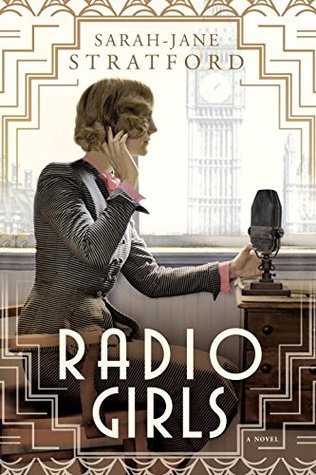
Radio Girls by Sarah-Jane Stratford for review from NetGalley.

London, 1926. American-raised Maisie Musgrave is thrilled to land a job as a secretary at the upstart British Broadcasting Corporation, whose use of radio—still new, strange, and electrifying—is captivating the nation. But the hectic pace, smart young staff, and intimidating bosses only add to Maisie’s insecurity.

Soon, she is seduced by the work—gaining confidence as she arranges broadcasts by the most famous writers, scientists, and politicians in Britain. She is also caught up in a growing conflict between her two bosses, John Reith, the formidable Director-General of the BBC, and Hilda Matheson, the extraordinary director of the hugely popular Talks programming, who each have very different visions of what radio should be. Under Hilda’s tutelage, Maisie discovers her talent, passion, and ambition. But when she unearths a shocking conspiracy, she and Hilda join forces to make their voices heard both on and off the air…and then face the dangerous consequences of telling the truth for a living.

Straight James / Gay James by James Franco for review from NetGalley.

Actor James Franco’s chapbook of poems explores the different personas he uses in his writing, art, acting, and filmmaking. The poetry varies from the imagistic to the prosaic. Franco’s poems delve into issues of identity, sexuality, private and public life, being a brother, a son, an artist and actor. The chapbook also contains an interview of Gay James conducted by Straight James. Yes, Straight James asks the overwhelming question: Are you gay?

What did you receive?

353rd Virtual Poetry Circle

Welcome to the 353rd Virtual Poetry Circle!

Remember, this is just for fun and is not meant to be stressful.

Keep in mind what Molly Peacock’s book suggested.

Look at a line, a stanza, sentences, and images; describe what you like or don’t like; and offer an opinion. If you missed my review of her book, check it out here.

Today’s poem is from Mary Oliver:

The Journey

One day you finally knew
what you had to do, and began,
though the voices around you
kept shouting
their bad advice – – –
though the whole house
began to tremble
and you felt the old tug
at your ankles.
‘Mend my life!’
each voice cried.
But you didn’t stop.

You knew what you had to do,
though the wind pried
with its stiff fingers
at the very foundations – – –
though their melancholy
was terrible. It was already late
enough, and a wild night,
and the road full of fallen
branches and stones.

But little by little,
as you left their voices behind,
the stars began to burn
through the sheets of clouds,
and there was a new voice,
which you slowly
recognized as your own,
that kept you company
as you strode deeper and deeper
into the world,
determined to do
the only thing you could do – – – determined to save
the only life you could save.

What are your thoughts?