Quantcast

Mailbox Monday #375

Mailbox Monday, created by Marcia at To Be Continued, formerly The Printed Page, has a permanent home at its own blog.

To check out what everyone has received over the last week, visit the blog and check out the links.  Leave yours too.

Also, each week, Leslie, Vicki, and I will share the Books that Caught Our Eye from everyone’s weekly links.

Here’s what I received:

Sunshine Beach by Wendy Wax for review.

After losing their life savings in a Ponzi scheme, Maddie, Avery, and Nikki have banded together to make the most of what they have left, using their determination, ingenuity, guts, and a large dose of elbow grease. It’s Maddie’s daughter Kyra who stumbles across a once glorious beachfront hotel that has fallen into disrepair. The opportunity to renovate this seaside jewel is too good to pass up—especially when they come up with the idea of shooting their own independent television show about the restoration. What could possibly go wrong?

Everything. With the cameras rolling, Maddie’s second-chance romance with her all-too-famous new boyfriend gets complicated, Avery struggles with grief over the loss of her mother, and Nikki’s reluctance to commit to the man who loves her could leave her to face the biggest challenge of her life. Even the hotel seems to be against them, when their renovation uncovers a decades-old unsolved murder which just might bring their lives tumbling down all over again

Follow the River Home by Corran Harrington for review for TLC Book Tours in June.

DANIEL ARROYO has suffered a lifetime of guilt over the sudden death of his infant sister, who died when he was eight years old. He now lives his middle years between that guilt and worsening episodes of PTSD from a Vietnam he left thirty years ago. When a violent encounter on a dusty highway forces Daniel to face what haunts him, he finds himself pulled back to the neighborhood of his youth, where old houses hold tired secrets. What really happened on that steamy August afternoon? The answer comes spilling from the old neighborhood, and Daniel begins to find his way home. Corran Harrington takes the reader along the Rio Grande, from its headwaters to the sea.
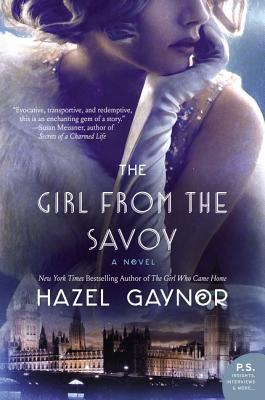
The Girl from the Savoy by Hazel Gaynor for a TLC Book Tour in June.

Dolly Lane is a dreamer; a downtrodden maid who longs to dance on the London stage, but her life has been fractured by the Great War. Memories of the soldier she loved, of secret shame and profound loss, by turns pull her back and spur her on to make a better life.

When she finds employment as a chambermaid at London’s grandest hotel, The Savoy, Dolly takes a step closer to the glittering lives of the Bright Young Things who thrive on champagne, jazz and rebellion. Right now, she must exist on the fringes of power, wealth and glamor—she must remain invisible and unimportant.

But her fortunes take an unexpected turn when she responds to a struggling songwriter’s advertisement for a ‘muse’ and finds herself thrust into London’s exhilarating theatre scene and into the lives of celebrated actress, Loretta May, and her brother, Perry. Loretta and Perry may have the life Dolly aspires to, but they too are searching for something.

Now, at the precipice of the life she has and the one she longs for, the girl from The Savoy must make difficult choices: between two men; between two classes, between everything she knows and everything she dreams of. A brighter future is tantalizingly close—but can a girl like Dolly ever truly leave her past behind?

What did you receive?
357th Virtual Poetry Circle

Welcome to the 357th Virtual Poetry Circle!

Remember, this is just for fun and is not meant to be stressful.

Keep in mind what Molly Peacock’s book suggested.

Look at a line, a stanza, sentences, and images; describe what you like or don’t like; and offer an opinion. If you missed my review of her book, check it out here.

Today’s poem is from Marie Ponsot, read by Kurt Milberger:

Among Women

What women wander?
Not many. All. A few.
Most would, now & then,
& no wonder.
Some, and I’m one,
Wander sitting still.
My small grandmother
Bought from every peddler
Less for the ribbons and lace
Than for their scent
Of sleep where you will,
Walk out when you want, choose
Your bread and your company.

She warned me, “Have nothing to lose.”

She looked fragile but had
High blood, runner’s ankles,
Could endure, endure.
She loved her rooted garden, her
Grand children, her once
Wild once young man.
Women wander
As best they can.

What do you think?


The Murder House by James Patterson and David Ellis (audio)

Source: Public Library
Audiobook, 9 CDs
I am an Amazon Affiliate

The Murder House by James Patterson and David Ellis, narrated by Therese Plummer and Jay Snyder, is a thrill-a-minute, as Det. Jenna Murphy gets re-acquainted with Bridgehampton at a time when Noah Walker is on trial for murder.  7 Ocean Drive, the Murder House, has a violent and unforgiving past, and Walker finds that he gets caught up in that darkness no matter how much he wants to stay under the radar.  Murphy has resigned from her Manhattan police gig and returned to a place she hasn’t been in more than two decades.  As she strives to put the man in jail who she believes killed her uncle, the police chief of Bridgehampton, she’ll have to compromise the one thing she’s held onto since then — her integrity.

Therese Plummer and Jay Snyder do an excellent job of narrating this suspenseful murder mystery, with Jay’s voice even creepier as the killer’s, whose identity remains unknown until the end.  In this twisted tale, Jenna and Noah embark on parallel journeys that lead them into one of the darkest places in the tourist trap — the Murder House.  It’s history dates back to the 1800s, and the family that owned it was always under suspicion but never tried or convicted of any crimes.  Long-since dead, the family’s secrets come to light, and one of them hits very close to home for Murphy, who has lost her uncle and her job as she continues to ask questions about the recent murders of a powerful Hollywood player and his mistress and Walker’s role in them.

Despite moments that seem forced and lines that are repeated a little too often, as well as bad decisions that are made by a supposedly talented cop, The Murder House by James Patterson and David Ellis, narrated by Therese Plummer and Jay Snyder, is a heart-pumping thriller that will leave readers on the edge of their seats.

Rating: Quatrain

About the Author, David Ellis:

David Ellis is a lawyer and the Edgar Allan Poe Award winner for Best First Novel for Line of Vision. Ellis attended Northwestern Law School and began his legal career in private practice in Chicago in 1993. He served as the House Prosecutor who tried and convicted Illinois Governor Blagojevich in the Impeachment Trial before the Illinois Senate. He was elected to the Illinois Appellate Court in 2014 and took office December 1, 2014. Ellis currently lives outside Chicago with his wife and three children.

About the Author, James Patterson:

James Patterson has created more enduring fictional characters than any other novelist writing today with his Alex Cross, Michael Bennett, Women’s Murder Club, Private, NYPD Red, Daniel X, Maximum Ride, and Middle School series. As of January 2016, he has sold over 350 million books worldwide and currently holds the Guinness World Record for the most #1 New York Times bestsellers. In addition to writing the thriller novels for which he is best known, he also writes children’s, middle-grade, and young-adult fiction and is also the first author to have #1 new titles simultaneously on the New York Times adult and children’s bestsellers lists.

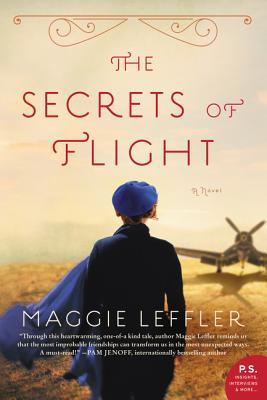
The Secrets of Flight by Maggie Leffler

tlc tour hostSource: TLC Book Tours
Paperback, 368 pgs.
I am an Amazon Affiliate


The Secrets of Flight by Maggie Leffler is a stunning mystery that unravels piece by piece, and readers will first meet Mary Browning, an elderly woman in a writer’s group.  She believes she sees an apparition of her sister, Sarah, as a young lady walks into their public writing group.  This vision prompts her memories to resurface, and with the help of this young transcriptionist, she begins again on her memoir.  Leffler deftly weaves between the past and present, creating a multi-layered story that will capture not only the nostalgia of a former airplane pilot during WWII but also the immediacy of a young woman’s search for herself among the detritus of family drama.  Her characters resonate off of one another, like echoes of the past pushing forward the lives of the present into the future.  This ripple effect builds throughout the novel, until the final mystery is revealed.

“But my greatest fear of all was not having a voice of my own.” (pg. 5 ARC)

We all fear losing ourselves and not having a voice.  We are individuals in search of ourselves, but we also are sisters, mothers, daughters, and friends, among other roles that we play.  These connections can help us breathe life into our passions and desires, or they can stifle them.  The trick is to balance the needs and expectations of others with our own without hurting ourselves or those we care most about.

“… I learned how to squeeze my face closed and let myself soundlessly shudder, imagining my tears deep inside, dripping off my organs.” (pg. 31 ARC)

Mary has lived her life, much of it on her own terms, and while she has had a hard time compromising, she was able to do it for love, even to her own detriment.  When WWII was in full swing, she left home to do what she loved even as many told her she shouldn’t, and when she fell in love, she made a sacrifice that many would now see as unnecessary without having lived with the fear of persecution.

Very rarely is there a book that can equally make emotions soar and crash, taking readers on a complete journey wrought with obstacles and choices that you can only imagine facing.  For Mary Browning to have survived them and to have created a satisfying, but not ideal life, is nothing short of miraculous — much like when a heavy metal plane takes to the air with the birds and clouds.  The Secrets of Flight by Maggie Leffler is equal parts coming of age story, WWII historical romance, and mystery, and it is so well balanced and amazing, readers will be left spent at the end of the runway.

RATING: Cinquain

About the Author:

Maggie Leffler is an American novelist and a family medicine physician. A native of Columbia, Maryland, she graduated from the University of Delaware and volunteered with AmeriCorps before attending St. George’s University School of Medicine. She practices medicine in Pittsburgh, Pennsylvania, where she lives with her husband and sons. The Secrets of Flight is her third novel.

Find out more about Maggie at her website, and connect with her on Facebook.

Photographs from the Edge: A Master Photographer’s Insights on Capturing an Extraordinary World by Art Wolfe, Rob Sheppard

Source: NetGalley
ebook, 288 pgs.
I am an Amazon Affiliate

Photographs from the Edge: A Master Photographer’s Insights on Capturing an Extraordinary World by Art Wolfe, Rob Sheppard, which will be published in September 2016, is stunning. Wolfe is a clear talent at capturing nature, tribes, and animals and his composition is unique and lively. It’s clear that the equipment he uses and his forethought about the scene enable him to capture even unexpected beauty. Rather than work as a career photojournalist, he has taken a harder, more independent path. While this has left him to be creative and take on projects that others might not, it also has some consequences, such as not being in his home more than he is on the road. However, it is a choice he never regrets, and readers will see why when they view the phenomenal images in this book.

His love of photography is infused in every picture he takes, and it is these pictures that enable us to put ourselves in different locations and view them as they are, without industry and interference from the modern world.  Even photos at a distance are created with composition, lighting, and subject in mind.  It is clear that he loves what he does, and he equally loves the subjects, shining a new light on even the ones most photographed, like penguins.  Photographs from the Edge: A Master Photographer’s Insights on Capturing an Extraordinary World by Art Wolfe, Rob Sheppard is a book that everyone will want to have in hardcover to cherish Wolfe’s art — to hold it, to view it up close, and to reach inside and experience the world through his eyes.

RATING: Cinquain

About the Photographer:

The son of commercial artists, Art Wolfe was born in 1951 in Seattle, Washington, and still calls the city home. He graduated from the University of Washington with Bachelor’s degrees in fine arts and art education in 1975. His photography career has spanned five decades, a remarkable testament to the durability and demand for his images, his expertise, and his passionate advocacy for the environment and indigenous culture. During that time he has worked on every continent, in hundreds of locations, and on a dazzling array of projects. You can view his stunning photographs online and buy.

Giveaway & Interview with Renée Beyea, author of Fine Stout Love

FSL Blog Tour Banner

Fine Stout Love and Other Stories by Renée Beyea is a collection of short stories based on Jane Austen’s Pride & Prejudice and is part of the Pride & Prejudice Petite Tales series.  The second volume, What Love May Come and Other Stories, will be released winter 2016.

A Fine Stout Love.inddAbout the collection:

Discover what happens when Elizabeth Bennet and Fitzwilliam Darcy meet fancy and fantasy in this novella-length ensemble of Regency stories.

– What if two inexplicable trails of words led to the Meryton churchyard on the same blustery morning?
– What if Darcy stumbled across suggestive lines of verse following Elizabeth’s stay at Netherfield?
– What if a rumored engagement so thoroughly shocked Lady Catherine that she could not interfere?
– What if Elizabeth learned the last man she would ever marry was the only man she could marry?
– What if every Bennet family member read the love poem Darcy intended only for his bride?

With all the intimacy and lyricism of a chamber concert, these five whimsical shorts will inspire the heart, prompt a smile, and entice readers to many happy returns.

Intrigued? I know I am.

Please give Renée Beyea a warm welcome.

When did you first read Pride & Prejudice? And what about the story stuck with you enough to write short stories about Jane Austen’s characters?

Credit goes to my mom for introducing me to Emma in fourth grade. I fell in love with Mr. Knightley and devoured Jane Austen’s oeuvre–including Pride & Prejudice–within the next few years. Since I loved fairy tales as a child, Pride & Prejudice initially enthralled me as a grown-up version of Cinderella and an escape to what seemed like a fairy tale world. It wasn’t until the many re-readings in high school and college that I began to appreciate Austen’s light touch in sketching characters, her sparkling dialogue, and the subtlety of her wisdom, wit, and humor. Though each reading brings new insights, these qualities have stayed with me over the years.

After so many decades reading Pride & Prejudice–not to mention wheedling friends and family into countless movie viewings–what joy was mine to stumble into the world of Jane Austen fan fiction! I was introduced once again through my mom, this time to Persuasion from Captain Wentworth’s point of view in Susan Kaye’s None But You. Retellings and variations sparked my imagination, and that’s when I began writing the short pieces that comprise A Fine Stout Love and Other Stories. Though I don’t seek to emulate Austen’s voice, I do strive to employ era-appropriate language and to honor those qualities I appreciated from the first–her canon characters, fresh dialogue, subtle humor, and naturally, a dash of fairy tale romance.

Many fans of Austen often do not like to read the Brontes.  Do you read the Brontes and enjoy their work? If not, why?

I do read and enjoy the Brontes, though not all of their works. Charlotte’s Jane Eyre and Anne’s The Tenant of Wildfell Hall are on my re-read list. Anne’s first novel, Agnes Grey, still languishes in my TBR pile. Charlotte’s Shirley and The Professor have yet to sufficiently pique my interest. As for Charlotte’s Villette and Emily’s Wuthering Heights, I’m prepared to admire them from a literary perspective, but I find them too dark, depressing, and disturbing to expect much pleasure from repeat visits. My approach to the Brontes’ novels is similar to how my husband and I approach movies. We enjoy diverse genres and savor a good drama, but for repeat viewing, nine times out of ten we’ll choose romantic comedy or action adventure. The Brontes’ works are dramas; Austen’s are romantic comedy.

Since I’m on a roll with comparisons… Comparing Austen and the Brontes is like comparing an airy chiffon pie with a dense flourless cake. Both delicious but for contrasting attributes. Or in terms of art, the Brontes paint with oils, layer upon layer of light and shadow skillfully executed–not unlike Helen Huntingdon’s talent in Wildfell Hall. By contrast, Austen sketches no less skillfully but provides just enough to tell the story and to color casts of enchanting characters. Austen leaves more to the imagination. She doesn’t indulge in lengthy moralizations or detailed descriptions. We don’t know what Longbourn house looks like, let alone Elizabeth Bennet, save for her beautiful dark eyes and light and pleasing figure. As a reader, I enjoy both methods, but as a writer, it’s Austen’s works that invite variations.

When working with someone else’s beloved characters, what do you keep in mind when writing new stories for them?  What are the challenges? advantages?

Austen variations come in as many flavors as Ben & Jerry’s ice cream. Some authors tweak the plot, some the characters, and some both. Each change is located along a spectrum of minor to major. Of course, every Austen reader will happily defend her or his favorite flavor–sometimes quite ardently. Where do I fall on this spectrum? As a reader, I can appreciate a fairly wide variety. As an author, I endeavor to keep the characters within the social mores and moral values of Austen’s milieu as well as in step with how she wrote them. Or at least in step with how I interpret her characterization, knowing full well readers will debate ceaselessly a range of interpretation.

Perhaps the greatest advantage to borrowing someone else’s characters is that they already exist in readers’ imaginations. Isn’t this in large part what fuels the seemingly insatiable appetite for Austen retellings and variations? Readers covet more time with the characters they’ve come to know and love. Names like Elizabeth, Darcy, and Mrs. Bennet serve as a kind of shorthand to their back stories and character traits. I’ve found this to be a tremendous boon in writing short fiction. A short story’s limited length and tight construction place relatively greater weight on each word choice, and I need not spend words introducing the cast. This also means readers are more swiftly immersed with beloved characters as they are plunged into new circumstances.

As is often the case, the corollary presents the greatest challenge. Because reader expectations already exist along a range of interpretation, those expectations are destined to be either satisfied or disappointed in a way that original characters are less apt to incite. Then there’s the challenge and limitation of creating characters consistent with the originals. Does Elizabeth speak and act with that “mixture of sweetness and archness” that makes it difficult to affront anybody, or does she cross the line into harshness or cruelty? Is Jane “firm where she feels herself to be in the right,” or does her gentleness make her seem a pushover? Austen had the advantage of writing when narrative, exposition, and omniscient narrators were de rigueur, but the burden is on today’s authors to show these subtle distinctions.

If you had to describe Mr. Darcy as readers know him, not as he is perceived by Elizabeth Bennet, what four words would you use and how did you come to choose those terms?

Only four words? You drive a hard bargain! One beauty of Austen’s writing is her restraint in Darcy’s portrayal, which only multiplies his mystique. Readers and Austen-inspired authors have the irresistible gratification of completing the picture, and we do so with an endless variety of media. Below are the four words that best capture my mental image. I’d love to hear which four words your readers would choose…

Proud:  Darcy is sometimes justified as shy and misunderstood, but Austen leaves little room for doubt that Darcy enters the story as proud and haughty. He takes pride in his heritage, his family, his station in society, his estate. As Charlotte says, he has an excuse to be proud. Really, can we blame him? Perhaps we wouldn’t blame him at all if his pride were as properly regulated as Darcy assures Elizabeth it is. We can laugh, even if Elizabeth does not, at the irony and his unwitting hypocrisy. Darcy’s pride continues to surface in the superiority of his perceptions and interactions–at least until we meet him again at Pemberley, having been properly humbled by Elizabeth’s refusal and learned his lesson.

Reserved:  While I won’t grant Darcy a pass for being shy and misunderstood, Austen does tell us he’s reserved, his manners are uninviting, and he’s continually giving offense. She sketches Darcy in contrast to his good friend. Bingley is effusive, gregarious, and charming–everyone’s a friend. Darcy on the other hand stands about and doesn’t care to dance or even to make small talk with people he doesn’t know. He explains himself to Elizabeth as not possessing such social skill. Only in his own circles, among his intimates, and at Pemberley does Darcy become less reserved. And on those lovely long rambles with Elizabeth near the end, her easy playfulness begins to soften his reserve, which only serves to whet readers’ appetites for more.

Reflective:  When Darcy is quiet, Austen frequently shows him watching and observing, or readers can reasonably make that inference. Darcy watches Elizabeth. He watches Jane’s interaction with Bingley. He observes the Bennet family’s behavior. He watches Collins tread on Elizabeth’s toes and his cousin Fitzwilliam flirt with her. Darcy does all this watching, but no matter what Elizabeth may think, the reader knows it’s not a vacuous stare. Austen tells us that Darcy is clever and boasts superior powers of understanding. So in those long silences his clever mind is occupied evaluating everything he observes and drawing conclusions. Not always accurate conclusions, mind. He determines that Elizabeth favors him while Jane doesn’t favor Bingley. Oops. But confronted with Elizabeth’s rejection, Darcy’s clever mind once again engages in reflecting on what she said, painful though her words are. And this time he determines that he’s the one who needs to change. That’s our hero.

Principled:  Late in the book, Darcy tells Elizabeth that he was “given good principles but left to follow them in pride and conceit.” But before we hear this confession from his mouth, we see Darcy’s principles in action. He honors the spirit of his father’s wishes for Wickham without violating his better informed conscience. Mrs. Reynolds confirms Darcy is conscientious in the management of his estate and respected by his tenants and servants. Darcy is committed to his sister’s care and earns consistent high praise for his efforts there. He’s a faithful friend. Misguided and influenced by selfish motives though Darcy may be, he still seeks to protect Bingley from a marriage of unequal affection. He abhors disguise and endeavors to correct Elizabeth’s misapprehensions. And Darcy owns it himself that he intervenes with Lydia and Wickham because he has Elizabeth’s interests at heart. Honor, integrity, selflessness, and generosity to name a few–what woman would not be won by the love of a tall, handsome, rich man motivated by such principles?

Do you read poetry?  Who or what collections would you recommend?

I do read poetry, though not as much as I did before children. Somehow the raucous joy of boys rocketing through my home isn’t particularly conducive to reflection. These days I treat poetry like espresso. When I need a quick shot, it’ll usually be old friends from the classics. Shakespeare’s sonnets are well-thumbed. I’m a huge fan of John Donne and Gerard Manley Hopkins, and both find passing reference in the first two volumes of my Pride & Prejudice Petite Tales. Sometimes I’m in the mood for the Brownings, Keats, or Dickinson. These poets also inspired the verses I wrote for A Fine Stout Love and Other Stories–poems with more traditional form, meter and rhyme, and thus more apt to have been composed by Elizabeth or Darcy.

In terms of contemporary poets, several of Jane Kenyon’s slim volumes populate my shelves. Let Evening Come moves me every time–I feel her words like sunset on an evening breeze. And while it’s not poetry, Annie Dillard’s prose in Holy the Firm and Pilgrim at Tinker Creek is often sublime and poetic. Her striking imagery, rich metaphors, and lyrical voice impact me like verse. I likewise relish applying poetic sensibility to writing prose fiction.

As for current poets, if the poet dances words onto the page and the reader dances them off, then occasionally I accept the invitation and take new verses for a turn about the room. Regretfully, it’s rarely long enough to find new favorites. So I’m not in a position to make recommendations, save to affirm experimenting, reading broadly, and sampling everything. In fact, Savvy Verse & Wit provides an excellent resource to do just that (thank you, thank you!). My taste may be to waltz and another’s may be to salsa, but you never know when you will chance into the perfect combination of words that makes your soul dance.

Thank you so much, Serena, for hosting me at Savvy Verse & Wit, stimulating my thoughts with your insightful questions, and for participating in the blog tour for A Fine Stout Love and Other Stories.

International giveaway: (8 books, including up to 4 paperback)

a Rafflecopter giveaway

Renee Beyea (author)About the Author:

Renée Beyea holds an undergraduate writing degree from Taylor University and a Master of Divinity from Fuller Seminary. She serves as full-time wife, mother to two sons, and ministry partner with her husband, an Anglican priest and chaplain. Her free time is devoted to crafting stories and composing poetry that delight the senses and touch the soul. Connect with her on Facebook.

Guest Review: Close Range by Annie Proulx

The United States of Books: the State of Wyoming

Close Range: Wyoming Stories by Annie Proulx
Reviewed by: Teri at Sportochick’s Musings

Book: ★ ★
Narrators: ★ ★ ★ ★

CloseRange~ SYNOPSIS ~

Annie Proulx’s masterful language and fierce love of Wyoming are evident in this collection of stories about loneliness, quick violence, and wrong kinds of love. In “The Mud Below”, a rodeo rider’s obsession marks the deepening fissures between his family life and self-imposed isolation. In “The Half-Skinned Steer”, an elderly fool drives west to the ranch he grew up on for his brother’s funeral, and dies a mile from home. In “Brokeback Mountain”, the difficult affair between two cowboys survives everything but the world’s violent intolerance. These are stories of desperation, hard times, and unlikely elation, set in a landscape both brutal and magnificent. Enlivened by folk tales, flights of fancy, and details of ranch and rural work, they juxtapose Wyoming’s traditional character and attitudes, confrontation of tough problems, prejudice, persistence in the face of difficulty, with the more benign values of the new west.

This collection includes:

  • “The Half-Skinned Steer”, read by Bruce Greenwood
  • “A Lonely Coast”, read by Frances Fisher
  • “People in Hell Just Want a Drink of Water”, read by Campbell Scott
  • “The Mud Below”, read by Bruce Greenwood
  • “The Blood Bay”, read by Campbell Scott
  • “The Bunch-Grass Edge of the World”, read by Frances Fisher
  • “Brokeback Mountain”, read by Campbell Scott

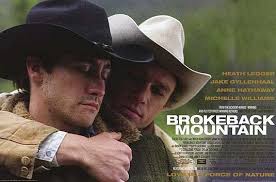
BrokebackMountain

~ REVIEW ~

The best part of the book as far as the stories go was Brokeback Mountain. A movie was from that story and it won 3 Oscars. I never saw the movie so I can’t give a review on the differences between the two though. This story walks the reader through a relationship between two cowboys that last years. While written with a slow western pace it shows how these two love each other through the years and opens the readers heart to their love for each other and their families.

As for the other stories, I understand that there are many people in the world that love this type of writing and I am afraid to say it is not me. I love to read for pleasure and to escape reality. This book is written in a harsh, blunt, no nonsense style. It was for me too brutal and depressing regarding how women and family were treated.

The narrators were great but hearing it instead of reading it made it much worse for it was so much more vivid. I know the old days were very rough but yikes this was so graphic it had me cringing.

For all you people out there that like this kind of reading I am sure you would rate it much higher than I did.

So will you give this a try and form your own decision?

USofBooksWyoming

Mailbox Monday #374

Mailbox Monday, created by Marcia at To Be Continued, formerly The Printed Page, has a permanent home at its own blog.

To check out what everyone has received over the last week, visit the blog and check out the links.  Leave yours too.

Also, each week, Leslie, Vicki, and I will share the Books that Caught Our Eye from everyone’s weekly links.

Here’s what I received:

The Hundred Year Walk: An Armenian Odyssey by Dawn Anahid MacKeen, a win from Reading Group Choices.

An epic tale of one man’s courage in the face of genocide and his granddaughter’s quest to tell his story

In the heart of the Ottoman Empire as World War I rages, Stepan Miskjian’s world becomes undone. He is separated from his family as they are swept up in the government’s mass deportation of Armenians into internment camps. Gradually realizing the unthinkable—that they are all being driven to their deaths—he fights, through starvation and thirst, not to lose hope. Just before killing squads slaughter his caravan during a forced desert march, Stepan manages to escape, making a perilous six-day trek to the Euphrates River carrying nothing more than two cups of water and one gold coin. In his desperate bid for survival, Stepan dons disguises, outmaneuvers gendarmes, and, when he least expects it, encounters the miraculous kindness of strangers.

The Hundred-Year Walk alternates between Stepan’s saga and another journey that takes place a century later, after his family discovers his long-lost journals. Reading this rare firsthand account, his granddaughter Dawn MacKeen finds herself first drawn into the colorful bazaars before the war and then into the horrors Stepan later endured. Inspired to retrace his steps, she sets out alone to Turkey and Syria, shadowing her resourceful, resilient grandfather across a landscape still rife with tension. With his journals guiding her, she grows ever closer to the man she barely knew as a child. Their shared story is a testament to family, to home, and to the power of the human spirit to transcend the barriers of religion, ethnicity, and even time itself.

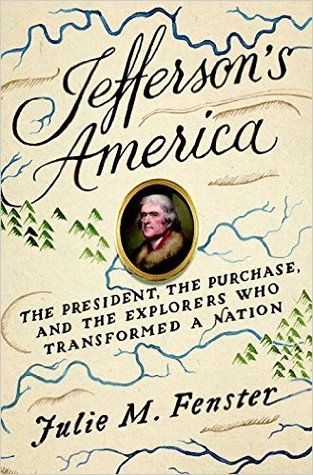
Jefferson’s America by Julie M. Fenster for review from LibraryThing Early Reviewers.

At the dawn of the nineteenth century, as Britain, France, Spain, and the United States all jockeyed for control of the vast expanses west of the Mississippi River, the stakes for American expansion were incalculably high. Even after the American purchase of the Louisiana Territory, Spain still coveted that land and was prepared to employ any means to retain it. With war expected at any moment, Jefferson played a game of strategy, putting on the ground the only Americans he could: a cadre of explorers who finally annexed it through courageous investigation.

Responsible for orchestrating the American push into the continent was President Thomas Jefferson. He most famously recruited Meriwether Lewis and William Clark, who led the Corps of Discovery to the Pacific, but at the same time there were other teams who did the same work, in places where it was even more crucial. William Dunbar, George Hunter, Thomas Freeman, Peter Custis, and the dauntless Zebulon Pike—all were dispatched on urgent missions to map the frontier and keep up a steady correspondence with Washington about their findings.

But they weren’t always well-matched—with each other and certainly not with a Spanish army of a thousand soldiers or more. These tensions threatened to undermine Jefferson’s goals for the nascent country, leaving the United States in danger of losing its foothold in the West. Deeply researched and inspiringly told, Jefferson’s America rediscovers the robust and often harrowing action from these seminal expeditions and illuminates the president’s vision for a continental America.

Calazaza’s Delicious Dereliction by Suzanne Dracius, translated by Nancy Naomi Carlson from Tupelo Press in preparation for the Gaithersburg Book Festival on May 21.  BE There!

Poetry. Caribbean Studies. Translated from the French and Creole by Nancy Naomi Carlson. In her polyphonic poems, Suzanne Dracius creates protagonists usually calazazas, light-skinned mulatto women with red or blond hair who fight like Amazons against racial and gender discrimination. Dracius’ voice is leaping and exalted, often sexually charged, and infused with allusions to Greek and Roman mythology. Nancy Naomi Carlson has translated Dracius’s Exquise dereliction metisse, poems written in French yet including some Creole versions, and with Creole expressions sprinkled throughout. In French, this book was awarded the prestigious Prix Fetkann, whose judges cited the poet’s richness of language, with varied linguistic registers.”

What did you receive?

356th Virtual Poetry Circle

In honor of Mother’s Day, we have a mom related poem and song! Happy Mother’s Day to all the mothers out there.

Welcome to the 356th Virtual Poetry Circle!

Remember, this is just for fun and is not meant to be stressful.

Keep in mind what Molly Peacock’s book suggested.

Look at a line, a stanza, sentences, and images; describe what you like or don’t like; and offer an opinion. If you missed my review of her book, check it out here.

Today’s poem is from Elizabeth Akers Allen, with a song video by catherinepcs, which I thought was beautiful:

Rock Me to Sleep

Backward, turn backward, O Time, in your flight,
Make me a child again just for tonight!
Mother, come back from the echoless shore,
Take me again to your heart as of yore;
Kiss from my forehead the furrows of care,
Smooth the few silver threads out of my hair;
Over my slumbers your loving watch keep;—      
Rock me to sleep, mother, – rock me to sleep!

Backward, flow backward, O tide of the years!
I am so weary of toil and of tears,—      
Toil without recompense, tears all in vain,—   
Take them, and give me my childhood again!
I have grown weary of dust and decay,—   
Weary of flinging my soul-wealth away;
Weary of sowing for others to reap;—   
Rock me to sleep, mother – rock me to sleep!

Tired of the hollow, the base, the untrue,
Mother, O mother, my heart calls for you!
Many a summer the grass has grown green,
Blossomed and faded, our faces between:
Yet, with strong yearning and passionate pain,
Long I tonight for your presence again.
Come from the silence so long and so deep;—   
Rock me to sleep, mother, – rock me to sleep!

Over my heart, in the days that are flown,
No love like mother-love ever has shone;
No other worship abides and endures,—      
Faithful, unselfish, and patient like yours:
None like a mother can charm away pain
From the sick soul and the world-weary brain.
Slumber’s soft calms o’er my heavy lids creep;—      
Rock me to sleep, mother, – rock me to sleep!

Come, let your brown hair, just lighted with gold,
Fall on your shoulders again as of old;
Let it drop over my forehead tonight,
Shading my faint eyes away from the light;
For with its sunny-edged shadows once more
Haply will throng the sweet visions of yore;
Lovingly, softly, its bright billows sweep;—   
Rock me to sleep, mother, – rock me to sleep!

Mother, dear mother, the years have been long
Since I last listened your lullaby song:
Sing, then, and unto my soul it shall seem
Womanhood’s years have been only a dream.
Clasped to your heart in a loving embrace,
With your light lashes just sweeping my face,
Never hereafter to wake or to weep;—      
Rock me to sleep, mother, – rock me to sleep!

What did you think?

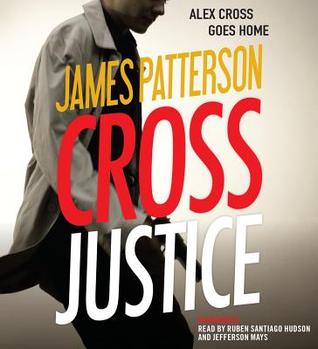
Cross Justice by James Patterson (audio)

Source: Public Library
Audiobook, 8 CDs
I am an Amazon Affiliate

Cross Justice by James Patterson, narrated by Ruben Santiago Hudson and Jefferson Mays, is another fast-paced thriller in the Alex Cross series of books, and this one has a lot of twists and turns that will provide even greater insight into the character of Cross and where he comes from.  Alex Cross returns to his North Carolina hometown for the first time since the death of his parents and his grandmother, Nana Mama, moved him and his brothers north.  He’s on vacation, but we all know that never lasts.  He, his wife, and the kids are quickly enveloped into the loving arms of Cross family, but they also find themselves unraveling the mystery behind their cousin’s arrest for the murder of a young boy.

Patterson is a great artist when it comes to creating suspense and chapter cliffhangers that will force readers to keep going, even as he shifts points of view between Alex Cross and a killer.  The narrators for this one did a great job, especially Jefferson Mays who narrates several characters — male and female. Patterson tied up the crimes in this novel very neatly, with socialites being murdered for jewels in one case and finding the killer of a young boy in another. While these cases connections often seem unlikely, somehow Patterson seems to make them plausible.

The backstory of the Cross family is a stunner, and even Alex Cross is thrown for a loop.  Nana Mama doesn’t figure into this one as much, but the kids are front and center, as is his new wife, Bree.  The family history and the unraveling of Cross’s past are riveting.  Cross Justice by James Patterson, narrated by Ruben Santiago Hudson and Jefferson Mays, is a nice mix of murder, mystery, and family secrets.

Rating: Quatrain

About the Author:

James Patterson has created more enduring fictional characters than any other novelist writing today with his Alex Cross, Michael Bennett, Women’s Murder Club, Private, NYPD Red, Daniel X, Maximum Ride, and Middle School series. As of January 2016, he has sold over 350 million books worldwide and currently holds the Guinness World Record for the most #1 New York Times bestsellers. In addition to writing the thriller novels for which he is best known, he also writes children’s, middle-grade, and young-adult fiction and is also the first author to have #1 new titles simultaneously on the New York Times adult and children’s bestsellers lists.