Quantcast

Interview with Paula Margulies, author of The Tao of Book Publicity

Book publicity is something book bloggers are well aware of these days, and even as many of us prefer to stick to reviews, many authors are relying on our blogs to get the word out about their books.

Paula Margulies, a publicist for more than two decades, has created a simple guidebook for authors, The Tao of Book Publicity.

About the Book: (GoodReads)

In The Tao of Book Publicity, publicist Paula Margulies outlines the basics of book promotion and explains how the business of publicizing a book works. Designed for beginning authors but also useful for those with some experience in book publishing, The Tao of Book Publicity provides information on the importance of writing a good book and the need for developing a platform, as well as how-to explanations for developing publicity material, including front and back cover text, press releases, Q&As, media and blog tour queries, and newsletter and media lists.

The Tao of Book Publicity also covers social media, book pricing and sales, book tours and media interviews, and author websites. In addition to explaining how book publicity works, this valuable handbook explores practical topics such as publicity costs, timing, and considerations when hiring a publicist.

Please give her a warm welcome.

You have been a book publicist for more than 25 years. What made you finally decide to write a guidebook on promotion for authors?

In the course of my publicity work, I’ve received calls from hundreds of authors, many of whom ask the same questions: When do I start my publicity campaign? How much should I plan to spend? Do I need a website? How do I build a platform? What price should I give my book? Do I have to use social media and,if so, which sites are best? Should I print a hardcover version, or will a paperback suffice? Do I need to enter contests? How can I get more reviews?

These are all important questions, and since so many authors seem to have the same concerns about their books, I decided to share what I’ve learned over the years as a publicist in one convenient, inexpensive resource guide.

The Tao of Book Publicity has a Zen look and feel to the cover and title. How does understanding the Tao principles help authors to promote their books?

I chose the Tao as a way of offering authors a practical philosophy on how they might approach book marketing. There are many authors who find promotion crass and time-consuming; a good majority would rather be writing than spending time trying to develop promotional material and schedules for themselves and their work. But I’ve found that book promotion can be a rewarding and fulfilling activity if done with the right perspective in mind.

As I describe in the book, most book publicity comes from a place of not-knowing; there are people we approach, for example, for reviews or interviews, but we cannot strong-arm those individuals into giving us what we want. Instead, we take the time to think about what our message is, who we are targeting with that message, and how to propose it in the most succinct, relevant, and motivating way we can. We then present our message (what most in my business call our “pitch”), and then follow-up with persistence to try to get a yes response. Our results are never guaranteed – it is up to the reporters or editors we contact to decide if the message we’re sharing is right for them. But when we come from a place of humility and unattachment, we tend to do a better job of both preparation (in which case, we usually achieve the goals we’re attempting) and managing our expectations.

What other aspects of book publicity to do you cover in the book?

I provide how-to explanations for developing publicity material, including front and back cover text, press releases, Q&As, media and blog tour queries, and newsletter and media lists. I also cover topics such as social media, book pricing and sales, book tours and media interviews, and author websites. In addition to explaining how book publicity works, I also discuss practical topics such as publicity costs, timing, and considerations when hiring a publicist; I’ve found that many authors want to know upfront about fees for services and what steps they should have completed before they contact a publicist like me.

If you have one piece of advice for new authors, what would it be?

That’s easy – write a good book!

Of course, that’s easier said than done. I’ve found that oftentimes authors, especially those who have chosen to self-publish, are in a rush to get their books out. In their hurry, they forgo important steps like work-shopping the book, spending time on revision, hiring a professional editor and cover designer, and developing their platforms. As a result, many of their books, sadly, don’t sell. If authors want their books to be well-received by booksellers, the media, and (most important) readers, they must take the time to carefully edit, polish, and package them well – there is no substitute for these steps in the publishing process.

Can you describe how an author might use this book as a guide to his or her own publicity plans?

Authors can read the chapters in any order they like (each chapter is designed to be read as stand-alone unit) and see what sounds as if it might be a good fit for them and their books. If something doesn’t sound right, they don’t have to use it. The information in the chapters is there to provide guidance and insight into what I believe are the common practices of most book publicists, but none of what’s there is meant to be a hard-and-fast prescription for any author’s individual book publicity plans.

Are you working on another book? If so, what can you tell us about it?

In addition to this latest book, I’m also the author of the short story collection, Face Value: Collected Stories, and two novels: Coyote Heart, which is a modern-day romance about a married woman who falls in love with a Pala Indian man, and Favorite Daughter, Part One, a first-person retelling of the life story of the famous Native American legend, Pocahontas. I’d like to get back to writing fiction and plan to spend the next year completing Part Two of Favorite Daughter.

Thanks, Paula, for spending time with us today.
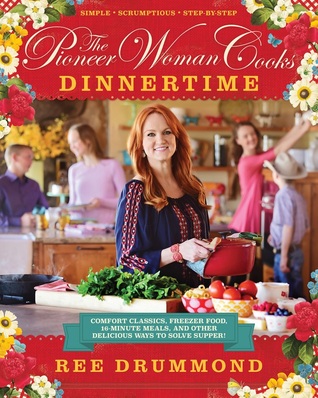
The Pioneer Woman Cooks Dinnertime by Ree Drummond

Source: Public Library
Hardcover, 400 pgs.
I am Amazon Affiliate

The Pioneer Woman Cooks Dinnertime by Ree Drummond is another great cookbook with easy to follow ingredient lists and steps.  My favorite part of these cookbooks is the step-by-step photos she adds for each part of the process.  One thing I would love, that doesn’t seem to be in these cookbooks, is a guide on how to pare down the ingredients and recipes to meet the food needs of a smaller family.  While my family will eat leftovers, there is a limit to how long they will keep and how much my family can eat.

For this cookbook, we had our daughter choose the recipes of what looked good to her, and we tried them out.  Among the recipes we tried were the Sausage, Potato, and Kale Soup (a dish similar to a spicy Portuguese soup I make and the Oliver Garden Zuppa Toscana soup); the Red, White, and Green Stuffed Shells; Shrimp Scampi; and the Pasta Puttanesca.

The soup was the easiest to make and the leftovers went quickly, mostly because I love soup.  Her recipe was very close to the Olive Garden version, so if you love that soup, this is a recipe for you to try at home.  The stuffed shells are also easy to make, though they can take a lot of time because the stuffing process will depend on the flexibility of your shells — which you don’t want too flexible because they’ll be mushy.  My daughter and husband really enjoyed these, which is a win for me since they both hate spinach.

Shrimp Scampi is probably the easiest of the recipes, next to the soup, but this one was not liked by either my husband or daughter for some reason.  Since eating this, which has wine in it and a lot of garlic, my daughter has refused to eat shrimp, something she normally loves.  In my case, I had to eat all the leftovers, but got sick of eating them because there was just too much.  Pasta Puttanesca is another recipe that did not go over as well as the first two, even though I eliminated the anchovies and olives, both of which are not liked here.  I love olives, but the other family members do not.  To me, without those ingredients, or at least something to replace them, the pasta was bland tasting.  My daughter, however, loved the tomatoes.  She ate those right up.

The Pioneer Woman Cooks Dinnertime by Ree Drummond is another cookbook I’ll have to buy at some point to try the recipes, since this one has to head back to the library.  I could just take it out again, but I like to make notations in my cookbooks about changes I make or things I substitute.

RATING: Quatrain

Other Reviews:

About the Author:

Ree Drummond began blogging in 2006 and has built an award-winning website, where she shares recipes, showcases her photography, and documents her hilarious transition from city life to ranch wife. She is the author of the #1 New York Times bestselling cookbook The Pioneer Woman Cooks. Ree lives on a working cattle ranch near Pawhuska, Oklahoma, with her husband, Ladd; their four kids; their beloved basset hound; and lots of other animals.

Calazaza’s Delicious Dereliction by Suzanne Dracius, translated by Nancy Naomi Carlson

Source: Tupelo Press
Paperback, 114 pgs.
I am an Amazon Affiliate

Calazaza’s Delicious Dereliction by Suzanne Dracius, translated by Nancy Naomi Carlson, is a collection of poems written in French and Creole that have been translated into English. Dracius’s poems are very musical, and that musicality is carried over from the French and Creole by Carlson’s English translations.  Looking at the poems sitting side-by-side, readers can see similar rhythmic patterns.  French and Creole are very similar languages, which probably makes translation a bit easier.

Carlson, who I had the privilege of introducing, was at the 2016 Gaithersburg Book Festival to talk about her work in translation.  She creates sound maps of the poems using her limited skills in French, and from these sound maps she seeks out the best English words to use for the translation, keeping with the subject matter and feel of each poem.  Listening to her speak about the translation process she uses was fascinating, and audience members were thrilled to learn more about it.

From "Pointe des Nègres" (pg. 13-17)

"... from my rod driven
deep in the depths of the sea,
Negroes in lots, in piles were born
over and over again,
cargoes of Negroes
for the auction block,
from my seed in the fizz
of the ocean's womb
when I raped, without shame,
the immense Caribbean expanse."

Dracius’ poems speak to the experience of Calazazas, people who are of mixed race and have read or blond hair.  Dracius, a Calazaza herself, is considered too light to fit in Martinique but in Paris, where she spends some of her time, she is considered too dark.  It is this displacement, a feeling of not fitting in that permeates each of her poems. Her poems also talk of history and mythology and relate those to the experience of displacement, living without a home or somewhere to fit in.

From "To Cendra's Ashes" (pg. 85-89)

Cendra, her name was Cendra.
When he had consumed her in fires of false criminal love, did he look at her face?
The only object of his thoughts was Cendra:
Reduce Cendra to ashes like one is reduced to a slave.

There is unbound love, there is obsessive love, and there is profound loss in these pages, but Dracius handles these with care, shedding light on the darkness and the hope. Calazaza’s Delicious Dereliction by Suzanne Dracius, translated by Nancy Naomi Carlson, is puzzle of emotions that will churn in the seas of the reader’s mind, only providing glimpses of hope in a stormy expanse.

RATING: Quatrain

About the Poet:

Born in Martinique, a writer and professor of Classics graduate of the Sorbonne, Suzanne Dracius published in 1989 her first novel, L’autre qui danse, finalist for the Prix du Premier Roman (Seghers ; Editions du Rocher 2007. English translation by Nancy Carlson, Seagull, London, 2015). Her stories, which feature strong, rebellious women characters, have been published in her collection of stories, Rue Monte au Ciel, Coup de coeur FNAC (Desnel, 2003 ; English translation by James Davis Climb to the Sky, UVA Press, USA, 2012). In 2008, Dracius published Exquise déréliction métisse, collection of poems who won the Prix Fetkann (English translation by Nancy Carlson, Tupelo Press, USA, 2015 and Spanish translation by Verónica Martínez Lira, Espejo de Viento, Mexico, 2013). In 2010, Dracius won a Prix de la Société des Poètes Français (Prize of the Society of the French Poets) for its whole work. In 2014, she published Déictique féminitude insulaire, poems.

In 1995, Dracius stayed in the USA as a Visiting Professor, lecturing about her own books at the University of Georgia, and in 2006, at Ohio University. In 2009, Dracius is invited to a writer’s residency at Cove Park (Scotland). Dracius is FFRI (France-Florida Research Institute) Visiting Professor in February 2012.

About the Translator:

Nancy Naomi Carlson, Ph.D. has won grants from the NEA, Maryland Arts Council, and Arts & Humanities Council of Montgomery County.  Poet, translator, and associate editor for Tupelo Press, her work has appeared over 350 times, including Poetry and Prairie Schooner, and forthcoming in APR,  The Georgia Review, and FIELD.  She is the author of three collections of poetry and three translations, including The Nomads, My Brothers, Go Out to Drink from the Big Dipper: Translations of Abdourahman Waberi (Seagull Books, distributed by U of Chicago Press).

Lost Kin by Steve Anderson

tlc tour hostSource: TLC Book Tours
Hardcover, 328 pgs.
I am an Amazon Affiliate

Lost Kin by Steve Anderson, the third book in the Kaspar Brothers series, is the search for a lost brother in post-WWII Munich, Germany.  The war has created a chaos in which the residents of the area struggle to rebuild their lives, while at the same time, people displaced by the war try to find their own way.  The Soviets are seeking traitors and those who once lived in their territories, and there are others who are running from them.  But it seems that no one wants the Jews.  Captain Harry Kaspar, a German-born man, comes upon a dead body and a Cossack refugee, Irina.  He wants to know how she knows his brother, but before he can get answers, she vanishes in the night.

Harry’s an odd fellow, a man who is eager to return to America as his stint in Munich winds down but also someone who has looked for his brother, Max, for a long time.  When Irina surfaces and knows his brother’s name, it raises those old feelings of brotherhood.  He embarks on a dangerous journey to find out what happened to Max.  But will his own darker past catch up with him before he can return home to America?

Anderson weaves in the historical elements of the occupied mansions, the found clothes, the downtrodden lives of these people, and the black market and bartering system that have now taken hold.  But his character, Harry, was a little flat.  His emotions were in check quite a lot, unless he was assessing the latest woman in front of him — whether it was his live-in Maddie, the refugee Irina, or the camp leader Sabine.

Overall, readers may feel as though they are missing something, perhaps reading the previous two novels could fill in some gaps.  It’s almost as if the reader is thrown into the action here with a modicum of explanation.  Lost Kin by Steve Anderson is part mystery, part historical fiction, and part spy novel.  The historical fiction portions demonstrating the effects of war on not only soldiers, but also society were harrowing.

RATING: Tercet

About the Author:

Steve Anderson was a Fulbright fellow in Munich, Germany. His research on the early US occupation in 1945 inspired him to write several novels centered on World War II and its aftermath. Anderson has a master’s in history and has worked in advertising, public relations, and journalism. He lives with his wife, René, in Portland, Oregon. Visit his website, on Facebook, and on Twitter.

United States of Books: Drown by Junot Díaz

Source: Public Library
Hardcover, 208 pgs.
I am an Amazon Affiliate

Drown by Junot Díaz, which Entertainment Weekly selected to represent New York, is not set in New York.  It is set in New Jersey.  In most cases, the neighborhoods in New Jersey can be transposed over those in New York City.  However, given that the young boy views a trip across the bridge as a trip to another world, these New Jersey neighborhoods are unique in terms of how many residents are Dominican and how those residents interact with other minorities.  EW said that the “book of stories stands out for its depiction of immigrants striving for their own versions of the American dream,” which is an accurate description.

There are 10 stories in this collection, and Díaz never shies away from the darkness that can envelop an immigrant’s life, especially when jobs and money are scarce and discrimination is around many corners.  A young immigrant boy must come to terms with his new life in the United States, after spending his early years feeling abandoned by his father.  Living an impoverished life with his mother and brother in the Dominican Republic, waiting for money from their father or even word from him, was somewhat easier because of its familiarity.  In the United States, these children must learn to live with a father they barely know, and it is a jarring experience.

“The uniforms Mami could do nothing about but with the mascotas she improvised, sewing together sheets of loose paper she had collected from her friends.  We each had one pencil and if we lost that pencil, like I once did, we had to stay home from school until Mami could borrow another one for us.” (pg. 71, “Aguantando”)

The immigrants in these stories are from the Dominican Republic, but even that does not summarize the power of these tales.  A family is fractured by a man with big dreams, but even those dreams are not enough to keep his focus most of the time.  One day after pledging his devotion to his wife and children, he takes his family’s money and flies to the United States, leaving his wife and two sons behind.  They live a squalid life to say the least, and while they make the best of it with the girls and the friends they have on the dirty streets, they know that there is something missing, and in some cases even blame themselves for the empty space.

Drown by Junot Díaz is gritty.  There are dark alleys, drug deals, fights, and sexual promiscuity, but there also is a desolation as these immigrants find that they are without an anchor in American but unable to return comfortably to their former lives.  Immigration can provide opportunity, but it also can provide paths that are unsavory and dark, leading to loss and hardship, similar to those left behind in their home countries.  These stories seek to shed light on the darker side of immigration and the breakup of families in search of an American dream.

Rating: Quatrain

About the Author:

Junot Díaz was born in the Dominican Republic and raised in New Jersey. He is the author of the critically acclaimed Drown; The Brief Wondrous Life of Oscar Wao, which won the 2008 Pulitzer Prize and the National Book Critics Circle Award; and This Is How You Lose Her, a New York Times bestseller and National Book Award finalist. He is the recipient of a MacArthur “Genius” Fellowship, PEN/Malamud Award, Dayton Literary Peace Prize, Guggenheim Fellowship, and PEN/O. Henry Award. A graduate of Rutgers College, Díaz is currently the fiction editor at Boston Review and the Rudge and Nancy Allen Professor of Writing at the Massachusetts Institute of Technology.

NewYorkUUofBooks

Mailbox Monday #377

Mailbox Monday, created by Marcia at To Be Continued, formerly The Printed Page, has a permanent home at its own blog.

To check out what everyone has received over the last week, visit the blog and check out the links.  Leave yours too.

Also, each week, Leslie, Vicki, and I will share the Books that Caught Our Eye from everyone’s weekly links.

Here’s what I received:

Jenny & Her Dog Both Fight Cancer by Jewel Kats, illustrated by Claudia Marie Lenart for review.

Jenny, a young girl undergoing treatment for cancer, discovers that her best friend, Dolly, also has cancer. Dolly is the family’s dog, who has always been at Jenny’s side through trying times, and Jenny vows to support Dolly as well. This bittersweet tale is a story of mutual devotion and loyalty. While the prognosis is not good for dogs with cancer, Dolly’s love provides enduring hope and support for Jenny on her healing journey.

Love & Friendship: In Which Jane Austen’s Lady Susan Vernon Is Entirely Vindicated by Whit Stillman for review.

Jane Austen’s funniest novel is also her least known-until now. A sharp comedy of manners set in the 1790s, LOVE & FRIENDSHIP centers on Lady Susan Vernon: impossibly beautiful, charming, witty, and completely self-absorbed. Recently widowed, Lady Susan arrives, unannounced, at her brother-in-law’s estate to wait out colorful rumors about her dalliances circulating through polite society. While there, she becomes determined to secure a new husband for herself, and one for her reluctant debutante daughter, Frederica, too. As Lady Susan embarks on a controversial relationship with a married man, seduction, deception, broken hearts, and gossip all ensue. With a pitch-perfect Austenian sensibility, Stillman breathes new life into Austen’s work, making it his own by adding original narration from a character comically loyal to the story’s fiendishly manipulative heroine, Lady Susan.

What did you receive?

359th Virtual Poetry Circle

Welcome to the 359th Virtual Poetry Circle!

Remember, this is just for fun and is not meant to be stressful.

Keep in mind what Molly Peacock’s book suggested.

Look at a line, a stanza, sentences, and images; describe what you like or don’t like; and offer an opinion. If you missed my review of her book, check it out here.

Today’s poem is from Seamus Heaney:

Scaffolding

Masons, when they start upon a building,
Are careful to test out the scaffolding;

Make sure that planks won’t slip at busy points,
Secure all ladders, tighten bolted joints.

And yet all this comes down when the job’s done
Showing off walls of sure and solid stone.

So if, my dear, there sometimes seem to be
Old bridges breaking between you and me

Never fear. We may let the scaffolds fall
Confident that we have built our wall.

What do you think?

National Geographic Kids: Farm Animals and Rascally Rabbits!

Source: Media Masters Publicity
Board Book, Paperback, 24 pgs., 112 pgs.
I am an Amazon Affiliate

National Geographic Kids: Farm Animals Look & Learn and National Geographic Kids: Rascally Rabbits! are two books focused on animals. In the board book, the authors are teaching younger readers about animals, their sounds, and their habitats. In the paperback, chapter book, kids will learn about animal behaviors — some good, some not so good.

The Farm Animals book has photographs of real animals, like cows and chickens, and the text explains the sounds they make and what role they play.  Mostly that cows give us milk and stuff of that nature, and it tells you some interesting trivia facts about each.  What’s sad, however, is that these animals are only talked about in terms of what they are used for by humans.

Rascally Rabbits!, on the other hand, includes stories of rabbits that run away, escape to the great outdoors, leaving their owners — usually kids — wondering where their pets have gone.  Some have been found in the barnyard, while others are found by others and returned.  There are some great facts included about the animals, as well as how to protect them — such as the microchip system.

These books offer something for kids of all ages, and parents will enjoy reading the funny tales of escaping pets to their younger readers.

Rating for Farm Animals: Quatrain

Rating for Rascally Rabbits: Tercet

Undercover – An Austen Noir by Cat Gardiner

Source: Cat Gardiner
Ebook, 220 pgs.
I am an Amazon Affiliate

Undercover – An Austen Noir by Cat Gardiner, a noir novel inspired by Jane Austen’s characters from Pride & Prejudice set in the 1950s, is a fun ride.  Elizabeth (Eli) Bennet has left her father’s garage business after being duped by George Wickham, a Navy man gone AWOL.  She’s carved out her own life in Hell’s Kitchen as a private investigator, hacking her own career path in a man’s world among gangsters, commies, and police bravado.  Her home life was complicated, and Gardiner has created a more than down-on-their-luck Bennet family, plagued by drink and poor decisions.  Despite her rough beginnings, she’s smart, savvy, and willing to make the tough choices for her clients, even though she has a personal case of her own to find the elusive Slick Wick.

“‘Dealing with Wickham can make any man brood.  It’s the smolder that I look for.'” (ARC)

On her personal case, she comes across the smoldering Fitzwilliam Darcy at the Kit Kat Club and the sparks fly even though they just ogle one another.  Her assets on display, he cannot take his eyes off of her, especially after he sees how savvy she is in getting what she wants.  Stumbling upon another machination by Slick Wick, she finds herself coming to the rescue of the man with the smolder that could make her do things she promised she wouldn’t do again.

“‘Well, since you want to know about me, then you will have to share something about yourself in return.’

‘So, you’ll make me work for your affection?'” …

‘I guess not trusting a man is a result of your occupation.  Well, you may ask questions but I may choose not to answer them.'” (ARC)

Gardiner knows her Austen, and she modifies the famous lines from the novel in inventive and surprising ways, but in ways that keeps with her own plot and characterization.

“Those slow dances below the palm trees made her knees go weak.  It felt like pure seduction each time his hand slid down her back like an electrical frisson along a tense wire when he’d held her in his arms.”  (ARC)

The heat between Darcy and Eli will sizzle before readers’ eyes, and these characters are hot to trot.  Gardiner’s novel is fun, dark, and full of mystery, but it also provides a glimpse into what Darcy and Elizabeth’s romance would have been like in more modern days, especially after women gained a modicum of independence following WWII and were eager to remain in the workforce.

RATING: Cinquain

***Enter the Giveaway HERE***

About the Author:

Cat Gardiner loves romance and happy endings, history, comedy and Jane Austen. A member of the esteemed National League of American Pen Women, Romance Writers of America and her local chapter Tampa Area Romance Authors (TARA,) she enjoys writing across the modern spectrum of “Pride and Prejudice” inspired novels.

Winner of Austenesque Reviews Favorite Modern Adaptation for 2014, the comedic, Chick-Lit “Lucky 13” was released in October 2014. The romantic adventure “Denial of Conscience,” named Favorite “Pride and Prejudice” Modern for 2015 by Margie Must Reads and More Agreeably Engaged has set the sub-genre on fire since June of this year. Her latest release in December 2015, another romantic comedy titled “Villa Fortuna” has been voted Just Jane 1813’s Favorite Modern JAFF for 2015.

Her greatest love, however, is writing 20th Century Historical Fiction, WWII Romance. Her debut novel, “A Moment Forever” will release in Late Spring 2016 with “The Song is You” following in the winter.

Married 23 years to her best friend, they are the proud parents of the smartest honor student in the world – their orange tabby, Ollie. Although they live in Florida, they will always be proud native New Yorkers.

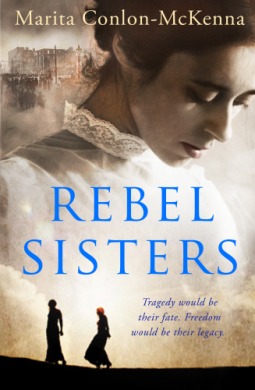
Rebel Sisters by Marita Conlon-McKenna & Giveaway

tlc tour hostSource: TLC Book Tours
Paperback, 400 pgs.
I am an Amazon Affiliate

Rebel Sisters by Marita Conlon-McKenna is sweeping historical fiction in which Ireland strives for Home Rule and many Irish men are sent off to France during WWI, as the headstrong Gifford sisters are forced to deal with tragedy, fear, and the consequences of their independent natures.  Grace, Muriel, and Nellie have lived privileged lives, but each has failed in one way or another to meet the rigid expectations of their Protestant and British loyalist mother, Isabella.  Their father often cowers in his wife’s shadow, preferring to avoid conflict, unless he means to protect his own ability to attend the Roman Catholic church.

“It mystified her that, having given birth to twelve children, they could all be so different.  When she had held each of her newborn children she had thought them so alike, cherubic mirror images of each other, but as the months and years followed, they changed, slipping away from her.” (pg. 28-9 ARC)

Through their efforts to carve out lives of their own, rather than get married and have families, each woman tries their hand at a profession.  While Muriel realizes she does not have the constitution to become a nurse, she soon finds she thrives as a wife to Thomas MacDonagh, a playwright and teacher heavily involved in the Irish Volunteers and the campaign for a free Ireland, and as a mother to their children.  Nellie’s brief moment with a man spurs her into action, helping those who need it most when the employers refuse to capitulate to the demands of their workers and the lockout leaves many families in Ireland near starving.  And when the soldiers return from war, she helps them find jobs.  Grace, however, knows that she wants to be an artist and pushes her mother and father to send her to art school where she excels.  However, as a woman, she finds that while her work is accepted, she is rarely paid.

“MacDonagh teased her unmercifully when the newspaper reports mentioned ‘the Gifford sisters looking like a musical comedy in their pretty pale linen dresses as they attended the demonstration’.” (pg. 139 ARC)

These sisters become the backbone of the Nationalist movement, doing what they can to support their husbands, lovers, and friends, as the seek justice for their fellow Irish brethren — even calling for women’s suffrage.  When it all comes to a head with the British on Easter in 1916, the Gifford sisters must rely on their inner strength to move forward.  Conlon-McKenna makes these sisters come alive, and their struggles take an emotional toll on the reader.  Rebel Sisters by Marita Conlon-McKenna is an emotional look at the families behind the rebellion and the tensions those families faced as some strove for Irish freedom and others remained loyal to Britain.

RATING: Quatrain

***Enter the International Giveaway by leaving a comment below with your email by May 31, 2016.  1 winner will be chosen.***

GIVEAWAY IS NOW CLOSED!

About the Author:

Marita Conlon-McKenna is a hugely successful Irish children’s writer. Her first novel, UNDER THE HAWTHORN TREE, sold 250,000 copies in the Irish market alone. Her debut adult novel, THE MAGDALEN, was a number one bestseller in Ireland, followed by PROMISED LAND, MIRACLE WOMAN, THE STONE HOUSE and THE HAT SHOP ON THE CORNER. She lives in Dublin with her husband and four children.

Visit Marita at her website: MaritaConlonMcKenna.com.