Quantcast

Straight James/Gay James by James Franco

Source: NetGalley
Paperback, 60 pgs.
I am an Amazon Affiliate

Straight James/Gay James by James Franco is a chapbook of poems, though many of these read like notes left on napkins and goofy missives that would be in a diary, never to see the light of day.  Initially, the collection seems to start off with an examination of isolation and being different in poems like “Dumbo” and “Mask,” exploring the struggle to fit into the boxes we see around us.

Dumbo

Dumb is me,
As a young elephant I was shy,
From too much attention,
So, speak I didn’t.

A young animal:
At age thirteen, life plunked
Me down in junior high,
Like Dumbo in the circus.

As I grew,
Isolation followed me
And the only recourse
Was to drink hard with the clowns.

Pink elephants
Paraded and sloshed
Through my youth
Until I became a sinister clown,

With a smile painted
So thick
I looked mad-happy, always.
And I never flew, 

I never flew.

Evoking a pop culture icon from childhood — Dumbo from Disney — readers will be drawn into the comparison, showing a poetic sophistication and a knowledge of how poetic devices can be used. As an actor and a director, the choice is not unexpected. In “Mask,” he dons a persona, one that earns him money, and it is this persona that he has a love-dislike relationship with. It is not that he dislikes the persona, but the fact that it is so loved by the media and even fans — those who pay him, providing him with the money he uses to make art. It is this art that he pushes through the envelop of preconceptions and those categories that he sought to fit into in the first poem of the collection.

I want to stop here for a moment. Anna pointed me to this article in The Washington Post, which asks if it is “possible to be fair if we simply, irrationally just don’t like” a certain actor? In my case, this is James Franco. I don’t dislike him per se, but I don’t really like him either. Perhaps I don’t understand his art or his humor, but for a poetry reviewer, it’s hard to set that aside when his poetry is another form of art.

With that being said, a lot of this collection is inconsistent, reads like nearly stream-of-consciousness scribbling, and in some cases, it is the ravings of a drugged out person (or so it seems). He’s trying to be avant-garde, at least that’s what it seems like. Some of this is even merely backstage commentary.

The title poem, “Straight James/Gay James,” is an exercise in the ridiculous, in which his sexuality is not really explored, but skirted, and his main focus seems to be how much he loves himself. Straight James/Gay James by James Franco is an oddity that might have needed more editing and/or focus.

RATING: Epitaph

About the Author:

James Franco is an American actor, film director, screenwriter, film producer, author, and painter. He began acting during the late 1990s, appearing on the short-lived television series Freaks and Geeks and starring in several teen films. In 2001 he played the title role in Mark Rydell’s television biographical film James Dean, which earned him a Golden Globe for Best Actor in a Miniseries or Television Film.

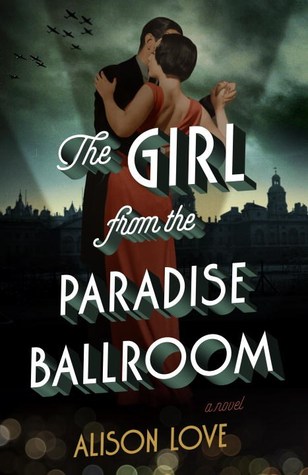
The Girl from the Paradise Ballroom by Alison Love & Giveaway

tlc tour hostSource: LibraryThing Early Reviews and TLC Book Tours
Paperback, 336 pgs.
I am am Amazon Affiliate


The Girl from the Paradise Ballroom by Alison Love begins before the British become embroiled in war again, at a time when a dancing, music, and art are in full swing.  Hitler is making his moves, and as many foreigners have moved to Britain, they fear becoming targets because of the Fascist’s moves.  In particular, an Italian community, which applauds Mussolini’s focus on making the fatherland great again, has growing concerns that they too will be swept up in the persecutions/internments of foreigners.

“Antonio stood at the bedroom window.  The June morning was mild, almost milky.  It seemed to him that if he stayed perfectly silent, perfectly still, they would pass the house and leave him be.  And yet he knew that they would not.  At any moment — they would knock on the door.  The knock would be loud and hollow: a drumbeat, a summons.  There would be no anger in it, no private hatred.  The men were just doing their job, that’s all.” (pg. 3 ARC)

Antonio and Olivia meet under less-than-ideal circumstances at the Paradise Ballroom, and despite the instant disgust, something simmers beneath he surface for both of them.  In chapters that alternate between their stories from 1937 to 1947, Love weaves a tale of forbidden love, clashing cultures, and the pressures of war.  Antonio is pressured by his brother, Valentino, to join the Fascists, but he does not believe in their cause, and even though he has an arranged marriage, he wants to provide for his wife on his own through his talents.  Olivia is making her way in the world with the talents she has, dancing the tango, but even as she makes some ill-advised choices, she continues onward through the loneliness and pain.

When war is clearly coming, Olivia marries a bohemian Englishman, Bernard, who soon becomes Antonio’s patron, helping him find a musical tutor and gigs in London.  Bernard continues to be consumed with his work with refugees from the countries conquered by Hitler, and his wife is left to fend for herself much of the time.  Her passionate nature cannot be denied for long, and the outbreak of war is the only thing that can suppress it.  Love has created two characters driven by their passion for artistry, but each is confined by different circumstances — a strict moral culture and a fear of loss.

The Girl from the Paradise Ballroom by Alison Love is more than a love story between two or even four characters, it is a look at how fear can cause even the most rational of us to employ terrible tactics to make ourselves feel safe.  Despite a slow build, Love has created a memorable family in the Trombettas, and their struggles become emotional for the reader. 

RATING: Quatrain

GIVEAWAY: To Enter leave a comment with email address about why you want to read this book.  Open to U.S./Canada readers ages 18+

Deadline is May 11, 2016.

THE GIVEAWAY IS NOW CLOSED!

About the Author:

Alison Love is a novelist and short story writer. Her debut novel, Mallingford, published in the UK and Germany, was described in The Times as ‘the kind of book that reminds one why people still like reading novels’, while her second, Serafina, is set amidst the political intrigues of 13th century Amalfi. Her latest novel, The Girl from the Paradise Ballroom, has been published in the UK, the USA and Germany (as Das Lied, das uns trägt). Alison’s short stories have appeared in several magazines and anthologies, and her story Sophie stops the clock was shortlisted for the Bristol Short Story Prize in 2013.


This Is the Story of You by Beth Kephart

Source: Purchased
Hardcover, 264 pgs.
I am an Amazon Affiliate

This Is the Story of You by Beth Kephart has the slow build-up of a weather front across thousands of miles of ocean, and when it hits, you are still unprepared because you’re in denial that you’ll be blown away and that your life could be upended by one wisp of wind, let alone a hurricane.  Invincibility is something many of us have in common at one point or another in our lives, whether it is in our teen years or later in life.  Eventually, that illusion is shattered — by a death in the family, a near miss, an unexpected circumstance.

Mira Banul and her friends are from those families that live on Haven year-round, and they are not like the tourists who visit for the beach and sun in the summer months.  Although their livelihoods can be dependent upon those summer tourists, their lives are more than just them.  Mira is an observer, while her friends Deni and Eva are the fixer and optimist, respectively.  Their personalities are big on the page as Kephart fully fleshes out these young ladies in description and in terms of their passions and quirks.  Mira and her skates, Deni and her aviators (“walked around with two pools of reflected sky on her head”), and Eva and her stories about lost civilizations.

“‘Weather’s bigger than the rest of us.’
‘I wanted to stop it.’
‘No, Deni.  All of us. None of us could stop it.'” (pg. 145)

As graduation nears for these ladies, it is hard for them to see past the current moment or the current projects.  When Shift comes to town and breaks up their merry threesome, Mira and Deni are left wondering what the draw is to this mysterious boy who comes to Haven in the middle of the school year.  Has Eva allowed herself to fall head-over-heels as she has done in the past, or is she merely being overly generous to the new kid in town?  Deni wants to protect her, Mira wants to see how it all shakes out.  In the background another storm is brewing, as nature decides its time to shake the trees.

If you’ve read other books by Kephart, you’ll see the birds in the trees and skies, and you may even perceive a nod to her previous work (at least, I thought of the one where the Schuylkill River is personified when Mira and her classmates talk about their Project Flows — or perhaps I read too many Kephart books, though I doubt that).  Her prose is poetic and requires attention, but it is worth the extra time, falling into the worlds she creates and the realistic characters she crafts, though I suspect they guide her hand.

This Is the Story of You by Beth Kephart will astonish you with the resilience of young people, their drive to make things right, and their ability to withstand more than expected, but it is in the final pages that the true mystery is resolved.  I will say this, I’m not often surprised by book endings or mysteries, but Kephart exceeded my detective skills for the first time in a long while.  (I had suspicions, but not a fully formed conclusion.)  Readers who love to immerse themselves in realistic places and explore humanity won’t be disappointed.  Kephart is a talent at creating places that come alive and characters that grab hold of us emotionally.

**You’ve probably already suspected this is a contender for the best of 2016 list at the end of the year!**

RATING: Cinquain

About the Author:

Following the publication of five memoirs and FLOW, the autobiography of Philadelphia’s Schuylkill River, I’ve had the great pleasure of turning my attention to young adult fiction. UNDERCOVER and HOUSE OF DANCE were both named a best of the year by Kirkus and Bank Street. NOTHING BUT GHOSTS, A HEART IS NOT A SIZE, and DANGEROUS NEIGHBORS were critically acclaimed. In October YOU ARE MY ONLY will be released by Egmont USA. Next summer, Philomel will release SMALL DAMAGES. I am at work on a prequel to DANGEROUS NEIGHBORS, a novel for adults, and a memoir about teaching.

Other Books Reviewed:

Guest Review: Songs In Ordinary Time by Mary McGarry Morris

Review by H. C. Newton at The Irresponsible Reader

Rating:

songsinordinarytimeThere’s a stereotype about Oscar-bait movies the come out late in the year, super-serious movies with super-serious actors about families in crisis, social unrest, a woman standing on her own, and so on. Nothing anyone really wants to see, but we all take it seriously. Yes, that’s a stereotype, an over-generalization, blah blah blah — but we all know that kind of movie. This book is like that — deadly serious, grim, full of people with no capacity for joy or to make a wise decision — or any action that involves a lack of melodrama.

I just couldn’t force myself to care about this one — not one bit.

The book centers on a divorced mother of three, Marie Fermoyle, and her children: Alice, Norm and Benjy. Marie’s barely scraping by, teeters between despondency and angry outbursts. Until Omar Duvall comes to town. The best thing that could possibly be said about Omar is that he’s a two-bit hustler and womanizer. Much worse could be said about him. Marie is so desperate for a way out of her life, that she falls for his flummery. Sam, Marie’s ex, is the town drunkard — an hopeless alcoholic, surviving on crumbs his sister gives him to get by, the children go out of their way to avoid him — as does pretty much everyone. The new priest in town, and Sam’s brother-in-law are pretty much the only exceptions to that. The priest is, well — he has problems, and the brother-in-law is henpecked and an obscene phone-caller. There are other characters — several, in fact — but let’s limit this to these characters. I could go on and on. Not unlike Morris.

This collection of characters are the greatest conglomeration of self-centered, self-pitying, self-deceived (often), self-justifying, and miserable people I can imagine. And everything they do (well, 99% of the things they do, anyway) make their lives worse (and half of that other 1% is ruined almost immediately). On page 508, I jotted down in my notes, “Please, someone, stop this book — just put these people out of their misery! Mine, too!”

These people are so miserable, so self-pitying that I laughed out loud when I read Marie thinking, “Hope . . . there was more of that in her veins than blood.” Really? I couldn’t believe that for a second. About 200 pages later, we read, “She was so very, very tired. All this, she thought, biting her lip, all this because once, a long time ago, she had made a fatal mistake. She had fallen in love too young with the wrong man. Imagine, it was as simple as that and now she would never catch up. She would never be happy.” That I could believe. That’s one of the most honest sentences in the book.

Each male character (I think without exception — two children, are probably exempt) is able to talk a good game, able to spin a tale about something to make the people around him believe in him — and typically even fools himself. It happens at least once for every character — each time I disliked them more and more for it.

The main plot centers around Marie falling for Omar’s line and risking everything while underwriting a pyramid scheme that he’s peddling (as does a whole lot of the town), while alienating her two older children along the way. Her youngest knows better than the others suspect how terrible Omar is, but he suppresses that information and knowledge so his mother can hopefully be happy. There are crimes not associated with Omar, people dying, people suffering, people trying (and generally failing) to escape their pasts and improve their life. There are two characters out of this that might succeed in improving their lot in life, but we’re not given enough information to know for sure — a couple of others that seem to have turned a corner, but if the 700 previous pages are any indication these latter characters are 5 pages away from running back around that corner the other way.

So why did Entertainment Weekly put this one on their list for Vermont? I’m only guessing here — there aren’t that many novels set in the Green Mountain State. There was nothing distinctly Vermont about this book, as far as I could tell. It was Anytown, USA — there was a lake nearby, a university not too far away (but far enough), a Roman Catholic Church in town (maybe a Protestant one, too — but I’m not sure), one drive in, and a few small towns within an hour or two by car. That’s really all we learn about the geography. The state name is invoked a few times, but otherwise, it could literally be anywhere — like The Simpsons‘ Springfield. I learned nothing about that state, its people, or anything beyond another lesson in endurance in the face of overwhelming tedium.

Plot(s), character, setting — this book failed on all three. It was well-written, I guess, but there was nothing special about even that. I really have nothing positive to say about this one, if you haven’t noticed.

VT Map US of Books

Mailbox Monday #373

Mailbox Monday, created by Marcia at To Be Continued, formerly The Printed Page, has a permanent home at its own blog.

To check out what everyone has received over the last week, visit the blog and check out the links.  Leave yours too.

Also, each week, Leslie, Vicki, and I will share the Books that Caught Our Eye from everyone’s weekly links.

Here’s what I received:

Lost Kin by Steve Anderson for review with TLC Book Tours in May.

Occupied Munich, 1946: Irina, a Cossack refugee, confesses to murdering a GI, but American captain Harry Kaspar doesn’t buy it. As Harry scours the devastated city for the truth, it leads him to his long-lost German brother, Max, who returned to Hitler’s Germany before the war.

Max has a questionable past, and he needs Harry for the cause that could redeem him: rescuing Irina’s stranded clan of Cossacks who have been disowned by the Allies and are now being hunted by Soviet death squads—the cold-blooded upshot of a callous postwar policy.

As a harsh winter brews, the Soviets close in and the Cold War looms, Harry and Max desperately plan for a risky last-ditch rescue on a remote stretch of the German-Czech border. A mysterious visitor from Max’s darkest days shadows them. Everyone is suspect, including Harry’s lover, Sabine, and Munich detective Hartmut Dietz—both of whom have pledged to help. But before the Kaspar brothers can save the innocent victims of peace, grave secrets and the deep contempt sown during the war threaten to damn them all.

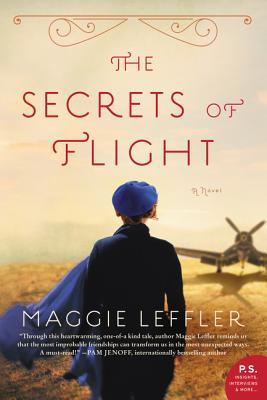
The Secrets of Flight by Maggie Leffler for a TLC Book Tour in May.

Estranged from her family since just after World War II, Mary Browning has spent her entire adult life hiding from her past. Now eighty-seven years old and a widow, she is still haunted by secrets and fading memories of the family she left behind. Her one outlet is the writing group she’s presided over for a decade, though she’s never written a word herself. When a new member walks in—a fifteen-year-old girl who reminds her so much of her beloved sister Sarah—Mary is certain fate delivered Elyse Strickler to her for a reason.

Mary hires the serious-eyed teenager to type her story about a daring female pilot who, during World War II, left home for the sky and gambled everything for her dreams—including her own identity.

As they begin to unravel the web of Mary’s past, Mary and Elyse form an unlikely friendship. Together they discover it’s never too late for second chances and that sometimes forgiveness is all it takes for life to take flight in the most unexpected ways.

Undercover: An Austen Noir by Cat Gardiner for review from the author.

It’s November 1952 in New York City where mysterious denizens linger in smoky bars and darkened alleys. The second Red Scare is dredging up a new swarm of “Commies”; “duck and cover” are the lingo of the day. And hard-boiled private eyes aren’t always men.

One audacious dame, Elizabeth Bennet, is undercover in a case of suspected murder: her best friend, Mary King, has been missing for eighteen months. Determined to find the man she believes did the girl in—one George Wickham—her investigation collides with an enigmatic bachelor, Fitzwilliam Darcy and his socialite sister, Georgiana.

Darcy is loaded, from a high-society family with all the money and the right connections for a future in politics. Elizabeth’s a career girl from the wrong side of the East River, but the sexual chemistry between them cannot be denied. She is focused on finding Slick Wick and he is hell-bent on stopping her investigation. But why? He’s hiding something, but she’ll use almost every weapon in her H-bomb arsenal to get his lips flapping.

Murder, kidnapping, and a brainy broad with a body for sin are just enough to break Darcy’s stone-cold reserve.

What did you receive?

355th Virtual Poetry Circle

Welcome to the 355th Virtual Poetry Circle!

Remember, this is just for fun and is not meant to be stressful.

Keep in mind what Molly Peacock’s book suggested.

Look at a line, a stanza, sentences, and images; describe what you like or don’t like; and offer an opinion. If you missed my review of her book, check it out here.

Today’s poem is from Naomi Shihab Nye:

Blood

A true Arab knows how to catch a fly in his hands,"
my father would say. And he’d prove it,
cupping the buzzer instantly
while the host with the swatter stared.

In the spring our palms peeled like snakes.
True Arabs believed watermelon could heal fifty ways.
I changed these to fit the occasion.

Years before, a girl knocked,
wanted to see the Arab.
I said we didn’t have one. 
After that, my father told me who he was,
“Shihab”—“shooting star”—
a good name, borrowed from the sky.
Once I said, “When we die, we give it back?”
He said that’s what a true Arab would say.

Today the headlines clot in my blood.
A little Palestinian dangles a toy truck on the front page. 
Homeless fig, this tragedy with a terrible root
is too big for us. What flag can we wave?
I wave the flag of stone and seed,
table mat stitched in blue.

I call my father, we talk around the news.
It is too much for him,
neither of his two languages can reach it.
I drive into the country to find sheep, cows,
to plead with the air: 
Who calls anyone civilized?
Where can the crying heart graze?
What does a true Arab do now?

What do you think?

Create a Cento

Today, we’re all going to create a cento poem, also known as a collage poem, which is made of lines from the poems of other poets.

This requires very little creativity on your part, so if you have never written a poem, do not fear! You can select your favorite lines from poets you love, or even select lines that you hate. It’s up to you.

I’m going to start you off with this simple line and let you take it from there:

unaware our shadows have untied (Yusef Komunyakaa’s “A Greenness Taller Than Gods”)

What’s your line?

MadLib Poems

Remember those little books that as kids we inserted nouns, verbs, adverbs, and adjectives to create funny stories and anecdotes?  Of course you remember Mad Libs.

Today (Anna helped generate this little idea), I’ve taken a poem and eliminated some key words, but you’ll input the missing noun, adverb, adjective, etc. and create a new Frankenstein creation.  I can’t wait to see them all.

Here’s the first one:

More Nonsense Limerick 87 by Edward Lear

There was an old   (Noun)  of Stroud,
Who (verb) horribly jammed in a crowd;
Some she slew with a (noun),
Some (noun) scrunched with a stick,
That (adjective) old person of Stroud.

Here’s the second one:

The Thrush by Fay Inchfawn

Across the land came a (adjective) word
When the earth (verb) bare and lonely,
And I sit and (verb) of the joyous (noun),
For ’twas I who heard, I only!
Then (noun) came by, of the gladsome days,
Of (amount) a wayside posy;
For a (noun) (verb) where the wild (noun) sleeps,
And the willow wands are (adjective)!

Oh! the time to be! When the (noun) are (adjective),
When the primrose-gold is lying
‘Neath the hazel (noun), where the catkins sway,
And the dear south (noun) comes sighing.

My (noun) and I, we shall (verb) a (noun),
So snug and warm and cosy,
When the kingcups gleam on the meadow (noun),
Where the (noun plural) are rosy!

Please leave your madlibs in the comments below.

You can also generate a random Madlib poem at Language is a Virus.

Book Spine Poetry

Book Spine Poetry is fun and easy, and you can even get your kids involved with their own books.  It’s like a game of “I Spy” in which you look at the books on your shelves or at the library, and you arrange them in some kind of order that pleases you to make a poem out of the titles listed on their spines.

Here’s great little step-by-step instructions for kids on how to create their own.

I’d love to see what poems you create, feel free to post them on your blog, on Twitter, on Facebook.  Use the tag #bookspinepoetry and #NPM2016.

It will be fun to see what you create. It can be addictive, if you’re not too careful.

Check out the one’s created in 2014.

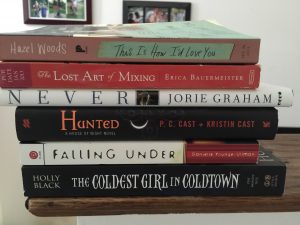
Here’s an example of two I created: (not very good)

IMG_2227

This Is How I’d Love You
The Lost Art of Mixing
Never
Hunted
Falling Under
The Coldest Girl in Coldtown


IMG_2228

This Is the Story of You
Untamed
The Voice I Just Heard
The Italian Lover
First Impressions
Gone


What does your poem look like?

Visuals and Poetry: A Relationship of Inspiration

I’ve written poetry and taken photographs for a very long time, and I won’t claim that they are all fantastic or publication worthy. However, these two mediums seem to feed off of one another. I’ve taken pictures, only to look at them again and be inspired to create a poem — with phrases pouring from me just when I take a peek. In other instances, I’ve read poems and sought out some of the places in those poems, even if they are not the exact spot that inspired the poet to write the poem. For instance, you can find a snowy path or road in the woods, take a breath and be Robert Frost on that road, or you can take a photograph of your own garden and spy a bee on a flower and write a poem.

After challenging myself earlier this month to enter Rattle‘s Ekphrastic Challenge, I thought today would be the day for a fun activity as National Poetry Month 2016 winds down.

Today, I thought it would be interesting to see what readers come up with by looking at one of the photos I took a few years ago. I’d love for you to share your short poems or even take a risk and post your own photo and poem on your own blogs and join in.

Here’s the photo:

You’re free to take it in any direction!