Quantcast

The Book of Lies by Mary Horlock

The Book of Lies by Mary Horlock is written in chapters that alternate between the present with Catherine Rozier in 1984-5 and the past during the German occupation of Guernsey during WWII and her uncle Charles Rozier’s story.  Like her uncle, Cat is a liar.  Lies are often told to protect loved ones, to gain acceptance among peers, or to cover up bad behavior, and the lies told here are no different.  Unreliable narrators are tricky in that readers can often get frustrated with the lies or become disenchanted with the story because they no longer know how to gauge the truth.  However, Horlock hovers on the edge of that line so as to keep readers engaged by presenting “historic” documentation for the WWII portion of the story.

Cat’s father, Emile, often shut himself away from his family and buried himself in historical research about the German Occupation of Guernsey, and this isolationism led Cat to believe she needed to make up stories to fit in and gain attention from not only her peers and parents, but from everyone else on the island.  In a way readers will wonder throughout the novel if she is still lying to gain the attention of readers with her sensational narrative of murder and teen hijinks.

“It’s a 3,000-foot drop and even though I’m fat, I’m not fat enough to bounce.  I’ll dive headfirst into ye ancient Guernsey granite outcrops and then my mashed-up body will be washed out to sea.  Of course, if I get the tides wrong I’ll be stranded on the rocks with seagulls eating my eyes.  I know for a fact they’ll eat anything.”  (page 1)

Cat unwittingly gets swept up in a friendship with Nicollette Louise Prevost, a beauty and from a family of wealth.  Everything is grand as Nic and Cat drink, hang out, start rumors, and hit on boys and men, but something changes and Cat is cast aside in a callous manner, which drives her to engage in reckless behavior and possibly murder?!  Her uncle’s story is similar in that he is befriended by Ray, who quickly casts him aside, but they are reunited in an effort to escape the Germans.  Lies are told by each, and each face tough consequences as a result.  The incestuous nature of the island and the close ties of families on the island are often alluded to, and in a way the close-knit community resembles a large family, and like all families, they hurt those they love.

“I haven’t had a shower for as long as I can remember and there’s this spot on my chin that I’ve had to squeeze and squeeze.  Peter Falk might be able to get away with looking like he’s slept in a hedge but I’m not a famous TV detective (wearing what is surely a wig).”  (page 146)

Much of the world created by Horlock is fantasy, but readers know that their narrator is unreliable from the beginning.  The chapters about Charles’ life are taken from the transcripts of a conversation he had with his brother before his death, which provides a certain authenticity to them.  However, are these entries true?!  Readers will have to sort that out for themselves.  Horlock’s style places you in the thick of it with Cat, and readers will feel all of her emotions, particularly that of alienation.  However, how much whining and justification for her actions readers can take will determine how much they empathize with her.  One part of Cat’s character that could annoy was her overuse of “as per usual” and “as per” to clarify nearly every statement or situation.  Also some of the diction was just awkward and stilted.

Regardless of or in spite of the unreliable narrator, Horlock has created a well-crafted story that circles in on itself as ancestry is unraveled and history appears to repeat itself decades after Charles Rozier’s story of espionage and teen rebellion.  The Book of Lies will keep you guessing throughout its 300+ pages, –right up until the end — but readers will be riveted and satisfied once they get there.  An excellent selection for book clubs with the espionage, teen angst, and trail of lies to analyze and discuss.
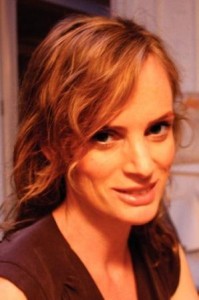
 

About the Author:

Mary Horlock is an authority on contemporary art who has worked at the Tate Britain and Tate Liverpool, and curated the Turner Prize for contemporary art. She spent her childhood in Guernsey, and lives in London.



For the rest of the stops on the tour, please click the TLC Book Tour icon.  Thanks to TLC and Harper Perennial for sending me a copy of the book for review.


This is my 38th book for the 2011 New Authors Reading Challenge.



Flies by Michael Dickman

Michael Dickman‘s Flies, published in 2011 and a possible candidate for the Indie Lit Awards if it is nominated in September, won the Academy of American Poets James Laughlin Award, which is the only award for a second book of poetry.  The collection is a dark look at family, but also takes a stark look at death and loss.  However, there are lighter moments in the book, like in “Emily Dickinson to the Rescue” (page 21) that was highlighted in the Virtual Poetry Circle.

Beneath the whimsical wordplay and imagery of playgrounds and imaginary friends, there is a deep sense of unrest and yet acceptance of how things have turned out, though the narrator has many regrets.  In “Imaginary Playground” (page 27), the narrator is playing alone with his imaginary friends, but as the scene fills in, it is clear that where there once were trees and places to play, there is concrete and change.  The narrator is nostalgic for those moments, even if they were solitary moments with imaginary friends — wishing there was a way to return to the innocence of childhood and the creativity that period imbued.  “The swing sets/aren’t really/there// . . . On the blacktop/we lie down in each other’s arms/and outline our bodies/in chalk// . . . There are no hiding places anymore//” (page 27-9)

The reading of “Flies” (page 50-4) is slightly different from the printed version in Flies.

Each poem strives to revisit a memory or a loved one and shine a light on their current state, whether that is rotting beneath the ground or in the sky as a star, but these juxtapositions serve to show readers that it is not crystal clear what happens after we die.   The flies come and haunt those that remain behind with memories, regrets, and happiness, but those that die . . . vanish, never to be haunted by the past or present again. The recurring image of flies transforms from something that is friendly to something that is annoying and horrifying.

Translations (page 64-6)

My mother was led into the world
by her teeth

Pulled
like a bull
into the 
heather

She only ever wanted to be a mother her whole life and nothing else
      not even a human being!

One body turned into 
another body

Pulled by the golden voices of children

A bull 
out of hell

Called out
her teeth out in front of her
her children
pulling


*


First I walk my mother out
into the field
by a leash
by a lifetime
she walks me out
our coats
shimmering

I brush her hair

Wave the flies away from her eyes

They are my eyes

Who will ride my mother
when we aren't around
anymore?

Turned from one thing into another until you are a bull standing in
     a field

The field
just beginning
to whistle us


*


I am led by the mouth
out into the 
yellow

Light turning
to water in the early evening
the insects dying
in the cold and 
returning
in the morning

I put on my horse-head

Led by a bit

A lead

My leader is tall and the hair on her forearms is gold

We lower your eyes
into the tall grass
and eat

Dickman is relentless in his long poems with their ever-changing images that repeat and twist. Readers are exposed to the ways in which memories are recalled bit-by-bit and slapped together and rearranged until a full, clear image is presented. At first these lines are confusing, and some readers may step back from the lines, but only by pressing onward will they see the full impact of the memories he taps. Flies by Michael Dickman is a captivating collection that may require greater attention, but the sharp imagery and twists-and-turns will keep readers riveted even as the poems and memories expand over several pages. On a side note, the book cover is very indicative of the memory recall the poet experiences — it is haphazard and vivid.

About the Poet:

Michael Dickman was born and raised in the working-class neighborhood of Lents in Portland, Oregon. His first book, The End of the West, was published by Copper Canyon Press in 2009. His poems have appeared in The New Yorker, American Poetry Review, The New Republic, and Field, among others. Dickman is the recipient of fellowships and residencies from the Fine Arts Work Center in Provincetown, the Lewis Center for the Arts at Princeton University, and the Lannan Foundation. He has worked for years as a cook and has been active recently in the Writers in the Schools program.

This is my 20th book for the Fearless Poetry Exploration Reading Challenge.

This is my 37th book for the 2011 New Authors Reading Challenge.

Never Knowing by Chevy Stevens

Never Knowing by Chevy Stevens follows the success of her debut Still Missing (my review).  Again, Stevens uses therapy sessions with Nadine to tell a terrifying story that leaves readers anxious and biting their nails.  In her second novel, Sara Gallagher — resident of Victoria, British Columbia, Canada, who restores furniture for a living — walks her therapist through the search for her birth mother and how it led to her discovery that her birth father has committed some heinous acts.

Recapitalizing on the “waiting” in Still Missing, where the Annie waited for her captor to return and waited for her moment of escape, Sara Gallagher is waiting for the phone to ring, waiting for the other shoe to drop with her fiance, and waiting for her birth father to come out of hiding.

“When I first told you I found my mother, I said it was like standing on cracking ice.  This is like falling straight through into the freezing water.  You struggle back to the surface, your lungs burning, everything focused on that patch of light above you.  And you finally make it there, but the hole’s frozen over.”  (page 164 of ARC)

The sessions between Sara and her therapist ramp up the tension even further, keeping readers anxiously turning the pages.  Like other thrillers, the situations are surreal, but not to the point that they are unbelievable.  The police officers are running Sara ragged with their demands, veiled disappointments, and outright guilt trips.  Moreover, the entire situation has caused problems with her adoptive family and her fiance.  Readers will want to slap the cops in this one, while at the same time become suspicious of her fiance and the cops throughout the story and shake Sara.

“This last week I went through the motions, but I felt flat, disconnected — angry.  I didn’t know what to do with this new reality, the horror of my conception.  I wanted to bury it in the backyard, far away from anyone’s eyes.  My skin crawled with knowledge, with the evil that I’d looked into, that had created me.  I took long showers.  Nothing helped.  The dirt was on the inside.”  (page 31)

Stevens creates tension and builds sympathy easily.  The main protagonist, Sara, transforms from a woman with abandonment issues to a woman exhibiting the symptoms of a rape victim and to a strong mother bent on saving her own child from danger.  While some of the plot is predictable for avid mystery readers, there are revelations at the end of the novel that will make it worthwhile.  The story is tied up neatly at the end and is satisfying, though bittersweet.  Overall, Never Knowing is a fast-paced, thriller for the summer, and it begs the question would it be better to know or not to know about your birth parents or your own past if you were adopted.

About the Author:

Chevy Stevens grew up on a ranch on Vancouver Island and still calls the island home. For most of her adult life she worked in sales, first as a rep for a giftware company and then as a Realtor. At open houses, waiting between potential buyers, she spent hours scaring herself with thoughts of horrible things that could happen to her. Her most terrifying scenario, which began with being abducted, was the inspiration for STILL MISSING. After six months Chevy sold her house and left real estate so she could finish the book.

Chevy enjoys writing thrillers that allow her to blend her interest in family dynamics with her love of the west coast lifestyle. When she’s not working on her next book, she’s hiking with her husband and dog in the local mountains.  Please also check out her blog, follow her on Twitter, and on Facebook.

This is my 17th book for the 2011 Wish I’d Read That Challenge.  I’ve wanted to read this book since finishing Still Missing and listening to Chevy Stevens talk about her books live on BookTrib.

Guest Post: Margaret Dilloway on Her Mother’s Immigration

Today, Margaret Dilloway’s How to Be an American Housewife (my review) comes out in paperback.  I really enjoyed the novels look at the immigrant experience, as Shoko adapts to her life as an American housewife, but also the differences between her children, Mike and Suiko.  There are three generations in this novel and their interactions ring true.  While the topic is similar to Amy Tan and Lisa See’s work, the style is Dilloway’s own.

In addition to a giveaway for my U.S. readers (Sorry, the publisher is mailing out the books), I have a guest post from Margaret Dilloway about her mother’s own immigration story, which inspired her to write the novel.  Even better, I’ve got some great photos to share with you as well of her mother and herself.

Without further ado, please welcome Margaret Dilloway:

My mother came of age in Japan during the 1950s. The country was wrecked, men were scarce, and traditional opportunities were few for a young woman like her. The U.S. occupation of her country opened up welcome jobs. Her father told her, “America is the way to go,” and they might as well embrace the American way.

Margaret Dilloway's Mother

She began working for Americans after she graduated from high school, sending money home to help her family and her younger brother go through college. She was a housekeeper and worked at a gift shop.

Mom dated both Japanese and American servicemen, but in her mid-20s she decided she ought to marry an American and get out of the country. She took photos of all her suitors and took those home to show her father. He selected my father, who was in the Navy, as the one she ought to take seriously. “He has honest eyes,” my grandfather decided. I don’t know whether those pictures were black and white or color, but my father has very blue, wide round eyes.

My mother liked to tell the story of how she asked my father to marry her. With his ship was due to leave in a matter of months, she decided he was dillydallying, so she asked him point-blank if he planned to marry her. In her story, she said, “So, you gonna marry me or what?” He said okay. They married in 1958.

About 1940s; Margaret's Mother is in the top row, 4th from the right

They lived all over the country, moving for the Navy. They were stationed in Hawaii, Japan, Florida, and on both the West and East coasts. It wasn’t always easy, especially in the early days. My mother reported people staring or outright insulting her. She struggled to learn English, relying on imitating phrases she heard on television or from my father. My oldest brother, born in 1960, also felt the brunt of insults as a “mixed” race child.

Eventually, in the early 70s, they settled in San Diego, choosing it because of its nice weather; also, it was the final place my dad was stationed. Dad had done his early training here and fell in love with the place. My mother said she liked San Diego because it was more culturally diverse than other places she’d lived, and she didn’t feel so out of place here. My middle brother and I were born, and my father retired from Navy life.

Stories of their peripatetic lifestyle, before my middle brother and I showed up, became part of family lore. Stories of how my oldest brother got stared at, whispered about. How so many people didn’t like my parents being married, while others were pleasantly surprised. My mother loved telling these stories, but I didn’t always like listening. They were her version of, “When I was your age, I walked two miles in a snowstorm to school…” stories, the kind parents tell you to remind you how good you have it. So, like most kids, I’d roll my eyes, but I still listened.

Margaret and her mother (1987)

The stories stuck. I remember her telling me about everything from the beloved Shirley Temple doll she had when she was a kid (it melted, made of a flammable pre-plastic material), to how her Japanese fiancé cheated on her, to how hard she tried to become a proper American housewife.

Her stories, floating around in my head for so many years, inspired the novel. A book she had, THE AMERICAN WAY OF HOUSEKEEPING, gave me the structure I needed to hang the story on. I made up the plot during my research, changing the character from my own mother into the fictional heroine Shoko.

Thanks, Margaret, for sharing such an inspirational story from your family.

Giveaway details: 1 copy of How to Be an American Housewife for 1 U.S. reader.

1. Leave a comment about your own immigrant story or one you heard.

2. For a second entry, leave a link with your Facebook, Tweet, or blog post spreading the word about the giveaway.

3. For a third entry, follow this blog and let me know.

Deadline is Aug. 10, 2011, at 11:59PM EST.

Stephen King’s IT Read-a-Long

Created by Monniblog

Bring in the dark, the creepy, and the clowns!  Yes, you heard me right.  It’s time to begin the Stephen King’s IT Read-a-Long!

Today marks the start of my read-a-long with Anna from Diary of an Eccentric, who is afraid of clowns.  Anna and I will be discussing this book on our blogs for alternating months.

This month on Aug. 24, we’ll be posting our discussion on my blog for part 1, which includes: Part 1:  The Shadow Before and Derry:  The First Interlude

And next month, on Sept. 28, we’ll be discussing part 2 on her blog.  For the rest of the schedule, go here.

How will you be reading IT?  In broad daylight? At the beach? In the dark? Under the covers?  Won’t you join us?

Mailbox Monday #137

Mailbox Mondays (click the icon to check out the new blog) has gone on tour since Marcia at A Girl and Her Books, formerly The Printed Page passed the torch.  This month our host is Life in the Thumb.  Kristi of The Story Siren continues to sponsor her In My Mailbox meme.  Both of these memes allow bloggers to share what books they receive in the mail or through other means over the past week.

Just be warned that these posts can increase your TBR piles and wish lists.

Here’s what I received this week:

From Borders, which is the only local book store in my town and had the best employees who had great recommendations every time I went in; it also was the only store with a good three-to-four shelves of poetry near me and outside the immediate D.C. city:

1.  The Postcard Killers by James Patterson and Liza Marklund, which I bought for my mom’s birthday (good thing she doesn’t read the blog).

2.  Twilight: The Graphic Novel Volume 1 by Stephenie Meyer and adapted by Young Kim

3.  Ellis Island by Kate Kerrigan, which I bought to complete the Ireland Reading Challenge and because I just missed out on the TLC Book Tour.

4.  Ideal Cities by Erika Meitner; yes, this is just one of the books I snagged from the poetry section.

5.  The Broken Word by Adam Foulds

6.  Here, Bullet by Brian Turner

7.  Quilting the Black-Eyed Pea by Nikki Giovanni, which I picked up because I loved her selection of poems in (Hip Hop Speaks to Children (my review)

8.  Ballistics by Billy Collins

9. Falling Up by Shel Silverstein

10. Don't Bump the Glump! by Shel Silverstein

11. Runny Babbit by Shel Silverstein

12. Where the Sidewalk Ends by Shel Silverstein

13. Peter Rabbit's Tale by Beatrix Potter

14. The Lorax by Dr. Seuss; our version says its made with recycled paper.

15. Dr. Seuss's Circus McGurkus 1,2,3! (plush)

From Anna for Wiggles:

16. Winnie the Pooh and Piglet's Book of Opposites

17. Winnie the Pooh All Year Long

18. Adventures of Rusty & Ginger Fox by Tim Ostermeyer

And books that came in the mail for review:

19. The Tree It Was by Sandra Fuhringer

What did you receive this week?

Enemy Women Read-a-Long at War Through the Generations

Anna and I hope you will join us for the August read-a-long of Enemy Women by Paulette Jiles as part of the U.S. Civil War Reading Challenge 2011.

We will read a handful of chapters every week throughout August, and every Friday, we will post discussion questions on War Through the Generations.

We welcome you to post your thoughts on your blog and provide a link or just type your thoughts in the comments section of the discussion post; whatever works best for you.  You can answer our questions or just discuss whatever you found most interesting in each section.

If you are interested in reading along with us, please let us know.  You don’t have to be participating in the U.S. Civil War Reading Challenge 2011 to join us!

Here’s a bit about the book from the publisher:

For the Colleys of southeastern Missouri, the War between the States is a plague that threatens devastation, despite the family’s avowed neutrality. For eighteen-year-old Adair Colley, it is a nightmare that tears apart her family and forces her and her sisters to flee.

The treachery of a fellow traveler, however, brings about her arrest, and she is caged with the criminal and deranged in a filthy women’s prison. But young Adair finds that love can live even in a place of horror and despair. Her interrogator, a Union major, falls in love with her and vows to return for her when the fighting is over. Before he leaves for battle, he bestows upon her a precious gift: freedom.

Now an escaped “enemy woman,” Adair must make her harrowing way south buoyed by a promise … seeking a home and a family that may be nothing more than a memory.

Here’s the schedule for the read-a-long:

Week One: Prologue – Chapter 6; discussion on Fri., Aug. 5

Week Two: Chapters 7-15; discussion on Fri., Aug. 12

Week Three: Chapters 16-24; discussion on Fri., Aug. 19

Week Four: Chapters 25-31; discussion/final thoughts on Fri., Aug. 26

108th Virtual Poetry Circle

Welcome to the 108th Virtual Poetry Circle!

Remember, this is just for fun and is not meant to be stressful.

Keep in mind what Molly Peacock’s books suggested. Look at a line, a stanza, sentences, and images; describe what you like or don’t like; and offer an opinion. If you missed my review of her book, check it out here.

Also, sign up for the 2011 Fearless Poetry Reading Challenge because its simple; you only need to read 1 book of poetry. Please contribute to the growing list of 2011 Indie Lit Award Poetry Suggestions, visit the stops on the National Poetry Month Blog Tour from April.

Today’s poem is from Paul Celan:

Fugue of Death (translated by Christopher Middleton)

Black milk of daybreak we drink it at nightfall
we drink it at noon in the morning we drink it at night
we drink it and drink it
we are digging a grave in the sky it is ample to lie there
A man in the house he plays with the serpents he writes
he writes when the night falls to Germany your golden
	hair Margarete
he writes it and walks from the house the stars glitter he
	whistles his dogs up
he whistles his Jews out and orders a grave to be dug in
	the earth
he commands us strike up for the dance

Black milk of daybreak we drink you at night
we drink you in the morning at noon we drink you at
	nightfall
drink you and drink you
A man in the house he plays with the serpents he writes
he writes when the night falls to Germany your golden
	hair Margarete
Your ashen hair Shulamith we are digging a grave in the
	sky it is
ample to lie there

He shouts stab deeper in earth you there and you others
	you sing and you play
he grabs at the iron in his belt and swings it and blue are
	his eyes
stab deeper your spades you there and you others play on
	for the dancing

Black milk of daybreak we drink you at nightfall
we drink you at noon in the mornings we drink you at
	nightfall
drink you and drink you
a man in the house your golden hair Margarete
your ashen hair Shulamith he plays with the serpents

He shouts play sweeter death's music death comes as a
	master from Germany
he shouts stroke darker the strings and as smoke you
	shall climb to the sky
then you'll have a grave in the clouds it is ample to lie
	there

Black milk of daybreak we drink you at night
we drink you at noon death comes as a master from
	Germany
we drink you at nightfall and morning we drink you and
	drink you
a master from Germany death comes with eyes that are
	blue
with a bullet of lead he will hit in the mark he will hit
	you
a man in the house your golden hair Margarete
he hunts us down with his dogs in the sky he gives us a
	grave
he plays with the serpents and dreams death comes as a
	master from Germany

your golden hair Margarete
your ashen hair Shulamith.

Let me know your thoughts, ideas, feelings, impressions. Let’s have a great discussion…pick a line, pick an image, pick a sentence.

I’ve you missed the other Virtual Poetry Circles. It’s never too late to join the discussion.

Go the F**k to Sleep by Adam Mansbach, Illustrated by Ricardo Cortes, Read by Samuel L. Jackson

Adam Mansbach’s Go the F**k to Sleep, illustrated by Ricardo Cortes and read by Samuel L. Jackson, is a “children’s book for adults” that will have most parents nodding, “YES!”  As a new parent, this book made me agree wholeheartedly with its sentiments about how hard it is to get kids to go to sleep.

They are often too wired to sleep or simply too worried that they will miss something important by going to bed.

THIS IS NOT a book for children; it is for adults and would be considered humor.  This is not a review of the book’s illustrations because I listened to this book via audio from Audible.

Samuel L. Jackson is a natural narrator for this book because of his brash attitude in his movies and the reputation he’s garnered as a result.  His narration gains momentum as he continues reading through the rhymed story, and the frustration escalates.  It is this movement and cadence that will amuse readers as they shudder with understanding — kids that need a drink or want one more story read to them before sleeping.

“The wind whispers soft through the grass, hon.  The field mice, they make not a peep.  It’s been 38 minutes already.  Jesus Christ, what the f**k! Go to sleep!”

One drawback is that the word “f**k” is used from the very first lines throughout the book, but it may have been more effective to save its use for later on as the frustration gains ground.  One of the best moments of the book is when the narrator realizes that his child will not be sleeping and has given up saying, “No,” and simply acquiesces to whatever the latest request is.  What makes the narration even more poignant is the light, lullaby music in the background.

Go the F**k to Sleep is a hilarious look at parenthood, and the introduction by Jackson about his own struggles with getting his daughter to sleep further drives home the point that we are not alone.

About the Author:

Adam Mansbach is an American author and professor of fiction[1] at Rutgers University[2] who wrote the “children’s book for adults” Go the Fuck to Sleep.[3] Other books Mansbach has written include Angry Black White Boy and The End of the Jews[4] (for which he won the California Book Award for fiction in 2008)


This is my 36th book for the 2011 New Authors Reading Challenge.


This is my 1st book for the 2011 Audio Book Challenge and the 1st I listened to on my Kindle.

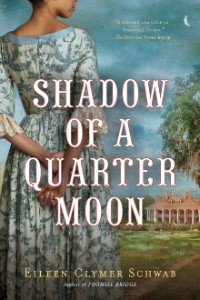
Winner of Shadow of a Quarter Moon

Thanks to all who entered the Shadow of a Quarter Moon by Eileen Clymer Schwab giveaway.  Out of a number of entrants, random.org selected

Anna from Diary of an Eccentric who said, “I have read so little about the Underground Railroad and the Civil War, so this book sounds really interesting to me. One book I did enjoy recently was Juliet’s Moon by Ann Rinaldi. I plan to read more by Rinaldi for the challenge. I’ve posted the giveaway in my sidebar, and of course, you know I follow your blog.”

Congrats and I hope you enjoy the book.

The Tree It Was by Sandra Fuhringer

Sandra of Fresh Ink Books told me in 2009 that she would send me a copy of her poetry book, and it finally arrived this week.  It didn’t make the previous Mailbox Monday, but it will be in next week’s edition.  I was so happy to see my copy, which she signed to me, that I decided to read it right away.

The Tree It Was by Sandra Fuhringer is the 15th book in Marco Fraticelli’s Hexagram Series based on the ideographs of the I Ching and is published by King’s Road Press.  Her hexagram is The Source or The Well, “which represents the deep, inexhaustible, divinely centered source of nourishment and meaning for humanity.”  The Book of Changes is a divination system or later a cosmology system that espouses the dynamics of balance (i.e. yin and yang) and the inevitability of change.  Furhinger’s haiku certainly reflect change and the struggle with maintaining balance.

First, the expansive white space surrounding each haiku provides readers a moment of pause between haiku, allowing them to visualize each one’s images and absorb its meaning.   The collection begins with a haiku demonstrating the hidden strength in even those of us who are perceived as weak, pushing through even the most difficult circumstances.  In a way, the first haiku demonstrates that each of us has a well of strength from which we can draw at any time.

Fuhringer’s poems bring to light our embarrassments, our fears, and our pain with the shrill sounds of ambulances and the coloring of pictures by children.  Others have a surreal quality to them, like a patient on morphine or under other treatments that leave them dissociated from their bodies.  Not all of these poems worked as traditional haiku with surprising last lines, but a majority of the collection is near perfect.  About midway through the collection, the traditional form of haiku is modified as the poet seeks to draw immediate attention to juxtapositions within her words  — such as Hiroshima pulled downward from the “h” in kittyhawk.

From page 3 (one of my favorites for its startling imagery):

five tries to get a vein
the leaf’s purple
underside

The poet’s narrator is The Tree It Was, and you can’t help but think that the narrator is Sandra Fuhringer in her most raw moments.  Many poets have personal connections to their poems, but how many can say that their poems are an embodiment of their daily struggles while simultaneously providing the strength they need to continue fighting?  This slim chapbook is a testament to The Well of the I Ching, and Fuhringer should be applauded for broadening the spirit of the Book of Changes into Western culture.

Also reviewed by one of my favorite short form online literary magazines, LYNX (please scroll down the page in the link).

This is my 19th book for the Fearless Poetry Exploration Reading Challenge.


This is my 35th book for the 2011 New Authors Reading Challenge.


BookTrib E-VENTFUL Book Party with Elin Hilderbrand 3 PM Today

Today at 3PM on BookTrib, Elin Hilderbrand, author of The Castaways and other fun-in-the-sun books, will be discussing her latest release Silver Girl.  If you’d like to sign up for BookTrib, click the “First Visit? Sign up!” button on the top right. Party go-ers can also sign in to the party with a Chat Roll account, a Facebook account, or as a guest.

From Amazon.com about Silver Girl:

Meredith Martin Delinn just lost everything: her friends, her homes, her social standing – because her husband Freddy cheated rich investors out of billions of dollars.

Desperate and facing homelessness, Meredith receives a call from her old best friend, Constance Flute. Connie’s had recent worries of her own, and the two depart for a summer on Nantucket in an attempt to heal. But the island can’t offer complete escape, and they’re plagued by new and old troubles alike. When Connie’s brother Toby – Meredith’s high school boyfriend – arrives, Meredith must reconcile the differences between the life she is leading and the life she could have had.

Set against the backdrop of a Nantucket summer, Elin Hilderbrand delivers a suspenseful story of the power of friendship, the pull of love, and the beauty of forgiveness.

Fifteen lucky party-goers will win an exclusive Silver Girl tote bag courtesy of The Elegant Setting along with an autographed copy of the book.  Come join us.