Quantcast

My Blogiversary Winner

Thanks to everyone who entered my 4-year blogiversary giveaway.  I’m happy about all the support I receive from my readers and I will try to continue providing you with the content you enjoy.

I received so many entrants that I decided to offer 2 gift certificates of $35.

Alyce of At Home With Books said, “Happy Blogiversary! I still have the intimidation factor when it comes to reading poetry, and it has to be really special for me to invest time in it. It’s not that I’m not willing to give it a try, but more that I get busy with other reading and don’t even think about poetry. So your blog is an excellent reminder for me. The most recent poetry I’ve been reading is Shel Silverstein’s A Light in the Attic to my boys at bedtime. Not exactly challenging reading for me, but certainly fun!”  She chose a $35 gift certificate from Better World Books.

Margie, who said, “You seem to be incorporating more reading challenges.  And, of course, you have more poetry-oriented posts.  I love the overall look of the blog.
Congrats on your Blogoversary.  Thank for the giveaway,” chose a $35 Amazon.com gift certificate.

Congrats ladies and enjoy your books because we know you’re buying them.
Interview With Eileen Clymer Schwab & Giveaway

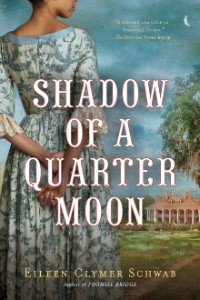
Today, I’d like to welcome Eileen Clymer Schwab, author of Shadow of a Quarter Moon.  The novel is set pre-U.S. Civil War and is a tale of romance, high racial tensions, and plantation life.  According to the publisher’s synopsis, “In 1839 North Carolina, Jacy has been raised in privilege as the daughter of a plantation owner. But when her father suddenly dies, her cold, unfeeling mother, Claudia, schemes to marry Jacy off to a well-positioned but lecherous suitor.  In a fit of fury over Jacy’s protests, Claudia calls her a ‘foolish, infernal quadroon’—and reveals that Jacy is the offspring of a dalliance between her father and a slave. Furthermore, her biological mother and brother are still slaves on the plantation. After these revelations, Jacy’s sense of who she is and where she belongs in the world is destroyed and, starts to see herself and the South with fresh eyes.”

Please welcome Eileen Clymer Schwab, and stay tuned for the giveaway:

1. What about the Civil War time period captured your attention enough to write a novel?

The years preceding the Civil War were so pivotal in American history, yet there is not a lot of adult fiction set in this time period. I suspect this is because it is not a time our nation is proud of, or wishes to reminisce over. We hide it from sight like an ugly scar. However, in keeping the door closed on this period, we miss the chance to honor and marvel at the incredible acts of courage and daring deeds that were the genesis of social change in the United States.

The Underground Railroad is the perfect example of the best of America within the worst of America. I am intrigued by this transitional period in history and find inspiration in the courage of those who sought freedom, as well as the spirit of joined purpose developed with those who provided aid during their journey.

2. Beyond the romantic aspect of your novel, SHADOW OF A QUARTER MOON, how much of the novel is about the racial tensions during the period and the issues that led up to the civil war?

Issues of slavery are central to the story, as is the Underground Railroad. In SHADOW OF A QUARTER MOON, an unimaginable secret changes the course of Jacy Lane’s life; not once, but twice. First, when it is hidden from her, and then when it is revealed. As the daughter of a plantation owner, Jacy has been raised in privilege until she discovers that she is the offspring of a dalliance between her father and a slave.

Amid the shock and complexities of her mixed heritage, Jacy is simply a woman longing for love, happiness, and a sense of wholeness; however the 1800s are not a simple time and Jacy begins a treacherous journey of denial and self-discovery that is fraught with danger and life-altering choices. She soon discovers that what she chases is as elusive as the secret network she hopes can save them.

3. When writing poetry, prose, essays, and other works do you listen to music, do you have a particular playlist for each genre you work in or does the playlist stay the same? What are the top 5 songs on that playlist? If you don’t listen to music while writing, do you have any other routines or habits?

I am a music lover, but I generally do not listen to music while writing because it might prevent me from “hearing” my characters. The process is different for every writer, but I am most creative when my mind is quiet. Scenes come alive visually in my mind and I hear the dialogue of my characters, not aloud, but like the voice of inner thought. But that’s not to say that music has not had a major impact on my work.

The spirit of my first novel, PROMISE BRIDGE was inspired the beautiful song, “Love Can Build a Bridge” performed by the country duo, The Judds. So much so, that they are mentioned in my Acknowledgments at the front of the book and again in my Author’s Notes. Often, as I prepared to write or contemplate a scene, listening to Love Can Build a Bridge helped plug me into the emotion of the scene.

4. How do you stay fit and healthy as a writer?

Nothing invigorates and centers me as much as a quiet walk. No iPods, no phone calls… just me and my dog, Sophie. Starting my day with a well-paced walk is good for my mind as well as my body. As I’ve mentioned earlier, I am most creative when my mind is quiet, so it’s not unusual for me to sort out a scene or capture the ideal turn of a phrase for a snippet of dialogue during my morning stroll. I don’t force the process. I simply let it percolate.

Sometimes, I let it all go and enjoy the birds and scenery around me, but more often than not, my mind comes alive and readies me for my time at the keyboard. I’m never without a pen and pad in the event ideas begin rushing at me. Of course the physical aspect is no less important. I’m out and moving which is a essential for someone who spends most of her day in front of a computer.

5. Most writers will read inspirational/how-to manuals, take workshops, or belong to writing groups. Did you subscribe to any of these aids and if so which did you find most helpful? Please feel free to name any “writing” books you enjoyed most (i.e. Bird by Bird by Anne Lamott).

This question makes me smile because I’ve done it all; books, classes, conferences, etc. Each was valuable its own way. First and foremost, these tools and activities brought me together with other writers. People who worked hard to learn their craft, hone their skills, and dared to take on the challenge of getting published. Writers write because we must. It’s like breathing; it’s a natural part of our being. We write whether we’re published or not. We write when there’s no guarantee that another soul will ever read as much as one word of what we’ve poured our hearts and souls into. Sharing that journey with others of like mind reminds us we are not alone. It assures us it is not impossible and gives us a network of support and encouragement.

6. What current projects are you working on and would you like to share some details with the readers?

I’m very excited about my next project which is set in the post-Civil War South. It was a very volatile period, particularly after the assassination of Abraham Lincoln. About a third of the novel is written and the entire story has been plotted. I have paused momentarily to complete some research.

I love the research phase because it’s a process of discovery – not just of historical facts, but of tendencies, beliefs, and nuances of the time. Through research, I become better acquainted with my characters and the world around them. Quite often the surprises discovered during research can shift plot lines and shape characters in unexpected ways. Combining research with imagination is the most creative part of the process, and for me, the most exhilarating.

Thanks so much Eileen for answering my questions.  These all sound like great novels.

To enter for 1 copy of Shadow of a Quarter Moon for a U.S./Canada reader:

1.  Leave a comment about what books you’ve read set during the U.S. Civil War or which you plan to read for this year’s War Through The Generations reading challenge.

2.  Facebook, Blog, or Tweet the giveaway for a second entry by leaving a link in the comments.

3.  For a third entry, please follow Eileen on Twitter and/or Facebook and leave a comment telling her you did so with your “handle.”

4.  Follow this blog and let me know in the comments (if you follow already, let me know)

Deadline is July 22, 2011, at 11:59PM EST.

***If you are a participant in the War Through the Generations Reading Challenge for the U.S. Civil War, you have another chance to win the book, here. 

Even if you are not in the challenge, please do check out Schwab’s guest post on writing about the U.S. Civil War.

Surprise!

Today has been a day of surprises, but one surprise was not as shocking as the other. Today, I’m featured on The Writer’s Center‘s First Person Plural blog. I talk a bit about the blog and its beginnings and what my main focus is among other things. I hope you’ll take a minute to go on over and comment.

Secondly, I received a pleasant surprise today when the winners of the Summer for Gomez winners were announced.  Check out the announcement below.

Summer of Gomez Winners

“Every once in a while you come across a novel so fresh and new it reacquaints you with feelings of childhood wonder. The novel my neighbor, Warren, wrote was my first example of the exact opposite of this.”
— Gomez in ‘No Hope for Gomez!’
Blogger Kindle Winner:
Serena from SavvyVerseandWit.comReader Kindle Winner:
Arthur Hall (US)

Reader iPod Winner:
Lynn Bassler (US)

Limited edition Winners:
Ebehireme Iyoha (US)
Yasmin Raad Muhi (Mal)
Sarah Bibi Setar (SA)
Gemma Richardson (UK)
David Lane (US)


Thanks to everyone who decided to make the summer of 2011 an official Summer of Gomez! I for one had a lot of fun and lost only a little bit of hair (and a few teeth) over the administration. A small price to pay of course.
Let’s try something great next year as well.

I’ve never owned an e-reader before, but if anyone has some tips, please share them. I’m not sure I’m ready to completely give up my hard copies, but I’m willing to give this new device a try. Any pros and cons you’d like to share, feel free. Oh, and naturally anything I should watch out for when downloading books and dealing with Amazon would be appreciated.

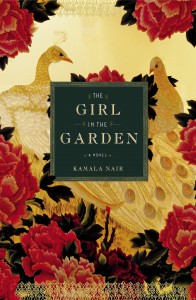
The Girl in the Garden by Kamala Nair

The Girl in the Garden by Kamala Nair is a stunning debut novel framed by an older Indian woman who leaves her fiance to return to her ancestral home and deal with the past, which is a bit cliche.  However, the bulk of the novel settles on Rakhee’s summer spent in India before her 11th birthday with her mother’s (Amma) mysterious family and away from her father, Aba.  Clearly Nair’s prose has been influenced by fairy tales and is sometimes reminiscent of The Secret Garden and Little Red Riding Hood, which makes the story that much richer.

“Slowly I moved toward the wall with my arm outstretched until my fingertips touched its vine-smothered surface.  I waited for something drastic to happen when my skin made contact with the stone, but when neither I nor the wall burst into flames or evaporated into thin air, I continued dragging my hand along the wall, emboldened, until my palm felt the roughness of the vines give way to a smooth, hard wood.

A door.” (page 67)

In a way the garden she discovers is like a fantasy with its beautiful plants and fanciful creatures.  Rakhee struggles a lot with her identity at home and abroad as a child, but its her curiosity and determination bred by the confidence of her father that will endear her to readers.  The world created by Nair is so absorbing that readers may even forget about the adult Rakhee.

“The thunder was deafening — I had only ever watched and listened to storms from behind the safety of a glass window.  But I was part of the storm now, ran-whipped and shaking.”  (page 140)

Rakhee is that young girl looking for her place in the world, a world where she doesn’t look like everyone else and doesn’t know or understand all of her family and their customs.  Nair paints a vivid landscape of India and the young girl’s odd family with its wizened aunties and an uncle with his broken dreams.  But the mystery of her mother’s past is just as captivating, if not predictable in some ways.

The Girl in the Garden by Kamala Nair is not just a coming of age story, its a clash of cultures, a love story, and a struggle between desire and family obligations.  Nair has crafted a world that readers will be reluctant to leave, especially as the storm kicks up more skeletons and other mysteries are unraveled about the past that could affect Rakhee’s future.  One of the best novels of this year, and it includes a bit of poetry from Mirabai.

About the Author:

Kamala Nair was born in London and grew up in the United States. A graduate of Wellesley College, she studied literature at Oxford University and received an M.Phil in Creative Writing from Trinity College Dublin in 2005. She currently lives in New York City, where she has worked at ELLE DECOR.

Connect with Kamala on her Website, Facebook, or on Twitter.

I read this novel as part of a TLC Book Tour, for the rest of the tour stops, go here, or click on the icon at the right.

This is my 2nd book for the South Asian Reading Challenge.


This is my 30th book for the 2011 New Authors Reading Challenge.

Interview with C. Ray Nagin

C. Ray Nagin presided over New Orleans as the mayor in 2008 during one of the most harrowing times of the city’s history.  Hurricane Katrina had hit the city in 2005, and much of the media coverage decried the inactivity of the Bush Administration.  For Nagin’s part, he did urge residents to prepare for the storm and evacuate, before issuing an evacuation order in the evening of Saturday, August 27, 2005.  With less than 24 hours before the storm was expected to hit, the city was ordered to evacuate.  Following the devastating storm, he heavily criticized aid efforts from the state and federal governments.

Now, Nagin has written a book, Katrina’s Secrets:  Storms After the Storm, about his experiences during the storm and afterward.  Today, I’ve got an exclusive interview with the former mayor about his experiences and his book.

1.  Katrina’s Secrets: Storms After the Storm is your account of what happened during the cleanup and recovery (which is still ongoing) in the Gulf area after one of the most devastating storms in recent memory. Why was it important to you to write this book? And how do you hope it will be received by the public?

As I was getting out of office in May of 2010, I was not planning to write a book, but started to assemble my personal library of my eight years in office. As I looked back over the Katrina time frame I was amazed at how amazing the story was and at how much was still not told. In fact at one point if you Googled Katrina you would get millions of search results. Unfortunately, a significant amount of this did not accurately reflect our experiences. So I decided to give readers a unique insider’s perspective on this historic, catastrophic event. My hope is the public will be open to hearing another side of this story.

2. Since much of the recovery process is still not finished, what have you done to raise awareness about the struggles that have continued since Katrina hit? Do you have plans to provide any of the proceeds from the sale of your book to charities working to help the people of New Orleans recover?

I travel around the country and around the world telling this Katrina story. I have also done TV, radio and other media interviews to keep awareness at a good level. My plans are to donate a portion of the proceeds from this book sales to help senior citizens and children who are still struggling from this disaster as well as other disasters throughout the country. I am in the process of setting up a foundation for this specific purpose.

3. What have you learned from your experiences with the before, during, and after events of Katrina; how have they shaped who you are today; and what lessons will you apply into the future?

The biggest lesson I learned is the best planning may not be good enough when a historic, catastrophic disaster occurs. I also learned that politics, race and class can affect disaster response and recovery. This Katrina experience helped my team to put together one of the best evacuation plans in the country where we successfully evacuated our entire city during Hurricane Gustav. In fact, for Hurricane Katrina we got 95 to 96% of the people in the city out of harm’s way before the storm hit. Unfortunately, it was not 100% and some suffered. I have also led a U.S. Conference of Mayor’s task force that put together a white paper with specific changes to the federal laws that govern disasters. A unanimous resolution of support was passed by the organization and the document was used to lobby Congress.

4. When writing Katrina’s Secrets: Storms After the Storm, did you find it difficult to stay on track and how much would you say was edited out? Is there anything important that is not in the book that should have been included?

The story is so complicated and rich that it was a challenge to write. I had a great team of two other people who worked with me on research and fact checking as I did the final writings. We also taped key people who were directly involved to ensure accuracy. I would estimate that 25% was edited out as the original manuscript was quite lengthy. This book covers right before Katrina hit and the extremely intense 30 days right after. The second book in this series will cover the recovery period, five years after until the end of 2010.

5. Was this a solo writing process or did you have input from others who were there at the time of Katrina? How long did it take you to write?

As mentioned above I had a team with two other people assisting me with this project. In addition, as part of the self-publishing process with CreateSpace I purchased additional professional editing services. This project took about one year to complete.

6. Was it difficult to find a publisher? Could you tell us a little bit about the process?

I spoke to several traditional agents who were working with various publishers. There was definitely good interest in this project since Katrina was so high profile. My hesitation was the pushes to either further sensationalize or tone down major sections depending on who I talked to. I was also uncomfortable that once I turned my manuscript over to the publisher that they would have final say on how the book ultimately ended up in print. I decided to self publish my first book to ensure that my voice and story would survive.

7. Speaking of the future, what are your future plans? Any recent projects you’d like to talk about?

I plan to focus the majority of my time over the next couple of months promoting my book. In addition, I will continue on the speaking circuit as this should complement book sales. My other initiatives are emergency preparedness planning and working on green energy entrepreneurial projects centered on solar and LED lights. I just got back from the Chez Republic regarding flood protection and have trips scheduled to Belgium, Australia and Puerto Rico for emergency preparedness lectures.

Katrina’s Secrets: Storms After the Storm can be purchased from my Website, amazon.com, kindles, I-books, Nooks, Sony, etc.

Thanks, C. Ray Nagin, for answering my questions, and I wish you luck with your endeavors.

Mailbox Monday #134 and Library Loot #5

Mailbox Mondays (click the icon at the right to check out the new blog) has gone on tour since Marcia at A Girl and Her Books, formerly The Printed Page passed the torch.  This month our host is A Sea of Books.  Kristi of The Story Siren continues to sponsor her In My Mailboxmeme.  Both of these memes allow bloggers to share what books they receive in the mail or through other means over the past week.

Just be warned that these posts can increase your TBR piles and wish lists.

Here’s what I received this week:

1.  Before Ever After by Samantha Sotto from Shelf Awareness.

2.  Ten Beach Road by Wendy Wax from Joan Schulhafer Publishing & Media Consulting for review in the fall.

3.  Whiplash by Catherine Coulter, which my husband found in our Sam’s Club cart; I’ll probably give this one to my mom since it’s more her cup of tea.

4. The Very Thought of You by Rosie Alison from Shelf Awareness.

These are from the library sale, only one for me though:

5. Dubliners by James Joyce

6. The Graveyard Book by Neil Gaiman

7. Across Five Aprils by Irene Hunt

8. The Magician's Nephew by C.S. Lewis

9. The Lion, The Witch, and the Wardrobe by C.S. Lewis

10. The Voyage of the Dawn Treader by C.S. Lewis

11. The Last Battle by C.S. Lewis

Library Loot:

Library Loot is a weekly event co-hosted by Claire and Marg that encourages bloggers to share the books they’ve checked out from the library. If you’d like to participate, just write up your post-feel free to steal the button-and link it using the Mr. Linky any time during the week. And of course check out what other participants are getting from their libraries!

12. Toys by James Patterson & Neil McMahon

13.  If I Stay Gayle Forman

14.  Where She Went by Gayle Forman

What did you receive this week?

Summer Winners…

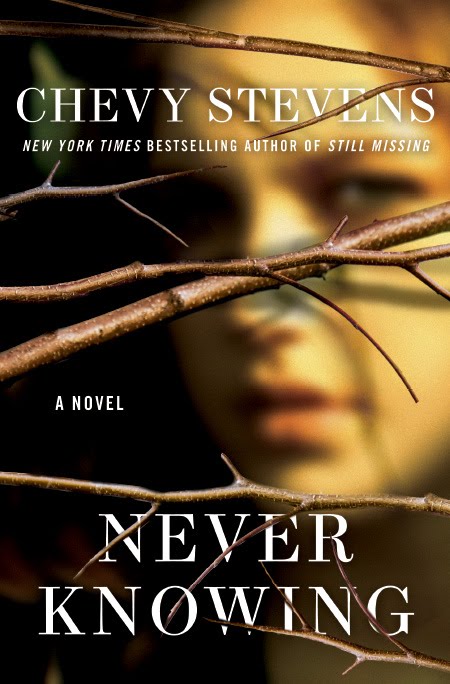
Out of 32 entrants, the three winners of Chevy Stevens’ next book, Never Knowing, are:

Jessica of Jess Resides Here, who said, “Omg Still Missing was my fav book last year. Talk about a debut I am a fan for life now.”

Margie, who said, “Moonglass by Jessi Kirby and Hourglass by Myra McEntire have caught my eye, partly from reviews and partly from the lovely covers. I haven’t read either of them yet though.”

Uncle Sid of Dward Media, who said, “Still Missing – one of the best reads for me this past year. Looking forward to the new one.”

Out of 10 entrants, the winner of Mr. Darcy Goes Overboard by Belinda Roberts is:

Taffy, who said, “I Loved the series by Pamela Aiden! Well, the 1st & 3rd books were the best.”


Out of 16 entrants, the winner of Vlad: The Last Confession by C.C. Humphreys is:

Mary, who said, “RASPUTIN has always fascinated me. Such a dark figure in history during a dark time in Russia.”

The winner of The Mongoose Deception by Dr. Robert Greer is LuAnn of Reading Frenzy, who said, “It’s hard to pick just one favorite mystery writer, but I’d have to say two of the ones I really enjoy are David Baldacci and Erin Healy.”


Out of 14 entrants, the winner of Her Sister’s Shadow by Katharine Britton is Beth Hoffman, who said, “I’ve always enjoyed stories about sisters. There are so many I’ve read, but The Geometry of Sisters by Luanne Rice is one of my favorites.”

105th Virtual Poetry Circle

Welcome to the 105th Virtual Poetry Circle!

Remember, this is just for fun and is not meant to be stressful.

Keep in mind what Molly Peacock’s books suggested. Look at a line, a stanza, sentences, and images; describe what you like or don’t like; and offer an opinion. If you missed my review of her book, check it out here.

Also, sign up for the 2011 Fearless Poetry Reading Challenge because its simple; you only need to read 1 book of poetry.  Please contribute to the growing list of 2011 Indie Lit Award Poetry Suggestions, visit the stops on the National Poetry Month Blog Tour from April.

Today’s poem is from Michael Dickman’s Flies on page 21-3.

Emily Dickinson to the Rescue

Standing in her house today all I could think of was whether she
+++ took a shit every morning.

or ever fucked anybody
or ever fucked
herself

God’s poet
singing herself to sleep

You want these sorts of things for people

Bodies and
the earth
and

the earth inside

Instead of white
nightgowns and terrifying
letters

*

Here she comes
her hands out in front of her
like a child flying
above its bed

Her ankles and wrists held tightly between the fingers of a brightly
+++ lit parent home from a party

Flying

Her spine
flying

Singing +++++ “Here I come!”

Her legs pumping
her heart
out

*

Heaven is everywhere
but there’s still
the world

The world is Cancer House Fires and Brain Death here in America

But I love the world

Emily Dickinson
to the rescue

I used to think we were bread
gentle work and water
We’re not

But we’re still beautiful

Killing each other as much as we can
beneath the
pines

The pines
that are somebody’s
masterpiece

Let me know your thoughts, ideas, feelings, impressions. Let’s have a great discussion…pick a line, pick an image, pick a sentence.

I’ve you missed the other Virtual Poetry Circles. It’s never too late to join the discussion.

Lagan Love by Peter Murphy

Lagan Love by Peter Murphy is a dense novel steeped in Irish lore and angst.  Janice, a Canadian, is a young student at the famed Trinity in Dublin, and she is easily swept up in the tumult that clings to the brooding poet Aiden.  She’s a student who dreams of painting and traveling the world, and at one point dreams of her life with Aiden as the famous poet and painter duo.  Is Aiden a struggling poet who has sold his soul for a few hundred dollars and a published collection, or is he the next Seamus Heaney?

His first collection of poems is published with the help of Gwen/Bridey, with whom he’s sleeping and who is married.  Aiden thinks that by introducing Gwen and Janice, he can ensure Janice’s paintings get noticed and that his affair with Gwen remains a secret because publicly Janice will be seen as his muse/girlfriend.  It’s not just Gwen, Aiden, and Janice, but Sinead as well who are searching.  Searching for love or the darknesss within the light and vice versa.

“The dawn sprinkled the suburbs with golden promise that paled in the older parts of town, down streets broad and narrow to the docklands where everything was just plain and ordinary.  Another brave new world beckoned, but Dublin was dubious — too often hope had been trampled down by foreign armies or strangled in dark alleys by the shadows of avarice and graft.”  (page 9)

There are a number of references to ghosts, love, revolution, and even a succubus, which readers will have to wade through, discern the meaning of, and tackle before they can care about these characters with any real depth.  Some cliched images and language are used throughout the novel, but those should not detract from the picture Murphy creates with his words.  However, the density of the narration and metaphors does become too heavy, distancing the reader from the characters and possibly even causing them to step away from the book for a while.  Beyond the density of the narration, there are several moments in the novel where the reader will be distracted by transitions between scenes and characters that are muddied, making it a puzzle readers must solve before they can delve back into the story (i.e. like the aftermath of one fight between Sinead and Janice — where readers may have a difficult time determining which character is in the next scene).

“His mind was a mess of disorganized verses piled on top of each other.  Some were orphans and would wither, but others lingered defiantly, like stones in his shoes.  They were the ones he found the time to polish.  But even some of them were destined to irrelevance.” (page 20)

Like the love song, “My Lagan Love,” the novel is a bumpy ride but with an undercurrent of devotion to love and country.  Murphy explores not only love and inspiration, but what it means to be an artist, especially an artist hungry for their voice to be heard.  What is an artist willing to give up or what kind of compromises are they willing to make?  He answers these questions, but also leaves a bit of mystery behind for the reader to examine and unravel.  Lagan Love is a complex as love itself, particularly when artists and simply men and women are competing for the affections of the same person — even if only to be in control.  Murphy’s style is as complex as his characters, but readers will be absorbed in the forlorn myths and legends created and expounded upon.

About the Author:

Peter Murphy was raised in Dublin, in a house full of books.  After a few years studying life in Grogan’s, he wandered through the cities of Europe before setting out for Canada, for a while, and has been there ever since, raising a family.  Lagan Love is his first novel.


This is my 1st book for the Ireland Reading Challenge.


This is my 29th book for the 2011 New Authors Reading Challenge.

Interview With Poet Stephen Cushman

Poet Stephen Cushman

Poet Stephen Cushman

This week at the Poetry Blog of 32 Poems Magazine my interview with poet Stephen Cushman was posted. He’s a contributor to the magazine and was a delight to interview. His answers are very short and to the point, but I’m intrigued by those who play Frisbee golf.

First, let me tantalize you with a bit from the interview, and then you can go on over and check the rest out for yourself.

Without further ado, here’s the interview.

How would you introduce yourself to a crowded room eager to hang on your every word? Are you just a poet? What else should people know about you?

People should know I play a mean game of Frisbee golf, am fluent in Maineglish (ayuh), am told I can make anything naughty with the lift of one eyebrow, and am the go-to person for old school drinking songs.

Do you see spoken word, performance, or written poetry as more powerful or powerful in different ways and why? Also, do you believe that writing can be an equalizer to help humanity become more tolerant or collaborative? Why or why not?

If I am elected Miss America, I vow to work for world peace, mostly on the written page, although I’m happy to perform or do spoken word, if I can wear my overalls. Poetry is 4,300 years old; if it could help humanity become more tolerant and collaborative, it would have done so by now. And perhaps it has. Who knows? If it weren’t for poetry, we might be even worse than we are.

In terms of friendships, have your friendships changed since you began focusing on writing? Are there more writers among your friends or have your relationships remained the same?

As a writer I fly least turbulently below the radar. Luckily, therefore, my friendships are not related to or dependent on my writing life.

How do you stay fit and healthy as a writer?

I’m currently co-editing the new edition of the Princeton Encyclopedia of Poetry and Poetics, so hoisting the page proofs of that around keep me pretty buff.

He also included a poem, originally published in 32 Poems, for readers to check out:

Supposing Him to Be the Gardener

Supposing this to be the sun
And this to be the rain,
Supposing clouds to be caviar
And wind to be champagne,
How can one tell divinity
From a tree turned red
Or Do not hold me from what else
Its leaves might well have said?

About the Poet:

Stephen Cushman is Robert C. Taylor Professor of English at the University of Virginia. He has published four collections of poetry, Riffraff (LSU, 2011), Heart Island (David Robert Books, 2006), Cussing Lesson (LSU, 2002), and Blue Pajamas (LSU, 1998). He is also the author of Bloody Promenade: Reflections on a Civil War Battle (University Press of Virginia, 1999) and two books of criticism, Fictions of Form in American Poetry (Princeton University Press, 1993) and William Carlos Williams and the Meanings of Measure (Yale University Press, 1985).

Also find him at Public Poetry, The Writer’s Almanac, Drunken Boat, interLitQ.org, The Cortland Review, University of Virginia Department of English, Amazon.com, and Archipelago.

Please check out the rest of the interview on 32 Poems Blog.

A Wife for Mr. Darcy by Mary Lydon Simonsen

A Wife for Mr. Darcy by Mary Lydon Simonsen continues the slew of Pride & Prejudice spinoffs and continuations coming from Sourcebooks.  In this version, Simonsen explores what may have happened had Mr. Darcy apologized to Elizabeth Bennet after the Meryton Assembly for calling her beauty only tolerable.  Would the connection between them be as strong? Would Lizzy and Darcy cast aside their assumptions and simply enjoy one another’s company?  But what if Darcy also had been seen in the company of another young lady in London and her father had political plans following the match?  All of these questions are explored and more.

Simonsens writing is as close to Austen’s as you can get, but it is modern at the same time, with sexual intimacy talked about, but never shown explicitly.  The wit of Austen is here as well, though with a more modern sensibility.  Readers will enjoy this creative exploration of these characters, the introduction of new characters, like Sir John Montford and his daughter Letitia and Bingley’s older sister and her brood the Crenshaws.  One of the most amusing scenes in the novel is when Jane takes on the task of taming the savagery of the Crenshaw children, who are prepared to survive any apocalypse.

“‘Please.  You must say please, Master Lucius,’ Mrs. Bennet told the more compliant twin.
‘Soldiers don’t say please,’ he answered in a voice revealing just how insecure he was feeling.
‘Are you an officer or an enlisted man?’ Mr. Bennet asked.
‘An officer.’
‘Any officer in His Majesty’s Army would be regarded as a gentleman, and as such, would know the proper manners to use when dining.’
‘Well, then, I am an enlisted man,’ he said, even less sure than when he had been an officer.
‘Enlisted men follow orders,’ and after staring him in the eye, he continued, ‘or they are flogged.'” (page 119 of ARC)

Simonsen showcases Mr. Bennet’s trademark wit and knowledge in this book like no other, and he appears more frequently, which many readers will enjoy.  While certain plot points from the original are modified, there are some that remain the same or are slightly varied from their originals.  However, the scene of Darcy proposing to Lizzy at Rosings is not in this novel, and that particular exchange or the passion of that exchange will be missed by readers looking for the tension it creates.

Tension, on the other hand, is created by the introduction of another woman — though not a woman who he views with love, but merely obligation.  In this way, Simonsen has called attention to societal norms in a way that Austen would have, pointing to their shortfalls and ridiculousness.  Another interesting element of the novel is the inclusion of song lyrics, which will make readers curious as to whether those songs were from the time period or merely created for the occasion.   A Wife for Mr. Darcy is a quick read that allows readers to revisit their favorite characters, see more of Austen’s characters who were more on the sidelines in the original, and be introduced to new and interesting characters.

Guest Post: Confessions of a Pantser by Mary Lydon Simonsen

I’ve reviewed several variations of Jane Austen’s Pride & Prejudice, and enjoyed most of them.  Mary Lydon Simonson is one of my go-to authors for Austen spinoffs and continuations.  I’ve reviewed two of her other novels, Perfect Bride for Mr. Darcy and Searching for Pemberley.

Today, I’ve got a special guest post from Mary about her writing routines and habits, or what not to do when writing a novel, as Mary notes.

Confessions of a Pantser

First, I would like to thank you for having me on your blog. It’s always a pleasure, Serena. You asked me to write about my writing routine and habits. Before I begin, I should warn any potential authors that this is probably a post about what not to do when writing a novel.

Unlike many authors, I do not write an outline, and that is because I am a pantser, i.e., someone who writes by the seat of their pants. But… but… no outline, you cry! What about all of those creative writing seminars that state it is a cardinal rule that an author must write an outline? They do have their place; they are just not for me. I’m the person who got in the car in Flagstaff, Arizona for the purpose of going out for breakfast and ended up 175 miles away in Oatman, Arizona near the California border looking at wild donkeys. (This actually happened.) Like a Sunday drive, I just let the story take me wherever it wants to go.

One of the things that works best for me is speaking the dialog out loud. I’ve gotten used to people finding me all alone having a full-blown conversation with myself, usually in a British accent. But when you say things out loud, it is easier to spot your mistakes. It is more obvious that something doesn’t sound right or isn’t nearly as funny as you thought it would be if they are lying quietly in a Word document rather than out there in the atmosphere screaming at you.

Because I have worked out most of the plot bunnies before I sit down to the computer, things really start hopping once I am at my desk. I can easily write three or four chapters in a sitting, that is, if I don’t have any visitors. My visitors happen to be an adorable seven-year old who is missing her two front teeth and her brother, who has no teeth at all, because he’s only six months old. Once I see my daughter’s car pull up in front of the house, I know that my work day has come to an end because my grandchildren have come calling. They will only be little for a short time while, hopefully, I shall be writing stories forever.

On days where I do not hear the patter of little feet, I begin to write as soon as I finish breakfast and go at it until I get bored. I know I’m bored when I click out of my story and start reading the news or some blog (Savvy Verse and Wit for one) or check my sales on Amazon. Considering the number of stories I have written, you might be surprised to learn that this happens a lot. I’m like a dog who sees a squirrel. I’m off and running. But life is a juggling act, and no one wants to watch (or read) a juggler who only has one ball in the air.

Are you methodical about your work habits or are you a pantser? I’d like to hear from you. Thanks again.

Thanks again, Mary, for joining us here. We always enjoy your company. Stay tuned for my review of Mary’s novel, A Wife for Mr. Darcy, tomorrow.