Quantcast

Mr. Darcy Goes Overboard by Belinda Roberts

Mr. Darcy Goes Overboard by Belinda Roberts reads like a campy “Lifestyles of the Rich and Famous” with its posh boutiques and yachts, and it is a parody of Jane Austen’s Pride & Prejudice.  In the seaside resort town of Salcombe, the Bennets are on vacation and their mother is thrilled to learn that Netherpollock has been bought by Mr. Bingley, an eligible bachelor.  The quest to marry off one of her daughters has begun, though the appearance of Mr. Darcy on the yacht, Pemberley, sours the first meeting as he considers Lizzy only tolerable.  All of this should very familiar to those who love Austen’s classic, but the story is more modern in its sensibilities and humor.

Roberts characterizations of Kitty and Lydia as in competition over dresses and boys, and Lydia’s “valley girl” attitude and use of “like” and “whatever” in conversation are welcome updates to the classic.  Humorously, the soldiers are now lifeguards in this story, and naturally, Lydia and Kitty are eager to become the “victims” in their training exercises.  Unlike the classic where their catty and flirtatious nature are subdued, Lydia and Kitty are more over the top as they become streakers at one gathering.

“The ordeal of a near drowning for the second time in one day had so shocked Mr. Collins that he was unable to stand, so Darcy was forced to carry him, in his arms, up the steps.  Physically, Mr. Collins succumbed like a baby to this mode of transport.  Mentally, however, he was quite alert and was not one to miss an opportunity.  Recovering slightly, he could see the closeness of the situation was the perfect moment for a little intimate conversation and proceeded to wrap his arms fondly around Darcy’s neck and to introduce himself.”  (page 84 of ARC)

There are moments of utter ridiculousness, and Roberts stays as true to the characters as she can in her wild rendition.  However, readers will note that her characterization of Mr. Bingley as a bit dim is outside the mark.  He cannot remember Mr. Bennet”s name correctly, and he continues to dig himself a hole when he talks of Jane’s various body parts in traction and how he will miss them, but she is still beautiful, though he doesn’t want her inconvenienced.

Readers looking for a story that is closer to the original will be disappointed, but if they are seeking a fun, parody of the classic, Mr. Darcy Goes Overboard is for them.  A quick light read to pick you up when you need it.
This is my 49th book for the 2011 New Authors Reading Challenge.

Here, Bullet by Brian Turner

Here, Bullet by Brian Turner, who served in the U.S. army for seven years after receiving his MFA and was a team leader for one year in Iraq with the 3rd Stryker Brigade Combat Team, won the 2005 Beatrice Hawley Award and was printed by Alice James Books — a nonprofit cooperative poetry press.  (The title poem, Here, Bullet,” was recently profiled in the Virtual Poetry Circle.)  The collection is broken down into four sections, and each section is preceded by a quote relevant to it, with some even quoting the Qur’an.  Turner is adept at illustrating the violence of war, but also the humanity that accompanies it.  From the startling nature of rockets going off over head to the silence of bullets as they enter the body, he provides a keen eye into how those instruments of war impact both sides of the battle equally psychologically, physically, and spiritually.

Soldiers who craft wartime poetry have generally either fallen into the category of using graphic violence to shock and awe the reader or using quieter imagery to bring about reader understanding about psychological impacts of battle.  There also are those that have political poems that are heavy on criticism or propaganda, but those would fall less into the wartime poetry category.  Turner combines both violence and peace in his imagery, but in a unique way that has violence silently creeping into the lines and shocking readers.  For instance, in “Eulogy” (page 20), readers may hardly notice the suicide of Private Miller because he takes “brass and fire into his mouth,” but once the birds fly up off the water by the sound, it is clear the brass and fire are from a gun.  While outright, violent images can be eye-opening for readers, the quiet power in some of Turner’s lines are that much more lasting.

From “Katyusha Rockets” (page 32), “Rockets often fall/in the night sky of the skull, down long avenues/of the brain’s myelin sheathing, over synapses/and the rough structures of thought, they fall/into the hippocampus, into the seat of memory–/where lovers and strangers and old friends/entertain themselves, unaware of the dangers/headed their way, or that I will need to search/among them.”  These poems not only pay tribute to soldiers on all sides, but the civilians, the heroes, and a soldier’s fears and his regrets.  Some poems are infused with deep sadness, while others are steeped in great pride.

Here, Bullet by Brian Turner and the title poem are a testament to war and all of its trappings.  Readers will enjoy the quiet power these poems hold and the deft hand with which Turner paints the humanity of both sides in war.  The collection also contains moments of observation that will have readers thinking about war in the greater context of our own “supposed” morality as espoused by the Bible and the Qur’an, noting in “Dreams From the Malaria Pills (Turner)” (page 46), “He knows the Qur’an and the Bible/have washed page by page to the shore,/their bindings stripped loose, their ink/blurred into the sea.//”

About the Poet:

Brian Turner is a soldier-poet who is the author of two poetry collections, Phantom Noise (2010) and Here, Bullet (2005) which won the 2005 Beatrice Hawley Award, the New York Times “Editor’s Choice” selection, the 2006 Pen Center USA “Best in the West” award, and the 2007 Poets Prize, among others. Turner served seven years in the US Army, to include one year as an infantry team leader in Iraq with the 3rd Stryker Brigade Combat Team, 2nd Infantry Division. Prior to that, he was deployed to Bosnia-Herzegovina in 1999-2000 with the 10th Mountain Division. Turner’s poetry has been published in Poetry Daily, The Georgia Review, and other journals, and in the Voices in Wartime Anthology published in conjunction with the feature-length documentary film of the same name.


This is my 48th book for the 2011 New Authors Reading Challenge.



This is my 22nd book for the Fearless Poetry Exploration Reading Challenge.

Mailbox Monday #141

Mailbox Mondays (click the icon to check out the new blog) has gone on tour since Marcia at A Girl and Her Books, formerly The Printed Page passed the torch.  This month our host is Life in the Thumb.  Kristi of The Story Siren continues to sponsor her In My Mailboxmeme.  Both of these memes allow bloggers to share what books they receive in the mail or through other means over the past week.

Just be warned that these posts can increase your TBR piles and wish lists.

Here’s what I received this week:

1.  Death in the City of Light by David King from Shelf Awareness.

2.  A Thousand Lives by Julia Scheeres

3. Juliet by Anne Fortier from Shelf Awareness.

What did you receive this week?

Some Winners…

Today, I want to congratulate all my winners over the last few weeks. It’s been a while since some of these giveaways ended. Sorry for the delay.

The winners of the 2 One Day by David Nicholls prize pack were

1.  Janel of Janel’s Jumble

2.  Linda B.


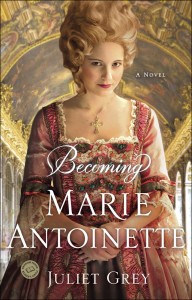
The winner of Becoming Marie Antoinette by Juliet Grey is

Kathy of Bermudaonion


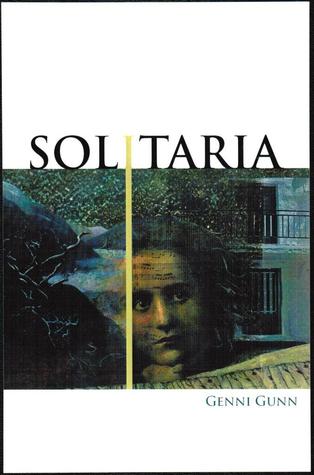
The winner of Solitaria by Genni Gunn is

Anna of Diary of an Eccentric


Congrats to everyone and happy reading.

112th Virtual Poetry Circle

Welcome to the 112th Virtual Poetry Circle!

Remember, this is just for fun and is not meant to be stressful.

Keep in mind what Molly Peacock’s books suggested. Look at a line, a stanza, sentences, and images; describe what you like or don’t like; and offer an opinion. If you missed my review of her book, check it out here.

Also, sign up for the 2011 Fearless Poetry Reading Challenge because its simple; you only need to read 1 book of poetry. Please contribute to the growing list of 2011 Indie Lit Award Poetry Suggestions, visit the stops on the National Poetry Month Blog Tour from April.

Today’s poem is from Nikki Giovanni‘s Quilting the Black-Eyed Pea collection:

A Robin's Nest in Snow (page 6)

Outside the window of my den
Where I sit usually counting clouds
Or airplanes or chipmunks scurrying by
On a snowy day I still see
The nest through the flurries

Snowflakes are so delicate they melt
     On your tongue
Sit proudly
     on your shoulders
Tangle themselves
     in your braids

Last spring I didn't know
A bird had made a home
In my river birch
There was activity but I thought
It was the crepe myrtle
Only when the tree exhaled
Did the life reveal itself

The snow piled up neatly
Filling the crevice
Hopefully destroying the viruses and bacteria
That can attack the young still blind robins
And I a survivor of lung cancer nestle
Hope in my heart that no harm will remain
When Spring and birds return

Let me know your thoughts, ideas, feelings, impressions. Let’s have a great discussion…pick a line, pick an image, pick a sentence.

I’ve you missed the other Virtual Poetry Circles. It’s never too late to join the discussion.

Enemy Women by Paulette Jiles

Enemy Women by Paulette Jiles is set during the U.S. Civil War in Missouri, which is torn apart by Union ties and Confederate rebel robberies and mischief.  Adair Colley’s father is taken by Union militia on suspicion of helping rebels, and the union soldiers have ripped through their home and taken many of their belongings.  Following the capture of her father, she and her sisters walk to inquire about their father’s imprisonment and to possibly barter for his freedom.  However, along the journey, Adair’s tactless mouth gets her in trouble and she is imprisoned in St. Louis and her sisters flee to relatives.  The novel is about the civil war peripherally and directly and how it impacts Adair and her life.

“There will be trouble in Missouri until the Secesh are subjugated and made to know that they are not only powerless, but that any attempts to make trouble here will bring upon them certain destruction and this . . . must not be confined to soldiers and fighting men, but must be extended to non-combatant men and women.” (Page 1 from beginning correspondence)

Jiles peppers the beginning of each chapter with “authentic” correspondence and dispatches from union and confederates alike, as well as from ordinary people.  On some occasions, these passages speak directly or indirectly to the action in the chapters they precede, but on others they do nothing more than offer additional background to the war and its terror.  They do provide a certain authenticity to a novel that is more fanciful in nature as Adair seems younger than her 18 years.  She sees the world as a young girl who believes that justice always prevails, and despite the challenges she faces, she seems unable to let go of her naivete.  She often is surprised by how people act and react, which she finds extremely disappointing.  Unfortunately, not much changes with Adair’s character throughout the book.  At times, she can be cunning and quick to make decisions that are beneficial, but at other times, she’s fumbling around and unable to be courageous.

“Do you not want out of here? He said.  He seized up the papers.  You think perhaps you care for me.  Would you care for me if you were not here? And dependent on my good will?” (page 126)

Jiles does have her moments where she demonstrates the changes in Missouri from farmland and traditional ways of life to a more industrialized and modern society.  Questions also are raised about whether Adair would have fallen in love with a union soldier had the war not taken place and they were not thrown together.  Readers may enjoy the plight of Adair, but they also may grow frustrated with her lack of growth and the plodding nature of the prose throughout the book.  War scenes only occur once or twice in the book, and while most of the book is about Adair and her journey, there are a couple of chapters thrown in that focus only on Major Neumann after he is sent to the war front from the St. Louis prison where Adair is held.

Enemy Women by Paulette Jiles illustrates the transitions Missouri and its people endured as a result of the war and its aftermath, and the harsh conditions the war brought to union and confederate alike is well depicted.  However, dialects and uneducated speech are not done well, and there are no quotation marks at all.  Moreover, the characterizations falter in several points in the book, and there are some convenient plot devices used to get Adair where she needs to go and to save her from discovery.  The ending left a great number of unanswered questions given the cryptic prose used by Jiles in the final moments of Adair’s story.  While Enemy Women by Paulette Jiles didn’t work most of the time, readers interested in the social impact of the U.S. Civil War might enjoy the story.

Please do check out the discussion for the read-a-long on War Through the Generations if you’ve read the book.


This is my 47th book for the 2011 New Authors Reading Challenge.


This is my 2nd book for the U.S. Civil War Reading Challenge 2011.
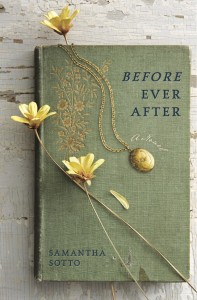


Guest Post: No Saber Tooth Tigers Allowed by Samantha Sotto

***First, I want to call attention to my poll in the left sidebar about my best of list at the end of the year.  I’m trying to gauge interest in it.  Please take a moment to weigh in.

I LOVED Before Ever After by Samantha Sotto so much, I just had to have her on the blog!  She was kind enough to stop by my review of her book, which I LOVED (OK, maybe I already said that, but if you don’t believe me, read my review; if you want other opinions, check out the TLC Book Tour stops) and friend me on Facebook, which I can now use to keep track of her latest books!

Today, she’s going to share with you her writing space, well the space she writes in since writing her first book, Before Ever After, in a coffee shop.  Enough from me, let me turn it over to Samantha.

No Saber Tooth Tigers Allowed

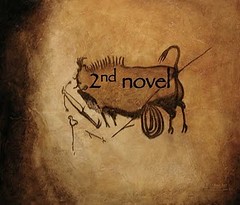
The oldest known cave art can be found in the Chauvet cave in France. The most common cave paintings are of large wild animals. One theory behind this theme is that it was meant to magically help increase the number of animals the cavemen hunted. Hmm…now if I could only figure out how I could make that work in writing caves. I’d probably doodle something like this:

I wrote Before Ever After at the same table at Starbucks over the course of a year. Now that I’ve started writing my second book, I’ve switched venues. (This novel is an entirely different beast from my first one. For starters, it has bigger horns – and it knows how to use them. I am presently firmly skewered onto one of them and am unable to budge from chapter twenty-two. But enough about the-novel-that-is-slurping-my-brain-out-with-a-straw. This post is about caves. And magic.)

The cavemen were on to something when they lived in caves. Caves sheltered them from the elements and made them feel safe. Inside them, they didn’t have to worry about being eaten alive or drowning in tar pits.

There are arguably less life-threatening dangers surrounding us today, but one doesn’t need the threat of a horrible death to need sanctuary. Whether it’s a quiet place to put our feet up and inhale cupcakes or a spot to hunker down with the iPad and break our Angry Birds record, we need to stake out a little corner of the Earth for ourselves, even for just a little while. It doesn’t have to be anything fancy. It simply has to be large enough to stretch our legs and spirits – without leaving any room for guilt. In this magical cave, for a stolen moment, it’s okay to not care about anyone but yourself.


Today, I thought it would be fun to take a field trip to my current cave. It’s perfect for hiding out from large predators, wrestling, er, writing second novels while the kiddos are in school, and exhaling. If that isn’t magical, I don’t know what is.

Thanks, Samantha, for sharing your writing space with us. I just love those shelves and all those great windows.

Month 1: Stephen King’s IT Read-a-Long

Welcome to the first discussion post for Stephen King’s IT Read-a-Long.  I hope you’ve had time to read the first part whether it be in broad daylight or under the covers in the dark with a book light.

Today we’re (Anna and myself, plus anyone else who plans on joining) going to talk about the first part of the book, plus the first interlude.

I’ve read IT before, but at a younger age and the book scared me silly.  However, it didn’t stop me from enjoying the horror genre or reading Stephen King books.  I was excited when Anna agreed to a read-a-long of the book, because honestly I don’t think she would have tackled it on her own…simply because of the clown!  I could be wrong though.  Anyway, I started reading part one and it all flooded back to me and I was right there with old acquaintances in Derry, Maine.  What is striking to me is how well King uses third-person omniscient POV.  You get to see everything these characters are, have been, and wish to have been, and the fear they have of Derry and the promise they made is powerful.

IT is described as a clown, but there is something darker and sinister about Pennywise — his yellow eyes and sharp teeth — and it seems as though he’s a metaphor for other things in the town, especially when you read about the homosexual bias and other hate that pervades the small town.  Is he just a manifestation of the dark undercurrent of the town, or is he a real demon clown bent on killing children?  Only time will tell.

For some reason, beyond Stuttering Bill (Georgie’s older brother), Eddie has always been memorable.  I think part of it has to do with his wife and how much she resembles his over-protective mother.  But at the same time, his wife, Marty, is so dependent upon him.  You feel him being pulled in two directions, between his childhood promise and his wife.

One thing I notice now that I probably didn’t notice as a kid is the similarities between Bill Denbrough and Stephen King in terms of writing horror stories.  It also made me wonder about whether King had similar thoughts to Denbrough about a teacher,  or maybe an agent or publisher, who didn’t appreciate his writing.

Book cover of the edition I read as a kid

These are my initial thoughts, what about you?  But first, here are some questions that I’d like to pose:

1.  Is this your first time reading Stephen King?  If so, what have you enjoyed about the reading so far?  How’s the writing?  If this is not your first time, what’s brought you back to reading Stephen King?

2.  What are your first impressions of the characters you’ve been introduced to so far?

3.  Pennywise the Clown lives in dark places like the sewer, do you think he’s real?  Scary?

4.  How do you feel about the use of an Interlude between the parts?  what purpose do you think it serves?

Please feel free to pose your own questions in the comments.

If you’d like to link up to the discussion, please do so in the Mr. Linky below:

In September, on Sept. 28, we’ll be discussing Part 2, plus the interlude on Diary of an Eccentric.  For the rest of the schedule, go here.

Interview: Harrison Demchick on Changes in Publishing

Harrison Demchick of Bancroft Press in Baltimore, Md., agreed to be interviewed about publishing and editing, his current job and his new adventures.

His new Really Good Editing business is up and running for writers looking for a personal touch from an editor — the Website will be up soon.  Until then, you can check out his work through the icon and link to his Facebook page.  Also, feel free to email (reallygoodediting AT gmail DOT com) him if you are interested in his editorial services.

Without further ado, here’s our interview:

1.  Tell us a little bit about your publishing work and how you got started with the small press, Bancroft Press.

I started out at Bancroft Press as an intern in the summer of 2005. I was heading into my senior semester at Oberlin College and looking to get some editorial experience, and I couldn’t have found a better place. By the end of the summer, I was working on book-to-film adaptation and editing novels, and when I graduated in December, I knew Bancroft Press, and more broadly the publishing industry, was where I wanted to be.

I am extraordinarily proud of the work I’ve done at Bancroft. I’ve been lucky enough to edit all sorts of novels for all sorts of readers, most of which have been well-received, and I’ve had opportunity after opportunity to hone my skills as an editor. I can’t forget that I’m one of the lucky ones—I’ve been in a position to do what I love since the day I graduated. And I’ve learned a lot in the process.

2.  How has the publishing industry changed and what fears/concerns has it raised for you on a personal and professional level?

It’s difficult to tell sometimes where the publishing industry has changed and where it’s only my perspective that’s changed. Other times, there’s no doubt. My time in the industry has happened to correlate with the rise of the eBook, which has had a drastic effect on the industry. Every publishing house is struggling to adapt, and Bancroft Press is no different.

The way I see it is this: There have never been more ways for a writer to get his work out there. eBooks make self-publishing incredibly easy, and for a very select few, incredibly profitable. And the simultaneous rise of social media means there have also never been more ways to generate free publicity. But on the flip side, that means the industry has never been so crowded. The majority of eBooks, which don’t require the filter of publisher or editor, are inevitably going to be terrible. The new status quo doesn’t make things easier. It makes them harder.

I am very nervous about an industry that seems increasingly focused on marketing over quality. To create a hit book, more than a great product, you need a great campaign that makes optimal use of social media, and the right combination of print books and eBooks. As someone who has edited a number of books that have been genuinely terrific, it’s extremely frustrating to fight that marketing battle. Authors are told now that they need to spend two years building up their audience before their book ever comes out. That shouldn’t be. Authors should simply be able to write great books and have them succeed because they’re great.

But that’s not the way it works anymore. Maybe it never worked that way. But I’ve seen marketing become a greater and greater part of my job, and it’s not what I want to do. I don’t want to see the publishing industry reward popularity over creativity. Perhaps more than any other business, this is supposed to be a meritocracy.

Naïve? Definitely. But that’s how I feel.

3.  Rather than begin a freelance editing business, why not transition the publishing house to e-books?  Or is that also a consideration; if so, what challenges have you found in that transition process?

I don’t think going eBook-exclusive is the way to go. Understanding of the print book market is one of the critical advantages traditional publishers still have, and for all the upheaval and transformation, I don’t believe print books are dying. They’re just reaching a new equilibrium. That said, I’ve certainly been working hard these last couple years to help Bancroft Press adjust to the new reality. Figuring out new media has been a major challenge, especially seeing as we’re not natural marketers here at Bancroft. We’re book people.

Launching Really Good Editing simultaneously is far more of a personal decision. The part of this job I truly love is editing, and working with writers to make their work as wonderful as it can possibly be. Marketing is nothing but stress for me, but editing? Editing is pure meditation.

I wanted a job that would remove me from the parts of the job and the industry I don’t care for and zero in on what I really want to be doing. And that’s not to say starting a new business doesn’t also require marketing. Why, I’m marketing right now! And that’s also not to say that I don’t help my clients think about how to market their books. But primarily, I’m focused on the editing in a way I can’t be at Bancroft.

4.  What makes your freelance business, Really Good Editing, different from your competitors?  Is it lower rates, personal attention, something more?

I like to say that I write the longest and most detailed editorial letters known to man. Actually, this is probably true, but it also points to the distinction, which is that I’m a complete developmental editor. I don’t fix spelling and grammar and add the right punctuation—or, well, I do, but that’s not the main thing I do. I examine character, logic, and story. I diagnose what isn’t working in a manuscript, determine why it isn’t working, and explain to the author how it can work.

My goal is to teach an author how to make her work better. I don’t think most editors do that. I don’t think most editors know how. One of the most common responses I get from the authors I work with is that I haven’t just made their manuscripts better. I’ve made them better writers.

So, definitely, personal attention is a part of it. But I think the primary distinction is that I’m really, really good at this. I’m different because I’m the best. That sounds really egotistical. But it’s true.

5.  Has the decision to provide editing services been influenced by what some have noted as a lack of editing for some of the books coming out of the larger publishing houses?

It has not, but it’s definitely true that the major publishers no longer engage in real, in-depth editing. Some indie publishers like Bancroft Press still edit, but you go to Penguin and it’s probably not the case. They want the manuscripts they receive to be pretty much ready to go before they take them on.

So while it’s not a motivation for me that the big publishers behave this way, the fact that they do certainly suggests that writers need to invest in editors like me before they submit their manuscripts for publication.

6.  Do you think publishing books has become too much like a business and less about the art of writing and creating memorable tales and poignant stories about the human condition and society?

Absolutely. One hundred percent. I don’t know that stories need to be poignant and focused on the human condition necessarily—I’m not of the opinion that all fiction should be “literary fiction,” versus entertainment or genre fiction—but they should absolutely be stories that come from the author.

I hear about certain publishing houses where ideas come from the marketing department and are bandied about by editors before a writer is assigned to the job. That scares the hell out of me. And these books end up being insanely popular, yet they could not be more artificial.

Writing—fiction especially—is an art. And if the publishing houses that actually have the money and marketing might would use their strength for great books, and not just obviously popular books, I think we’d have a far healthier publishing industry.

7.  What are some of your personal obsessions or favorite reads from this year?

I’m rarely reading something new and popular. My bookshelf is filled with various books from various eras I haven’t gotten around to yet, and because so much of my job is reading, I so rarely do. I’ve just gotten back from vacation, during which I finally got some reading done. I read about half of Thomas Harris’s Red Dragon before losing it (darn it), then read Eoin Colfer’s continuation of Douglas Adams’s Hitchhiker’s Guide to the Galaxy series, And Another Thing . . ., and finally started Stephen King’s The Shining, which I’ve always been curious about. (So far, it’s fantastic.)

As for personal obsessions, I’ve just spent Saturday at the Baltimore Comic-Con digging through thousands of comics searching for Spider-Man guest appearances. Does that count?

Thanks, Harrison, for answering my questions and for sharing your experiences.

This is a stop on The Literary Road Trip since Harrison works for a local publisher.

Mailbox Monday #140

Mailbox Mondays (click the icon to check out the new blog) has gone on tour since Marcia at A Girl and Her Books, formerly The Printed Page passed the torch.  This month our host is Life in the Thumb.  Kristi of The Story Siren continues to sponsor her In My Mailboxmeme.  Both of these memes allow bloggers to share what books they receive in the mail or through other means over the past week.

Just be warned that these posts can increase your TBR piles and wish lists.

Here’s what I received this week:

1.  Seeing Is Believing: [Observations on the Mysteries of Photography] by Errol Morris for review from TLC Book Tours in September.

2.  My Soul to Take by Tananarive Due for review.

What did you receive this week?

111th Virtual Poetry Circle

Welcome to the 111th Virtual Poetry Circle!

Remember, this is just for fun and is not meant to be stressful.

Keep in mind what Molly Peacock’s books suggested. Look at a line, a stanza, sentences, and images; describe what you like or don’t like; and offer an opinion. If you missed my review of her book, check it out here.

Also, sign up for the 2011 Fearless Poetry Reading Challenge because its simple; you only need to read 1 book of poetry. Please contribute to the growing list of 2011 Indie Lit Award Poetry Suggestions, visit the stops on the National Poetry Month Blog Tour from April.

Today’s poem is from Brian Turner‘s collection, Here, Bullet; the title poem from page 13 as read by Turner himself, plus the text below the video:

Here, Bullet

If a body is what you want,
then here is bone and gristle and flesh.
Here is the clavicle-snapped wish,
the aorta’s opened valves, the leap
thought makes at the synaptic gap.
Here is the adrenaline rush you crave,
that inexorable flight, that insane puncture
into heat and blood. And I dare you to finish
what you’ve started. Because here, Bullet,
here is where I complete the word you bring
hissing through the air, here is where I moan
the barrel’s cold esophagus, triggering
my tongue’s explosives for the rifling I have
inside of me, each twist of the round
spun deeper, because here, Bullet,
here is where the world ends, every time.

Let me know your thoughts, ideas, feelings, impressions. Let’s have a great discussion…pick a line, pick an image, pick a sentence.

I’ve you missed the other Virtual Poetry Circles. It’s never too late to join the discussion.

Guest Post & Giveaway: Author Genni Gunn’s Writing Space

Today’s guest post is from author Genni Gunn, whose latest book Solitaria is a mystery set in Italy spanning from 1926 through 2002 as the Santoro family uncovers the truth about their ancestor Vito’s death.

From the publisher about Solitaria:

When Vito Santoro’s body is inadvertently unearthed by a demolition crew in Fregene, Italy, his siblings are thrown into turmoil, having been told by their sister Piera that Vito had fled to Argentina fifty years earlier after abandoning his wife and son. Piera, the self-proclaimed matriarch, locks herself in her room, refusing to speak to anyone but her Canadian nephew, David.

Now scattered over three continents, the family members regroup in Italy to try to discover the truth. They all arrive rife with their own resentments and conflicting desires: Aldo, the successful barrister everyone leans on; Teresa, the angry, abandoned wife; Renato, who lost Teresa to his brother Vito; Mimi, the bitter, ironic baby of the family; Clarissa, the famous opera diva whose peripatetic life had her frequently leaving her son David in the care of Piera; and David who reluctantly accompanies his mother to Italy to bury his long-lost uncle.

Set against the countryside of Italy’s Adriatic coast, Solitaria is a tale of longing and family honour, told from two points of view: Piera’s and David’s. With the unravelling of their stories, we glimpse a woman’s growing awareness of her own capacity for self-delusion, and of the consequences of her actions on others, and a young man’s awakening to the depth of his roots.

Gunn was kind enough to share with us her writing space and inspiration today.  Please give her a warm welcome.

First of all, let me confess to a peripatetic nature, which shows up in all aspects of my life, including how and where I write.

For example, the writing for my latest novel, Solitaria, has spanned two continents. Set in Canada and Italy, it required a lot of research – a real bonus – into both contemporary Italy, and the Italy of the 30s and 40s where some of the novel is set. I was born in Trieste, and have many relatives in Italy, so travelling there was more than a research trip, it was a journey into my family’s past, and turned a large portion of Italy into my personal writing space.

I spent many hours writing in Rutigliano, a small town in the Puglia region of Italy, which rises amid olive groves and vineyards, a small circular town with a walled historic centre, and concentric waves of nondescript houses erected in the late 1960s. If you follow the curving one-way street on patched pavement from the town’s outskirts, you will end up in front of a gigantic archway called Porta Nuova, the “New Door” built in the eighteenth century. To the right of the portal is a small piazza with outdoor tables and chairs, where, at night, men congregate to play cards, and directly above it is the room where I spent a month each year for four years, writing and researching, and immersing myself in the world of my protagonist, Piera.

Inside, I reclined on a pink, silk, frayed chaise lounge – like an 18C heroine – typing into my laptop in English, while people I interviewed spoke about their lives and times in Italian. This, in itself, I found rather extraordinary, because it didn’t seem to require any effort. At the end of the day, my family would convene for a late supper, then I’d go back to the laptop and read my day’s work, trying to determine what I could use, and rewording what I’d typed.

And when I left to return to the airport in Rome, the writing emerged from the rhythm of trains: I scribbled in journals and typed into my laptop, the southern Italian landscape hurtling by. I have a particular love of trains, which I suspect has to do with the lulling movement, and with open-ended destinations, a continuum of departures and arrivals, which eventually always leads home.

And home is where I do many of the drafts and final editing of books. Here, my writing space is an office on the second floor. A bookcase covers one wall, and because I work in several genres at once, it is packed not only with books, but with ongoing projects, which are neatly hidden behind closed bevelled-glass doors. Across from the bookcase is my desk – a vast area which, depending on how well the writing is going, is disordered (working well) or tidy (not working well). The wall between desk and bookcase is mostly window and faces the back garden so that in times of dreamy summer reflection, I can stare out at the cluster of magenta dianthus, the pink and white foxglove, the brilliant blue puffs of the California lilac, and the coral geraniums against the green cedar hedge. It’s a lovely distraction, and writing, I find, feeds on distractions and diversions, which may well explain my love and need for movement and travel, for altering landscapes to nurture the creative in me.

Thanks, Genni, for sharing your writing space with us.  Also, check out this book trailer.

About the Author:

GENNI GUNN is a writer, musician and translator. Born in Trieste, she came to Canada when she was eleven. She has published nine books: three novels—Solitaria, Tracing Iris and Thrice Upon a Time; two short story collections—Hungers and On The Road; two poetry collections— Faceless and Mating in Captivity. As well, she has translated from Italian two collections of poems—Devour Me Too and Traveling in the Gait of a Fox by renowned Italian author, Dacia Maraini. Two of Genni’s books have been translated into Italian.

To enter the giveaway; either a hard copy of Solitaria for US/Canada or Kindle download open worldwide:

1.  Leave a comment about whether you prefer hard copy or Kindle of Solitaria and any transcontinental or mystery novels you enjoyed recently.

2.  Follow the blog for a second entry and leave a comment.

3.  Spread the word by blogging, tweeting, or Facebooking the giveaway and leaving a comment to your post for another entry.

Deadline Aug. 26, 2011, at 11:59PM EST.