Quantcast

Gaithersburg Book Festival 2015

Every year in May I look forward to attending the local book festival of local artists, poets, and authors sharing their words and ideas with us.  Each year, there are writing workshops and activities for whole families, including young kids.  Click the image for this year’s schedule.

During the 2013 festival, I had the honor of introducing three poets — Eric Pankey, Sally Keith, and Sarah Arvio — which went well despite the rain when fellow book clubbers came to hear them read and me introduce them.  It was all very informal for Poetry in the Afternoon.

This year, I have the great honor of moderating a panel for two wonderful historical fiction authors — Sarah McCoy and Erika Robuck!  I cannot wait to introduce them to readers and then ask them questions!

If you’re going to be in town and want an easy way to navigate the festival and its panels, there’s an app for that — and it’s free — for Android and Apple phones!  I’ve been playing around with it and marking my favorite panels that I want to see.

Where: 

Gaithersburg City Hall
31 S. Summit Avenue
Gaithersburg, MD 20877

When: 10 a.m. – 5 p.m.

Review and Giveaway: Beach Town by Mary Kay Andrews


Synopsis from GoodReads:

Greer Hennessy is a struggling movie location scout. Her last location shoot ended in disaster when a film crew destroyed property on an avocado grove. And Greer ended up with the blame.

Now Greer has been given one more chance—a shot at finding the perfect undiscovered beach town for a big budget movie. She zeroes in on a sleepy Florida panhandle town. There’s one motel, a marina, a long stretch of pristine beach and an old fishing pier with a community casino—which will be perfect for the film’s climax—when the bad guys blow it up in an all-out assault on the townspeople.

Greer slips into town and is ecstatic to find the last unspoilt patch of the Florida gulf coast. She takes a room at the only motel in town, and starts working her charm. However, she finds a formidable obstacle in the town mayor, Eben Thinadeaux. Eben is a born-again environmentalist who’s seen huge damage done to the town by a huge paper company. The bay has only recently been re-born, a fishing industry has sprung up, and Eben has no intention of letting anybody screw with his town again. The only problem is that he finds Greer way too attractive for his own good, and knows that her motivation is in direct conflict with his.

Will true love find a foothold in this small beach town before it’s too late and disaster strikes?

Review from my mom:

Plot: The plot was exciting, though about halfway through it started to be predictable.  However, that did not detract from my enjoyment of the novel. Some mystery, but mostly fast moving because of the movies that were being made on location.

Characters:  Greer Hennessy was ambitious when she set her mind to accomplishing tasks. Eben Thinadeaux, the mayor of the town who also owned a store, was a busy busy man, which makes romance a challenge.

Setting: The Florida setting was well illustrated with Andrews’ prose. 

Recommended: Definitely recommended for is fast-moving plot; very quick read.

To enter the U.S. only giveaway, you must be a resident with a valid mailing address and over age 18.

Leave a comment below to be entered by May 20, 2015, 11:59 PM EST.

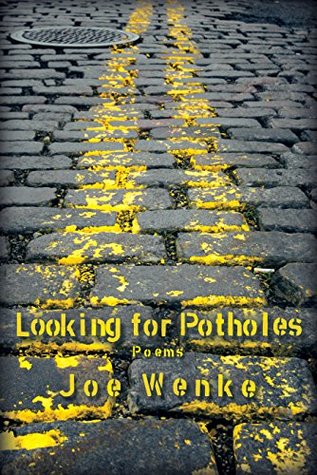
Looking for Potholes by Joe Wenke

Source: Meryl L. Moss Media Relations
Paperback, 93 pgs
I am an Amazon Affiliate

Looking for Potholes by Joe Wenke explores the changing fluid world in which live and the fluidity of the relationships we have with one another.  Like in “Then and Now,” it starts off simply discussing how when we are young, we can shoot baskets and drink soda, but when we age we cannot.  But he goes deeper to suggest that as we age we tend to close ourselves off to new experiences and relationships, but also to even those relationships and experiences we already find ourselves in.  “You used to keep going./Now you stop.//We’re here for the moment./No one knows/how long you stay open,/when you close.”  (pg. 3)

Life is full of potholes, those moments where things are thrown off track.  Wenke is adept at twisting subtle insults and jabs into something that can be admirable, like being considered “Choosy” which means the narrator had the fortitude to choose the partner he’s with and calling him choosy.  Wouldn’t you want some who is discerning pick you?  Many of these poems lack a sense of regret, but applaud the sense of acceptance and living in that moment and making it the best.  “Lying Liars” is a poem steeped in irony, with the liars continuing to spin their tales to your face and behind your back because that’s all they know how to do.  But the rub is that the people they speak to don’t believe them, and the liars end up deceiving themselves.

The Stranger (pg. 33)

Last night
we saw each other
for the first time
in years.
My fears
of an epic confrontation,
an ugly conflagration
sparked by a chance encounter -- 
the accidental meeting
of two people
who once loved
but then profoundly
hated each other --
were unfounded.
You look at me
for just a moment 
with no change in expression
or sign of recognition
that I could see.
Then you turned away
from me
and walked on --
as if you were
a total stranger.

Looking for Potholes by Joe Wenke is a little bit more serious than Free Air, but these poems are still infused with wit and satire.  The turns of phrase can sometimes catch readers off guard as well, but these poems are well worth the read.

About the Poet:

DR. JOE WENKE, an outspoken and articulate LGBT rights activist, is the owner and managing partner of Xperience, a multi-million dollar marketing communications and production company with offices in New York, Boston and Detroit. He is also the founder and publisher of Trans Über, a publishing company with a focus on LBGT rights and promoting freedom and equality for all people.

He began his career as an editor at the Foundation Center in New York City. He was a speechwriter at Avnet for Tony Hamilton, the founder of the global electronics distribution industry, and wrote speeches for George Conrades, the head of IBM US. As a senior vice president at Caribiner International he served as the company’s lead communications strategist and head of global accounts.

Wenke received an M.A. in English from Pennsylvania State University and a Ph.D. in English from the University of Connecticut. He is a regular columnist in the Huffington Post. His books look into the religious underpinnings of LGBT discrimination in America, including YOU GOT TO BE KIDDING! The Cultural Arsonist’s Satirical Reading of the Bible. His next book, PAPAL BULL: An Ex-Catholic Calls Out the Catholic Church, will be published later this Fall. He is also author of “Mailer’s America” about the lifework of Pulitzer-prize winning American author Norman Mailer.


The Sound of Glass by Karen White

Source: New American Library
Hardcover, 432 pgs
I am an Amazon Affiliate

The Sound of Glass by Karen White, published today, embarks on a journey that will leave readers slowly unraveling the interconnected lives of Mrs. Heyward in the late 1950s and the Mrs. Heyward in the new millennia.  Edith Heyward is a woman who lives a closed life in her attic where she makes wind chimes out of sea glass, but she also lives a large life inside those tiny, humid walls.  She tiptoes around not only her husband, but also her son and one of her grandsons, but even after they have left her home, she still closes herself off from the outside world.  Meanwhile, Merritt Heyward, who married Edith’s grandson Cal, has taken the chance and given up her life in Maine to come to Beaufort, S.C., where a home she’s inherited as Cal’s widow lays out its secrets in a methodical way.

“She’d barely slid from her stool when the sky exploded with fire, illuminating the river and the marshes beneath it, obliterating the stars, and shooting blurry light through the milky glass of the wind chime.  The stones swayed with shocked air, singing sweetly despite the destruction in the sky behind them.  Then a rain of fire descended like fireworks, myriad balls of light extinguished as soon as they collided with water into hiccups of steam.”  (pg. 2 ARC)

While much of Edith’s pain is in secret, except to her immediate family, her sense of justice and right will push her to investigate the mysterious plane crash above her home in South Carolina.  As she works on this case in secret, she’s simultaneously balancing the need for family calm and the desire for change within the family dynamic.  What ultimately drives her family to separate will also bring it back together and resolve a nearly 50 year old mystery.

“‘She always said that only fools thought all glass was fragile.'” (pg. 31 ARC)

Fast-forward to the present day, and Merritt find herself trying to curl up into a ball on her own, only to realize that Southern manners will not allow it.  On top of her new well-meaning neighbors, she also must confront a brother-in-law she never knew about and adjust to life with her step-mother and younger brother Owen.  As Merritt learns the traditions of Southern living, she also begins to realize that like drinking Coke with peanuts, you have to take the bitter with the sweet in life.  While she may have found love with Cal, she also knew there were wounds that would never heal, and some that hovered below the skin’s surface that she was unaware of.

The Sound of Glass by Karen White is a multi-layered story about family, their secrets, and the innocuous connections that can lead to lasting relationships and memories to be cherished.  What breaks us can only make us stronger, and in some cases, some of us are unaware that we are broken and in need of fixing.  Denial can be a powerful drug, as can self-protection, but family bonds and love are the only true healing power in this story and in our own lives.  White is a successful writer of Southern, women’s fiction for a reason, and once readers buy one book, they’ll be addicted and buy the rest!

***Another contender for the 2015 Best List***

About the Author:

Known for award-winning novels such as Learning to Breathe, the Southern Independent Booksellers Alliance 2009 Book of the Year Award finalist The House on Tradd Street, the highly praised The Memory of Water, the four-week SIBA bestseller The Lost Hours, Pieces of the Heart, and her IndieBound national bestseller The Color of Light, Karen has shared her appreciation of the coastal Low country with readers in four of her last six novels.

Italian and French by ancestry, a southerner and a storyteller by birth, Karen has made her home in many different places.  Visit the author at her website, and become a fan on Facebook.

My other reviews:

Mailbox Monday #322

Mailbox Monday, created by Marcia at To Be Continued, formerly The Printed Page, has a permanent home at its own blog.

To check out what everyone has received over the last week, visit the blog and check out the links.  Leave yours too.

Also, each week, Leslie, Vicki, and I will share the Books that Caught Our Eye from everyone’s weekly links.

Here’s what I received:

1.  Making Your Mind Up by Jill Mansell, my Christmas present has finally arrived!

Lottie Carlyle isn’t looking for love when she meets her new boss, Tyler Klein. Living in a beautiful cottage with her two kids in a idyllic village in the heart of the Cotswolds, she’s happy enough with her lot. Tyler’s perfect for Lottie and she quickly falls for him, but her children do not approve.

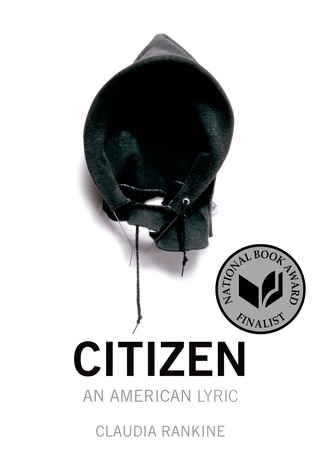
2.  Citizen: An American Lyric by Claudia Rankine, my second Christmas present has finally arrived!

Claudia Rankine’s bold new book recounts mounting racial aggressions in ongoing encounters in twenty-first-century daily life and in the media. Some of these encounters are slights, seeming slips of the tongue, and some are intentional offensives in the classroom, at the supermarket, at home, on the tennis court with Serena Williams and the soccer field with Zinedine Zidane, online, on TV—everywhere, all the time. The accumulative stresses come to bear on a person’s ability to speak, perform, and stay alive. Our addressability is tied to the state of our belonging, Rankine argues, as are our assumptions and expectations of citizenship. In essay, image, and poetry, Citizen is a powerful testament to the individual and collective effects of racism in our contemporary, often named “post-race” society.

3.  Earth Joy Writing by Cassie Premo Steele, Ph.D. from Ashland Creek Press for review.

Earth Joy Writing is a writer’s guide to reconnecting to the earth. In chapters divided by seasons and months of the year, this book will guide you through reflections, exercises, meditations, and journaling prompts—all designed to help you connect more deeply with yourself, others, and your natural surroundings.

Weaving together poetry, stories, and cultural wisdom, Earth Joy Writing invites us to consider our connection to the earth and offers hands-on exercises that will help us meaningfully reconnect with our creative selves and with the planet we all share.

“Earth Joy Writing is about finding joy when we align our creative practices with natural principles. It is about living in harmony with our deepest selves and the natural world. It is about committing to a mindfully creative life in collaboration with nature and, in the process, healing both ourselves and the earth.” — Cassie Premo Steele

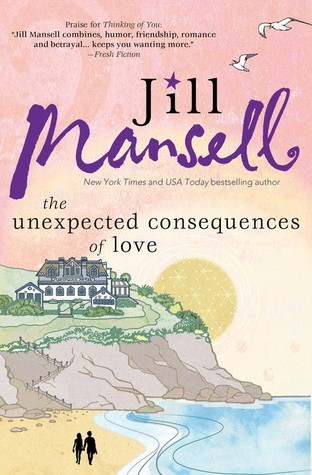
4. The Unexpected Consequences of Love by Jill Mansell my final Christmas gift.

Sophie Wells is a successful photographer with a focus on putting the past firmly behind her. When Josh Strachan returns to the seaside town of Cornwall from the States to run his family’s hotel, he can’t understand why the fun, sexy girl has zero interest in letting him-or any man for that matter-into her life. He also can’t understand how he’s been duped into employing Sophie’s impulsive friend Tula, whose crush on him is decidedly unrequited. Both girls remain mum about the reasons behind Sophie’s indifference to love. But that doesn’t mean Josh is going to quit trying…

5.  River House by Sally Keith from Milkweed Editions.

These are poems of absence. Written in the wake of the loss of her mother, River House follows Sally Keith as she makes her way through the depths of grief, navigating a world newly transfigured. Incorporating her travels abroad, her experience studying the neutral mask technique developed by Jacques Lecoq, and her return to the river house she and her mother often visited, the poet assembles a guide to survival in the face of seemingly insurmountable pain. Even in the dark, Keith finds the ways we can be “filled with this unexpected feeling of living.”

What did you receive?

305th Virtual Poetry Circle

Welcome to the 305th Virtual Poetry Circle!

Remember, this is just for fun and is not meant to be stressful.

Keep in mind what Molly Peacock’s book suggested.

Look at a line, a stanza, sentences, and images; describe what you like or don’t like; and offer an opinion. If you missed my review of her book, check it out here.

Today’s poem is from Charles Bukowski:

The Secret of My Endurance

I still get letters in the mail, mostly from cracked-up
men in tiny rooms with factory jobs or no jobs who are
living with whores or no woman at all, no hope, just
booze and madness.
Most of their letters are on lined paper
written with an unsharpened pencil
or in ink
in tiny handwriting that slants to the
left

and the paper is often torn
usually halfway up the middle
and they say they like my stuff,
I’ve written from where it’s at, and
they recognize that. truly, I’ve given them a second
chance, some recognition of where they’re at.

it’s true, I was there, worse off than most
of them.
but I wonder if they realize where their letters
arrive?
well, they are dropped into a box
behind a six-foot hedge with a long driveway leading
to a two car garage, rose garden, fruit trees,
animals, a beautiful woman, mortgage about half
paid after a year, a new car,
fireplace and a green rug two-inches thick
with a young boy to write my stuff now,
I keep him in a ten-foot cage with a
typewriter, feed him whiskey and raw whores,
belt him pretty good three or four times
a week.
I’m 59 years old now and the critics say
my stuff is getting better than ever.

What do you think?

Take a Peek with Peek-a-Bear by Jill Mangel Weisfeld

Source: STRATEGIES Literary Public Relations
Hardcover, 12 pgs
I am an Amazon Affiliate

Take a Peek with Peek-a-Bear by Jill Mangel Weisfeld, illustrated by Garry Thorburn, is one of the latest favorites in my house.  My daughter can just spend some quiet time with this one in her lap and experience what Peek-a-Bear experiences even without someone reading the text to her.  She knows the various modes of transportation the bear finds himself traveling on already, which probably helps with her own version of the narration.

Peek-a-Bear has some interactive parts that readers can pull, lift, open, and rotate to see the latest scene.  He rides all kinds of transportation vehicles from a Ferris Wheel to a boat and train.  He takes a number of trips in this book and sees some fascinating creatures, including an octopus who likes peanut butter.  Take a Peek with Peek-a-Bear by Jill Mangel Weisfeld, illustrated by Garry Thorburn, is fun and can be turned into a game of what do your kids see outside the window.  This game can be carried over into your own travels on vacation or just to the grocery store.

Hope to Die by James Patterson (audio)

Source: Public Library
Audio, 9.5 hrs
I am an Amazon Affiliate

Hope to Die by James Patterson, narrated by Michael Boatman from Spin City and  Scott Sower from Cracker, wraps up the search for Marcus Sunday, leading Cross from D.C. to Pennsylvania, West Virginia, and New Orleans.  Det. Alex Cross has hit his lowest point, effectively having lost everything that matters to him most — his family.  Sunday has found exactly the weakest point in Cross’ character, and he seeks to exploit it to prove his own theories that the perfect detective does not exist.  Patterson is at his best with these latest two novels — Cross My Heart and Hope to Die — because Alex Cross is tested beyond anything ever before.  As he is emotionally low, he has to wrestle with the moral dilemma before him — give in to the murderous demands of a kidnapper or lose his family forever.

Cross has to take a backseat for a while as Sunday keeps tabs on his suffering remotely, but even that doesn’t last for too long.  Concussed Alex Cross is soon on the road with his foster daughter, seeking answers to the mystery of Sunday and his desire to see Cross and his family suffer.  The audio books are the best way to listen to this series because they are thrilling productions with music and sound effects, and actors who do not merely read the books but act them out.

Hope to Die by James Patterson, narrated by Michael Boatman from Spin City and  Scott Sower from Cracker, is an edge-of-your-seat thriller that will leave readers of the series on the edge of their seats.  Will the entire Cross family survive this ordeal and if they do, how will it change them?  Patterson has taken this series to the next level and gotten back to the roots of what has made this series an enduring hit.

About the Author:

James Patterson is a prolific author of thrillers, mysteries, young adult novels and more. His first successful series featured psychologist Alex Cross.

The History of Rock ‘n’ Roll in Ten Songs by Greil Marcus, Read by Henry Rollins

Source: Audible
Audio, 7 hrs
I am an Amazon Affiliate

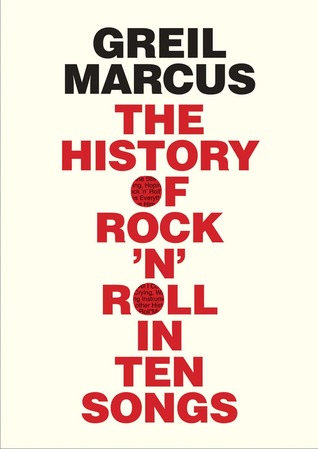
The History of Rock ‘n’ Roll in Ten Songs by Greil Marcus, read by Henry Rollins, examines rock and roll history in a unique way, threading together not only U.S. history and the British invasion, but also the influences and changes that occur when new artists take on old songs and make them new.  The artists breathe new life into these songs based on their own experiences and influences, and while the songwriters are often in the background and not praised as much for their work writing them, they provide the backbone that sets these No. 1 hits on their paths to greatness.  Each chapter of the book is broken up to discuss a particular song, but Marcus’ writing style often seems like he’s just producing a name-dropping litany, rather than fleshing out the history of those songs.

The songs he selected were Shake Some Action; Transmission; In the Still of the Nite; All I Could Do Was Cry; Crying, Waiting, Hoping; Instrumental Break; Money (That’s What I Want) Money Changes Everything; This Magic Moment; Guitar Drag; and To Know Him Is To Love Him.  While the Beatles could not be ignored given their wide-ranging influence on rock and roll, Marcus does select songs and singers who were not necessarily as big, including Joy Division and others in Motown and other genres.  Rollins does a great job at pacing his reading of this book, but readers will still hear the run-on sentences and the excessive use of commas, as well as the tangential stream-of-conscious discussion that is all Marcus.

The History of Rock ‘n’ Roll in Ten Songs by Greil Marcus, read by Henry Rollins, is an experimental thesis that the genesis of music is the interplay of chords, song, voice, and other factors, but it also strives to demonstrate how music from all genres influences not only what is produced today, but what has been produced previously.  While many would say that there is nothing new in music, Marcus would disagree — as he does in the interview with Rollins — saying that each artist places their own flavor and influence on a song, making it into something new.  The possibilities are endless.  While readers can appreciate Marcus’ musical knowledge and experience, as well as his tracking of history, the execution of this book bogs down the pacing and will leaver readers’ minds wandering.  An experience that, perhaps, could have been improved by some audio snippets of the songs he discusses.

About the Author:

Greil Marcus is the author of Mystery Train (1975), Lipstick Traces (1989), The Shape of Things to Come (2006), When that Rough God Goes Riding and Bob Dylan by Greil Marcus (both 2010), and other books. With Werner Sollors he is the editor of A New Literary History of America (2009). In recent years he has taught at Berkeley, Princeton, Minnesota, NYU, and the New School in New York. He lives in Oakland, California.

The Antigone Poems by Marie Slaight with charcoal drawings from Terrence Tasker

Source: Altaire Productions & Publications & TLC Book Tours
Paperback, 104 pgs.
I am an Amazon Affiliate

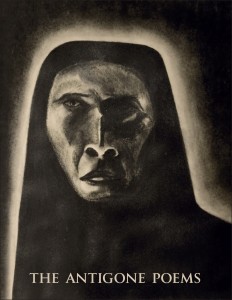
The Antigone Poems by Marie Slaight, with charcoal drawings by Terrence Tasker that resemble the one on the cover (who may be is Antigone), is unique in that it is inspired by the Sophocles play but that it is not explicit in its references.  Antigone is the third in the Theban plays written by Sophocles and she was a very stubborn character who fought for her familial duties.  She is not only stubborn but very passionate about her beliefs.  The Antigone we meet in these poems is very passionate and very torn, but there also is an underlying darkness to her actions.  Slaight brings out her inner fears of death, which she believes is imminent even as she continues to defy the authorities and the gods with her actions out of duty.

Slaight employs some fantastic imagery, like “If this perfume doesn’t burst/It will twist into venom.” (pg XVII) and “Silence and decline/And a veil of grey descending.” (pg. LXXIII)  Coupled with the stunning charcoal drawings from Tasker, which remind me of the Greek masks worn when the old plays were acted out, the collection evokes deep sadness, turmoil and concern.  One of my favorite images is a side profile in which just the face is shadowed on a cream background and the hair is left without definition.  There is a fierceness in the woman’s brow and chin, but sadness can be found in her down-turned mouth.

From pg. LVII

Carver
Twist
You mark
In flesh.

Sculptor

Smash
This stone
In death.

Your anguish sought this blackened veil.
Your anger wrought this iron hell.

The Antigone Poems by Marie Slaight, with charcoal drawings by Terrence Tasker, is a fascinating collection of passionate and terrifying poems depicting the inner turmoil of Antigone, who fought for what was morally right and what she thought of as her duty to her brother.  She gives up everything with her battle to bury her shamed brother, including her betrothal to the prince of Thebes.  Slaight has a deft poetic hand when it comes to this tortured and head-strong character.  Her poems are cryptic, but infused with strong emotion.  Some surface background on the character of Antigone may be needed to fully grasp these poems, but on the surface, they could be spoken by any such woman or man.

About the Poet:

MARIE SLAIGHT (1954-) has worked in Montreal, New Orleans, and Buenos Aires as a writer, producer, and performer. Now based in Sydney, Australia, her poetry has appeared in American Writing, Pittsburgh Quarterly, Poetry Salzburg, The Abiko Quarterly, New Orleans Review and elsewhere. Slaight is currently the director of Altaire Productions & Publications, a Sydney-based arts production company, which has been involved in such films as the award-winning documentary Bury the Hatchet, Kindred and Whoever Was Using This Bed.

About the Illustrator:

TERRENCE TASKER (1947-1992) was born in Saskatchewan, Canada. Raised in rural western Canada, he went on to become a self-taught artist and filmmaker. He co-founded and built the original Studio Altaire, a 90-seat theater and visual art gallery that also ran after hours jazz concerts in downtown Montreal. He worked as a set builder as well as working in construction, mining, finance, industrial installations, taxi driving and film projectionist. He created the artwork for The Antigone Poems in the 1970s, while living in Montreal and Toronto.

tlc tour host

Mailbox Monday #321

Mailbox Monday, created by Marcia at To Be Continued, formerly The Printed Page, has a permanent home at its own blog.

To check out what everyone has received over the last week, visit the blog and check out the links.  Leave yours too.

Also, each week, Leslie, Vicki, and I will share the Books that Caught Our Eye from everyone’s weekly links.

Here’s what I received:

1. Crossfades by William Todd Rose for TLC Book Tour in May.

Some men fear their own deaths. Others dream of peace and heaven. But Albert knows exactly what he wants: to be the lord of his own private hell, where his eternal reward will be torturing the souls of his victims. And he knows how to get it.

While Chuck’s dream of a promotion may be ordinary, his career is anything but. As a Recon and Enforcement Technician, Level II, at a mysterious organization known only as the Institute, Chuck spends his days rescuing souls that get trapped between this life and the next, caught in mini-hells known as crossfades.

Lydia has no dreams—only nightmares. There will be no awakening from the impossible realm of terror and pain where she’s trapped . . . unless Chuck tracks her down. But this rescue will not be easy, not for a mere Level II technician. Because, in this place, Albert is god. And he’s determined that none shall escape his wrath.

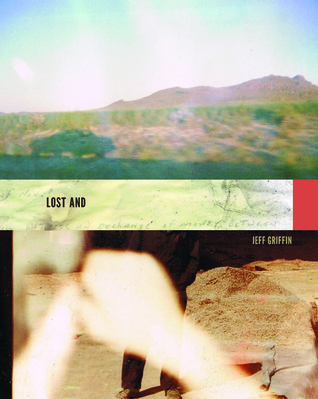
2. Lost and by Jeff Griffin from NetGalley.

Ever since he was a child sitting in the back of his parents’ car, Jeff Griffin has been taking explorative journeys into the desert. In 2007, as an art student, he started wandering the back roads of the Mojave Desert with the purpose of looking for a place to reflect in the harshly beautiful surroundings. What he found were widely scattered postmodern ruins—abandoned trailers and campers and improvised structures—whose vanished occupants had left behind, in their trash, an archaeological record of astonishing richness and poignancy.

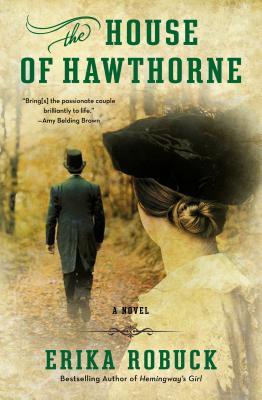
3.  The House of Hawthorne by Erika Robuck for review from Penguin Random House and so I can moderate at the Gaithersburg Book Festival this month.

Beset by crippling headaches from a young age and endowed with a talent for drawing, Sophia is discouraged by her well-known New England family from pursuing a woman’s traditional roles. But from their first meeting, Nathaniel and Sophia begin an intense romantic relationship that despite many setbacks leads to their marriage. Together, they will cross continents, raise children, and experience all the beauty and tragedy of an exceptional partnership. Sophia’s vivid journals and her masterful paintings kindle a fire in Nathaniel, inspiring his writing. But their children’s needs and the death of loved ones steal Sophia’s energy and time for her art, fueling in her a perennial tug-of-war between fulfilling her domestic duties and pursuing her own desires.

Spanning the years from the 1830s to the Civil War, and moving from Massachusetts to England, Portugal, and Italy, The House of Hawthorne explores the tension within a famous marriage of two soulful, strong-willed people, each devoted to the other but also driven by a powerful need to explore the far reaches of their creative impulses.

What did you receive?

304th Virtual Poetry Circle

Welcome to the 304th Virtual Poetry Circle!

Remember, this is just for fun and is not meant to be stressful.

Keep in mind what Molly Peacock’s book suggested.

Look at a line, a stanza, sentences, and images; describe what you like or don’t like; and offer an opinion. If you missed my review of her book, check it out here.

Today’s poem is from Ted Kooser:

Abandoned Farmhouse

He was a big man, says the size of his shoes
on a pile of broken dishes by the house;
a tall man too, says the length of the bed
in an upstairs room; and a good, God-fearing man,
says the Bible with a broken back
on the floor below the window, dusty with sun;
but not a man for farming, say the fields
cluttered with boulders and the leaky barn.

A woman lived with him, says the bedroom wall
papered with lilacs and the kitchen shelves
covered with oilcloth, and they had a child,
says the sandbox made from a tractor tire.
Money was scarce, say the jars of plum preserves
and canned tomatoes sealed in the cellar hole.
And the winters cold, say the rags in the window frames.
It was lonely here, says the narrow country road.

Something went wrong, says the empty house
in the weed-choked yard. Stones in the fields
say he was not a farmer; the still-sealed jars
in the cellar say she left in a nervous haste.
And the child? Its toys are strewn in the yard
like branches after a storm—a rubber cow,
a rusty tractor with a broken plow,
a doll in overalls. Something went wrong, they say.

What do you think?