Quantcast

The Book of Goodbyes by Jillian Weise

Source: Academy of American Poets membership benefit
Paperback, 88 pgs
I am an Amazon Affiliate

The Book of Goodbyes by Jillian Weise, recipient of the Isabella Gardner Poetry Award in 2013 and the 2013 James Laughlin Award, is a collection of poems that highlights the power of goodbye and how it can free us from limitation.  Whether those limitations are self-imposed or imposed upon us by others or the outside distractions that keep us locked in place.

There are several poems in the collection about laws against the disabled being seen in public and the societal burdens that come with those medical miracles — prosthetic legs, for instance — and how those “norms” are meant to weigh down the potential of those human beings. While these “norms” must be recognized to be overcome, it is a big obstacle to overcome, especially when those limitations or “norms” become self-imposed limitations on the self. Saying goodbye to those can be a hard process to perform and a distance that can be difficult to maintain, but there is an inherent power in saying goodbye to those things.

Goodbyes (pg. 50)

begin long before you hear them
and gain speed and come out of 
the same place as other words.
They should have their own
place to come from, the elbow
perhaps, since elbows look
funny and never weep. Why
are you proud of me? I said
goodbye to you forty times.
I see your point. That is
an achievement unto itself.
My mom wants me to write
a goodbye poem. It should fit 
inside a card and use the phrase,
“You are one powerful lady.”
There is nothing powerful
about me though you might 
think so from the way I spit.
I don’t want to say goodbye
to you anymore. I heard
the first wave was an accident.
It happened in the Cave 
of the Hands in Santa Cruz.
The four of them were drinking
and someone killed
a wild boar and someone else
said, “Hey look, I put my hand
in it. Saying goodbye is like that.
You put your hand in it and then
you take your hand back.

Weise touches upon the hardships and the freedom of goodbye, but she also talks about its empowering nature. There is a willfulness to when we choose to make those breaks, and there are many of those moments in this collection.  The Book of Goodbyes by Jillian Weise, recipient of the Isabella Gardner Poetry Award in 2013 and the 2013 James Laughlin Award, offers a great deal to discuss, and would be an interesting selection for a book club discussion.

About the Poet: (Photo credit: Guillermo Morizot Hires)

Jillian Weise was born in Houston, Texas, in 1981. She studied at Florida State University; the University of North Carolina at Greensboro, where she was the Fred Chappell Fellow; and the University of Cincinnati.

Weise is the author of The Book of Goodbyes (BOA Editions, 2013), which received the 2013 James Laughlin Award from the Academy of American Poets, which recognizes a superior second book of poetry by an American poet. Her debut poetry collection, The Amputee’s Guide to Sex, was published by Soft Skull Press in 2007.


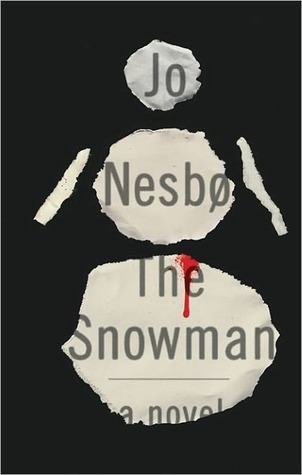
The Snowman by Jo Nesbø

Source: Public library
Hardcover, 383 pages
I am an Amazon Affiliate

The Snowman by Jo Nesbø, which was the May book club selection, is the 7th book in the Harry Hole detective series and translated by Don Bartlett.  The translation is wonderfully descriptive and never feels stilted, which is perfect when reading a mystery novel.  In fact, the clipped sentences read to me more like the pace of a mystery/thriller should be, while at the same time being descriptive, evocative, and creating an appropriate emphasis (if sometimes, over-emphasis) on the cold.

Oslo police investigator Harry Hole has solved a serial killer case before, and as his fame makes the rounds in Norway, he garners the attention of a young detective and a killer.  Mothers across the country are disappearing, and statistics reveal that about 20 percent of children are not related to the fathers they live with.  This story involves not only so called mommy issues, as one book club member stated, but also the power of genetics and survival of the fittest theories.

From the creepy snowmen that pop up after the disappearance of mothers across the city to the highly suspicious female detective Katrine Bratt, Hole has his work cut out for him in trying to solve these disappearances and murders.  As the mold is sought out in Hole’s apartment, the case has uncovered a series of ailments from Raynaud’s syndrome to scleroderma and noctambulism and other parasomnias.  These conditions play a significant role in how these characters act, react, and interact with one another, and they often lead to confusion of the facts in the snowman case.

Hole is a prototypical police detective consumed by his work, and like others, his obsession with solving his cases leads him to have a very solitary life in which alcohol plays a significant role.  What’s done really well here is the twists and turns in the case, hampered by the various ailments of the players, but also the dialogue.  It’s purposeful and witty, which can make the errors in judgment all the more ironic.

“‘I’m in the office and have had a look at what you’ve found.  You said all the missing women were married with children.  I think there could be something in that.’

‘What?’

‘I have no idea.  I just needed to hear myself say that to someone.  So that I could decide if it sounded idiotic.’

‘And how does it sound?’

‘Idiotic.  Good night.'” (page 113)

The Snowman by Jo Nesbø, translated by Don Bartlett, was a thrilling read and well written.  Hole may be an anti-hero, but he’s one you’ll want on your side to bring you justice, even if his own dysfunction can derail him.  Although this is a 7th book in the series, there was enough back story that readers would have no trouble following Hole.  Some readers may prefer to see the character’s evolution from start to finish, and for those, like myself, I recommend starting at the beginning.

What the Book Club Thought:

There were two members, including the one who nominated the book, who did not finish, and one member who skimmed through quite a bit of it.  Those who finished the book did have some issues with the set up of the narration, which shifted quite a bit between main and little used characters.  Overall, some of the crimes were intriguing, and downright gruesome, which some members enjoyed, but there was one scene in which a body was found in such a way that another member said it seemed cliche or recycled from his other book, The Son.  There were a few who rated the book 4 stars and several others rated it about three stars.  This one got mixed reviews, but for those who enjoyed it, they had no issues with the novel’s pacing or the narration.  One member found the narration to be choppy, which they thought might be due to translation, while another member thought it was the author’s style and the need to emphasize the cold.

About the Author:

Jo Nesbø is a Glass Key award-winning Norwegian author and musician. As of March 2014 more than 3 million copies of his novels have been sold in Norway, and his work has been translated into over 40 languages, selling 23 million copies.

Crossfades by William Todd Rose & Giveaway

tlc tour host

Source: Hydra and TLC Book Tours
ebook, 129 pgs
I am an Amazon Affiliate

Crossfades by William Todd Rose is a novel that hovers on the borders of science fiction and horror, as Chuck Grainger navigates the Crossfades to usher souls out of a purgatory to where they should be.  This limbo is the moment when one’s life is ending and a fantasy reality take over before the soul moves on, but in some cases, souls can be tricked into believing the fantasy is reality.  Chuck is a Whisk who must guide these trapped souls through a maze of changing landscapes without becoming detached from reality himself.  Through the help of Sleepers, those who are in a coma, Chuck can remain tethered to reality as long as his emotions remain in check.

“Drawing a deep breath through his nostrils was like snorting a line of decayed flesh.  The stench watered his eyes and infected his sinuses, seeping into his saliva and immersing his mouth in the rancid tang of decomposition.  His diaphragm hitched in protest, expelling tainted oxygen through retches that left his throat lining feeling as though he’d belched fire.”  (From the eARC)

Chuck is a lonely man, and this loneliness is something that threatens to pull him over into the abyss even as he knows the Crossfades around him are not real.  Whether trying to convince a little girl that her reality is long gone and that she must move on or finding an emotional connection with a frightened young woman, Chuck is tested.  Rose clearly defines this ephemeral world and makes it real and mutable at the same time, and his characters are seeping with powerful emotion.  Some readers, however, may find that this format — the novella — is too short to really connect with Chuck and his plight.  In many respects, readers are kept at a distance because he does have to remain detached, at least until the last chapters.

Crossfades by William Todd Rose explores the notion of purgatory and limbo really well, and examines what it would be liked to be trapped by one’s own fantasies — good or bad.  Rose has created a world that can be manipulated by the individual soul and by a mastermind who seeks to take over the alternate world.

About the Author:

William Todd Rose writes dark, speculative fiction from his home in West Virginia. His short stories have been featured in numerous anthologies and magazines, and his work includes the novels Cry Havoc, The Dead & Dying, and The Seven Habits of Highly Infective People, and the novella Apocalyptic Organ Grinder. For more information on the author, including links to bonus content, please visit him online.

a Rafflecopter giveaway

Memorial Day Cookouts & Remembrance

civilwarflag


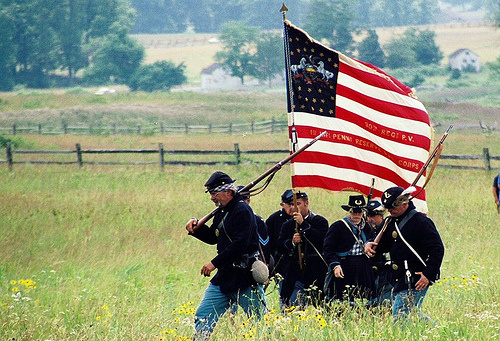
Memorial Day is a federal day of remembrance.  It began as a way to remember those who died during the U.S. Civil War, but now it is a day to remember all who have served in the military, including our current troops.

Many people take the time to visit the graves of their loved ones who were veterans of war, while some have just placed flags on graves for those who served, even without knowing those soldiers personally.  This is a day of remembrance for those who lost their lives in war.

While I agree that these men and women should be remembered, I also urge you to remember those who currently serve (and yes, they are celebrated in November). But I think the sacrifices these troops make, and in some cases, the legacy that they continue, is just as important as those who have passed before us.

I’m lucky to know many current members of the military who have bravely fought, served, and returned home in one piece, but there are so many who are still emotionally, psychologically, and physically scarred.  These men deserve our care and consideration on this day.  Rather than have a cookout or place a flag on a grave — though you can still do those things, too — why not volunteer in a VA for an hour or take some hard-earned cash and donate it to a veterans organization, like the Wounded Warrior Project.

Enjoy the time you have off with veterans and family.  Make the most of it before it’s gone.

RIP Vovo — WWII veteran.

Mailbox Monday #324

Mailbox Monday, created by Marcia at To Be Continued, formerly The Printed Page, has a permanent home at its own blog.

To check out what everyone has received over the last week, visit the blog and check out the links.  Leave yours too.

Also, each week, Leslie, Vicki, and I will share the Books that Caught Our Eye from everyone’s weekly links.

Here’s what I received:

1.  Bleedovers by William Todd Rose from NetGalley for a TLC Book Tour in August.

There’s only one thing standing between humanity and the dark forces of the supernatural: the secret agency known as The Institute. The organization depends on regular guys like Chuck, a Level I Recon and Enforcement Technician who guides tormented spirits into the next life.

From an office deep underground, Chuck projects his spirit into Crossfades, monstrous realms where the souls of the dead, unable to move on due to fear or anger, devise macabre tortures for themselves and one another. He’s always been able to leave his work behind at the end of the day . . . until now.

First in dreams, then in waking nightmares, Crossfades are bleeding into the physical world. And now it’s up to Chuck—along with his partner, a woman named Control—to put a stop to it. Because there’s no telling what might come over from the other side.

2.  Doughnuts & Deadly Schemes by Janel Gradowski for a tour in June.

Amy Ridley’s best friend, Carla, is getting married, and Amy is delighted to be recruited as the head wedding planner—even if Carla’s demands are less than conventional. Case in point: Carla insists on a tower of doughnuts in place of a wedding cake. But navigating the world of nuptials becomes the least of Amy’s problems when the owner of a menswear shop is found dead, and Carla’s fiancée is assigned to the case. With the honeymoon in jeopardy, Amy and Carla vow to help track down the killer…but they soon discover there are even more sinister happenings affecting the businesses in downtown Kellerton, Michigan. If Amy doesn’t figure out who is behind the deadly schemes, the nearly newlywed detective may just be solving another murder—hers!

What did you receive?

306th Virtual Poetry Circle

Welcome to the 306th Virtual Poetry Circle!

Remember, this is just for fun and is not meant to be stressful.

Keep in mind what Molly Peacock’s book suggested.

Look at a line, a stanza, sentences, and images; describe what you like or don’t like; and offer an opinion. If you missed my review of her book, check it out here.

Today’s poem is from Robert Frost:

The Road Not Taken

Two roads diverged in a yellow wood,
And sorry I could not travel both
And be one traveler, long I stood
And looked down one as far as I could
To where it bent in the undergrowth;

Then took the other, as just as fair,
And having perhaps the better claim,
Because it was grassy and wanted wear;
Though as for that the passing there
Had worn them really about the same,

And both that morning equally lay
In leaves no step had trodden black.
Oh, I kept the first for another day!
Yet knowing how way leads on to way,
I doubted if I should ever come back.

I shall be telling this with a sigh
Somewhere ages and ages hence:
Two roads diverged in a wood, and I—
I took the one less traveled by,
And that has made all the difference.

What do you think?

Lost and by Jeff Griffin

Source: NetGalley
eBook, 170 pgs
I am an Amazon Affiliate

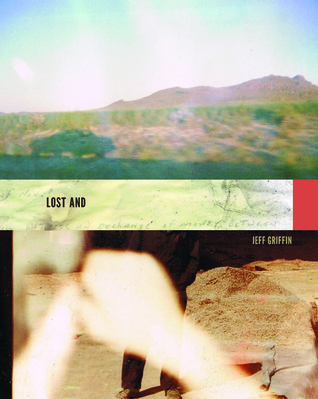
Lost and by Jeff Griffin, published by University of Iowa Press, feels more like a scrapbook than a poetry collection, and while there were poems included, most everything in the book are scraps he gleaned from his travels into the desert. Some of these pieces are lists, photos, and other scraps, including a letter from a woman to her alcoholic partner. While these items may reflect communities that have once thrived in the desert and are now abandoned, the collection is not what most readers would expect and there is little to link these pieces together.

From GoodReads:

Ever since he was a child sitting in the back of his parents’ car, Jeff Griffin has been taking explorative journeys into the desert. In 2007, as an art student, he started wandering the back roads of the Mojave Desert with the purpose of looking for a place to reflect in the harshly beautiful surroundings. What he found were widely scattered postmodern ruins—abandoned trailers and campers and improvised structures—whose vanished occupants had left behind, in their trash, an archaeological record.

While Griffin’s efforts to create an artistic rendering of these emptied communities, trailers, and lives, the pieces could have been better tied to one another with some text, explanation, or other commentary from Griffin. In many ways, the collection could have benefited from a demonstration of how Griffin was influenced or inspired by these pieces to create his own art — though the book itself is his modern art from those journeys into the Mojave Desert. Lost and by Jeff Griffin, published by University of Iowa Press, just didn’t work for me, but perhaps I’m not the target audience for this one.

About the Poet:

Jeff Griffin is a graduate of the Iowa Writers’ Workshop and an associate at Griffin Moss Industries, Inc., and he operates the publishing house Slim Princess Holdings. He lives around Nevada.

Pride & Prejudice: Retold in Limericks by Seamus O’Leprechaun

Source: Borrowed from Diary of an Eccentric
eBook, 65 pgs
I am an Amazon Affiliate

Pride & Prejudice: Retold in Limericks by Seamus O’Leprechaun is a retelling of Jane Austen’s Pride & Prejudice in Limericks! Yes, you read that correctly.  When Anna told me she had something I could read for 24-hour Read-a-Thon, I was all over this one.  I LOVE Limericks!

O’Leprechaun, which clearly has to be a pen name, captures the wit and tension between the characters so easily in just a Limerick.  It was highly appropriate that I read it for the read-a-thon and National Poetry Month.

From "Chapter Six":

Now Darcy has altered his drive.
What haunts him? A pair of dark eyes.
     The girl he rejected
     Now leaves him affected
Liz Bennet - he years for this prize.

From "Chapter Seven"

Jane Bennet, meantime, has caught cold,
Through a rain-soaked contrivance most bold.
     Now she must stick around
     At the Bingley compound,
Where Liz waits as the symptoms unfold.

The machinations of Mrs. Bennet to ensure that her daughters are married off before her husband dies, and her anger at Lizzy for turning down Mr. Collins also come off as ridiculous as Austen intended.  O’Leprechaun uses his skills well in these poems to flesh out the novel in poetic form.  Many of these poems will make readers laugh out loud, giggle, and shake their heads in amusement.

From "Chapter Fifteen"

But this Collins has come for a wife -
Either Lizzy or Jane will suffice.
     And as Jane is bespoke,
     Looks like Lizzy's up, folks,
To be wed by a blockhead - that's life.

Pride & Prejudice: Retold in Limericks by Seamus O’Leprechaun is just so much fun, and totally worth the short time spent reading it, reliving the best moments of Austen’s book. Also, it’s a great way to celebrate poetry.

The House of Hawthorne by Erika Robuck

Source: Penguin Random House
Hardcover, 416 pgs
I am an Amazon Affiliate

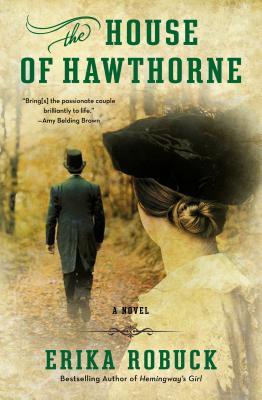
The House of Hawthorne by Erika Robuck is word portrait of Sophia Peabody and Nathaniel Hawthorne’s courtship, marriage, and family, as well as the tensions that arise from two artists balancing their passions with their family.  Spoken in the voice of Sophia Peabody, readers are given a glimpse of her passionate painting and love of life despite her debilitating headaches before she meets Nathaniel, an aloof writer who feels the inadequacy of his words on paper.  From the 1830s to the U.S. Civil War, readers are taken through their early romance and their marriage.  While readers will find Sophia passionate about her work, she still finds joy and love in being a wife and mother, though she does miss her painting.  Despite the vacillation between poverty and moderate wealth, the Hawthornes are a family unit that loves deeply and remain loyal to their friends.

“One hand is open, overflowing with an abundance of joy and vitality; the other is a fist, clutching a void so desperately that the nails dig holes in the skin.” (pg. 247)

Like many artists there are period of abundance and times when the land is fallow, and this is true in terms of both writing and painting artistry as well as the funds they earn.  Sophia is a headstrong woman, but she quickly learns how to navigate her husband’s moods and comfort him in the best way she can for a reserved man.  Nathaniel is an enigma, but we get to see him through Sophia’s loving eyes, which can help soften some of his more anti-social behavior that others may see as mean or aloof.  It is wonderful to see the circle of friends the Hawthorne’s have and how those relationships evolve over time, particularly in light of the coming Civil War between the North and South.  From the drifting away from the Emersons to the effusive complements of Melville, the Hawthornes remain a tight knit family and rally around each other in times of loss and suffering.

“Our country simmers like a covered pot over the issue of slavery, and while Nathaniel and I do not approve of owning slaves, we cannot imagine what a division or even a war between the Northern and Southern states would do to our young nation.” (pg. 264)

The House of Hawthorne by Erika Robuck is a stunning narrative that illuminates the often overshadowed life of Sophia Hawthorne and demonstrates how two artists can live together and build a life despite their differences and their own need for solitude and succor.  The novel raises questions of self-identity, self-expression, compromise, and the desire to create and have it all.

About the Author:

Historical fiction writer, book blogger, voracious reader. Erika’s first novel, RECEIVE ME FALLING was self-published. Penguin Random House published HEMINGWAY’S GIRL, CALL ME ZELDA, FALLEN BEAUTY, and a short story anthology to which Erika contributed, GRAND CENTRAL: ORIGINAL STORIES OF POSTWAR LOVE AND REUNION. Her forthcoming novel THE HOUSE OF HAWTHORNE will release on May 5th, 2015.

Erika writes about and reviews historical fiction at her blog, Muse, and is a contributor to fiction blog, Writer Unboxed. She is also a member of the Historical Novel Society, the Hemingway Society, the Millay Society. and the Hawthorne Society.


Double Jinx by Nancy Reddy

Source: Milkweed Editions
Paperback, 96 pgs.
I am an Amazon Affiliate

Double Jinx by Nancy Reddy is a curious exploration of figurative and literal transformations from adolescence into adulthood, and it examines the malleability of our identities.  Many poetry readers have witnessed the retelling of fairy tales, like that of Cinderella, but not many poems — if any — deal with Nancy Drew and her identity, particularly in “The Case of the Double Jinx” (pg. 6) and the doppelgänger.  Nancy is hot on the case and observing this imposter has her doubting herself and her value.  Even though she knows that this imposter is not like her, she still fears she could lose Ned and her edge.

Reddy explores standing on the outside and the envy that can engender in “Understudy” (pg 10).  “You’re the other//woman, stranded just offstage,/mouthing the words you’ve learned/by heart.  At dress rehearsal you were costumed/as your better self.  Now she’s the critics’ darling and you’re//a cast-off prop,” the narrator says.  This persona takes on more and more of the starlight’s mannerisms, make-up rituals, and more until she mirrors that star in the hope that by becoming other than herself, she will be seen.

As the collection progresses, the poems seem to take on a less literary and artsy subject matter to look at the average person’s identity and how that changes over time.  “Big Valley’s Last Surviving Beauty Queen” (pg. 18) explores the effects of aging on a former beauty queen and how that effects her own perception of herself.  The accolades she sees and experiences are false to her when she returns home.

Genealogy (pg. 39)

My father's father was a woodstove.  He snapped and
  roared.

He crackled in the basement.  They fed him
so they wouldn't freeze.

While these perceptions of identity are explored again and again in a number of contexts, Reddy also explores the perceptions of men. But these perceptions of men also can affect how women identify themselves.  There are a number of these poems, which explore violence and addiction.  Double Jinx by Nancy Reddy is fascinating and multi-layered in its examination of identity and perception, particularly among young women and adult women.

About the Poet:

Nancy Reddy’s poetry has been published in 32 PoemsTupelo Quarterly, and Best New Poets of 2011(selected by D.A. Powell), with poems forthcoming in Post Road and New Poetry from the Midwest. She lives in Madison, where she is a doctoral candidate in composition and rhetoric at the University of Wisconsin.


Mailbox Monday #323

Mailbox Monday, created by Marcia at To Be Continued, formerly The Printed Page, has a permanent home at its own blog.

To check out what everyone has received over the last week, visit the blog and check out the links.  Leave yours too.

Also, each week, Leslie, Vicki, and I will share the Books that Caught Our Eye from everyone’s weekly links.

Here’s what I received:

1. Wine and War: The French, the Nazis, and the Battle for France’s Greatest Treasure by Don and Petie Kladstrup for Kindle.

In 1940, France fell to the Nazis and almost immediately the German army began a campaign of pillaging one of the assets the French hold most dear: their wine. Like others in the French Resistance, winemakers mobilized to oppose their occupiers, but the tale of their extraordinary efforts has remained largely unknown–until now. This is the thrilling and harrowing story of the French wine producers who undertook ingenious, daring measures to save their cherished crops and bottles as the Germans closed in on them. Wine and War illuminates a compelling, little-known chapter of history, and stands as a tribute to extraordinary individuals who waged a battle that, in a very real way, saved the spirit of France.

What did you receive?

305th Virtual Poetry Circle

Welcome to the 305th Virtual Poetry Circle!

Remember, this is just for fun and is not meant to be stressful.

Keep in mind what Molly Peacock’s book suggested.

Look at a line, a stanza, sentences, and images; describe what you like or don’t like; and offer an opinion. If you missed my review of her book, check it out here.

Today’s poem is from Rita Dove:

American Smooth

We were dancing—it must have
been a foxtrot or a waltz,
something romantic but
requiring restraint,
rise and fall, precise
execution as we moved
into the next song without
stopping, two chests heaving
above a seven-league
stride—such perfect agony,
one learns to smile through,
ecstatic mimicry
being the sine qua non
of American Smooth.
And because I was distracted
by the effort of
keeping my frame
(the leftward lean, head turned
just enough to gaze out
past your ear and always
smiling, smiling),
I didn’t notice
how still you’d become until
we had done it
(for two measures?
four?)—achieved flight,
that swift and serene
magnificence,
before the earth
remembered who we were
and brought us down.

What do you think?