Quantcast

ABC Universe by American Museum of Natural History

Source: Sterling Children’s Books
Hardcover, 18 pgs
I am an Amazon Affiliate

ABC Universe by American Museum of Natural History is not your typical book about the alphabet.  Whether you have daughters, sons, nieces, or nephews who are just starting to learn their letters, this board book presents vivid and interesting pictures for kids to associate with their new letters.  Young kids always find things they are unfamiliar with in their daily lives fascinating.  Outer space is a big wide and different world from that here on Earth.  My daughter LOVES outer space stories, and this combines learning new words with things she’s interested in.  I think since this book entered the house in March, my daughter and I have read it about 10 times or more.  She’s starting to know some of the words on her own by looking at the picture, like Astronaut, and she can tell me what letter the words start with.  Harder words, like Quasar, are more difficult, but she does recognize the Q at the beginning of the word.

ABC Universe by American Museum of Natural History is a fun introduction to not only the alphabet, but also things found in outer space.  It will get kids thinking about words that they are not readily familiar with and they will see outer space in a different way.  We have fun with this book, and we’ll probably read it another 10 times before the year is out.
Interview with Luanne Castle, Author of Doll God

Although today is technically the end of National Poetry Month, my poetry reviews for #NPM15 will continue into May because I read way more books than I thought for the month, thanks to the Dewey 24-hour read-a-thon!
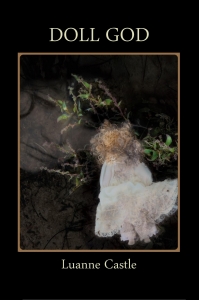
To wrap up this year’s National Poetry Month tour, I’ve got a great interview with Luanne Castle, author of Doll God (my review).

“This emotional collection will take a toll on its readers, but the journey will leave them changed in terms of perspective and renewed in that they will want to live more fully and enjoy each moment in the moment.” — Savvy Verse & Wit

Please give her a warm welcome.

1.  Re-examining our childhood and our pasts is something that echoes throughout your collection, Doll God, and there is a deep sense of anxiety and loss tied to those reflections.  When did you first start examining your own childhood and past and how does anxiety and loss tie into that self-examination?

My childhood has always loomed over me, both for its anxieties and its imaginative qualities.  I also write and have published prose based on my childhood experiences. When I was a little girl my father built a bomb shelter in our basement. We were in the middle of the Cold War, and there was fear and tension in our lives because we thought “The Bomb” could drop at any moment.  So childhood has always crept into my poetry, although I didn’t start to examine it with purpose until about 6 or 7 years ago, which is when I began to spend more time writing.

2.  Dolls are prevalent throughout the collection.  Do you think dolls still play a pivotal role in young girl’s lives? And how do you think their role has changes with the evolution of technology?

Dolls are still important to society–and to many young girls. When I was a kid not all girls preferred dolls to other toys, and that is still true. Even I had as much fun with my cement mixer and “army men” as I did with my dolls at certain periods in my life. Actually, army men are really dolls, now that I think about it! But dolls have stayed close to the essence of my childhood. Boys also were given dolls when I was a kid. We were probably the first generation where boys like my brother were given G.I. Joe dolls. My brother had Chatty Cathy’s baby brother with a sweater and cap knitted by my grandmother. Since then, so many different dolls and doll-like figurines have been created for both boys and girls.

Technology has slightly altered the doll-scape in two ways. We have many “throwaway dolls.” By that I mean that the discretionary income and low-cost overseas production has created an abundance of dolls found on the shelves of Target, Wal-Mart, and Toys R Us. Dolls are often $5-10 birthday presents for girls. Too many Barbies? Lose one at the grocery store, pull off the head of another. For many fortunate children, there will always be another Barbie. The other way technology has affected the doll industry is that dolls are produced to capitalize on the popularity of movies, television shows, and computer games. While this trend started 100 years ago, it has grown as technology has grown. Now a huge portion of dolls at the major store chains are related to these technologies.

3.  How much of your poetry is autobiographical?  How far does it stray from your own life?  In other words, where is the line between fact and fiction?

Sometimes a poem starts out autobiographical and strays into the fictional without me even realizing it. Other times a poem might begin as fiction, but by the time it’s completed, it has incorporated a lot of elements from my own life experiences.  A reader would be hard pressed to find the “line” between the two in my work. And I think that is as it should be–to read poetry as confessional is dangerous and limits the reader, the poem, and the poet.

4.  Do you still collect dolls?  How many are or were in your collection?

I didn’t begin an actual doll collection until my daughter grew out of her dolls. When she was no longer interested in them, I became fascinated and still have all of hers. As a child I had baby dolls, but that was because once I was given a doll I didn’t lose it or abuse it, so over time I had a fair number. But never a collection. We didn’t have the money for that. I didn’t  even own a real Barbie. My Barbie was a Miss Suzette by Uneeda. But I did have a Ken doll and a beautiful toddler-sized walking doll who may or may not have ended up in Doll God. My husband and I love antiquing and in the past ten years I’ve accumulated quite a few dolls. I have a decent collection of Asian dolls, including Japanese hakatas. I also collect Magic Attic Club, Madame Alexander, cowboy and cowgirl, Red Riding Hood, literary, and Broadway musicals.

5.  Writing is a solitary endeavor for many authors.  How do you maintain contact with the outside, and how does that differ from the experience of reading your work aloud for an audience?

I maintain contact by connecting with my writing peeps, both in person and through email and phone calls. Then blogging and social media are other ways I feel a part of the outside world. These are important for social reasons, but also for educational purposes. I learn a lot from my fellow writers.

I am not fond of being in large groups of people, but I do enjoy the act of reading my poetry, which is a performative experience. I recently was interviewed on a morning television show and was asked to read one of my poems. That was fun. I have also been known to read to rescue kitties at the shelter once a week. In the past I’ve read my poetry at various events, but since Doll God was published, I haven’t been able to read publicly. I hope to change that in the near future.

6.  Doll God is your first collection.  How long have you been writing poetry, and how long did it take you to create your first collection?  Are you planning a second?

I first wrote poetry when I was in about 5th grade. My first poem rhymed and was about an old woman in a rocking chair. Chair is a good rhyming word.  I took up writing poetry again in high school and wrote very melancholy poems. I turned in a poem for an English class assignment and received a B+ on it–my lowest English grade. That’s when I decided that teachers shouldn’t really be putting letter grades on students’ creative writing attempts. I have a whole philosophy about the teaching of poetry.

When I started college I was encouraged to look ahead to getting a job, so I set poetry aside until my husband and I adopted our first child from Korea. I wrote a poem about picking him up at the airport and the floodgates opened. Soon after, I applied to the MFA in creative writing program at our local university and began studying writing in earnest.

My current project involves “genealogy poems” based on research I’ve done on female ancestors. I’d like to create a chapbook from these poems.

Thank you so much for hosting me, Serena. I loved that Doll God could be part of your book tour.  These questions were great fun and really made me think in ways I haven’t before.

Remember the Sun: Poems of Nature and Inspiration by Melanie Simms

Source: The poet
Ebook, 35 pgs
I am an amazon Affiliate

Remember the Sun: Poems of Nature and Inspiration by Melanie Simms, published by Sunbury Press, features poems and Lawrence Von Knorr’s photographs of Sunbury, Pa., and other local areas in the region.  In many cases, the photographs give additional life to the poems in Simms’s volume, but in others it is unclear how the poems and the photos connect.  Despite that, the photos are gorgeous, particularly the local shops and the pictures of the Susquehanna River.  Simms’s poems are chock full of imagery from ghosts harkening back to the past journey of Edison to the shadow puppets on the walls, but her verse examines not only the natural world, but the relationships between mothers and daughters, mothers and sons, and lovers.

From "Mother's Ashes" (pg. 7)

I love Emilio
for driving the long way
He doesn't have to do this.
"She's your mother," he says.
"We have to honor her spirit."
(I'd kept her ashes for years
in the cupboard in the kitchen).
I don't want to let go.  I wanted to
wake up each morning, knowing
some part of her remained.

Don’t we all want to keep a piece of our loved ones close, and we often very rarely realize how selfish that is. Is it better to honor their wishes or to keep them close? We all struggle with this dilemma at one point or another. Simms’s verse is historical and modern, and it is emotional and contemplative. There is something for every reader in this collection. Her collection also contains quite a few poems in which journeys are made — journeys to bury the dead, journeys away from and returning to loved ones, and journeys of emotion. When readers talk of place as a character in novels, there are moments like that in this collection as well, like in “Beauty and Magic at Barone,” about the Barone Beauty Academy in Sunbury.

From "The Suitcase" (pg. 3)

I watch you leave, but as the evening falls I imagine you
back in your chair.
I imagine that you have only stepped out for an evening walk.
How has it come to this?
All our dreams
packed away into one little suitcase
and carried off so easily?

Remember the Sun: Poems of Nature and Inspiration by Melanie Simms is a satisfying collection of poems and photographs that breathe life into the activities of a small town.  These people are no different than those that live in big cities; they still have dreams and big loves, and devastating losses.


About the Poet:

Melanie served as the Perry County Poet Laureate from 2005-2006 and has published in over 180 newspapers, magazines, and poetry journals; her poems have been featured on state and local television shows and over fifty poetry radio programs. She has been a featured artist at various Pennsylvania colleges, high schools, and landmarks including but not limited to National Poetry Month at the Degenstein Community Library with presentations by State Rep. Lynda Schlegel-Culver and Sunbury mayor David Persing.  Her awards include a Sophie Award, Finalist in the Richard Savage Poetry Award (Bloomsburg University), Perry County Poet Laureate (2005-2006), a Vermont Writers Studio Award, a Pushcart Prize Nomination, Marquis Who’s Who of The World, Cambridge Who’s Who of Women in Publication, Poet of the Week (Poetry Superhighway), and an Evvy Award nomination for Waking the Muse (best self-published book in the poetry category).

She is a President and Founder of the Association of Pennsylvania Poet’s Laureate (founded 2006) and a member of the World Poetry Society and The Daughters of the American Revolution.  To learn more, visit her Website.


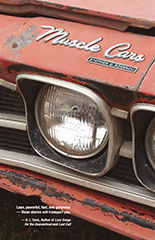
Interview with Stephen G. Eoannou, Author of Muscle Cars

Please welcome Stephen G. Eoannou, author of the short story collection Muscle Cars, to the blog today. He and his book have been on a blog tour with Poetic Book Tours this month, and what a great way to cap off the tour with an interview.

In Muscle Cars is there one short story that you ever thought could be turned into a novel on its own? If so, which one and why?

Actually, “Slip Kid”, which really is the centerpiece of the collection, started out as a failed novel attempt. I had shoved the manuscript in a drawer, but I didn’t forget about it. I was certain there was a story there. I just had to dig through all the bad writing to get to it. I pulled the manuscript out as I was completing the collection to see if I could distill a part of it into a short story, and I did; I think “Slip Kid” was the second last story I wrote for the Muscle Cars. The mistake I made in the novel was twofold. First, there wasn’t enough at stake for the protagonist. I needed more conflict. I needed to make the situation more difficult for him with real consequences. Second, I wasn’t pleased with the novel’s language. It needed to be tougher, harder, full of more slang and vulgarity.

This was an easy fix. I just had to write the dialogue more the way my friends and I spoke in high school. I was pleased with the short story version of “Slip Kid”, but the story kept calling me back so I developed it into a short screenplay, which ended up winning the Best Short Screenplay Award at the 36th Starz Denver Film Festival. I thought I was finally done with it, but then I started thinking about developing it into feature-length screenplay. After I try that, who knows? I may go full circle and take another shot at expanding back it into another, better novel.

Could you explain a little bit about the process of entering the SFWP Literary Awards and what other contests you considered for your collection? Why enter a contest of this kind at all?

Writing contests are tricky things. There’s so many of them now and the entry fees can add up, so I was very selective of which ones I entered. I only entered contests where the awards were well-established and the judges were well known and well respected. That was certainly the case with SFWP, which is offering the awards for the fifteenth year now and have had past judges such as Chris Offutt, Robert Olen Butler, and David Morrell, who judged last year’s contest.

But I had another connection with SFWP that made me want to enter. At one time I shared an office and taught with Ken Cook at The College of Charleston, and he won the SFWP Awards back in 2002. I remember him telling me what a great experience it was and how it really jump-started his writing career. After I had finished Muscle Cars, I knew that SFWP was one of the contests I wanted to enter based on what he’d told me. Of course, I didn’t really think I would be named one of the winners. That was a wonderful surprise. I was very proud to have Kenny write a blurb for my book.  It brought things full circle for us: we both met as unpublished and hopeful writers in Charleston and we both had our first books published by SFWP as award winners.

If you had never gone to Queens University for an MFA, do you think you would have continued writing fiction or produced a collection of short stories? What did the experience do for your writing practice?

I had been writing for years in a vacuum with little success. I viewed applying to an MFA program as my last chance, my last swing at being a writer. I was more than a little surprised when I was accepted at Queens, to be honest with you. During my first residency, I went to the graduate readings and all the MFA graduates said that the program had been life changing. I remember sitting in the back of the auditorium and thinking no way is this program going to change my life, but it did. If I hadn’t gone to Queens, I still would’ve been writing but probably writing poorly. I would have been still stuck in that vacuum without a network of fellow writers to share work like I have now with my Queens alumni.

Would I have written a collection without going to Queens?

Maybe, but I suspect it wouldn’t have been as good as Muscle Cars. The collection contains two Pushcart-nominated stories, a winner of an Honor Certificate from The Society of Children’s Book Writers and Illustrators, and the collection is a Santa Fe Writers Project Literary Award winner. I couldn’t have done it without the MFA program at Queens; half the stories were written there and the other half was critiqued by Queens alumni after I graduated.

Many writers have been writing since a young age. What was your first piece about and what was the title? Do you still have it?

I vaguely remember being home sick from school and typing with two fingers a story about a doctor. This was maybe in the second or third grade. I don’t remember the title, but I had named my main character Dr. Weinstein after a local newscaster whose trademark was alliteration: Buffalo blaze busters battle a big one on Broadway.

I wrote a lot in the fifth and sixth grade and I gave those stories to my Aunt Helen. When she passed away, I found three of them: “The Falcon”, about a boy growing up on an Indian reservation; “What’s A Few Months More?” about a teenager in a juvenile detention center; and “The Summer of Riches” about a boy who spends the summer with his grandparents in Connecticut. Of course, I knew nothing in the fifth grade about life on a reservation, or in a juvenile detention center, or in Connecticut, but that didn’t stop me. Kids are fearless with their imaginations. By the way, I still type with two fingers. That typing class I took at Kenmore Junior High School didn’t stick.

Who are some of your influences that have informed your writing over the years? And who, if any, are your favorite poets?

When I finished reading The Hotel New Hampshire by John Irving, I remember wishing that I had written it. This was back in high school and it was the first time I remember feeling that way about a book. I loved how Irving was able to make me laugh out loud until I realized how sad it was and then my laughter stopped, like I had been slapped and slapped hard. I wanted to have that emotional swing in my writing, and was conscious of attempting that while writing stories for the collection like “Swimming Naked” and “Stealing Ted Williams’ Head”.  Soon after discovering Irving, I started reading William Kennedy. I loved his sense of place and how he made Albany come alive as a mythical place. I definitely wanted that in my writing. It was that same sense of place that drew me to Pete Hamill’s work.

When I started writing Muscle Cars, it was in the back of my mind that I wanted to do for Buffalo what those guys did for Albany and New York. Buffalo was my turf and I wanted to mine it for stories and characters. Even in stories where the city is never identified, I was thinking about my home town. People from around here will recognize the settings of “Ohio Street” and “The Wolf Boy of Forest Lawn” as Buffalo locations although I don’t think I named them as such. The city was definitely my muse for Muscle Cars.

The poetry question is interesting. I think reading poetry and becoming sensitive to rhythms, the music of words and conciseness always helps in prose writing, but I doubt the converse is true. I’ve always enjoyed Yusef Komunyakaa’s work. What’s interesting is that I heard him read his poetry before I read it.

This was in the late-eighties at a writing conference at Indiana University, I think. He is such a passionate, dramatic reader it was as if I was hearing poetry for the first time and I had to buy his books. I was mesmerized by his voice and the images he was creating in my mind. And even though I had no talent in writing poetry, I wanted my readers to “hear” and “see” my stories just as strongly as when they read and heard Komunyakaa’s poems. I tried to accomplish that by relying heavily on sensory detail. I want my readers to see “The Girl In The Window” and hear the engines in “Muscle Cars”, “Ohio Street”, and “Slip Kid”.  I want them to feel the cold and whipping wind in “Winter Night, 1994” and “Auld Lang Syne”.  If I accomplish that, I’ll have done my job.

Thanks, Stephen, for sharing your writing inspirations and influences with us today!

To check out the rest of the tour, click the image below:

Mailbox Monday #320

Mailbox Monday, created by Marcia at To Be Continued, formerly The Printed Page, has a permanent home at its own blog.

To check out what everyone has received over the last week, visit the blog and check out the links.  Leave yours too.

Also, each week, Leslie, Vicki, and I will share the Books that Caught Our Eye from everyone’s weekly links.

Here’s what I received:

1. The Last Summer at Chelsea Beach by Pam Jenoff, an unexpected surprise from the author.

Young Adelia Monteforte flees fascist Italy for America, where she is whisked away to the shore by her well-meaning aunt and uncle. Here, she meets and falls for Charlie Connally, the eldest of the four Irish-Catholic boys next door. But all hopes for a future together are soon throttled by the war and a tragedy that hits much closer to home.

Grief-stricken, Addie flees—first to Washington and then to war-torn London—and finds a position at a prestigious newspaper, as well as a chance to redeem lost time, lost family…and lost love. But the past always nips at her heels, demanding to be reckoned with. And in a final, fateful choice, Addie discovers that the way home may be a path she never suspected.

2.  How Tiger Says, Thank You! by Abigail Samoun, illustrated by Sarah Watts from Sterling Children’s Books for review.

Tiger’s taking a trip—and everywhere she goes, from the market in Moscow to a boat on Egypt’s Nile River, she says “thank you” to the friendly people she meets. And, as they follow her round the world, children will learn to how to say thanks in seven different languages, too: French, Russian, Arabic, Hindi, Mandarin, Japanese, and Spanish. Each “please” word is translated and has a pronunciation guide, and an illustrated map follows Tiger’s travels.

3.  How Penguin Says, Please! by Abigail Samoun, illustrated by Sarah Watts from Sterling Children’s Books for review.

This adorable board book teaches preschoolers how to say “please” in seven languages! Join Penguin as she enjoys pastries in France, explores the Hermitage in Russia, sees Mount Fuji in Japan and the Pyramids in Egypt, buys fish in China, sips chai in India, visits relatives in Argentina—and remembers her manners everywhere she goes! Each “please” word is translated and has a pronunciation guide, and an illustrated map follows Penguin’s travels round the world.

4.  Ally-Saurus & the First Day of School by Richard Torrey from Sterling Children’s Books for review.
When Ally roars off to her first day at school, she hopes she’ll meet lots of other dinosaur-mad kids in class. Instead, she’s the only one chomping her food with fierce dino teeth and drawing dinosaurs on her nameplate. Even worse, a group of would-be “princesses” snubs her! Will Ally ever make new friends? With its humorous art, appealing heroine, and surprise ending, this fun picture book celebrates children’s boundless imagination.

5. Mireille by Molly Cochran from Lake Union Publishing and TLC Book Tours for review in June.

Near the end of World War II, seventeen-year-old Mireille de Jouarre flees the home of her stepfather, a Nazi collaborator and abusive drunk. She finds shelter with her childhood friend Stefan, and the two fall deeply in love. But as the fighting escalates, Mireille must escape alone to Paris, where she discovers she’s pregnant and lacking a way to provide for her child.

So begins her new life as l’Ange—the Angel. After an unlikely meeting with a wealthy aristocrat in a Parisian hotel—and her acceptance of his solicitation—Mireille becomes the most celebrated poule in all of France, eliciting huge fees and invitations to exclusive parties. At one of these events, Mireille meets Oliver Jordan, an American womanizer and film producer, and is soon launching a promising film career. As her star rises, Mireille is determined to bury her past. But her success isn’t as carefree and glittery as it seems, and when her daughter’s future is threatened, Mireille must make a deadly decision in a desperate attempt to finally choose her own path.

What did you receive?

Dewey’s 24-Hour Read-a-Thon Wrap Up 2015

I decided at the last minute that I wanted to participate even though I knew that I would be gone most of the day.  I had a plan — read poetry and kids books — and stick to it.  The read-a-thon started for me at 8 a.m., so I had time to read before we left and while on the road, and I did, for the most part.  And then, I had time to read when we got back from Maryland Day.

Books Read with Wiggles:

Books Read on my Own:

I went to bed in hour 15, but we also were out for much of the day and participated in a more relaxed way before and after out daily plans.

My daughter enjoyed all the books we ready, but the one she can mostly read (through memorization at age 4) on her own is Zippy the Ant.  I enjoyed Pride & Prejudice: Retold in Limericks the best!  No least favorites for either of us.

What did you do for read-a-thon?

303rd Virtual Poetry Circle

Welcome to the 303rd Virtual Poetry Circle!

Remember, this is just for fun and is not meant to be stressful.

Keep in mind what Molly Peacock’s book suggested.

Look at a line, a stanza, sentences, and images; describe what you like or don’t like; and offer an opinion. If you missed my review of her book, check it out here.

Today’s poem is from Robert Lowell:

For the Union Dead

“Relinquunt Omnia Servare Rem Publicam.”

The old South Boston Aquarium stands
in a Sahara of snow now. Its broken windows are boarded.
The bronze weathervane cod has lost half its scales.
The airy tanks are dry.

Once my nose crawled like a snail on the glass;
my hand tingled
to burst the bubbles
drifting from the noses of the cowed, compliant fish.

My hand draws back. I often sigh still
for the dark downward and vegetating kingdom
of the fish and reptile. One morning last March,
I pressed against the new barbed and galvanized

fence on the Boston Common. Behind their cage,
yellow dinosaur steamshovels were grunting
as they cropped up tons of mush and grass
to gouge their underworld garage.

Parking spaces luxuriate like civic
sandpiles in the heart of Boston.
A girdle of orange, Puritan-pumpkin colored girders
braces the tingling Statehouse,

shaking over the excavations, as it faces Colonel Shaw
and his bell-cheeked Negro infantry
on St. Gaudens’ shaking Civil War relief,
propped by a plank splint against the garage’s earthquake.

Two months after marching through Boston,
half the regiment was dead;
at the dedication,
William James could almost hear the bronze Negroes breathe.

Their monument sticks like a fishbone
in the city’s throat.
Its Colonel is as lean
as a compass-needle.

He has an angry wrenlike vigilance,
a greyhound’s gentle tautness;
he seems to wince at pleasure,
and suffocate for privacy.

He is out of bounds now. He rejoices in man’s lovely,
peculiar power to choose life and die–
when he leads his black soldiers to death,
he cannot bend his back.

On a thousand small town New England greens,
the old white churches hold their air
of sparse, sincere rebellion; frayed flags
quilt the graveyards of the Grand Army of the Republic.

The stone statues of the abstract Union Soldier
grow slimmer and younger each year–
wasp-waisted, they doze over muskets
and muse through their sideburns . . .

Shaw’s father wanted no monument
except the ditch,
where his son’s body was thrown
and lost with his “niggers.”

The ditch is nearer.
There are no statues for the last war here;
on Boylston Street, a commercial photograph
shows Hiroshima boiling

over a Mosler Safe, the “Rock of Ages”
that survived the blast. Space is nearer.
When I crouch to my television set,
the drained faces of Negro school-children rise like balloons.

Colonel Shaw
is riding on his bubble,
he waits
for the blessèd break.

The Aquarium is gone. Everywhere,
giant finned cars nose forward like fish;
a savage servility
slides by on grease.

What did you think?

National Poetry Month Fun…AND…

Unfortunately, I haven’t written any more haiku since last week. I still plan to have 30 haiku by the end of the month, so I will hope to write some this weekend and all next week.

However, I thought today would be a good day to recap some of my favorite poetry books from this month, as well as some of the fantastic poetry posts I’ve seen this month.

I’ve been poking around the Internet this month, and I came across some great posts from participants in this year’s blog tour and on Twitter.  I thought this would be a great time to share them.

  1. Jeannine Hall Gailey recently interviewed Director of Sales and Marketing for Tupelo Press Marie Gauthier, who also is a poet and author of Hunger All Inside, about PR and poetry.  While there are a number of PR companies out there for fiction and nonfiction writers and many publishing houses have marketing campaigns in place, poets tend to be on their own in the abyss of the Internet and marketing their own books.  It’s one of the reasons I started Poetic Book Tours — I wanted to fill a niche for these poets.
  2. Jill at Rhapsody In Books is one of my favorite participants in the blog tour every year because she always has some great posts about song lyrics and poetry.
  3. Becca at I’m Lost in Books had a very insightful and personal story about poetry’s role in her life, and it was so moving, I had to highlight it here.
  4. Parrish Lantern had a fantastic post on Haiku this month, which I hope you will all read.
  5. I’ve participated in the Split This Rock! Festival a few times, and I was thrilled to read about Sarah Browning’s journey that landed her in the role of Executive Director; it’s an inspiring story about the power of the written word.

Here are my favorite poetry books from this month:

  1. Vessel by Parneshia Jones because I’m still thinking about identity and how we identify ourselves — our name, our family, our memories — and yet those things are as fleeting as the breeze in the grand scheme of things. The takeaway for me in this collection is that we should strive to make our mark by helping and affecting others lives in positive ways, weaving a larger “human quilt.”
  2. The Robot Scientist’s Daughter by Jeannine Hall Gailey because I’ve been fascinated with nuclear research for a long time, since I first studied WWII in high school. It’s awe inspiring how much the human mind can create and destroy all at once, developing something that can provide energy but that can also destroy us all at once and even gradually. There is so much in this collection to think about and reflect upon.
  3. Paradise Drive by Rebecca Foust is a great collection of sonnets that outlines a pilgrim’s journey through the modern world, not unlike the journey Dante takes in the Divine Comedy.  While these poems are a classic form, these are so fresh that they are as unforgettable as the classic poets crafted.
  4. Banned for Life by Arlene Ang is another stunning collection of poems from a poet I found by accident long ago.  It is by turns morbid and dark, but there also is a beauty in death that she highlights with deft strokes.  Moments of comfort and moments of despair are treated in equal measure, just to remind us that we control how fulfilling those lives can be.

What do you notice about this list?  They are all women and they are all strong women talking about tough issues!  Have you read any great collections this month or even just come across some great poems?  I’d love to hear about them.

Free Air: Poems by Joe Wenke

Source: Meryl L. Moss Media Relations
Paperback, 80 pgs
I am an Amazon Affiliate

Free Air: Poems by Joe Wenke is a satirical collection of poems that deftly plays with rhythm and rhyme.  These poems appear at first glance to be off-the-cuff statements and observations, but that’s if they are taken too seriously.  Take the “Lament of an Old Man” who is saddened by the passing of time and facing his own mortality where the narrator jokes about how he is just getting the hang of life and it is about to end.  There’s a self-deprecating humor at play here, but aren’t these many of the same observations we make as we age?

Readers will enjoy these playful pieces in which the narrator is tricked by his own brain in “I Think Without Thinking.”  Wenke is almost whimsical in his choice of words, ensuring that they rhyme or provide the necessary sing-song nature of these poems.  However, there are some beautiful poems as well that are less about being humorous, though they still may contain humor.  One of my favorites, “Star Stuff,” begins with a quote from Carl Sagan and how we are made of star stuff because our DNA is made of nitrogen, iron, calcium, and other elements found in collapsing stars.

From "Star Stuff" (pg. 33)

1

Billions of years ago,
millions of light years away,
we made a pact inside a star
to meet again.
Was it that distant memory,
a sweet explosion of wills,
that brightened your face
as you turned
to meet me again?

2

I've waited for you, my love,
in all the familiar, desolate places,
in train stations, bus stations, airports
and apartments.
I've waited for your return
from New York City, Hartford, Boston
and Rome.
I've waited across the vacuum of space,
across the emptiness of our former lives,
across distances beyond all
but our imaginations.

Free Air: Poems by Joe Wenke is a fine collection to pass a warm, spring day reading in the sun.  Stopping to chuckle at the lines or to reflect on the deeper meaning.  But there is much more beneath the surface of these lines, as Wenke seeks to raise awareness about how “free” we really are and how finite the time we have is.

About the Poet:

Joe Wenke is a writer, LGBTQ activist and the founder and publisher of Trans Über, a publishing company with a focus on promoting LGBTQ rights, free thought and equality for all people. Wenke received a B.A. in English from the University of Notre Dame, an M.A. in English from Penn State and a Ph.D. in English from the University of Connecticut.


Banned for Life by Arlene Ang

Source: the poet
Paperback, 81 pgs
I am an Amazon Affiliate

Banned for Life by Arlene Ang is a collection of poems in which all is not as it seems.  She is an inventor of transforming verse in which death takes on a new life and ghosts are the living.  The collection begins with a quote from Anatole France that sets the tone: “All changes, even the most longed for, have their melancholy; for what we leave behind us is part of ourselves; we must die to one life before we can enter another.”  Whether we are looking at the crime scene and all the parts except for the dead girl at the center or considering the mass extinction of pigeons in Venice, Ang has caused us to pause and rethink our perceptions.

Death is a clear preoccupation in these poems, as the narrator examines what it means to be a dead woman floating down the river in “The Model Particular.”  She examines how that minutiae serves as a sign to a larger picture, like the bracelets that become scars on the girl floating in the river, revealing more about her past and how she may have ended up there.  “When a red shoe finds/the silt, it may take up to thirty years/before it reaches the ocean.//The girl is wearing bracelets/of scars. She is purpling under both eyes./She is all poise and dead leaves.”  (pg. 15)

Her poems speak to not only the temporary nature of life in the body, but also the temporary nature of the impressions we make while we live and interact in society.  Ang juxtaposes the beautiful and the horrifying, challenging her readers to see the gruesome allure of death, murder, and more.  In “Field Trip,” “The man under the bus was previously dead.  … The smell of rot became his speech and, towards the end, we were all talking about it … There was oil all over him and oil all over the dead man in the manner of really good excuses to start a war.”  Stories within stories unfold in these poems as the characters tell lies to themselves, to the narrator, and the reader.  It is up to the reader to uncover the truth.

From “Process of Forgetting” (pg. 19)

That’s how we knew mortality is all
about forgetting.  Even as we observed each other,
the holes were already in place: the skull is structured
around them, the senses merely tenants
who might suddenly choose to go for a swim
in something as absurd as ballet shoes and plastic gloves.

Banned for Life by Arlene Ang is filled with the beautiful moments of sitting by a dying mother in her last days to offer comfort in any way the narrator can (“To Sweat”), which are then juxtaposed with the deaths of women and men who may or may not have had the same comfort (“Pictures”).  Stunning in many ways, readers will want to read every last poem to reach “Rediscovering Paris Through Female Body Parts,” which is by turns exquisitely sensual and unsettling.

***Another contender for the best of 2015 list***

About the Poet:

Arlene Ang is the author of “The Desecration of Doves” (2005), “Secret Love Poems” (Rubicon Press, 2007), and a collaborative book with Valerie Fox, “Bundles of Letters Including A, V and Epsilon” (Texture Press, 2008). Her third full-length collection, “Seeing Birds in Church is a Kind of Adieu” was published by Cinnamon Press in 2010. Her poems have appeared in Ambit, Caketrain, Diagram, Poetry Ireland, Poet Lore, Rattle, Salt Hill as well as the Best of the Web anthologies 2008 and 2009 (Dzanc Books). She lives in Spinea, Italy, where she serves as staff editor for The Pedestal Magazine and Press 1.


The Mapmaker’s Children by Sarah McCoy

tlc tour host

Source:  TLC Book Tours
Hardcover, 320 pgs
I am an Amazon Affiliate

The Mapmaker’s Children by Sarah McCoy is a dual narrative in which Eden and Sarah both deal with a personal dilemma.  Sarah lives during a time of turmoil for the United States, when the Underground Railroad has flourished and ensured the escape of slaves to the North and civil unrest has taken something most dear to her.  Eden lives in the modern day and she and her husband have moved into New Charlestown to start a family and slow life down a bit.  Unfortunately, their plans are sidetracked and disappointment and self-loathing are Eden’s dominant emotions, until one day she finds the head of a porcelain doll in her root cellar.

“The Old House on Apple Hill Lane shuddered against the weighty snow that burdened its pitch.  The ancient beams moaned their secret pains to the wintering doves in the attic.  The nesting duo pushed feathered bosoms together, blinked, and nodded quickly, as if to say, Yes-yes, we hear, yes-yes, we know, while down deep in the cellar, the metal within the doll’s porcelain skull grew crystals along its ridges.  Sharp as a knife.  The skull did all it could to hold steady against the shattering temperature for just one more minute of one more hour.” (pg. 1)

McCoy is a gifted story-teller who immediately captures the attention of her readers with detail and mood.  Her books always transport readers to another time and/or place, and her characters are strong and flawed, like most of us.  Readers can connect with their struggles because they too have struggled similarly or know someone who has.  Eden’s modern problem and Sarah’s are the same, but how they deal with it is very different.  Eden shuts down and tries to cocoon herself against the pain and the disappointment, while Sarah takes her time and accepts it, giving up the one she loves in the process for a greater cause. Eden looks within herself for far too long and has alienated her life, but Sarah seeks an outward cause to turn her energy toward.  And the mystery that ties these women together is well woven and readers will enjoy unraveling it with Eden.

The Mapmaker’s Children by Sarah McCoy is wonderful, and beautifully written.  It had me reading into the late hours until I finished!  McCoy’s book is brilliantly told and chock full of research about the Underground Railroad.  But at its heart it’s about learning what family is and how much that one word can include, particularly outside of one’s immediate relations.

***Another contender for the Best of 2015 list!***

***If you are in Gaithersburg, Md., you’ll be able to catch Sarah McCoy live at the local book festival on May 16, 2015.


Giveaway:

To win a copy, please leave a comment below by April 30, 2015, at 11:59 p.m. EST.  U.S. and Canadian residents only.

About the Author:

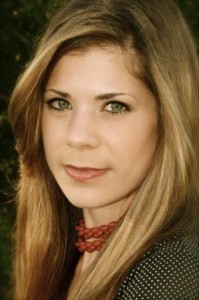
SARAH McCOY is the  New York TimesUSA Today, and international bestselling author of The Baker’s Daughter, a 2012 Goodreads Choice Award Best Historical Fiction nominee; the novella “The Branch of Hazel” in Grand Central; The Time It Snowed in Puerto Ricoand The Mapmaker’s Children (Crown, May 5, 2015).

Her work has been featured in Real Simple, The Millions, Your Health Monthly, Huffington Post and other publications. She has taught English writing at Old Dominion University and at the University of Texas at El Paso. She calls Virginia home but presently lives with her husband, an Army physician, and their dog, Gilly, in El Paso, Texas. Sarah enjoys connecting with her readers on Twitter at @SarahMMcCoy, on her Facebook Fan Page or via her website, www.sarahmccoy.com.

Guest Post: Inspiration for Moonchild Dreams by Nadia Gerassimenko

Today, we have a guest post from Nadia Gerassimenko about what inspired her to write the poems in Moonchild Dreams.

About the collection:

“Let us immerse into five imaginary and yet quite believable and relatable mythologies narrated by very mesmerizing Muses. The first to get you plunging are vocal melodies about strength, wonderment, and hope. The second is a struggle between love and its mirrored-self – an inevitable discovery of what true love is and how imitation fails to grasp its pure essence. The third are tales chanted forlornly by Sirens about love and loss and the unattainable, all lost in the abysmal sea. The fourth, less melancholy but profound nonetheless, are words of wisdom to live by from our Mother Nature. And lastly, you come to meet the Moonchild…a part of her inner world and dreams she dared to share.”

Please give her a warm welcome.

Moonchild Dreams compiles some of my best poems from the period when I was an inexperienced fourteen year old girl either seeing everything as la vie en rose or as monochrome melancholy to the period when I matured into a young woman of twenty-five who hopefully, gained some invaluable insight and wisdom. But I still managed to hold onto my symbolic shades of pink. So naturally, there was not one particular muse that inspired me, but several distinct ones that managed to amalgamate together creating one harmonious fusion of poesy.

At fourteen, when I first started writing poetry, Spring was my initial muse. There is no other season that I love so much than spring when I see trees blooming in sweet-scented flowers; when grass is tall and green adorned with golden dandelions; when critters come out and play from dusk until dawn. The feeling of spring is rejuvenating, and you feel like you are in love with and see love in everything and everyone.  I always feel peak experiences of hope, joy, passion, and love during springtime. And so a few of my poems made it in Moonchild Dreams that speak of being hopeful and spreading hope; idealizing love and putting the adored ones on a pedestal; and being strong and unbreakable no matter what.

When I was in my late teens and started dating seriously, Love was an imperative inspiration for me to let out my fiery feelings of passion, love, sensuality, as well as anger, sorrow, and frustration. Love was only easy during the honeymoon phase and when it got tough and complicated is when I needed to let my feelings out the most. So that I wouldn’t internalize my feelings and let them burn me wholly. No matter how painful my experiences with love were sometimes, they taught me great lessons that I eventually learned and were a catalyst for my self-growth. One of the chapters in my chapbook is dedicated to love and its false reflection. That chapter begins with seeing love as pristine and perfect, continues with the realization that it can really jerk you around, and ends with a real understanding of what true love is; it is a committed and compassionate walk of forever togetherness as cheesy as it may sound. When I was able to finally acknowledge that is when I was finally blessed with my partner in life.

Nowadays, it’s Words that inspire me to write poems. My body is completely relaxed at moments of inspiration. I go into a state of complete openness in my heart, mind, and soul. I start pondering on my life from past to present to future from an objective point of view. Or I could be thinking on a grander scale or on a small yet meaningful subject. I let words come into me. Those words start shaping an idea, then a concept. And then I write. Either on impulse or I think things through a bit more without ever closing myself, so that inspiration keeps flowing in my veins. Spiritual teachers is a good example of such a poem that was born from just words floating in my head. And some life experience as well.

Sometimes, Prayers help me. Not only to bring me some kind of spiritual quietude, but also a revelation that could assist me in accomplishing something. As I was about to finalize Moonchild Dreams, all I needed was one last poem as the perfect climax of the book that would summarize me as a person and as a poetess, because the last chapter is about the author. I was mulling over an idea that failed to be born. And so the night before, I asked for God to grant me a muse to help me write my last poem. He was compassionate in my request. Moonchild Dreams was born. The same title as the poetry collection.

Inspiration comes in different manners and embodiments. Through meditation or thoughtful thinking.  Through life events or dreams. Through movies or music. Through a mythological muse or a real-life person. The key is to always keep an open heart for the flow to pour in.

Thank you so much for sharing this with my readers, Nadia.