Quantcast

The Lost Art of Mixing by Erica Bauermeister

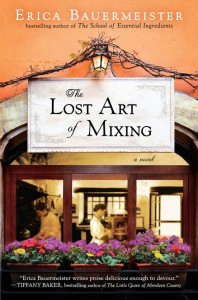
The Lost Art of Mixing by Erica Bauermeister (January 2013) picks up where her earlier novel, The School of Essential Ingredients (Check out my review tomorrow), left off — revisiting with Lillian, Chloe, Isabelle, and Tom.  Bauermeister also brings in some new characters as well as she leads readers on a journey of human interaction and family.  In many ways, recipes still play a role here as they did in the first book, though the imagery and word choices here are less about ingredients and cooking than they are about nature and the people themselves.  Isabelle plays a more integral role here than she did in the last book as a mother to grown children concerned about their new role as caregivers and to her wayward roommate, Chloe.  She’s also a motherly figure to Lillian when she finds herself in uncharted waters.

“For all the glamour of restaurants, the underlying secret of the successful ones was their ability to magically repurpose ingredients, a culinary sleight of hand that kept them financially afloat and would have made any depression-era housewife proud.”  (page 3 ARC)

Bauermeister expands on her early work and how food and emotions are closely tied to one another, looking deeper into her recipe to the ingredients and how they blend together or are mixed.  When a recipe is created, are the essential ingredients lost in one another or do they merely bring out the best elements of one another to create something luminous?  Isabelle’s memory loss highlights the mixing element further in terms of how memories are mixed in our minds with scents and seemingly innocuous objects, but the recall of those memories in those moments when scents and objects are present is all at once disconcerting, phenomenal, and joyous.

Bauermeister has created another set of deep characters with nuanced personalities and places them in unusual situations that are all at once odd and plausible, and readers will be swept up in the relationships within these pages and how the characters mingle and mesh with one another in different ways.  Whether a chance meeting when returning a lost coat or a rushed moment in the accountant’s office, lives are touched and changed.  The Lost Art of Mixing by Erica Bauermeister examines the relationships we have, the ways in which we perceive them and ourselves, and how an outside perspective can improve our interactions with those we think we know the best and are closet to, creating even deeper connections than we thought possible.
About the Author:

ERICA BAUERMEISTER is the author of The School of Essential Ingredients and Joy for Beginners. She lives in Seattle with her family. Check out her Facebook page.

Also look for a giveaway and interview in January when the book is released.

The Help by Kathryn Stockett

The Help by Kathryn Stockett, which was my book club’s October selection, has been celebrated and made into a movie already.  Aibileen, Minny, and Skeeter share the narration for the 1960s segregated Jackson, Mississippi, as the lines blur between the races and to social classes.  While Skeeter’s social class is not as pure as it seems, the Black maids are struggling to make ends meet and hold their tongues even as others are engaged in sit-ins at the local Woolworth’s and marches.  Stockett carefully illustrates the social and color lines in the South, while also paying careful attention to the harsh realities of Black maids in white households.  This is not just a story about Black maids, but also about where stigma comes from, how it is perpetuated, and how it can be overcome.

“And I know there are plenty of other ‘colored’ things I could do besides telling my stories or going to Shirley Boon’s meetings — the mass meetings in town, the marches in Birmingham, the voting rallies upstate.  But truth is, I don’t care that much about voting.  I don’t care about eating at a counter with white people.  What I care about is, if in ten years, a white lady will call my girls dirty and accuse them of stealing the silver.”  (page 256)

Stockett has created a novel that gets readers thinking about their own environment and what they tolerate on a daily basis, even though they do not agree with certain things that happen or continue to be spoken in anger or prejudice toward others.  Like she notes in her “Too Little, Too Late” essay at the back of the paperback, no one in her white family who had a Black maid even thought about asking the maid what it was like to be Black in the deep south.  How many things that go on daily do we disagree with and dislike, but allow to happen without so much as a criticism or objection?

On one hand, readers are introduced to the Black maids and the prejudice they put up with from their white employers, and on the other hand, Stockett introduces Skeeter, a young woman returned from college to find that she is vastly different from her childhood friends, Hilly and Elizabeth.  While the parallel is lightly drawn and clearly not the same kind of prejudice on both sides, it does raise the question about what it means to create groups within a larger society to the exclusion of others.  Both avenues lead to great isolation and emotional pain, but the consequences of speaking out against that oppression are potentially more violent and devastating for the maids than for Skeeter.

The Help by Kathryn Stockett provides a balanced look at the love and disdain in the relationship between white women and families and Black maids, but it also tends to play it safer than one would expect given the volatile time period being discussed.  Yes, there are occasions of devastating tragedy, spousal abuse, and hints of other violent behavior, but truly the focus is less on the consequences of speaking out and more on the ties that bind each group to one another.  Stockett has chosen to show the complex relationships between these women given the societal constructs that constrain their actions and behaviors, even if they would wish it not so.

About the Author:

Kathryn Stockett was born and raised in Jackson, Mississippi. After graduating from the University of Alabama with a degree in English and Creative Writing, she moved to New York City where she worked in magazine publishing and marketing for nine years. She currently lives in Atlanta with her family. The Help is her first novel.


This is my 77th book for the New Authors Reading Challenge in 2012.


What the Eclectic Bookworms Thought (Beware of Spoilers):

Overall, we all enjoyed The Help and determined that it accurately portrayed the South, particularly the conflicted emotions of the Black maids and the children they raised.  It also demonstrated the poor logic that many white families used to determine what Blacks were good enough to do for them, but not good enough to share with.  For instance, Blacks cannot use the same bathrooms as whites because they are diseased, but at the same time, those maids can cook their families’ food and raise their children.

The group seemed split about which character they liked best, with some of us in favor of Minny, while others liked Skeeter and Aibileen best.  One of our female members said that Aibileen’s voice was the most balanced, and that’s why she liked her best, while our youngest member said that she enjoyed Skeeter best because she was an aspiring writer.  Personally, Minny’s kick ass attitude and yet vulnerability when it came to her husband and children made her both frightening and endearing — as well as a little bit vulnerable.

The club also discussed whether we would go as far as Minny to get revenge on Hilly, with only a few of saying that we would and a couple of us indicating we would have gone further.  At one point the discussion of slavery came up and whether the maids would have considered themselves still slaves or something more than that, but we all seemed to be on the fence about that question.  A discussion of other cultures’ use of slavery and how slaves could earn their way out was also mentioned, though none of us had any concrete sources on hand to discuss that too much in depth.

Other topics touched upon during the discussion include the friendship dynamics in Hilly’s group and how most of the women were subservient to Hilly and her approval, while others like Skeeter seemed to see that cow-towing to Hilly was wrong as well as how Minny and her family seemed to get by more easily than Aibileen who was on her own without any children.  We all enjoyed the book, though some of us would have preferred less about Stuart and Skeeter’s relationship and that other sections were trimmed down.  I personally enjoyed the additional insight into Skeeter and Stuart’s relationship after having watched the movie and found that part lacking in the film.

I’m Just Sayin’! by Kim Zimmer and Laura Morton

I’m Just Sayin’!: Three Deaths, Seven Husbands, and a Clone! My Life on Guiding Light and Beyond by Kim Zimmer and Laura Morton is as spontaneous as Reva Shayne was on Guiding Light, and while most of the memoir is linear in nature, there are moments where the flashbacks are a bit out of sequence — though never hard to follow.  Zimmer pulls no punches with her memoir and does not sugarcoat anything that happened in the latter years of Guiding Light, which experienced severe budget cuts and went downhill in terms of quality where production was concerned.  On the flip side, she’s also willing to admit her mistakes and allowed her temper to get the best of her when she should have tried a more diplomatic approach when story lines and production were falling by the wayside.

Even more interesting were the early years in which she made some tough decisions about college and acting, when she met her soul mate (A.C. Weary), and when she put her family first and left Guiding Light the first time.  She shares some acting techniques she learned, including substitution in which an actor uses real life images and memories as stand ins for the characters’ current situations.  Zimmer didn’t find this effective, and in fact, found it very distracting.  One of the most interesting things in the book was that she took the bus to the studio rather than have a car pick her up or driver herself to work in the early days, which some of her co-stars found odd.  (I applaud her for using public transportation!)

“A.C. and I joked about getting married any number of times, but one of us always managed to change the subject.  If memory serves me correctly, in the summer of 1980, we were in our teeny-tiny kitchen making dinner when we started talking about having a baby.  I believe I said I’d love to have a kid but I wanted to be married first.  Hint, hint, wink, wink!

A.C. said something like, ‘Are you asking me to marry you?’

I said, ‘If you want me to have your babies, then yes, I’m asking you to marry me!'”  (Page 42)

While some may think that Zimmer is a diva, she certainly is in the sense that she’s talented and passionate about her work.  She talks a lot about fighting for her characters and the show, which she thought of more like a family — and in many ways was more attached than probably some other actors would be to their roles and television shows.  Her resolve and determination helped Reva Shayne’s character grow, but unfortunately, the show itself was not something should could have saved on her own.  Becoming so attached to the show and her character ultimately weighed too heavily on Zimmer and caused her to make some choices she might not have otherwise.

I’m Just Sayin’!: Three Deaths, Seven Husbands, and a Clone! My Life on Guiding Light and Beyond by Kim Zimmer and Laura Morton is not only about acting and her family, but about a passion for her job that became all-consuming and led her astray for a while.  But lessons are always available when people make mistakes, even celebrities.  Zimmer’s memoir seems to have been cathartic for her in that it helped her assess herself and her role as wife, mother, and actress.  She’s candid and funny, but never overly apologetic.  A great memoir for those looking for behind-the-scenes shenanigans, serious acting business, and life-work balance decisions.

***On another note***

My husband and I watched Guiding Light together, and Jonathan and Reva’s story line was one that we loved watching unfold as he was the son she had left behind.  We loved the dynamic of these characters, and it was great to learn about the audition between Zimmer and Tom Pelphrey, which was too funny.  The chemistry between the characters was superb. Another of my favorite pairings was Reva with Jeffrey!  I loved their “What the hell” nature and the jokes and genuine fun time they seemed to be having.  It was so refreshing.  On the flip side, I loved Harley and Gus on the show, a relationship that was torn asunder by the writers and angered me beyond imagination.

It was hard for me to watch the production quality of this show decline, and my mother would call and ask me what the heck they were doing to our show.  The shaky cameras and the outside scenes in which you couldn’t hear the dialogue too well and the overpowering music.  Like Zimmer, I was very attached to these characters, and in many ways they were real….I was sad to see the characters of Springfield go.

About the author:

Four-time Emmy® award winner Kim Zimmer is a veteran television actress. In 1984, she joined the cast of Guiding Light, and stayed with the series for over two decades. She and her husband live mostly in New Jersey with their three children.


This is my 65th book for the New Authors Reading Challenge 2012.

Small Damages by Beth Kephart

There are books that pump your adrenaline for you and there are books, like Small Damages by Beth Kephart, that seep deep into your being, settle there, making their mark on your emotions, your perceptions about other cultures, and your own world view.  Kephart has a skill unlike other young adult authors in that she never sees her younger readers as incapable of understanding or of deep emotion.  She trusts them to follow her characters in their unusual circumstances and settings and garner a deeper understanding of what it means to mature from a child into an adult and the responsibilities that weigh on them even now when they are so young in this modern world.

Kenzie Spitzer is an 18-year-old pregnant girl who struggles with the loss of her father and the silence of her mother every day, and she keeps secrets from her friends, her family, and herself.  Kevin Sullivan, the boyfriend, is on his way to Yale in the fall, and she had planned to attend Newhouse film school after a summer on the New Jersey shore in a rented house with her boyfriend and friends.  To say the least, her life is turned upside down by the pregnancy news, but what’s worse is the decision to have the child and give it up for adoption is taken out of her hands when her mother makes arrangements for her to go to Los Nietos (the granchildren) ranch in Spain where she will be cared for by her mother’s friends Miguel and Estela until the baby is born.

“We scatter the herd, break the bulls out of the shade until they are near, running beside us — fast in a straight line, awkward on the turns, annoyed.” (Page 14 ARC)

Like the scattering of the bulls when she arrives, Kenzie’s life has been derailed and those of her friends and of Kevin are moving parallel to her and from her point of view cased in blissful ignorance as her life is the only one changed.  She even ruminates on how even though a child conceived is the doing of man and woman, it is the woman’s life that is changes irrevocably.  Kenzie’s thoughts are very similar to teenage girls, vacillating between the past and what the future could have been — analyzing each moment over and over.  Unlike other novels on this topic, Kephart’s kind hand guides the narration without judgment allowing the character to reveal her own maternal love for the child and her confusion without the harsh lens of blame and resentment.

“I stay where I am, halfway in, halfway out, the moon and the stars bright behind me.”  (Page 172 ARC)

Forced into a decision that is not her own — but is in a roundabout way a compromise with her mother — Kenzie is left adrift in a foreign land with people she doesn’t know or understand, wondering through silences and asking endless questions that are unanswered more often than not.  She meets Esteban with whom a connection is born as they share a tragic parental past, even though for a long while all Kenzie wants is to be someone else, somewhere else.  Like the birds in Seville and at Los Nietos, they are there guiding Kenzie, showing her the color as Kevin had done when her father died.  She is alive, and they remind her.  There is one passage in the novel in which Esteban talks of how one particular bird always comes, but that he brings the others with him — reminiscent of The Conference of the Birds (my review) and the faith they need to find what they seek.

“‘Only to the earth do I tell my troubles,’ Arcadio sings softly, ‘for nowhere in the world do I find anyone to trust.’

‘If my heart had windowpanes of glass,’ Bruno sings the next line, ‘you’d look inside and see it crying drops of blood.’

‘These Gypsies, they are the famous,’ Miguel says.  ‘They are starting very young; they played for Lorca.  They had duende. Have duende. ?'”  (Page 165-6 ARC)

Small Damages by Beth Kephart is about the courage we must find within ourselves to face the past, our tragedies and losses, and our fears about the future.  Kenzie is a young woman on the verge of her new life when it is turned upside down, and while the decision to go to Spain is not her own, she finds the courage to make her own decisions for herself, her baby, and her future.  Through the chords and melodies of gypsy music, Kenzie must peel the tough, bumpy rubber skin of the orange in her journey through Spain to reveal the prized juice and supple pulp beneath the skin.  While damages may seem large and insurmountable when they are first scored through our hearts and skin, they heal and become the small scars that make us who we are and how we learn to be better than we were.

About the Author:

Beth Kephart is the author of 14 books, including the National Book Award finalist A Slant of Sun; the Book Sense pick Ghosts in the Garden; the autobiography of Philadelphia’s Schuylkill River, Flow; the acclaimed business fable Zenobia; and the critically acclaimed novels for young adults, Undercover and House of Dance. A third YA novel, Nothing but Ghosts, is due out in June 2009. And a fourth young adult novel, The Heart Is Not a Size, will be released in March 2010. “The Longest Distance,” a short story, appears in the May 2009 HarperTeen anthology, No Such Thing as the Real World.

Kephart is a winner of the Pennsylvania Council on the Arts fiction grant, a National Endowment for the Arts grant, a Leeway grant, a Pew Fellowships in the Arts grant, and the Speakeasy Poetry Prize, among other honors. Kephart’s essays are frequently anthologized, she has judged numerous competitions, and she has taught workshops at many institutions, to all ages. Kephart teaches the advanced nonfiction workshop at the University of Pennsylvania. You can visit her blog and my interview with her.

My other Beth Kephart reviews:

Have you seen this book trailer?

The Book Club Cook Book (revised edition) by Judy Gelman and Vicki Levy Krupp

The Book Club Cook Book (revised edition) by Judy Gelman and Vicki Levy Krupp is a second edition that includes more book recommendations from book clubs across America and recipes from the authors of those books.  The book is the brain child of two voracious readers who love to share their reading and the recipes they pair with their own book club selections.  After surveying more than 500 book clubs, including some contacted for the previous version, Gelman and Krupp filled out the cook book with some of the latest books being discussed, while retaining the ones that remain book club picks.

Additionally, they sought to include some vivid, color photos to demonstrate the breadth of new recipes included in the latest version of the cookbook.  If there were one nitpick with this cookbook, it would be that each recipe or most should include a photograph of the food created from the authors’ recipes — either from book clubs or the authors providing the recipes.

What’s unique about this cookbook is that each book is described in detail, complete with publisher and publication information, and information from one or more book clubs about the recipe used to accompany the book club discussion of the book.  Following the recipe, “Novel Thoughts” offers up a bit more from book clubs about what they felt and discussed about the book and how it inspired them to cook or read another book they found to be related, and more.  In “More Food for Thought,” book clubs offer full menus for certain books or how books generate culinary creativity.

In the back of the book, there are ideas about what makes book clubs successful and how books can be selected, etc.  Moreover, the authors include ideas on where to look for food inspiration in books that don’t explicitly mention meals, such as paying attention to the time period, the setting, or culture.  The Book Club Cook Book (revised edition) by Judy Gelman and Vicki Levy Krupp is an excellent cookbook for book clubs and those just looking for new recipes to try out, and paired with the Website even novice cooks can wow their families.

***I had the joy of meeting both these passionate readers and cooks at the Gaithersburg Book Festival in May, and I’m eager to check out their other books.

About the Authors:

Judy Gelman and Vicki Levy Krupp, are cooks, book enthusiasts and friends. Seeking to combine their passion for books, food, and book clubs, they met over stacks of books and endless cups of coffee at a local sandwich shop, where The Book Club Cookbook was born. The revised edition of The Book Club Cookbookwill be published in March, 2012.

They were motivated to write their second book, The Kids’ Book Club Book, after librarians, parents, and teachers who attended their talks asked for a similar book for the growing number of youth book clubs across the country.

Table of Contents features book related recipes from fifty of today’s most popular authors.

Their latest book is the revised edition of The Book Club Cookbook, featuring 20 new book club titles and recipes.

Judy and Vicki enjoy speaking about book clubs, and appreciate their ongoing conversations, both in person and via their websites, with book and food enthusiasts across the country.

They live with their families in the Boston area.

This is my 55th book for the New Authors Reading Challenge 2012.

Sea Change by Karen White

Sea Change by Karen White is told from the alternating points of view from three women — Ava, Gloria, and Pamela — who each hold secrets close and family closer.  Ava is a midwife who is impulsive and marries a man, Matthew Frazier, she knows little about and moves from her hometown and family to St. Simons Island, Georgia.  Gloria, Ava’s mother, has secrets that she barely acknowledges in the presence of her mother, Mimi, and has never told Ava.  Meanwhile, Pamela Frazier is a midwife from the 1800s who allegedly ran off with a British Army man, leaving her husband and son behind and whom the community branded a traitor and erased from history.

“Storms bring the detritus of other people’s lives into our own, a reminder that we are not alone, and of how truly insignificant we are.  The indiscriminating waves had brutalized the shore, tossing pieces of splintered timber, an intact china teacup, and a gentleman’s watch — still with its cover and chain — onto my beloved beach, each coming to rest as if placed gently in the sand as a shopkeeper would display his wares.  As I rubbed my thumb over the smooth lip of the china cup, I thought of how someone’s loss had become my gain, of how the tide would roll in and out again as if nothing had changed, and how sometimes the separation between endings and beginnings is so small that they seem to run together like the ocean’s waves.”  (Page 1)

White creates multifaceted characters with real problems and sometimes places them in surreal circumstances, including worlds in which ghosts exist and past lives are possibilities.  Ava is the only daughter in a family full of older brothers, and she escapes into the arms of Matthew to feel free and to roam as she chooses, but is her love for him real or contrived and will their relationship last even as the past surfaces to reveal some ugly secrets about him and his ancestors.  White uses water imagery in a way that connects the idea that a circle never begins or ends, but continues endlessly — forever — in a way that demonstrates the power of love and devotion to family.

There are intricate details in this novel that connect not only Ava and Matthew, but also some secondary characters, like Tish — the local florist.  White easily weaves in these details among the finer setting elements, ensuring that the island itself becomes a character in her novel about changes and the current beneath that connects everything.

“And in the moment before I closed my eyes, the flashlight caught on the corner of the wall by the stairs, where kudzu vines had begun to work themselves into a crack along the wall, climbing upward like a spider, relentless in its advance, lie the doubt that crept around my skull and took root in my chest where my heart beat.”  (Page 128)

While White’s characters are strong, particularly the women, Matthew is more of a stand in, the logic and realism that anchors the story.  He’s note as deep as White’s other characters, though this also is likely due to the drawback of having the present day sections told by Ava and Gloria and readers can only see him through their interactions with him.  Readers may not only find him distant and enigmatic, but a character too stuck in the past and not caring enough toward his wife, Ava.  As suspicions pile up around him, his behavior becomes more bizarre and he becomes more distant from Ava.

Sea Change by Karen White is like the ocean waves undulating against the shore, eroding away the beach of lies and half-truths that cover the reality beneath — the truth of Ava and Gloria’s lives and the mystery of Matthew’s ancestors.  Readers will discover that the lull of the rocking ocean waves can be easily churned into a roaring storm tossed seascape, but once the storm has subsided, there will be nothing left by hope.

About the Author:

Known for award-winning novels such as Learning to Breathe, the Southern Independent Booksellers Alliance 2009 Book of the Year Award finalist The House on Tradd Street, the highly praised The Memory of Water, the four-week SIBA bestseller The Lost Hours, Pieces of the Heart, and her IndieBound national bestseller The Color of Light, Karen has shared her appreciation of the coastal Low country with readers in four of her last six novels.

Italian and French by ancestry, a southerner and a storyteller by birth, Karen has made her home in many different places.  Visit the author at her website, and become a fan on Facebook.

Also check out my reviews of The House on Tradd Street, The Girl on Legare Street, The Beach Trees, and On Folly Beach.

Interview with Wendy Wax, Author of Ocean Beach

Wendy Wax is one of my new favorite authors, and I loved her book, Ten Beach Road, so much that I recommended it for the Mother’s Day issue of Women’s World Magazine.

In Ocean Beach, readers will be reunited with the heroines of Ten Beach Road — Madeline, Avery, and Nicole — as they come to South Beach in Miami to renovate yet another historic house for the television show Do-Over.  While the women have no qualms about working together again and having it televised, they are less interested in having their personal lives shown to the world on television.

Today, I’ve got an interview with Wendy Wax.  I hope you give her a warm welcome.

The characters from Ten Beach Road return in Ocean Beach. When did you know you were not done with these characters and their story and how soon did you begin writing it?

When I finished writing and revising Ten Beach Road I said goodbye to the lovely ladies of Bella Flora thinking that I had given them enough closure to send them off to live the rest of their lives and either find their happy endings or not in the imagination of my readers. But doing a series was something I had always thought about and for some reason as the launch of Ten Beach Road approached and as I talked to bloggers, bookstore owners, friends and fans about the book, ideas for a sequel began to take shape. This was new territory for me and it was very exciting. Over the years as I visited with book clubs and readers to talk about my books I was often asked if there would be more on some of those characters or stories and while I so appreciated the connection readers were making with my characters, for me they were complete and I had no desire to go back. But Maddie, Nicole, and Avery were different – and the idea of tackling another renovation with them for another sweat-soaked summer, seeing where there lives were headed and giving them new challenges was just too hard to resist. Shortly after the tour for Ten Beach Road ended, the writing of Ocean Beach began and now as Ocean Beach is about to hit shelves, I already find myself thinking about new renovation projects and new sunset toasts for my gals, so be sure to stay tuned!

Ten Beach Road was a hit with a number of women and made my recommendation list for Women’s World Magazine in May. How many readers have said they share their books with their mothers, sisters, and friends? And have any readers said they’ve shared your books with the men in their lives?

When I discover a new author or come across a book that I love, it’s automatic for me to share that information with the women in my life, so I love hearing from my readers that they “introduced” me and my work to their mothers, sisters, daughters and friends. Especially since I write about the bonds between women and I feel those relationships are so important in life. Probably the most fun is when readers say “I told my mom/sister/friend all about your books but I made her get her own copy because I don’t want to let mine go!” What author doesn’t love to hear that?

I do hear from some readers that they’ve tried to get their husbands to read my books, because they’d like them to a) understand what women are thinking, b) understand why we need our women friends, c) act (and look) like Joe Giraldi from Ten Beach Road and Ocean Beach or d) all of the above.

When writing your novels, do you start with an event in the news or a character? Please explain.

For me every book is different. In one case it may be an idea for plot that gets me started, in another case it might be a character that begins to take shape first or a news story that gets me thinking. In Ocean Beach it was a combination of things… our country’s obsession with misbehaving and self-obsessed celebrities was something that I touched on in Ten Beach Road and wanted to explore further. Then the idea of contrasting that with an “old school” celebrity who was a true gentleman and class act from the Vaudeville days began to take shape. Also, because Ten Beach Road was very current event based (the women are strangers who come together when they lose everything in a Madoff-style Ponzi scheme), I wanted Ocean Beach to be driven much more by their personal struggles.

Book bloggers have become very influential in the publishing world. Have you enjoyed your interactions with them on blogs, Twitter, and Facebook? And what advice would you give to other authors?

It’s a very different world now than it was when I first started writing. I love that the Internet has made connecting with fans so direct and so easy. In many ways, book bloggers are like independent booksellers in that they make a personal connection with readers, and love to share and recommend books and authors that they discover. Interacting with people like that, who are passionate about books and about reading, is something I will never get tired of, no matter what the medium.

Please recommend a favorite poet or poem and why.

I wish I had more time to read and enjoy poetry than I do. In fact with two teenage sons, a husband and some tight deadlines from my publisher, I wish I had more time to read in general! That said, I love how some of the modern poets like Lee Rossi (Wheelchair Samurai) and Laura Kasischke (Space, In Chains) incorporate modern imagery from our everyday lives into such an old art form. I have to also admit that I’ve always loved the poem Phenomenal Woman by Maya Angelou mostly because I think it would be lovely to feel that way about one’s self every day.

Thanks, Wendy, for answering my questions.

Author Wendy Wax

About the Author:

Award-winning author Wendy Wax has written eight novels, including Ocean Beach, Ten Beach Road, Magnolia Wednesdays, the Romance Writers of America RITA Award finalist The Accidental Bestseller, Leave It to Cleavage, Single in Suburbia and 7 Days and 7 Nights, which was honored with the Virginia Romance Writers Holt Medallion Award. Her work has sold to publishers in ten countries and to the Rhapsody Book Club, and her novel, Hostile Makeover, was excerpted in Cosmopolitan magazine.

A St. Pete Beach, Florida native, Wendy has lived in Atlanta for fifteen years. A voracious reader, her enjoyment of language and storytelling led her to study journalism at the University of Georgia. She also studied in Italy through Florida State University, is a graduate of the University of South Florida, and worked at WEDU-TV and WDAE-Radio in Tampa.

Ocean Beach by Wendy Wax

Ocean Beach by Wendy Wax reunites readers with Madeline Singer, Avery Lawford, and Nicole Grant on another renovation adventure in South Beach, Miami.  When you don’t know what the house looks like or have its address, but the Lifetime network comes calling for a pilot of Do Over, the cash-strapped friends have little choice but to accept, hoping for reboot to their lives and careers.  Kyra, Deidre, Giraldi, and Chase return as well.

“Avery’s hands tightened on the wheel.  She knew the sinking sensation in her stomach had nothing to do with the dizzying height of the bridge, but everything to do with fear of the fall.”  (Page 19)

From Bella Flora in Ten Beach Road (my review), the women became not only friends, but a YouTube sensation.  Their latest project in Ocean Beach is The Millicent, which is owned by an aging comedian, Max Golden, who has dealt with a heavy loss for many years.  Max is wildly eccentric, but fun, and he takes a shine to the girls and their crew.  Meanwhile, the girls are constantly at odds with the crew from Lifetime that was an unexpected and unwelcome surprise.

As the ladies mix it up with renovation, they are still remaking their lives after losing everything in Malcolm Dyer’s Ponzi scheme, and they are still struggling to rebuild their familial relationships.  Wax also throws in some suspense and a mystery to keep readers turning the pages.  It’s not all fun in the Miami heat as the paparazzi returns when movie star Daniel Deranian re-enters Kyra’s life.  Wax is great at describing the Florida coasts, architecture, and Art Deco homes, making the setting almost a character unto itself.

“Like a patient on an operating table, The Millicent lay open, her guts spilling out, her innermost self put on display.  The kitchen had been stripped down to walls, floors, and windows.  They were down to one bathroom for however long it took to replace miles of rusted galvanized iron pipe and reconfigure an equal amount of cast iron.  Because they were trying to preserve rather than rip out existing walls, tiles, tubs, showers, and sinks, it often took an excruciating amount of time to move a pipe as little as ten feet.”  (page 243)

Even the house begins to stand in as a metaphor for the women who are bared to public view and raw, and as the house is resurfaced and put together, so too are the women.  Maddie must use her new strength to find her backbone where her marriage is concerned and learn to care for herself as well as others.  Nicole must learn to rely on others rather than go-it-alone all the time, just as Avery must learn the same and to forgive past transgressions.  Ocean Beach by Wendy Wax is a great summer read that will take readers to the beach, show them what it means to come together, and triumph over the most harsh circumstances even without creature comforts.

About the Author:

Award-winning author Wendy Wax has written eight novels, including Ocean Beach, Ten Beach Road, Magnolia Wednesdays, the Romance Writers of America RITA Award finalist The Accidental Bestseller, Leave It to Cleavage, Single in Suburbia and 7 Days and 7 Nights, which was honored with the Virginia Romance Writers Holt Medallion Award. Her work has sold to publishers in ten countries and to the Rhapsody Book Club, and her novel, Hostile Makeover, was excerpted in Cosmopolitan magazine.

A St. Pete Beach, Florida native, Wendy has lived in Atlanta for fifteen years. A voracious reader, her enjoyment of language and storytelling led her to study journalism at the University of Georgia. She also studied in Italy through Florida State University, is a graduate of the University of South Florida, and worked at WEDU-TV and WDAE-Radio in Tampa.

City of Thieves by David Benioff

City of Thieves by David Benioff, which was the May book club selection, is set during WWII on the Western front of the war between 1942 and 1945, though mostly during the nearly 900 day siege of Leningrad, which was cut off from supplies of food and more.  Lev and Kolya are thrown together by circumstance when Lev is arrested as a looter when a dead German is found in his neighborhood and he’s discovered taking items off the body and is sent to the Crosses.  Kolya a Red Army deserter is thrown in the Crosses where he meets Lev.  The dynamic between these characters is full of initial paranoia, which morphs into irritation and finally camaraderie.  Kolya loves to chat about anything and everything, but he’s particularly boastful about his sexual exploits and his experience with just about everything related to war.  He’s pompous but in a comical way, and he reminds me of those wise jesters in the king’s court who uses humor to slice to the root of truth, even at times when it could be fatal.  Lev is a young boy who often portrays himself as an older young man or younger as it is convenient to the situation.

“There was something oddly comforting in Kolya’s consistency, his willingness to make the same jokes — if you could call them jokes — over and over again.  He was like a cheerful senile grandfather who sat at the dinner table with beet soup splattered on his collar, telling once more the story of his encounter with the emperor, though everyone in his family could recite it now from memory.” (page 161)

The beginning almost sets it up as a framed story in which the author or someone with the same name as the author hears the story from his grandfather, the knife fighter.  It’s not a far stretch to imagine the beginning chapter sets the story up to read similar to a memoir of David’s grandfather, Lev Beniov.  However, the frame is never closed literally by the end of the story, which is good in this case because it provides the story with a greater emotional impact.

“Wick lamps lit the small apartment and out long shadows crept across the walls, across the frayed rugs on the floor, the brass samovar in the corner, and a white sheet hanging on the far side of the room — partitioning off the sleeping area, I assumed.  When the giant closed the door, the sheet billowed like a woman’s dress in the wind.  In the moment before it settled down I saw what lay behind it — not a bed, no furniture at all, just slabs of white meat hanging from hooks, suspended from a heating pipe by heavy chains, with a canvas drop cloth on the floor to collect the drippings.”  (page 59)

Lev and Kolya embark on a journey to find eggs — yes, that is a chicken in the far snowy distance on the cover — to save their own hides, a deal offered by a powerful Soviet colonel.  They mean cannibals, partisans, and of course Germans bent on killing them.  While there is darkness, mystery, and suspense, there also is a quaint feeling to the setting and the interactions between Lev and his new friend.  The absurdity of their situation is never lost on them, and it attempts to mirror the absurdity of war.  Despite the danger they find themselves in, they often joke and rag on one another as if they are playing baseball in the streets of Leningrad.

City of Thieves is a well written coming-of-age story at a time when the world was at war, but in spite of the danger, Lev and Kolya form an unbreakable bond.  It’s easy to see their tentative interactions blossom into true friendship, a bond that keeps them alive and watching each other’s backs throughout the novel.  While in the midst of German attacks, in the rural farmhouses appropriated by Germans as whorehouses, and even in a remote hunting cabin, the journey they are on is not only one in search of eggs, but in search of the faith and strength they need to survive.  Another for the best of list.

Here’s what Book Club thought (Caution may contain spoilers):

We actually had a rather long discussion about this book from the prologue and the interjection of the author in the prologue as the grandson of one of the main characters to what the eggs symbolized.  One of the members thought that the eggs symbolized the absurdity of war, while another thought it was the fragility of human life.  As for the prologue, most said that they had forgotten about it, while two others (including myself) thought it was the author’s ego leading him to place himself in the story.  Although it’s an interesting device, it also seems to make the story appear true when it is not — given that in interviews the author has said he was never able to ask his grandparents about their time in Germany during WWII before they died.  And the prologue is not the only instance of the author interjecting his family subtly into the novel — i.e. Lev Beniov is one of the main characters, a close last name to David Benioff.

There also was quite a lot of discussion about the “Courtyard of the Hound,” which was talked about as a great work of Russian literature by Kolya and whether it was a great work of literature, could be a great work of literature, or was merely a boring story about a shut in who finally leaves his apartment because of a dead dog.

Other elements we discussed is the lack of care with human life by the generals on both sides of the war — whether the Russian colonel sending Kolya and Lev on an absurd journey to find eggs when all Russians are starving or the callous way in which the Germans used Russian women as sexual play things.  One member also highlighted the seeming lack of outrage regarding the cannibals compared to the outrage displayed against the women who were being used as whores by the Germans and acquiesced so that they could survive — why was one form of survival better than another or at least more acceptable.  Another interesting point was made about the cinematic feel of the latter half of the book where there were dramatic scenes lumped together one after another from the dogs used to carry bombs under tanks to the German whorehouse and the showdown with the German elite assassins.  It seemed to be very packed in and gave the reader little time to breath or be deeply impacted by the events at hand, which I did notice that this half of the book read more like a screenplay (haphazard of the author’s screenwriting occupation perhaps?).

Also, please read Diary of an Eccentric‘s review.

About the Author:

David Benioff worked as a nightclub bouncer in San Francisco, a radio DJ in Wyoming and an English teacher/wrestling coach in Brooklyn before selling his first novel, The 25th Hour, in 2000.

He later wrote the screenplay for Spike Lee’s adaptation of Hour starring Edward Norton and Phillip Seymour Hoffman. In 2005, Viking Press published Benioff’s collection of short stories, When the Nines Roll Over.

Benioff’s screenwriting credits include Troy (2004), directed by Wolfgang Petersen, and Stay (2005), directed by Marc Forster, and The Kite Runner (2007). Jim Sheridan produced Benioff’s screenplay Brothers, and Hugh Jackman reprised his role as the clawed mutant in Benioff’s Wolverine. Viking published his most recent novel, City of Thieves, in May 2008.

Benioff is married to actress Amanda Peet; the couple has one daughter, Frances Pen. Also check out his interviews.  And another interview.

This is my 39th book for the 2012 New Authors Challenge.

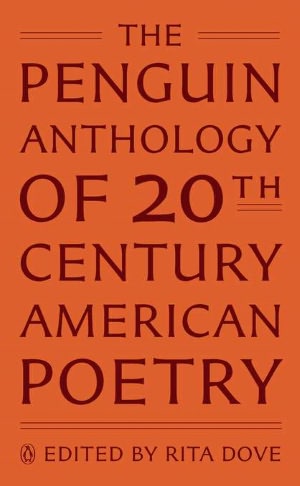
The Penguin Anthology of 20th Century American Poetry edited by Rita Dove

The Penguin Anthology of 20th Century American Poetry edited by Rita Dove (listen to her NPR interview, where she talks about the anthology and provides advice for young poets) collects a few poems from some of the great poets at the the height of their craft between 1900 and 2000, and while Dove notes that some of the poets who were starting to emerge in the latter portion of the century may not be included, it is merely because the anthology had to have a cutoff point and those poets may have reached the height of their craft after 2000.

Moreover, her introduction goes on to demonstrate the various turns in social movements throughout the United States and how poets and their poetry fit in with those historic changes, ranging — of course — from the backlash following the U.S. Civil War and the beginnings of WWI to the antiwar protests, the emergence of the feminist movement, and the struggle for civil rights.  Each poet’s bio is included alongside samples of their work.

“. . . and I should have written it right then, before rereading, discovering, misplacing note; before tracking down copyright dates, crunching numbers — in short, before the politics of selection could interfere with my judgment.”  (Page XXIX)

“If I could, I’d make this introduction a fold-out book.  Open to the first page, and up would pop a forest: a triangle of birches labeled Robert Frost, a solitary Great Oak for Wallace Stevens, a patch of quirky sycamores tagged William Carlos Williams, and a Dutch Elm for Hart Crane, with a double lane of poplars for Elizabeth Bishop and a brilliant autumnal maple tree marked Langston Hughes bearing leaves called Harper, Clifton, Soto.”  (Page XXX)

The selection of poems for this collection must have been a tough task, and Rita Dove employed the best tools at her disposal.  She’s spoken frankly in the introduction of the politics behind the selection of poems, particularly regarding a budget that was unable to meet the rights fees for certain poems (i.e. Plath and Ginsberg, who are notably absent from the collection, but not the introduction).  While some can not forgive this decision (i.e. Helen Vendler, whose criticisms have been widely used in college classrooms, including some I’ve attended; please also view Rita Dove’s reply to Vendler’s criticism), some readers can accept the oversight given how widely known and published some of these absent poets are and were.  Dove has even discussed the problem of “rights” in an interview with The Writer’s Chronicle, in which she said that one of the worst offenders was HarperCollins, which owns the rights to Sylvia Plath and Allen Ginsberg (December 2011, pg. 22).  “What I hated most about this unsettling affair was seeing other, less iconic poets held hostage by the very company they had trusted to promote them,” Dove lamented in the interview after discussing how one publishing hose offered poets the option to have their poems included in the anthology if they gave up their share in royalties even though the publishing house would not.

As with any “collection of great works,” the anthology is bound to have its detractors who are dissatisfied with the selections and who lament the absence of their own favorite poets and poems.  Dove says in the introduction, “The impulse driving them all, however, stemmed from the same revelation:  that every person contains a story that, if told well, would resonate within us no matter how strange or unfamiliar the circumstances, bound as we are by the instincts and yearnings of human existence.”  (Page XXXIII)  Readers will find that some of the poems speak more to them than others, but that also is expected in a collection of multiple poets with multiple styles.

Insect by Annie Finch (Page 540):

That hour-glass-backed,
orchard-legged,
heavy-headed will,

paper-folded,
wedge-contorted,
savage--dense to kill--

pulls back on backward-moving,
arching
high legs still,

lowered through a deep, knees-reaching,
feathered down
green will,

antenna-honest,
thread-descending,
carpeted as if with skill,

a focus-changing,
sober-reaching,

tracing, killing will.

There are old favorites from classics like E.E. Cummings to contemporaries like Yusef Komunyakaa. Readers will want to dip in and revisit their old poet friends, but also find the undiscovered gems from the past, present, and future. Ruth Stone, for instance, is a prolific poet, who may not be known by may readers, but her verse is so present and relatable; From “Scars” (page 178): “Sometimes I am on a train/going to a strange city,/and you are outside the window/explaining your suicide,/” Then there are Edgar Lee Masters at the beginning of the century that may be overlooked in favor of Robert Frost and other more well-known poets, despite his prolific career. From “Fiddler Jones” (page 2), “The earth keeps some vibration going/There in your heart, and that is you./And if the people find you can fiddle,/Why, fiddle you must, for all your life.” As the anthology progresses there is a distinct inclusion of more minority and female poets, like Reetika Vazirani and Terrance Hayes.

The Penguin Anthology of 20th Century American Poetry edited by Rita Dove is one perspective on American poetry over the last century, while it touches upon each of the social and poetical movements in the nation, it does skew the reality of the poetic realm a little bit by being unable to include certain icons and including newer poets who may or may not have proved their historical impact on the world of poetry to the satisfaction of everyone.  However, the inclusion of new voices is always a blessing when so much of poetry is consider classic and iconic from Frost’s New Hampshire woods to Ginsburg’s outspoken Howl.  Dove’s anthology is a collection to be dipped into time and again to visit old favorites and delve into the images and verse of new voices who have emerged in the latter part of the 20th century.

Poet Rita Dove

About the Editor:

Rita Dove, born in Ohio, served as Poet Laureate of the United States and Consultant to the Library of Congress from 1993 to 1995 and as Poet Laureate of the Commonwealth of Virginia from 2004 to 2006. She has received numerous literary and academic honors, among them the 1987 Pulitzer Prize in Poetry and, more recently, the 2003 Emily Couric Leadership Award, the 2001 Duke Ellington Lifetime Achievement Award, the 1997 Sara Lee Frontrunner Award, the 1997 Barnes & Noble Writers for Writers Award, the 1996 Heinz Award in the Arts and Humanities and the 1996 National Humanities Medal.


This is the 3rd book for my 2012 Fearless Poetry Exploration Reading Challenge.


***For Today’s National Poetry Month Blog Tour post, hop over to Unabridged Chick***

The Odds by Stewart O’Nan

The Odds by Stewart O’Nan is a slim volume that begins each chapter with a probability that sets the tone for the following chapter — a gimmick that is extraneous to the story he’s telling about an older couple — Marion and Art Fowler — whose marriage in on the brink of complete failure as they face insolvency and an empty nest.  Rather than prefacing each chapter with the odds of a married couple having sex during the week or the odds of getting food poisoning while on vacation, O’Nan could have allowed the decision to gamble away their life savings while on vacation in Canada speak for itself about the couple’s dire financial situation and marriage.  But this is a minor quibble.

O’Nan does a good job of demonstrating the tentative way in which each maneuvers around the other in conversation and shared space, which demonstrates the unspoken pain between them and the tentative hope that they can find something to spark a passion they thought they once had and maybe even shared.  However, through the oscillating narration between Art and Marion, readers soon discover that they have very different takes on what this Valentine’s Day trip is about, with Art hoping to save his marriage and Marion waiting for it to end so she can move on.

“They weren’t good liars, they were just afraid of the truth and what it might say about them.  They were middle class, prey to the tyranny of appearances and what they could afford, or dare, which was part of the problem.”  (page 1)

More than anything, The Odds is about deception. Art is deceiving himself that he can erase his past transgressions and right the wrongs with a Valentine’s Day trip to Niagara Falls and can remedy their financial situation with gambling. Marion is deceiving herself that Art will accept that she wants a divorce and to move forward.  We deceive ourselves about our motivations, our emotions, and our dreams, but how long can we deceive ourselves and others before there are consequences?  Midway, there is a deeply ominous feel to the book as a horse-and-carriage ride brings with it a couple tales of daredevils who needed rescuing after going over the falls and lovers who were parted by a freak thaw in 1912 that washed them away on the American side of the falls.

The Odds by Stewart O’Nan is not a typical love story, but in a way it is similar to how love stories come about, through chance and taking a risk.  In the end, we all have regrets and at times those regrets eat away at us, but how many of us would completely change our decisions and lives, giving up our children or spouses, for the unknown after so many years together?  Then again, O’Nan’s prose clearly demonstrates that even if you have regrets, you can change your luck and your direction with the one you love at your side — even against the odds.


This is my 12th book for the 2012 New Authors Challenge.  I borrowed this one from the library after reading Ti’s review at Book Chatter.  Also check out the review from Literate Housewife.


Stories for Nighttime and Some for the Day by Ben Loory

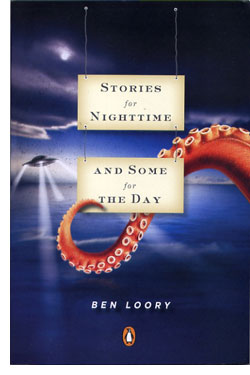
Stories for Nighttime and Some for the Day by Ben Loory brings back the parable, the allegory, and the fable in an absurdist manner — think Animal Farm meets the Myth of Sisyphus and Paul (particularly with its comedic attributes and alien encounters). Each story is about 20 pages long, but is utterly absorbing. Readers will fall head first over a cliff into these stories and as the waters of Loory’s prose wash over them, they will be in a new fantastical world where anything is possible no matter how impossible. At the end of each story, readers will have to either shake off the fantasy or simply continue delving into the worlds Loory has created without pause.  Coming back up to reality can be tough, but each story is worth the moments of initial fuzziness.

There are televisions and animals that talk quite animatedly with humans, as do aliens and trees.  And some of these characters have very set-in-stone opinions, and on more than one occasion, those opinions are proven wrong or even turned upside down in just a few lines.  Loory’s prose shies away from the poetic and flowery language used by other writers, but in his sparse lines, there is a depth of philosophical intent and even just a joking nature to be uncovered.   Readers will be giggling, smiling, and scratching their heads, but either way, these short stories will impact their thinking and mood for the better.  Do not be fooled, however, by the seemingly tongue-in-cheek style Loory uses because there are darker elements, which are nicely reflected in the deep, dark blue in the cover and the imposing octopus tentacle.

The Shadow

"ONCE THERE WAS A MAN WHO WAS AFRAID OF HIS shadow.
    Then he met it.
    Now he glows in the dark." (page 58)

The ominous feeling in some of these stories is haunting, like in the way that “The Tunnel” resembles the darkness that Stephen King easily creates as a gang of kids follows a killer clown into their town’s sewers in It.  The impossible becomes possible in these stories, and Loory’s words touch upon faith, love, loss, and the darkness within the human spirit — there is a logic to be found in absurdity.

In “The Poet,” the man writes a poem and becomes angered when it is rejected, but even before he sent it out, he knew it wasn’t that good.  Rather than revise it, he self-publishes it and posts and hands out his xeroxed copies to passersby.  Here Loory seems to be indicating the absurdity of demanding to be published even if the work is poorly written.  However, looking deeper, the story seems to be talking about the dedication it takes to become a good writer and that not being published shouldn’t matter if good writing is the goal.

Stories for Nighttime and Some for the Day by Ben Loory speaks to the inner child, coaxing it out from behind the adult into a fantastical world of monsters and talking animals only to slap that child back into place and point out the absurdity of blind categorization and conviction that many of us cling to steadfastly in adulthood.  There is a world of possibilities in this short story collection and readers will be blown away by Loory’s imagination and ability to create new myths to break down and rebuild.

Author Ben Loory

About the Author:

Ben Loory lives in Los Angeles, in a house on top of a hill. He was born in Dover, New Jersey, and is a graduate of Harvard College. In November 2008, his story “Photographs” was a finalist in the Glimmer Train Short Story Award for New Writers Contest. Since then his fables and tales have appeared online and in print in journals and magazines of all shapes and sizes, ranging from literary to fantasy, humor to horror, young adult to SF to sports-related and more.


***Thanks to Unabridged Chick for making me want to read this (check out her review)***

This is my 3rd book for the 2012 New Authors Challenge.