Quantcast

Joy for Beginners by Erica Bauermeister

Source: borrowed from Anna
Paperback, 269 pages
I am an Amazon Affiliate

Joy for Beginners by Erica Bauermeister is the perfect summer read, and while summer may be a few weeks away yet, this book hit the spot.  A group of friends came together unexpectedly from different walks of life and varied backgrounds and families, with some divorced, others perpetually single, and even a few happily married and content with family life.  These women — Daria, Marion, Sara, Hadley, Caroline, Ava — came together at first to help out Sara, a mother with twins and not enough hands, through a baby holding circle.  Once the twins grew old enough and Sara adapted to her new role as a mother of three, the women turned to another challenge, helping Kate through chemo and her battle with cancer.  As her daughter challenges Kate to take on the rapids of the Grand Canyon, she challenges all of these supportive women to face their own fears and challenges, and luckily each of them agrees.  From baking bread to getting a tattoo, these challenges are as varied as the women who must accomplish them.

“Two months later, Henry came into town just in time for Thanksgiving, bringing with him the smells of travel, cigarette smoke from a crowded train in Poland, yeast from a bakery in Alsace-Lorraine.  The toys he brought the children were not made of plastic; the music he hummed was nothing she recognized.  He was her twin, and looking at him she had never felt more as if he was her second half, the one she had sent out into the world while she stayed home.  She felt as if she could not stand close enough to him, listen to his stories long enough, as if doing so would make her a complete person again.” (page 107 ARC)

Like Bauermeister’s previous and current books that focus on people and food, so does Joy for Beginners, and in many ways all of her books center on the theme of learning to enjoy life and make the most of it.  Rediscovering what it means to be alive is at the heart of this novel, and it was a wonderful ride to see these women conquer their fears and face the challenges before them.  Like her previous books, readers will taste and smell the foods the women eat and find; they’ll smell the perfumes and scents around them; and they’ll experience the joy, surprise, and invigoration each of these women find.

Each of these women’s stories reads like a separate short story, but what makes this novel work are the connections these women share with one another and between themselves.  Kate and Sara may have brought these women together to nurture them and be their rocks of support, but its the connections that they continue to build together that propels these stories onward and deepens the ties that bind them together.  Readers are likely to want to see more from these women as their stories seem to be just beginning.  Joy for Beginners by Erica Bauermeister is uplifting, fun, and reflective, but it also demonstrates the perseverance of the human soul despite the challenges of life that can seem overwhelming.

About the Author:

ERICA BAUERMEISTER is the author of The School of Essential Ingredients (my review) and The Lost Art of Mixing (my review).  She lives in Seattle with her family.  Check out her Facebook page.

Thinking of You by Jill Mansell

Source: Sourcebooks Landmark
Paperback ARC: 432 pages
I am an Amazon Affiliate

Thinking of You by Jill Mansell is another romp in the English countryside.  Ginny Holland has a problem when she’s in emotional turmoil — her mind wanders and the tasks at hand just disappear from her consciousness.  Even when she’s worried about her daughter’s first year at college in Bristol and away from home, Ginny is still not immune to the charms of a hot-looking man in an antique shop.  But while she’s browsing and happily daydreaming about the man in the shop, he catches her red-handed with a shoplifted item.  Mansell has an uncanny way of bringing together the most divergent plots, weaving in secondary characters that are just as fun and hopeless as the main character.  While her books generally have happy endings and wrap-up relationships pretty neatly, they still provide a few hours of escape that can lift any mood.

“‘Watching how it’s done?’ Evidently amused, Evie paused on her way to table six with two plates of mussels.  ‘Can’t you just feel all those flirty female hormones in the air?’ With a wink, she added, ‘Good old Finn, he hasn’t lost his touch.’

‘I can see that.’  As Finn crossed the room in order to answer the ringing phone, every female eye followed him.

‘You’d better watch out.  You could be next.’

Ginny grinned because the idea was so ludicrous.  ‘I don’t think that’s going to happen.  He’d be too worried I might nick his wallet.'”  (page 119 ARC)

Beyond the fun, faulted characters, Mansell has a gift for humorous and witty dialogue that will leave readers in stitches.  Ginny is a mother looking to hang onto her daughter Jem for as long as she can, but reality gets in the way when she advertises for a flatmate and ends up with a young woman who is unable to get over her ex-fiance and is utterly depressed.  Mansell’s books aren’t just about the mistakes we make, but also the silver linings of those mistakes.  Without advertising for the flatmate, Ginny never would have been forced by the incessant ex-fiance talk to go out and get a job and a social life.

Even though the main romantic relationship is not only predictable, but also a little less developed than some of the others, Mansell excels at creating other relationships that are dynamic and complicated.  From Ginny’s relationship with the vivacious and slutty Carla to Ginny’s relationship with her grown daughter Jem, each of these relationships provide the characters with a foil and with a sounding board when they get into hot water.

Thinking of You by Jill Mansell is a soap opera on paper with characters in college and middle-age, each striving to find out where they want to go when they hit that inevitable fork in the road.  While some choose the right path, others stumble onto the wrong one for awhile before falling through the bush onto the other side.  But there are still some that blissfully walk the same path they always have.

About the Author:

Jill Mansell lives with her partner and children in Bristol, and writes full time. Actually that’s not true; she watches TV, eats fruit gums, admires the rugby players training in the sports field behind her house, and spends hours on the internet marvelling at how many other writers have blogs. Only when she’s completely run out of displacement activities does she write.

Other Mansell books reviewed:

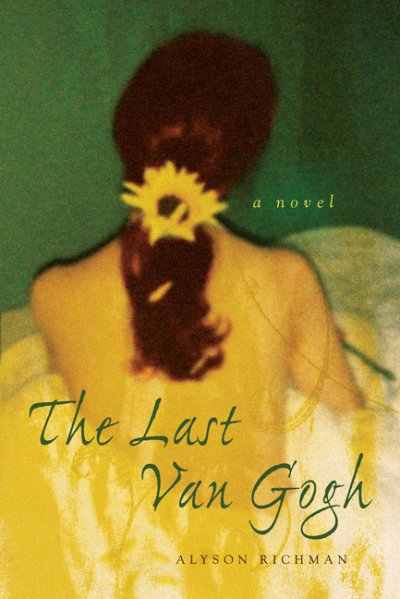
The Last Van Gogh by Alyson Richman

Book Source:  Library
Paperback: 308 pages
I am an Amazon Affiliate:

The Last Van Gogh by Alyson Richman, which was our May book club selection (unfortunately, I missed this meeting due to obligations at the 2013 Gaithersburg Book Festival), is based on true events in near the end of Vincent Van Gogh’s life in Auvers, France, in the 1890s.  Told from the point of view of Marguerite Gachet, a story unfolds not so much about Van Gogh but about the cloistered life of a young woman trapped inside her own family home by not only an overbearing and controlling father, but also family secrets.  More than that, it is a tribute to an artist and the tension between that art and the desire to have a normal life, as well as the struggle between family obligation and one’s own desires.

“For a home that had so many colors and vibrant paintings on its walls, there were still so many shades of gray between us.”  (page 182)

Richman does really well in using painting techniques and colors to describe the scenes in Auvers, and it is almost as if the reader has stepped inside one of Van Gogh’s paintings and is walking around among the village’s people.  Another surprising element is that the chapter headings, which often appear in some translated works, are less in-your-face about each chapter’s contents.  The headings also add to the atmosphere of the novel, reinforcing the painting and French aspects of the novel.

“I had gone out to do my errands, as I always did in the early afternoon.  It was a warm, radiant day in May.  The sky was cornflower blue, the sun the color of crushed marigolds.  I have to confess that I walked a little slower that day when I passed by the station.  I knew approximately which train he would be arriving on.  So I walked with smaller steps than usual, carrying my basket of eggs and my loaves of bread.”  (page 1)

From the moment readers meet Marguerite, they can see her rebellious nature, even though her daily tasks showcase her obedience to her father at every turn.  When the secrets begin to unravel, she finds herself less torn between duty and desire and more willing to follow her own mind and heart, even if it means getting caught.  Her father is the most irritating and self-absorbed character as he seeks to ingratiate himself into the artistic community by claiming his tinctures are actual cures.  And the son, Paul, is just as bad as he attempts to please his father at every turn and garner his favor.  The only way he can gain that favor is through Marguerite’s downfall, which she brings about on her own during her fateful meeting with Van Gogh.

The Last Van Gogh by Alyson Richman is a rich story in character, setting, and nuance.  Van Gogh’s perceptive nature as an artist shines through in his painting of Dr. Gachet as an aging man with sallow features, but it also shines through in his paintings of Marguerite at the piano and in the garden.  A love story in painting that comes alive with each brush stroke, only to be mired by the rain streaked canvases touched by tinctures that are misused and the controlling desires of a man torn between propriety and his obsession with art.

About the Author:

Alyson Richman is the author of “The Mask Carver’s Son,” “The Rhythm of Memory (formerly published as Swedish Tango),” The Last Van Gogh,” and the national best-seller, “The Lost Wife.” She loves to travel, cook, ride her yellow bicycle, and do ballet. She currently lives in New York with her husband and two children.

This is my 33rd book for the 2013 New Authors Challenge.

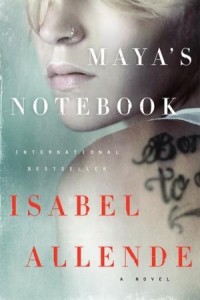
Maya’s Notebook by Isabel Allende

Book Source: HarperCollins and TLC Book Tours
Hardcover: 400 pgs
I am an Affiliate of Amazon.com

Maya’s Notebook by Isabel Allende is written in a notebook form without chapter breakdowns and is not a linear narrative.  Maya Vidal is a very troubled youth when tragedy strikes her very unconventional family of her pilot father who is rarely home, her grandparents Nidia and Popo, her absent mother Marta Otter, and the family friend Mike O’Kelly.  The novel is a departure from Allende’s typical historical fiction novels, but do not expect history to be absent from this coming-of-age novel — the takeover of Chile by Pinochet is present in the background, hanging over the Vidal family like a hazy cloud.  From her nose ring and tattoos to her goth clothes, Maya and her vampire friends set out on a path of self-destruction as a way to rebel against their family lives that they claim are very distasteful and harmful.  However, unlike Debbie and Sarah, Maya’s life is far from abusive and emotionally vacant, though it has changed significantly.

“I love some of the island’s customs, like truco, but there are others that bug me.  If a chucao, a tiny loudmouthed bird, chirps to the left of me, it’s bad luck, so I should take off a piece of clothing and put it back on inside out before going any farther; if I’m walking at night, I’m supposed to carry a clean knife and salt, because if I cross paths with a black dog with one ear lopped off, that’s a brujo, and in order to get away I have to trace a cross in the air with the knife and scatter salt.”  (Page 47 ARC)

Allende is a novelist that handles details with aplomb, weaving them in the disjointed narrative at just the right time, leading readers on an emotional journey that evokes not only frustration at Maya’s behavior, but also one of sympathy and sadness for the losses she feels.  She needs to hit rock bottom in order to climb up and rebuild her life, even though she falls off a high cliff into the abyss of drug dealers, mafia criminals, and the sex trade.  Allende does not sugarcoat anything that Maya experiences in her rehab stints or her escapes and drop off the map inside Las Vegas.  Unwittingly or willfully blind, Maya stumbles into a crime ring that is bigger than she ever thought it could be and it puts her life and the lives of her loved ones in danger as she never could have imagined. However, the end game with the conspiracy feels a bit contrived.

Maya’s past is never far behind, even as her life spirals out of control, chirping behind her ear at every turn.  Running is the only way she knows how to deal with her emotions, and its the way her family has dealt with the harsh struggles of their lives since the time of Pinochet. The ties that bind this family are stronger than ever, even as dynamics change between them and secrets of the past are uncovered. Love is the strongest tie, but fear also can be a great motivator as the walls close in. Maya’s Notebook by Isabel Allende is a modern marvel that will make a lasting impression on readers as a headstrong girl becomes unmoored and is forced to not only confront her own demons but the ghosts of the past.

About the Author:

Born in Peru and raised in Chile, Isabel Allende is the author of many bestselling novels, including, most recently, Island Beneath the SeaInes of My Soul, Zorro, Portrait in Sepia, and Daughter of Fortune. She has also written a collection of stories; three memoirs, The Sum of Our Days, My Invented Country, and Paula; and a trilogy of young adult novels. Her books have been translated into more than 27 languages and have become bestsellers across four continents. In 2004 she was inducted into the American Academy of Arts and Letters. Allende lives in California.  Find out more about Allende, her books, and her foundation at www.isabelallende.com, and connect with her on Facebook.

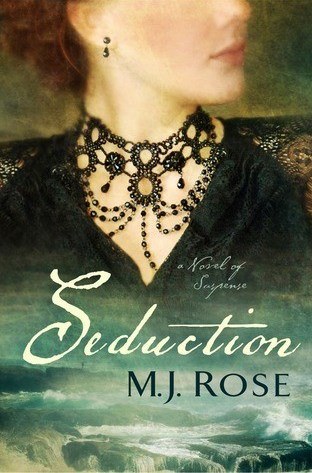
Seduction by M.J. Rose

Seduction by M.J. Rose shifts from the present day to the 1850s as Jac E’Toile uncovers more of her family and Malachai’s secrets, as well as the connections to seances, the Druids, and reincarnation.  Memories and past lives cricle in on themselves revealing bit by bit how entwined Jac’s life is with Theo Gaspard, the man who invites her to the Isle of Jersey to research the island’s Celtic roots.  In the process, readers see a side of Victor Hugo they may not have heard of before, a side that has been documented in his own notations.  Like the other books in Rose’s reincarnationist series, Seduction can be read as a stand alone novel, though some readers may want to read The Book of Lost Fragrances (my review) first.

“They climbed the wrought-iron circular spiral. Its steps were narrow and turned on themselves sharply, making them hard to navigate and easy to fall down, Jac thought. The upper balcony hung over the fist floor. From the slightly different scent, Jac knew there was a concentration of older volumes up here.” (page 153 ARC)

Rose weaves mystery with romance, history, and elements of spiritualism.  Hugo and the Gaspard family become obsessed with loss and overly consumed to the point where they are nearly willing to make a deal with the devil to bring back those they love.  Jac and Malachai have known each other since she was a teenager, and while he continues to obsess over the search for the 12 memory tools, Jac continues to hold him in esteem until events shake her faith in him.  However, Seduction is less about the search for memory tools and more about uncovering the past and past lives.  Each of these characters is seduced, either by their grief or their fear, and in the end, their triggers may be different but their obsessions threaten to take them over.

“To be a decent writer you must have both empathy and imagination.  While these attributes aid your art, they can plague your soul.  You don’t simply suffer your own sadness, experience your own longing and worry about your own wife and children, you are burdened with experiencing the emotional states of multitudes of others you don’t know.”  (page 80 ARC)

While the narrative slips between Jac’s story and that of Victor Hugo, as well as a period during the time of the Druids, these stories could have easily stood on their own had it not been for the reincarnation connection threading through the entire novel.  In many ways, the connection to Hugo could have been explored without the Druid connection, but Rose’s story arc carries a deeper sense of connection between her characters.  In addition to reincarnation and seances, the narrative has elements of the Gothic, with the dark brooding sea and the mysterious disappearances of young girls, intertwined with the treasure hunt for Victor Hugo’s journal.  Rose’s narrative is like the faint scents of perfume winding their way into the nasal cavity from a distance, only to strengthen as the tantalizing aroma beckons the reader further on the journey to the source.  Seduction by M.J. Rose is a novel full of mystery that only unravels with time and patience as Jac journeys outside her comfort zone to embrace her talents as a perfumer and a reincarnated soul.

I, for one, cannot wait to see what Rose has in store for the next installment in this series, though I’m not ready to say goodbye to Jac.

About the Author:

M.J. Rose is the international best selling author of eleven novels and two non-fiction books on marketing. Her fiction and non-fiction has appeared in many magazines and reviews including Oprah Magazine. She has been featured in the New York Times, Newsweek, Time, USA Today and on the Today Show, and NPR radio. Rose graduated from Syracuse University, spent the ’80s in advertising, has a commercial in the Museum of Modern Art in NYC and since 2005 has run the first marketing company for authors – Authorbuzz.com. The television series PAST LIFE, was based on Rose’s novels in the Renincarnationist series. She is one of the founding board members of International Thriller Writers and runs the blog- Buzz, Balls & Hype. She is also the co-founder of Peroozal.com and BookTrib.com.

Rose lives in CT with her husband the musician and composer, Doug Scofield, and their very spoiled and often photographed dog, Winka.

For more information on M.J. Rose and her novels, please visit her WEBSITE. You can also find her on Facebook.

Also Reviewed:

The Hypnotist by M.J. Rose
The Memorist by M.J. Rose
The Book of Lost Fragrances by M.J. Rose

The Collected Poems of Marcel Proust edited by Harold Augenbraum

The Collected Poems of Marcel Proust edited by Harold Augenbraum includes not only the original French alongside the English translations of the poems, but also detailed notes on the various references and historical context for each of the poems at the end of the collection. As an interesting addition, there are a few of the original drawings that Proust sent along with the poems in his correspondence.  Proust is generally known for his prose, and most people don’t know that he wrote poems.  (While I’ve read some of his poems before, I have not read his prose.  I’m a bit out of the norm.)  “The poems were composed from when Proust was seventeen to when he was fifty,” says the introduction on page xvi.  That’s a long period of time, and there are a great many poems.  How many of these poems were written down in one moment or revised is unclear, but some of these poems clearly were further along in the process.

Proust’s poems range from witty to plainspoken and sarcastic.  Some of his poems about love border on the edge of passion and hatred, and there are moments in certain poems that may remind readers of the great Romantic poet Percy Bysshe Shelley.  Proust’s poems celebrate not only art, but also music, language, and friendship — even those relationships that sour.  Many of these poems were untitled.

Poem 9 (page 27)

Madame, it's possible that I have forgotten
Your divine and birdlike profile,
That I have pushed past my own madness
Like one jumping through a hoop,
But always still your eyes will shine
Like bright chandeliers on the ceiling of my mind.

His poems are playful and cutting at the same time, and his grasp of language and all its capabilities is astounding. Readers will wonder about the subjects that are not clearly named, but at the same imagine their own obsession or loved one in their stead. Even without knowing the subject of poem 9, the reader can gather that the woman once held an esteemed place in the poet’s heart, but has now fallen into disgrace in his eyes. And yet, even though the love affair has gone downhill, she still is remembered fondly but will remain in the past.

From the traditional forms of sonnet to the less-than-traditional prose-like poetry in the collection, readers will get a sense of Proust’s evolution as a writer and his experiences as he saw them. The Collected Poems of Marcel Proust edited by Harold Augenbraum has a lot to offer readers, and while it is not necessary to read the French, those who can will have a richer experience.

About the Poet/Author:

Valentin Louis Georges Eugène Marcel Proust was a French novelist, critic, and essayist best known for his monumental novel In Search of Lost Time. It was published in seven parts between 1913 and 1927.

This is my 18th book for the Dive Into Poetry Challenge 2013.


This is my 29th book for the 2013 New Authors Challenge.

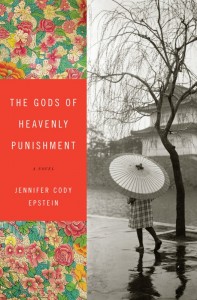
The Gods of Heavenly Punishment by Jennifer Cody Epstein

The Gods of Heavenly Punishment by Jennifer Cody Epstein chronicles Yoshi Kobayashi’s life before, during, and after WWII, with a particular emphasis on the Tokyo fire bombings that preceded the atomic bombings of Hiroshima and Nagasaki.  Billy Reynolds, whose family lives in Tokyo before the war, is a sensitive young boy who loves his new camera, and adores taking photos of Yoshi, family, friends, and more.  Cam Richards and Lacy Robertson are American college students who meet and quickly fall in love just as war is about to break out between America and Japan after Pearl Harbor, and their lives are torn apart by the war.  But ultimately, Epstein’s novel is about Yoshi and how the war tore apart a flourishing culture that once embraced American capitalism.

Not only will readers get an in-depth look at Tokyo before, during, and after the war, but they also see how war impacts not only Americans who once lived in Japan, but also those who were married to those who flew to avenge the deaths of so many in Hawaii.  Initially, readers will be duped into thinking Cam Richards and Lacy Robertson are the main protagonists — a testament to her ability to get readers to care even about secondary characters — but Yoshi is the heroine here, though there are big gaps in time that are not explored, which can leave a reader wanting more.  There is a moment near the end in particular when readers will wonder how Yoshi ends up playing piano at The American Club after the war when they last left her getting into a boat with an older man after the fire bombings, heading away from Tokyo.

“Almost by reflex Cam released the brakes and started to roll.  And then they were racing down that slippery white line, his heart pounding with the rhythmic throbbing of the twin Cyclones.  The dungaree blue of the sailors’ uniforms and the dirty gray of the ship’s island bled together as the Blonde Bombshell picked up speed.  As they passed by the signal officer (now safely flattened against the deck), Cam pulled on the yoke so hard that he felt his elbows crack, and saw the sky lunge towards him like a wet concrete wall.  They hit the ship’s edge in the after-trough of another white-topped crest, and as his plane’s nose plunged towards the water Cam’s gut plunged right along with it.”  (page 79)

Epstein is a phenomenal writer.  She captures intense moments so well, that it places the reader there with the characters.  Yoshi is a precocious young girl learning three languages thanks to her continental mother, but unfortunately, she’s held a little back by her attachment to her mother and her father’s old world conceptions of women in society.  She sees her father’s love of the new paradise, Manchuria, as a possible solution to her escape, until she learns the truth about her father’s work there.  When she heads back home, she throws herself into the national effort for the war, hoping that she can escape the disintegrating world around her in which her mother slips more and more each day.  The Gods of Heavenly Punishment by Jennifer Cody Epstein is about the outside forces that shape who we are depending on how strong we are on the inside and our ability to make our way out of the darkness into the light.

About the Author:

Jennifer Cody Epstein is the author of The Gods of Heavenly Punishment and the international bestseller The Painter from Shanghai. She has written for The Wall Street Journal, The Asian Wall Street Journal, Self, Mademoiselle and NBC, and has worked in Hong Kong, Japan and Bangkok, Thailand. Jennifer lives in Brooklyn, NY with her husband, two daughters and especially needy Springer Spaniel. To connect with Jennifer, “like” her on Facebook.

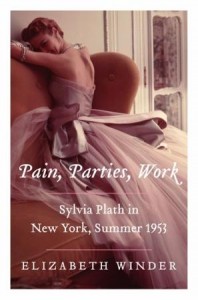
Pain, Parties, Work: Sylvia Plath in New York, Summer 1953 by Elizabeth Winder

Pain, Parties, Work: Sylvia Plath in New York, Summer 1953 by Elizabeth Winder is atmospheric and an indulgent retrospective of the lives of Mademoiselle‘s summer guest editors, who were hand picked from a bunch of college essays and pieces submitted by college women.  The magazine was not only known for its fashion and celebrities, but also for the writing it published from heavyweights like Dylan Thomas and Truman Capote.  Additionally, the magazine published its college issue.  “Sunday at the Mintons” by Sylvia Plath, a short story, earned her a guest editorship at the magazine, a summer that became the basis of her novel, The Bell Jar.  Winder bases her “loose” biography on interviews with those summer guest editors and others who had contact with Plath that summer, which are backed up by letters and journal entries from Plath herself as much as possible — though there is the pitfall that some memories may be nostalgic or missing certain truths about that time as memories fade.

From the moment she sets forth in New York, readers are introduced to a different Sylvia Plath from the moody and dark one they have come to know. This younger version of the writer is full of whimsy, loves fashion, and is eager to please.  Her Northeast upbringing probably instilled in her a deep sense of courteousness and decorum, but there were also inherent eccentricities already present in her character, especially during one luncheon in which she gobbles up all of the caviar appetizer without sharing.  A commune of young women was built at the Barbizon Hotel that summer, as many of the young women wanted careers and still to raise families in a period of history before the pill was available and before career women were considered part of the norm.

“A white enameled bowl bloomed out of one wall–useful for washing out white cotton gloves.  (Within days there would be little damp gloves hanging in each room like tiny white flags.)” (page 5 ARC)

While Winder provides a great many anecdotes about Sylvia from her fellow guest editors and roommates, there seems to be a disconnect between the Sylvia these women saw and the Sylvia that was.  At the outset, Winder tells the reader she wants to paint a different portrait of Sylvia Plath than the iconic one we all know of the suicidal poet.  And while she succeeds in showing a “good girl” that was Plath in her 20s, she also demonstrates how as a young woman free from the constraints of her own society, she was given more freedom to pursue men and other experiences, to which she might not otherwise have been exposed.  And like many young women — and even men — still finding their place in the world and how to accomplish their goals, they often suffer from the “grass is always greener” problem when the reality of their ideal opportunity is not as wonderful as it has seemed from afar.

There were some among the guest editors in 1953 who were given menial tasks and envied Plath’s work with Cyrilly Abels doing rejections and editorial work, but Plath languished in the role and her talents for graphics were cast aside in favor of her fiction-writing talents.  In many ways, those who believed in her talent had begun to stifle it.  While she may have looked the part of a professional interviewer and editor, Plath was chained to a makeshift desk that anchored down her spirit, while many of the other girls were enjoying their time as editors — meeting Plath’s hero writers and attending dinners and events.  It seems that this separation isolated her from the other guest editors, even though on the outside she was conversing with them and enjoying their company as well as the company of many strange men throughout New York.

It is too easy to suggest that Pain, Parties, Work: Sylvia Plath in New York, Summer 1953 by Elizabeth Winder aims to undo the iconic woman that is Sylvia Plath, but it does provide a wider view of her whole person.  Not just the mother, burdened artist, and ex-wife of Ted Hughes, but the spirited poet who was stifled by a dream job that she saw as a launching point who succumbed to her tendency to depression upon her return home after a series of unrelated rejections flooded in after that summer.  Plath was a woman plagued by her own dichotomies, who was unable to break free from the labels of society without the guilt that accompanied those actions, but she also was talented and burned brighter than many other women of her age.  What Winder succeeds in doing is providing an excellent look into 1950s New York and the pressures these young women faced as progressive ideals began to emerge.

About the Author:

Elizabeth Winder is also the author of a poetry collection. Her work has appeared in the Chicago Review, the Antioch Review, American Letters, and other publications. She is a graduate of the College of William and Mary and earned an MFA in creative writing from George Mason University.

This is my 20th book for the 2013 New Authors Challenge.


Please click the image below for today’s National Poetry Month Tour Post!

Ariel by Sylvia Plath


Click the image above for one National Poetry Month tour stop, and visit Life’s A Stage for a second today.

Ariel by Sylvia Plath is a collection that she crafted near the end of her life, before her suicide, according to the forward by Robert Lowell (Check out “Ariel“).  These poems are what Plath has been best know for, other than The Bell Jar, and these poems are by turns blunt and dark as she refers to death at nearly every turn and the fleeting nature of life.  Her poems are not only confessional in nature about her emotions and life, but they also examine the bittersweet nature of life and being a woman.

In “Elm,” the narrator speaks of having no fear, a fear of the unknown or a fear of loss, particularly in relation to love.  There is that fast movement forward, a moving onward to the next experience and next moment in time.  Many of her poems reflect this urgency to move forward and to stay in the moment — to enjoy it.  Her poetry, like many have said of her own personality, burns brightly and intensely, making no excuses for rawness there — like the predawn light on the horizon not marred by expectation or perception.

She talks of motherhood in a way that is unvarnished, speaking, “These children are after something, with hooks and cries,//And my heart too small to bandage their terrible faults./” in “Berck-Plage.”  In spite of the parasitic nature she ascribes to children, the title of the poem tells the tale of how joyous motherhood can be, with plage being a beach or a sunspot and the echo of France’s Berck-sur-Mer.  She also displays a bit of whimsy in her portrayal of “Gulliver” as he is over-run by the citizens of Lilliput.  Plath is hindered by the confines of society and expectation, and in these poems there is by turns the holding back or the tying down of narrators or images that dream of release or are released.  The push and pull of these images run throughout the book and probably echo the feelings Plath felt herself after her divorce and the onset of her single-motherhood.

Ariel by Sylvia Plath is a collection full of tension, explosions of release, and a search for balance between constraint and freedom.  Death is not necessarily death in the demise of the physical self, but a release and return to the freedom that is desired.

About the Poet:

Sylvia Plath was born in Boston, Massachusetts. Her mother, Aurelia Schober, was a master’s student at Boston University when she met Plath’s father, Otto Plath, who was her professor. They were married in January of 1932. Otto taught both German and biology, with a focus on apiology, the study of bees.

In 1940, when Sylvia was eight years old, her father died as a result of complications from diabetes. He had been a strict father, and both his authoritarian attitudes and his death drastically defined her relationships and her poems — especially “Daddy.” Photo Credit Rollie McKenna.

This is my 10th book for the Dive Into Poetry Challenge 2013.

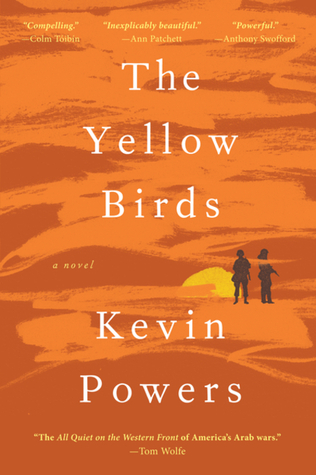
The Yellow Birds by Kevin Powers

The Yellow Birds, a debut novel by Kevin Powers, is a powerful look at the confusion soldiers experience while abroad during the Iraq War between 2004-2005.  Private Bartle and Murphy become connected and friendly, but their friendship is tenuous at best as it relies on the anxiety and adrenaline of war to sustain it.  What do these two men really know of each other than their age, the fact that one has a girlfriend and mother back home and that the other has only a mother, and that they both joined up with the promise of a new future ahead.

“I couldn’t have articulated it then, but I’d been trained to think war was a great unifier, that it brought people closer together than any other activity on earth.  Bullshit.  War is the great maker of solipsists:”  (page 12)

Powers attempts to examine the ideas of “freedom” and “free will,” especially through the actions of the soldiers, with Murph seeking out time in his day to watch a female medic from afar without interacting — creating memories that are not beyond his control.  But what does this control say about the notion of freedom, particularly since Murph is attempting to take, at least partially, control of his own memories.  At one point early in the novel, meanwhile, Bartle says, “I remember feeling relief in basic while everyone else was frantic with fear.  It had dawned on me that I’d never have to make a decision again.  That seemed freeing . . . ” (page 35)  Does freedom from decision-making mean that soldiers are free and that their will is free to act as it pleases?  It’s a catch-22 for without will, there are no decisions.

Beyond the calls to assess freedom and its consequences, Powers is asking the reader to question the ideas of right and wrong, miracles, and circumstance.  What does it mean when a bullet strays from you and hits another?  In Bartle’s case, he sees no meaning; it just happens.  In this way, Powers illustrates how far removed Bartle has become from morality and emotion, something that many soldiers experience.  Even his attempts to reconnect with Murph are faulty, and while many may view Murph as fragile, there is something more human and less robotic about him than Bartle.  One is the foil of the other as the war has worn them both down, and their differences — no matter how pronounced — are a testament to the ability of Powers to demonstrate the ways in which war can take its toll on the human psyche.

The Yellow Birds by Kevin Powers is less an emotional book than it is a psychological one, though the shift between years is well documented, it can be distracting to pinpoint where the events fall in a time line.  However, while the style is something that takes a bit of getting used to, it does showcase the mind of soldiers when they return from war — as trauma makes it harder to think of events in a linear fashion.  Powers includes not only the gruesome details, but also the beauty of the foreign land in which these soldiers find themselves battling the enemy.  The juxtaposed images make the horrors of war even more heartbreaking and tough to take.

About the Author:

Kevin Powers was born and raised in Richmond, VA. In 2004 and 2005 he served with the U.S. Army in Mosul and Tal Afar, Iraq. He studied English at Virginia Commonwealth University after his honorable discharge and received an M.F.A. in Poetry from the Michener Center for Writers at the University of Texas at Austin in 2012.


This is my 15th book for the 2013 New Authors Challenge

LEVEL 2 by Lenore Appelhans

LEVEL 2 by Lenore Appelhans (aka Presenting Lenore, a blogger I’ve read for a long time and even met a few times in person) is part one of three in the Memory Chronicles.  Appelhans is creating an alternate afterlife to the one many current religions teach, but her afterlife has roots in mythology and a modern twist.  Felicia Ward’s life is cut short, but readers are kept in the dark about that aspect until the end, which really doesn’t impede the story.  Dipping in and out of her memories with her family, friends, and boyfriend, Felicia remains connected with her earth life and to the emotions she felt there.  In many ways, the chamber in which she relives and calls up these memories is her life line to the past, preventing her from examining her surroundings more fully and questioning the new reality she finds herself in.

“And now I can’t sleep.  Except, that is, when I access my memories of sleeping.  You wouldn’t believe how many times I’ve combed through the seventeen years and 364 days of my life, searching for those rate uninterrupted, nightmare-free stretches of slumber.  Because sleep is my only real break from this endless reel of memories, both mine and those I’ve rented.”  (page 1-2)

Felicia’s experiences are guarded and her memories of the traumatic events in her life are revealed slowly in this first-person point of view novel, which provides a sense of suspense that becomes a bit overwrought toward the end as the reader is anxious to learn how she died and what happened between her, Autumn, and Julian, as well as how she met Neil and what happened to him.  However, a lot of the story is focused on Level 2, its structure, and its purpose as it is revealed to her through someone she already had trust issues with on Earth, so information from him is highly suspect from the beginning, which should lead readers to expect or suspect the twists at the end of the novel.

“In moments like this I wonder whether we are bound together by true feelings of kinship or if we’ve merely clung to each other these past ten years out of obligation, fear, or lack of other prospects.  Her huge doll collection made her the ideal friend back when we first met at out post in Ecuador and at our subsequent stint back in D.C., but since we both got to Frankfurt a year ago last summer, after four years apart, I’m starting to think maybe I’ve outgrown her.  That’s what moving so often can do to you.  It makes you continually question your place in the world, and seek out those few who understand what you’re going through.”  (page 120-1)

The hives in Level 2 are reminiscent of the Matrix movies (as well as the elements of a rebellion), which makes them lack some originality, but there is a back story to its creation that was more imaginative and unfortunately is less detailed than some readers may want, though there are more books planned for this series, which could lead to additional description and better world building.  Meanwhile, Appelhans does raise some questions about the reliability of memory and whether it can be manipulated by others or by the owner of those memories to change the outcome or modify the perception of certain events.  This aspect of the story is very unique and psychological, a part of the story that should be expanded.

Felicia is a strong character at some points and weak at others.  She’s especially weak when navigating the Level 2 environs with someone she does not trust, and says more than once that she is too weak to go off on her own, even when she really isn’t as weak as when she first woke.  However, her fear of the unknown is something that propelled her on Earth and still seems to propel her in this new environment, so it is at least understandable and will hopefully be explored/overcome in future books.  Autumn is a bit one-dimensional, which makes it hard to see why Felicia is so torn about the friendship, though that could be attributed to the memories Felicia reveals to the reader.  Felicia’s relationship with Julian and Neil are both explored, though there really isn’t a love triangle.  LEVEL 2 by Lenore Appelhans is a solid debut, young adult fiction novel that hovers around bigger issues of memory and anchoring oneself with self-confidence without overtly addressing them.  It is fast-paced and suspenseful, but some readers may prefer a deeper exploration of these themes and/or a more linear story line than the dipping in and out of Felicia’s memories.

About the Author:

Lenore Appelhans’ novel, LEVEL 2, will be published by Simon & Schuster in fall 2012.  She blogs at Presenting Lenore about books and loves to travel.  She’s been to 55 countries so far, and she currently lives in Frankfurt, Germany, with her 3 fancy Sacred Birman cats and her husband.  Check out her interview during Dystopian August, a video discussion, the Reader’s Guide.

This is my 14th book for the 2013 New Authors Challenge.

Short Story Friday: Rules for Virgins by Amy Tan

It’s Friday again, and as promised, here is one of the occasional Short Story Friday features. Today’s feature will focus on Amy Tan’s e-short story, Rules for Virgins.

Rules for Virgins by Amy Tan is a short story in which a virgin courtesan is being told the ins and outs of the profession.  Set in 1912 Shanghai, Magic Gourd is explaining the ways in which courtesans gain favor with the wealthiest of men.  Violet, a young woman whose mother owned a similar house of women, is being tutored in the ways of beguiling and pampering not only the men they want to attract, but the other women in the house so that competition does not become deadly.

“While you are still a virgin courtesan, you must know all the arts of enticement and master the balance of anticipation and reticence.”

The way in which the story is told is in the form of teacher-student, and while Magic Gourd is harsh at times and provides unabashed detail about the expectations of men.  She exposes the inner workings of the house and the other women’s jealousies, but she also explains the function of the “mosquito press” in spreading rumors that build the reputations of new girls and houses.

“Few men are capable of preserving their ideal self.  If he is a scholar, what philosophical principles were sacrificed to ambition?  If he is a banker, what oath of honesty was dirtied by favors?  If he his a politician, what civic-minded policies were destroyed by bribes?  You must cultivate his sentimentality for moral glory and help him treasure his myth of who he was.”

The narration is reminiscent of Tan’s earlier work, but in this case, the women are not related by birth, but by situation, and the older, wiser Magic Gourd is imparting her wisdom to the younger courtesan.  Rules for Virgins by Amy Tan is a great look into this mysterious world of entertainment and enticement, but it seems too short and would have been great to see Violet begin to navigate this world at the guiding hand of Magic Gourd.

About the Author:

Amy Tan is an American writer whose works explore mother-daughter relationships. Her most well-known work is The Joy Luck Club, which has been translated into 35 languages. In 1993, the book was adapted into a commercially successful film.