Quantcast

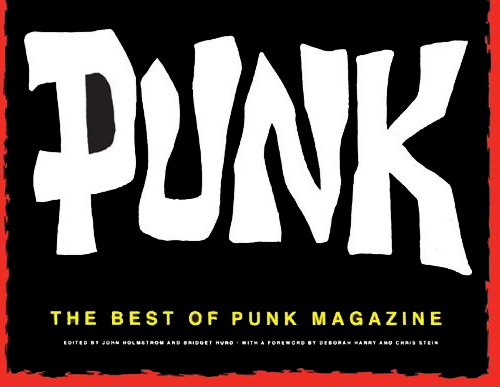
The Best of PUNK Magazine by John Holmstrom and Bridget Hurd

The Best of PUNK Magazine by John Holmstrom and Bridget Hurd, with a foreward from Deborah Harry (yes, the singer from Blondie) and Chris Stein (co-founder of Blondie), is a compilation of the best articles and artwork from the magazine, and it opens with a fun depiction of New York City — “The PUNK Map of N.Y.C.: For jerks who just don’t know their way around.”  The drawings of the rivers and the streets and the realistic, and yet, out there cartoons are likely to generate smirks, if not genuine smiles.

As someone born in the late 1970s, but in love with punk music and Blondie, this collection is something that provides not only more background about the emergence of punk, but also the  whimsical fun and sort of not-a-care-in-the-world feel of the genre.  PUNK magazine had a lot to live up to as the voice of 1970s New York, but it also had a lot to break away from in terms of what was expected of a music magazine.  Clearly, PUNK was a magazine dedicated to snarkiness in all its forms — visual and textual — and it worked well.  It was gritty, it was real, and the glamor was no where in its photos or its comics, but that seems to be why the magazine stood out.  There was a whole lot of youthful exuberance in the beginning of this magazine as nicknames were handed out and spaces were renamed — like the PUNK Dump.

The opening interview with Lou Reed is just the tip of the mosh pit with this magazine.  Reed is so candid, it’s almost like he forgot he was being interviewed by a magazine, and it is unlikely anyone told him the interview would be turned into a comic strip.  The comics are filled with typical masculine and bathroom humor at times, but the drawings are enough to carry the jokes beyond their static line.  A really cool moment in the collection is the results of the Patti Smith Graffiti Contest, where some are so tasteful and others are just outrageous.

By the third issue, the magazine’s editors knew they were a hit when the Ramones snagged a record contract in part because of the magazine’s coverage of their band.  One particular gem in the collection is Holmstrom’s explanation of punk:  “sound — faster and louder; humor — like the novelty songs of the 1950s and 1960s; fashion — no glam, just the classics: shades, blue jeans, t-shirt, sneakers; minimalism — less is more.  No bombast; attitude — similar to the hippie ethos “Do your own thing but let me do mine,” but more like: “F**k you! I don’t care what you do, just leave me alone!”; do it yourself — publish your own ‘zine, make your own record; retro rock/conservatism — mining the tradition of rock ‘n’ roll from the 1950s and early 1960s, while rejecting everything after the hippies took over in 1967.”

The Best of PUNK Magazine by John Holmstrom and Bridget Hurd is a great compilation, but you may not want to leave it on the coffee table with conservative parents or in-laws around.  It’s got some bawdy humor, creative ideas, fantastically candid photos and interviews with punk rock stars of the time, and so much more.  Reminiscent of MAD Magazine and the like, but it really has a garage feel about it — a passion of the listener, the true fans of PUNK.

About the Author:

John Holmstrom is a cartoonist and writer and co-founder (with Legs McNeil) of Punk magazine. He illustrated the covers of the Ramones albums Rocket to Russia and Road to Ruin, and created the characters Bosko and Joe, which were published in Scholastic’s Bananas magazine from 1975-1984, as well as in Stop! Magazine, Comical Funnies, Twist, and High Times. Holmstrom’s work and unmistakable artistic style has become the key visual representation of the Punk era.
This is my 13th book for the 2013 New Authors Challenge.
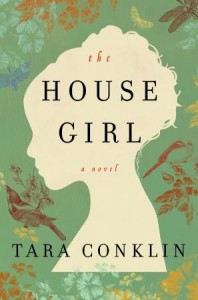
The House Girl by Tara Conklin

The House Girl by Tara Conklin is told mainly from two female points of view — Lina Sparrow and Josephine Bell — one is a white lawyer in New York City at a corporate law firm and the other is a slave/house girl in the southern Lynnhurst, Virginia.  Lina has lived with her artistic father most of her life as her artistic mother’s life was cut short.  Her story is compelling as she’s chosen the analytical and detached life of a lawyer over that of the emotional and less practical life of an artist.  Josephine, an equally if not more compelling story, is a slave on a tobacco farm caring for her dying mistress, who tries to sketch and paint in her upstairs studio.

“Mister hit Josephine with the palm of his hand across her left cheek and it was then she knew she would run.  She heard the whistle of the blow, felt the sting of skin against skin, her head spun and she was looking back over her right shoulder, down to the fields where the few men Mister had left were working the tobacco.”  (page 3 ARC)

Lina is a first-year associate at her law firm, and she works a mad number of hours as she tries to impress her boss and mentor, Dan, but at the same time, she seems to be beating her head against a wall.  There are some tenuous connections drawn between these two stories, the oppressive nature of working for a law firm and slavery, which may or may not be a fair comparison.  The narrative shifts from Josephine to Lina and between the past and present, and once Lina becomes involved with a slavery reparations case, she is wrapped up in innocuous research while all of her other cases are re-assigned.  She’s struggling with her role on the case, but also with the revelations about her mother and her father that have set her world askew.

“She couldn’t bear the thought of sharing.  This was where her mother had once slept, cooked, painted, breathed, and Lina’s memories of her seemed tethered to the physical space.  The way a wall curved away, a washboard of light thrown by the sun against the bare floor, the sharp clap of a kitchen drawer slamming shut — all these evoked flashes of her mother and early childhood that seemed cast in butter, soft and dreamy, lovely, rich.”  (page 21 ARC)

In the latter part of the novel, Lina comes across a biography of an abolitionist as she’s researching the life of Josephine Bell, but this section is overly long and could have been slimmed down a bit as Lina learns about the abolitionist’s connection to the Underground Railroad.  The strength of the novel is in Josephine’s story and her struggles with the Bell family, with her only release — the snatches of time she has to sketch and paint when her mistress is laid up in bed or asleep.  The mysterious life of Josephine is revealed in quick chapters, but early on these chapters are too focused on her desire to run and whether she should run.

In many ways, Lina’s story detracts from the whole, pulling readers into the present and into a case that seems more fantasy than reality.  However, Lina’s story with her father and mother — and the art world — is strong and could have been explored in a separate novel.  The artistic connection, more than the slavery reparations case, would have been a better angle for these stories, connecting the artists to one another through their craft and inspiration or something of that nature.

The House Girl by Tara Conklin showcases not only Conklin’s grasp of the Antebellum South, but also art and its craft.  The strongest parts of Lina’s story are those in her father’s art studio and in the galleries as the paintings are described and the ties between Josephine Bell and Lu Anne Bell are revealed.  Once the novel picks up speed, its tough to put down, and Conklin easily portrays the culture and atmosphere of the southern farm and the fear slaves felt daily.

About the Author:

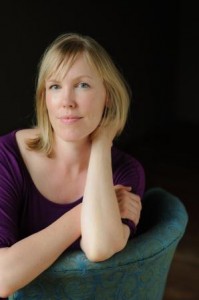
Tara Conklin has worked as a litigator in the New York and London offices of a major corporate law firm but now devotes her time to writing fiction. She received a BA in history from Yale University, a JD from New York University School of Law, and a Master of Law and Diplomacy from the Fletcher School (Tufts University). Tara Conklin’s short fiction has appeared in the Bristol Prize Anthology and Pangea: An Anthology of Stories from Around the Globe. Born in St. Croix, she grew up in Massachusetts and now lives with her family in Seattle, Washington.  Check her out on Facebook and Twitter.  Also here’s a podcast about Conklin’s inspiration for the novel.  Photo credit Mary Grace Long.

tlc tour host

This is my 10th book for the 2013 New Authors Challenge.
A Thousand Mornings by Mary Oliver

A Thousand Mornings by Mary Oliver is meditative observance, but also a collection of poems full of praise not only of the natural order but of humanity’s place in that order.  In “And Bob Dylan Too,” she talks of how the shepherds sing as the sheep praise the grass by eating it and how the bees’ hum signals the opening of spring blossoms.  And in many ways, nature comes to life, becomes anthropomorphized in conversation with a narrator, allowing for the unspoken rules to be broken and/or expanded.  Oliver has a deep sense of connection to the natural world that shines through in each line of each poem, and yet, there is a bit of rebellion in her poems that points to a time when breaking free of the natural order is not only OK, but unexpected and inspiring.

From "Lines Written in the Days of Growing Darkness" (page 27):

to the petals on the ground
to stay,
knowing as we must,
how the vivacity of what was is married

to the vitality of what will be?
I don't say
it's easy, but
what else will do

What readers will love about Oliver’s poetry is the homage she pays to the natural world in all its beauty, but also the connect we have to it. In “The Moth, the Mountains, the Rivers,” the narrator of the poems asks that we each take the time to live in awe of the wonders around us, to truly sit without worry about the busy schedule and to just be and observe. It is almost a plea of sorts.  In other poems, the narrator simply marvels at nature and even decides to take her home to a mountaintop for silence and reflection and invites the reader along.  But one of the most descriptive and captivating poems in the collection was “Tides,” about the movement of the ocean and the only purpose it has: to be.  Unlike those who talk of its erosion of beaches and its awesome power, Oliver focuses in on its rhythmic movement, its constancy, and its beauty and in this way draws a parallel to how the narrator casually, calmly walks the beach.

A Thousand Mornings by Mary Oliver is reflective of the past, of youth, and of wilder days, but it also is about recapturing that youth, if only in the mind, remembrance, and observance of nature.  But there are moments of distinct action and conviction that the past can be recaptured even if it is at the end of life.  For those looking for Oliver’s traditional poetry, this collection is ripe with observation of the natural world, but it also offers a deeper look at aging and longing for things that have passed.

About the Poet:

Mary Oliver was in Maple Heights, Ohio.  As a teenager, she lived briefly in the home of Edna St. Vincent Millay, where she helped Millay’s family sort through the papers the poet left behind.  In the mid-1950s, Oliver attended both Ohio State University and Vassar College, though she did not receive a degree.

Her first collection of poems, No Voyage, and Other Poems, was published in 1963. Since then, she has published numerous books, including Thirst (Beacon Press, 2006); Why I Wake Early (2004); Owls and Other Fantasies : Poems and Essays (2003); Winter Hours: Prose, Prose Poems, and Poems (1999); West Wind (1997); White Pine (1994); New and Selected Poems (1992), which won the National Book award; House of Light (1990), which won the Christopher Award and the L. L. Winship/PEN New England Award; and American Primitive (1983), for which she won the Pulitzer Prize.

This is my 4th book for the Dive Into Poetry Challenge 2013.

The Kitchen Boy by Robert Alexander

The Kitchen Boy by Robert Alexander focuses on the last, secluded, and trapped days of the Romanov family before they are ultimately assassinated in 1918 as told by the kitchen boy, Leonka. Their lives were routine as royals with set times for dinners, etc., but in captivity, there days are even more regimented as they are expected to present themselves for inspection at certain hours, attend church services, and eat meals at certain times.  In fact, their lives are so routine, including that of the kitchen boy, the only highlights are wheeling the youngest, male heir about the home and imagining games until the Bolsheviks deign to open a window.

Shifting from the 1990s to the early 1900s, the narrator takes readers through the final days of the Tsar and his family and often interrupts his own story — being told on audio tape to his granddaughter, Katya — to interject the outcome of certain events or to provide other tangential historical information.  This disjointed narration often pulls readers out of the story, but once the narrator gets into the final three days of their captivity, the story moves rather quickly.  Moreover, the kitchen boy’s story is so complex that it takes a long time to unfold and by the end, readers will either have guessed the truth of the Romanov’s last days or they will feel betrayed by the narrator’s unreliability.

“My name is Mikhail Semyonov.  I live in Lake Forest village, Illinois state, the United States of America.  I am ninety-four years old.  I was born in Russia before the revolution.  I was born in Tula province and my name then was not Mikhail or even Misha, as I am known here in America.”  (page 3)

“His story, his truth, was what he would leave behind and it would be, he was certain, the definitive truth that would stand for decades if not centuries.”  (page 87)

However, the half-truths and subterfuge executed by the narrator do have a purpose and are understandable once the novel has completely unfolded, particularly given the tumultuous time period in Russian history.  Leonka is a young boy working in the kitchen of the Tsar’s prison, from which they are only allowed at most 1 hour outside in the courtyard’s fresh air as all the windows are permanently closed.  His duties are relegated to menial tasks of fetching water and preparing the day’s meals, but he’s also very observant.  Through carefully crafted context clues, readers will learn about the inner workings of the prison and the careful planning of not only the Romanovs but also the guards watching over them.

The Kitchen Boy by Robert Alexander is an intricate story of those last days of a family held by their enemies in which the more human side of the royals surfaces through the eyes of a young kitchen boy.  However, the greater mystery is by turns too well hidden, it is almost a trick of the author when it is revealed.  Alexander’s narration could have staved off disappointment with more from Katya’s portion of the story as she seeks to execute her grandfather’s will and wishes.  As an epilogue, it is too neatly wrapped up with very little build up.

About the Author:

Robert Alexander is the author of the bestselling novels Rasputin’s Daughter, The Kitchen Boy, and the forthcoming The Romanov Bride. He has spent over thirty years traveling to Russia, where he has studied and also worked for the U.S. government. He speaks frequently to book clubs, and the schedule for his live video webcasts can be found at his Website.

This is my 8th book for the 2013 New Authors Challenge.

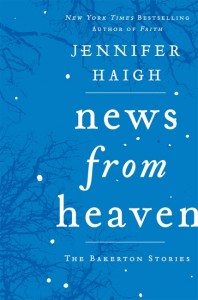
News From Heaven by Jennifer Haigh

News From Heaven by Jennifer Haigh is a collection of interconnected short stories about Bakerton, Pa., and while the characters in these stories all have roots in that former coal-mining town, the town itself is a character — matter of fact, it is the character — that holds these stories together.  Haigh has created a heartbreaking and hopeful story about the death and rebirth of a town and its people.  As the founding members, the Bakers, brought glory and industry to the town that ensured its prosperity, they also have a hand in its decline.

From WWI to the 1970s and 1990s, Haigh chronicles the rise and fall of a town tied closely to its founding family and the coal beneath its hills.  By the end, readers will be as connected to Bakerton as they are to their own hometowns and families.  From the coal hacked out of the mines to the black lungs carried by its resident miners, there is a deep sense of place and the people who inhabit it are as flawed and as memorable as the school teachers, mechanics, small business owners, and others of memory.

“The town lay before them in a deep valley, settled there like sediment:  the main street with its one traffic light, the rows of company houses, narrow and square — some brick-cased now, or disguised with porches and aluminum siding, but at this distance you could see how alike they all were.”  (page 166, “The Bottom of Things”)

Beautifully, each story builds upon the foundation of the last from the high flying days of the coal boom and the nepotism it wrought in the town to the ultimate crashing down of the town around the ears of the residents who relied too heavily on the Bakers to carry them through.  There are glimpses of how war can build up a town, while at the same time tear down its people, and there are other moments where the destruction of war is keenly felt at home when a soldier returns.  Haigh’s collection runs the emotional gamut, but the most striking passage comes in the final story, “Desiderata,” referencing the prose poem by Max Ehrmann.  She infuses the final story with a deep sadness of grief and the devastation of a secret revealed, but returns to the hopeful tone of rebirth and beginning anew amidst this unwanted baggage and knowledge.

In many ways, this collection depicts a slice of American history, with particular attention paid to how immigrant groups interacted with one another and to each other even in a new country.  Even as war is far away, many of the prejudices bred abroad continued in their new homes, and these interactions continued to reflect in future generations.  News From Heaven by Jennifer Haigh has a blasé title, but given the final moments of the collection and the reference to the prose poem, it is reflective of Haigh’s focus on faith.

About the Author:

Jennifer Haigh is the author of the New York Times bestseller Baker Towers, winner of the 2006 PEN/L. L. Winship Award for outstanding book by a New England author; Mrs. Kimble, which won the PEN/Hemingway Award for debut fiction and was a finalist for the Book Sense Book of the Year; and The Condition.

Her fiction has appeared in Granta, Ploughshares, Good Housekeeping, and elsewhere. She lives in the Boston area.

Find out more about Jennifer at her Website and connect with her on Facebook.  Also check out her Book Club Girl discussion.

This is my 7th book for the 2013 New Authors Challenge.

The Zombie Chasers by John Kloepfer, illustrated by Steve Wolfhard

The Zombie Chasers by John Kloepfer, illustrated by Steve Wolfhard is a graphic novel of sorts for kids age 8-12.  Zombies are flooding the quiet Arizona neighborhood while parents are at the school with teachers and Zack is being duct-taped to a chair by his big sister, Zoe, and her girlfriends, Madison, and Ryan.  Locked in his room, Zack scrambles for a way out and water to wash off the clown makeup his sister put on his face.  As he sneaks out into the kitchen to get the last piece of his his birthday cake, he spies his crush, Madison, forking bites of the cake into her own mouth.  As they argue about the cake, the zombies make their way into the house, forcing the two unlikely companions up into Zack’s room where they formulate an escape.

The illustrations are black and white and accompanying the events in the text as Zack, Madison, and Zack’s best friend, Rice, hack their way through town.  Rice thinks of himself as a zombie expert, and like typical kids, there’s arguing about who’s an ugly faced dork, and who’s a snotty brat.  There are funny moments, gross moments, and scary moments as the kids try to escape the zombies and find a solution.

“In the midst of her tantrum, she’d neglected to notice the huge pair of tighty-whities hanging around her neck.  She ripped them off her head quickly and threw them at Zack.”  (Page 58)

“Both his lips were gone, leaving a jagged bloodstained gash where the bottom half of his face should have been.  His gums had shriveled, exposing the roots of his teeth.  It looked like he had just won first place in a cherry pie-eating contest.”  (Page 101)

Kloepfer creates a group of kids that reminds me of the group in Steven King’s IT, a group of misfits banding together to fight or fly away from evil.  Only in this graphic novel, the kids are more comical than serious.  While there are moments of bullying and peer pressure, there is more zombie fun, grossness, and scrambling from place to place.  While the illustrations are fun, they are not necessary, but it would be better if they were more vivid with color.  The Zombie Chasers by John Kloepfer, illustrated by Steve Wolfhard is a fun start to a series of books, but be warned there is a major cliffhanger.

About the Author:

John Kloepfer first started writing at five with a short story of only one sentence. Now, he has authored many full length novels in The Zombie Chasers series. John is currently an official Zombie Chaser living in New York City.

About the Illustrator:

Steve Wolfhard is a Canadian with a knack for illustrations. His drawings can be seen in the Zombie Chaser series. Steve is also the creator of Cat Rackham and the beloved new cartoon character, Turtie.

This is my 6th book for the 2013 New Authors Challenge.

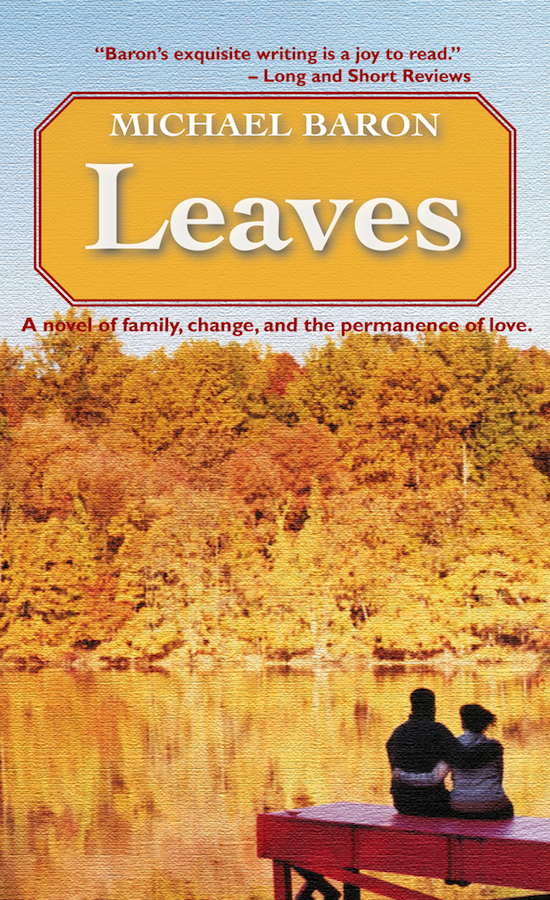
Leaves by Michael Baron

Leaves by Michael Baron has the makings of a family saga, with its large Gold family in Oldham, Ct.  Tyler, a budding nature photographer; Corrina, a controlling older sibling; Deborah, the resident foodie; Maxwell, who seems to have it all and leads the town’s Chamber of Commerce; and Maria, a young emptynester, must close a chapter in their lives and begin anew after deciding to sell the family business, the Sugar Maple Inn — a popular destination for “leaf-peepers.”  Baron alternates between characters throughout the novel, but the characters are dynamic enough and varied so they are easy to keep track of, even when the spouses and their individual family units are introduced.  Each of them is struggling with the close together loss of their parents, as well as the decision to sell the inn that is as much a part of the family as they are.  Each chapter signifies a day in their lives as they count down to the last Halloween bash they’ll ever throw for the residents of Oldham.

“The leaves were the reason that people came, whether it was for an overnight diversion or to settle for decades, rising generations of others who would remain nearby.”  (page 15)

Oldham is a place with many faces and facets from the ancestral families to the newcomers looking for a change or new adventure — particularly those that become small business owners.  Tyler and Maria were easy to connect with as their artistic sides have stagnated and need rejuvenation; Maxwell’s ambivalence about his place in town is easy to understand given the young age of his son and the adjustments he and his wife have made.  Meanwhile, Deborah is like many of us, comfortable in her current place and not quite ready to move on, and unsure of what direction to head in when change is inevitable.  Corrina is a tough nut to crack and hard to like with her domineering nature, but it’s easy to see why she wants to be in control — at least of her siblings and the last party at the inn — because her home life is not as picture perfect as it looks.

There are so many layers to Leaves, as the members navigate their new lives without the inn and their parents to anchor them, and the impact those changes have on their own relationships with one another.  Their moods and reactions change quickly, though the distance between them has been as gradual as the changing seasons.  However, while there are many depths to this novel, there also are moments where readers will want more, but the narrative suddenly changes to another sibling or situation.  Baron has established a foundation for a series of novels that are sure to come about the Gold family, and he’s crafted a family with strong bonds.  Even though each member is on the verge of breaking their family bonds for good, there are memories that creep in to pull them back to their roots and each other.  Baron’s novel is one that readers won’t want to end.  There is so much more in store for these characters and their relationships.

About the Author:

Michael Baron grew up in the New York area, has worked in retail and taught high school English.  Although he started writing nonfiction, he’s always loved fiction and love stories.  He has a deep passion for writing about relationships – family relationships, working relationships, friendships, and, of course, romantic relationships.  His wife and kids are the center of his life and his wife is the inspiration for all of his love stories.

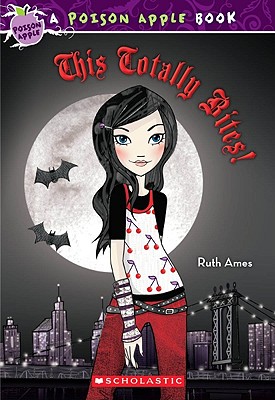
This Totally Bites! by Ruth Ames

This Totally Bites! by Ruth Ames, part of the Poison Apple series of books from Scholastic, is for children in grades 4-6, though it would more likely appeal to girls.  Emma-Rose Paley turns 12 and her life becomes something out of a fantasy novel, and readers will have to suspend disbelief, which shouldn’t be too hard with kids who haven’t lost touch with their imaginations.  Emma likes things dark and wears black, she likes the rain, and she loves rare meat, but her friend Gabby is her polar opposite, wearing pastels, always punctual, and a vegetarian.  In typical seventh grade fashion, there is gossip, hiding from the popular crowd, and navigating peer pressures, but Em’s mother is a curator at the New York Museum of Natural History and her great-aunt is staying with them while helping out with a museum exhibit on bats.

Despite her recurring nightmare of darkness and red eyes, Em tackles her homework and navigates the preteen world with a sense of self unlike most 12-year-old girls.  She’s got her small network of friends, but really only one strong girlfriend, Gabby, while her other two friends tend to waver at the first sign of peer pressure.  In many ways, this dynamic group resembles the truth of school-age kids.  Ames has created a believable world, and even the supernatural elements are believable as the girls research the truth of the matter.  It’s great to see Em come out of her shell, voice her opinion, and become a peer that others can look up to, even when she’s hoping to fade into the background.

There are school girl crushes, bickering, and boy gossip, but what makes Ames’ story memorable is the character of Em, who demonstrates a mature ability to think logically about her situation and at the same time remain vulnerable and stubborn when it comes to arguing her point with her friends.  This Totally Bites! by Ruth Ames is a fun story that younger girls will enjoy and learn about how to be themselves in a world that thrives on peer pressure and fitting in.

About the Author:

Ruth Ames is the author of This Totally Bites, one of the inaugural spine-tingling Poison Apple books. She has written several best-selling young adult novels under another name. Ruth loved reading spooky stories as a child. She now lives in Manhattan.

This is my 5th book for the 2013 New Authors Challenge.

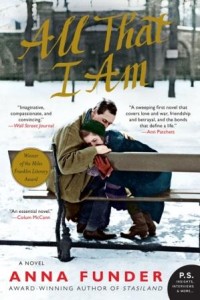
All That I Am by Anna Funder

All That I Am by Anna Funder is an unusual pre-WWII novel that takes into account not only the after effects of WWI, but also the politics that flooded Germany before the war.  Funder has crafted a psychological novel in some ways, but the characters who are most interesting and mysterious — Hans and Dora — also are the most distant.  Perhaps they are more interesting and mysterious because they are seen through the eyes of those who knew and loved them best — Ruth and Ernst Toller — which begs the question of whether we — ourselves — would be more interesting to others if seen through our closest connections.  Ruth, Ernst, Hans, and Dora, along with others, are forced to flee Germany for London after Hitler comes to power.  Funder admits that many of the elements of her novel are taken from history and from her friend Ruth’s actual life, but this novel is not just about the history and intrigue of German ex-pats seeking information from inside the regime about their friends and to warn other countries about Hitler’s expectations for war.

“Last week they loaded me into the MRI machine, horizontal in one of those verdammten gowns that do not close at the back: designed to remind one of the fragility of human dignity, to ensure obedience to instruction, and as a guarantee against last-minute flight.”  (page 7)

Ruth and Dora are cousins, and Ruth is easily swept up into the passion of the Socialist party Dora belongs to because she’s already fallen in love with the words of a young man, Hans.  Even at the beginning, there is a tension between Hans and Dora, and while Ruth first mistakes it for a lover’s intimacy, it is clear to the reader that the tension is born of jealousy and competition.  The beginnings of the movement hold close to their ideals for peace and workers’ rights — even equal rights for women — but those ideals are tested time and again.  These ideals are burdened and even broken, as seen through the eyes of the individuals tested.  Funder’s unraveling of the story in two perspectives — Toller and Ruth — can be frustrating, as Toller and Ruth tell their stories from different points in time, which calls into question whose memory is more reliable.  Both are looking to the past before WWII and their early days in exile, and Funder leaves enough clues along the way for readers to pick up on the essence of the outcome.

“From what Bev has told me, an addict can lose ten years of their life in a quest for exactly this:  the constant present tense.  Afterwards, those who do not die wake to a world that has moved on without them:  it is as if nothing happened to the fiend in those years, they did not age or grow and they must now pick up –”  (Page 201)

Whether the drug is an opiate, morphine, or memory, these activists, these friends, these compatriots become blind to the realities of their exile.  Rather than remember their past glories with fondness, Hans, in particular, and Toller become absorbed in the images of themselves — those they created or were created of them.  Funder is calling into question the image we have of ourselves and those that others have of us — are those perceptions mirrors of themselves or are they a bit distorted when compared.

All That I Am by Anna Funder sheds light on the lives of German ex-pats before WWII, and the secretive life some of them led as they tried to help those they left behind in Germany.  But at it’s heart, the novel is about how politics and ambitions can distort friendships or not matter at all.  It’s also about the enduring love for those we know and love, even those that are unworthy of that devotion and those who also offer more of themselves to the world and others than they do to themselves.  A novel of memory, love, devotion, and self-sacrifice worth reading.

About the Author:

Anna Funder’s international bestseller, Stasiland, won the Samuel Johnson Prize for nonfiction. Her debut novel, All That I Am, has won many prizes, including the prestigious Miles Franklin Literary Award. Anna Funder lives in Brooklyn, New York, with her husband and children.

Visit Anna at her Website and connect with her on Facebook.

This is my 5th book for the 2013 New Authors Challenge.

The Missing Manuscript of Jane Austen by Syrie James

Syrie James’ The Missing Manuscript of Jane Austen is a novel within a novel when librarian Samantha McDonough finds a letter in an old poetry book while on a trip to England with her boyfriend, Stephen.  Through this mystery letter, Sam begins an adventure through the countryside of England and enters the novel world of Jane Austen.  Through her travels she meets Anthony Whitaker, the heir of the former owner of Greenbrier, a small country estate in England.  He’s breathtakingly handsome and intelligent, but at times his dream of owning his own company can take over and make him arrogant and stubborn.

“Anthony and I had been taking turns reading aloud.  He was a quick study and had a marvelous gift for bringing characters to life.  Hearing Jane Austen’s words in his delectable British accent was divine.”  (page 127 ARC)

Like Austen’s characters, Sam and Anthony are flawed, but optimistic — and they lose their way, but eventually stumble onto the right path.  James has a way of capturing Austen’s style that belies the modernity of the story she’s telling, and in many ways, readers will get lost in the manuscript, just as Sam and Anthony do.  The missing manuscript not only captures everyone’s rapt attention, but highlights the enduring truth of Austen’s words in her own novels.  Mirroring the quirky characters Austen created and the hilarious proposals she used in her own novels, James’ missing manuscript echoes the great classics while continuing in the tradition of Austen’s fans by making them fresh and fun.

While the events in the manuscript regarding Miss Stanhope’s family and her love life are predictable, it is the journey that she takes to get to happiness that is worthy of Austen’s approval.  James’ character blossoms from a naive, country girl into a women who continues to have a strong mind, loyalty to her family, and dedication to those deserving of her compassion.  However, Sam and Anthony are more like tools to move the story along when — in this case — a frame story would have been sufficient.

Sam and Anthony’s relationship seems to blossom away from the reader’s vision, and this could hamper the reader’s ability to connect with them.  There are brief moments where they interact while reading the manuscript, but what goes on between them while they are reading — looks or brief touches — are not shown.  It’s also hard to interpret Sam’s feelings for Stephen when all we have is her comments about their relationship and rarely see them interact.  Additionally, the hunt for the manuscript seemed rushed, and should have had a bit more depth and twists and turns to make it more suspenseful and believable.

Overall, The Missing Manuscript of Jane Austen by Syrie James is an enjoyable work about Jane Austen, historian’s thoughts about her work, and the mysteries that remain.  But at the same time, it is about the interpretations of her novels in how the hero always must prove himself to the heroine to win her love and how change can sometimes be a blessing in disguise.

About the Author:

Syrie James is the bestselling author of eight critically acclaimed novels, including The Missing Manuscript of Jane Austen, The Lost Memoirs of Jane Austen, The Secret Diaries of Charlotte Bronte, Nocturne, Dracula My Love, Forbidden, and The Harrison Duet: Songbird and Propositions. Her books have been translated into eighteen foreign languages.

Alien vs. Predator by Michael Robbins

Alien vs. Predator by Michael Robbins is a mixture of techno beats, pop culture references, and references to some of the greatest poets, including Robert Frost.  While many readers of poetry would find his flagrant use of lines from songs cheap or as a short-cut, Robbins seems to be saying something more with the lines he chooses.  He wants to comment on the superficiality of society; he wants to rip open the thin veil of complacency that we all hide behind to reveal the stark, dark, and painful reality beneath.

From "Welfare Mothers" (page 7):

Little Bo Mercy in heels and hose,
just under the water she usually goes.
She moves grams and ounces, prays for war.
She's not the droid you're looking for.
From "Appetite for Destruction" (page 10):

I want to watch you bleed.  My tongue
doesn't know its right from wrong.
I'm uninsured.  I ride the bus,
a loaded gun inside my purse.
My mouth's a roadside bomb.

However, not all of these poems are perfect, and read more like performance pieces than poems meant for the page.  In many ways, Robbins’ unconventional style loses something in the translation to the page and would probably benefit from an accompanying audio version.  Although there is a pervasive anger in the collection, the anger is not about violence so much as it is about frustration.  Robbins touches upon hot topics in the news, including the killer whales at Sea World, and the more mundane stories that don’t make the news, like the struggling mothers hit by terrorism or welfare.

Robbins not only showcases his knowledge of music, television, and movies, but also poets and poetry, philosophy, and more.  In many ways, these references and — dare I call them, odes — can be too esoteric.  A cautionary note at best, but readers will enjoy the rhythm, the playfulness, the frustration, and the pain Robbins reveals — a pain and frustration that many of us will turn a blind eye to on a daily basis as we go about work and caring for our families.  It begs the question as to when society became so self-absorbed that societal hardships and decline are ignored even when it is on the doorstep.

Alien vs. Predator by Michael Robbins is a hip, rhythmic collection that will challenge readers preconceptions of the world around them, pop culture, and even poetry.  Although some poems are more effective than others, Robbins has crafted a collection that screams: “Watch Out!”

About the Author:

Michael Robbins is the author of Alien vs. Predator (Penguin, 2012). His poems have appeared in the New Yorker, Poetry, Harper’s, Boston Review, and elsewhere. He reviews books regularly for the London Review of Books and several other publications, and music for The Daily and the Village Voice. He received his PhD in English from the University of Chicago.

I received this book from Necromancy Never Pays‘ Trivial Pursuit for Bloggers.

Check out these other reviews:

The New York Times
Necromancy Never Pays
Book Chatter

This is my 3rd book for the 2013 New Authors Challenge.

This is my 2nd book for the Dive Into Poetry Challenge 2013

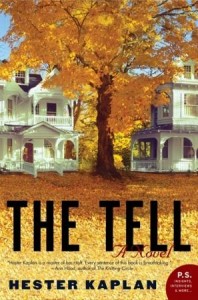
The Tell by Hester Kaplan

The Tell by Hester Kaplan unfolds like a stop-motion movie, one frame at a time, and in that movie there are flashes of the past.  Owen Brewer’s attention is easily swayed from one subject and one moment to another, breathing in both the past and present of his life, while at the same time observing the behaviors and ticks of others.  His marriage to Mira Thrasher is modern and telling, especially in how they introduce themselves to the new neighbor and former actor Wilton Deere.  Their marriage does not seem to be on solid ground, just from the way Owen watches the interaction of his wife and Wilton and thinks about reclaiming her in the most instinctual way.  Owen is tough to take and analyzes a great many things much more than other people would, while Mira is more a take-it-as-is girl and enjoys the moments, while not watching for the sky to fall.  Meanwhile, Wilton is trying to reconnect with his daughter, but in the process clings to this married couple next door because he longs to be loved and hated.

“Owen leaned into the sink and gulped water, leady and lethal, from the tap. Then some movement of white, gone before he could fully detect or confirm it, drew his eye past the unfurling pleasure of the lilacs to the empty house next door. Its windows were violet mirrors. In the year since the place had been on the market, Owen had sometimes used the house to animate wisps of his imagination they way people used empty battlefields. Where they saw the fuming charge across the hard-packed earth, the clash, the fallen in the grass, the victorious mob shaded by incoming clouds, he pictured his future children on the oak stairs, bodies passing in front of doorways, and the motion of family life he hoped to have here in this house, someday, with Mira.” (page 3 ARC)

Kaplan’s novel is psychologically complex.  Mira is an artist, struggling to keep her studio open and helping give direction to the elderly, young, and even homeless.  At the same time, she is hardly home when she is with Owen, and most nights, she’s off at the casino with Wilton, though she claims she does not have a gambling problem.  Kaplan explores the breakdown of trust between a husband and wife, the rebuilding of faith between an estranged daughter and father, and the power of addiction and obsession.  Each person has a “tell” — which in gambling is a change in a player’s behavior or demeanor that can give clues to other players about the truth of their hand — and in this case, Owen is trying to discern Mira’s tell, while navigating a new and untested friendship with a man he presumes is trying to get a little closer to his wife.  With Wilton, the task of determining the tell is more difficult as Owen cannot determine if he is telling the truth, acting, or a combination of both, though Owen in many cases errs on the side of Wilton telling lies.

“It was like standing still while a very fast train blew by you and lifted your hair.  What remained was what had been forgotten or abandoned:  a towel in the bushes, a single sneaker, a cat, a brightly colored plastic ring still drifting on the pond.”  (Page 100 ARC)

Kaplan’s novel unfolds with careful precision as she delves deeper into the spiraling vortex of Owen’s marriage with Mira, and his obsession with her family’s hording and her secret trips to the casino.  Each is scared to be alone, but not scared enough to stop their behavior from ruining everything.  Kaplan’s The Tell is dark and woeful, her characters are swimming in a dark pool and clinging to any hope they see, no matter how fleeting or false it may be.

About the Author:

Hester Kaplan is the author of The Edge of Marriage, which won the Flannery O’Connor Award for Short Fiction, and Kinship Theory, a novel. Her short stories have been included in The Best American Short Stories series. She teaches in Lesley University’s MFA Program in Creative Writing and lives in Rhode Island.

Find out more about Hester at her website. You can also follow her on Facebook and Pinterest.

tlc tour host This is my 2nd book for the 2013 New Authors Challenge.