Quantcast

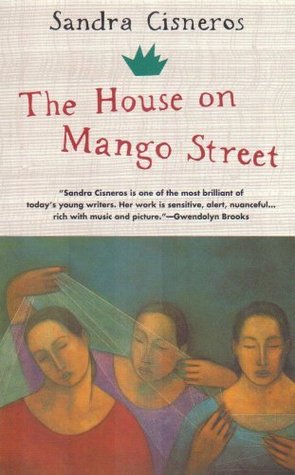
The House on Mango Street by Sandra Cisneros

Source: Purchased at Public Library Book Sale
Paperback, 110 pages
I am an Amazon Affiliate

The House on Mango Street by Sandra Cisneros is a coming-of-age story about Esperanza Cordero in a Latino neighborhood on Mango Street in Chicago.  She doesn’t remember much of the time before Mango Street, and it is clear that things were both good and bad there.  Neighbors she knew were hit by their husbands, while others had given up on their dreams simply because they got married.  In many ways these stories are woven together and are lyrical enough that they could be an epic poem about growing up as an immigrant in America.

Each short vignette tells a story from Esperanza’s point of view, revealing the harsh realities of growing up in an area other people are afraid to step foot in.

“All brown all around, we are safe.  But watch us drive into a neighborhood of another color and our knees go shakity-shake and our car windows get rolled up tight and our eyes look straight.”  (page 28)

Esperanza is growing up and learning how to become a woman, running in the city streets in heels an old lady hands her and her friends.  At the same time, she’s struggling to hold onto her childhood, while she’s admiring the older girls in the neighborhood wearing make-up and nylons.  She’s naive about relationships between girls and boys and she finds herself in situations where she can be taken advantage of, thanks to those she trusts.  But she also comforts her father when he cries.

“They don’t walk like ordinary dogs, but leap and somersault like an apostrophe and comma.” (page 71)

Cisneros paints a bleak picture as seen through Esperanza’s eyes, but at the same time she allows her character to feel something beyond the confines of her neighborhood.  She does not want to be that woman who merely looks at the possibilities and wallows in sadness and regret.  The House on Mango Street by Sandra Cisneros pays homage to these struggling women in a cadence, and she ensures readers not only glimpse a life that may be unfamiliar but that still contains a sliver of hope.

About the Author:

Sandra Cisneros was born in Chicago in 1954. Internationally acclaimed for her poetry and fiction, she has been the recipient of numerous awards, including the Lannan Literary Award and the American Book Award, and of fellowships from the National Endowment for the Arts and the MacArthur Foundation. Cisneros is the author of two novels The House on Mango Street and Caramelo; a collection of short stories, Woman Hollering Creek; two books of poetry, My Wicked Ways and Loose Woman; and a children’s book, Hairs/Pelitos. She is the founder of the Macondo Foundation, an association of writers united to serve underserved communities (www.macondofoundation.org), and is Writer in Residence at Our Lady of the Lake University, San Antonio.
This is my 58th book for the 2013 New Authors Challenge.

Market Street by Anita Hughes

Source: St. Martin’s Press
Paperback, 304 pages
I am an Amazon Affiliate

Market Street by Anita Hughes allows readers to take a peek behind the golden curtain of San Francisco’s social elite.  It’s a highly capitalistic society in which shopping among the women is a sport and those who fail to get the best clothes before everyone else are usually the losers.  Behind this facade, Cassie Blake, heiress to a shopping guru’s dream — the Fenton’s fortune — lives in Berkeley with her ethics professor husband, Aidan Blake, and shuns high society for her vegetable garden and wifely duties.  Her husband is by turns loving and controlling, and repeatedly tells her that even though Fenton’s is the family business, she doesn’t have to take it over.  His behavior toward her and her work (even just volunteer work) outside the home should send up red flags, but Cassie is blissfully unaware until she steps into a customer service role one day at her mother’s store.

Cassie has been taking care of others since she met Aidan, and as his wife, she falls easily into that role until she finds out about his infidelity.  Pushed to reassess her marriage, and by extension her life, she moves out and moves into her best friend’s mansion, while Alexis’s husband is off jet-setting as a hedge fund man.  While Cassie is endearing because of her down-to-earth nature and the duty she has to fulfill her mother’s dreams and take over Fenton’s, some of the other characters are harshly materialistic, very obsessed with image, and focused too much on sex.  If public displays of affection make you uneasy, there are some moments where Aidan makes advances toward Cassie at the most inappropriate times.  These moments may be for effect to demonstrate his hound-dog nature, but readers may wonder what Cassie was thinking staying married to the man so long.

“‘Alexis, you don’t need a discount.’ Cassie giggled.  ‘You’re married to a gazillionaire.’

‘But if I get a discount, I have to buy them.  It would be fiscally imprudent not to.'” (page 127)

“‘She’s going to give Derek a new title and make you store manager.’ Cassie buttered a baguette. ‘If you want the job.’

‘Of course I want the job!’ Alexis opened the freezer and took out a carton of ice cream.  ‘I haven’t had this much fun since Barbie summer camp.'”  (page 155)

Where Hughes really shines in characterization is her juxtaposition of Cassie and her best friend, Alexis.  One is materialistic and loves the high life, while the other would rather have dirt under her fingernails.  But when a crisis — even just insecurities — arises, both women support one another and know just how frank to be.  Even though their outlooks are different, they’re ready with the support and ice cream when necessary.  Market Street by Anita Hughes is a mixed bag of great friendship camaraderie, sex scenes, and some cardboard cutout characters, but the pages fly by, making it a fun trip to San Francisco.

About the Author:  (photo by Sheri Geoffreys)

Anita Hughes was born in Sydney, Australia and had a charmed childhood that included petting koala bears, riding the waves on Bondi Beach, and putting an occasional shrimp on the barbie. Her writing career began at the age of eight, when she won a national writing contest in THE AUSTRALIAN newspaper, and was named “One of Australia’s Next Best Writers.” (She still has the newspaper clipping.)

She received a B.A. in English Literature with a minor in Creative Writing from Bard College, and attended UC Berkeley’s Masters in Creative Writing program.

Check out my reviews of Monarch Beach and Lake Como!

The Turncoat: Renegades of the Revolution by Donna Thorland

Source: Borrowed from Diary of an Eccentric
Paperback, 432 pages
I am an Amazon Affiliate

The Turncoat: Renegades of the Revolution by Donna Thorland is a steamy novel of espionage, spies, and cover-ups. Quaker daughter Kate Grey is swept up in a plot against the British by Mrs. Ferrars, who is tasked with watching over her while her father rides off with supplies for The Continental Army.  Riding away from the only home she’s known, she’s forced to hear and see the darker side of war as it comes to her neighbor’s farm.  From that moment of helplessness on, she’s made up her mind to fight against the British who have plundered her home and its women.  She establishes herself in Philadelphia as an heiress, with the help of Ferrars, and embarks on a journey she never expects would lead her back to the British officer, Peter Tremayne, whom Ferrars duped at the Grey farm.

“Only the barest sliver of light entered beneath the batten door, which was reinforced on both sides with iron plates.  He took care not to look directly at it; in this blackness it would blind him like the sun.  He stood soaking up the darkness, breathing in the chemical smells of old powder and fresh mold, and reining in the panic that threatened to overwhelm him.  It was like being underground, being buried.  The unseen vault must be at least three stories above him, and the emptiness held all the childhood terrors of the night, and the decidedly adult terror that came with the knowledge of all the ways a man might die in such a place.”  (page 207)

Secrets twist in on themselves as Kate becomes engaged to one of the most terrifying British soldiers campaigning with General Howe from Philadelphia.  Although Kate flourishes in her new role as beautiful spy, turning heads, she is ill prepared for the emotional attachment she feels for her mark and still has for the man she never expected to see again, Peter Tremayne.  The emotions that she keeps hidden driver her actions more than she realizes, and at times, they are what breaks down her facade, makes her stumble, and leaves her lying in traps set by more emotionally detached foes.

Thorland weaves fact with fiction seamlessly in this historical novel about the American Revolution, and readers will see the strategy and battle scenes play out with gruesome consequences.  She captivates her readers through the building of strong and flawed characters whose lives are not only torn apart by war, but also the loyalty they feel to their families and countries even as they see hope in the enemy.  Trust and loyalty are tested over and over again, but Kate is committed to her duty and risks everything she wants, especially with Peter, to save General Washington and the Rebel cause.  The Turncoat: Renegades of the Revolution by Donna Thorland is gripping and offers a more exciting look at the American Revolution from both the Rebel and Crown’s point of views.


About the Author:

Graduating from Yale with a degree in Classics and Art History, Donna Thorland managed architecture and interpretation at the Peabody Essex Museum in Salem for several years. She then earned an MFA in film production from the USC School of Cinematic Arts. She has been a Disney/ABC Television Writing Fellow and a WGA Writer’s Access Project Honoree, and has written for the TV shows Cupid and Tron: Uprising. The director of several award-winning short films, her most recent project aired on WNET Channel 13. Her fiction has appeared in Alfred Hitchcock’s Mystery Magazine. Donna is married with one cat and splits her time between Salem and Los Angeles.

This is my 56th book for the 2013 New Authors Challenge.



This is my 3rd book for the American Revolution Reading Challenge 2013

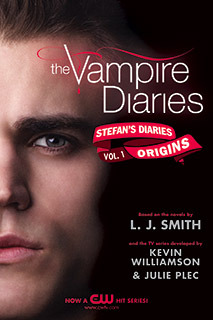
Origins (The Vampire Diaries: Stefan’s Diaries Vol. 1) by L.J. Smith, Kevin Williamson, Julie Plec

Source: Purchased from Borders ages ago
Paperback, 237 pages
I am an Amazon Affiliate

Origins (The Vampire Diaries: Stefan’s Diaries Vol. 1) by L.J. Smith, Kevin Williamson, Julie Plec is the first in the diaries series stemming from L.J. Smith’s original novels.  Stefan Salvatore is the younger of two brothers, and he’s the one that does as his father asks and rarely speaks out against him.  Damon, who is away during the Civil War, is the outspoken rebel.  Told from Stefan’s point of view, readers will get a sense of the tug between duty and desire, but as the second son and most responsible, his sense of duty often sways his choices.  When his father pushes him to pay his attentions to a local beauty from a powerful family, he does so, but it is clear that the match is one of convenience, not love.

“There was no mystery or intrigue in Mystic Falls.  Everyone knew everyone else.  If Rosalyn and I were to get married, our children would be dancing with Daisy’s children.  They would have the same conversations, the same jokes, the same fights.  And the cycle would continue for eternity.”  (Page 39)

In fact, a stranger in town, Katherine Pierce, has turned his head, and he cannot get her out of his mind.  A tug of war between his desires and his duty ensues, but other than Katherine’s beauty and mystery, you know little of her and why Stefan wants to be with her.  Is it mere animal lust, has she taken over his mind to make him feel that way?  These are questions that are left unanswered, but the infatuation he has with her leads to jealousy when his brother Damon returns from General Groom’s camp and spends a great deal of time with her.  She continues to be a mysterious figure even at the end of the novel, but as there are others in the series, she must be that way for a reason.

Although some of the chapters are written in diary form, the story is in prose, with Stefan’s inner thoughts sprinkled throughout as diary entries.  Despite wishing Stefan were more like Damon, unfettered, he sticks to his duties until the dam breaks for him emotionally.  He has little choice but to follow his desires when his duty has failed him.  The juxtaposition between the human and vampire Stefan is hinted at here, especially as he continues to compare himself to his brother and to find the life under his father’s thumb stifling.  Origins (The Vampire Diaries: Stefan’s Diaries Vol. 1) by L.J. Smith, Kevin Williamson, Julie Plec is a solid first book that introduces the town of Mystic Falls, the threat that faces the townsfolk as the Civil War brews outside their doors, and the unseen dangers that lie amongst them in wait.

About the Author:

L.J. SMITH has written over two dozen books for young adults, including The Vampire Diaries, now a hit TV show. She has also written the bestselling Night World series and The Forbidden Game, as well as the #1 New York Times bestselling Dark Visions. She loves to walk the trails and beaches in Point Reyes, California, daydreaming about her latest book. She also loves to hear from readers ([email protected]) and hopes they will visit her continually updated website, where information, new stories, and contests can be found.

This is my 55th book for the 2013 New Authors Challenge.

Jack Absolute by C.C. Humphreys

Source: Borrowed ARC from Diary of an Eccentric
Paperback, 320 pages
I am an Amazon Affiliate

Jack Absolute by C.C. Humphreys is a swashbuckling 007 tricked into rejoining the King’s military and the cause against the rebels (a.k.a. Colonials/Americans), to which he drags his Mohawk brother Ate.  Humphreys, who played Jack Absolute on stage before writing this novel, clearly has a love of cheeky dialogue and plot twists because the prose is filled with it.  Absolute wants to restore his family fortune and good name, but he’s soon embroiled in a spy’s game and turned around by pretty faces and dark blackguards.  Aboard the ship to America, he’s tasked with decoding messages by General Burgoyne and to observe his fellow shipmates to sniff out the traitor in their midst.

“He glanced around the circle of excited faces that turned to him.  No women, at least.  Not even the cause of this whole affair, that little minx, Elizabeth Farren.  The hour was too close to the lighting of the footlights at Drury Lane and her show must go on.  Yet how she would have loved playing this scene.” (page 3 ARC)

“And the strange new flag that floated over the ramparts–unseen til that day, concocted of stars and stripes obviously ripped from spare cloaks and petticoats–would soon be replaced by the Union Standard of Great Britain.” (page 67 ARC)

The novel gives readers a detailed glimpse into American Revolution battles — Saratoga and Stanwix –with Americans pulled between loyalty to the Crown and the desire for freedom.  At the same time, Absolute is torn between his duty to the Crown and his desire to protect his adopted brethren the Iroquois.  Humphreys mixes it up with Native Americans loyal to both England and Rebels, as well as those Native Americans that were schooled in Christianity and took on English names.  Like the U.S. Civil War, there is brother and cousin fighting against other family members, and friends and neighbors fighting each other.

The plot folds in on itself several times before it lengthens out to uncover some hidden mysteries, and while the big reveal is a bit predictable, the decision Absolute must make is emotional and heartbreaking.  It forces him to choose between duty and freedom and love and culpability.  In some ways, the novel reads more like a script for a movie or play, but the fast-paced nature of the plot makes for a fast and entertaining read.  Jack Absolute by C.C. Humphreys will entertain readers, while giving them an inside look into the tensions of battle, loyalty, and revolution.

About the Author:

Chris (C.C.) Humphreys was born in Toronto and grew up in the UK. All four grandparents were actors and since his father was an actor as well, it was inevitable he would follow the bloodline. He has acted all over the world and appeared on stages ranging from London’s West End to Hollywood’s Twentieth Century Fox. Favorite roles have included Hamlet, Caleb the Gladiator in NBC’s Biblical-Roman epic mini-series, ‘AD – Anno Domini’, Clive Parnell in ‘Coronation Street’, and Jack Absolute in Sheridan’s ‘The Rivals’.  Chris has written eight historical novels. The first, The French Executioner told the tale of the man who killed Anne Boleyn, was runner up for the CWA Steel Dagger for Thrillers 2002, and has been optioned for the screen.

This is my 2nd book for the American Revolution Reading Challenge 2013

The Time Between by Karen White

Source: Borrowed from Diary of an Eccentric
Hardcover, 352 pages
I am an Amazon Affiliate

The Time Between by Karen White is undulating between the past and present of Eleanor Murray and Helena Szarka’s lives as they find they have more in common than how they feel the piano music they play.  Eleanor and her sister Eve’s relationship was severed by a childhood prank that festered and paralyzed them both, while Helena is an aging woman who has been close to death more than once.  As Helena delves into the deep secrets Eleanor is keeping, Eleanor does the same behind closed doors.  White balances the WWII past with the present beautifully, crafting a novel that juxtaposes the past and the present in a way that uncovers how second chances can be easily missed or taken by the horns.

“She taught us that building baskets was like building a life, finding materials from different places–bits and pieces with their own purpose–and creating a vessel that could pour out or keep in.  I thought about this now, driving to Edisto, wondering what sort of basket my life would be and what it would be named.”  (page 67 ARC)

Caring for the aging Helena for her boss, Finn, Eleanor begins to reconnect with the past she has forgotten and the dreams she once had, but at the same time she’s struggling to reconcile the spark of dreams rekindled with the harrowing guilt of her past.  Like Helena, the guilt has weighed Eleanor down so heavily to the point at which she cannot move without the approval of her conscience.  She has set aside her life in favor of other’s needs and they have let her because of their own guilt and shame, as Helena has done for more than 50 years.  White brings Charleston and Edisto to life, immersing the reader into the marshes, the salt spray, and the wildness of town life.

She brings about the juxtaposition of Charleston’s upper crust life and the busy go-go-go of business with the quieter, lulling music of nature and sea life on Edisto.  Eleanor is not awakened by the busy life of Charleston in Finn’s firm, but by the sedate musicality of the rivers and ocean and the not-so-gentled prodding of Helena.  White has created multi-faceted characters who have real fears and guilt, and these women will burrow into readers hearts, twist them up and wring out so many emotions.

The Time Between by Karen White is stunning in its historical scope and its emotional scale.  As Eleanor and Eve learn about forgiveness and rekindling their connection, Helena learns to loosen her grip on her terrifying past and let go.  Both must forgive and be forgiven, and as they learn to move beyond their pasts, it becomes easier for them to see doors that open to new opportunities.  White is one of the best writers today, and each of her stories transports readers beyond themselves and into the lives of her characters, ensuring they become indelible.

About the Author:

Known for award-winning novels such as Learning to Breathe, the Southern Independent Booksellers Alliance 2009 Book of the Year Award finalist The House on Tradd Street, the highly praised The Memory of Water, the four-week SIBA bestseller The Lost Hours, Pieces of the Heart, and her IndieBound national bestseller The Color of Light, Karen has shared her appreciation of the coastal Low country with readers in four of her last six novels.

Italian and French by ancestry, a southerner and a storyteller by birth, Karen has made her home in many different places.  Visit the author at her website, and become a fan on Facebook.

Also check out my reviews of The House on Tradd Street, The Girl on Legare Street, The Beach Trees, After the Rain, Sea Change, and On Folly Beach.

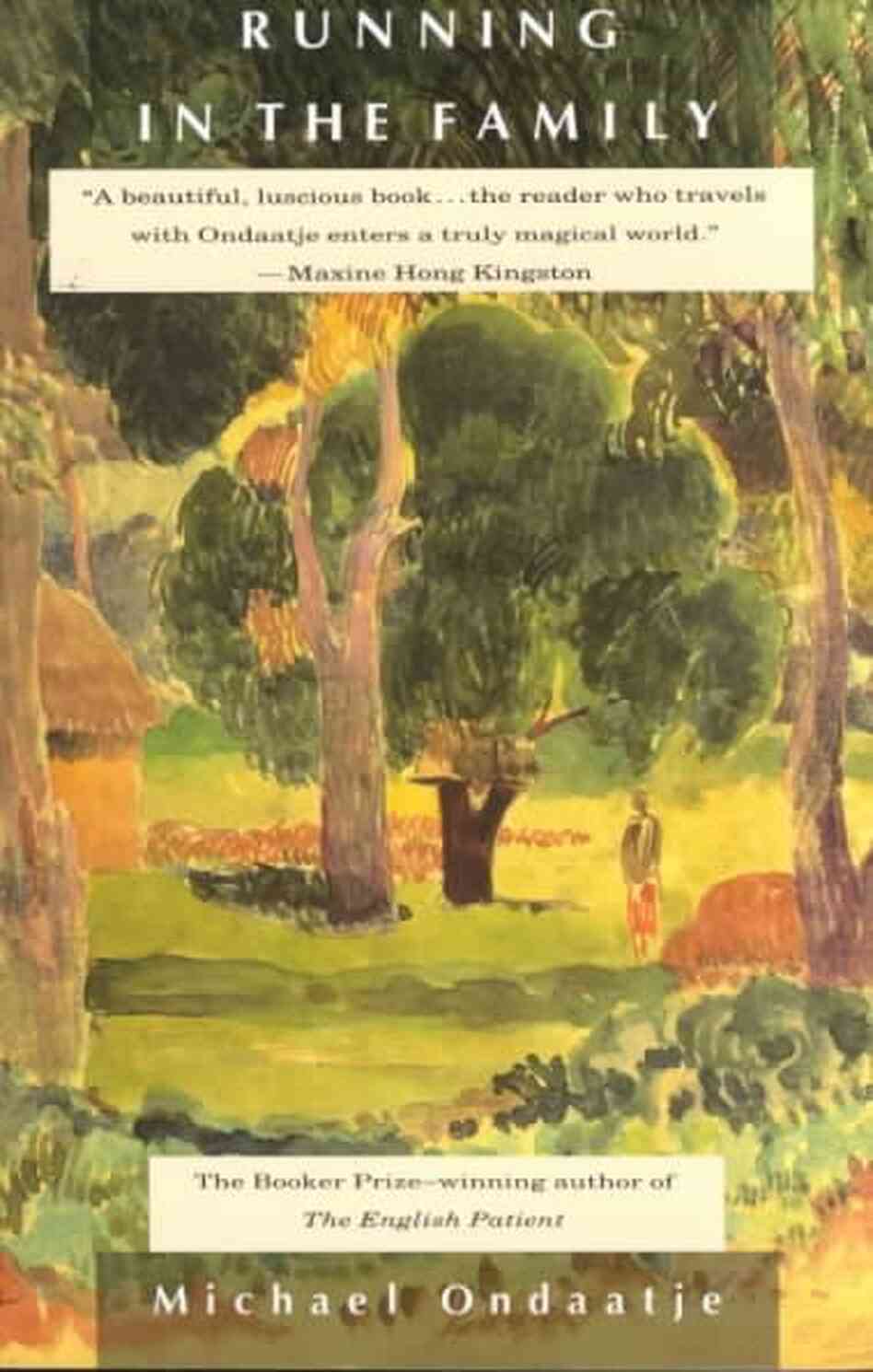
Running in the Family by Michael Ondaatje

Source: Public Library
Paperback, 207 pages
I am an Amazon Affiliate

Running in the Family by Michael Ondaatje is a travel and family memoir (highly recommended by Beth Kephart), and he says that it is a composite of two return trips to Sri Lanka, formally known as Ceylon, in the 1970s, as well as endless stories and questions-and-answers from family members and those that knew his father Mervyn best.  Michael is among the youngest of the family, having left Ceylon when he was 11 after his mother and father divorced.  Much of this memoir borders between fiction and truth, but like all memories and perceptions, the story of someone’s life can be as fluid as the relationships that begin and end with and around them.  The crux of this memoir, in which Ondaatje embarks on his own journey of remembering about his family and the country he came from, is about the fluidity of memory and the inability to truly know even our closest family members.

“What began it all was the bright bone of a dream I could hardly hold onto.  I was sleeping at a friend’s house.  I saw my father, chaotic, surrounded by dogs, and all of them were screaming and barking into the tropical landscape.  The noises woke me.  I sat up on the uncomfortable sofa and I was in a jungle, hot, sweating.”  (page 21)

Ondaajte’s magical realism shines through in the narrative, particularly as he takes trips to the former family home and into the jungle.  There are humorous anecdotes about his grandmother, Lalla, who clearly had a love for life and freedom.  There is one incident in which she doesn’t realize her breast is being fondled by a stranger on the bus, but the reasoning is something very unexpected.  His father and grandmother did not get along well, and whether that is because Mervyn is a victim of dipsomania, also known as alcoholism, or Lalla’s inhibition after her husband’s death that enables her to do as she pleases without one thought to the consequences.  

More than anything, Ondaatje’s memoir is about learning about his family’s outrageous past in a time of excess (1920s), but also realizing that there are mysteries about the interconnectedness of their lives that may never be resolved.  He must come to terms with what he knows about his family through his own memories and that of others and what will always remain a mystery — how can he reconcile the two.  But this is not just all prose, he also illuminates some of the family stories with poetry.  Running in the Family by Michael Ondaatje is sparkling in the jungle, a bead of sweat that slithers down your arm and seeps beneath the skin and causes a startling chill.

About the Author:

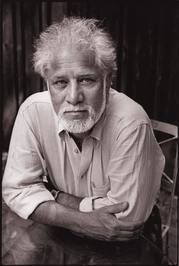
Michael Ondaatje is one of the world’s foremost writers – his artistry and aesthetic have influenced an entire generation of writers and readers. Although he is best known as a novelist, Ondaatje’s work also encompasses poetry, memoir, and film, and reveals a passion for defying conventional form. His transcendent novel The English Patient, explores the stories of people history fails to reveal by intersecting four diverse lives at the end of World War II. This bestselling novel was later made into an Academy Award-winning film.

The Real Jane Austen by Paula Byrne

Source: Harper and Public Library
Hardcover, 361 pages
I am an Amazon Affiliate

The Real Jane Austen: A Life in Small Things by Paula Byrne (which I began reading as a review copy, but opted for a finished borrowed copy to finish because the photos and images were inserted after the ARCs were distributed) is expressive, carefully crafted, and incisive in how it sketches out the true Jane Austen.  In this non-linear biography, Byrne debunks a few of the myths around Austen, particularly about her alleged romantic encounters and her homebody persona.  Through careful analysis of her novels, characters, the correspondence she had with her family and others, and other tidbits from other documents at the time, Byrne demonstrates the careful and perfectionist nature that was Jane Austen, particularly as a novelist.  With that perfectionism also came a penchant for telling her family members exactly what she thought, knowing that they would not take her criticism lightly, especially if they were writing their own stories or poems.  But she also was critical of their life choices and worried about childbirth and the consequences of marriage, especially as a means of stifling a woman’s voice.

“Strikingly, Jane Austen’s heroines are rarely described as beautiful and accomplished.  Even Emma Woodhouse is ‘handsome’ rather than ‘beautiful.’  Physical descriptions of her heroines are rare.  Austen shows instead how they grow into loveliness or possess a particular fine feature, such as sparkling eyes.”  (page 82)

In addition to the importance of family — such as sisterly bonds — Austen seems to have drawn her characters and many of the situations in her novels from real life, things she herself may have experienced on her “expeditions” or to her family members.  Another parallel: the mysterious ways in which her heroines are described — with none being detailed as beautiful or their features particularly outlined to give readers an impression of the whole — and the mystery surrounding her surviving portrait, which may not be her, but a sketch drawn by her sister is most likely her, but she is turned away and her features are unknown.  Byrne also points out there is evidence to suggest that like modern-day Janeites, Austen thought of her characters as real people as well, and often scribbled out afterlives for characters from some of her contemporaries after reading those novels.

“The acknowledgement of the incompleteness of human disclosure [in Emma] strikes at the very heart of Jane Austen’s creative vision.”  (page 255)

Byrne uses her knowledge of the Regency period to better grasp Austen’s daily routines and jaunts, noting that the “turnpike system” was introduced during her lifetime and that while her mother may have suffered from travel sickness, Austen did not.  The author of so many great “domestic” novels traveled a fair share, including to the seaside, which became integral parts of her later novels.  And through her distant relations, her connections to royalty and those engaged in the plantation and slave ownership trade were not as far flung as one would expect for an impoverished woman.  These relationships and sources enabled her to maintain as close to truthfulness in her novels as she could without experiencing things first hand.

The Real Jane Austen: A Life in Small Things by Paula Byrne is a must have for those who have read Jane Austen’s novels and wish to get a better handle on the author and her influences, and while some of those influences may be small in comparison to the wars abroad during her lifetime, they shaped her writing and her expectations in countless ways.  There are moments in which the biographer takes some liberal turns in determining Austen’s character and motivations, and in some cases they may seem plausible, while in others they do not.  But with an absence of facts, thanks to Cassandra Austen’s burning of her sister’s letters, biographers are left with gaps in time that are hard to fill.  From whether Chatsworth or Stoneleigh Abbey is the model for Pemberley in Pride & Prejudice to how an unnamed lady came to be published first by a military publisher, Byrne handles each aspect of Austen’s life with care and consideration, but she never shies away from the more mischievous side of Austen, either.  For those looking for lost secrets, this is not the book for you, and many of us will have to be contented with what we do know about Austen and forget about what moments are lost to us forever.

About the Author:

Paula was born in Birkenhead in 1967, the third daughter in a large working-class Catholic family. She studied English and Theology at the college that is now Chichester University and then taught English and Drama at Wirral Grammar School for Boys and Wirral Metropolitan College. She then completed her MA and PhD in English Literature at the University of Liverpool. She is now a full-time writer, living with her husband, the Shakespeare scholar Jonathan Bate, and their three young children (Tom, Ellie and Harry) in an old farmhouse in a South Warwickshire village near Stratford-upon-Avon.

Paula is represented by The Wylie Agency. She is an Executive Trustee of the Shakespeare Birthplace Trust and a Royal Literary Fund Fellow at the University of Warwick.

Paula is the author of the top ten bestseller Perdita: The Life of Mary Robinson (HarperCollins UK, Random House USA).  Check out her Website and join her on Twitter.

This is my 54th book for the 2013 New Authors Challenge.

Lake Como by Anita Hughes

Source: St. Martin’s Press
Paperback, 274 pages
I am an Amazon Affiliate

Lake Como by Anita Hughes is a summer read that will sweep readers away to Lake Como, Italy, and wish they were being romanced and fed so well!  Hallie Elliot is part of a competitive interior design firm in San Francisco, Calif., and she has a journalist boyfriend, Peter, who dotes on her while wooing the famous and infamous to spill their secrets.  While her life is humming along in America, her half-sister Portia’s marriage is falling apart in Italy.  Hughes has crafted a novel about building and rebuilding family ties, particularly between sisters, and how unexpected events can change the course of one’s life in better ways.

Hallie’s mother, Francesca, was a carefree teen studying and playing abroad when she met Pliny and quickly married him.  Unwittingly, she had entered the old world of family politics, becoming a part of Italian aristocracy with their own ideas of motherhood and obligation.  As a teen, Francesca could not handle the pressure, leaving her two children, Marcua and Portia, behind.  Hallie has lived a privileged life in California, thanks to Francesca’s mother, Constance, a socialite and constant mothering presence.  Hallie’s life is not as cohesive as many family units with a mother and father and siblings living together, but she’s able to rise above and carve out her own life.  Hughes peppers the story with elements of Hallie’s growing-up years to ensure that readers understand her foibles.

Readers will be immersed in Lake Como’s romance — the glittering light playing off the waves and the sleek satin dresses hugging the curves of each woman — and swept up in the family drama caused by a clash of old world tradition and the realities of the modern world.  Portia is struggling with the pull between those worlds, but Hallie is there to pull her back to simpler times when they shared music and sleepovers one summer as kids.  She brings her back to life just by being her sister, and while at one point Hallie forgets that connection amidst her own troubles, these sisters have a concrete bonds.

Lake Como by Anita Hughes is about finding out who you are, even in the worst circumstances, and relying on the bonds you know to be true when you find yourself waffling.  Hughes is an exceptional dramatist, weaving in the past and present to create a fuller picture of the family.  The bonds tying these members together will last for many years to come, and some readers may even want to see a sequel. (I know I do!)

About the Author: (photo by Sheri Geoffreys)
Anita Hughes was born in Sydney, Australia and had a charmed childhood that included petting koala bears, riding the waves on Bondi Beach, and putting an occasional shrimp on the barbie. Her writing career began at the age of eight, when she won a national writing contest in THE AUSTRALIAN newspaper, and was named “One of Australia’s Next Best Writers.” (She still has the newspaper clipping.)

She received a B.A. in English Literature with a minor in Creative Writing from Bard College, and attended UC Berkeley’s Masters in Creative Writing program.

Check out my review of Monarch Beach!

The Crooked Branch by Jeanine Cummins

Source: Borrowed from Anna at Diary of an Eccentric
Paperback, 373 pages
I am an Amazon Affiliate

The Crooked Branch by Jeanine Cummins is a dual narrative novel with heroines in present day Queens, N.Y., and County of Mayo, Ireland, during the potato famine when a blight hit all of the crops and the fever was rampant.  Normally, readers either connect with the present day or the historical narrative in books like this, but the eventual entanglement of these narratives reinforces the strength, weaknesses, fears, and courage mothers must face when they are responsible for children.  Majella is a new mother who had certain expectations about motherhood, which are blown to bits in her first emotional months after Emma is born, while Ginny is an Irish potato farmer whose husband ventures to America in the hope that he will send money home to keep his family from being evicted after the blight destroys their crops.

“They didn’t notice that pungent bitterness in the dark, beyond their walls, and turf fires, beyond the milky breath of their sleeping children.  They slept, while that mortal fog stole into their bright, green country, and grew like a merciless stain across the darkened land.  It killed every verdant thing it touched.” (page 2)

Majella considers herself a strong, independent woman with a mother that is less than connected to her own emotions, let along those of her daughter, but when she gives birth to her first child, fears rise up in Majella awful fast.  She’s scrambling for something to hold onto other than her fears and her daughter because holding her too tightly could cause even more harm.  Leo, her husband is supportive but must work and even then, his nerves are fraying with all of his wife’s tears and outbursts.  Her brash and unfiltered commentary on motherhood and her fears is fresh and tangible, and will speak to the hearts of every new mother who has floundered and wondered about how to be a mother.

“I passed out.  The contractions were ferocious because the doctor had turned off my epidural so I could feel them.  As if I was in danger of not feeling the eight-pound child who was attempting to exit my body.  He was a male doctor, and he thought the pain would help me push, which is like the philosophy that waterboarding helps people confess to hiding weapons of mass destruction.” (page 7)

Ginny is another strong woman and she’s forced by their poor circumstances as tenant farmers to take her family’s fate in her own hands after her husband’s letters do not come for months.  As she comes to the estate of Mrs. Alice Springs, she begs for the lives of herself, her children, and her unborn son, seeking employment and safety as the world around them crumbles to Irish dust.  Even though life as a chambermaid is not hellish at the estate, what is is the separation from her children with the knowledge that the crops have gone bad and that they could be starving.  She musters the courage and crafts a plan to save them and herself, at least for a while.

Cummins’ passionate prose brings these women’s struggles to life, making them relate-able in ways that readers will never foresee.  Motherhood is both joyous and full of struggle, and it is life-altering in so many ways, much more so in modern society where women work outside the home and have innumerable choices.  What the author is able to build is an underlying tension between the narratives that pulls the reader forward, hooking them to the very last page when their connections are revealed in full.  What Majella learns about herself and her family will propel her beyond the hormonal mess she has become, and what Ginny has learned as a chambermaid working outside the home, forces her to assume the mantle of decisionmaker at a time when few women did.  The Crooked Branch by Jeanine Cummins is stunning and a powerful read that will open up readers eyes to the emotional and psychological mess that new mothers face, often alone if their husbands and own families are unavailable emotionally.

About the Author:

Jeanine Cummins is the author of the bestselling memoir A Rip in Heaven, which People magazine called: “…a straightforward, expertly paced narrative that reads like a novel.” She lives in New York City.


This is my 3rd book for the Ireland Reading Challenge 2013.


This is my 52nd book for the 2013 New Authors Challenge.

City of Hope by Kate Kerrigan

Source: William Morrow, Harper
Paperback, 400 pages
I am an Amazon Affiliate

City of Hope by Kate Kerrigan is the second novel in the life of Ellie Hogan (if you haven’t read Ellis Island, this review could contain spoilers), a young Irish woman who has traveled to New York City to help save her first love’s mobility and returned home to find her family torn by tragedy.  Beginning in the 1930s, Ellie has settled back into her Irish life without electricity and indoor plumbing, embarking on unconventional business ventures for a woman.  While her family may stand back and allow her to continue with her ambitions, the resentment and angst these businesses bring into their lives simmers beneath the surface.  Ellie is far from the conventional house wife and mother of Ireland, and she knows that she’s the star of her own small town’s gossip, but as long as her life is calm at home, that is all that matters to her.

“However, this morning his blue eyes shone wild with delight.  He looked the same as he had done when I had first fallen in love with him at sixteen.  Fresh and full of the heart of life, like the outdoors — a man made of earth and air.” (page 11 ARC)

While she’s bustling about with her businesses and her life outside the home, the trials of miscarriages and failed births weigh heavily on her and her husband.  Despite the passions she may feel for her husband, they are tainted by his failure to take joy in what she seeks to accomplish and her inability to mourn the losses of her children with her husband at her side.  The wall between them causes fissures in their marriage as they bitingly argue about the little things and the signs of things to come are ignored.  Her three years in New York changed her from the small town girl who wanted merely a husband and family into a woman who wanted the finer things and a better life.

With the lost children spurring her to make the dreams she had in New York a reality in Ireland, Ellie is able to better the lives of the town’s own daughters and wives, prompting these women to rethink their own roles.  Kerrigan takes the time to build up the changes seen in Ellie’s town of Kilmoy, and how those changes are tied to Ellie’s experiences in New York and her own personal devastation at home.  Tragedy strikes her home again, altering Ellie’s course once again and pushing her to run away to America.  In her grief, she reaches out and lifts those around her up, showing them the way to improve themselves, work for their own betterment, and to help others around them.  In many ways, this second book is about redemption and recovery.

City of Hope by Kate Kerrigan is a solid second book in a series, but without having read the first book, readers may find it hard to relate to Ellie’s past and her current situation, particularly her burning desire to run away from Ireland.  However, there are enough hints about the past to guide readers who have picked up the second book.  Ellie is a strong woman who can inspire others to rise above their own poverty and misfortune, but who continues to struggle internally with who she is and wants to be.  Kerrigan’s poise and pacing help readers come to know Ellie as a troubled friend who is still finding her way, even as tragedy strikes and good opportunities present themselves.  There is hope that her journey is nearing a conclusion, and readers will hope that comes with the third book.

About the Author:

Kate Kerrigan is an author living and working in Ireland. Her novels are Recipes for a Perfect Marriage which was shortlisted for Romantic Novel of the Year in 2008 and been translated into 20 languages, The Miracle of Grace, which has been adapted as a film script with funding from the Irish Film Board and Ellis Island, the first of a trilogy which was selected as a TV Book Club Summer Read in Britain and launched in the U.S. with Harper Collins in July 2011. Its sequel City of Hope is published by Pan Macmillan in Britain and scheduled for publication in America by Harper Collins in 2013

This is my 2nd book for the Ireland Reading Challenge 2013.

Ellis Island by Kate Kerrigan

Source: Harper
Paperback, 351 pages
I am an Amazon Affiliate

Ellis Island by Kate Kerrigan is a historical fiction novel set in the 1920s when Ireland is fighting for Home Rule, and Ellie Hogan makes a bold choice to accept a job in New York City to raise the money her husband needs for an operation.  Ellie is not like the other members of her school group; she dreams of fine things and a life outside her little village of Kilmoy.  Her childhood friend, John, and his family become like a surrogate family for her, showing her the kindness she lacks from her own parents who are so insulated that they forget to hug their daughter and encourage her.  Her friendship soon blossoms into love, a childhood love that becomes a motivation for her to impress, to move beyond the bounds of her family.

“I hated insects, but I wanted to feed the blue tit, and I wanted to impress him.  So I kicked back the rock, picked up a wood louse between my thumb and forefinger and carefully placed it into the bird’s open, hungry beak.  As it swallowed it back, I touched the top of its little head with my finger and felt how small and soft and precious it was.  I looked at John and my heart flooded through.  It was the first time I remember sharing love with somebody.”  (page 8)

Young love can be passionate and sometimes it can be ever-lasting.  Because Ellie has finally shared love with someone, she’s able to lock it away inside herself, stoking its growth even when hundreds of miles separate them.  She makes that hard but necessary choice to leave her Irish home to earn the money John needs after he’s injured while part of the Irish Republican Army.  It is this love she turns to when she worries about what lies ahead in a strange country, and it is what she holds onto when she makes frightening decisions that lead her out of servitude into the life of a career woman.  What had been a year commitment soon turns into something much more, but Ellie is ill-prepared for the challenges and temptations before her.

Kerrigan has done her homework, and it shines in the small town feel of Ellie’s Irish home where everyone knows everyone and their business, and where judgments of families’ past actions still haunt the newest generations.  The harsh realities of fighting for independence from British rule are present as John fights for what he believes.  Her trip to NYC and her experiences with Ellis Island and the immigration process feel real, and readers will be just as awestruck by the city as Ellie is.  More than anything, Kerrigan’s novel is about the search for something just over the horizon, obtaining it, and bringing it back to the family and friends who need it most.

“Ireland was in my heart, but under my feet was America.” (page 128)

Ellis Island by Kate Kerrigan is an immigrant story that requires the deepest of sacrifices and commitments but the growth Ellie experiences make her a better woman, capable of selfless generosity even when she has so little.  She’s grown into a woman her father and mother can be proud of, even though she didn’t go about the way that they would have preferred.

About the Author:

Kate Kerrigan is an author living and working in Ireland. Her novels are Recipes for a Perfect Marriage which was shortlisted for Romantic Novel of the Year in 2008 and been translated into 20 languages, The Miracle of Grace, which has been adapted as a film script with funding from the Irish Film Board and Ellis Island, the first of a trilogy which was selected as a TV Book Club Summer Read in Britain and launched in the U.S. with Harper Collins in July 2011. Its sequel City of Hope is published by Pan Macmillan in Britain and scheduled for publication in America by Harper Collins in 2013.


This is my 1st book for the Ireland Reading Challenge 2013.


This is my 51st book for the 2013 New Authors Challenge.