Quantcast

The Taste of Salt by Martha Southgate

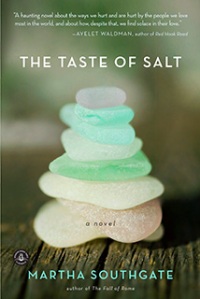
The Taste of Salt by Martha Southgate is the tumultuous tale of Josie Henderson and her family.  Josie is a successful scientist at Woods Hole Oceanographic Institution, but the journey that helped her achieve her dream was wrought with sadness and anger.  Her brother “Tick,” once her ally against their alcoholic father, has just emerged from another stint in rehab and seeking her help, which brings to the forefront everything Josie has tried to push aside and avoid.

The narrative begins in Josie’s point of view and then shifts to that of her mother, her father, her brother, and her husband Daniel.  Southgate is trying to tell a well-rounded story about heartbreak and disappointment, but readers may find the additional points of view unnecessary.  Even without the other perspectives, Josie’s voice is solid enough to carry the entire story.

“Nothing had changed and everything had changed.  I worked better than I had in months on my grant, suddenly inspired;” (Page 160)

Salt can build up and make the mouth water with its bitterness, but often the hunger for salt can take over.  In this way, Southgate’s novel is about that hunger that comes when we search to fill an emptiness within us with the nearest object or pleasure (i.e. alcohol, drugs, sex).  Josie’s brother and father are addicted to alcohol and/or drugs, but while Josie has become successful in her career and married an intelligent man, she’s looking to fill her own holes.  Her addiction is different from that of her father and brother, but no less dangerous.

“Life weighs a ton.  That’s why I love the water.  Nothing weighs anything there.”  (Page 7)

Southgate’s characters are multi-faceted and struggling.  Josie has pushed her issues to the back, but they are still a weight around her neck, dragging her down.  Tick knows he’s lost and continues to struggle for level ground, but their father has found redemption through the 12-step program and more.  He hit rock bottom and lost it all.  The story arc here is not surprising, and Josie doesn’t really lose her critical streak of other’s life decisions, even when she is choosing wrongly for herself.  However, perhaps that’s one of the problems with addiction.  Meanwhile, there seems to be a particular emphasis on race, but its connection to the addiction story line is not clearly drawn and leaves readers wondering what truths Southgate is trying to uncover.  It almost feels as though race is a crutch being used by the main character to justify her actions, which is bothersome.

Through frank prose, Southgate dives deep into the psyche of addicts to explore the turmoil created and the pull of home even when you try to run from the past.  The Taste of Salt is an exploration of the love and bitterness of addiction, how it tears families and individuals apart, and the depth of love that keeps families moving forward.

About the Author:

Martha Southgate is the author of four novels. Her newest, The Taste of Salt, is published by Algonquin Books. Her previous novel, Third Girl from the Left, won the Best Novel of the Year award from the Black Caucus of the American Library Association and was shortlisted for the PEN/Beyond Margins Award and the Hurston/Wright Legacy award. Her novel The Fall of Rome received the 2003 Alex Award from the American Library Association and was named one of the best novels of 2002 by Jonathan Yardley of the Washington Post. She is also the author of Another Way to Dance, which won the Coretta Scott King Genesis Award for Best First Novel. She received a 2002 New York Foundation for the Arts grant and has received fellowships from the MacDowell Colony, the Virginia Center for the Creative Arts and the Bread Loaf Writers Conference. Her July 2007 essay from the New York Times Book Review, “Writers Like Me” received considerable notice and appears in the anthology Best African-American Essays 2009. Previous non-fiction articles have appeared in The New York Times Magazine,O, Premiere, and Essence.

 

I originally read this for Book Club at Devourer of Books, with Linus’s Blanket.


This is my 70th book for the 2011 New Authors Reading Challenge.

A Wreath of Down and Drops of Blood by Allen Braden

A Wreath of Down and Drops of Blood by Allen Braden is a slim collection of poems, published as part of the Virginia Quarterly Review Poetry Series, and is steeped in bird imagery and rural life.  His images are at once beautiful and raw, bringing with it the full force of nature’s unbridled beauty and fearsome nature.  Even the most beautiful images take on an aggressive persona, like the catalpa petals in “Remembering Precious Landscape, but with an Elegy in Mind” (page 9) that become “splayed.”

On the flip side, nature’s sexuality emerges as the narrator recounts love and precious moments between lovers.  In “Flight Theory” (Page 4-7), “How many nights did I try/to retrace the complexities/of starlings with my hands over her skin?/”  For this poem alone, the collection is worth buying.  The imagery is most vivid and charged here, creating a world that readers can get lost in.

Moments of rural life and childhood memories also grace these pages as the narrator of each poem takes the environment and personifies it with emotion.  The connection to a father, but the distance of that connection will make readers wonder how well they really know/knew their parents.  Also the dichotomy of love is present, with its passionate supportive nature and its violent passion that can render relationships asunder, leaving only pain and hate.

Braden has crafted variations of the sonnet in this collection, but readers who do not revel in form poetry may not notice the variation.  However, these varied sonnets continue the poet’s careful attention to detail to bring out the brute nature of humanity and to affirm our place in the natural world through carefully balanced language.  A Wreath of Down and Drops of Blood offers readers a look at humankind in its basest moments, highlighting those emotions we often feel when we are alone but never speak of in the presence of others, even those who love us best.

About the Poet:

Allen Braden is the recipient of a creative writing fellowship from the National Endowment for the Arts and a residency from the Poetry Center and the School of the Art Institute of Chicago. His poems have appeared in such publications as the Georgia Review, Prairie Schooner, Shenandoah, Virginia Quarterly Review, and Witness.


This is my 69th book for the 2011 New Authors Reading Challenge.


This is my 30th book for the Fearless Poetry Exploration Reading Challenge.

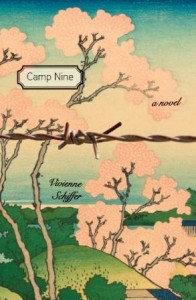
Camp Nine by Vivienne Schiffer

Camp Nine by Vivienne Schiffer is told from the point of view of Cecilia “Chess” Morton as she looks back on her time in Desha County, Arkansas, during the late 1940s when Camp Nine was erected near her childhood home.  As a child, she grew up without a father, but she had a mother who doted on her, though she often butts heads with Chess’ grandfather, who owned half, if not more, of the town, Rook.  Her grandfather controlled much of Chess’ land inheritance and sold a good portion of land, which he deemed useless, to the government for Camp Nine, which he was told would hold German prisoners of war captured during WWII, which was in full swing at the time the story takes place.

Chess is a curious child, but often her inquisitiveness gets shut down by the adults around her who dismiss her desire to know about her family, particularly the feud between her mother and Mr. Ryfle, who tends the grandfather’s land and often makes empty promises about helping Chess’ mother plant her land.  There is a great deal of mystery in the early stages of the novel, including her mother’s past in California and why Camp Nine is being used to house Japanese Americans.  Chess also laments the unspoken code of behavior expected of Blacks, like Ruby Jean who helped raise Chess’ mother.

“‘That river over there is the mightiest river in the world.  It wouldn’t do for there to be just any dirt around here.  The dirt here must have its own strong personality.  It won’t back down to the river.  It won’t back down to men.  You have to understand it and work with it.  Not against it.'”  (Page 121)

Schiffer crafts a narrative that stands apart from other accounts of WWII as it seeks to inject emotion into a situation that many Americans were removed from by hundreds of miles or more.  WWII was fought on distant shores, but its effects were devastating to Americans who soon became objects of suspicion.  However, this story is not just about the internment of Japanese Americans, but of the impact their internment had on the small towns in which their camps were built — kicking up racism and exacerbating classism.  In many ways, Schiffer has developed the setting into an additional character given that its bisected into two halves by the railroad tracks, with the enemy on one side and the townspeople on the other.

Chess’ mother is more progressive than other residents of Rook, but her ideas and actions have farther reaching consequences than she expects.  Schiffer’s characters are engaging and real, and set against the backdrop of this tumultuous time, a young girl is growing into adulthood and realizing that the world is vastly more complicated than she expected.  Camp Nine is captivating and raises questions about perception:  What we think of ourselves when faced with family secrets?  How we’d react in the face of injustice?

I’d consider this similar to Tallgrass by Sandra Dallas.

About the Author:

Vivienne Schiffer grew up in the Arkansas Delta town of Rohwer, site of the Rohwer Relocation Center, on which Camp Nine is based. She is an attorney and has practiced law for twenty-eight years in Houston, where she lives with her husband Paul and their family. Schiffer is currently at work on her second novel.

To visit the other stops on the TLC Book Tour, please click the icon at the right.

This is my 68th book for the 2011 New Authors Reading Challenge.

We the Animals by Justin Torres

We the Animals by Justin Torres is raw, abrasive, and rough because its characters are “animals” reverting to their baser selves in fear or confusion.  The novel reads like a short story collection, throwing readers into brief moments throughout the lives of three boys growing up in Brooklyn with a Puerto Rican father and a white mother.  Manny, Joel, and the third boy who narrates the story, creates an unconventional coming-of-age story.

“It wasn’t just the cooing words, but the damp of her voice, the tinge of her pain — it was the warm closeness of her bruises — that sparked me.”  (page 17)

These boys are wild and crazy, and their dysfunctional family life has taken them on a roller coaster ride of emotions from anger as their father beats them to deep sorrow when their mother comes home from her job to find their father has left.  These boys run free in the neighborhood, have no manners, and are struggling to find their place in the world.  Are they boys that need the protection of their mother or are they men who can take on their father and be free?  Torres shows episodes in which both of these things are true, but these boys are clearly in between, at an age where things can be magical but reality is too stark to ignore.

Torres’ writing is instinctive and brutal at times, giving this novel an autobiographical feel.  The novel is told from the viewpoint of the youngest boy reminiscing and much of it seems nostalgic, even for the not-so-normal parts of his life — where he sees the good in it and possibly relationships he misses having.  However, even though the novel is told from the point of view of the youngest brother, readers may find themselves disconnected from the characters because the scenes are so clipped and blaze by with quick, bright images that shock them — at least until the end.  At little more than 100 pages, We the Animals takes readers on a quick journey through a rough childhood of poor, mixed-race boys in Brooklyn who have to deal with more than there share of depravity and sadness.

I want to thank Ti at Book Chatter for her review that got me interested in Torres’ work.

About the Author:

JUSTIN TORRES was raised in upstate New York. His work has appeared in Granta, Tin House, and Glimmer Train. A graduate of the Iowa Writers’ Workshop, he was the recipient of a Rolón Fellowship in Literature from United States Artists and is a Wallace Stegner Fellow at Stanford. Among many other things, he has worked as a farmhand, a dog walker, a creative writing teacher, and a bookseller.

This is my 67th book for the 2011 New Authors Reading Challenge.

This is my 18th book for the 2011 Wish I’d Read That Challenge.

Mailbox Monday #152 & Some Winners

Before I get to the mailbox, I wanted to congratulate some winners.  The winner of Jane Austen Made Me Do It edited by Laurel Ann Nattress (my review) was Eva.  The winner of The September Queen by Gillian Bagwell (guest post) was Gwendolyn.  Congrats to you both.
Mailbox Mondays (click the icon to check out the new blog) has gone on tour since Marcia at A Girl and Her Books, formerly The Printed Page passed the torch. This month’s host is the Mailbox Monday tour blog.

Kristi of The Story Siren continues to sponsor her In My Mailbox meme.

Both of these memes allow bloggers to share what books they receive in the mail or through other means over the past week.

Just be warned that these posts can increase your TBR piles and wish lists.

Here’s what I received this week:

1.  Astride a Pink Horse by Robert Greer, which came unexpectedly in the mail.

2.  The Iguana Tree by Michel Stone, which also came unexpectedly in the mail, which I gave to a friend.

3.  The Uncommon Reader by Alan Bennett, which I picked up from the library sale and had to add to my own personal library after reading a copy from the library at Dewey’s urging.

4.  Blue Shoe by Anne Lamott, which I picked up from the library sale since I want to give her fiction a try after reading Bird by Bird.

5.  Puppy Love, a snuggle book, which I picked up at the library sale for “Wiggles.” She’ll love it because the outside of the book is fuzzy and the back has a fuzzy tail.

6.  Little Miss Giggles Has a Giggle by Roger Hargreaves, which I picked up at the library sale for “Wiggles.”

7. Natasha’s Daddy came from her visiting “auntie” who went to the library sale too.

8. Elmo’s Delicious Christmas came with the visiting “auntie” on the plane!

What did you receive?

123rd Virtual Poetry Circle

Welcome to the 123rd Virtual Poetry Circle!

Remember, this is just for fun and is not meant to be stressful.

Keep in mind what Molly Peacock’s books suggested. Look at a line, a stanza, sentences, and images; describe what you like or don’t like; and offer an opinion. If you missed my review of her book, check it out here.

Also, sign up for the 2011 Fearless Poetry Reading Challenge because its simple; you only need to read 1 book of poetry. Please contribute to the growing list of 2011 Indie Lit Award Poetry Suggestions (please nominate 2011 Poetry), visit the stops on the National Poetry Month Blog Tour from April.

Today’s poem is from A Wreath of Down and Drops of Blood by Allen Braden:

Grinding Grain (page 36)

The belt, tight as a razor strop,
whips from tractor to hammer mill
and scares out of our grain bin an owl.
Welded pipe coughs flour into bags

stenciled H & H or Logan’s Feed & Seed.
I take another off my father’s hands,
another cinched with his square knot
better than any I used to tie.

Easily I buck those bags onto the stack
that shoulders the granary wall.
The air thickens this morning light
sifting around the blurred belt.

When I turn back, he’s gone
inside a cloud bank of flour
the way burlap can swallow
so many pounds of ground durum.

All our lives we work this way.
He sacks and ties.
I lift and stack.
Our bodies slowly growing white.

What do you think?

Interview With Beth Kephart

Earlier today, I posted my review of You Are My Only by Beth Kephart, which I thoroughly enjoyed, and later on in the interview, I’ll let you know how you can win a copy of your own.

I’ve read Beth’s work for the last few years, and I’ve enjoyed her books very much, and I’ve come to understand her writing process through her blog posts and her email conversations.  I just adore her spirit and she’s very motivating even if she doesn’t realize she’s being so.  I was so happy when she agreed to be interviewed about her stellar novel about child abduction, a tough topic for adult and young adult readers alike.

Many of you may have read enough reviews of this book, and some of you may be avoiding the book for one reason or another.  I hope that this interview will help those on the fence about the book to jump off and give Kephart’s work a try.  Without further ado, please welcome Beth.

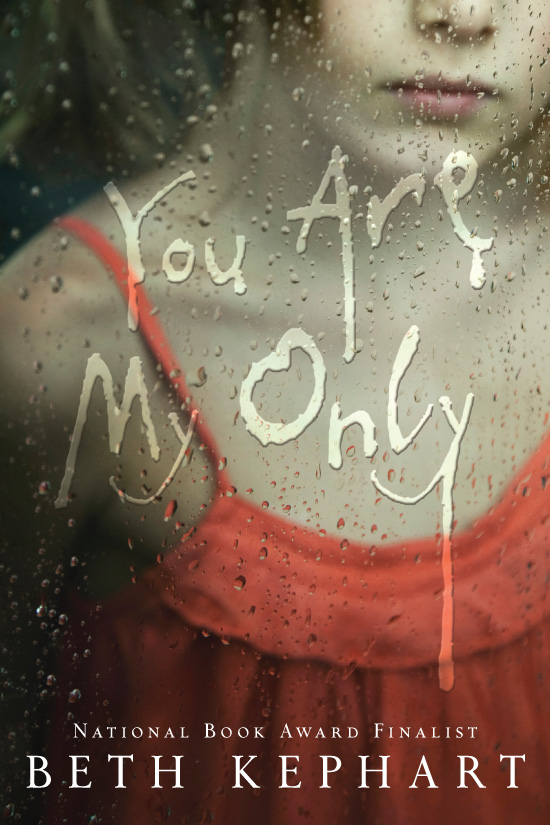
1. You Are My Only is a haunting title with an equally haunting cover. Was it your intention to create a story that would haunt its readers and get them thinking more in depth about child abduction?

Thank you, Serena, for asking such a great first question. First, the cover credit belongs entirely to Neil Swaab, whose work is exquisite. He reads the books he illustrates and that makes all the difference. Second, this book was evolved over such a long period of time that I cannot say that I set out, from the start, to get people thinking more about child abduction. I was thinking about heartbreak—the loss of a child—and how one manages to survive it. I was thinking about the compassion we must have for people whose hearts have been broken.

2. Some readers have said that Sophie’s voice is stronger and the most engaging in the novel. Do you see one voice as stronger than the other? Why or why not?

I am delighted that readers are distinguishing between the voices, for that, I think, is one of the hardest things to do—to make certain the characters sound just precisely like themselves. Sophie is 14 and while she lives an unusual life, she has not been crushed; she is also gaining an education, however unorthodox. Emmy is not nearly as educated, but she has her own poetic intelligence, and she is heartbroken. I love the characters equally. I typically hear a greater preference for Emmy from adult readers and a greater preference for Sophie from teen readers. It never occurred to me that readers would choose one voice over the other; the two voices are necessary to complete the story.

3. Of the scenes that your wrote in the novel, the soaked feet of Emmy swimming like fish in the pond of her Keds has stayed with me longest, in effect symbolizing the disembodiment of her from the life she knew before her child was abducted. Is there a particular scene that woke you from sleep or came to surprise you as you were writing?

Thank you, Serena. This entire book kept me awake for a very long time. The truth is that, while You Are My Only is a novel, some women do live the terribly bereft life of a lost child, and some children are growing up inside airless homes. I felt a great desire to get this right, a great urgency to keep reworking the stories until they honored the emotions (if not the precise storylines) of what real people have endured. I hardly ever sleep when I am working, which is to say: I sport some pretty dark circles under my eyes.

4. Your work often has a poetic feel and I know that you’ve written poetry before. Did/do you have plans for a poetry collection in the future? If not, have you read any great poetry collections that you’d recommend?

I do not have a poetry collection pending, though years ago I thought (for a brief moment) about trying to package a book of poetry and art. It still sits on my computer. I love Neruda, Stern, Gilbert, Ondaatje, Kunitz.

5. Poetry is often considered elitist or inaccessible by mainstream readers. Do poets have an obligation to dispel that myth with their writing styles? Or what other solutions do you see to get more mainstream readers interested in poetry?

Oh, my goodness. This is a great question, but I am not sure I have a good answer for it. Poets have an obligation to be rigorous with language, to imagine deeply, to feel deeply, to know. The rest of us are impoverished souls if we can not find our way to the work of these poets. (And please know that I am not counting myself among these poets; real poets do more than I can do or have done.)

6. Finally, your blog often covers writing struggles, shares photography, and some of your recent reading. How do you find time to balance the blog, writing, and your job teaching? Are there particular habits, routines, or obsessions that help you accomplish that balance?

Oh, Serena, I have no balance. I am grabbing at time, getting up very early, despairing that I will never finish or sell another book. The only thing I know for sure right now is that I cannot work on the computer when I am writing a novel. I have to go to another room and find a slice of sun and some silence. The vast majority of my time is spent running a business—a boutique marketing communications firm called Fusion. The next big chunk of time is spent making sure the house is in order—the bills paid, the floors swept, the meals on the table, and (when my beautiful son is home from college, I try to spend as much time as I can with him, of course). During spring semesters at the University of Pennsylvania, I spend about twenty-five hours each week teaching, preparing for class, working with new students and former students. Finally, to relieve the pressure of things, I dance. And so I write far more slowly than anyone realizes. Weeks will go by without a novelistic or memoiristic word. The blog is my outreach, my way of writing at least some one thing each day.

Thanks, Beth, for answering my questions; it has been a pleasure conversing with you in last year or so. As a bonus to my readers, Beth agreed to share a picture of her writing space; isn’t it gorgeous!

Beth Kephart's Office

To Enter to win 1 of 2 copies of You Are My Only by Beth Kephart, leave a comment on this post.

For a second entry, let me know that you commented on my review.

For up to 3 more entries, share this giveaway with people on Facebook, Twitter, and/or your blog and leave a link.

Deadline Nov. 18, 2011, at 11:59 PM EST. Perfect holiday gift.

You Are My Only by Beth Kephart

You Are My Only by Beth Kephart tackles the tough topic of child abduction from two perspectives — that of the young victim, Sophie, and that of a mother, Emmy, whose child is stolen.  In this powerful, yet quiet novel, Kephart explores how one unexpected event can devastate entire worlds.

While the topic is ripped from the headlines, there is no sensationalism here.  Through carefully selected words in her poetic prose, Kephart builds tension and suspense, like the quiet vibration growing louder on the railroad tracks as the train approaches.  It also provides a quiet space — like the air between the branches of a tall tree — for readers to contemplate what each voice is saying, what each voice is struggling to address, what pain is closed inside of them and just clawing to get out.

“My feet are two pale fish inside the tight ponds of my Keds.  I leave the street for the train station.  I leave the station and cross onto the tracks, slick-backed and shiny as snail glisten.  The black gauze of the clouds flap at the moon, and from the tracks I can see into the backs of people’s houses, the private places where the lamps have not gone off.  It’s like looking through snow globes, worlds behind glass.”  (page 21)

Kephart’s prose is very lyrical and imagistic, and readers need to pay careful attention to her lines.  For instance, the above passage perfectly demonstrates Emmy’s frame of mind after losing her child.  She is lost, drowning, unmoored.  She has become separate from those who have “normal” lives because that’s what she believed she had with her child and husband, no matter how imperfect the marriage.

Emmy and Sophie have strong voices, both with stories to tell, and having one without the other here would have left too much unsaid.  Kephart is a masterful storyteller, building characters from the inside out, ensuring readers receive well-rounded men and women with strengths and weaknesses.  But there is always a mystical element to her novels, something in the background that is left unexplained.  She trusts the reader to uncover the truth of these relationships she’s building and the mysteries of what motivates them to keep moving forward even when things are at their most dark and uncertain.

“But my voice skids away, rides the slippery tracks.  Far away, at the bend in the rails, the night is lamped.  It is yellow and growing brighter, and now I understand:  the train has big yellow eyes.  Lovely ocher liquid eyes.  They put the shimmer down on the tracks and splatter the dark.”  (Page 22)

Beyond the main story, there are Helen and Cloris a devoted couple of aunts to a young boy, Joey, who is as normal as can be to Sophie.  Like Joey who supports Sophie, quirky Arlen and fantastical Autumn support Emmy in ways that are unexpected.  Although Emmy’s scenes, which are told from her point of view, limit readers’ knowledge of how she becomes institutionalized, it is not how she got there that is important to the story.  What is important is what happens there and how it transforms her.  Some of the hospital scenes are reminiscent of One Flew Over the Cuckoo’s Nest — minus the booze, floozies,and Nurse Ratched — in that she is there against her will and wants to escape, but for a while she merely is.  The relationship Emmy builds with Autumn helps her repair her broken psyche, and in this way, Kephart’s hospital is the antithesis of what happens in One Flew Over the Cuckoo’s Nest.

You Are My Only is an emotional powerhouse drawing redemption out of the shattered pieces of lives rendered asunder by a single event.  Through faith and love these characters can begin the heal, rebuild, and flourish.  What more could readers ask for?  Stunning, precious, and captivating from beginning to end.

About the Author:

Beth Kephart is the author of 10 books, including the National Book Award finalist A Slant of Sun; the Book Sense pick Ghosts in the Garden; the autobiography of Philadelphia’s Schuylkill River, Flow; the acclaimed business fable Zenobia; and the critically acclaimed novels for young adults, Undercover and House of Dance. A third YA novel, Nothing but Ghosts, is due out in June 2009. And a fourth young adult novel, The Heart Is Not a Size, will be released in March 2010. “The Longest Distance,” a short story, appears in the May 2009 HarperTeen anthology, No Such Thing as the Real World.

Kephart is a winner of the Pennsylvania Council on the Arts fiction grant, a National Endowment for the Arts grant, a Leeway grant, a Pew Fellowships in the Arts grant, and the Speakeasy Poetry Prize, among other honors. Kephart’s essays are frequently anthologized, she has judged numerous competitions, and she has taught workshops at many institutions, to all ages. Kephart teaches the advanced nonfiction workshop at the University of Pennsylvania. You can visit her blog.  Also check out this chat.

My other Beth Kephart reviews:

Please come back this afternoon for my interview with Beth Kephart about You Are My Only and for a giveaway.

Guest Post: Regina Jeffers’ Writing Space

With an influx of new Jane Austen inspired short stories and novels hitting the market, authors are looking for the best way to get readers’ attentions.  Regina Jeffers has written Christmas at Pemberley, in which Georgiana Darcy must embrace the challenges of her hostess duties while her brother and his wife, Elizabeth, are stranded in a small town on the way to Pemberley by a blizzard.  Jeffers uses the Christmas season to bring the Darcy, Bennet, and Bingley families under one roof, and you can imagine what kinds of rivalries and misunderstandings will occur.

Today, Regina will give us a sneak peek into her writing space and habits.  It also seems that we share a certain Mr. Darcy obsession, and my husband would definitely love her selection of NFL Quarterback since he loves the Miami Dolphins.

Finally, one lucky reader will receive a copy of her book by entering the giveaway below.  Without further ado, please welcome Regina:

For writing my novels, I prefer to have everything within my reach. Purposely, I separate where I actually compose my books from where I word process and edit my novels. I need the “disconnect” in order to separate the steps. I write my novels in spiral notebooks, usually wide ruled because I write large. I know from experience that 30 pages of my handwritten story equals ten pages of typed text (Times New Roman, 12 point font). I, personally, hate to read chapters that are longer than ten pages so I have trained myself to work toward that goal. If you read my novels, you’ll note the consistency in the length of my chapters.

Regina's Favorite Chair!

I love the reflected sunlight of this room. In the Regency period, this would have been a small sitting room used for waiting guests to be announced to the master. Note the lap desk, encyclopedic dictionary, and synonym finder beside my favorite chair. Some day, I will have to have this chair reupholstered. I fear my “inspiration” lies in the lumpy cushions. Normally, there is a cup of tea sitting on the nearby table. I brew my own – no American tea bags for me. One can also see my journal sitting at the side, along with my Bible. This is where the creative process comes about.

Once I have written the book, I retreat to my “office” space to do the hard work. My office is the smallest of the three bedrooms in my North Carolina home. From the window, I overlook the curve of the cul de sac upon which I live. Not much happens in this small incorporated village, something I appreciate. It is quiet and relatively crime free. When I first moved here in 2003, “Miss Kitty,” my neighbor, brought me over a chocolate cake. (I didn’t tell her that I prefer white cake to chocolate. It would be rude.) I love the South!!!

Matthew Macfayden Photos

The office reflects my eclectic tastes. I love oversized furniture. The walls hold my “interests.” Of course, there are multiple pictures of Matthew Macfadyen. I enjoy Colin Firth’s work (am a big fan), but I really LOVE Matthew. All the pictures are signed. Yes, I realize this is an obsession, but daily I remind myself that the word “fan” comes from “fanatic.” (BTW, I have seen “The Three Musketeers” six times to date.) I use post it notes of different colors to keep track of appearances, guest blogs, etc.

Miami Dolphins Quarterback Chad Pennington

I also am a big fan of Chad Pennington, the NFL quarterback. He attended Marshall University, where I went to school, but my respect for Pennington comes from his kindness to my son during the difficult period when my mother was dying. He showed himself to be a true gentleman. In Darcy’s Temptation, Chadwick Harrison is so called because of Pennington.

Although I do not write much outside, I often take a cup a tea and a bit of research of which I want to peruse and sit in one of the two “cozy” spaces I have created. The first is a sheltered area at the front of my house. I bricked it all in and set up the potted plants and benches. I loved my hybrid roses and the hibiscus, but mums and pansies surround the area also. In North Carolina, the vegetation lasts well into late November. Behind my house, there is another bench draped by a weeping willow. It serves the purpose well.

So, this is where I have managed to write twelve novels (Darcy’s Passions, Darcy’s Temptation (a 2009 Booksellers’ Best Award finalist), Vampire Darcy’s Desire, Captain Wentworth’s Persuasion, The Phantom of Pemberley (took 3rd in romantic suspense for the SOLA Awards), Christmas at Pemberley, The Scandal of Lady Eleanor, Honor and Hope, A Touch of Velvet, A Touch of Cashémere, First Wives’ Club, and Second Chances), in addition to two novellas (His Irish Eve and His American Heartsong) and one short story (“The Pemberley Ball”) in a little over four years.

Christmas at Pemberley is my newest release and is currently available. I have a December 1 deadline for The Disappearance of Georgiana Darcy, which will take up where Christmas at Pemberley leaves off, but it will be a cozy mystery, rather than an inspirational romance. I am working on two others (one Austen, one non-Austen) at the same time. This is my Writing World. Quite simple. Quite plain. All me.

Thanks, Regina for sharing your writing space with us.Please also check out the slide show of the remaining photos from her writing space.

For those readers interested in reading about the Darcys, Bennets, and Bingleys during the holidays, enter the giveaway below.

1. Leave a comment about what you found most interesting about Regina’s writing space.

2. For up to 3 more entries, share the giveaway on your blog, Facebook, and Twitter, and leave a link for each in the comments.

3. Follow Savvy Verse & Wit for another entry.

Deadline is Nov. 18, 2011, at 11:59PM EST (US/Canada only)

The Conference of the Birds by Peter Sis

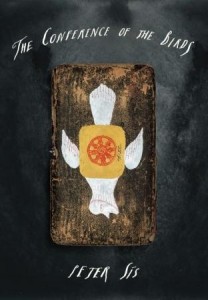
The Conference of the Birds by Peter Sis, an acclaimed children’s author and illustrator, has taken his skills to a 12th century Sufi epic poem of the same name written by Farid ud-Din Attar, who was not only a poet but a mystic.  Often these types of poems have a hidden spiritual meaning, and Sis deftly captures the essence of Attar’s poem with illustration.

In this illustrated version of the epic poem, the pictures speak for the poet, Attar who wakes from a dream to realize he’s a hoopoe bird.  Once he transforms, he calls all of the birds of the world together to find their true king, Simorgh, by flying through the seven valleys — The Valley Of Quest, The Valley Of Love, The Valley Of Understanding, The Valley Of Detachment, The Valley Of Unity, The Valley Of Amazement, and The Valley Of Death — to reach Mountain Kaf.

In the beginning, the transformation of Attar is shown much like animated cartoons would have been created, with the flipping of each panel where each image has slight differences to create the illusion of movement.  Once the birds agree to take the journey, it is clear that it will take them through a number of valleys that will test their resolve, with each bird’s skills and weaknesses hammered by adversity and uncertainty.  Sis creates vivid birds of various colors and species.  Even if the pages of this book were not textured, readers could see the feathers and layers on these birds.

And there are many layers to these birds, their feathers, and their story.  The poem sheds light on the inner spiritual journey each of us travels, the trials that we face, and the perseverance it takes to stay on course and believe in ourselves.  For some the journey is too hard, and they turn back, but for others, it is important enough to move onward despite the risks and sorrow.  Like the poem, The Conference of the Birds by Peter Sis is multilayered, with great attention to detail from the feathers on the birds, the birds making up the larger birds, and the trees that create the mountains.  A gem of a book from an illustrator and writer who sees beyond just the words to the world it creates and the messages it brings.  Likely to be on the best of list for the year.

As an aside, I read this a couple of times carefully and with my infant daughter. She loved feeling the pages and looking at the vivid imagery, and I can tell you that keeping her attention for an entire book is difficult. This is great for kids and adults. Sis has created something of lasting beauty.

About the Author:

Born in Brno, in the former Czechoslovakia, in 1949, Peter Sís is an internationally acclaimed illustrator, author, and filmmaker. Most recently, in 2007, he published The Wall: Growing Up Behind the Iron Curtain, which was awarded the Robert F. Sibert Medal and was also named a Caldecott Honor Book. Peter Sís was named a MacArthur Fellow in 2003. He is the author of twenty children’s books and a seven-time winner of the The New York Times Book Review Best Illustrated Book of the Year.  Please check out his Web page.

Please check out this video interview from BEA:

According to the Seattle Post-Intelligencer, Sis pays homage to traditional Islamic art and its figurative representations and geometric patterns as the valleys are depicted as a series of mazes.  (Seriously, read that review, it is stunning).


If you’d like to check out the rest of the tour, please click on the TLC Book Tour icon at the right.


This is my 29th book for the Fearless Poetry Exploration Reading Challenge.


This is my 66th book for the 2011 New Authors Reading Challenge.