Quantcast

Mailbox Monday #154

Mailbox Mondays (click the icon to check out the new blog) has gone on tour since Marcia at A Girl and Her Books, formerly The Printed Page passed the torch. This month’s host is the Mailbox Monday tour blog.

Kristi of The Story Siren continues to sponsor her In My Mailbox meme.

Both of these memes allow bloggers to share what books they receive in the mail or through other means over the past week.

Just be warned that these posts can increase your TBR piles and wish lists.

Here’s what I received this week:

1.  All That I Am by Anna Funder from the publisher for review in February.

2. The Penguin Anthology of 20th Century American Poetry edited by Rita Dove, which I purchased at Novel Places for Christmas for myself because apparently my husband says its no fun if I know what it is ahead of time.

What did you receive?
125th Virtual Poetry Circle

Welcome to the 125th Virtual Poetry Circle!

Remember, this is just for fun and is not meant to be stressful.

Keep in mind what Molly Peacock’s books suggested. Look at a line, a stanza, sentences, and images; describe what you like or don’t like; and offer an opinion. If you missed my review of her book, check it out here.

Also, sign up for the 2011 Fearless Poetry Reading Challenge because its simple; you only need to read 1 book of poetry. Please contribute to the growing list of 2011 Indie Lit Award Poetry Suggestions (please nominate 2011 Poetry), visit the stops on the National Poetry Month Blog Tour from April.

From Soul Clothes by Regina D. Jemison (page 32):

So Beautiful Just to Die

A flower was born, and so was I
       into a world already turning
       into a universe already on course
      life predestined

to be beautiful
and flourish amongst others
different beginnings
same beauty

diversity/community

      chrysanthemums
                  petunias
           lilies
      ivies
           yuccas
                  gladiolas
      begonias
                  sun flowers
      and birds of paradise

are creative, and nurture until seasons change
and petal shed

and, then

we are born again.

What do you think?

Soul Clothes by Regina D. Jemison

Soul Clothes by Regina D. Jemison is slim collection of poems that explore the Black experience from a spiritual perspective.  She has quite a bit to say about the struggles Black men have with confidence, kicking habits, staying with their women, but she also has a lot to say about her own experiences and even the civil rights movement.

“writing illuminates injustice
gives language to people’s pain
pictures to failing dreams” (From “Because a door in my soul opens”, page 5)

Broken into three sections — God Gave Me Words, Soul Clothes, and Divine Reflections — and the first section tackles wider societal topics of struggle and faith, while the Soul Clothes section tackles similar struggles on a more personal level.  In the final section, Jemison reflects on those struggles and what they teach each of us about ourselves and our place in the world, as well as how fleeting life really is.

“Civil rights activists told me to fight the battle

They didn’t tell me
I’d be weary, exhausted, disgusted, betrayed, disenchanted” (From “Hold on to God, a lawyer’s prayer”, page 7)

Some poems have an internal jazz-like rhythm with a message. However, this collection’s poetry is direct and without frills, and in many ways read less like poetry and more like sermons or pep talks.  All of these poems are direct and strive to get readers thinking about today’s world and the struggles of Black men and women.  Readers will enjoy her frankness, and her faith is strong.  Soul Clothes by Regina D. Jemison is a spiritual collection that strives to provide readers with an inside look at the Black experience and the strength of faith.

Since this was published in 2011, it is eligible for this year’s Indie Lit Awards.


This is my 71st book for the 2011 New Authors Reading Challenge.


This is my 32nd book for the Fearless Poetry Exploration Reading Challenge.

Mental_Floss The Book: Only the Greatest Lists in the History of Listory Edited by Ethan Trex, Will Pearson, Mangesh Hattikudur

Before I get to today’s review, I want to wish all my U.S. readers a Happy Thanksgiving. It is a holiday that should be shared with friends and family, and if possible please consider volunteering some of your time or food to those in need this season.

I hope everyone has some great food and fun with friends and family. Have a great holiday. My family will be joining Anna’s for some dinner and fun.

Ok, now for today’s review, which would make an excellent gift for the trivia buffs in your life.

Mental_Floss The Book: Only the Greatest Lists in the History of Listory edited by Ethan Trex, Will Pearson, and Mangesth Hattikudur is a collection of lists that span the 10 years that Mental_Floss has been in the business of collecting information that is odd, off-the-beaten path, and just down right funny.  The Website has not only trivia games, but also quizzes, blogs, and amazing facts (Here’s one of my favorites, especially since Muppets are the order of the day in my house these days — particularly Elmo)

The lists included in this book range in topics from impressing diplomats, presidents or other important people to how to lighten the mood in the emergency room.  There are lists for nearly every occasion.  Naturally, readers and writers will enjoy the list entitled “Lists for People Who Can’t Write Good,” which tells a tale of writers betting that Ernest Hemingway (though it may have been another writer) could not write a six word sentence that was a complete story with a beginning, middle, and end.  In the end, the other writers lost when the sentence written said, “For Sale.  Baby Shoes.  Never worn.” (page 183)

Another of the most witty entries in the collection is “What 10 Fictional Characters Were Almost Called,” which includes anecdotes about Bram Stoker, Gone With the Wind, and other famous novels’ and authors’ characters.  The editors also have lists of alternate names for famous novels, like 1984 and The Great Gatsby.  There are also famous words that were created by authors, Latin terms that you think you understand the meaning of, and little known stories about some famous writers.  Another of my favorites are the phrases attributed to Mark Twain that he actually did not say, like “It is better to keep your mouth shut and appear stupid than to open it and remove all doubt,” and phrases he did say, such as “Never put off till tomorrow what may be done day after tomorrow just as well.”

Mental_Floss The Book: Only the Greatest Lists in the History of Listory edited by Ethan Trex, Will Pearson, and Mangesth Hattikudur will whet anyone’s appetite for knowledge and fun facts to impress their friends with or to just have fun.  Trivia fans would love to add this to their collections, and readers should consider putting this on their wish lists this holiday season.  Flex those brains and join the fun.

More ways to Mental_Floss:

For more with mental_floss, become a fan on Facebook, follow them on Twitter, and visit their website: www.mentalfloss.com.  And of course, don’t forget to take the quiz on their Facebook page!  Or take it below:

Please enable javascript.

Twilight: The Graphic Novel Volume 2 by Stephenie Meyer and Young Kim

Twilight: The Graphic Novel Volume 2 by Stephenie Meyer and Young Kim is the second (my review of Volume 1) in the series providing Meyer’s fans with even more Edward and Bella, but in visual form.  Kim’s images are sharp and well shaded, but there are only a few splashes of color, mostly red.  The story line is basically the same, with Bella and Edward running from James and Victoria.

There is a bit more back story of Carlisle and James here, and some of the scenes are modified to adapt it for the graphic novel and speed up the action.  Kim is a deft talent with her shading and life-like images.  She takes the story to a new visual level, making her characters almost 3-D with their depth.  Twilight fans who cannot get enough of this saga will love to add these books to their collections, and others might simply enjoy the art in these volumes, especially how the clothes move with the vampires and humans so realistic that readers would wish to feel the fabric.

There are odd moments in the novel where “conversation bubbles” are empty except for an ellipses, which may be unnecessary, given the depth of Kim’s talent to create believable facial expressions.  Meyer is surely capitalizing on her saga’s fame, and she’s looking to her character notes and sketches to offer her readers more than just the same story.  Is there enough in these graphic novels to satisfy the less-than-die-hard fan?  Maybe.  What is the real gem in Twilight: The Graphic Novel Volume 2 is Kim’s talent as an artist.

Beyond the Scent of Sorrow by Sweta Srivastava Vikram

Beyond the Scent of Sorrow by Sweta Srivastava Vikram is a small collection of poems that draw parallels between nature and women.  Reminiscent of Ecofeminism, a political and social combination of feminism and deep ecology that draws parallels between women and nature and calls attention to the misuse of both by patriarchy, Vikram develops a dialogue about the harm done to nature and women across the globe.  Dominance of both by outside constructs — whether it is capitalism or man — has belittled the importance and strengths of both.  Rather than wallow in the pain and repression, Vikram’s verse strives to cultivate women and nature’s strengths to demonstrate there is a way to overcome the oppression.

"in colonies of Armani,
singing a sad melody, attracting worker bees and wasps

to give their friends honey, the walk on burning coals.
A trap before he shoots bullets" (from "It's a Man's World", page 4)

Specifically, Vikram discusses in the preface how there are parallels drawn between women and the eucalyptus tree, which were both once integral to society and are now thought of as commodities that can be replaced.  The collection is broken into two parts, with the first part seemingly more focused on the changing role of both women and nature in society and the dire consequences that occur because their worth is devalued, such as the displacement of birds and animals when the eucalyptus is cut down in “Eucalyptus Trees” (page 3).  Additionally, the poems in this section describe how women and nature are abused by society (not necessarily just by men), like in “Unholy Men” and “It’s a Man’s World” (pages 4-5).

In part two, the secrets held by women and nature are revealed — their strengths that must be hidden from society or be devalued outright.  Women and nature here are dichotomies in and of themselves in that they must present a strong front to the society that abuses them, while at the same time hiding their strengths and internalizing the devaluation of their gifts.

"Wearing a veil over my dilemma,
the skull of questions is hidden.

What was mine? Some could argue.
To make a point bland as sand, I say,

Ask the bird that lost its nest resting in the eucalyptus tree,
Mother nature faced irony with a damp silence --" (From "Silence", page 14)

Vikram’s verse is sparse and powerful, evoking reflection and a grander examination of the world around us. Beyond the Scent of Sorrow calls attention to the depravity of human action, but also to the hope that things can be changed if we have the will to change it.  Do not be fooled by the comparisons here in to thinking that men are the enemy because they are not; the collection is more about the decisions we make as humans and the consequences those decisions have on our world and ourselves.

Beyond the Scent of Sorrow by Sweta Srivastava Vikram is the third collection of hers that I’ve read, and since this was published in 2011, it is eligible for this year’s Indie Lit Awards.  It resonated with me for its references to Portugal, my father’s homeland, and for its echoes of a philosophy, social, and political movement I have studied and internalized over the years.

About the Poet:

Sweta Srivastava Vikram is an award winning writer, a Pushcart Prize nominated poet, novelist, author, essayist, columnist, educator, and blogger. Born in India, Sweta spent her formative years between the steel city of Rourkela, the blue waters of North Africa, the green hills of Mussoorie, and the erudite air of Pune before arriving in bustling New York. Growing up between three continents, six cities, five schools, and three masters degrees, what remained constant in Sweta’s life was her relationship with words.

Check out Diary of an Eccentric’s review.

This is my 31st book for the Fearless Poetry Exploration Reading Challenge.


This is my 3rd book and final book for the South Asian Reading Challenge.

2012 War Through the Generations Reading Challenge: WWI

WWI Reading Challenge

Anna and I, as you may already know, co-host the War Through the Generations Reading Challenges each year.

Since creating the blog, we have delved into WWII, the Vietnam War, and the U.S. Civil War (reader’s choice).  The website contains ever-growing lists of book recommendations for each of those wars, plus a running list of reviews for books that are from challenge participants and others that we’ve found across the blogosphere.

In 2012, Anna and I could not pass up the opportunity to delve into WWI, often considered The Great War, which occurred roughly between 1914 to 1918 and started roughly with the assassination of Archduke Franz Ferdinand of Austria, the heir to the throne of Austria-Hungary.

The WWI Reading Challenge will be held between Jan. 1, 2012, through Dec. 31, 2012.

Books must have WWI as a primary or secondary theme and occur before, during, or after the war.

Here are the reading levels:

  • Dip: Read 1-3 books in any genre with WWI as a primary or secondary theme.
  • Wade: Read 4-10 books in any genre with WWI as a primary or secondary theme.
  • Swim: Read 11 or more books in any genre with WWI as a primary or secondary theme.

We’re waiting on some buttons for the challenge, but you can read all the details and sign up at War Through the Generations.

***Also, if you sign up, Please follow War Through the Generations in your feed readers and on Twitter @wargenerations and Facebook for updates, giveaways, and more***

I’ll be signing up for the Wade level of 4-10 books.  How about you?

***This Just In***

The read-a-long book for 2012 is A Farewell to Arms by Ernest Hemingway

Mailbox Monday #153

Mailbox Mondays (click the icon to check out the new blog) has gone on tour since Marcia at A Girl and Her Books, formerly The Printed Page passed the torch. This month’s host is the Mailbox Monday tour blog.

Kristi of The Story Siren continues to sponsor her In My Mailbox meme.

Both of these memes allow bloggers to share what books they receive in the mail or through other means over the past week.

Just be warned that these posts can increase your TBR piles and wish lists.

Here’s what I received this week:

1. Last Sacrifice by Richelle Mead from a friend.

2. Carry the One by Carol Anshaw from Shelf Awareness.

3. Schoolgirl by Osamu Dazai and translated by Allison Markin Powell from Caribousmom (Thanks!)

4. Irrepressible by Leslie Brody, a win from Unabridged Chick.

5. Mental_Floss: The Book: The Greatest Lists in the History of Listory edited by Ethan Trex, Will Pearson, and Mangesh Hattikudur

6. How the Grinch Stole Christmas by Dr. Seuss for Wiggles’ Christmas gift.

7. The Sneetches by Dr. Seuss for Wiggles’ Christmas gift.

8. Curious George Pat-a-Cake by H.A. Ray for Wiggles’ Christmas gift.

What did you receive?

124th Virtual Poetry Circle

Today’s Poem is from Beyond the Scent of Sorrow by Sweta Srivastava Vikram (page 8):

Skeletons of Women

My feet were ticklish
from the acorns sneaking
inside the pockets of large rocks,
scratching them like a dog's belly,
that's what I thought at first.

But I was wrong.
Woodpeckers conspiring with moths,
mimicking chained cries
of stripped branches dying their own death,
were asking me to put a period, not a comma, in my steps.

Too late, the fire moaned.
With feet sinking like a widow's hopes,
I stepped on a cask of ashes
only to find skeletons of women with no fingernails.
Hunger ate them.

Welcome to the 124th Virtual Poetry Circle!

Remember, this is just for fun and is not meant to be stressful.

Keep in mind what Molly Peacock’s books suggested. Look at a line, a stanza, sentences, and images; describe what you like or don’t like; and offer an opinion. If you missed my review of her book, check it out here.

Also, sign up for the 2011 Fearless Poetry Reading Challenge because its simple; you only need to read 1 book of poetry. Please contribute to the growing list of 2011 Indie Lit Award Poetry Suggestions (please nominate 2011 Poetry), visit the stops on the National Poetry Month Blog Tour from April.

So what do you think?

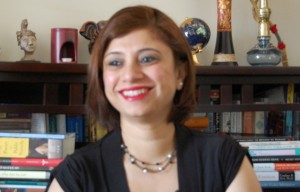
The Inspiration Behind Camp Nine by Vivienne Schiffer

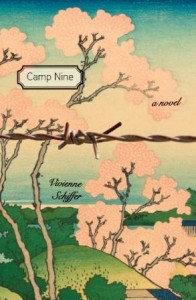
Earlier this week, I had the pleasure of speaking with Vivienne Schiffer, author of Camp Nine, about her inspiration for the book (my review). 

Today, she graciously offered to share with you the story and share a photo of the real cemetery that inspired her journey into the internment camp for Japanese-Americans during World War II.

Please give her a warm welcome.

Camp Nine was inspired by my personal experience growing up in Rohwer, Ark., a town that was so small it was the perfect spot to hide nearly ten thousand Americans of Japanese ancestry where virtually no one would find them. There, my grandfather, Joe Gould, Sr., a wealthy landowner, sold hundreds of acres to the federal government to build what was euphemistically called the Rohwer Relocation Center. The United States government maintained that the Japanese Americans of California, Oregon and Washington were being simply “relocated” for their own protection, and for the protection of the war effort in sensitive military areas. In fact, it was pure racism. Powerful business lobbies on the West Coast didn’t want the Japanese Americans there. They’d been trying to exclude them for decades. Finally, they had the perfect excuse, and the federal government was the perfect ally.

By the time I was born fifteen years later, not only was the camp gone, even memory of it seemed to have faded. But how odd even that was. In 1942, the population of tiny Rohwer, Ark., swelled almost one hundred fold, from around one hundred people, most of them poor white and African American tenant farmers, to nearly ten thousand people, well educated city dwellers and prosperous farmers from somewhere far away. When the war ended, Rohwer abruptly shrank back to a population of one hundred, and fifteen years after the fact, not a soul in town mentioned that anything had ever happened. The only signs available to a small child were a brown government sign pointing the way over a dirt bank supporting railroad tracks, an incinerator smokestack, a tar-paper barracks formerly used as a hospital, and the ghost, the thing of beauty, the specter that crouched under the trees and hid in the cotton field: the haunting and lovely cemetery.

Copyright Vivienne Schiffer

That there were camps in the Deep South is news to even the well-informed. Japanese Americans from the camps did interact with their neighbors, and there were culture clashes. Unlike their counterparts in the western states, the Arkansans had never had any personal interaction with anyone of Asian ancestry. Their knowledge was limited to stereotypes and cartoons. Fear and resentment were real and were amplified by gossip. But the prisoners were Americans first. The only ethnic group required to prove their loyalty to the United States, men from the Rohwer Camp were a part of the “Go for Broke” team, the 442nd Regimental Combat Unit, the most highly decorated combat unit of its size in American military history. The 442nd famously liberated Rome (although they were stopped at the gates so that newsreels could record only white soldiers entering the city) and rescued the Lost Battalion of Texans in one of the most celebrated battles of the European theatre.

Camp Nine honors the Japanese Americans who endured their ordeal with grace and dignity, as well as those Caucasian Americans who protested their mistreatment and sought to make their lives better.

Thanks, Vivienne, for sharing your inspiration with us.

If you’re interested in reading about how WWII impacted U.S. communities, especially after the government began establishing internment camps for Japanese-Americans, you should check out Camp Nine.