Quantcast

Guest Post: Trick or Treating with Jane Austen Made Me Do It by Laurel Ann Nattress

Earlier this week I reviewed Jane Austen Made Me Do It edited by Laurel Ann Nattress of Austenprose fame.  This collection provides readers with a wide breath of Jane Austen inspired short stories that range from love and romance to witty humor and mystery.

Today, Laurel has graced us with her presence (and a giveaway) to talk about the more spooky stories in the collection in honor of Halloween, which is tomorrow.  Get your candles burning and your costumes on; it’s time to trick or treat . . . or at least have a costume party with a little Jane Austen.

Without further ado, here’s Laurel.  Please give her a warm welcome and stay tuned for the giveaway.

Hi Serena, I am so honored to be here today at Savvy Verse & Wit during my Grand Tour of the blogosphere in celebration of the release of my new Austen-inspired anthology, Jane Austen Made Me Do It.

Halloween is tomorrow and I am all anticipation of a favorite holiday. One of the things I loved about it as a child was that I could be anyone, or anything, I wanted to be for one night of the year. I used to get very creative with my costumes! Being a child of the “television generation,” my costume choices were strongly influenced by what I had recently seen on T.V. I remember trick or treating in a hoop skirt one year as Scarlet O’Hara after seeing the movie Gone with the Wind! One wonders out loud what I would be influenced to be now? Jane Austen? Oh, I wouldn’t dare. I think I could be one of her characters, but never the Incomparable One. 😉

We don’t know if the Austen family celebrated All-Hallows Eve in Hampshire when Austen was a girl, but since they were very fond of family theatricals, I could imagine them reading out loud from the popular Gothic fiction novels of the day like, The Mysteries of Udolpho or The Monk, and scaring each other with horrid tales. Jane would later be so influenced by the Gothic genre that in 1798-99 she would write a parody of it. First entitled Susan, and later renamed as Northanger Abbey, the novel was published posthumously after her death in 1817. One of Austen’s lesser known works, I consider Northanger a hidden jewel, full of tongue-in cheek humor, allusions to Gothic fiction and more importantly, containing one of her most charming and endearing heroes, the teasingly witty Henry Tilney.

Because of its Gothic elements, I always gravitate to Northanger Abbey during this time of year. It never fails to charm, delight and make me laugh out loud at Austen’s audacity at having fun with her characters and the genre. My new Austen-inspired short story anthology, Jane Austen Made Me Do It, contains twenty-two original stories, five of which are perfect for a Gothic reading on the Halloween holiday. Interestingly, they all are contemporary tales. The first two are heavily inspired by Austen’s Northanger Abbey: “A Night at Northanger” and “The Mysterious Closet,” the third, “The Ghostwriter” features Jane Austen as a advice giving ghost, the fourth transports Austen’s most iconic romantic hero, Mr. Darcy, into the twenty-first century in “Me and Mr. Darcy, Again,” and the fifth, “Intolerable Stupidity,” is a high burlesque comedy involving Mr. Darcy in a law suit against those responsible for modern adaptations and spinoff’s. Here is a description of each:

“A Night at Northanger,” by Lauren Willig

Our heroine, Cate Cartwright, is part of the cast of “Ghost Trekkers”, currently filming at one of England’s most haunted homes, Northanger Abbey. Naturally, Cate knows there’s no such thing as ghosts. It’s all smoke and mirrors for the credulous who watch late night TV. At least, that’s what she thinks… until she meets the shade of one Miss Jane Austen during one fateful night at Northanger.

“The Mysterious Closet: A Tale,” by Myretta Robens

In the wake of her most recent failed relationship, Cathy Fullerton takes an extended vacation in a converted Abbey in Gloucestershire, England. Ensconced in the Radcliffe Suite, a jet-lagged Cathy mistakes a walk-in closet for a Vaulted Chamber, a clothing rack for an Instrument of Torture and an accumulation of cobwebs for her True Love.

“The Ghostwriter,” by Elizabeth Aston

Sara, obsessed with Pride and Prejudice, is jilted by Charles, who can’t compete with Mr. Darcy. His parting gift is a lock of Jane Austen’s hair. Sara wakes the next morning to find a strange woman sitting on the end of her bed. A figment of her imagination? No, it’s the astringent ghost of Jane Austen. On a mission to restore the reputation of forgotten Gothic author Clarissa Curstable, Jane Austen saves Sara’s career and brings Charles back before taking herself off into the ether, but there’s a price to pay, as the couple discover when they wake up to find another ghostly visitor at the end of the bed. It’s Jane’s friend, Clarissa – and she plans to stay.

“Me and Mr. Darcy, Again…,” by Alexandra Potter

Mr. Darcy is every woman’s fantasy. But what happens when he becomes one woman’s reality? In 2007 Emily traveled from New York to England to go on a Jane Austen-inspired literary tour. There she met and fell in love with Spike, an English journalist.

She also met Mr. Darcy… Or did she? She can never be sure if it really happened, or it was her over-active imagination. Now, four years later, she’s had a huge row with Spike and is back in London nursing a broken heart. And there’s only one person who can mend it. Mr. Darcy….

“Intolerable Stupidity,” by Laurie Viera Rigler

Well hidden from the ordinary world, in a little-known corner of jurisprudential hell known as the Court of Intolerable Stupidity, a legal drama of literary proportions unfolds. The plaintiff is none other than the most famous romantic hero of all time, Mr. Darcy. The defendants are the authors who dared write sequels, adaptations, and inspired-by’s of his Creator’s most beloved work, Pride and Prejudice. One of those works, whose author was tried and convicted in absentia, is so popular that its salacious swimming-in-the-lake scene has resulted in Darcy’s being forced to endure a perpetual state of shivering wetness in a transparent white shirt. For when Darcy’s adoring public isn’t throwing water on him, his umbrella breaks in the midst of a downpour. And now, between the zombies and the vampires, Darcy and his wife Elizabeth are at their wit’s end. So is defense attorney Fritz Williams, who not only fights a losing battle in a kangaroo court ruled by Darcy’s tyrannical aunt, the Honorable Lady Catherine de Bourgh, but also his secret infatuation with prosecuting attorney Tawny Wolfson. Who has her own secret: a hopeless addiction to the illegal miniseries that she is supposed to abhor.

I hope that readers find Austen’s creative spirit and witty Gothic humor this Halloween by indulging in a bit of trick or treating with Jane Austen Made Me Do It. Please enjoy one of my favorite passages between Austen’s hero and heroine of Northanger Abbey to set the mood.

“You have formed a very favourable idea of the abbey.”

“To be sure, I have. Is not it a fine old place, just like what one reads about?”

“And are you prepared to encounter all the horrors that a building such as ‘what one reads about’ may produce? Have you a stout heart? Nerves fit for sliding panels and tapestry?”

– Henry Tilney and Catherine Morland, Chapter 20


Thanks so much, Laurel; it was great hosting you!

About the Editor:

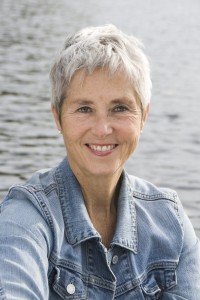
A life-long acolyte of Jane Austen, Laurel Ann Nattress is the author/editor of Austenprose.com a blog devoted to the oeuvre of her favorite author and the many books and movies that she has inspired. She is a life member of the Jane Austen Society of North America, a regular contributor to the PBS blog Remotely Connected and the Jane Austen Centre online magazine. An expatriate of southern California, Laurel Ann lives in a country cottage near Snohomish, Washington.  Visit Laurel Ann at her blogs Austenprose.com and JaneAustenMadeMeDoIt.com, on Twitter as @Austenprose, and on Facebook as Laurel Ann Nattress.

To Enter the Giveaway for 1 copy of Jane Austen Made Me Do It edited by Laurel Ann Nattress (US/Canada only):

1.  Leave a comment about your favorite Halloween story or what intrigues you about reading an Austen-inspired short story anthology.

2.  Follow Laurel Ann Nattress on Facebook and Twitter, leaving a comment here that you did with your Facebook and Twitter names for 2 more entries.

3.  Leave a comment on my review for another entry.

4.  Blog, Tweet, Facebook the giveaway and leave a link here for up to 3 more entries.

Deadline is Nov. 7, 2011, at 11:59PM EST.

Winners to be drawn at random! Good luck to all!
121st Virtual Poetry Circle

Welcome to the 121st Virtual Poetry Circle!

Remember, this is just for fun and is not meant to be stressful.

Keep in mind what Molly Peacock’s books suggested. Look at a line, a stanza, sentences, and images; describe what you like or don’t like; and offer an opinion. If you missed my review of her book, check it out here.

Also, sign up for the 2011 Fearless Poetry Reading Challenge because its simple; you only need to read 1 book of poetry. Please contribute to the growing list of 2011 Indie Lit Award Poetry Suggestions, visit the stops on the National Poetry Month Blog Tour from April.

Today’s poem is from Three Women: A Poetic Triptych and Selected Poems by Emma Eden Ramos, which I’ll be reviewing next week:

Inferiority Complex (page 36-7)

I sleep on the kitchen floor when I'm alone.
Twenty-six-year-old virgin,
I moved to Sweden simply for the lack of sunlight.

Summer evenings are hardest --
I spend them behind blackout curtains,
tucked under used-to-be-white, stained flannel
sheets.

In grade school they called me Hobbit.
Fat-Ass-Farrah some years later.
My parents named me after a cute dead actress.
Cute? No
Dead?

It isn't that I don't try,
Only, how can I fix these size 36 hips?
This 25 inch waist? I swear I was born with it.
I'd give anything to refigure my upturned nose,
thin my full-bodied brown hair,
or just lengthen the 5'5" stature I've been cursed
with.

I love the winter months.
I can walk freely down the streets in Stockholm;
nobody notices.
I avoid the busy ones though,
the ones that are always well lit.
But sometimes I can't
and when I can't, it happens --
I'll catch a glimpse --
someone's looking,
somebody's seen.
The swollen-lipped whistle I dread,
the sharp sound that will inevitably trigger my dog-
like cower.
Because I am not stupid.
I know what he is thinking.
        ugly bitch!

No, I am not stupid.
That is not my problem.

What did you think? Share your thoughts.

Jane Austen Made Me Do It Edited by Laurel Ann Nattress

Laurel Ann Nattress, the woman behind Austenprose.com, is now the editor of Jane Austen Made Me Do It, a collection of Jane Austen-inspired short stories (check out the tour).  Authors not considered Austenites per se, like Frank Delaney writes with Diane Meier and Adriana Trigiani join those known for their Austen spinoffs, like Amanda Grange, Jane Odiwe, Alexandra Potter, and more.  The collection even includes the winner of the Jane Austen Made Me Do It short story contest — Brenna Aubrey’s “The Love Letter.”  But some Austen retelling favorites like Abigail Reynolds, Mary Simonsen, and Eucharista Ward are notably absent.  However, this only begs the question as to whether there will be another anthology in the future as the Austen subgenre continues to grow.

It is only fitting that the collection begins with the woman who started my journey onward into the world of Jane Austen and subsequent retellings and inspired novels, Syrie James with “Jane Austen’s Nightmare.”  The short story personifies every writer’s nightmare — that the characters will not like how they have been drawn and will seek justice.  From characters perceived as too perfect to those with a great number of flaws, Austen meets them all in her nightmare set in Bath, a city she despises.  Kicking off the collection here is a great introduction to all of Austen’s novels and characters and to her own fears and character as we know her to have been, possibly.

“Austen’s rise to fame has been steady since her nephew James Edward Austen-Leigh’s biography, A Memoir of Jane Austen, introduced ‘dear Aunt Jane’ to broader readership in 1869, but recently, two elements have been her strongest catalyst:  the Internet and a wet shirt.”  (page xii)

There are stories for five of her six novels, and Mansfield Park, though mentioned in passing or referred to slightly, is the one left out as an inspiration for a complete story.  Each author tackles a different novel and/or theme from the ridiculousness of ghost stories in “A Night at Northanger” by Lauren Willig to the trials of living with one’s in-laws, like in “Nothing Less Than Fairy-Land” by Monica Fairview.  Clever renderings of finding love in the most unlikely places in Beth Patillo’s “When Only a Darcy Will Do” are joined by modernized stories of renewed love and patience.  These stories are perfect for those looking for more Austen and for those who are unsure whether they would like Austen retellings/continuations.

There are outstanding stories and those that are not quite as good, but let’s be clear, if you love all-things Austen, you want this collection and there are no stories here that you will want to miss.  Writing Austenesque stories requires a certain level of imagination, while at the same time a certain commitment to her characters as she has created them.  Each of these writers does just that.  Jane Austen Made Me Do It has enough clever wit and modern sensibility for any reader, and would suit those looking for prime examples of how a short story can capture the heart.

About the Editor:

A life-long acolyte of Jane Austen, Laurel Ann Nattress is the author/editor of Austenprose.com a blog devoted to the oeuvre of her favorite author and the many books and movies that she has inspired. She is a life member of the Jane Austen Society of North America, a regular contributor to the PBS blog Remotely Connected and the Jane Austen Centre online magazine. An expatriate of southern California, Laurel Ann lives in a country cottage near Snohomish, Washington. Visit Laurel Ann at her blogs Austenprose.com and JaneAustenMadeMeDoIt.com, on Twitter as @Austenprose, and on Facebook as Laurel Ann Nattress.

My Soul to Take by Tananarive Due

My Soul to Take by Tananarive Due is the fourth book in her immortals series and is set in the year 2016 when governments are striving to keep terrorists at bay and plagues secret to reduce the threat of panic.  Glow, a type of blood that is warm to the touch, is being touted as the solution to the pandemic and disease problem, but the United States has banned the drug for its terrorist ties and unknown origins.

Fana, an immortal, and her father, Dawit, hope to help the human race by offering the healing powers of their blood, but they are stopped at every turn by a rival faction of immortals who oppose the sharing of blood with mortals, led by Michel.  Complicating the situation even further is Fana’s attraction to mortal Johnny Wright and her betrothal to Michel.  Due has crafted a unique world in which these characters struggle not only for the life and death of humanity, but with greater questions of acceptance and compassion.  She even sprinkles her novel with technology gadgets that could be in our very near future, which is a nice touch.

“Fana was grateful that Mom had raised her with mortals in her family, closest to her heart.  Her cousin, aunt, and best friend were all mortals, so she hadn’t grown up with the feelings of superiority shared by her Life Brothers, and even her father.  She tried not to feel it, anyway.  Fana always began her meditations by asking for humility so she would not lose herself.” (page 64)

While readers will enjoy the intricate details throughout the novel about the Immortals and their way of life, something is missing — it is hard to connect with the characters without having read the previous books in the series.  Complicating matters is the emergence of Phoenix, a former music star, and her family, who are dealing with the deaths of a fraternal grandmother and maternal father that haunt them.  As quickly as readers become involved in her story, they are quickly shifted away from it and immersed in the immortal world.  When readers are returned to Phoenix’s story, they may feel like they have to flip back to recall what has happened to her.  This format does a disservice to the character — whose story line does intersect with Fana’s early on — and makes it difficult to reconnect with the character and her story and how it connects to the Immortals story line.

Due has a talent for creating other worlds, environments where immortals are gods, but have secreted themselves and their innovations away below the ground.  There are some that want to save humanity, and others that see humanity as ants to be squashed.  Through a great deal of biblical allusion, she creates an allegory for the Book of RevelationsMy Soul to Take is a slowly, unwinding battle of wills, but mortals refuse to sit on the sidelines and watch.  A pleasurable read that could be enhanced by reading the previous books in the series.

About the Author:

Tananarive Due (pronounced tah-nah-nah-REEVE doo) is the American Book Award-winning author of nine books, ranging from supernatural thrillers to a mystery to a civil rights memoir.

She has a B.S. in journalism from Northwestern University and an M.A. in English literature from the University of Leeds, England, where she specialized in Nigerian literature as a Rotary Foundation Scholar. Due currently teaches creative writing in the MFA program at Antioch University Los Angeles. Due has also taught at the Hurston-Wright Foundation’s Writers’ Week, the Clarion Science Fiction and Fantasy Writers’ Workshop, and the summer Imagination conference at Cleveland State University. She is a former feature writer and columnist for The Miami Herald.

Due lives in Southern California with her husband, Steven Barnes; their son, Jason; and her stepdaughter, Nicki.

This is my 63rd book for the 2011 New Authors Reading Challenge.

Mr. Darcy’s Undoing by Abigail Reynolds

Mr. Darcy’s Undoing by Abigail Reynolds is the latest in her “What If?” series of Pride & Prejudice variations that seeks to uncover how far Darcy will go to woo Lizzy if after his disastrous proposal she accepts one from another man.  Darcy has made his arrogant speech about loving Lizzy against his better judgment and has proposed they get married, and she has refused by the time this book opens.

Lizzy has a dilemma before her; she had hoped to marry for love, but with her sister Jane’s hopes of marrying Mr. Bingley dashed and her continued depression about losing him, Lizzy realizes that she no longer has the luxury to marry for love and must find a suitable man with means to save her family from ruin upon the death of her father.  She takes the responsibility on when a family friend Mr. Covington begins to show interest in her.  After accepting his proposal and resigning herself to a marriage based on necessity and fondness, which she hopes will grow into love, Mr. Darcy arrives on the scene with Mr. Bingley and things get more complicated as she realizes her true feelings for Darcy.

“He inquired after her family as Darcy looked on sardonically, wondering what Elizabeth could possibly see in this dull fellow.  It grated on his nerves every time Covington called her by her name or allowed an admiring look to rest upon her.  Nevertheless, he gave no thought to leaving; as vividly unpleasant as this might be, nothing would induce him to leave Elizabeth alone with Covington while he had a choice in the matter.  There was a certain ironic humour, he reflected, in finding himself as her chaperone.” (page 68-9 ARC)

Told from both Lizzy and Darcy’s point of view, readers get a well-rounded glimpse at the feelings and frustrations they feel about their situation, especially after Lydia runs off with Wickham.  What’s new here is that Lizzy is deflated and more vulnerable, but she remains strong at her core in her convictions.  Scandal has hammered her family’s reputation and she realizes that she is at the center of it and believes that everyone would be best off without her.  Darcy must not only convince her of his love, but that she has not permanently injured her family’s reputation and that she is not a pariah who can destroy his reputation.

“The two men eyed one another for a moment, then Darcy said in a more normal voice, ‘Do you still object to Georgiana’s presence here? I would like her to have the opportunity to get to know Elizabeth.’

‘Good God, Darcy, are you actually asking my opinion? There is a first time for everything!'”  (page 176 ARC)

Reynolds introduces Mr. Covington, Mrs. Covington, and makes sure that fan favorites, like Mr. Bennet and Colonel Fitzwilliam, are as bright as Lizzy and Darcy.  Each character is vivid and dynamic.  However, Lady Catherine, Mr. Collins, and Charlotte Lucas do not make appearances, but are talked about in passing.  Reynolds is a master at throwing Lizzy and Darcy into new situations that threaten to keep them apart, but the overarching theme is always that love conquers all.  Austen would be proud that Reynolds has taken her characters, helped them evolve into better versions of themselves, and taken them on new journeys.

Mr. Darcy’s Undoing by Abigail Reynolds is infused with bawdy conversation, conflict, societal disapprobation, and classic characters with modern sensibilities.  Darcy and Lizzy are no longer pinned down by Regency norms, but are pioneers of modernity and unbridled love and passion.  Reynolds is masterful in her homage to Austen and her wit, while catering to readers’ desire for romance and strong protagonists.  Likely to be one of the first Austen spinoffs to make the end of year “Best of” list.

Interview With Laura Harrington, Author of Alice Bliss

Earlier this month I not only reviewed Alice Bliss by Laura Harrington, but I also participated in her experiment Where’s Alice Bliss?  While my copy of her book has been picked up from where I left it, it has not resurfaced on Book Crossing yet.  I’ll be sure to keep you posted.

In the meantime, I had the great pleasure of interviewing Laura via email, and I can’t wait to share with you just how small the world is.  You may or may not know I’m a graduate of Suffolk University, but Laura has a special connection to my alma mater that I didn’t know about.

Without further ado, please welcome Laura.

I see that you are a writer of plays and musicals. How different is it to write a novel?

Each form has its limitations as well as things about it which are expansive. Writing novels has been a time of expanding my imagination and learning all kinds of new things about writing and myself as a writer. I find that I love pushing the boundaries, whether that’s from a play to a radio play or from music theatre to opera or from theatre to books.

What changes in discipline are necessary? How are writing them the same?

The actual writing process, the day-to-day activity of writing is the same no matter what the form. You have to show up and give yourself to it. I found I had to make my life very, very quiet in order to create the mental space for a book.

Alice Bliss is adapted from a musical you worked on, Alice Unwrapped, but did the war experiences of your father (WWII) and your brothers (Were they in Vietnam?) and your time at home inspire part of the story as well? How so?

My own family was blown apart by war and it’s something we rarely, if ever, talk about. My father returned from WWII and suffered from what was then called battle fatigue. My mother said, “The fellow I married didn’t come home.” In 1966, both of my brothers enlisted in the Air Force, one out of high school, one out of college. One went to Viet Nam, the other worked with NORAD. My parents were both grieving during those 4 years, as was much of the nation. Those were dark times. And nothing was ever the same again. Our family, as I knew it, was gone; my brothers were both changed by their experiences, and in a chain reaction, all of our relationships were interrupted, and some damaged beyond repair.

Those experiences and the silences that surround them in my family have inspired much of my writing throughout my career.

I write about what obsesses me, the things I can’t stop thinking about. I’m also drawn to the voiceless and the displaced. And I’m deeply disturbed about war and wish that I could do something to make a difference.

You and I have talked about your time at Suffolk University, working on plays for the theater department, how did that relationship begin and how would you characterize that experience in comparison to your other play writing projects?

Marilyn Plotkins and the theatre department at Suffolk have played a key role in my development as an artist. When I was given a fellowship year at the Bunting Institute (now the Radcliffe Institute) to write the musical JOAN OF ARC, Marilyn Plotkins committed to giving us a workshop production at Suffolk before I had even put pen to paper. That kind of support and belief is a remarkable gift. The result was an extraordinary night in the theatre with a great cast and crew. The composer for that show is Mel Marvin.

In a very nice twist of fate, we are now working on JOAN OF ARC again as a one-woman show with Nautilus Music Theatre in St Paul, MN. It opens on October 28th, starring Jennifer Baldwin Peden, one of the most gifted performers I have ever worked with. Hearing her sing my words is a peak lifetime experience.

Ten years later I returned to Suffolk University at Marilyn Plotkins’ invitation to create a musical that we would workshop with her current students. The composer was Jenny Giering (with whom I wrote ALICE UNWRAPPED) and that musical, CROSSING BROOKLYN, went on to a wonderful Off-Broadway production in NY with the Transport Group. We had a great time working with the students at Suffolk, many of whom traveled to NY to see the show.

When writing poetry, prose, essays, and other works do you listen to music, do you have a particular playlist for each genre you work in or does the playlist stay the same?

I don’t listen to music while I write because I feel that language is music. I can’t hear that internal music if there’s other music playing in the room.

If you don’t listen to music while writing, do you have any other routines, obsessions, or habits?

I start my day with a cup of tea, my journal, reading a verse of the Tao, and then swimming. In cold weather I swim at our local Y, in summer I swim in an incredibly beautiful quarry. Before writing, I sit quietly for ten minutes, doing nothing. Which is incredibly hard for me to do. And listening. I’m listening for my characters’ voices, or waiting to see an image, either of which can be the beginning of a scene. Something as simple as: «Matt Bliss is someone who knows how to be happy,» will set me on my way to creating a character or writing a chapter. Something as disturbing as seeing/imagining a helicopter crash can become a pivotal plot point.

When I’m beginning a project I walk everyday. Walking clears my head and lets me sort through some aspect of the story, or helps me focus on an important question to ask, or simply gives me a tiny detail to help me flesh out a character.

Books are critical during the writing process. I find I read even more voraciously than usual.

If you read poetry, do you have any favorite poets or contemporary poetry collections others should read?

I do read poetry. The compression and musicality of poetry is closer to playwriting and libretto writing than it is to the novel.

I love Stanley Kunitz and have recently re-read The Wild Braid. I am drawn to his astonishing simplicity. I love Lucille Clifton, Mary Oliver, much of Sharon Olds. And I’m a huge W.B. Yeats fan. And Kenneth Patchen and and and …

What current projects are you working on and would you like to share some details with the readers?

I’m working on a new version of Joan of Arc, as I mentioned. I’m about to begin work on a commission from Playwrights Horizons in NY to write Alice Bliss, the musical, with the composer Jenny Giering and lyricist Adam Gwon.

And I’m deep into my second book. My next novel begins with water, as Alice Bliss does. There’s a large Irish Catholic family with six kids. It’s 1966 and the Viet Nam war changes everything.

Thanks, Laura, for answering my questions.  It was great getting to know you, your family, and your work.  Keep us posted on your new projects and novels.

I’m Hosting Mailbox Monday #149

First, I would like to congratulate (Vicki) on winning Waking by Ron Rash from the last Mailbox Monday giveaway.

Stay tuned for the next giveaway later on in the post, but for now, let’s get to this week’s post.

Mailbox Mondays (click the icon to check out the new blog) has gone on tour since Marcia at A Girl and Her Books, formerly The Printed Page passed the torch. Thanks to Amused by Books for hosting last month.

As host for this month, I have a couple giveaways planned, but mostly its about sharing books and the love of reading, so I hope in addition to leaving your post links in Mr. Linky that you’ll peek around Savvy Verse & Wit.

Kristi of The Story Siren continues to sponsor her In My Mailbox meme.

Both of these memes allow bloggers to share what books they receive in the mail or through other means over the past week.

Just be warned that these posts can increase your TBR piles and wish lists.

I didn’t receive anything this week, but please share what you received and enter the giveaway below:

Please leave your link below to your mailbox.

Now, for the giveaway for the week.  I’m holding an U.S. resident giveaway for Lost Edens by Jamie Patterson.  Deadline to enter is Oct. 29, 2011.

About the Book:

For Jamie Patterson, the end of her marriage is signaled by betrayal and abandonment. When estranged husband Ben asks to live with Jamie again, she ignores her instincts, her family’s concern, and her friends’ doubts and sets about making a perfect home in a California beach town.

What follows in 33-year-old Patterson’s debut reads more like a mystery (or a horror story) than an account of a relationship ruptured by infidelity. As Jamie’s carefully titrated efforts walk a tightrope between wishful fantasy and cruel reality, we watch: enraptured, enraged, and endeared by this fearless yet fragile young woman who must end one way of life to forge a new one.

Please leave a comment if you are interested in this book.

Dewey’s 24-Hour Read-a-Thon Wrap Up

This weekend was Dewey’s 24-hour read-a-thon. I read on and off yesterday in between traveling to Anna’s house to celebrate her husband’s birthday. It was a great time and Wiggles was a very happy camper most of the time, but with three teeth coming in at once, she did have her cranky moments.

Ok, so you really want to know how much I read and of what. I finished up Mr. Dary’s Undoing by Abigail Reynolds at 11 PM last night, reading about 250 pages since I started it earlier in the week. Then I read about 10 more pages of Simon Pegg’s memoir, Nerd Do Well, before falling asleep.

Overall, I didn’t get much reading done, but it was fun. How did you do?

120th Virtual Poetry Circle

Today’s poem is from Elizabeth Alexander’s American Sublime (page 32):

Autumn Passage

On suffering, which is real.
On the mouth that never closes,
the air that dries the mouth.

On the miraculous dying body,
its greens and purples.
On the beauty of hair itself.

On the dazzling toddler:
“Like eggplant,” he says,
when you say “Vegetable,”

“Chrysanthemum” to “Flower.”
On his grandmother’s suffering, larger
than vanished skyscrapers,

September zucchini,
other things too big. For her glory
that goes along with it,

glory of grown children’s vigil,
communal fealty, glory
of the body that operates

even as it falls apart, the body
that can no longer even make fever
but nonetheless burns

florid and bright and magnificent
as it dims, as it shrinks,
as it turns to something else.

Welcome to the 120th Virtual Poetry Circle!

Remember, this is just for fun and is not meant to be stressful.

Keep in mind what Molly Peacock’s books suggested. Look at a line, a stanza, sentences, and images; describe what you like or don’t like; and offer an opinion. If you missed my review of her book, check it out here.

Also, sign up for the 2011 Fearless Poetry Reading Challenge because its simple; you only need to read 1 book of poetry. Please contribute to the growing list of 2011 Indie Lit Award Poetry Suggestions, visit the stops on the National Poetry Month Blog Tour from April.

So what did you think?

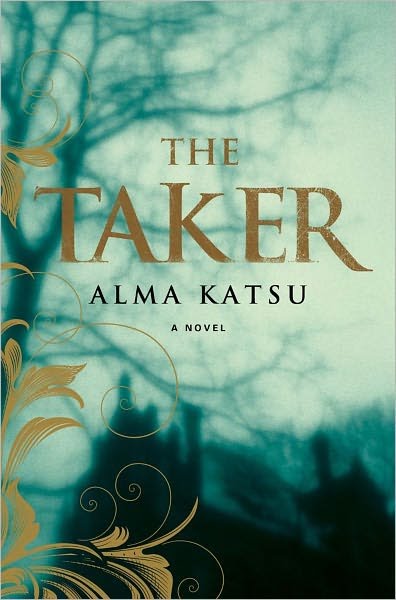
Interview With Alma Katsu

If you are anything like me, then when you really love a book you want everyone to check it out.  You might be on Taker overload, but I’m going to hit you one more time this week.

What I loved most about The Taker is the darkness that is explored, how easy it is to be led astray when you think your life has changed inexorably, and what it means to love.  Love is a tricky emotion, particularly when you are obsessed with the object of that love.

What’s even better than loving the book, is adoring the author behind the book.  Alma Katsu is adorable, fun, and so intelligent, it hurts.  I was lucky enough to get her to answer a few interview questions via email, and I’m here to share them with you.  Of course, if you are looking for yet another entry to my ARC giveaway, please leave a comment below.

Without further ado, please welcome Alma.

The Taker is about love and immortals, but not vampires or werewolves. You may have been asked this question before, but why not vampires since they seem to be so popular right now?

When I started writing The Taker over ten years ago, the horror genre was languishing. Nobody wanted anything new that was ‘horror’, whether it was a vampire or a werewolf or something completely different. You’ve probably heard The Taker being compared to early Anne Rice; well, I remember at the very first agent consultation I had for The Taker, a well-known agent told me that no one wanted a vampire story, and there was room for only one Anne Rice in the business, so I should hang it up.

To be fair to the agent, my writing was pretty bad then, and maybe he thought he was doing a favor to the industry by trying to discourage me so very thoroughly. It just goes to show, though, that no one really knows what’s going to be popular in publishing (and again, to be fair to publishers, they admit this themselves.)

The atmosphere in your novel is rather ominous throughout, was it hard to ensure that condition endured through the entire book? Were there moments that were edited out that would have lightened the mood? If so, why did you eliminate them?

No, if anything, previous versions were darker! I think during my formative years as a reader, fiction tended to be darker and, in general, different from what modern readers have come to expect. And I have a fairly dark outlook on life, so the story it didn’t seem unusual to me.

(I would have loved to read the darker versions!)

You mentioned during the Novel Places event for The Taker that you admire Shirley Jackson and particularly, The Lottery. Did you have other influences as a reader and writer, and what about their style influenced you and can you see those influences in your work (i.e. feel free to provide an example of style from another writer in The Taker if you like)?

Speaking of writers of melancholy stories—Thomas Hardy was an influence (Hardy and not Dickens, that should give you some idea.) Patricia Highsmith, the crime and mystery writer. Nathaniel Hawthorne. Also, novels such as Fanny Hill or Moll Flanders—or their modern counterparts, Slammerkin by Emma Donoghue or Fanny by Erica Jong—that told the story of a woman trying to survive and making her way in the world during inopportune times.

I noticed a bit of a nod to Edgar Allan Poe in The Taker. Was that intentional? Have you read Poe? Which of his works would be a favorite?

I read a lot of Poe when I was very young. I admire his ability to create such original, yet deeply macabre, stories. He was not afraid to dwell on the dark thoughts that most of us occasionally have, and investigate them fully in order to find the story in them. Many writers toy at darkness and mimic what they’re read elsewhere, but Poe was willing to really understand darkness.

As a writer do you have any obsession and/or habits while writing, or music or how-to writing manual preferences? And can you offer advice as to whether an MFA is necessary for an amateur writer to get their book published or if the degree is worthwhile?

I went to a graduate writing program—Johns Hopkins—and while I got a lot out of that experience, I don’t think it’s necessary for everyone. It’s definitely a personal decision. Most programs won’t necessarily open doors to the publishing industry—only certain schools are well-connected enough to merit special treatment from a few agents or publishers. The only way to get the interest of an agent and publisher is to have written a darned good book or have an irresistible platform (for instance, you’re a big television star.)

I don’t think I have any obsessions but I try to have good habits: I work at writing every day, try to grow as a writer and produce better material today than I did yesterday.

Thanks, Alma, for sharing your thoughts on writing and writers.  If you are up in New England over the next week or so, Alma will be out and about signing books.  Pop by to see her, and please tell her I sent you.

Oct. 23 at Concord, Mass., Festival of Authors on the New Literary Voices panel at 3 p.m.

Oct. 27 at Longfellow Books in Portland, ME (This works well with her recent mention in Down East magazine and a short story in Portland magazine)

Oct. 28 at Jabberwocky Books in Newburyport, Mass. at 7 p.m.

This is a stop on The Literary Road Trip since Katsu has worked in Washington, D.C., and now resides in Virginia.