Quantcast

120th Virtual Poetry Circle

Today’s poem is from Elizabeth Alexander’s American Sublime (page 32):

Autumn Passage

On suffering, which is real.
On the mouth that never closes,
the air that dries the mouth.

On the miraculous dying body,
its greens and purples.
On the beauty of hair itself.

On the dazzling toddler:
“Like eggplant,” he says,
when you say “Vegetable,”

“Chrysanthemum” to “Flower.”
On his grandmother’s suffering, larger
than vanished skyscrapers,

September zucchini,
other things too big. For her glory
that goes along with it,

glory of grown children’s vigil,
communal fealty, glory
of the body that operates

even as it falls apart, the body
that can no longer even make fever
but nonetheless burns

florid and bright and magnificent
as it dims, as it shrinks,
as it turns to something else.
Welcome to the 120th Virtual Poetry Circle!

Remember, this is just for fun and is not meant to be stressful.

Keep in mind what Molly Peacock’s books suggested. Look at a line, a stanza, sentences, and images; describe what you like or don’t like; and offer an opinion. If you missed my review of her book, check it out here.

Also, sign up for the 2011 Fearless Poetry Reading Challenge because its simple; you only need to read 1 book of poetry. Please contribute to the growing list of 2011 Indie Lit Award Poetry Suggestions, visit the stops on the National Poetry Month Blog Tour from April.

So what did you think?
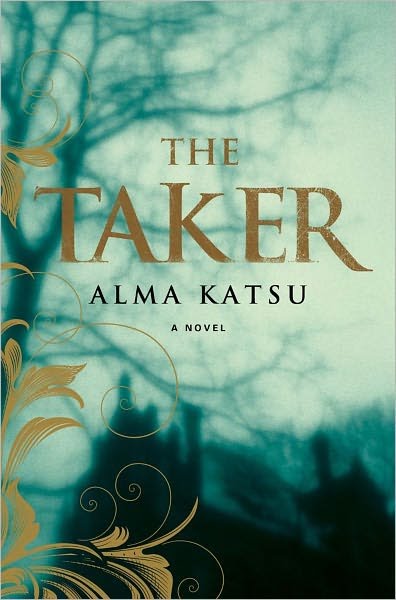
Interview With Alma Katsu

If you are anything like me, then when you really love a book you want everyone to check it out.  You might be on Taker overload, but I’m going to hit you one more time this week.

What I loved most about The Taker is the darkness that is explored, how easy it is to be led astray when you think your life has changed inexorably, and what it means to love.  Love is a tricky emotion, particularly when you are obsessed with the object of that love.

What’s even better than loving the book, is adoring the author behind the book.  Alma Katsu is adorable, fun, and so intelligent, it hurts.  I was lucky enough to get her to answer a few interview questions via email, and I’m here to share them with you.  Of course, if you are looking for yet another entry to my ARC giveaway, please leave a comment below.

Without further ado, please welcome Alma.

The Taker is about love and immortals, but not vampires or werewolves. You may have been asked this question before, but why not vampires since they seem to be so popular right now?

When I started writing The Taker over ten years ago, the horror genre was languishing. Nobody wanted anything new that was ‘horror’, whether it was a vampire or a werewolf or something completely different. You’ve probably heard The Taker being compared to early Anne Rice; well, I remember at the very first agent consultation I had for The Taker, a well-known agent told me that no one wanted a vampire story, and there was room for only one Anne Rice in the business, so I should hang it up.

To be fair to the agent, my writing was pretty bad then, and maybe he thought he was doing a favor to the industry by trying to discourage me so very thoroughly. It just goes to show, though, that no one really knows what’s going to be popular in publishing (and again, to be fair to publishers, they admit this themselves.)

The atmosphere in your novel is rather ominous throughout, was it hard to ensure that condition endured through the entire book? Were there moments that were edited out that would have lightened the mood? If so, why did you eliminate them?

No, if anything, previous versions were darker! I think during my formative years as a reader, fiction tended to be darker and, in general, different from what modern readers have come to expect. And I have a fairly dark outlook on life, so the story it didn’t seem unusual to me.

(I would have loved to read the darker versions!)

You mentioned during the Novel Places event for The Taker that you admire Shirley Jackson and particularly, The Lottery. Did you have other influences as a reader and writer, and what about their style influenced you and can you see those influences in your work (i.e. feel free to provide an example of style from another writer in The Taker if you like)?

Speaking of writers of melancholy stories—Thomas Hardy was an influence (Hardy and not Dickens, that should give you some idea.) Patricia Highsmith, the crime and mystery writer. Nathaniel Hawthorne. Also, novels such as Fanny Hill or Moll Flanders—or their modern counterparts, Slammerkin by Emma Donoghue or Fanny by Erica Jong—that told the story of a woman trying to survive and making her way in the world during inopportune times.

I noticed a bit of a nod to Edgar Allan Poe in The Taker. Was that intentional? Have you read Poe? Which of his works would be a favorite?

I read a lot of Poe when I was very young. I admire his ability to create such original, yet deeply macabre, stories. He was not afraid to dwell on the dark thoughts that most of us occasionally have, and investigate them fully in order to find the story in them. Many writers toy at darkness and mimic what they’re read elsewhere, but Poe was willing to really understand darkness.

As a writer do you have any obsession and/or habits while writing, or music or how-to writing manual preferences? And can you offer advice as to whether an MFA is necessary for an amateur writer to get their book published or if the degree is worthwhile?

I went to a graduate writing program—Johns Hopkins—and while I got a lot out of that experience, I don’t think it’s necessary for everyone. It’s definitely a personal decision. Most programs won’t necessarily open doors to the publishing industry—only certain schools are well-connected enough to merit special treatment from a few agents or publishers. The only way to get the interest of an agent and publisher is to have written a darned good book or have an irresistible platform (for instance, you’re a big television star.)

I don’t think I have any obsessions but I try to have good habits: I work at writing every day, try to grow as a writer and produce better material today than I did yesterday.

Thanks, Alma, for sharing your thoughts on writing and writers.  If you are up in New England over the next week or so, Alma will be out and about signing books.  Pop by to see her, and please tell her I sent you.

Oct. 23 at Concord, Mass., Festival of Authors on the New Literary Voices panel at 3 p.m.

Oct. 27 at Longfellow Books in Portland, ME (This works well with her recent mention in Down East magazine and a short story in Portland magazine)

Oct. 28 at Jabberwocky Books in Newburyport, Mass. at 7 p.m.

This is a stop on The Literary Road Trip since Katsu has worked in Washington, D.C., and now resides in Virginia.

Her Sister’s Shadow by Katharine Britton

Her Sister’s Shadow by Katharine Britton is aptly titled given that Lilli Niles has always felt like she is living in the shadow of her “perfect” sister Bea.  Bea takes on a guardianship role when Lilli is about 15 after their father dies and their mother loses touch with reality.  Lilli resents her “perfect” sister’s hold over the family and is even more angry about how Bea lords it over her when she wins crew races and is considered perfect by her mother.  Couple all of that resentment with hormones of adolescence and you can imagine the volatility.

Told in alternating chapters between the past and the present when Lilli returns to White Head, Mass., after 30 years when her sister Bea calls and needs her, Her Sister’s Shadow vividly tells a story of healing after a significant rift between sisters.  Readers will feel the angst of a young Lilli who has just discovered boys and wants to grow up more quickly and the awkwardness of Lilli and Bea who attempt to reconnect after 30 years.

“When she was a girl, after the accident, she would go down onto the rocks, pick her way carefully along their slick surface, and shout her grief and guilt into the deep bass notes of that foghorn.  Her kitchen, all stillness in pools of white light, offered no such camouflage.”  (page 4)

Britton creates characters that are real, flawed, and seeking redemption through their actions even if they are unaware of it.  While Lilli’s relationship with Bea is strained, her relationship with Dori, her younger sister, is sweet and unbreakable.  Lilli’s relationship with Charlotte is more like a mother-daughter dynamic in which Charlotte is a caretaker and empathetic.  There is a great deal at work in these female relationships; their complexity is stunning and palpable.  Each sister is drawn realistically, causing readers to become attached to each one.  It is through this relationship with the reader, that Britton tugs tears out and causes wistful smiles to curl.

Bea’s shadow is not the only one looming over this book.  Britton has crafted a devastating novel through which readers and characters must journey to reach out of the fog and into the light.  Her Sister’s Shadow has a gorgeous setting steeped in coastal imagery that mirrors the churning ocean waves of these relationships which every so often smooth out to reflect the stars and beauty of calm.

About the Author:

Katharine Britton has a Master’s degree in Creative Writing from Dartmouth College. Her screenplay, Goodbye Don’t Mean Gone, was a Moondance Film Festival winner and a finalist in the New England Women in Film and Television contest. Katharine is a member of the League of Vermont Writers and PEN New England. She teaches writing at Colby-Sawyer College, and is an instructor at The Writer’s Center.

When not at her desk, Katharine can often be found in her Norwich garden, waging a non-toxic war against the slugs, snails, deer, woodchucks, chipmunks, moles, voles, and beetles with whom she shares her yard. Katharine’s defense consists mainly of hand-wringing, after-the-fact.

Please follow her blog and Facebook.

To Enter for 1 copy of Her Sister’s Shadow by Katharine Britton: (US/Canada only):

1.  Leave a comment about what kind of relationship you have with your sister or whether you would enjoy having a sister if you don’t have one.

2.  Follow Katharine Britton on Facebook and leave a comment for another entry telling me you did so.

3.  Facebook, Tweet, or Blog about the giveaway and leave a comment with each for up to three more entries.

Deadline Oct. 28, 2011, at 11:59PM EST


To visit the other stops on the TLC Book Tour, click on the icon at the right.


This is my 62nd book for the 2011 New Authors Reading Challenge.

Guest Post: Abigail Reynolds Ponders 200th Anniversaries of Jane Austen Novels

Abigail Reynolds is a master at answering the What If? question when it comes to Mr. Darcy and Elizabeth Bennet’s romance in her re-tellings.  Whether Mr. Darcy decides to hold his tongue at the Meryton Assembly or doesn’t botch his proposal to her in Kent, Reynolds finds new ways to keep this couple and readers guessing as to whether they will get together.  Mr. Darcy’s Undoing is the latest in her What If? series of books and seeks to uncover how far Darcy will go to woo Lizzy if after his disastrous proposal she accepts one from another man.

Today, Reynolds will share with you what inspires her to write her re-imaginings and what the significance of this year’s 200th anniversary of Sense & Sensibility by Jane Austen means to her.  Without further ado, please welcome Abigail.

This year’s Annual General Meeting of the Jane Austen Society of North America (JASNA) was dedicated to the 200th anniversary of the publication of Sense & Sensibility. It’s a major event in the Janeite world. Although Pride & Prejudice was the first novel Austen wrote, Sense & Sensibility was the first one published, so it’s our first bicentennial publication event. Pride & Prejudice, Austen’s best known and most popular book, won’t have its 200th anniversary of publication until 2013.

I write variations on Pride & Prejudice, novels in which I’ve taken the original and changed one key event. In my latest release, Mr. Darcy’s Undoing, the change is a whopper. Elizabeth Bennet, rather than remaining single until she encounters Darcy at Pemberley, becomes engaged to another man, a childhood friend whom she cares for and trusts, but doesn’t love. This changes the plot quite decisively, creating dramatic tension about how Darcy and Elizabeth will reach their happy ending. That’s the trick of a variation: to find something that changes the events of the novel but doesn’t interfere with the ending. Most changes I could make to the plot don’t produce dramatic effects. If Darcy doesn’t attend the Meryton Assembly, he’d have the same reaction to Elizabeth at a later date. If Elizabeth didn’t travel to Kent where she re-encounters Darcy, the events there would just take place whenever they next met, or they would never meet again and the ending would be different. I couldn’t make a book out of those.

When I’m asked which Austen heroine I resemble most, it’s an easy call. I’m definitely an Elinor, and as a result, Sense & Sensibility will always be very dear to my heart. It’s tied with Persuasion for my 2nd favorite Jane Austen novel. I’ve often considered doing a variation on it, but it’s hard to find an appropriate turning point to change. Part of that is because the novel follows three romances rather one – Marianne/Willoughby, Marianne/Colonel Brandon, and Elinor/Edward Ferrars. To create a balanced variation, something would have to occur to interfere with all three of those romantic possibilities, but without causing a change in the ending. That’s very tricky, given the complexity of relationships between many of the characters. Another issue for me is that, being an Elinor, it would be hard for me to portray Elinor fairly or Marianne as effectively as I’d like. Persuasion is a more promising candidate for a variation simply because of the possible turning points in it.

Truth be told, aside from attending the JASNA celebration, the 200th anniversary of Sense & Sensibility hasn’t affected me much simply because it’s been overwhelmed by another anniversary for me as an author of Pride & Prejudice variations. It’s also the 200th anniversary of the events of Pride & Prejudice. The Meryton Assembly took place on October 15, 1811. November 12 will be the 200th anniversary of the day Jane Bennet rode through the rain to dine at Netherfield park with the Bingley sisters. I’m involved in a project with many of my fellow authors of Austen-inspired novels at the Austen Authors website wherein we’re tracking the events of Pride & Prejudice in real time. Dubbed the P&P200 project, we take turns portraying missing scenes from Pride & Prejudice and existing scenes from different points of view, and we post them on the 200th anniversary of the given event. It’s turned out to be a fascinating project, not only in making me consider the time frames involved in the book in a different way, but in making me look more closely at secondary characters, and discovering they have backstories of their own that I’ve never considered. It’s a different kind of anniversary celebration, but it’s been enriching my understanding of Jane Austen, and that’s what all my writing is about.

Thanks for hosting me today!

Abigail, thank you for sharing your thoughts with us today on Sense & Sensibility and Jane Austen.  Stay tuned for my review of Mr. Darcy’s Undoing at the end of the week.

The Taker by Alma Katsu

Alma Katsu’s The Taker has received a number of rave reviews and some unfavorable reviews, and it was recently listed in BookList’s Top 10 Debut books.

Lanore, “Lanny,” shows up in her northern Maine hometown covered in blood, and the police say that she has confessed to killing a man and leaving him in the frozen woods.  ER doctor, Luke Findley, becomes the recipient of a Gothic fairy tale that is more dark and sinister than full of fairy dust, unless that fairy is an evil alchemist and sodomite.

“The stranger had appeared suddenly, at the edge of the gathering that evening.  The first thing Adair noticed about him was that he was very old, practically a shrunken corpse leaning on his walking stick, and as he got closer, he looked older still.  His skin was papery and wrinkled, and dotted with age spots.  His eyes were coated with a milky film but nevertheless had a strange sharpness to them.  He had a thick head of snow white hair, so long that it trailed down his back in a plait.  But most notable were his clothes, which were of Romanian cut and made of costly fabrics.  Whoever he was, he was wealthy and, even though an old man, had no fear of stepping into a gypsy camp alone at night.”  (page 162)

The Taker is a story within a story, within a story, spanning from the dark ages through the present day, and Lanny claims to be immortal, but do not be mistaken into thinking she’s a vampire or werewolf.  She is neither.  Her unrequited love for the town pretty boy, Jonathan St. Andrew, is the main crux of the story and how it brings about her downfall that leads to her life as an immortal.  Katsu spoke recently at Novel Places about the book and revealed that the story of Pinocchio is the backbone of her novel, which is clear in how the desire to grow up and become a woman with her own life separate from her family propels Lanny to be easily led astray.  However, that is where the similarity ends.  Katsu’s novel is ripe with sodomy, rape, kidnapping, murder, and more, which is why it would be a perfectly dark book to read this season as Halloween approaches and is what would once have been considered horror (rather than the popular category of paranormal, which has a “lighter” tone to it).

Lanny tells her story to Luke in the present day, but a more effective approach would have been to have her merely tell her story to the reader.  As many know story framing or using one character as a plot device for another character to tell his/her story is bothersome if the character/plot device is not well developed.  While Luke does have a back story here, it fails to round out the character enough, leaving him flat and boring compared to the characters of Lanny and Adair.  Even Jonathan is little more than a caricature of the pretty boy of the town’s founders, and it would have served to have more of him and Lanny’s interactions in the book at the beginning of their “romance” to demonstrate their affection for one another.  However, being told from Lanny’s point of view, it is incredibly difficult to demonstrate Jonathan’s perspective on their relationship and oftentimes he comes off as a callous womanizer who is incapable of love.

With that said, however, Katsu is adept at time shifts within the story that keep the pace of the novel moving quickly.  Moreover, she creates a deeply atmospheric novel where readers are combing through the mist to grasp the truth of Lanny’s story and to unravel the mystery of her immortality.  Some have said this is a romance; it is not.  Most will debate who is “The Taker,” but there is certainly more than one, and it will depend on your personal perspective as to which you believe is the taker.  They all are takers in their own way — taking what love and affirmation they can, taking the loyalty of others by forcing their hands, and taking pleasure in the act of taking.  Readers who shun violence in books, particularly against women should steer clear.  Katsu’s The Taker is dark and decadent; an excellent debut novel for those looking to tantalize their darker senses with interminable consequences.

Stay tuned for the next two books in this series; I know I will be waiting on the edge of my seat. I’m always on the lookout for horror books, as I’ve grown tired of EMO vamps and werewolves.

For a chance to win my gently used ARC (which has a signed bookplate), please visit this post about Alma Katsu’s reading near me.  If you’re looking for another bonus entry, leave a comment on this review.

Alma Katsu (right) Me & Wiggles

About the Author:

Alma Katsu is a 30-year DC veteran who lives in two worlds: on one hand, she’s a novelist and author of The Taker (Simon & Schuster/Gallery Books). On the other hand, she was a senior intelligence analyst for CIA and NSA, and former expert in multilateral affairs.  Watch the book trailer or this one.


This is a stop on The Literary Road Trip since Katsu has worked in Washington, D.C., and now resides in Virginia.


This is my 61st book for the 2011 New Authors Reading Challenge.

I’m Hosting Mailbox Monday #148

First, I would like to congratulate (Bibliophile by the Sea) on winning Where Am I Going by Michelle Cromer from the last Mailbox Monday giveaway.

Stay tuned for the next giveaway later on in the post, but for now, let’s get to this week’s post.

Mailbox Mondays (click the icon to check out the new blog) has gone on tour since Marcia at A Girl and Her Books, formerly The Printed Page passed the torch. Thanks to Amused by Booksfor hosting last month.

As host for this month, I have a couple giveaways planned, but mostly its about sharing books and the love of reading, so I hope in addition to leaving your post links in Mr. Linky that you’ll peek around Savvy Verse & Wit.

Kristi of The Story Siren continues to sponsor her In My Mailbox meme.

Both of these memes allow bloggers to share what books they receive in the mail or through other means over the past week.

Just be warned that these posts can increase your TBR piles and wish lists.

Here’s what I received this week:

1.  The Time in Between by Maria Duenas for review (my second copy, look for a giveaway with the review)

2.   Twilight The Graphic Novel Volume 2 by Stephenie Meyer and adapted by Young Kim

3.  The Giver by Lois Lowry from the library sale for my daughter and myself

4.  The Horse and His Boy by C.S. Lewis from the library sale for my daughter

5.  Who Am I? by Sesame Street from the library sale for my daughter

6.  Silly Sally by Audrey Wood for my daughter from the library sale

7. The Conference of the Birds by Peter Sis for review for TLC Book Tours in early November.

8. The Strangers on Montagu Street by Karen White for review in November.

9. Three Women: A Poetic Triptych and Selected Poems by Emma Eden Ramos for review.

10. Beyond the Scent of Sorrow by Sweta Srivastava Vikram for review.

11. Soul Clothes by Regina D. Jemison for review.

12. A Train in Winter by Caroline Moorehead for a TLC Book Tour at the end of November.

What books did you receive this week?  Please leave your link below to your mailbox.

Now, for the giveaway for the week.  I’m holding an international giveaway for Waking by Ron Rash.  Deadline to enter is Oct. 22, 2011.

I reviewed the book earlier in the month and is my first experience with Rash’s work.  Have you read other Ron Rash books, if so which one and should I read it?

I also posted a poem from the collection in the Virtual Poetry Circle.

Please leave a comment if you are interested in this book.

Alma Katsu at Novel Places with a Dark Halloween Read

I’ve talked about my first visit to Novel Places before, but this time, I’m going to regale you with my first event adventure at the new bookstore in my area.

I knew Alma Katsu was going to be at the bookstore for more than a month, since I chatted with her online via email, and Patrick (the owner of the store) had told me she would be arriving as well.  So I had plenty of time to prepare and enough reminders!  Thanks for that — this mommy brain forgets things easily.

My husband, “Wiggles,” and I arrived with a few minutes to spare…yes, getting out of the house with a baby on time for anything is difficult — more difficult than I expected.  But we arrived and found a couple of seats, and surprisingly Wiggles seemed at rapt attention during the discussion, though she did have a few opinions to share.  Alma started out by talking a bit about herself and how she came to writing novels later in her life after working with the NSA and CIA!

Then she talked about the book and writing and a bit about the publishing world.  We learned that The Taker was not the original title of the novel — it was The Fallen. The Taker takes place in three time periods — the dark ages in Eastern Europe, the 1800s in Northern Maine before it became a state, and in the present day — and is a story about making the wrong choices and dealing with the consequences. It is far from a light romance and is a dark novel, perfect for the spooky holiday of Halloween.

Later I learned that she did not plan to write a trilogy. We had a great time, and I got a new book signed for myself, and I’m excited to say I’ll be giving away the gently used ARC I’ve read. So stay tuned for details of that international giveaway.

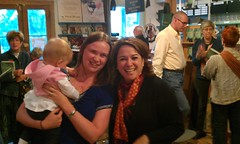
Alma, Wiggles, and Me

Novel Places holds events in the main area of the store, with enough chairs for about 15-20 people, so the event had a nice intimate feel to it. I tend to prefer these kinds of events because the writers seem less nervous and the people in the audience get to converse with the author more easily and ask more questions. There were cookies, Halloween candy, and beverages, which is not the usual for bookstore events, especially at larger stores. It was almost like a book club meeting, which was nice.

I was able to get a few minutes to chat with Alma in person, and Wiggles and I got “Daddy” to take our picture with the author, though I think Wiggles was more interested in mommy’s necklace at the time. We just couldn’t get her to look at the camera. If you’re interested in a short video or other photos, please take a look (though be warned the video is very shaky and short).

For the giveaway:

1. Let me know what you like best about author events or what you’d like to see at author events (i.e. food or authors who read from the book or authors who don’t read from the book, etc.).

2. For up to 3 additional entries, Facebook, Tweet, or blog about the giveaway and leave me a link on this post.

3. Follow Alma on Twitter and/or Facebook for up to 2 more entries.

Deadline is Oct. 31, 2011, at the witching hour. Stay tuned for another chance to win when my review of The Taker posts this week.

119th Virtual Poetry Circle

Welcome to the 119th Virtual Poetry Circle!

Remember, this is just for fun and is not meant to be stressful.

Keep in mind what Molly Peacock’s books suggested. Look at a line, a stanza, sentences, and images; describe what you like or don’t like; and offer an opinion. If you missed my review of her book, check it out here.

Also, sign up for the 2011 Fearless Poetry Reading Challenge because its simple; you only need to read 1 book of poetry. Please contribute to the growing list of 2011 Indie Lit Award Poetry Suggestions, visit the stops on the National Poetry Month Blog Tour from April.

Today’s poem is from Waking by Ron Rash (page 6):

Sleepwalking

Strange how I never once woke
in a hall, on a porch step,
but always outside, bare feet
slick with dew-grass, the house
deeper shadow, while above
moon leaning its round shoulder
to the white oak's limbs, stars thrown
skyward like fistfuls of jacks.
Rising as if from water
the way dark lightened, it all
slow-returning, reluctant,
as though while I'd been sleeping
summoned away to attend
matters other than a child's
need for a world to be in.

So what did you think?

You Are My Only by Beth Kephart Treasure Hunt & Giveaway

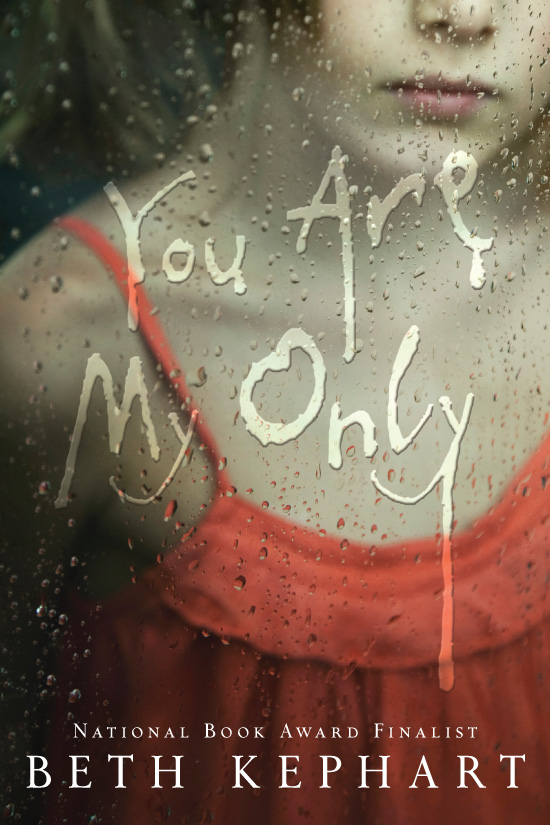
You Are My Only by Beth Kephart, which will be released this month and is also available for Kindle, is a book I have been anticipating for months.  I’m not a big reader of young adult fiction, but I am a big advocate for authors I adore for their consistently excellent story-telling capabilities — Tim O’Brien, Yusef Komunyakaa (yes, even poets tell stories), Robert Frost, Mary Oliver, Anita Shreve, Karen White, Christopher Moore, and others — and Beth Kephart is fast becoming one of those favorites.

I met her last year when she released Dangerous Neighbors (my review) at BEA, and we’ve since bonded over poetry, especially since much of her writing is very poetic — attracting my undivided attention.  I’ve read Nothing But Ghosts (my review), which I loved, and Undercover (my review), which is my favorite of her books so far.  So you can imagine that waiting for my pre-ordered copy of You Are My Only (plus giveaway copies) is killing me.

Recently, Beth came up with a delightful idea that has kept me occupied over the last month — a Scavenger Hunt.  All I had to do was hunt down a series of guest posts throughout the blogosphere about the behind-the-scenes of novel writing and title selection, which as any writer will tell you is gold.  Since I’ve read all of the posts, I wanted to provide the links for you to enjoy as well, so you can get a glimpse into the writer’s process.

1.  The (furious) metamorphosis of Sophie

2.  Opening the Doors to Clois and Helen by Beth Kephart

3.  When Emmy called I listened

4.  I was obsessed with an asylum

5.  What name should we give this book?

I hope that you will take the time to check out the scavenger hunt posts, learn more about Beth and her writing, and consider not only entering my giveaways later on but also buying a copy of You Are My Only for yourself or a friend.  Thanks Beth for making my Internet time more fun.

If you would like to win 1 of 2 copies (two winners) of You Are My Only by Beth Kephart from me:

1.  Please leave a comment about which of Beth’s books is your favorite or if you haven’t read any of her books, why you want to read You Are My Only.

2.  If you spread the word about the giveaway, tell me how and leave a link for additional entries up to 3.

3.  For 5 more entries, leave a comment on Beth’s guest posts and let me know you did.

Deadline is Oct. 31, 2011, at the witching hour!  This giveaway is international.

Out of Breath by Blair Richmond

Out of Breath by Blair Richmond is a young adult novel that will have readers quickly turning the pages to find out what secrets Kat Jones is hiding and why the town of Lithia where she ends up seems so ethereal and mysterious.  Kat arrives in Lithia, where she was born, after running from something that happened in Texas, and everyone in the town is incredibly friendly and welcoming.

Richmond’s sparse narration, plus the focus on running races, ramps up the suspense as Kat’s secretive nature enables her to blend in and adopt a new life.  However, this new life quickly becomes more than she can handle, enticing her to strap on her running shoes and get out of town fast.  She’s a young woman who’s budding college life is cut short, and she turns to the only activity — running — that gives her solace to escape.  A vegan in a town of tree huggers and other like-minded nature and running enthusiasts, Kat is at home and relatively at peace.  However, the rivalry between Roman and Alex and their secrets threaten to disturb the tenuous life she’s starting to build.

“Since I was eight years old I’ve been a runner.  Not a jogger.  A runner.  I was always the fastest girl I knew, and, during junior high, was faster than any boy I knew.  I ran cross-country in high school and I won state during my junior year.  A scholarship to a major college seemed all but inevitable until my dad backed the car up over my left foot the summer before my senior year.  It’s funny how quickly dreams can be crushed.  Just as easily as my left foot.”  (page 3)

Like many other young adult novels on the market, Out of Breath has a touch of the paranormal — vampires and ghosts — but there is an unexpected twist here.  Vampires are actually dangerous, and certain vampires have quirky eating habits.  The ghosts play more of a role in the latter pages, and likely even more of a role in the other two planned books for the trilogy.  Yes, this is the first in a series — a series that focuses on nature, saving the environment, and vegan/vegetarianism.  Although the vegan/environmental angle can be heavy handed at times when Roman and Kat converse, it serves a purpose for the plot and can be overlooked by readers that may feel as though Kat is preaching to them.

Out of Breath by Blair Richmond is an eerie novel that takes a look at the consequences of our actions and how we cannot right the wrongs of the past, but only  strive to change our futures.  Readers will enjoy the mix of paranormal, young adult coming of age story, romance, and suspense mixed with a theme of environmental conservation and appreciation.  Even better is that unlike other trilogies, Richmond’s novel does not leave the reader with a major cliffhanger, but provides a modicum of resolution and leaves the reader with a stronger version of Kat.  An intriguing mix of themes and characters that creates a mystical world in the forest anchored in the reality of today’s environmental concerns.

About the Author:

Blair Richmond is the pen name of a writer living in the Northwest, where OUT OF BREATH is set. She is currently working on THE GHOST RUNNER, the second book in the trilogy featuring Kat and the mysterious town of Lithia.

Ashland Creek Press is hosting a Halloween virtual book launch party with an author Q&A, book giveaways, and more.  Mark your calendars


This is my 60th book for the 2011 New Authors Reading Challenge.

Alice Bliss by Laura Harrington

Alice Bliss by Laura Harrington is a coming of age story about a teen girl growing into adulthood at a time when her father, Matt, is sent to Iraq and her mother, Angie, is not dealing with his absence as well as Alice thinks she should.  The blissful life her family has had up until this point is turned around and twisted as Alice takes on more of her mother’s duties — making dinner, washing clothes, getting her sister’s (Ellie) lunch ready, and getting her sister to school.  She’s constantly worried about her father not returning home, about how she seems not to be anyone’s favorite, and the changes she sees in her friends, family, and Henry (her neighbor and friend).

Harrington creates a world and cast of characters that grab your heart and don’t let go.  The Bliss family story will have your tearing up right from the beginning when the father is first setting his affairs in order and explaining to Alice what she’s to do while he is at war.  Yes, he says, he is coming back, but readers know about the uncertainties of war and so does Alice, which makes his parting all the more heart-wrenching.  Alice only finds solace when running, like her mother finds solace when swimming, but they are too alike to find comfort in one another and often find themselves at odds.  Dynamic characters young and old tackle difficult questions of how to go on without a loved one, who often calmed the waters and even when that situation is expected to be temporary.

“This is the first time Alice has been allowed to walk back to their campsite from the Kelp Shed alone.  She is fourteen, barefoot, her sneakers tied together by the laces and slung across her shoulder so she can feel the soft, sandy dust of the single-track road between her toes.  Her sister fell asleep halfway through the square dance, dropping from hyperexcited to unconscious in a flash.  Her father carries Ellie draped over his shoulder, and casually, or so it seems, her mother says, ‘Come home when the dance is done.'” (page 1)

While Alice is a strong, young woman, she is also timid when it comes to her changing relationship with Henry and volatile when it comes to her relationship with her mother and sister and her schoolmates.  Alice’s life spirals out of control while she’s daydreaming and running away, but there are moments of hope when letters arrive and broken up phone calls pepper their days.  Alice is growing up before readers’ eyes.  She’s learning that her friendship with Henry is more complicated than she expects and at a time when she wants it to stay the same.  She’s flattered when a popular senior asks her to a baseball game, and she’s disenchanted with high school society when her childhood friend Steph remains distant even when it is obvious she needs someone to lean on.  Her sister Ellie tries to act more mature than her sister, and does on some occasions, but she’s still just eight and what’s important to her — a new haircut, new clothes, a nice lunch — skirts the realities of their lives without Matt.

Uncle Eddie and Gram are the rocks of the family that help hold up Angie, Alice, and Ellie — keeping them from imploding.  Harrington has created a wide cast of characters who evolve steadily throughout the novel.  Despite the third person omniscient point of view, Harrington’s narrative evokes an emotional connection between the characters and the reader.  The distance often felt with this point of view is not present here in the least.  Readers will feel the loss, the waiting, the anger, the sadness, and the confusion all at once — just as the characters do — while cheering them on to remain positive that Matt will return home.  This is a young adult novel adults will praise for its realistic portrayal of adult themes, while young adults will praise the relate-ability of its teen characters and their situations.

“Even though Mrs. Grover wears those awful sensible shoes and has gray hair that she wears in a bun, Alice thinks that maybe Mrs. Grover is still young in the ways that are important.  Like she’s not so serious all the time, and she sings and right now she’s teasing a cardinal.  Whistling in response to its call and damn if that cardinal doesn’t whistle right back.  Alice’s mother doesn’t even have a clothesline, let alone stand outside and lift her face to the sun and sing and whistle to the birds.” (page 101)

Harrington is talented at creating a world that is real — a small town where everyone knows one another and feels as though they are under a microscope at home and school — and generates an atmosphere of fear and uncertainty — in the silence of waiting.  What are those keepsakes that we hold dearest? What are those memories that we hold onto tightest? Alice and her family find these answers and more, making the novel even more suspenseful.  Alice Bliss not only tracks the evolution of Alice from child to adolescence and the bumps along the way, the novel teaches readers about heartache, compassion, and strength.

About the Author:

Laura Harrington’s award winning plays, musicals, operas, and radio plays have been widely produced in the U.S., Canada, and abroad. Harrington is a two time winner of the Massachusetts Cultural Council Award in playwriting and a two time winner of the Clauder Competition for best new play in New England for Mercy and Hallowed Ground.

“Alice Bliss”, a novel, published by Pamela Dorman Books, Penguin/ Viking, will be on sale spring 2011. She is currently writing a new novel, “A Catalogue of Birds,” as well as a song cycle with composer Elena Ruehr, and a series of choral works with composer Roger Ames. Ms. Harrington teaches playwriting at M.I.T and is a frequent guest artist at Tufts, Harvard (where she was a visiting Briggs Copeland Lecturer), Wellesley, University of Iowa, and other campuses.

Please also check out this great Q&A, an excerpt from the novel, and her blog.


This is my 59th book for the 2011 New Authors Reading Challenge.


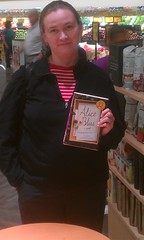
Alice blissI took part in the experiment to see where this book would end up once I read, reviewed, and released it into the world.  So, here’s a picture of me releasing it into the wilds of Maryland (Ok, its a Safeway/Starbucks Cafe).

I toyed with releasing it in a bookstore, at the library among the library sale stacks, and finally decided to release it in the Safeway near my house in their Starbucks Cafe.  It was done surreptitiously and I was incredibly self-conscious.  Nevermind that this is a book I really didn’t want to let go because I loved it so much.

I may just have to buy my own copy of this book to add to my shelves and read it again.  It was THAT GOOD!


Does the Noise in My Head Bother You? by Steven Tyler With David Dalton

Does the Noise in My Head Bother You? by Steven Tyler with David Dalton is my first rock n’ roll memoir.  Steven Tyler, lead singer for Aerosmith, always struck me as very Bohemian, and he even says as much in his memoir.  Readers will be surprised to find that the memoir is Steven Tyler telling his story and not some writer’s idea of what his story should sound like.  It’s not prettied up.  As the pages turn, readers will find that Tyler remembers a great many details, even street names and house/apartment numbers.

(Aerosmith was considered a Boston band, and many were thrilled when the band set up Mama Kin Music Hall.  The band was often considered the bad boys of Boston, and the closure of the club caused some angst among followers who felt the band had snubbed its nose at the hometown.  But I digress.)

There is a no-holds-barred quality to the writing and the story in this memoir, but that’s just how readers would want it.  From his early influences of piano played . . . more like breathed . . . by his father to his drug use and religious upbringing as a Bronx native who summered in New Hampshire, all sides of Steven Tyler are exposed.  His childhood seemed pretty typical for any boy with artistic parents, with summers in the country, a love of animals, hunting and fishing, and being overzealous about girls and just about everything.  His family moved to Yonkers and he was enrolled in a private school.

Tyler’s memoir is a bit of back and forth as memories seem to crop up and send him off in new directions, but readers will get a good sense of how he is on a daily basis with this kind of narration.  Drinking, drugs, and girls are his main vices, but the music is a constant as he jams with his father’s band as a young teenager on drums and eventually grows into his own as a musician.

Tyler loves capitalizing words for emphasis and he does “talk” to himself from time to time.  Readers put off by swears and other vulgar language may find the memoir to gritty, but for a rock n’ roll artist, what else can be expected.  An unexpected surprise throughout the book are snippets of poems, though it is not clear when exactly they were written or why.  Readers also will learn about musical terms from dissonance to fifth notes, etc.

Does the Noise in My Head Bother You? provides readers with an inside look at what it means to be a rock musician, what makes them great at what they do, and how they can maintain their success over the long term in spite of the downfalls and obstacles they face.  Steven Tyler offers more than just an inside look at his life; he’s offering an inside look at music, artistry, and the drive to succeed along the way.


This is my 58th book for the 2011 New Authors Reading Challenge.


Seeking help at a drug abuse treatment center is necessary for people who have been abusing drugs for a long time.