Quantcast

I’m Hosting Mailbox Monday #147

First, I would like to congratulate Emily on winning My God, What Have We Done? by Susan V. Weiss from the last Mailbox Monday giveaway.

Stay tuned for the next giveaway later on in the post, but for now, let’s get to this week’s post.

Mailbox Mondays (click the icon to check out the new blog) has gone on tour since Marcia at A Girl and Her Books, formerly The Printed Page passed the torch. Thanks to Amused by Booksfor hosting last month.

As host for this month, I have a couple giveaways planned, but mostly its about sharing books and the love of reading, so I hope in addition to leaving your post links in Mr. Linky that you’ll peek around Savvy Verse & Wit.

Kristi of The Story Siren continues to sponsor her In My Mailbox meme.

Both of these memes allow bloggers to share what books they receive in the mail or through other means over the past week.

Just be warned that these posts can increase your TBR piles and wish lists.

Here’s what I received this week:

1.  The World We Found by Thrity Umrigar from Harper for review in January.

2.  The Partnership by Philip Taubman from Harper for review in January.

3. A Wreath of Down and Drops of Blood by Allen Braden from the library sale.

4. A Double Death on the Black Isle by A.D. Scott from Atria.

Please add your mailbox link to the Mr. Linky below:

Now, for the giveaway for the week. Only those with U.S. addresses are eligible for a paperback version of Where Am I Going by Michelle Cromer.

Here’s a brief synopsis:

Part travel guide, part memoir, Where Am I Going? Moving From Religious Tourist to Spiritual Explorer takes the reader on a journey to finding this meaning in the same way that Michelle Cromer did for herself, through seven stages that connect each of us to the deepest part of our souls. This inspiring story of Michelle’s own quest for meaning in her life is a welcome departure from the typical preachy self-help book. Always spiritual, sometimes dangerous, often exotic, her search–as told by this funny, complex woman is a powerful lesson for anyone who also finally asks the Big Questions and begins their own spiritual journey and quest for purpose.

Also check out this book trailer.  Please leave a comment if you are interested in this book.

118th Virtual Poetry Circle

Today’s poem is from First World War Poetry edited by Jon Silkin (page 146)

That Exploit of Yours
by:  Ford Madox Ford

I meet two soldiers sometimes here in Hell
The one, with a tear in the seat of his red pantaloons
Was stuck by a pitchfork,
Climbing a wall to steal apples.

The second has a seeming silver helmet,
Having died from the fall of his horse on some tram-lines
In Dortmund.

These two
Meeting in the vaulted and vaporous caverns of Hell
Exclaim always in identical tones:
'I at least have done my duty to Society and the
   Fatherland!'
It is strange how the cliche prevails...
For I will bet my hat that you who sent me here to Hell
Are saying the selfsame words at this very moment
Concerning that exploit of yours.

Welcome to the 118th Virtual Poetry Circle!

Remember, this is just for fun and is not meant to be stressful.

Keep in mind what Molly Peacock’s books suggested. Look at a line, a stanza, sentences, and images; describe what you like or don’t like; and offer an opinion. If you missed my review of her book, check it out here.

Also, sign up for the 2011 Fearless Poetry Reading Challenge because its simple; you only need to read 1 book of poetry. Please contribute to the growing list of 2011 Indie Lit Award Poetry Suggestions, visit the stops on the National Poetry Month Blog Tour from April.

So what did you think?

The Chameleon Couch by Yusef Komunyakaa

The Chameleon Couch by Yusef Komunyakaa — broken into three sections — challenges the mind and the internal rhythm of our souls.  It challenges our preconceptions about everything from music to what it means to be an African American.  In the form of aubades and odes, Komunyakaa evokes song throughout the collection, which have readers very focused on how the rhythms of the poems impact them beyond the words spoken.  The poet is striving to reach not only the logical mind here, but something deeper, ethereal, like a soul.

There are allusions in this volume that are religious, musical, and mythological, but these do not detract from the poems’ power.  “Kindness” (page 28), is one of the most dense poems in the collection, filled with a number of allusions including the consumption of salt as a sign of friendship.  However, even if not all the references are clear at first glance, it is clear that kindness is often recognized even in the bleakest of moments and in the darkest of places even if someone has been a “stranger” to it.

There are a range of emotions and thoughts in this collection, the narrator of these poems changes like the lizard, adapting to the moment and blending into the environment he finds himself in. The cover is reminiscent of the dark jungle of our lives as we try to navigate our way sometimes in the shadows for the silence of observation, but oftentimes to hide from the actions and decisions we have made or are frightened of making.  Meanwhile, other decisions seem inevitable and natural.

Excerpt from:  Conceived in a Time of War (page 37)

Because your mother & father kissed
beneath a hail of Roman candles,
you crawled out of one thousand
tiny deaths, stubborn as aster
in stony clay.  A goddess of dawn
scooted under a zing of barbed wire
to witness your birth. . . .

Komunyakaa’s poems have a musicality equivalent to Jazz.  “Jazz has space, and space equals freedom, a place where the wheels of imagination can turn and a certain kind of meditation can take place.  It offers a meditational opportunity,” he once said.  His poems are just like this, providing moments of pause, allowing readers to interact with the lines and images.  “How many ghosts followed us/into the basement to Muniak’s bepop gig/to hear the saxophone argue with the piano?/” from “Aubade at Hotel Copernicus” (page 33-4).

Komunyakaa is paying homage to all forms of the human spirit — good or bad — in The Chameleon Couch, but the poems are never indifferent. In “A Translation of Silk” (page 17), “One can shove his face against silk/& breathe in centuries of perfume/on the edge of a war-torn morning/where men fell so hard for iron/they could taste it. Now, today,/a breeze disturbs a leafy pagoda/printed on slow cloth. A creek/begins to move. His brain trails,/lagging behind his fingers to learn/suggestion is more than radiance/” Some poems are about the legacy we leave behind, the anger about historical events like the Holocaust, and the quieter moments each of us shares with our lover or family. Another extraordinary candidate for the 2011 Indie Lit Awards and the “best of” list.

Also please check out the poem from this collection that I featured in the 117th Virtual Poetry Circle.

About the Poet:

Yusef Komunyakaa is an American poet who currently teaches at New York University and is a member of the Fellowship of Southern Writers. Komunyakaa is a recipient of the 1994 Kingsley Tufts Poetry Award, for Neon Vernaculaand the 1994 Pulitzer Prize for Poetry. He also received the Ruth Lilly Poetry Prize. Komunyakaa received the 2007 Louisiana Writer Award for his enduring contribution to the poetry world.

His subject matter ranges from the black general experience through rural Southern life before the Civil Rights time period and his experience as a soldier during the Vietnam War.

This is my 26th book for the Fearless Poetry Exploration Reading Challenge.

Guest Post: The 200th Anniversary of Sense & Sensibility

Depending on how much you love Jane Austen and her books, you may already know this, but Sense & Sensibility turns 200 on October 30 and was her first published novel.

According to GoodReads:

Marianne Dashwood wears her heart on her sleeve, and when she falls in love with the dashing but unsuitable John Willoughby she ignores her sister Elinor’s warning that her impulsive behaviour leaves her open to gossip and innuendo. Meanwhile Elinor, always sensitive to social convention, is struggling to conceal her own romantic disappointment, even from those closest to her. Through their parallel experience of love—and its threatened loss—the sisters learn that sense must mix with sensibility if they are to find personal happiness in a society where status and money govern the rules of love.

While not my favorite of Austen’s work, it’s an accomplishment to have a novel still be well-known and popular among readers almost 200 years after publication. I’m sure many authors would be pleased to have such an accomplishment.

Today, Mary Lydon Simonsen, author of Mr. Darcy’s Bite, will share her thoughts on the 200th anniversary.  Please welcome Mary:

Hi, Serena. Thank you for having me back at Savvy Verse & Wit. It’s always a pleasure.

You asked me to write about the significance of the 200th Anniversary of the publication of Jane Austen’s Sense and Sensibility and my reaction to it and Austen’s novel.

I recently took one of those online quizzes to see which Austen character I most resemble. As it turns out, I am Elinor Dashwood, the main protagonist in Sense and Sensibility. Even though I like Elinor, I have a lot of problems with this novel. I don’t think Edward Ferrars deserves Elinor, and I think Marianne Dashwood and Colonel Brandon are poorly matched. I would like to strangle Lucy Steele and perform surgery on John Willoughby. Although Austen wraps up the story with a happily-ever-after ending for Marianne and Elinor, I don’t think that’s the way it would have played out in real life.

Having said all that, you can still appreciate Austen’s genius with her brilliant prose and delightful wit in this story of a family of four females trying to survive without a strong male presence in their lives. But it is mostly because of the 200th anniversary of the publication of Austen’s novel that it is now front and center (that and Emma Thompson’s 1995 brilliant film adaptation).

But in my opinion, Austen’s masterpiece is Pride and Prejudice. Like Edward Ferrars, Fitzwilliam Darcy is a flawed character, but because of his love for Elizabeth, Darcy evolves, recognizes his shortcomings, and becomes a man worthy of her love. It is because of these two strong characters that most of my stories are re-imaginings of Pride and Prejudice, including Mr. Darcy’s Bite. Although Darcy is a werewolf, it is primarily a love story. Obviously, there are difficulties when a loved one grows fur every four weeks, but our favorite couple is determined to climb every mountain, ford every stream, follow every full moon until they find their dream.

I did write a short-story parody of Sense and Sensibility titled Elinor and Edward’s Plans for Lucy Steele in which Elinor doesn’t wait on Edward to make an offer of marriage. Instead, Elinor hops in the driver’s seat and drives the bus (or phaeton) herself. I wanted to shine some comedic light on a story that has a lot of darkness in it.

Every author hopes that with each succeeding work of fiction, they become a better writer. I certainly think that is true of Jane Austen. Although flawed, Sense and Sensibility is still a novel well worth reading. In fact, the Annual General Meeting of the Jane Austen Society of North America is using this novel and Austen’s anniversary as the focus of their meeting in Fort Worth this month. It will be the main topic of conversation among hundreds of Jane Austen admirers now and for decades to come.

Thanks again, Serena, for having me.

Mary, it is always a pleasure to host you.

Waking by Ron Rash

Waking by Ron Rash — a collection of poems broken up into five parts — and the cover’s barren landscape with its snowed in vehicle is a perfect depiction of the desolate landscape presented in the first selection of poems.  From “Woodshed in Watauga County” (page 7) “as mud daubers and dust motes/drifted above like moments/unmoored from time, and the world/” and from “Junk Car in Snow” (page 8), “No shade tree surgery could/revive its engine, so rolled/into the pasture, left stalled/among cattle, soon rust-scabs/”   Rash does desolation and emptiness well, but he also just as easily paints vivid imagery reminiscent of lucid dreams and the lingering impression of those dreams during the stages of waking.  In “Milking Traces” (page 5), “those narrow levels seemed like/belts worn on the hill’s bulged waist,/if climbed straight up, tall steps for/stone Aztec ruins–though razed/”

In section two, many of the poems focus on farming and the hard work that comes along with cutting through the wilderness to build a life.  In many ways, this could be construed as the cloudy ascent from sleep or the struggle of growing up from childhood into adolescence and adulthood.  Each journey can be arduous, but the destinations can be well worth the struggle or so Rash’s poems suggest.  In “Pocketknives” (page 18), “vanity of men caught once/when dead in a coat and tie,/so ordered from catalogs,/saved and traded for, searched for/in sheds and fields if lost, passed/father to son as heirlooms,/like talismans carried close/to the bone, cloaked as the hearts/”  But there is a subtly to the hope in these poems.

Each poem in this collection relies heavily on nature imagery and the suppositions the poet makes, and Rash seems to be reflective and regretful in some, while content and accepting in others.  Many of these poems can weigh heavily on the reader, especially if read in sequence.  The prologue poem really sets the tone for the collection, which can fulfill a dreary day or provide a modicum of solace for those who are feeling reflective.  The poem suggests that readers pause, reflect on their lives and moments with family and friends to see the true nature of them rather than rush through daily activities and becoming absorbed in the mere movement of life.

Resolution (page xi)

The surge and clatter of whitewater conceals
how shallow underneath is, how quickly gone.
Leave that noise behind.  Come here
where the water is slow, and clear.
Watch the crawfish prance across the sand,
the mica flash, the sculpen blend with stone.
It's all beyond your reach though it appears
as near and known as your outstretched hand.

Waking by Ron Rash is a solid collection of poems that shifts between reality and dreams and nostalgia and how things are.  Readers interested in the Southern traditions and culture will see a brighter presence of the majestic mountains and sparkling rivers.  They will see nature as it is and how southerners interact with it and build lives from the frontier that still exists.

About the Poet:

Ron Rash is the author of three prize-winning novels: One Foot in Eden, Saints at the River, and The World Made Straight; three collections of poems; and two collections of stories. A recipient of the O. Henry Prize, he holds the John Parris Chair in Appalachian Studies at Western Carolina University.

This is my 25th book for the Fearless Poetry Exploration Reading Challenge.


This is my 57th book for the 2011 New Authors Reading Challenge.

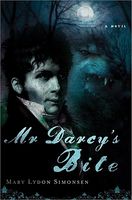
Mr. Darcy’s Bite by Mary Lydon Simonsen

With Halloween and all of the blog-related events — RIP, All Hallow’s Eve, Frightful Fall Read-a-Thon, and Halloween Hootenanny — I’ve selected a few fun horror/spooky reads for October.

I have not officially joined any of the challenges or read-a-thons just because I never know how much reading I can do these days, but I am hosting Stephen King’s IT read-a-long with Anna in which we discuss the 1,000+ page book once per month through the end of the year.

First spooky read for October is Mary Lydon Simonsen’s Mr. Darcy’s Bite, which I shamelessly admit attracted me with its ominous cover.

Simonsen’s latest Pride & Prejudice incarnation, Mr. Darcy’s Bite, begins after the reunion between Elizabeth Bennet and Fitzwilliam Darcy at Pemberley.  However, not all is pleasant in paradise because Darcy’s behavior has become peculiar, and he visits her at Longbourn for several months, though with long gaps between visits.  Lizzy’s mother keeps pressuring her about when she’s going to get engaged, and Lizzy is becoming concerned that Darcy’s affections for her are not as strong as she had thought.  She has plenty of time to stew on her speculations about his behavior, but just as she is about to call him out on his absences, he invites her back to Pemberley.  This is where everything changes for them and the challenges begin.

“‘You are very bossy.  You order people around with your harsh tone of voice or by pushing them about with your muzzle.  You may be the master of Pemberley, but you will not be the master of me.  I must be free to speak my mind.’

‘When have you not spoken your mind?’ Darcy stepped away from her, and with his hands behind his back, he recited word for word a part of Elizabeth’s refusal of his offer of marriage.”  (page 69 of ARC)

A dark secret is revealed, and Lizzy must determine whether in addition to their class and social differences, this secret changes her feelings for Darcy.  Can she overcome the secrecy, live with keeping secrets from her family and friends as a member of the Darcy family, and the monthly absences of her husband?  Simonsen captures Lizzy and Darcy’s characters so well from their moments of pride to their moments of misunderstanding.  Like her other novels, obstacles are thrown in the path of our love birds, and new characters are introduced, including the conceited Lady Helen Granyard who could rival Austen’s Lady Catherine in pride and social engineering.

Lizzy’s jealousy of Helen’s beauty pales compared to her worries that Helen’s intimate knowledge of the Darcy secret could supplant Darcy’s love for her.  What’s also a nice surprise here is that Georgiana gains strength in social encounters, enabling her to confront Lady Catherine at one point when she normally would have demurred.  Simonsen evolves the characters of not only Darcy and Elizabeth in this paranormal tale, but that of her secondary characters Georgiana and Anne de Bourgh.

If you’re an Austen purist who can let their hair down a bit, Mr. Darcy’s Bite could fit your need for the paranormal this Halloween season without scaring you senseless.  Simonsen’s work is always a delight to read, and Mr. Darcy’s Bite is no exception.

About the Author:

Mary Simonsen has combined her love of history and the novels of Jane Austen in her first novel, which explores universal truths about love and conflict that cross generations and oceans. The author lives in Peoria and Flagstaff, Arizona.

Check out the rest of the stops on Mary’s tour.

Winners of So Near

savvyverseandwitWinnersToday, I’m not only hosting Mailbox Monday, but also unveiling my new Winners button in conjunction with the latest round of winners.

I’d like to congratulate Anna of Diary of an Eccentric and Margie on their win of Liza Gyllenhaal’s So Near:

I’m Hosting Mailbox Monday #146

Mailbox Mondays (click the icon to check out the new blog) has gone on tour since Marcia at A Girl and Her Books, formerly The Printed Page passed the torch. Thanks to Amused by Books for hosting last month.

As host for this month, I have a couple giveaways planned, but mostly its about sharing books and the love of reading, so I hope in addition to leaving your post links in Mr. Linky that you’ll peek around Savvy Verse & Wit.

Kristi of The Story Siren continues to sponsor her In My Mailbox meme.

Both of these memes allow bloggers to share what books they receive in the mail or through other means over the past week.

Just be warned that these posts can increase your TBR piles and wish lists.

Here’s what I received this week:

1. Survivors by James Wesley Rawles, which came unsolicited from the publisher.

2.  Waking by Ron Rash from Hub City Press for review.

3.  You Don't Sweat Much for a Fat Girl by Celia Rivenbark, a win from Bermudaonion.

4.  Jane Austen Made Me Do It by Laurel Ann Nattress from the editor for review.

5. The Last Nude by Ellis Avery unrequested from Penguin.

6. Trevor's Song by Susan Helene Gottfried of West of Mars, which I purchased and had autographed.

7. To the End of the War (unpublished fiction) by James Jones from the publisher, Open Road Media, for review. I have a paperback version, but could only find the Kindle link.

For today’s giveaway, enter in the comments to win My God, What Have We Done? by Susan V. Weiss, which I reviewed last week. You’ll receive my gently used copy.

Deadline to enter is Oct. 8, 2011, at 11:59 PM EST. I’ll announce the winner at the next Mailbox Monday.

What did you get this week?  Leave your link, and a comment if you wish to enter the giveaway or just chat.

117th Virtual Poetry Circle

Welcome to the 117th Virtual Poetry Circle!

Remember, this is just for fun and is not meant to be stressful.

Keep in mind what Molly Peacock’s books suggested. Look at a line, a stanza, sentences, and images; describe what you like or don’t like; and offer an opinion. If you missed my review of her book, check it out here.

Also, sign up for the 2011 Fearless Poetry Reading Challenge because its simple; you only need to read 1 book of poetry. Please contribute to the growing list of 2011 Indie Lit Award Poetry Suggestions, visit the stops on the National Poetry Month Blog Tour from April.

Today’s Poem is from Yusef Komunyakaa’s current collection, The Chameleon Couch: (page 113-4)

Ontology & Guinness

    Darling, my daddy's razor strop
is in my hands, & there's a soapy cloud
on my face.  I'm a man of my word.
Didn't I say, If Obama's elected,
I'll shave off this damn beard
that goes back to '68, to Chicago?
I know, I also said I'd kiss the devil,
but first let me revise this contract.
I can taste tear gas.  I hear a blur
of billy clubs when I hit the drums.
I haven't witnessed this mug shot
in decades, but I'm facing the mirror.
I'm still the same man.  Almost.
Led Zeppelin is still in my nogginbox.
Alan Watts, old guru of ghosts
& folksingers, I can still two-step
& do-si-do to Clifton Chenier.
But, in no time, this philosopher
will be going down the drain, baby.
Look at how a finely honed razor works.
I may be a taxi driver, but I know time
opens an apple seed to find a worm.
See, I told you, my word is gold,
good as making a wager against
the eternal hush.  The older I get
the quicker Christmas comes,
but if I had to give up the heavenly
taste of Guinness dark, I couldn't
live another goddamn day.  Darling,
you can chisel that into my headstone.

So what did you think?

Fitzwilliam Darcy Rock Star by Heather Lynn Rigaud

Are you looking for an edgier Lizzy and Darcy story? Fitzwilliam Darcy Rock Star by Heather Lynn Rigaud is the hot little number for you.  The stage is set with furious rock and roll, sex in all positions and places, and yes, even drugs.  If you don’t like foul language or graphic sex, you won’t want to read this one because rock stars are living on the edge and rough around the edges.

Rock and roll is a hard business and in it band members are chewed up, spit out, and often become divas or broken down.  Darcy already has made the big time with his band, Slurry, but unlike the loving family he had in Austen’s novel, Pride & Prejudice, his parents were too busy to raise him, but when Georgiana was born, things changed.  Meanwhile, the main Bennet girls — Jane and Elizabeth — are in an up-and-coming band, Long Borne Suffering, with Charlotte Lucas.

“He realized he was being a voyeur, watching an intimate act.  She was making love to her instrument.  He knew he should look away,but he couldn’t.  His eyes were locked on the way her hands caressed the strings and pulled the wooden body closer to herself.  When she started singing softly, he was lost.”  (page 137 ARC)

Some readers may find the graphic intimate moments between the characters too much to handle, and some scenes may be over the top and unnecessary.  While in most instances the graphic and almost-masculine descriptions of those scenes work for the casual sex scenes, readers may find they are too harsh for the love of Darcy and Lizzy.  However, the look at the rock star world is eye-opening in terms of hard work, time management, PR, and emotional toll for Lizzy, Jane, and Charlotte.  Even veterans like Darcy, Charles Bingley, and Richard are affected by the touring schedule and the press hounding them. Wickham makes an appearance as a former singer for Slurry turned music video director/producer, and he’s even more sinister than he was in Austen’s novel.  His characterization here is exceedingly sinister, but necessary in this brash modern world created by Rigaud.

While Rigaud’s characters stray far from their Austen origins, particularly the character of Charlotte, the playful banter found in Austen remains, though taken up by Charlotte and Richard as they navigate the fine line between relationship and backstage fling.  Lizzy and Darcy step aside to give equal time to Charles and Jane and Charlotte and Richard, and the musical talents of all three shine individually and together on stage.  Adding to the conflict is the desire of these young women to make it on their own without the media thinking they are sleeping their way to the top with Slurry.

“‘Charlotte muttered.  ‘You know what a perfectionist Jane is, and she wanted Charles to know the songs for your set, so they started playing your songs, then they started on her songs, then they were playing their favorite songs.’

‘Eighties music?’ Richard interrupted her.

Charlotte nodded, her eyes bugging out in mock annoyance.  ‘I swear they were doing Prince when the bus finally pulled up.’

Everyone smiled.  ‘That’s Charles,’ Richard confirmed.

‘Oh my God!  I was ready to gnaw off my arm and beat them both over the head with it.’

Richard laughed.  ‘A one-armed drummer?  Now who’s living in the eighties.'”  (page 141-2 ARC)

There is a great deal to love about this novel, but it also has flaws from dialogue that goes on too long about mundane details and goodbyes to too many sex scenes in a row.  Readers will be captivated by the tension created by the music world and what it does to the relationships of these characters, especially as Richard’s sexual prowess is ramped up a few notches as a rock star drummer.  But even Rigaud’s characterizations of tensions within a band — from the jealousy drummers feel about the frontmen/women to the worries of female bands about making it without being asked for sexual favors — ring true.

Fitzwilliam Darcy Rock Star by Heather Lynn Rigaud has created a modern retelling of Pride & Prejudice, but Austen purists beware, this is not the same chaste Darcy and Elizabeth you know from Austen’s novel.  Many of the elements that keep Darcy and Elizabeth apart are still here — misunderstandings and words spoken without much thought injure each of them quickly — but Elizabeth is not as self-assured as she is in Austen’s work and Jane is more confident here.  Charlotte is the most changed, cast as a wild woman who secretly wants a fairy-tale ending, though with herself in charge.

Readers looking for a hard and fast look at the music world and the corruption and benefits it can bring will enjoy Rigaud’s unique perspective and characterizations.  Take a ride on the groupie bus and enjoy the Slurry and Long Borne Suffering tour.  Fitzwilliam Darcy Rock Star by Heather Lynn Rigaud is a whirlwind of emotions, sex, and satisfaction.

About the Author:

Heather Lynn Rigaud spends much of her time thinking about how Regency-era characters would exist now, and how a wife and mother would have lived in the past. She is a professional writer with degrees in music therapy and teaching who lives with her husband and two sons in Kingston, New York.

Guest Post: Keeping out the Distractions by Heather Lynn Rigaud

Anyone who reads this blog knows that Pride & Prejudice spinoffs and retellings are my guilty pleasure, and another guilty pleasure of mine is providing my readers with an inside look into author’s writing spaces.  Heather Lynn Rigaud, author of Fitzwilliam Darcy Rock Star, is the latest author of a Pride & Prejudice retelling to offer up a glimpse into her writing space.

About the book from Amazon:

Fitzwilliam Darcy, Slurry’s tall, dark, and enigmatic virtuoso guitarist, knows that this is no time to be picky, but he never expected what was waiting when he, Charles Bingley and Richard Fitzwilliam crashed the Meryton Public House.

Elizabeth Bennet, the fiercely independent and talented lead singer of Long Borne Suffering has serious reservations about joining such a trouble laden tour with the bad boys of Rock and Roll, but the opportunity is just too good to pass up!

On the Slurry tour, the music’s hot, but backstage is an inferno.

Stay tuned for my review tomorrow (9/30).  Without further ado, I will turn it over to Heather Rigaud.

Hi Serena,

Your name reminds me of Venice, which has always been known as the ‘Serene Republic‘ or ‘Serenissima’. Its history is a special interest of mine.

Anyway, you’ve asked me about my writing space. That means I need to do some cleaning, before we get to pictures.

There we go. Now, I have to admit, my writing area sounds a whole lot better than it looks. Its tucked into a corner of my living room, and my living room, like the rest of my house, is the home of a very active family. It’s a place where things happen and so consequently its not going to look like a showroom. That’s not to say it’s covered in filth, not by any means. But it means things are out. There are books everywhere, there are papers in the midst of being worked on are on many of the surfaces. There are knitting projects, sewing projects, soapmaking projects, … you get the idea.

Heather's Writing Desk

The other thing you’ll notice is that it’s a pretty uninteresting corner. There’s no art on the walls, there’s no window. That’s by design, because I’m easily distracted. I need someplace not stimulating to be able to work on the stuff in my head. And that’s what writing really is. By the same token, I really prefer to be alone when I’m writing, so most of my work happens when my sons are at school.

Now that I’ve made all my excuses, let’s talk about the good stuff- the desk. When my husband and I were freshly married and furnishing our home, we looked at the desks that were available new. Frankly, we weren’t impressed. For what they cost, the quality was very poor and they were, sorry-there’s no other word, ugly. We just couldn’t bring ourselves to spend that much money on something poorly made that looked like it wouldn’t last a year.

We were both fans of the classic roll-top desk style, so we hit on the idea of buying an old desk-an antique. And we found one. It was solid, made from oak, and the price was right. It will never be on Antiques Roadshow. It doesn’t have a fancy provenance or anything. It’s just a good desk, so it came home with us and it’s been my writing station for years.

We even found a matching rolling chair, in the same color and style to go with it. I’d include a picture, but the seat is caned and needs to be replaced. (We’ve already done that twice, so frankly, it’s not high on our priority list.)

What you can’t see in a picture is my music. I might not tolerate visual distractions, but I love audio ones. When I’m writing, I’ll often set up a specific songlist for the chapter I’m working on. It helps me get into the head-space I’m seeking, and in Fitzwilliam Darcy Rock Star, was usually included in the chapter. It’s not just Rock music, either. I use classical, Celtic, Jazz and other styles as well.

My computer is an Apple MacBook. We’ve been Apple fans since the 80’s and while it’s an expensive love affair, I don’t see it ending any time soon. I write directly into my computer, instead of hand writing it on paper and then typing it in, as my handwriting is more of a hindrance than a help. Plus, I’m way faster at typing. I have noticed that while I’ll surf the internet in any location and in any position, when I’m writing, I need to be sitting up straight in a hard chair. I don’t know if it’s a hold over from my school days or what, but doing work calls for a work posture for me.

That’s my work environment. I wish I had a prettier place for the pictures at least, but I don’t believe it would help my writing and it might actually hurt it. Thanks for having me here today and thanks for reviewing my book. I’m looking forward to hearing from your readers.

Thanks, Heather, for sharing your writing space with us, but we wouldn’t have minded the mess.

Month 2: Stephen King’s IT Read-a-Long

Anna and I are co-hosting the Stephen King IT Read-a-Long.  We are having discussions once per month through the end of the year about the parts we’ve read.

For the first discussion of part 1, plus the following interlude, go here.

For part 2’s discussion, please visit Diary of an Eccentric today.

Each month you will have the option to answer the questions on the hosting blog or in your own post, but please go back to the monthly host to leave your discussion link.

Remember that these posts can contain spoilers.

For our 3rd discussion, we will be reading part 3 and the discussion will be hosted here on Oct. 31 in time for Halloween, but please visit Anna’s blog for today’s discussion.