Quantcast

Santa Clauses: Short Poems from the North Pole by Bob Raczka, illustrated by Chuck Groenink

NPMBlogTour2016

Source: Public Library
Hardcover, 32 pgs.
I am an Amazon Affiliate

Santa Clauses: Short Poems from the North Pole by Bob Raczka, illustrated by Chuck Groenink, emphasizes what we already know about Santa Claus and his life as a gift giver, toy maker, husband, and reindeer trainer.  But he has one more talent, a secret talent — he’s a poet who write haiku.  Inside this book, there are 25 haiku poems that illustrate life at the North Pole, giving young readers and inside look at what it is like to be Santa Claus.

Although some of the haiku are not perfect, and one or two are a bit simplistic, overall the haiku are fun to read, and would make a great addition to the holiday reading list with little kids.  My favorite haiku is the one in which Mrs. Claus becomes a young girl again, making a snow angel.  My daughter loves the part when Comet and the white fox return from the woods with their own Christmas tree, helping Santa with his preparations.

Some of the haiku will have readers thinking about the stories they know well, and others will have readers looking at things a little differently.  Santa Clauses: Short Poems from the North Pole by Bob Raczka, illustrated by Chuck Groenink, is a cute book with short poems that could be read one day at a time beginning on Dec. 1.

Rating: Quatrain

About the Author:

Bob Raczka loved to draw, especially dinosaurs, cars and airplanes, as a boy. He spent a lot of time making paper airplanes and model rockets. He studied art in college, which came in quite handy while writing a series of art appreciation books, Bob Raczka’s Art Adventures. He also studied advertising, a creative field in which he worked in for more than 25 years. Bob also discovered how much he loved poetry and began writing his own. His message for today’s kids is to make stuff!”

Coming Up Hot: Eight New Poets from the Caribbean

Source: Akashic Books, Peekash Press
Paperback, 208 pgs.
I am Amazon Affiliate

Coming Up Hot: Eight New Poets from the Caribbean, with a preface from Kwame Dawes, features poems from Danielle Boodoo-Fortuné, Danielle Jennings, Ruel Johnson, Monica Minott, Debra Providence, Shivanee Ramlochan, Colin Robinson, and Sassy Ross.  There is a variety of poems in this collection that speak to the culture of the Caribbean, but also to the loss of culture among those who move away to the United States or other locations.  Some poems beautifully capture the dialect of the language and the beat of the culture without detracting from the readers’ enjoyment, but there are a few poems that can be difficult to understand and will require additional attention if readers are unfamiliar with the Caribbean dialects used.

Kwame Dawes says in the preface, “It is important and admirable that this gathering of poets allows us to explore the meaning of these ides of home.”  This is an apt description of this collection because in it are poems that range from finding a place in a college classroom, even among those with a similar culture, to a mother explaining to her child that she is not a home or a mother, though her “womb” knows her.  These narrators are looking for that feeling of belonging, being able to settle down and be content.  Their lives are in flux, and some are embroiled in violence or destructive behavior, but all of these voices are strong and determined.  They rely on their heritage from the cultural nuances they were taught by family to the ones they have learned on their own.

In “The Haunting of His Name” by Danielle Boodoo-Fortuné’s narrator talks about how the love of a man can be haunting even if that man is abusive or not good to you.  There’s prescription here for how to get over him: “You must not love him,/so you bind yourself/with hunger and smoke,/sing hard against/your body’s silence.”  This is a man who will not leave you, so you must  wash “him from the temple of your heart.”  In her poem, “Learning to Breathe in Luminous Water,” the narrator explains that you only need to teach yourself to breathe underwater, learn to deal with the hardships and transform or overcome the obstacles ahead.  Almost by a matter of sheer will, the woman can find a way through.

Like Monica Minott’s “Penelope to Calypso,” women must learn to accept what has happened or how the world has come to pass, but they have the power to move forward or accept a new path that they carve on their own.  Penelope says to Calypso, “Odysseus is like driftwood;/long before he met you and me/he belonged to the sea./When driftwood wash up,/they make interesting furnishings/and conversation piece/”  It is clear that these women are strong enough to stand on their own.  On the other side of the coin, when the connections are right, women should know how that feels, even if it is a little like the snapper trapped by the “Fisherman’s Net.”

Coming Up Hot: Eight New Poets from the Caribbean is a collection of empowerment for women and men alike, for the immigrants searching for new opportunities.  Like all opportunities, there are challenges that must be met and overcome, but seeking strength from the outside is not always the best solution.  Inner strength can ensure the path is endurable and that opportunities are not lost.

Rating: Quatrain

Spotlight & Giveaway: The Sound of Belief by Ebony Archer

As we continue to celebrate National Poetry Month, I hope to highlight some new poets for you, as well as bring you reviews, interviews, and activities. Today’s book spotlight is for a collection of inspirational poetry written by Ebony Archer. Her poem, “Gotta Believe in Me”, was also transformed into song, which has a pop beat and could be the next big hit.

Take a listen:

As you can hear, she’s got a great voice and some spunk. Click for her current list of tour dates.

The Sound of BeliefThe Sound of Belief is an inspirational poetry book written by Ebony Archer in order to empower the reader to activate their belief.

Buy the book: Amazon Barnes & Noble

Put it on your shelf at GoodReads.


About the Poet:Ebony Archer

Since the early age of four, she started singing in her church where her gift was discovered. In 2000, Ebony joined Walt Whitman and the Soul Children of Chicago at the age of eight. With this group, Ebony has sung in front of audiences of ranging numbers and has shared the stage with many famous names in the industry such as Yolanda Adams, R. Kelly, Celine Dion, Nick Carter, and the list continues.

In 2001, Ebony Archer was featured in R. Kelly’s video, The World’s Greatest. In 2012, Ebony was the runner up in the national anthem competition for Black Girls Run with over 40,000 votes. Through the musical experiences, vocal training, and learning how to have great stage presence; it has molded Ebony into a gifted singer and because of her inspiring voice, she is now known as the Inspirer”.

Connect with the author:   Website   Twitter   Facebook   Instagram   Soundcloud

Giveaway: Win 1 ebook copy of the Sound of Belief (open internationally)

a Rafflecopter giveaway

iRead Website new logo

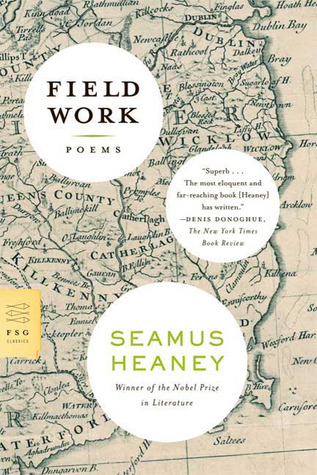
Field Work by Seamus Heaney

Source: Purchased
Paperback, 80 pgs.
I am an Amazon Affiliate

Field Work by Seamus Heaney is a collection of poems that follow his removal from Belfast, Ireland, to the country south of Dublin in the County Wicklow.  It’s clear that even as his family has been away from the troubles in Northern Ireland, they are still foremost in his mind and poems.  Some of these poems are elegies to the friends and family he has lost along the way, but these poems are less focused on the political and more focused on his internal, emotional struggle with the issues in Ireland.  In “Oysters,” the narrator talks of himself as an estuary in which the oysters atop, and as he tastes the saltiness he recognizes that the oysters are “alive and violated.”  As the poem evolves, it is clear that the oysters are Ireland, split in two — ripped apart violently.  As the narrator eats, he recognizes that he must be deliberate in his actions or he will be forced into action, actions that could be reckless.

In “Casualty,” the narrator wants to supply a full picture of the Irish struggle — a man sits at a bar and continues to drink from the high shelf and he’s a “dole-breadwinner.”  But soon we see him through the eyes of the narrator, a man with a quick, observant eye.  His death is swift and among the other 12 in a Derry blast, in which “Everybody held/his breath and trembled.”  A man that questioned and raised concerns, simply swept away by a random decision to enter an bar that was not his usual.  How many times can we say we have deviated from our routines and how soon before we find ourselves the next casualty of a decision we had no idea was bad.

The downtrodden, the working class, and others are here between these pages.  “The gunwale’s lifting ear –/trusting the gift,/risking gift’s undertow–/is unmanned now//” (“In Memoriam Sean O’Riada”)  In a nod to Yeats, Heaney examines what the artist and musician means to him, but cautions that he is not the same as the fisherman that Yeats held in esteem.  There are several references and allusions to Yeats in this collection.

However, one of the best rendered sections may be the “Glanmore Sonnets” where Heaney turns his keen eye to the country around him.  Here he demonstrates his love for the people in the country and their welcoming nature, though his thoughts do turn to other times, especially during a “first night … in that hotel … ”

X

I dreamt we slept in a moss in Donegal
On turf banks under blankets, with our faces
Exposed all night in a wetting drizzle,
Pallid as the dripping sapling birches.
Lorenzo and Jessica in a cold climate.
Diarmuid and Grainne waiting to be found.
Darkly asperged and censed, we were laid out
Like breathing effigies on a raised ground.
And in that dream I dreamt -- how like you this? --
Our first night years ago in that hotel
When you came with your deliberate kiss
To raise us towards the lovely and painful
Covenants of flesh; our separateness;
The respite in our dewy dreaming faces.

There is a dream-like quality to many of these poems, as Heaney meditates on the past and the present issues facing Ireland. The narrator says in “High Summer,” “On the last day, when I was clearing up,/on a warm ledge I found a bag of maggots/and opened it. A black/and throbbing swarm came riddling out/life newsreel of a police force run amok,/sunspotting flies in gauzy meaty flight,/the barristers and black berets of light.//” It’s clear that the struggles are ever-present, even in the country, and there is no escaping their dark shadows even in Field Work by Seamus Heaney.

About the Poet:

Seamus Heaney was an Irish poet, writer and lecturer from County Derry, Ireland. He was awarded the Nobel Prize in Literature in 1995, “for works of lyrical beauty and ethical depth, which exalt everyday miracles and the living past.”

Guest Review: The Yearling by Marjorie Kinnan Rawlings

Today’s guest review is from Laura at 125Pages.com

Rating: 3 Stars

Welcome to another installment of the United States of Books! See full details here. Today we will visit Florida with The Yearling by Marjorie Kinnan Rawlings. Entertainment Weekly say’s “Working with Hemingway and F. Scott Fitzgerald’s editor, Rawlings was pushed to look into her own history for literary fodder, which led to her 1938 Pulitzer winner about a Florida boy and his pet deer.”

bambigif

The Yearling is a book I have heard about over the years, but was never super interested in reading. I could guess the outcome of a book centered around a young boy and his pet deer living on a hardscrabble farm in the 1870’s. I had read Old Yeller and seen Bambi, I knew what was coming. So I wasn’t thrilled when the random picking for the United States of Books challenge offered me up The Yearling. I don’t think I can really spoil a book that is over 75 years old, but just in case, I will only say I was right about the ending. However, I was mistaken about how I would feel about the book as a whole.

The tale of the Jody, Ora and Ezra “Penny” Baxter is not one of an easy life.  Farming a small plot of land in central Florida, they hunt and trade for what they need. Jody is the only child of seven born, who lived past the age of three. Trailing his pa and learning to do what is necessary to survive, Jody wants nothing more than a pet to call his own. Then on a hunt, he finds a small deer and is determined to make it his own. Flag soon becomes part of the family and even goes on hunts with Jody and his father. Weaving around the story of the fawn and his boy was the epic hunt of a troublesome bear, a snakebite, and a very unique cast of characters.

Now that I have read it, I am glad I had the chance to, as some of the writing was just lyrical.  Especially the parts describing the land surrounding the farm.

Around a bend in the road, the dry growth of pines and scrub oak disappeared. There was a new lushness. Sweet gums and bay were here, and, like sign-posts indicating the river, cypress. Wild azaleas were blooming late in the low places, and the passion flower opened its lavender corollas along the road.

I could see why this was EW’s Florida pick as the location was almost a secondary character in the story. The wildlife and flora inhabited every scene.

The fall fruits were not yet ripe, papaw and gallberry and persimmon. The mast of the pines, the acorns of the oaks, the berries of the palmetto, would not be ready until the first frost. The deer were feeding on the tender growth, bud of sweet bay and of myrtle, sprigs of wire-grass, tips of arrowroot in the ponds and prairies, and succulent lily stems and pads. The type of food kept them in the low, wet places, the swamps, the prairies and the bay-heads.

Unfortunately, the jarring difference between the lyrical descriptions and the regional dialect of the characters when they spoke, made this a difficult read for me. The way they thought in their heads did not match the words they said and this made the transitions very hard. I would almost prefer a read like The Adventures of Huckleberry Finn where, while there were numerous regional dialects, all the characters thought and spoke in them. When you read a description as beautiful as the one above then the very next life is something along the lines of “Don’t go gittin faintified on me.”, it pulls you out to the story and throws a wrench in your pacing.

Cover_of_The_Yearling_1938The Yearling had some amazing moments with the descriptions by Marjorie Kinnan Rawlings. It is not a book that I would personally read again as the storyline is not what I enjoy and the transitions between characters thinking and speaking was too harsh. For the time it was written though, I can see why it received such high praise. It contained heartbreak, action and basic human survival tempered by a strong family bond.

Favorite lines – “A mark was on him from the day’s delight, so that all his life, when April was a thin green and the flavor of rain was on his tongue, an old wound would throb and a nostalgia would fill him for something he could not quite remember.”

Have you read The Yearling, or added it to your TBR?

Mailbox Monday #370

Mailbox Monday, created by Marcia at To Be Continued, formerly The Printed Page, has a permanent home at its own blog.

To check out what everyone has received over the last week, visit the blog and check out the links.  Leave yours too.

Also, each week, Leslie, Vicki, and I will share the Books that Caught Our Eye from everyone’s weekly links.

Here’s what I received:

The Secret Language of Stones by M.J. Rose for review in July with France Book Tours.
As World War I rages and the Romanov dynasty reaches its sudden, brutal end, a young jewelry maker discovers love, passion, and her own healing powers in this rich and romantic ghost story, the perfect follow-up to M.J. Rose’s “brilliantly crafted” (Providence Journal) novel The Witch of Painted Sorrows.

Nestled within Paris’s historic Palais Royal is a jewelry store unlike any other. La Fantasie Russie is owned by Pavel Orloff, protégé to the famous Faberge, and is known by the city’s fashion elite as the place to find the rarest of gemstones and the most unique designs. But war has transformed Paris from a city of style and romance to a place of fear and mourning. In the summer of 1918, places where lovers used to walk, widows now wander alone.

So it is from La Fantasie Russie’s workshop that young, ambitious Opaline Duplessi now spends her time making trench watches for soldiers at the front, as well as mourning jewelry for the mothers, wives, and lovers of those who have fallen. People say that Opaline’s creations are magical. But magic is a word Opaline would rather not use. The concept is too closely associated with her mother Sandrine, who practices the dark arts passed down from their ancestor La Lune, one of sixteenth century Paris’s most famous courtesans.

But Opaline does have a rare gift even she can’t deny, a form of lithomancy that allows her to translate the energy emanating from stones. Certain gemstones, combined with a personal item, such as a lock of hair, enable her to receive messages from beyond the grave. In her mind, she is no mystic, but merely a messenger, giving voice to soldiers who died before they were able to properly express themselves to loved ones. Until one day, one of these fallen soldiers communicates a message—directly to her.

So begins a dangerous journey that will take Opaline into the darkest corners of wartime Paris and across the English Channel, where the exiled Romanov dowager empress is waiting to discover the fate of her family.

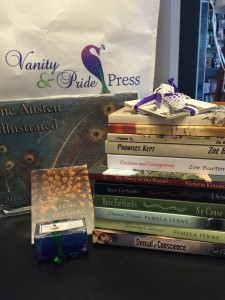
This is a bag of goodies that I received from a Jane Austen Darcy & Elizabeth Panel in Bethesda, which Anna and I attended.  This bag of goodies is wonderful for more than one reason.

Beyond the fact that I NEVER win anything, this bag includes my favorite peacock postcards, books edited by Anna, and a book edited by me! It also included chocolates, and believe me, they were delicious!

IMG_2199

Books by Zoe Burton — one of which I edited recently:

I Promise To…

In this ‘Pride and Prejudice’ novella, Elizabeth Bennet has known Fitzwilliam Darcy since both were very young. When she flees Longbourn and an unwanted suitor, her uncle and his father arrange a marriage between the two. Will Lizzy and Fitzwilliam agree to such a marriage? Will it keep her safe from a Peer who is determined to have her? Will this young couple be able to keep the promises they have made to each other?

Promises Kept

This ‘Pride and Prejudice” novel variation follows Fitzwilliam and Elizabeth Darcy through the first year of their marriage. Arranged by his father in the I Promise To… novella, their union saved Elizabeth from a persistent, abusive suitor. The couple has known each other for years and quickly come to realize their love for each other. However, not everyone is happy with the marriage, and trouble comes quickly upon them. Dealing with jealous ladies and scornful gentlemen in London as well as illness and injury at Pemberley, they grow together as a couple while Elizabeth regains the confidence she has lost.

Decisions and Consequences, which I edited.

Elizabeth Bennet has received two proposals of marriage in the last twelve hours: one from her ridiculous cousin Mr. Collins and the other from the arrogant and disdainful Mr. Darcy. She turns both of them down flat. Unfortunately for her, between her mother’s insistence that she marry and some mysterious hold Mr. Darcy has over her father, she is forced to choose one.

Fitzwilliam Darcy is a man in need of a wife. He has searched high and low amongst the high society women of London but has yet to meet someone who combines all the attributes he requires. When he meets Miss Elizabeth Bennet in the small market town of Meryton, he finds her pointed dislike of him refreshing in its honesty. After observing her for a while, he decides he will marry her, and instructs his solicitor to investigate Mr. Bennet in the hopes of finding some sort of leverage to force her to accept him.

Though she chooses Darcy, Elizabeth is not happy. It takes weeks of being in his presence and learning his character, and the drama of people totally unrelated to her, to make Elizabeth see that that the consequence of her decision could possibly be a deep, abiding love.

Books by Rose Fairbanks — several of which were edited by Anna:

Letters from the Heart

Resolved to forget Elizabeth Bennet during a winter in London, Fitzwilliam Darcy writes a letter in bitterness of spirit. Frustrated by her growing obsession with the arrogant man, Elizabeth commits her thoughts to paper. But angry people are not always wise, and secret thoughts do not always remain secret. Compelled to face their selfishness and fears, their actions encourage those dearest to them to change as well.

Love Lasts Longest, edited by Anna.

Steal a quiet moment with Darcy and Elizabeth…
In the busy world of go-go-go, we often have our gadgets glued to us all the time. Via technology we can now take our books with us much more conveniently than before, but who wants their reading interrupted in order to return to the real world? Love Lasts Longest was written for the moments when reading a lengthier volume is unwise. Follow each story as we see Fitzwilliam Darcy and Elizabeth Bennet grow in love over and over again!

A Sense of Obligation, edited by Anna.

A chance, but meaningful, encounter in Netherfield’s library changes everything between Darcy and Elizabeth. As they rush to the altar, Darcy’s faulty memory may destroy their chance at domestic comfort before they begin. Knowing their obligations and no longer resisting their attraction, they forge a foundation of trust and respect. New feelings may not be enough, however, to overcome the misunderstanding which lays between them. Exploring the juncture of sentiment and reason, A Sense of Obligation, takes Darcy and Elizabeth on a passionate, humorous and introspective path toward happiness in marriage.

No Cause to Repine, edited by Anna.

When a simple accident is misinterpreted and threatens Elizabeth Bennet’s reputation, her fate seems sealed as Fitzwilliam Darcy’s wife. While the bride is resigned, the gentleman could hardly be happier until betrayals and schemes threaten to entirely take the matter out of their hands. Overcoming the plots before them will take all the patience, perseverance and collaboration they can muster, but a partnership requires truth. Self-discovery and trust await Jane Austen’s most beloved and willfully blind couple as they attempt to master their own destiny in life and love.

Book from Victoria Kincaid — which Anna also edited:

Mr. Darcy to the Rescue

When the irritating Mr. Collins proposes marriage, Elizabeth Bennet is prepared to refuse him, but then she learns that her father is ill. If Mr. Bennet dies, Collins will inherit Longbourn and her family will have nowhere to go. Elizabeth accepts the proposal, telling herself she can be content as long as her family is secure. If only she weren’t dreading the approaching wedding day…

Ever since leaving Hertfordshire, Mr. Darcy has been trying to forget his inconvenient attraction to Elizabeth. News of her betrothal forces him to realize how devastating it would be to lose her. He arrives at Longbourn intending to prevent the marriage, but discovers Elizabeth’s real opinion about his character. Then Darcy recognizes his true dilemma…

How can he rescue her when she doesn’t want him to?

Book from Cat Gardner:

Denial of Conscience

Inspired by Jane Austen’s most alluring romantic couple, this modern adventure stars adaptations of characters from Pride and Prejudice and her other books.

Elizabeth Bennet is hiding from life on her family’s decaying, historic plantation, afraid to live fully. Hindered by duty and obligation, even reluctantly agreeing to an untenable marriage, she cannot silence her conscience from crying out for her to flee- run – escape before it’s too late.

Prompted by a cataclysmic event and the arrival of the enigmatic, attractive Fitzwilliam Darcy, Liz is thrust into a dangerous adventure where her spirit is released amidst international intrigue. However, Darcy carries his own deep stash of secrets as a premier government-sanctioned assassin working with an elite clandestine group named Obsidian. He’s spent a long, dark decade justifying his career choice while smothering his own conscience that beckons him back home to his ancestral Pemberley, its demons, and the man he was meant to be.

He is steel, rock-n-roll, and Tennessee whiskey. She is orchids, opera, and peaches with cream. Thrown together they are physically and emotionally charged TNT, ready to explode!

Books from Pamela Lynne:

Dearest Friends

The historical romance Dearest Friends retells Jane Austen’s Pride and Prejudice as a sensual adventure that will delight a modern audience. Fitzwilliam Darcy left Hertfordshire following a friend’s betrayal, but his heart remained with Elizabeth Bennet, the impertinent beauty who captured his attention in ways no woman ever had before. When he encounters her unexpectedly in London, he realizes he can no longer live without her and begins his pursuit for her hand. When he finds that Elizabeth is not free to marry, will he again walk away or will he fight for the lady he loves?

While Darcy and Elizabeth pursue their own happiness, around them friendships progress to love and infatuation leads to disappointment. Join a group of unlikely friends as they support our dear couple on their journey, each treading unique paths along the way.

Sketching Character

What if a tragic event involving a beloved sister shatters Elizabeth Bennet‘s confidence in her ability to accurately judge a person’s character? When she leaves Longbourn for Kent, Elizabeth’s heart is full of worry for those she left behind. She carries a secret that would ruin her family if exposed and she must deceive the ones closest to her to conceal the truth.

She unexpectedly encounters Mr. Darcy on her journey and his gentlemanly behavior confuses, yet comforts her. Their daily encounters in the woods surrounding Rosings soothes Elizabeth’s weathered conscience and she soon falls in love. Her doubts, along with the well-placed words of another, threaten to destroy the peace she finds in Darcy’s company and she wonders if she has again failed to correctly sketch his character.

When the truth behind her deception is uncovered, will Darcy shun her as Elizabeth fears, or will his actions prove that he is the very best of men?

What did you receive?

352nd Virtual Poetry Circle

Welcome to the 352nd Virtual Poetry Circle!

Remember, this is just for fun and is not meant to be stressful.

Keep in mind what Molly Peacock’s book suggested.

Look at a line, a stanza, sentences, and images; describe what you like or don’t like; and offer an opinion. If you missed my review of her book, check it out here.

Today’s poem is from Ernest Christopher Dowson:

April Love

We have walked in Love's land a little way,
We have learnt his lesson a little while,
And shall we not part at the end of day,
With a sigh, a smile?

A little while in the shine of the sun,
We were twined together, joined lips forgot
How the shadows fall when day is done,
And when Love is not.

We have made no vows - there will none be broke,
Our love was free as the wind on the hill,
There was no word said we need wish unspoke,
We have wrought no ill.

So shall we not part at the end of day,
Who have loved and lingered a little while,
Join lips for the last time, go our way,
With a sigh, a smile. 

What do you think?

NPMBlogTour2016

Normal Norman by Tara Lazar, illustrated by S. Britt

Source: Sterling Children’s Books
Hardcover, 40 pgs.
I am an Amazon Affiliate

Normal Norman by Tara Lazar, illustrated by S. Britt, is a very colorful book about a junior scientist and Norman, a gorilla.  The junior scientist in a lab seeks to define what “normal” is, and in so doing, she comes to learn that normal is indefinable.  Norman is a gorilla who wears eye glasses and carries a stuffed aardvark.  Upon examining Norman, the junior scientist finds that his head size is normal, as are his paws and ears.  However, as the examination progresses, she learns that he doesn’t eat bananas or sleep on leaves in the jungle.

The junior scientist increasingly gets frustrated as she finds her subject does not fit what she deems to be normal.  Eventually throughout the book, she realizes that normal does not necessarily mean the same thing for everyone.  One person’s normal is not everyone’s normal.  The illustrations are engaging and colorful, and my daughter was intrigued about this use of the scientific method.  She giggled when Norman would do something outside the norm.

Normal Norman by Tara Lazar, illustrated by S. Britt, is a good book for parents and children to discuss individuality and what it means to be normal.  At the conclusion of the book, we talked about normal and what it means to us as individuals, and kids will find that Norman’s normal is just as fun and exciting as someone else’s normal.

Rating: Quatrain

About the Author:

Street magic performer. Award-winning ice sculptor. Hog-calling champion. These are all things Tara Lazar has never been. Instead, she prefers baking with her daughters, creating jewelry, and writing stories for children. THE MONSTORE is her first book, inspired by her pesky little brother (who is no longer so pesky). Tara has several picture books to be published in the coming years. I THOUGHT THIS WAS A BEAR BOOK and LITTLE RED GLIDING HOOD were both released in Fall 2015. Next up: NORMAL NORMAN on March 1, 2016.

Ghost Sick by Emily Pohl-Weary

Source: Tightrope Books
Paperback, 150 pgs.
I am an Amazon Affiliate

Ghost Sick by Emily Pohl-Weary is a collection of poems that witness. They are testimony, commentary, and emotional responses to the crime, drugs, loss of innocence and more in a Toronto neighborhood and other places where lives are wasted and lost too easily. In “World of Sorrow,” the narrator says, “I had no way of comprehending/it only takes a second to tear/the spirit from a young body//” More often than not, young people believe they are invincible, and it is this naivete that leaves them especially vulnerable to waste, decay, and death. Pohl-Weary laments these losses, and she struggles to come to terms with those who have been lost and the potential they may have had under different circumstances.

Her images are playful, but then turn sinister, like in “Falling Angel,” where the narrator says, “Our honey gigolo, haloed, wary/Smiling at women, the boy who would kill//Carried disaster in the tilt of his chin/tightness of his shoulders, heavy droop of eyelids//”  What causes this young man to become a murder, and what does it mean for those around him.  Growing up in this neighborhood, the young must be forever watchful of how they are perceived by others and ensure that their actions cannot be the cause of another’s death or harm.  As the narrator in “Never Say Goodbye” indicates, “life is a process of hardening//” and it can even happen when you’re young and having a good time.

Nearly a third of the way through the volume, the poet asks, “How many candlelight vigils/will it take to light the sky/with grief?” (“The Gentle Giant”)  But in the same section, the narrator says in “Those Who Died,” “Remember that you live where they did not./You are the survivor and the advocate./You must live for those who died.//”  It is the pressure many surviving family members and friends place on themselves — to advocate for those who can no longer speak for themselves.  In many ways, these are the people who are “ghost sick” because they are the most haunted by those they have lost, and they are unable to escape that pressure.

Craft Supplies (pg. 51)

a wise woman once told me
you can't expect miracles
from dollar store markers
though they're often realized
in the most unusual, tawdry places
like the bottom of a bin

Readers will find that not all is dreary in Pohl-Weary’s world, as hope remains an eternal spring even in the darkest places. It can be held by a child with potential, a community that listens and acts, or even in the depths of a dream resurfacing for someone who has been lost. We, the living, are the ones that are haunting the dead with our emptiness at their leaving. We need to fill those holes and move on, so that they may do the same, as the narrator in “Meaning” suggests.

Ghost Sick by Emily Pohl-Weary is a profound collection that will have readers looking at their own losses to determine if they have filled those empty holes.

Rating: Cinquain

About the Poet:

Award-winning author, editor, and creative writing instructor Emily Pohl-Weary has published seven books, a series of girl pirate comics, and her own literary magazine.

She was the 2015 writer-in-residence for Queen’s University, where she mentored students and facilitating a workshop for people affected by incarceration. She has also been the University of the Fraser Valley’s Kuldip Gill Writing Fellowship Writer in Residence in B.C., and the Toronto Public Library system’s eWriter-in-Residence for Young Voices. She was also fortunate to be Dawson City, Yukon’s writer-in-residence at the Pierre Berton House.

Her most recent book is a collection of poetry, Ghost Sick, which was released in February 2015. Her novel for teens, Not Your Ordinary Wolf Girl, was published by Penguin Razorbill (Canada) and Skyscape (U.S.A.) in fall 2013. Her five previous books include Strange Times at Western High, Girls Who Bite Back, A Girl Like Sugar, Iron-on Constellations, and Better to Have Loved: The Life of Judith Merril.

Emily is also a current creative writing instructor at the University of Dalhousie. For more than a decade she has also facilitated creative writing workshops that focus on advanced writing skills, learning tools for conflict-resolution and processing trauma, and finding your unique voice.


Interview with Arne Weingart

I reviewed Arne’s collection Levitation for Agnostics in February, and was really impressed by his poems. He agreed to take part in the National Poetry Month celebration with an interview. Please give him a warm welcome.

1. Faith is a big part of your poems. How has that faith informed the poems in the collection Levitation for Agnostics?

It was never my intention to use faith as an organizing principle for the collection. But if I look at the book as a whole, I can see how individual poems tend to circle around the question of what one can or should believe in. I accept the idea that the need for belief is biologically hard-wired into human nature, so for me, certain things follow. Firstly, that organized religion is useful but inadequate. Secondly, that poetry and art are useful (although ultimately also inadequate)in addressing our collective spiritual need. This particular point of view is a kind of background noise for every poem I try to write.

2. Faith and religion can be very serious aspects of people’s lives, how does the humor you infuse your poems with change that perspective?

The difference between our very real and persistent spiritual needs and our success in satisfying them is the perfect set-up for a joke. Many jokes. Take my faith tradition, please (drum roll, rim shot)! In Judaism’s classical orthodox flavor, there are said to be 613 commandments that govern human conduct. However noble in conception, this is an obvious recipe for failure. And while attempts at “reformation” are laudable and inevitable, the gap between spirit and material world remains. I suppose you could define grace as our ability to balance within that gap; and humor as our appropriate response when grace fails us.

3. Levitation for Agnostics looks to be a first collection for you? How else do you spend your creative hours? Is poetry your first passion?

Yes, this is my first collection. Although I work in a “creative” field — graphic design — poetry is the one thing I am most capable of doing that satisfies my creative impulse. As mentioned above, I believe that poetry (and all art) has spiritual underpinnings that make it indispensable, if often misunderstood.

4. What advice would you give to poets crafting their first collections?

Write without particular focus on shaping a collection. At some point, stop and see what you’ve got. This will require help from other readers (and perhaps writers). This is in direct contradiction to many thematically coherent collections that began and ended as “projects” and that seem to be “about” something that can be concisely and confidently stated. First collections, however, should probably address the concerns of crafting an identifiable poetic voice, the one indispensable qualification for a poet, going forward.

5. Who are your favorite poets?

In no particular order and on this particular day: W. H. Auden, Wislawa Szymborska, W. S. Merwin, Mark Strand, Elizabeth Bishop, Tony Hoagland

About the Poet:

Born and raised in Nashville, Tennessee, and educated at Dartmouth College and Columbia University, Arne Weingart lives in Chicago with his wife Karen, where he is the principal of a graphic design firm specializing in identity and wayfinding. Recent poems have been published in Arts & Letters, Beecher’s Magazine, Coal Hill Review, Enizagam, Nimrod, Oberon, Plume, RHINO, Sow’s Ear Poetry Review, The Georgetown Review, The Massachusetts Review, and The Spoon River Poetry Review. His work has been nominated for a Pushcart Prize and his book, “Levitation For Agnostics,” winner of the 2014 New American Press Poetry Prize, will be released in February, 2015.

NPMBlogTour2016

Mendeleev’s Mandala by Jessica Goodfellow

NPMBlogTour2016

Source: Mayapple Press
Paperback, 100 pgs.
I am an Amazon Affiliate

Mendeleev’s Mandala by Jessica Goodfellow is broken down into five sections, mixing in elements of mathematics, science, and various poetic styles.  Dmitri Mendeleev is considered the father of the periodic table, and like Mendeleev, Goodfellow carefully crafts each poem with a larger picture in mind, and in these poems, she strives to capture all the necessary elements for her own mandala to create a microcosm of her own struggles.

In part one, she lays down the foundation, uncovering hidden truths in a variety of stories from Iphigenia and Isaac to theories of gravity and continental drift. Each are treated similarly in that they are picked apart for their weaknesses, but also used to demonstrate the categorization and delineation that continues to occur now, as humans seek to understand the unknown.  Like in “Imagine No Apples,” the apples fall from the tree but never too far from the Omega, which in many ways is the end.  Even as we begin, we are never far from our ending, and the circle continues in a loop.  What would happen if there were no apples — no alpha, no beginning?  Would there be an omega?

“of what use is this thirst for things
resembling other things, this endless trying
to wring milk from a two-headed cow.” (pg. 26, “Burning Aunt Hisako”)

Humanity has a hard time reconciling reason with the unknown; and in many ways, we presume that because we reason that everything is knowable. This is not the case.  Section two of the collection is a rumination on time — time as it passes and our place in it.  It is the strongest part of the collection in terms of cohesion.  We want to be the candle flame, but we are more like the melting wax, the narrator notes in “In Praise of the Candle Clock.”  And as the narration continues regarding the development of the clock to its modern form, so too does its function and our perception of time.  Goodfellow has beautifully rendered this transformation from the shape-poem “Ode to the Hourglass” to “The Invention of the Clock Face.”  But most heart-wrenching is “Three Views of Mars” where perception is broken down by one who can see, one whose field of vision has narrowed considerably, and to one who is innocent and just beginning to see the world.

Mendeleev’s Mandala by Jessica Goodfellow is a look beyond the world of facts and science into the world of emotion, spirituality, faith, and more.  These poems remind us that even as we reason, we can view things completely wrong.  The mandala is larger than any one of us, but we all have roles to play, and we should do so to the best of our abilities, even if it all does seem rather random.

RATING: Quatrain

About the Poet:

Jessica Goodfellow grew up in the suburbs of Philadelphia, Pennsylvania, but has spent the last twenty years in California, Florida, and Japan. She received an MS degree from the California Institute of Technology and an MA in linguistics from the University of New England. Her first book of poetry, The Insomniac’s Weather Report (three candles press), won the Three Candles Press First Book Prize, and was reissued by Isobar Press in 2014. Her new book Mendeleev’s Mandala is available from Mayapple Press (2015). She is also the author of a poetry chapbook, A Pilgrim’s Guide to Chaos in the Heartland (Concerete Wolf, 2006), winner of the Concrete Wolf Chapbook Competition. Her work has appeared in the anthology Best New Poets 2006, on the website Verse Daily, and has been featured by Garrison Keillor on NPR”s “The Writer’s Almanac.” She was a recipient of the Chad Walsh Poetry Prize from the Beloit Poetry Journal, and her work has been honored with the Linda Julian Essay Award as well as the Sue Lile Inman Fiction Prize, both from the Emrys Foundation. Her work has appeared in Motionpoems Season 6. Jessica currently lives in Japan with her husband and sons.


Guest Review: The Grapes of Wrath by John Steinbeck

Guest Review by C.H. Armstrong Books & Blog

SYNOPSIS (From Goodreads.com):

First published in 1939, Steinbeck’s Pulitzer Prize winning epic of the Great Depression chronicles the Dust Bowl migration of the 1930s and tells the story of one Oklahoma farm family, the Joads, driven from their homestead and forced to travel west to the promised land of California. Out of their trials and their repeated collisions against the hard realities of an America divided into haves and have-nots evolves a drama that is intensely human yet majestic in its scale and moral vision, elemental yet plainspoken, tragic but ultimately stirring in its human dignity.

A portrait of the conflict between the powerful and the powerless, of one man’s fierce reaction to injustice, and of one woman’s stoical strength, the novel captures the horrors of the Great Depression and probes the very nature of equality and justice in America.

Sensitive to fascist and communist criticism, Steinbeck insisted that “The Battle Hymn of the Republic” be printed in its entirety in the first edition of the book—which takes its title from the first verse: He is trampling out the vintage where the grapes of wrath are stored.” As Don DeLillo has claimed, Steinbeck shaped a geography of conscience” with this novel where there is something at stake in every sentence.” Beyond that—for emotional urgency, evocative power, sustained impact, prophetic reach, and continued controversy

—The Grapes of Wrath is perhaps the most American of American classics.

grapesofwrathREVIEW – 5 Stars

When The Grapes of Wrath was released in 1939, it was not only an instant bestseller, but it was met with no small amount of criticism and anger. Steinbeck brought to the world the devastation of the Dust Bowl but, more importantly, the horrors and blatant racism that greeted migrant workers searching for better lives.  For as many who read Steinbeck’s epic novel and heralded it as the true “Great American Novel,” an equal number were aghast at the raw truths he portrayed and sought to have it banned or even burned. Nearly seventy years later, it’s still at the center of much controversy and is listed as Number Two among the Top 10 Most Banned Books (Shortlist.com).

The Grapes of Wrath is an epic novel depicting the mass westward migration of Oklahomans (and neighboring states) during The Great Depression of the 1930s and the simultaneous Dust Bowl.  It was a time when the overuse of the land had turned the once fertile farming soil into dust, making it unfit for the growing of crops.  With no money coming in from the crops, banks swooped in and called in loans on the land, and forced tenant farmers and their families out of the homes they’d known for generations.  The result was mass homelessness that led to a great migration to California and nearby states in search of jobs.

At the center of Steinbeck’s novel is the Joad family. Their eldest son has just been released from prison and returns home to find his family packing up their meager belongings, ready to depart for California and hopes for a better life. So begins the story of the Joad family and their journey west. But they soon realize that their travels will neither be easy, nor as idyllic as they had imagined. Instead of green fields of orange trees ripe with fruit just for the picking, they’re met with numerous hardships and discrimination. California – the land of plenty and the focus of their dreams – doesn’t want them. They’re not only barred from entrance but, once gaining access, are met with conditions more deplorable than those they’ve left behind.

When The Grapes of Wrath was first released, it was met with criticism from groups crying foul at Steinbeck’s depictions for how migrant workers were treated. In truth, Steinbeck revealed that his novel was a watered-down version of the true horrors of the workers – the truth was worse than the fiction of his novel.

As a native Oklahoman and one who finds pride in the name “Okie,” I can only tell you that I truly loved this novel. I loved Steinbeck’s descriptive prose; but more than that, I loved the truth behind his words, which echoed through my mind long after I turned the last page.

Many will say that The Grapes of Wrath is a depressing novel. On the contrary, I found it to be a book of hope and a testament to the strength of the human spirit.  Yes, it was difficult to read about the hundreds of thousands of starving migrant people; and it was even more difficult to come to terms with the fact that “this really happened!”  But what I really got from the story was a lesson in discrimination and racism, and hope for the future of mankind.  You see, even when all had been taken from them and there seemed to be no real hope in the foreseeable future, the Okies refused to just lay down and die.  They refused to let the “big guy” get the best of them.  They trudged on through death, hopelessness, starvation and despair.  They did their best to keep their families together, and they never failed to lend a helping hand to one whose need was even greater than their own.  Nearly 100 years later, the majority of Oklahomans still possess those admirable qualities.

Oklahoma