Quantcast

Henry Tilney’s Diary by Amanda Grange

Henry Tilney’s Diary by Amanda Grange provides readers with the inner thoughts and past of Northanger Abbey‘s hero.  Like his sister Eleanor, Henry has a passion for the written word, which mirrors Austen’s homage to readers in the original novel.  Grange steeps her prose in Gothic tales of secret passages and story telling between brother and sister and between Henry Tilney and Catherine Morland.  Drawing inspiration from Mrs. Radcliff and her novels, A Sicilian Romance and The Mysteries of Udolpho.

Unlike Austen’s version, Tilney reads Gothic novels for pleasure, a pleasure he shares with his sister, and while he remains very logical in his thinking about finding a wife, he is soon swept up by the charms of Catherine.  His requirements in a wife are listed on more than one occasion with a tongue-in-cheek sense of humor.

“‘When I marry – if I marry – my wife must love to read.  I shall make it the one condition.  Her dowry is unimportant, her family is irrelevant, but she must be a lover of novels, or else no wedding can take place!'” (page 63)

Although he does say that she must love novels, he also realizes that a love of novels can go too far, and in that way Grange has paralleled the character development of Catherine in the original Northanger Abbey.  Through diary entries, readers come to know Tilney more intimately as he worries for his brother and his sister and grows increasingly concerned about his father’s seeming change of heart where money and titles are concerned.  Tilney grows from a younger son into a man of his own means and career, but he is still loyal to his family despite his budding feelings for Catherine.

Another winner from Grange that builds upon the character arcs and complex story lines left behind by Austen.  Her Tilney is a kind, gentle man with a clear vision of how his life should be, and while he remains loyal to his family, his heart guides his move.  His frank nature and his compassion bloom in Grange’s hands.  Austinites and those looking for a well-paced romance with Gothic highlights will enjoy Henry Tilney’s Diary.

I’d like to see Grange tackle a few more villains in her diary series of books!

About the Author:

Amanda Grange was born in Yorkshire and spent her teenage years reading Jane Austen and Georgette Heyer whilst also finding time to study music at Nottingham University. She has had sixteen novels published including six Jane Austen retellings, which look at events from the heroes’ points of view.

If you haven’t entered the giveaway to win you’re own copy, please check out the guest post.

The Unexpected Miss Bennet by Patrice Sarath

The Unexpected Miss Bennet by Patrice Sarath tackles the enigmatic figure of Mary Bennet, the third oldest of the Bennet sisters.  She’s the one considered unremarkable and religious in the original novel, Pride & Prejudice.  Here readers will see the struggles of Mary as she finds that she is often ignored or laughed at on almost every occasion.  She turns to sermons and music for solace, though she notes that despite the many hours she spends practicing, she is unable to improve her musical talents.

“It is a comforting belief among much of society, that a plain girl with a small fortune must have no more interest in matrimony than matrimony has in her.”  (page 1)

Sarath’s Mary has grown from the quiet girl, who was content to remain in the background.  Although she’s not sure what she wants out of life, she certainly realizes that her life is not where she wants it to be and that she wants to find a man who is her equal and to be more than her mother’s keeper or a possible governess to her sister Jane’s unborn children.  Jane and Lizzy have bigger plans for their sisters, Kitty and Mary, and plan to expose them to a greater society.  They hope that through their stay the younger sisters can find happiness, but this is Mary’s story.

Sarath has expanded upon Austen’s Mary, and readers can watch her grow into a more confident woman.  Her happiness begins to shine and it rubs off on those around her.  Rather than weave a story about Mary’s pious nature and place her in the path of a clergyman, Sarath guides Mary with deft prose to become more independent from her family and her sisters.  However, there are those moments when Mary doubts her own decisions and resolve, but so too would any woman of her societal standing who is often overlooked by men of her acquaintance as a suitable match and who is considered to be plain.

Readers favorites from Mr. Darcy and Lizzy to Lady Catherine and Anne de Bourgh round out the cast, but the colorful and rambunctious Mr. Aikens captures some of the spotlight as he shows up at inopportune moments and disrupts the decorum of Regency society with his amiable nature and constant rambling about horses.  Sarath’s characterization of Aikens helps offset the quirkiness of Mary in a way that will endear her to readers, who will see her faults as charming foibles of a well-meaning woman.

The Unexpected Miss Bennet by Patrice Sarath is less a commentary on how the wall flower blooms, but rather how as we grow into the adults we’re meant to be, we can surprise even ourselves.  Sarath has a talent for keeping the language modern, the characters vivid and evolving, and the story engaging.  Another Austenesque novel that should be read by those who love Austen and her characters.  Hopefully, Sarath has another novel planned for Kitty Bennet.

To enter the giveaway for 1 copy (US/Canada):

1.  Leave a comment about what has surprised you about your adult self when you look back on how you viewed yourself as a younger person.

2.  Spread the word on Twitter (@SavvyVerseWit), Facebook, or a blog, and leave a link for up to three more entries.

3.  Leave a comment on the guest post for another entry and let me know on this post.

Deadline Dec. 14, 2011, at 11:59PM EST.

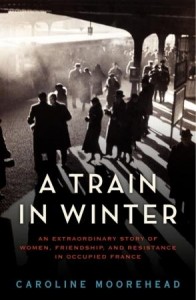
A Train in Winter by Caroline Moorehead

A Train in Winter by Caroline Moorehead strives to shed light on the occupation of France by Germany during World War II and the rise of the French Resistance, particularly the role of women within the resistance.  Of the 230 women who were arrested and sent to Auschwitz in Poland, less than 50 survived, and seven were alive when Moorehead began researching and writing this account of their story.  Impeccably well researched, the book takes readers behind the scenes of the French Resistance, and in many ways the level of detail presented can be overwhelming, especially for those not well acquainted with the ins and outs of the time period.  However, this iteration of facts, times, places, and events serves to demonstrate just how confusing a time the German occupation of France was for those who lived it and sought to overcome it.

“In a rising mood of hostility and mockery, they went around repeating their favourite jokes.  ‘Collaborate with the Germans?’ went one.  ‘Think of Voltaire . . . A true Aryan must be blond like Hitler, slender like Goring, tall like Goebbels, young like Petain, and honest like Laval.’  Another started with the question:  ‘Do you know what happened?’ At 9.20, a Jew killed a German soldier, opened his breast and ate his heart!  Impossible!  For three reasons:  Germans have no hearts.  Jews don’t eat pork.  And at 9.20 everyone is listening to the BBC.'” (page 34 ARC)

Clearly, Moorehead’s forte is in biography and she is deft at handling facts and ensuring that they are well explained in accordance with interrelated events and moments in time, but the text is often dry and tough to remain engaged in.  However, even among these facts, there are pockets of emotion where mothers decide to ship their children to foster families or relatives outside Paris so that they can continue working with the Resistance without endangering the lives of their children.  Still others opt to include their children in the fight to restore a free France.  Moorehead fills in some of the history and familial background in for certain women, but in a way, this litany of facts detracts from the ability of the reader to connect more emotionally to these women.

“Half a litre of black coffee in the morning watery soup at midday, 300 grams of bread — if they were lucky — with either a scrape of margarine, a bit of sausage, cheese or jam at night, was not enough to stop the women’s bodies shrinking and feeding on themselves, the fat disappearing first and then the muscles.  The food never varied.”  (page 203 ARC)

It is not until part two that some readers will become truly engaged in the story as the women are tortured and learn to cope with their sparse surroundings at Auschwitz.  The bravery and solidarity of these women is phenomenal.  Unless readers are willing to wade through the political ins and outs of the early French Resistance and occupation of France and the French police’s collaboration with German occupiers, they may not make it to the more engaging and heart wrenching parts of the story.  Moorehead has chosen to tell a true story and to ensure that those who were present have their say in how that story is told, but it may have served better for the story to focus on just a few of the women from the beginning, allowing them to be the face of the others’ struggles.

A Train in Winter by Caroline Moorehead is a tale of survival that needs to be told and remembered.  As one of the women from the resistance said after having survived cancer longer than expected, “Surviving is something that she is very good at.”  (page 6 ARC)


To visit the other stops on the TLC Book Tour, click the icon on the left.


About the Author:

The author of numerous biographies and works of history, including Gellhorn and Human Cargo, Caroline Moorehead has also written for The Telegraph, The Times, and The Independent. The cofounder of a legal advice center for asylum seekers from Africa, she divides her time between England and Italy.


This is my 74th book for the 2011 New Authors Reading Challenge.

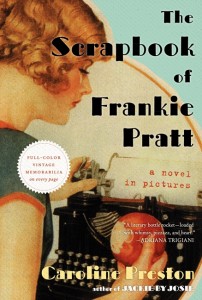
The Scrapbook of Frankie Pratt by Caroline Preston

The Scrapbook of Frankie Pratt by Caroline Preston is just that, a scrapbook of a young woman in the 1920s who is striving to make something more of her life than simply becoming a wife and mother.  Following WWI, many things have changed as women seek greater liberty from their “normal” lives — seeking suffrage, going to college, having careers.  Of course, there are boys and men because women always seek companionship, but educated women are looking for equals in a relationship, not a child to care for and guide.

Frankie Pratt has a deep sense of loyalty and responsibility to her mother, but at Vassar she becomes more independent and self-reliant after a few stumbles.  While this book is told through images and very little text, readers can see how Pratt grows from a naive young woman with big dreams into an educated woman with even bigger dreams.  It’s just plain fun to journey with Pratt from New Hampshire to Vassar College and from college to New York City and Paris.

Preston incorporates typewriter-written text among a variety of newspaper and magazine cut outs, paper dolls, photographs, and other elements to tell Pratt’s story.  The scrapbook creates a fairy tale like quality to the story, which is just how it should be given Pratt’s adventures.  One aspect of the book that’s missing is textured pages and more tactile scrapbooking materials or some semblance of that feeling readers would get with an actual scrapbook.  However, that’s a minor complaint given that the author easily captures readers’ hearts with little text and very visual pages.  The Scrapbook of Frankie Pratt by Caroline Preston represents a snapshot of one young woman’s life at a time when things are quickly changing for women and the world.  It’s a little powerhouse of intimate moments that coax emotional attachment and pure joy.

About the Author:

Author of the New York Times Notable Book Jackie by Josie, Caroline Preston pulls from her extraordinary collection of vintage ephemera to create the first-ever scrapbook novel, transporting us back to the vibrant, burgeoning bohemian culture of the 1920s and introducing us to an unforgettable heroine, the spirited, ambitious, and lovely Frankie Pratt.

Check out this video about the making of the scrapbook.

This is my 73rd book for the 2011 New Authors Reading Challenge.

To the End of the War by James Jones

To the End of the War by James Jones is a collection of unpublished fiction broken into short stories from the author of From Here to Eternity, which was made into a movie, and The Thin Red Line.   The stories in this collection were extracted from Jones’ first unfinished and unpublished novel, They Shall Inherit the Laughter, with the help of his daughter Kaylie and editor George Hendrick, who offers an introduction chock full of Jones’ early struggles to publish his writing.

This collection of previously unpublished writing is a series of interconnected stories in which Johnny Carter leaves the hospital after being wounded, goes AWOL, and moves back to his hometown in Illinois.  Carter finds that much of the frustration and aggravation he felt toward the military is shared by his comrades in arms.  Jones’ collection is more than stories; it is commentary on the machines behind war interspersed with poetry.  Carter’s life is very similar to that of Jones’ real life, including going over the hill as AWOL was called.

“‘That makes a wonderful picture,’ Eddie said slowly.  ‘Perfectly stylized and complete — on the surface.  But there are always so many unacknowledged undercurrents that nobody recognizes.'”  (page 120 ARC in “Air Raid”)

Carter is a story teller, but he easily connects with the outcasts of the army and society, seeking solace in their company.  At the same time, he’s looking for affirmation that what he sees about the military and about WWII is real.  Jones has crafted characters and situations that do not romanticize the war or the life of soldiers; instead, he wants to make their internal and external struggles raw and realistic, as he knows them to be.  There is a frankness to Jones’ prose, but there also are moments in which cliches are present when describing certain military leaders and interactions, like the Irish surgeon who patches up Gettinger and insists the man is ready for duty.  Most memorable are the truths uncovered here about war and being a soldier, especially a wounded soldier — life may look the same on the outside, but there is turmoil beneath the surface that must be dealt with.  However, dealing with that turmoil can be an unpleasant experience.

To the End of the War by James Jones provides a unique look at an unfinished novel that closely mirrors the life of the author about a time in history that has been glorified.  WWII has been considered part of the golden age and the rise of America as a world power, but was the experience as remarkable for the individual soldier as movies have romanticized it?  Jones suggests otherwise, pointing to the aggravation soldiers felt when they were told they would move back into combat after being severely wounded in battles for which they were ill-prepared.  There were rough adjustments for soldiers when they returned home, especially if they lost limbs, and there were frustrating moments when soldiers butt up against officers and the bureaucracy of the military machine.

About the Author:

James Jones (November 6, 1921 – May 9, 1977) was an American author known for his explorations of World War II and its aftermath.  He enlisted in the United States Army in 1939 and served in the 25th Infantry Division before and during World War II, first in Hawaii at Schofield Barracks on Oahu, then in combat on Guadalcanal, where he was wounded in action. His wartime experiences inspired some of his most famous works. He witnessed the Japanese attack on Pearl Harbor, which led to his first published novel, From Here to Eternity. The Thin Red Line reflected his combat experiences on Guadalcanal. His last novel, Whistle, was based on his hospital stay in Memphis, Tennessee, recovering from surgery on an ankle he had reinjured on the island.

Please visit Open Road Media for articles and videos.

This is my 72nd book for the 2011 New Authors Reading Challenge.

Soul Clothes by Regina D. Jemison

Soul Clothes by Regina D. Jemison is slim collection of poems that explore the Black experience from a spiritual perspective.  She has quite a bit to say about the struggles Black men have with confidence, kicking habits, staying with their women, but she also has a lot to say about her own experiences and even the civil rights movement.

“writing illuminates injustice
gives language to people’s pain
pictures to failing dreams” (From “Because a door in my soul opens”, page 5)

Broken into three sections — God Gave Me Words, Soul Clothes, and Divine Reflections — and the first section tackles wider societal topics of struggle and faith, while the Soul Clothes section tackles similar struggles on a more personal level.  In the final section, Jemison reflects on those struggles and what they teach each of us about ourselves and our place in the world, as well as how fleeting life really is.

“Civil rights activists told me to fight the battle

They didn’t tell me
I’d be weary, exhausted, disgusted, betrayed, disenchanted” (From “Hold on to God, a lawyer’s prayer”, page 7)

Some poems have an internal jazz-like rhythm with a message. However, this collection’s poetry is direct and without frills, and in many ways read less like poetry and more like sermons or pep talks.  All of these poems are direct and strive to get readers thinking about today’s world and the struggles of Black men and women.  Readers will enjoy her frankness, and her faith is strong.  Soul Clothes by Regina D. Jemison is a spiritual collection that strives to provide readers with an inside look at the Black experience and the strength of faith.

Since this was published in 2011, it is eligible for this year’s Indie Lit Awards.


This is my 71st book for the 2011 New Authors Reading Challenge.


This is my 32nd book for the Fearless Poetry Exploration Reading Challenge.

Mental_Floss The Book: Only the Greatest Lists in the History of Listory Edited by Ethan Trex, Will Pearson, Mangesh Hattikudur

Before I get to today’s review, I want to wish all my U.S. readers a Happy Thanksgiving. It is a holiday that should be shared with friends and family, and if possible please consider volunteering some of your time or food to those in need this season.

I hope everyone has some great food and fun with friends and family. Have a great holiday. My family will be joining Anna’s for some dinner and fun.

Ok, now for today’s review, which would make an excellent gift for the trivia buffs in your life.

Mental_Floss The Book: Only the Greatest Lists in the History of Listory edited by Ethan Trex, Will Pearson, and Mangesth Hattikudur is a collection of lists that span the 10 years that Mental_Floss has been in the business of collecting information that is odd, off-the-beaten path, and just down right funny.  The Website has not only trivia games, but also quizzes, blogs, and amazing facts (Here’s one of my favorites, especially since Muppets are the order of the day in my house these days — particularly Elmo)

The lists included in this book range in topics from impressing diplomats, presidents or other important people to how to lighten the mood in the emergency room.  There are lists for nearly every occasion.  Naturally, readers and writers will enjoy the list entitled “Lists for People Who Can’t Write Good,” which tells a tale of writers betting that Ernest Hemingway (though it may have been another writer) could not write a six word sentence that was a complete story with a beginning, middle, and end.  In the end, the other writers lost when the sentence written said, “For Sale.  Baby Shoes.  Never worn.” (page 183)

Another of the most witty entries in the collection is “What 10 Fictional Characters Were Almost Called,” which includes anecdotes about Bram Stoker, Gone With the Wind, and other famous novels’ and authors’ characters.  The editors also have lists of alternate names for famous novels, like 1984 and The Great Gatsby.  There are also famous words that were created by authors, Latin terms that you think you understand the meaning of, and little known stories about some famous writers.  Another of my favorites are the phrases attributed to Mark Twain that he actually did not say, like “It is better to keep your mouth shut and appear stupid than to open it and remove all doubt,” and phrases he did say, such as “Never put off till tomorrow what may be done day after tomorrow just as well.”

Mental_Floss The Book: Only the Greatest Lists in the History of Listory edited by Ethan Trex, Will Pearson, and Mangesth Hattikudur will whet anyone’s appetite for knowledge and fun facts to impress their friends with or to just have fun.  Trivia fans would love to add this to their collections, and readers should consider putting this on their wish lists this holiday season.  Flex those brains and join the fun.

More ways to Mental_Floss:

For more with mental_floss, become a fan on Facebook, follow them on Twitter, and visit their website: www.mentalfloss.com.  And of course, don’t forget to take the quiz on their Facebook page!  Or take it below:

Please enable javascript.

Twilight: The Graphic Novel Volume 2 by Stephenie Meyer and Young Kim

Twilight: The Graphic Novel Volume 2 by Stephenie Meyer and Young Kim is the second (my review of Volume 1) in the series providing Meyer’s fans with even more Edward and Bella, but in visual form.  Kim’s images are sharp and well shaded, but there are only a few splashes of color, mostly red.  The story line is basically the same, with Bella and Edward running from James and Victoria.

There is a bit more back story of Carlisle and James here, and some of the scenes are modified to adapt it for the graphic novel and speed up the action.  Kim is a deft talent with her shading and life-like images.  She takes the story to a new visual level, making her characters almost 3-D with their depth.  Twilight fans who cannot get enough of this saga will love to add these books to their collections, and others might simply enjoy the art in these volumes, especially how the clothes move with the vampires and humans so realistic that readers would wish to feel the fabric.

There are odd moments in the novel where “conversation bubbles” are empty except for an ellipses, which may be unnecessary, given the depth of Kim’s talent to create believable facial expressions.  Meyer is surely capitalizing on her saga’s fame, and she’s looking to her character notes and sketches to offer her readers more than just the same story.  Is there enough in these graphic novels to satisfy the less-than-die-hard fan?  Maybe.  What is the real gem in Twilight: The Graphic Novel Volume 2 is Kim’s talent as an artist.

Beyond the Scent of Sorrow by Sweta Srivastava Vikram

Beyond the Scent of Sorrow by Sweta Srivastava Vikram is a small collection of poems that draw parallels between nature and women.  Reminiscent of Ecofeminism, a political and social combination of feminism and deep ecology that draws parallels between women and nature and calls attention to the misuse of both by patriarchy, Vikram develops a dialogue about the harm done to nature and women across the globe.  Dominance of both by outside constructs — whether it is capitalism or man — has belittled the importance and strengths of both.  Rather than wallow in the pain and repression, Vikram’s verse strives to cultivate women and nature’s strengths to demonstrate there is a way to overcome the oppression.

"in colonies of Armani,
singing a sad melody, attracting worker bees and wasps

to give their friends honey, the walk on burning coals.
A trap before he shoots bullets" (from "It's a Man's World", page 4)

Specifically, Vikram discusses in the preface how there are parallels drawn between women and the eucalyptus tree, which were both once integral to society and are now thought of as commodities that can be replaced.  The collection is broken into two parts, with the first part seemingly more focused on the changing role of both women and nature in society and the dire consequences that occur because their worth is devalued, such as the displacement of birds and animals when the eucalyptus is cut down in “Eucalyptus Trees” (page 3).  Additionally, the poems in this section describe how women and nature are abused by society (not necessarily just by men), like in “Unholy Men” and “It’s a Man’s World” (pages 4-5).

In part two, the secrets held by women and nature are revealed — their strengths that must be hidden from society or be devalued outright.  Women and nature here are dichotomies in and of themselves in that they must present a strong front to the society that abuses them, while at the same time hiding their strengths and internalizing the devaluation of their gifts.

"Wearing a veil over my dilemma,
the skull of questions is hidden.

What was mine? Some could argue.
To make a point bland as sand, I say,

Ask the bird that lost its nest resting in the eucalyptus tree,
Mother nature faced irony with a damp silence --" (From "Silence", page 14)

Vikram’s verse is sparse and powerful, evoking reflection and a grander examination of the world around us. Beyond the Scent of Sorrow calls attention to the depravity of human action, but also to the hope that things can be changed if we have the will to change it.  Do not be fooled by the comparisons here in to thinking that men are the enemy because they are not; the collection is more about the decisions we make as humans and the consequences those decisions have on our world and ourselves.

Beyond the Scent of Sorrow by Sweta Srivastava Vikram is the third collection of hers that I’ve read, and since this was published in 2011, it is eligible for this year’s Indie Lit Awards.  It resonated with me for its references to Portugal, my father’s homeland, and for its echoes of a philosophy, social, and political movement I have studied and internalized over the years.

About the Poet:

Sweta Srivastava Vikram is an award winning writer, a Pushcart Prize nominated poet, novelist, author, essayist, columnist, educator, and blogger. Born in India, Sweta spent her formative years between the steel city of Rourkela, the blue waters of North Africa, the green hills of Mussoorie, and the erudite air of Pune before arriving in bustling New York. Growing up between three continents, six cities, five schools, and three masters degrees, what remained constant in Sweta’s life was her relationship with words.

Check out Diary of an Eccentric’s review.

This is my 31st book for the Fearless Poetry Exploration Reading Challenge.


This is my 3rd book and final book for the South Asian Reading Challenge.
The Taste of Salt by Martha Southgate

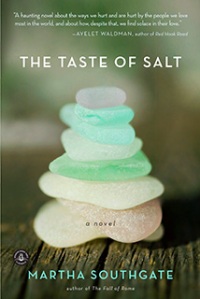
The Taste of Salt by Martha Southgate is the tumultuous tale of Josie Henderson and her family.  Josie is a successful scientist at Woods Hole Oceanographic Institution, but the journey that helped her achieve her dream was wrought with sadness and anger.  Her brother “Tick,” once her ally against their alcoholic father, has just emerged from another stint in rehab and seeking her help, which brings to the forefront everything Josie has tried to push aside and avoid.

The narrative begins in Josie’s point of view and then shifts to that of her mother, her father, her brother, and her husband Daniel.  Southgate is trying to tell a well-rounded story about heartbreak and disappointment, but readers may find the additional points of view unnecessary.  Even without the other perspectives, Josie’s voice is solid enough to carry the entire story.

“Nothing had changed and everything had changed.  I worked better than I had in months on my grant, suddenly inspired;” (Page 160)

Salt can build up and make the mouth water with its bitterness, but often the hunger for salt can take over.  In this way, Southgate’s novel is about that hunger that comes when we search to fill an emptiness within us with the nearest object or pleasure (i.e. alcohol, drugs, sex).  Josie’s brother and father are addicted to alcohol and/or drugs, but while Josie has become successful in her career and married an intelligent man, she’s looking to fill her own holes.  Her addiction is different from that of her father and brother, but no less dangerous.

“Life weighs a ton.  That’s why I love the water.  Nothing weighs anything there.”  (Page 7)

Southgate’s characters are multi-faceted and struggling.  Josie has pushed her issues to the back, but they are still a weight around her neck, dragging her down.  Tick knows he’s lost and continues to struggle for level ground, but their father has found redemption through the 12-step program and more.  He hit rock bottom and lost it all.  The story arc here is not surprising, and Josie doesn’t really lose her critical streak of other’s life decisions, even when she is choosing wrongly for herself.  However, perhaps that’s one of the problems with addiction.  Meanwhile, there seems to be a particular emphasis on race, but its connection to the addiction story line is not clearly drawn and leaves readers wondering what truths Southgate is trying to uncover.  It almost feels as though race is a crutch being used by the main character to justify her actions, which is bothersome.

Through frank prose, Southgate dives deep into the psyche of addicts to explore the turmoil created and the pull of home even when you try to run from the past.  The Taste of Salt is an exploration of the love and bitterness of addiction, how it tears families and individuals apart, and the depth of love that keeps families moving forward.

About the Author:

Martha Southgate is the author of four novels. Her newest, The Taste of Salt, is published by Algonquin Books. Her previous novel, Third Girl from the Left, won the Best Novel of the Year award from the Black Caucus of the American Library Association and was shortlisted for the PEN/Beyond Margins Award and the Hurston/Wright Legacy award. Her novel The Fall of Rome received the 2003 Alex Award from the American Library Association and was named one of the best novels of 2002 by Jonathan Yardley of the Washington Post. She is also the author of Another Way to Dance, which won the Coretta Scott King Genesis Award for Best First Novel. She received a 2002 New York Foundation for the Arts grant and has received fellowships from the MacDowell Colony, the Virginia Center for the Creative Arts and the Bread Loaf Writers Conference. Her July 2007 essay from the New York Times Book Review, “Writers Like Me” received considerable notice and appears in the anthology Best African-American Essays 2009. Previous non-fiction articles have appeared in The New York Times Magazine,O, Premiere, and Essence.


I originally read this for Book Club at Devourer of Books, with Linus’s Blanket.


This is my 70th book for the 2011 New Authors Reading Challenge.

A Wreath of Down and Drops of Blood by Allen Braden

A Wreath of Down and Drops of Blood by Allen Braden is a slim collection of poems, published as part of the Virginia Quarterly Review Poetry Series, and is steeped in bird imagery and rural life.  His images are at once beautiful and raw, bringing with it the full force of nature’s unbridled beauty and fearsome nature.  Even the most beautiful images take on an aggressive persona, like the catalpa petals in “Remembering Precious Landscape, but with an Elegy in Mind” (page 9) that become “splayed.”

On the flip side, nature’s sexuality emerges as the narrator recounts love and precious moments between lovers.  In “Flight Theory” (Page 4-7), “How many nights did I try/to retrace the complexities/of starlings with my hands over her skin?/”  For this poem alone, the collection is worth buying.  The imagery is most vivid and charged here, creating a world that readers can get lost in.

Moments of rural life and childhood memories also grace these pages as the narrator of each poem takes the environment and personifies it with emotion.  The connection to a father, but the distance of that connection will make readers wonder how well they really know/knew their parents.  Also the dichotomy of love is present, with its passionate supportive nature and its violent passion that can render relationships asunder, leaving only pain and hate.

Braden has crafted variations of the sonnet in this collection, but readers who do not revel in form poetry may not notice the variation.  However, these varied sonnets continue the poet’s careful attention to detail to bring out the brute nature of humanity and to affirm our place in the natural world through carefully balanced language.  A Wreath of Down and Drops of Blood offers readers a look at humankind in its basest moments, highlighting those emotions we often feel when we are alone but never speak of in the presence of others, even those who love us best.

About the Poet:

Allen Braden is the recipient of a creative writing fellowship from the National Endowment for the Arts and a residency from the Poetry Center and the School of the Art Institute of Chicago. His poems have appeared in such publications as the Georgia Review, Prairie Schooner, Shenandoah, Virginia Quarterly Review, and Witness.


This is my 69th book for the 2011 New Authors Reading Challenge.


This is my 30th book for the Fearless Poetry Exploration Reading Challenge.

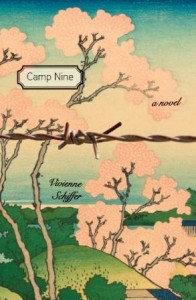
Camp Nine by Vivienne Schiffer

Camp Nine by Vivienne Schiffer is told from the point of view of Cecilia “Chess” Morton as she looks back on her time in Desha County, Arkansas, during the late 1940s when Camp Nine was erected near her childhood home.  As a child, she grew up without a father, but she had a mother who doted on her, though she often butts heads with Chess’ grandfather, who owned half, if not more, of the town, Rook.  Her grandfather controlled much of Chess’ land inheritance and sold a good portion of land, which he deemed useless, to the government for Camp Nine, which he was told would hold German prisoners of war captured during WWII, which was in full swing at the time the story takes place.

Chess is a curious child, but often her inquisitiveness gets shut down by the adults around her who dismiss her desire to know about her family, particularly the feud between her mother and Mr. Ryfle, who tends the grandfather’s land and often makes empty promises about helping Chess’ mother plant her land.  There is a great deal of mystery in the early stages of the novel, including her mother’s past in California and why Camp Nine is being used to house Japanese Americans.  Chess also laments the unspoken code of behavior expected of Blacks, like Ruby Jean who helped raise Chess’ mother.

“‘That river over there is the mightiest river in the world.  It wouldn’t do for there to be just any dirt around here.  The dirt here must have its own strong personality.  It won’t back down to the river.  It won’t back down to men.  You have to understand it and work with it.  Not against it.'”  (Page 121)

Schiffer crafts a narrative that stands apart from other accounts of WWII as it seeks to inject emotion into a situation that many Americans were removed from by hundreds of miles or more.  WWII was fought on distant shores, but its effects were devastating to Americans who soon became objects of suspicion.  However, this story is not just about the internment of Japanese Americans, but of the impact their internment had on the small towns in which their camps were built — kicking up racism and exacerbating classism.  In many ways, Schiffer has developed the setting into an additional character given that its bisected into two halves by the railroad tracks, with the enemy on one side and the townspeople on the other.

Chess’ mother is more progressive than other residents of Rook, but her ideas and actions have farther reaching consequences than she expects.  Schiffer’s characters are engaging and real, and set against the backdrop of this tumultuous time, a young girl is growing into adulthood and realizing that the world is vastly more complicated than she expected.  Camp Nine is captivating and raises questions about perception:  What we think of ourselves when faced with family secrets?  How we’d react in the face of injustice?

I’d consider this similar to Tallgrass by Sandra Dallas.

About the Author:

Vivienne Schiffer grew up in the Arkansas Delta town of Rohwer, site of the Rohwer Relocation Center, on which Camp Nine is based. She is an attorney and has practiced law for twenty-eight years in Houston, where she lives with her husband Paul and their family. Schiffer is currently at work on her second novel.

To visit the other stops on the TLC Book Tour, please click the icon at the right.

This is my 68th book for the 2011 New Authors Reading Challenge.