Quantcast

Does the Noise in My Head Bother You? by Steven Tyler With David Dalton

Does the Noise in My Head Bother You? by Steven Tyler with David Dalton is my first rock n’ roll memoir.  Steven Tyler, lead singer for Aerosmith, always struck me as very Bohemian, and he even says as much in his memoir.  Readers will be surprised to find that the memoir is Steven Tyler telling his story and not some writer’s idea of what his story should sound like.  It’s not prettied up.  As the pages turn, readers will find that Tyler remembers a great many details, even street names and house/apartment numbers.

(Aerosmith was considered a Boston band, and many were thrilled when the band set up Mama Kin Music Hall.  The band was often considered the bad boys of Boston, and the closure of the club caused some angst among followers who felt the band had snubbed its nose at the hometown.  But I digress.)

There is a no-holds-barred quality to the writing and the story in this memoir, but that’s just how readers would want it.  From his early influences of piano played . . . more like breathed . . . by his father to his drug use and religious upbringing as a Bronx native who summered in New Hampshire, all sides of Steven Tyler are exposed.  His childhood seemed pretty typical for any boy with artistic parents, with summers in the country, a love of animals, hunting and fishing, and being overzealous about girls and just about everything.  His family moved to Yonkers and he was enrolled in a private school.

Tyler’s memoir is a bit of back and forth as memories seem to crop up and send him off in new directions, but readers will get a good sense of how he is on a daily basis with this kind of narration.  Drinking, drugs, and girls are his main vices, but the music is a constant as he jams with his father’s band as a young teenager on drums and eventually grows into his own as a musician.

Tyler loves capitalizing words for emphasis and he does “talk” to himself from time to time.  Readers put off by swears and other vulgar language may find the memoir to gritty, but for a rock n’ roll artist, what else can be expected.  An unexpected surprise throughout the book are snippets of poems, though it is not clear when exactly they were written or why.  Readers also will learn about musical terms from dissonance to fifth notes, etc.

Does the Noise in My Head Bother You? provides readers with an inside look at what it means to be a rock musician, what makes them great at what they do, and how they can maintain their success over the long term in spite of the downfalls and obstacles they face.  Steven Tyler offers more than just an inside look at his life; he’s offering an inside look at music, artistry, and the drive to succeed along the way.
 

This is my 58th book for the 2011 New Authors Reading Challenge.


Seeking help at a drug abuse treatment center is necessary for people who have been abusing drugs for a long time.

The Chameleon Couch by Yusef Komunyakaa

The Chameleon Couch by Yusef Komunyakaa — broken into three sections — challenges the mind and the internal rhythm of our souls.  It challenges our preconceptions about everything from music to what it means to be an African American.  In the form of aubades and odes, Komunyakaa evokes song throughout the collection, which have readers very focused on how the rhythms of the poems impact them beyond the words spoken.  The poet is striving to reach not only the logical mind here, but something deeper, ethereal, like a soul.

There are allusions in this volume that are religious, musical, and mythological, but these do not detract from the poems’ power.  “Kindness” (page 28), is one of the most dense poems in the collection, filled with a number of allusions including the consumption of salt as a sign of friendship.  However, even if not all the references are clear at first glance, it is clear that kindness is often recognized even in the bleakest of moments and in the darkest of places even if someone has been a “stranger” to it.

There are a range of emotions and thoughts in this collection, the narrator of these poems changes like the lizard, adapting to the moment and blending into the environment he finds himself in. The cover is reminiscent of the dark jungle of our lives as we try to navigate our way sometimes in the shadows for the silence of observation, but oftentimes to hide from the actions and decisions we have made or are frightened of making.  Meanwhile, other decisions seem inevitable and natural.

Excerpt from:  Conceived in a Time of War (page 37)

Because your mother & father kissed
beneath a hail of Roman candles,
you crawled out of one thousand
tiny deaths, stubborn as aster
in stony clay.  A goddess of dawn
scooted under a zing of barbed wire
to witness your birth. . . .

Komunyakaa’s poems have a musicality equivalent to Jazz.  “Jazz has space, and space equals freedom, a place where the wheels of imagination can turn and a certain kind of meditation can take place.  It offers a meditational opportunity,” he once said.  His poems are just like this, providing moments of pause, allowing readers to interact with the lines and images.  “How many ghosts followed us/into the basement to Muniak’s bepop gig/to hear the saxophone argue with the piano?/” from “Aubade at Hotel Copernicus” (page 33-4).

Komunyakaa is paying homage to all forms of the human spirit — good or bad — in The Chameleon Couch, but the poems are never indifferent. In “A Translation of Silk” (page 17), “One can shove his face against silk/& breathe in centuries of perfume/on the edge of a war-torn morning/where men fell so hard for iron/they could taste it. Now, today,/a breeze disturbs a leafy pagoda/printed on slow cloth. A creek/begins to move. His brain trails,/lagging behind his fingers to learn/suggestion is more than radiance/” Some poems are about the legacy we leave behind, the anger about historical events like the Holocaust, and the quieter moments each of us shares with our lover or family. Another extraordinary candidate for the 2011 Indie Lit Awards and the “best of” list.

Also please check out the poem from this collection that I featured in the 117th Virtual Poetry Circle.

About the Poet:

Yusef Komunyakaa is an American poet who currently teaches at New York University and is a member of the Fellowship of Southern Writers. Komunyakaa is a recipient of the 1994 Kingsley Tufts Poetry Award, for Neon Vernaculaand the 1994 Pulitzer Prize for Poetry. He also received the Ruth Lilly Poetry Prize. Komunyakaa received the 2007 Louisiana Writer Award for his enduring contribution to the poetry world.

His subject matter ranges from the black general experience through rural Southern life before the Civil Rights time period and his experience as a soldier during the Vietnam War.

This is my 26th book for the Fearless Poetry Exploration Reading Challenge.

Waking by Ron Rash

Waking by Ron Rash — a collection of poems broken up into five parts — and the cover’s barren landscape with its snowed in vehicle is a perfect depiction of the desolate landscape presented in the first selection of poems.  From “Woodshed in Watauga County” (page 7) “as mud daubers and dust motes/drifted above like moments/unmoored from time, and the world/” and from “Junk Car in Snow” (page 8), “No shade tree surgery could/revive its engine, so rolled/into the pasture, left stalled/among cattle, soon rust-scabs/”   Rash does desolation and emptiness well, but he also just as easily paints vivid imagery reminiscent of lucid dreams and the lingering impression of those dreams during the stages of waking.  In “Milking Traces” (page 5), “those narrow levels seemed like/belts worn on the hill’s bulged waist,/if climbed straight up, tall steps for/stone Aztec ruins–though razed/”

In section two, many of the poems focus on farming and the hard work that comes along with cutting through the wilderness to build a life.  In many ways, this could be construed as the cloudy ascent from sleep or the struggle of growing up from childhood into adolescence and adulthood.  Each journey can be arduous, but the destinations can be well worth the struggle or so Rash’s poems suggest.  In “Pocketknives” (page 18), “vanity of men caught once/when dead in a coat and tie,/so ordered from catalogs,/saved and traded for, searched for/in sheds and fields if lost, passed/father to son as heirlooms,/like talismans carried close/to the bone, cloaked as the hearts/”  But there is a subtly to the hope in these poems.

Each poem in this collection relies heavily on nature imagery and the suppositions the poet makes, and Rash seems to be reflective and regretful in some, while content and accepting in others.  Many of these poems can weigh heavily on the reader, especially if read in sequence.  The prologue poem really sets the tone for the collection, which can fulfill a dreary day or provide a modicum of solace for those who are feeling reflective.  The poem suggests that readers pause, reflect on their lives and moments with family and friends to see the true nature of them rather than rush through daily activities and becoming absorbed in the mere movement of life.

Resolution (page xi)

The surge and clatter of whitewater conceals
how shallow underneath is, how quickly gone.
Leave that noise behind.  Come here
where the water is slow, and clear.
Watch the crawfish prance across the sand,
the mica flash, the sculpen blend with stone.
It's all beyond your reach though it appears
as near and known as your outstretched hand.

Waking by Ron Rash is a solid collection of poems that shifts between reality and dreams and nostalgia and how things are.  Readers interested in the Southern traditions and culture will see a brighter presence of the majestic mountains and sparkling rivers.  They will see nature as it is and how southerners interact with it and build lives from the frontier that still exists.

About the Poet:

Ron Rash is the author of three prize-winning novels: One Foot in Eden, Saints at the River, and The World Made Straight; three collections of poems; and two collections of stories. A recipient of the O. Henry Prize, he holds the John Parris Chair in Appalachian Studies at Western Carolina University.

This is my 25th book for the Fearless Poetry Exploration Reading Challenge.


This is my 57th book for the 2011 New Authors Reading Challenge.

Mr. Darcy’s Bite by Mary Lydon Simonsen

With Halloween and all of the blog-related events — RIP, All Hallow’s Eve, Frightful Fall Read-a-Thon, and Halloween Hootenanny — I’ve selected a few fun horror/spooky reads for October.

I have not officially joined any of the challenges or read-a-thons just because I never know how much reading I can do these days, but I am hosting Stephen King’s IT read-a-long with Anna in which we discuss the 1,000+ page book once per month through the end of the year.

First spooky read for October is Mary Lydon Simonsen’s Mr. Darcy’s Bite, which I shamelessly admit attracted me with its ominous cover.

Simonsen’s latest Pride & Prejudice incarnation, Mr. Darcy’s Bite, begins after the reunion between Elizabeth Bennet and Fitzwilliam Darcy at Pemberley.  However, not all is pleasant in paradise because Darcy’s behavior has become peculiar, and he visits her at Longbourn for several months, though with long gaps between visits.  Lizzy’s mother keeps pressuring her about when she’s going to get engaged, and Lizzy is becoming concerned that Darcy’s affections for her are not as strong as she had thought.  She has plenty of time to stew on her speculations about his behavior, but just as she is about to call him out on his absences, he invites her back to Pemberley.  This is where everything changes for them and the challenges begin.

“‘You are very bossy.  You order people around with your harsh tone of voice or by pushing them about with your muzzle.  You may be the master of Pemberley, but you will not be the master of me.  I must be free to speak my mind.’

‘When have you not spoken your mind?’ Darcy stepped away from her, and with his hands behind his back, he recited word for word a part of Elizabeth’s refusal of his offer of marriage.”  (page 69 of ARC)

A dark secret is revealed, and Lizzy must determine whether in addition to their class and social differences, this secret changes her feelings for Darcy.  Can she overcome the secrecy, live with keeping secrets from her family and friends as a member of the Darcy family, and the monthly absences of her husband?  Simonsen captures Lizzy and Darcy’s characters so well from their moments of pride to their moments of misunderstanding.  Like her other novels, obstacles are thrown in the path of our love birds, and new characters are introduced, including the conceited Lady Helen Granyard who could rival Austen’s Lady Catherine in pride and social engineering.

Lizzy’s jealousy of Helen’s beauty pales compared to her worries that Helen’s intimate knowledge of the Darcy secret could supplant Darcy’s love for her.  What’s also a nice surprise here is that Georgiana gains strength in social encounters, enabling her to confront Lady Catherine at one point when she normally would have demurred.  Simonsen evolves the characters of not only Darcy and Elizabeth in this paranormal tale, but that of her secondary characters Georgiana and Anne de Bourgh.

If you’re an Austen purist who can let their hair down a bit, Mr. Darcy’s Bite could fit your need for the paranormal this Halloween season without scaring you senseless.  Simonsen’s work is always a delight to read, and Mr. Darcy’s Bite is no exception.

About the Author:

Mary Simonsen has combined her love of history and the novels of Jane Austen in her first novel, which explores universal truths about love and conflict that cross generations and oceans. The author lives in Peoria and Flagstaff, Arizona.

Check out the rest of the stops on Mary’s tour.

Fitzwilliam Darcy Rock Star by Heather Lynn Rigaud

Are you looking for an edgier Lizzy and Darcy story? Fitzwilliam Darcy Rock Star by Heather Lynn Rigaud is the hot little number for you.  The stage is set with furious rock and roll, sex in all positions and places, and yes, even drugs.  If you don’t like foul language or graphic sex, you won’t want to read this one because rock stars are living on the edge and rough around the edges.

Rock and roll is a hard business and in it band members are chewed up, spit out, and often become divas or broken down.  Darcy already has made the big time with his band, Slurry, but unlike the loving family he had in Austen’s novel, Pride & Prejudice, his parents were too busy to raise him, but when Georgiana was born, things changed.  Meanwhile, the main Bennet girls — Jane and Elizabeth — are in an up-and-coming band, Long Borne Suffering, with Charlotte Lucas.

“He realized he was being a voyeur, watching an intimate act.  She was making love to her instrument.  He knew he should look away,but he couldn’t.  His eyes were locked on the way her hands caressed the strings and pulled the wooden body closer to herself.  When she started singing softly, he was lost.”  (page 137 ARC)

Some readers may find the graphic intimate moments between the characters too much to handle, and some scenes may be over the top and unnecessary.  While in most instances the graphic and almost-masculine descriptions of those scenes work for the casual sex scenes, readers may find they are too harsh for the love of Darcy and Lizzy.  However, the look at the rock star world is eye-opening in terms of hard work, time management, PR, and emotional toll for Lizzy, Jane, and Charlotte.  Even veterans like Darcy, Charles Bingley, and Richard are affected by the touring schedule and the press hounding them. Wickham makes an appearance as a former singer for Slurry turned music video director/producer, and he’s even more sinister than he was in Austen’s novel.  His characterization here is exceedingly sinister, but necessary in this brash modern world created by Rigaud.

While Rigaud’s characters stray far from their Austen origins, particularly the character of Charlotte, the playful banter found in Austen remains, though taken up by Charlotte and Richard as they navigate the fine line between relationship and backstage fling.  Lizzy and Darcy step aside to give equal time to Charles and Jane and Charlotte and Richard, and the musical talents of all three shine individually and together on stage.  Adding to the conflict is the desire of these young women to make it on their own without the media thinking they are sleeping their way to the top with Slurry.

“‘Charlotte muttered.  ‘You know what a perfectionist Jane is, and she wanted Charles to know the songs for your set, so they started playing your songs, then they started on her songs, then they were playing their favorite songs.’

‘Eighties music?’ Richard interrupted her.

Charlotte nodded, her eyes bugging out in mock annoyance.  ‘I swear they were doing Prince when the bus finally pulled up.’

Everyone smiled.  ‘That’s Charles,’ Richard confirmed.

‘Oh my God!  I was ready to gnaw off my arm and beat them both over the head with it.’

Richard laughed.  ‘A one-armed drummer?  Now who’s living in the eighties.'”  (page 141-2 ARC)

There is a great deal to love about this novel, but it also has flaws from dialogue that goes on too long about mundane details and goodbyes to too many sex scenes in a row.  Readers will be captivated by the tension created by the music world and what it does to the relationships of these characters, especially as Richard’s sexual prowess is ramped up a few notches as a rock star drummer.  But even Rigaud’s characterizations of tensions within a band — from the jealousy drummers feel about the frontmen/women to the worries of female bands about making it without being asked for sexual favors — ring true.

Fitzwilliam Darcy Rock Star by Heather Lynn Rigaud has created a modern retelling of Pride & Prejudice, but Austen purists beware, this is not the same chaste Darcy and Elizabeth you know from Austen’s novel.  Many of the elements that keep Darcy and Elizabeth apart are still here — misunderstandings and words spoken without much thought injure each of them quickly — but Elizabeth is not as self-assured as she is in Austen’s work and Jane is more confident here.  Charlotte is the most changed, cast as a wild woman who secretly wants a fairy-tale ending, though with herself in charge.

Readers looking for a hard and fast look at the music world and the corruption and benefits it can bring will enjoy Rigaud’s unique perspective and characterizations.  Take a ride on the groupie bus and enjoy the Slurry and Long Borne Suffering tour.  Fitzwilliam Darcy Rock Star by Heather Lynn Rigaud is a whirlwind of emotions, sex, and satisfaction.

About the Author:

Heather Lynn Rigaud spends much of her time thinking about how Regency-era characters would exist now, and how a wife and mother would have lived in the past. She is a professional writer with degrees in music therapy and teaching who lives with her husband and two sons in Kingston, New York.

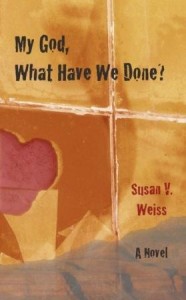
My God, What Have We Done? by Susan V. Weiss

Normally, I’ll write up my own summary for a book, but this week has been hectic, so I’ll provide you with summary from Amazon:

“In a world afflicted with war, toxicity, and hunger, does what we do in our private lives really matter? Fifty years after the creation of the atomic bomb at Los Alamos, newlyweds Pauline and Clifford visit that once-secret city on their honeymoon, compelled by Pauline’s fascination with Oppenheimer, the soulful scientist. The two stories emerging from this visit reverberate back and forth between the loneliness of a new mother at home in Boston and the isolation of an entire community dedicated to the development of the bomb. While Pauline struggles with unforeseen challenges of family life, Oppenheimer and his crew reckon with forces beyond all imagining. Finally the years of frantic research on the bomb culminate in a stunning test explosion that echoes a rupture in the couple’s marriage. Against the backdrop of a civilization that’s out of control, Pauline begins to understand the complex, potentially explosive physics of personal relationships. At once funny and dead serious, My God, What Have We Done? sifts through the ruins left by the bomb in search of a more worthy human achievement.”

My God, What Have We Done? by Susan V. Weiss combines two seemingly divergent topics under one roof — a marriage and the making of the atomic bomb — and readers get to watch it build to a crescendo and explode.  Told in first person point of view, readers get a real taste for how obsessed Pauline is with Oppenheimer, so much so that her honeymoon with Clifford is spent in Los Alamos where the atomic bomb was created.  This is where readers first meet them, and may be stunned by the emotional distance between the newlyweds.  As the story begins unfolding, Pauline continues to exhibit emotional distance, as if she is disconnected from her feelings and every moment of her life must be plotted and thought out thoroughly before she acts.

The stories of Pauline and Clifford’s marriage and how it builds is in parallel to the third person POV tale about the building of Los Alamos and the atomic bomb.  While Weiss uses an interesting premise, particularly the bomb itself to signify the creation of relationships and families and their destruction, the first person POV of Pauline’s life is more captivating.  She’s pulled between her desires to be a wife and mother and her old life, feeling a disconnect from her friends and life in Philadelphia, but there is a greater desperation within her.

“Although I envied his serenity, I sometimes wished I could get him to grab onto some of my challenges, to declare himself, to fight back.”  (page 12)

While Clifford is often compared to Oppenheimer by Pauline for his angular facial features and his bookish intelligence, she acts more like the scientists as she parents her son.  Like the atom bomb they created to end the war — all wars — Jasper is an experiment to be tinkered with and nurtured.  Readers will often question Pauline’s emotional state and whether she has the depth necessary to care for a child, herself, and her husband.  She’s an enigma, much like Oppenheimer was.  Readers easily find the parallels in this narrative, but Weiss’s characters appear to be more like caricatures of people, rather than complex human beings.

My God, What Have We Done? by Susan V. Weiss is an attempt to draw wider conclusions about logically minded people, and will prompt readers to self examine.  However, the struggle through the shifting points of view and story lines may bog down some readers’ enjoyment of her tale.  Ultimately, the premise was unique, and the struggle of a new housewife was interesting, but the Oppenheimer sections were a bit dry and read like a laundry list of encounters rather than a fictionalized account of true events.


Please check out the rest of the stops on the TLC Book Tour by clicking the tour host icon at the left.


About the Author:

Susan V. Weiss is a writer and a teacher who lives in Burlington, Vermont. Her stories have appeared in literary magazines and anthologies. In addition to teaching adult literacy and expository and creative writing, she has initiated community-outreach writing projects for offenders, refugees, and homeless people.


This is my 56th book for the 2011 New Authors Reading Challenge.

To the Moon and Back by Jill Mansell

To the Moon and Back by Jill Mansell tackles relationships on a whole new level and looks at what it means to love someone for better and for worse and in sickness and in health.  While the novel is infused with Mansell’s humorous style, it is more serious than her other novels.

Ellie Kendall, the main protagonist, finds that losing the love of one’s life is not the end of the world, though it is devastating.  She finds a way to move on with her life, though she’s cut herself off from all of her friends and family to do it and feels as though she’s drowning in sympathy.  Meanwhile, Zach McLaren is a workaholic with no idea what his life is missing until Ellie literally walks through and into it.

“It was starting to concern her, just slightly, that it wasn’t quite normal to be doing what she’d been doing for the last year.  Because Jamie wasn’t here anymore.  And he wasn’t a ghost either.  All she did was conjure up a mental image of him in her mind, talk to him and have him talk back as if he were real.”  (page 18 of ARC)

In addition to the two main leads, there are some great side characters who are fleshed out really well, including the U.S. actor/father-in-law Tony Weston and the former girl band bad girl Roo.  Todd, who was one of Ellie’s good friends before her husband died, is not as well fleshed out as the others — at least initially — but readers won’t mind because he’s sort of a stand in for Ellie’s deceased husband much of the time.  Roo is a delight with all of her antics and her selfish nature, which as always gets turned on its ear when she realizes that the man she’s dating is a cheater.

Mansell’s got a wit about her unlike other authors in her genre, she’s connected to her characters in a way that makes readers feel like they are hanging out with friends, even if those friends are formerly famous. Ellie has a great deal of grief to deal with, while Zack must navigate his relationship with her very carefully and wait for her to be ready to begin again.  Readers will enjoy the realistic way in which their relationship blossoms and their tentative interactions as they become friends and more.  Todd and Tony round out the narrative, showing how events can change relationships in unexpected ways.

Readers seeking happy endings at the end of an evolutionary road will adore To the Moon and Back by Jill Mansell.  When you need a pick me up, her books are there to cheer you up, provide a spot of romance, and tug at your heart strings.

Around Germantown (MD) Then & Now by Margaret Coleman

Around Germantown (MD) Then & Now by Margaret Coleman takes a look at what Germantown was like before 1980 and what it was like after the Maryland-Nation Capital Park and Planning Commission adopted the area.  Coming from Massachusetts where many of the towns are older than the actual state and older than the United States, I had no idea that towns/cities were actually planned out ahead of time.  I really thought that they just came about when people started settling into an area and the businesses just cropped up naturally to service those people.  Silly, me.

Germantown, Md., is made up of six villages and the heart of the city has been moved a couple of times as populations and transit projects changed.  My husband and I looked at this book together and I told him we must have been destined to move here, since some of the founding families have the same last name as those of the town we grew up in.  The town also was settled by German farmers in addition to the English farmers already here.

We really enjoyed the photos of places that were and what they came to be, though it saddened us that so many of the original historic structures in the town had burned (on purpose or accidentally) and were not restored and of those that were restored were moved to other locations.  Unfortunately, progress seems to be the mainstay of this town as historic homes have been replaced by gas stations and other signs of commerce.  The tone of the book doesn’t seem as maudlin as I do about it, however.

Around Germantown (MD) Then & Now by Margaret Coleman is an interesting peak into the history of this town, its people, and its growth over the years.  I’d recommend it to locals interested in the area they have moved to or to those who have lived here but know little of its history.  I’ve always enjoyed these types of books even if I don’t live in the areas discussed.  The inclusion of photos of places then and now rounds out the story.

This is my 55th book for the 2011 New Authors Reading Challenge.

She by Saul Williams

She by Saul Williams is a collection of interconnected musical poems coupled with a collection of images from Marcia Jones that tells a story about a woman and their journey together.  On his Website, he says, “This book chronicles my thoughts and feelings as a young man working through an early relationship with an amazing visual artist as we embark on adulthood and parenthood in the same breath.”

Each of Williams’ poems has a unique rhythm to it, and should be read aloud for effect.  Each is as expressive as you would expect Williams to be in real life, becoming an extension of himself and his digital, visual, and audio art.  Unlike other collections, Williams’ She is a story beginning to end with a prologue and epilogue and prose poetry.  The nameless She is integral to the journey, a connection to the past and the future, illustrated through short lines and “out loud” cadence that screams to be read aloud.

While readers could dip in and out of the collection and experience it in small chunks, it is best to read it cover to cover to grasp its full impact. Tackling issues of separatism, aging, and opposing desires, Williams pinpoints the harshest of realities and deals them a deft blow when he demonstrates the commonalities between us all. Because these poems do not have titles, the clear intent is to create a continuous narrative in which “calamity makes cousins of us all” (page 22) and “we live.” (page xi)

Nature imagery and personification can make the issues more vivid, “there is a gathering in the forest. the leaves have refused to change. they say that they are tired of things never remaining the same, of dying to be reborn, of winter’s dry withered hand.” (page 7) But lest the images become to heavy, there are moments of whimsy as well.

I have seen the truth
many times
but for the first time
she saw me

I wore suspenders
for the judgment
in my pants

(page 13)

As the relationship goes down hill, readers will not a dramatic change in the poems as the narrator struggles to let go for the sake of love. “I am a canvas/painted over/whether it be by your hand/or mine own.” (page 113) The images included in the book are unusual and appear to mix mediums, and often resemble pages from a scrapbook that a mother would keep of her children. In a way these pages resemble Williams’ play on words as he picks them apart and alters their definitions to explain the moment he is in.

Reading She alone in a room is not enough. It should be read aloud, shared with others, and most who pick up a copy will do just that. Seeing Saul Williams read it would make it even better, but its up to you to find out where he’s reading or performing next. There is not enough that can be said about this collection, except go read it!

Some reason Saul reminds me of Don Cheadle in this photo.

About the Poet:

Saul Williams is an American poet, writer, actor and musician known for his blend of poetry and alternative hip hop and for his leading role in the 1998 independent film Slam.

From Wikipedia about Williams and Marcia Jones’ relationship:

Williams and artist Marcia Jones began their relationship in 1995 as collaborative artists on the Brooklyn performance art and spoken word circuit. Their daughter, Saturn, was born in 1996. His collection of poems S/HE is a series of reflections on the demise of the relationship. Marcia Jones, a visual artist and art professor, created the cover artwork for The Seventh Octave, images through-out S/HE in response to Williams, and set designed his 2001 album Amethyst Rock Star.

This is my 24th book for the Fearless Poetry Exploration Reading Challenge.


This is my 54th book for the 2011 New Authors Reading Challenge.

Buoyancy and Other Myths by Richard Peabody

Buoyancy and Other Myths by Richard Peabody is a slim collection that gets at the heart of family drama broken into three parts:  Shooting Myself in the Foot, Kissing Games, and Between Funerals.  The narrator in these poems ages and matures from a young boy eager to help his father but afraid of falling short to an older man similarly worried about falling short, but more accepting of reality.

Unlike the young man in “Family Secrets” who is shaking sense into his brother, the man in the latter poems, like “Orbits,” comes to the realization that the past cannot be hidden and regrets do nothing but hold you back.  You must roll with the punches.  What is striking in some of these poems is the calmness of the narrator, even as violent thoughts or actions are being displayed.  For instance, in “Family Secrets” (page 11) — which is a powerful way to start a collection — “Music isn’t enough tonight./Scratching, clawing, eyes like stones./If I erase him I will expand./His sins wiped clean. Nowhere/for him to leer from. No perch/or receptacle that can hold that/particular weight. He gives up./”  Is his brother still living and he wishes that he didn’t have to remember him or is it what happened to his brother that he does not wish to remember and it would be easier to erase him entirely?

Nearing the end of the collection, it seems as though this narrator has found peace or at least outwardly demonstrates contentment, or is it resignation?  In “I Live Behind a Bakery” (page 55-6), “Only most days/it’s easier/to just read a book/with that smell/all around me/and think buttery thoughts.//”  Peabody has a lot of cutesy ideas that he plays with in his poetry, like living behind a bakery or dating vampires, but these images are metaphors for other things like the contentment that you find in the simple things of life or even in the relationships you have.  However, there is an undercurrent in these poems urging readers to move beyond contentment, leap into more dangerous and possibly fulfilling territory.

Guitar Player (page 36)

Fingers know secrets
that eyes can’t understand.

While not all the poems are memorable or strong, there are a few gems within the collection’s pages that are worth reading more than once. Some are simply powerful in a few lines. Buoyancy and Other Myths by Richard Peabody explores the nature of relationships and how they propel us to greater things to seek out new directions and yes, to grow.

About the Poet:

Richard Peabody, a prolific poet, fiction writer and editor, is an experienced teacher and important activist in the Washington , D.C., community of letters. Peabody is the editor of Gargoyle Magazine (founded in 1976), and has published a novella, two books of short stories, six books of poems, plus an e-book, and edited (or co-edited) nineteen anthologies including: “Mondo Barbie,” “Conversations with Gore Vidal,” “A Different Beat: Writings by Women of the Beat Generation,” and “Kiss the Sky: Fiction and Poetry Starring Jimi Hendrix.” Peabody teaches fiction writing for the Johns Hopkins Advanced Studies Program.

This is my 23rd book for the Fearless Poetry Exploration Reading Challenge.


This is my 53rd book for the 2011 New Authors Reading Challenge.


This is a stop on The Literary Road Trip since Richard Peabody is a local Washington, D.C., area poet.
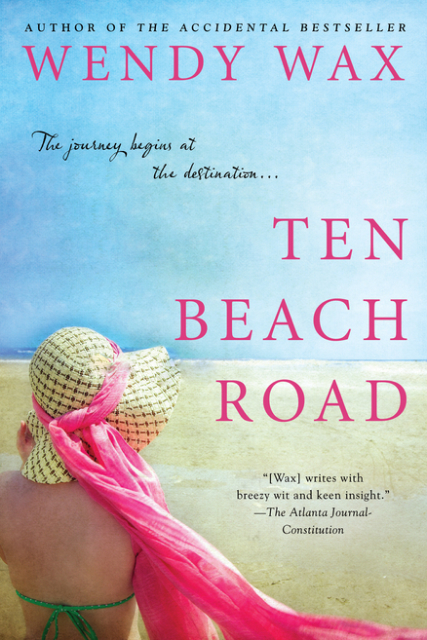

Ten Beach Road by Wendy Wax

Wendy Wax has an excellent beach read with substance in Ten Beach Road for those of you looking for an end of summer winner.  Ripped from the headlines, these three women find that their only remaining asset is a rundown beach house (Bella Flora) in Florida after Malcolm Dyer — aka Bernie Madoff — stole their life savings.  Madeline’s life has been flipped upside down when she realizes her investment advising husband not only lost his clients’ money in a giant Ponzi scheme perpetrated by Dyer, but also that of his family.  Meanwhile, Avery has discovered that her father’s estate was similarly lost just as her stint as a co-host of Hammer and Nail on HGTV as her ex-husband edges her out with his elbow.  Nicole’s situation is a bit different because she had a personal connection to Dyer and her trust was more born of that loyalty than a financial desire, which makes her financial crash all the more crushing.

“‘Yes, it’s a fine old home,’ the Realtor said as if their surprise had been of joy.  ‘And as you’ll see a large portion of it has been renovated.  It just needs a little tender loving care.’

‘More like hospitalization,’ Nicole said.  ‘Or a team of paramedics.'” (page 56)

Add to the mix, a former childhood male friend, Chase, who had the perfect family life that Avery wanted and an FBI agent, Giraldi, stalking Nicole and looking for Dyer, and you’ve got a bit of mystery and sexual tension.  Wax has a down-to-earth sense of humor that livens up the playful interactions of three strangers, who soon become friends offering advice and support as they deal with family drama.  Her characters are varied and out to prove themselves to one another, their families, and everyone else, demonstrating their strengths and hiding their weaknesses as best they can.  Avery is the degreed architect portrayed on television as an airhead; Nicole is the bombshell who makes her living pairing up the rich and famous; and Madeline is the trunk of her family tree, the one that holds it all together just as the hurricane is set to rip everything apart.

“The army had spread out to attack different sections of the garden.  John Franklin sat on a camp chair that had been placed near the fountain, a smile on his face as he watched his wife command her battalion.

‘Mrs. Franklin wanted to get started before it got too hot,’ Avery said.  ‘I don’t think a single one of them is under seventy-five.  They’ll fill in with some new plantings after the house has been pressure washed and painted.’

Nicole moved down the hall to peer out the rear windows above the loggia; that was the one advantage in being last in line — she didn’t need to hold on to her spot.  Only her bladder.  ‘Good God, that woman is climbing up that tree.  I think she’s got a . . . ‘

The whir of an electric saw drifted p to them followed by the crash of a limb landing on concrete.”  (page 237)

What makes this novel more than women’s fiction is the mystery of where Malcolm Dyer is and how tragedy can either pull families apart or bring them together.  Readers searching for a summer read to close out their holiday season should seriously consider Wendy Wax’s Ten Beach Road for its tropical locale — Florida — its hot men — Chase and Giraldi — and the triumph of its female leads as they find their inner strength and pursue their dreams of redemption.

This is my 52nd book for the 2011 New Authors Reading Challenge.

Twilight: The Graphic Novel, Volume 1 by Stephenie Meyer and Young Kim

Twilight: The Graphic Novel, Volume 1 is adapted from Stephenie Meyer’s best seller and the art is done by Young Kim.  Purchased as a gift, I grew curious about the art work inside since I’ve already read the series of books.  Meyer is a storyteller, but this graphic novel rendition of her story breathes new life into the supernatural love story with its crisp imagery and the stark contrasts generated by its black and white shading and sparse use of color.

Given that I normally don’t review graphic novels, I was more impressed here with the illustrations.  Kim is a stunning talent and demonstrates a clear ability to render lifelike faces to humans, vampires, and werewolves alike.  Don’t expect the images of Kristen Stewart or Robert Pattinson here.  Kim has imagined Bella and Edward in her own way and has pared down Meyer’s text significantly, allowing the pictures to carry the story.

I found the graphic novel adaptation mildly enjoyable for its images, but the text was minimal at best and much is left to the reader’s imagination.  Moreover, I noticed that some liberties were taken with Meyer’s story, much like what you would expect a movie screen writer to do, so it is clearly an adaptation not a reiteration.  Twilight: The Graphic Novel, Volume 1 by Stephenie Meyer and Young Kim is an interesting collaboration to round out any Twilight lover’s collection.