Quantcast

320th Virtual Poetry Circle

Welcome to the 320th Virtual Poetry Circle!

Remember, this is just for fun and is not meant to be stressful.

Keep in mind what Molly Peacock’s book suggested.

Look at a line, a stanza, sentences, and images; describe what you like or don’t like; and offer an opinion. If you missed my review of her book, check it out here.

Today’s poem is from Pablo Neruda:

Here I love you.
In the dark pines the wind disentangles itself.
The moon glows like phosphorous on the vagrant waters.
Days, all one kind, go chasing each other.

The snow unfurls in dancing figures.
A silver gull slips down from the west.
Sometimes a sail. High, high stars.
Oh the black cross of a ship.
Alone.

Sometimes I get up early and even my soul is wet.
Far away the sea sounds and resounds.
This is a port.

Here I love you.
Here I love you and the horizon hides you in vain.
I love you still among these cold things.
Sometimes my kisses go on those heavy vessels
that cross the sea towards no arrival.
I see myself forgotten like those old anchors.

The piers sadden when the afternoon moors there.
My life grows tired, hungry to no purpose.
I love what I do not have. You are so far.
My loathing wrestles with the slow twilights.
But night comes and starts to sing to me.

The moon turns its clockwork dream.
The biggest stars look at me with your eyes.
And as I love you, the pines in the wind
want to sing your name with their leaves of wire.

What do you think?

Piglet Bo Can Do Anything! by Geert de Kockere, illustrated by Tineke Van Hemeldonck

Source: Sky Pony Press
Hardcover, 32 pgs.
I am an Amazon Affiliate

Piglet Bo Can Do Anything! by Geert de Kockere, illustrated by Tineke Van Hemeldonck, is a story that will give kids the self-confidence to embark on any journey no matter how big or small.  Piglet Bo psyches himself up through his mantra, “If I want to, I can do anything.”  He thinks about each task and repeats his mantra, and even as kids and parents know that some of the feats he strives to accomplish are impossible, Piglet Bo overcomes the odds, with a little bit of help from nature and the animals around him.  Even though Piglet Bo believes he has accomplished great things on his own, it will become clear to kids and their parents that he’s had help along the way.

This collection of vignettes involving Piglet Bo can become a series of teachable moments for kids about having confidence in their own abilities but also learning to be humble enough to realize that they may need help along the way.  My daughter believes she can do anything, and she’s confident that she can accomplish any task she sets her mind to, whether it’s as simple as putting the straw in her own juice box or getting the dresses out of her closet.  While she still has trouble accepting help, books like Piglet Bo can help reassure her that accepting help does not mean she is incapable of the task.  My mantra for her is, give it a try and when you think you want help, ask.  This enables her to try new things and do it herself, while letting her know that she can ask me for assistance and still garner a sense of accomplishment.

The illustrations in Piglet Bo Can Do Anything! by Tineke Van Hemeldonck, are wonderfully done, with a mixture of simply drawn animals and paint strokes.  Piglet Bo is set to have a series of adventures in this book, right alongside younger readers.

About the Author:

Geert De Kockere studied to become a teacher but instead became a professional journalist. Currently he is the editor of Buitenbeen, a nature magazine for Flanders and the Netherlands. He has written many children’s books, including several collections of poems, and has won a variety of book prizes for his work. He resides in Kempen, Belgium.

About the Illustrator:

Tineke Van Hemeldonck studied graphic design, specializing in illustration, at Provinciale Hogeschool Limburg in Hasselt. She has done all kinds of graphic design work, and this is her first children’s book. She currently resides in Bunsbeek, Belgium.

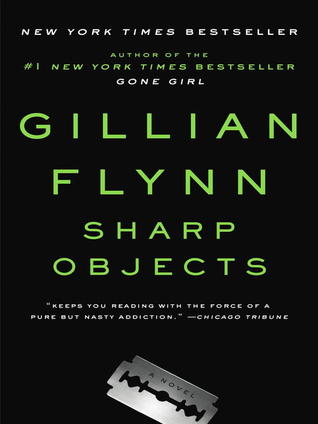
Sharp Objects by Gillian Flynn

Source: Purchased
Paperback, 254 pgs.
I am an Amazon Affiliate

Sharp Objects by Gillian Flynn, which was our book club selection for August, is a suspenseful, twisted tale for a modern audience of Grimms’ fairytale lovers.  Camille Preaker is a mediocre reporter from a small paper in Chicago, and while her editor remains behind her 100%, he sends her home to Wind Gap — a place she has not visited in nearly a decade — to cover a couple of child murders.  Flynn’s style can be abrasive and abrupt, but it fits the mood of the novel well, instilling suspense and the right amount of creepiness.

“For no good reason, I held my breath as I passed the sign welcoming me to Wind Gap, the way kids do when they drive by cemeteries.  It had been eight years since I’d been back, but the scenery was visceral.” (pg. 7)

This small town has dark secrets, and these secrets are about to explode as Camille and the cop from Kansas City start poking around to find the killer.  Flynn’s narration is clipped and fast moving, and her characters are off-the-chain and some are surreptitiously evil.  Camille’s dysfunctional relationship with her mother is just the tip of the iceberg, and the more she sees about her step-sister’s life with their mother, the more disturbed she becomes.  Identifying with the young victims in the case she’s reporting on, Camille is falling down a dark rabbit hole that could possible swallow her whole.

Sharp Objects by Gillian Flynn is an train wreck that readers will be unable to look away from, but its graphic language and description could be a bit much for some readers.  Fans of Stephen King and other horror writers will find this novel as equally twisted.  As a debut novel, Flynn has clearly made a splash in this genre.

About the Author:

Gillian Flynn is an American author and television critic for Entertainment Weekly. She has so far written three novels, Sharp Objects, for which she won the 2007 Ian Fleming Steel Dagger for the best thriller; Dark Places; and her best-selling third novel Gone Girl.

Her book has received wide praise, including from authors such as Stephen King. The dark plot revolves around a serial killer in a Missouri town, and the reporter who has returned from Chicago to cover the event. Themes include dysfunctional families,violence and self-harm.

11/22/63 by Stephen King (audio)

Source: Public Library
Audiobook, 30.75 hours
I am an Amazon Affiliate

11/22/63 by Stephen King, narrated by Craig Wasson, is a time travel novel in which teacher Jake Epping is tasked with the impossible — stop the assassination of President John F. Kennedy.  The local diner owner Al has the cheapest prices in town, but the town continues to speculate that his hamburgers are made from local cats and other pets.  After reading a brilliant essay from a GED student, Epping finds himself embroiled in a secret that is almost too fantastical to be real.  A bubble in the time line has enabled Al to return to 1958 repeatedly and buy the same cheap meat over and over.  Although Epping — who begins to write a novel that’s eerily similar to that of King’s IT set in Derry, N.H. — agrees to check things out and try to determine if Oswald had worked alone in assassinating the president, he finds himself swept up in a life he could be happy in, even though there is no Internet.

Although this book takes on the larger question of how one man could have impacted history had JFK lived and what would have happened had he not been killed and the country forced to mourn alongside his wife and child, King’s talent is in the small town experiences of that time period and the connections that seemed prevalent then that are not as present now.  Epping is skeptical about his task and even as he makes changes to the lives he knows about in the now and some for the better, he’s still not convinced that he can accomplish the bigger task of stopping the assassination.  And like many of us, Epping loses himself in the past — only in his case he literally loses himself.

11/22/63 by Stephen King is chock full of side stories, deeply sketched characters, and small town nuance.  Although there are a number of characters, readers can follow along from time line to time line because the “past harmonizes,” and readers are likely to be swept up into the story with little issue.  King is a master storyteller, which is a statement that I probably have beaten into your heads by now, so don’t miss out on his books any longer.  They’re an investment worth making.

About the Author:

Stephen King is the author of more than fifty books, all of them worldwide bestsellers. His recent work includes Doctor Sleep and Under the Dome, now a major TV miniseries on CBS. His novel 11/22/63 was named a top ten book of 2011 by The New York Times Book Review and won the Los Angeles Times Book Prize for Mystery/Thriller as well as the Best Hardcover Book Award from the International Thriller Writers Association. He is the recipient of the 2003 National Book Foundation Medal for Distinguished Contribution to American Letters. He lives in Bangor, Maine, with his wife, novelist Tabitha King. (Photo Credit: Denver Post)

Bleedovers by William Todd Rose

tlc tour host

Source: TLC Book Tours
ebook, 176 pgs.
I am an Amazon Affiliate

Bleedovers by William Todd Rose is the second dystopian novella starring Chuck Grainger — you’ll want to read Crossfades first — a man who works for a secret organization that helps lost souls cross The Divide. Grainger has become “famous” within the agency, although his fame is not something he’s comfortable with, especially when his supervisor reminds him of all the protocol he broke during the last Crossfade mission. Beyond his noteriety, he has experienced many sleepless nights related the ordeal, which he thought ended on the battlefield on the Crossfades. Evidence begins to pile up that the battle may not have been won.

Rose has created a world in which even readers who shy away from science fiction and more fantasy-related fiction can get swept up in by providing just enough technical detail to keep the story grounded and believable. Grainger has been a man on a mission and content in his work as a Whisk, but his nightmares have given him pause. He’s unsure if he wants to continue, but he finds that he has little choice when Bleedovers become more common than before. Marilee Williams enters our story, bringing with her special gifts that The Institute has enhanced to help with Non-Corporeal Manifestations (NCMs). Grainger, who acts like a lone cowboy in his work, is suddenly forced to work more closely with his partner, Control, and Marilee. The dynamics between Control and Grainger have evolved since the previous novella, and while Control could usually sense when he went off script, in this novella she is less like the voice of reason and more like a partner.

“The energy comes from Crossfades. As they jump from Crossfade to Crossfade, NCMs collect tiny bits of residual energy. They store it up, like a battery bein’ charged.”

Bleedovers by William Todd Rose is a strong second novella in a series, and readers will want more of this strange world. There is so much more to be explored. Is the last battle the end, or are there more to come? Will Grainger be able to fully free himself from the past and his notoriety? Rose has a gift for creating believable science fiction worlds that are wrought with real, and even imagined, dangers around every corner.

About the Author:

William Todd Rose writes dark, speculative fiction from his home in West Virginia. His short stories have been featured in numerous anthologies and magazines, and his work includes the novels Cry Havoc, The Dead & Dying, and The Seven Habits of Highly Infective People, and the novella Apocalyptic Organ Grinder. For more information on the author, including links to bonus content, please visit him online.

a Rafflecopter giveaway

Mailbox Monday #337

Mailbox Monday, created by Marcia at To Be Continued, formerly The Printed Page, has a permanent home at its own blog.

To check out what everyone has received over the last week, visit the blog and check out the links.  Leave yours too.

Also, each week, Leslie, Vicki, and I will share the Books that Caught Our Eye from everyone’s weekly links.

Here’s what I received:

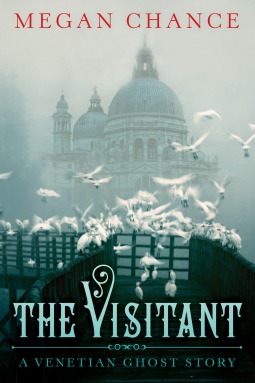
1. The Visitant: A Venetian Ghost Story by Megan Chance for review with TLC Book Tours.

After she nearly ruins her family with a terrible misstep, Elena Spira is sent to Venice to escape disgrace and to atone by caring for the ailing Samuel Farber. But the crumbling and decaying Ca’ Basilio palazzo, where Samuel is ensconced, holds tragic secrets, and little does Elena know how profoundly they will impact her. Soon she begins to sense that she is being watched by something. And when Samuel begins to have hallucinations that make him violent and unpredictable, she can’t deny she’s in mortal danger.

Then impoverished nobleman Nero Basilio, Samuel’s closest friend and the owner of the palazzo, arrives. Elena finds herself entangled with both men in a world where the past seeps into the present and nothing is as it seems. As Elena struggles to discover the haunting truth before it destroys her, a dark force seems to hold Samuel and the Basilio in thrall—is it madness, or something more sinister?

2.  How the Trees Got Their Voices by Susan Andra Lion for review.

Awarded 11 national awards and honors! While camping with a group of girls, Susan Andra Lion was given this tale about trees, nature and also the relationship of living things within a forest ecosystem. This highly visual story book not only presents a fascinating story that children ages 3 and older will enjoy, but also tells a second story about animals, plants, birds, and the Earth itself. Children will learn about the integrated way in which Earth’s inhabitants live in relationship to each other, and learn the value of respect for each form of life. This is a unique and marvelous book helps its readers to regard their world as a complex tapestry of life and living things. Children will be delighted by the thumbnail descriptions which surround the outside of each page, inviting them in and helping them learn about the world of the forest and greater ecosystem of Mother Earth.

Winner of the Moonbeam Children’s Literacy Award — Mind, Body, Spirit Category. Winner of the Mom’s Choice Award Gold Medal; Winner of Creative Child Magazine 2014 Book of the Year; Overall Winner, 2015 Next Generation Indie Awards, Best Design Fiction; Finalist, 2015 Next Generation Indie Awards, New Age Category; National Parenting Publications Awards (NAPPA) Silver award winner; Coalition of Visionary Resources: Winner — Visionary Fiction Category; Winner — People’s Choice Award Book of the Year 2015; Finalist, Children’s and Teens Books; Finalist, Conscious Living Books; Winner 2015 International Book Awards: Children’s Mind/Body/Spirit category.

3. The Storied Life of A.J. Fikry by Gabrielle Zevin, which I purchased at the library for 50 cents.

On the faded Island Books sign hanging over the porch of the Victorian cottage is the motto “No Man Is an Island; Every Book Is a World.” A. J. Fikry, the irascible owner, is about to discover just what that truly means.

A. J. Fikry’s life is not at all what he expected it to be. His wife has died, his bookstore is experiencing the worst sales in its history, and now his prized possession, a rare collection of Poe poems, has been stolen. Slowly but surely, he is isolating himself from all the people of Alice Island-from Lambiase, the well-intentioned police officer who’s always felt kindly toward Fikry; from Ismay, his sister-in-law who is hell-bent on saving him from his dreary self; from Amelia, the lovely and idealistic (if eccentric) Knightley Press sales rep who keeps on taking the ferry over to Alice Island, refusing to be deterred by A.J.’s bad attitude. Even the books in his store have stopped holding pleasure for him. These days, A.J. can only see them as a sign of a world that is changing too rapidly.

What did you receive?

319th Virtual Poetry Circle

Welcome to the 319th Virtual Poetry Circle!

Remember, this is just for fun and is not meant to be stressful.

Keep in mind what Molly Peacock’s book suggested.

Look at a line, a stanza, sentences, and images; describe what you like or don’t like; and offer an opinion. If you missed my review of her book, check it out here.

Today’s poem is from Robert Frost, which I thought would be appropriate given this recent article I read about how the poem is misread:

The Road Not Taken

Two roads diverged in a yellow wood,
And sorry I could not travel both
And be one traveler, long I stood
And looked down one as far as I could
To where it bent in the undergrowth;

Then took the other, as just as fair,
And having perhaps the better claim,
Because it was grassy and wanted wear;
Though as for that the passing there
Had worn them really about the same,

And both that morning equally lay
In leaves no step had trodden black.
Oh, I kept the first for another day!
Yet knowing how way leads on to way,
I doubted if I should ever come back.

I shall be telling this with a sigh
Somewhere ages and ages hence:
Two roads diverged in a wood, and I—
I took the one less traveled by,
And that has made all the difference.

Given the article and reading the poem, what do you think?

Wet Silence by Sweta Srivastava Vikram

Source: Sweta Srivastava Vikram
Paperback, 72 pgs
I am an Amazon Affiliate

Wet Silence by Sweta Srivastava Vikram, which is on tour tomorrow with Poetic Book Tours, is a stunning collection of poems that give voice to the often solitary lives of Hindu widows.  Whether these women loved their husbands, fell in love with them, or merely stayed out of their way, without them in their lives, these women struggle with the emptiness — a vacancy where desire, love, and affection should be.  These women could wail and weep but it does not negate the fact that they become spectators in their own lives once their husbands are gone.  They become apparitions of themselves, hollowed out and shoved to the background like furniture or paintings on the wall, only as useful as the remaining family allows them to be.

Despite their losses and Hindu traditions, these women are still very much alive.  In “Eulogy” (pg. 39), the narrator says “I am a lady,/but I didn’t promise/to sleep in your shadow.”  Despite their vitality, these women are in the shadows with no way out that would allow them to retain their respect.  “Silence became my lover, that’s why.//Just so you know, my every kiss was real./I wrapped them in turmeric and sandalwood,/left them in your urn wrapped in a white sheet.//” (from “Silence Became My Lover”, pg. 34) In spite of their continued devotion, they must remain silent about it and their feelings and desires — in the eyes of the family, they have become non-entities without an anchor.

Many of these women loved deeply, passionately, but who can they share their memories with, except for their own grief and the silent walls around them.  In “Never Abandoned” (pg. 7), the narrator laments, “we came crashing like a wave./We contained each other.//Even the rain can’t erase/the warm memories of our togetherness/the cold bones others try to break.//”  For those widows who were abused or cuckolded, how do they move on from the death of their husband?  Can they?  They are still expected to wear grief like a devoted wife, honoring a marriage that to them may have been plagued with abuse and disappointment.  These women are trapped in a different way than those who can feel comfort in their loving husband’s memories.  There is no second chances at love or passion without consequence for these women.

Wet Silence by Sweta Srivastava Vikram is a collection of eulogies, odes, and laments, but at its heart it is a collection that gives voice to the voiceless.  The women in these pages, though unnamed, are given new life, and their passions are presented to all readers in a way that is open and honest.  In the “wet silence” of their grief, there is no pretense, no hypocrisy; there is only the bare truth.  It is a collection that should be used in schools, read in book clubs, and held up high on the best of poetry lists.

Sweta is someone I call friend, but she stuns me with each new book, and there is nothing less than awe inspiring in this collection.

Other reviews:

Guest Posts and Interviews:

PoeticButton


The Last Summer at Chelsea Beach by Pam Jenoff & Giveaway

tlc tour host

Source: Pam Jenoff
Paperback, 384 pgs
I am an Amazon Affiliate

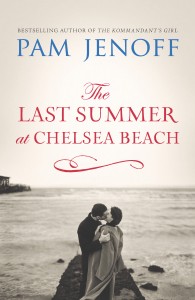
The Last Summer at Chelsea Beach by Pam Jenoff is a sweeping tale set during World War II, as a sixteen year old Adelia Monteforte comes to America to live with her aunt and uncle in Philadelphia without her Jewish parents, who stayed behind in Trieste, Italy.  She feels like an outsider with the relatives she’s never met before, and she realizes that her limited English and mostly secular upbringing is not what they expected.  While she speaks English, she still feels as though she’s an outsider, until she becomes like a sister to the Connally brothers.  Despite their perceived differences in religion and upbringing, Adelia becomes Addie, molding herself in the cracks of the local family she meets at Chelsea Beach.

“Robbie turned to his mother.  ‘Can we keep her?’
‘Robbie, she isn’t a puppy. But I do hope you’ll join us often,’ she added.
‘Because we really need more kids, ‘ Liam said wryly.” (pg. 38)

Jenoff’s World War II novels are always captivating, full of missed chances and second chances, moments of horror and tragedy, but also moments of hope and happiness. These snippets of time are those that her characters treasure, and they provide that kernel of hope that readers hold onto until they reach the end. Addie is a young displaced woman looking for a home, and she thinks that she’s found it with the Connallys until tragedy strikes close to home and she’s left in the breeze. She has to decide what to do for herself for the first time since coming to America, and while she chooses to go to Washington, D.C., with a half buried hope of finding her childhood crush, she also wants to do something more.

The Last Summer at Chelsea Beach by Pam Jenoff is an addicting read with its twists and turns and the realities of rationing and the closeness of war.  Jenoff is a master at characterization and romance in a way that is both fanciful, but realistic.  Her characters often have to struggle with more than the things that keep them apart, and for that, readers will be grateful.  Her books are not to be missed, and this summer read should be at the top of your lists.

About the Author:

Pam Jenoff is the Quill-nominated internationally bestselling author of The Kommadant’s Girl. She holds a bachelor’s degree in international affairs from George Washington University and a master’s degree in history from Cambridge, and she received her Juris Doctor from the University of Pennsylvania. Jenoff’s novels are based on her experiences working at the Pentagon and also as a diplomat for the State Department handling Holocaust issues in Poland. She lives with her husband and three children near Philadelphia where, in addition to writing, she teaches law school.

U.S. residents, leave a comment below about your favorite beach activity by Aug. 26, 2015, at 11:59 PM EST.  Win a bag and book!

ChelseaBeach


French Coast by Anita Hughes

Source: the author
Paperback, 304 pgs.
I am an Amazon Affiliate

French Coast by Anita Hughes is gorgeous and not just because its set at Cote D’Azur and the Cannes Film Festival.  Serena has come to France for the biggest opportunity of her journalistic career, even though her fiance Chase is set to announce their engagement and his bid for mayor of San Francisco.  Serena is going to interview Yvette Renault, the former editor of French Vogue.  Along the way, the life she expected is swept away from her and she has to contend with secrets she never saw coming.  While she remains as focused on her work as she can, she finds herself befriending Zoe, who is on a trip of her own to uncover family secrets and save her parents.

“‘At least you know where your father is,’ Serena said, adding cream and sugar.  ‘I haven’t heard from my parents in days. I keep expecting my father to call and say it was all a mistake.’

‘We’re the ones who are supposed to be falling in love with the wrong men and making our parents frantic,’ Zoe said as she tore apart an almond croissant.

‘Maybe we’re part of the wrong generation.’ Serena sipped her coffee.  ‘We should have been young in the sixties.'” (pg. 155)

Serena and Zoe are like ships passing in the night, but it’s clear they have an instant friendship that will last, and despite drifting since coming to France, Serena has a purpose and dives into her work.  Nick is a knight in shining armor of sorts, returning Serena’s lost wallet and phone, and eventually, they spend afternoons and evenings together talking about not only their work but their dreams.  Don’t be fooled, however, because this is not a straight-forward romance novel.  While there is romance for many of these characters, there is heartbreak and choices to be made about their careers and their futures.

French Coast by Anita Hughes is a delightful read for the summer months and beyond.  Serena is a strong woman who is sure about her career, but little else at least until fate plays its hand.  Hughes is a talent and her books are always delightful reads to pop in the beach bag or to read out on the deck or at the pool.  This one has the right amount of mystery thrown in as well, making it even more engaging.

About the Author: (photo by Sheri Geoffreys)

Anita Hughes was born in Sydney, Australia and had a charmed childhood that included petting koala bears, riding the waves on Bondi Beach, and putting an occasional shrimp on the barbie. Her writing career began at the age of eight, when she won a national writing contest in THE AUSTRALIAN newspaper, and was named “One of Australia’s Next Best Writers.” (She still has the newspaper clipping.)

She received a B.A. in English Literature with a minor in Creative Writing from Bard College, and attended UC Berkeley’s Masters in Creative Writing program.

Other Reviews: