Quantcast

LOVE: A Philadelphia Affair by Beth Kephart

Source: Purchased
Hardcover, 176 pgs
I am an Amazon Affiliate

LOVE: A Philadelphia Affair by Beth Kephart (this has a gorgeous cover) is a collection of essays, many of which were published in the Philadelphia Inquirer, that read not like essays but mini-memoirs. It has been a pleasure to read about Philadelphia — a city I was fortunate to visit briefly and not spend enough time in — through the eyes of someone who loves it dearly. All of its nooks and crannies, its alleys, its rivers, its art, its history — it is all laid bare with Kephart’s fondest memories and recollections. The city comes alive in her hands — it breathes.

The graffiti, the artisans, the food markets, and the University of Pennsylvania are moving through these pages like the Schuylkill River, leaving its gleaming beauty behind in its wake.  She says in the preface, “Love: A Philadelphia Affair is about the intersection of memory and place.  It’s about how I’ve seen and what I’ve hoped for, what ‘home’ has come to mean to me.  It’s about train rides, rough stones, brave birds, rule breakers, resurrectionists, unguided and mostly solo meanderings.  It is experiential, not encyclopedic.  Reflective, not comprehensive.” (pg. x)  In this way, Kephart has enabled readers to ruminate on their own memories, which may or may not be of Philadelphia and only tangentially related to her own.  I’ve remembered train journeys to NYC, ice cream I loved as a kid made in a small Massachusetts town, and a journey to Valley Forge that was at once solemn and beautiful.

“There’s something about standing on the platform watching the curve for the Silverliner.  Something about feeling the rumble in the sole’s of one’s feet.  Something about the rituals of travel.  Leaving and returning — that’s where I’ve lived.  I’m sympathetic to the crossties of the tracks.” (pg. 7-8; “Time In, Time Out”)

Kephart establishes the tone for these essays in these lines, telling her readers that she will straddle the past and present, the before and the after, and the moment and the remembering of the moment.  Many of us do this as our minds wander between where we are and where we have been, noting the connections that are only apparent to us until we voice them aloud.  And in “Psychylustro,” we, like the train, become museums — a collection of our own artifacts, memories, and temporal importance.

One minor thing readers may notice, there are only a few photos at the start of each essay, and more photos would have been a lovely addition.  However, LOVE: A Philadelphia Affair by Beth Kephart is a love story involving a city, but it’s also a testament to the love we hold and can freely give through art and action — so long as we can check our ego and greed at the door.  We all want recognition and love, but we need to also realize that these do not come without our own generosity.  It is not just the generosity that we show toward others, but also to ourselves and the world around us.
About the author:

Following the publication of five memoirs and FLOW, the autobiography of Philadelphia’s Schuylkill River, I’ve had the great pleasure of turning my attention to young adult fiction. UNDERCOVER and HOUSE OF DANCE were both named a best of the year by Kirkus and Bank Street. NOTHING BUT GHOSTS, A HEART IS NOT A SIZE, and DANGEROUS NEIGHBORS were critically acclaimed. In October YOU ARE MY ONLY will be released by Egmont USA. Next summer, Philomel will release SMALL DAMAGES. I am at work on a prequel to DANGEROUS NEIGHBORS, a novel for adults, and a memoir about teaching.

Lives of Crime and Other Stories by L. Shapley Bassen

Source: L. Shapley Bassen
Paperback, 194 pgs.
I am an Amazon Associate

Lives of Crime and Other Stories by L. Shapley Bassen is an odd little short story collection in which the characters are hit with an unimaginable situation and they must cope with the ripples that disturbance creates.  Like many short story collections, some stories will resonate more easily than others.  The title story, Lives of Crime, has a surprise ending, while others are a little more predictable and some are cryptic.  Bassen provides a wide range of characters in a variety of dark situations, including one in which a student’s idea could be published under a credentialed professor’s name, rather than his own.

One of the best stories in the collection, Triptych, involves the restoration of artwork and the lonely life one restorer. Once she finds happiness with someone in her building and things seem to be going well, fate intervenes and turns her world upside down.  As echoes of the art world play out in reality, Bassen creates a series of devastating events that could leave some depressed in the corner.  However, like other stories in the mix, the reader is held at arms length from the characters by the narrative style.

Lives of Crime and Other Stories by L. Shapley Bassen is a collection of vignettes in the lives of those who are unaware that their fate is about to be taken out of their hands.  Each story is intriguing, but many felt unfinished or like they had abruptly finished before the reader was satisfied.  However, the unique situations and characters do provide readers with a lot to ponder, particularly about how they would react in similar situations.

About the Author:

L. Shapley Bassen‘s half dozen plays include Atlantic Pacific Press’s 2009 prizewinner, a comedy, The End of Shakespeare & Co , directed by Pulitzer judge George W. Hayden (Audio excerpt published online). Two more prize winners, from the Fitton Center in Ohio, the one-acts Next of Kin and The Reckoning Ball (the day Brooklyn’s Ebbett’s Field was torn down), were produced in 1998 and 1997. Next of Kin has also been published twice recently in Prick of the Spindle and Ozone Park Journal and was produced in 1999 at NYC’s The American Theatre of Actors. Ms. Shapley-Bassen was a 2011 Finalist for the Flannery O’Connor Short Fiction Award, and currently (2013) she is Fiction Editor at The Prick of the Spindle. In 2009, she was on the team of the first 35 readers for successful start-up Electric Literature. She was co-author of a WWII memoir by the Scottish bride of Baron Kawasaki and won a Mary Roberts Rinehart Fellowship. Her stories, book reviews, and poems appear in many lit magazines and zines, including The Rumpus, Horse Less Press, The Brooklyner, Press 1, Melusine, New Pages, and Galatea Resurrects. She is a reluctant ex-pat New Yorker living in Rhode Island, now at work on a new play, Dramatic Anatomy.

The Small Backs of Children by Lidia Yuknavitch

Source: Public Library
Hardcover, 240 pgs
I am an Amazon Affiliate

The Small Backs of Children by Lidia Yuknavitch is carnal and grotesque in ways that are vastly unsettling and may be tough to read for many.  Told from a variety of artistic points of view, the story begins with a young girl whose world is literally atomized in war-torn Eastern Europe and the photograph of her that makes the career of one narrator.  While the girl and the photo play a major role in the story, they are not the crux of Yuknavitch’s story.  They are merely a vehicle through which she explores the selfish need for artistic expression and the distortions that emerge.

“We are who we imagine we are.
Every self is a novel in progress.
Every novel a lie that hides the self.
This, reader, is a mother-daughter story.” (pg. 11)

The narration is urgent, like a slapshot in the gut at nearly every turn. While the writer’s friends and family seek to save the girl from the life she has been thrown into after the death of her family, it is clear that a birth has happened. It is the birth of art within the gruesome world the girl inhabits, and it is the birth of connection beyond art and family ties.  The girl reaches from within and from without to recreate her life to be reborn — not as a victim, but as a warrior.

Pity the small backs of children, he heard her saying.  They carry death for us the second they are born.” (pg. 59)

The stories that begin at the heart of this girl, like the spokes in a wheel, turn and turn, spiraling out of control on a wagon that is hurtling toward a cliff, unless someone can stop it or redirect it. Will these players be destroyed? Will they be saved? Can this “blast particle … looking for form” endure the weight of these stories and their implications?

The Small Backs of Children by Lidia Yuknavitch pushed the envelope repeatedly, searching for the edge and spilling over it with its haunting images, desperate characters, and narcissistic art-making. It is the crucible of pain and suffering that molds us and pushes us to become, to move beyond the child of mere potential into something more tangible that can be criticized and critical. This crucible does not define us, however, unless we allow it to, and Yuknavitch is shoving readers toward a greater understanding of art and themselves.

**Beth Kephart reviewed this book, and I just had to get it from the library.***

About the Author:

Lidia Yuknavitch is the author of the widely acclaimed memoir The Chronology of Water and the novel Dora: A Headcase. Her writing has appeared in the Atlantic, the Iowa Review, Mother Jones, Ms., the Sun, the Rumpus, PANK, Zyzzyva, Fiction International, and other publications. She writes, teaches and lives in Portland, Oregon with the filmmaker Andy Mingo and their renaissance man son Miles. She is the recipient of the Oregon Book Award – Reader’s Choice, a PNBA award, and was a finalist for the 2012 Pen Center creative nonfiction award. She is a very good swimmer.


Mailbox Monday #339

Mailbox Monday, created by Marcia at To Be Continued, formerly The Printed Page, has a permanent home at its own blog.

To check out what everyone has received over the last week, visit the blog and check out the links.  Leave yours too.

Also, each week, Leslie, Vicki, and I will share the Books that Caught Our Eye from everyone’s weekly links.

Here’s what I received:

1. The Witch’s Market by Mingmei Yip for review from the author.

Chinese-American assistant professor Eileen Chen specializes in folk religion at her San Francisco college. Though her grandmother made her living as a shamaness, Eileen publicly dismisses witchcraft as mere superstition. Yet privately, the subject intrigues her.

When a research project takes her to the Canary Islands—long rumored to be home to real witches—Eileen is struck by the lush beauty of Tenerife and its blend of Spanish and Moroccan culture. A stranger invites her to a local market where women sell amulets, charms, and love spells. Gradually Eileen immerses herself in her exotic surroundings, finding romance with a handsome young furniture maker. But as she learns more about the lives of these self-proclaimed witches, Eileen must choose how much trust to place in this new and seductive world, where love, greed, and vengeance can be as powerful, or as destructive, as any magic.

2. LOVE by Beth Kephart, which I purchased.

This volume of personal essays and photographs celebrates the intersection of memory and place. Kephart writes lovingly, reflectively about what Philadelphia means to her. She muses about meandering on SEPTA trains, spending hours among the armor in the Philadelphia Museum of Art, and taking shelter at Independence Mall during a downpour.

In Love, Kephart shares her loveof Reading Terminal Market at Thanksgiving: “This abundant, bristling market is, in November, the most unlonesome place around.” She waxes poetic about the shoulder-to-shoulder crowds, the mustard in a Salumeria sandwich, and the “coins slipped between the lips of Philbert the pig.”

3. The Edge of Lost by Kristina McMorris for review from the author.

On a cold night in October 1937, searchlights cut through the darkness around Alcatraz. A prison guard’s only daughter—one of the youngest civilians who lives on the island—has gone missing. Tending the warden’s greenhouse, convicted bank robber Tommy Capello waits anxiously. Only he knows the truth about the little girl’s whereabouts, and that both of their lives depend on the search’s outcome.

Almost two decades earlier and thousands of miles away, a young boy named Shanley Keagan ekes out a living as an aspiring vaudevillian in Dublin pubs. Talented and shrewd, Shan dreams of shedding his dingy existence and finding his real father in America. The chance finally comes to cross the Atlantic, but when tragedy strikes, Shan must summon all his ingenuity to forge a new life in a volatile and foreign world.

What did you receive?


321st Virtual Poetry Circle

Welcome to the 321st Virtual Poetry Circle!

Remember, this is just for fun and is not meant to be stressful.

Keep in mind what Molly Peacock’s book suggested.

Look at a line, a stanza, sentences, and images; describe what you like or don’t like; and offer an opinion. If you missed my review of her book, check it out here.

Today’s poem is from Sabrina Benaim:

Explaining my depression to my mother: A conversation

Mom, my depression is a shapeshifter
One day it’s as small as a firefly in the palm of a bear
The next it’s the bear
On those days I play dead until the bear leaves me alone
I call the bad days “the Dark Days”
Mom says try lighting candles
But when I see a candle I see the flicker of a flame
Sparks of a memory younger than noon
I am standing beside her open casket
It is the moment that I learn everyone I will ever come to know will someday die
Besides Mom, I’m not afraid of the dark, perhaps that’s part of the problem
Mom says I thought the problem was that you can’t get out of bed
I can’t, anxiety holds me a hostage inside of my house inside of my head
Mom says where did anxiety come from
Anxiety is the cousin visiting from out of town that depression felt obligated to invite to the party
Mom, I am the party, only I’m a party I don’t want to be at
Mom says why don’t you try going to actual parties, see your friends
Sure I make plans, I make plans I don’t want to go to
I make plans because I know I should want to go I know sometimes I would have wanted to go
It’s just not that fun having fun when you don’t want to have fun Mom
You see Mom each night Insomnia sweeps me up in his arms dips me in the kitchen in the small glow of the stove-light
Insomnia has this romantic way of making the moon feel like perfect company
Mom says try counting sheep
But my mind can only count reasons to stay awake
So I go for walks, but my stuttering kneecaps clank like silver spoons held in strong arms with loose wrists
They ring in my ears like clumsy church bells reminding me that I am sleepwalking on an ocean of happiness that I cannot
Baptize myself in
Mom says happy is a decision
But my happy is as hollow as a pin pricked egg
My happy is a high fever that will break
Mom says I am so good at making something out of nothing and then flat out asks me if I am afraid of dying
No Mom I am afraid of living
Mom I am lonely
I think I learned that when Dad left how to turn the anger into lonely the lonely into busy
So when I say I’ve been super busy lately I mean I’ve been falling asleep on the couch watching SportsCenter
To avoid confronting the empty side of my bed
But my depression always drags me back to my bed
Until my bones are forgotten fossils of a skeleton sunken city
My mouth a bone yard of teeth broken from biting down on themselves
The hollow auditorium of my chest swoons with the echoes of a heartbeat
But I am just a careless tourist here

I will never truly know where I have been
Mom still doesn’t understand
Mom, can’t you see
That neither can I

What do you think?

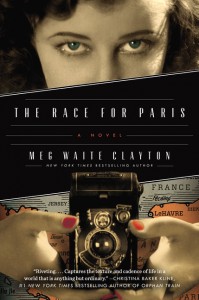
The Race for Paris by Meg Waite Clayton

tlc tour host

Source: TLC Book Tours
Hardcover, 336 pgs.
I am an Amazon Affiliate

The Race for Paris by Meg Waite Clayton is riveting from the start and a careful blend of fact and fiction about WWII and the female reporters and photographers who were often relegated to the field hospitals and sidelines while their male counterparts were allowed closer to the front and on reconnaissance missions.  Clayton’s characters tough cookies, and they have to be as they face the possibility of death once they’ve ignored their orders to remain at the field hospital.  Liv Harper, an Associated Press photographer know for her blurred faces, and Jane, a reporter for the Nashville Banner, find themselves accompanied by Fletcher, Liv’s husband’s friend.  Fletcher is a British military photographer who often goes it alone in the field to gather intelligence with his photos for the Allied forces, but he’s had a flame burning for Liv ever since he met her.  This unlikely trio is determine to make it to Paris before the other reporters to photograph and tell the tale of its liberation.

“That was the way it was, covering war.  The little bits of detail you could get on paper or on film were just that, little bits that didn’t tell the whole story.  And you couldn’t possibly capture the whole of it no matter how far back you stepped.” (pg. 217 ARC)

Liv has secrets too, and only Jane is aware of some of them.  While Fletcher and Liv are striving toward the front as if chased by ghosts, Jane is tagging along, not so much for the good of her career as someone who cushions the blows that they receive along the way.  She becomes the sounding board for each of them, while she keeps her own council.  Jane is a strong woman, though timid, while Liv is a wild wire set to explode.  Fletcher has taken it upon himself to protect them both, though his desire for Liv often steers him into danger.  While Clayton’s triangle here could be construed merely as a romantic tug-of-war, it is isn’t.  There are more nuanced dynamics at play here, as WWII has touched Fletcher and Liv in very different ways and Jane is observing it as it plays out.

The Race for Paris by Meg Waite Clayton looks through the lens of journalists during one of the most sweeping, horrifying, and tense wars in our world history to provide an encapsulated view of the fighting, the discrimination against female journalists, and the battles dedicated people had to endure to achieve their goals.

About the Author:

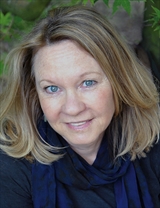
Meg Waite Clayton is the New York Times bestselling author of four previous novels: The Four Ms. Bradwells; The Wednesday Sisters; The Language of Light, a finalist for the Bellwether Prize; and The Wednesday Daughters. She’s written for the Los Angeles Times, the New York Times, the Washington Post, the San Jose Mercury News, Forbes, Writer’s Digest, Runner’s World, and public radio. A graduate of the University of Michigan Law School, she lives in Palo Alto, California.

Find out more about Meg at her website, and connect with her on Facebook and Twitter.


The Story of Beautiful Girl by Rachel Simon (audio)

Source: Hachette
Audiobook, 12 hours
I am an Amazon Affiliate

The Story of Beautiful Girl by Rachel Simon, narrated by Kate Reading, is rough story with a shining light of hope at its center.  Beautiful girl, who has a developmental disability, meets a deaf African-American man at the School, which is really just an institution for disabled people, in 1968.  Spanning about 40 years, readers are taken on a mysterious journey with beautiful girl, Lynnie, and with Homan as they seek to achieve self-actualization, while still hoping that their dearest wishes will come true.  After a fateful escape from the school and leaving her baby with Martha at a farmhouse nearby, Lynnie is recaptured and returns under the secret tutelage of Kate, who helps her learn to speak again.  As Lynnie grows as an artist and as a young woman, she still harbors the desire to see the man she loved, even though she did not know his name, and her baby again.

Lynnie and Homan are drawn incredibly well and with a compassionate hand by Simon, and the narration by Kate Reading is superb.  Readers will be drawn into their hardships, their hopes, their dreams, and their friendships along the way, and like them, readers will hope for the best possible outcome.  Despite speech difficulties, learning to read, learning sign language, and overcoming harsh disappointments, Lynnie and Homan never become more than human, while they have buried their hopes inside and think about them, they face their disappointments as many of us would.  They despair, they cry, they worry, and they dream.

As a sister of a disabled brother, Simon’s novel hit home in a lot of ways because we knew about these institutions and my parents had decided to keep my brother home and found him area programs that would help him when they could afford them.  The abuse that the disabled suffered in these institutions was nothing short of horrific, and I cannot imagine how my brother would have endured those things.  Lynnie and Homan are discriminated against, made fun of, and more, but its the moments of kindness, compassion, and love that field their journeys.

The Story of Beautiful Girl by Rachel Simon, narrated by Kate Reading, is stunning, compassionate, and emotional.  It is a testament to a world in need of healing and greater inclusion and understanding.  I’m only sorry that it took me so long to listen to this phenomenally touching story.

About the Author:

Rachel Simon is an American author of both fiction and non-fiction. Her six books include the 2011 novel The Story of Beautiful Girl, and the 2002 memoir Riding The Bus With My Sister.


About the Narrator:

Kate Reading has been a freelance narrator for over twenty years. She received an Audie Award for Bellwether by Connie Willis; an Audie nomination for The Gathering Storm by Robert Jordan and Brandon Sanderson, recorded with her husband, Michael Kramer; and an Audie nomination for Blow Fly by Patricia Cornwell. She has also received numerous Earphones Awards from AudioFile magazine, which has named her Narrator of the Year and, for two years running, Best Voice in Science Fiction and Fantasy for her narration of Jim Butcher’s Codex Alera series. As Jennifer Mendenhall, she has worked as a stage actor in the Washington, D.C.

How the Trees Got Their Voices by Susan Andra Lion

Source: Conscious Media Relations
Hardcover, 30 pgs.
I am an Amazon Affiliate

How the Trees Got Their Voices by Susan Andra Lion uses colored pencil-like drawings to bring the woods to life as a group of girls and their chaperone enjoy camping.  While the girls are singing in the tent after a long day of hiking and other activities, the chaperone hears whispers.  These whispers are carried on the wind, and she begins to realize that the creator’s trees are speaking to her.  They are carefully telling her about how they wanted what all of the other animals had — voices.

At the beginning of the book there’s an author’s note that indicates the book has two layers — the story of the woman learning of the myth of how the trees got their voices and the story of the animals in the woods.  Reading through the first story, its hard to keep a younger child’s attention focused on just what the chaperone is hearing and learning and passing on to the younger girls.  Kids tend to want to know everything all at once, and when an animal catches their eye, it’s best to read the little box of information to them.  Not only does it satisfy their own curiosity, but it will enrich their understanding of how the world in interconnected.

How the Trees Got Their Voices by Susan Andra Lion is a cute story but its set up may be a little distracting for younger readers, but like other picture books, it can be used as a teaching tool.  It has some great information about ecology and the animal kingdom, and Lion clearly aims to teach younger readers how to respect their surroundings.

Shopaholic to the Stars by Sophie Kinsella (audio)

Source: Public Library
Audiobook, 12.5 hours
I am an Amazon Affiliate

Shopaholic to the Stars by Sophie Kinsella, narrated by Clare Corbett, is a fun romp with Becky Brandon (nee Bloomwood) in the Hollywood hills as her husband, Luke, takes a temporary marketing position with actress Sage Seymour.  Becky is thrilled with the idea of being in Los Angeles, and she suddenly envisions a life of red carpet affairs, movie premiers, and becoming a stylist to the stars.  Becky, Luke, and Minnie are swept up into all things Hollywood, but Luke, naturally, remains the most level-headed.  Despite Becky’s over-shopping issues, which manifest in pre-purchases for stars she either has barely met or never even had any contact with, she’s managed to make some connections and be set on the path of her dreams.

Things get a bit complicated when there is a very public mix-up that fuels and ongoing feud between Sage and her movie-star rival, Lois Kellerton.  However, any potential character arc with Becky has ceased, at least so it seems in this book, and readers are likely to see her return to her old, selfish ways that often got her into too much trouble and places where her own rationalizations sound feeble even to her.  Although she now realizes, at least some of the time, that her rationalizations for purchases and bad behavior are just that, she continues on a path that while amusing, is devastating to those around her, even without her meaning it to be.  She even finds herself wrapped up so tightly in Hollywood’s machinations that she doesn’t think to herself that she should just walk away.

Becky’s head used to be easily turned by the prettiest bobble or the latest fashion, but in this one, her head is turned by attention, as if her husband and daughter do not dote on her constantly.  Her ego is larger than the series at this point, and while readers may want to see what happens after the end of this really open-ended book, they may not want to read more of the same character.  Shopaholic to the Stars by Sophie Kinsella, narrated by Clare Corbett, was fun to listen to and Kinsella is definitely a talent when it comes to writing quips, comebacks, and witty dialogue, but by the seventh book in the series, we want more depth from Becky Bloomwood.  While an entertaining way to spend the afternoon, the series has become a bit stale.

About the Author:

Madeleine Wickham is a bestselling British author under her pseudonym, Sophie Kinsella. Educated at New College, Oxford, she worked as a financial journalist before turning to fiction. She is best known for writing a popular series of chick-lit novels. The Shopaholic novels series focuses on the misadventures of Becky Bloomwood, a financial journalist who cannot manage her own finances. The books follows her life from when her credit card debt first become overwhelming (“The Secret Dreamworld of a Shopaholic”) to the latest book on being married and having a child (“Shopaholic & Baby”). Throughout the entire series, her obsession with shopping and the complications that imparts on her life are central themes.

Mailbox Monday #338

Mailbox Monday, created by Marcia at To Be Continued, formerly The Printed Page, has a permanent home at its own blog.

To check out what everyone has received over the last week, visit the blog and check out the links.  Leave yours too.

Also, each week, Leslie, Vicki, and I will share the Books that Caught Our Eye from everyone’s weekly links.

Here’s what I received:

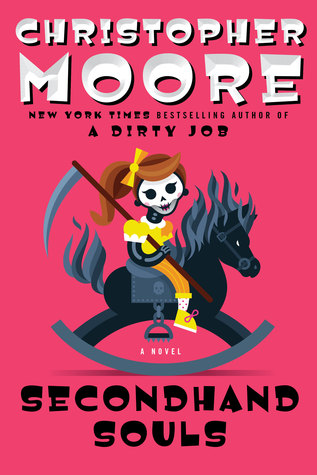
1. Secondhand Souls by Christopher Moore for review from LibraryThing Early Reviewers.  So EXCITED!

In San Francisco, the souls of the dead are mysteriously disappearing—and you know that can’t be good—in New York Times bestselling author Christopher Moore’s delightfully funny sequel to A Dirty Job.

Something really strange is happening in the City by the Bay. People are dying, but their souls are not being collected. Someone—or something—is stealing them and no one knows where they are going, or why, but it has something to do with that big orange bridge. Death Merchant Charlie Asher is just as flummoxed as everyone else. He’s trapped in the body of a fourteen-inch-tall “meat” waiting for his Buddhist nun girlfriend, Audrey, to find him a suitable new body to play host.

To get to the bottom of this abomination, a motley crew of heroes will band together: the seven-foot-tall death merchant Minty Fresh; retired policeman turned bookseller Alphonse Rivera; the Emperor of San Francisco and his dogs, Bummer and Lazarus; and Lily, the former Goth girl. Now if only they can get little Sophie to stop babbling about the coming battle for the very soul of humankind.

2. The Lost Journals of Sylvia Plath by Kimberly Knutsen for review from MBM Book Publicity.

Set in the frozen wasteland of Midwestern academia, The Lost Journals of Sylvia Plath introduces Wilson A. Lavender, father of three, instructor of women’s studies, and self-proclaimed genius who is beginning to think he knows nothing about women. He spends much of his time in his office not working on his dissertation, a creative piece titled “The Lost Journals of Sylvia Plath.” A sober alcoholic, he also spends much of his time not drinking, until he hooks up with his office mate, Alice Cherry, an undercover stripper who introduces him to “the buffer”—the chemical solution to his woes.

Wilson’s wife, Katie, is an anxious hippie, genuine earth mother, and recent PhD with no plans other than to read People magazine, eat chocolate, and seduce her young neighbor—a community college student who has built a bar in his garage. Intelligent and funny, Katie is haunted by a violent childhood. Her husband’s “tortured genius” both exhausts and amuses her.

The Lavenders’ stagnant world is roiled when Katie’s pregnant sister, January, moves in. Obsessed with her lost love, ’80s rocker Stevie Flame, January is on a quest to reconnect with her glittery, big-haired past. A free spirit to the point of using other people’s toothbrushes without asking, she drives Wilson crazy.

What did you receive?