Quantcast

Mailbox Monday #270

Mailbox Monday, created by Marcia at To Be Continued, formerly The Printed Page, has gone through a few incarnations from a permanent home with Marcia to a tour of other blogs.

Now, it has its own permanent home at its own blog.

To check out what everyone has received over the last week, visit the blog and check out the links.  Leave yours too.

Also, each week, Leslie, Vicki, and I will share the Books that Caught Our Eye from everyone’s weekly links.

Here’s what I received:

1. Darkness Bound by J.T. Geissinger, an unexpected surprise from Amazon.

Tough, smart, and seriously ambitious, reporter Jacqueline “Jack” Dolan despises the secretive clan of shape-shifters known as the Ikati—and has become determined to destroy them. After she writes an editorial arguing for their extermination and turns public opinion against them, the Ikati vow to fight back. They plot to send one of their own to seduce the reporter, then blackmail her into writing a retraction.

Women practically fall at the feet of hulking, handsome Hawk Luna, and Hawk relishes the idea of conquering and destroying the fiery redhead who’s caused so much trouble for his kind. The last thing he expects is to develop real feelings for her, but their liaison awakens a hunger in him that he cannot deny. He kidnaps Jack and brings her to his Amazon jungle colony, but the two lovers are soon embroiled in deadly colony politics and threatened by a looming global species war.

2.  A Long Time Gone by Karen White for review in June.

When Vivien Walker left her home in the Mississippi Delta, she swore never to go back, as generations of the women in her family had. But in the spring, nine years to the day since she’d left, that’s exactly what happens—Vivien returns, fleeing from a broken marriage and her lost dreams for children.

What she hopes to find is solace with “Bootsie,” her dear grandmother who raised her, a Walker woman with a knack for making everything all right. But instead she finds that her grandmother has died and that her estranged mother is drifting further away from her memories. Now Vivien is forced into the unexpected role of caretaker, challenging her personal quest to find the girl she herself once was.
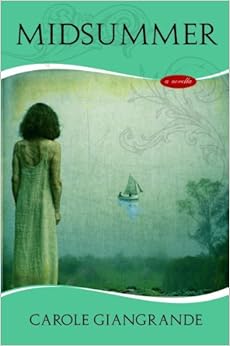
3. Midsummer by Carole Giangrande for a TLC Book Tour in May.

All her life, Joy’s been haunted by a man she’s never met — her visionary grandfather, the artist Lorenzo. At work on digging a New York subway tunnel, his pickaxe struck the remains of an ancient Dutch trading ship — and a vision lit up the underground, convincing him that he was blessed. As it turned out, his children did well in life, and almost a century later, his granddaughter Joy, a gifted linguist, married the Canadian descendant of the lost ship’s captain. Yet nonno’s story also led to the death of Joy’s cousin Leonora, her Aunt Elena’s only child. It was a tragedy that might have been prevented by Joy’s father, Eddie, a man who’s been bruised by life and who seldom speaks to his sister. Yet in the year 2000, he has no choice. Wealthy Aunt Elena and Uncle Carlo are coming from Rome to New York City to celebrate their fiftieth wedding anniversary. They’ve invited the family to dine at the sky-high tower restaurant above the tunnel where nonno Lorenzo saw his vision long ago.

4.  The Teahouse Fire by Ellis Avery from the library sale.

The story of two women whose lives intersect in late-nineteenth-century Japan, The Teahouse Fire is also a portrait of one of the most fascinating places and times in all of history—Japan as it opens its doors to the West. It was a period when wearing a different color kimono could make a political statement, when women stopped blackening their teeth to profess an allegiance to Western ideas, and when Japan’s most mysterious rite—the tea ceremony—became not just a sacramental meal, but a ritual battlefield.

We see it all through the eyes of Aurelia, an American orphan adopted by the Shin family, proprietors of a tea ceremony school, after their daughter, Yukako, finds her hiding on their grounds. Aurelia becomes Yukako’s closest companion, and they, the Shin family, and all of Japan face a time of great challenges and uncertainty.

5.  Tea Time for the Traditionally Built by Alexander McCall Smith from the library sale.

The first is the potential demise of an old friend, her tiny white van. Recently, it has developed a rather troubling knock, but she dare not consult the estimable Mr. J.L.B. Matekoni for fear he may condemn the vehicle.  Meanwhile, her talented assistant Mma Makutsi is plagued by the reappearance of her nemesis, Violet Sephotho, who has taken a job at the Double Comfort Furniture store whose proprietor is none other than Phuti Radiphuti, Mma Makutsi’s fiancé.  Finally, the No. 1 Ladies’ Detective Agency has been hired to explain the unexpected losing streak of a local football club, the Kalahari Swoopers.  But with Mma Ramotswe on the case, it seems certain that everything will be resolved satisfactorily.

6. Rose by Li-Young Lee from the library sale.

In this outstanding first book of poems, Lee is unafraid to show emotion, especially when writing about his father or his wife. “But there is wisdom/ in the hour in which a boy/ sits in his room listening,” says the first poem, and Lee’s silent willingness to step outside himself imbues Rose with a rare sensitivity. The images Lee finds, such as the rose and the apple, are repeated throughout the book, crossing over from his father’s China to his own America. Every word becomes transformative, as even his father’s blindness and death can become beautiful. There is a strong enough technique here to make these poems of interest to an academic audience and enough originality to stun readers who demand alternative style and subject matter.

Rochelle Ratner, formerly Poetry Editor, “Soho Weekly News,” New York

7.  Diving Into the Wreck by Adrienne Rich from the library sale.

In this reissue of her seventh volume of poetry, Adrienne Rich searches to reclaim—to discover—what has been forgotten, lost, or unexplored. “I came to explore the wreck. / The words are purposes. / The words are maps. / I came to see the damage that was done / and the treasures that prevail.” These provocative poems move with the power of Rich’s distinctive voice.


8.  Peter Rabbit Jigsaw Puzzle Book by Beatrix Potter from the library sale.

With seven large jigsaw puzzles, this book is a great interactive way to meet Peter Rabbit and his family. Follow Peter, his sisters, and Mrs. Rabbit through a busy day, and build a different nine-piece puzzle on each spread. Puzzle pieces are color-coded, for easy sorting, and the illustrations match the puzzle images, so they can be used for reference. Bright and lively Peter Rabbit Seedlings art is perfect for making puzzles, and this book is sure to be a favorite, providing hours of fun.

9.  Seek and Slide: In the Wild illustrated by Debi Ani from the library sale.

Children will have lots of fun matching the names of wild animals with the correct pictures. The innovative sliding windows and simple seek-and-find challenges make learning an exciting hands-on experience!

What did you receive?

253rd Virtual Poetry Circle

Welcome to the 253rd Virtual Poetry Circle!

Remember, this is just for fun and is not meant to be stressful.

Keep in mind what Molly Peacock’s book suggested.

Look at a line, a stanza, sentences, and images; describe what you like or don’t like; and offer an opinion. If you missed my review of her book, check it out here.

Today’s poem is from Jim Morrison’s Wilderness: Volume 1 from page 57:

I dropped by to see you
               late last night
But you were out
         like a light
Your head was on the floor
& rats played pool w/ your eyes

Death is a good disguise
for late at night

Wrapping all games in its calm garden

But what happens
when the guests return
& all unmask
& you are asked
to leave
for want of a smile

I'll still take you then
But I'm your friend

What do you think?

Spotlight: Empower: Fight Like A Girl for Lupus Awareness Month

"Empower: Fight Like A Girl" on sale now!
Goodreads and Amazon

Praise for Empower: Fight Like A Girl

“Even non-girls will feel empowered by these stories about ordinary, flawed characters finding their own strengths. Highly entertaining and original.”

– Lee Goldberg, New York Times bestselling author of The Chase and King City, whose mother lost her hearing to lupus.

Women of TV have united against lupus! Presenting Empower: Fight Like A Girl, a special collection of short stories by top women writers from some of your favorite shows, including: Marvel’s Agents of S.H.I.E.L.D., Family Guy, Person of Interest, Grimm, Battlestar Galactica, Buffy the Vampire Slayer, Law & Order: SVU, Star Trek: Voyager, Eureka, Twisted, The 100, Malcolm in the Middle, Millennium, Being Human, The Shield, Castle, Chuck, Gilmore Girls, and Game of Thrones. In this anthology, you’ll discover supernatural thrillers, crime mysteries, horror, comedies, and more.

Authors contributing stories to this volume include:

All proceeds will be donated to the Lupus Foundation of America to help solve the cruel mystery of lupus.

Death With Interruptions by Jose Saramago, translated by Margaret Jull Costa

Source: Public Library
Hardcover, 238 pages
I am an Amazon Affiliate

Death with Interruptions by Jose Saramago, translated by Margaret Jull Costa, (on Kobo) reads like a fable with the anthropomorphization of dogs and death.  Saramago’s style lacks punctuation, dialogue separations, and other grammatical elements that many readers come to rely upon, but in this case, these omissions are done with purpose.  Once readers immerse themselves into the narrative, these grammatical signals are not warranted.  The “what-if” scenario in this novel is what would happen if death took a vacation, and no one died — but remained just on the cusp of death and life, unable to improve and get better and unable to fully pass away. 

What transpires is a country in chaos, hospitals overflowing with patients in a sort of stasis before death and nursing homes unable to care for all of the ailing in the most dignified way.  His prose is heavy handed against the government, religion, and business, as well as human nature in general, particularly when explaining the motivations behind the care and disposal of the living-dead.  The absurdity of the scenario and the satire are focused heavily on the internal decision makers and the elite of the church bureaucracy.  Readers will either find his prose humorous in his treatment of these elements, or they will be confused or taking it too seriously that they find the story too limited in scope or too focused on the mundane.

“And then, as if time had stopped, nothing happened.  The queen mother neither improved nor deteriorated, she remained there in suspension, her frail body hovering on the very edge of life, threatening at any moment to tip over onto the other side, yet bound to this side by a tenuous thread to which, out of some strange caprice, death, because it could only have been death, continued to keep hold.” (page 3)

Amidst the heavy handed and grim dealings of the government, religion, and medical fields to deal with the crisis of no on being able to die and be buried, Saramago offers readers a look at the darker side of humanity following an initial euphoria that immortality had been achieved.  A deeply philosophical fable, this novel is almost of two minds — focused on the human institutions and their reaction in one half and then focused on the reasons why death has ceased and wanted a vacation from it all.  While the latter half of the book is very reminiscent of those old myths about the gods falling for humans, Saramago never loses sight of who death is and how manipulative and tactless she can be.  She’s romancing a cellist, but in the only way death can, with veiled threats of harm and mystery about her intentions.  Some readers will either love the last third of the book or find it too cliche.

Death with Interruptions by Jose Saramago, translated by Margaret Jull Costa — our April book club selection — examines what it means to face death or the knowledge of death, whether you get your affairs in order and atone for past sins or go out in a blaze of glory.  Saramago will have readers questioning their own mortality.

What the Book Club Thought:

The book club was all over the place with this one, with some really finding it humorous, a few not even finishing the book, and a few others that simply hated it.  While many abhorred the writing style, others didn’t mind it as much, but wanted a more impactful story about individual families or characters — they wanted to see the more human side of things.  None of the members agreed on who the narrator could be, though some suspected God, the Scythe, or Love as the narrators.  While I was dealing with a toddler during this meeting and a migraine, I probably missed a lot of the discussion, which is unfortunate for me, since I’ve read a few of this novelist’s books before and may have been able to help with a bit of the background, etc. for him and his writing.  There is definitely a great number of issues to talk about and definitely will raise dilemmas, but the members will have to get through the book first.

About the Author:

José de Sousa Saramago (1922–2010) was a Portuguese writer and recipient of the 1998 Nobel Prize in Literature.  He was a member of the Portuguese Communist Party.  His works, some of which can be seen as allegories, commonly present subversive perspectives on historic events, emphasizing the human factor rather than the officially sanctioned story. Saramago was awarded the Nobel Prize for literature in 1998. He founded the National Front for the Defense of Culture (Lisbon, 1992) with among others Freitas-Magalhaes. He lived on Lanzarote in the Canary Islands, Spain, where he died in June 2010.

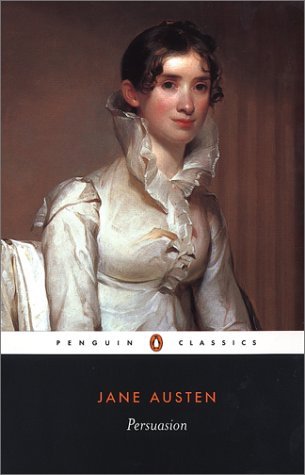
Persuasion by Jane Austen

Source: Purchased
Paperback, 236 pages
I am an Amazon Affiliate

Persuasion by Jane Austen (on Kobo) is her final, full manuscript, and it is one of the most mature of her works. Anne Elliot is the heroine of this novel, but often in the beginning of the novel she is in the background as an observer, as she is talked about or looked over by even her own father and older sister. She is 27, unmarried, and by all appearances, a wallflower, who loves to read. Through the influence of Lady Russell, a friend of her deceased mother, Anne broke off an engagement with Frederick Wentworth because the match was imprudent as he was not yet established in a career and was not of the same social standing as the Elliots. Lead by her friendship with Lady Russell and a sense of duty to her family, Anne broke the engagement and suffered for more than eight years, though she did have other prospects. Austen seems to remind us that when love is true and deep, it can cut us just as deeply when things end poorly, but it also can continue to live inside of us, even when all hope is lost.

“A few years before, Anne Elliot had been a very pretty girl, but her bloom had vanished early; and as even in its height, her father had found little to admire in her, (so totally different were her delicate features and mild dark eyes from his own); there could be nothing in them now that she was faded and thin, to excite his esteem.”  (page 7)

The contrasts set forth by Austen in this novel between the Musgroves and the Elliots is almost as wide as the Grand Canyon, and yet, Anne finds herself easily swept into either family — adaptable to any situation — but she seems to feel the most comfort when surrounded by the jubilant Musgroves.  Her adventures with her younger sister, Mary, and the Musgroves bring Anne a stroke of not only luck but happiness when she is reunited, if only in proximity, to Captain Wentworth.  Although she spends a great deal of time making excuses to be absent from gatherings where she knows he will be present, she eventually has little choice but to be in his company, finding that it is not as horrible as she imagined.

“Doubtless it was so; and she could take no revenge, for he was not altered, or not for the worse.  She had already acknowledged it to herself, and she could not think differently, let him think of her as he would.” (page 57)

Austen’s tale of a second chance at love is more about the anxiety that can plague new love and acquaintances, but also the reunited lovers who misunderstood one another’s motivations in their youth.  There are missteps to be sure, as Wentworth unwittingly finds himself engaged to another without explicitly making his intention to be so known and Anne is led to believe that Mr. Elliot has his eye set on her.  These characters are more mature in their motivations, while there are still some who are a bit ridiculous — from her father’s obsession with status and how handsome he still is to Mary’s constant complaining and hypocritical behavior — most of the characters are mature enough to know their own desires and to seize opportunities when they are presented.  Persuasion by Jane Austen is a fine novel, less about Anne’s initial persuasion away from Wentworth and more of her persuading herself that he still loves her and that hope lives.

About the Author:

Jane Austen was an English novelist whose works of romantic fiction, set among the landed gentry, earned her a place as one of the most widely read writers in English literature.

9th book for 2014 European Reading Challenge(Set in England)


14th book for 2014 Historical Fiction Reading Challenge.

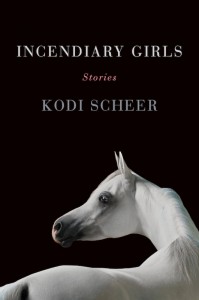
Incendiary Girls By Kodi Scheer

Source: Little A/New Harvest and TLC Book Tours
Paperback, 192 pages
I am an Amazon Affiliate

Incendiary Girls: Stories by Kodi Scheer (on Kobo) mixes dark humor — really dark humor — with scientific and anatomical knowledge that makes some of these stories even more creepy.  Like the title suggests, a spark is lit in each of these stories that leads these protagonists to re-examine their lives, relationships, and their perceptions of reality.  From a woman whose Muslim boyfriend turns into a camel to a mother who believes her daughter’s horse is her own mother reincarnated, Scheer expects her readers to be open-minded and willing to think outside the box.  While she explores the notion that the body betrays us, she also sneaks in some sly sympathy and humor at our own inevitable fates, which could be missed upon first reading.

“‘Pose for me,’ you say.  Not that he’s moving much anyway.  Pull out a sketch pad and charcoal, then sit across from him.  Forming the shapes first, the underlying structure, is difficult.  This body is unfamiliar. A cylinder, no, an oval for the main part.  Then there is the question of the hump.  Should you add a half sphere on top?

The sketch looks like a cross between a horse and a llama.” (page 70 from “When a Camel Breaks Your Heart”)

Readers will never forget these stories, like the peeling back of skin to reveal muscles in “Gross Anatomy.” But there is more here than the detailed images that will be etched forever in the mind; Scheer raises questions about identity, genetics, family secrets and more.  When tragedy strikes, people spend an inordinate amount of time making things as good as they can for their own children while burying the hurt of the past, and there are those that prepare for the worst before it even strikes through a series innocuous habits and rituals.

Incendiary Girls: Stories by Kodi Scheer is a small, powerful collection of short stories that hits like a sucker punch in the gut, leaving readers questioning their own emotions and world views.  Like the surgeon cutting along the skin to reveal the muscles below, Scheer sheds light on the disembodiment of humanity by war and science amid the absurdity of our conventional lives.  Unsettling, inventive, grotesque, but ever thought-provoking in her use of magical realism.  Something readers are unlikely to forget by a young, female Kafka that even Gregor Samsa should fear.

About the Author:

Kodi Scheer teaches writing at the University of Michigan.  For her work as a writer-in-residence at the Comprehensive Cancer Center, she was awarded the Dzanc Prize for Excellence in Literary Fiction and Community Service.  Her stories have appeared in the Chicago Tribune, the Iowa review, and other publications.


23rd book for 2014 New Author Challenge.

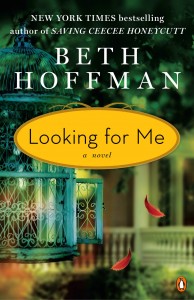
Interview with Beth Hoffman, Author of Looking for Me

LookingForMePaperbackLooking for Me by Beth Hoffman, which made my Best of 2013 list, is due out in paperback this month.  Her second novel weaves “a story that will enchant readers with not only its southern charm and hospitality, but also the mysteries of family connections and miscommunications.”

Today, Beth will regale us with her wit and charm in a short interview.

Thank you so much for inviting me to chat with you, Serena.

1. In Looking for Me (on Kobo), Teddi Overman has a gift for restoring old furniture, but she seems unable to cope with the past. How do you think her ability to restore furniture reflects her inability to address her own past or the life she leads after high school?

Teddi adores her brother, and her hope for his survival is a tangled mess of guilt, unbearable grief, and even anger. These feelings translate into how she believes even the most severely damaged piece of furniture can be resurrected. By immersing herself in her craft, each repair represents how she’s trying to mend herself and her past.

2. Have you ever restored furniture or found a piece that just spoke to you?
Though I’ve restored a few pieces, I don’t have the patience to do what Teddi did. She was a master. Yes, certain pieces speak to me, and when they do it’s like being reunited with an old friend. Years ago I walked by an antiques shop and saw a circa 1908 Herschell-Spillman carousel horse in the window. My reaction was so powerful that nothing could have stopped me from having him. He was far outside my budget, but I found ways to scrape together enough to finally bring him home. I named him Ziggy.

3. When we leave home, we often leave behind who we were or were expected to be, how is this true of Teddi and do you think those pieces we leave behind can ever be recaptured?

The best way I can sum up my feelings is to quote Teddi: “I thought about that old saying, how we can never go home again. But I think it’s more like a piece of us stays behind when we leave—a piece we can never reclaim. One that awaits our next visit and demands that we remember.”

4. Between Saving CeeCee Honeycutt and Looking for Me, could you describe your experience in publishing and editing the books? How were they the same and how were they different?

CeeCee’s story was my debut, and I had no idea what to expect once it was acquired.

I had edited the manuscript with a ruthless hand, so the re-pub editing was minimal and easy. But when the book published I felt like I’d been shot out of a cannon! I’m an introvert, so having a big spotlight shined on my face was frightening. Plus, I didn’t know how grueling a book tour could be. But it was an amazing experience that I wouldn’t trade.

When Looking for Me published I knew the ropes and had my feet beneath me, so I was better prepared.

5. What current projects are you working on? Care to share any details?

I recently started a new novel, and so far I’m enthralled with the characters. The story takes place in two historic districts that sit back-to-back in Northern Kentucky (Newport and Covington). The two female main characters (one in her early 30s and one in her silver years) are both hiding something. It’s through their unusual friendship that their mysteries unfold.

Thanks, Beth, for sharing a little bit about your books with us and about your new work. I know I cannot wait to read it!

****Enter to win a copy of Looking for Me by Beth Hoffman by leaving a comment here.  You must live in the continental U.S. to enter.  Deadline to enter is May 9, 2014, by 11:59 PM EST.***

Mailbox Monday #269

Mailbox Monday, created by Marcia at To Be Continued, formerly The Printed Page, has gone through a few incarnations from a permanent home with Marcia to a tour of other blogs.

Now, it has its own permanent home at its own blog.

To check out what everyone has received over the last week, visit the blog and check out the links.  Leave yours too.

Also, each week, Leslie, Vicki, and I will share the Books that Caught Our Eye from everyone’s weekly links.

Here’s what I received:

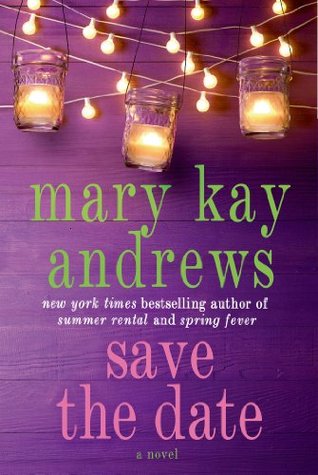
1. Save the Date by Mary Kay Andrews for review in June.

A savannah florist is about to score the wedding of a lifetime—one that will solidify her career as the go-to-girl for society nuptials. Ironically, Cara Kryzik doesn’t believe in love, even though she creates beautiful flower arrangements to celebrate them. But when the bride goes missing and the wedding is in jeopardy, Cara must find the bride and figure out what she believes in.  Maybe love really does exist outside of fairy tales after all.


What did you receive?

252nd Virtual Poetry Circle

Welcome to the 252nd Virtual Poetry Circle!

Remember, this is just for fun and is not meant to be stressful.

Keep in mind what Molly Peacock’s book suggested.

Look at a line, a stanza, sentences, and images; describe what you like or don’t like; and offer an opinion. If you missed my review of her book, check it out here.

Also, sign up for the 2014 Dive Into Poetry Reading Challenge because there are several levels of participation for your comfort level.

Today’s poem is from The Eight Stages of Translation by Robert Bly:

Old Winter by Salvatore Quasimodo,
translated by Robert Bly (pg. 76-7)

Desire of your hands I see through
in the darkness around the candle flame:
the had the odor of oak and of roses;
odor of death. Old winter.

The birds were looking for millet seeds
and suddenly they turned to snow;
words are like that:
a glimpse of sun, an instant of an angel,
and then the fog; and the trees
and us turned to air by morning.
Antico Inverno by Salvatore Quasimodo

Desiderio delle tue mani chiare
nella penombra della fiamma:
sapevano di rovere e di rose;
di morte. Antico inverno.

Cercavano il miglio gli uccelli
ed erano subito di neve;
cosi le parole:
un po' di sole, una raggiera d'angelo,
e poi la nebbia; e gli ableri,
e noi fatti d'aria al mattino.

What do you think?

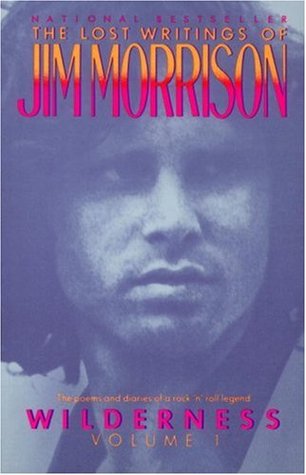
Wilderness: The Lost Writings of Jim Morrison Volume 1

Source: Purchased
Paperback, 214 pages
I am an Amazon Affiliate

Wilderness: The Lost Writings of Jim Morrison Volume 1 is a collection of poems, scribbled notes, photos, and a self-interview from Jim Morrison, lead singer of The Doors.  Like he music produced by Morrison and his band mates, his poetry has a hallucinatory quality.  Foremost a poet who unexpectedly found himself as a lead singer, lyrics of The Doors are in these poems, or vice versa depending on which he wrote first.  Fans of the band will enjoy looking at Los Angeles through Morrison’s eyes in these poems, with several referring to the city as LAmerica.  The seedy sides of L.A. are not glossed over, nor are his nomadic days with his family.  While much of his poetry is psychedelic in nature, dark, and offensive at times about carnal desires, there also is a reverence paid to the military, particularly military veterans, which could be influenced by the fact that his father was a military veteran.  However, like most artists, when compared to one another, the poems often contradict one another, as if the poet is working out some internal struggle of ideas.

“An interview also gives you the chance to try and eliminate all of those space fillers … you should try to be explicit, accurate, to the point … no bullshit.  The interview form has antecedents in the confession box, debating and cross-examination.  Once you say something, you can’t really retract it.  It’s too late.  It’s a very existential moment.” (page 1 — Self-Interview)

There are moments where the poems are lucid and easy to follow, but there are other times when the poems are confusing and make little sense to the reader without some reference point in the literature (i.e. William Blake or Nietzsche) or other knowledge Morrison picked up in his reading and living.  Despite the notes in the back that suggest Morrison often wrote many drafts of his poems (though the editors had a problem with chronology of those unnumbered and undated drafts), many of these poems feel unfinished and unpolished.

Selections from a few untitled poems:

"Men who go out on ships
To escape sin & the mire of cities
watch the placenta of evening stars
from the deck, on their backs
& cross the equator
& perform rituals to exhume the dead" (page 25)

LAmerica

"Androgynous, liquid, happy
Heavy
Facile & vapid
Weighted w/words
Mortgaged soul
Wandering preachers, & Delta Tramps" (page 87)

"Airport.
Messenger in the form of a soldier.
Green wool. He stood there,
off the plane.
A new truth, too horrible to bear.
There was no record of it
anywhere in the ancient signs
or symbols." (page 89)

"Actors must make us think
they're real
Our friends must not
make us think we're acting

They are, though, in slow
Time" (page 117)

As I Look Back

As I look back
over my life
I am struck by post
cards
Ruined Snap shots
faded posters
Of a time, I can't recall (page 201)

Wilderness: The Lost Writings of Jim Morrison Volume 1 is an existential journey of a poet, artist, and musician.  Fans of the band will love this collection, those that want an experience and look at the 1970s in Los Angeles will also love this collection.  Those looking for poetry that wows or connects with them may find it harder to connect with, especially since the poetry is a bit cryptic in purpose.

About the Poet:

Jim Morrison was an American singer-songwriter and poet, best remembered as the lead singer of Los Angeles rock band The Doors.

Book 14 for the Dive Into Poetry Reading Challenge 2014.


22nd book for 2014 New Author Challenge.

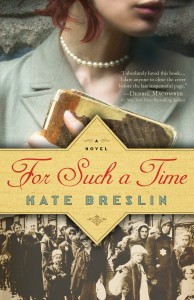
For Such a Time by Kate Breslin

Source: Bethany House and TLC Book Tours
Paperback, 432 pages
I am an Amazon Affiliate


For Such a Time by Kate Breslin is a WWII novel set in 1944 Czechoslovakia at the Theresienstadt concentration camp, a Jew work camp where many died from malnutrition, disease, or beatings, that acted as a stopgap for some Jews before reaching Auschwitz.  A miracle saves the life of Hadassah Benjamin from a Nazi firing squad, but the once blue-eyed, blonde finds herself in the middle of a hornet’s nest and forced to live under the assumed name of Stella Muller.  With her shorn locks, she ends up wearing a red wig and is given luxurious clothes, a warm bed, and food as SS-Kommandant Colonel Aric von Schmidt’s secretary.  With biblical quotes of Esther’s story, the parallels are unmistakeable between Stella’s struggles and that of Esther, with even Stella’s uncle bearing the same name as Esther’s cousin, Mordecai.  While the short quotes before each chapter are not strictly necessary to the story, it does offer some basis for the story Breslin is telling and for the strict moral grounds that Stella attempts to adhere to.  As a Jew who feels abandoned by God, it is interesting that she would turn to the bible and the tales a school friend of hers once told her, but her ability to connect with the bible demonstrates the transcendence that good morality can have no matter what religion, especially when she forces herself to break with Jewish traditions in order to remain concealed.

“Stella forced herself to look in the mirror.  Hadassah Benjamin, a Mischling, half Jew, bursting with a young woman’s exuberance, had ceased to exist.  In her place stood Stella Muller, subdued Austrian bookkeeper and suitable stock for the Third Reich.  A frail disguise comprised of no more than a scrap of official-looking paper, a red wig, and beneath her bruises the inherent fair features of a Dutch grandmother.”  (page 49-50)

Aric von Schmidt is the real enigma in this novel — a Nazi that does not hesitate to follow orders, but who still feels affection for Jews in his household.  He’s a man broken by WWI — literally, emotionally, and physically — and although he begins to see the devastation around him, of which he has played a significant part, it is hard for him to reconnect with his humanity without seeing how it would hamper his duties and possibly result in his own death or punishment.  Although he softens with Stella’s guidance, he’s still torn inside as he struggles to balance what he knows is right and what his orders are under the government he serves.

As the war nears its end and the final solution is called for by the Reich, the pressure is on for Stella, her uncle, and young boy named Joseph.  Breslin has crafted a poignant novel about the end of a war that had everyone concerned about their own safety, even the Nazi officers carrying out horrific orders.  She manages to humanize some of these monsters, and while we are not expected to completely forgive these men, it is clear that their decisions were based on their own demons and inabilities to sacrifice themselves for the good of others — a strength that few can muster in times of crisis when saving their own skin is a viable option.  For Such a Time by Kate Breslin is a stunning debut and would make a great book club selection given the moral issues and the emotional impact of the decisions these characters face.

About the Author:

A Florida girl who migrated to the Pacific Northwest, Kate Breslin was a bookseller for many years. Author of several travel articles, award-winning poet, and RWA Golden Heart finalist, Kate now writes inspiring stories about the healing power of God’s love. For Such a Time is her first book. She lives with her husband and cat in Seattle, WA.

Connect with Kate on her website and on Facebook.

10th book (WWII) for the 2014 War Challenge With a Twist.


8th book for 2014 European Reading Challenge; It is set in Czechoslovakia.


13th book for 2014 Historical Fiction Reading Challenge.


21st book for 2014 New Author Challenge.

Guest Post: Kidlitosphere Progressive Poem by Tabatha Yeatts

It has been a very busy April with a variety of poetry.  I am so happy for all the participants this year, spreading their wings into new territory.

I hope that you’ve all found something new to read for the rest of the year and that it is a new poet or collection.  Click the icon at the left to see the whole tour and more!

Thanks to everyone for joining in the blog tour as a poster, blogger, or commenter.  I appreciate all of your enthusiasm.  See everyone again in 2015.

Without further ado, I bring the National Poetry Month Blog tour to a close with a guest post from Tabatha Yeatts, and a collaborative poem.  Please give her a warm welcome.

Poet and author Irene Latham introduced the idea for the Kidlitosphere Progressive Poem in 2012 and it has become an annual National Poetry Month event.

Each day in April, a different kidlitosphere blogger provides the next line in the poem. No plans for themes or rhyme schemes are worked out ahead of time — everyone is just working on the fly. If you’ve never tried to write collaboratively, you might want to give a project like this a go. It’s a very interesting process, both to participate in and to watch unfold.

Here’s this year’s poem:

Three Blue Eggs

Sitting on a rock, airing out my feelings to the universe
Acting like a peacock, only making matters that much worse;

Should I trumpet like an elephant emoting to the moon
Or just ignore the warnings written in the rune?

Those stars can’t seal my future; it’s not inscribed in stone.
The possibilities are endless! Who could have known?

Gathering courage, spiral like an eagle after prey,
Then gird my wings for whirlwind gales in realms far, far away.

But, hold it! Let’s get practical! What’s needed before I go?
Time to be tactical—I’ll ask my friends what I should stow.

And in one breath, a honeyed word whispered low—dreams—
Whose voice? I turned to see. I was shocked. Irene’s!

“Each voyage starts with tattered maps; your dreams dance on this page.
Determine these dreams—then breathe them! Engage your inner sage.”

The merry hen said, “Take my sapphire eggs to charm your host.”
I tuck them close—still warm—then take my first step toward the coast.

This journey will not make me rich, and yet I long to be
Like luminescent jellyfish, awash in mystery.

I turn and whisper, “Won’t you come?” to all the beasts and birds
And listen while they scamper, their answers winging words:

“Take these steps alone to start; each journey is an art.
You are your own best company. Now it’s time to depart!”

I blow a kiss. I hike for days, blue eggs pressed to my chest.
One evening’s rest, campfire low, shifting shadows brought a guest.

A boy, with hair in wild waves and eyes blue as the sea,
Says, “You’ve traveled far. What did you find—your best discovery?”

“I found a bird, I found a song, I found a word,” I say.
The hidden eggs, I make them known. “I’ve brought these on the way.”

We share an omelet and some talk; is my quest at an end?

Check out the last line, here.

1 Charles at Poetry Time

2 Joy at Joy Acey

3 Donna at Mainely Write

4 Anastasia at Poet! Poet!

5 Carrie at Story Patch

6 Sheila at Sheila Renfro

7 Pat at Writer on a Horse

8 Matt at Radio, Rhythm & Rhyme

9 Diane at Random Noodling

10 Tabatha at The Opposite of Indifference

11 Linda at Write Time

12 Mary Lee at A Year of Reading

13 Janet at Live Your Poem

14 Deborah at Show–Not Tell

15 Tamera at The Writer’s Whimsy

16 Robyn at Life on the Deckle Edge

17 Margaret at Reflections on the Teche

18 Irene at Live Your Poem

19 Julie at The Drift Record

20 Buffy at Buffy Silverman

21 Renee at No Water River

22 Laura at Author Amok

23 Amy at The Poem Farm

24 Linda at TeacherDance

25 Michelle at Today’s Little Ditty

26 Lisa at Lisa Schroeder Books

27 Kate at Live Your Poem

28 Caroline at Caroline Starr Rose

29 Ruth at There is No Such Thing as a Godforsaken Town

30 Tara at A Teaching Life

Also, here’s the link to my collection of poems about imaginary places. It also mentions the Summer Poem Swap I’ll be holding. People are welcome to email me with questions about it or with requests to join.

Thanks, Tabatha!