Quantcast

After the War Is Over by Jennifer Robson

Source: HarperCollins
Paperback,
I am an Amazon Affiliate

After the War Is Over by Jennifer Robson follows closely on the heels of Somewhere in France (which I read in 2014) and takes a wide look at how the world look after WWI.  Charlotte Brown, friend to Lilly Neville-Ashford in the first book, sees first hand the results of war at home, as veterans are denied pensions and their families are forced to scrape by on what little work is still available for women.  Through alternating chapters between the time after WWI and when she first found work after completing university with the Neville-Ashford family and befriended not only Lilly, her student, but also her brother, Edward, readers are taken through England as it prospered and as it sustained heavy losses because of the war.  The losses are not just physical, but emotional and psychological for the men returning from war, as well as their families.  There are monetary losses and there are losses of freedom — in the sense that women lose their jobs to returning men and men lose many of their physical abilities during the war and must adapt to a new reality.

“Women always put themselves last.  Either it was the mothers she visited in the slums of Scottie Road who only ate after their husbands and children had had their fill, or it was the women from Huskisson Street who, after cleaning and cooking for days, were left with the rag end of the delicacies, with scarcely a slice of cake to share between them.” (page 145)

Even though this is considered a follow up to the first book, Robson offers enough background about the first book that this could be read as a standalone without any problems.  The main focus here is the aftermath of war, the changes for both men and women in a new world, and Charlotte’s ability to cope with her new reality and still strive to improve the world around her, even in small ways.  Readers who enjoy social change and movements will be swept up in the struggles of these families, just as Charlotte is.  Charity is looked on as a handout by many, but Charlotte’s push to have society lend a helping hand to each neighbor on their own is just what this society needs.  Rather than compete or judge others in the neighborhood, she insists on compassion.

Robson’s characters are dynamic, and Charlotte is strong willed and motivated in her efforts.  When she meets a personal challenge she does take a step back, but she soon realizes that the best medicine is to tackle it head on.  When Lilly and Robbie re-enter the picture, so does Edward, and this stirs up feelings in Charlotte that she hadn’t addressed and is still unwilling to admit to even herself.  There’s even a great Jane Austenesque moment in this one that Robson mimics so well.

After the War Is Over by Jennifer Robson is a sweeping novel about life after the war because the immediate casualties of war are not the only tolls countries, communities, and families will be expected to take.  Charlotte is a forthright, strong woman in a changing world, but she’s well aware that change cannot happen on its own or at the hands of one woman.  She needs help, as we all do, and to generate change is to work together.

About the Author:

Jennifer Robson first learned about the Great War from her father, acclaimed historian Stuart Robson, and later served as an official guide at the Canadian National War Memorial at Vimy Ridge, France. A former copy editor, she holds a doctorate in British economic and social history from the University of Oxford. She lives in Toronto, Canada, with her husband and young children.  Connect with the author on Facebook.

Enzo Races in the Rain! by Garth Stein, Illustrated by R.W. Alley

Source: Purchased
Hardcover, 40 pgs
I am an Amazon Affiliate

Enzo Races in the Rain! by Garth Stein introduces children to a younger Enzo of The Art of Racing in the Rain fame.  R.W. Alley’s illustrations will make young readers easily identify with Enzo, with his open face and enthusiasm for the outdoors, running, and exploring.  Reading this book aloud to a young girl and an aging grandmother, it was good to see them both smile, and whether they were both smiling at Enzo or one another, it did not matter because in that moment, they were sharing the joy of Stein’s writing.

Living on a farm, Enzo is surrounded by animals and people, and the cars that whiz by on the road. What’s frustrating for this pup is that he not only doesn’t have a name, but that he also is not understood by humans.  It is not until he meets a young girl, Zoe, and finds his place with her family that Enzo begins to learn what it means to be home.

Enzo is a curious and fun pup, who is bound to get into a little bit of trouble, even when he finally has a family and a home.  Enzo Races in the Rain! by Garth Stein, illustrated by R.W. Alley, well illustrated and told, packing a twofold punch for young readers, showing them what it means to have a family who will always love and miss you and a home that you can always return to as long as you remember the way.

About the Author:

Garth Stein is the author of four novels: the New York Times bestselling gothic/historical/coming-of-age/ghost story, “A Sudden Light“; the internationally bestselling “The Art of Racing in the Rain“; the PNBA Book Award winner, “How Evan Broke His Head and Other Secrets“; and the magically realistic “Raven Stole the Moon.” He is also the author of the stage play “Brother Jones.” He has a dog, he’s raced a few cars, climbed a bunch of really tall trees, made a few documentary films, and he lives in Seattle with his family. He’s co-founder of Seattle7Writers.org, a non-profit collective of 74 Northwest authors working together to energize the reading and writing public.

About the Illustrator:

R.W. Alley has illustrated more than one hundred children’s books, including the popular Paddington Bear books by Michael Bond.

In 2010, he received a Theodor Seuss Geisel Honor Award for Pearl and Wagner One Funny Day by Kate McMullan. In 2008, There’s a Wolf at the Door by Zoë B. Alley was selected as a Washington Post Best Book of the Year.

Mailbox Monday #305

Mailbox Monday, created by Marcia at To Be Continued, formerly The Printed Page, has a permanent home at its own blog.

To check out what everyone has received over the last week, visit the blog and check out the links.  Leave yours too.

Also, each week, Leslie, Vicki, and I will share the Books that Caught Our Eye from everyone’s weekly links.

Here’s what I received:

1.  Enzo Races in the Rain! by Garth Stein, which we purchased for our daughter over the holidays.

Enzo the puppy’s action-packed adventure begins when he makes the journey from the farm to the city (bark twice for faster!), discovers just how big the world is, and finds the family that was meant to be his.

Life on the farm is pretty quiet—except when he races the cars that come down the barn road. Because Enzo is fast. He knows he’s different from other dogs. But people never understand Enzo when he barks, and it drives him crazy! Then one day Enzo meets a little girl named Zoë and her father, Denny, and everything changes. R. W. Alley’s fantastic illustrations bring the beloved Enzo to life as he learns to adapt to life in his new home and discovers just what it means to become a family.

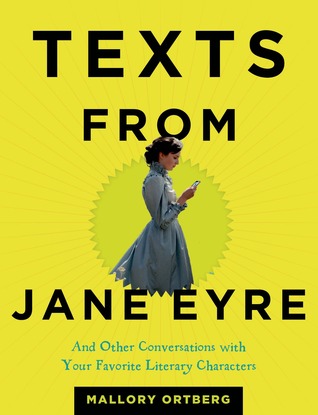
2. Texts from Jane Eyre: And Other Conversations with Your Favorite Literary Characters by Mallory Ortberg, illustrated by Madeline Gobbo from Anna.

Mallory Ortberg, the co-creator of the cult-favorite website The Toast, presents this whimsical collection of hysterical text conversations from your favorite literary characters. Everyone knows that if Scarlett O’Hara had an unlimited text-and-data plan, she’d constantly try to tempt Ashley away from Melanie with suggestive messages. If Mr. Rochester could text Jane Eyre, his ardent missives would obviously be in all-caps. And Daisy Buchanan would not only text while driving, she’d text you to pick her up after she totaled her car. Based on the popular web-feature, Texts from Jane Eyre is a witty, irreverent mashup that brings the characters from your favorite books into the twenty-first century.

3. Hansel and Gretel: A Fairy Tale with a Down Syndrome Twist by Jewel Kats, illustrated by Claudia Marie Lenart from Loving Healing Press.

Hansel & Gretel: A Fairy Tale with a Down Syndrome Twist is an enchanting tale about how kindness overcomes callousness and leads to a wondrous reward. This adaptation of the classic Grimms’ tale includes the wicked witch and the poor siblings in search of food, but in this case, five-year-old Hansel is a mischievous, yet courageous, boy with Down syndrome.

4. The Princess Panda Tea Party: A Cerebral Palsy Fairy Tale by Jewel Kats, illustrated by Richa Kinra, from Loving Healing Press for review.

An enchanting story which shows girls that grace and courage come from within. Michelle, age eight, has cerebral palsy and lives at an all-girls orphanage. She is often openly mocked by the other girls because of her need to use a walker for mobility. One day, she spends her hard-earned change for a toy stuffed panda at the local Salvation Army store. When opportunity strikes for the orphanage girls to compete, in manners and deportment, for the privilege of tea with the Queen of England, Michelle’s enchanted panda comes to life and her world will never be the same!

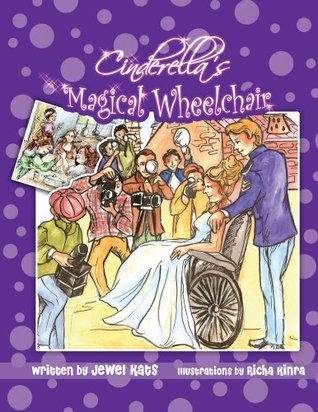
5.  Cinderella’s Magical Wheelchair: An Empowering Fairy Tale by Jewel Kats, illustrated by Richa Kinra for review from Loving Healing Press.

In a Kingdom far, far away lives Cinderella. As expected, she slaves away for her cranky sisters and step-mother. She would dearly love to attend the Royal costume ball and meet the Prince, but her family is totally dead set against it. In fact, they have gone so far as to trash her wheelchair! An unexpected magical endowment to her wheelchair begins a truly enchanted evening and a dance with the Prince. Can true love be far behind?

6. Lives of Crime and Other Stories by L. Shapley Bassen for review.

These are great noir stories, with a very intelligent self-awareness that makes them existentially perplexing and entertaining at the same time. Kind of a guilty pleasure. Love the wry darkness.” -Susan Smith Nash, author of “The Adventures of Tinguely Querer.”

7. In the Company of Cheerful Ladies (No. 1 Ladies’ Detective Agency #6) by Alexander McCall Smith from the library sale for 50 cents.

In the newest addition to the universally beloved No. 1 Ladies’ Detective Agency series, the charming and ever-resourceful Precious Ramotswe finds herself overly beset by problems. She is already busier than usual at the detective agency when added to her concerns are a strange intruder in her house on Zebra Drive and the baffling appearance of a pumpkin. And then there is Mma Makutsi, who decides to treat herself to dance lessons, only to be partnered with a man who seems to have two left feet. Nor are things running quite as smoothly as they usually do at Tlokweng Road Speedy Motors. Mma Ramotswe’s husband, the estimable Mr. J.L.B. Matekoni, is overburdened with work even before one of his apprentices runs off with a wealthy woman. But what finally rattles Mma Ramotswe’s normally unshakable composure is a visitor who forces her to confront a secret from her past.

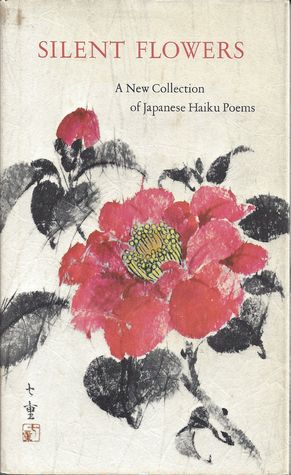
8. Silent Flowers: A New Collection of Japanese Haiku Poems edited by Dorothy Price, illustrated by Nanae Ito from the library sale for $1.


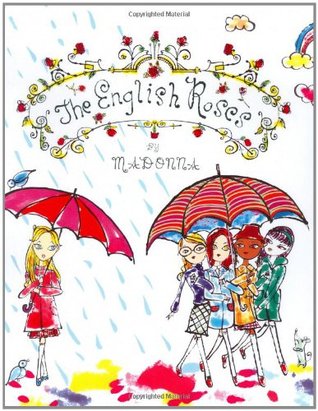
9. The English Roses by Madonna, illustrated by Jeffrey Fulvimari from the library sale for 50 cents.

This is a story about slumber parties, jealousy, fairy godmothers, and friendship; about feeling green with envy, blue with loneliness, pink with embarrassment, purple with rage, and how to find true-blue friends.

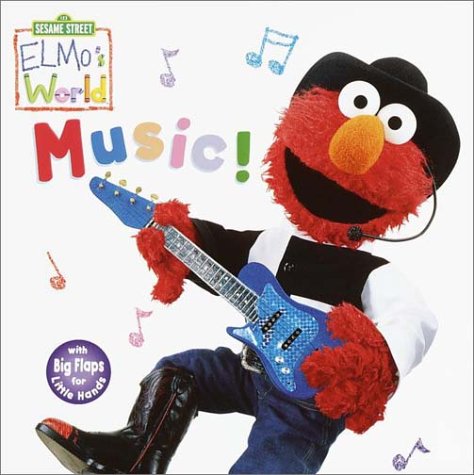
10.  Elmo’s World Music! by John E. Barrett, Mary Beth Nelson from library sale for 50 cents.

La! La! La! Toot! Toot! Toot! Elmo loves to make music! Toddlers will love lifting the flaps and discovering all the fun Elmo has when he plays different instruments and sings his favorite songs.

11.  Pepper (Waggy Tales) by Stewart Cowley from library sale for 50 cents.

Pepper, who comes complete with a springy tail, expressive googly eyes, is the purrrr-fect name for this bubbly, bouncing cat tale. Children will love following this furball through silly adventures. Full-color illustrations. Consumable.


12. Dora’s Desert Friends by Robin Chaplik from the library sale for 50 cents.

Help Dora and Boots cross the SUnny Desert to visit their lizard friends! Listen to star sparkles and other fun sounds on the way!

What did you receive?

288th Virtual Poetry Circle

Welcome to the 288th Virtual Poetry Circle!

Remember, this is just for fun and is not meant to be stressful.

Keep in mind what Molly Peacock’s book suggested.

Look at a line, a stanza, sentences, and images; describe what you like or don’t like; and offer an opinion. If you missed my review of her book, check it out here.

Today’s poem is from Etheridge Knight, recited by Josae Martin:

The Bones of my Father

1
There are no dry bones
here in this valley. The skull
of my father grins
at the Mississippi moon
from the bottom
of the Tallahatchie,
the bones of my father
are buried in the mud
of these creeks and brooks that twist
and flow their secrets to the sea.
but the wind sings to me
here the sun speaks to me
of the dry bones of my father.

2
There are no dry bones
in the northern valleys, in the Harlem alleys
young / black / men with knees bent
nod on the stoops of the tenements
and dream
of the dry bones of my father.

And young white longhairs who flee
their homes, and bend their minds
and sing their songs of brotherhood
and no more wars are searching for
my father’s bones.

3
There are no dry bones here.
We hide from the sun.
No more do we take the long straight strides.
Our steps have been shaped by the cages
that kept us. We glide sideways
like crabs across the sand.
We perch on green lilies, we search
beneath white rocks…
THERE ARE NO DRY BONES HERE

The skull of my father
grins at the Mississippi moon
from the bottom
of the Tallahatchie.

What do you think?

Short Story Friday #1

In 2013, I introduced Short Story Friday as a way to discuss individual short stories, whether e-short stories or short stories in collections, but I dropped the ball in 2014 and the feature has since disappeared from the blog.

In 2015, I’m relaunching this feature, but rather than discuss published short stories from collections or sold individually, I’ll be sharing snippets from my own fiction pieces, mostly short stories.  In addition to the new business, Poetic Book Tours, I’ll be writing and submitting more of my own fiction and poetry this year.

I’ve decided to share some of that writing here, and you can feel free to leave your feedback on the pieces I share or not.  I’ll leave that up to you, but know that I have a thick skin and can handle it if you don’t like it.

So today, here’s a little of what I’ve been working on:

I’ve been told that my eyes blink too frequently.

The diagnosis must be true because I only see glimpses most of the time. My brain must fill in the blanks to complete the images I see because sometimes I’ll be talking to someone with red hair on one side of their head and dark brown on the other.

Whether the blinking is because of my nearly dried out tear ducts or my fear of germs is anyone’s guess. But when I talk to you, I’m not flirting, batting my eyelashes like some love-sick pup.

Please feel free to share your thoughts on this snippet and let me know what you think is going on with this girl.

Island Fog by John Vanderslice

tlc tour host

Source: TLC Book Tours
Paperback, 288 pgs
I am an Amazon Affiliate

Island Fog by John Vanderslice is a collection of short stories placed in chronological order beginning in 1795 on Nantucket, Mass., through 2005.  These stories are dark and oppressive, and one of the most harrowing is “Taste,” which is likely to have some readers’ stomachs churning.

“Physical assault is a vaporous threat that gravitates around his being like the afternoon fog infecting the harbor.  A threat that, unlike the fog, never actually takes body.” (from “Guilty Look”, pg. 18)

“More than that, William said he could not live trapped in a nuthouse anymore.  ‘This island,’ he said to you, and you were not to take this personally, ‘feels like some mad doctor’s lab experiment.'”  (from “How Long Will You Tarry?”, pg 124)

Vanderslice weaves in the economic and social history of Nantucket to demonstrate the insular nature of an island and how dynamic it can be, despite that isolation.  The tension between Congregationalists and Quakers in colonial times is vibrant and engaging, as are the struggles of a young wife whose husband is lost at sea, but the overall collection is a mixed bag.  While the author strives to depict the disappointing pasts of characters on the island and their desires and hopes, the overall feel of the collection is one of a harsh island life that sometimes can feel like a prison to those who are native to the land and those who are merely visitors.

Island Fog by John Vanderslice is about peeling back the shroud of our neighbors lives and engaging with their personal lives in ways that many of us never expect.  The secret desires we harbor and the past transgressions we hide from even ourselves are revealed in these short stories, but beneath the fog is the desire to hope, the need to reach for something better than we have — even if in the end it is disappointing.  The collection would generate lively discussions in a book club.

About the Author:

John Vanderslice teaches in the MFA program at the University of Central Arkansas, where he also serves as associate editor of Toad Suck Review magazine. His fiction, poetry, essays, and one-act plays have appeared in Seattle ReviewLaurel Review, Sou’wester, CrazyhorseSouthern Humanities Review1966, Exquisite Corpse, and dozens of other journals. He has also published short stories in several fiction anthologies, including Appalachian Voice, Redacted StoryChick for a DayThe Best of the First Line: Editors Picks 2002-2006, and Tartts: Incisive Fiction from Emerging Writers.  His new book of short stories, Island Fog, published by Lavender Ink, is a linked collection, with every story set on Nantucket Island, Massachusetts.

Joy Street by Laura Foley

tlc tour host

Source: TLC Book Tours
Paperback, 46 pgs
I am an Amazon Affiliate

Joy Street by Laura Foley is a slim collection of poems that sometimes use a blunt edge to carve out the truth, while others use needle-like precision to get at the harsh realities of life.  However, despite these sometimes sad topics, there is a light, a sense of hope in many of them that things can be better.  In “Near Miss,” she evokes the stabbing pain of heartache that accompanies the loss of family or a spouse in a way that equates it to death even as it passes her by.  There is a sense that the narrator would rather she be the one to die than her loved one, but at the same time is relieved that she is not dying.

Drift (pg. 26)

I eye-roll Aunt Lizzie, who can’t see me over the phone, tell her I’m
dating a woman now, but at ninety she’s adrift in uncharted seas, till I
say we may marry—and she crests the wave, her kind old voice
soothing: Oh, but Laura, you’re still attractive to men, grasping the rudder
with practices hands.

In “Hindsight,” she looks at the photo of her emaciated father after his internment by the Japanese as a POW after WWII and identifies how different he looked, but her partner is quick to point to their similarities — the eyes of a survivor.  The narrator’s relationship with her father is clearly not as close as she would prefer, but there are ways to connect with a distant father and seek out the things that connect them.

Many of these poems are about making connections, either to family or lovers and potential lovers.  “Voyeur” is a testament to desire and the human need for connection with those we love, even from a distance.  But beyond these intimate connections, there is a connection that we feel with the earth and growth.  In addition to these connections, we all want to be remembered, like in “On Sense.”

Joy Street by Laura Foley is about the joy we can find in interaction and by living. Despite the challenges we face — a relative who doesn’t understand our lifestyles and choices — we can find enjoyment and amusement in these interactions and rise above the darkness of hatred and oppression.  We need to search for the light in any darkness, because that is what makes living worth it in the end.

***Enter to win a copy of Laura Foley’s collection by leaving a comment by Jan. 14, 2015, at 11:59 PM EST. Must be U.S./Canadian resident***

About the Poet:

Laura Foley is the author of four poetry collections. The Glass Tree won the Foreword Book of the Year Award, Silver, and was a Finalist for the New Hampshire Writer’s Project, Outstanding Book of Poetry. Her poems have appeared in journals and magazines including Valparaiso Poetry Review, Inquiring Mind, Pulse Magazine, Poetry Nook, Lavender Review, and in the anthology, In the Arms of Words: Poems for Disaster Relief. She won Harpur Palate’s Milton Kessler Memorial Poetry Award and the Grand Prize for theAtlanta Review’s International Poetry Contest. She lives on a woody hill in South Pomfret, Vermont with her partner Clara Gimenez and their three dogs. Please visit her website for book information or more poems.


Mister H by Daniel Nesquens, Illustrated by Luciano Lozano

Source: LibraryThing Early Reviewers
Hardcover, 61 pgs
I am an Amazon Affiliate

Mister H by Daniel Nesquens, Illustrated by Luciano Lozano, is an early readers chapter book and a little too much to read in one sitting for younger children, like my daughter. For these younger kids, it is best to break it up by chapter for readings so the kids can see the accompanying illustrations, which are delightful, and absorb the story more thoroughly. Mister H is a hippo in search of Africa, his true home, and while he persuades a young girl to free him and leaves the zoo, the conclusion to the story is not a happy ending. Some may find this disappointing, but in many ways, it will help children learn that happy endings are not always available upon first try and that additional chances should be taken.

Nesquens uses a lot of words in this tale and these words can be sometimes large for younger readers, but with help from parents and teachers, kids should be able to sound out these larger words and add to their own vocabularies. Mister H is a tolerant animal in the park who plays with two rambunctious boys and when he is demeaned by a snooty lady in a pizza parlor. Throughout his adventures children will learn how to be persistent in reaching their goals and how to brush off meanness without resorting to similar tactics.

Mister H by Daniel Nesquens, Illustrated by Luciano Lozano, offers a great deal for children to learn about how to interact with others, especially those different from themselves, and how to keep trying even if at first they don’t achieve their goals. Wonderfully illustrated, and observant kids will have fun picking out the happenings that go on beyond just the text.

About the Author:

Daniel Nesquens has been writing children’s books for over ten years. He has published more than thirty titles, including My Tattooed Dad (Groundwood).

About the Illustrator:

Luciano Lozano is a professional illustrator whose work has appeared in books, newspapers, and magazines. He lives in Barcelona. Visit his website.

Mailbox Monday #304

Mailbox Monday, created by Marcia at To Be Continued, formerly The Printed Page, has a permanent home at its own blog.

To check out what everyone has received over the last week, visit the blog and check out the links.  Leave yours too.

Also, each week, Leslie, Vicki, and I will share the Books that Caught Our Eye from everyone’s weekly links.

Here’s what I received:

1.  Revival by Stephen King for Christmas from my parents.

In a small New England town, over half a century ago, a shadow falls over a small boy playing with his toy soldiers. Jamie Morton looks up to see a striking man, the new minister. Charles Jacobs, along with his beautiful wife, will transform the local church. The men and boys are all a bit in love with Mrs. Jacobs; the women and girls feel the same about Reverend Jacobs — including Jamie’s mother and beloved sister, Claire. With Jamie, the Reverend shares a deeper bond based on a secret obsession. When tragedy strikes the Jacobs family, this charismatic preacher curses God, mocks all religious belief, and is banished from the shocked town.

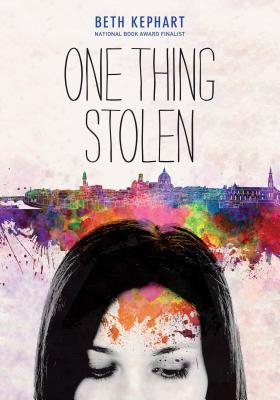
2.  One Thing Stolen by Beth Kephart, a happy surprise!

Set in Florence, Italy, One Thing Stolen follows Nadia Cara as she mysteriously begins to change. She’s become a thief, she has secrets she can’t tell, and when she tries to speak, the words seem far away.


3.  Wet by Toni Stern from Saichek Publicity for review.

Toni Stern enjoyed a highly productive collaboration with the singer-songwriter Carole King. Stern wrote the lyrics for several of King’s songs, most notably “It’s Too Late” for the album Tapestry. Now, through the expansive medium of poetry, she continues her spirited exploration of contemporary life.

4.  Paradise Drive by Rebecca Foust from the author for review.

5.  River House by Sally Keith from Milkweed Editions for review.

These are poems of absence. Written in the wake of the loss of her mother, River House follows Sally Keith as she makes her way through the depths of grief, navigating a world newly transfigured. Incorporating her travels abroad, her experience studying the neutral mask technique developed by Jacques Lecoq, and her return to the river house she and her mother often visited, the poet assembles a guide to survival in the face of seemingly insurmountable pain. Even in the dark, Keith finds the ways we can be “filled with this unexpected feeling of living.”

6. The Red List by Stephen Cushman from Louisiana State University Press for review.

The “red list” of Stephen Cushman’s new volume of poetry is the endangered species register, and the book begins and ends with the bald eagle, a bird that bounded back from the verge of extinction. The volume marks the inevitability of such changes, from danger to safety, from certainty to uncertainty, from joy to sadness and back again. In a single poem that advances through wordplay and association, Cushman meditates on subjects as vast as the earth’s fragile ecosystem and as small as the poet’s own deflated fantasy of self-importance: “There aren’t any jobs for more Jeremiahs.” Simultaneously teasing the present and eulogizing what has been lost, Cushman speaks like a Shakespearean jester, freely and foolishly, but with penetrating insight.

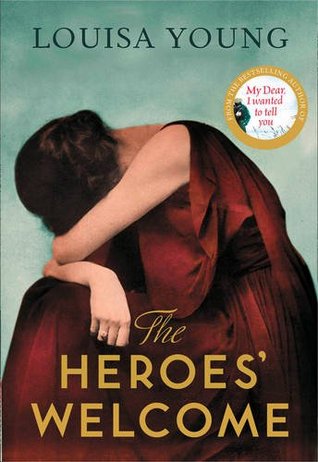
7.  The Heroes’ Welcome by Louisa Young from Harper for review.

The Heroes’ Welcome is the incandescent sequel to the bestselling R&J pick My Dear, I Wanted to Tell You. Its evocation of a time deeply wounded by the pain of WW1 will capture and beguile readers fresh to Louisa Young’s wonderful writing, and those previously enthralled by the stories of Nadine and Riley, Rose, Peter and Julia.


8.  Intermezzo: A Pride & Prejudice Variation by Abigail Reynolds from the author.

“Intermezzo” is a short story and is available in an expanded version along with 4 other short stories in A Pemberley Medley by Abigail Reynolds.


9. A Sudden Light by Garth Stein from Anna and her family.

When a boy tries to save his parents’ marriage, he uncovers a legacy of family secrets in a coming-of-age ghost story by the author of the internationally bestselling phenomenon, The Art of Racing in the Rain.

In the summer of 1990, fourteen-year-old Trevor Riddell gets his first glimpse of Riddell House. Built from the spoils of a massive timber fortune, the legendary family mansion is constructed of giant, whole trees, and is set on a huge estate overlooking Puget Sound. Trevor’s bankrupt parents have begun a trial separation, and his father, Jones Riddell, has brought Trevor to Riddell House with a goal: to join forces with his sister, Serena, dispatch Grandpa Samuel—who is flickering in and out of dementia—to a graduated living facility, sell off the house and property for development into “tract housing for millionaires,” divide up the profits, and live happily ever after.

What did you receive?

Poetry in 2015

2015Poetry

Welcome to the 2015 Poetry Reading Challenge!

No need to sign up or set a goal, other than to read at least 1 book of poetry or 20 poems this year (these can be by different poets if you choose).

If you share a review or a post about poetry on your blog this year, link it up below!

Here’s to another great year in poetry!

287th Virtual Poetry Circle

Welcome to the 287th Virtual Poetry Circle!

Remember, this is just for fun and is not meant to be stressful.

Keep in mind what Molly Peacock’s book suggested.

Look at a line, a stanza, sentences, and images; describe what you like or don’t like; and offer an opinion. If you missed my review of her book, check it out here.

Today’s poem is from William Shakespeare, recited by Allison Strong:

Sonnet 130

My mistress’ eyes are nothing like the sun;
Coral is far more red than her lips’ red;
If snow be white, why then her breasts are dun;
If hairs be wires, black wires grow on her head.
I have seen roses damasked, red and white,
But no such roses see I in her cheeks;
And in some perfumes is there more delight
Than in the breath that from my mistress reeks.
I love to hear her speak, yet well I know
That music hath a far more pleasing sound;
I grant I never saw a goddess go;
My mistress when she walks treads on the ground.
     And yet, by heaven, I think my love as rare
     As any she belied with false compare.

What do you think?

The Strange Library by Haruki Murakami

Source: Public Library
Paperback, 96 pgs
On Amazon and on Kobo

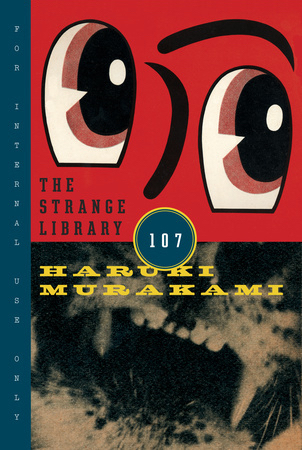
The Strange Library by Haruki Murakami, translated by Ted Goossen, is a novella and a dark fairy tale that brings a young teen into the depths of the library’s labyrinth.  The teenage boy loves to read and abides his mother, but the library seems to be his home on many levels until he enters room 107.  From there stranger things happen and the boy meets a sheep man and a mysterious and pretty girl.  Murakami has a wild imagination and it comes to life in these pages.  He’s created a world that is fantastical and odd, but the threats and tensions are real, leaving the reader sweating and despairing alongside his protagonist.

The text is accompanied by odd little drawings and magazine-like images, which add more of a creep factor to the story.  The copy from the library had an odd cover that had one flap flipping up and one flipping down, which could be used as a bookmark, but while reading, they tended to get in the way.  However, that wasn’t enough to detract from the creepy story that unfolded in these pages.  Murakami clearly has a vivid imagination in which animals and men can crossover into different planes of existence.  While many of us enjoy books, reading, and our libraries, The Strange Library by Haruki Murakami, translated by Ted Goossen, sure will give readers a reason to pause before entering their libraries again.

About the Author:

Haruki Murakami (Japanese: 村上 春樹) is a popular contemporary Japanese writer and translator. His work has been described as ‘easily accessible, yet profoundly complex’.  Since childhood, Murakami has been heavily influenced by Western culture, particularly Western music and literature. He grew up reading a range of works by American writers, such as Kurt Vonnegut and Richard Brautigan, and he is often distinguished from other Japanese writers by his Western influences.  Murakami studied drama at Waseda University in Tokyo, where he met his wife, Yoko.