Quantcast

The Robot Scientist’s Daughter by Jeannine Hall Gailey

Source: the poet
Paperback, 82 pgs
I am an Amazon Affiliate

The Robot Scientist’s Daughter by Jeannine Hall Gailey, which will be on tour with Poetic Book Tours this month, is a collection that blends invention with a cautionary tale.  Imaginary friends and close connections we make as children often help fill in the holes we have because of our own family dynamics, and the robot scientist and his daughter are no different.  While the scientist experiments for the pure joy of discovery, the consequences of his actions often take a backseat even if those consequences are widely devastating.  In the author’s note, Gailey says, “One reason I wrote this book was to raise awareness that nuclear research is never harmless; that the half-life of the pollution from nuclear sites is longer than most human lifespans; that there is, from reading my father’s research as well as my college classes, no truly safe way to store nuclear waste.” (pg. 6)

These poems will definitely make you think deeper about nuclear research and the effects of not only disposing of waste, but also the impact of atomic bombs and nuclear meltdowns.  Some of Gailey’s signature references to comic book characters and myths are present in these poems if you know where to look, like Dr. Manhattan who found himself transformed by an accident in a lab — an accident that resembles one caused by physicist Louis Slotin — and his modified outlook on humanity, which resembles the attacks of conscience felt by Oppenheimer.  While there are references to the Manhattan nuclear project, the bulk of the collection focuses on the Oak Ridge National Laboratory in Tennessee.

America Dreams of Roswell

The forbidding sugar of hot desert sand
and hallucinations of mushroom clouds

linger in a city where you can still get pie
with a fried egg on top, where you might catch

a glimpse of UFO dazzle, even the lampposts bloom
into alien heads, where barbed wire might keep out enemies

of the American dream, where the tiny famous lizard’s legs
cling to sad, solid rock.  On the Trinity site, that sand

turned to green glass.  The scientists were unsure
about igniting the whole earth’s atmosphere, nevertheless

the violet light demanded goggles; the shadows
of ranch houses burned into the ground.

Like most young girls, our narrator tries to fit in, which is hard in a secretive community where the government has sought waivers from its workers and those living and working in the community cannot speak to anyone about the research being done. Even children get a sense of being cloistered, being penned in.  While some poems are about the past and the nuclear research at the Tennessee labs, some poems take a more recent approach in examining the fallout from the Fukushima disaster, the direct result of a earthquake-generated tsunami.  From butterflies born without eyes to the beautiful disaster that is the art of an explosion, the poet calls into question human curiosity and the vanity that sometimes comes with that, in which the scientist believes only good will result from research and experiments, despite historical evidence to the contrary.

The Robot Scientist’s Daughter by Jeannine Hall Gailey has a gift of putting the bigger questions into a more manageable world within her poems.  From “They Do Not Need Rescue,” “No one needs rescue here in America’s Secret City./…/Not the children/dying of leukemia quietly in hospitals funded/by government grants, uncounted because/their numbers might seem damning.//”  We want to bury our sins and hide from the truth, but it cannot be secreted away, no matter how hard we try.
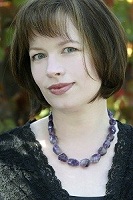
About the Poet:

Jeannine Hall Gailey is the Poet Laureate of Redmond, WA and the author of Becoming the Villainess, She Returns to the Floating World, and Unexplained Fevers, available spring of 2013. Her work has been featured on NPR’s The Writer’s Almanac, Verse Daily, and The Year’s Best Fantasy and Horror. Her poems have appeared in The American Poetry Review, The Iowa Review, and Prairie Schooner. She teaches part-time at National University.


Mailbox Monday #317

Mailbox Monday, created by Marcia at To Be Continued, formerly The Printed Page, has a permanent home at its own blog.

To check out what everyone has received over the last week, visit the blog and check out the links.  Leave yours too.

Also, each week, Leslie, Vicki, and I will share the Books that Caught Our Eye from everyone’s weekly links.

Here’s what I received:

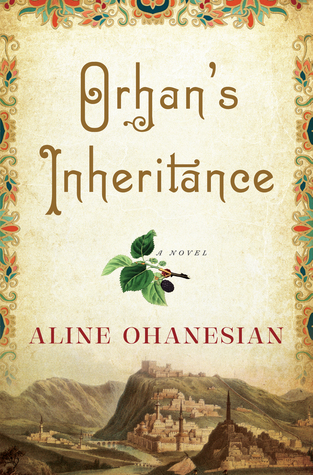
1.  Orphan’s Inheritance by Aline Ohanesian an unexpected surprise from Algonquin Books.

When Orhan’s brilliant and eccentric grandfather Kemal—a man who built a dynasty out of making kilim rugs—is found dead, submerged in a vat of dye, Orhan inherits the decades-old business. But Kemal’s will raises more questions than it answers. He has left the family estate to a stranger thousands of miles away, an aging woman in an Armenian retirement home in Los Angeles. Her existence and secrecy about her past only deepen the mystery of why Orhan’s grandfather willed his home in Turkey to an unknown woman rather than to his own son or grandson.

Left with only Kemal’s ancient sketchbook and intent on righting this injustice, Orhan boards a plane to Los Angeles. There he will not only unearth the story that eighty-seven-year-old Seda so closely guards but discover that Seda’s past now threatens to unravel his future. Her story, if told, has the power to undo the legacy upon which his family has been built.

2.  Beach Town by Mary Kay Andrews an unexpected surprise from Tandem Literary.

Greer Hennessy is a struggling movie location scout. Her last location shoot ended in disaster when a film crew destroyed property on an avocado grove. And Greer ended up with the blame.

Now Greer has been given one more chance—a shot at finding the perfect undiscovered beach town for a big budget movie. She zeroes in on a sleepy Florida panhandle town. There’s one motel, a marina, a long stretch of pristine beach and an old fishing pier with a community casino—which will be perfect for the film’s climax—when the bad guys blow it up in an all-out assault on the townspeople.

Greer slips into town and is ecstatic to find the last unspoilt patch of the Florida gulf coast. She takes a room at the only motel in town, and starts working her charm. However, she finds a formidable obstacle in the town mayor, Eben Thinadeaux. Eben is a born-again environmentalist who’s seen huge damage done to the town by a huge paper company. The bay has only recently been re-born, a fishing industry has sprung up, and Eben has no intention of letting anybody screw with his town again. The only problem is that he finds Greer way too attractive for his own good, and knows that her motivation is in direct conflict with his.

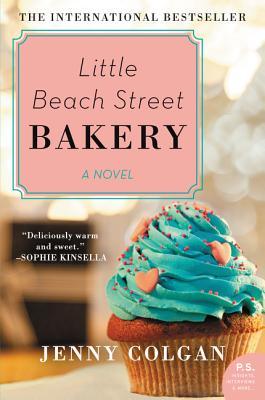
3. Little Beach Street Bakery by Jenny Colgan, an Instagram win from William Morrow.

A quiet seaside resort. An abandoned shop. A small flat. This is what awaits Polly Waterford when she arrives at the Cornish coast, fleeing a ruined relationship.

To keep her mind off her troubles, Polly throws herself into her favorite hobby: making bread. But her relaxing weekend diversion quickly develops into a passion. As she pours her emotions into kneading and pounding the dough, each loaf becomes better than the last. Soon, Polly is working her magic with nuts and seeds, chocolate and sugar, and the local honey–courtesy of a handsome beekeeper. Packed with laughter and emotion, Little Beach Street Bakery is the story of how one woman discovered bright new life where she least expected–a heartwarming, mouthwatering modern-day Chocolat that has already become a massive international bestseller.

4.  Gorillas in Our Midst by Richard Fairgray, illustrated by Terry Jones for review from Skyhorse Publishing.

Gorillas can be hard to spot, because they are masters of disguise and really good at hiding. Gorillas often have jobs where they get to wear masks—that’s why so many gorillas are surgeons, astronauts, scuba divers, and ninjas. There are adult gorillas and kid gorillas. There are even gorillas that go to school with you. You may think you’ve seen a gorilla swinging by before, but it’s much more likely that he was an orangutan—orangutans are terrible at hiding. You will know when there are lots of gorillas living in your midst because the grocery stores will be entirely out of bananas. In fact, you should always carry a banana with you, because you never know when there might be a gorilla around.

5.  Take a Peek with Peek-a-Bear by Jill Mangel Weisfeld, illustrated by Garry Thorburn for review from STRATEGIES Literary Public Relations.

“Take a Peek with Peek-a-Bear” is cleverly designed children’s book filled with colorful imagery and playful poetry that takes you on a exciting interactive adventure with the character Peek-a-Bear. It is the first of a series of “Peek & Play” books.

What did you receive?

300th Virtual Poetry Circle

Welcome to the 300th Virtual Poetry Circle!

Remember, this is just for fun and is not meant to be stressful.

Keep in mind what Molly Peacock’s book suggested.

Look at a line, a stanza, sentences, and images; describe what you like or don’t like; and offer an opinion. If you missed my review of her book, check it out here.

Today’s poem is from Robert Hayden, recited by Shawntay A. Henry:

Frederick Douglass

When it is finally ours, this freedom, this liberty, this beautiful
and terrible thing, needful to man as air,
usable as earth; when it belongs at last to all,
when it is truly instinct, brain matter, diastole, systole,
reflex action; when it is finally won; when it is more
than the gaudy mumbo jumbo of politicians:
this man, this Douglass, this former slave, this Negro
beaten to his knees, exiled, visioning a world
where none is lonely, none hunted, alien,
this man, superb in love and logic, this man
shall be remembered. Oh, not with statues’ rhetoric,
not with legends and poems and wreaths of bronze alone,
but with the lives grown out of his life, the lives
fleshing his dream of the beautiful, needful thing.

What do you think?

Haiku Friday! #1

I’ve written some great haiku so far, and I’m having a great time revisiting this form.

Many of the haiku I’m writing are urban and modern, compared to the nature haiku of the Japanese.

Today is Haiku Friday for National Poetry Month 2015. I hope that you’ll share your haiku or even just your favorite haiku from other poets.

Here are the three I’ve written since April started; feel free to comment below:

Pull tab, sliding door
a sigh of air passes out,
inside motion yells.

Under his armpit
held high, towering over me
an anchor dug deep.

Peel back tin lid slow,
we’re lined up like fish
ready for eating.

***Update***

If you want more about Haiku, Parrish Lantern has a great review up that will help you examine haiku in new ways.

Paradise Drive by Rebecca Foust

Source: Press 53
Paperback, 114 pgs
I am an Amazon Affiliate

Paradise Drive by Rebecca Foust, selected as the 2015 winner of the Press 53 Award for Poetry, is a collection of contemporary sonnets in which a pilgrim tackles the challenges of the modern world, including debt, divorce, addiction, and more.  Sonnets are one of the more challenging forms of poetry because of their rhythms and rhyme schemes, but Foust is never shy in her word choice nor the selection of each poem’s topic.  Her pilgrim is like Dante in the Divine Comedy, who searches for truth, beauty, and love, but unlike him, those concepts can manifest in very different ways.  In Foust’s modern version, the Pilgrim comes from a place of instability in which her father “smelled like failure because/he could not pay the bills.” (“The Prime Mover,” pg. 15)

From the seven deadly sins overheard at a party to party etiquette, the shallowness of Pilgrim’s cloud is seen through judgmental eyes, even as the Pilgrim seeks solace in the bathroom with the newspaper.  She buries her head in the sand to avoid the realities of the world around her — the lack of depth and mindfulness — and she’s paralyzed with fear and inaction.  The juxtaposition between her upbringing with the new life of high-end parties, among the elite with their own yachts and mansions, is stark.

From “Wrath, Talking about ‘The Change'” (page 10)

‘Menopause is a bitch and, trust me, not
one in heat. Black cohosh and primrose,
soy, and those compounded creams
you rub on your belly. Yuck, and none of it
works–I still hot-flash like a neon sign
in a full grand mal fir, I still rail

From “Indentured” (page 14)

Pilgrim’s own teeth, like her parents’, are soft
as chalk and will not bleach quite white.
She recalls how her father used to swoop
into the room, vanting to suck her blood,
his bridge boiling Polident blue in a cup

The search for more begins as a slow burn as Pilgrim recognizes the folly of the high-end Fifth Avenue “subway coat” and the use of the Escalade to drive the kids to sports.  There is the danger that she will fall in love with that life and all that it offers, even if it is shallow and unfulfilling.  With references to Hamlet and other classics, Foust has created a ripe mixture of classic and contemporary poetry within a classic form, which readers can and will spend hours ruminating over.  The urgent need to undergo a pilgrimage is tempered by Pilgrim’s awareness that the journey will take an emotional, spiritual, and moral toll.  In spite of those challenges, she sets off.

Paradise Drive by Rebecca Foust is a masterful work about the search for meaning in meaninglessness and the search for fulfillment in a world abound with distractions and shallowness.  Foust is a rare talent and her sonnets are masterful, but modern and fresh.

About the Poet:

Rebecca Foust‘s book Dark Card, won the 2007 Robert Phillips Poetry Chapbook and was released by Texas Review Press in June 2008, and a full length manuscript was a finalist in Poetrys 2007 Emily Dickinson First Book Award. Her recent poetry won two 2007 Pushcart nominations and appears or is forthcoming in Atlanta Review, Margie, North American Review, Nimrod, Spoon River Poetry Review, and others.  She also is the new Poetry Editor for Women’s Voices for Change, which will feature a different woman poet (over the age of 40) each week in its “Poetry Sunday” column.

Check out this interview with Rebecca in SFWeekly.  Here’s another review.  For your viewing enjoyment, Foust reads “the fire is falling.”


2015 National Poetry Month Celebration Has Begun!

Welcome to the 2015 National Poetry Month blog tour and celebration. This year’s theme is The Search for New Perspective. I’d love to have guests talk about how poetry changed their perspective about something, even if it is just one poem, or how you think poetry can change perspective to not only reach more readers but leave a lasting impression.

For those of you who already have poetry posts planned for the month or who put one up anytime during the month of April, please add your full URL to the post below, so we can all stop by and celebrate poetry with you!

If you want grab the image and link to this post on your own blog to ensure others find all the great poetry posts we are putting up this month.

In addition to these posts and the others I have planned this month; Short Story Friday will morph into Haiku Friday for the month.

Haiku is one of the most important form of traditional Japanese poetry. Haiku is, today, a 17-syllable verse form consisting of three metrical units of 5, 7, and 5 syllables.

I hope that you’ll share some of your favorite Haiku, write a haiku, and check out the Haiku I’ll be writing this month — the goal for me is 30 haiku poems!

Happy poetry month, everyone!

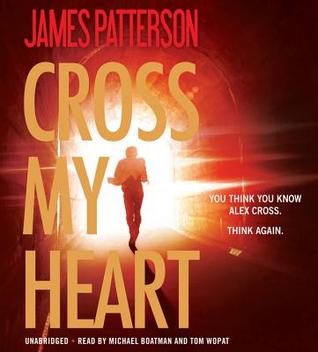
Cross My Heart by James Patterson (audio)

Source: Public Library
Audio, 9.5 hours
I am an Amazon Affiliate

Cross My Heart by James Patterson, narrated by Michael Boatman from Spin City and Tom Wopat from the The Dukes of Hazzard, is a slowly evolving novel that demonstrates not only how much family anchors Det. Alex Cross, but how it can become a weakness when the wrong people decide to target you.  With one kid away at school, another child just getting a handle on her high school work, and a seven year-old son just looking forward to growing up, Alex Cross has a lot to loose when killers come knocking.  As a series of murders push the murder rate up across the city and the police department continues to feel the pressure of a possible federal government takeover, Cross is under even more pressure than usual.  In the midst of all this, a woman is kidnapping babies.

Thierry Mulch has stalked Cross and his family, and despite all the signs, Cross is simply spread to thin to put the evidence together in a clear picture.  His wife, Bree, Nana Mama, and his children Ali, Jannie, and Damon always have filled in the gaps left by Cross’ busy schedule as a detective, and while there are family resentments about his absences, they are all well aware that his job is important.  Patterson slowly unravels how Cross finds himself on the razor’s edge of revenge at the beginning of the novel, and readers are anxious throughout as the stalker gets closer and closer.  Many villains have tried and failed to beat Alex Cross, but Mulch has been studying a long time to become the perfect criminal.

The narrator for Cross and Sampson continues his good performance, though his voice for Sampson still seemed a bit forced and jarring.  Tom Wopat speaks for Mulch and the other criminals in the novel, and he does an excellent job of maintaining a cunning and dispassionate character.  His villains are practical and diabolical.

This novel shows Alex Cross at rock bottom, particularly as it comes to a close.  Cross My Heart by James Patterson, narrated by Michael Boatman from Spin City and Tom Wopat from the The Dukes of Hazzard, is a cliffhanger that will have readers chomping at the bit to read the next, Hope to Die.

About the Author:

James Patterson is a prolific author of thrillers, mysteries, young adult novels and more. His first successful series featured psychologist Alex Cross.

A Peculiar Connection by Jan Hahn

Source: Meryton Press
Ebook
I am an Amazon Affiliate

A Peculiar Connection by Jan Hahn is a Pride & Prejudice variation that will have readers guessing until the very end, biting their nails as they hope for a happy ending for Mr. Darcy and Elizabeth Bennet.  Lady Catherine de Bourgh shows up on the Bennet doorstep with an ominous warning, that a union between Darcy and Elizabeth would be “a sin against Heaven itself!”  Lizzy’s world is shattered, but she’s unaware how shattered it will become as she’s thrown into Darcy’s path repeatedly and his determination refuses to let what Lady Catherine exposes be reality.  Is he on a fool’s errand to uncover a family secret long buried or is his resolve just what Elizabeth needs to keep hope alive?

“Circumstances can shatter expectations as easily as dropping a china cup upon a slate floor splinters its beauty into misshapen shards of pottery.”

The playful banter between them continues in Hahn’s book, as Lizzy and Darcy try to maintain propriety and adjust to their new reality.  And despite the challenges they face, both are determined to meet the challenge head on, though in different ways.  Lizzy is hopeful that she can learn to accept the revelations of Lady Catherine, while Darcy is determined to disprove them.  Hahn utilizes some of Austen’s iconic characters in new ways and weaves in new characters into a seamless narrative.

“‘You are clever enough.  I believe you will select a name for me.’

‘I suppose there is always “Fitz” or “Fitzy.”‘ I cut my eyes at him to see how he responded to my mockery.

‘I call my cousin “Fitz,” and no one shall ever call me “Fitzy.” I forbid it.'”

A Peculiar Connection by Jan Hahn will take readers on a journey into the illustrious past of Pemberley, through the country and city, and even on a sea voyage to Ireland.  Hahn has done a beautiful job demonstrating the tensions a secret of this magnitude would create between Darcy and Elizabeth, who have only recently become aware of their romantic feelings for one another and begun to hope.  She dashes those hopes quickly, but takes them on a realistic journey that tests their faith in love, romance, and themselves.  It is one of the best variations I’ve read in a long time.

Jan Hahn headshotAbout the Author:

After leaving a long career in the world of business, Jan Hahn began writing stories based on Jane Austen’s Pride and Prejudice in 2002. Her first novel, An Arranged Marriage, was published in 2011 by Meryton Press and won Best Indie Novel from Austen Prose that year. Her second novel, The Journey, was selected by Austen Prose as one of the Top Five Austen Inspired Historical Novels of 2012, and it won the Favorite Pride and Prejudice Variation/Alternate Path award from Austenesque. In 2014, Austen Prose listed Ms. Hahn’s third novel, The Secret Betrothal, among the Best Austenesque Historical Novels. She is a member of JASNA and lives in Texas. Visit her Facebook, her Blog, Meryton Press, and on Goodreads.

APCBlogTourBanner


Mailbox Monday #316

Mailbox Monday, created by Marcia at To Be Continued, formerly The Printed Page, has a permanent home at its own blog.

To check out what everyone has received over the last week, visit the blog and check out the links.  Leave yours too.

Also, each week, Leslie, Vicki, and I will share the Books that Caught Our Eye from everyone’s weekly links.

Here’s what I received:

1.  Hummingbirds in Winter by Anna Franco from Anna.

Hummingbirds in Winter is a work of fiction about a composer, Ben Solansky, who is determined to bring his family to safety, as the Nazis take over Europe. As he travels in search of a new homeland, Solansky relies on his compositions to give him strength.

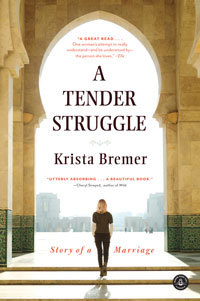
2. A Tender Struggle by Krista Bremer came from Algonquin Books, which I passed onto a friend because I have the original one titled My Accidental Jihad.

Fifteen years ago, Krista Bremer was a surfer and an aspiring journalist who dreamed of a comfortable American life of adventure, romance, and opportunity. Then, on a running trail in North Carolina, she met Ismail, sincere, passionate, kind, yet from a very different world. Raised a Muslim–one of eight siblings born in an impoverished fishing village in Libya–his faith informed his life. When she and Ismail made the decision to become a family, Krista embarked on a journey she never could have imagined, an accidental jihad: a quest for spiritual and intellectual growth that would open her mind, and more important, her heart.

3.  Changes: A Child’s First Poetry Collection by Charlotte Zolotow, illustrated Tiphanie Beeke for review from Sourcebooks.

As the seasons change, there is new beauty waiting to be discovered. Charlotte Zolotow’s classic poems paired with Tiphanie Beeke’s lovely illustrations make for a perfect poetry collection for every child.

Charlotte Zolotow-author, editor, publisher, and educator-had one of the most distinguished careers in the field of children’s literature. Born in Norfolk, Virginia in 1915, Changes: A Child’s First Collection of Poetry is published on the occasion of Charlotte Zolotow’s 100th birthday.

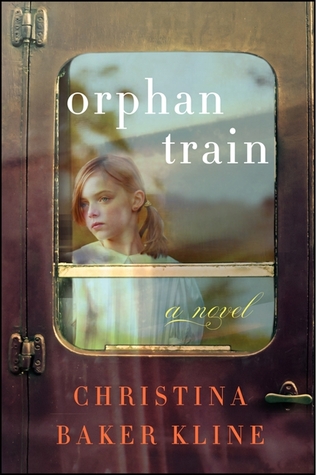
4.  Orphan Train by Christina Baker Kline from the library sale 50 cents.

Nearly eighteen, Molly Ayer knows she has one last chance. Just months from “aging out” of the child welfare system, and close to being kicked out of her foster home, a community service position helping an elderly woman clean out her home is the only thing keeping her out of juvie and worse.

Vivian Daly has lived a quiet life on the coast of Maine. But in her attic, hidden in trunks, are vestiges of a turbulent past. As she helps Vivian sort through her possessions and memories, Molly discovers that she and Vivian aren’t as different as they seem to be. A young Irish immigrant orphaned in New York City, Vivian was put on a train to the Midwest with hundreds of other children whose destinies would be determined by luck and chance.

The closer Molly grows to Vivian, the more she discovers parallels to her own life. A Penobscot Indian, she, too, is an outsider being raised by strangers, and she, too, has unanswered questions about the past. As her emotional barriers begin to crumble, Molly discovers that she has the power to help Vivian find answers to mysteries that have haunted her for her entire life – answers that will ultimately free them both.

5.  William Shakespeare’s The Phantom of Menace by Ian Doescher from Anna.

The popular, NYT best-selling Elizabethan/sci-fi mashup series continues, with a Shakespearean take on the first Star Wars prequel, The Phantom Menace. When the best-selling William Shakespeare’s Star Wars presented the classic George Lucas film in the form of an Elizabethan drama, the results blew the minds of Star Wars fans and Shakespeare buffs alike. Now the curtain rises once again on that star-crossed galaxy far away, this time revealing the tragedy, hubris, and doomed romance that will lead to the fall of the Republic and the rise of an Empire. The saga starts here with this reimagining of Episode I, a prequel tale in which a disguised queen, a young hero, and two fearless knights clash with a hidden, vengeful enemy. Masterful meter, Shakespearean soliloquies and intricate Elizabethan illustrations will leave more than a few readers convinced that the Star Wars saga sprang straight from the Bard’s quill.

6.  Born Survivors by Wendy Holdren for review.

The Nazis murdered their husbands but concentration camp prisoners Priska, Rachel, and Anka would not let evil take their unborn children too—a remarkable true story that will appeal to readers of The Lost and The Nazi Officer’s Wife, Born Survivors celebrates three mothers who defied death to give their children life.

Eastern Europe, 1944: Three women believe they are pregnant, but are torn from their husbands before they can be certain. Rachel is sent to Auschwitz, unaware that her husband has been shot. Priska and her husband travel there together, but are immediately separated. Also at Auschwitz, Anka hopes in vain to be reunited with her husband. With the rest of their families gassed, these young wives are determined to hold on to all they have left—their lives, and those of their unborn babies. Having concealed their condition from infamous Nazi doctor Josef Mengele, they are forced to work and almost starved to death, living in daily fear of their pregnancies being detected by the SS.

In April 1945, as the Allies close in, Priska gives birth. She and her baby, along with Anka, Rachel, and the remaining inmates, are sent to Mauthausen concentration camp on a hellish seventeen-day train journey. Rachel gives birth on the train, and Anka at the camp gates. All believe they will die, but then a miracle occurs. The gas chamber runs out of Zyklon-B, and as the Allied troops near, the SS flee. Against all odds, the three mothers and their newborns survive their treacherous journey to freedom.

What did you receive?

299th Virtual Poetry Circle

Welcome to the 299th Virtual Poetry Circle!

Remember, this is just for fun and is not meant to be stressful.

Keep in mind what Molly Peacock’s book suggested.

Look at a line, a stanza, sentences, and images; describe what you like or don’t like; and offer an opinion. If you missed my review of her book, check it out here.

Today’s poem is from Rhina P. Espaillat, recited by Sophia Elena Soberon:

Bilingual/Bilingue

My father liked them separate, one there,
one here (allá y aquí), as if aware

that words might cut in two his daughter’s heart
(el corazón) and lock the alien part

to what he was—his memory, his name
(su nombre)—with a key he could not claim.

“English outside this door, Spanish inside,”
he said, “y basta.” But who can divide

the world, the word (mundo y palabra) from
any child? I knew how to be dumb

and stubborn (testaruda); late, in bed,
I hoarded secret syllables I read

until my tongue (mi lengua) learned to run
where his stumbled. And still the heart was one.

I like to think he knew that, even when,
proud (orgulloso) of his daughter’s pen,

he stood outside mis versos, half in fear
of words he loved but wanted not to hear.

What do you think?

Alex Cross, Run by James Patterson (audio)

Source: Public Library
Audiobook, 7 hrs
I am an Amazon Affiliate

Alex Cross, Run by James Patterson, narrated by Michael Boatman from Spin City and China Beach and Steven Boyer from The Wolf of Wall Street, is another suspenseful romp through D.C. chasing bad guys and trying to balance the life of a high-profile homicide detective with family life.  A new marriage, 1 son in college, 1 daughter and young son at home, and 1 foster child keeps the Cross house on its toes, but when a journalist has it out for Det. Cross, things get Topsy-turvy.

Meanwhile, plastic surgeon Elijah Creem has gotten away with things that even Alex Cross doesn’t know about, even though Cross busts him at a party with illicit drugs and underage models.  While dead girls are piling up who are slim with blond hair — or at least that’s the hair color the medical examiner thinks it is since these women’s locks are shorn off and they are nearly scalped — other bodies are discovered along the river.  Cross finds himself in the middle of several cases that could be the work of one or more serial killers.  Michael Boatman does a great job as the voice of Alex Cross, but his rendition of his pal Sampson is a bit forced and comes off a bit comic.  Steven Boyer who does the narration for the killers is fantastically creepy and eerie, and in many ways is the star of this production.

Alex Cross, Run by James Patterson, narrated by Michael Boatman from Spin City and China Beach and Steven Boyer from The Wolf of Wall Street, is a back to basics cop novel with killers on the loose in the city, and less about the FBI, which is good to see once in a while.  Cross still has trouble balancing home life and work life, but it’s good to see that his priorities are straight when their foster child goes missing.  The audio productions are a great way to spend a couple afternoons or a few commutes into work.

About the Author:

James Patterson is a prolific author of thrillers, mysteries, young adult novels and more. His first successful series featured psychologist Alex Cross.

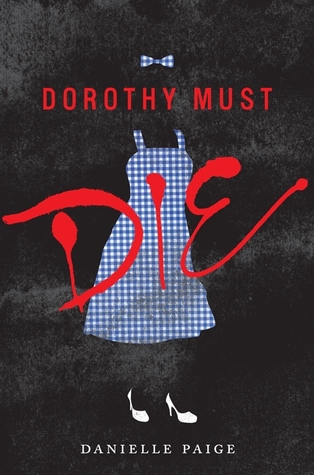
Dorothy Must Die by Danielle Paige

Source: Public Library
Hardcover, 452 pgs
I am an Amazon Affiliate

Dorothy Must Die by Danielle Paige is a twisted rendition of The Wizard of Oz, with a lot of references to the classic movie of the same name starring Judy Garland.  Paige has brought Amy Gumm to Oz the same way that Dorothy arrived, but unlike the happy ending in the story Amy knows, Oz has found itself sapped by Dorothy’s lust for magic.  Given that this is book one in a young adult trilogy, readers can expect that despite the title, obstacles are greater than they first appear and the story will drag on.  However, Paige keeps too much information close to the vest, leaving the main protagonist and the reader too much in the dark.  With the pacing bogging down in parts for extra long training sessions and discussions about things that don’t advance the plot or characterization much, readers may find their mind wandering and wishing Amy would just get on with her mission from the Revolutionary Order of the Wicked.

“I first discovered I was trash three days before my ninth birthday — one year after my father lost his job and moved to Secaucus to live with a woman named Crystal and four years before my mother had the car accident, started taking pills, and began exclusively wearing bedroom slippers instead of normal shoes.” (page 1)

Amy is a young woman with image issues and someone who has spent too much of her young life being an adult when her mother wallowed in her self-pity.  When she arrives in Oz she may seem tough to the munchkins and others, but on the inside she’s unsure of just about everything.  Consistent reminders not to trust anyone force her to rely on herself and her own instincts, which in some cases prove not to be so good.  This journey story is rife with twisted characters from Oz, magic, and indecision, but it also creates an alternate universe that will leave readers wondering what happens next because this is not the story they remember.

“Relying on a rat to guide me through a magic maze pretty much summed up my last twenty-four hours.  I felt out of control, isolated, and uncertain where I was headed.  I plunged forward regardless.  Sometimes the path was narrow and claustrophobic, the hedges so high I couldn’t even see their tops.  Then I’d turn a corner into a sweeping cobblestone boulevard where the topiary walls were short enough that it seemed like I might be able to dive over them with a running start.”  (page 384)

Dorothy Must Die by Danielle Paige, our March book club selection, was an interesting twist on a story many of us already know, and while the book’s twisting of characters worked better for characters like the Scarecrow than they did for the Lion, Paige has built a believable construct from a world consumed by greed.

About the Author:

Danielle Paige is a graduate of Columbia University and the author of Dorothy Must Die and its digital prequel novellas, No Place Like Oz and The Witch Must Burn. Before turning to young adult literature, she worked in the television industry, where she received a Writers Guild of America Award and was nominated for several Daytime Emmys. She currently lives in New York City.

What the Book Club Thought:

We discussed this one and our February pick, The Immortal Life of Henrietta Lacks, at the same meeting.

Everyone seemed to enjoy Skloot’s book and we had a great discussion about medical ethics and privacy as well as whether we’d want our names to be known if our cells ended up helping cure disease or wipe out the human race.  It was a lively discussion, even with those who did not have a chance to read the book.

Most people liked Dorothy Must Die for the most part, though several said the pacing was off and a couple members mentioned that the best drawn of the characters was the Scarecrow.  Some expressed an interest in reading the second book in the series, but we’ll have to wait until next month’s nomination period to see if that happens.  Otherwise, some will likely read the second book on their own.