Quantcast

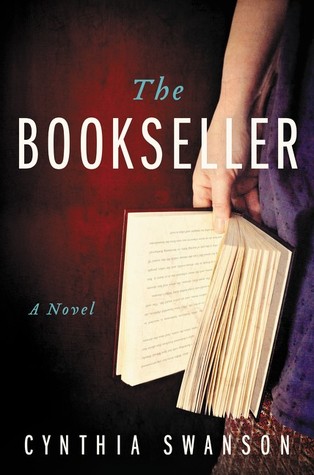
Guest Post: Researching The Bookseller by Cynthia Swanson

Today, I’d like to welcome Cynthia Swanson to the blog today. She will share with us her thoughts on researching historical fiction and the creation of The Bookseller.

Cynthia Swanson is a writer and a designer of the midcentury modern style. She has published short fiction in 13th Moon, Kalliope, Sojourner, and other periodicals; her story in 13th Moon was a Pushcart Prize nominee. She lives in Denver, Colorado, with her husband and three children. The Bookseller is her first novel.

Swanson pic credit, Glenda Cebrian PhotographyPlease give her a warm welcome.

I have several rules for writing fiction that I try very hard not to break. One of them is, while working on a first draft, I resist doing research.

It’s not that I think I know it all. Quite the contrary. When writing historical fiction – even recent history, as in the 1960s Denver setting of The Bookseller – it would be unwise to rely on memories, if one had them (and I am getting up there in age, but not quite that up there). Memory is unreliable and haphazard. If the final draft of a novel included simply my own and others’ memories, there would be holes and inaccuracies aplenty.

But in a first draft, those holes and inaccuracies are important. The problem with doing too much research early in a fiction writing project is that research often leads to digression. It’s too easy to go down the rabbit hole, whether online or at the library or with one’s nose in a book. You’re supposed to be writing, and instead, something like this happens: even though you started out wanting to learn about the bus line that ran on Pearl Street in Denver in 1962, somehow you’re drifted over to, “Hey, wait – what if we skip the bus and put her in a car? If so, what kind of car would she drive? Let me see how many thousands of images of 1962 cars I can pull up on Google. Wow … that’s a lot of cars…”

You see what I mean.

So here’s how I do it. I get that first draft written. I make a lot of educated guesses. I take notes. I keep going until I have the basic gist of a novel.

Then the real fun begins. In the second draft, I start to fill in the holes. I resolve quandaries. I tighten the language and flesh out the characters.

And I do some research. I start by reading histories – actual, printed books with real pictures are best, because they slow down the research and give me additional ideas. Or I might go to the library and look at microfilm of newspapers of the day. (And wow, talk about time-consuming – I could set up housekeeping in the Western History Department at the Denver Public Library for six months and I still wouldn’t get through all the newspapers printed during The Bookseller’s time period.)

When working on the second draft of The Bookseller, I learned all sorts of interesting things – like that the Broadway bus line, which for years had diverted onto Pearl Street in South Denver, no longer did so by 1962. That little fact actually changed quite a bit of the storyline.

By the third draft, things were getting tighter. The questions were more specific. Was there a bridge on Downing Street over the Valley Highway? Was the shoe section on the first or second floor of the May D&F department store? What song was at the top of the Hit Parade for the week of February 17, 1963? What book was number one on the New York Times Bestseller List that week? And was that book as popular in Denver as it was nationally? In polishing The Bookseller, I attempted to be as accurate as possible. I know there are errors – I doubt there’s a historical novel out there that doesn’t have at least a few. And for every detail I researched, I’m sure there is someone who lived through it and would insist I’m thoroughly mistaken.

Like all historical novelists, I do the best I can. I don’t profess to have it perfect – nor do I believe my research methods are the only tried and true ones. They work for me. They worked for this novel.

Call me a book geek – I don’t mind. I willingly admit doing this research was some of the best fun I’ve ever had.

Thank you, Cynthia, for your thoughts on research.  And I think you are in a welcoming crowd of book geeks!
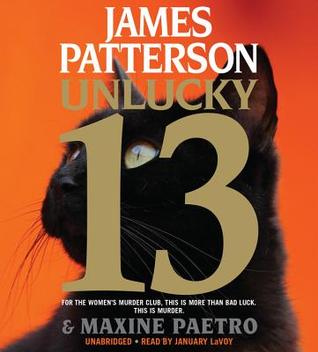
Unlucky 13 by James Patterson and Maxine Paetro (audio)

Source: Public Library
Audiobook,  7.5 hours
I am an Amazon Affiliate

Unlucky 13 by James Patterson and Maxine Paetro has the women of the murder club scrambling away from terrorists and searching high and low for a killer bent on revenge.  San Francisco Detective Lindsay Boxer is enjoying her motherhood, even as her job continues to be demanding and murderers and terrorists remain on the loose in the city.  The FBI becomes involved in a belly bomb case that threatens the city, but Boxer is like a dog with a bone — she won’t let go and insists on investigating despite the restrictions.  Even this routine investigation is turned upside down as Mackie Morales reappears in an FBI photograph — she’s the one that got away and she’s been on the run since Boxer and the police killed her lover.

This is another spectacular audio production by Hachette with music and audio gunfire.  I enjoy listening to this adrenaline pumping series on audio more than reading them.  I tend to enjoy them for their pure entertainment, but this one had an oddball case that ensnares Yuki Castellano and her new husband while they are on their honeymoon.  The plot did not seem to be as well thought out, and it seemed like the resolution was a bit too out of character with the stories in this series.  Other than that, Unlucky 13 by James Patterson and Maxine Paetro is a fun listen when your doing the chores.

About the Author:

James Patterson is a prolific author of thrillers, mysteries, young adult novels and more. His first successful series featured psychologist Alex Cross.

About the Co-Author:

Maxine Paetro collaborates with best–selling author James Patterson, co–writing The 4th Of July, The 5th Horseman, The 6th Target, The 7th Heaven, The 8th Confession, The 9th Judgment, 10th Anniversary and The 11th Hour, just released in May 2012. All are New York Times #1 best–sellers in the Women’s Murder Club Series.

Mailbox Monday #313

Mailbox Monday, created by Marcia at To Be Continued, formerly The Printed Page, has a permanent home at its own blog.

To check out what everyone has received over the last week, visit the blog and check out the links.  Leave yours too.

Also, each week, Leslie, Vicki, and I will share the Books that Caught Our Eye from everyone’s weekly links.

Here’s what I received:

1.  Mendeleev’s Mandala by Jessica Goodfellow from the poet for review.

Mendeleev’s Mandala begins in pilgrimage and ends in pilgrimage, but nowhere in-between does it find a home. Logic is the lodestar, as these poems struggle to make sense out of chaos. Jessica Goodfellow reimagines stories from the Old Testament, Greek mythology, and family history by invoking muses as diverse as Wittgenstein, Newton, the Wright Brothers, and an ancient Japanese monk. In the title poem, Mendeleev’s periodic table, sparked by fire and by trains, sees the elements of the world come into focus as a geometric pattern that recalls the ancient mandalas, also blueprints of an expanding universe as a whole.

2.  Bright Dead Things by Asa Limon from Milkweed Editions for review.

After the loss of her stepmother to cancer, Ada Limón chose to quit her job with a major travel magazine in New York, move to the mountains of Kentucky, and disappear. Yet, in the wake of death and massive transition, she found unexpected love, both for a man and for a place, all the while uncovering the core unity between death and beauty that drives our world. “I am beautiful. I am full of love. I am dying,” the author writes. It’s this narrative of transformation and acceptance that suffuses these poems. Unflinching and unafraid, Limón takes her reader on a journey into the most complex and dynamic realms of existence and identity, all while tracing a clear narrative of renewal.

3.  Lives of Crime and Other Stories by L. Shapley Bassen, an unexpected second review copy, which I will pass along to someone else.

These are great noir stories, with a very intelligent self-awareness that makes them existentially perplexing and entertaining at the same time. Kind of a guilty pleasure. Love the wry darkness.” -Susan Smith Nash, author of “The Adventures of Tinguely Querer

4.  The Year My Mother Came Back by Alice Eve Cohen, an unexpected surprise from Algonquin Books.

Thirty years after her death, Alice Eve Cohen’s mother appears to her, seemingly in the flesh, and continues to do so during the hardest year Alice has had to face: the year her youngest daughter needs a harrowing surgery, her eldest daughter decides to reunite with her birth mother, and Alice herself receives a daunting diagnosis. As it turns out, it’s entirely possible for the people we’ve lost to come back to us when we need them the most.

Although letting her mother back into her life is not an easy thing, Alice approaches it with humor, intelligence, and honesty. What she learns is that she must revisit her childhood and allow herself to be a daughter once more in order to take care of her own girls. Understanding and forgiving her mother’s parenting transgressions leads her to accept her own and to realize that she doesn’t have to be perfect to be a good mother.

5.  The Great War: Stories Inspired by Items from the First World War illustrated by Jim Kay from Candlewick Press for review.

A toy soldier. A butter dish. A compass. Mundane objects, perhaps, but to the remarkable authors in this collection, artifacts such as these have inspired stories that go to the heart of the human experience of World War I. Each author was invited to choose an object that had a connection to the war— a writing kit for David Almond, a helmet for Michael Morpurgo—and use it as the inspiration for an original short story. What results is an extraordinary collection, illustrated throughout by award-winning Jim Kay and featuring photographs of the objects with accounts of their history and the authors’ reasons for selecting them. This unique anthology provides young readers with a personal window into the Great War and the people affected by it, and serves as an invaluable resource for families and teachers alike.

6.  Strange Theater by John Amen from the poet for review.

John Amen’s STRANGE THEATER takes the reader on a multifaceted journey, each poem a puzzle piece in a mysterious drama, a view onto a stage where dialogues and narratives shuffle and rotate, where characters improvise insights that blur the boundary between horror and the absurd. Offering a unique vision of contemporary life, Amen is a Virgil of sorts, navigating the unknown, plumbing the conscious and unconscious alike. Replete with compelling imagery and frequently shocking proclamations, STRANGE THEATER imprints itself on the psyche, Amen’s voice continuing to resound long after the final poem is read.

What did you receive this week?

296th Virtual Poetry Circle

Welcome to the 296th Virtual Poetry Circle!

Remember, this is just for fun and is not meant to be stressful.

Keep in mind what Molly Peacock’s book suggested.

Look at a line, a stanza, sentences, and images; describe what you like or don’t like; and offer an opinion. If you missed my review of her book, check it out here.

Today’s poem is from Gregory Corso, recited by Stanley Jackson:

Writ on the Steps of Puerto Rican Harlem

There’s a truth limits man
A truth prevents his going any farther
The world is changing
The world knows it’s changing
Heavy is the sorrow of the day
The old have the look of doom
The young mistake their fate in that look
That is truth
But it isn’t all truth

Life has meaning
And I do not know the meaning
Even when I felt it were meaningless
I hoped and prayed and sought a meaning
It wasn’t all frolic poesy
There were dues to pay
Summoning Death and God
I’d a wild dare to tackle Them
Death proved meaningless without Life
Yes the world is changing
But Death remains the same
It takes man away from Life
The only meaning he knows
And usually it is a sad business
This Death

I’d an innocence I’d a seriousness
I’d a humor save me from amateur philosophy
I am able to contradict my beliefs
I am able able
Because I want to know the meaning of everything
Yet sit I like a brokenness
Moaning: Oh what responsibility
I put on thee Gregory
Death and God
Hard hard it’s hard

I learned life were no dream
I learned truth deceived
Man is not God
Life is a century
Death an instant

What do you think?

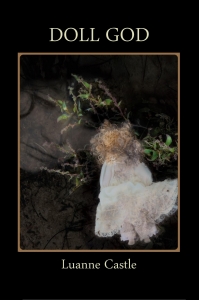
Doll God by Luanne Castle

Source: Poet Luanne Castle and Poetic Book Tours (my online tour company)
Paperback, 82 pages
I am an Amazon Affiliate

Doll God by Luanne Castle reflects on the passage of time and the impressions we leave behind.  Imagine the dolls you or your sisters or friends had as children and how much they were loved and cared for … imagine the stories that were created for them and the lives they shared.  Now, imagine what has become of those dolls, where are those talismans of hope and joy?  Are they buried in an attic or a closet, were they left behind in a field to become so much detritus?  Is that all they are?

from “Debris” (page 57)

And now, I can’t get the image
out of my mind:
dried paint chipping,
the spread of mold pockmarks,
velour paper edges fraying, canvas rips, a gradual
flaking into sand, then dust sifting down
to be layered over by debris
of another generation
always the shifting sand
like a dust storm

Castle asks these questions and more in her collection, seeking answers to how our pasts are shaping us even now and how those pasts have faded with the passage of time.  From large toddler dolls to doll gods, Castle evokes an adult sensibility within a child-like wonder, and the anxiety that raises up in the verse is tangible, just as the fear of time passing too quickly can hit us when we least expect it.  She causes us to reflect on our triumphs, our past joys and innocence, as well as to let it go into the ether to be rewritten by future generations.

This emotional collection will take a toll on its readers, but the journey will leave them changed in terms of perspective and renewed in that they will want to live more fully and enjoy each moment in the moment.  Reading these poems once will reflect one meaning, but upon subsequent readings, the poems leave readers to ruminate on their own lives.  Doll God by Luanne Castle is multi-layered, with bright spots in the darkness of loss.  Castle has a wide range and more great things are sure to come from this poet.

About the Poet:

Luanne Castle has been a Fellow at the Center for Ideas and Society at the University of California, Riverside. She studied English and Creative Writing at the University of California, Riverside; Western Michigan University; and Stanford University. Her poetry and creative nonfiction have appeared in Barnstorm Journal, Grist, The Antigonish Review, Ducts, TAB, River Teeth, Lunch Ticket, Wisconsin Review, The MacGuffin, and other journals. She contributed to Twice-Told Children’s Tales: The Influence of Childhood Reading on Writers for Adults, edited by Betty Greenway. Luanne divides her time between California and Arizona, where she shares land with a herd of javelina.  Follow her on Twitter.


Chicken Soup & Homicide by Janel Gradowski

Source: Janel Gradowski, the author
Ebook, 223 pgs
I am an Amazon Affiliate

Chicken Soup & Homicide by Janel Gradowski is the second in the Culinary Competition Mystery series, but readers can jump right into this series without worrying that they have missed something in previous books.  Amy Ridley is paired with Sophie from Riverbend Coffee in the Chicken Soup Showdown charity competition against some of the more polished chefs in Kellerton, Michigan.  Chet Britton has been a star chef in town and he has the ego to match, but his employees and many others in town find his demeanor abrasive.  He’s left a lot of scorched earth behind him in his rise to fame, but Amy isn’t there for the competition with him.  She’s in the competition to win money for her charity, as are many of the other competitors.  When Chet Britton ends up dead, Amy is thrust into the thick of it as a suspect.  Her best friend, Carla, is on the top of the list when a new detective takes over, and even dating a local cop Shepler doesn’t help.

“She should start wearing skull-and-crossbones patterned aprons to warn others of the possible dangers of competing with her, even though she certainly wasn’t the one committing the murders.”

“‘I honestly can’t figure out what that detective is doing.  This is a high-profile case, and the police department seems to have assigned some kind of bumbling idiot to it.  Shouldn’t my relationship with Chet have raised a red flag? Beyond that, I humiliated him a few weeks before he was murdered by demoting him at the restaurant he built.  I’m not sure if that detective hasn’t found that information or if he’s afraid of me.'”

Gradowski has a great sense of comedic timing.  Her one-liners will have readers laughing out loud.  Amy Ridley is a spunky character who has no qualms about hiding behind laundry bins to overhear conversations and also tends to be very careful when waging into her own investigations of town murders.  Should this cook be looking for killers among her friends, family, and fellow residents, probably not, but that doesn’t stop her.  Even as she’s investigating crimes, she’s thinking up recipes and reaching out to troubled friends.  She even finds the time to reach out to her vanishing husband.

Chicken Soup & Homicide by Janel Gradowski is fun and mouth-watering.  Readers will be looking to their kitchens longingly as the recipes are brewing and stewing, but never fear, there are recipes to try out in the back of the book.

About the Author:

Janel Gradowski lives in a land that looks like a cold weather fashion accessory, the mitten­-shaped state of Michigan. She is a wife and mom to two kids and one Golden Retriever. Her journey to becoming an author is littered with odd jobs like renting apartments to college students and programming commercials for an AM radio station. Somewhere along the way she also became a beadwork designer and teacher. She enjoys cooking recipes found in her formidable cookbook and culinary fiction collection. Searching for unique treasures at art fairs, flea markets and thrift stores is also a favorite pastime. Coffee is an essential part of her life. She writes the Culinary Competition Mystery Series, along with The Bartonville Series (women’s fiction) and the 6:1 Series (flash fiction). She has also had many short stories published in both online and print publications.  Check her Website, on Facebook, and on Twitter.  Check out her books.

Other books by this author, reviewed here:


Enter her giveaway here. (available through March 8, U.S. residents only)

12th of Never by James Patterson and Maxine Paetro (audio)

Source: Public Library
Audiobook, 7 hours
I am an Amazon Affiliate

12th of Never by James Patterson and Maxine Paetro, narrated by January LaVoy, is a prime audio production with sound effects and music. This is like watching a fast-paced thriller without the images — but those images clearly come to mind.  There are occasions when the narrator forgets what voice should be used, but it is so rare, that readers will forgive the little slips.  This is how I prefer my Patterson these days.  These are adrenaline filled novels that will have readers eager to finish the books in one day.

While some books in the Women’s Murder Club series have fallen flat or have had too many mysteries going at once, 12th of Never is fantastic.  There was a great balance between the personal lives of the women and the cases they were working — from the case of the corpse missing from the morgue to the case of the husband on trial for murdering his wife and daughter.  Lindsay Boxer is on the sidelines for a big chunk of the book because of her family issues after the birth of her baby, but Cindy and Richie are front and center with their personal issues.  Claire is facing professional problems since the disappearance of the body, and Yuki is juggling her personal life with the high-profile trial of a husband who may have killed his wife and daughter.

12th of Never by James Patterson and Maxine Paetro, narrated by January LaVoy, is a wild ride!  I was riveted from the beginning, probably because I’m invested in Boxer and her family.  I wanted to know what was going to happen with her and Joe and their baby, while I was disheartened by Cindy and Richie’s troubles.  Yuki is the only character I still am on the fence about, and that could be because I instantly liked the former assistant district attorney Jill Bernhardt from earlier in the series.

About the Author:

James Patterson is a prolific author of thrillers, mysteries, young adult novels and more. His first successful series featured psychologist Alex Cross.

About the Co-Author:

Maxine Paetro collaborates with best–selling author James Patterson, co–writing The 4th Of July, The 5th Horseman, The 6th Target, The 7th Heaven, The 8th Confession, The 9th Judgment, 10th Anniversary and The 11th Hour, just released in May 2012. All are New York Times #1 best–sellers in the Women’s Murder Club Series.

11th Hour by James Patterson and Maxine Paetro (audio)

Source: Public Library
Audiobook, 7 hours
I am an Amazon Affiliate

11th Hour by James Patterson and Maxine Paetro pits Lindsay Boxer against a couple of killers, and the Women’s Murder Club is on the case again.  The first killer, Revenge, clearly has skills and insider knowledge, but the second killer is obscured by the mysterious myths of an estate and its infamous owner.  From drug dealer bodies piling up on the city’s streets to the heads being turned up in the garden, Lindsay has no shortage of gruesome crime scenes to investigate.  As her personal life seems to fall apart, Lindsay has little choice but to throw herself into her work.

While there is more personal interaction between Lindsay and the girls, readers will likely be disappointed that her fledgling marriage is already on the rocks and the law enforcement group bends the rules in order to get a reporter off their backs.  The audio has some great effects, like gunshots, and the narrator does a good job differentiating between the girls.  Like all Patterson novels, it is heavy on plot but even that is not as well put together as it could have been.  There seems to be an overemphasis on drama, rather than on the reality of police procedures — particularly regarding pregnant police and bending the rules to get reporters out of the way (for which there should be real consequences).

11th Hour by James Patterson and Maxine Paetro is heart pumping and full of tension, and there are moments when the women are working really well together and their characters are evolving.  This series seems to have lost a lot of spark in terms of dynamic interactions and well thought out plots that aren’t too convoluted or ridiculous.

About the Author:

James Patterson is a prolific author of thrillers, mysteries, young adult novels and more. His first successful series featured psychologist Alex Cross.

About the Co-Author:

Maxine Paetro collaborates with best–selling author James Patterson, co–writing The 4th Of July, The 5th Horseman, The 6th Target, The 7th Heaven, The 8th Confession, The 9th Judgment, 10th Anniversary and The 11th Hour, just released in May 2012. All are New York Times #1 best–sellers in the Women’s Murder Club Series.

Mailbox Monday #312

Mailbox Monday, created by Marcia at To Be Continued, formerly The Printed Page, has a permanent home at its own blog.

To check out what everyone has received over the last week, visit the blog and check out the links.  Leave yours too.

Also, each week, Leslie, Vicki, and I will share the Books that Caught Our Eye from everyone’s weekly links.

Here’s what I received:

1. The Daddy Diaries by Joshua Braff a surprise from Tandem Literary.

2. Diamond Head by Cecily Wong, which I won from GoodReads.

At the turn of the nineteenth-century, Frank Leong, a fabulously wealthy shipping industrialist, moves his family from China to the island of Oahu. But something ancient follows the Leongs to Hawaii, haunting them. The parable of the red string of fate, the cord which binds one intended beloved to her perfect match, also punishes for mistakes in love, passing a destructive knot down the family line.

When Frank is murdered, his family is thrown into a perilous downward spiral. Left to rebuild in their patriarch’s shadow, the surviving members of the Leong family try their hand at a new, ordinary life, vowing to bury their gilded past. Still, the island continues to whisper—fragmented pieces of truth and chatter, until a letter arrives two decades later, carrying a confession that shatters the family even further.

3.  Chicken Soup & Homicide by Janel Gradowski from the author for her blog tour.

Amy Ridley and her friend, Sophie, have perfected their chicken soup recipe, and the winter-weary residents of Kellerton, Michigan can’t wait to watch them compete against other local chefs in the Chicken Soup Showdown. But the charity event starts out with a bang, literally, when one of the rival chefs falls out of a freezer and onto Amy. If it wasn’t stressful enough for Amy to catch a dead body, the detective in charge of the investigation targets her best friend, Carla, as the chief suspect in the murder.

In order to clear her friend’s name, Amy does her own investigating. The problem is nobody liked the arrogant murdered celebrity chef, and soon her suspect list is longer than the list of ingredients in her secret chicken soup recipe. Can Amy figure out who killed the celebrity chef? Or will Carla be spending the spring in jail?

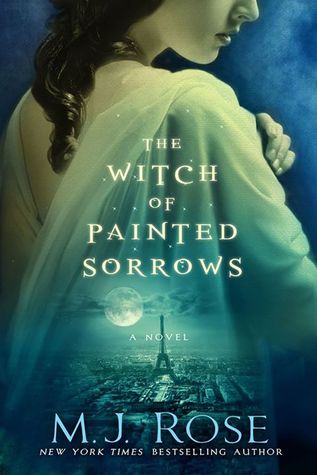
4.  The Witch of Painted Sorrows by M.J. Rose for review with France Book Tours.
Sandrine Salome flees New York for her grandmother’s Paris mansion to escape her dangerous husband, but what she finds there is even more menacing. The house, famous for its lavish art collection and elegant salons, is mysteriously closed up. Although her grandmother insists it’s dangerous for Sandrine to visit, she defies her and meets Julien Duplessi, a mesmerizing young architect. Together they explore the hidden night world of Paris, the forbidden occult underground and Sandrine’s deepest desires.

Among the bohemians and the demi-monde, Sandrine discovers her erotic nature as a lover and painter. Then darker influences threaten—her cold and cruel husband is tracking her down and something sinister is taking hold, changing Sandrine, altering her. She’s become possessed by La Lune: A witch, a legend, and a sixteenth-century courtesan, who opens up her life to a darkness that may become a gift or a curse.

What did you receive?

295th Virtual Poetry Circle

Welcome to the 295th Virtual Poetry Circle!

Remember, this is just for fun and is not meant to be stressful.

Keep in mind what Molly Peacock’s book suggested.

Look at a line, a stanza, sentences, and images; describe what you like or don’t like; and offer an opinion. If you missed my review of her book, check it out here.

Today’s poem is from Lawrence Ferlinghetti, recited by Madison Niermeyer:

I am Waiting

I am waiting for my case to come up
and I am waiting
for a rebirth of wonder
and I am waiting for someone
to really discover America
and wail
and I am waiting
for the discovery
of a new symbolic western frontier
and I am waiting
for the American Eagle
to really spread its wings
and straighten up and fly right
and I am waiting
for the Age of Anxiety
to drop dead
and I am waiting
for the war to be fought
which will make the world safe
for anarchy
and I am waiting
for the final withering away
of all governments
and I am perpetually awaiting
a rebirth of wonder
I am waiting for the Second Coming
and I am waiting
for a religious revival
to sweep thru the state of Arizona
and I am waiting
for the Grapes of Wrath to be stored
and I am waiting
for them to prove
that God is really American
and I am waiting
to see God on television
piped onto church altars
if only they can find
the right channel
to tune in on
and I am waiting
for the Last Supper to be served again
with a strange new appetizer
and I am perpetually awaiting
a rebirth of wonder
I am waiting for my number to be called
and I am waiting
for the Salvation Army to take over
and I am waiting
for the meek to be blessed
and inherit the earth
without taxes
and I am waiting
for forests and animals
to reclaim the earth as theirs
and I am waiting
for a way to be devised
to destroy all nationalisms
without killing anybody
and I am waiting
for linnets and planets to fall like rain
and I am waiting for lovers and weepers
to lie down together again
in a new rebirth of wonder
I am waiting for the Great Divide to be crossed
and I am anxiously waiting
for the secret of eternal life to be discovered
by an obscure general practitioner
and I am waiting
for the storms of life
to be over
and I am waiting
to set sail for happiness
and I am waiting
for a reconstructed Mayflower
to reach America
with its picture story and tv rights
sold in advance to the natives
and I am waiting
for the lost music to sound again
in the Lost Continent
in a new rebirth of wonder
I am waiting for the day
that maketh all things clear
and I am awaiting retribution
for what America did
to Tom Sawyer
and I am waiting
for Alice in Wonderland
to retransmit to me
her total dream of innocence
and I am waiting
for Childe Roland to come
to the final darkest tower
and I am waiting
for Aphrodite
to grow live arms
at a final disarmament conference
in a new rebirth of wonder
I am waiting
to get some intimations
of immortality
by recollecting my early childhood
and I am waiting
for the green mornings to come again
youth’s dumb green fields come back again
and I am waiting
for some strains of unpremeditated art
to shake my typewriter
and I am waiting to write
the great indelible poem
and I am waiting
for the last long careless rapture
and I am perpetually waiting
for the fleeing lovers on the Grecian Urn
to catch each other up at last
and embrace
and I am awaiting
perpetually and forever
a renaissance of wonder
What do you think?

Short Story Friday: Christmas Canapes & Sabotage by Janel Gradowski

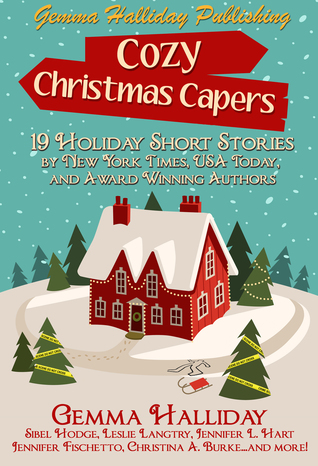
In a renewal, I’ve been reading some short stories in collections, and I really love Janel Gradowski‘s writing.  Her cozy mysteries are always full of food and fun.  One of her latest stories was published in the Cozy Christmas Capers: Holiday Short Story Collection.  I wanted to share a little bit about why I am enjoying these cozy mysteries from Janel and why we as a community should support more writers like her.

Christmas Canapes & Sabotage by Janel Gradowski is part of the culinary competition mystery series of books — her new one is coming out this month, Chicken Soup & Homicide — that find an amateur cook embroiled in a deadly mystery at local food competitions.  Amy is a winner when it comes to these amateur cooking competitions, but she is always humble about her skills, even if she is as inventive in the kitchen as some professional chefs.  Why do I gravitate to these books?  1. food 2. humor.

“‘Old Man Winter can ease up any time now.  It isn’t even Christmas, and I’m tired of the deep freeze.  I think the girl who handed my my registration packet had blue fingernails, and the color wasn’t from nail polish.'”

“‘You’re like a foodie super hero, saving the masses with a pot of tea.'”

Janel is the queen of the instant one-liners, and she’s a book blogger who has made her writing dreams a reality.  She started with flash fiction pieces published in online journals, and from there dove into more challenging, longer projects.  I love her spunk in tackling larger projects that challenged her, and I think that she’s found a great niche.

Have you found other book bloggers who’ve entered the world of authorship?  Have you read their books?  I’d love to hear about it.

To enter Janel’s party giveaway, go here.

Guest Post: Suitcase Secrets by K.J. Steele

Please welcome K.J. Steele, author of The Bird Box, in which she discusses finding inspiration for The Bird Box in unexpected places.

When a dead man speaks people listen. There is just something compelling about a voice that reaches out to us from beyond the grave. I’m not referring to spooks here, but rather to mankind’s phenomenal ability to impress ourselves onto the fabric of this world even long after the physical self has departed.

When I set out to write my novel The Bird Box, I spent some time on the grounds and in the buildings of a former insane asylum. Although the physical location was beautiful it was best described as a melancholy beauty. The memory of the former patients lingered.

I began to wonder about them. Not as patients but as people. Who were they? Before and during their committal’s? I went to the Mental Health Archives in search of answers. I found none. Researching patient files was often heartbreaking. Not so much by what was written there, but by the lack thereof.

After the initial admittance notes there was very little new information. Staff were busy and it was not uncommon to have whole lives –40–50–60– years condensed down to a few brief notes. The brevity of it haunted me. Not that I blamed the staff. Their hands were more than full with practical matters. But still, it felt inhumane to me that whole lives had been pared down to a few paltry lines. I wanted to know who these people were. Above and beyond the narrow label of psychiatric patient.

I was soon to find out. Their voices began a torrent of stories into my mind. They demanded a place on my page. They had stories to tell; lives and loves, laughter and tears. They too had experienced great joys and devastating loss. They had suffered deeply as well and yet none of these things fully defined them.

Synchronistically, as I was writing their stories I was sent a link to Jon Crispin’s stunningly evocative photographs of the Willard Asylum Suitcases. Jon’s photographs visually dovetailed so perfectly with my written efforts to portray the person behind the label of psychiatric patient that I knew immediately I had to travel to the exhibit The Changing Face of What is Normal in San Francisco to further explore his work.

What followed was an astounding opportunity to speak with the dead. Or rather – listen. Displayed alongside some of Jon’s photographs were the original suitcases and their contents. Each suitcase, no matter how carefully or haphazardly it had been packed for that initial trip to the asylum, spoke volumes to me. Each one was a virtual time-capsule illuminating the individuality of its owner. Bibles and poetry books, family pictures, lotions, musical instruments, detailed diaries, loving letters. Objects as seemingly disparate from one another as mending kits and (in one case) a small hand-gun. Items that symbolically spoke of the desperate need to either mend or end the suffering.

Those committed to the care of an asylum were in some ways excommunicated from the rest of humanity. They were held in institutions where their sense of autonomy was met with resistance. Their personal mail was opened and relieved of any unsettling or dissenting content. Their objections were routinely overruled. Not only did they become powerless they became voiceless as well.

Obviously it was far easier to silence people back then in an age before today’s instant and ubiquitous technology. Problematic dissenters were easier to erase; sometimes permanently.

And sometimes not so permanently as evidenced with the Willard suitcases. The contents of the suitcases serve to form an intimate choir of ghostly voices. They speak of each person’s individuality. Of their uniqueness. Some of them give evidence of seemingly competent minds while others show an obviously distorted grip on reality. Mental illness can be frightening. Perhaps to no one more so than to the person caught within its shifting shadows.

I have listened to their stories and endeavored to capture the echo of their hearts and minds in my novel The Bird Box. These were people who contributed to the diversity of life. And their lives mattered.

About the Book:

Broken and abandoned by the world, Jakie lives out his days in the silent desperation of an insane asylum. One night he discovers a young woman chained beneath a tree. The doctor commits her to a cellar room in the over-crowded institution. A fierce, protective love blooming in his heart, Jakie realizes that in order to free the girl he must find a way back into the strength of his truest self. In doing so he will alter both of their worlds profoundly.


About the Author:

KJ Steele is an author who most decidedly does not color between the lines. She is drawn to unusual characters with twisted, dynamic stories that they insist she tell. She has one previously published novel No Story To Tell, and was a contributor to the anthology You Look Too Young To Be A Mom. She is currently writing the sequel to The Bird Box. A mother of three and grandmother of one, she loves nothing more than the laughter of family and long horse rides up the mountain behind her house where the still-chatter of nature enlivens forward many entertaining worlds looking for a page.  Check this Website out.