Quantcast

Rooted and Winged by Luanne Castle

Source: Purchased
Paperback, 68 pgs.
I am an Amazon Affiliate

Rooted and Winged by Luanne Castle, on tour with Poetic Book Tours, speaks to the human condition, a need for feeling rooted to a home and the need to expand our wings and fly beyond what we’ve known and experienced. The tension of this is felt throughout the collection, but as the poems evolve there’s a sense that both things are possible even if we stay rooted in our families and communities.

One of my favorites in this collection is “How to Create a Family Myth” in which a grandfather seems like he’s larger than life building cities, but in truth, the narrator who looks like her great-grandmother is fascinated by a story in which she takes a whip from a man who is beating a horse and whips him. I love that there’s this magical quality of traveling through time to see this young, brave woman empathizing with the pain of the horse and teaching a man what it is like to be beaten. So many wider implications of this bravery, and how we all wish to be that brave in our convictions.

Birds are prominent as are the poet’s family members. The narrator is building her nest with these twigs of stories and she’s holding those ancestors close, even though many have flown away in death. Like these birds the saguaro is mentioned multiple times, and in reading these poems the candelabra shaped, tree-like cactus (mostly found in Arizona’s Sonoran Desert) is symbolic. It can be prickly, but it bears a sweet fruit, and isn’t that what family and family stories and memories are — bittersweet.

In “Why We Wait for Rain,” the poet says, “We wait to run through wet branches and shake/drops from our shoulders, caught/in the sharp unmistakable fragrance//wanting it to pool inside us in reservoir.” When looking back on the past, we can feel the joy of those moments running through rain with siblings or friends, but as life has moved forward, those memories also can be sad because they are in the past and perhaps we have lost touch with those we loved or they have passed away, or their loss is from some argument.

Whatever the loss may stem from, it doesn’t matter because our memories of them always speak to us from the deep well of our emotion. “if I haul memory from this grave/the transmigration into pulp continues” (“Into Pulp”, pg. 27)

Rooted and Winged by Luanne Castle is a gorgeous collection rooted in the Arizona desert and the past, but it also takes flight on the wings of memory and hope. Don’t miss this collection.

RATING: Cinquain

OTHER Reviews:
About the Poet:

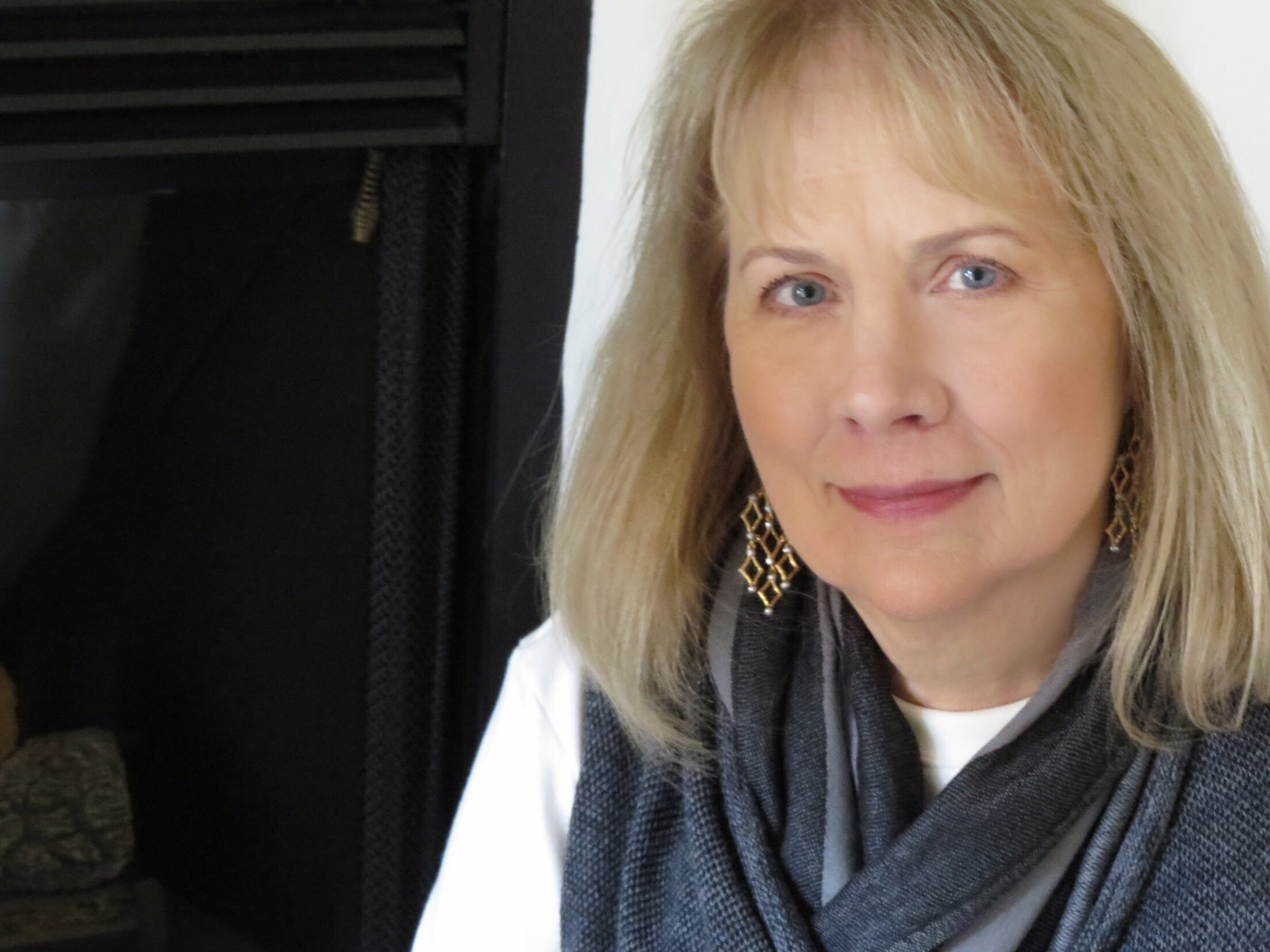
Luanne Castle’s new poetry collection is Rooted and Winged (Finishing Line Press). Kin Types (Finishing Line Press), a chapbook of poetry and flash nonfiction, was a finalist for the Eric Hoffer Award. Her first collection of poetry, Doll God (Aldrich), won the New Mexico-Arizona Book Award for Poetry. Luanne’s Pushcart and Best of the Net-nominated poetry and prose have appeared in Copper Nickel, American Journal of Poetry, Pleiades, Tipton Poetry Review, River Teeth, TAB, Verse Daily, Glass: A Journal of Poetry, Saranac Review, Grist, and other journals.

Summonings by Raena Shirali

Source: Caitlin Hamilton Marketing & Publicity
Paperback, 122 pgs.
I am an Amazon Affiliate

Summonings by Raena Shirali is an urgent calling of female personas in an effort to highlight the continued practice of daayan (witch) hunting in India. But even as Shirali conjures the spirits of these women, she is also summoning her own power as a westernized Indian woman to empathize and call attention to this practice and the unfair targeting of women.

As she points out in the foreword, “India is the world’s most dangerous country for women … The only Western nation in the top 10 was the United States…”

Shirali is fully aware that as a westernized Indian woman there is “distance/between self & subject.” (“on projection,” pg. 12) Her poems aim to bring these women into full-bodied poems based on what she knows about these “witches,” but it is hard to be a spirit without the lens of one’s own culture and upbringing. This mirrors her poem “ojha : rituals” where she questions what “truth” is, especially when it becomes subjective.

These poems are multi-layered and the longer you sit with these lines and images, the more you realize these stories are a conjuring of female power from ancestors and modern women who face oppression. Even as there is a reach for feminine power, there’s also a self-hatred Shirali struggles with: “i was shit & wanted/to be shit. & then i swallowed pretense. swallowed/countries” (“at first, trying to reach those accused” pg. 27) and in “summoning : retreat” (pg. 31) “digging in/the old-world soil/for common root.”

Shirali offers a “different way to look at the same/old face.” (“daayan gets her name” pg. 35) In summoning the spirits of these women, these so-called witches, she’s rewriting the narrative to include their truth, not just the stories that have been told about them. Her poems are when “the earth began to shift”(“daayan & the mountains : ii pg. 58-9). Summonings by Raena Shirali is asking us to reexamine who gets to ask, who answers, and who tells the story.

RATING: Quatrain

About the Poet:

Raena Shirali is the author of two collections of poetry. Her first book, GILT (YesYes Books, 2017), won the 2018 Milt Kessler Poetry Book Award, and her second, summonings (Black Lawrence Press, 2022), won the 2021 Hudson Prize. Winner of a Pushcart Prize & a former Philip Roth Resident at Bucknell University, Shirali is also the recipient of prizes and honors from VIDA, Gulf Coast, Boston Review, & Cosmonauts Avenue. Formerly a Co-Editor-in-Chief of Muzzle Magazine, Shirali now serves as Faculty Advisor for Folio—a literary magazine dedicated to publishing works by undergraduate students at the national level. She holds an MFA in Poetry from The Ohio State University and is an Assistant Professor of English at Holy Family University. The Indian American poet was raised in Charleston, South Carolina, and now lives in Philadelphia.

Dear Wild Child by Wallace J. Nichols and Wallace Grayce Nichols, illustrated by Drew Beckmeyer

Source: Media Masters Publicity
Hardcover, 32 pgs.
I am an Amazon Affiliate

Dear Wild Child: You Carry Your Home Inside You by Wallace J. Nichols and Dr. Wallace Grayce Nichols, illustrated by Drew Beckmeyer, is based on a letter from a father to a grown daughter after the 2020 CZU Lightning Complex Fires destroyed her childhood home on the Slow Coast north of Santa Cruz, California, following a brilliant lightning storm.

The book opens before the birth of the child in the story, as the parents are planning and designing their home in the redwoods. The illustration of the house as a patchwork of trees is beautiful and abstract. Opening up to the inside of the home, it’s cozy and filled with books and music and love. Like the strength of the trees making up the floors and walls of the house, the young girl grows stronger each day, learning to sing, and enjoy nature, and explore all that the woods has.

Beckmeyer lends his skills as an imaginative artist with crayons (or at least it gives that child-like impression). His illustrations are deep and textured, resembling the crayon wax that is left behind on the page when a child colors. This effect ensures readers will see the trees as three-dimensional and coarse with bark.

Dear Wild Child: You Carry Your Home Inside You by Wallace J. Nichols and Dr. Wallace Grayce Nichols, illustrated by Drew Beckmeyer, shares the beauty of a home filled with love, and though it may no longer exist in physical form, all of that love and those memories are carried inside that “wild child.” While loss can be extremely devastating, this books illustrates the beauty of memory and love, as well as that beauty in destructive forces.

RATING: Cinquain

***To help those communities impacted by these destructive wildfires, please consider helping After the Fire.***

About the Authors and Illustrator:

Wallace Grayce Nichols is a student of sustainable design, problem solver, and water lover. Her father, Dr. Wallace J. Nichols, is a marine biologist and the author of the bestselling book Blue Mind: The Surprising Science That Shows How Being Near, In, On, or Under Water Can Make You Happier, Healthier, More Connected, and Better at What You Do. Home is the slow coast of California. Drew Beckmeyer is a fine artist, illustrator, and elementary school teacher. He lives in Northern California.

The Attic on Queen Street by Karen White

Source: Publisher
Paperback, 416 pgs.
I am an Amazon Affiliate

**don’t read this one until you’ve read the others**

The Attic on Queen Street by Karen White is the seventh and last book in this ghostly mystery series. Melanie and Jack Trenholm are not in a good place at the start of this one. He’s no longer living in the Tradd Street home and they are sharing custody of their twins, while his daughter, Nola, stayed with Melanie. It’s clear that there is some tension between them, but the love they share and the heat are still present, even if they choose to ignore it.

“…faces of my children and Jack stared out at me from the computer’s background wallpaper, a reminder of everything we had lost. Or maybe we had just misplaced it.” (from ARC)

In this story, Melanie is trying to help Veronica, an old friend, solve the murder of her sister, which has been a cold case since their college days. Veronica’s husband, however, is eager to move out of their house and into a new place, as well as close the book on his sister-in-law’s unsolved murder. As with all other books, ghosts are showing up, leaving things in places they shouldn’t, and making things a little difficult for Melanie who is a reluctant communicator with the dead.

In the midst of this mystery, Marc Longo makes another appearance, and desperation has Jack and Melanie agreeing to be under the same roof and allow filming on the book Marc stole from Jack to begin in their house. You can imagine what kind of tension there will be.

The Attic on Queen Street by Karen White has everything I’ve loved about this series from the beginning – ghosts, mysteries, and complicated relationships. I’m so glad this ended happily, and I cannot wait for the New Orleans spinoff series to begin.

RATING: Cinquain

Other Reviews of the Series:

Other Books by Karen White:

About the Author:

Karen White is a New York Times and USA Today bestselling author and currently writes what she refers to as ‘grit lit’—Southern women’s fiction—and has also expanded her horizons into writing a mystery series set in Charleston, South Carolina. Karen hails from a long line of Southerners but spent most of her growing up years in London, England and is a graduate of the American School in London. When not writing, she spends her time reading, scrapbooking, playing piano, and avoiding cooking. She currently lives near Atlanta, Georgia with her husband and two children, and two spoiled Havanese dogs.

My Dog, Hen by David Mackintosh

Source: Media Masters Publicity
Hardcover, 40 pgs.
I am an Amazon Affiliate

My Dog, Hen by David Mackintosh is a cute story about a boy and his new dog from the shelter. Hen is a “good as new” dog but he has some things to learn. He wants to chew everything in sight from the dog bowl to his bed and all of his toys. The chewing seems never-ending until the boy’s grandmother comes to the rescue.

The illustrations are simple sketches of the house, the dog, and the people. Many of the drawings resemble kids’ drawings when they are young. What I loved about this book was the message that not all old things should be discarded because they can be mended or made into something new with a different purpose.

The paragraphs are made up of simple sentences that young readers can easily read, though the paragraphs are a bit longer than in other picture books. This could be a bridge book for those who are struggling readers who need images and simpler sentences.

My Dog, Hen by David Mackintosh not only reminds us to be patient and repair the old, but it also reminds us that we all have things to learn when we’re young. We all need a little direction, even Hen.

RATING: Quatrain

About the Author:

David Mackintosh loves books with pictures in them, flying, visiting cities, and being read to. His picture book Marshall Armstrong Is New to Our School was short-listed for the Roald Dahl Funny Prize and long-listed for the Kate Greenaway Medal. He lives in London.

Also a Poet: Frank O’Hara, My Father, and Me by Ada Calhoun

Source: Publisher
Hardcover, 272 pgs.
I am an Amazon Affiliate

Also a Poet: Frank O’Hara, My Father, and Me by Ada Calhoun is a memoir that seems to have started out as a biography of Frank O’Hara, but really was an attempt by a daughter to capture her father’s attention through the poet that tethered, at least in part, their lives together. Peter Schjeldahl is an art critic who also wrote poetry, essays, and other works, and was immersed in the New York School of poetry in which O’Hara was considered a major poet. Calhoun has felt unseen by her father, according to the memoir, even as she, too, pursued a career in writing, though mostly as a ghostwriter.

Calhoun’s O’Hara journey begins long before she finds the tapes in her father’s drawer and starts to listen to the interviews he conducted when trying to write a biography of the poet. The ghost of the poet has haunted her father and their lives since the start – a father dejected by the cancellation of his biography on a man he admired and a man who threw himself into writing as a critic and more to the detriment of all else, even his own poetry (which some in the book praised to Ada).

For Ada, O’Hara’s poetry was a gift from her father, and through those poems, she experienced New York City in the way that she believed her father must have. She also used this connection to draw her own conclusions about her father and his obsessions, which may or may not have reflected reality for her father. In many ways, she equates O’Hara’s poet-ness with her father’s writer-ness and the obsessiveness it requires to shut everything else out, but what she fails to see early on is how both simply wanted to make connections and to reach out from their own emptiness and fill it up.

Calhoun is on a journey taken by her father years ago, and like many things when we seek something we don’t think we already have, it becomes a competition to do better and be better as a way to prove our worth to someone we desperately want approval from. Maureen Granville-Smith, O’Hara’s sister and executor of his estate, plays a pivotal role in both the journey of Calhoun and her father. What’s more is that Calhoun unravels this late in the memoir – almost too late.

Past the mid-way mark, Calhoun says something about confidence being “the age requirement for everything,” (pg. 134), and there is something to that. We all reach an age where we finally have that confidence we need to overcome certain obstacles or deal with certain moments in our lives, and it is through that we become capable and achieve the seemingly unachievable. This is where were are with the memoir, as well. She has reached that age of confidence where she can finally speak to her father as a writer to a writer and explore how each has lived that life very differently — he shutting everything else out and she carving out time from her other responsibilities to concentrate on writing alone in a chunk of time. And in many ways, she answers her own questions about “How ruthless do you need to be?” to be a writer.

Also a Poet: Frank O’Hara, My Father, and Me by Ada Calhoun is so much more than a memoir; it’s a peek inside the world and work of enigmatic artists and poets and how their lives unravel while they’re working at their craft and they are completely unaware. Calhoun is equally unaware, but soon she begins to realize that she’s seen the signs all along and that no writer/parent will ever be perfect because we are all flawed, we are all editing as we go along.

RATING: Cinquain

The New Gods by William O’Daly

Source: Purchased
Paperback, 92 pgs.
I am an Amazon Affiliate

The New Gods by William O’Daly is as unpredictable as the ocean’s waves, as the poet pushes us to action and halts our momentum for moments of reflection. Opening the collection with “The Fire” readers are dropped into a glade of sorts where water is tumbling to a hot canyon, and it is clear that despite the destruction of the fires in the forest and the danger to the birds and horses, there is still beauty here. Does that beauty survive? It’s hard to say, but O’Daly makes sure we pause to see it.

Moving further into that opening poem, O’Daly shifts the focus to the tension and angst we create with our fire of invention and the risks it carries. The hail of spitballs in a classroom reminding the narrator of the nuclear fission that could rip them to shreds and render the world of friends and brothers, etc., into vapor. It’s again another familiar scene that many of us recognize that is destroyed by an outside force that could be of our own making. In the final lines, it is clear that we are all just on the cusp of a precipice.

O’Daly has a keen eye for detail in these poems, creating a world you fall into and instantly recognize. But he also asks readers why “we live far from ourselves and/each other…” (pg. 35, “The Unwritten Letter”) It’s like a bird’s call for us to slow down, pay closer attention, and learn from what’s around us, what has come before, and even the destruction we cause. There are lessons to be gleaned and beauty even in that darkness.

The Flag Is Burning (pg. 37-8)

We, friend, are the body of the country
burning in the street,
eyes open against the sky,
the child running,
the mother on her knees
reaching for the soldier aiming,
the village on fire -- the shrapnel littered ruins
...

It is in this poem where we are reminded of our place in society and a country and that we are responsible equally for its actions if we remain inert. O’Daly revisits this concept again in “Handout,” where a huddled figure in the fog is feared by the narrator rather than shown compassion until his daughter takes action with her hand out to him, an offering of food. The New Gods by William O’Daly spans a great many subjects, historic moments, but it is in its quiet moments where he’s at work, teaching us that we are the “new gods,” the ones with the power to effect change.

RATING: Cinquain

Photo courtesy of Kristine Iwersen O’Daly

About the Poet:

William O’Daly’s most recent book of poems, The New Gods, which includes these poems, will be published by Beltway Editions on September 15, 2022. O’Daly has translated eight books of Pablo Neruda’s late and posthumous poetry and Book of Twilight, the Chilean Nobel Laureate’s first book.

Falling Leaves: An Interfaith Anthology on the Topic of Consolation and Loss edited by Susan Meehan and Robert Bettmann

Source: Purchased
Paperback, 96 pgs.
I am an Amazon Affiliate

Falling Leaves: An Interfaith Anthology on the Topic of Consolation and Loss edited by Susan Meehan and Robert Bettmann is a prayer for the anguish felt around the globe by each of us whether that be during the pandemic or at another point in our lives. Each poem is founded on a tradition in faith, but the poets reinterpret some of these traditions in their lines.

Offering prayers, acceptance, and healing, these poets are reaching out to readers to demonstrate that we are not alone in dealing with loss. No loss is greater than another; all are equally harrowing. Even in this loss there is connection to ourselves, our ancestors, and the future.

As Luther Jett points out in “Ha’azinu,” “… Don’t pretend/that I am up there/in the sky — aloof,/unattainable//Don’t imagine/that I am only in/the gentle places–/the sweet moments/you wish to recall.//” (pg.9-10) And in “Come Sunday,” Lori Tsang says, “I give thanks/for this chance/to remember/I am part/of something/Larger” (pg. 57-8)

Falling Leaves: An Interfaith Anthology on the Topic of Consolation and Loss edited by Susan Meehan and Robert Bettmann is anthology readers can turn to again and again to find comfort. If you experienced a loss, and we all have, this collection will help you see that you are not alone in that sea of grief.

RATING: Quatrain

The Tradition by Jericho Brown

Source: Purchased
Paperback, 77 pgs.
I am an Amazon Affiliate

A little unconventionally, I found Jericho Brown on Twitter without having read his poetry, but what he says on the platform caught my attention and I’ve followed him ever since. When the pandemic hit, I was a poet without a group of poets to fuel my revision and writing and I found a number of Zoom workshops and events to fill the void.

However, when the opportunity to have a workshop with Brown came up (for free), I was, first, stunned it would be free, and, second, that I could workshop with Brown! This workshop turned my writing on its ear. I have not forgotten his methods, his exercises, or his advice during that session. In many ways, his workshop led me to break out of the box I pinned myself in. With that in mind, I just had to pick up his book when I finally had money and could enter a bookstore in person again — yes, I waited because bookstore trips are like spiritual experiences.

Without further ado, here’s my review.

The Tradition by Jericho Brown explores the violence that has become tradition in the United States and elsewhere and its effects on not only the body, but the soul. He opens this collection with “Ganymede,” that breathes the modern world into Greek mythology and the kidnapping of the young Trojan by the gods and equates it with the taking and selling of slave children across the plantations. “The people of my country believe/We can’t be hurt if we can be bought.//” he says in the ultimate lines of the poem. How true and untrue that statement is. The truth of it is that they are harmed, but that others perceive that they are not because they are property.

From this opening, we know as readers we’re taking a journey into deeply emotional territory for Brown from the choice of a mother to side with a father and forsake her son to the bright lives of Black men and women who are cut down so easily and without remorse on the streets every day.

From "Bullet Points" (pg. 16)

...
Calling worst. I promise if you hear
of me dead anywhere near
A cop, then that cop killed me. He took
Me from us and left my body, which is,
No matter what we've been taught,
Greater than the settlement

But it isn’t just the violence against Blacks that he talks about, it is the coverup of history and that we gloss over the atrocities of our history. The stealing of land from native peoples, even as those people never laid claim to the land but merely subsisted on what it gave them. The conquering of other lands merely because we wanted to or could, all in the name of democracy or some other twisted ideal — only to turn our back on it when everyone wanted freedom.

The Tradition by Jericho Brown pushes us to ask why violence has become a standard for us and to look at where it comes from. It is rooted in all that we are as a nation. In order for us to find that “something vast” and to leap toward it, we must break this tradition and create something new.

RATING: Cinquain

Run (Book One) by John Lewis, Andrew Aydin, L. Fury, and Nate Powell

Source: Purchased
Hardcover, 160 pgs.
I am an Amazon Affiliate

RUN (Book One) by John Lewis, Andrew Aydin, L. Fury, and Nate Powell, the Eisner Award-Winner for Best Graphic Memoir, is the continuation of Rep. John Lewis‘ (D-Ga.) life after the Selma voting rights campaign and the signing of the Voting Rights Act in 1965. It was clear that even after the law was passed, segregation was not going to vanish, people were going to still kill Blacks with impunity, and Lewis’ work and that of other activists was far from finished.

“But we knew Sammy would not be the last innocent Black person murdered for trying to live his life with a sense of dignity.” (pg. 59)

Lewis was the chairman of the Student Nonviolent Coordinating Committee (SNCC) and wholeheartedly believed in Dr. King’s philosophy of non-violence and was against war of any kind. However, not all of the members of the group felt the same, and this eventually caused a huge rift and the creation of the Black Panther party.

Lewis is taking it back to the use of comics by the Black Panther party to help readers visualize and feel the emotional tension and injustice of this time in history. It is clear that these books are still needed and can communicate events and movements to readers in a more visceral way than history books or courses could.

If you are unaware of the systemic racism in government institutions, you really need to read this book. It is clear from these stories, that the system was stacked against Black people even after civil rights were passed. One prime example is the refusal to seat an elected official who was voted into office.

“‘The moral ARC of the universe is long, but it bends toward justice,’ Dr. King said.

And sometimes it begins and ends int he same place.” (pg. 73)

RUN (Book One) by John Lewis, Andrew Aydin, L. Fury, and Nate Powell should be essential reading for students and adults alike. If you’ve read the March series, you will love this graphic novel. This book was excellent from cover-to-cover from the story to the illustrations. I read it in one day, including the additional information about the people in the movement.

RATING: Cinquain

I Am Coco: The Life of Coco Chanel by Isabel Pin

Source: Media Masters Publicity
Hardcover, 96 pgs.
I am an Amazon Affiliate

I Am Coco: The Life of Coco Chanel by Isabel Pin takes a brief look at the amazing life of an independent woman, Gabrielle Chanel, a young girl left at an orphanage by a wandering father after her mother’s death. Chanel’s life took a positive turn in the convent when she learned how to sew.

In the section on her life in the orphanage, we found the gray background a little too dark for the black type to show well. We struggled to read that section in a dimmer lit room. Overall, the illustrations are fun, colorful, and characteristic of an artist finding her way in the world as an independent woman at a time when women were not necessarily encouraged to be businesswomen.

When Chanel worked in Moulins and joined the cabaret, one of her songs about a missing dog became her signature and ultimately led to her name change from Gabrielle to Coco. Chanel received a lot of support from men in her life but it was her innovative ideas and focus on comfort for women that really made her fashion work popular.

I Am Coco: The Life of Coco Chanel by Isabel Pin is a quick look at her fashion evolution and the growth of her business. I wanted a little more about her WWII years, but the focus of the book was on fashion and its evolution. Pin definitely provides children with enough information to get them intrigued about Chanel and her life, possibly leading to further interest in her life.

RATING: Quatrain

Break Shot: My First 21 Years by James Taylor (Audio)

Source: Purchased
Audiobook; 1+ hrs.
I am an Amazon Affiliate

Break Shot: My First 21 Years by James Taylor, narrated by the author, is an Audible Original that contains story and musical story. Taylor explores his childhood and his journey to music, against the medical path laid out before him, and explores how his life finds its way into his songs.

There is no shying away from the struggles with drugs, nearly killing a man with a car, or his brief encounter with a killer. He explores his mental illness and drug abuse, and how those stemmed from a childhood that was a struggle for him. I loved how he interspersed his songs and playing with his story. That was the best part of this audio. It was definitely well blended. It was definitely too short of an audiobook, and it left you wanting more.

Break Shot: My First 21 Years by James Taylor is a delightful listen if you enjoy his music, and the interwoven stories that inspired his songs make his story sing. Definitely worth checking out if you like his music.

RATING: Quatrain


