Quantcast

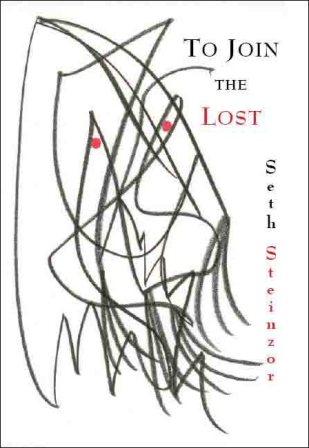
To Join the Lost by Seth Steinzor

To Join the Lost by Seth Steinzor is a modernization of Dante’s Inferno, and the irony that Dante takes a lawyer with him on his next visit should not be lost on readers.  Seth infuses his epic poem with modern tools and vices from bulldozers to politics.  Traveling the same path as Dante into the depths of Hell’s nine circles, Seth sees those trapped in between and those who have sinned in a multitude of ways.

With each canto there is a flavor of “famous” sinners, but also references to the poet’s own sins and regrets.  Where the epic poem is strongest is where Steinzor references his own troubles, his own lack of faith, his own indecision, and his own failures. “loading racks and shoving them along a/track of stainless steel into a/box of stainless steel — lower the lever,/close the gate — punch the big red/button, wait — shuddering, hissing — raise/the gate, releasing white clouds –/reach in, extract a rack of formerly filthy,/now gleaming and steaming glasses, or shiny,/clunky porcelain, or scratched-up aluminum/knives, forks, and spoons so hot//” (page 18 of Canto II)

Yes, the poem references some events, many the most horrific in nature (i.e. the Holocaust), and yes, this may seem trite and unnecessary, but these are the moments that most of humanity knows either first hand or through study.  These historic instances of unmitigated evil correlate to the references Dante makes from his historical knowledge, such as the reign of Julius Caesar and family wars that existed during that time.  However, Dante relies heavily on mythology and religious text to craft each of his cantos, though there are references to his own love, Beatrice, within the poem.  This is how Steinzor’s and Dante’s poems are similar.

Unlike Dante who uses mythology and Catholicism to make his points, Steinzor relies more heavily on Buddhism.  “. . .  That flat little pebble’s the/world of your daily awareness.  The pond is/everything else.”  (page 43, Canto VI)  The line break after “is” signifies a Buddhist precept of being in the here and now without thought to the past or the future — to be in the moment.  Many parts of this epic poem are enjoyable, but are bogged down in parts by movement through the circles with Dante and similar pungent smells.  However, Steinzor’s verses shine beneath the mire with vivid imagery in stunning ways occasionally.  “crowd of moving parts that, overlapping,/layer almost to opacity,/the eye drawn in, each figure a mottled window/into unimaginable//dimension, an almost empty pane.”  (page 23 of Canto III) or “Then, suddenly, he dived down smack/upon the landfill — a belly-flop! I sat/on his back, and he body-surfed across/the writhing mass.  We regained our feet near an/idling ‘dozer.” (page 44 of Canto VI)

To Join the Lost by Seth Steinzor modernizes Dante’s Inferno in a way that is personal for the poet and tackles some of histories most evil moments and most controversial politically.  Some readers will not enjoy the comments about a former president or other topics touched upon in this epic poem, but the gems in this epic are the more personal aspects of the piece.

***Stay Tuned tomorrow for my Interview with Seth Steinzor.***

About the Author:

Seth Steinzor has been writing poetry nonstop since his teens. To Join the Lost is his first book.  Visit his Website.  Here’s a preview of one Canto.


Please check out the other stops on the tour by clicking the TLC Book Tours image at the left.



This is my 28th book for the Fearless Poetry Exploration Reading Challenge.
 

This is my 65th book for the 2011 New Authors Reading Challenge.

Her Sister’s Shadow by Katharine Britton

Her Sister’s Shadow by Katharine Britton is aptly titled given that Lilli Niles has always felt like she is living in the shadow of her “perfect” sister Bea.  Bea takes on a guardianship role when Lilli is about 15 after their father dies and their mother loses touch with reality.  Lilli resents her “perfect” sister’s hold over the family and is even more angry about how Bea lords it over her when she wins crew races and is considered perfect by her mother.  Couple all of that resentment with hormones of adolescence and you can imagine the volatility.

Told in alternating chapters between the past and the present when Lilli returns to White Head, Mass., after 30 years when her sister Bea calls and needs her, Her Sister’s Shadow vividly tells a story of healing after a significant rift between sisters.  Readers will feel the angst of a young Lilli who has just discovered boys and wants to grow up more quickly and the awkwardness of Lilli and Bea who attempt to reconnect after 30 years.

“When she was a girl, after the accident, she would go down onto the rocks, pick her way carefully along their slick surface, and shout her grief and guilt into the deep bass notes of that foghorn.  Her kitchen, all stillness in pools of white light, offered no such camouflage.”  (page 4)

Britton creates characters that are real, flawed, and seeking redemption through their actions even if they are unaware of it.  While Lilli’s relationship with Bea is strained, her relationship with Dori, her younger sister, is sweet and unbreakable.  Lilli’s relationship with Charlotte is more like a mother-daughter dynamic in which Charlotte is a caretaker and empathetic.  There is a great deal at work in these female relationships; their complexity is stunning and palpable.  Each sister is drawn realistically, causing readers to become attached to each one.  It is through this relationship with the reader, that Britton tugs tears out and causes wistful smiles to curl.

Bea’s shadow is not the only one looming over this book.  Britton has crafted a devastating novel through which readers and characters must journey to reach out of the fog and into the light.  Her Sister’s Shadow has a gorgeous setting steeped in coastal imagery that mirrors the churning ocean waves of these relationships which every so often smooth out to reflect the stars and beauty of calm.

About the Author:

Katharine Britton has a Master’s degree in Creative Writing from Dartmouth College. Her screenplay, Goodbye Don’t Mean Gone, was a Moondance Film Festival winner and a finalist in the New England Women in Film and Television contest. Katharine is a member of the League of Vermont Writers and PEN New England. She teaches writing at Colby-Sawyer College, and is an instructor at The Writer’s Center.

When not at her desk, Katharine can often be found in her Norwich garden, waging a non-toxic war against the slugs, snails, deer, woodchucks, chipmunks, moles, voles, and beetles with whom she shares her yard. Katharine’s defense consists mainly of hand-wringing, after-the-fact.

Please follow her blog and Facebook.

To Enter for 1 copy of Her Sister’s Shadow by Katharine Britton: (US/Canada only):

1.  Leave a comment about what kind of relationship you have with your sister or whether you would enjoy having a sister if you don’t have one.

2.  Follow Katharine Britton on Facebook and leave a comment for another entry telling me you did so.

3.  Facebook, Tweet, or Blog about the giveaway and leave a comment with each for up to three more entries.

Deadline Oct. 28, 2011, at 11:59PM EST


To visit the other stops on the TLC Book Tour, click on the icon at the right.


This is my 62nd book for the 2011 New Authors Reading Challenge.

My God, What Have We Done? by Susan V. Weiss

Normally, I’ll write up my own summary for a book, but this week has been hectic, so I’ll provide you with summary from Amazon:

“In a world afflicted with war, toxicity, and hunger, does what we do in our private lives really matter? Fifty years after the creation of the atomic bomb at Los Alamos, newlyweds Pauline and Clifford visit that once-secret city on their honeymoon, compelled by Pauline’s fascination with Oppenheimer, the soulful scientist. The two stories emerging from this visit reverberate back and forth between the loneliness of a new mother at home in Boston and the isolation of an entire community dedicated to the development of the bomb. While Pauline struggles with unforeseen challenges of family life, Oppenheimer and his crew reckon with forces beyond all imagining. Finally the years of frantic research on the bomb culminate in a stunning test explosion that echoes a rupture in the couple’s marriage. Against the backdrop of a civilization that’s out of control, Pauline begins to understand the complex, potentially explosive physics of personal relationships. At once funny and dead serious, My God, What Have We Done? sifts through the ruins left by the bomb in search of a more worthy human achievement.”

My God, What Have We Done? by Susan V. Weiss combines two seemingly divergent topics under one roof — a marriage and the making of the atomic bomb — and readers get to watch it build to a crescendo and explode.  Told in first person point of view, readers get a real taste for how obsessed Pauline is with Oppenheimer, so much so that her honeymoon with Clifford is spent in Los Alamos where the atomic bomb was created.  This is where readers first meet them, and may be stunned by the emotional distance between the newlyweds.  As the story begins unfolding, Pauline continues to exhibit emotional distance, as if she is disconnected from her feelings and every moment of her life must be plotted and thought out thoroughly before she acts.

The stories of Pauline and Clifford’s marriage and how it builds is in parallel to the third person POV tale about the building of Los Alamos and the atomic bomb.  While Weiss uses an interesting premise, particularly the bomb itself to signify the creation of relationships and families and their destruction, the first person POV of Pauline’s life is more captivating.  She’s pulled between her desires to be a wife and mother and her old life, feeling a disconnect from her friends and life in Philadelphia, but there is a greater desperation within her.

“Although I envied his serenity, I sometimes wished I could get him to grab onto some of my challenges, to declare himself, to fight back.”  (page 12)

While Clifford is often compared to Oppenheimer by Pauline for his angular facial features and his bookish intelligence, she acts more like the scientists as she parents her son.  Like the atom bomb they created to end the war — all wars — Jasper is an experiment to be tinkered with and nurtured.  Readers will often question Pauline’s emotional state and whether she has the depth necessary to care for a child, herself, and her husband.  She’s an enigma, much like Oppenheimer was.  Readers easily find the parallels in this narrative, but Weiss’s characters appear to be more like caricatures of people, rather than complex human beings.

My God, What Have We Done? by Susan V. Weiss is an attempt to draw wider conclusions about logically minded people, and will prompt readers to self examine.  However, the struggle through the shifting points of view and story lines may bog down some readers’ enjoyment of her tale.  Ultimately, the premise was unique, and the struggle of a new housewife was interesting, but the Oppenheimer sections were a bit dry and read like a laundry list of encounters rather than a fictionalized account of true events.


Please check out the rest of the stops on the TLC Book Tour by clicking the tour host icon at the left.


About the Author:

Susan V. Weiss is a writer and a teacher who lives in Burlington, Vermont. Her stories have appeared in literary magazines and anthologies. In addition to teaching adult literacy and expository and creative writing, she has initiated community-outreach writing projects for offenders, refugees, and homeless people.


This is my 56th book for the 2011 New Authors Reading Challenge.

Believing Is Seeing by Errol Morris

Believing Is Seeing: (Observations on the Mysteries of Photography) by Errol Morris, a filmmaker, unravels the mysteries of documentary photography.  Why is Morris so skeptical about documentary photographs?  Does it relate to his deceased father and the secrecy around his role in the family or to his eye surgery as a child?  Beyond that, Morris seeks out factual evidence through testimony, history, and careful examination of light and contrast to determine the authenticity of photos and the stories behind them.

While some of the discussion and technical analysis of the Fenton photographs of the Crimean War can be a bit much for some readers, the conclusions drawn from these discussions are captivating.  Did Fenton stage the photo with the cannon balls on the road or did he not and which photo did he take first — The one with the cannon balls on the road or in the ditch?  When I first looked at the photographs, the one with the cannon balls on the road appeared to be a more powerful image, but then it appears to be staged because the balls are too evenly randomized.

“To use the familiar gestalt image of the duck-rabbit:  if we believe we see a rabbit, we see a rabbit.  If we believe we see a duck, we see a duck.  But the situation is even worse than the Gestalt psychologists imagined.  Our beliefs can completely defeat sensory evidence.”  (page 83-4)

Photographers often frame images in a way that captures the best of a scene, that’s the most aesthetically pleasing, and that provides the best lighting.  Moreover, photographers will take more than one picture of the same scene, if possible, and choose the best image to submit to magazines, etc.  They are framing the image we see regardless of whether readers realize it or not, but readers also are framing the scene and history.  Morris aptly titles this examination of photography “Believing Is Seeing” because each viewer’s beliefs, prejudices, etc., often frame their perspective when looking at a photograph.

Morris’ book is tutorial, historical, and poignant in how it examines photography, conjecture about photography and news articles, and human reactions to images.  My analytical brain was working overtime with this analysis, particularly when I got to the Abu Ghraib’s The Hooded Man.  One thing Morris clearly demonstrates is that each photo has a history or a context behind it, and without conducting appropriate research and background verifications, viewers and readers can draw the wrong conclusions.  In the discussion of The Hooded Man photo and the false identification of Ali Shalal Qaissi (called The Claw) as that man, two photos from two different perspectives are discussed, one taken by Sergeant Ivan Frederick without the flash that became iconic and one taken with a flash by Sabrina Harman.  While Qaissi is not the man in the iconic photo, Abdou Hussain Saad Falah (called Gilligan) is said to be that man, but in his testimony to the Taguba Commission he mentions a flash when his captors took his photo with the hood and blanket on.  So, is this telling us that he only remembers the flash and that maybe something happened between Frederick’s photo session and that of Harman’s, or is the flash more memorable because he was wearing a hood?

Believing Is Seeing: (Observations on the Mysteries of Photography) by Errol Morris is captivating from page one, and it will have readers, photographers, and more reassess their view of photography and history.  It raises questions about whether appropriate research was conducted, evidence collected, and correct facts appropriately used.  Like any good journalist or photographer, documents should include the facts of the moment, the event, and the context, and Morris’ book demonstrates that while many blame the 24-7 world in which we live for the slipshod journalism completed today, it has happened throughout the ages and may have less to do with technology and more to do with human nature and our desire to frame the story.  Photography is not the mystery here, it is the human mind and human behavior that is the mystery.  How are things cropped, framed, and modified to suit our purposes and why?  How can we as readers know that images and stories are modified to suit a specific purpose?  Morris suggests research, analysis, and skepticism, but also a curious mind bent on uncovering the truth.

About the Author:

Errol Morris is a world-renowned filmmaker—the Academy Award-winning director of The Fog of War and the recipient of a MacArthur genius award. His other films include Mr. Death, Fast Cheap & Out of Control, A Brief History of Time, and The Thin Blue Line.

Find out more about Errol Morris at his website, and follow him on Twitter.  Also there is this interesting interview from California Magazine.


Click the TLC Book Tours button to see the rest of the stops on the tour.


This is my 51st book for the 2011 New Authors Reading Challenge.

Before Ever After by Samantha Sotto

“Eggs and engagements.  Though slightly odd, they were a harmless pairing on most days, even with a greasy pile of bacon on the side.  But today was not like most days, because in less than an hour, they would make Shelley Gallus a twenty-six-year-old widow” (page 3 of ARC)

Before Ever After by Samantha Sotto is a debut novel that seemingly asks readers to suspend disbelief as Shelley Gallus discovers that her deceased husband, Max, may not have died three years ago and that he may in fact not ever age.  Oh, and he has a grandson, Paolo, from Italy who is now about 30 years old.  However, Sotto weaves her story with such beautiful prose that readers are immediately captivated and drawn into Shelley’s grief and her shock.  There is no conscious need to suspend disbelief, and readers will not even notice that they are doing it.

“Shelley’s ability to go through the motions wasn’t surprising considering that she had been schooled by the best. Her mom had never quite gotten over the death of her own husband, and Shelley grew up watching her paint on the brightest smile with a berry shade of Revlon lipstick. There had been days when her happiness had seemed so real, so genuine, that Shelley had almost believed it.” (Page 7 of ARC)

Death can leave a terrible emptiness in someone, especially when the person who dies is so ingrained and integral to their lives.  Sotto’s novel is more than a look a grief or the secrets spouses keep from one another; it is a journey through history that takes Shelley and Paolo through several countries and sheds light on Max’s past.  The narration shifts from present to immediate past (about five years ago when Max and Shelley first meet) to the distant past as Max recounts history in France, Austria, Slovenia, and other places.

In a way, Sotto’s prose is like traveling back in time, and while the main characters of Shelley, Max, and Paolo do not figure in those historical tales, readers never forget them or get confused.  The transitions between each time frame are seamless and almost fairytale like.  Shelley blossoms in this story from a young woman running away from the death of her parents (one literal and one figurative) only to assume a lifeless existence in London in advertising.  Her one shining moment is taking a trip through Europe on a whim — where of course she meets Max who teachers her to overcome her fears and take a leap of faith.

Before Ever After by Samantha Sotto bends time, and readers will stand on the precipice of each tale holding their breath as more of Max is revealed.  Tortured souls, romance, travel, mystery, and more are wrapped in between these pages.  Sotto has a good grasp of time and its hold on us, how we think about the past, hover over it with a magnifying glass, and torture ourselves with our longings and past errors.  A strong debut from a compelling mind that captures readers’ imaginations from page one.  A treasure to unearth in the waning days of summer that very well could be one of the best reads of the year.

About the Author:

SAMANTHA SOTTO fell in love with Europe’s cobbled streets and damp castles when she moved to the Netherlands as a teenager. Since then, she has spent nights huddled next to her backpack on a beach in Greece, honeymooned in Paris, and attended business meetings in Dusseldorf in the pleasant company of a corporate credit card. Before Ever After was inspired by her experiences living, studying, and traveling in Europe. Samantha lives in the Philippines with her family. This is her first novel.

For more info on Samantha and Before Ever After, check out her website, her blog, her Facebook page, and Twitter.


For the other stops on the blog tour, check out the TLC Book Tours site.


This is my 44th book for the 2011 New Authors Reading Challenge.

The Book of Lies by Mary Horlock

The Book of Lies by Mary Horlock is written in chapters that alternate between the present with Catherine Rozier in 1984-5 and the past during the German occupation of Guernsey during WWII and her uncle Charles Rozier’s story.  Like her uncle, Cat is a liar.  Lies are often told to protect loved ones, to gain acceptance among peers, or to cover up bad behavior, and the lies told here are no different.  Unreliable narrators are tricky in that readers can often get frustrated with the lies or become disenchanted with the story because they no longer know how to gauge the truth.  However, Horlock hovers on the edge of that line so as to keep readers engaged by presenting “historic” documentation for the WWII portion of the story.

Cat’s father, Emile, often shut himself away from his family and buried himself in historical research about the German Occupation of Guernsey, and this isolationism led Cat to believe she needed to make up stories to fit in and gain attention from not only her peers and parents, but from everyone else on the island.  In a way readers will wonder throughout the novel if she is still lying to gain the attention of readers with her sensational narrative of murder and teen hijinks.

“It’s a 3,000-foot drop and even though I’m fat, I’m not fat enough to bounce.  I’ll dive headfirst into ye ancient Guernsey granite outcrops and then my mashed-up body will be washed out to sea.  Of course, if I get the tides wrong I’ll be stranded on the rocks with seagulls eating my eyes.  I know for a fact they’ll eat anything.”  (page 1)

Cat unwittingly gets swept up in a friendship with Nicollette Louise Prevost, a beauty and from a family of wealth.  Everything is grand as Nic and Cat drink, hang out, start rumors, and hit on boys and men, but something changes and Cat is cast aside in a callous manner, which drives her to engage in reckless behavior and possibly murder?!  Her uncle’s story is similar in that he is befriended by Ray, who quickly casts him aside, but they are reunited in an effort to escape the Germans.  Lies are told by each, and each face tough consequences as a result.  The incestuous nature of the island and the close ties of families on the island are often alluded to, and in a way the close-knit community resembles a large family, and like all families, they hurt those they love.

“I haven’t had a shower for as long as I can remember and there’s this spot on my chin that I’ve had to squeeze and squeeze.  Peter Falk might be able to get away with looking like he’s slept in a hedge but I’m not a famous TV detective (wearing what is surely a wig).”  (page 146)

Much of the world created by Horlock is fantasy, but readers know that their narrator is unreliable from the beginning.  The chapters about Charles’ life are taken from the transcripts of a conversation he had with his brother before his death, which provides a certain authenticity to them.  However, are these entries true?!  Readers will have to sort that out for themselves.  Horlock’s style places you in the thick of it with Cat, and readers will feel all of her emotions, particularly that of alienation.  However, how much whining and justification for her actions readers can take will determine how much they empathize with her.  One part of Cat’s character that could annoy was her overuse of “as per usual” and “as per” to clarify nearly every statement or situation.  Also some of the diction was just awkward and stilted.

Regardless of or in spite of the unreliable narrator, Horlock has created a well-crafted story that circles in on itself as ancestry is unraveled and history appears to repeat itself decades after Charles Rozier’s story of espionage and teen rebellion.  The Book of Lies will keep you guessing throughout its 300+ pages, –right up until the end — but readers will be riveted and satisfied once they get there.  An excellent selection for book clubs with the espionage, teen angst, and trail of lies to analyze and discuss.


About the Author:

Mary Horlock is an authority on contemporary art who has worked at the Tate Britain and Tate Liverpool, and curated the Turner Prize for contemporary art. She spent her childhood in Guernsey, and lives in London.


For the rest of the stops on the tour, please click the TLC Book Tour icon.  Thanks to TLC and Harper Perennial for sending me a copy of the book for review.


This is my 38th book for the 2011 New Authors Reading Challenge.


The Secret Lives of the Four Wives by Lola Shoneyin

Lola Shoneyin’s The Secret Lives of the Four Wives is set in modern-day Nigeria where men are supreme and wives are meant to breed children — an obsession of Baba Segi and the reason he has four wives.  However, his newest wife, Bolanle, is the youngest and most educated of the four — Iya Segi, Iya Tope, Iya Femi, and Bolanle — and her entry into the household generates jealousy and change.

Baba Segi’s only concerns are being catered to by his wives and procreation, and when Bolanle fails to produce an heir after much “pounding” (his words), he seeks counsel from his male friends and the “Teacher,” who advises him to bring her to the hospital.  It is then that the jealousy of the women becomes more concentrated on Bolanle, as they struggle to protect a family secret.

“Even a child would have worked out why my father was extolling qualities that had previously vexed him; I was compensation for the failed crops.  I was just like the tubers of cassava in the basket.  Maybe something even less, something strange — a tuber with eyes, a nose, arms and two legs.  Without fanfare or elaborate farewells, I packed my bags.  I didn’t weep for my mother or my father, or even my siblings.  It was the weeds I didn’t get the chance to uproot that year that bothered me.”  (page 91)

Shoneyin adopts what many might consider a very masculine prose that creates a crass view of sex in a polygamist household and a not-so-favorable perspective of Baba Segi, the husband.  Even when the narrative shifts to Bolanle’s first-person point of view, the language is harsh, making it difficult for readers to discern the speaker with each shift.  However, these shifts gradually become easier to discern, and each perspective adds a new layer to the narrative and deepens the complexity within the Segi family.

Readers may want more background and detail of Nigeria and its customs or at least its a more vibrant picture of its places and culture.  Shoneyin generates a harsh world that is not only Nigeria, but could be any country at any time in which polygamy is the norm and women are seen as second-class citizens.  What is absent here is a clear sense of place and time — a setting that could have made the story more vivid and memorable.

The Secret Lives of the Four Wives may have been long-listed for the Orange Prize, but the characters and story are reminiscent of other oppressed women under similar circumstances.  However, what makes this novel unique is the four wives and their perspectives on why they became wives of Baba Segi — what circumstances led them to that choice and why they continue to stay.  Each has a compelling story to tell, and while Baba Segi is not a sympathetic character, he does provide his wives with an oasis from their pasts and with the confidence to rule their own lives.  Overall, readers will get a glimpse into another world and of what it means to be one of many wives.


About the Author:

Lola Shoneyin lives in Abuja, Nigeria, where she teaches English and drama at an international school. She is married, with four children and three dogs.  Please visit her Website and her blog.


Please check out the other stops on the TLC Book Tour by clicking the icon.


This is my 31st book for the 2011 New Authors Reading Challenge.

The Girl in the Garden by Kamala Nair

The Girl in the Garden by Kamala Nair is a stunning debut novel framed by an older Indian woman who leaves her fiance to return to her ancestral home and deal with the past, which is a bit cliche.  However, the bulk of the novel settles on Rakhee’s summer spent in India before her 11th birthday with her mother’s (Amma) mysterious family and away from her father, Aba.  Clearly Nair’s prose has been influenced by fairy tales and is sometimes reminiscent of The Secret Garden and Little Red Riding Hood, which makes the story that much richer.

“Slowly I moved toward the wall with my arm outstretched until my fingertips touched its vine-smothered surface.  I waited for something drastic to happen when my skin made contact with the stone, but when neither I nor the wall burst into flames or evaporated into thin air, I continued dragging my hand along the wall, emboldened, until my palm felt the roughness of the vines give way to a smooth, hard wood.

A door.” (page 67)

In a way the garden she discovers is like a fantasy with its beautiful plants and fanciful creatures.  Rakhee struggles a lot with her identity at home and abroad as a child, but its her curiosity and determination bred by the confidence of her father that will endear her to readers.  The world created by Nair is so absorbing that readers may even forget about the adult Rakhee.

“The thunder was deafening — I had only ever watched and listened to storms from behind the safety of a glass window.  But I was part of the storm now, ran-whipped and shaking.”  (page 140)

Rakhee is that young girl looking for her place in the world, a world where she doesn’t look like everyone else and doesn’t know or understand all of her family and their customs.  Nair paints a vivid landscape of India and the young girl’s odd family with its wizened aunties and an uncle with his broken dreams.  But the mystery of her mother’s past is just as captivating, if not predictable in some ways.

The Girl in the Garden by Kamala Nair is not just a coming of age story, its a clash of cultures, a love story, and a struggle between desire and family obligations.  Nair has crafted a world that readers will be reluctant to leave, especially as the storm kicks up more skeletons and other mysteries are unraveled about the past that could affect Rakhee’s future.  One of the best novels of this year, and it includes a bit of poetry from Mirabai.

About the Author:

Kamala Nair was born in London and grew up in the United States. A graduate of Wellesley College, she studied literature at Oxford University and received an M.Phil in Creative Writing from Trinity College Dublin in 2005. She currently lives in New York City, where she has worked at ELLE DECOR.

Connect with Kamala on her Website, Facebook, or on Twitter.

I read this novel as part of a TLC Book Tour, for the rest of the tour stops, go here, or click on the icon at the right.

This is my 2nd book for the South Asian Reading Challenge.


This is my 30th book for the 2011 New Authors Reading Challenge.

War & Watermelon by Rich Wallace

War & Watermelon by Rich Wallace, a Junior Library Guide selection, is set in 1969 in New Jersey just as the Vietnam War is beginning to rage and Woodstock is ready to rock suburban New York.  New Jersey brothers Brody and Ryan take a road trip to the concert of their generation as Ryan continues to avoid questions from his parents about his future, particularly college, and the draft.  Brody is just about to start junior high school and is eager to join the football team, but his world is insular in that his main focus is football, girls, the Mets, and the Top 40 hits.

“I grab the ball, make a juke to the right, and send a line drive over the clothesline and directly into the basket.  The bell rings.  Ryan puts his hands on his hips and stares at the ceiling.  I raise my fists and say, ‘Yes!’

I carefully move past the shirt — it looks more like polka dots than tie-dye — and smack hands with him.  ‘Champion,’ I say, patting myself on the chest.

‘Mr. Clutch,’ he says.  ‘ Best in the basement, for sure.'” (page 23)

Told in Brody’s point of view, the novel thrusts readers into the life of a teenage boy who only thinks about sports and girls.  But it’s more than that for Brody.  He’s worried about fitting in at junior high and whether his brother will be drafted into the Vietnam War in September when he turns 18.  The prose is clipped and focused, with breaks between scenes as Brody’s mind shifts from football worries to family concerns and between girls and the start of school.

Wallace’s style is no-nonsense, and he has a football announcer/coach’s way of describing football plays so that even a layman can picture the players’ moves.  He had a firm grasp of what kids in junior high are thinking and feeling, particularly during this time period in the late 1960s.  What’s interesting is that there are poems sporadically thrown in written by Brody, usually about his family, football, and the like.  They are not masterpieces, but they’re also written by a young boy entering the seventh grade.

Woodstock Flock
by Brody Winslow (page 50)

Marching
Not to battle
Marching
All night long
Marching
Past barns and cattle
Marching
To hear a song

Marching
With my brother
Marching
With thousands more
Marching
To hear another
Marching
Against the war

Wallace creates a childlike innocence in Brody that becomes marred by his brother Ryan’s unwillingness to take action — to decide between college and the draft. Their father continues to insult Ryan’s indecision, pushing him to apply to college, and while Brody may agree with his father that Ryan needs to act to avoid going to war, he also agrees with his brother that he should not be forced into making a decision he’s not ready to make.

War & Watermelon is a coming of age story in which a young man realizes that there are events and issues larger than his concerns about school, football, and girls.  The war, protests, and his brother’s indecision prompt Brody to make some choices of his own and gain the confidence he needs to remedy his own issues at school.  Wallace has a way of teaching lessons without lecturing, and young boys should easily relate to the story.  However, young girls in this similar age group (9-12) may have a tougher time relating to a young football player unless they have older brothers or are interested in what boys their age are thinking about.

Stay tuned tomorrow, June 14, for my guest post from Rich Wallace about his writing space and another chance to win War & Watermelon.

About the Author (From TLC’s Website):

Rich Wallace is the author of many award-winning books for children and teenagers, including Wrestling Sturbridge, Sports Camp, Perpetual Check, and the “Kickers” and “Winning Season” series. He lives with his wife, novelist Sandra Neil Wallace, in Keene, NH. (As an aside, my cousin when to college in Keene.)

A note from Rich : ”Bloggers might like to know that, like Brody in War & Watermelon, I was 12 years old in 1969 and living in suburban New Jersey, just becoming aware of the war and the music and the other world-changing events of that summer. I also had an older brother who was eligible for the draft, which caused considerable concern in our household and informed the events of this novel.” Please visit his Website.

Please check out the rest of the stops on the TLC Book Tour.

To win 1 copy of War & Watermelon by Rich Wallace (US/Canada Only),

1.  Leave a comment on this post about what other middle-grade books you recommend.

2.  Spread the word on Facebook, Twitter, and the Blog about the giveaway for a second entry.

3.  For a third entry, read and comment on tomorrow’s (June 14) guest post from Rich Wallace.

Deadline is June 22, 2011, at 11:59 PM EST.


This is my 24th book for the 2011 New Authors Reading Challenge.

The Beach Trees by Karen White

Karen White always crafts novels that are full of engaging characters and intricate story lines, and The Beach Trees is no exception.  Shifting from the present to the past and between two first person accounts, the novel tells the tale of rebirth and rebuilding.  Set in the South — New Orleans and Biloxi — Julie Holt and Aimee Guidry’s stories are told in tandem and are more entwined than readers first think as a mystery is solved.

From the disappearance of Monica, Aimee’s granddaughter, to the disappearance of Caroline Guidry many years before, White crafts a unique story of family, love, and forgiveness.  Both stories are riveting and filled with mystery, which readers will have to sweep aside the sand to uncover.

“When we got closer to the memorial I could see a curved cement wall with a mosaic wave in the center of it rolling from one end to the other.  At the far end sat a taller wall of black granite, columns of names marching in block letters under the word KATRINA and the date August 29, 2005.  A glass case filled with small objects protruded from the marble wall, its base filled with empty oyster shells.

‘What is this,’ I asked, leaning forward to study the sun-bleached artifacts:  a broken china plate, a ceramic angel, a trophy, a police badge, an American flag folded neatly as if unaware of its position over a pile of rubble.

‘That’s debris found after the hurricane.  . . . ‘” (page 150-1)

New Orleans was plunged into the depths of the ocean by Katrina’s storm surge, and like the city these two families — the Holts and the Guidrys — are unmoored, drifting toward one another in the search for more than just shelter, but for a home and connections.  Aimee’s story unfolds piece-by-piece as she tells it to Julie, who decides to stay in the city and Biloxi to fulfill the dying wish of her friend.  In addition to the haunting images of Katrina’s devastation, White incorporates the more recent toxicity brought on by the Gulf of Mexico oil spill, which coated numerous miles of coast and created yet another disheartening chapter in the city’s history.  However, like its people, the city continues to rise from the ashes much stronger than before.

The Beach Trees brings to life not only the main characters in the novel, but the southern setting, ensuring that its scars and healing are intertwined with that of White’s characters.  She has created a story of rebirth and perseverance.  Through alternating points of view, White draws connections between Aimee and Julie using emotion and setting in a way that too few authors can accomplish.  With deft hand, she has created an emotionally charged narrative that takes on a life of its own.

About the Author:

Known for award-winning novels such as Learning to Breathe, the Southern Independent Booksellers Alliance 2009 Book of the Year Award finalist The House on Tradd Street, the highly praised The Memory of Water, the four-week SIBA bestseller The Lost Hours, Pieces of the Heart, and her IndieBound national bestseller The Color of Light, Karen has shared her appreciation of the coastal Low country with readers in four of her last six novels.

Italian and French by ancestry, a southerner and a storyteller by birth, Karen has made her home in many different places.  Visit the author at her website, and become a fan on Facebook.

Also check out my reviews of The House on Tradd Street, The Girl on Legare Street, and On Folly Beach.

Check out the other stops on the TLC Book Tour by clicking the image.

The Other Life by Ellen Meister

We’re taking a break today from the Celebrate! Indie & Small Press Month for a pre-scheduled TLC Book Tour into another world.

The Other Life by Ellen Meister chronicles the life of Quinn Braverman, a young married woman with one son and a caring husband, Lewis.  The suicide of her artist mother haunts her on a daily basis, but to cope, she enters into another life through a portal in her basement.  Her life with Eugene is without children and marriage, but is less mundane and best of all her mother is still alive.  Meister mixes a modern story line about family, suicide, and relationships with science fiction elements as Quinn travels through portals into parallel lives.

“But the important part of the secret — the part that terrified and thrilled her — was that she knew it was possible to cross from one life to the other.  There were portals.”  (page 5 of ARC)

Quinn’s life with Lewis is turned upside down when they learn that their unborn daughter’s life will not be as perfect as they imagined.  Although she’s always known that she could jump between her parallel lives, she has promised herself that she would not do it.  A promise that she cannot keep, and a promise that is quickly broken time and time again as she struggles to deal with her high-risk pregnancy, her inability to seek comfort from her mother, and the overwhelming desire to simply escape.

“She closed her hand into a fist and continued pushing.  The fissure became a hole, and the harder she pressed, the deeper it became, until her hand had disappeared up to her elbow.  She stuck her other hand inside and pressed her palms together.  Quinn closed her eyes and sensed Eugene’s energy, feeling as if the scent of his aftershave were lingering around her nostrils.”  (page 47 of ARC)

Readers who have read Linda Gray Sexton’s memoir about the legacy of suicide Half in Love (click for my review), will notice Quinn has a similar love-hate relationship with her mother and the legacy of suicide.  Her mother, Nan, has a similar artistic and impassioned charisma that Linda’s mother, Anne Sexton, had.  It is this combination that draws in the reader and the main character into Nan’s world of painting and deconstruction of her family in visual form.  Passages pepper the book with insight into Nan’s approach to her family and her work as an artist, but this pull doesn’t stop there.

“Her mother’s pull was just too strong for Quinn to float away and feel as if she were experiencing the shopping trip as an outsider looking in.”  (page 95 of ARC)

Drawn to her mother and a life where her presence is reassuring, Quinn struggles even more with her present life, and her brother’s inherited bipolar disorder only exacerbate her need for stability, which she believes can only be found in another life.  Meister does an excellent job of creating a sympathetic, mess of a character in Quinn and successfully weaves in the use of portals to demonstrate her anxiety.

Quinn is a mother wrought with anxiety, loneliness, and a forceful need to care for everyone in her life.  She’s constantly running from one crisis to another with her sword blazing, and while readers can feel for her and want her world to be right again, she can be frustrating as she jumps through portals to escape the hard decisions in her other life.  Overall, Meister’s writing is engaging, suspenseful, and easy to follow even as readers travel with Quinn between her two lives.  Readers hope that she will find the peace she is looking for and the love that she deserves, while at the same time confronting her past demons and moving into the future as a more confident woman and mother.  The Other Life by Ellen Meister would make an excellent book club selection.

About the Author:

Ellen Meister lives on Long Island with her husband and three children.

You can find out more about Ellen at her website, and you can also follow her blog and on Twitter.


Please check out the rest of the stops on the tour.


This is my 8th book for the 2011 New Authors Reading Challenge.

Half in Love by Linda Gray Sexton

Linda Gray Sexton, an author of memoir and fiction, tackles the issues of depression, suicide, and family legacies in her latest memoir, Half in Love: Surviving the Legacy of Suicide.  In case you haven’t deduced on your own who her famous mother is, it is Anne Sexton one of the greatest American confessional poets, who successfully committed suicide in October 1974 after battling depression for years by locking herself in the garage and dying from carbon monoxide poisoning.

“The other families in our neighborhood looked nothing like my own family.  My father did not run the family, nor did my mother.  It was my mother’s illness that had seized control.  My adulation of her was not tempered by the fact that she was mentally ill.  We never used the word ‘crazy’ — though when the ambulance arrived in the driveway to take her away, the neighborhood children whispered that Mrs. Sexton was nuts again.”  (page 59)

Half in Love is far from an easy read as Linda details not only her mother’s struggles with depression and suicide, but also the violent and sometimes inappropriate relationships within the family.  The legacy of suicide is clear as Linda discusses her college years, her marriage, and the birth of her children.  The “rabbit hole” is often used to describe the downward spiral Linda and her mother descend into without necessarily being triggered by a specific event.  Some of the details about institutionalization, attempts at suicide are detailed and will make readers turn away from the page, but they are necessary to convey the depth at which these women fell away from the real world into the darkness that obscured their reasons for hope.

“Unconsciously, my mother had bequeathed to me two entirely unique legacies, and they were inextricably and mysteriously entwined:  the compulsion to create with words, as well as the compulsion to stare down into the abyss of suicide.  Both compulsions have been with me for as long as I can remember.”  (page 23)

Despite a carefully outlined plan to avoid her mother’s fate, Linda finds that she has unwittingly stepped on the same path to suicide and also has become a confessional fiction author rather than confessional poet.  When Linda becomes a mother herself and realizes just how much she inherited from her mother in terms of mental illness, she becomes concerned and wonders how much she should tell her sons about the family legacy, while her husband wishes to shield them from “prophecies” that may or may not come true.

Half in Love is about the struggle with depression and suicide, but it also is about falling “half in love” with the idea of a famous poet and her legacy in spite of the rational reasons to distance oneself from that dangerous family legacy and live a “normal” life.   Readers will be absorbed in the author’s struggles and the struggles of her mother, but in spite of these struggles there is something to “love” about these women.  In a way larger parallels between a young Linda and the greater society can be drawn about falling in love with the darker sides of life that enabled her mother, Anne Sexton, to become one of the most famous poets of her time.  But this is not just Anne’s story, but a story of a family continuously torn apart, repaired, and fragmented — possibly irreparably.

***Reading this memoir prompted me to highlight one of Anne Sexton’s poems during the Virtual Poetry Circle last week.  Please feel free to join the continued discussion.***

About the Author:

Linda Gray Sexton was born in Newton, Massachusetts in 1953 and graduated from Harvard University in 1975. She is the daughter of the Pulitzer Prize winning poet, Anne Sexton, and has edited several books of her mother’s poetry and a book of her mother’s letters, as well as writing a memoir about her life with her mother, “Searching for Mercy Street: My Journey Back To My Mother, Anne Sexton.” “Rituals,” “Mirror Images,” “Points of Light,” and “Private Acts” are her four published and widely read novels. “Points of Light” was made into a Hallmark Hall of Fame Special for television.

Check out the other stops on The TLC Book Tour.

This is my 2nd book for the 2011 New Authors Reading Challenge.