Quantcast

Bowling Avenue by Ann Shayne

Bowling Avenue by Ann Shayne follows Delia Ballenger’s re-acquaintance with all things Nashville, including her absentee mother, statuesque brother-in-law, and two nieces she barely knows when she’s given her sister Ginna’s house, 603 Bowling Avenue.  Bowling Avenue has a culture all its own, with the in-your-business neighbors and the families of doctors from the Vanderbilt.  Delia has lived her life on her own terms, but has rarely returned home for family gatherings or holidays, spending her time alone in Chicago catering to the needs of the super rich on holiday in a variety of countries.  She’s lived an isolated life, and because of that her sister’s death is even more shocking as are the revelations that come with her passing.

“I don’t believe in ghosts, I really don’t.  So the prospect of staying at my dead sister’s house is not daunting in terms of worrying that I’m going to run into a spectral Ginna wandering the hall in her Lanz of Salzburg nightgown.  Actually, that would be really terrifying.  She wore those things all her life:  eyelet trimmed, flannel, hot as fiberglass insulation.”  (Page 10)

Death can change family dynamics in many ways, and Shayne examines how the death of a loved one can either tear a family further apart or bring them closer.  In the Ballenger family, communication is practically non-existent unless you are looking for sarcastic comebacks or blame.  Delia has a lot to learn not only about dealing with grief, but also about what it means to find a home and a family.  Shayne has a unique style and deftly wields the first person point of view through which readers learn the Ballenger family secrets.  The secrets unfold bit by bit as Delia attempts to get her sister’s house ready for sale, and as she deals with her mother’s interference and her brother-in-law’s hands-off approach to fatherhood and family.

Nashville has more than the music business, and Shayne has some of the quirkiest characters.  They are by turns fun and infuriating, but that’s what makes the story so engaging.  Bowling Avenue by Ann Shayne is a fun read with a tender heart.  Delia and her family will make you feel at home and wrap you up in their arms.  Readers will be cheering her on as she examines her past, her present, and her future.

***I want to thank Alma Katsu for recommending this book to me.***

About the Author:

Ann Shayne lives in Nashville with her husband and two sons. She is the co-author, with Kay Gardiner, of Mason-Dixon Knitting: The Curious Knitter’s Guide and Mason-Dixon Knitting Outside the Lines. Their blog, Mason-Dixon Knitting, has persevered since 2003 despite constant begging for them to shut up.

This is my 73rd book for the New Authors Reading Challenge in 2012.

The Caller by Karin Fossum, translated by K.E. Semmel

The Caller by Karin Fossum, translated by K.E. Semmel from the Norwegian, is the eighth book in her Inspector Konrad Sejer series of books.  It is not only a mystery with a adrenaline rush, but also a psychological examination of the criminal and victims minds.  Rather than a mystery that needs to be unraveled, Fossum creates an unsettling atmosphere that keeps readers on the edge.  What will happen next, how will the criminal again strike fear into those around him — neighbors, family, strangers.

And yes, this is a book about fear — the fear of death — the fear of death when it calls.  Death is always unexpected when it arrives, but what if you are lulled into an artificial sense of security by your own contented perceptions of your home and neighborhood?  What if something occurs that simply disrupts your preconceived notions of security?  Fossum asks these questions with each new prank and situation, and she ramps up the anxiety with each page turned.  From the very first pages, readers become aware that the Norwegian landscape will darken and tranquility will become tentative.

“Poor little thing, she thought, and tore its thighs off.  She liked the cracking sound the cartilage made when tearing from the bone.  Light and tender, the meat let go easily, and she succumbed to the temptation to stick a piece in her mouth.  It’s good, she thought, it has just enough seasoning, and it’s lean too.  She filled the pie dish and sprinkled on Cheddar cheese.  The she checked the time.  She didn’t worry about Margrete.  If the child sneezed she would know it immediately.  If she coughed or hiccuped, or began to cry, she would know.  Because there was a bond between them, a bond as thick as a mooring line.  Even the slightest tug would reach her like a vibration.”  (page 2)

However, it is the undercurrent under the surface plot that ripples beneath, providing just enough suspicion to keep readers wondering who the true criminal is.  Readers get a sense of Inspector Konrad Sejer as an honest man whose seen it all, but continues to work for the police as a way to ensure justice.  But readers also get to know how much his life has changed over the years and where his strength comes from — his family and young nephew Matteus.  His health may be failing, but the case is always important, pulling him away from his own misery into that of the victims and even the possible perpetrator.

When death calls, even in its mistiest form, The Caller by Karin Fossum, translated by K.E. Semmel tackles the what ifs and the inevitability that comes with that visit, including the reassessment of behavior and routine, love, and perseverance.  The atmosphere of the novel is by turns complacent and topsy-turvy, and Fossum’s characters must navigate the new world into which they are thrust.

About the Author:

Karin Fossum is the author of the internationally successful Inspector Konrad Sejer crime series. Her recent honors include a Gumshoe Award and the Los Angeles Times Book Prize for mystery/thriller. She lives in a small town in southeastern Norway.

About the Translator:

K.E. Semmel is a writer and translator whose work has appeared in Ontario Review, the Washington Post, Aufgabe, The Brooklyn Review, The Bitter Oleander, and elsewhere. He has worked as the Publications & Communications Manager of The Writer’s Center, an independent nonprofit literary organization based in Bethesda, MD that offers over 300 workshops in writing annually and hosts around 50 literary events a year.  He is known for his work translating Simon Fruelund’s fiction, and he has received a translation grant from the Danish Arts Council.

This is my 71st book for the New Authors Reading Challenge in 2012.

The Thirteenth Tale by Diane Setterfield

The Thirteenth Tale by Diane Setterfield is a novel that tries hard to be a Gothic tale full of ghosts and melodrama, but light on the actual romance.  Margaret Lea receives a random letter from famed contemporary author Vida Winter, a woman who spends a lot of her time telling stories even to those journalists seeking her real-life story.  Lea is a bookworm extraordinaire, who helps her father in his antique bookshop, while her mother is hold up in her room every day barely engaging them.  Margaret is intrigued by Winter after reading a volume of short stories from her vast collection of books, titled “Thirteenth Tales of Change and Desperation.”  Upon meeting the woman and asking for three true things she can double-check for their accuracy, Margaret is sucked into her real-life tale by their own common bond.

What follows is the unraveling of Vida Winter’s real life story in a fragmented narration, which vacillates between Margaret’s journalistic digging and Vida’s fairy tale-like story.  Setterfield weaves a story of mystery that Margaret is determined to uncover even as she is haunted by her own family past.  There is a cast of secondary characters that are as colorful as Winter, but there are moments of too much detail that bog down the narration in Winter’s story and in Lea’s investigations and wanderings around Winter’s childhood home of Angelfield.

“Vida Winter’s appearance was not calculated for concealment.  she was an ancient queen, sorceress or goddess.  Her stiff figure rose regally out of a profusion of fat purple and red cushions.  Draped around her shoulders, the folds of the turquoise-and-green cloth that cloaked her body did not soften the rigidity of her frame.  Her bright copper hair had been arranged into an elaborate confection of twists, curls and coils.  Her face, as intricately lined as a map, was powdered white and finished with bold scarlet lipstick.  In her lap, her hands were a cluster of rubies, emeralds and white, bony knuckles; only her nails, unvarnished, cut short and square like my own, struck an incongruous note.”  (Page 43-4)

Despite this, Setterfield peppers her story with mist and ghosts, leaving the reader wondering if they are real.  The creation of Margaret and her back story, which is similar to Vida’s, is a bit contrived to propel the story forward and to engage Margaret in the investigation of Winter’s family.  Overall, the story within the story is the most engaging with incest, twins, and family secrets, and the story on which Winter builds her new life as an author.

“‘You think that a strange thing to say, but it’s true.  All my life and all my experience, the events that have befallen me, the people I have known, all my memories, dreams, fantasies, everything I have ever read, all of that has been chucked onto the compost heap, where over time it has rotted down to a dark, rich organic mulch.  The process of cellular breakdown makes it unrecognizable.  Other people call it the imagination.  I think of it as a compost heap.'”  (Page 46)

The conclusion of the story is very anti-climatic with a wrap up of all the secondary and tertiary characters, which felt unnecessary, and there are elements of the story that remain unresolved.  The Thirteenth Tale by Diane Setterfield is an intriguing novel that could have done better under a different structure to capture the reader’s attention fully, rather than allowing the story of Margaret to pull them out of the biography of Winter, who is the true protagonist of the novel.  While Margaret is a necessary evil in that she is picked by Winter to tell her story, and she must investigate the truth of it given the legend that surrounds Winter as an unreliable narrator, there are too many moments in which Margaret’s wanderings and indecision disengage the reader.

About the Author:

Diane Setterfield is a British author whose 2006 debut novel, The Thirteenth Tale, became a New York Times #1 bestseller. It is written in the Gothic tradition, with echoes of Jane Eyre and Wuthering Heights.

This is my 70th book for the New Authors Reading Challenge in 2012.


What the Book Club Thought (Beware of Spoilers):

Most of the members enjoyed the novel, including the male member who selected the book as his pick for the month.  Two of our members, including me, just felt the book was an OK read.  While most of us did not mind that Setterfield did not provide a concrete time or setting for the novel, one of our female members wanted to feel more grounded.  Several members mentioned an overuse of Jane Eyre and allusions to the classic novel, which was clearly a favorite of the character and the author.  Most of us enjoyed the story within the story that was about Winter’s childhood and family and thought it was the most engaging.  While most of us did not hate Margaret, most of us believed it was contrived to make her a match for Winter’s story.  One male member absolutely did not like Margaret at all.

Also touched upon in the discussion was the great feelings of Margaret for her deceased twin, a twin that she never met and never saw given that she died almost immediately after birth.  Some of us didn’t believe in this feeling and deep connection, but would have believed it more if she had grow up with her twin and she died after a bond had formed.

At one point during the discussion, one member wondered aloud if Winter would have chosen someone as inexperienced as Margaret to write her biography or if she would have chosen someone with more experience.  In most of our estimations, we believed that Winter was as eccentric enough to want some unknown writer write her biography rather than someone more experienced.  In a way, some of us agreed that she would prefer an unknown writer because she could more easily manipulate the story with someone less experienced.

The cutting of Isabelle randomly when her and Charlie begin to interact seems incongruous with a young girl who is doted on by her father.  While we could see that the kids were neglected in many ways and that the dishevelment of the house played a role in how they all interacted, it was a bit of a stretch that a well-loved young lady would automatically cut herself and enjoy inflicting pain without a catalyst/reason.  One member, in particular, wanted to know more about why she engaged in those behaviors and why the incestuous relationship began or was inevitable.  However, given that the point of view of the story is from a younger member in the household as it was told to her, this was not possible, which again calls into question the structure the author chose to use.

Overall a good book with some good elements and some not-so-good elements.

How I Rank Our Book Club Picks for the First Round:

  1. The Picture of Dorian Gray by Oscar Wilde
  2. City of Thieves by David Benioff
  3. A Lesson in Secrets by Jacqueline Winspear
  4. When She Woke by Hillary Jordan
  5. The Thirteenth Tale by Diane Setterfield
  6. Wonderstruck by Brian Selznick
  7. Ashes by Ilsa Bick
  8. Star Wars & Philosophy by Kevin S. Decker and Jason Eberl

Skeleton Women by Mingmei Yip

Skeleton Women by Mingmei Yip is set in 1930s Shanghai when gang leaders are at odds over the foreign and domestic business, but in the shadows are skeleton women who can make men fall in love with them and be willing to risk everything for them, even their lives and fortunes.  Heavenly Songbird Camilla is tied to the Flying Dragons boss Mr. Lung, but her agenda is more secretive as she seeks to fulfill her duties to a rival gang, the Red Demons and Mr. Wang.  An orphan turned spy, she sings on stage and warms the bed of Mr. Lung at night when she meets his son, Jinying, who has fallen head over heels in love with her since first hearing her sing at the Bright Moon Nightclub.

“People admired or hated me as the ultimate femme fatale.  But I myself had no idea who I was.  I was nobody, literally.  An orphan, I was adopted by a man and his gang for their own purposes.  Later I learned that man was Big Brother Wang, his gang, the Red Demons.  Under their constant watching and fussing over me and their strict discipline, by fourteen I’d grown up to be a watermelon seed-faced, full-bosomed, slim-waisted, long-legged beauty, possessing everything desired by men and envied by women.”  (page 4)

Camilla puts on a confident air, but when she is surprised by the talents of the Shadow, a magician at a competing club, and bristled by the critiques of gossip columnist Rainbow Chang.  While she contrives scenarios in which to make herself seem superior and to maintain her place with Mr. Lung, the presence of his son is unsettling.  Readers are taken on a journey through Camilla’s time with the gangs and the adventures that leaves them in suspense about the success of her mission.

However, there are moments when devices such as lipstick cameras are mentioned that may or may not be historically accurate (I was unable to find a history on these objects), and the quickness with which Jinying falls for Camilla is a bit too abrupt.  The quickness of Jinying’s affections could be due to the narration’s point of view, which is Camilla’s as told from sometime in the future about the past.  And while she is uneasy in his presence, it is clearly more about lust than about true love.  The only other points in the book that could distract the reader are the repeated references to her repeated training as a spy and skeleton woman and Camilla’s continued references to Sun Tzu’s strategies and The Art of War.  On the other hand, there are great little historical tidbits from China’s past, including the overthrow of previous kings and legends from Chinese history, that are highlighted by Camilla’s story as an illustration of how even the best strategies do not always work.

More interesting are the parts about her actual training and her need to learn endurance to stave off the pain of torture, as well as her focus on becoming nothing or dead so that the enemy cannot torture her through others, thus depriving herself of emotion and connection to others.  Yip is adept at creating the sense of deception throughout the novel and the dangers around every turn, as she is at creating the illusion of emotion through Camilla and her interactions with others.  Skeleton Women by Mingmei Yip is a novel that is less about 1930s Shanghai and its troubles and more about the women who made it tick and set the stage for change, with or without consciously knowing they would.  Yip creates an allure in the prose that is reminiscent of the skeleton woman’s ability to manipulate the emotions and actions of others. The true test comes when one can coax a skeleton woman into feeling love and the sacrifice that sometimes follows.

About the Author:

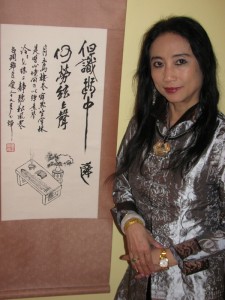
Kensington author Mingmei Yip believes that one should, besides being entertained, also get something out of reading a novel. Her new novel is Skeleton Women is about survival, letting go, and finding love and compassion.

Her debut novel Peach Blossom Pavilion is the story about the last Chinese Geisha and also that of courage and the determination to succeed and attain happiness. Her second novel Petals from the Sky, a poignant Buddhist love story, is about wisdom, compassion, when to persist and when to let go. Her third novel Song of the Silk Road is an adventure love story between an older woman and a younger man with a three million award on China’s famous, dangerous route.

For more about the author and her books visit her Website, on Twitter, and on Facebook.

This is my 69th book for the New Authors Reading Challenge 2012.

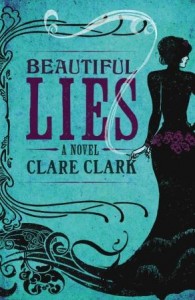
Beautiful Lies by Clare Clark

Maribel Campbell Lowe’s Beautiful Lies (by Clare Clark) ensure that she is mysterious to the reader and London society from the beginning, but as the prose unfolds, readers get glimpses into her past as she attempts to navigate her life in the confines of a London society on the verge of change, in which seances and photography are gaining admirers. Married to radical politician Edward Campbell Lowe, Maribel is thrust into a society full of expectation and one that is changing, but her fateful meeting with Alfred Webster, a reporter, could be her family’s undoing.

But the novel also is more about the society around the Lowe’s and the idea of wearing a mask to your family, society, and to some extent to yourself — hiding the truth from even your own consciousness.  Clark blurs the lines between truth and fiction here in the photographs taken and discussed and as Maribel reflects on her past — lamenting tough decisions she made — and assessing her current situation — finding her way in a relationship with a very busy and outspoken politician.

“”It’s a pity you could not be there when Bill took forty of his Indians to the Congregational Chapel at West Kensington,’ Henry said.  ‘That would have made a splendid photograph.  Apparently, they sang “Nearer My God to Thee” in Lakota.’

‘I am not interested in the Indians as curiosities.  If I am to photograph them it should be as they really are.  The truth, not the myth-making.'” (page 173 ARC)

Maribel is an actress of the first order, as are many of the characters in the novel, as they navigate the complexity of their politics and society at a time when the economy is faltering.  They attempt to hang onto anything that appears true and solid, whether it is Buffalo Bill’s traveling show or spirit photography.  Clark offers very detailed accounts of Victorian society from the clothes to the streets and the economic conditions, but she also provides readers with a stimulating atmosphere that also blurs the lines of reality with those of art.  In many ways, her chain-smoking protagonist’s view of the world permeates the novel so well that the story takes on a mysterious lilt, keeping readers in a state of distanced observation that makes it hard to connect with Maribel on an emotional level.

“Beside the tea chest he hesitated, fumbling in his pockets.  There was the rattle of a matchbox and then the scrape and flare of a match.  Shadows leaped from behind the lines of laundry as he lifted the candle to his face.  Beneath the snarl of his eyebrows his sharp eyes flickered like a snake’s.”  (page 1 ARC)

While the details are appreciated about the House of Commons, the rest of Parliament, the economy, the socialist movement, and other goings on of this era, Clark bogs down the narrative at certain points with these details, which keeps the reader at a distance from her character.  While Maribel smokes obsessively and the prose focuses on it obsessively, the character comes off as careless and even boring at times as she waffles between taking action to improve her happiness and wallowing in the past.  With that said, Clark has written an interesting narrative based upon a real-life politician’s wife who led a double life for many years.

Beautiful Lies by Clare Clark is an unique look at Victorian society plagued by hidden scandals and events that are exaggerated so that they become scandalous by newspapers and reporters.  Disappointingly, the novel drops one of the story lines that was originally set up as one of the things that had the potential to bring down the Lowe family.  Rather the scandals involving politicians and upper class activities uncovered by Webster become the crux of the novel, but the solution to the Lowe’s problem of Webster’s vendetta is unique.  Overall, Clark has recreated the world of the late 1800s and touched upon the hidden lives of many members of society and the masks that humanity wears in public and even at home.

About the Author:

Clare Clark is the author of four novels, including The Great Stink, which was long-listed for the Orange Prize and was named a Washington Post Best Book of the Year, and Savage Lands, which was long-listed for the Orange Prize in 2010. Her work has been translated into five languages. She lives in London.


This is my 68th book for the New Authors Reading Challenge 2012.


To enter to win 1 copy of Beautiful Lies by Clare Clark, please leave a comment below by Sept. 28 at 11:59 PM EST.  You must be a U.S. resident and 18 years or older.


The Names of Things by John Colman Wood

The Names of Things by John Colman Wood is the journey of an anthropologist through the grieving processes he documented among the Northeast African Dasse nomadic camps following the passing of his wife sometime later.  Beautifully written in alternating time frames from the anthropologist’s past field work that helped him create two books on the nomadic lives of these people and their grieving rituals and the present when he returns to the African Chalbi Desert to cope with his wife’s passing.  Wood also includes excerpts on the tribe’s grieving rituals throughout the book, which help to anchor the story in Africa, and help the reader learn how the tribe has named the unnameable — a task the anthropologist must learn.

The prose of this novel is hypnotic and carries the reader into the desert with these people as the anthropologist gains their favor and begins to feel at one with the community.  Wood not only raises questions of an academic nature about the role of an anthropologist, but also whether his presence has polluted the natural dynamic of the community by introducing foreign ideas and culture into their community.  But the presence of the anthropologist among this community also raises questions of how well he can integrate into the community and understand their rituals, feelings, and perspectives, especially since he always remains mostly an outsider to their customs and their grief.

In many ways, the protagonist observes and hangs on the outside not only of the lives of the African tribe, but also of his own life.  His artist wife, who accompanies him to the desert, is left to her own devices as he gallivants through the desert with the tribe and conducts his research.  While she paints and sketches and carves out a routine for herself in which she sits with the sick in the city hospital and does menial tasks, her husband is not with her and he seems to not even think of her much until he returns to her side.  What’s even more curious about these characters is that they seem well paired in that they both need to be alone to complete their work, though their philosophies about the privacy of notes/sketches are very different.

“What I think is interesting, she went on, is that for the list to be interesting you have to bring something else to it.  You have to want what’s on it, and that isn’t a matter of accuracy.  It’s not about the place but about you.”  (page 221-2)

John Colman Wood knows the best way to write about the research anthropologists conduct, while at the same time maintaining the reader’s engagement in the story of his protagonist and his wife.  Even though the research separates them, and the anthropologist seems indifferent to his wife’s suffering, it is clear that he understands her artistic nature and her need to be alone to observe.  However, these characters (who do remain nameless throughout the book) are separate but together on their journeys of observation, with only one of them truly connecting with something outside themselves.  Although The Names of Things is about how to define and deal with the grief that inevitably comes when we love, belong, and need one another, it also is about how we interact with those around us and how much a part of the community we become or not.  A well-written and paced debut novel that will surprise readers with its journey into the customs that bind us together and how they are shaped by the people that create them.

About the Author (Photo credit: Carol Young Wood):

John Colman Wood teaches at the University of North Carolina at Asheville. His field research with Gabra nomads of northern Kenya and southern Ethiopia has been funded by the Wenner-Gren Foundation, the National Geographic Society, and the Max Planck Institute for Social Anthropology. His fiction has appeared in Anthropology and Humanism, and he has twice won the Ethnographic Fiction Prize of the Society for Humanistic Anthropology.

This is my 67th book for the New Authors Reading Challenge 2012.

The Siren of Paris by David LeRoy

In The Siren of Paris by David LeRoy, Marc is tempted by the siren call of Paris to return to the place of his birth, a place he does not remember but has the enticements of all he desires: love and art. Set in the time before Paris is invaded by Germans during WWII, LeRoy does well in depicting by turns the fear and the indifference Parisians and expats felt when Germany began to advance across Europe.  Once France begins to realize that negotiations with Germany will amount to nothing and Germany begins to take more territory, the fears become overwhelming for many, and there is an anxiousness that pervades the novel’s pages, especially as Marc’s friends panic about returning to the United States and England.

With that said, there are quite a few missed opportunities in the beginning of this novel when Marc is on a diplomatic mission with Mr. Wells (at the behest of William Bullitt, US ambassador to France) and they meet with not only Mussolini, but also Ribbentrop, who goes on a diatribe for 2 hours, and you don’t get any of the conversations!  Instead, LeRoy spends several pages on news reel footage in the local theater afterward when Marc returns and is on a date with Marie.  Missed opportunities like these set off alarm bells that more research could have been done to learn what might have been said by these high-ranking officials conquering Europe.  It also begs the question of whether this story was as well thought out as it could have been, especially given that the transitions between moments in time and locations are often left out and the reader feels adrift until they get their bearings again as to where they are, what day, and whom they encounter.

LeRoy does have a firm grasp of how to make the plot move along and how to make the reader feel the fear of the Parisians and the expats who are fleeing the city as the German’s approach.  From the overflowing train platforms to the rush out of their apartments with their clothes on their backs, the plot moves along quickly and ramps up the tension.  As Marc seeks to leave at the last minute, his friends Dora, Nigel, and David are not forgotten by the narration as their paths homeward are highlighted as well.  However, in many ways, LeRoy has sketched the character of Dora (a subordinate character) better than he has the main protagonist, Marc.

The Siren of Paris by David LeRoy had the potential to be a great novel, but with the poor plot transitions and missed opportunities for historical information and additional characterization, it becomes a chore to read.  The additional framing in the novel at the beginning and end in which Marc is reviewing his life in flashes and the colors of his soul are changing read a bit overly dramatic and take away from the rest of the story.  With so many styles and techniques running amok in this novel, it is hard for readers to feel fully engaged in the story or connected to Marc.  Unfortunately, this reader didn’t even make it halfway through the novel before deciding she’d had enough.  However, if readers are willing to overlook these issues and focus on the fast-paced plot, it could be an enjoyable read for those that like WWII novels.

About the Author:

In writing his first novel, The Siren of Paris, David LeRoy drew upon his longtime interest in philosophy, the visual arts, myth, storytelling, psychology, and Ocean Liner travel. During a visit to France to study art in the fall of 2012, LeRoy became intrigued by the French Resistance, particularly when his research revealed the role of Americans in the Resistance, as well as the limited means of escape from Europe as the war escalated. LeRoy holds a bachelor of arts in philosophy and religion.

This is my 66th book for the New Authors Reading Challenge 2012.

I’m Just Sayin’! by Kim Zimmer and Laura Morton

I’m Just Sayin’!: Three Deaths, Seven Husbands, and a Clone! My Life on Guiding Light and Beyond by Kim Zimmer and Laura Morton is as spontaneous as Reva Shayne was on Guiding Light, and while most of the memoir is linear in nature, there are moments where the flashbacks are a bit out of sequence — though never hard to follow.  Zimmer pulls no punches with her memoir and does not sugarcoat anything that happened in the latter years of Guiding Light, which experienced severe budget cuts and went downhill in terms of quality where production was concerned.  On the flip side, she’s also willing to admit her mistakes and allowed her temper to get the best of her when she should have tried a more diplomatic approach when story lines and production were falling by the wayside.

Even more interesting were the early years in which she made some tough decisions about college and acting, when she met her soul mate (A.C. Weary), and when she put her family first and left Guiding Light the first time.  She shares some acting techniques she learned, including substitution in which an actor uses real life images and memories as stand ins for the characters’ current situations.  Zimmer didn’t find this effective, and in fact, found it very distracting.  One of the most interesting things in the book was that she took the bus to the studio rather than have a car pick her up or driver herself to work in the early days, which some of her co-stars found odd.  (I applaud her for using public transportation!)

“A.C. and I joked about getting married any number of times, but one of us always managed to change the subject.  If memory serves me correctly, in the summer of 1980, we were in our teeny-tiny kitchen making dinner when we started talking about having a baby.  I believe I said I’d love to have a kid but I wanted to be married first.  Hint, hint, wink, wink!

A.C. said something like, ‘Are you asking me to marry you?’

I said, ‘If you want me to have your babies, then yes, I’m asking you to marry me!'”  (Page 42)

While some may think that Zimmer is a diva, she certainly is in the sense that she’s talented and passionate about her work.  She talks a lot about fighting for her characters and the show, which she thought of more like a family — and in many ways was more attached than probably some other actors would be to their roles and television shows.  Her resolve and determination helped Reva Shayne’s character grow, but unfortunately, the show itself was not something should could have saved on her own.  Becoming so attached to the show and her character ultimately weighed too heavily on Zimmer and caused her to make some choices she might not have otherwise.

I’m Just Sayin’!: Three Deaths, Seven Husbands, and a Clone! My Life on Guiding Light and Beyond by Kim Zimmer and Laura Morton is not only about acting and her family, but about a passion for her job that became all-consuming and led her astray for a while.  But lessons are always available when people make mistakes, even celebrities.  Zimmer’s memoir seems to have been cathartic for her in that it helped her assess herself and her role as wife, mother, and actress.  She’s candid and funny, but never overly apologetic.  A great memoir for those looking for behind-the-scenes shenanigans, serious acting business, and life-work balance decisions.

***On another note***

My husband and I watched Guiding Light together, and Jonathan and Reva’s story line was one that we loved watching unfold as he was the son she had left behind.  We loved the dynamic of these characters, and it was great to learn about the audition between Zimmer and Tom Pelphrey, which was too funny.  The chemistry between the characters was superb. Another of my favorite pairings was Reva with Jeffrey!  I loved their “What the hell” nature and the jokes and genuine fun time they seemed to be having.  It was so refreshing.  On the flip side, I loved Harley and Gus on the show, a relationship that was torn asunder by the writers and angered me beyond imagination.

It was hard for me to watch the production quality of this show decline, and my mother would call and ask me what the heck they were doing to our show.  The shaky cameras and the outside scenes in which you couldn’t hear the dialogue too well and the overpowering music.  Like Zimmer, I was very attached to these characters, and in many ways they were real….I was sad to see the characters of Springfield go.

About the author:

Four-time Emmy® award winner Kim Zimmer is a veteran television actress. In 1984, she joined the cast of Guiding Light, and stayed with the series for over two decades. She and her husband live mostly in New Jersey with their three children.


This is my 65th book for the New Authors Reading Challenge 2012.

Thoughts on Some Remarks by Neal Stephenson

Some Remarks by Neal Stephenson is a collection of essays, one sentence from a novel that he never finished, and a few short stories.  I’m not the typical audience for this book as I don’t read a lot of non-fiction, nor science-y essays.  As a result, I read a bit of the most recent essays in the collection, the introduction, and the short fiction pieces, plus the one sentence to the novel.  I can say that I see why he never went further with his novel; it wasn’t very attention grabbing for me, but hey, it might have been a sentence from a future chapter and not the book opener for all I know.

To say this collection is weird is an understatement; readers only need to check out “Spew” with its tech-babble and sci-fi tongue-in-cheek feel as Profile Auditor 1 skulks around the big brother system that watches everyone’s lives for a living, looking for anomalies.  I found the overwrought tech language and mysteriousness too much; I was kept too much in the dark for the beginning part of the short story.  However, by the end, I was intrigued by the hotel clerk and her suspicious profile and wondered what the profiler’s interest in her was, but it is clear by the end of the story that she’s got more gumption than he does.  While Stephenson brings up issues of big brother and what it could mean from a marketing perspective, the story also gave me pause about my own buying habits and whether I’m that gullible in my purchases — seeing it on television or the Internet is enough to make me buy it — but I also realized that is not all that he is highlighting, but also the factors that play into buying decisions from friends, recommendations, advertisements, and finances.

“Patch this baby into your HDTV, and you can cruise the Metaverse, wander the Web and choose from among several user-friendly operating systems, each one rife with automatic help systems, customer-service hot lines and intelligent agents.  The theater’s subwoofer causes our silverware to buzz around like sheet-metal hockey players, and amplified explosions knock swirling nebulas of tiny bubbles loose from the insides of our champagne glasses.”  (page 288, “The Great Simoleon Caper”)

The second short story, “The Great Simoleon Caper,” relies on a similar notion of a man behind the technology who looks in on customers through their set top boxes, but instead of profiling their likes and dislikes and buying habits, he is their customer service representative to iron out their problems.  In this scenario — which began with a “innocent” brother’s request for how many jelly beans would fill up Soldier Field — the customer service rep brother is suddenly thrust into an underground plan to circumvent government controls.  Investing in Simoleons, an e-money, is a campaign his brother wants to succeed, but how will his brother ensure that the deal goes off without a hitch.  Do you sense a bit of paranoia in these stories?  A bit too much over-the-shoulder watching?  Perhaps that’s a good thing — keeping people honest and on their toes.

Stephenson’s fiction was livelier and more inventive to me than the nonfiction essays about the dangers of sitting at a desk for your job and other topics, which seemed to try to hard to be humorous or witty.  Some Remarks is an interesting collection of essays, but for someone that reads mostly fiction and poetry, this is not a good fit.

About the Author:

Neal Stephenson is the author of the three-volume historical epic “The Baroque Cycle” (Quicksilver, The Confusion, and The System of the World) and the novels Cryptonomicon, The Diamond Age, Snow Crash, and Zodiac. He lives in Seattle, Washington.

This is my 64th book for the New Authors Reading Challenge 2012.

Across the Mekong River by Elaine Russell

Across the Mekong River by Elaine Russell is part PTSD (post-traumatic stress disorder) and part immigration story set just after the end of the Vietnam War.  Nou Lee and her family were forced to flee Laos following the Vietnam War after her father fought with the special forces alongside the Americans.  His life and that of his family were threatened by the succeeding communist government, forcing them to take flight in the middle of the night across the Mekong River.

Across the river that takes some of the lives in an explosion of gunfire and rapids, the family finds itself in a refugee camp in Thailand.  To be Hmong family means duty and hard work for the good of the entire family from grandparents to cousins and aunts and younger siblings, and above all respect for culture and ancestors.  The hard life this family has seen from their days in Laos and in Thailand where they struggle to feed their children makes the dream of freedom in America even more alluring.

“On another, taller mountain deep in the woods, we built small shelters, tying bamboo poles together against trees and covering them with thatch.  I think we were there six months, maybe longer.  We could only plant a small vegetable patch and search for food in the forest.  But somehow our husbands found us and brought whatever supplies they could carry.”  (Page 22)

“A barbed wire fence surrounded Nong Khai Camp.  Three Thai soldiers stood sentry at the gate, brandishing their rifles.  As we drove into the compound, I did not know if I should feel afraid.  Officials would explain that the guards were for our protection so no one from outside could take advantage of us.  Through the barbed wire, I watched the Thai farmer we had just passed driving his water buffalo into his field.  He never looked our way, as if we did not exist.”  (Page 36)

Her parents struggled to keep the rest of the family safe and together as they remained in camp in Thailand, and when the promise of America came, many were reluctant to go for it meant change and adjustment.  In 1982, the Lee family moves, taking with it their hopes for a new future and freedom, but hanging over this new adventure are the ghosts of the past, which threaten to pull them back into the abyss and keep them from finding their place.  Nou, a young girl in a strange land and with no knowledge of English, is thrust into an unknown school and unfamiliar culture that since the Vietnam War has bred prejudice against those from Asia.

Her adjustment into the new world is anything but seamless and she’s forced to bury her resentments of her mother and family deep as she navigates peer pressures and bullying, even from her own Hmong family members.  As the family moves to better opportunities, her previous experiences have colored her perception of Americans and adopts a new name and a new life.  Although her thrift store clothes and restrictive customs tell her true story, she is leading not only a double life, but a triple life when Dang Moua enters the picture and her mother begins to talk of marriage and children.

Elaine Russell has a gift for bringing out the nuances of the Laotian culture, particularly that of the Hmong people, in the multiple family points of view she uses.  In addition to the cultural norms, she easily weaves in the ravages of war and its effect not only on the fighting soldiers, but the families they leave behind who face torturers face-to-face.  Across the Mekong River, the Lee family finds freedom, but it comes with a price.  Struggling to maintain their cultural identity in a melting pot of America, the Lee family not only struggles with the secrets of their shared past, but the secrets they now keep from one another as they vacillate between being truthful and relying on age-old customs that elders are to be respected and never questioned.  Russell has created a tale that leaves a deep impression on the emotions of the reader and raises questions about what it means to be American as an immigrant.

About the Author:

Elaine Russell graduated with a BA in History at University of California, Davis, and an MA in Economics at California State University Sacramento. She worked as a Resource Economist/Environmental Consultant for 22 years before beginning to write fiction for adults and children. She became inspired and actively involved with the Hmong immigrant community after meeting Hmong children in her son’s school in Sacramento and reading Anne Fadiman’s The Spirit Catches You and You Fall Down. Since then she has been to Laos many times to research her book and as a member of the nongovernment organization Legacies of War.

This is my 63rd book for the New Authors Reading Challenge 2012.

Ashes by Ilsa J. Bick

Ashes by Ilsa J. Bick is part one in a trilogy of dystopian young adult books in which an EMP (electromagnetic pulse) wipes out all electronics, including pacemakers and other devices inside people’s bodies.  Alex is a 17-year-old girl with a brain tumor, who also has lost her parents in a horrific accident and has undergone numerous traditional radiation and experimental treatments.  She decides to leave her Aunt Hannah’s house near Northwestern University and head to the Waucamaw Wilderness of Michigan to determine what to do next — whether to go on fighting the tumor or move on.

While in the woods, she meets Ellie, her grandfather, and their dog Mina.  The 8-year-old Ellie is sarcastic and bit angry since her father’s passing in Iraq, but when the EMP hits, the only one left to rely on is a stranger and her dog, a dog that reminds her of all she’s lost.  Granted, she has a right to be angry and sad, but she whines just a bit too much and readers may find that they would be glad if Alex were to ditch her in the woods alone.

“The buzz on the plane faded and the quiet descended again like a bell jar over the forest.”  (Page 13)

Bick’s writing is suspenseful and clear, but the end of each chapter reads like a cliffhanger.  After 30 chapters, readers will be singing the equivalent of DUN DUN DUN.  Not every chapter ending needs to be this dramatic especially when there are no major plot twists revealed.  In addition to the EMP and the dramatic chapter endings, Bick introduces the Changed (aka the zombies/cannibals), those who survived the EMP, but turned primal and become cannibals.  This being a trilogy, there was no explanation of what changed these people into cannibals, nor why some kids, like Alex, Ellie, and Tom, do not change.

“She didn’t know if the tightness in her throat or the fullness in her heart meant that he was there; that they were connected somehow.  Maybe all that she saw and felt was the sensual fullness of memory:  that which abided and was nothing but the ghost of a touch, the whisper of a word, the lingering of a scent.”  (Page 374)

Ashes by Ilsa J. Bick is an action packed novel that reads like horror with all the graphic details about the killings and eating, but what it lacks is a cohesive story.  In one half of the book, Alex seems like a strong young lady interested in taking charge, but in the latter half of the book, she becomes mush.  Once in Rule, she no longer physically tries to fight or escape her captors once they’ve set her up in a house and she begins work in the hospice, and of course, meets a kind boy her own age.  The novel becomes less about the EMP and the zombies than it is about the cult-like settlement of Rule in which surviving women are passed off like chattle and are only good for propagating the species.  In many ways, it is like the author could not decide what story to tell, and whether the character was to be strong and a main catalyst or merely a weak pawn in a larger chess board.  At more than 400 pages, readers may find that editing could have compacted the story more and maybe the plot could have been tied up a little better, with fewer loose ends — even for a trilogy this has too many.  However, if you are looking for something entertaining and fast-paced, this is for you.

About the Author:

Ilsa J. Bick is an award-winning, best-selling author of short stories, e-books and novels. She has written for several long-running science fiction series, most notably Star Trek, Battletech, and Mechwarrior:Dark Age. She’s taken both Grand and Second Prize in the Strange New Worlds anthology series (1999 and 2001, respectively), while her story, “The Quality of Wetness,” took Second Prize in the prestigious Writers of the Future contest in 2000. Her first Star Trek novel, Well of Souls, was a 2003 Barnes & Noble bestseller.


This is my 62nd book for the New Authors Reading Challenge 2012.


Book Club Thoughts (Beware of Spoilers):

This selection was from one of the male members in the group who reads a great deal of young adult dystopian fiction.

Most members enjoyed the book for what it was, a fast-paced thrilling dystopian novel, but two of us disliked it because the zombies were implausible and the main character was too weak by the end.  One member said that the portion of the book in Rule was “bungled.”  While I felt that Chris in Rule was a cardboard cutout of a “good guy,” one other member liked him more than Tom, the earlier love interest for Alex.  The youngest member of the group hopes that Tom is still alive in book two, Shadows, because as of now, his fate is unknown.

Most of us agreed that should the world end as we know it that a marshal law would be necessary to keep people civil to one another and that controlling information — even about super senses — is an essential part of that.  However, I disagreed that Alex would have become as complacent as she did and merely though about squirreling away supplies; I wanted more from her — maybe more recon or attempting to find out how the town of Rule operated and why.  The information that she does glean is told to her by some rather chatty members of the town, and she learns the information with little effort on her part or very little help from her super smell.

In the final cliffhanger of the book, Alex learns that the town of Rule has been feeding the teen cannibals, but she doesn’t know why.  One of our female members suggested that maybe the teen cannibals were once some of the town’s own children that became the Changed and the members could not bring themselves to kill their own kids.  Another member said that feeding the enemy is incredibly stupid and that the town should be cutting off the food supply; at this point the town is merely aiding in their own doom.  There also are quite a few loose ends in the book that some of us noticed, and it would have been nice if some of them were tied up by the end of book one so that new mysteries could be revealed and unraveled in book two.

Five of us, which is a majority, said they would read the second book to find out what happens, but three of us were not interested in reading book two at all for a variety of reasons.  However, looks as though we’ll all be reading Shadows as it was selected from the nominations by the member who selected Ashes.

The Voice I Just Heard by Susan Dormady Eisenberg

Look at this book’s cover, as the woman walks out on the stage and sees the waterfalls before her, this is a perfect metaphor for the stage fright that grips Nora Costello when she sings, especially when her dismissive parents are in the audience. Imagine what singing is like for an artist, it is the air they breathe and the thrum of their soul, but imagine how it would be to recapture your flagging confidence in the presence of parents who disapprove of the theater as a career, particularly after one of your staunchest supporters, your brother Liam, dies in the Vietnam War dashing your father’s hopes of another brilliant doctor in the family.  The Voice I Just Heard by Susan Dormady Eisenberg is an operatic debut of epic proportions, with a story that takes readers behind the scenes of theater and opera through an emotional journey of losing a brother at one of the most controversial times in U.S. history — the Vietnam War.

“As Liam and I stood elbow to elbow at the fence, he said, ‘I should’ve memorized the whole poem, but I only recall the first four lines and the last four.’  His expression turned solemn.  ‘Here’s how it ends.  “Oh may my falls be bright as thine, may heaven’s forgiving rainbow shine, upon the mist that circles me, as soft as now it hangs o’er thee.”‘

‘That’s sweet,’ I said.  ‘But what does it mean?’

‘I asked Sister Perpetua.  She said we have the power of the falls in each of us.  When we screw up, heaven sends us a rainbow to tell us we’re forgiven.’  He shrugged.  ‘It’s weird.  I’ve come here three times and never seen a rainbow, so I wonder if Moore made it up.'”  (page 152)

Eisenberg, who has written profiles of singers, actors, and more, deftly weaves in the story of Liam and Nora’s childhood and the pressures they faced to be perfect for their upper crust parents — even if that meant tamping down their desires for a new direction and passion — with the present day family dynamics of losing a son to war.  Nora is set adrift without the anchoring relationship of her brother, who in a way was her buffer between her passions and dreams and her parents’ disapproval.  Her father is stoic in his response to his child’s death, and her mother withdraws from everything.  Eisenberg’s prose brings to life the grief of these characters as the mother goes to mass daily, the father buries himself in work, and Nora seeks solace in the theater where she runs public relations for the summer showing of Annie Get Your Gun in Cohoes, N.Y., alongside her gay boss Graham Chase.  A former mill town, Cohoes is a hot bed of hidden beauty in more ways than one, and it’s the perfect setting for two battered singers to meet — Nora Costello and Barton Wheeler, where they can come to terms with the right path for their artistry and their souls.

Eisenberg’s characters are deeply emotional, high strung, and respond before thinking, which gets them into a number of situations that can be misinterpreted and blown out of proportion, and in this way, her dramatic story resembles the missteps in Pride & Prejudice.  Nora must learn to see the courage within herself, repair her relationships with her parents and childhood friend Liz, and determine what path is best for her without the influence of others.  Bart, on the other hand, is balancing his true career with the need to support his two daughters from a previous marriage, while still holding onto the family business.  When they come together sparks fly.

The Voice I Just Heard by Susan Dormady Eisenberg is about finding the confidence in oneself to reach out passionately for the life you want to lead and to never let go of it, not matter what the detractors say.  Sage advice for any artist — whether singer or poet.  Nora is spunky, head strong, and passionate, while Bart is more restrained (probably due to his age and life experiences), but he’s equally adrift as he’s lost confidence in his abilities and the right path for himself.  From the stage in Cohoes to Washington, D.C., Nora and Bart grow into themselves and their voices — voices that are their own and remind them of where they belong.  When overture sounds and the cast steps on the stage, the voices in this novel will sweep the reader away into a operatic crescendo like no other.

There is some strong sexual language in this book, so beware.

About the Author:

Susan Dormady Eisenberg is a writer based in Maryland. She has published articles in Opera News and Classical Singer (such as a November 2011 cover profile of baritone Robert Orth), as well as The Hartford Courant and The Albany Times Union. On February 3, 2012, she released her first novel, The Voice I Just Heard, as an indie ebook.

As a freelancer Susan has written promotional publications for clients throughout Greater D.C. Prior to launching her business, she did publicity for Goodspeed Opera House and Syracuse Stage, and marketing for the Joffrey Ballet/New York.

Please also check out my interview with her for the D.C. Literature Examiner.

This is my 61st book for the New Authors Reading Challenge 2012.