Quantcast

Winter’s End by Jean-Claude Mourlevat, translated by Anthea Bell

Winter’s End by Jean-Claude Mourlevat, translated by Anthea Bell, is a dystopian young adult novel set some time after a civil war has torn apart an unnamed nation.  If any of this sounds familiar, it should — Hunger Games — and like Suzanne Collins’ book, kids and adults are required to fight in an Arena, though more in gladiator style with swords.  And the similarities do not end there, but there are differences between this world and Collins’ world, with the Hunger Games capital seemingly more dangerous and the world of the districts more stark.

Mourlevat spends a great deal of time on the boarding school and building the characters of Milena and Helen.  These young girls are taken to a boarding school at the edge of the world, where they must memorize and follow 20 rules to stay out of the SKY, which isn’t the sky at all.  During the year, they have three opportunities to meet in the village with their consolers, who basically provide the children comfort and guidance.  The girls’ adventures begin on one such trip they meet two boys, Milos and Bartolomeo.

“The Sky did not deserve its name.  Far from being high in the air above, the detention cell was underneath the cellars.  You reached it from the refectory, down a long, spiral staircase with cold water dripping from the steps.  The cell measured about seven by ten feet.  The walls and floor smelled musty, earthy.  When the door closed behind you, all you could do was grope your way over to the wooden bed, sit or lie on it, and wait.  You were alone in the darkness and silence for hours.”  (page 7)

In the back of the book, the author mentions that the story is based upon the life of Kathleen Mary Ferrier, an English contralto singer.  In some ways the recruitment of Ferrier during WWII is similar to Milena’s mother’s story, but in other ways they are vastly different.  There is a resistance in Winter’s End, but it remains very mysterious to the very end when the network begins to take action against the Phalange.  While the oppressors show no compassion for those different than themselves and shoot down unarmed individuals or send dog-like men against the innocent, the Phalange remain mysterious — their origins, their motivations, and the history with the oppressed.  In many ways, the actions against Milena’s mother and Bart’s father seemed more related to a broken-hearted man, than an over-arching battle between the Phalange and the resistance.

Winter’s End is a thrill ride in the latter half of the book, and it will definitely keep the attention of younger readers.  It’s also aptly named, as the sun seems to be shining more brightly by the end of the novel, though an epilogue about Helen’s consoler and her son was not necessarily needed and seemed like it was tacked on as an afterthought.  Overall a satisfying read, but not near the caliber of other books in this category.

About the Author:

Jean-Claude Mourlevat once wrote and directed burlesque shows for adults and children, which were performed for more than ten years in France and abroad. The author of several children’s books, he lives in a house overhanging the River Loire, near Saint-Etienne, France.

About the Translator:

Anthea Bell OBE is an English translator who has translated numerous literary works, especially children’s literature, from French, German, Danish and Polish to English.
This is my  28th book for the 2013 New Authors Challenge.

Here’s What the Book Club Thought:

Overall, most of us enjoyed the writing in this YA book the most, and there was a great many symbols of French culture, particularly the power of music and symbols to a revolution.  The young lady in the group who selected the book did not like Milena as much because she was too perfect, while another member said she was more like a symbol than a character — harkening to the symbol of the revolution bit that the author seemed to be striving for.  Two or three members were saddened by events that killed off one particular character who had become a favorite, and another member pointed out how there was a lot of build up in the book about the revolution but little action.  One member wanted more of that action, and I think most agreed that the end of the book seemed rushed.  Overall, it was just an OK read for most of the group, with the youngest member planning to give it four stars.

Night Train to Lisbon by Pascal Mercier, translated by Barbara Harshav

Night Train to Lisbon by Pascal Mercier, translated by Barbara Harshav, is about the paths we take in our lives, the regrets we carry, and the desire to connect with something or someone outside of ourselves.  Raimund Gregorius is a Swiss classical languages teacher in Bern, who has cloistered himself among his texts and his classes to the detriment of his marriage and his social life.  He’s governed by a routine existence that is abruptly changed one morning on the way to the lycée.  His love of language and learning takes him on an unexpected journey into the language and heart of Lisbon as seen through the eyes of Amadeu de Prado, a young doctor caught up in a test of his principals like none other at the time of the Salazar dictatorship.

“Gregorius took off the glasses, and covered his face with his hands.  The feverish change between dazzling brightness and threatening shadow pressing with unusual sharpness through the new glasses was a torment for the unprotected eyes.  Just now, at the hotel, after he had woken up from a light and uneasy afternoon nap, he had tried the old glasses again.  But now the dense heaviness felt disturbing, as if he had to push his face through the world with a tedious burden.”  (page 111)

Through a mix of text from Prado that Gregorius translates and the teacher’s interactions with Prado’s family and friends, a tale of hunger, deprivation, and principals emerges that will keep readers on their toes.  The parallels Mercier draws between Prado and Gregorius are uncanny, and yet, the men are so different from one another in how they choose their paths.  At the same time, both men are swept up in a hunger for more life and more connection, especially given how both their fathers had suffered and how little they knew them.  In many ways, it seems as though part of that hunger is fed by the “absence” of the father — though not their physical absence — and the expectations that absence placed on these men as they grew older.

Who could in all seriousness want to be immortal?  Who would like to live for all eternity?  How boring and stale it must be to know that what happens today, this month, this year, doesn’t matter:  endless more days, months, years will come.  Endless, literally.  If that was how it was, would anything count?”  (page 170-1)

Gregorius begins his journey in Lisbon with Prado’s book in his hands, seeking the truth of the man who wrote such inspiring words — words that spurred his desire to drop his old life and journey into a new world.  There moments when he loses himself, bumping around Lisbon and falling into the life of Prado so much so that he forgets texts that he lived and breathed in for years.  But even in returning to Bern, Gregorius is out of place; it is no longer comfortable or it does not feel like home.  Both Prado and Gregorius reach a certain precipice in their lives, and how they handle it is so similar; it is like a mirror image of the past facing the present.

Mercier explores the compartmentalization of our own lives and how we can not really know others as intimately as we can know ourselves, but even that is questioned as we can also fall into deceiving ourselves about our own abilities, emotions, and more.  Memories are fleeting and often distorted, but to uncover an unvarnished truth about the past, all sides of the story must be sough out to find the truth in the middle.  Beyond that there are questions of whether one should be sacrificed for the many or the good cause and what exactly the fear of death is about.  Night Train to Lisbon is a methodical and deep account of two men with their own convictions and perceptions about life and what it is that are challenged by the world around them.  Deeply moving, profound, philosophical and engaging.

About the Author:

Peter Bieri, better known by his pseudonym, Pascal Mercier, is a Swiss writer and philosopher.  He studied philosophy, English studies and Indian studies in both London and Heidelberg.  Mercier cycling team is a former French professional cycling team that promoted and raced on Mercier racing bikes. Together with the Peugeot cycling team, the Mercier team had a long presence in the cycling sport and in the Tour de France from 1935 until 1983.

About the Translator:

Barbara Harshav translates from French, German, and Yiddish, in addition to Hebrew. Her translations from Hebrew include works by prominent authors such as Michal Govrin, Yehudah Amihai, Meir Shalev, and Nobel Laureate S.Y. Agnon. She teaches in the Comparative Literature department at Yale University.

This is part of my own personal challenge to read more books set in or about Portugal.

This is my 27th book for the 2013 New Authors Challenge.

Thievery by Seth Abramson

Today marks the end of National Poetry Month, and I hope that you found some great poets and poetry collections to try this month. I’m especially pleased that we had so many participants for the Friday activities. See all of you next year for another blog tour of poetry, but I hope you’ll stick around for the rest of this year too. If you missed some of the posts this month, just click here and scroll through.

The action of the poems in Thievery by Seth Abramson, published by the University of Akron Press, occur in between the silences and the pauses of each line break and each trick phrase, highlighting the theft of what has been stolen.  From the innocence of our children to the rallying of small towns around their own even when the most horrifying things occur.  Abramson performs a sleight of hand in his poems, changing their trajectory at a moment’s notice, calling attention to the illusions that are around us everyday.

From "Chronophrenia, Part VII"

At the end of traveling
I wear the road.  Within my skin it is bad.
It's worst without --
the particulates of being nowhere entirely.
From "Chronophrenia, Part VIII," the poet asks:

Do you pay
for each silence, and if so
why start.  Can I admit this thing,
can I clothe myself
in something like it, is it time now.
Does the time come.  Does it ever.

Are we too afraid to speak up or to change the world around us and make it better, or have we just become too complacent.  This silence and complacency is a pervasive problem Abramson tackles in his poems and what the possible consequences of that silence is.  In “Only,” “If it moves/I see it coming, sometimes I do/I swear.  I have been in the places things/were coming true/that were unwanted, in places/things went/unwell, where things went and went//”  (page 37)  There is an unraveling that these poems want to bring into the light for closer examination, though it could be the unraveling of our morality or our societies — with some poems being more ambiguous than others.  Additionally, there are several poems that focus on the abuse of men at the hands of women, like in “Hometown Courage” where the man is held down by women and in “Poem for Battered Man.”

From "All You Ploughboys":

I am sure
to do something horrible.  Half the wood is
halfway there.
And half this town is half in love with itself,
but me I go all the way.

Thievery by Seth Abramson is subtle, and at times too much so, in its exploration of change throughout society and within individuals as it asks readers and others when is the time to stand up and to create change for a better world. When is the time for us to stop the thieving from others and ourselves? These are questions that should be asked and should be met with action.

About the Poet:
Seth Abramson is the author of The Suburban Ecstasies (Ghost Road Press, 2009). In 2008 he was awarded the J. Howard and Barbara M.J. Wood Prize by Poetry. A former public defender, he currently attends the Iowa Writers’ Workshop. Please check out his blog.

Please click the image below for the latest tour stop on the National Poetry Month Blog Tour!

This is my 17th book for the Dive Into Poetry Challenge 2013.

This is my 26th book for the 2013 New Authors Challenge.

night thoughts: 70 dream poems and notes from an analysis by Sarah Arvio

Click the image above for today’s National Poetry Month tour post!

night thoughts: 70 dream poems and notes from an analysis by Sarah Arvio is a poetry collection that defies convention in its cathartic purpose as a series of free-association dream poems with accompanying notes on those dreams from the poet at the time she was tackling some serious trauma.  It is more than a collection of poems and notes about those dreams they capture, it is a memoir written as she uncovers some deeply traumatic events in her childhood as she was on the cusp of womanhood.

“It’s easy to forget how complex and intense are the thoughts of children, and how everlasting.  I mean that the thoughts last in the mind, enacting their meanings, even when they seem to be forgotten.”  (page 132)

Arvio’s notes are essential in many ways to the understanding of her dream poems, which are often surreal and disjointed.  The notes help carve out her images and how they associate to one another and which dreams came to her in the same span of time.  She breaks down her word choices for lines in the poems, the origins of words and how their meanings are uncannily related to the trauma she experienced and subsequently forgot.  She also provides insight into the artwork that she saw and that reminded her of the trauma and how certain colors appear and reappear in her poems because of their relation to the trauma.

watermelon (page 19):

in the brightwhite kitchen a tiny pink
watermelon lies on the pink counter
or white it may be white by the fruit
is pure pink flesh I take a bite of it
then I recall a photograph of me
standing & biting the watermelon
in the newspaper that was black & white
though I know my shirt was white & pink
at the fair on something hill (named for
a fruit) where my father bought me a book
that was called something hill something that meant
flesh & then I knew it was fanny hill
the place was strawberry hill & little 
me as francesca seduced by a book

Arvio utilizes repetition of color and words in her poem to illustrate the remembering of a dream while awake, as the mind filters through the image details to carve out the truth of the events. Her poems read like dream interpretations without the conclusion, and in this way, she leaves the poems open to interpretation until the reader gets to her notes section. While these are dream poems, the images and actions will likely make some readers squirm and look away, particularly with the maiming of animals, among other things. These poems are stark and sometimes profane, much like the shame and the trauma explored in the dreams.

night thoughts: 70 dream poems and notes from an analysis by Sarah Arvio is poignant, frightening, and “super real.” Start with the notes at the end of the book, if you want background on her dream poems before you read them, or hold off and read them at the end to get a richer experience. This memoir/poetry collection is meant to disturb.

About the Poet:

Sarah Arvio is a poet who has lived in New York, Paris, Caracas, Rome and Mexico.  For many years a translator for the United Nations in New York and Switzerland, she has recently also taught poetry at Princeton.

Her poems are widely published, in such journals as The New Yorker, The New Republic, Literary Imagination, Boston Review, The Kenyon Review and Poetry Kanto and in many online reviews.

Composers have set her poems to music:  Miriama Young set “Cote d’Azur” as “Inner Voices of Blue”; Steve Burke set “Armor” for the song cycle “Skin”; and William Bolcom set “Chagrin” for the song cycle “The Hawthorn Tree.”

She’ll be at the May Gaithersburg Book Festival for “Poetry in the Afternoon” moderated by me!

This is my 16th book for the Dive Into Poetry Challenge 2013.

This is my 25th book for the 2013 New Authors Challenge.

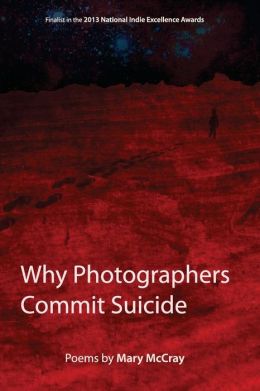
Why Photographers Commit Suicide by Mary McCray

Why Photographers Commit Suicide by Mary McCray, illustrated by Emil Villavincencio and published by Termentina Books, is a collection of science fiction poetry — yes, you head that right!  These poems mesh not only the exploration of space with the modern world here on Earth, but they also harken to older themes of Manifest Destiny dating back to America’s youngest roots as a nation.  It’s a collection about the opportunities space exploration can represent, which is highly ironic given the government’s recent decision to shut down the manned shuttle program.

From "Helga Post-Orbit" (page 52)

No, it's not the sentimental, leftover space

that matters as much as the idea of Helga, open-eyed
and drifting, somewhere out of the room.
Or this mortal part of me -- lost in a raw,
everlasting free-fall of disconnected, disordered love,

knowing I'll uncover Martians, (Martians!),
the impossible mysteries of Mars,
before I'll ever know
where Helga has gone.

McCray’s poems are fantastical, opening up a solar system to the reader that delves into questions of existence and the hereafter, but also the never-ending search for more.  She explores space, Mars, and even artificial intelligence.  There are some beautiful moment of motion, like in “All of a Sudden,” where the narrator awakens:  “Last night, a woman in a hospital smock laid her fingers/on the shiny bells and, mouth over face,/blew tornadoes into the water-pale toes./Then, eyes shut and palms summoning,/my child asked me if I knew who I was./And I said, yes, I am the speed at which/particles collide.//”  For the most part, these poems draw comparisons between the society we create here on Earth and its focus on the material, and how any society on another planet would likely be more of the same.  As we seek to comfort ourselves in the unfamiliar by bringing along the unfamiliar — even to the detriment of animals brought along in the rocket.

McCray paints extraordinary pictures with her words, but the accompanying drawings from Emil Villavincencio do not add very much to the overall collection, though they are well crafted and seem to be mostly pencil renditions.  Beyond the poems about space and exploration, there are more personal poems about alienation from family members, the beauty of poetry as a reflection of space, and the amazing experience of “Sex in Zero Gravity”:  “astronaut, astronaut –/kiss me with your incomplete sentences/and your raw relativity,/run your fingers like lasers,/escape velocity through my motor heart,/the acceleration thrust/of your deep-space Cadillac cruising/my jelly-fish tremors,/touching the swirling hurricane/that is the red G-Spot of Jupiter/”  There has never been such a beautiful references to spaceships taking off and hurricanes on foreign planets in poetry to describe a sexual encounter.

Why Photographers Commit Suicide by Mary McCray is imaginative and one of the best written science fiction collections of poetry out there, and it will have readers questioning their place in the world and the need to explore more.  Like the poet points out in the title poem, we leave a bit of ourselves in the world around us, and we should be mindful of our impact.

About the Poet:

Mary McCray is the co-author of St. Lou Haiku, a collection of haiku poetry about St. Louis, Missouri, and Why Photographers Commit Suicide, poems about space exploration and new frontiers.  Visit her Website, visit her on Twitter, and on Facebook.  Also check out her bookshelf on GoodReads.


Click on the image below to check out the latest National Poetry Month Blog Tour!


This is my 24th book for the 2013 New Authors Challenge.


This is my 15th book for the Dive Into Poetry Challenge 2013.

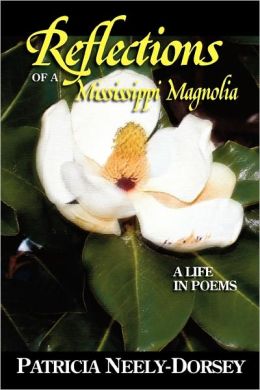
Reflections of a Mississippi Magnolia by Patricia Neely Dorsey

Reflections of a Mississippi Magnolia by Patricia Neely Dorsey is a very personal and reflective collection about growing up in the south and celebrating its culture.  Through rhyming poetry, Dorsey creates poems that have their own beats and rhythms that carry readers all the way through the poems.  While most of these rhymes are elementary and some seem forced, the collection is not about technique as much as it is about living and breathing the southern culture.

From "The Rules" (page 6)

Life can be much easier,
When you know what to do or not;
And you're sure to learn a lot of them,
If Southern parents you have got.
From "A Country View" (page 17)

What might you see as you go your way
On a walk through the country any spring day?
There's an old car tire without its rim,
Filled with flowers to the brim.
A bottle tree glistens in the sun,
And kids chunk rocks at it just for fun.

The poems do not hide their meaning behind complex metaphor and read more like short essays or memories. “Shelling Peas” and “Slopping Hogs” brought back images of farm life that are so vivid and filled with innocent joy and happiness. Readers will learn about the Agnews and much of the food and past times of the poet’s Southern life. Dorsey has succeeded in demonstrating a slice of life in the South.  There are some assertions about Southern life that ring very true, at least what most people typically think about Southerners, but there also are assertions in the poems that would ring true for others not raised in the South, but simply raised with a good moral compass.

Dorsey is never cryptic and clearly shows pride in her heritage, and her “Getting Personal” section of the collection is the most empowering because it is about learning to love oneself despite what others may think and say about you.  In Reflections of a Mississippi Magnolia by Patricia Neely Dorsey what you see is what you get, and that’s good enough.

***Check out the rest of the stops on the blog tour!***

About the Poet:

PND Bio


This is my 14th book for the Dive Into Poetry Challenge 2013.


This is my 23rd book for the 2013 New Authors Challenge.


Click the image below for today’s National Poetry Month blog tour post!

Come Late to the Love of Birds by Sandra Kasturi

Come Late to the Love of Birds by Sandra Kasturi, published by Tightrope Books, is a well-crafted collection about love and freedom from the bonds of illusion.  Kasturi uses bird imagery to explore ancient fairy tales and stories from the ill-fated flight of Icarus to songs like Sing a Song of Sixpence and the blackbirds confinement in a pie.  She takes these long memorized stories and songs and turns them upside down, revealing the twists and turns that these stories could have taken in a modern world.

From "The Evolution of Birds" (page 17)

birds knew of our coming;
could sense our soft limbs millennia ahead,

could sense our drab colours and dull teeth,
our nothing lives.

They dropped their scales, made themselves small,
grew into winged things, soft and bright,

Beyond these twists and turns, Kasturi also plays with the notions in the bird kingdom and the simplicity of their lives — categorizing things into those with and without wings and nothing more. In “One Red Thought,” the red-tailed hawk and the narrator encounter one another, with the narrator questioning, “He must be/tethered to something/because why would a hawk/sit so still, why would/a hawk let me creep/close as a cat, me/” and then realizing “For him–/there are no/cameras or shoes,/there are no ornamental/gardens or lawn gnomes/or pants that need to be ironed.// There are only winged things/and non-winged things.// Only himself and the sky,/the curve of the earth/tilting how he wills it.//  There is the simplicity of the encounter, coupled with the encounter during which the narrator finally understands the reality of the hawk’s world.

From "Crucible" (page 49)

I am curled under piecrust like a blackbird, trapped.
salted and basted and oven-ready.
The kitchen clock's tick settles around me--
keeping time over what's burned or broken.

Salted, basted and oven-ready
I've become claustrophobic and butter-heavy.
Keeping time over what's burned or broken,
my fingers push and dimple the roof.

Each of these poems surprises the reader either once or repeatedly, and Kasturi’s sensitive handling of birds and human motivations alike are musical and magical. With poems rendering a clear relationship between humans and birds to those that draw hopes and dreams from birds in flight and in trees, the collection also has poems dedicated to Bradbury and Neil Armstrong. Come Late to the Love of Birds by Sandra Kasturi is wondrous and lively, full of wit and cunning, and utterly beautiful with each verse and turn of phrase.

About the Poet:

Sandra Kasturi is a writer, publisher, book reviewer and Bram Stoker Award-winning editor. She is the co-owner of the World Fantasy Award-nominated press, ChiZine Publications. She managed to snag an introduction from Neil Gaiman for her previous poetry collection, The Animal Bridegroom (Tightrope Books). She lives in Toronto with her husband, writer and publisher Brett Alexander Savory.

This is my 13th book for the Dive Into Poetry Challenge 2013.


This is my 22nd book for the 2013 New Authors Challenge.


Click the image below for today’s National Poetry Month blog tour post!

The Scabbard of Her Throat by Bernadette Geyer

The Scabbard of Her Throat by Bernadette Geyer, published by The Word Works in Washington, D.C., is a beautifully lyric collection of poems that explore the fine line between imagination/hope and reality, and on many occasions, Geyer’s poems end with an unexpected result.  In the first section, she explores the wonders of childbirth and miracles, but these poems also hover on the edge of death and the power that comes with bringing about the end.  In “Without Warning,” the onset of death is wrought with many to-do lists, but never on the list is what can be done with the last breath.  But in “After Having Been Distracted,” the narrator’s attention is called to the struggle for life of a cicada only to find that she must be the one to end it.  In many ways, these are poems about miracles, but miracles that don’t exactly have happy endings.

From "Afternoon on Portland Harbor" (page 18-9):

... Gravity tugs
us along the tilted deck -- our braced thighs hum

to the heartbeat of keel against water.
The crew feathers the sails to lessen the heel.

Hush the harbor soothes as we slow
to a near-stall.  Buoy bells toll

Geyer’s poems are musical and the rhythm transports her readers to that place she’s describing, like the boat in the poem cited above.  In the third section of poems, illusions — many of them held since childhood — are broken down, like the superhero hands of a mother being scarred and gnarled.  There also are poems that touch on the healing, or maybe numbing, effects of time, particularly its ability to make the hurt of abandonment not as fresh as it could be, like in Geyer’s “The Door.”  But then there is the silence of widowhood, which calls to mind Plath’s version of this topic in her collection Crossing the Water.  While Plath talks of widowhood as a crushing state for women who are overshadowed by their husbands even after death, Geyer’s poem speaks to the silent pride of the state and the perseverance it takes to keep moving forward.  And while there is a sense of loss in many of these poems, this section also speaks of hope — the unexpected still to come with renewal, particularly in “New Porch.”

Geyer deftly combines fairy tales with nature imagery and more modern situations and sensibilities in a collection that strives to sing the praises of restraint and letting go.  The Scabbard of Her Throat by Bernadette Geyer explores the tipping point between expressing fear, anger, sadness, and other emotions at any moment and the decisions to remain silent and strong in the face of others and for others.  Like the scabbard that holds the sword from the fight or releases it, the throat becomes that scabbard to hold back or let loose the voice and emotion of these poems.  Another collection that has spoken and blow me away with its lyricism and poignancy.

This is my 12th book for the Dive Into Poetry Challenge 2013.


This is my 21st book for the 2013 New Authors Challenge.


About the Poet:

Bernadette Geyer is a poet and copy editor in the Washington, DC, area.  Geyer’s first full-length manuscript, The Scabbard of Her Throat, was selected by Cornelius Eady for publication in the Hilary Tham Capital Collection series of The Word Works. Geyer is the author of a poetry chapbook, What Remains, and recipient of a 2010 Strauss Fellowship from the Arts Council of Fairfax County. Her poetry has appeared in Oxford American, North American Review, The Midwest Quarterly, Verse Daily, and elsewhere.  Geyer’s non-fiction has appeared in WRITERS’ Journal, The Montserrat Review, Freelance Writer’s Report, World Energy Review, and Marco Polo Magazine. Photo by Emily Korff, Veralana Photography

Click the image below for today’s National Poetry Month Tour Post!

Pain, Parties, Work: Sylvia Plath in New York, Summer 1953 by Elizabeth Winder

Pain, Parties, Work: Sylvia Plath in New York, Summer 1953 by Elizabeth Winder is atmospheric and an indulgent retrospective of the lives of Mademoiselle‘s summer guest editors, who were hand picked from a bunch of college essays and pieces submitted by college women.  The magazine was not only known for its fashion and celebrities, but also for the writing it published from heavyweights like Dylan Thomas and Truman Capote.  Additionally, the magazine published its college issue.  “Sunday at the Mintons” by Sylvia Plath, a short story, earned her a guest editorship at the magazine, a summer that became the basis of her novel, The Bell Jar.  Winder bases her “loose” biography on interviews with those summer guest editors and others who had contact with Plath that summer, which are backed up by letters and journal entries from Plath herself as much as possible — though there is the pitfall that some memories may be nostalgic or missing certain truths about that time as memories fade.

From the moment she sets forth in New York, readers are introduced to a different Sylvia Plath from the moody and dark one they have come to know. This younger version of the writer is full of whimsy, loves fashion, and is eager to please.  Her Northeast upbringing probably instilled in her a deep sense of courteousness and decorum, but there were also inherent eccentricities already present in her character, especially during one luncheon in which she gobbles up all of the caviar appetizer without sharing.  A commune of young women was built at the Barbizon Hotel that summer, as many of the young women wanted careers and still to raise families in a period of history before the pill was available and before career women were considered part of the norm.

“A white enameled bowl bloomed out of one wall–useful for washing out white cotton gloves.  (Within days there would be little damp gloves hanging in each room like tiny white flags.)” (page 5 ARC)

While Winder provides a great many anecdotes about Sylvia from her fellow guest editors and roommates, there seems to be a disconnect between the Sylvia these women saw and the Sylvia that was.  At the outset, Winder tells the reader she wants to paint a different portrait of Sylvia Plath than the iconic one we all know of the suicidal poet.  And while she succeeds in showing a “good girl” that was Plath in her 20s, she also demonstrates how as a young woman free from the constraints of her own society, she was given more freedom to pursue men and other experiences, to which she might not otherwise have been exposed.  And like many young women — and even men — still finding their place in the world and how to accomplish their goals, they often suffer from the “grass is always greener” problem when the reality of their ideal opportunity is not as wonderful as it has seemed from afar.

There were some among the guest editors in 1953 who were given menial tasks and envied Plath’s work with Cyrilly Abels doing rejections and editorial work, but Plath languished in the role and her talents for graphics were cast aside in favor of her fiction-writing talents.  In many ways, those who believed in her talent had begun to stifle it.  While she may have looked the part of a professional interviewer and editor, Plath was chained to a makeshift desk that anchored down her spirit, while many of the other girls were enjoying their time as editors — meeting Plath’s hero writers and attending dinners and events.  It seems that this separation isolated her from the other guest editors, even though on the outside she was conversing with them and enjoying their company as well as the company of many strange men throughout New York.

It is too easy to suggest that Pain, Parties, Work: Sylvia Plath in New York, Summer 1953 by Elizabeth Winder aims to undo the iconic woman that is Sylvia Plath, but it does provide a wider view of her whole person.  Not just the mother, burdened artist, and ex-wife of Ted Hughes, but the spirited poet who was stifled by a dream job that she saw as a launching point who succumbed to her tendency to depression upon her return home after a series of unrelated rejections flooded in after that summer.  Plath was a woman plagued by her own dichotomies, who was unable to break free from the labels of society without the guilt that accompanied those actions, but she also was talented and burned brighter than many other women of her age.  What Winder succeeds in doing is providing an excellent look into 1950s New York and the pressures these young women faced as progressive ideals began to emerge.

About the Author:

Elizabeth Winder is also the author of a poetry collection. Her work has appeared in the Chicago Review, the Antioch Review, American Letters, and other publications. She is a graduate of the College of William and Mary and earned an MFA in creative writing from George Mason University.

This is my 20th book for the 2013 New Authors Challenge.


Please click the image below for today’s National Poetry Month Tour Post!

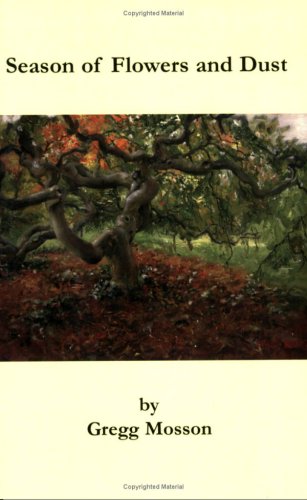
Season of Flowers and Dust by Gregg Mosson

Season of Flowers and Dust by Gregg Mosson, published by Goose River Press, is a journey in nature, particularly the nature of the Pacific Northwest during the Fall, Winter, and Spring.  Yes, no summer poems here.  In each poem, nature is winding down toward hibernation, and when winter settles in, readers will feel the cold in their bones as “the white-out of sudden tundra,/driveways are culled, families forge snowmen” in “First Snowfall.” (page 25), and when “winter’s chrysalis” in “Winter Rainfall” takes over.  Mosson has clearly spent time sitting, watching, and being with nature during these seasons, as his verse captures the movement of water, wind, and more so easily.

Readers will picture themselves in the Pacific-Northwest, even if they’ve never been there, which is particularly true of his poem “Cannon Beach in Autumn” where the water and the jutting rocks are clearly visible as the lovers untangle themselves and fall into Autumn with the nature around them.  This poem is particularly well crafted as the lovers lose their arms and can no longer hug as the trees lose their branches and leaves, and they drift into one another and create enough friction for a fire to burn.  Does Autumn signify an ending or does it signify a change into something new?

From So Long Flowers, So Long: (page 7)

A sparrow jerks off a twig; vibrations
caterpillar up
From Western Orange Sunset: (page 47)

Sunset opens like the eyes of hurricanes,
spotting the world with swirls of heat,
softening the landscape with tornadoes of light and warmth,
From Burial of Snow Storms: (page 26)

Snowstorms machine-gun humans into homes,
entomb them with just awareness of the world.
They rise to their tasks, but the bombardment
continues.

Mosson’s images have their own rhythm and startling beauty, particularly the vibrations inching along the branch in “So Long Flowers, So Long” and in “Western Orange Sunset,” the sunset becomes as frightening and beautiful as the eye of a hurricane. While much of the collection is in free verse, there also are sonnets, particularly in the “Winter” section, which signifies the compactness and hibernation of the season more so than the free flowing poems in “Spring.” Each poem has a deep reverence for the beauty inherent in nature, but also its ability to change with the seasons.

Season of Flowers and Dust is a journey to the Pacific Northwest that will have readers slowing down and taking in nature with each deep breath. And while these poems evoke beauty and the cycle of seasons, there also is a darkness just beneath the surface that plays at the edges of some poems and is more prominent in others, like “Night on Burnside” and “Burial of Snow Storms.”

About the Poet:

Gregg Mosson is the author of a book of nature poetry, Season of Flowers and Dust (Goose River Press, 2007), and one of social engagement and witness, Questions of Fire (Plain View Press, 2009). His work has appeared in The Baltimore Review, The Cincinnati Review, and The Potomac Review, among other journals. He has an MA from the Johns Hopkins Writing Seminars, where he was a teaching fellow and lecturer, and lives in Maryland.

Click the image below for today’s National Poetry Month Blog Tour Stop!


This is my 8th book for the Dive Into Poetry Challenge 2013.


This is my 19th book for the 2013 New Authors Challenge.

When All My Disappointments Came at Once by Todd Swift

When All My Disappointments Came at Once by Todd Swift, published by Tightrope Books, are poems about a series of mid-life crisis in literature and throughout history, with some less grandiose crises in the mix.  There are new takes on the midlife crisis, with the narrator in “The Shelf” trying to take on the life of another through their writing, only to find the words fit falsely and do not ring true.  But in others, like “Michael Kohlhaas,” reference the vengeful exploits that go off of the deep end to the point that the narrator cannot be brought back from the brink.  With a wide breadth of topics, Swift covers a lot of historic and emotional ground in his poems, though clearly some of these poems will require additional research into some of the historic and literary elements referenced, especially if they are not familiar.

From "In Memory of F.T. Prince" (page 15)

Desire ages, ages hardly at all,
Edges, like those of a book,
Curled at the beach, where waves,
Sent by the summer, brush

The salt away, finely-combed,
And it is homosexual love
That holds us in its palm,
That cuts and dries the hair

Beautifully rendered, Swift harkens to the original poem written by Prince about soldiers bathing in a river during World War II, but he also takes a new twist on the scene, pinpointing the desire that can rise up when all that surrounds you is death. Where is the beauty, where is the love — you find it where you can, at least to a certain extent. While some of these poems are dark and harrowing, others are sad, suspenseful, and heart-pounding as Swift takes readers on a journey through several devastating events in history and literature.

However, there are moments in the collection where Swift shows his humor, like using two rhyming lines in “Hunting Party” to make the celebratory scene after the hunt more comical, poking fun at the midlife crisis aspect depicted in the poem. In others, there is a ray of hope even as the narrator loses faith in God. These poems have a wide range of perspectives to offer, and Swift is masterful in some poems and cryptic in others. When All My Disappointments Came at Once by Todd Swift is an interesting examination of midlife crises, the emotions tied to that, and the rays of hope and comedy that can emerge from those incidents.

About the Poet:

Dr. Todd Swift is Lecturer in English Literature and Creative Writing, at Kingston University, London. He is Director and Editor of new small press Eyewear Publishing. Published by the age of 18 in The Fiddlehead, Swift is the prolific author of eight collections of poetry and many more pamphlets. He is editor or co-editor of a dozen anthologies, most recently Lung Jazz: Young British Poets for Oxfam, with a preamble from David Lehman. His poems have appeared in numerous international publications, such as Poetry (Chicago), Poetry Review (London), and The Globe and Mail (Toronto). He has been Oxfam’s poet-in-residence, based in Marylebone, since 2004. His widely-read blog, Eyewear, has been archived by The British Library.

Please click on the National Poetry Month Blog Tour image for today’s tour stop:

This is my 7th book for the Dive Into Poetry Challenge 2013.


This is my 18th book for the 2013 New Authors Challenge.

Survival Skills: Stories by Jean Ryan

Survival Skills: Stories by Jean Ryan is stunning, absorbing the reader into the lives of her characters — animal and human — and forcing them to contemplate wider questions of what it means to love, change, and grow.  The collection melds nature and human nature flawlessly as Ryan explores the parallels between the natural world and the human world.  For an example of this, please check out my short story spotlight of the story “Greyhound.”

There are moments when characters connect with animals in ways that are astonishing, like a goose that follows a human who never feeds it in “Migration,” and the love between a woman and an an octopus in “A Sea Change.”  But each of these stories is more than a moment in time, and in some cases, they examine a lifetime in just a dozen or so pages.  Ryan has a gift for creating characters and relationships that are realistic, without leaving the reader wondering what’s next by the end of the story.  Encapsulating the right moments and memories, she demonstrates her short story creating skills in a way that ensures readers remember her characters vividly.

“She had read that many Canada geese were no longer bothering to migrate, particularly those in populated areas.  The margins between people and wildlife were beginning to blur, and there was something unnerving about the intersection:  pigeons living on dropped French fries; raptors nesting on sooty skyscrapers; geese, sated and lazy staggering through city parks.  How many generations would pass before their wings grew stunted and useless?  Fly, she thought, staring at the flock.  Fly before it’s too late.”  (page 69 ARC)

There are so many well written and emotional stories in this collection, and it’s clear that Ryan is a observer of not only nature and how it operates, but also how humans have shown similar attributes and skills.  But these characters are more than just studies in how they interact and resemble other animals in the wild, they live and breath the calm experiences of the world around them, sometimes without even realizing its influence.  There are subtle messages about slowing down, enjoying the moment and loved ones while they are here, but there are also calls to action.  Act on that love or that need for change, do more than just survive, which is interesting given that one of the stories is called “Survival Skills.”

Survival Skills: Stories by Jean Ryan, which will be published in April 2013 by Ashland Creek Press on paper from Sustainable Forestry Initiative Certified sources, is a highly enjoyable collection that will get readers thinking about their own lives, the nature around them, and even their own pets, but most of all, readers will be entranced by these stories.

***If you haven’t read novels or short stories from Ashland Creek Press, you are missing out on some really great finds.  Might I suggest you start with Ryan’s collection?***

About the Author:

Jean Ryan, a native Vermonter, lives in Napa, California.  A horticultural enthusiast and chef of many years, Jean’s writing has always been her favorite pursuit. Her stories and essays have appeared in a variety of journals, including Other Voices, Pleiades, The Summerset Review, The Massachusetts Review, The Blue Lake Review, Damselfly, and Earthspeak. Nominated twice for a Pushcart Prize, she has also published a novel, Lost Sister.  Visit her Website.

This is my 17th book for the 2013 New Authors Challenge.