Quantcast

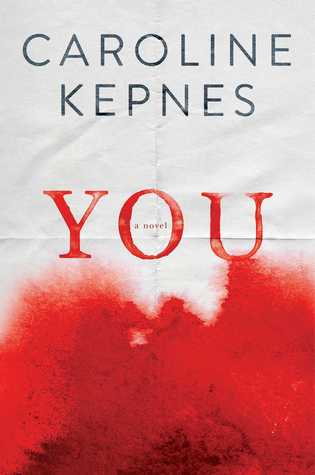
You by Caroline Kepnes

Source: Public Library
Hardcover, 422 pgs.
I am an Amazon Affiliate

You by Caroline Kepnes is creepy, obsessive, and twisted, and Joe Goldberg and Guinevere Beck are certifiable.  This thriller will pull you in and suck you dry, as Beck walks into a bookstore and flirts with the wrong man.  Kepnes has created two downright sinister characters who are perfect for each other and when circumstance brings them together, everyone around them better watch out.  Check your morals at the door with this one; these two are not redeemable, but you can’t help but watch how everything unfolds between them and how it impacts those around them.  Truly one of the unsettling novels out there.  Kepnes’ prose easily draws in the reader, making them wonder who this obsessive man is and why he’s so drawn to this particular girl.

“‘This will sound crazy, but I’m saving it.  For my nursing home list.’
‘You mean bucket list.’
‘Oh, no, that’s totally different.  A nursing home list is a list of things you plan on reading and watching in a nursing home.  A bucket list is more like … visit Nigeria, jump out of an airplane.'” (pg. 8)

Through careful manipulation of social media and a few lucky breaks, this relationship begins to take a life of its own, and while both parties have their demons, it’s clear that they cannot keep away from one another.  Even though you know throughout what will happen in the end, readers will be up late and turning pages in this psychological thriller.  Joe sees himself as a protector, someone charged with saving Beck from predators, but those predators are not who you’d expect them to be.  Meanwhile, Beck loves new things, and this love of wanting and being wanted is something that drives her incessantly.

“‘There’s no such thing as a flying cage, Joseph,’ he said.  ‘The only thing crueler than a cage so small that a bird can’t fly is a cage so large that a bird thinks it can fly.  Only a monster would lock a bird in here and call himself an animal lover.'” (pg. 47)

Joe is her opposite in that he obsesses over old things and continuously covets old books and collects old and broken typewriters.  He’s waiting for social media to overheat and die, he prefers anonymity, but is it only because he feels unworthy or is it because it enables him to stalk and obsess more freely?  He hates pretentious people who live their lives for others and share everything with everyone, but he too is pretentious in that he’s a book snob.  Dan Brown is not a good enough author, and people should be reading Paula Fox, and they should never pretend to read books.

For those who do not like graphic violence or sex, you should stay away.  You by Caroline Kepnes is riveting and disturbing.  What does it mean to be you?  What is your true self and do you share that with everyone or only a special few?  And what if the real you is scary?  Do you share that self with anyone? Lock it up? Or simply let it out?

About the Author:

Caroline Kepnes is the author of You and Hidden Bodies. She splits her time between Los Angeles, California and Cape Cod, Massachusetts.

Find her on Facebook.


Lost In The Woods: A Photographic Fantasy by Carl R. Sams II and Jean Stoick

Source: Purchased — gift from cousin
Hardcover, 48 pgs.
I am an Amazon Affiliate

Lost in the Woods: A Photographic Fantasy by Carl R. Sams II and Jean Stoick is an adorable story about life in the woods for a fawn left on his own.  A doe must leave her child alone so that danger will not find him, which it won’t because he doesn’t have a scent.  Not only can kids learn about nature and why animals behave how they do, they also can see when it is wise to listen to parents.  The fawn meets a number of other young animals along the way while stretching his legs, and while he does have moments of trepidation, he remembers his mother’s words and remains calm and hides.

My daughter enjoys photographs, particularly ones that are vibrant and have animals.  This is a good book for her because it has a simple story with a lesson, but also eye-catching images that will keep her riveted to the story.  At the back, there are more surprises, as the authors have created a game of find our lost friends, challenging kids to go back through the photographic pages to find animals hidden among the flowers and trees.

Lost in the Woods: A Photographic Fantasy by Carl R. Sams II and Jean Stoick is beautifully rendered.  It’s a wonderful story with sounds and sights to behold, and there are games afoot in the tall grasses for your own young fawns.

About the Authors:

Carl R Sams II and Jean Stoick are professional wildlife photographers from Milford, Michigan. Their images have appeared in hundreds of national and international publications. Honored recipients of the People’s Choice Award for the best of show 11 times at major wildlife exhibits, Carl and Jean were also the first photographers ever to be honored as featured artists at a major wildlife art event.  Find out more about them on their Website.

Dickey Chapelle Under Fire: Photographs by the First American Female War Correspondent Killed in Action by John Garofolo

Source: LibraryThing Early Reviewers
Hardcover, 136 pgs.
I am an Amazon Affiliate

Dickey Chapelle Under Fire: Photographs by the First American Female War Correspondent Killed in Action by John Garofolo, which includes a foreword by former Washington Post war correspondent Jackie Spinner, is dedicated to the brave men and women who serve the United States, which also includes those war correspondents who risk their lives right alongside those with the weapons to uphold freedom.  Their weapons may be different — pens and cameras versus guns and grenades — but both serve their country and the cause of freedom with devotion.  In the foreword, Spinner indicates that when Dickey Chapelle died in Vietnam, she died as a Marine because that’s how the marines who were by her side thought of her.  She started her career young, present at the battles of Iwo Jima and Okinawa in WWII, experiencing the reconstruction of Europe after WWII, and traveling to nations in which rebellions were bloody and devastating before she reached the front lines of the Vietnam War in her 40s.

“I grew up in the heartland of the United States.  I believed that I could do anything I really wanted to do and I still believe it. … But I am going to condition it.  You can do anything you want to do if you want to do it so badly you’ll give up everything else to do it,” Dickey Chapelle said. (Fire in the Wind by Robert Ostroff)

Georgette Louise Meyer, later known as Dickey, was born in Wisconsin and she dreamed of flying.  While she did eventually take flying lessons against her parents’ wishes, she wasn’t that great at it.  She was great at telling stories and seeking out those stories around military installations.  Her passion for stories led her to flunk out of MIT, and while she did return home and later moved to Florida, she soon found herself in New York City at age 18, writing for Transcontinental and Western Air (TWA) in the publicity bureau.  Taking photography lessons on the side with Tony Chapelle led to a new career and husband.  She soon became a war correspondent during WWII so that she could travel with her husband, a WWI veteran who re-enlisted.

“The wreckage resulting from man’s inhumanity to man … was the litany I wrote and the subject I photographed.  And the magnitude of relief devised never matched the magnitude of the suffering caused,” said Chapelle in What’s a Woman Doing Here?

Garofolo has selected and organized Chapelle’s photographs in such a way that they will have readers running the gamut of emotions.  Among the WWII photographs, Chapelle captures not only the immense suffering of a solder caught in a fire during a mine explosion — he was severely burned — but she also highlights some of the happier moments for soldiers, like when they received mail from home or were able to finally shave after gunfire stopped.  The moments when soldiers are smiling or doing mundane activities are those that remind us that these soldiers are people, not machines.  Not all of her work was on the battlefront, Chapelle also found herself drawn to relief work in a variety of countries, and this work still placed her in a great deal of danger, including her own capture by Russians near the Austria-Hungary border.

Dickey Chapelle Under Fire: Photographs by the First American Female War Correspondent Killed in Action by John Garofolo is a book dedicated to the memory of not only Chapelle’s body of work, courage, and dream of flying, but also to the women and men who suffered greatly in wars and conflicts across the globe — whether they were soldiers, nurses, or refugees.  My first book for the Best of 2016 list.

About the Author:

John Garofolo is a former entertainment industry executive and veteran of Operation Iraqi Freedom. A commander in the US Coast Guard Reserve, he has more than twenty-five years of active and reserve military service and taught at the Coast Guard Academy. Thanks to a grant from the Brico Fund through the Milwaukee Press Endowment, he has written a stage adaptation of Dickey Chapelle’s life. John earned a PhD from the University of Southern California School of Cinematic Arts and lives with his wife and daughter in Southern California.


I’m calling this my Nonfiction Book about WWII:

2015 Challenge Wrap-Up

Every year, I check my blog to see if I met my reading challenge goals.  I was a little late in doing so this year, but I did want to see how I did.  Some years I am better at keeping track throughout the year, but this was not one of those years.

I’ll list the books for each challenge and link to the reviews below.

2015 Poetry Reading Challenge (Goal is to read 1 book or 20 individual poems):

  1. Joy Street by Laura Foley (review)
  2. Silent Flowers: A New Collection of Japanese Haiku Poems edited by Dorothy Price (review)
  3. WET by Toni Stern (review)
  4. Crow-Work by Eric Pankey (review)
  5. Doll God by Luanne Castle (review)
  6. Paradise Drive by Rebecca Foust (review)
  7. The Robot Scientist’s Daughter by Jeannine Hall Gailey (review)
  8. Pictograph: Poems by Melissa Kwasny (review)
  9. Vessel: Poems by Parneshia Jones (review)
  10. Medic Against Bomb: A Doctor’s Poetry of War by Frederick Foote (review)
  11. Banned for Life by Arlene Ang (review)
  12. Free Air: Poems by Joe Wenke (review)
  13. Remember the Sun: Poems of Nature and Inspiration by Melanie Simms (review)
  14. The Antigone Poems by Marie Slaight (review)
  15. Looking for Potholes by Joe Wenke (review)
  16. Double Jinx by Nancy Reddy (review)
  17. Pride & Prejudice: Retold in Limericks by Seamus O’Leprechaun (review)
  18. Lost and by Jeff Griffin (review)
  19. The Book of Goodbyes by Jillian Weise (review)
  20. Ohio Violence by Alison Stine (review)
  21. Firefly July: A Year of Very Short Poems selected by Paul B. Janeczko (review)
  22. Citizen: An American Lyric by Claudia Rankine (review)
  23. Changes: A Child’s First Poetry Collection by Charlotte Zolotow (review)
  24. Brown Girl Dreaming by Jacqueline Woodson (review)
  25. Red Sox Rhymes: Verses and Curses by Dick Flavin (review)
  26. Goodnight Songs: A Celebration of the Seasons by Margaret Wise Brown (review)
  27. Wet Silence by Sweta Srivastava Vikram (review)
  28. Dark Sparkler by Amber Tamblyn (review)
  29. The Same-Different: Poems by Hannah Sanghee Park (review)
  30. The Uncertainty Principle: Poems by Roxanna Bennett (review)
  31. Strange Theater by John Amen (review)
  32. Teacher’s Pets by Crystal Hurdle (review)
  33. All the Words Are Yours: Haiku on Love by Tyler Knott Gregson (review)
  34. Underdays: Poems by Martin Ott (review)
  35. National Geographic Book of Nature Poetry: More than 200 Poems With Photographs That Float, Zoom, and Bloom! by J. Patrick Lewis (review)

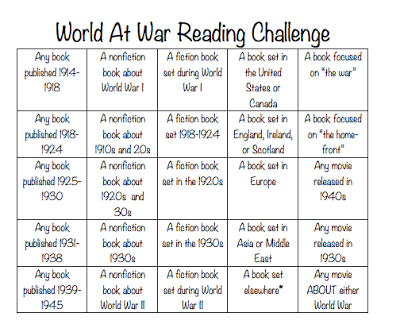
2015 War Through the Generations – Read Any War (read any # of books about any war):

  1. After the War Is Over by Jennifer Robson (review) WWI
  2. War’s Trophies by Henry Morant (review) Vietnam War
  3. The Secret of Magic by Deborah Johnson (review) WWII
  4. The Trigger: Hunting the Assassin Who Brought the World to War by Tim Butcher (review) WWI
  5. Medic Against Bomb: A Doctor’s Poetry of War by Frederick Foote (review) Iraq Wars
  6. The Mapmaker’s Children by Sarah McCoy (review) U.S. Civil War
  7. The House of Hawthorne by Erika Robuck (review) U.S. Civil War
  8. The Cherry Harvest by Lucy Sanna (review) WWII
  9. The Prince by Niccolò Machiavelli (review) War in general
  10. The Great War: Stories Inspired by Items from the First World War illustrated by Jim Kay (review) WWI
  11. Mireille by Molly Cochran (review) WWII
  12. Crooked Heart by Lissa Evans (review) WWII
  13. The Last Summer at Chelsea Beach by Pam Jenoff (review) WWII
  14. The Race for Paris by Meg Waite Clayton (review) WWII
  15. The Small Backs of Children by Lidia Yuknavitch (review) Bosnia War
  16. Longbourn’s Songbird by Beau North (review) WWII

2015 New Authors Challenge (read 50 New-to-Me Authors):

  1. Jewel Kats
  2. Henry Morant
  3. Deborah Johnson
  4. Mallory Ortberg
  5. Andy Miller
  6. Tony Stern
  7. Lorna Schultz Nicholson
  8. Dora Levy Mossanen
  9. Tim Butcher
  10. Rebecca Skloot
  11. Luanne Castle
  12. Mallory Kasdan
  13. Danielle Paige
  14. Jan Hahn
  15. Rebecca Foust
  16. Melissa Kwasny
  17. Parneshia Jones
  18. Frederick Foote
  19. Joe Wenke
  20. Melanie Simms
  21. Natural History Museum
  22. Marie Slaight
  23. Greil Marcus
  24. Nancy Reddy
  25. Jeff Griffin
  26. Seamus O’Leprechaun
  27. Erika Robuck
  28. Abigail Samoun
  29. Jillian Weise
  30. Jo Nesbo
  31. William Todd Rose
  32. Alison Stine
  33. Lisa Pliscou
  34. Paul B. Janeczko
  35. Claudia Rankine
  36. Charlotte Zolotow
  37. Jacqueline Woodson
  38. Richard Torrey
  39. Jo Baker
  40. Richard Fairgray
  41. Jonathan Lethem
  42. Margaret Peot
  43. Jim Kay, various
  44. Mi-ae Lee
  45. Ae-hae Yoon
  46. Judith Fertig
  47. Robert C. O’Brien
  48. Cassie Premo Steele
  49. Maria Grace
  50. Hee Jung Chang
  51. Molly Cochran
  52. Bryan Ballinger
  53. Lissa Evans
  54. Matthew Jervis
  55. Kim Norman
  56. Dick Flavin
  57. Gillian Flynn
  58. Geert de Kockere
  59. Susan Andra Lion
  60. Rachel Simon
  61. Meg Waite Clayton
  62. Lidia Yuknavitch
  63. L. Shapley Bassen
  64. Amber Tamblyn
  65. Hannah Sanghee Park
  66. Roxanna Bennett
  67. Bella Forrest
  68. Nuala O’Connor
  69. Anna Llenas
  70. Lauren Redniss
  71. Lisa Maggiore
  72. Martin Ott
  73. Joe Hill
  74. Anne Margaret Lewis
  75. Catherine Bailey
  76. Maggie Stiefvater
  77. Jean P. Moore
  78. Linda Ashman
  79. Beau North
  80. Terry Border
  81. Kate Louise
  82. Clement C. Moore
  83. Kimberly Knutsen
  84. Ree Drummond
  85. Alexander McCall Smith
  86. Jussi Adler Olsen

That’s it for me in 2015; now I have to really start thinking about 2016 challenges.

There will be a poetry reading challenge announcement soon!

The 5-Minute Brain Workout for Kids by Kim Chamberlain

Source: Sky Pony Press
Paperback, 416 pgs.
I am an Amazon Affiliate

The 5 Minute Brain Workout for Kids by Kim Chamberlain, illustrated by Jon Chamberlain, is a great activity book for kids ages 7 and older, and includes games, puzzles, and teasers that will keep kids brains active and developing outside the classroom.  But what’s great is these activities don’t feel like school work, even though they will be learning new words and how to spell them, learning how to concentrate, and establish their own goals.  However, the book also can be used as a fun additional activity in the classroom and with family.  From alliteration to spelling and definitions, kids will learn new words and how to use them and when.   As kids, parents, and teachers move through the levels (1-10) in the book, the games and puzzles will get harder.

Puzzles in the book are those with specific answers, while games are those activities that may have more than one “right” answer, allowing users to be creative and to do games more than once.  The book contains 37 types of exercises and three bonus puzzles at the end, and the answers are in the back of the book to help parents and teachers.  Throughout the book, kids will notice a blue-tongued lizard named Ra, which is based on the authors’ pet lizard at home.

Although this book is aimed at kids older than my daughter, we had fund giving some of the games and puzzles in level 1 a try.  One of her favorites was the “Word Line” where she was given a saying from Kermit the Frog to follow in the word jumble using only 1 line.  It was fun to teach her how to look at the phrase and look for each letter in each word and follow it to the end.  She liked how it made a “snake line.”  The simple anagrams were tough for her, as she’s only learned how to recognize a few words.  We did the train words together, and she seemed to enjoy discovering new animal words in the jumbles.

The 5 Minute Brain Workout for Kids by Kim Chamberlain, illustrated by Jon Chamberlain, is a book I’ll be holding on to for her when she’s in Kindergarten this fall.  We’ll start again, and as she goes through school, I’m sure she’ll be doing more of these puzzles on her own.  It will be a good way to see how she’s developing.

About the Author:

Kim Chamberlain has been writing and creating activities, games, and puzzles since childhood. The author of Five-Minute Brain Workout as well as communication skills and activity books, she has a master’s in linguistics. She worked with teenagers for many years and is a volunteer reader/writer for college students. She is an award-winning international professional speaker and was founding president of a professional speaker’s association chapter. She lives in Wellington, New Zealand, with her husband, Jon, their two children, and their pet lizard.

About the Illustrator:

Jon Chamberlain has been drawing for a long time, collaborating with his wife on several book projects and for his own enjoyment. He worked exclusively in inks and watercolor until recently, when he acquired a drawing tablet and consequently relearned how to create digitally. He is a professional IT geek, comic book aficionado, and collector of old science fiction novels. He resides in Wellington, New Zealand.

The Absent One by Jussi Adler-Olsen (audio)

Source: Public Library
Audiobook, 12 CDs
I am an Amazon Affiliate

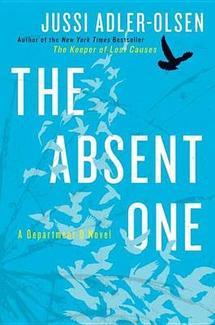
The Absent One by Jussi Adler-Olsen, narrated by Steven Pacey and translated by K.E. Semmel, is the second book in the Department Q series — though you don’t have to read the previous one to follow along with this one — and Detective Carl Mørck is leading the new department with his assistant Assad in Copenhagen, Denmark.  This department’s focus is cold cases, reopening them to find new clues with fresh eyes, and what Mørck finds is a little more is disturbing.  Reviewing a case of murders from 1987 that involved a gang of young men and women, the detective, Assad, and his new assistant Rose Knudsen are forced to reassess their world view and the motivations of killers.

Adler-Olsen creates a set of murders that are not only over-the-top, but the perpetrators are as well.  Their hyped-up sense of pleasure from beatings, killings, and torture is reminiscent of the television show American Horror Story.  Some of these killers come from the upper echelons of society, and like those before them, they believe they are untouchable because of their place in society and what they have accomplished.  It’s clear that these accomplishments are not enough to sustain their attention or satisfaction; these are men and women who are dissatisfied with their success and are seduced by the dark side (pun intended).  Despite these absurdly crazy characters, and the absent one from the murderous gang who seems to stay enough on the radar to attract the attention of Detective Mørck but not her cohorts, the story has great tension and a layered revealing of events that keep readers hooked.

The Absent One by Jussi Adler-Olsen, narrated by Steven Pacey and translated by K.E. Semmel, is a well paced thriller with bits of comedic banker between Mørck, Assad, and Rose that will leave readers wondering about what they missed in book one if they start here.  This seems like a series readers will get sucked into without really knowing how.  The unusual characters, the foreign setting for U.S. readers, and the noir quality of the situations will entice readers to enter Adler-Olsen’s world cautiously.

About the Author:

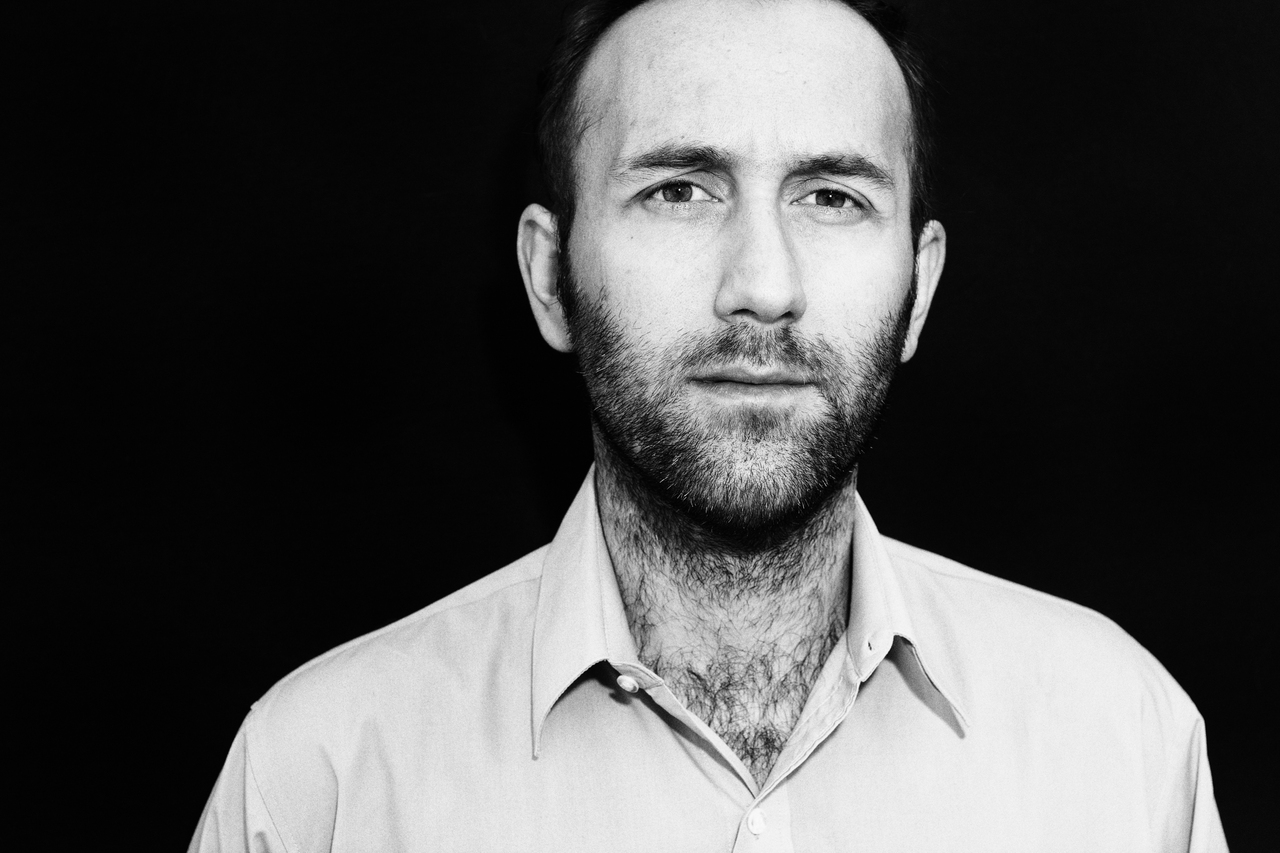
Author Jussi Adler-Olsen began in the 1990s to write novels after having followed a comprehensive career as publisher, editor, film composer for the Valhalla-cartoon and as bookseller.

He made his debut with the thriller “Alfabethuset” (1997), which reached bestseller status both in Denmark and internationally just like his subsequent novels “And She Thanked the Gods” (prev. “The Company Basher”) (2003) and “The Washington Decree” (2006). The first book on Department Q is “Kvinden I buret” (2007) and the second “Fasandræberne” (2008). The main detective is Deputy Superintendent Carl Morck from the Department Q and he is also the star of the third volume, “Flaskepost fra P” which was released in the fall of 2009 and secured Adler-Olsen ”Readers’ Book Award” from Berlingske Tidende-readers, the Harald Mogensen Prize as well as the Scandinavian Crime Society’s most prestigious price ”Glass Key”. The fourth volume in the Department Q series, “Journal 64” was published in 2010 and he was awarded the once-in-a-lifetime-prize of “The Golden Laurels” for this in 2011”. In December 2012 the fifth novel was published, “Marco Effekten”.

Photo Credit: Eric Druxman

About the Translator:

K. E. Semmel is a writer and translator whose work has appeared in Ontario Review, Washington Post, World Literature Today, Southern Review, Subtropics, and elsewhere. His translations include books by Naja Marie Aidt, Karin Fossum, Erik Valeur, Jussi Adler Olsen, Simon Fruelund and, forthcoming in winter 2016, Jesper Bugge Kold. He is a recipient of numerous grants from the Danish Arts Foundation and is a 2016 NEA Literary Translation Fellow.

Emma: A Modern Retelling by Alexander McCall Smith (audio)

Source: Public Library
Audiobook, 9 CDs
I am an Amazon Affiliate

Emma: A Modern Retelling by Alexander McCall Smith, narrated by Susan Lyons, updates Jane Austen’s tale of a young woman in high society who starts meddling in the lives of those around her.  Smith’s Emma Woodhouse is far more brazen in her comments of others, and its clear that when she returns from university that she wants to make her mark by making people happier.  Unfortunately, taking her interior design education and applying it to the relationships of her friends and neighbors is not a good fit.  Lyons does an excellent job with the narration, and she really knew which parts to emphasize.

Unlike her sister, who is happy to meet a man and start a family, Emma doesn’t have a conventional future in mind.  She wants to start her own business in the suburbs, rather than in London, which suits her hypochondriac father well.  He thinks London is a place that will make people ill, but his eldest daughter takes off with her new husband to begin their family there.  Meanwhile, Emma is content to stay in the village and take the summer to assess her options.  Smith follows the original plot pretty well with his rendition, with many of his modern elements woven in well, but some of the main conflicts appear glossed over — beginning and ending swiftly.

One area that is tough to take is Emma’s harsher characterization, which can be attributed to the much harsher and self-absorbed nature of today’s society.  However, how Emma is still given a pass in a modern society where class does not hold as much respect or weight as it once did in Austen’s time is left unexplained.  Smith creates a different backstory for Emma and Mr. Knightly, which works in this modern retelling, but may not win points with Austen’s fan base.  Mr. Woodhouse, however, is treated with a bit more respect than he was in Austen — he’s a little less ludicrous, which was a refreshing change.  The governess, however, seems to be a mouthpiece for the author, steering Emma in the right direction and the relationship between the two seems flat.

Emma: A Modern Retelling by Alexander McCall Smith, narrated by Susan Lyons, was a mixed bag with modern updates, like including cars and women going to college, but lacking in the obsession with selfies, cellphones, and other technology.  It also was mixed in terms of Smith’s treatment of the characters and the original story.  While Knightly was a guiding force for Emma, here he is relegated to the sidelines and a new character emerges, the governess.

About the Author:

Alexander McCall Smith is the author of the international phenomenon The No. 1 Ladies’ Detective Agency series, the Isabel Dalhousie Series, the Portuguese Irregular Verbs series, and the 44 Scotland Street series. He is professor emeritus of medical law at the University of Edinburgh in Scotland and has served on many national and international bodies concerned with bioethics. He was born in what is now known as Zimbabwe and he was a law professor at the University of Botswana. He lives in Scotland. Visit him online at www.alexandermccallsmith.com, on Facebook, and on Twitter.

The Pioneer Woman Cooks: Food from My Frontier by Ree Drummond

Source: Public Library
Hardcover, 293 pgs.
I am an Amazon Affiliate

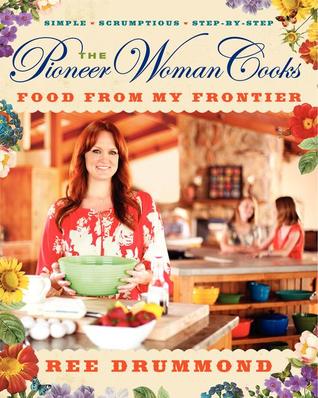
The Pioneer Woman Cooks: Food from My Frontier by Ree Drummond, which was a February book club pick, is a fantastic cookbook for novice cooks and those with a little more experience.  This cookbook not only provides step-by-step instructions that are easy to follow, uses items that are pre-prepared (such as Pillsbury Crescent Rolls), and offers alternative ingredients, but it also tells a story of frontier life and gives step-by-step photos to show what recipes look like throughout the process to ensure that those following along are doing things as close to her instructions as possible.  I found the instructions and pictures of each step very helpful; they kept me on track, which I need with a 4-year-old helping in the kitchen who tends to get me easily distracted and missing steps.

For Thanksgiving week, I made the Peach-Whiskey Chicken using chicken legs, but you can use breasts and other types of pairings and types of chicken.  The directions were easy to follow with the measurements laid out, though the times for cooking in each step were approximate depending on your stove type and some steps could take longer.  We thoroughly enjoyed these messy chicken legs, and while I had a hard time finding peaches — I ended up using frozen peaches — it was good to make something so tasty from scratch.  This was the recipe that took me the longest time to prepare.

For the actual Thanksgiving dinner, I made the Whiskey-Glazed Carrots — are you sensing a theme here? — which was a relatively simple recipe to follow, though it took me a bit to find the skillet I have that has a lid — many of my pans do not have lids.  There’s something I do each Thanksgiving — I make different types of carrots with the hope that I can get Anna‘s daughter to eat them.  She doesn’t like carrots very much.  So far, I’ve gotten 2 okays in the last couple of years.  I’ll take it.  Next year, I’ll find another recipe for carrots.

After the Thanksgiving holiday, I had a day off to do some editing and decided to take a break and make Apple Dumplings using Pillsbury Crescent Rolls.  Cutting the apples was the hardest part because I don’t own an apple corer for some reason, so I had to cut the apples into 8 pieces — no they were not the same size — and core them once I cut the apple.  The rest of the recipe was a breeze, though I didn’t use Mt. Dew as the recipe indicated.  I used the variation of ginger ale, and I think they came out really well.  I don’t often eat ice cream, but I bet these would taste delicious with some vanilla bean ice cream.

The Pioneer Woman Cooks: Food from My Frontier by Ree Drummond is delightful cookbook, filled with great recipes, anecdotes about frontier life, and advice on alternative recipes and pairings.  This is a cookbook I would recommend to anyone who wants to try something new but wants it kept simple.  I love that there are a variety of meals from spicy to mild, and the desserts in this book look so good just from the pictures.

About the Author:

Ree Drummond began blogging in 2006 and has built an award-winning website, where she shares recipes, showcases her photography, and documents her hilarious transition from city life to ranch wife. She is the author of the #1 New York Times bestselling cookbook The Pioneer Woman Cooks. Ree lives on a working cattle ranch near Pawhuska, Oklahoma, with her husband, Ladd; their four kids; their beloved basset hound; and lots of other animals.

The Lost Journals of Sylvia Plath by Kimberly Knutsen

Source: Media Buck Book Publicity
Paperback, 384 pgs.
I am an Amazon Affiliate

The Lost Journals of Sylvia Plath by Kimberly Knutsen is an ambitious novel that weaves in elements of Sylvia Plath’s life subtly, and the Lavender family is on the edge of crisis.  Katie is a mother of three whose wild ways secure her in a nuclear family, one that she is ill-equipped to navigate without stumbling.  Wilson is a former addict attempting to finish his PhD, while engaging young students in women’s studies courses.  Much of the novel is a series of flashbacks to Katie’s tormented past and an event that changed her forever, before Katie’s sister arrives on her doorstep to stir up even more trouble.

“Victimized by sex is the human race. Animals, the fortunate lower beasts, go into heat. Then they are through with the thing, while we poor lustful humans, caged by mores, chained by circumstance, writhe and agonize with the appalling and demanding fire licking always at our loins.” – Sylvia Plath, The Unabridged Journals of Sylvia Plath

Knutsen’s novel seems to explore Plath’s comments about sex and married life as personified in Katie.  She has a husband who is her best friend, but she cannot confide in him about her lustful need to conquer their younger neighbor, Steven.  Meanwhile, Wilson has felt trapped from day one after Katie announced her pregnancy, but like an addict, he dives in head first into the marriage pool.  He wants to give it his all, but even as he does, these strong personalities cannot live in the same space without arguments and other adverse effects.

“There were two worlds when I was a kid.  The Cinderella world, with its fancy light, is the one I miss.  It lasted until I was eight.  Then it disappeared.” (pg. IX)

“There was a second world.  It was the texture of pumice.  It was the taste of metal in my mouth.  It was the stopped heart, the brain that could never catch its breath.  This world eclipsed the Cinderella world, and it visits me still in the night, sliding along the edges of the room, slipping into my mouth to sit in my throat, acrid and black, its tendrils snaking down to hook, but good, my heart.” (pg. X)

Although Wilson is meant to be rewriting Plath’s lost journals — those that went missing or were destroyed as his doctoral dissertation — he finds his hours spent in the office not writing.  Perhaps he has lost faith in his knowledge of women since his marriage to Katie has begun to crack, or perhaps he has come to the conclusion that he is a farce of the genius image he has created throughout his academic career.  Knutsen examines the illusion of a happy marriage, especially between traumatized people.

The people in this world are highly damaged and have lost their moral ground, but rather than fight against the nature they are familiar with to create a new life, a changed life, they step into their old shoes.  The Lost Journals of Sylvia Plath by Kimberly Knutsen is about lost souls whose lives are documented only by their relations and themselves.  Some readers may have a tough time reading some of these situations and the language, but overall, Knutsen has captured the darker side of trauma and its long-term effects.

Check out my interview with Knutsen, here.

2015-08-17 05.00.08-3 (1)About the Author:

A native Portlander, Kimberly Knutsen is a graduate of the Iowa Writers’ Workshop. She has an MA in English from New Mexico State University and a PhD in English from Western Michigan University. She has won many fellowships and awards for her writing and has published short stories in The Hawaii Review and the Cimarron Review. She has written a novel, The Lost Journals of Sylvia Plath, and is currently finishing a second novel, Violet.

Kim comes to Portland from Kalamazoo, Michigan where she taught writing and women’s studies at Western Michigan University and Kalamazoo Valley Community College. She loves working with her students at CU and is continually amazed by their intelligence, creativity, kindness and wisdom.

The Night Before Christmas: A Brick Story by Clement C. Moore, illustrated by Amanda Brack

Source: Sky Pony Press
Hardcover, 32 pgs.
I am an Amazon Affiliate

The Night Before Christmas: A Brick Story by Clement C. Moore, illustrated by Amanda Brack, follows the traditional story of the clatter on the roof and the calls to the reindeer.  What makes this story different is the use of bricks (also known as Lego pieces) to illustrate the story.  The pieces are well placed and resemble the elements of the story, and the scenes are augmented with felt stockings and other non-brick items.  These elements help provide readers with a more realistic feel.

Our favorite parts of the story were of course the rhyming lines that tell the story, but also the sugarplums dancing in the heads of the children and the flying reindeer.  My daughter and I had a conversation about Santa Claus’ other name, St. Nicholas, and what coursers were and why the word was used in the story.  We’re already having conversations about language usage and choice, though I’m not sure she understands it completely.  One tiny quibble is the fact that the smoke from Santa’s pipe does not look like a wreath above his head as it says in the story, but I’m sure that would be difficult to reproduce.

The Night Before Christmas: A Brick Story by Clement C. Moore, illustrated by Amanda Brack, is a cute book for those modern kids familiar with these plastic bricks used to build scenes.  Maybe some readers would take what they saw in the book and create their own Santa and Christmas scenes.

About the Author:

Clement Clarke Moore, (July 15, 1779 – July 10, 1863), is best known as the credited author of A Visit From St. Nicholas (more commonly known today as Twas the Night Before Christmas). Clement C. Moore was more famous in his own day as a professor of Oriental and Greek literature at Columbia College (now Columbia University) and at General Theological Seminary, who compiled a two volume Hebrew dictionary. He was the only son of Benjamin Moore, a president of Columbia College and bishop of the Episcopal Diocese of New York, and his wife Charity Clarke. Clement Clarke Moore was a graduate of Columbia College (1798), where he earned both his B.A. and his M.A.. He was made professor of Biblical learning in the General Theological Seminary in New York (1821), a post that he held until 1850.

Tough Cookie by Kate Louise, illustrated by Grace Sandford

Source: Sky Pony Press
Hardcover, 32 pgs.
I am an Amazon Affiliate

Tough Cookie by Kate Louise, illustrated by Grace Sandford, is a great little book for the holidays, especially if your family does any baking or holiday preparations.  We love making Gingerbread men in this house, or should I say Gingerbread snowmen.  But in this tale, if you forget the ginger, you’re in big trouble.

This gingerbread man is upset that he cannot be sold on the bakery shelves with his other friends — he’s missing the most important ingredient, ginger.  He feels left out, and what happens when you feel left out as a kid?  You often act out to get attention.  He teases the other cookies, makes messes, chases cats, and generally wreaks havoc in the bakery.  He has a good time while he makes messes, but what he’s missing is companionship.  When the baker tells him that he has to leave, the gingerbread man has to make a big decision about his behavior.  My daughter’s favorite parts were with the sprinkles and the gumdrops.

Tough Cookie by Kate Louise, illustrated by Grace Sandford, is adorable, and the illustrations are brightly colored, like candy, and have fun expressions ranging from surprise to dismay.  The illustrator and author work well together in this book to create a fun, messy, lesson about good behavior, learning to fit in, and being a good helper in the kitchen.

About the Author:

Kate Louise is picture book author of THE UPSIDE-DOWN FISH, PIERRE THE FRENCH BULLDOG RECYCLES, and TOUGH COOKIE. She lives in the UK with her family, her partner, and a cocker spaniel called Freddie. She graduated from university with a first class degree in Fine Art Painting. It was during this course that Kate rediscovered her love of reading, prompting her to try a new creative angle and experiment with writing. Kate is also member and co-creator of an online group of published writers and illustrators called Author Allsorts. And she writes YA as Kate Ormand. Kate is represented by Isabel Atherton at Creative Authors Ltd.

The Difference Engine by William Gibson and Bruce Sterling (audio)

Source: Audible
Audiobook, 14+ hours
I am an Amazon Affiliate

The Difference Engine by William Gibson and Bruce Sterling, narrated by Simon Vance, was our November book club selection and is a steampunk alternate history set in 1855 in England.  Vance is a wonderful narrator as always, so there were no issues in that regard.  The novel seeks to explore the political and societal implications of when Charles Babbage succeeds in building an analytical computer, the Difference Engine, creating a barely recognizable world in which technological advancements are ubiquitous and enabling Britain to become more powerful and the United States to become more fragmented than unified.  However, as the water and the air become more polluted, the wealthy are able to flee outside of London, while the laborers are stuck in the city with the soot and pollution.  The anger this engenders, causes the laborers to become revolutionaries, rising up and calling for anarchy.

Intelligence agencies, difference engines (computers) and secrecy abound in this topsy-turvy world, but on audio, some of the intricacies are lost.  A lot of the narration is spent on describing clothes, surroundings, some of the machines, and mundane actions, like opening containers and whether people are wearing gloves.

Among the minutiae, a mystery about computer punch cards emerges, and everyone seems to want them.  Paleontologist Mallory is the only interesting character, but his segment in the plot ends and the final third of the novel plods along once again.  At least he lasted longer than the other interesting character, Sybil Gerard.  While some believe the cards can be used to place bets and win big, it is clear that’s a red herring.  The tug-of-war between the luddites and the ruling class that espouses the benefits of technology and advancement is often lost in the narration, which takes on several iterations — the only clue that the narrator is an outside observer.

The Difference Engine by William Gibson and Bruce Sterling, narrated by Simon Vance, is convoluted  and mysterious to its own detriment.  Overall, while readers may enjoy Vance as a narrator, this book might get a better reception in print.  However, this particular novel also has a number of confusing plot lines that intersect haphazardly, almost as if the writers were trying to confuse the reader.  Unfortunately, at some point readers may give up caring about uncovering it.  This is an overly stylized novel aimed at a sliver of readers, with a very masculine tone and vaunted scientific jargon and theories.

What the Book Club Thought:

We all agreed that the plot didn’t take up much of the book, and that the mystery reveal at the end was kind of a let down, especially given all that had happened to obtain the punch cards.  Some of the characters were disliked, the choice of a paleontologist was an odd one for some, and a few of us skimmed or did not finish the book.  Those of us who did finish the book thought that it had been more of a world-building exercise.  Moreover, some of the things that happened in the background are things that some of us would have rather had in the main parts of the story.  Overall, none of us really cared for any of the characters too much and thought that the book was wordy at best.

About the Authors:

William Ford Gibson is an American-Canadian speculative fiction novelist and essayist who has been called the “noir prophet” of the cyberpunk subgenre.

Bruce Sterling is an American science fiction author who is best known for his novels and his work on the Mirrorshades anthology. This work helped to define the cyberpunk genre.