Quantcast

The Help by Kathryn Stockett

The Help by Kathryn Stockett, which was my book club’s October selection, has been celebrated and made into a movie already.  Aibileen, Minny, and Skeeter share the narration for the 1960s segregated Jackson, Mississippi, as the lines blur between the races and to social classes.  While Skeeter’s social class is not as pure as it seems, the Black maids are struggling to make ends meet and hold their tongues even as others are engaged in sit-ins at the local Woolworth’s and marches.  Stockett carefully illustrates the social and color lines in the South, while also paying careful attention to the harsh realities of Black maids in white households.  This is not just a story about Black maids, but also about where stigma comes from, how it is perpetuated, and how it can be overcome.

“And I know there are plenty of other ‘colored’ things I could do besides telling my stories or going to Shirley Boon’s meetings — the mass meetings in town, the marches in Birmingham, the voting rallies upstate.  But truth is, I don’t care that much about voting.  I don’t care about eating at a counter with white people.  What I care about is, if in ten years, a white lady will call my girls dirty and accuse them of stealing the silver.”  (page 256)

Stockett has created a novel that gets readers thinking about their own environment and what they tolerate on a daily basis, even though they do not agree with certain things that happen or continue to be spoken in anger or prejudice toward others.  Like she notes in her “Too Little, Too Late” essay at the back of the paperback, no one in her white family who had a Black maid even thought about asking the maid what it was like to be Black in the deep south.  How many things that go on daily do we disagree with and dislike, but allow to happen without so much as a criticism or objection?

On one hand, readers are introduced to the Black maids and the prejudice they put up with from their white employers, and on the other hand, Stockett introduces Skeeter, a young woman returned from college to find that she is vastly different from her childhood friends, Hilly and Elizabeth.  While the parallel is lightly drawn and clearly not the same kind of prejudice on both sides, it does raise the question about what it means to create groups within a larger society to the exclusion of others.  Both avenues lead to great isolation and emotional pain, but the consequences of speaking out against that oppression are potentially more violent and devastating for the maids than for Skeeter.

The Help by Kathryn Stockett provides a balanced look at the love and disdain in the relationship between white women and families and Black maids, but it also tends to play it safer than one would expect given the volatile time period being discussed.  Yes, there are occasions of devastating tragedy, spousal abuse, and hints of other violent behavior, but truly the focus is less on the consequences of speaking out and more on the ties that bind each group to one another.  Stockett has chosen to show the complex relationships between these women given the societal constructs that constrain their actions and behaviors, even if they would wish it not so.

About the Author:

Kathryn Stockett was born and raised in Jackson, Mississippi. After graduating from the University of Alabama with a degree in English and Creative Writing, she moved to New York City where she worked in magazine publishing and marketing for nine years. She currently lives in Atlanta with her family. The Help is her first novel.


This is my 77th book for the New Authors Reading Challenge in 2012.


What the Eclectic Bookworms Thought (Beware of Spoilers):

Overall, we all enjoyed The Help and determined that it accurately portrayed the South, particularly the conflicted emotions of the Black maids and the children they raised.  It also demonstrated the poor logic that many white families used to determine what Blacks were good enough to do for them, but not good enough to share with.  For instance, Blacks cannot use the same bathrooms as whites because they are diseased, but at the same time, those maids can cook their families’ food and raise their children.

The group seemed split about which character they liked best, with some of us in favor of Minny, while others liked Skeeter and Aibileen best.  One of our female members said that Aibileen’s voice was the most balanced, and that’s why she liked her best, while our youngest member said that she enjoyed Skeeter best because she was an aspiring writer.  Personally, Minny’s kick ass attitude and yet vulnerability when it came to her husband and children made her both frightening and endearing — as well as a little bit vulnerable.

The club also discussed whether we would go as far as Minny to get revenge on Hilly, with only a few of saying that we would and a couple of us indicating we would have gone further.  At one point the discussion of slavery came up and whether the maids would have considered themselves still slaves or something more than that, but we all seemed to be on the fence about that question.  A discussion of other cultures’ use of slavery and how slaves could earn their way out was also mentioned, though none of us had any concrete sources on hand to discuss that too much in depth.

Other topics touched upon during the discussion include the friendship dynamics in Hilly’s group and how most of the women were subservient to Hilly and her approval, while others like Skeeter seemed to see that cow-towing to Hilly was wrong as well as how Minny and her family seemed to get by more easily than Aibileen who was on her own without any children.  We all enjoyed the book, though some of us would have preferred less about Stuart and Skeeter’s relationship and that other sections were trimmed down.  I personally enjoyed the additional insight into Skeeter and Stuart’s relationship after having watched the movie and found that part lacking in the film.


Things Your Dog Doesn’t Want You to Know by Hy Conrad and Jeff Johnson

Things Your Dog Doesn’t Want You to Know by Hy Conrad and Jeff Johnson is a humorous collection of stories from 11 dogs who bare all.  Not only do they divulge secrets about why those “pee” walks take so long, but they also enlighten dog walkers on the order that dogs should be taken out and why.  There are hijinks from dogs eating shoes and eating even mores hoes when owners lock them in the shoe closet, and there are dogs giving parenting advice to owners about their own puppies.

Sarge was one of the funniest given that he was a narcotics dog and became addicted to the pot that the police had him sniffing out.  He goes through several different jobs from junkyard dog to service dog.  He has trouble holding down a job.  Axelrod is another funny little dog who has a thing for herbs and incense given that there are herbal soaps in the bathroom, he thinks the herb garden outside is the perfect place to go potty since his owners seem to like the scent.

Conrad and Johnson have a firm grasp of the dog mindset and their seemingly erratic behavior from chasing cars to herding kids throughout the house.  A book you can dip into in the waiting room for entertainment, follow only one dog’s story from beginning to end, or read cover to cover.  Things Your Dog Doesn’t Want You to Know by Hy Conrad and Jeff Johnson is fun for dog owners, kids, those who love dogs, and anyone in between looking for a good chuckle.

About the Authors:

Best known for his work in mysteries, Hy Conrad was one of the original writers for the groundbreaking series, Monk, working on the show for all eight seasons, the final two as Co-Executive Producer. In a related project, Hy was Executive Producer and head writer of Little Monk, a series of short films featuring Adrian Monk as a ten-year-old.  His latest TV work was as writer and Consulting Producer for White Collar.

Hy is also the author of hundreds of short stories and ten books of short whodunits, which have been sold around the world in fourteen languages.  Hy’s first mystery novel series, Abel Adventures, will debut in 2012 with the publication of Rally ‘Round the Corpse.  And his first full-length comedy/mystery play, Home Exchange, premiered at the Waterfront Playhouse in May 2012.  He lives in Key West and Vermont with his partner and two miniature schnauzers.

Jeff Johnson spent most of his working life in advertising agencies, currently as General Manager of Cramer-Krasselt in New York City.  He is the author of The Hourglass Solution:  A Boomer’s Guide to the Rest of Your Life and co-authors (with Paula Forman) a national online advice column called Short Answers, which also appears in newspapers all along the east coast (from Massachusetts to Florida).  Jeff lives in Vermont and Key West and is on the Board of Directors of the Waterfront Playhouse and the Florida Keys SPCA.

This is my 76th book for the New Authors Reading Challenge in 2012.

Mailbox Monday #199

Mailbox Mondays (click the icon to check out the new blog) has gone on tour since Marcia at A Girl and Her Books, formerly The Printed Page passed the torch. This month’s host is the Mailbox Monday blog.

The meme allows bloggers to share what books they receive in the mail or through other means over the past week.

Just be warned that these posts can increase your TBR piles and wish lists.

Here’s what I received:

1. Guardians of Stone by Anita Clenney, unexpectedly from Amazon Publishing.

2.  Thirty Days With My Father by Christal Presley, PhD, for review in November.

What did you receive?

172nd Virtual Poetry Circle & Amy Durant’s Blog Tour & Giveaway

Welcome to the 172nd Virtual Poetry Circle!

Remember, this is just for fun and is not meant to be stressful.

Keep in mind what Molly Peacock’s books suggested. Look at a line, a stanza, sentences, and images; describe what you like or don’t like; and offer an opinion. If you missed my review of her book, check it out here.

Also, sign up for the 2012 Fearless Poetry Reading Challenge because its simple; you only need to read 1 book of poetry. Please visit the stops on the 2012 National Poetry Month Blog Tour.

Today we’ve got something a little different as part of Amy Durant’s blog tour for her book of poems, Out of True; She’ll be reading two of her poems via vlog, and has graciously included the text for both so you can follow along and have our regular discussion:

Don’t forget there will be a giveaway later in the post.

Downed Wires

Last night you came to me and told me
to stop looking. You were older
than I remember you. You would be,
of course; a lifetime has passed.
I still recognized you, but barely.
It was your eyes that clued me in, and the
hesitancy with your hands when you speak.
You still do that. 

You smelled of the lake where you used
to spend your summers
and of exhaustion, high, hot, electric. The air
thrummed between us. I put out my hand
and relished the shock. Our
hair flickers like seaweed in the charged air. 

Let me go, you said. Let me go
and you’ll be free. The sound
of water lapped lazy in the background.
I watched your eyes for a sign. Your words
weight me like stones in my pockets. 

The boy you were runs past us
in the background, calling over
his shoulder. This is where I’ll be,
when I go, he says.
Find me. Come and find me.
Not finding something
doesn’t mean you’ve stopped looking. 

Let me go, you say, but you know I won’t.
You grip my wrist in panic, a circlet of fire,
and I burn to ash.
Your eyes both judge me and thank me.
I live in the intersection of this Venn diagram.
I mindlessly trace the path like a labyrinth.
My feet know the way. To walk outside
would be madness.
To walk outside would be to lose you.
To walk outside would be to lose myself.
Pink Slip, Broken Hip

It’s another world, the world of the unemployed.

While you are all working, the elderly come out to play.
They fill the roads with their huge Cadillacs, driving
very slowly, their seats pushed as close to their
leather-wrapped steering wheels as possible,
peering myopically though their bleary windshields.
They make wide turns, look confused when another car
gets in their way. You are the interloper here.

They clog the aisles of the grocery stores with their
electric shopping carts, they take things off the shelves
with care, comparing price per ounce. They complain
loudly about cost increases and gather clacking and
squawking around the half-off bakery table, clawing
at bread rapidly going stale, at cupcakes with the frosting
melting off at the edges. They eye you, mistrusting.

They gather outside the library to share gossip, stories
of the good old days, who has died, who has broken
bird-like bones, who has moved to warmer climes,
who has remarried with unlikely optimism. When
you walk by, they hush, they gather close like bullies
on the playground, they point at you with witchlike
fingers and cast their curses. You are not one of them.
You are too young, your hands do not bear liver
spots, your back is as-yet unbowed. You do not belong.

The streets are theirs, the stores, the sidewalks.
You go about your day knowing you’re seeing
behind the curtain. You go about your day
knowing you’re seeing your own future.
Someday, they will fold you into their ranks
as seamless as death by drowning, and you will
go forth, stooped, shaking, knowing the days
belong to you; the days are yours, now, numbered,
to spend as you watch your life run out like milk
tipped and lost from a toddler’s cup.

What do you think?

About the Poet:

Amy Durant is a writer living in the Capital District of New York. She blogs frequently at her own site, Lucy’s Football, about far less serious things than this, and is lucky enough to write for Insatiable Booksluts about all things bookish. She is the artistic director for one of the many wonderful community theaters in her area and lives with a very cuddly but very spatially-impaired Siamese cat. Her book, Out of True, was published by Luna Station Press in August 2012. Follow her on Twitter.

For those interested in winning a paperback copy of Amy Durant’s book, just leave a comment by October 27, 2012 at 11:59PM EST.

Out of True by Amy Durant

Out of True by Amy Durant, blogger at Lucy’s Football, has a poignant dedication in the front:  “To everyone who doesn’t quite fit:  You do.  You will. Keep going.  You’re almost there.”  And in many ways, this dedication sets the tone for the collection.  There are a number of poems in the collection that talk about love and loss, but there also are those poems heavily focused on things and people that are just out of reach as the narrator continues to strive for the ultimate goal.

Durant has a frank style that not only clearly defines the poetic story, but also draws parallels from ancient myths and literature.  In “SYZYGY,” in which the moon and sun fall in love but are separated by the horizon, but Durant allows the celestial bodies to not only communicate through the tides and other messages.  The lines are written in the pattern of notes between married couples asking for the dishes to be washed and errands to be run.  But there is an undercurrent of disappointment as the narrator postulates that the sun will not rise and the evening will not bring the moon — the promises made that cannot be kept, like those between busy married couples and others that are forgotten or intentionally made knowing that they cannot be kept.

From "What We Build What We Destroy" (Page 20-21)

I like to build a fire; 
the ritual of it.  Placing the
small sticks, twisting the
paper, tenting the larger
logs.  The flames
licking around the edges,
teasing, like a schoolgirl
skipping along the edge
of a playground;

then the bite, the moment
the fish takes the bait, the
roaring upward, the rush,
the suck of air.  All eyes on
the dance of the flames.
I made this.  This thing that
can destroy:  I made this.

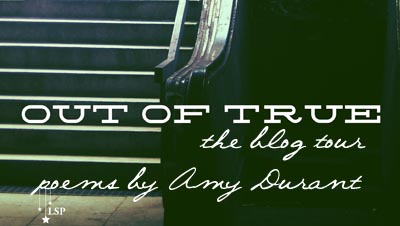
Readers will find her interplay of imagery fun, and perseverance becomes a strong message throughout the collection no matter if the narrator must let go of a past love or strive for a goal.  The cover ties the collection together with the stairway upward, signifying the struggle and the journey all at once with the light near the top of the stairs and the darkness below.  In many ways, this image demonstrates how each of us has a darkness in our lives that we journey away from, but at the same time that it can be present in the most enveloping way.  Particularly with the purposeful forgetting of high school memories in “Oubliette,” in which the narrator cannot catch up with those people she has forgotten even though the scars of what happened back then remain and are ever-present.  There is a truth in the forgetting that the narrator shares, illustration that the scars make up who she is even though she has forgotten the details of the faces of the perpetrators, which in itself may be a fallacy or a willful denial.

Out of True by Amy Durant is an emotional and insightful look at life’s travails and the decision to persevere and journey onward.  Durant’s debut poetry collection has a unique voice that highlights the harsh realities of life and love, but also the beauty of struggle and how it makes us not only who we become, but more than what we are.  Letting go is a must in this life, but also there must be a semblance of acceptance in order for humans to enjoy their lives, find joy, and evolve.

***Stay tuned tomorrow for an Amy Durant reading and giveaway***

About the Poet:

Amy Durant is a writer living in the Capital District of New York. She blogs frequently at her own site, Lucy’s Football, about far less serious things than this, and is lucky enough to write for Insatiable Booksluts about all things bookish. She is the artistic director for one of the many wonderful community theaters in her area and lives with a very cuddly but very spatially-impaired Siamese cat. Her book, Out of True, was published by Luna Station Press in August 2012.
This is the 20th book for my 2012 Fearless Poetry Exploration Reading Challenge.


This is my 75th book for the New Authors Reading Challenge in 2012.


Guest Post: Sally Smith O’Rourke Talks About Jane Austen for the 200th Anniversary

Sally Smith O’Rourke is the author of Yours Affectionately, Jane Austen and The Man Who Loved Jane Austen, which unravel the mysteries of the true Mr. Fitzwilliam Darcy and offer modern day readers a bit of time travel through antiques, forgotten letters, and more.

Today, she’s stopping by to talk a little bit about her books and her writing as the 200th anniversary of Pride & Prejudice by Jane Austen comes in 2013.

Please give her a warm welcome.

In spite of the fact that my name alone appears on the cover, The Man Who Loved Jane Austen was, in truth, very much a collaboration with my late husband F. Michael O’Rourke. Kelly, my step-daughter called us an awesome team and we were, in all respects; our life together was a true collaboration. Many projects came out of that collaboration among them two feature films, a few television pilots and several books including Christmas at Sea Pines Cottage, The Maidenstone Lighthouse and, of course, The Man Who Loved Jane Austen.

The road to The Man Who Loved Jane Austen was rather circuitous and, I’m afraid, not particularly romantic even though Mike called it the ultimate valentine because it was brought to life by the love we had for each other.

Technically, I suppose that road began when I was fifteen years old and read Pride and Prejudice, enjoying it thoroughly. One Sunday afternoon a very disappointing film version of it was on television. Greer Garson and Laurence Olivier were much too old to be playing the 20 year old Elizabeth and the 28 year old Darcy but changing the story was entirely unacceptable to my youthful psyche (and my adult psyche). It was my first taste of what Hollywood can and often does do to novels. After that I watched every version of the story but never found one worthy of the book. Then in 1995, as all of you know, the ultimate Pride and Prejudice was produced. A&E along with the BBC did the Andrew Davies/Simon Langton/Sue Britwistle mini-series, staring Jennifer Ehle and Colin Firth. FINALLY a wonderful portrayal of the classic novel.

Moving on to late 1999, the health department recommended that Mike and I vacate our home because of toxic mold, requiring us to leave most of our belongings in the contaminated house. After a few months in a hotel it felt like we never talked or thought about anything but the mold and the pending law suit; our life had seemingly come to a screeching halt. In an attempt to, at the very least, not think about it all the time, we sat down and watched the six hour Pride and Prejudice; in its entirety. It worked; we stopped obsessing about the house and, in fact, the marathon inspired me to read all of Jane Austen’s books.

For some reason I had never noticed that there is a theme in all her writings, maybe it was because I’d never read them one after the other but this time I did and found that she made every heroine strong, relatively independent and quite intelligent; not completely unusual in the late eighteenth and early nineteenth centuries however in most fiction women were victims. What made Austen different was not only the strong women but the men who loved them for that strength. It made me want to know more about her, why in an era where women were basically chattel did she feel free enough to write such stories. After delving into her life by reading several biographies, I came to believe she wrote Elizabeth Bennet and the others, in large part, because her father and brothers were fairly opened minded and that their support and strong belief in her talent was at the center of her success.

Another thing that struck me, particularly in Pride and Prejudice was Darcy’s ability to look at himself, be dissatisfied and make a concerted effort to reverse his attitudes because as he said after Elizabeth accepts his second proposal, “You shewed me how insufficient were all my pretensions to please a woman worthy of being pleased.” To me Darcy felt more like a modern man than a Regency aristocrat.

When Mike suggested that we start a new project by resurrecting a time travel story I had started some time before. I countered that rather than write about a twenty-first century woman who goes into the future we write about a twenty-first century man who falls back into the England of 1810 and becomes Jane Austen’s muse and perhaps one of the most quixotic heroes ever written; Fitzwilliam Darcy.

We considered many scenarios before settling on Darcy being the wealthy owner of a two hundred year old Virginia horse breeding estate, Pemberley Farms. The back story we created for his ancestors, was touched on when Eliza is presented to the guests at Darcy’s Rose Ball.

I know that many people consider love stories better if they end unhappily, if not tragically (A Walk to Remember; The Way We Were; Gone With The Wind) but I prefer a happy ending, therefore a modern woman had to be able to compete with Jane Austen. New York artist Eliza Knight does just that.

We discussed making Eliza a poor, struggling artist then decided that we didn’t want it to be a ‘Cinderella’ story; you know, rich guy falls for poor girl and they live happily ever after. So she became a relatively successful artist of fantasy drawings that are used on greeting cards, stationary as well as prints. That success allows her to buy an antique vanity and it is behind the vanity’s mirror that she discovers letters to and from Jane Austen and Fitzwilliam Darcy, triggering the story.

After completing the manuscript, we type-set, printed and hand bound copies to give as gifts to family and friends. It was received with spirited enthusiasm and Mike and I were proud of our nice little story. Then my world crashed, in November 2001, two weeks before his sixtieth birthday Mike died suddenly; we hadn’t gotten out of the house soon enough.

The Man Who Loved Jane Austen was published in 2006. The publisher didn’t want two names on the cover and preferred the one be mine since I would be doing the promotion. I regret not insisting that Mike’s name be used on the cover as a tribute to him. But regret serves no useful purpose and at least his work is being enjoyed by people all over the world.

I’ve always thought it odd that no journal or diary kept by Jane Austen has survived so I started what was going to be a fun little project, to create a journal that would be Jane’s perspective of spring 1810 when she met the American Darcy. At the end of one journal entry she writes, “I wonder what Mr. Darcy is doing at this moment”. I left off doing the journal and began writing what Mr. Darcy was doing and suddenly the continuation of The Man Who Loved Jane Austen came into existence.

Besides who was I to try and write as if I was Jane Austen? Yours Affectionately, Jane Austen is no longer a journal but it does reacquaint readers with 21st century American horseman Fitzwilliam Darcy and his influence on the English novelist and her writings; at the same time delving into the complex nature of the man who became the embodiment of one of the most romantic characters in English literature.

The blossoming romance between Fitzwilliam Darcy and Eliza Knight, the modern-day woman who gave Darcy the letters proving that he did make a trip through time and met Jane Austen, is juxtaposed with Jane’s life as she copes with the subtle celebrity of being the ‘Lady’ who wrote Sense and Sensibility and Pride and Prejudice.

In celebration of the coming 200th anniversary of Pride and Prejudice and in tribute to the iconic author Yours Affectionately, Jane Austen is now available in eBook formats from Amazon for Kindle and Smashwords.com for all other eReader formats. In tribute to Michael, Yours Affectionately, Jane Austen will be released in print November 29th, his birthday.

Austenticity.com, the website where Eliza first discovers that Fitzwilliam Darcy is real is also real. The everything Austen site is a good place to go for a visit and to spend a bit of time with the inimitable and beloved Jane Austen.

I also have a blog at sallysmithorourke.com where I will be posting the progress of my next novel, Physician, Heal Thyself.

Thanks, Sally for sharing your writing and inspiration with us.

About the Author:

Sally Smith O’Rourke lives in the Victorian village of Monrovia, California, close to her job in a local hospital where she spends most of her daylight hours in the operating room as a scrub nurse. She was widowed some time ago, and has very domestic hobbies like sewing, cooking, baking, candy making, and cake decorating. And she writes. Catch her on her blog, on Facebook, on Twitter, and her Website.

Here’s an additional treat for you, an excerpt from Chapter 5 of Yours Affectionately, Jane Austen:

Although the sun was fully up in the Virginia summer sky, it was not yet hot. Fitz found jumping exhilarating; the cool morning air caressing his face, and Lord Nelson, so strong and graceful, took all the jumps with no effort.

Heritage Week was over so things could get back to normal. He shrugged. Whatever normal is. He realized there was a very good chance that his normal was about to change radically. Eliza’s letter—the one she had found written to him from Jane—had ended his search for the truth of his Regency encounter. But Eliza did much more than give him the letter.

He had been merely surviving, not living, in the years since his mother’s death. He’d thrown himself into the business of Pemberley Farms to the exclusion of almost everything else. Eliza’s arrival had heralded an acute awareness of that fact. It was as though a light was suddenly shining so he could see the world around him. She made him want to live again. And she had given him the letter… Jane’s letter.

Fitz reined Lord Nelson to a walk as they entered the cool shade of the woods on the edge of his property.

Jane. He had spent more than three years seeking proof of his meeting with her and of her feelings for him. Almost as if he’d been transported again back to Chawton in 1810, the image of Jane’s sweet face flooded his mind. He thought back to that morning and his inauspicious entrance into Jane Austen’s life.

The combination of his head injury and the laudanum prescribed by Mr. Hudson, the Austen family physician, caused Darcy to slip in and out of consciousness. He tried to sit up, the effort making him dizzy.

Jane gently laid a hand on his chest. “Please, Mr. Darcy, Mr. Hudson wants you to remain still.”

Through a cotton mouth, his head spinning, Darcy asked, “Mr. Hudson?”

“The doctor,” Jane said. “You must rest now Mr. Darcy.” The American looked at her face. Her curiosity was palpable even in his drugged state. Unable to think clearly, never mind responding to questions he wasn’t sure he could answer, he closed his eyes completely and turned his head away.

Jane returned to her vanity table where she continued to write; a single candle and the flames in the fireplace her only light. Interrupted in her writing by a low murmur from Darcy, she took the candle and quietly approached the bed. He was tossing back and forth, his face flushed and contorted; he was speaking in quiet tones, a hodgepodge of words that meant nothing to her. He spoke what she could only suppose were the nonsensical ramblings of a sick brain; she attributed words like television and jet to his head injury and delirium. She placed her hand softly on his cheek and was distressed by the heat radiating from him. Using fresh linen soaked in water from the pitcher on her wash stand, Jane swabbed his face and neck, then laid it across his forehead. It seemed to calm him and she went back to her writing.

Each time he grew restless Jane stopped writing and went to the bed to refresh the linen with cool water. After three episodes in close succession she remained on the edge of the bed so she was at hand, and each time he started to toss and turn she would caress his face and neck with the cool, damp linen in hopes that it would, in time, reduce his fever.

She stayed there until Darcy’s features turned placid and he was breathing more evenly. He finally seemed to be sleeping comfortably. She laid her small, soft hand on his cheek. The fever was broken. She dropped the cloth into the basin. Stiff from sitting in one position for so long without support, she stood up and stretched. She was not particularly tired but needed to get some rest.

Quietly she crossed the wooden floor and slipped the small pages of writing she was working on into the drawer of the vanity, then took a nightgown from the closet next to the fireplace. Glancing back at the bed she stepped behind the screen.

He opened his eyes just enough to see her slender, full-breasted figure silhouetted on the muslin screen, back-lit by the remnants of the fire as the light fabric of her nightgown floated down to envelope her.

Jane stopped at the bed before making her way to Cassandra’s room for a few hours of sleep. As she stood over him he watched surreptitiously through the veil of his eyelashes. She leaned down and whispered, “Good night, Mr. Darcy,” almost brushing his lips with her own. In spite of his continuing laudanum haze, he could see that her eyes were filled with a tenderness that caused him to grab her hand as she straightened up; he didn’t want her to go.

Without opening his eyes or letting go of her hand he said, “Please don’t leave me.”

Guest Post: Writing Space of Lucinda Riley, author of Girl on the Cliff

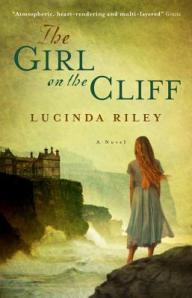
The Girl on the Cliff by Lucinda Riley, author of The Orchid House, will be released later this month by Atria Books.  Grania Ryan, the protagonist, returns to Ireland following a devastating heartbreak in New York.  She meets the young Aurora Lisle on the cliff edge, and little does she know that she’ll change Ryan’s life.  Her mother warns her to be careful of the Lisle family, but it is not until she finds a trove of family letters dating back to 1914 that she realizes how entwined the families have been.

Check out Lucinda Riley’s writing space:

I have a strange aversion to ‘offices’, mainly because it makes me feel as though I’m actually working. And writing for me isn’t a job, it’s a way of life. The nearest to an inside office space I have is my drawing-room at home in the winter, but the minute the sun shines I hop through a window and sit on the bench outside. Because I record the first draft of the story into a dictaphone, which basically means talking to myself for four months, it makes me ‘portable’ and able to work anywhere. And being outside in the fresh air is my preferred location. So, my three ‘outside offices’ are the gardens at our Hall in Norfolk, the terrace of our house in Thailand and the balcony of our house in the South of France. The kids are used to seeing Mummy wandering around in a bikini with a microphone strapped to the top of it. I’m sure this method is unusual, but again, a bikini signals a ‘holiday’, rather than ‘work’ and this takes the pressure off psychologically and helps the words flow. However, being permanently ‘strapped up’, I must always remember to switch off and remove the tape recorder before I go for a swim or, er, other activities …! The method I use works for me fantastically well, except for the fact that when I’ve been dictating into the tape for long periods of time, it has been known for me to ask the children; ‘hello comma darling comma how are you question mark space new line’! When the first draft is finished I begin editing with a red pen onto the typed-up manuscript.

At present, as it’s October and becoming colder here in England, I’m in my winter ‘office’. Our 300 year old Hall is far too large to heat during the day. And if I sneakily turn the switch to ‘on’, my husband always finds me out! So, I wrap up in layers and sit by a roaring log-fire working on editing the new book. I have an ancient, threadbare chair, a stash of red pens and a pot of tea on the table beside me.

And now … I will confess that I have a perfectly lovely ‘office’ here at home, where my PA works happily. But to this day, I can honestly say I’ve never written a single word in it. And guess what? I’m sitting writing this in the kitchen.

Thanks, Lucinda, for sharing your writing space with us.

From the Land of the Moon by Milena Agus, translated by Ann Goldstein

From the Land of the Moon by Milena Agus, translated from the Italian by Ann Goldstein, is the story of a young unnamed woman’s grandmother just at the end of WWII in Italy after the 1943 American bombing of Cagliari.  Despite the namelessness of the main characters, there are named secondary characters in the slim novel that provide it depth and the main characters some roots.  The granddaughter is telling the story of her grandmother after her death, reminiscing about the growth and change in family.

The life of this family has seem good times and bad times, with some members experiencing greater hardships than others.  The grandmother in particular has a number of suitors that fail to come back after several weeks due to rumors about her sanity.  Her own family keeps her at arms length and often hidden from public view unless necessary.  She’s the black sheep of the family, though from what we learn about her she has normal urges of a young woman and a desire for freedom.  More than that, she’s got a creative mind and a penchant for writing.

“One day my great-grandmother waited for her in the courtyard with the whip, made of ox sinew, and began to hit her until even her head was bleeding and she had a high fever.”  (Page 14)

After a number of miscarriages and failed pregnancies, the grandmother has little recourse but to take action and find away to rid herself of at least one health problem.  On a trip to take care of her kidney stones in the healing waters, the grandmother meets a young man, known only as the Veteran.  In many ways, they are the same, but they also have different tragedies to overcome.  He was a concentration camp survivor after being captured during the war, while she is an escapee from her family.  Like the many times destroyed home on Via Manno, families are built and rebuilt as the darkness is torn out of the house and light once again filters in through its large windows with new hope.

From the Land of the Moon by Milena Agus, translated from the Italian by Ann Goldstein, is about family and how it can be ripped apart and held together by secrets.  But it also is about dreams and love, and the sacrifices we must make to live into the future.  In many ways, its about the perseverance of our ancestors and how they can shape us in the future, even without our knowledge.

About the Author:

Milena Agus was a finalist for the Strega and Campiello prizes, and was awarded the prestigious Zerilli-Marimò prize for Mal di petra (From the Land of the Moon). It is her first novel. Agus lives in Cagliari, Sardinia.

About the Translator:

Ann Goldstein is an editor at The New Yorker. For Europa Editions, she has translated three novels by Elena Ferrante—The Days of Abandonment, Troubling Love, The Lost Daughter—Clash of Civilizations Over an Elevator in Piazza Vittorio, The Chill by Romano Bilenchi, The Father and the Stranger by Giancarlo de Cataldo, and The Worst Intentions by Alessandro Piperno. Her translation of Linda Ferri’s Cecilia is forthcoming in May 2010. She received a PEN Renato Poggioli Translation Award and was a visiting scholar at the American Academy in Rome. She is currently editing the complete works of Primo Levi, for which she received a Guggenheim Translation fellowship. She lives in New York.

This is my 74th book for the New Authors Reading Challenge in 2012.

Mailbox Monday #198

Mailbox Mondays (click the icon to check out the new blog) has gone on tour since Marcia at A Girl and Her Books, formerly The Printed Page passed the torch. This month’s host is the Mailbox Monday blog.

The meme allows bloggers to share what books they receive in the mail or through other means over the past week.

Just be warned that these posts can increase your TBR piles and wish lists.

Here’s what I received:

1.  Native Guard by Natasha Trethewey, which I bought at Novel Places.

Through elegiac verse that honors her mother and tells of her own fraught childhood, Natasha Trethewey confronts the racial legacy of her native Deep South — where one of the first black regiments, the Louisiana Native Guards, was called into service during the Civil War. Trethewey’s resonant and beguiling collection is a haunting conversation between personal experience and national history.

2.  Thrall by Natasha Trethewey, which I bought at Novel Places.

Natasha Trethewey’s poems are at once deeply personal and historical—exploring her own interracial and complicated roots—and utterly American, connecting them to ours. The daughter of a black mother and white father, a student of history and of the Deep South, she is inspired by everything from colonial paintings of mulattos and mestizos to the stories of people forgotten by history. Meditations on captivity, knowledge, and inheritance permeate Thrall, as she reflects on a series of small estrangements from her poet father and comes to an understanding of how, as father and daughter, they are part of the ongoing history of race in America.

What did you receive?

171st Virtual Poetry Circle

Welcome to the 171st Virtual Poetry Circle!

Remember, this is just for fun and is not meant to be stressful.

Keep in mind what Molly Peacock’s books suggested. Look at a line, a stanza, sentences, and images; describe what you like or don’t like; and offer an opinion. If you missed my review of her book, check it out here.

Also, sign up for the 2012 Fearless Poetry Reading Challenge because its simple; you only need to read 1 book of poetry. Please visit the stops on the 2012 National Poetry Month Blog Tour.

Today’s poem is from Jane Rosenberg LaForge’s With Apologies to Mick Jagger, Other Gods, and All Women:

With Apologies to Dylan Thomas (page 34)

My funeral swoon was in my
ribs the first time you died:
my supple fix, my lonesome
ambition; and within that
harness of rigor and skin,
I felt at that moment a reed
and its fingers chose to seek
out their height and freedom.
Had they reached my mouth
from the oppression of my heart,
lungs and esophagus, the dewy
and rude things they might
have said: I am through waiting,
I should be celebrating, I
should have shaved my head,
but I lacked the courage.  I
have always been a spectator.
I am essentially a disbelieving
person.  After the first death,
the poet said, the others become
academic, and the shocks my body
now contains are stupendous.

What do you think?