Quantcast

The School of Essential Ingredients by Erica Bauermeister

The School of Essential Ingredients by Erica Bauermeister is a novel about food and characters as original and complementary as the dinners they create during Lillian’s Monday night School of Essential Ingredients at her restaurant.  From the older couple Helen and Carl who are seasoned and aged by salted wounds and mellowing cream to the spunky and unsure experimental flavors of Chloe who strives to build her confidence in the kitchen and her relationships, Bauermeister has created a culinary masterpiece that will melt in readers’ mouths.

“The girl was a daughter of a friend and good enough with knives, but some days.  Lillian thought with a sigh, it was like trying to teach subtlety to a thunderstorm.”  (page 7)

“Some smells were sharp, an olfactory clatter of heels across a hardwood floor.  Others felt like the warmth in the air at the far end of summer.  Lillian watched as the scent of melting cheese brought children languidly from their rooms, saw how garlic made them talkative, jokes expanding into stories of their days.”  (page 17)

“The more she cooked, the more she began to view spices as carriers of the emotions and memories of the places they were originally from and all those they had traveled through over the years.  She discovered that people seemed to react to spices much as they did to other people, relaxing instinctively into some, shivering into a kind of emotional rigor mortis when encountering others.”  (page 20)

Readers will smell the food, taste it, touch it, and become inspired to create their own culinary delights at home and share them with their families and friends.  Bauermeister threads the memories and problems of each character through the movements and creations in Lillian’s cooking class, alternating points of view and providing insight into each of their lives.  The true beauty of her prose is that cooking terms are even used when cooking is not the main focus of the story, and she excels at creating a mood of melancholy or a mood of frustration or even a mood of nostalgia as each character reviews their lives and their journeys in the kitchen.

Although the stories contained in the novel are short, Bauermeister does a magnificent job of creating characters that are three-dimensional.  Like the spices and other ingredients in Lillian’s recipes, each character is an essential ingredient to the whole of the novel.  In many ways, her novel is about enjoying each moment to its fullest, even those moments of guerrilla cooking in which someone is over your shoulder adding spices or tips to make a dish better, even if those moments of advice are unwanted at the time.  Taking criticism and advice with a touch of acceptance that we all need a little help is what the recipe to life requires to make it great.  The School of Essential Ingredients will leave readers wanting more, but willing to embark on their own journeys of food and so much more.
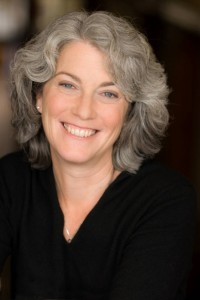
About the Author:

ERICA BAUERMEISTER is the author of The School of Essential Ingredients and Joy for Beginners. She lives in Seattle with her family.  Check out her Facebook page.

This is my 79th book for the New Authors Reading Challenge in 2012.

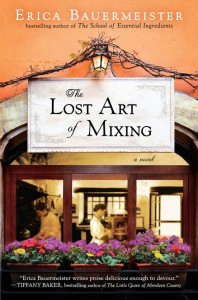
The Lost Art of Mixing by Erica Bauermeister

The Lost Art of Mixing by Erica Bauermeister (January 2013) picks up where her earlier novel, The School of Essential Ingredients (Check out my review tomorrow), left off — revisiting with Lillian, Chloe, Isabelle, and Tom.  Bauermeister also brings in some new characters as well as she leads readers on a journey of human interaction and family.  In many ways, recipes still play a role here as they did in the first book, though the imagery and word choices here are less about ingredients and cooking than they are about nature and the people themselves.  Isabelle plays a more integral role here than she did in the last book as a mother to grown children concerned about their new role as caregivers and to her wayward roommate, Chloe.  She’s also a motherly figure to Lillian when she finds herself in uncharted waters.

“For all the glamour of restaurants, the underlying secret of the successful ones was their ability to magically repurpose ingredients, a culinary sleight of hand that kept them financially afloat and would have made any depression-era housewife proud.”  (page 3 ARC)

Bauermeister expands on her early work and how food and emotions are closely tied to one another, looking deeper into her recipe to the ingredients and how they blend together or are mixed.  When a recipe is created, are the essential ingredients lost in one another or do they merely bring out the best elements of one another to create something luminous?  Isabelle’s memory loss highlights the mixing element further in terms of how memories are mixed in our minds with scents and seemingly innocuous objects, but the recall of those memories in those moments when scents and objects are present is all at once disconcerting, phenomenal, and joyous.

Bauermeister has created another set of deep characters with nuanced personalities and places them in unusual situations that are all at once odd and plausible, and readers will be swept up in the relationships within these pages and how the characters mingle and mesh with one another in different ways.  Whether a chance meeting when returning a lost coat or a rushed moment in the accountant’s office, lives are touched and changed.  The Lost Art of Mixing by Erica Bauermeister examines the relationships we have, the ways in which we perceive them and ourselves, and how an outside perspective can improve our interactions with those we think we know the best and are closet to, creating even deeper connections than we thought possible.

About the Author:

ERICA BAUERMEISTER is the author of The School of Essential Ingredients and Joy for Beginners. She lives in Seattle with her family. Check out her Facebook page.

Also look for a giveaway and interview in January when the book is released.

174th Virtual Poetry Circle

Welcome to the 174th Virtual Poetry Circle!

Remember, this is just for fun and is not meant to be stressful.

Keep in mind what Molly Peacock’s books suggested. Look at a line, a stanza, sentences, and images; describe what you like or don’t like; and offer an opinion. If you missed my review of her book, check it out here.

Also, sign up for the 2012 Fearless Poetry Reading Challenge because its simple; you only need to read 1 book of poetry. Please visit the stops on the 2012 National Poetry Month Blog Tour.

Today’s poem is from Adelaide Crapsey:

November Night

Listen. . .
With faint dry sound, 
Like steps of passing ghosts, 
The leaves, frost-crisp'd, break from the trees 
And fall.

What do you think?

The Lighthouse Road by Peter Geye

The Lighthouse Road by Peter Geye feels like the frozen tundra and the heat of the tropics all at once as his eccentric characters hack their lives out of the wilderness outside Duluth, Minn., between the 1890s and 1920s in Gunflint.  Odd is a young fisherman with his own small boat, whose mother died soon after he was born.  Raised by the local apothecary owner, Hosea Grimm alongside his daughter Rebekah, Odd strives to make his mark in the rough-around-the-edges town.

Geye’s narration shifts between Thea and Odd’s stories, with Thea’s set during the late 1890s when the town is just beginning and Odd’s story set during the 1920s during prohibition.  Earning money and carving out a life from the wilderness is tough work, and Odd begins making whiskey runs for the local bars and Grimm.  As the narrative shifts from Odd’s life to Thea’s life, the secrets of Gunflint are revealed slowly.  These secrets have lasting consequences for Odd as he falls in love.

“They all looked the same at a glance, so she learned to identify them by their grotesqueries:  the missing fingers or hands, the peg legs, the hunch backs, the harelips, the sunken chests, the pruritus and scabies.  It seemed as if each of the men possessed some defect or wound.”  (page 47)

Although the novel is about the residents of Gunflint, it also is an immigration and pioneering story.  The members of Gunflint are the first to hack their lives out of the woods, and Thea is the immigrant from Norway among them, who speaks little to no English when she arrives.  Geye once again relies on his abilities to paint a thorough picture of the town and its people, setting the stage for his story — even providing Odd a deformity of his own that mirrors the most prevalent problem in the town, which allows the secrets and lies to grow and fester.

Odd is a man who builds things with his hands, hoping that by building a larger boat he can improve his lot in life and to find a new life with his love.  Despite his realization that the town turns a blind eye to the tawdry goings on in town and its festering secrets, he is blind to the myth of the “grass is always greener on the other side.”  Geye’s novel is about the glimmer of hope in our lives and how it must be nurtured to bloom, but it also is about holding on too tight to that hope, so tight that it becomes extinguished.  Geye has hit another one out of the park with The Lighthouse Road.  **Excellent book for book club discussions**

About the Author:

Peter Geye received his MFA from the University of New Orleans and his PhD from Western Michigan University, where he was editor of Third Coast. He was born and raised in Minneapolis and continues to live there with his wife and three children. He is the author of the award winning novels, Safe from the Sea and The Lighthouse Road.

Please check out the reading guide.

Other reviews:
Safe From the Sea

Exclusive Access for Readers on Facebook

Many of us bloggers and readers spend a lot of time traveling social media sharing books we find and adding new books to our wish lists and tbr piles.  I’ve signed up for GoodReads, LibraryThing, and Pinterest to manage my lists, but Riffle, an app for Facebook users, allows us not only to have shelves of recommendations for our followers, but also visual covers of those books just like Pinterest.

If you’d like to check it out, click on the logo at the top to gain access — TODAY Only!

Judging a Book by Its Lover by Lauren Leto

Judging a Book by Its Lover by Lauren Leto is a guide to the mind of readers everywhere, and it offers some great tips on how to fake it for readers who may not have read some contemporary or classic authors that everyone else has been.  Leto is like many of us in that she says, “Considering yourself a serious reader doesn’t mean you can’t read light books.  Loving to read means you sometimes like to turn your head off.  Reading is not about being able to recite passages from Camus by memory.  Loving young adult novels well past adolescence isn’t a sign of stunted maturity or intelligence.  The most important thing about reading is not the level of sophistication of the books on your shelf.  There is no prerequisite reading regimen for being a bookworm” (page 8).  To that end, she discloses that she’s likely to be found with the latest Janet Evanovich in her hand when she has to fly anywhere.

The initial confessions read like that of any bookworm, with the boxes and boxes of books moved from apartment to apartment and from makeshift bookshelf to re-purposed material made into a bookshelf — in her case, a couple of old ladders (page 13).  Leto even offers a funny little bit about changing the readers’ mascot from a worm to a cat, but one of the most ironic reasons in the book is because cats hold grudges (page 63) — like many do against James Frey from A Million Little Pieces, who offers a witty quote about Leto’s book on the cover.

Through a series of chapters of advice on how to fake having read a particular book, using vague statements and comparisons to popular movies and other writers you may have read, Leto has created an unapologetic homage to reading as entertainment, education, enjoyment, escapism, and understanding.  She even includes a chapter on rules for the book club, which means talking about book club with others not in your club or about the books you are reading in the club as well as how best to end a disagreement over something that happens in one of the books read by the group.  Her observations on members of a book club and their roles from the leader to the quiet (usually girl) member are in line with many readers’ experiences, including those who might even fit those character types in one group or another.

Some of the best aspects of this book are the snarky comments about authors and readers of certain authors, like those who adore Chuck Palahniuk are boys who cannot read and those who love Chuck Klosterman are boys who don’t read.  Leto’s comments about the “Literati,” a chapter with an alternate title of “Why Ernest Hemingway Once Told John Updike Literary New York Is a Bottle Full of Tapeworms Trying to Feed on Each Other,” is hilarious and a warning for those would-be writers out there.  Judging a Book by Its Lover by Lauren Leto is not really about judging anyone, but it is about having fun with books and reading, making connections even with strangers, and finding happiness in a bent page — to paraphrase her (page 245).

About the Author:

Lauren Leto dropped out of law school to start the popular humor blog “Texts from Last Night.” She co-authored the book Texts from Last Night: All the Texts No One Remembers Sending. She lives in Brooklyn.

This is my 78th book for the New Authors Reading Challenge in 2012.
Mailbox Monday #200

Mailbox Mondays (click the icon to check out the new blog) has gone on tour since Marcia at A Girl and Her Books, formerly The Printed Page passed the torch. This month’s host is the Mailbox Monday blog.

The meme allows bloggers to share what books they receive in the mail or through other means over the past week.

Just be warned that these posts can increase your TBR piles and wish lists.

Here’s what I received:

1.  Not Young, Still Restless by Jeanne Cooper and Lindsay Harrison for review from HarperCollins.

2.  The Last Summer by Judith Kinghorn from Penguin for review in December.

What did you receive?

173rd Virtual Poetry Circle

Welcome to the 173rd Virtual Poetry Circle!

Remember, this is just for fun and is not meant to be stressful.

Keep in mind what Molly Peacock’s books suggested. Look at a line, a stanza, sentences, and images; describe what you like or don’t like; and offer an opinion. If you missed my review of her book, check it out here.

Also, sign up for the 2012 Fearless Poetry Reading Challenge because its simple; you only need to read 1 book of poetry. Please visit the stops on the 2012 National Poetry Month Blog Tour.

Today, we have a poem from John Amen and Daniel Y. Harris’ The New Arcana. The collection “is a multigenre extravaganza featuring verse, fiction, mock journalism and academic writing, drama, and art. Both referencing and transcending various literary precedents, the book is a pronouncement for the 21st Century, an exploration of and commentary on the fast-paced and mercurial nature of life in the 2000s”:

From Section Four: I (page 85)

I have built a panic room in order to insulate myself
    from all random reminders
       of the inevitable indignities to come.
    I play hopscotch;
I count marbles in the darkness.
    Give me chalk and geometric proofs,
    barely legible crossword puzzles,
    medical reports printed in red:  I'll prove my loyalty,
my commitment to the American dream,
by skipping through perturbations with dismissive
    hilarity -- the very locus of a psychic compost
       filled with rotting onions.

What do you think?

Everyday Writing by Midge Raymond

Everyday Writing: Tips and Prompts to Fit Your Regularly Scheduled Life by Midge Raymond is a slim volume with purpose — to get those writers back to the words on the page.  Raymond is a busy woman, like most writers, and she holds a full-time job in addition to writing.  Her advice is on point and should be taken to heart — by me especially.  The book is broken down into two main sections — tips on how to become a writer and stay in that mode and a series of writing prompts broken down my expected writing duration.

I’ve got a semi-unconventional review today.  This book offers me more motivation than ever.  With the toddler running around and the full-time job, plus the additional stress I’ve been under lately, I need a good kick in the butt to get me back to writing.

What I loved about Raymond’s book was her no-nonsense advice and her anecdotes about her own struggles with writing.  She even shares some of the best moments she’s experienced when she was procrastinating.  One major point that book bloggers already know, especially in this time of Twitter and other social media, that we need to disconnect from the Internet.  My book is overflowing with post-it tabs, but here are a couple of my favorite passages:

“Being an Everyday Writer is not about putting daily words on a page but about seeing the world as a writer and recognizing the myriad ways in which your everyday life informs your work.  And this, in turn, will put words on the page.”  (page 2)

“Writing exercises can help our writing in ways we don’t know until we do them.  They can, for instance, allow our minds to retreat from the puzzle of a current project and wander a bit, perhaps leading us back to the puzzle from a different angle and getting us closer to a solution.”  (page 6)

Some of her practical advice includes creating a schedule that works for you with your work and childcare schedule and that it doesn’t have to be every day.  Additionally, you have to remain open to revising the schedule and making sure that others in your life take your writing time as seriously as you do.  Writers also need to set bigger goals and break that down into more manageable goals, and these goals should be reassessed at least quarterly to determine how much progress has been made.  Another cool tool in the book is Raymond’s checklist for those writers who think they’ve finished a piece to make sure they’ve covered all the bases, including whether every scene is necessary and whether the point of view is consistent.

Everyday Writing: Tips and Prompts to Fit Your Regularly Scheduled Life by Midge Raymond is a slim book, just what writers need — practical advice, but not lengthy practical advice that causes them to procrastinate about their projects.  Raymond’s writing style as engaging as her advice, and the writing prompts can be used for any project.  What she offers most is the ability for writers to be flexible and not beat themselves up about it so long as they are meeting their own goals.

About the Author:

Midge Raymond’s short-story collection, Forgetting English, received the Spokane Prize for Short Fiction. Her stories have appeared in TriQuarterly, American Literary Review, Indiana Review, North American Review, Bellevue Literary Review, the Los Angeles Times magazine, and many other publications. Her work has received several Pushcart Prize nominations and received an Artist Trust/Washington State Arts Commission Fellowship.

Midge taught communication writing at Boston University for six years, and she has taught creative writing at Boston’s Grub Street Writers and Seattle’s Richard Hugo House. While living in Southern California, she held writing workshops and seminars at San Diego Writers, Ink, where she also served as vice president of the board of directors.

Midge lives in the Pacific Northwest, where she is co-founder of the boutique publisher Ashland Creek Press.

Exclusive Excerpt from Christmas with Mr Darcy by Victoria Connelly

If you’re anything like me and you’re a fan of Jane Austen’s Pride & Prejudice, you just love the oodles of fan fiction, spinoffs, and continuations that are flooding the market and feature Mr. Darcy . . . and of course the Bennets.  There also are the modern day retellings as well that keep me coming back for more, and Victoria Connelly, author of A Weekend with Mr. Darcy, is one author that doesn’t seem to disappoint with her renditions.

Her current novella, Christmas with Mr. Darcy, is a sequel to her Austen Addicts Trilogy (A Weekend with Mr Darcy, Dreaming of Mr Darcy, and Mr Darcy Forever) in which characters from the trilogy meet again at Purley Hall in Hampshire for a special Jane Austen Conference. But when a first edition of Pride and Prejudice goes missing, there is only one thing for them all to do . . . find out where it has gone.

Connelly has a quick wit and some great characters, who always need a little extra help from Austen to get down the romantic path.  I’m sure this novella, first available on Kindle, will be no exception.

Today, she’s offered my readers and exclusive excerpt from the novella to whet your appetites, but first a note from the author:

I have always wanted to write a Christmas book and, this time last year, I had the idea for Christmas with Mr Darcy. All the main characters from my Austen Addicts Trilogy would come together when they attend a very special Jane Austen conference at Purley Hall in Hampshire – the setting of A Weekend with Mr Darcy. Throw in a badly behaved lost brother, a marriage proposal, and a missing first edition of Pride and Prejudice and the stage is set for a fun-filled festive season!

I really hope you enjoy finding out what happened next to my characters. It might be a little early for me to wish you all a Merry Christmas but I have to confess that writing this novella made me want to unpack all of our glittery baubles and start decorating our home!

Thanks, Victoria. We hope that you enjoy your holidays. And now the excerpt from Christmas with Mr. Darcy:

Robyn Love Harcourt was writing the last of her Christmas cards. She’d left it horribly late this year but she’d been so busy organising the Christmas conference with Dame Pamela that her own private little Christmas had been put on hold. Still, it had all been such enormous fun. She’d been working happily as Dame Pamela’s PA since accepting the job offer after her first weekend at Purley and had fallen into the new role as if she’d been performing it her whole life.

Together, they had pored over hundreds of magazines and websites for inspiration for the Christmas conference and, Robyn couldn’t help thinking with a laugh, perhaps they’d spent a little too much time discussing colour schemes.

“Is pink and purple a bit too much?” Dame Pamela had asked at one point, having found a company that sold pink glitter-ball baubles.

Robyn had been swept along by the idea of Purley Hall decked out in romantic shades of pink and lustrous shades of purple but had then come back down to earth.

“I think we’d better keep things traditional,” she’d said at last, secretly craving the pink baubles they’d discovered. Perhaps Dan would let her decorate their own tree with them. She could just imagine how pretty Horseshoe Cottage would look. She’d already secretly purchased a couple of gingerbread garlands and two ropes of multi-coloured fairy lights which baby Cassie had loved when Robyn had switched them on.

Once again, Robyn felt the warm glow of pride when she thought about her little girl. She still couldn’t believe how her life had changed since coming to the Jane Austen Conference. She’d fallen madly in love with her host’s younger brother, Dan Harcourt, and she couldn’t believe that he’d returned her feelings. It had all been such a whirlwind. She’d given up her job in North Yorkshire and had driven herself and her hens all the way down to Hampshire to start her new life. She smiled as she remembered that dreadful journey with Lizzie, Lydia, Mrs Bennet, Lady Catherine, Miss Bingley and Wickham the cockerel. Named after characters from Pride and Prejudice, Robyn had since added three ex-factory hens to her flock: Elinor, Marianne and Emma. They’d arrived at Horseshoe Cottage with pale combs and threadbare breasts but they had embraced their new free-range life and had bloomed into beautiful birds.

Robyn would often laugh with Dan at the life they’d created for themselves. There were dogs, horses, hens and a baby. It was permanent chaos but she wouldn’t have it any other way.

Past reviews: