Check out my latest poems in Live Encounters: 13th Anniversary Edition. I’m on pg. 140 or so.
Love the Dark Days by Ira Mathur
October 27, 2022 by
 Source: the author
Paperback, 232 pgs.
I am an Amazon Affiliate
Love the Dark Days by Ira Mathur is a surreal memoir that weaves between a distant past in post-colonial India and ancestral stories and a married woman looking for guidance on writing her own memoir. The narrative digs deep into the past of her ancestry pulling the thread of pain forward into her present. Mathur says in more than one place that she doesn’t feel like she belongs. She’s looking throughout the memoir for her place in the world.
This sense of drift carries readers through the memoir, which reads like a nightmare in places. Her grandmother Burrimummy has fits of anger and sadness, and her rages seem like a woman battling mental illness, though that isn’t outwardly articulated. Shifting from India to Trinidad and other places, Mathur is weaving place with family history, much of it violent and abusive. Whether subject to emotional abuse and dejection or the physical abuse her mother felt as a child at the hands of her own mother, these instances reverberate throughout the female line in the family. These women are damaged and traumatized, but it is unclear if these women ever sought help or tried to break the cycle.
“When she is angry like this, I don’t know what to feel. I hate it when she thrashes me but am sadder when she doesn’t notice me at all.”
“The servants, sensing my lower status, are careless with me.”
“I’m too dark, too rebellious.”
Mathur’s view of herself is skewed from an early age, and she carries that doubt with her as she matures. She is never good enough. She even says, “Twenty-four years, and in some ways, nothing had changed for me.” But later as she’s seeking to understand this generational violence and neglect, she absolves everyone of responsibility.
“They are like Russian dolls. I understand now. Mummy blames Burrimummy for being unkind. Burrimummy blames Mumma for ill-treating her, and Mumma blames Sadrunissa for thrashing her. They all took out whatever anger they felt over their own lives on their daughters. no one is responsible.”
The sections when Mathur is interacting with poet Sir Derek Walcott are overly long and fawning of a poet whom she admits was accused of harassing women. Her admiration of his poetry is clear, and she does recognize his faults, but if these scenes were meant to tie in with her family’s saga, they did not fit seamlessly into the narrative. They often pulled me out of her story and made me wonder when she would get back to her family. When she does get back to her family, there are still questions that linger about her husband’s behavior, his family’s acceptance/rejection of her, and her relationship with her own children that remain unanswered. Perhaps that’s a future memoir?
In many ways, this memoir is about a woman still coming to terms with her trauma. Intimate, harrowing, and sad, Mathur’s memoir reminds us that “when brutality is normalized, it is passed on, like a legacy, like DNA.” Love the Dark Days by Ira Mathur is most engaging when she speaks about her family and its legacy and its impact on her as a woman and successful journalist.
RATING: Tercet
 About the Author:
Ira Mathur is an Indian born Caribbean freelance journalist/writer working in radio, television and print in Trinidad, West Indies. She also is currently a Sunday Guardian columnist and feature writer. Follow her on Instagram, Twitter, and LinkedIn.
Nothing You Build Here, Belongs Here by Sara Cahill Marron
October 25, 2022 by
 Source: Purchased
Paperback, 44 pgs.
I am an Amazon Affiliate
Nothing You Build Here, Belongs Here by Sara Cahill Marron is a collection that explores the need to mark our presence in this life, even as we know that it is all impermanent and often fades.
The opening poem “The Three Shades” reflects this impermanence and the unpredictability of what stays and what fades into the dark. Amid the detritus of modern life (Styrofoam cups et. al.), there is still life here, and we are watching it fade, struggle, and die. It’s a sad emptiness to see life dissipate even in anonymity.
The pandemic clearly influences many of these poems and the desire to save others is prevalent in some, but there’s also this commentary on the disconnect from others. “Please/please stay … drown out news,” the narrator in “An Infant Died Today in Illinois” says, but it is clear that the news cannot be ignored and the inevitability of death is ever present.
Marron is exploring the disconnect between us during the pandemic in the tension with our need for connection. Whether it is an overly sharing email to a hiring manager or an imagined conversation with our eavesdropping cellphone (which I suspect sent her on a journey that culminated in her newest book, Call Me Spes), Marron gives readers a lot to think about in terms of the inevitability of death, our desire for connection and to be seen, and the absence of humanity.
Nothing You Build Here, Belongs Here by Sara Cahill Marron reminds us that many times “the enemy is internal,” whether it is the virus that can infect and kill us, the inequality we propagate, or any other selfishness that infects society and its ability to grow and evolve together in divine love and connection. There is so much to love about this collection.
RATING: Cinquain
About the Poet:
Sara Cahill Marron, native Virginian and Long Island resident, is the author of Reasons for the Long Tu’m (Broadstone Books, 2018), Nothing You Build Here, Belongs Here (Kelsay Books 2021), and Call Me Spes (MadHat Press 2022). She is the Associate Editor of Beltway Poetry Quarterly and publisher at Beltway Editions. Her work has been published widely in literary magazines and journals; a full list is available here. Sara also hosts virtual readings for Beltway Poetry Quarterly with her partner in poetry, Indran Amirthanayagam and teaches poetry in modern discourse programs for teens at the public library in Patchogue, NY. Follow her on Facebook, Twitter and Instagram.
Mailbox Monday #705
October 24, 2022 by
 Mailbox Monday has become a tradition in the blogging world, and many of us thank Marcia of The Printed Page for creating it.
It now has its own blog where book bloggers can link up their own mailbox posts and share which books they bought or which they received for review from publishers, authors, and more.
Thank you to Velvet for stepping in when Mailbox Monday needed another host.
Emma, Martha, and I also will share our picks from everyone’s links in the new feature Books that Caught Our Eye. We hope you’ll join us.
Here’s What I Received:
 DC Poets for DC Schools edited by Robert Bettman, purchased from DayEight.
The DC Poets for DC Schools anthology includes twenty-six poems by nine area poets. The poems in this collection were selected to introduce students to topics and techniques, history, and character. Included works explore growing up in Washington, D.C., sexuality, Blackness, aging, violence, womanhood, and more. Authors range from internationally renowned award winners to highly regarded and still very young poets.
Diaspora C afe: D.C. edited by Jeffrey Banks and Maritza Rivera, purchased from DayEight.
An anthology by AfroLatinx writers, Diaspora Cafe D.C. is a collective investigation of survival by writers within a system that deprioritizes their existence.
Diaspora Cafe D.C. is edited by Jeffrey Banks and Maritza Rivera and the contributors include: Ethelbert Miller, Saleem Abdal-Khaaliq, J. Joy “Sistah Joy” Alford, Jane Alberdeston, Kamilah Mercedes Valentín Díaz, Nick Leininger, Stephani E.D. McDow, Manuel Méndez, Hermond Palmer, henry 7. reneau, jr., Allison Whittenberg, Christine Williams, alongside poems by the editors.
While some poems consider identity and relationships, and others are love poems to family and lovers, all are united by a thread of resistance against invisibility.
 Some Days the Bird by Heather Bourbeau and Anne Casey, which I purchased from Beltway Editions.
Throughout 2021, as COVID and climate change battled for supremacy in the hearts and minds of the world, American poet Heather Bourbeau and Irish-Australian poet Anne Casey engaged in a poetry conversation back and forth across the globe, alternating each week, to create 52 poems over 52 weeks. With poems anchored in their gardens, they buoyed each other through lockdowns and exile from family, through devastating floods, fires, wild winds and superstorms. Some Days The Bird, a collection of internationally recognized and award-winning poems, is the result of their weekly communiqués from different hemispheres (and opposing seasons) in verse.
 Inheritance by Taylor Johnson, which was gifted to me by the new Takoma Park Poet Laureate.
Inheritance is a black sensorium, a chapel of color and sound that speaks to spaciousness, surveillance, identity, desire, and transcendence. Influenced by everyday moments of Washington, DC living, the poems live outside of the outside and beyond the language of categorical difference, inviting anyone listening to listen a bit closer. Inheritance is about the self’s struggle with definition and assumption.
What did you receive?
The Wehrwolf by Alma Katsu (audio)
October 20, 2022 by
 Source: Purchase
Audible, 2+ hrs.
I am an Amazon Affiliate
It’s been a Grimm’s Brothers kind of month of reading for me.
The Wehrwolf by Alma Katsu, narrated by Jim Boeven, weaves in myth from Germanic folklore about wolves and sets it just nearing the end of WWII.
Even as Berlin tries to tell its people that the war is not over, even the villages outside the cities can sense the tide is not in the motherland’s favor.
Uwe Fuchs has always considered himself a weakling and unworthy as he was unable to serve for the Reich and stayed behind to care for his own ailing mother. Despite his lot, he cared for his daughter and loved to share with her the dark fairy tales of the wood and wolves, though he feared she missed the point that the wolves represented the bad in the world. But in many ways it seems he missed the point as well.
The narration by Boeven was a bit stilted in the audio, which kept me from really falling into Katsu’s story fully. That was a real drawback for me. But the story itself is definitely a reaction to the political climate we find ourselves in and how it mirrors that of Nazi Germany with its fervor and us vs. them focus. The story itself is a cautionary tale that has roots in reality.
Katsu has knack for creating characters who are flawed and find themselves in otherworldly situations. Uwe is definitely flawed and those flaws are amplified by what happens to him, especially when he takes matters into his hands with the village fighters against the Allies in an effort to be part of the community. Will he be a man who cannot return to his former life?
The Wehrwolf by Alma Katsu, narrated by Jim Boeven, is a short story set in a historical period that highlighted much of the worst in humanity from eugenics to mass extinction efforts. Uwe is a man who is struggling with his own place in society and his community until he finds his pack. But will his one decision to join those working against the allies at the end of the war ruin his life forever?
RATING: Quatrain
Other Reviews:
- The Taker
- The Reckoning
- The Descent
- The Devil’s Scribe
- The Marriage Price
- The Witch Sisters
- The Hunger
- The Deep
- Red Widow
- The Fervor
About the Author:
Alma Katsu is the author of The Taker, The Reckoning, and The Descent. She has been a signature reviewer for Publishers Weekly and a contributor to The Huffington Post. She is a graduate of the Master’s writing program at the Johns Hopkins University and received her bachelor’s degree from Brandeis University. Prior to the publication of her first novel, Katsu had a long career as a senior intelligence analyst for several US agencies and is currently a senior analyst for a think tank. She lives outside of Washington, DC, with her husband.

Fairy Tale by Stephen King (audio)
October 19, 2022 by
 Source: Purchased
Audible, 24+ hrs.
I am an Amazon Affiliate
Fairy Tale by Stephen King, narrated by Seth Numrich and a bit by King himself, is a dark Gothic story in the tradition of the Brothers Grimm. In a parallel world beneath an Howard Bowditch‘s shed, Charlie Reade‘s worldview and his promise to be a better man if only his father would stop drinking alcohol. Reade’s blossoming relationship with Mr. Bowditch is touching and odd all at once, but I expect nothing less. But the fairy tale doesn’t begin until Reade learns about what’s in the shed and what it could possibly mean for the dog, Radar, they love.
In an adventure that Reade never expected to have when he sought to save the life of an old dog, he learns a great deal about human frailty and how dreams and ideals do little in times of crisis. Even Mr. Bowditch was aware of those failings, noting that cowards bring gifts. King is so adept at creating flawed characters and adventures to strange worlds where young men must test their metal against the deep dark evil of an unknown and scary place.
Reade comes of age in this story and he is not as too-good-to-be-true as he seems. He faces untenable situations and tough choices throughout his travels. I don’t want to give too much away, but the character not only evolves but even more clearly understands his own limitations. Dark and horrible things happen here, and are their moments of crassness from the evil characters that make you cringe, of course. These elements make this dark world seem even more real.
Anyone who knows me, knows I love reading Stephen King’s books. Not all of them capture my full attention, even if I love them. I even conned my friend Anna (aka Diary of an Eccentric) to read my favorite King book (IT) in a read-a-long. But some of King’s books have not totally absorbed me from start to finish like IT. Fairy Tale is an exception and has entered the pantheon of King favorites.
RATING: Cinquain
Other Reviews:
- The Diary of Ellen Rimbauer: My Life at Rose Red
- IT
- Joyland
- The Regulators
- Doctor Sleep
- Revival
- Salem’s Lot
- Mr. Mercedes
- 11/22/63
- Under the Dome
- The Colorado Kid
- Elevation
- The Outsider
- The Institute
- Later
- Billy Summers
About the Author:
Stephen King is the author of more than fifty books, all of them worldwide bestsellers. His recent work includes Doctor Sleep and Under the Dome, now a major TV miniseries on CBS. His novel 11/22/63 was named a top ten book of 2011 by The New York Times Book Review and won the Los Angeles Times Book Prize for Mystery/Thriller as well as the Best Hardcover Book Award from the International Thriller Writers Association. He is the recipient of the 2003 National Book Foundation Medal for Distinguished Contribution to American Letters. He lives in Bangor, Maine, with his wife, novelist Tabitha King.

A Beginner’s Guide to Being Human by Matt Forrest Esenwine, illustrated by Andre Ceolin
October 18, 2022 by
 Source: Media Masters Publicity
Hardcover, 32 pgs.
I am an Amazon Affiliate
A Beginner’s Guide to Being Human by Matt Forrest Esenwine, illustrated by Andre Ceolin is a book for ages 4-8, but I bet there are some adults who could use this lesson in empathy and compassion. I loved that this picture book opens with a discussion of what it means to be human. It also explains what family means and that it doesn’t necessarily have to mean you are only related by blood. This opens the door to children, allowing them to see that adopted children and more are families, too.
Esenwine offers “pro tips” throughout the book to help kids navigate their emotions and social situations in which they normally would just react on instinct. He demonstrates how sometimes situations arise because of emotion and that we have to be able to recognize it and adapt to help others when we can. This ability to empathize will enable kids to show compassion for others. Compassion is something every child should learn at a young age, and some adults should be re-taught the concept.
The illustrations show a diverse group of students, which is another fantastic way to bring home the diversity of humanity. The Golden Rule is mentioned about mid-way through the book, but it does seem to come out of nowhere. So a little more contest or a child talking to a family member or a teacher about it, might have been less awkward in the narrative.
Overall, the illustrations where the kids are working out differences or situations themselves after learning these terms are the most effective. A Beginner’s Guide to Being Human by Matt Forrest Esenwine, illustrated by Andre Ceolin, definitely provides young kids, their parents, and teachers with tools they will need to help children navigate social interactions and other situations.
RATING: Quatrain
**Be sure to enter the author’s giveaway***
About the Author:
Matt Forrest Esenwine is an author and poet from Warner, New Hampshire. His debut picture book, Flashlight Night (Boyds Mills Press, 2017) was selected by the New York Public Library as one of the Best Books for Kids of 2017. His picture book Once Upon Another Time (Beaming Books, 2021), co-authored with Charles Ghigna, was deemed “a necessary addition to picture book collections” by ALA’s Booklist. His poetry can be found in numerous anthologies including The National Geographic Book of Nature Poetry (National Geographic Children’s Books, 2015) and Construction People (Wordsong, 2020).
About the Illustrator:
André Ceolin studied at the School of Visual Arts in New York City. He has illustrated over twenty books for children. André lives in Brazil with his family.
Mailbox Monday #704
October 17, 2022 by
Mailbox Monday has become a tradition in the blogging world, and many of us thank Marcia of The Printed Page for creating it.
It now has its own blog where book bloggers can link up their own mailbox posts and share which books they bought or which they received for review from publishers, authors, and more.
Thank you to Velvet for stepping in when Mailbox Monday needed another host.
Emma, Martha, and I also will share our picks from everyone’s links in the new feature Books that Caught Our Eye. We hope you’ll join us.
Here’s What I Received:
 The Art of Revision: The Last Word by Peter Ho Davies, which I purchased on recommendation from Melanie Figg.
In The Art of Revision: The Last Word, Peter Ho Davies takes up an often discussed yet frequently misunderstood subject. He begins by addressing the invisibility of revision―even though it’s an essential part of the writing process, readers typically only see a final draft, leaving the practice shrouded in mystery. To combat this, Davies pulls examples from his novels The Welsh Girl and The Fortunes, as well as from the work of other writers, including Flannery O’Connor, Carmen Machado, and Raymond Carver, shedding light on this slippery subject.
Davies also looks beyond literature to work that has been adapted or rewritten, such as books made into films, stories rewritten by another author, and the practice of retconning in comics and film. In an affecting frame story, Davies recounts the story of a violent encounter in his youth, which he then retells over the years, culminating in a final telling at the funeral of his father. In this way, the book arrives at an exhilarating mode of thinking about revision―that it is the writer who must change, as well as the writing. The result is a book that is as useful as it is moving, one that asks writers to reflect upon themselves and their writing.
 Because of Mr. Terupt by Rob Buyea from Kellogg’s Feeding Reading Program.
It’s the start of a new year at Snow Hill School, and seven students find themselves thrown together in Mr. Terupt’s fifth grade class. There’s . . . Jessica, the new girl, smart and perceptive, who’s having a hard time fitting in; Alexia, a bully, your friend one second, your enemy the next; Peter, class prankster and troublemaker; Luke, the brain; Danielle, who never stands up for herself; shy Anna, whose home situation makes her an outcast; and Jeffrey, who hates school.
They don’t have much in common, and they’ve never gotten along. Not until a certain new teacher arrives and helps them to find strength inside themselves—and in each other. But when Mr. Terupt suffers a terrible accident, will his students be able to remember the lessons he taught them? Or will their lives go back to the way they were before—before fifth grade and before Mr. Terupt?
Find out what happens in sixth and seventh grades in Mr. Terupt Falls Again and Saving Mr. Terupt. And don’t miss the conclusion to the series, Goodbye, Mr. Terupt, coming soon!

 Sway by Tricia Johnson for review.
Poems that welcome and embrace Mother Nature’s seasonal wind blown mysteries.
This book of poetry invites you to pause, kneel down in a meadow and experience the flora and fauna of Pennsylvania. To live among the rolling hills and valleys, as nature’s changing rhythms keep the time.
In Sway by Tricia Johnson, we imagine ourselves in the wilds of Nature with our heads resting on the back of our arms, eyes wide, observing the Living World.

 The Wehrwolf by Alma Katsu, purchased.
Germany, 1945. In the waning days of World War II, the Nazis have been all but defeated. Uwe Fuchs, never a fighter, feels fortunate to have avoided the front lines as he cared for his widowed mother.
But Uwe’s fortune changes when Hans Sauer, the village bully, recruits him to join a guerilla resistance unit preparing for the arrival of Allied soldiers. At first, Uwe is wary. The war is lost, and rumor has it that Hans is a deserter. But Hans entices him with talk of power, brutality, and their village’s ancestral lore: werewolves.
With some reluctance, Uwe joins up with the pack and soon witnesses their startling transformation. But when the men’s violent rampage against enemy soldiers takes a devastatingly personal turn, Uwe must grapple not only with his role in their evil acts but with his own humanity. Can he reclaim what this group of predatory men has stolen from him?
Or has he been a monster all along?
What did you receive?
Rooted and Winged by Luanne Castle
October 13, 2022 by
 Source: Purchased
Paperback, 68 pgs.
I am an Amazon Affiliate
Rooted and Winged by Luanne Castle, on tour with Poetic Book Tours, speaks to the human condition, a need for feeling rooted to a home and the need to expand our wings and fly beyond what we’ve known and experienced. The tension of this is felt throughout the collection, but as the poems evolve there’s a sense that both things are possible even if we stay rooted in our families and communities.
One of my favorites in this collection is “How to Create a Family Myth” in which a grandfather seems like he’s larger than life building cities, but in truth, the narrator who looks like her great-grandmother is fascinated by a story in which she takes a whip from a man who is beating a horse and whips him. I love that there’s this magical quality of traveling through time to see this young, brave woman empathizing with the pain of the horse and teaching a man what it is like to be beaten. So many wider implications of this bravery, and how we all wish to be that brave in our convictions.
Birds are prominent as are the poet’s family members. The narrator is building her nest with these twigs of stories and she’s holding those ancestors close, even though many have flown away in death. Like these birds the saguaro is mentioned multiple times, and in reading these poems the candelabra shaped, tree-like cactus (mostly found in Arizona’s Sonoran Desert) is symbolic. It can be prickly, but it bears a sweet fruit, and isn’t that what family and family stories and memories are — bittersweet.
In “Why We Wait for Rain,” the poet says, “We wait to run through wet branches and shake/drops from our shoulders, caught/in the sharp unmistakable fragrance//wanting it to pool inside us in reservoir.” When looking back on the past, we can feel the joy of those moments running through rain with siblings or friends, but as life has moved forward, those memories also can be sad because they are in the past and perhaps we have lost touch with those we loved or they have passed away, or their loss is from some argument.
Whatever the loss may stem from, it doesn’t matter because our memories of them always speak to us from the deep well of our emotion. “if I haul memory from this grave/the transmigration into pulp continues” (“Into Pulp”, pg. 27)
Rooted and Winged by Luanne Castle is a gorgeous collection rooted in the Arizona desert and the past, but it also takes flight on the wings of memory and hope. Don’t miss this collection.
RATING: Cinquain
OTHER Reviews:
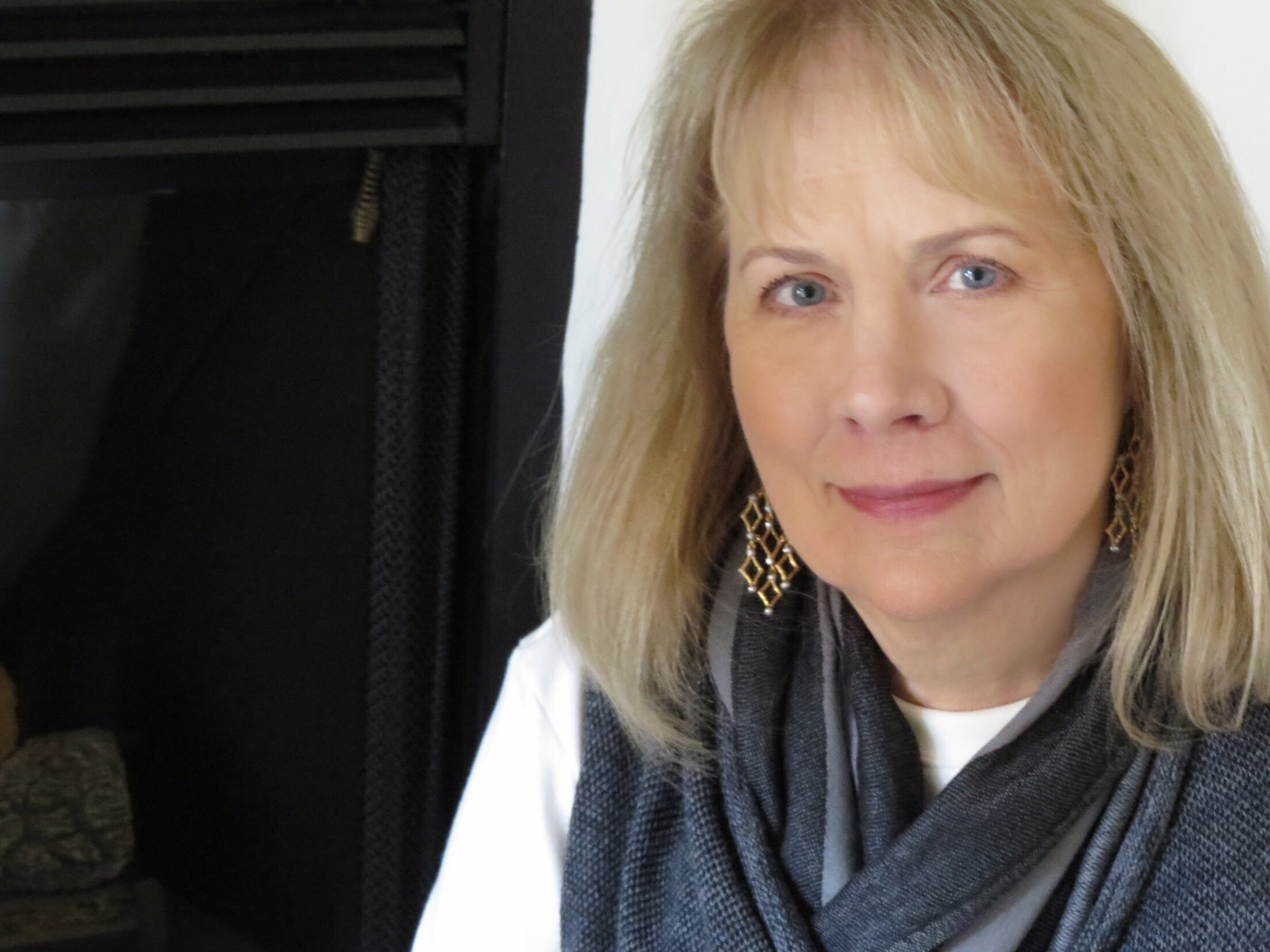 About the Poet:
Luanne Castle’s new poetry collection is Rooted and Winged (Finishing Line Press). Kin Types (Finishing Line Press), a chapbook of poetry and flash nonfiction, was a finalist for the Eric Hoffer Award. Her first collection of poetry, Doll God (Aldrich), won the New Mexico-Arizona Book Award for Poetry. Luanne’s Pushcart and Best of the Net-nominated poetry and prose have appeared in Copper Nickel, American Journal of Poetry, Pleiades, Tipton Poetry Review, River Teeth, TAB, Verse Daily, Glass: A Journal of Poetry, Saranac Review, Grist, and other journals.
Summonings by Raena Shirali
October 12, 2022 by
 Source: Caitlin Hamilton Marketing & Publicity
Paperback, 122 pgs.
I am an Amazon Affiliate
Summonings by Raena Shirali is an urgent calling of female personas in an effort to highlight the continued practice of daayan (witch) hunting in India. But even as Shirali conjures the spirits of these women, she is also summoning her own power as a westernized Indian woman to empathize and call attention to this practice and the unfair targeting of women.
As she points out in the foreword, “India is the world’s most dangerous country for women … The only Western nation in the top 10 was the United States…”
Shirali is fully aware that as a westernized Indian woman there is “distance/between self & subject.” (“on projection,” pg. 12) Her poems aim to bring these women into full-bodied poems based on what she knows about these “witches,” but it is hard to be a spirit without the lens of one’s own culture and upbringing. This mirrors her poem “ojha : rituals” where she questions what “truth” is, especially when it becomes subjective.
These poems are multi-layered and the longer you sit with these lines and images, the more you realize these stories are a conjuring of female power from ancestors and modern women who face oppression. Even as there is a reach for feminine power, there’s also a self-hatred Shirali struggles with: “i was shit & wanted/to be shit. & then i swallowed pretense. swallowed/countries” (“at first, trying to reach those accused” pg. 27) and in “summoning : retreat” (pg. 31) “digging in/the old-world soil/for common root.”
Shirali offers a “different way to look at the same/old face.” (“daayan gets her name” pg. 35) In summoning the spirits of these women, these so-called witches, she’s rewriting the narrative to include their truth, not just the stories that have been told about them. Her poems are when “the earth began to shift”(“daayan & the mountains : ii pg. 58-9). Summonings by Raena Shirali is asking us to reexamine who gets to ask, who answers, and who tells the story.
RATING: Quatrain
About the Poet:
Raena Shirali is the author of two collections of poetry. Her first book, GILT (YesYes Books, 2017), won the 2018 Milt Kessler Poetry Book Award, and her second, summonings (Black Lawrence Press, 2022), won the 2021 Hudson Prize. Winner of a Pushcart Prize & a former Philip Roth Resident at Bucknell University, Shirali is also the recipient of prizes and honors from VIDA, Gulf Coast, Boston Review, & Cosmonauts Avenue. Formerly a Co-Editor-in-Chief of Muzzle Magazine, Shirali now serves as Faculty Advisor for Folio—a literary magazine dedicated to publishing works by undergraduate students at the national level. She holds an MFA in Poetry from The Ohio State University and is an Assistant Professor of English at Holy Family University. The Indian American poet was raised in Charleston, South Carolina, and now lives in Philadelphia.