Quantcast

Mailbox Monday #216

Mailbox Mondays (click the icon to check out the new blog) has gone on tour since Marcia at A Girl and Her Books, formerly The Printed Page passed the torch. This month’s host is Chaotic Compendiums.

The meme allows bloggers to share what books they receive in the mail or through other means over the past week.

Just be warned that these posts can increase your TBR piles and wish lists.

Here’s what I received for review:

1.  Come Late to the Love of Birds by Sandra Kasturi from Tightrope Books for review in April.

Sandra’s first collection, The Animal Bridegroom featured an introduction by Neil Gaiman and has sold out. This collection expands on her themes of abject romances, deformed fairytales gone and the astonishing delights of life in glorious 21st century.

Kasturi’s latest poetry book fuses nature’s continuous emotional offerings, our desire to understand ourselves with our passion to be free, devoid of the burden of modern thought.
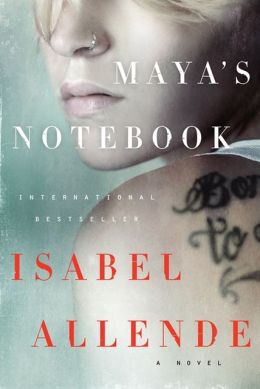
2.  Maya’s Notebook by Isabel Allende for a TLC Book Tour in May.

This contemporary coming-of-age story centers upon Maya Vidal, a remarkable teenager abandoned by her parents. Maya grew up in a rambling old house in Berkeley with her grandmother Nini, whose formidable strength helped her build a new life after emigrating from Chile in 1973 with a young son, and her grandfather Popo, a gentle African-American astronomer.

When Popo dies, Maya goes off the rails. Along with a circle of girlfriends known as “the vampires,” she turns to drugs, alcohol, and petty crime–a downward spiral that eventually leads to Las Vegas and a dangerous underworld, with Maya caught between warring forces: a gang of assassins, the police, the FBI, and Interpol.

Her one chance for survival is Nini, who helps her escape to a remote island off the coast of Chile. In the care of her grandmother’s old friend, Manuel Arias, and surrounded by strange new acquaintances, Maya begins to record her story in her notebook, as she tries to make sense of her past and unravel the mysteries of her family and her own life.

3.  Market Street by Anita Hughes from St. Martin’s Press for review.

Cassie Blake seems to lead a charmed life as the heiress to Fenton’s, San Francisco’s most exclusive department store. But when she discovers her husband, Aidan, a handsome UC Berkeley professor, has had an affair with a student, she flees to the comfort of her best friend Alexis’s Presidio Heights mansion, where she wonders if she should give their marriage one more chance.

Whether or not she can forgive Aidan is not the only choice Cassie has to make. Cassie’s mother is eager to have her oversee the opening of Fenton’s new Food Emporium, which Fenton’s hopes will become San Francisco’s hottest gourmet shopping destination. Cassie’s true passion has always been food, not fashion, and Cassie suspects her mother might be trying to lure her into the Fenton’s fold by entrusting her with such an exciting opportunity. And then there is James, the architect designing the Emporium, who is quietly falling in love with her.
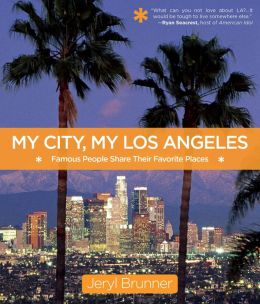
4.  My City, My Los Angeles by Jeryl Brunner for review.

What do famous people love to do during their free time in Los Angeles? Angelenos and other notables have their rituals that connect them to the city in a unique way: favorite restaurants, museums, beaches, parks, markets, landmarks, haunts, and hideaways. The activities are as diverse and eclectic as the city itself. My City, My Los Angeles gives readers something truly unique––a chance to experience L.A. the way the city’s most notable luminaries do.

Here’s what I purchased/picked up at Novel Places:

5.  One Breath Away by Heather Gudenkauf, which was on the free book table.

In the midst of a sudden spring snowstorm, an unknown man armed with a gun walks into an elementary school classroom. Outside the school, the town of Broken Branch watches and waits.

Officer Meg Barrett holds the responsibility for the town’s children in her hands. Will Thwaite, reluctantly entrusted with the care of his two grandchildren by the daughter who left home years earlier, stands by helplessly and wonders if he has failed his child again. Trapped in her classroom, Evelyn Oliver watches for an opportunity to rescue the children in her care. And thirteen-year-old Augie Baker, already struggling with the aftermath of a terrible accident that has brought her to Broken Branch, will risk her own safety to protect her little brother.

As tension mounts with each passing minute, the hidden fears and grudges of the small town are revealed as the people of Broken Branch race to uncover the identity of the stranger who holds their children hostage.

6.  Everyman Dies Alone by Hans Fallada, translated by Michael Hofmann, for book club in March — yes, I’m behind in reading this one for the club discussion.

It presents a richly detailed portrait of life in Berlin under the Nazis and tells the sweeping saga of one working-class couple who decides to take a stand when their only son is killed at the front. With nothing but their grief and each other against the awesome power of the Reich, they launch a simple, clandestine resistance campaign that soon has an enraged Gestapo on their trail, and a world of terrified neighbors and cynical snitches ready to turn them in.

In the end, it’s more than an edge-of-your-seat thriller, more than a moving romance, even more than literature of the highest order—it’s a deeply stirring story of two people standing up for what’s right, and for each other.

7.  2017 by Olga Slavnikova, translated by Marian Schwartz.

In the year 2017 in Russia-exactly 100 years after the revolution-poets and writers are obsolete, class distinctions are painfully sharp, and spirits intervene in the lives of humans from their home high in the mythical Riphean Mountains.

Professor Anfilogov, a wealthy and emotionless man, sets out on an expedition to unearth priceless rubies that no one else has been able to locate. Young Krylov, a talented gem cutter who Anfilogov had taken under his wing, is seeing off his mentor at the train station when he is drawn to a mysterious stranger who calls herself Tanya. A scandalous affair ensues, but trouble arises in the shape of Krylov’s ex-wife Tamara and a spy who appears at the lovers’ every rendezvous. As events unfold, Krylov begins to learn more than he bargained for about the women in his life and realizes why he recognizes the spy from somewhere deep within his past. Meanwhile, Anfilogov’s expedition reveals ugly truths about man’s disregard for nature and the disasters stemming from insatiable greed.

What did you receive?
193rd Virtual Poetry Circle

Welcome to the 193rd Virtual Poetry Circle!

Remember, this is just for fun and is not meant to be stressful.

Keep in mind what Molly Peacock’s books suggested. Look at a line, a stanza, sentences, and images; describe what you like or don’t like; and offer an opinion. If you missed my review of her book, check it out here.

Also, sign up for the 2013 Dive Into Poetry Challenge because its simple; you only need to read 1 book of poetry. Please sign up to be a stop on the 2013 National Poetry Month Blog Tour and visit the stops on the 2012 National Poetry Month Blog Tour.

Today’s poem is from Bernadette Geyer:

I BELIEVE

                        ~  for Tammy Faye, 1942-2007

The longer I live, the less I believe
in the singular rightness
of what I have chosen to believe.

And I’ve begun
to believe in the rightness of belief,
in general.

I’ve begun to believe that, maybe,
I’ve been wrong
all along about Chaucer’s Pardoner,

his bags of stones
and sheep-bone relics. Maybe,
sometimes, the ends

do justify the means, and every falseness
has its moment—
however brief—of sacred truth.

Then again, maybe belief
in a “prosperity gospel” is simply easier
than belief in nothing.

So pardon me
as I gather my precious bones
into this bag

I call body. These penance-worn rags
no relics. And me?
No saint anyone should believe in.

What do you think?

2013 National Poetry Month Blog Tour Sign-Ups

2013 National Poetry Month Blog Tour

Welcome to the sign ups for the 2013 National Poetry Month blog tour. Everyone is invited to share poetry in April either through the tour, on your own, or just hop on the tour and discussions at any time throughout the month with spotlights on poets, reviews of poetry books, event information about poetry readings, your own poems, and more.

If you cannot see the form, please use this link.

LEVEL 2 by Lenore Appelhans

LEVEL 2 by Lenore Appelhans (aka Presenting Lenore, a blogger I’ve read for a long time and even met a few times in person) is part one of three in the Memory Chronicles.  Appelhans is creating an alternate afterlife to the one many current religions teach, but her afterlife has roots in mythology and a modern twist.  Felicia Ward’s life is cut short, but readers are kept in the dark about that aspect until the end, which really doesn’t impede the story.  Dipping in and out of her memories with her family, friends, and boyfriend, Felicia remains connected with her earth life and to the emotions she felt there.  In many ways, the chamber in which she relives and calls up these memories is her life line to the past, preventing her from examining her surroundings more fully and questioning the new reality she finds herself in.

“And now I can’t sleep.  Except, that is, when I access my memories of sleeping.  You wouldn’t believe how many times I’ve combed through the seventeen years and 364 days of my life, searching for those rate uninterrupted, nightmare-free stretches of slumber.  Because sleep is my only real break from this endless reel of memories, both mine and those I’ve rented.”  (page 1-2)

Felicia’s experiences are guarded and her memories of the traumatic events in her life are revealed slowly in this first-person point of view novel, which provides a sense of suspense that becomes a bit overwrought toward the end as the reader is anxious to learn how she died and what happened between her, Autumn, and Julian, as well as how she met Neil and what happened to him.  However, a lot of the story is focused on Level 2, its structure, and its purpose as it is revealed to her through someone she already had trust issues with on Earth, so information from him is highly suspect from the beginning, which should lead readers to expect or suspect the twists at the end of the novel.

“In moments like this I wonder whether we are bound together by true feelings of kinship or if we’ve merely clung to each other these past ten years out of obligation, fear, or lack of other prospects.  Her huge doll collection made her the ideal friend back when we first met at out post in Ecuador and at our subsequent stint back in D.C., but since we both got to Frankfurt a year ago last summer, after four years apart, I’m starting to think maybe I’ve outgrown her.  That’s what moving so often can do to you.  It makes you continually question your place in the world, and seek out those few who understand what you’re going through.”  (page 120-1)

The hives in Level 2 are reminiscent of the Matrix movies (as well as the elements of a rebellion), which makes them lack some originality, but there is a back story to its creation that was more imaginative and unfortunately is less detailed than some readers may want, though there are more books planned for this series, which could lead to additional description and better world building.  Meanwhile, Appelhans does raise some questions about the reliability of memory and whether it can be manipulated by others or by the owner of those memories to change the outcome or modify the perception of certain events.  This aspect of the story is very unique and psychological, a part of the story that should be expanded.

Felicia is a strong character at some points and weak at others.  She’s especially weak when navigating the Level 2 environs with someone she does not trust, and says more than once that she is too weak to go off on her own, even when she really isn’t as weak as when she first woke.  However, her fear of the unknown is something that propelled her on Earth and still seems to propel her in this new environment, so it is at least understandable and will hopefully be explored/overcome in future books.  Autumn is a bit one-dimensional, which makes it hard to see why Felicia is so torn about the friendship, though that could be attributed to the memories Felicia reveals to the reader.  Felicia’s relationship with Julian and Neil are both explored, though there really isn’t a love triangle.  LEVEL 2 by Lenore Appelhans is a solid debut, young adult fiction novel that hovers around bigger issues of memory and anchoring oneself with self-confidence without overtly addressing them.  It is fast-paced and suspenseful, but some readers may prefer a deeper exploration of these themes and/or a more linear story line than the dipping in and out of Felicia’s memories.

About the Author:

Lenore Appelhans’ novel, LEVEL 2, will be published by Simon & Schuster in fall 2012.  She blogs at Presenting Lenore about books and loves to travel.  She’s been to 55 countries so far, and she currently lives in Frankfurt, Germany, with her 3 fancy Sacred Birman cats and her husband.  Check out her interview during Dystopian August, a video discussion, the Reader’s Guide.

This is my 14th book for the 2013 New Authors Challenge.

AWP 2013 Boston

Although I’m still working on a poetry manuscript and it’s taking me longer than expected, I wanted to take the time to attend the big writer’s conference for two reasons:

  1. It was in Boston, which I miss
  2. I’ve never been to a conference of this size with so many writers and I wanted to see what other people were doing and how they coped with time management and other issues.

Registration opened on Wed., March 6, and I had planned to get my registration and spend the day with my hubby in Boston, while the little one was watched by her grandparents. While I did pick up my conference badge, etc. and we did get to have a lunch at an Irish pub, Sólás, that had phenomenal smoked Gouda and bacon fondue and some great chowda and soup!  Unfortunately, that’s when we got the call that the little one was running a fever and was not eating, etc.  Let’s just say that the plan to go out and about and take photos and just explore did not happen as I had expected and we headed home.  And this was a continued issue for me throughout the remainder of the week — worry over the kiddo and balancing that with the conference that I paid for, plus a lovely blizzard!

Thurs., March 7:

My first panel was “Revival of the Literary Salon with the Cambridge Writer’s Workshop” with Jessica Piazza (whom I’ve interviewed for 32 Poems), Rita Banerjee, Diana Norma Szokolyai, Samantha Milowsky, and Jade Sylvan), which was fun.  We learned about the creation of literary salons or writing groups that mix genres and music or more to experiment with form and just have fun.  It is less about critiquing work outright and more about learning and sharing with others.  A fun environment in which to share work that may be in draft form or that may be hard to finish for some reason, etc.  It can help provide feedback without being formal.  This panel ended with a writing exercise, similar to the game of Taboo, in which groups were randomly formed to write about an object in poetry from without using a certain list of words.  My group’s poem was not as good as the others in my self-critical opinion, but I confess, I’m not really a morning writer and this was the 9 a.m. panel.  I also felt for a long time like the most “normal” person in the room, and I’m far from normal.

I did end up missing 3 panels — “Keeping Track of Your Book,” “Sources of Inspiration” with Matthew Pearl and “The First Five Pages: Literary Agents and Editors Talk” — because I decided to meet with Sweta Srivastava Vikram at her publisher’s booth, Modern History Press, for a chat that turned into a 2 hour lunch!  Sweta is as lovely and honest in person as she is online, and I really love that about her.  You can check out an impromptu photo with one of her other poet friends, Rajiv Mohabir, here on Facebook.  We had such a great discussion of personalities online and offline and how disingenuous it seems when people have separate personas online and off, as well as a discussion about pulling back from friends in need because they seem to always be in need, etc.  Was a great discussion of chowda and lobster bisque!

The second panel I attended, “What a Novella Is,” was moderated by my friend K.E. Semmel, and touched upon the hardships of writing and defining a piece of work.  The panelists talked about how difficult it is to define novella beyond a simple word count, but most agreed that there is a single line of story but that it goes deeper than a short story would.  There were questions from the audience about Novella and it was discussed that writers need to take a hard look at their longer pieces to see if it is a novel in progress or a short story with too much excess before deciding its a novella.  There were some great novella recommendations from the panel, including one of my recent favorites — We the Animals by Justin Torres.  For a more in depth recap, please check out Melville House.  For this panel, I missed these panels “Lady Lazarus and Beyond: The Craft of Sylvia Plath,” “Writing the Great Hunger,” and “Literary Boston: A Living History” — I think it would be great to split panels up between friends and compare notes, since so many panels are at the same time in different rooms.

“The Chapbook as Gateway” panel with B.K. Fischer, Stephanie Lenox, Lyrae Van Clief-Stefanon, Susanna H. Case, and David Tucker was interesting and discussed how poets can use chapbooks as a limited edition to gain audiences and readers before a first book comes out, like a preview to greater work to come.  It was touted as a possible marketing tool at readings, with poets remarking on how many copies are available in the limited edition chapbooks and that only those readers acting quickly will have the gem.  It was interesting to note that some of the poets also have published other chapbooks even since their first book and that they find they like the form as a way to reach new readers at readings and to fill in the gaps between books.  Unfortunately,this panel was at the same time as “Does Place Still Matter,” a panel with Stewart O’Nan.

“Women Poets on Mentoring” with Allison Joseph, Rebecca Dunham, Brittany Cavallaro, Shara McCallum, and Tyler Mills was an excellent panel to end the day with and circled back to the earlier discussion Sweta and I had over lunch.  Each talked about their mentee-mentor relationship and the differences between it with their advisor-advisee relationship.  It was very engaging and it was clear that the relationships between these women were mutually beneficial.  However, there were questions from the audience about how to find mentors if you are not in a college or graduate program, and the women suggested writing programs at local centers, connecting with favorite authors through letters or email and even online, and just attending events, though they cautioned that pushing work and reviewing work early on in the relationship is not advised.  The panel also talked about how to balance the mentor-mentee relationship with other obligations, like jobs and family.

After this panel, I headed home and missed the keynote with Derek Walcott and Seamus Heaney, even though I really wanted to attend.  There was a big time gap between the panel and the keynote and my daughter had a fever and was feeling poorly, so I headed home.

Friday, March 8‘s blizzard hit my parents area harder than Boston, so we received a lovely 22 inches of snow and getting to Boston was going to be difficult, so I chose to miss all the panels I had prioritized and wanted to see more than the others in the schedule (including Fred Marchant’s panel on his 20th anniversary of his first book, etc.) to care for my still sick daughter.  She slept a great many hours on my lap throughout the day.

Sat., March 9:

I chatted with Sweta when I arrived at the bookfair (which is an overwhelming 3+ rooms) and met a couple poet friends of her throughout our chats.  After out morning chat and a couple of stops around the bookfair, I headed to the “Lower Your Standards: WIlliam Stafford in the Workshop” panel with Fred Marchant, James Armstrong, Phillip Metres, Alissa Nutting, and Jeff Gundy.  Jeff Gundy and Alissa Nutting were hilarious, with one of them talking about their own first workshop experience and being half-naked in the bathroom crying even though they had no reason to pee.  It seemed that some of the panelists knew Stafford well when he was alive and they talked about his workshop philosophy and his hands off style of teaching, as well as his negativity toward grading and even praising students as too much guidance, etc.  It was a good panel about guiding writers in their process and remaining less focused on an outcome/finished product.  I did miss a panel with Yusef Komunyakaa for this panel about “Breaking the Jaws of Silence,”

“Bringing Poetry to the People” with Taylor Mali, Samantha Thornhill, Jon Sands, Roger Bonair-Agard, and Michael Salinger was a great panel about how to get poetry out to the community, but it also was more about providing those with stories to tell a way in which they can tell those stories that is accessible.  There were several programs that focused on needle-exchange programs and prisoners and how to get those people to write poetry as a way to cope, etc.  While inspiring, those are not things I could see myself doing, but I’d be interested in supporting those programs for sure because some of the poems these people shared from the participants were emotionally jarring and moving.  PopUpPoets showed a video of breaking down walls among commuters etc. as each poet boards a train, for instance, and stands up to begin reading poetry, and sits down before another stands up in a sort of round robin.  As someone who is incredibly nervous reading in public, this also is not for me, but I really love the idea of getting poetry greater exposure among the general public!

I checked out the rest of the bookfair and met up again with Sweta, who was my buddy this conference.  I felt like a zombie at this point and some of the people walking around the book fair seemed like zombies as well.

My final panel, “Master of None: Surviving and Thriving Without an MFA,” with Ru Freeman (loved Disobedient Girl), Rebecca Makkai, Samuel Park, Marie Myung-Ok Lee, Ida Haffermer-Higgins, has given me hope that I won’t have to incur a lot of debt to get a book published or find an agent, if I get a novel done and need one.  Unless I’m interested in teaching or embarking on another profession, I have no need for an MFA unless like someone in the audience said, “I need a structured program to sit down an write.”  I love that the women on this panel are balancing family and other jobs, and though it is sad to see that they have to hold down other jobs to make ends meet and that they cannot simply write all day, Ru Freeman was witty with her quips.  She even pointed out that big publishers certainly make a ton off of the books they publish when Samuel Park said that the editors no longer edit but have other jobs and duties that they fulfill off the clock.  Freeman also said that she finds men tend to have more time to write than women who are juggling full-time jobs and family obligations, but some male audience members wonder if that’s true for all men.  I’m sure she didn’t mean all men and was just making an observation based on her experiences.

Like most other people, I left the conference after this panel, though I wanted to spend time with family and be with my sick girl, who was feeling better and seemed to be eating solid food again but was still out of sorts.

My overall impression of this conference was that there is a sense of information overload and that you have to prepare ahead of time.  Getting the registration done the day before the panels started, allowed me to plan my days for the most part, rather than wandering around aimlessly.  However, I still felt I missed too many goodies, and would rather do this again with a buddy, maybe 2017 with Anna in DC.  I did want to attend some after conference readings, but alas family life and snow got in the way.  I did like connecting with poets, etc., I know from online in person and having lunch and longer conversations.  That aspect was so much fun, and the panels were great, but packed too close together so you are either forced to eat in a panel after grabbing something quick or skipping food until dinner.  As Fred Marchant told me after his Stafford panel, it’s the nature of the conference to feel incredibly guilty about missing out on friends’ panels or readings and feeling overloaded and lost, but all of us know that we are supporting one another in spirit, and I think that’s something I’d definitely keep in mind for next time.

If you attended AWP 2013, I’d love to hear your thoughts and read about what panels you went to and what you learned.  Feel free to check out my tweets from the conference.

Mailbox Monday #215

Mailbox Mondays (click the icon to check out the new blog) has gone on tour since Marcia at A Girl and Her Books, formerly The Printed Page passed the torch. This month’s host is Chaotic Compendiums.

The meme allows bloggers to share what books they receive in the mail or through other means over the past week.

Just be warned that these posts can increase your TBR piles and wish lists.


Here’s what I received from my mom:

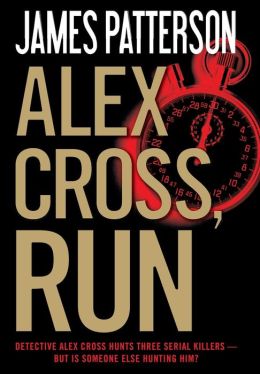
1.  Alex Cross, Run by James Patterson

Top plastic surgeon Elijah Creem is renowned for his skills in the operating room, and for his wild, no-expense-spared “industry parties,” bringing in underage exotic dancers and models for nights of drugs, champagne, and uninhibited sex. That is, until Detective Alex Cross busts one of Creem’s lavish soirees and ruins his fun. Now Creem is willing to do anything to avoid going to jail.

But Alex doesn’t have time to dwell on that case. A beautiful woman has been found murdered in her car, a lock of her hair viciously ripped off. Then a second woman is found hanging from a sixth-floor window with a brutal scar slashed across her stomach. When a third mutilated body is discovered, rumors of three serial killers on the loose send Washington D.C. into an all-out frenzy.

2.  Francona by Terry Francona and Dan Shaughnessy

From 2004 to 2011, Terry Francona managed the Boston Red Sox, perhaps the most scrutinized team in all of sports. During that time, every home game was a sellout. Every play, call, word, gesture—on the field and off—was analyzed by thousands. And every decision was either genius, or disastrous. In those eight years, the Red Sox were transformed from a cursed franchise to one of the most successful and profitable in baseball history—only to fall back to last place as soon as Francona was gone. Now, in Francona: The Red Sox Years, the decorated manager opens up for the first time about his tenure in Boston, unspooling the narrative of how this world-class organization reached such incredible highs and dipped to equally incredible lows. But through it all, there was always baseball, that beautiful game of which Francona never lost sight.

3.  Summer Rental by Mary Kay Andrews

Sometimes, when you need a change in your life, the tide just happens to pull you in the right direction….Ellis, Julia, and Dorie. Best friends since Catholic grade school, they now find themselves, in their mid-thirties, at the crossroads of life and love. Ellis, recently fired from a job she gave everything to, is rudderless and now beginning to question the choices she’s made over the past decade of her life. Julia—whose caustic wit covers up her wounds—has a man who loves her and is offering her the world, but she can’t hide from how deeply insecure she feels about her looks, her brains, her life. And Dorie has just been shockingly betrayed by the man she loved and trusted the most in the world…though this is just the tip of the iceberg of her problems and secrets. A month in North Carolina’s Outer Banks is just what each of them needs. Ty Bazemore is their landlord, though he’s hanging on to the rambling old beach house by a thin thread. After an inauspicious first meeting with Ellis, the two find themselves disturbingly attracted to one another, even as Ty is about to lose everything he’s ever cared about. Maryn Shackleford is a stranger, and a woman on the run. Maryn needs just a few things in life: no questions, a good hiding place, and a new identity. Ellis, Julia, and Dorie can provide what Maryn wants; can they also provide what she needs? Five people questioning everything they ever thought they knew about life. Five people on a journey that will uncover their secrets and point them on the path to forgiveness. Five people who each need a sea change, and one month that might just give it to them.

Here’s what I bought at AWP’s Writer’s Conference last week in Boston:

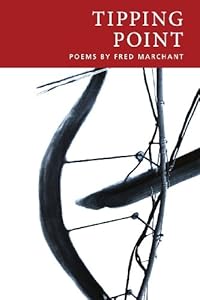
4.  Tipping Point: 20th Anniversary Edition by Fred Marchant

With his deft and timeless blend of the lyrical and narrative, Fred Marchant explores the wars inside us and the ones we wage in the world: spiritual, familial, political. Says Tom Sleigh, “In the spirit of Wilfred Owen, Tipping Point is a book seared by personal and historical fact.” This 20th Anniversary Edition, with a new introduction by Nick Flynn, celebrates what Sven Birkerts calls, “the larger contexts in which our deeds and gestures come to matter.” Flynn concludes, “Tipping Point arrives, twenty years or two thousand years later, eternal and utterly ever-present.”


5.  The Scabbard of Her Throat by Bernadette Geyer

“The poems in Bernadette Geyer’s The Scabbard of Her Throat are saturated by touch: fingers on a throat, hand on a door, wasp, clasped to a cicada’s back, fever to bodies, daughters to mothers, mythologies to linoleum. Her lines soothed, they bruised, they entered my ear and held.” — Cornelius Eady, author of Brutal Imagination


Here’s my unexpected review copy:

6.  Midnight Sacrifice by Melinda Leigh

One by one, people are mysteriously disappearing from a small Maine town.

Four months ago, a ruthless murderer killed two people and kidnapped three more, including Danny Sullivan’s sister, who barely escaped. Unfortunately so did the killer, vanishing without a trace into the vast wilderness. When the police fail to find his sister’s captor, Danny returns to Maine to hunt him down.

He begins his search with another survivor, bed and breakfast owner Mandy Brown, but her refusal to cooperate raises Danny’s suspicions. What is the beautiful innkeeper hiding?

Mandy Brown has a secret. But sexy Danny Sullivan, his relentless questions, and the desire that simmers between them threaten to expose the truth. A revelation that puts her family in danger. As more people disappear, it becomes clear the killer is planning another ritual…and that he’s circling in on Mandy.

What did you receive?

192nd Virtual Poetry Circle

Welcome to the 192nd Virtual Poetry Circle!

Remember, this is just for fun and is not meant to be stressful.

Keep in mind what Molly Peacock’s books suggested. Look at a line, a stanza, sentences, and images; describe what you like or don’t like; and offer an opinion. If you missed my review of her book, check it out here.

Also, sign up for the 2013 Dive Into Poetry Challenge because its simple; you only need to read 1 book of poetry. Please visit the stops on the 2012 National Poetry Month Blog Tour.

Today’s poem is from Toi Derricotte:

Love Story in Black and White

What the hell am I doing
hugging a white man in an apron?
I said it to myself—but out loud! —so that
he pushed me away slightly:
What did you say?
This was the first white man I had dated—
though I was sixty!
It wasn't only that I was holding
a body close for the first time
in years; not only
that he was white.
Our mothers' fears and angers—
heirlooms of slavery—
had hardened my heart.
Perhaps it was the apron. I had never imagined
a white man (not a chef)
come down to that order. Perhaps
the way he met me, beaming,
opened wide,
confounded my expectations
and undid me.
How lovely his body
as he bends to the wise tomatoes.
What does black
and white have to do with it,
our love that's lasted ten years?
Each act of tenderness
amends the violence of history.

What do you think?

Short Story Friday: Rules for Virgins by Amy Tan

It’s Friday again, and as promised, here is one of the occasional Short Story Friday features. Today’s feature will focus on Amy Tan’s e-short story, Rules for Virgins.

Rules for Virgins by Amy Tan is a short story in which a virgin courtesan is being told the ins and outs of the profession.  Set in 1912 Shanghai, Magic Gourd is explaining the ways in which courtesans gain favor with the wealthiest of men.  Violet, a young woman whose mother owned a similar house of women, is being tutored in the ways of beguiling and pampering not only the men they want to attract, but the other women in the house so that competition does not become deadly.

“While you are still a virgin courtesan, you must know all the arts of enticement and master the balance of anticipation and reticence.”

The way in which the story is told is in the form of teacher-student, and while Magic Gourd is harsh at times and provides unabashed detail about the expectations of men.  She exposes the inner workings of the house and the other women’s jealousies, but she also explains the function of the “mosquito press” in spreading rumors that build the reputations of new girls and houses.

“Few men are capable of preserving their ideal self.  If he is a scholar, what philosophical principles were sacrificed to ambition?  If he is a banker, what oath of honesty was dirtied by favors?  If he his a politician, what civic-minded policies were destroyed by bribes?  You must cultivate his sentimentality for moral glory and help him treasure his myth of who he was.”

The narration is reminiscent of Tan’s earlier work, but in this case, the women are not related by birth, but by situation, and the older, wiser Magic Gourd is imparting her wisdom to the younger courtesan.  Rules for Virgins by Amy Tan is a great look into this mysterious world of entertainment and enticement, but it seems too short and would have been great to see Violet begin to navigate this world at the guiding hand of Magic Gourd.

About the Author:

Amy Tan is an American writer whose works explore mother-daughter relationships. Her most well-known work is The Joy Luck Club, which has been translated into 35 languages. In 1993, the book was adapted into a commercially successful film.

The Best of PUNK Magazine by John Holmstrom and Bridget Hurd

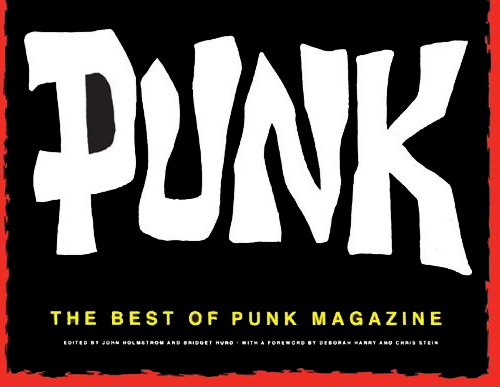
The Best of PUNK Magazine by John Holmstrom and Bridget Hurd, with a foreward from Deborah Harry (yes, the singer from Blondie) and Chris Stein (co-founder of Blondie), is a compilation of the best articles and artwork from the magazine, and it opens with a fun depiction of New York City — “The PUNK Map of N.Y.C.: For jerks who just don’t know their way around.”  The drawings of the rivers and the streets and the realistic, and yet, out there cartoons are likely to generate smirks, if not genuine smiles.

As someone born in the late 1970s, but in love with punk music and Blondie, this collection is something that provides not only more background about the emergence of punk, but also the  whimsical fun and sort of not-a-care-in-the-world feel of the genre.  PUNK magazine had a lot to live up to as the voice of 1970s New York, but it also had a lot to break away from in terms of what was expected of a music magazine.  Clearly, PUNK was a magazine dedicated to snarkiness in all its forms — visual and textual — and it worked well.  It was gritty, it was real, and the glamor was no where in its photos or its comics, but that seems to be why the magazine stood out.  There was a whole lot of youthful exuberance in the beginning of this magazine as nicknames were handed out and spaces were renamed — like the PUNK Dump.

The opening interview with Lou Reed is just the tip of the mosh pit with this magazine.  Reed is so candid, it’s almost like he forgot he was being interviewed by a magazine, and it is unlikely anyone told him the interview would be turned into a comic strip.  The comics are filled with typical masculine and bathroom humor at times, but the drawings are enough to carry the jokes beyond their static line.  A really cool moment in the collection is the results of the Patti Smith Graffiti Contest, where some are so tasteful and others are just outrageous.

By the third issue, the magazine’s editors knew they were a hit when the Ramones snagged a record contract in part because of the magazine’s coverage of their band.  One particular gem in the collection is Holmstrom’s explanation of punk:  “sound — faster and louder; humor — like the novelty songs of the 1950s and 1960s; fashion — no glam, just the classics: shades, blue jeans, t-shirt, sneakers; minimalism — less is more.  No bombast; attitude — similar to the hippie ethos “Do your own thing but let me do mine,” but more like: “F**k you! I don’t care what you do, just leave me alone!”; do it yourself — publish your own ‘zine, make your own record; retro rock/conservatism — mining the tradition of rock ‘n’ roll from the 1950s and early 1960s, while rejecting everything after the hippies took over in 1967.”

The Best of PUNK Magazine by John Holmstrom and Bridget Hurd is a great compilation, but you may not want to leave it on the coffee table with conservative parents or in-laws around.  It’s got some bawdy humor, creative ideas, fantastically candid photos and interviews with punk rock stars of the time, and so much more.  Reminiscent of MAD Magazine and the like, but it really has a garage feel about it — a passion of the listener, the true fans of PUNK.

About the Author:

John Holmstrom is a cartoonist and writer and co-founder (with Legs McNeil) of Punk magazine. He illustrated the covers of the Ramones albums Rocket to Russia and Road to Ruin, and created the characters Bosko and Joe, which were published in Scholastic’s Bananas magazine from 1975-1984, as well as in Stop! Magazine, Comical Funnies, Twist, and High Times. Holmstrom’s work and unmistakable artistic style has become the key visual representation of the Punk era.

This is my 13th book for the 2013 New Authors Challenge.

Guest Review: Every Seed of the Pomegranate by David Sullivan

Erica Goss is a talented poet, whose Wild Place poetry collection I loved (my review) and who is the current Poet Laureate for Los Gatos 2013-14, has offered up her talents today as a reviewer, while I’m attending a wonderful writer’s conference in Boston.

Today, she’ll be reviewing Every Seed of the Pomegranate by David Sullivan (Tebot Bach, San Diego, CA, 2012, ISBN: 978-1-893670-86-0, 118 pages).  Without further ado, please give her a warm welcome:

On September 11, 2001, I woke to the news that New York City had been attacked. From almost three thousand miles away in California, the events I watched on TV, in spite of their horror, didn’t seem real to me. They were happening in some faraway place.

That evening, I discovered that Mark Bingham was on United Airlines Flight 93, which crashed near Shanksville, Pennsylvania. Mark was the son of my neighbor, Alice Hoagland. The attack was no longer “over there.” It had arrived in my back yard.

David Sullivan’s latest collection of poems, Every Seed of the Pomegranate, brings the war in Iraq up close and personal in the same way. I had to close my eyes often, after reading lines such as “Pleasure and sorrow / are bound together – wheat sheaves / awaiting threshing” (Night Visions 1) or “No tears mark these days. / After Saddam’s soldiers left / she burned the bedsheets” (Kurdish House on Fire).

One of this collection’s many strengths is how the poems use the smallest details to authenticate frequent shifts in point of view. From the poem “Swirling Sand,” the voice of a soldier:

This sand infiltrates
every goddamn thing I wear.
Send lotion, pronto.

And the voice of a grieving father:

Allah knows my heart,
my son.  I do not want to
hear your voice on earth,

only in heaven,
perched by Allah’s ear, singing
inside a green bird.

War is a strange blend of the unthinkable and the practical. They both inform “Swirling Sand,” from graves that “look like / hastily plowed fields” to

Outgoing letters
catch helicopter downwash,
bust the ropes that hold 

them and cascade out
over the ocean.  Flurry
of never-heard birds.

The poem ends with this chilling image: “The eyeless sockets / fill with swirling sand,” describing the “black ash that was once a man.” From the irritation of sand on skin to the ghostly after-image of a dead man, these images crash into the reader’s mind with a precise, yet jumbled logic. War often appears this way to the powerless, to civilians, and anyone outside of the decision-making process, which is to say most of us.

Astute readers have probably noticed that these poems are in haiku stanzas. In his preface to the book, Sullivan writes that all of the poems “came in the same linked haiku form.” The choice of haiku, although not intuitive at first, works unexpectedly well with the topic of war. It imposes a structure on inconceivable violence and tragedy, containing them in manageable, bite-sized sections. Each stanza, controlled within haiku’s syllabic restraints, functions almost as a separate poem; the white space between the stanzas gives the reader a place to breathe before moving on. Using the haiku form “cut(s) down the poem to its sinewy essence,” to quote Denise Levertov from Light Up the Cave. That essence is vital to the voices represented in the book, giving each one a distinct diction and vocabulary.

Angels are among those many voices. They provide commentary, speaking in detached and eerie tones. From “Angel Jibril (Gabriel), The Messenger:”

Get out of the way,
I could have said, but you had
to believe someone
would be forgiven

and

you go out soothed
by the songs you’ve heard birds sing
and come back sobbing.

Sullivan’s skill as a poet is evident as he moves from the impartial voice of an angel to the voice in “Staff Sergeant Alex Lemons, From His Wheelchair:”

My dreams grow heavy
with daily fuck-ups.  I trudge
back up garage ramps

having forgotten
where I parked and what the damn
Impala looks like.

Again, the details make the poem real and vital: “I tried recovery, / but I’m not into talking / ‘bout what they can’t feel.” Most of us will never understand Alex Lemons’s suffering (in the notes to the poem, Sullivan writes that since returning to the US, Lemons has had fourteen operations on his damaged feet, which were “shredded due to an accident in Najaf”), nor the physical and emotional damage such an event has left him. Through the deep compassion of these poems, however, we have a place to enter.

“The Black Camel” evokes three distinct interpretations of the same event. Sullivan’s notes on the poem help explain the various sources for the story, but they are not necessary to fully enjoy it. The voices of an American soldier, an Iraqi Republican guard, and his heartbroken father, grow more anguished as the poem unfolds: “The IED hit / while I held his cigarette. / Where’s God, Tiffany?” and “Swore I saw my son, / but when they showed me, I cried / for a stranger boy.” Only the voice of Malak, the angel, stays consistent: “No one has been here / before you, no one will come / after you’re gone” and “Don’t cling to one form; / water continues to flow / after the pot breaks.”

These poems do not judge, nor are they therapy. They do not offer explanations. At the end of the book, I still didn’t know why men start wars, but I understood a more disturbing truth: that the capacities for violence and compassion live within every person, and quite often, comfortably side-by-side. As the Reverend Marilyn Sewell once wrote, “Most evil is done in the name of some greater good.” The poems in Every Seed of the Pomegranate recognize this paradox. They remind us that even though what happened in Iraq might seem far away, it’s as close as our backyard. We ignore it at our peril.

Every Seed of the Pomegranate by David Sullivan sounds like a collection that would have a deep emotional impact on the reader, particularly those who know soldiers — are related to them or friends with them — or who are even soldiers. Were these poems cathartic for the writer as they might be for a soldier? I’d like to think they would be, and Goss makes an excellent point about the capacity for violence and compassion living within every person and the paradox that it presents.

Six Sisters’ Stuff: Family Recipes, Fun Crafts, and Much More & 4×4 Dinner Giveaway/Challenge

Six Sisters’ Stuff:  Family Recipes, Fun Crafts, and So Much More! is a flexible paperback cookbook that not only includes gorgeous photos of entrees, appetizers, and desserts, but also a variety of crafts to keep your kids occupied and to dress up the table.  Camille, Kristen, Elyse, Stephanie, Lauren, and Kendra are biological sisters and know what it means to have a busy life, but they still make time for family dinners and this book includes 100 easy-to-follow recipes using ingredients commonly found in your pantry.

The full-color photos in this cookbook will make your mouth water even if you’ve just eaten dinner.  From the main meals to the slow cooker meals, these women have made cooking for a family incredibly easy and simple with these recipes.  There are salads, sides, and breads, plus dessert — oh, the dessert.  (I made one for book club, see photos and reaction below)  But this book is not only about the food and having family meals together, but it also is about spending time with family whether it’s on a road trip or inside on a rainy day (I’ll be testing these out in the coming weeks).

There are projects ranging from creating simple decorations like a snowman out of blocks and felt bows to more complex projects like bookshelves made out of pallets.  These projects are sure to occupy family members and make the house look more beautiful.  The sisters also offer advice on spring cleaning, which may seem like common sense but for a first time homeowner with a new kid the task can be overwhelming.  There also are healthy snack ideas, fun date ideas to keep the romance alive, and a weekly breakdown on how to build a 72-hour emergency kit for the entire family.

Six Sisters’ Stuff:  Family Recipes, Fun Crafts, and So Much More! is appealing to look at, create from, and learn.  It’s not only about cooking a healthy meal in a short amount of time with the ingredients on hand, but it’s also focused on ensuring that family time becomes a priority.  Readers will have no choice but to dig in and start creating.  Delicious family recipes ready to fill watering mouths and simple crafts to spruce up any busy home.

My baking experience with Mom’s Chocolate Marshmallow Brownies:

As is usual with me, I was pulled in a hundred different directions and had to improvise the recipe, though I do plan to make this recipe the way it is written at some point.  I wanted to make these for book club in February, but with little time, I turned to my favorite box brownie mix, Ghirardelli Dark Chocolate Brownie mix, which never fails me.  And I quickly found the brownie pan I chose would require me to use 2 boxes, which met the hubby had to run out and get a second box.

But then I made the Chocolate frosting from the recipe for on top of the marshmallows.  The recipe called for 2-3 cups of powdered sugar, but I found out quickly that 2 cups was too little because the frosting was soupy, so I had to make it 3 cups for the right consistency.  Once I got the frosting made, i spread it on top of the marshmallows (which I really didn’t need the whole bag of).

The pan must have still been a bit warm because the frosting melted a little too much over the marshmallows, making it an even gooier mess than I expected, but it didn’t seem to matter to the book club members who were eager to try it.  I just had to have the first piece, and one of the corners, since those are my favorite!  I took a close up of one piece to share with everyone.  YUM!

Six Sisters photoAbout the Six Sisters:

In February 2011, we started our blog SixSistersStuff.com. After years of living close to one another, we were being pulled in many different directions- one sister moved to the West coast, another sister followed her husband to medical school, one moved away to college, and another sister had just lost a baby. We needed each other now more than ever and we used our blog as a way to stay in touch.

Before we started blogging, we were constantly calling each other for recipe ideas, craft projects, and ways to keep our children entertained during those long winter days. The blog was the perfect way for us to share those ideas with each other and we were having so much fun doing it. We are all busy, whether it’s with our kids, jobs, school, husbands, community involvement, or something else eating up our time, so all the recipes and projects you will find on this blog are quick and easy! Our recipes are family favorites that use ingredients that can commonly be found in your pantry and our crafts and home decor projects can be made with little or no money. We don’t claim to be amazing chefs- we just know the importance of feeding your family a home-cooked meal and sitting down to eat it together.


This is my 12th book for the 2013 New Authors Challenge.


About the 4×4 Dinner Challenge:

4X4 dinner challenge

  • Pledging to accept the 4×4 Dinner Challenge means the family will eat together at least four times per week for four weeks.
  • Families are encouraged to register online, and they will receive meal tips, ideas for family activities, and helpful recipes to make meeting the challenge easy.

To win a copy of this colorful cook book, do the following:

  1. Like the Six Sister’s STUFF Facebook page and join the 4×4 Dinner Challenge
  2. Click the 4×4 Family dinner banner on the Website (on the right sidebar) and leave a comment joining the challenge.
  3. Come back here and leave a comment on this post about what you’d like to check out in Six Sisters’ Stuff.

Deadline to enter is March 10, 2013, at 11:59 PM EST.

Mailbox Monday #214

Mailbox Mondays (click the icon to check out the new blog) has gone on tour since Marcia at A Girl and Her Books, formerly The Printed Page passed the torch. This month’s host is Chaotic Compendiums.

The meme allows bloggers to share what books they receive in the mail or through other means over the past week.

Just be warned that these posts can increase your TBR piles and wish lists.


Here’s what I received:

1.  The Secretary by Kim Ghattas for review from Henry Holt.

In November 2008, Hillary Clinton agreed to work for her former rival. As President Barack Obama’s secretary of state, she set out to repair America’s image around the world—and her own. For the following four years, BBC foreign correspondent Kim Ghattas had unparalleled access to Clinton and her entourage, and she weaves a fast-paced, gripping account of life on the road with Clinton in The Secretary.

With the perspective of one who is both an insider and an outsider, Ghattas draws on extensive interviews with Clinton, administration officials, and players in Washington as well as overseas, to paint an intimate and candid portrait of one of the most powerful global politicians. Filled with fresh insights, The Secretary provides a captivating analysis of Clinton’s brand of diplomacy and the Obama administration’s efforts to redefine American power in the twenty-first century.

Populated with a cast of real-life characters, The Secretary tells the story of Clinton’s transformation from popular but polarizing politician to America’s envoy to the world in compelling detail and with all the tension of high stakes diplomacy. From her evolving relationship with President Obama to the drama of WikiLeaks and the turmoil of the Arab Spring, we see Clinton cheerfully boarding her plane at 3 a.m. after no sleep, reading the riot act to the Chinese, and going through her diplomatic checklist before signing on to war in Libya—all the while trying to restore American leadership in a rapidly changing world.

Viewed through Ghattas’s vantage point as a half-Dutch, half-Lebanese citizen who grew up in the crossfire of the Lebanese civil war, The Secretary is also the author’s own journey as she seeks to answer the questions that haunted her childhood. How powerful is America really? And, if it is in decline, who or what will replace it and what will it mean for America and the world?

2.  No Ocean Here by Sweta Srivastava Vikram for review from the poet.

No Ocean Here bears moving accounts of women and girls in certain developing and underdeveloped countries. The book raises concern, and chronicles the socio-cultural conditions of women in parts of Asia, Africa, and the Middle East. The stories, either based on personal interviews or inspired by true stories, are factual, visceral, haunting, and bold narratives, presented in the form of poems.

3.  Night Thoughts by Sarah Arvio, which I won.

In this remarkable and unique work, award-winning poet Sarah Arvio gives us a memoir about coming to terms with a life in crisis through the study of dreams.

As a young woman, threatened by disturbing visions, Arvio went into psychoanalysis to save herself. The result is a riveting sequence of dream poems, followed by “Notes.” The poems, in the form of irregular sonnets, describe her dreamworld:  a realm of beauty and terror emblazoned with recurring colors and images—gold, blood red, robin’s-egg blue, snakes, swarms of razors, suitcases, playing cards, a catwalk. The Notes, also exquisitely readable, unfold the meaning of the dreams—as told to her analyst—and recount the enlightening and sometimes harrowing process of unlocking memories, starting with the diaries she burned to make herself forget. Arvio’s explorations lead her back to her younger self—and to a life-changing understanding that will fascinate readers.

An utterly original work of art and a groundbreaking portrayal of the power of dream interpretation to resolve psychic distress, this stunning book illumines the poetic logic of the dreaming mind; it also shows us, with surpassing poignancy, how tender and fragile is the mind of an adolescent girl.

What did you receive?