Quantcast

Tesco Presents: Creative Inspiration for Your Writing

While I’m away from the computer for a writing conference and just generally taking a break from the blog in the next week, I’ve got some posts pre-scheduled.  I hope that you enjoy them and I will be back to reply to comments when I return.

For today, I’ve got an interesting guest post brought to you by Tesco.  Without further ado:

With creative writing courses, books on writing, and specialty magazines dedicated to the craft, there’s no shortage of advice on writing or finding inspiration. But as one who has leafed through the magazines, read the books, and even taken courses, here is the advice I’ve found most helpful when it comes to actually finding inspiration.

Create Time to Write Every Day

While walking through a world-class gallery or sitting in a Parisian cafe likely tugs at your heart-strings more than sitting at the kitchen table with your journal or computer, the kitchen table is the way forward (though do bring a notepad with you if you plan on visiting the Parisian cafe, or the gallery, as something interesting might occur to you).

Inspiration can come in a flash, however it is definitely more important to create the time and space every day for inspiration to happen, not just hoping genius pays you a visit on your European vacation.

Making time to write every day is sound advice. For those who have made writing their career, not just a side-project, their routine almost always involves writing every day, or nearly so, with a minimum word-count as a goal. Inspiration also involves graft: once you’ve written a few lines or paragraphs, there is room for creativity to take hold of the story or poem, even if what you started with is ultimately abandoned for something more absorbing. Writing leads to more writing.

Read Every Day, as Much as Possible

If anyone ever says, “I don’t read while I’m writing, I don’t want to be too influenced by any particular writer,” pat them on the head and do the opposite. It’s a misguided person who thinks he or she will be negatively influenced by John Steinbeck, Walt Whitman or some other master. We should all hope to be influenced by geniuses like these.

Just as you should make time to write every day, make time also to read every day, whether that’s on the train (a Kindle is the perfect companion for a daily commute on public transportation), for half an hour before bed, or during your lunch break.

A well-known writer once said that everything you need to know about writing can be found in great books. So read for both inspiration and instruction. While there is magic in great writing that cannot be fully understood, there is technique that can be. Observe how scenes are constructed, how a great writer builds tension, then releases it. Great books will inform your creative process and inspire you to write. Indeed, something about reading gives us the courage to begin writing again.
191st Virtual Poetry Circle

Welcome to the 191st Virtual Poetry Circle!

Remember, this is just for fun and is not meant to be stressful.

Keep in mind what Molly Peacock’s books suggested. Look at a line, a stanza, sentences, and images; describe what you like or don’t like; and offer an opinion. If you missed my review of her book, check it out here.

Also, sign up for the 2013 Dive Into Poetry Challenge because its simple; you only need to read 1 book of poetry. Please visit the stops on the 2012 National Poetry Month Blog Tour.

Today’s poem is from Todd Swift’s When All My Disappointments Came At Once:

Hunting Party (page 84)

A heart is sacred, a wounded hart;
Outrun the symbol in the wood.

Pluck out the arrows.  The head
Enters after having been shot through

The air, in order to hunt and halt
The glorious animal that will be eaten;

Flesh parts from pelt; horns rise on walls.
The hall hums with music's knowing.

This is the festival in the glade,
The pump-pump of the love brigade,

That process known as seasonal,
The turn from rose to worm, grass to spade.

What do you think?

The Heart of Haiku by Jane Hirshfield

The Heart of Haiku by Jane Hirshfield, which I first read about it on Beth Kephart’s blog, is lyrical, meandering, and informative not only about Haiku — the art, its origination, and its longevity — but also about one of the greatest poets, Bashō, who lived and breathed Haiku.  Knowing very little about this Japanese poet from the 17th century doesn’t mean you don’t know him because as Hirshfield points out, he infuses every Haiku with his soul and experiences.  Not only can readers live his moments alongside him, but they also can create their own experiences within the Haiku.

“To read a haiku is to become its co-author, to place yourself inside its words until they reveal one of the proteus-shapes of your own life.  The resulting experience may well differ widely between readers:  haiku’s image-based language invites an almost limitless freedom of interpretation.”

Like many poets, verse comes naturally and is less like a job or profession than it is like breathing.  With elements of Zen and Shinto’s spiritual traditions, the poet led a contemplative life focused on not only the natural world, but his experiences with it and as part of it.  At many points in his life, he is affected by events beyond his control, but his poetry never fails to account for these moments or to push him through those hardships — even though it doesn’t seem as though Bashō considered them hardships.  Hirshfield says, “He wanted to renovate human vision by putting what he saw into a bare handful of mostly ordinary words, and he wanted to renovate language by what he asked it to see.”

“Zen is less the study of doctrine than a set of tools for discovering what can be known when the world is looked at with open eyes.  Poetry can be thought of in much the same way, and the recognition of impermanence, ceaseless alteration, and interdependence–the connection of each person, creature, event, and object with every other–need not be “Buddhist.”  These elements permeate the poetry of every tradition. . .”

What is most beautiful about Hirshfield’s examination of Bashō is the reverence she pays to him and her passion for not only his work, but also his dedication to improving it even when near death.  And like many others, he remained focused on pushing his students to strive for more than even he could achieve, urging them not to be the “other half of the split melon” by mirroring his own work.  Hirshfield not only provides history and poetry in this essay, but she also pinpoints the evolution of Haiku and discusses its beauty and its endurance through the ages, even as a teaching tool.

The Heart of Haiku by Jane Hirshfield is a stunning examination of one Japanese poet’s work and his love of life and poetry.  Her narration provides a unique way of stepping into the life and thoughts of Bashō as writer, poet, teacher, and human being.

About the Author:

Jane Hirshfield was born in New York City in 1953. After receiving her B.A. from Princeton University in their first graduating class to include women, she went on to study at the San Francisco Zen Center. Her books of poetry include Come, Thief (Alfred A. Knopf, 2011), After (HarperCollins, 2006); Given Sugar, Given Salt (2001), which was a finalist for the National Book Critics Circle Award, The Lives of the Heart (1997), The October Palace (1994), Of Gravity & Angels (1988), and Alaya (1982).

This is my 11th book for the 2013 New Authors Challenge.

Red Army Red by Jehanne Dubrow

Red Army Red by Jehanne Dubrow is a collection that is broken down into three, clear sections — Cold War, Velvet Revolution, and Laissez-Faire — with a preface section — Red Army Red — and one poem, “Chernobyl Year.”  Dubrow’s narrator recalls the lives of American Diplomats in Communist-controlled Poland during the Cold War and pays homage to the Velvet Revolution in Czechoslovakia and the rebellion of youth before concluding in the commercialized freedom and excess of capitalism.  Her poems are all at once playful, somber, and achingly real.

From "Aubade": (page 9)

Often I lay awake to listen for
my parents returning from the embassy,
a key toothing the lock, the front door

opening to let them in, its rusty
hinges a metal warning.  Every
evening the same.  I drank the words cold war

from the water glass on my nightstand.

Her words echo even after the end of each line, and sometimes even in the middle of a line, leaving a haunting impression on the reader. In “Vinegar Aphrodisiac,” the narrator asks, “What’s sweet//without the wanting, the queue around the block/when even you are out of stock?” The lines for food in a communist society even when there is no more left, and the hope that there will be something there for them when they get to the front of the line. The wanting or the hope is palpable and heartbreaking. The poems in the first section eerily reflect the realities of the time, and there is a juxtaposition of the diplomat life with that of the Poles — “Each morning my mother’s velvet purse/wilted on a chair, empty of its midnight contents:/ruby lipstick, tiny lake of a pocket mirror./My father’s tie lay crumpled on the bed./The romance of objects–both their costumes/on hangers again, still clasping the scent/” (from “Fancy,” page 12)

There is unrest in the second section — the upheaval of adolescence marked by the rising up of workers and society against a communist society that fails to live up to expectation, a theme prominent in “Five-Year Plan.” A deep, unbidden want bursts forth in Dubrow’s lines as the communist Poles want release from their worker chains, so does the diplomat’s daughter want escape from the “crystal” world in which she lives just outside reality, yet feeling that reality keenly. Not entirely part of the communist world, but not completely outside of its empty promises. Always beneath the austere exterior in these poems, there is a burning passion waiting to explode onto the page, and while it may not happen in the same poem, explosions of light, sex, and want emerge of their own volition and when least expected.

Red Army Red by Jehanne Dubrow is a phenomenal collection that is bound to generate much discussion from book clubs, but it also speaks to the truths of ideals and realities and how they never meet expectations.  In many ways, the collection comments overall on the “grass is always greener” idiom, but it also highlights the separation felt by a young woman growing up in a foreign land and having the freedom her country provides, but at the same time feeling the constraints of her host nation.  Amazing use of imagery, politics, real events, and more.

About the Poet:

Jehanne Dubrow is the author of four poetry collections, including most recently Red Army Red and Stateside (Northwestern UP, 2012 and 2010). Her first book, The Hardship Post (2009), won the Three Candles Press Open Book Award, and her second collection From the Fever-World, won the Washington Writers’ Publishing House Poetry Competition (2009). Finishing Line Press published her chapbook, The Promised Bride, in 2007.

Her poetry, creative nonfiction, and book reviews have appeared in journals such as Southern Review, The New Republic, Poetry, Ploughshares, The Hudson Review, The New England Review, West Branch, Gulf Coast, Blackbird, Copper Nickel, Prairie Schooner, as well as on Poetry Daily and Verse Daily.

If you’re going to be in Boston for the AWP conference in March, you might catch Dubrow at a couple of panels.

This is my 5th book for the Dive Into Poetry Challenge 2013.

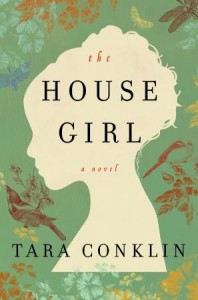
The House Girl by Tara Conklin

The House Girl by Tara Conklin is told mainly from two female points of view — Lina Sparrow and Josephine Bell — one is a white lawyer in New York City at a corporate law firm and the other is a slave/house girl in the southern Lynnhurst, Virginia.  Lina has lived with her artistic father most of her life as her artistic mother’s life was cut short.  Her story is compelling as she’s chosen the analytical and detached life of a lawyer over that of the emotional and less practical life of an artist.  Josephine, an equally if not more compelling story, is a slave on a tobacco farm caring for her dying mistress, who tries to sketch and paint in her upstairs studio.

“Mister hit Josephine with the palm of his hand across her left cheek and it was then she knew she would run.  She heard the whistle of the blow, felt the sting of skin against skin, her head spun and she was looking back over her right shoulder, down to the fields where the few men Mister had left were working the tobacco.”  (page 3 ARC)

Lina is a first-year associate at her law firm, and she works a mad number of hours as she tries to impress her boss and mentor, Dan, but at the same time, she seems to be beating her head against a wall.  There are some tenuous connections drawn between these two stories, the oppressive nature of working for a law firm and slavery, which may or may not be a fair comparison.  The narrative shifts from Josephine to Lina and between the past and present, and once Lina becomes involved with a slavery reparations case, she is wrapped up in innocuous research while all of her other cases are re-assigned.  She’s struggling with her role on the case, but also with the revelations about her mother and her father that have set her world askew.

“She couldn’t bear the thought of sharing.  This was where her mother had once slept, cooked, painted, breathed, and Lina’s memories of her seemed tethered to the physical space.  The way a wall curved away, a washboard of light thrown by the sun against the bare floor, the sharp clap of a kitchen drawer slamming shut — all these evoked flashes of her mother and early childhood that seemed cast in butter, soft and dreamy, lovely, rich.”  (page 21 ARC)

In the latter part of the novel, Lina comes across a biography of an abolitionist as she’s researching the life of Josephine Bell, but this section is overly long and could have been slimmed down a bit as Lina learns about the abolitionist’s connection to the Underground Railroad.  The strength of the novel is in Josephine’s story and her struggles with the Bell family, with her only release — the snatches of time she has to sketch and paint when her mistress is laid up in bed or asleep.  The mysterious life of Josephine is revealed in quick chapters, but early on these chapters are too focused on her desire to run and whether she should run.

In many ways, Lina’s story detracts from the whole, pulling readers into the present and into a case that seems more fantasy than reality.  However, Lina’s story with her father and mother — and the art world — is strong and could have been explored in a separate novel.  The artistic connection, more than the slavery reparations case, would have been a better angle for these stories, connecting the artists to one another through their craft and inspiration or something of that nature.

The House Girl by Tara Conklin showcases not only Conklin’s grasp of the Antebellum South, but also art and its craft.  The strongest parts of Lina’s story are those in her father’s art studio and in the galleries as the paintings are described and the ties between Josephine Bell and Lu Anne Bell are revealed.  Once the novel picks up speed, its tough to put down, and Conklin easily portrays the culture and atmosphere of the southern farm and the fear slaves felt daily.

About the Author:

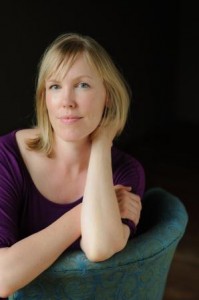
Tara Conklin has worked as a litigator in the New York and London offices of a major corporate law firm but now devotes her time to writing fiction. She received a BA in history from Yale University, a JD from New York University School of Law, and a Master of Law and Diplomacy from the Fletcher School (Tufts University). Tara Conklin’s short fiction has appeared in the Bristol Prize Anthology and Pangea: An Anthology of Stories from Around the Globe. Born in St. Croix, she grew up in Massachusetts and now lives with her family in Seattle, Washington.  Check her out on Facebook and Twitter.  Also here’s a podcast about Conklin’s inspiration for the novel.  Photo credit Mary Grace Long.

tlc tour host

This is my 10th book for the 2013 New Authors Challenge.

Shadows by Ilsa Bick

Shadows by Ilsa J. Bick is a better book than the first in the series, Ashes (my review), (if you have not read the first book, beware of spoilers in this review) as the writing is more descriptive and less reliant on the cliffhanger factor for each chapter than it was in the first book.  An EMP blast has caused much of the human race to change, leaving the elderly to rethink their lives and focus on the best survival plan they have.  Meanwhile, the young are scared that they will change into flesh-eating monsters like so many others and struggle to keep away from bounty hunters and others who would use the Spared for their own nefarious gains.

Alex, Chris, and others are thrown into a whirlwind fight for their lives as they are separated and sent on their own journeys where they will uncover the truth and learn more about the Changed than they ever expected.  Unlike the first book where readers follow Alex’s point of view for most of the novel, Shadows is made up of more than just some of the main characters’ points of view from the first book, but several others.  At first this can be disconcerting given that the chapters move quickly are immersed in nearly constant action and are very short in some cases.  However, once the reader adjusts to the constant shifts in POV, they are swept up in the action and the chase — and in some cases, merely speeding through certain aspects of the 500+ page book to get to the story lines they really want to uncover.

Oh God, help me, please, help me.  Alex felt her mind begin to slip, as if the world was ice and begun to tilt and she was going to slide right off and fall away into forever if she didn’t hang on tight.  Her heart was trying to blast right out of her chest.  She was shaking all over, the hay hook in its belt loop bouncing against her right thigh.  The pyramid, row after row of skills, loomed at her back:  all that remained of those who’d stumbled into this filling field before her.  And of course, there was the smell — that familiar reek of roadkill and boiled sewage.”  (page 21)

Minus a prologue in the beginning, the novel takes off right where Alex was left in the last book.  And readers who were looking for more horror and death than they got in the last book will get their just desserts here, with a little nasty sex thrown in for good measure.  It’s hard to believe this is a young adult novel, and readers should beware that this is a novel for older teens, rather than younger readers.  Bick’s writing is much improved over the last novel, and it helps to garner readers’ emotions and attachments to the characters of Alex and Tom.  However, there are still so many unanswered questions from the last book that are left unanswered.  Not only that, more questions and riddles are raised and left unanswered in this novel.  Bick is treading a fine line here, and unless the final novel in the series addresses a great number of these questions and mysteries, readers could be disappointed.

Shadows by Ilsa J. Bick is an adrenaline rush that pushes readers to not only think about the heat of combat and the survival skills they would need in a post-apocalyptic world, but also about the concept of trust and family.  When is our best efforts to save those we love and help them enough and when is it time to let go and move on?  Do you trust those who are nicest to you or do you still treat them with a degree of suspicion?  For Alex and Tom, there is never enough effort, and a healthy dose of suspicion is what keeps you alive.  The horrifying aspects of this novel are likely to turn off some readers, while attract others, but there are deeper themes at work here, and it is clear that Bick is attempting to tell a story that pays homage to those soldiers racked with guilt and still living daily nightmares of war.

About the Author:

Ilsa J. Bick is an award-winning, best-selling author of short stories, e-books and novels. She has written for several long-running science fiction series, most notably Star Trek, Battletech, and Mechwarrior:Dark Age. She’s taken both Grand and Second Prize in the Strange New Worlds anthology series (1999 and 2001, respectively), while her story, “The Quality of Wetness,” took Second Prize in the prestigious Writers of the Future contest in 2000. Her first Star Trek novel, Well of Souls, was a 2003 Barnes & Noble bestseller.

What the Eclectic Bookworms Thought (BEWARE of SPOILERS):

Shadows by Ilsa Bick was the book club selection for February.  With the multiple perspectives in this book, the members expressed a hard time following all of them and/or whether all of them were necessary.  While some preferred to keep the perspectives to a manageable number, another observation was that with Alex, the main protagonist, in a different area and experiencing things outside of Rule, it would have been difficult to keep the book from only her perspective.  The gore did not bother most members, which made the second book in the series read more like horror and less like science fiction or fantasy; some were taken aback by the sexual chapter, with the youngest member of the group not reading those sections at all.

The member who nominated Shadows was angry that the book left readers hanging about the fate of some characters, but it was pointed out that cliffhangers are often the case in second books when a third book is planned.  One member really enjoys Alex as a character, while two others pointed to Tom as their favorite.  Meanwhile, the group members all speculated about where the third book would go with most of us agreeing there would be a battle between Rule and the other Amish-like society mentioned, as well as a possible three-way dual between Chris, Wolf, and Tom or at least Chris and Tom in a sort of romantic gesture to win Alex’s affections.

The group seemed split on whether the overall reason would be explained for why some kids changed into cannibals and some did not.  We’ve speculated that the brain chemistry of the changed had been closer to normal levels than those that did not change, though Lena — one of the characters pointed out as most annoying — seems to have fallen in the camp of the changed with this book.  Overall, it seemed as though at least two members liked the second book in the series more than the first, while three or four members liked it even less with a couple people giving it one star.  Two members were not interested at all in reading the third installment, while two expressed an interest in one member reading it and telling the rest of us what happens, and a few others considering the option of reading the third book.

Mailbox Monday #213

Mailbox Mondays (click the icon to check out the new blog) has gone on tour since Marcia at A Girl and Her Books, formerly The Printed Page passed the torch. This month’s host is Unabridged Chick.

The meme allows bloggers to share what books they receive in the mail or through other means over the past week.

Just be warned that these posts can increase your TBR piles and wish lists.

Here’s what I received:

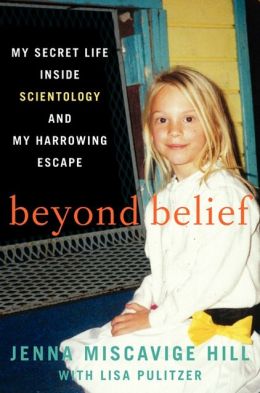
1.  Beyond Belief:  My Secret Life Inside Scientology and My Harrowing Escape by Jenna Miscavige Hill and Lisa Pulitzer, which came unexpectedly from William Morrow.

Jenna Miscavige Hill, niece of Church of Scientology leader David Miscavige, was raised as a Scientologist but left the controversial religion in 2005. In Beyond Belief, she shares her true story of life inside the upper ranks of the sect, details her experiences as a member Sea Org—the church’s highest ministry, speaks of her “disconnection” from family outside of the organization, and tells the story of her ultimate escape.

In this tell-all memoir, complete with family photographs from her time in the Church, Jenna Miscavige Hill, a prominent critic of Scientology who now helps others leave the organization, offers an insider’s profile of the beliefs, rituals, and secrets of the religion that has captured the fascination of millions, including some of Hollywood’s brightest stars such as Tom Cruise and John Travolta.

2.  Life After Life by Kate Atkinson from Hachette Books unexpectedly.

What if you could live again and again, until you got it right?

On a cold and snowy night in 1910, Ursula Todd is born to an English banker and his wife. She dies before she can draw her first breath. On that same cold and snowy night, Ursula Todd is born, lets out a lusty wail, and embarks upon a life that will be, to say the least, unusual. For as she grows, she also dies, repeatedly, in a variety of ways, while the young century marches on towards its second cataclysmic world war.

Does Ursula’s apparently infinite number of lives give her the power to save the world from its inevitable destiny? And if she can — will she?

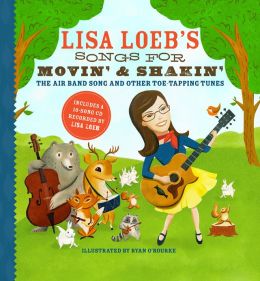
3.  Lisa Loeb’s Songs for Movin’ and Shakin by Lisa Loeb for review in April.

This spectacularly fun songbook will get kids off the sofa—guaranteed!

Singer Lisa Loeb will have kids movin’ and groovin’ with her sparkling second collection of songs, activities, and recipes—plus a CD with five all-time children’s favorites and another five original tunes. It’s sure to stir up some fun, as budding musicians discover the joys of playing in an air band (“Turn it Down”); see how to face down scary creatures (“Monster Stomp”); and practice relaxing yoga poses (“Hello, Today”). Ryan O’Rourke’s whimsical illustrations light up Lisa’s lyrics—and will delight young readers, movers, and shakers.

Songs include:
Turn it Down (The Air Band Song)* •  Father Abraham  •  Miss Mary Mack • Monster Stomp*  • Going Away* •  Do Your Ears Hang Low? •  Everybody Wake Up* • Hello, Today* •  Peanut Butter and Jelly  •  Head, Shoulders, Knees, and Toes.
(*original song)

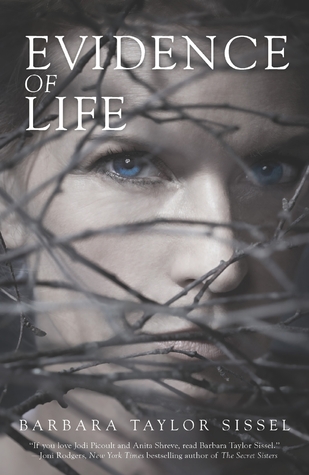
4.  Evidence of Life by Barbara Taylor Sissel, which came unexpectedly from BookTrib.

On the last ordinary day of her life, Abby Bennett feels like the luckiest woman alive. But everyone knows that luck doesn’t last forever…As her husband, Nick, and daughter, Lindsey, embark on a weekend camping trip to the Texas Hill Country, Abby looks forward to having some quiet time to herself. She braids Lindsey’s hair, reminds Nick to drive safely and kisses them both goodbye. For a brief moment, Abby thinks she has it all—a perfect marriage, a perfect life—until a devastating storm rips through the region, and her family vanishes without a trace.

When Nick and Lindsey are presumed dead, lost in the raging waters, Abby refuses to give up hope. Consumed by grief and clinging to her belief that her family is still alive, she sets out to find them. But as disturbing clues begin to surface, Abby realizes that the truth may be far more sinister than she imagined. Soon she finds herself caught in a current of lies that threaten to unhinge her and challenge everything she once believed about her marriage and family.

With a voice that resonates with stunning clarity, Barbara Taylor Sissel delivers a taut and chilling mystery about a mother’s love, a wife’s obsession and the invisible fractures that can shatter a family.

5.  The Best of Punk Magazine by John Holmstrom from the publisher for review.

The very best of Punk—the legendary magazine that defined an era—finds new life in this stunning anthology, featuring original articles along with behind-the-scenes commentary and the backstory on each issue as told by editor-in-chief John Holmstrom. Punk was the Bible of the urban counterculture movement. It not only gave punk music its name, but influenced the East Village art scene and steered the punk aesthetic and attitude. The Best of Punk Magazine includes high-quality reprints of hard-to-find original issues, as well as rare and unseen photos,essays, interviews, and even handwritten contributions from the likes of Andy Warhol, Lou Reed, Debbie Harry, the Ramones, the Sex Pistols, Lester Bangs,Legs McNeil, Lenny Kaye, and many more. For collectors, lifelong punks, and those just discovering what punk is all about, this is the chance see the history of the movement come back to life.

6.  Six Sisters’ Stuff:  Family Recipes, Fun Crafts, and So Much More for review.

Cook, craft, and create with recipes, projects, and ideas from the enormously popular blog SixSistersStuff.com. Every recipe and project included in this book is quick, easy, and fun. More than 100 family-favorite recipes (including an entire section of slow-cooker recipes), use ingredients commonly found in your pantry. The crafts and home décor projects have easy-to-follow instructions with photographs and can be made with little or no money. We don t profess to be amazing chefs, they claim. We just know the importance of feeding our families a home-cooked meal and sitting down to eat it together. Our mom and dad taught us so many great values, and we are thankful that they instilled the importance of family time in our lives. Even the busiest of people can make the food and project ideas we share, which will give you even more time to spend with your family and loved ones. SixSistersStuff.com is an online phenomenon. More than 5 million page views per month More than 50,000 Facebook followers Nearly 10,000 followers on Twitter More than 80,000 followers on Pinterest.

What did you receive?

190th Virtual Poetry Circle

Welcome to the 190th Virtual Poetry Circle!

Remember, this is just for fun and is not meant to be stressful.

Keep in mind what Molly Peacock’s books suggested. Look at a line, a stanza, sentences, and images; describe what you like or don’t like; and offer an opinion. If you missed my review of her book, check it out here.

Also, sign up for the 2013 Dive Into Poetry Challenge because its simple; you only need to read 1 book of poetry. Please visit the stops on the 2012 National Poetry Month Blog Tour.

Today’s poem is from Mary Oliver’s A Thousand Mornings (page 47):

Was it Necessary to Do It?

I tell you that ant is very alive!
Look at how he fusses at being stepped on.

What do you think?

Book News: Kami Garcia, Co-Author of Beautiful Creatures, Comes to Bethesda, Feb. 23

Kami Bethesda Web 2

Kami Garcia, one of the authors of Beautiful Creatures, will be in Bethesda, Md., at Barnes & Noble on Saturday, Feb. 23, 2013, at 2 p.m. signing books and talking about the first book in a series of fantasy and science fiction novels, which was recently made into a movie, which opened in time for Valentine’s Day.

About the book:

A supernatural love story set in the South, “Beautiful Creatures” tells the tale of two star-crossed lovers:  Ethan (Alden Ehrenreich), a young man longing to escape his small town, and Lena (Alice Englert), a mysterious new girl.  Together, they uncover dark secrets about their respective families, their history and their town.

There is a ton of buzz about the movie as there was about the books:

“The Beautiful Creatures novels contain a potent mix of the gothic, the mythic, and the magical. Readers can look forward to more of what they love in the final installment, Beautiful Redemption, as they follow Ethan’s compelling journey to its bittersweet close. With original characters, complex world building, and crackling prose, this is masterful storytelling.” – Deborah Harkness, New York Times bestselling author of A Discovery of Witches

“In the Gothic tradition of Ann Rice…Give this to fans of Stephenie Meyer’s Twilight of HBO’s True Blood series.” – School Library Journal

“Gorgeously crafted, atmospheric, and original.” – Melissa Marr, New York Times bestselling author of Wicked Lovely

About the Author:

Kami grew up outside of Washington DC, wore lots of black, and spent hours writing poetry in spiral notebooks. As a girl with Southern roots, she has always been fascinated by the paranormal and believes in lots of things “normal” people don’t. She’s very superstitious and would never sleep in a room with the number “13″ on the door. When she is not writing, Kami can usually be found watching disaster movies, listening to Soundgarden, or drinking Diet Coke.

Kami has an MA in education, and taught in the Washington DC area until she moved to Los Angeles, where she was a teacher & Reading Specialist for 14 years. In addition to teaching, Kami was a professional artist and led fantasy book groups for children and teens. She lives in Los Angeles with her husband, son, daughter, and their dogs Spike and Oz (named after characters from Buffy the Vampire Slayer).

I hope everyone considers heading out to Bethesda this weekend to catch Kami and pick up a book for themselves and a few friends.

Barnes & Noble (4801 Bethesda Avenue, Bethesda, MD 20814)

Saturday, February 23 at 2:00 pm

A Thousand Mornings by Mary Oliver

A Thousand Mornings by Mary Oliver is meditative observance, but also a collection of poems full of praise not only of the natural order but of humanity’s place in that order.  In “And Bob Dylan Too,” she talks of how the shepherds sing as the sheep praise the grass by eating it and how the bees’ hum signals the opening of spring blossoms.  And in many ways, nature comes to life, becomes anthropomorphized in conversation with a narrator, allowing for the unspoken rules to be broken and/or expanded.  Oliver has a deep sense of connection to the natural world that shines through in each line of each poem, and yet, there is a bit of rebellion in her poems that points to a time when breaking free of the natural order is not only OK, but unexpected and inspiring.

From "Lines Written in the Days of Growing Darkness" (page 27):

to the petals on the ground
to stay,
knowing as we must,
how the vivacity of what was is married

to the vitality of what will be?
I don't say
it's easy, but
what else will do

What readers will love about Oliver’s poetry is the homage she pays to the natural world in all its beauty, but also the connect we have to it. In “The Moth, the Mountains, the Rivers,” the narrator of the poems asks that we each take the time to live in awe of the wonders around us, to truly sit without worry about the busy schedule and to just be and observe. It is almost a plea of sorts.  In other poems, the narrator simply marvels at nature and even decides to take her home to a mountaintop for silence and reflection and invites the reader along.  But one of the most descriptive and captivating poems in the collection was “Tides,” about the movement of the ocean and the only purpose it has: to be.  Unlike those who talk of its erosion of beaches and its awesome power, Oliver focuses in on its rhythmic movement, its constancy, and its beauty and in this way draws a parallel to how the narrator casually, calmly walks the beach.

A Thousand Mornings by Mary Oliver is reflective of the past, of youth, and of wilder days, but it also is about recapturing that youth, if only in the mind, remembrance, and observance of nature.  But there are moments of distinct action and conviction that the past can be recaptured even if it is at the end of life.  For those looking for Oliver’s traditional poetry, this collection is ripe with observation of the natural world, but it also offers a deeper look at aging and longing for things that have passed.

About the Poet:

Mary Oliver was in Maple Heights, Ohio.  As a teenager, she lived briefly in the home of Edna St. Vincent Millay, where she helped Millay’s family sort through the papers the poet left behind.  In the mid-1950s, Oliver attended both Ohio State University and Vassar College, though she did not receive a degree.

Her first collection of poems, No Voyage, and Other Poems, was published in 1963. Since then, she has published numerous books, including Thirst (Beacon Press, 2006); Why I Wake Early (2004); Owls and Other Fantasies : Poems and Essays (2003); Winter Hours: Prose, Prose Poems, and Poems (1999); West Wind (1997); White Pine (1994); New and Selected Poems (1992), which won the National Book award; House of Light (1990), which won the Christopher Award and the L. L. Winship/PEN New England Award; and American Primitive (1983), for which she won the Pulitzer Prize.

This is my 4th book for the Dive Into Poetry Challenge 2013.

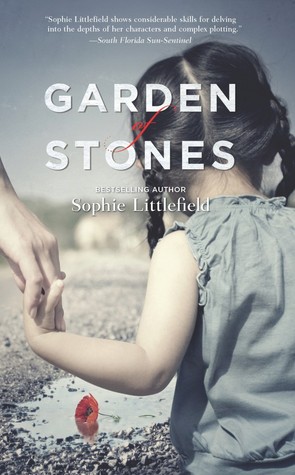
Garden of Stones by Sophie Littlefield

Garden of Stones by Sophie Littlefield vacillates between 1978 and 1941.  After the bombing of Pearl Harbor, which is when the United States began interning Japanese-Americans, Lucy Takeda and her mother, Miyako, are told to store their belongings, but end up selling them for pennies before they are shipped to the desert and the internment camp, Manzanar.  Lucy has felt the sting of bias in her Los Angeles high school, like when she was passed over for lunch monitor in favor of another girl and when the boys corner her at recess, but nothing prepares her for the hatred and oppression she experiences at the internment camp.  Her mother is a manic depressive, who barely got out of bed when their lives were simple, but in the camp, things change and her mother has to feign strength to protect her daughter.

“Aiko caught the hem of her coat and dragged her back.  The coat’s buttons popped off and went rolling down the sidewalk.  One went over the curb, through the grate, and disappeared into the blackness below the street.”  (Page 31 ARC)

Littlefield weaves in and out of 1941-43 and 1978 with ease and without relying on one character telling another about the past.  Rather, the stories run concurrently as Patty struggles to uncover her mother’s secrets and Lucy remembers her own past and her own mother’s secrets.  Readers are taken on a journey into the past and are emotionally tethered to Lucy and her struggles as a young Japanese-American in a less-than-forgiving society and who finds herself and her mother at the mercy of the men in power.  With two murder mysteries, Littlefield has her hands full, but her cast of characters are so human that readers will forget about the mysteries for a while as they come to know Lucy and her family, learn a bit about American history, and see how determination and perseverance can push someone to make unbelievable sacrifices and never regret them.

“In Manzanar, words took on new meanings.  Lucy learned to use the word doorway when what she was describing was the curtain that separated each family’s room from the hallway that ran the length of the drafty barrack building.  In short order they developed the habit of stamping on the floor to announce a visit, since there was no door to knock on, but they still called it knocking.”  (page 75 ARC)

Fourteen-year-old Lucy has a lot to learn about being a woman and what earning her way really means for a Japanese-American during WWII.  Garden of Stones by Sophie Littlefield is about lessons in love and family loyalty, but also about seeing the beauty in the darkness.  A surprising gem of a novel about a black time in American history when fear took over and spread to those Americans most vulnerable — forcing them to navigate an uncertain world and look over their shoulders at every turn, hoping to remain safe from harm.

About the Author:

Sophie’s first novel, A BAD DAY FOR SORRY (Thomas Dunne/St. Martin’s Minotaur, 2009) has been nominated for the Edgar, Macavity, Barry, and Crimespree awards, and won the Anthony Award and the RTBookReviews Reviewers Choice Award for Best First Mystery. Her novel AFTERTIME was a finalist for the Goodreads Choice Horror award.


This is my 9th book for the 2013 New Authors Challenge.

Giveaway: The Secret of the Nightingale Palace by Dana Sachs

I’ve got a treat for those readers who adore fiction set in the 1940s and deal with family secrets.  The Secret of the Nightingale Palace by Dana Sachs is earning early praise from the Romantic Times Book Review, which said:

Sachs’ latest is so beautiful in every aspect that readers will have difficulty pinpointing the best parts. Rich in San Francisco history with brilliant characters you’ll warm up to, the two different story lines will enrapture you as well. Both women’s romances will have readers blushing and rooting for love to prosper. Elegant and tasteful, this novel is not to be missed.

What intrigues me about this book is that it is told in flashbacks, which can be tricky for writers.  And Dana Sachs’ novel is based on some true events from her own history as a Jewish American, and the inspiration for Goldie comes from her own centenarian grandmother.

Here’s a bit about the book:

Anna, a 35-year-old woman struggling to cope with the recent loss of her husband and desperately trying to get out of an emotional rut, receives an odd call one day from her estranged and feisty 85-year-old grandmother, Goldie Rosenthal. When Goldie invites Anna to accompany her on a trip across the country to return a collection of Japanese artwork to its original owner, a mysterious friend in San Francisco, Anna decides to put their differences aside and join the adventure. Goldie, however, is not upfront with Anna about the reason for the trip or the background of the artwork, and keeps these secrets to herself.

Through flashbacks to Goldie’s young adulthood as a Jewish American in San Francisco during the 1940s, readers are introduced to the Nakamura family. Goldie and Mayumi Nakamura work together at Feld’s, a luxury department store, and quickly become close friends. It’s not long before Goldie meets Mayumi’s sophisticated and outspoken brother, Henry, that the siblings introduce Goldie to a world of art, fashion, and culture that she had never imagined existed. Those joys evaporate, however, when Japan bombs Pearl Harbor. The attack puts the Nakamuras on the other side of an unbridgeable chasm of racism and paranoia that leads to their expulsion from San Francisco and subsequent internment in remote camps far from the coast. Just as her granddaughter Anna will have to find a way to leave heartbreak behind sixty years later, Goldie must learn to move on.

Booklist has said: “As with most well-crafted literary journeys, it’s not really about the destination, but this one does feature a sweetly surprising, cinematically styled twist at the end of the road. An ideal recommendation for the book-club set.”

Also, feel free to check out some of the reviews from the TLC Book Tours.

If these early responses and the book description have piqued your interest, please leave a comment below before Feb. 23, 2013, at 11:59 PM EST.  Must be a U.S. resident with a U.S. address to enter for 1 copy.