Quantcast

The Hardship Post by Jehanne Dubrow

The Hardship Post by Jehanne Dubrow, published by Three Candles Press, is about the many posts that we take on in life that are in the midst of the fray — whether that is the overseas diplomat in a war-torn country or the descendent of a Holocaust victim.  Dubrow’s verse is infused with its own rhythm and even sometimes an internal rhyme, and this musicality penetrates the mind of the reader, bringing to life not only the harsh, and sometimes distant, memories of pain, but the reverberations of that pain decades into the future.

From Bargaining With the Wolf: (page 9-10)

The world's been tamed--your fangs are white
as though you seldom kill, twilight
now hums a stranger violence.
I hate these bloodless cadences.
Teach me to howl, to bay, to bark
new terrors prowling through the dark.

Section one of this collection seems to have a greater universality to them, and in many ways, these poems become more and more personal as they enter into section two. For instance, “Exile’s Fairytale” talks about the anxiety of being a refugee and how that life leaves a mark just as the life left behind — and each life subsequently left behind as the refugee continues to pack up and move on. “beneath her skin–these are the birthrights/of refugees. She trespasses/but never finds a place to rest,/each night the uninvited guest.” Does she mean that the refugee is the uninvited guest or is it more that the night is the uninvited guest because it leaves him/her with his or her thoughts and memories of the past.

The most resonant section of the collection is part two as a “Third Generation” much removed from the initial pain still carries the weight of that “Baggage”: “fix DNA, defect that made/us find the door in any space,/a gene that warned me when to slide/the suitcase from its hiding place.” (page 26). There are internal changes that are absent to the naked eye that Dubrow explores, particularly how events can change someone’s internal outlook or cause a new habit to form, but on the outside everyone still sees that person as “sweet” like in “Kosher Dills.”

The Hardship Post by Jehanne Dubrow has crafted a heartbreaking collection of how the past continues to haunt and mark us, but it also calls for pride, a sense of accomplishment that survival was even possible.  But it also calls on the rest of us who are not as personally touched by the tragedies of the holocaust to remember what happened, the deep scars that were left, and to step away from the belittling nature that can sometimes tarnish history with platitudes and patina.

About the Poet:

Jehanne Dubrow is the author of four poetry collections, including most recently Red Army Red and Stateside (Northwestern UP, 2012 and 2010). Her first book, The Hardship Post (2009), won the Three Candles Press Open Book Award, and her second collection From the Fever-World, won the Washington Writers’ Publishing House Poetry Competition (2009). Finishing Line Press published her chapbook, The Promised Bride, in 2007.

Her poetry, creative nonfiction, and book reviews have appeared in journals such as Southern Review, The New Republic, Poetry, Ploughshares, The Hudson Review, The New England Review, West Branch, Gulf Coast, Blackbird, Copper Nickel, Prairie Schooner, as well as on Poetry Daily and Verse Daily.

Please click on the image below for today’s National Poetry Month tour stop!
This is my 9th book for the Dive Into Poetry Challenge 2013.
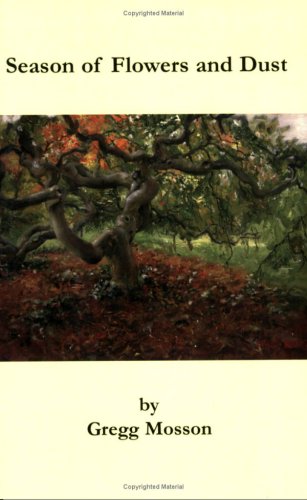
Season of Flowers and Dust by Gregg Mosson

Season of Flowers and Dust by Gregg Mosson, published by Goose River Press, is a journey in nature, particularly the nature of the Pacific Northwest during the Fall, Winter, and Spring.  Yes, no summer poems here.  In each poem, nature is winding down toward hibernation, and when winter settles in, readers will feel the cold in their bones as “the white-out of sudden tundra,/driveways are culled, families forge snowmen” in “First Snowfall.” (page 25), and when “winter’s chrysalis” in “Winter Rainfall” takes over.  Mosson has clearly spent time sitting, watching, and being with nature during these seasons, as his verse captures the movement of water, wind, and more so easily.
Readers will picture themselves in the Pacific-Northwest, even if they’ve never been there, which is particularly true of his poem “Cannon Beach in Autumn” where the water and the jutting rocks are clearly visible as the lovers untangle themselves and fall into Autumn with the nature around them.  This poem is particularly well crafted as the lovers lose their arms and can no longer hug as the trees lose their branches and leaves, and they drift into one another and create enough friction for a fire to burn.  Does Autumn signify an ending or does it signify a change into something new?

From So Long Flowers, So Long: (page 7)

A sparrow jerks off a twig; vibrations
caterpillar up
From Western Orange Sunset: (page 47)

Sunset opens like the eyes of hurricanes,
spotting the world with swirls of heat,
softening the landscape with tornadoes of light and warmth,
From Burial of Snow Storms: (page 26)

Snowstorms machine-gun humans into homes,
entomb them with just awareness of the world.
They rise to their tasks, but the bombardment
continues.

Mosson’s images have their own rhythm and startling beauty, particularly the vibrations inching along the branch in “So Long Flowers, So Long” and in “Western Orange Sunset,” the sunset becomes as frightening and beautiful as the eye of a hurricane. While much of the collection is in free verse, there also are sonnets, particularly in the “Winter” section, which signifies the compactness and hibernation of the season more so than the free flowing poems in “Spring.” Each poem has a deep reverence for the beauty inherent in nature, but also its ability to change with the seasons.

Season of Flowers and Dust is a journey to the Pacific Northwest that will have readers slowing down and taking in nature with each deep breath. And while these poems evoke beauty and the cycle of seasons, there also is a darkness just beneath the surface that plays at the edges of some poems and is more prominent in others, like “Night on Burnside” and “Burial of Snow Storms.”

About the Poet:

Gregg Mosson is the author of a book of nature poetry, Season of Flowers and Dust (Goose River Press, 2007), and one of social engagement and witness, Questions of Fire (Plain View Press, 2009). His work has appeared in The Baltimore Review, The Cincinnati Review, and The Potomac Review, among other journals. He has an MA from the Johns Hopkins Writing Seminars, where he was a teaching fellow and lecturer, and lives in Maryland.

Click the image below for today’s National Poetry Month Blog Tour Stop!


This is my 8th book for the Dive Into Poetry Challenge 2013.


This is my 19th book for the 2013 New Authors Challenge.

The Taboo Poem Revealed

Click the image for today’s National Poetry Month Tour stop!

Last Friday, I challenged my readers to comment with one line of poetry about romance, without using that word or five others — LOVE, BURNING, PASSION, SWEET, HEART.

I’ve given it a tentative title, but the rest was your creation:

First Sight, Love

Can we defy expectations, and have this part never end?
winding around me like ivy
gently pushing through the wall i built up
Stealthy, unexpected, brilliant, bright. The surprise of a star, a first kiss
yearning for your touch
the bliss of a kiss…
Words spoken, yet
nothing said, glances
lock, then lost
The promise of promises yet to come

Thanks to the following for their contributions:

Rhapsody in Books
Necromancy Never Pays
Diary of an Eccentric
Unabridged Chick
So Many Books
Peeking Between the Pages
Parrish Lantern
Worducopia

Guest Post: Creativity & Mortality by Sweta Srivastava Vikram

Please click on the image for today’s tour stop.

Sweta Srivastava Vikram is a delightful and passionate poet looking to promote social justice, but more than that she’s not what people typically picture when they think of a poet. Most people I talk to think poets are crazy, depressed, or drunk. Sweta is optimistic, cheerful, thoughtful, and passionate; I haven’t seen her crazy, drunk, or depressed, but I’m sure that there are times when she feels those things, just like we all do.

I’ve reviewed several of her poetry collections on the blog, including her most recent No Ocean Here, which I enjoyed because it made me sad and made me think. But even more wondrous for me was meeting her in person and realizing that she is the same person whether online or off and that she’s as honest as I expected. She’s a delight and so fun to hang out with for lunch or even 10 minutes.

When I was talking about the blog tour, she volunteered to talk about creativity, particularly in relation to her latest project. Without further ado, please giver her a warm welcome.

2012 was an extremely dark year for me. I worked extensively on social issues affecting women. Researching, writing, and editing such pieces required me to traverse through and unravel a lot of unpleasant situations. I was exposed to unimaginable hopelessness and pessimism. There were days when I saw nothing encouraging about humanity. And even though I am a die-hard optimist, it was hard to see even a ray of optimism inside my well of poetic darkness. Thus began my quest to understand poets and writers and the impact of darkness and mortality on their work and lives.

Mortality, specifically the finality of death, is an esoteric subject. In a paper dealing with effects of mortality salience on the creative expression, Clay Routledge et.al. stated that amplified concerns for mortality decreased creativity when the act was self-directed but not when it was community directed. This got me thinking of the fact that so many genius artists have died so young. Is it that these artists simply could not face the reality which their creations exposed them to? Or could it be a vicious cycle where artists who are forced to peel back and critically examine the layers of melancholy, misery, pain, and sorrow find themselves pushed into abject loneliness because of the gloomy vision they see the world in; and in turn find their creativity stifled to the point where their very existence becomes a downward spiral into depression and eventually death.

Anaïs Nin said, “People living deeply have no fear of death.” But the truth is that death isn’t a light subject for anyone; especially not for artists who, when they explore the dark sides end up re-living death in a myriad of ways as they bring forth their creations into the world.

Thanks, Sweta. I, too, wonder about the abyss that artists look into when they create and what enables some to re-emerge on the other side, while others fall over the cliff.

Poetry Is Dead, Or So They Tell Me

Please pop on over to today’s tour stop for National Poetry Month by clicking the image.

As with any opinion piece I read these days, I always ask myself who the writer is and what’s the agenda. In the case of Joseph Epstein, I find that many of his previous essays are meant to stir discussion and anger from certain groups, enough for them to take action (i.e. his homosexual essay, for one).

His recent opinion piece in the Wall Street Journal (subscription required) about the death of contemporary poetry, he essentially says that it only matters to those who write it and continue to publish it, no matter how bad it is. What I find comical is his statement, “We still have people playing the role of major poets, but only because the world seems to require a few people to play the role.” Why, if poetry is dead and no longer wanted, would society need people to “play” the role of poet?

I also question his argument that poetry is not relevant or wanted by society because it cannot be quoted; “But if I ask a literary gent or lady to quote me a single line or phrase from any of our putative major poets, they cannot do it.” If reiterating lines, simply for the sake of rote performance is the key to love of literature, then I want no part of it. I prefer to be impacted by poetry and literature; I want the words, the images, the situations, and anything else in the piece to speak to me, to change my mind, to make me think and feel something outside of my daily routine … in a way to transcend beyond myself into a more universal space of understanding.  (see other rebuttals, if you subscribe to Wall Street Journal).

He goes on to discuss contemporary poetry failing to do what poetry did long ago — resonate and elevate. Clearly, he has not been reading Yusef Komunyakkaa, Mary Oliver, Ted Kooser, Natasha Trethewey, Jehanne Dubrow, Sweta Vikram, and many others. He admits as much when he says he cannot remember the last time he bought a contemporary poetry collection. I can! Bernadette Geyer’s The Scabbard of Her Throat in March.  I can remember when I received my last collection, Jehanne Dubrow’s Red Army Red, from friends who know my love of poetry and choose well. If you don’t read it, how will you find those poets and poems that sing to you?

You’ll likely not be surprised that this is Epstein’s second essay on the death of poetry (“Who Killed Poetry?” was the first). Why does he write so many essays on this topic if the genre has been long deceased? Probably because he wishes it were, and yet, it thrives.

196th Virtual Poetry Circle

Welcome to the 196th Virtual Poetry Circle!

Remember, this is just for fun and is not meant to be stressful.

Keep in mind what Molly Peacock’s books suggested. Look at a line, a stanza, sentences, and images; describe what you like or don’t like; and offer an opinion. If you missed my review of her book, check it out here.

Also, sign up for the 2013 Dive Into Poetry Challenge because its simple; you only need to read 1 book of poetry. Please sign up to be a stop on the 2013 National Poetry Month Blog Tour and visit the stops on the 2012 National Poetry Month Blog Tour.

Today’s poem is from Linda Gregg:

The Secrets of Poetry

Very long ago when the exquisite celadon bowl
that was the mikado's favorite cup got broken,
no one in Japan had the skill and courage
to mend it. So the pieces were taken back
to China with a plea to the emperor
that it be repaired. When the bowl returned,
it was held together with heavy iron staples.
The letter with it said they could not make it
more perfect. Which turned out to be true.

What do you think?

Click the image below for today’s National Poetry Month blog tour post.

Taboo Poetry…A Game

Be sure to click the image above for today’s tour stop on the National Poetry Month Blog Tour!

Have you ever played that early 1990’s game Taboo from Hasbro?  Today, I would invite you all to play along with me as we create a poem in the comments in celebration of National Poetry Month.

The object of the game here is to create a poem about the word below, without referring to that word or any of the other 5 words that are most used to describe it.

The word is ROMANCE

And the forbidden words (and their variations) are:  LOVE, BURNING, PASSION, SWEET, HEART

So each commenter can write one line for the poem that describes ROMANCE, but does not use that word or the five forbidden words.

At the end of the day, I’ll collect all the lines and post the full poem next week; It’ll be fun to see what all the creative minds out there can come up with.

OK, Get started!

When All My Disappointments Came at Once by Todd Swift

When All My Disappointments Came at Once by Todd Swift, published by Tightrope Books, are poems about a series of mid-life crisis in literature and throughout history, with some less grandiose crises in the mix.  There are new takes on the midlife crisis, with the narrator in “The Shelf” trying to take on the life of another through their writing, only to find the words fit falsely and do not ring true.  But in others, like “Michael Kohlhaas,” reference the vengeful exploits that go off of the deep end to the point that the narrator cannot be brought back from the brink.  With a wide breadth of topics, Swift covers a lot of historic and emotional ground in his poems, though clearly some of these poems will require additional research into some of the historic and literary elements referenced, especially if they are not familiar.

From "In Memory of F.T. Prince" (page 15)

Desire ages, ages hardly at all,
Edges, like those of a book,
Curled at the beach, where waves,
Sent by the summer, brush

The salt away, finely-combed,
And it is homosexual love
That holds us in its palm,
That cuts and dries the hair

Beautifully rendered, Swift harkens to the original poem written by Prince about soldiers bathing in a river during World War II, but he also takes a new twist on the scene, pinpointing the desire that can rise up when all that surrounds you is death. Where is the beauty, where is the love — you find it where you can, at least to a certain extent. While some of these poems are dark and harrowing, others are sad, suspenseful, and heart-pounding as Swift takes readers on a journey through several devastating events in history and literature.

However, there are moments in the collection where Swift shows his humor, like using two rhyming lines in “Hunting Party” to make the celebratory scene after the hunt more comical, poking fun at the midlife crisis aspect depicted in the poem. In others, there is a ray of hope even as the narrator loses faith in God. These poems have a wide range of perspectives to offer, and Swift is masterful in some poems and cryptic in others. When All My Disappointments Came at Once by Todd Swift is an interesting examination of midlife crises, the emotions tied to that, and the rays of hope and comedy that can emerge from those incidents.

About the Poet:

Dr. Todd Swift is Lecturer in English Literature and Creative Writing, at Kingston University, London. He is Director and Editor of new small press Eyewear Publishing. Published by the age of 18 in The Fiddlehead, Swift is the prolific author of eight collections of poetry and many more pamphlets. He is editor or co-editor of a dozen anthologies, most recently Lung Jazz: Young British Poets for Oxfam, with a preamble from David Lehman. His poems have appeared in numerous international publications, such as Poetry (Chicago), Poetry Review (London), and The Globe and Mail (Toronto). He has been Oxfam’s poet-in-residence, based in Marylebone, since 2004. His widely-read blog, Eyewear, has been archived by The British Library.

Please click on the National Poetry Month Blog Tour image for today’s tour stop:

This is my 7th book for the Dive Into Poetry Challenge 2013.


This is my 18th book for the 2013 New Authors Challenge.

No Ocean Here by Sweta Srivastava Vikram

No Ocean Here by Sweta Srivastava Vikram, published by Modern History Press, is a collection of poems about the subjugation of women and all of its forms, across not only the Middle East and Africa, but also throughout the various parts of Asia and South Asia.  These poetic portraits are often prefaced by some facts about a particular woman’s story encapsulated in the poem or about statistics of crimes against women in various countries.  Not all of the poems are prefaced, but even those that are could stand on their own and speak for the women they represent.  Beyond the violence and inequality women deal with on a daily basis, these poems also shed light on the women-on-women violence and the silent acceptance among older women of continuing these traditions with the younger generations.

From War (page 12; which is related to Sri Lankan battles)

The sun was shining on shells
of burnt-out houses in their neighborhood.
Her mother, sister, and she were drinking

coffee, thanking bees for leaving them alone
when three men in uniforms entered

their house under the pretense of search.

All cavities of the women's trust were emptied out
when each man selected a victim:

Vikram’s poetry not only provides a story that is easily accessible on the surface, but she also provides themes and hardships that call for closer inspection.  In this way, her collection would make an excellent book club pick, which could be even further enhanced by additional materials on the subjugation of women across the globe even today. Her poetry speaks of social injustice in a way that shocks the reader, but also pays homage to those who have suffered with the deft strokes of her imagery.  Some poems are stronger than others in terms of theme and imagery, while others are more in-your-face and full of surface meaning.

No Ocean Here by Sweta Srivastava Vikram is a vast ocean of pain, discomfort, and horror that should make women in the modern world, including those inside and outside the United States, stand up for themselves and others. Beyond that, it should make men stand up and take notice that their actions and those of other males in societies across the world should not be tolerated — and ended.

About the Author:

Sweta Srivastava Vikram is an award-winning poet, writer, novelist, author, essayist, columnist, and educator. She is the author of four chapbooks of poetry, two collaborative collections of poetry, a novel, a nonfiction book, and a book-length collection of poems (upcoming). Her work has also appeared in several anthologies, literary journals, and online publications across six countries in three continents. Sweta has won two Pushcart Prize nominations, an International Poetry Award, Best of the Net Nomination, Nomination for Asian American Members’ Choice Awards 2011, and writing fellowships. A graduate of Columbia University, she lives in New York City.

This is my 6th book for the Dive Into Poetry Challenge 2013.


Click on the image below for today’s National Poetry Month Blog Tour post:

Lisa Loeb’s Songs for Movin’ and Shakin’: The Air Band Song and Other Toe-Tapping Tunes by Lisa Loeb and Ryan O’Rourke

Lisa Loeb’s Songs for Movin’ and Shakin’: The Air Band Song and Other Toe-Tapping Tunes by Lisa Loeb and Ryan O’Rourke comes out this month and is billed as a book and CD of songs to get kids off the couch and moving and grooving.  The book is for ages 4-7 and is an illustrated 24 pages long.

From the publisher:

This spectacularly fun songbook will get kids off the sofa—guaranteed! Singer Lisa Loeb will have kids movin’ and groovin’ with her sparkling second collection of songs and activities—plus a CD with five all-time children’s favorites and another five original tunes. It’s sure to stir up some fun, as budding musicians discover the joys of playing in an air band (“Turn it Down”); see how to face down scary creatures (“Monster Stomp”); and practice relaxing yoga poses (“Hello, Today”). Ryan O’Rourke’s whimsical illustrations light up Lisa’s lyrics—and will delight young readers, movers, and shakers.
Songs include: Turn it Down (The Air Band Song)* • Father Abraham • Miss Mary Mack • Monster Stomp* • Going Away* • Do Your Ears Hang Low? • Everybody Wake Up* • Hello, Today* • Peanut Butter and Jelly • Head, Shoulders, Knees, and Toes. (*original song)

You might remember Lisa Loeb from her famous songStay:

The CD-single of “Monster Stomp” was a toe-tapping delight for both my young daughter and us as we road in the car to and from the store, and it includes kids that join in and roar for the monster calls. My daughter had fun roaring right along with the song, while my husband and I were making stomping noises and, in my case, waving my hands in the air as part of the monster dance. As we’ve only heard the one song, I really can’t say what the book is like or the other songs, but if this single is any indication of how fun and interactive they are, I think this would be a sure winner for this age group.

Monster Stomp2

Click on the National Poetry Month Blog Tour Button to see today’s post:

Poetry as Gold. . .

Welcome to the Savvy Verse & Wit blog tour for National Poetry Month in the United States, but here on the blog, I consider it more of an international celebration.

If you have signed up to celebrate poetry this month, there are still some dates open, just check the schedule and let me know what date you’d prefer.

This past week I was reading Night Train to Lisbon by Pascal Mercier, translated by Barbara Harshav, and I came across a commentary about recreating the Portuguese language to make it clearer and truer to its origins: “The waiter, the barber, the conductor — they would be puzzled if they heard the newly set words and their amazement would refer to the beauty of the sentence, a beauty that would be nothing by the gleam of their clarity. … At the same time, they would be without exaggeration and without pomposity, precise and so laconic that you couldn’t take away one single word, one single comma. Thus they would be like a poem, plaited by a goldsmith of words.” (page 26) This passage reminded me of how poets — and fiction writers — often seek out ways through language to make images, characters, situations, emotions, and more clear to the reader — drawing connections between images that may, at first, seem to have nothing to do with one another, but through a juxtaposition or other means provide the reader with some insight or generate within him or her a deeper understanding or emotional response.

As I’m sure many of my faithful readers know, I read and write poetry, but they probably also know that I love Yusef Komunyakaa‘s work in particular.  “Facing It” is one of my all time favorites, and I think part of it is because I can picture exactly what he’s seeing as the Vietnam veteran in the poem describes his first experience with the Vietnam War Memorial.

Facing It

My black face fades,   
hiding inside the black granite.   
I said I wouldn't  
dammit: No tears.   
I'm stone. I'm flesh.   
My clouded reflection eyes me   
like a bird of prey, the profile of night   
slanted against morning. I turn   
this way—the stone lets me go.   
I turn that way—I'm inside   
the Vietnam Veterans Memorial
again, depending on the light   
to make a difference.   
I go down the 58,022 names,   
half-expecting to find   
my own in letters like smoke.   
I touch the name Andrew Johnson;   
I see the booby trap's white flash.   
Names shimmer on a woman's blouse   
but when she walks away   
the names stay on the wall.   
Brushstrokes flash, a red bird's   
wings cutting across my stare.   
The sky. A plane in the sky.   
A white vet's image floats   
closer to me, then his pale eyes   
look through mine. I'm a window.   
He's lost his right arm   
inside the stone. In the black mirror   
a woman’s trying to erase names:   
No, she's brushing a boy's hair.

In particular, I love the parts of the poem where he describes reflections in unique ways, especially when the reflection eyes him like a bird of prey and the names that “shimmer on a woman’s blouse” but remain on the wall as she walks away. In addition, the poem reflects on the practice of rubbing the names onto paper from the wall as a form of care and caress — “she’s brushing a boy’s hair.”

Sorrow 2 -- Vietnam Wall

In many ways, poetry not only tells stories, but creates them with their readers and generates an emotional response that can be carried over to friends, families, or even book clubs. These are the types of poems that I consider “gold.”

What makes a great poem for you?

Mailbox Monday #218

HAPPY EASTER to those who celebrate!

As tomorrow is the kick-off of National Poetry Month, I’m posting this meme early, and it may be on hiatus for the rest of the month until the blog tour is over.

Mailbox Mondays (click the icon to check out the new blog) has gone on tour since Marcia at A Girl and Her Books, formerly The Printed Page passed the torch. April’s host is Mari Reads.

The meme allows bloggers to share what books they receive in the mail or through other means over the past week.

Just be warned that these posts can increase your TBR piles and wish lists.

Here’s what I received for review:

1.  Writers on the Edge:  22 Writers Speak About Addiction and Dependency edited by Diana M. Raab and James Brown from Modern History Press for review.

Writers On The Edge offers a range of essays, memoirs and poetry written by major contemporary authors who bring fresh insight into the dark world of addiction, from drugs and alcohol, to sex, gambling and food. Editors Diana M. Raab and James Brown have assembled an array of talented and courageous writers who share their stories with heartbreaking honesty as they share their obsessions as well as the awe-inspiring power of hope and redemption.

CONTRIBUTORS: Frederick & Steven Barthelme, Kera Bolonik, Margaret Bullitt-Jonas, Maud Casey, Anna David, Denise Duhamel, B.H. Fairchild, Ruth Fowler, David Huddle Perie Longo, Gregory Orr, Victoria Patterson, Molly Peacock, Scott Russell Sanders, Stephen Jay Schwartz, Linda Gray Sexton, Sue William Silverman, Chase Twichell, and Rachel Yoder.

2.  Unexplained Fevers by Jeannine Hall Gailey for review from the poet.

“Unexplained Fevers plucks the familiar fairy tale heroines and drops them into alternate landscapes. Unlocking them from the old stories is a way to “rescue the other half of [their] souls.” And so Sleeping Beauty arrives at the emergency room, Red Riding Hood reaches the car dealership, and Rapunzel goes wandering in the desert – their journeys, re-imagined in this inventive collection of poems, produce other dangers, betrayals and nightmares, but also bring forth great surprise and wonder.” – Rigoberto González, author of Black Blossoms “Unexplained Fevers begins with that most familiar of phrases, “Once upon a time,” but the world we find inside these covers is deeply defamiliarized. Trapped by physical ills, cultural expectations, and the constraints of marriage, these heroines interrogate the world and propel themselves through it with cunning and sass. We follow, for example, Jack and Jill though a prose poem where they “somehow turned thirty without thunderous applause,” after having sworn they “would follow each other anywhere, but anywhere turned out to be a lot like Ohio.” At the center of these poems – urgent, mysterious, evocative – we find the great topic of all fairy tales, transformation. Read Unexplained Fevers, and be transformed.” – Beth Ann Fennelly, author of Unmentionables.

What did you receive?