Quantcast

The Nine Fold Heaven by Mingmei Yip

Source: Mingmei Yip, the author
Paperback, 320 pages
I am an Amazon Affiliate

Skeleton Women‘s Heavenly Songbird Camilla returns in The Nine Fold Heaven by Mingmei Yip (check out Chapter One) after a quick exit from Shanghai in the 1930s into Hong Kong.  She’s hiding out away from the gangsters she betrayed, but this once emotionless spy now must endure guilt and longing.  She does not know the fate of her love Jinying, nor of her lover Gao, but more importantly, she knows that her baby, Jinjin, is alive but not where he is.  Yip has a firm grasp of the atmosphere during this period in Shanghai, a time when gangs ran the government, businesses, and held everyone else at gunpoint.  The corruption, backroom deals, and fear permeate this novel, and Camilla is forced to return to Shanghai even though her life is clearly going to be in danger there.  Using her skills as a trained skeleton woman — which include seduction — she is able to disguise herself and create plausible stories on the spot, but the trick now is not to let her emotions rule her, which in some instances they do, leading to trouble.

“Unwilling to give up, I forced my tired feet to carry me into the hall and through the door to the next room.  Once I had stepped across the threshold, I noticed something different, even eerie, but I couldn’t pinpoint what that was–except it came with an unpleasant smell.  Instead of rows of cribs as in the other room, this one had only one single large bed in which was what looked like a huge lump covered with a black cloud.  I couldn’t tell what it was in the distance, but it was heaving like a collective heartbeat.  I went up to take a closer look.” (page 102 ARC)

While Camilla searches for her baby, she’s also searching for her lovers, but in the midst of her investigations she meets up with an American ambassador who could offer her protection from the gangs and falls into the hands of Rainbow Chang, a gossip columnist and head of the Pink Skeleton Women.  At many times, she is in danger, and in spite of this danger, she’s confident she has the perfect plan for escape, but given that the novel is told from her point of view, readers also will hear her inner demons and learn of her shaky confidence.  Wallowing in self-pity becomes a mantra for Camilla early on in the novel, and it becomes a drone in the background even as the plot moves forward, making it difficult to like the protagonist.  However, her determination to find peace and her family are rewarding and helps build an emotional connection with the reader, especially given her sordid past as a skeleton woman and a sad orphan.

“So after seemingly endless gentle twisting in all the auspicious and inauspicious directions and angles, with the application of just a little strength, the lock finally surrendered with a long-awaited sigh of release.  I couldn’t help but feel satisfaction at the culmination of my courtship of the lock.”  (page 249 ARC)

The Nine Fold Heaven by Mingmei Yip is peppered with poetry, proverbs, and more, and it’s a solid follow-up to Skeleton Women (which does not have to be read first), though the ending could be an opening for a third book.  Yip is talented and understands how to create a story that is deep in its passions and exciting in plot.  While Camilla can be hard to love, her plight is age-old.
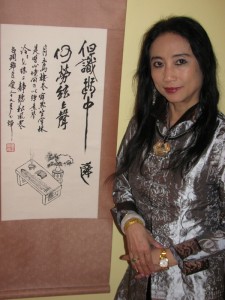
About the Author:

Kensington author Mingmei Yip believes that one should, besides being entertained, also get something out of reading a novel. Her new novel is Skeleton Women is about survival, letting go, and finding love and compassion.

Her debut novel Peach Blossom Pavilion is the story about the last Chinese Geisha and also that of courage and the determination to succeed and attain happiness. Her second novel Petals from the Sky, a poignant Buddhist love story, is about wisdom, compassion, when to persist and when to let go. Her third novel Song of the Silk Road is an adventure love story between an older woman and a younger man with a three million award on China’s famous, dangerous route.

For more about the author and her books visit her Website, on Twitter, and on Facebook.
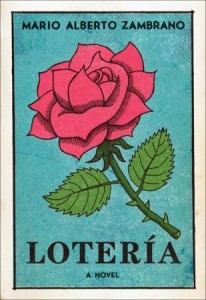
Lotería by Mario Alberto Zambrano

Source: TLC Book Tours and Harper
Hardcover, 288 pages
I am an Amazon Affiliate

Lotería by Mario Alberto Zambrano is an imaginative coming-of-age story for eleven-year-old Luz Castillo that uses the cards from a Mexican game that resembles American bingo.  Each card can be covered in the game once the riddle is called and the players know what card it is based on the riddle, and each card is placed in a tablas in any order or in a standard order.  Like the game, Luz unwinds her memories just before a tragic event lands her in a center and her father arrested.  As she turns the cards over, a memory is triggered, and she writes it down in her journal at the behest of her auntie Tencha.  Like any child traumatized by a startling event, Luz’s memories do not follow any kind of straightforward timeline, but they do reveal a great deal about her family’s immigration, ties to Mexico, and adjustment in America.

“And because quiero can mean either want or love, I asked if it meant “I want you” or “I love you.”  Come here, because I love you,or, come here, because I want you? If you were saying to someone, come to me, then the person you loved wasn’t there, and if you had to tell someone to come to you then maybe he didn’t love you.  And to want someone to come to you is like an order.  If you have to order someone to come to you, how much love is in that anyway?”  (page 13 ARC)

Like the journal entries, Luz’s family life is complex and multilayered with her older sister, Estrella, having been born in Mexico and knowing to smoothly speak Spanish, while Luz is a natural born American who is self-conscious about speaking Spanish aloud even though she knows what those around her say.  While there are moments in this novel when Luz has more adult thoughts, the experiences she has at home with her parents always fighting and her cousins taking advantage of her youth when she visits in Mexico, it is clear that she is mature beyond her years and has given a great deal of thought to her life experiences.

Peppering the story with Spanish words, the meaning of which can be mostly gleaned from the context of the story, Zambrano has crafted a puzzle that will spur readers to keep reading and take the journey with Luz as she uncovers the memories she’s tried to forget about her family.  While Luz has grown up in a typically male-oriented household, it is clear that America has had an influence on the family as her mother takes a job outside the home and never cowers behind her skirts when her husband is out of control with drink.  Despite the hardships, Luz has faced, she still remains optimistic and open to the possibilities of a better life, as she speaks to God in her journal entries about her past and her own confusion and feelings.

Lotería by Mario Alberto Zambrano is well-crafted, stunning, and highly recommended.  It brings to light the horrors of familial dysfunction, abuse, and general family discord through the eyes of a mature child, who strives to cope with it all in the best way possible.  Not only does it highlight the transition of a family from life in Mexico to one in America — with its opportunities and disappointments — but it also examines the dichotomy of family relationships that produce both love and hate.  Zambrano is an author to watch for.

About the Author:

Mario Alberto Zambrano was a Riggio Honors Fellow at the New School and recently completed his MFA at the Iowa Writers’ Workshop as an Iowa Arts Fellow. He is a recipient of the John C. Schupes Fellowship for Excellence in Fiction. Lotería is his first novel.

Find out more about Mario at his Website and connect with him on Facebook.

This is my 46th book for the 2013 New Authors Challenge.

Writing Space of Mingmei Yip

Mingmei Yip has been writing and publishing since she was fourteen years old and now she has twelve books to her credit.  Her five novels are published by Kensington Books and her two children’s books are published by Tuttle Publishing.  Mingmei is also a renowned qin (ancient string instrument) musician, calligrapher and painter.  In Hong Kong, she was a columnist for seven major newspapers.  She has appeared on over sixty TV and radio programs in Hong Kong, Taiwan, China, and the US. Visit her Website.

Last year, I really enjoyed Skeleton Women, and The Nine Fold Heaven picks up where the previous book ends.  “An ex spy and nightclub singer who undertakes an emotional and dangerous journey to reunite with her lost lover and the baby she was told was stillborn, and to discover the secret of her parents’ murder.”

Mingmei Yip - Author of Nine Fold HeavenCome along with an ex spy as she returns to Shanghai where she’s a wanted woman – but she has to search for her baby and her lost lover. Is her baby really alive? Will she be able to find her lover? Can she elude the police long enough to find them? Learn much more about The Nine Fold Heaven and Mingmei Yip.

Nine Fold Heaven is part of a series about Camilla the songbird and female spy – you can also read Skeleton Women, the first book about Camilla.

Today, I’ve got a great guest post from Yip about her writing space.  Please give her a warm welcome.

Writing space: I only write at home. I can’t write at cafes, since most have loud music which is a distraction for me. But when they play classical music, then I stop writing and listen, so that does not work for me, either.

Writing Space - 3I consider myself lucky to have a small room just for myself in my apartment which I use as my writing space. Luckily, my little room has a view of the north side of Manhattan and the East River. So, when I just can’t type anymore, I lift my head and soothe my eyes by staring at the peaceful scene outside the window. Soon I am refreshed and back at work.

I have decorated my writing room with some of my favorite things – books, plants, flowers, my own paintings and calligraphy. Writing is a solitary and difficult journey, so I try to fill my space with what I find both beautiful and spiritually inspiring. I also keep amulets next to me for protection, just in case.

Writing Space - 1Writing habits: I don’t have a chance to write every day, because like everyone else, I have other responsibilities in life. So when I have a chance to write, I write as much and as long as I can. This is like gorging yourself when you don’t know where your next meal is coming from. In any case, it is what works for me. It helps that I can take a nap whenever I want.

Writing tips: I plunge into writing and ignore everything around me. Since I was a tiny girl I have always preferred life inside my own head. Whenever I have writer’s block, I’ll read or watch a movie. This usually triggers ideas for me so I can go back to write. I also read a lot, not only to feed my imagination and creativity, but also to have a point of comparison for my own writing.

Writing Space - 2I think it is still essential to master the basics. Not only voice, characterization, dialogue, plot, but also sentence structure, its rhythm and music. I always try to vary the length of my sentences and start each one with a different subject. It’s essential to spent whatever time it takes to find the right word. Sometimes, it is a single word that brightens a whole paragraph.

There is a Chinese saying “Slap on the thigh and exclaim!” That’s how the readers will react to a good choice of word. Readers may not be aware of the meticulous hard work behind a smooth sentence, but if you don’t pay attention, they will soon become bored. I also think it’s good for authors to attend other cultural activities such as movies, concerts, art exhibitions. Have as diverse a background as you can cultivate, that really helps.

Most important, don’t give up! The ancient Chinese philosophy classic, the Daode Jing says more things are spoiled in the end than the beginning. Stick through to the end.

Thanks, Mingmei, for sharing your writing space with us, as well as your writing habits. I’m the opposite, too much quiet and I can’t write.

The Year of Goodbyes by Debbie Levy

Source: Book Expo America 2010
Hardcover, 136 pages
I am an Amazon Affiliate

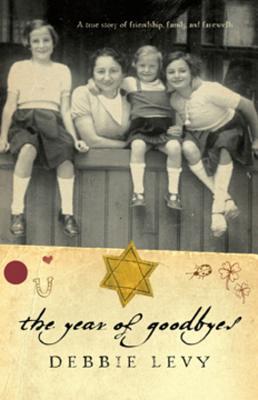
The Year of Goodbyes by Debbie Levy is an adaptation of her mother’s poesiealbum (poetry album) into a narrative poem, peppered with images and actual entries, and a WWII historical time line as well as a resource listing and a section catching up with Jutta Salzberg’s family and friends and their ultimate fates.  This powerful hybrid poem/memoir not only examines the horrifying snowball effect of Nazi Germany’s laws against Jews, but also how Jewish children still found ways to maintain their childhood and enjoy the joyous moments they still had.

Salzberg lived in Hamburg, Germany, and was the daughter of a Polish born Jew who emigrated to Germany before the Nazi’s came to power, and the poetry album, much like American autograph books, begins in 1938, which became a pivotal year for Jutta.  Her father was a successful, belt, suspender, etc. salesman, who is eventually dismissed from his job because he’s a Jew. As a young lady on the verge of womanhood, she is capable of not only enjoying gossip and games with classmates, but also understand the deep seriousness of the changes around her.

Parents (page 32)
...
He sags
and I think how Father could use something
to hold him up--
a belt,
a suspender,
a garter...

She also has the ability to question the changes around her within the context of the words from her friends, like respecting one’s elders. Jutta wonders how she can respect someone like Hitler, who is her elder, when he spread such fear and hatred.  There is great tension in this short, narrative poem/journal as a young girl tries to find the silver lining in her circumstances, remember her friends, and enjoy moments with her family, while at the same time worrying that her immediate family will be unable to leave Germany for America as the consulate will not issue them U.S. visas.  The section of the narrative poem that is the most heart-wrenching is when Jews are forced to seek out kindness from strangers in America who just happen to have their same last name.

The Year of Goodbyes by Debbie Levy is powerful and a great testament to her mother’s memory, her own family’s past, and the hope generated by that remembering.  The book is not only a year of goodbyes between Jutta and her family and friends, it also contains information that may not be as well known, including the role of Jutta’s cousin Guy Gotthelf in the French Resistance and the impact of one Jewish man, Herschel Grynszpan, on those left behind in Germany when he avenged the murder of his own family back in Germany.  Lasting, eye-opening, and a must read for young and old.

About the Author:

Debbie Levy writes books — fiction, nonfiction, and poetry — for people of all different ages, and especially for young people. Before starting her writing career, she was a newspaper editor, and a lawyer with a Washington, D.C. law firm. She has a bachelor’s degree in government and foreign affairs from the University of Virginia, and a law degree and master’s degree in world politics from the University of Michigan. She lives in Maryland and spends as much time as she can kayaking and otherwise messing around in the Chesapeake Bay region.  Follow her on Twitter and Facebook.  Also please check out the article on her family’s journey in The Washington Post, and her own article on finding the journal in the same publication.

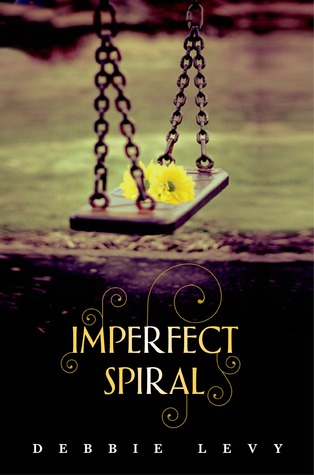
Also, check out her new book, Imperfect Spiral, which is published today!

Danielle Snyder’s summer job as a babysitter takes a tragic turn when Humphrey, the five-year-old boy she’s watching, runs in front of oncoming traffic to chase down his football. Immediately Danielle is caught up in the machinery of tragedy: police investigations, neighborhood squabbling, and, when the driver of the car that struck Humphrey turns out to be an undocumented alien, outsiders use the accident to further a politically charged immigration debate. Wanting only to mourn Humphrey, the sweet kid she had a surprisingly strong friendship with, Danielle tries to avoid the world around her. Through a new relationship with Justin, a boy she meets at the park, she begins to work through her grief, but as details of the accident emerge, much is not as it seems. It’s time for Danielle to face reality, but when the truth brings so much pain, can she find a way to do right by Humphrey’s memory and forgive herself for his death?

On July 27, 2013, at 3:30 pm for those in the Alexandria, Va., area, Debbie will be with Beth Kephart in a joint event at Hooray for Books.

This is my 45th book for the 2013 New Authors Challenge.

Mailbox Monday #228 and Library Loot #9

Mailbox Monday (click the icon to check out the new blog) has gone on tour since Marcia at To Be Continued, formerly The Printed Page passed the torch.  July’s host is Book Obsessed.

The meme allows bloggers to share what books they receive in the mail or through other means over the past week.

Just be warned that these posts can increase your TBR piles and wish lists.

Here’s what Wiggles got at the library sale:

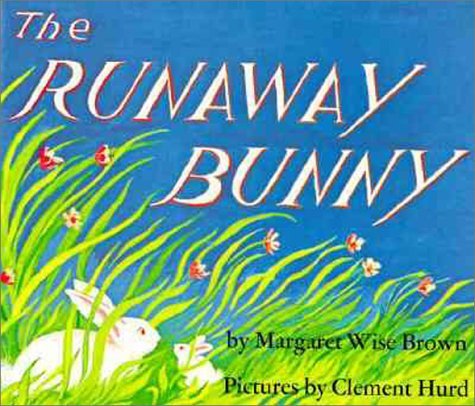
1.  The Runaway Bunny by Margaret Wise Brown

The Runaway Bunny begins with a young bunny who decides to run away: “‘If you run away,’ said his mother, ‘I will run after you. For you are my little bunny.'” And so begins a delightful, imaginary game of chase. No matter how many forms the little bunny takes–a fish in a stream, a crocus in a hidden garden, a rock on a mountain–his steadfast, adoring, protective mother finds a way of retrieving him. The soothing rhythm of the bunny banter–along with the surreal, dream-like pictures–never fail to infuse young readers with a complete sense of security and peace. For any small child who has toyed with the idea of running away or testing the strength of Mom’s love, this old favorite will comfort and reassure.

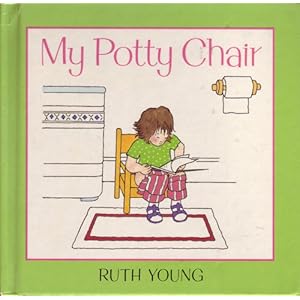
2.  My Potty Chair by Ruth Young

In My Potty Chair, a girl matter-of-factly discusses the use of her potty chair.


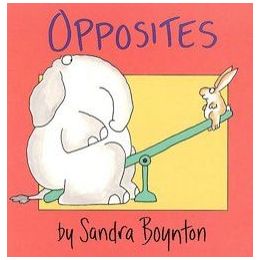
3.  Opposites by Sandra Boynton

Serious silliness for all ages. Artist Sandra Boynton is back and better than ever with completely redrawn versions of her multi-million selling board books. These whimsical and hilarious books, featuring nontraditional texts and her famous animal characters, have been printed on thick board pages, and are sure to educate and entertain children of all ages.

4.  Doggies: A Counting and Barking Book by Sandra Boynton

Serious silliness for all ages. Artist Sandra Boynton is back and better than ever with completely redrawn versions of her multi-million selling board books. These whimsical and hilarious books, featuring nontraditional texts and her famous animal characters, have been printed on thick board pages, and are sure to educate and entertain children of all ages.

5.  I am a Train by Ace Landers

Simple train facts in a board book shaped like a train!

I am a train.
I travel on railroad tracks.

All aboard for this fun and sturdy board book shaped like a train. Read along as trains travel from town to town delivering passengers and important cargo to train stations across the country.  Little engineers will love seeing these big machines in action. It’s a book and a toy in one!

What did you receive?

Library Loot is a weekly event co-hosted by Claire from The Captive Reader and Marg from The Adventures of an Intrepid Reader that encourages bloggers to share the books they’ve checked out from the library. If you’d like to participate, just write up your post-feel free to steal the button-and link it using the Mr. Linky any time during the week. And of course check out what other participants are getting from their libraries.

1.  Timmy Time Hide and Seek for Wiggles

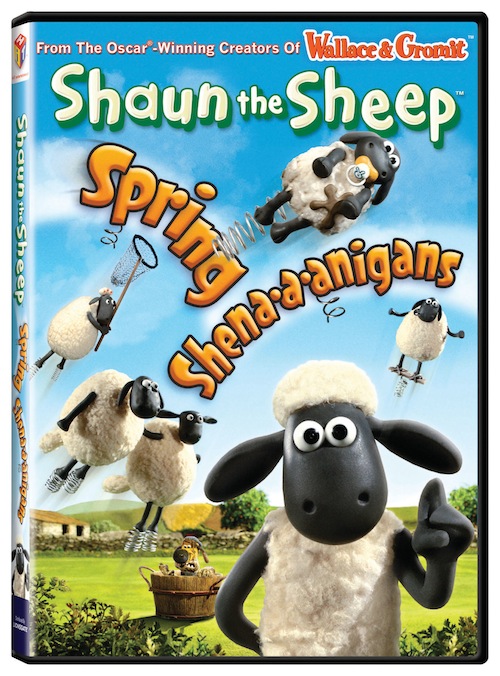
2.  Shaun the Sheep: Spring Shena-a-anigans

She has a slight addiction to these sheep adventures, and we’ve been snagging them from the library on a pretty regular basis.  Have you watched these? or Wallace & Gromit?


3.  The Real Jane Austen by Paula Byrne because my ARC did not include the photos and images that are talked about in the text, making it harder for me to read the review copy.

In The Real Jane Austen, acclaimed literary biographer Paula Byrne provides the most intimate and revealing portrait yet of a beloved but complex novelist.

Just as letters and tokens in Jane Austen’s novels often signal key turning points in the narrative, Byrne explores the small things – a scrap of paper, a gold chain, an ivory miniature – that held significance in Austen’s personal and creative life.

Byrne transports us to different worlds, from the East Indies to revolutionary Paris, and to different events, from a high society scandal to a case of petty shoplifting. In this ground-breaking biography,  Austen is set on a wider stage than ever before, revealing a well-traveled and politically aware writer – important aspects of her artistic development that have long been overlooked.

4.  Queen of America by Luis Alberto Urrea

After the bloody Tomochic rebellion, Teresita Urrea, beloved healer and “Saint of Cabora,” flees with her father to Arizona. But their plans are derailed when she once again is claimed as the spiritual leader of the Mexican Revolution. Besieged by pilgrims and pursued by assassins, Teresita embarks on a journey through turn-of-the-century industrial America-New York, San Francisco, St. Louis. She meets immigrants and tycoons, European royalty and Cuban poets, all waking to the new American century. And as she decides what her own role in this modern future will be, she must ask herself: can a saint fall in love?

Have you visited your library?

210th Virtual Poetry Circle

Welcome to the 210th Virtual Poetry Circle!

Remember, this is just for fun and is not meant to be stressful.

Keep in mind what Molly Peacock’s books suggested. Look at a line, a stanza, sentences, and images; describe what you like or don’t like; and offer an opinion. If you missed my review of her book, check it out here.

Also, sign up for the 2013 Dive Into Poetry Challenge because its simple; you only need to read 1 book of poetry. Check out the stops on the 2013 National Poetry Month Blog Tour and the 2012 National Poetry Month Blog Tour.

Today’s poem is from Louise Bogan:

Epitaph for a Romantic Woman

She has attained the permanence
She dreamed of, where old stones lie sunning.
Untended stalks blow over her
Even and swift, like young men running.

Always in the heart she loved
Others had lived,—she heard their laughter.
She lies where none has lain before,
Where certainly none will follow after. 

What do you think?

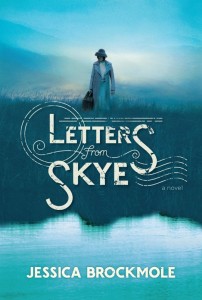
Letters From Skye by Jessica Brockmole

Source: TLC Book Tours and Random House
Hardcover, 304 pages
I am an Amazon Affiliate

Letters from Skye by Jessica Brockmole, an epistolary novel that straddles two World Wars, is about falling in love, finding your soul mate, and poetry.  Elspeth Dunn, a Scottish poet on the Isle of Skye, lives a rather cloistered life on her island but one of her books makes its way across the Atlantic to a young man in Illinois, David Graham, who writes her a fan letter.  Over the course of several years beginning when WWI breaks out in Europe, Elspeth and David begin a correspondence that takes on a life of its own.

“It’s the war talking.  I know; I’ve seen it.  They head off, invincible, feeling as if the future is a golden pool before them, ready to dive into.  And then something happens — a bomb, a sprained wrist, a bullet that whizzes by too close for comfort — and suddenly they are grabbing for whatever they can hold on to.  That golden pool, it swirls around them, and they worry they might drown if they’re not careful.  They hold tight and make whatever promise comes to mind.  You can’t believe anything said in wartime.  Emotions are as fleeting as a quiet night.”  (page 33 ARC)

While David is in America struggling through college and hoping to subvert his father’s plans for medical school, Elspeth is busy writing poetry and becoming even more entrenched in the lines her muse is offering.  Her relationship with her brother Finlay is the closest she has, but war does change things.  The more her muse speaks, the more she’s pulled away from the life she’s always known and the more she is challenged to face her fears — including her fear of water.

Through Elspeth and David’s correspondence the wider impact of war is experienced, complete with the tension of the home front as wives and families wait for their loved ones.  But at the same time, the lives of women are broadening as they are able to enter into jobs once thought of as men’s work.  The feminist leanings of Elspeth are clearly front and center in some of her correspondence with David, but it never deters him in his pursuit of her.  The moral high ground has no place in this romantic jaunt across Scotland, London, and France as a young woman and man succumb to their emotional connection on the page.

Letters from Skye by Jessica Brockmole weaves Elspeth and David’s story with that of Margaret, Elspeth’s daughter, and her search for the past.  Margaret has never met her father, and her mother remains close-lipped about her past and her daughter’s father.  But when WWII begins to break out, all of the old transgressions and emotional upheaval of Elspeth’s past resurfaces, threatening to leave her unmoored once again.  But Margaret’s life is far from pristine when it comes to the tentacles of war as her fiance flies for the RAF.  Brockmole’s letters are frank, honest, and engaging as these relationships unfold and enfold, creating a family history that will be hard to forget.  And yes, there is a poem included!

About the Author:

Jessica Brockmole spent several years living in Scotland, where she knew too well the challenges in maintaining relationships from a distance. She plotted her first novel on a long drive from the Isle of Skye to Edinburgh. She now lives in Indiana with her husband and two children.

To learn more about Jessica and her work, visit her Website.

To WIN a copy of this book, leave a comment by July 19, 2013, at 11:59 PM EST; You must be a U.S. resident 18 years and older.

This is my 44th book for the 2013 New Authors Challenge.

Changes Are Afoot

sunflower

I hope everyone’s summer is full of fun, relaxation, and great books. (my sunflower, which I am happy to say, I grew from a wee seed)

I just wanted to check in and mention briefly that there are some assessments going on in my head about the blog and my own writing.  I have been posting M-Th and Saturdays, but I want to cut back some as I’m working full time still, potty training my young daughter, and just generally tired in the evenings from all the hustle and bustle.

Are there particular days that you read blogs more regularly?

I’m considering posting reviews on the days that get the most traffic/comments and leaving the others as breaks in between, though the Virtual Poetry Circle will stay on Saturdays for now as I often prepare those 1-2 weeks in advance.

On my off days for the blog, I plan to spend that 1-2 hours I would be writing a review working on my own fiction or poetry.  It’s time for me to carve out the time and get disciplined.  The toddler cannot be an excuse for laziness on my part.

So you see, this is part check in, and part pep talk for myself.

Also, I’m also in the midst of revising my review policy to cut back on the number of review copies I accept on a yearly basis.  I’m considering a specific target number and once I hit that number, I will have to close to review copy submissions/requests.

In that vein, I wonder how many review copies you each accept per year or what your hard and fast rules are?

Any feedback is appreciated.

What Changes Everything by Masha Hamilton

Source: Unbridled Books, unsolicited
Hardcover, 288 pages
I am an Amazon Affiliate

What Changes Everything by Masha Hamilton is a look at the reverberating impact of war on not only the countries directly affected, but also those countries who send people to help refugees and the injured.  Todd Barbery coordinates aid for refugees and hospitals with the help of his Afghan contact, Amin.  Todd is far from his wife Clarissa of about three years and his only daughter Ruby, who is just beginning her own life, but while Clarissa fears for his safety and has wrestled a promise from him that this will be his last rotation in Afghanistan, Todd wishes not to be so closely guarded and insists on moments of freedom.

“Already wearing sweatpants and a T-shirt, she tied the laces to her tennis shoes, tugged a sweatshirt over her head, and slipped downstairs.  Her stomach felt hollow.  Hunger had largely left her during these last days — she’d always been an indifferent eater, but now she found herself forgetting about food altogether until she’d notice her hands were shaking.”  (Page 135 ARC)

Each section is from a different perspective that alternates between Todd, the subject who is kidnapped and the major driver of the plot; Clarissa; Amin; Mandy; and Stela and Danil — a mother and her son, a young graffiti artist who lost his brother to Afghanistan and friendly fire.  While many of these characters’ experiences and lives intersect, Mandy and the letters written by Najibullah — a former ruler of the nation who is held by the UN and not allowed to leave for exile with his wife and daughters — are outside those interactions and direct connections to demonstrate a more compassionate and empathetic side of the story to juxtapose the heartbreak and devastation of war.

“The man turned toward Todd.  He was about twenty-five years old.  He wore a blue-gray turban and a brown vest over his salwar kameez, and his eyebrows were unusually thick, like angry storm clouds hovering over his eyes.”  (page 31 ARC)

There is great compassion and hidden understanding in these fictional lives, and much of that seems to stem from the torture and death of a historical figure, Najibullah, at least as a driving force for Amin.  However, the letters from the former president to his daughters in exile tend to pull the reader out of the rest of the story until the connection is made to Amin, and the novel may have been better served had those letters been truncated and included in Amin’s portion of the story as flashbacks or memories.  The tension with the kidnapping is well done as is the tension between Clarissa and her step-daughter as negotiations continue and the FBI is looking for the go-ahead for a military distraction even though they claim they do not know her husband’s exact location.

Danger is around every corner, or that’s how it should be perceived in this novel, and when it isn’t unfortunate things happen but at other times unexpectedly good things happen as well.  Hamilton’s prose is easy to read and is packed with emotion and perspectives that are rarely examined in war-based fiction.  The novel seeks to be well-rounded in perspective, which is tough given the complexities of the factions in Afghanistan.  What Changes Everything by Masha Hamilton is engaging and hammers home the impact of war not just on the immediate participants and their families, but also those on the periphery and who are actively compassionate in their work and have a need to assist in any way they can.

About the Author:

Masha Hamilton is currently working in Afghanistan as Director of Communications and Public Diplomacy at the US Embassy. She is the author of four acclaimed novels, most recently 31 Hours, which the Washington Post called one of the best novels of 2009 and independent bookstores named an Indie choice. She also founded two world literacy projects, the Camel Book Drive and the Afghan Women’s Writing Project. She is the winner of the 2010 Women’s National Book Association award.  Check out the inspiration behind the book, What Changes Everything.  She is also behind the Afghan Women’s Writing Project.

This is my 43rd book for the 2013 New Authors Challenge.

A Small Death in Lisbon by Robert Wilson

Source: Public Library
Hardcover, 440 pages
I am an Amazon Affiliate

A Small Death in Lisbon by Robert Wilson is a mystery set in Lisbon, Portugal, in the 1990s, but also a novel that has routes in World War II when Germans were looking for an escape route when the war looked to be ending, and not in their favor.  The novel opens with the death of a young teen, Catarina Oliveira, who has a promiscuous past and a less-than-ideal family life.  Inspector Zé Coelho is on the case, which drags him into conspiratorial intrigues and the dark, convoluted past of his home nation.  Shifting back to 1941, Wilson unveils Klaus Felsen, a German businessman who is “recruited” by the German SS for a particular purpose that takes him into Spain, Portugal, and later Africa, as some Nazis, including his recruiter Lehrer, begin to see the campaign against Russia as folly.  Wilson’s novel is about political regimes and how even their single-minded focus can be derailed by the most personal of matters.

Felsen is an opportunist who attempts to make the most of his new position in the SS, doing the best he can to game the Wolfram markets and garner more of the mineral and other materials away from Britain and the allies from neutral countries, like Portugal.  His meeting with a British agent Edward Burton turns ugly, marring his character and leading him down an ever darkening path that sets him adrift.  Coelho, meanwhile, is slowly investigating the murder of young girl, finding that the ghosts in Salazar‘s closet are not so hidden.  The links between the Oliveira girl and the Nazis’ past in Portugal are convoluted and sinister even as publicly the nation remained neutral.

“‘So you’ve seen some of Lisbon,’ he said.  ‘Now when you see Salazar’s capital after dark perhaps you understand my point about the harlot.  Lisbon’s a whore, a peasant Arab whore, who wears a tiara at night.'”  (page 92)

Wilson successfully paints an atmosphere of paranoia among the Germans as the war winds down, and demonstrates through a series of minor characters the tensions between fascism and communism in Portugal following the war.  These political tensions weigh heavily throughout the mystery novel creating a multilayered, interlocking puzzle to be unraveled by Coelho.  Ripe with sex scenes and the underbelly of prostitution in Lisbon, the darker elements of Felsen and later Miguel Rodrigues’s desires come into the light, along with incest, adultery, perversity, and murder.

Unfortunately, these multiple story lines seem forced together toward the end with newer, less important plot lines that could have remained unresolved by Wilson.  Ultimately, the most well drawn character in the book is Felsen, though for the latter third he disappears until the very end when there seems to be no other way to tie up the mystery.  Coelho is a carbon cut out of any police detective and doesn’t seem particularly Portuguese with any respect, which could be due to the time he spent in England with his wife and child.  His time in England, however, may have made him less old-world Portuguese in some sense, but at his core, readers may expect him to still have those old world values, which could leave readers feeling that Wilson’s detective is not authentic enough.  A Small Death in Lisbon by Robert Wilson works as a mystery novel but not as well as one would expect given the high number of coincidences, but the historical parts of this book are deeply engaging and unique.  Overall, a satisfying read that will keep readers turning the pages.

About the Author:

Robert Wilson is the author of nine previous novels, including A Small Death in Lisbon and The Company of Strangers. A graduate of Oxford University, he has worked in shipping, advertising, and trading in Africa, and has lived in Greece and West Africa.

This is my 42nd book for the 2013 New Authors Challenge.

Mailbox Monday #227

Mailbox Monday (click the icon to check out the new blog) has gone on tour since Marcia at To Be Continued, formerly The Printed Page passed the torch.  July’s host is Book Obsessed.

The meme allows bloggers to share what books they receive in the mail or through other means over the past week.

Just be warned that these posts can increase your TBR piles and wish lists.

Here’s what I received:

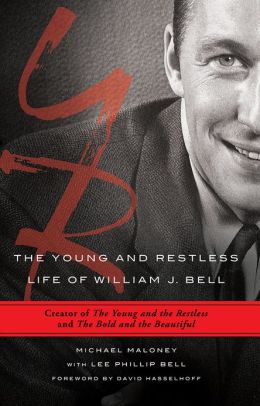
1.  The Young and Restless Life of William J. Bell: Creator of The Young and the Restless and The Bold and the Beautiful by Michael Maloney and Lee Phillip Bell, which I bought.

For the first time fans will be able to discover the true stories behind the creation and growth of the most popular and iconic soap operas of all time, and they’ll learn about the man behind their favorite storylines. Filled with dramatic turns, dangerous risks, and an overall devotion to bringing life to the show, this biography will offer fans a backstage pass to the fascinating world of soaps!

Bill Bell worked from a love of his characters and his family, and was never afraid to fight for what he knew to be important to both. For any fans of Bill’s shows or anyone working on creating dramas, this is an unprecedented look into the life of one of the men who did it best.

2.  Black Aperture by Matt Rasmussen, which I received as a member of the Academy of American Poets, and the book won the Walt Whitman Award.

In his moving debut collection, Matt Rasmussen faces the tragedy of his brother’s suicide, refusing to focus on the expected pathos, blurring the edge between grief and humor. In Outgoing, the speaker erases his brother’s answering machine message to save his family from “the shame of dead you / answering calls.” In other poems, once-ordinary objects become dreamlike. A buried light bulb blooms downward, a “flower / of smoldering filaments”. A refrigerator holds an evening landscape, a “tinfoil lake”, “vegetables / dying in the crisper”. Destructive and redemptive, Black Aperture opens to the complicated entanglements of mourning: damage and healing, sorrow and laughter, and torment balanced with moments of relief.

What did you receive?

209th Virtual Poetry Circle

Welcome to the 209th Virtual Poetry Circle!

Remember, this is just for fun and is not meant to be stressful.

Keep in mind what Molly Peacock’s books suggested. Look at a line, a stanza, sentences, and images; describe what you like or don’t like; and offer an opinion. If you missed my review of her book, check it out here.

Also, sign up for the 2013 Dive Into Poetry Challenge because its simple; you only need to read 1 book of poetry. Check out the stops on the 2013 National Poetry Month Blog Tour and the 2012 National Poetry Month Blog Tour.

Today’s poem is from John Brehm:

Fourth of July

Freedom is a rocket,
isn’t it, bursting
orgasmically over
parkloads of hot
dog devouring
human beings
or into the cities
of our enemies
without whom we
would surely
kill ourselves
though they are
ourselves and
America I see now
is the soldier
who said I saw
something
burning on my
chest and tried
to brush it off with
my right hand
but my arm
wasn’t there—
America is no
other than this
moment, the
burning ribcage,
the hand gone
that might have
put it out, the skies
afire with our history.

What do you think?